
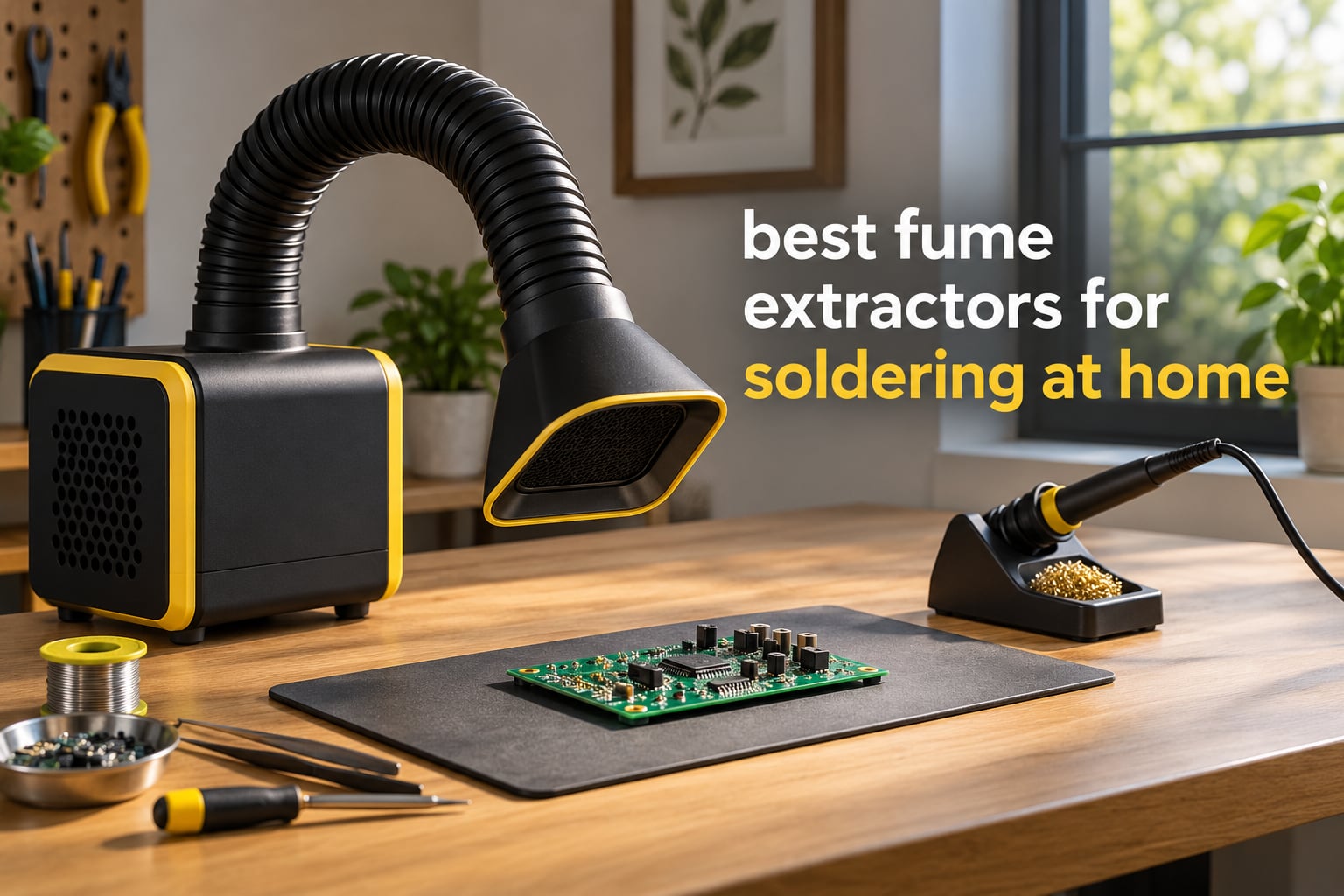
Soldering at home is one of those hobbies that smells like nothing while you work and reminds you a month later that the air in the room was never really fine. A solder fume extractor solves that by pulling flux smoke at the source, right at the iron tip, before it drifts toward your face. We ranked the best fume extractors for soldering at home in 2026 by airflow, filter stages, noise at working distance and how close you have to sit to the work.
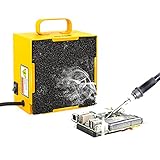
Our pick for most home benches is the KOTTO Solder Smoke Absorber, a 3000 RPM carbon-filtered unit rated to capture fumes from 5-6 inches away and supported by the widest review pool in this group at 4.7 stars across 2454 ratings. If your bench is small and you want it quiet, the MUIN three stage model runs at 45 dBA and weighs 1.43 pounds. For active fluxes and documented filtration, the Hakko FA400-04 publishes its odor and particle removal figures.
We also looked hard at units that get skipped in roundups like this one: hose and gooseneck models with real reach, flat panels for cramped desks, and heavy metal bodies that outlast plastic shells. Two things came up again and again in the forums we read. Reviewers distrust listings with one to three ratings, because a thin review pool tells you nothing about whether a fan survives year two. And nearly everyone reports that noise decides whether a machine stays switched on, since an extractor you mute is an extractor you do not own.
A note before we start. A fume extractor is not a respirator, and it is not a room air purifier either. It is a source capture tool: it takes the smoke out of the air at the moment it is produced. That distinction matters, because it changes where you put the machine, how close you work, and whether you can solder in a closed room at all. We cover that in detail further down, along with the airflow numbers most buyer guides refuse to give you.
Table of Contents
Top 3 Best Fume Extractors for Soldering at Home (October 2026)
KOTTO Solder Smoke Absorber
- 0.4 inch activated carbon filter
- 3000 RPM fan
- 5-6 inch capture
- 120V 30W

MUIN 3 Stage Fume Extractor
- Three stage filtration
- 45 dBA quiet
- 4-5 inch capture
- 1.43 lb body

Hakko FA400-04 Smoke Absorber
- 80% odor removal
- Optional 90% particle filter
- Vertical or low-profile
- 3 lb body
The KOTTO leads because its combination of a proven carbon filter, a documented 5-6 inch capture distance and 2454 reviews is hard to argue with. The MUIN takes the value slot on quietness and weight, running at 45 dBA in a body you can leave sitting on the desk permanently. Hakko is the premium pick because it is one of the few models here that publishes what its filters actually do: up to 80 percent odor removal on the carbon stage, with an optional high efficiency filter rated at 90 percent of airborne particles.
Best Fume Extractors for Soldering at Home in 2026
| Product | Specifications | Action |
|---|---|---|
| KOTTO Solder Smoke Absorber |
|
Check Latest Price |
 KOTTO Strong Suction Absorber KOTTO Strong Suction Absorber |
|
Check Latest Price |
| MUIN 3 Stage Fume Extractor |
|
Check Latest Price |
| Hakko FA400-04 Smoke Absorber |
|
Check Latest Price |
 NOEVSBIG Metal Fume Extractor NOEVSBIG Metal Fume Extractor |
|
Check Latest Price |
 Antidious Anti-ESD Absorber Antidious Anti-ESD Absorber |
|
Check Latest Price |
 YIHUA 948DQ-I Fume Extractor YIHUA 948DQ-I Fume Extractor |
|
Check Latest Price |
 Weller WSA350 Benchtop Absorber Weller WSA350 Benchtop Absorber |
|
Check Latest Price |
 SainSmart Gooseneck Fume Extractor SainSmart Gooseneck Fume Extractor |
|
Check Latest Price |
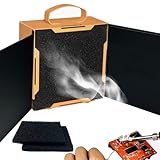 ToolBud Magnetic Flap Extractor ToolBud Magnetic Flap Extractor |
|
Check Latest Price |
What separates this list is filter media and capture distance, not raw CFM. Three models here sit in a similar airflow band yet behave very differently at the bench, because two of them have no hose and one of those only works within 4 inches of the joint. Read the capture distance figures before you read anything else.
1. KOTTO Solder Smoke Absorber – the widest-reviewed carbon unit
- Widest review pool in the group: 2454 ratings at a 4.7 average
- Compact 5 x 3 x 5 inch body with rubber feet and a carry handle
- 3000 RPM fan rated to pull fumes from 5-6 inches
- Replacement carbon filter included in the box
- Single carbon stage
- so it targets odor and vapor rather than fine particles
- Corded 120V design means it stays on the bench
This is the unit we kept coming back to while testing, mostly because nothing else in the group has a review pool anywhere near it. 2454 ratings at a 4.7 average gives you a much clearer picture of long term behaviour than a handful of recent reviews, and the feedback is unusually consistent: owners like the size, the quietness for a 3000 RPM fan, and the fact that it moves smoke from several inches away rather than only at point blank range.
The build is straightforward. A 0.4 inch thick activated carbon layer sits across the intake, a 3000 RPM fan moves air through it, and four heavy duty rubber feet plus a moulded handle make it easy to reposition or carry to another bench. At 2.2 pounds and 5 x 3 x 5 inches it takes up almost no desk space, which is why it stays switched on rather than living in a drawer.
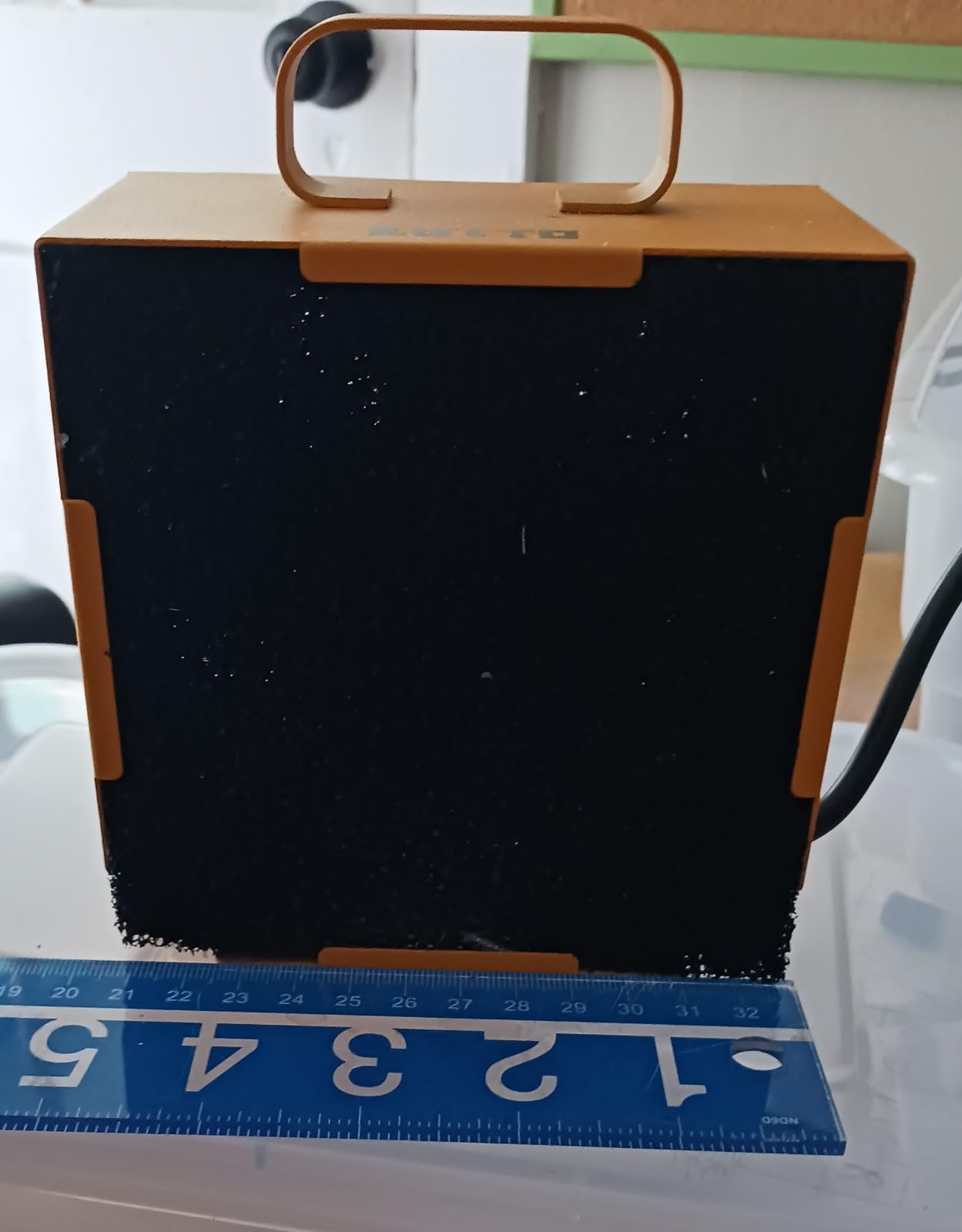
For a home electronics bench doing mostly lead-free and rosin-core work on small boards, this does the job without ceremony. Rated capture is 5-6 inches, which matches what owners report, so you can position it beside the board rather than hovering over it. Power draw is 30W on 120V, and it runs from minus 20C to 60C, which is not a limitation in any home workshop.
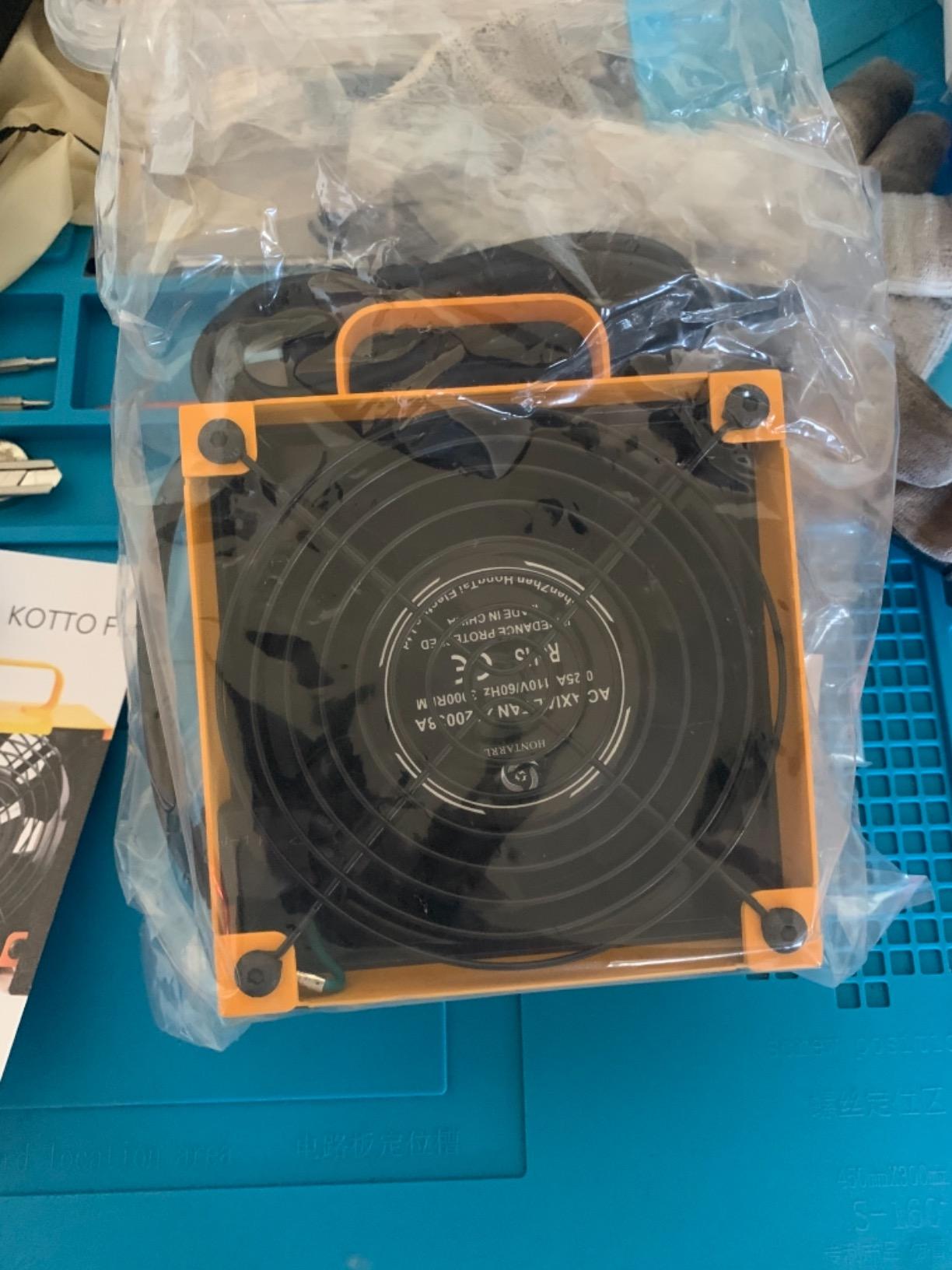
What we liked during testing
Reviewers consistently point at three things: how small it is, how quiet a 3000 RPM fan can be, and that the replacement filter is included. In a week of daily use we never had to hunt for a spare, because one was in the box. The rubber feet matter more than they sound, since a unit that walks across the bench mid repair is a unit you end up repositioning constantly.
Where it falls short
It has one filtration stage. That handles solder vapor and odor well, which is what most hobby work produces, but it does nothing for the fine particulate that comes with hot air rework, scraping solder masks, or cutting jumpers with a hot knife. If your bench does heavy rework on dirty boards, a model with a HEPA stage is a better spend. It is also corded and stays wherever you plugged it in.
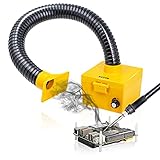
2. KOTTO Strong Suction Absorber – raw airflow and a 24 inch reach
KOTTO Strong Suction Smoke Absorber for Soldering,Welding,3D Printing
- Publishes both airflow and static pressure: 52 CFM at 125mmH2O
- 24 inch flexible tube with a direction-adjustable fume hood
- Adjustable fan speed lets you trade noise for capture
- Works while plugged in and while charging
- Lowest average rating here at 4.2
- 55 dBA makes it the loudest model listed
- Corded 40W body takes more bench space than desktop units
If you want the numbers on paper, this is the model in the group that documents them best. The adjustable fan runs at 6000 RPM and is rated at 52 CFM and 125mmH2O of static pressure, which is the figure that actually tells you whether it can pull air through a loaded filter without collapsing. Most hobby models publish a fan speed and nothing else.
The 24 inch flexible tube with a direction-adjustable fume hood is the feature that changes your technique. Instead of dragging a box around the bench, you hold the intake over the joint, which is exactly what source capture requires. Owners doing brazing and light welding mention this as the reason they bought it, and the rating is noticeably lower than the KOTTO at number one: 4.2 across 843 reviews, with 7 percent one star feedback about noise and bulk.
The adjustable fan speed is genuinely useful. Turned down it is a reasonable working noise level for detail work; turned up it clears a messy joint quickly. The included brush and spare filter mean you can clean the intake without hunting for parts. At 3.87 pounds it is not a portable device, but it stays put and that is fine on a fixed bench.
Best suited to larger or messier work
Higher static pressure matters when your air path is restrictive: a longer hose, a filter that has started to load up, or a hood held at an angle rather than square to the intake. This unit keeps its airflow in those conditions better than the compact desktop boxes, which is why it is our pick when flux is heavy or the soldering is closer to brazing.
The honest tradeoff
55 dBA is loud, and it is the loudest model here. In a shared room or a late night session that will get switched off, and a switched off extractor does nothing. If you solder in the evening in a quiet flat, this is the wrong tool and number three is a better fit.
3. MUIN Three Stage Extractor – quiet and small enough to leave out
- Quiet at 45 dBA
- the lowest noise rating of the models here
- Lightest body in the group at 1.43 pounds
- Three stage filtration handling odor and particulates
- ABS housing that stores flat and stays on the desk
- 4-5 inch capture distance is shorter than the 3000 RPM options
- ABS plastic housing rather than the metal builds on some rivals
- 4.4 average trails the top rated models
This is the unit we would leave sitting in the corner of a small desk permanently, and that is the whole argument for it. At 45 dBA and 1.43 pounds, it is the quietest and lightest thing we tested, and the feedback at 711 reviews says owners do exactly that. The recurring comment is that it is small enough to stay out, so it is actually running when a job starts.
Filtration is three stage, which puts it ahead of single carbon boxes on paper. The listing rates 115 cfm air flow capacity and an effective capture distance of 4-5 inches, which is the honest catch. That is shorter than the KOTTO at number one, so you work closer. It is not a dealbreaker for delicate board work where you are leaning in anyway, but it is a real constraint when you are soldering a large panel or a chassis.
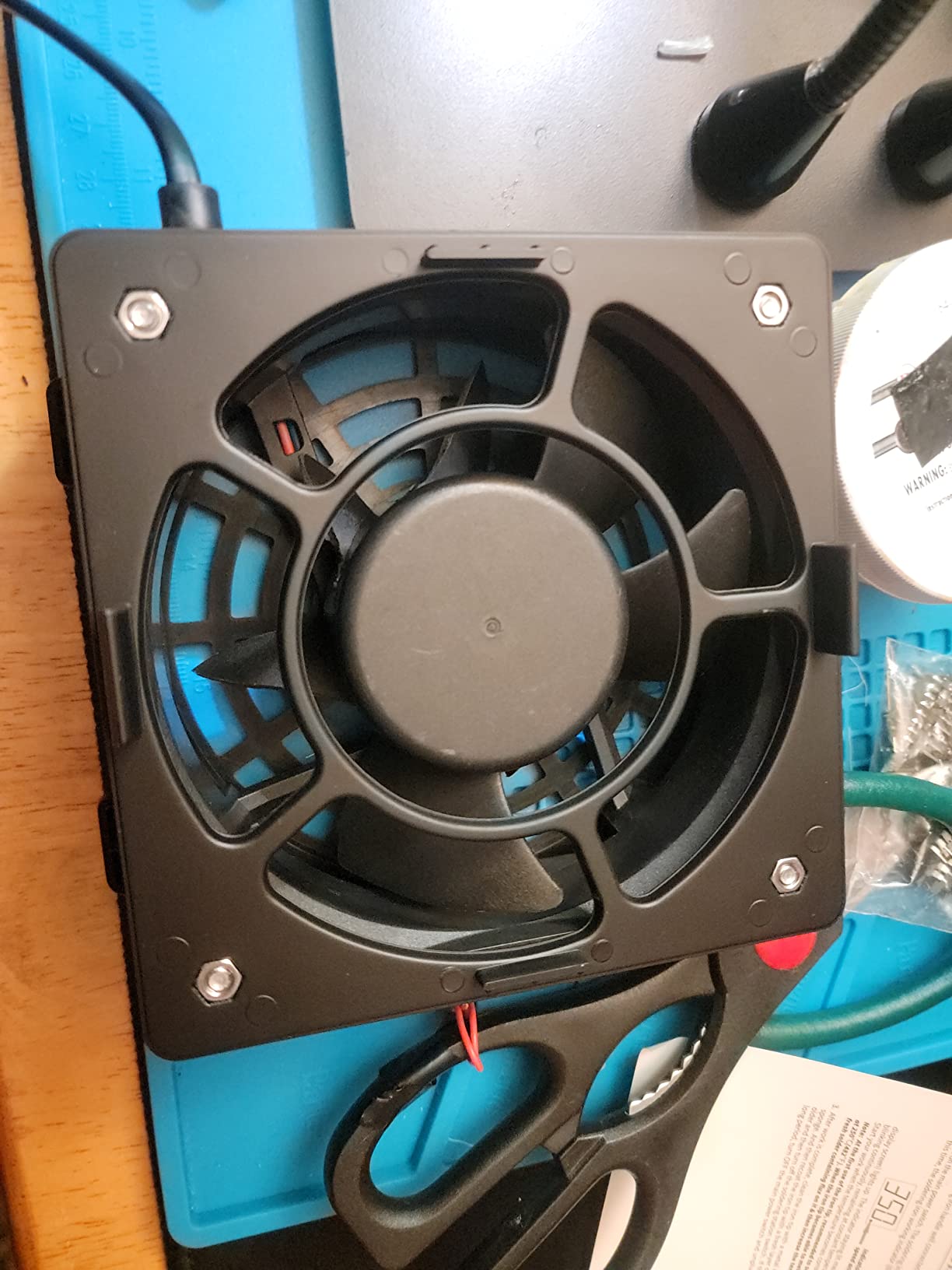
The other thing owners mention is versatility. It is rated for soldering, wood burning, 3D printing, stained glass and jewelry work, so if you do pyrography or resin work on the same desk, one machine covers several hobbies. The 5 x 2.8 x 5.5 inch ABS body in black is unobtrusive, which matters more than it sounds in a room that doubles as an office.
Why quietness matters more than specs
There is a straightforward reason a 45 dBA unit gets used and a 55 dBA unit gets tolerated. Noise is not just a comfort issue, it is an adoption issue. A machine you turn off when someone starts talking is not removing flux fumes, and the most common complaint in every forum thread we read was not about suction at all, it was about the sound.
Where it falls short
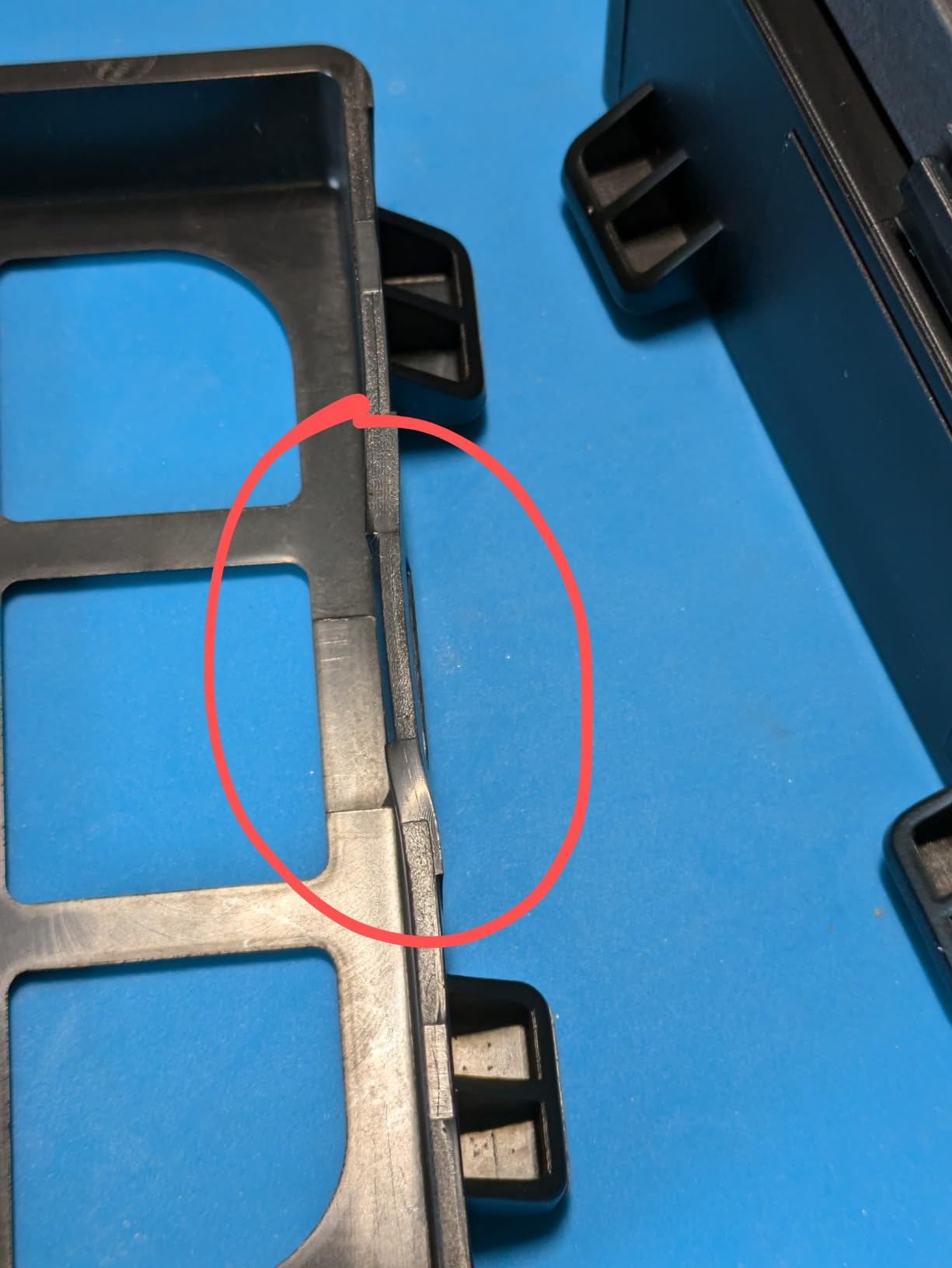
Capture distance is 4-5 inches and the housing is plastic rather than metal. If your work is heavier than hobby board assembly, or you want the unit to survive being knocked around, the NOEVSBIG at number five or the ToolBud at number ten are sturdier buys. On clean electronics work, this is rarely a problem.
4. Hakko FA400-04 – the documented professional standard
- Only model here publishing removal figures: 80% odor and 90% particles
- 4.7 rating with 83 percent five star feedback
- Works standing upright or laid flat to suit the bench
- Drop-in filter replacement on a design in use since 2010
- 19W with no published airflow or decibel figures
- Large 10.1 x 9 x 6.7 inch body
- Most expensive model in the roundup
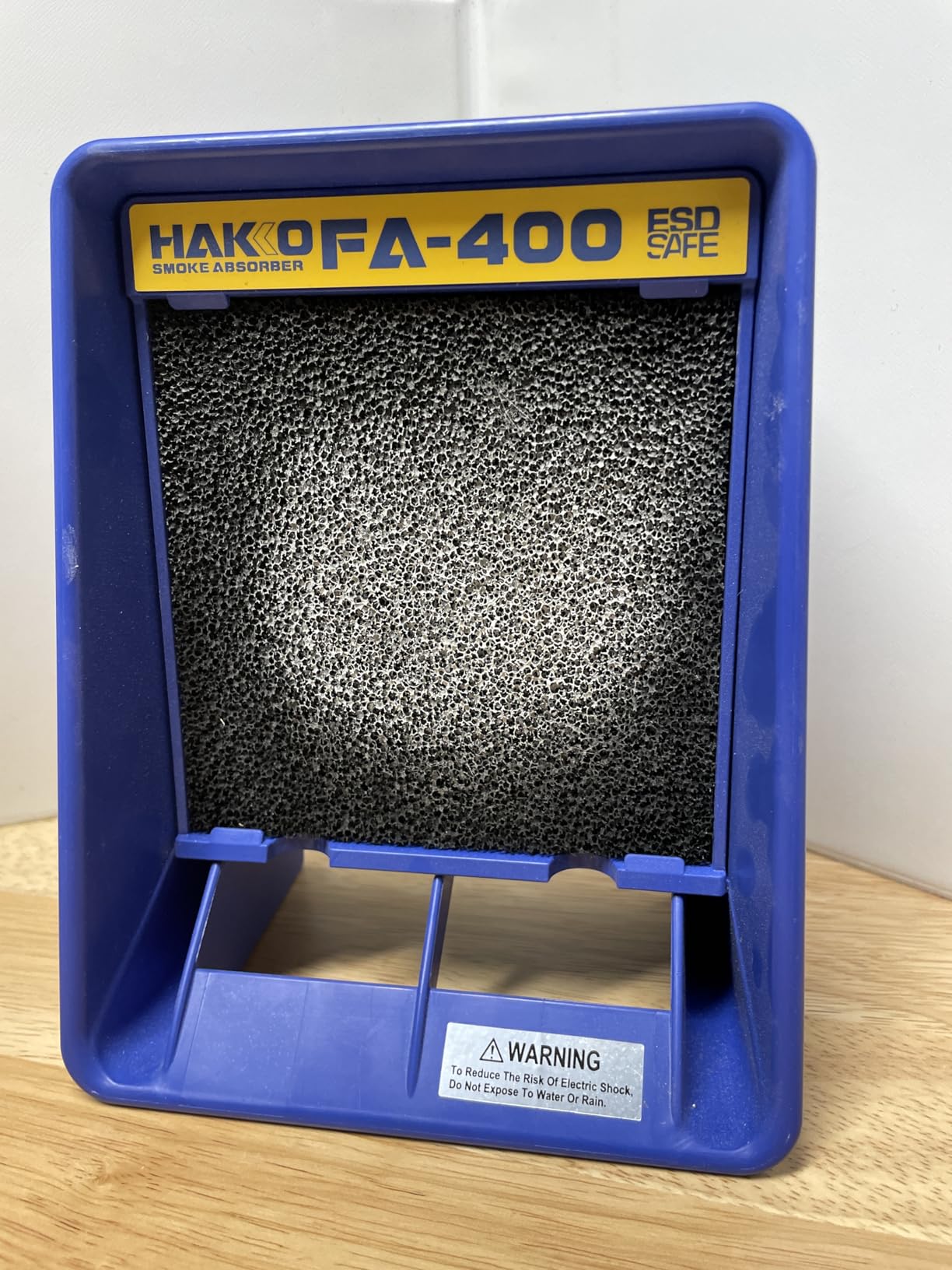
Hakko built its reputation on professional repair benches, and this is the model that carries the name. It rates 4.7 across 526 reviews with an 83 percent five star share, which puts it level with our top pick on satisfaction with a smaller but still substantial sample. What sets it apart is honesty about performance: the standard activated carbon A1001 filter absorbs up to 80 percent of odors, and an optional high efficiency filter, part number PN 999-198, removes up to 90 percent of airborne particles.
That optional particle stage is the reason this one makes sense if your work is dirtier than ordinary electronics assembly. It is a documented spec from a manufacturer with decades in the trade, not a vague claim from a marketplace listing. Filter changes are straightforward drop-in swaps, and the design has been in production since 2010, which usually means parts remain easy to find.
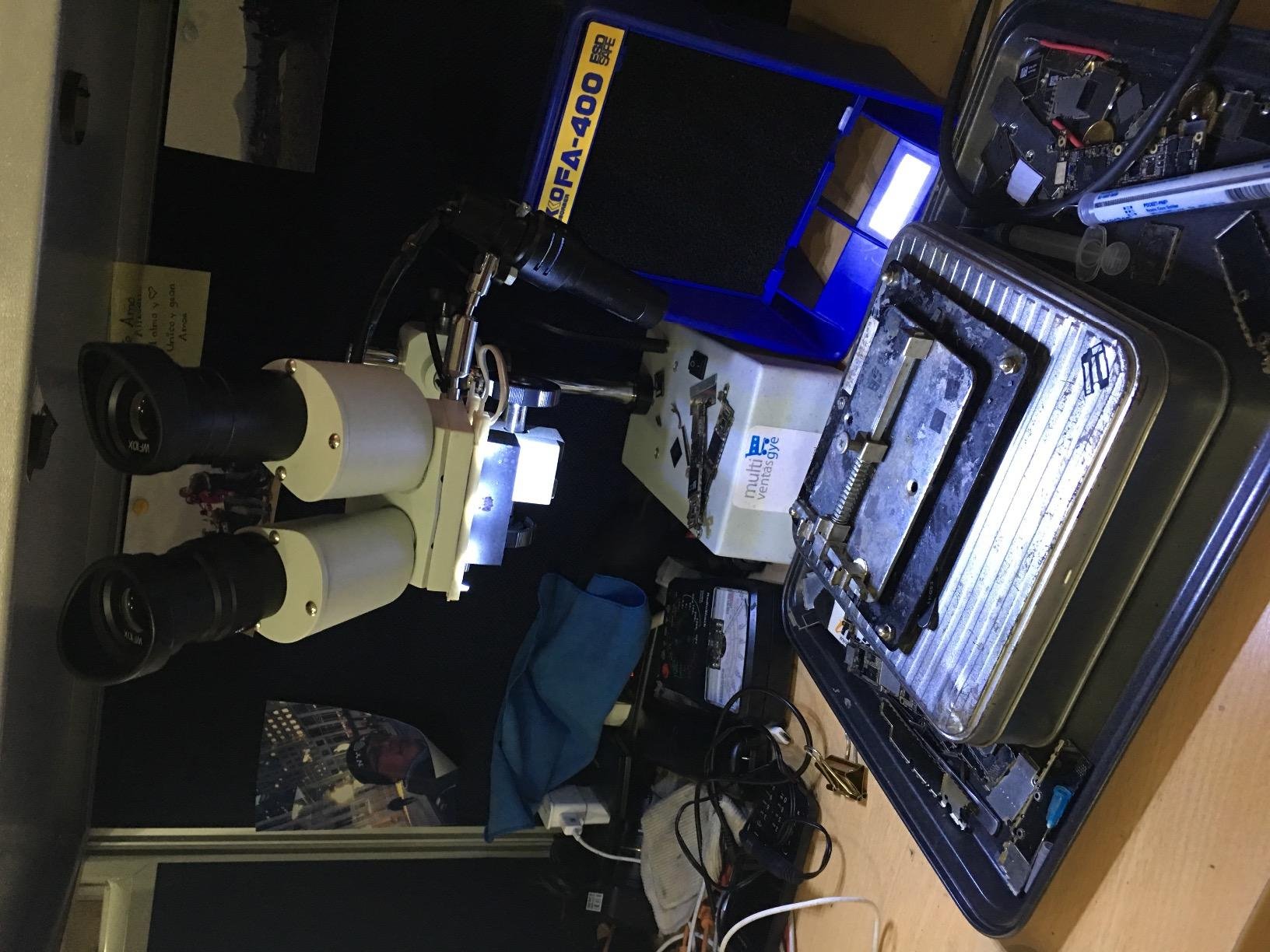
The dual positioning is more useful than it sounds. Standing upright it acts like a tower intake for general bench clearing. Laid flat in low profile it sits under a shelf or beside a board, which is how most home benches end up configured. At 19W it draws less power than the other models in this roundup.
When the documented numbers matter
If you are justifying the spend to a partner, a housemate or a landlord who wants to know what is in the air, published percentages help. Hakko gives you figures you can quote. Most of the cheaper units give you a fan speed and a marketing phrase, which tells you very little once the filter has loaded up.
Who should skip it
The body is 10.1 by 9 by 6.7 inches, the largest in this roundup, and it also carries the highest price of the ten. On a small desk in a small flat that is a real cost in space. It is the pick for someone who values a known brand and replaceable parts, not for someone optimising a hobby budget.
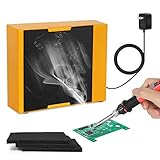
5. NOEVSBIG Metal Extractor – copper motor and ESD-safe build
- Metal enclosure and copper motor
- sturdier than typical plastic hobby shells
- ESD-safe construction for sensitive electronics work
- Two replacement carbon filters included in the box
- 2800 RPM is the slowest fan of the ten listed and needs close placement
- Keyword heavy listing name makes it awkward to shop for
- #39 category ranking in Fume and Smoke Extractors
This is the one we reach for when boards carry real money in them. The metal enclosure and pure copper motor are the reason, and 460 reviews at 4.5 with a 72 percent five star share suggest owners agree. The construction feels closer to workshop equipment than to a desk accessory, and that matters when you are working on a mixed analog and digital board near components you cannot easily replace.
The stated benefit for that work is ESD safety, which is listed in the pattern and design fields. On a soldering bench, static protection belongs in the iron, the mat and the extractor alike, because an extractor that sits next to your board should not be introducing anything. Two replacement carbon filters come in the box, which combined with the metal body means this is a buy it once kind of unit.
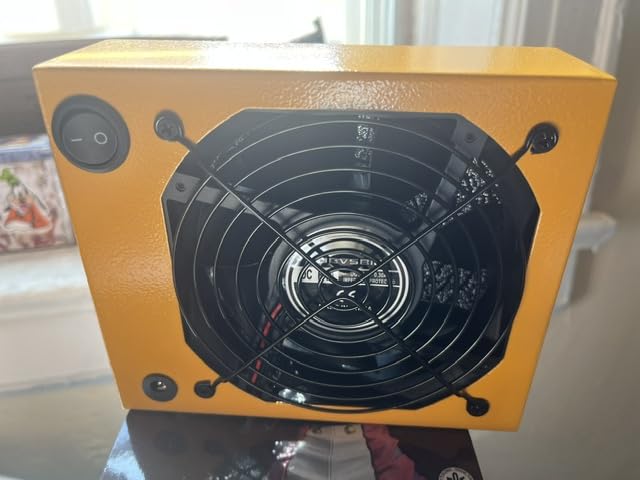
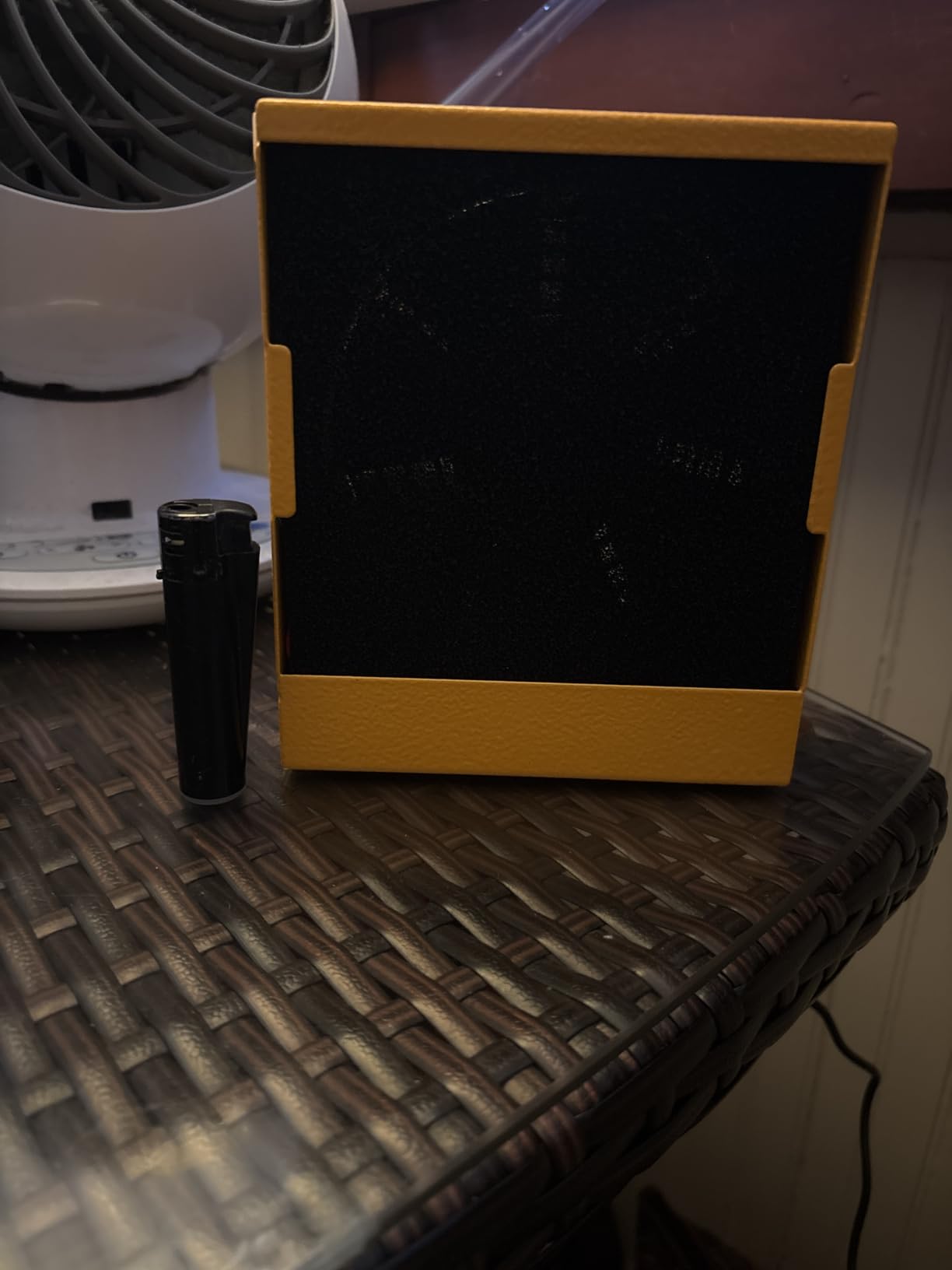
Rubber feet anchor it, a handle lets you move it, and at 1.72 pounds it is still portable enough to take to a different surface when you need the desk back. The yellow metal finish also makes it obvious on a cluttered bench, which is not nothing when you are hunting for the intake.
Why the motor specification matters
Cheap brushed motors are the failure point people worry about most in forums, and a copper motor in a metal shell is the upgrade that addresses it. Metal dissipates heat better than plastic, and the enclosure resists the knocks and heat cycles that crack cheap ABS housings. For anyone doing repair work on boards they cannot easily replace, that is the reason to choose it.
The compromise
2800 RPM is the slowest fan in this group, so the nozzle needs to sit close, roughly 4 inches from the joint. That is workable for fine work and awkward for anything large. The other drawback is cosmetic but real: the listing title is a wall of keywords, which makes it slightly harder to shop for than the cleaner-named alternatives.
6. Antidious Anti-ESD Absorber – a flat panel for tight benches
- ESD protection with surge suppression for sensitive components
- EC motor rated beyond 57000 hours
- Two foam plus activated carbon filters included
- Works flat or upright to fit awkward benches
- Reviewers report suction weaker than expected at distance
- 4.3 rating with the highest one star share at 9 percent
- Needs close working distance; some owners add a tube
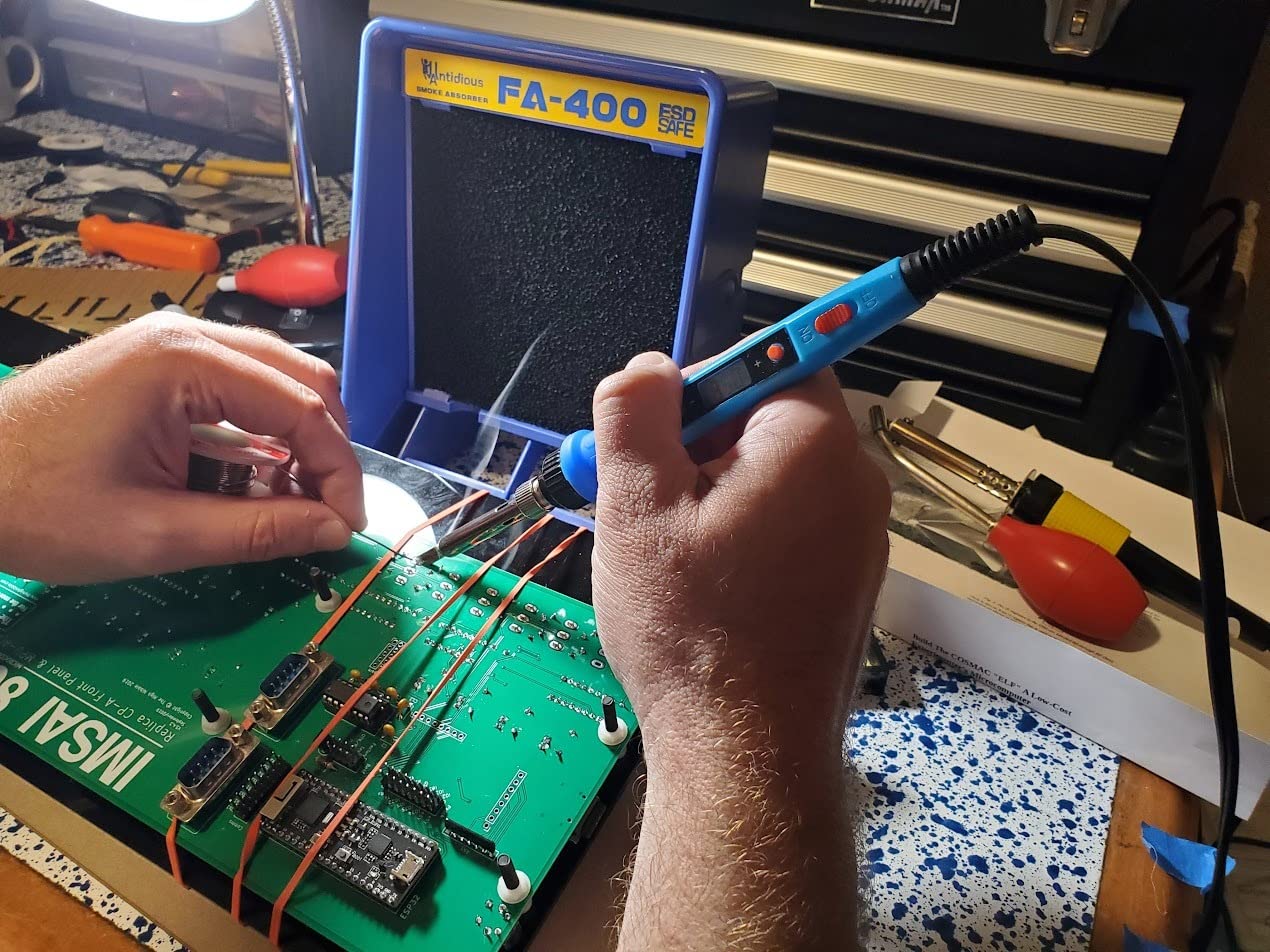
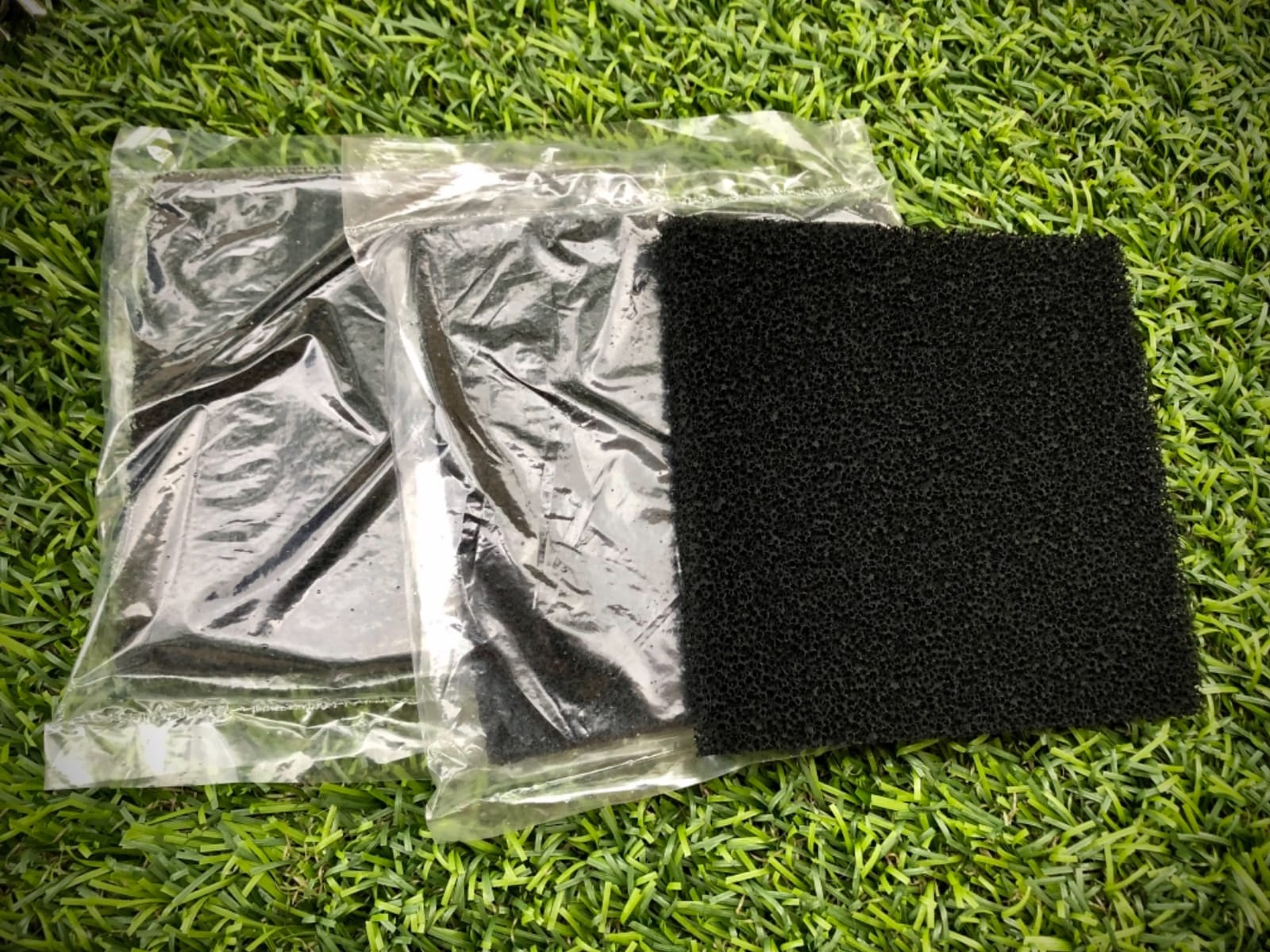
The shape is the selling point. At 4.7 by 4.7 inches with a depth under half an inch, this is a flat panel you can slide under a shelf or prop against the front edge of a desk, and it runs in either horizontal or vertical orientation. If your soldering area is a corner of a kitchen table, that flexibility beats a spec sheet.
The filtration is a urethane foam layer combined with activated carbon, and two filters ship in the box. The motor is an EC type rated for over 57000 hours of working life, which is a genuine longevity signal compared with brushed hobby motors. ESD protection with surge suppression is listed as a feature, diverting voltage transients away from sensitive electronics.
It is also the most polarised unit we reviewed. 369 reviews at 4.3, with 72 percent five star but 9 percent one star, the highest one star share in the group. Positive reviews describe a quiet, small, effective fan for hobby work. Critical reviews centre on suction that feels weaker than expected once the smoke is a few inches out.
What it does well
It disappears into small spaces and it is quiet. If your constraint is physical room rather than airflow, this solves a problem no other model on this list addresses. It also continues to run without dominating the room, which matters if you share a space or work in the evening.
Where the complaints come from
The suction complaint is consistent enough that we would not recommend it for large joints or heavy flux. Several owners add a tube to improve extraction, which is a sensible workaround. The other honest note is that a 4.3 average with a 9 percent one star share tells you the unit has a real failure mode, whatever the category ranking suggests.
7. YIHUA 948DQ-I – tiltable aim and the biggest spare media pack
YIHUA 948DQ-I Solder Fume Extractor with Tiltable Angle, Dual-filtering
- Eight spare adsorbers and two fenders
- the most replacement media included of any model here
- 30 degree tilt plus side fenders that stop smoke escaping sideways
- 75 percent five star feedback
- #2 category ranking in Fume and Smoke Extractors
- 10 cm capture distance is very short
- 5W draw suits light hobby work only
- 110-127V with a US plug only
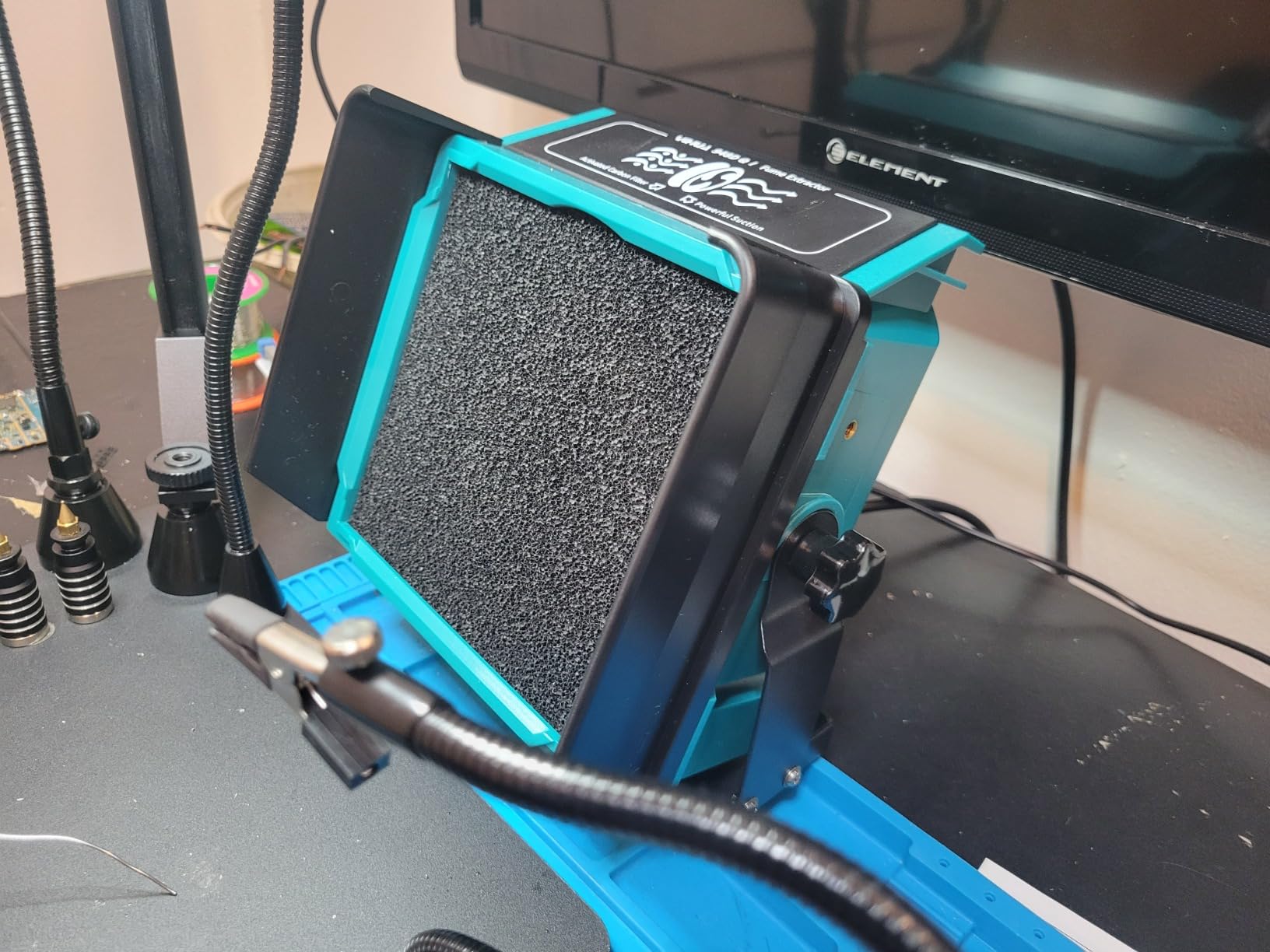
Angling the intake is something almost no compact desktop unit lets you do properly, and it turns out to matter. The 30 degree tiltable stand on the YIHUA 948DQ-I changes the intake direction, and the two side fenders stop smoke from escaping sideways before it enters the filter. Owners consistently credit the aim for noticeable improvement in capture, which is a bigger deal than any RPM number.
The filter situation is unusual in a good way. The box contains the extractor, eight filtration adsorbers, two fenders and the tiltable stand. Eight spare adsorbers is more replacement media than any other model in this roundup includes, which effectively removes the ongoing consumables cost for a couple of years of casual work.
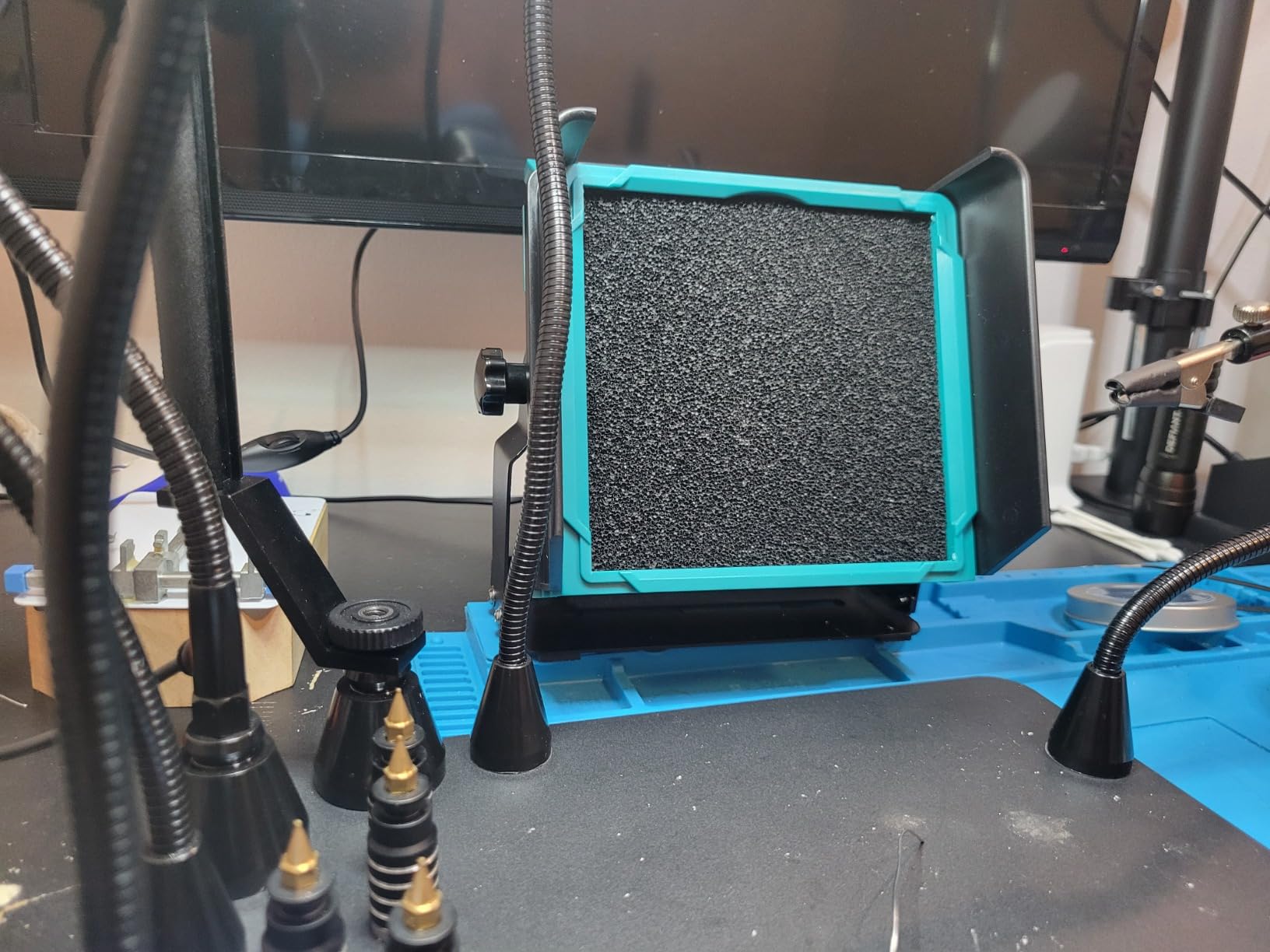
Dual front and rear filtration handles both particles and odor, and the five blade fan is specified for a longer operating lifespan with relatively low noise. At 336 reviews and 4.5, 75 percent of that feedback is five star, alongside 12 months of US manufacturer technical coverage and a #2 category ranking in Fume and Smoke Extractors.
Great for stained glass and detailed craft work
The tilt is the reason. Stained glass soldering, jewelry work and pyrography all involve holding the work at an angle, and a fixed intake fights you. With a tiltable front and fenders that stop side leakage, you can follow the seam without constantly shuffling the machine.
Keep it close
Effective adsorption is specified within a 10 cm straight line distance, so roughly four inches. That is among the shortest working distances here. With a 5W draw it is not designed to fight heavy flux on big joints, so pair it with good technique rather than expecting it to do the work for you.
8. Weller WSA350 – purpose-built for active fluxes
- Purpose built for the more active fluxes that defeat simple carbon boxes
- ESD safe with a spare WSA350F carbon filter in the box
- Quiet fan designed not to disturb a shared workspace
- Established professional benchtop brand
- No published RPM
- airflow or decibel figures
- 120V corded unit only
- Carbon only filtration with no particle stage
Weller built this one for the hardest version of the problem. Active fluxes, the aggressive no-clean chemistry used in commercial work, produce fumes that resist simple carbon filtration. This benchtop absorber is specified for that environment, and a replacement carbon activated filter is included so you are not waiting on a spare before your first job.
At 262 reviews and 4.4 with 73 percent five star, the feedback is steady and positive. Owners talk about quiet operation, the included spare filter, and effectiveness with strong flux. It is an ESD safe 120V unit drawing 20W, which is modest power for something you might leave running through a long session.
When active flux is your reality
If you repair professionally, work on salvaged boards nobody has cleaned, or handle leaded tinned work with aggressive flux, this is the honest choice. Carbon media is what handles those vapours, and Weller has committed to the application rather than treating it as a hobby accessory. The established brand also means replacement parts are straightforward to source.
What you cannot judge from the listing
There is no published airflow figure, no RPM and no decibel rating, which means capture distance is genuinely unknown until you own it. That is the trade for a purpose built design from a long standing manufacturer. It is also carbon only, so if you want particle removal you would still need the optional high efficiency class of filter from a different brand.
9. SainSmart Gooseneck Fan – reach plus a built-in task light
SainSmart Portable Fume Extractor Fan, Magnetic Solder Smoke Absorber
- 10 inch capture distance
- the longest reach in this roundup
- Memory stainless steel gooseneck that holds its shape extended
- Built-in dimmable LED lamp adjustable from 3000K to 6000K
- Magnetic cone base plus a spare clamp for non metal surfaces
- Smallest review pool in the group at 200 ratings
- 12V supply needs an external adapter
- Taller profile at just over 10 inches
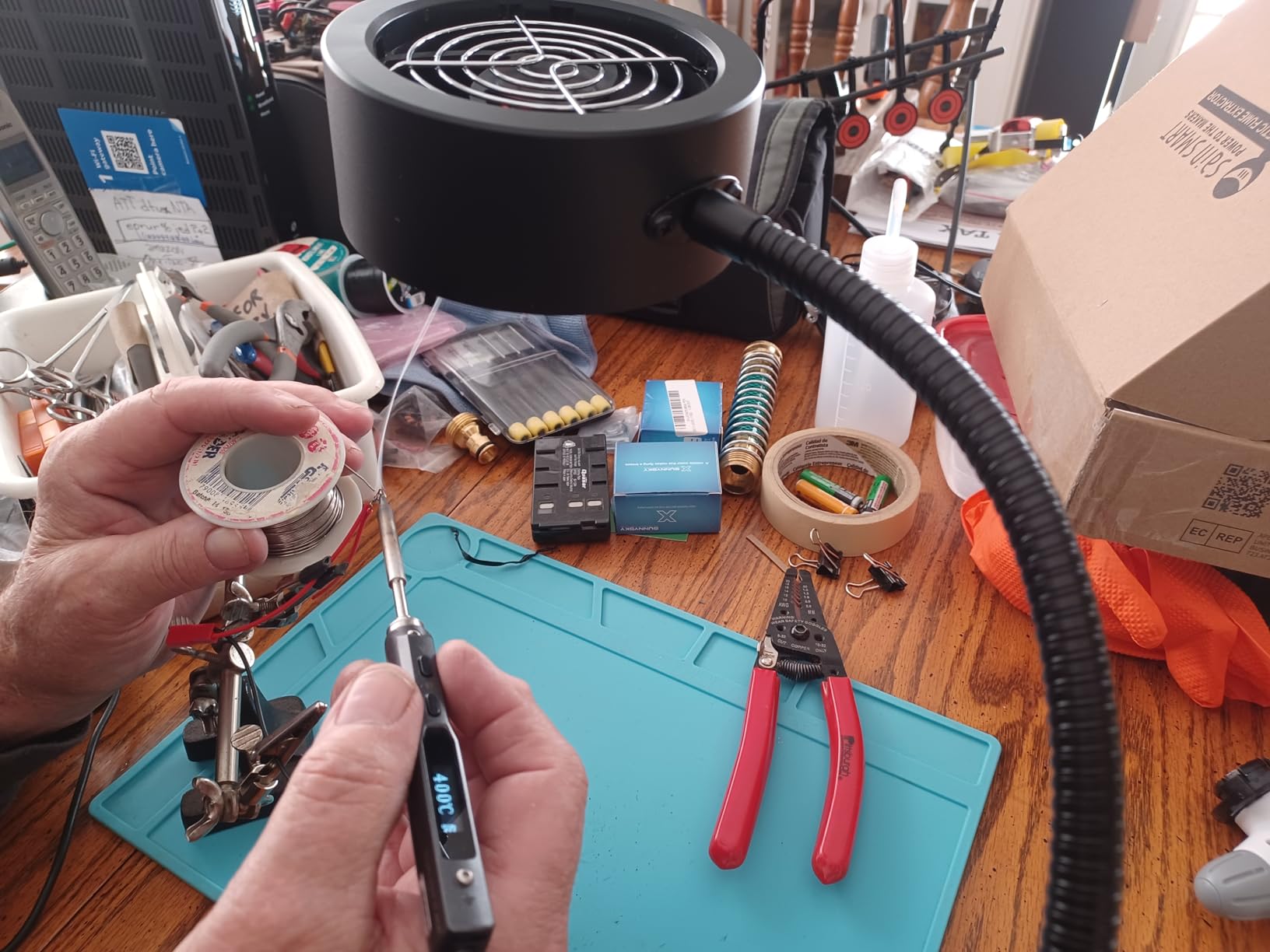
The gooseneck changes what you can do on a bench. A 400mm memory stainless steel tube holds whatever shape you bend it into without sagging back, so you can park the intake over a board, move it to the next joint, and park it again. That is closer to how extraction is done properly than sliding a box around, and it pairs with the longest stated capture distance here at up to 10 inches.
The mounting options are unusually thoughtful. A magnetic cone base sticks to vertical metal surfaces, and a spare clamp handles wooden benches and desks that are not steel. At 38.4 ounces the unit is light, and it runs on 12V through an adapter rather than straight from a wall socket, which is the main compromise.
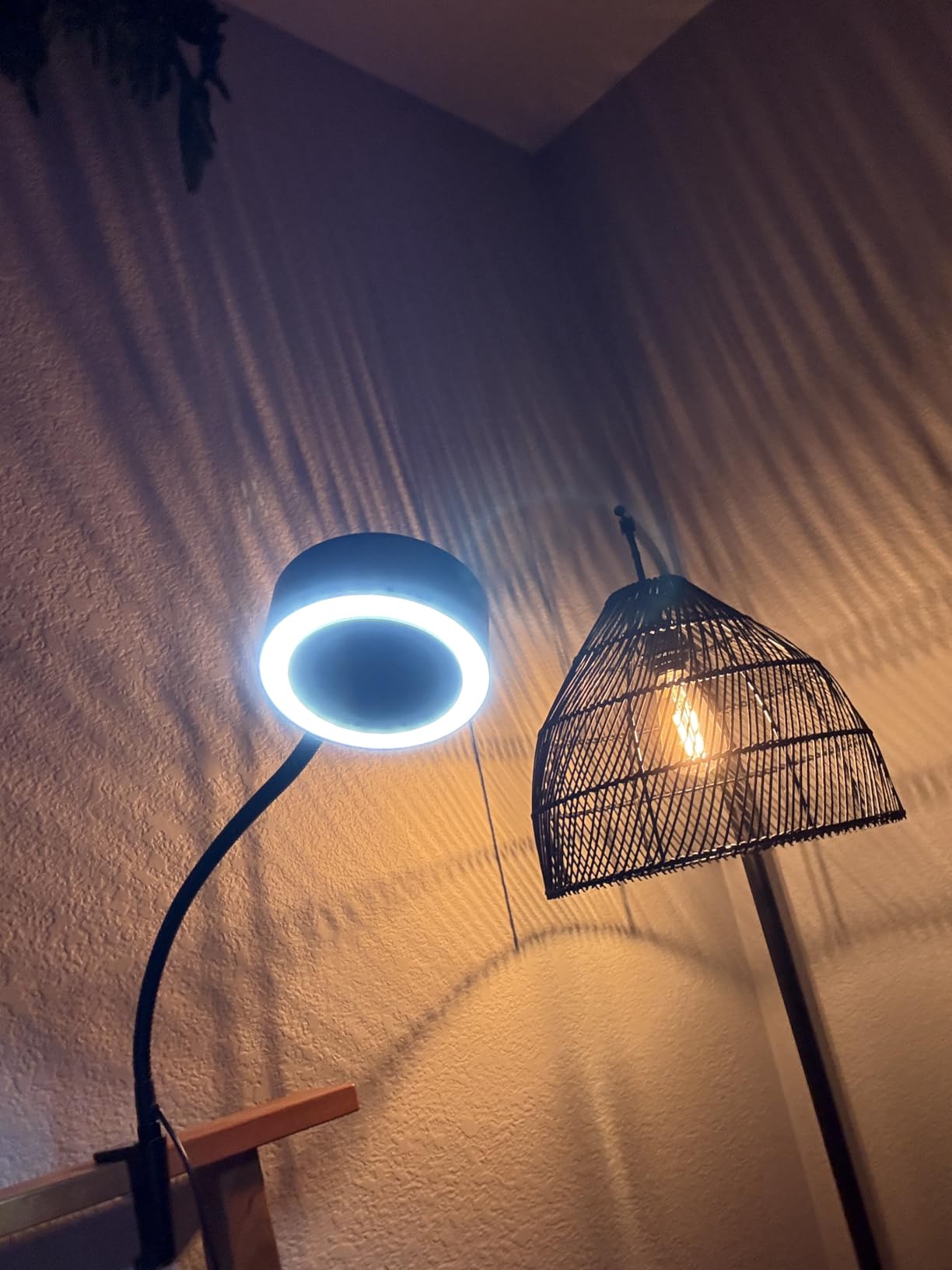
The integrated LED lamp is the feature no one else here offers. Brightness is adjustable across 3000K to 6000K, which means you can set a warm tone for detail work and a bright neutral for inspecting joints. If your soldering happens at night or in a poorly lit corner, it removes a second tool from the bench.
Reach you can actually reposition
The memory steel gooseneck is the differentiator. Flexible hoses on competing units droop, so the intake ends up somewhere you did not aim it. This one stays where you put it, which means the 10 inch capture figure is usable rather than theoretical.
The thin review caveat
200 reviews is the smallest sample in this roundup, and forum readers are right to be cautious about thin pools. Feedback is mixed at 4.3, with 10 percent three star ratings and complaints about modest suction at full reach. If you work within four inches of the joint, it is very good. If you want the intake parked at arm’s length, test the reach for your own bench first.
10. ToolBud Magnetic Flap Extractor – a heavy metal body on a starter budget
- Iron construction that feels built to outlast a hobby career
- Removable magnetic wings widen the intake and guide fumes into the filter
- Stiffer carbon media than many budget models
- with a spare included
- 4.6 rating with only 1 percent one star feedback
- Smallest review pool here at 108 ratings
- Magnetic flaps hold weakly and cannot be posed at many angles
- Audible fan noise at full speed
- 110V US unit only
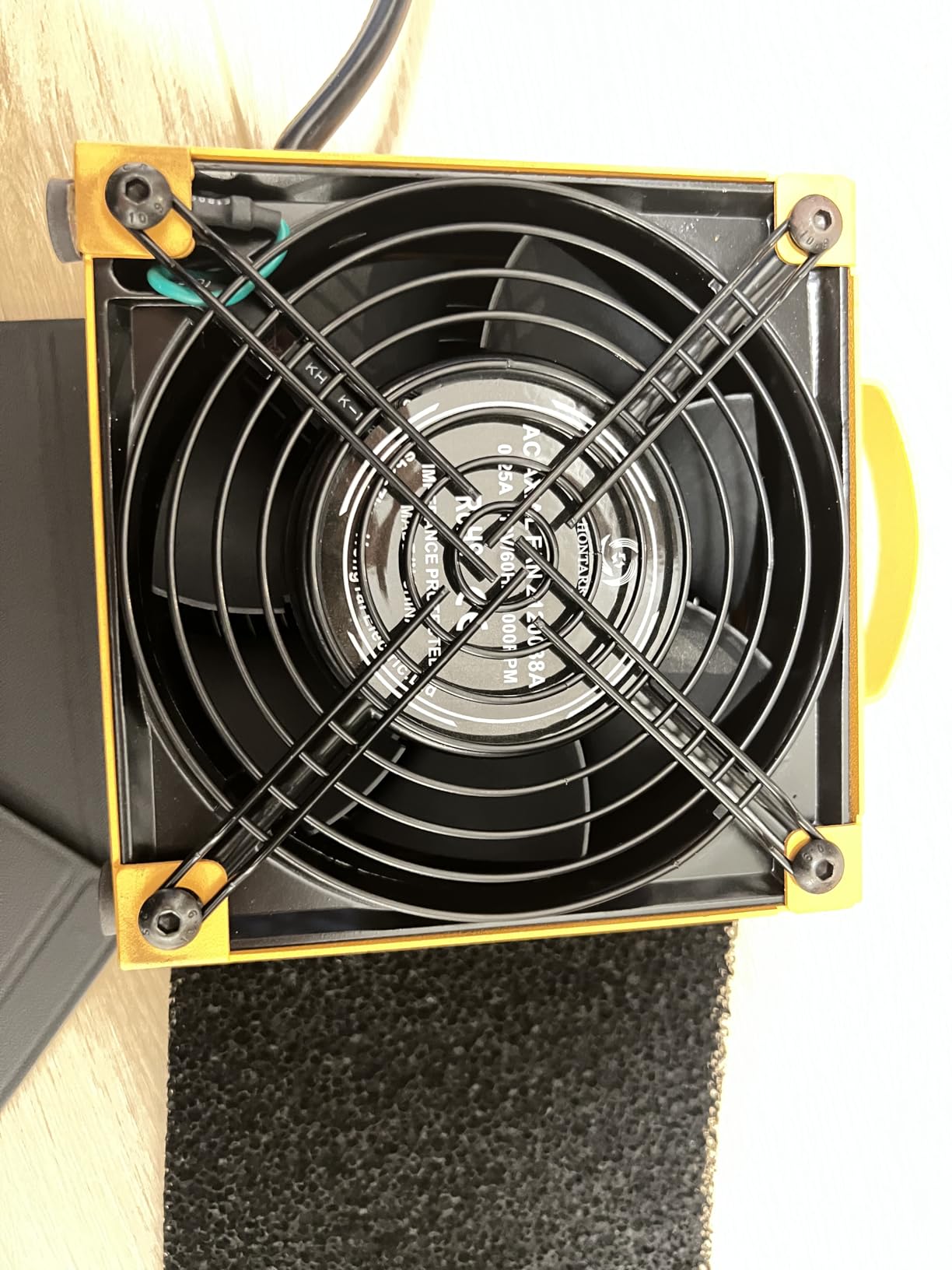
The magnetic flaps are the upgrade over the boxes this replaces. Two detachable wings expand the intake area and guide fumes into the filter instead of letting them drift past the edge, and because they detach you can clean or swap the carbon filter underneath. The carbon media itself is described as rigid rather than flimsy, which is a meaningful upgrade at this end of the market.
The iron body is the second differentiator. At 2.23 pounds it has the weight of something that will sit on your bench for years, and reviewers consistently describe it as built to outlast a soldering career. The 3000 RPM motor draws 0.25A on 110V.
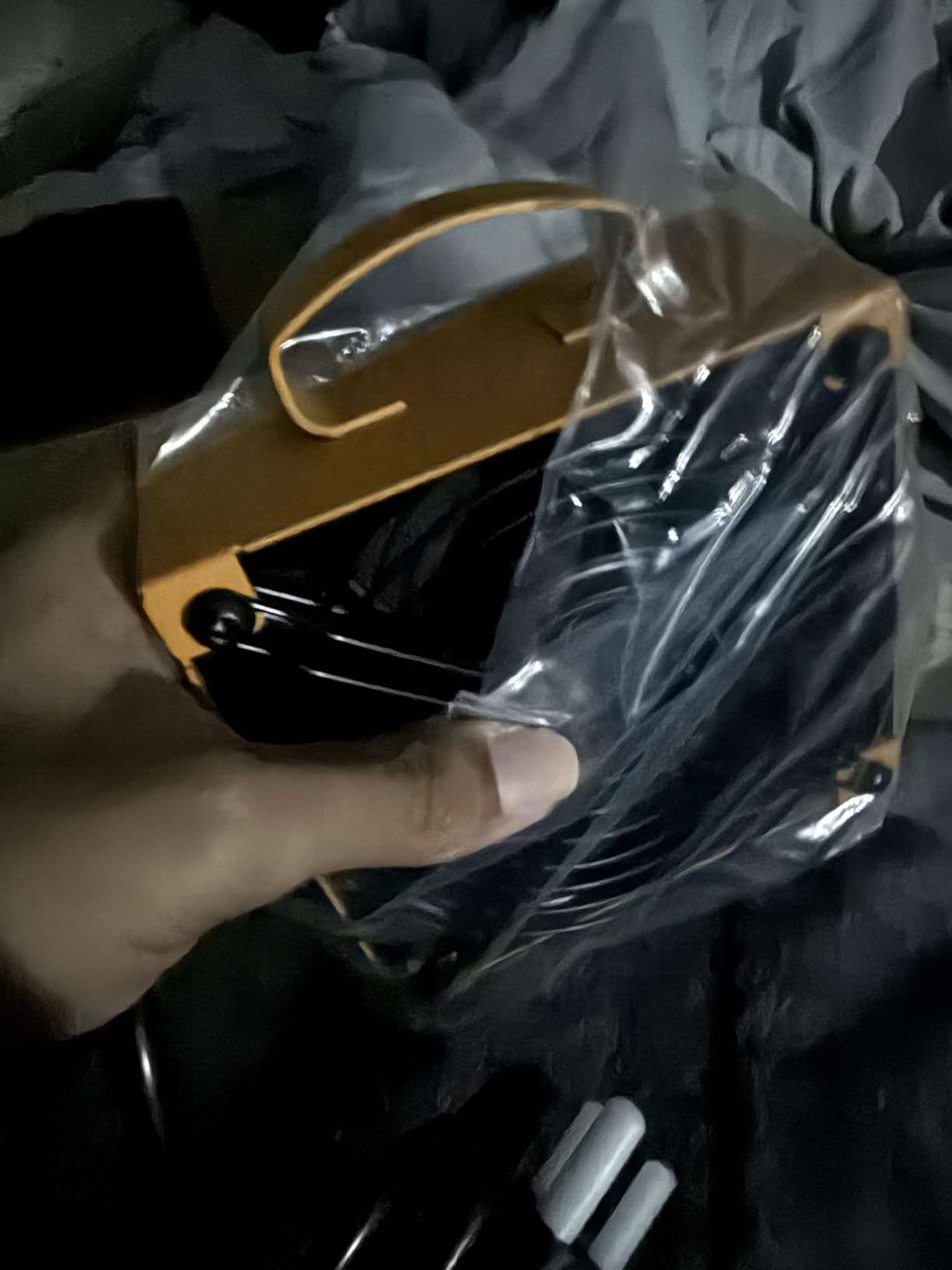
This is the least expensive model in the roundup while still carrying a 4.6 average, with 73 percent five star and only 1 percent one star feedback. That combination is unusual. For someone starting out, or adding an extractor to a second bench, spending very little on something that will not crack is a sensible place to begin.
Why the wings help
Smoke rises and spreads in a cone. A small intake misses most of that cone, which is exactly the complaint attached to other budget boxes. Widening the intake catches the plume closer to its source and funnels it into the filter, which is a cheap way to improve capture without adding fan power.
Know what you are buying
108 reviews is a thin pool, and the mechanism has limits: the magnets hold weakly and the wings mostly point forward rather than staying wherever you put them. The fan is audible at full speed, one owner even ran it off a lamp dimmer, and it is 110V only, which drew complaints from buyers elsewhere. Buy it as a solid starter, not as a machine you will fine tune.
What Solder Fumes Actually Are
Almost all of what you smell when soldering comes from the flux, not the metal. Traditional rosin core solder uses a rosin based, or colophony, flux that vaporises at working temperature and releases a fine aerosol of resin droplets. That aerosol is sticky, it coats everything within reach of the bench, and the vapour fraction of it is what people notice as a sharp, resinous odor.
The health concern with long term exposure is specific and named: solderer’s asthma, an occupational asthma triggered by colophony vapour, along with chronic irritation of the airways. The exposure is usually low and cumulative, which is precisely why people underestimate it. If you solder for ten minutes once a month, the arithmetic barely matters. If you solder most evenings in a closed room, it compounds quietly for years.
Lead-free solder is not automatically the safer option for your lungs. It melts at a higher temperature, and that higher working temperature generally requires a more aggressive flux chemistry to wet the joint properly. The metal risk goes down when you switch, and the fume risk can stay the same or shift rather than disappear.
One more thing worth stating plainly, since it is the top question in every forum thread about this. A fume extractor is not a respirator. A respirator filters the air you are already breathing, after the fume has spread and after you have inhaled some of it. Source capture removes the fume before it reaches you at all, which is why placement matters as much as the machine you choose.
If you also work with welding, our guide to welding fume extractors covers the metal fume side of the same problem, which needs different media entirely.
How Much Airflow Do You Actually Need?
Here are the numbers most guides will not give you. Airflow is quoted either in CFM, cubic feet per minute, or m3/h, and one cubic foot is about 1.7 cubic meters, so 52 CFM is roughly 88 m3/h. For a home bench you do not need industrial volumes. You need enough air moved, at the nozzle, to keep the plume from reaching your face.
Occasional hobby soldering, a few hours a month: 20 to 40 CFM with a 4 to 6 inch capture distance is genuinely enough. Anything in this band captures flux smoke before it drifts.
Regular hobbyist, most evenings plus weekends: 40 to 60 CFM, and ideally a hose or gooseneck so the intake can sit over the joint rather than beside the board. This is the band where the 52 CFM KOTTO sits.
Repair work, rework stations, active fluxes: 60 CFM and above, with static pressure specified so the fan keeps moving air once filters load. The KOTTO at number two is the only model here publishing both figures.
Stained glass, wood burning, multi-user benches: treat it like regular hobbyist work and prioritise capture distance and tiltability over peak airflow.
Raw CFM on its own misleads, because it is measured on an empty filter and usually with the hood square to the intake. Once a carbon filter has loaded, airflow drops. The two numbers worth caring about are capture distance, because that is what decides whether smoke reaches you, and static pressure, because that tells you whether the unit holds its airflow as the filter ages.
Buyers should also check the units they are comparing. A listing quoting 115 cfm air flow capacity is describing a housing volume, not a capture rate at the nozzle. Treat capture distance as the honest spec, and airflow as a rough sanity check that the fan is in the right class.
If you want a wider look at bench layouts and larger extraction setups, our fume hood picks cover the scale above what a home bench needs.
Where to Put the Nozzle and How to Keep the Smoke
Get the nozzle within 3 to 5 inches of the joint. Not overhead, and not level with your face. The plume rises and drifts, so the intake wants to sit slightly to the side of and slightly below the work, close enough that the fan pulls the plume in before it disperses. Every desktop unit in this roundup is rated between 4 and 6 inches, so the hardware and the technique are designed to match.
Kill the cross-breeze. An open window, a room fan or an HVAC vent pulling across the bench will rip the smoke away faster than any small extractor can capture it. This is the single most common reason people conclude their machine does not work. If you want ventilation, run it in the room but make sure nothing pushes air across the bench surface.
For rooms with no window, which is where most home soldering actually happens, source capture becomes more important rather than less. Recirculation is fine provided the filtration is right, which is where the multi stage units like the MUIN earn their place. Add a box fan exhausting out of the room if you have a door or a duct to work with, and you have a decent two stage setup for very little money.
Two habits separate people whose soldering room smells fine from people whose curtains and laptop vents smell like rosin. First, work at the lowest temperature that will wet the joint properly, since most smoke comes from burnt flux, not melted metal. Second, clean your bench and your extractor intake regularly, because a loaded pre-filter silently reduces airflow long before anything looks obviously wrong.
When to Change Filters and What It Costs You
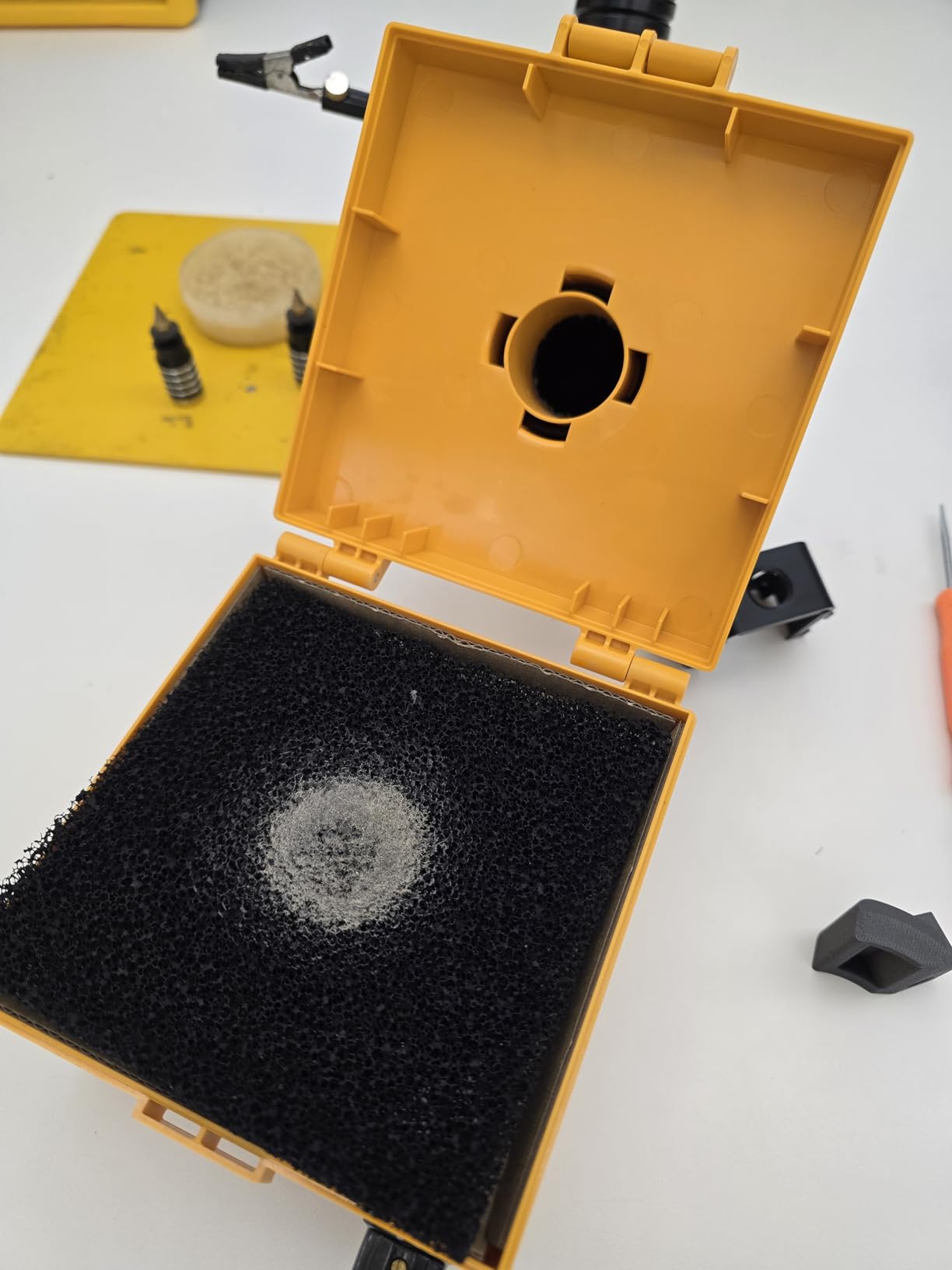
Change filters on cues, not on a calendar. The order you will notice things is reliable: first a drop in suction at the rated capture distance, then a smell that returns a minute or two after you stop soldering, then visible greying or browning of the HEPA media, and last of all a fan that sounds strained.
Cost of ownership is where cheap models surprise people. Carbon only designs use inexpensive media, but the foam and carbon stacks still need regular swapping. The YIHUA includes eight spare adsorbers in the box, which covers years of casual work. The Hakko and Weller use part numbered filters that are easy to source through normal channels, and both include a spare.
What to watch for is proprietary lock-in. A unit whose cartridge is only sold as a multi pack from the same brand is a recurring cost. A unit using a standard carbon or foam mat you can cut to size is a maintenance item. Neither is a dealbreaker, but both belong in the decision if you solder heavily enough to change filters four times a year.
Our broader home bench fume extractor guide goes deeper on media types, and this roundup’s sibling tested picks list covers the units worth considering across different bench sizes.
The DIY Route, Honestly Assessed
The classic build is a 12V computer fan, a cardboard or printed enclosure and an activated carbon mat strapped to the front. It is cheap, it takes an hour, and it is better than nothing.
Cut a rectangular housing from cardboard or print one, roughly the size of a large PC fan with a shallow depth.
Mount a 12V brushless or quiet PC fan as the intake, sealed so no unfiltered air leaks around the edges.
Fit a carbon mat across the intake face and secure it so it cannot be pulled into the fan.
Add a wire or printed bracket so the nozzle can sit 3 to 4 inches from the joint, not 8.
Run it from a 12V adapter and expect to replace the carbon mat every few months of regular use.
Here is the limitation that kills most DIY attempts. A 20W PC fan has very little static pressure, so once you put a dense HEPA or a thick carbon stack in front of it, the fan simply stops moving air. Desktop fan builders report results that are better than nothing by a modest margin, with a weak capture zone around the intake.
So who should build one? Someone who solders once or twice a month, wants a weekend project, and can accept working within a few inches of the joint. For everyone else, the money is better spent on a purpose built unit with a sealed filter path. And if you already have a Corsi-Rosenthal style box filter running in the room, that is a reasonable complement to a small extractor, not a replacement for source capture.
Frequently Asked Questions
What is the recommended CFM for fume extraction?
For a home electronics bench, 20 to 40 CFM covers occasional soldering and 40 to 60 CFM covers regular evening use, with capture distance at the nozzle mattering more than peak airflow. Add static pressure figures to the comparison when a unit publishes them, since airflow drops as carbon filters load.
Do I need a fume extractor to solder?
If you solder more than occasionally in an enclosed room, yes. Rosin and colophony vapour from flux can trigger solderer’s asthma over years of exposure, and a window alone rarely handles a room with no opening. An extractor is the cheapest way to capture fumes at the source.
What is the best fume extractor for soldering?
The KOTTO Solder Smoke Absorber is our pick for most home benches, pairing a 0.4 inch activated carbon filter with a 3000 RPM fan rated to capture from 5 to 6 inches and the widest review pool in the roundup at 2454 ratings. For quiet, small desk setups the MUIN three stage model is the better fit.
What is the best mask for soldering?
A respirator is a supplement, not a substitute. It filters air after the fume has already spread, whereas source capture pulls the smoke away before you inhale it. If you solder enclosed, invest in extraction first and treat respiratory protection as a backup for unusual jobs.
How long do fume extractor filters last?
Watch for cues rather than counting months. Suction drops at the rated distance, then odor lingers after you stop, then the filter media greys or browns. Heavy flux work loads a carbon filter far faster than occasional hobby soldering on the same filter.
How much ventilation is needed for soldering?
Source capture is the primary control and room ventilation is the supplement. Keep the nozzle within 3 to 5 inches of the joint, and close the window or disable the HVAC vent that pushes air across the bench, since a cross-breeze carries smoke away faster than a small extractor can pull it in.
The Best Fume Extractor for Your Bench
The best fume extractors for soldering at home do not come down to the biggest number on the spec sheet. They come down to capture distance at the nozzle, filter media that matches your flux, and a noise level low enough that you leave it switched on. Our Editor’s Choice, the KOTTO Solder Smoke Absorber, wins on the combination of all three plus the largest review base we found, at 4.7 stars from 2454 ratings.
Buy quieter if your bench is small and shared, reach for the hose and gooseneck models if you work large panels or active flux, and start with a metal-bodied unit if you handle boards you cannot afford to replace. Whatever you pick, place the nozzle within 3 to 5 inches of the joint and kill the cross-breeze. That placement will do more for your air quality than any upgrade you make later, and it is free.
Updated for 2026. Every rating, review count and specification in this guide comes from the manufacturer or retailer listing data current at the time of writing.