
Every compound bow archer eventually asks the same question: which release aid should I actually buy first? The honest answer is that the release is the smallest and most misunderstood piece of gear on your bow, and picking the wrong one in your first month is the fastest way to pick up a bad habit you will spend a year undoing.
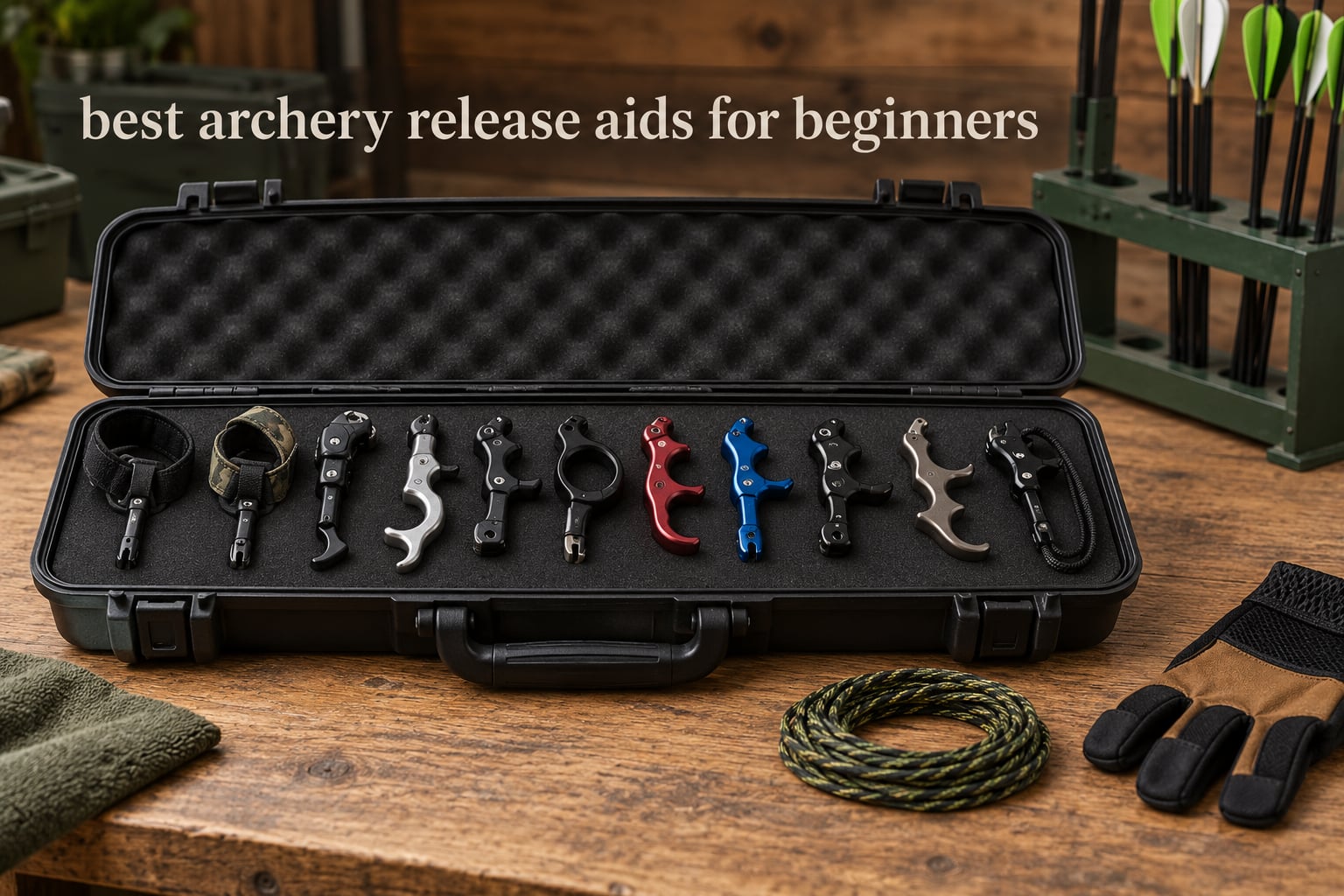
There are four families of release aid, and knowing them by name is most of the battle. An index finger release hangs from a wrist strap and you squeeze one trigger with your index finger, which makes it the default choice for a first bow. A thumb release is handheld with no strap and you press a thumb button. A hinge release has no trigger at all, you rotate it through your hand using back tension. A resistance release fires at a set holding weight a few pounds past the bow’s back wall. This roundup of the best archery release aids for beginners concentrates on the first two families, from strap models to four-finger thumb models, so you can see them side by side before you spend anything.
We spent weeks with these releases, swapping them one at a time on the same bow, and the pattern was consistent. The hardware matters far less than the fit and the habit. A mid-range strap release that fits your hand will beat a premium release you fight with every time. If you are still choosing targets, our archery target picks are worth reading alongside this guide.
Table of Contents
Top 3 Picks for the Best Archery Release Aids for Beginners In 2026
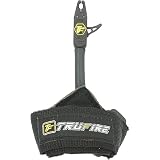
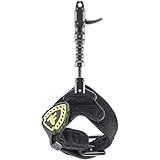
Tru-Fire Smoke Extreme
- 360-degree rotating head
- Adjustable travel with foldback
- Compact jaws
Quick Overview of the Best Archery Release Aids for Beginners (October 2026)
All ten releases below are index finger strap models or four-finger handheld thumb models, which is deliberate. Those two configurations cover almost every beginner who owns a compound bow today. Nothing in this list is a hinge, because a hinge rewards back tension that only arrives after months of consistent practice.
| Product | Specifications | Action |
|---|---|---|
| Tru-Fire Patriot |
|
Check Latest Price |
| Tru-Fire Smoke Extreme |
|
Check Latest Price |
 Scott Archery Quick Shot Scott Archery Quick Shot |
|
Check Latest Price |
 Spot Hogg Wiseguy Spot Hogg Wiseguy |
|
Check Latest Price |
 NIKA ARCHERY Caliper Release NIKA ARCHERY Caliper Release |
|
Check Latest Price |
 sntxmy 4-Finger Thumb Release sntxmy 4-Finger Thumb Release |
|
Check Latest Price |
 LWANO S1 Bow Release LWANO S1 Bow Release |
|
Check Latest Price |
 NoxDyn Hybrid Thumb Release NoxDyn Hybrid Thumb Release |
|
Check Latest Price |
 NoxDyn 4-Finger Thumb Release NoxDyn 4-Finger Thumb Release |
|
Check Latest Price |
 xxiaojun Wristband Release xxiaojun Wristband Release |
|
Check Latest Price |
What Is an Archery Release Aid?
An archery release aid is a mechanical device that clamps onto a cord loop on the bowstring and frees the string when you press a trigger or rotate the release through your hand, so the string is let off consistently instead of pinched or plucked with your fingers.
A few definitions make the rest of this guide easier. The D-loop is a small cord loop fastened to the bowstring that the release grabs instead of the string itself. A caliper release grips the D-loop in a two-jaw clamp, while an open hook uses a single hook that you clip on one-handed. Trigger travel is how far the trigger moves before it releases, and trigger tension is the force it takes. Back wall is the weight of the bow at full draw, and back tension is the pressure you create by rotating your hand behind your jaw without pulling harder.
What all of this fixes is inconsistent let-off. Most early grouping problems on a compound bow come from squeezing or plucking the string instead of letting a mechanism release it.
1. Tru-Fire Patriot Release: Best Overall for a Brand-New Compound Shooter
Tru-Fire Patriot Archery Compound Bow Release – Adjustable Black Wrist Strap
- Adjustable trigger travel for tuning the feel
- Most reviewed release in this roundup by a wide margin
- Padded strap is comfortable over long sessions
- Ambidextrous body
- Very light trigger can fire early if held carelessly
- Fixed strap length suits smaller hands best
- No audible click to confirm the jaws are locked
The Tru-Fire Patriot is the release most beginners end up on, and that is not an accident. Close to five thousand reviews sit behind it, which means almost every quirk you are likely to hit has already been documented by somebody else. The padded nylon power strap goes on in a second and stays comfortable through a full practice session.
What I noticed first was how quiet the draw is. There is no clatter from the strap while you come up to the anchor, so it disappears into your shot process faster than a model that announces itself every time. Adjustable trigger travel lets you take some of the sharpness out of the trigger while your hand is still learning to hold steady.
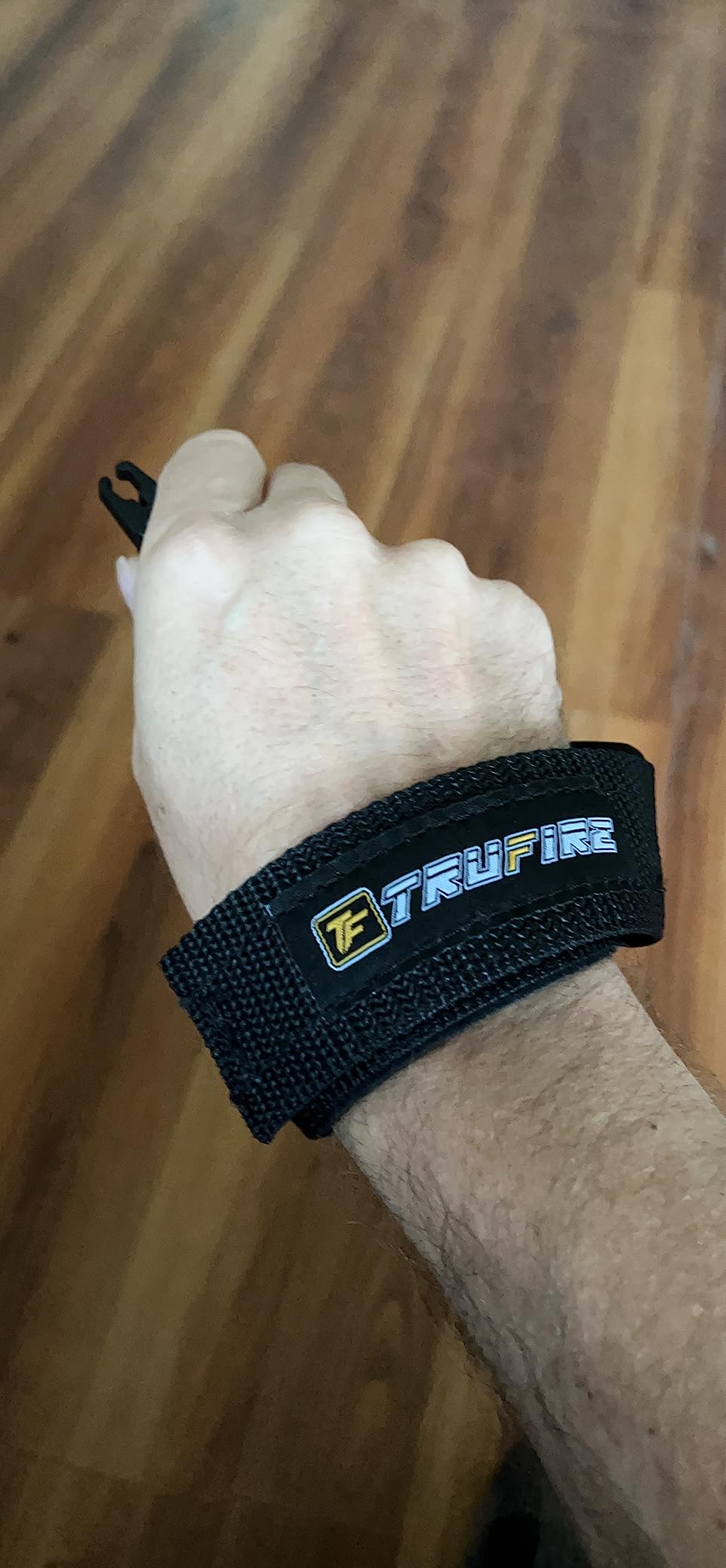
The trade-off is that the trigger is very light. On a bow with a light back wall, an overeager squeeze can fire the shot before you are settled on the pin, and that shows up as a high, inconsistent arrow. The fix is practice, not a different release. Back the trigger off with the adjustment screw and let the shot come off the back wall rather than off your fingers.
The strap length is fixed, which is the one specification that can rule this model out for you. If you have a large hand or a long forearm, the strap sits high on your wrist and pushes the anchor off. Measure first. For most adults it is a fit, and at 9.07 grams it is the lightest thing you will hang off your wrist.
Why this works for a first bow
It asks very little of you. One trigger, one finger, one strap, and enough adjustment range that you can dial it in over a season instead of on day one. A first release should disappear into your routine, and this one does that better than anything else in the list.
Where it will frustrate you
The trigger has no safety and no audible confirmation, so if your bow is set to a light draw weight the release can surprise you. Practice with the bow unstrung until the finger placement is automatic, then move to a strung bow and short distances.
2. Tru-Fire Smoke Extreme Release: Best Adjustable Strap Release for Long Practice Days
- Highest rating in this roundup
- Rotating head works for either hand
- No-stretch strap resists sagging
- Compact jaws hold up under repeat use
- Compact jaws need a steady hold to stay seated
- No-stretch strap feels firmer than padded elastic
The Smoke Extreme sits at the top of the rating spread here at 4.6 stars, with 76 percent of its reviews at five stars. That profile matters for a beginner because a release with a few rough edges still earns praise, while a release that works exactly as described earns indifference.
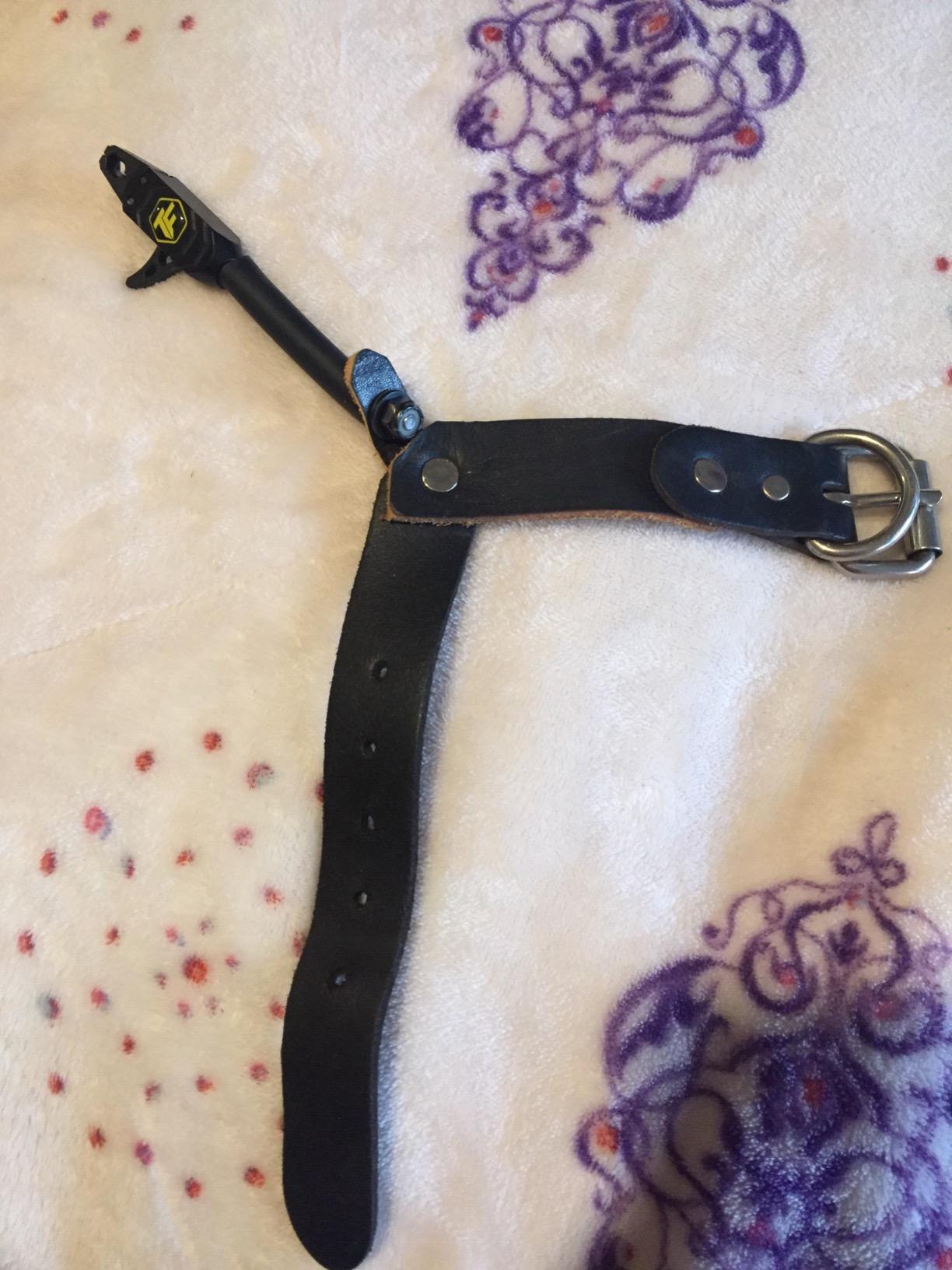
The 360-degree rotating trigger head is the feature you will feel most. It turns through a full circle so you can mount it whichever hand you shoot, and the no-stretch strap with a soft interior lining stays flat against your wrist rather than bagging out over a long afternoon. Adjustable travel with a foldback option lets you shorten the trigger throw if you are working on not anticipating the shot.
The compact jaws are the argument against it. They are described as rugged, and they are, but a dime-sized head has less surface area holding the D-loop than a larger caliper. If you are not careful about keeping the release square during the draw, this is not the forgiving option.
It is also made in Wisconsin, and that shows up in the finish rather than in any spec sheet. If you shoot three days a week, the difference between a strap that stays flat and one that stretches is the difference between a release you forget you are wearing and one you are always aware of.
Why this works for long sessions
Everything about it resists fatigue. Flat no-stretch webbing, soft lining, a head that rotates freely, and a trigger you can shorten as your technique improves. It is the strap release to buy if your practice schedule is measured in hours rather than sessions.
Where it falls short
The compact jaws ask for a clean, square draw. If you tend to let the release roll in your hand, pick a model with a wider clamp instead, or work on a wall with a target bag before you blame the gear for a bad group.
3. Scott Archery Quick Shot Release: Best Value Strap Release for Everyday Practice
- Buckle strap is quiet and holds its fit
- Light aluminum build at 3.84 oz
- Quick lever avoids a floppy hook feel
- Aluminum with leather and neoprene
- Buckle takes longer to put on than hook and loop
- One size fits most rather than all
The Quick Shot is the one I recommend when someone asks what a good first release costs if they want something better than the cheapest option. It is an aluminum-bodied strap release with a leather and neoprene strap and a buckle closure, and it weighs 3.84 ounces.
The buckle is the real differentiator. Buckles are quieter than hook and loop closures, and quiet matters more than most beginners expect. Every rustle while you settle onto the anchor is a cue for your brain to time the shot, and a silent strap lets you build the shot on the sight picture instead of on the sound of your own gear.
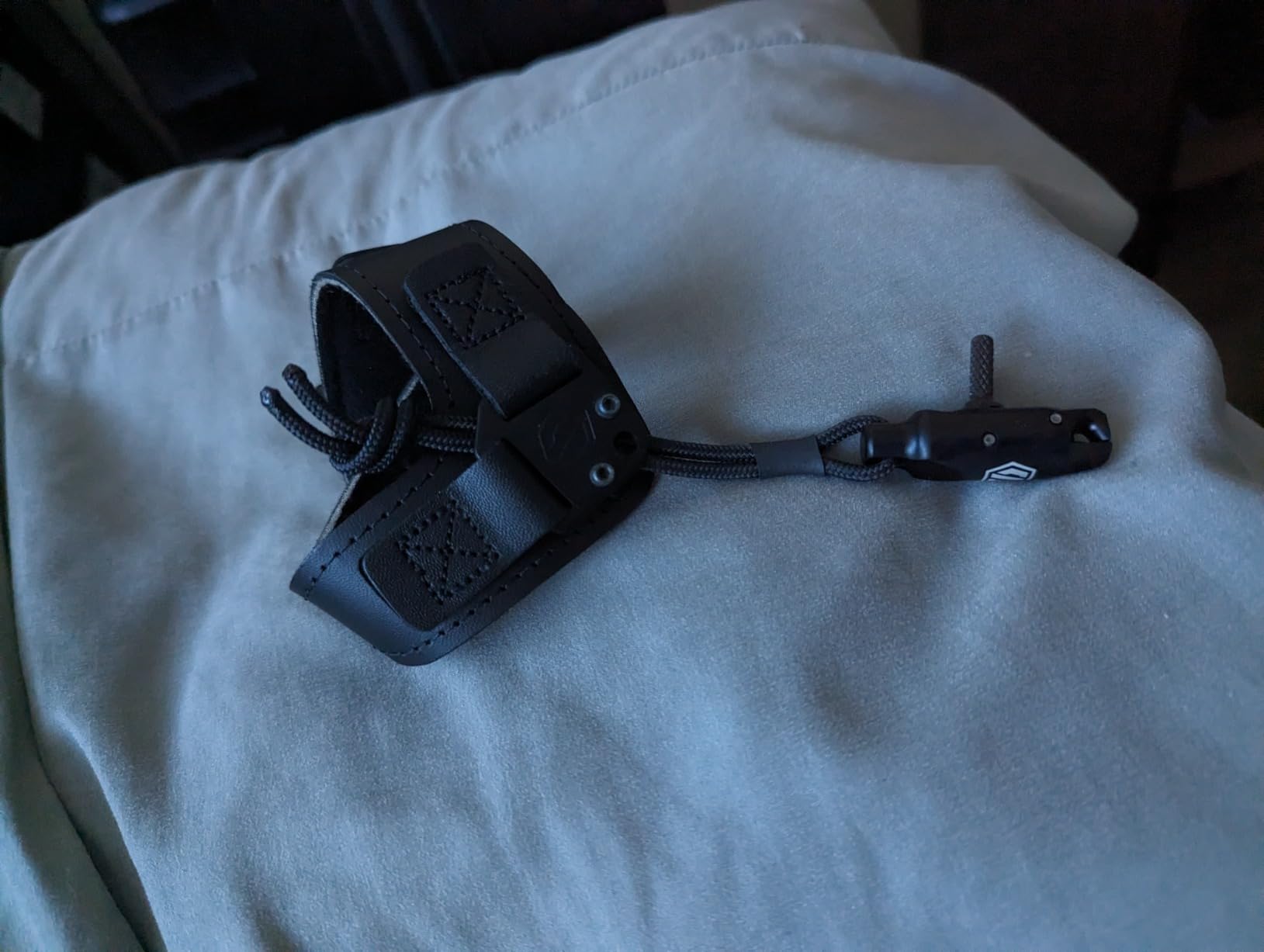
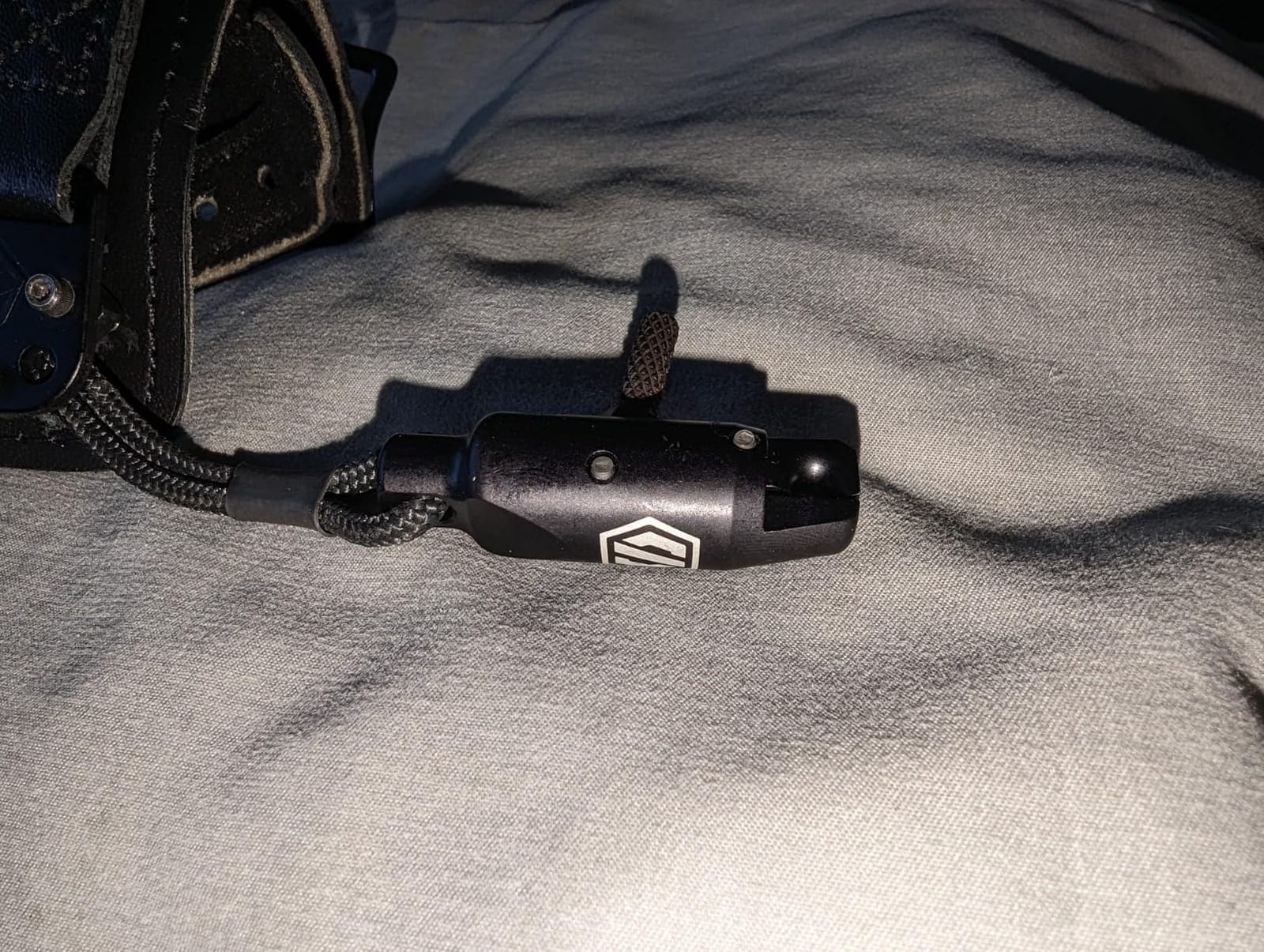
The Quick-Shot lever gives a crisp, immediate break rather than a soft, gradual release, which is a good thing for group consistency. Reviewers who came from releases with a floppier hook tend to notice this first and rarely go back.
The buckle does take a few more seconds to thread and tighten than a hook and loop strap, and at a full draw in a treestand that is a real consideration. The fit is one size fits most, so an unusually large or small wrist may need a workaround.
Why this works as a value pick
You are paying for the two things a strap release actually needs: a rigid, consistent release mechanism and a closure that stays put. Everything else on this model is straightforward, and it carries a manufacturer warranty rather than a short guarantee.
Where it falls short
It is not adjustable enough for someone whose hand size falls outside the middle of the range. If you have that issue, spend a little more on a model with true length adjustment rather than adapting the strap.
4. Spot Hogg Wiseguy Rigid Release: Best Premium Release You Can Grow Into
- Highest five-star share of any release here
- Fail-safe trigger adds confidence
- Micro-adjustable length dials in the fit
- Very light at 2.4 ounces
- Most expensive release in this roundup
- Zero-travel trigger needs deliberate finger placement
The Spot Hogg Wiseguy is a rigid-body release rather than a fabric-strapped one, and it is the most substantial object in this roundup at 2.4 ounces with a one year manufacturer warranty. Eighty-two percent of its reviews are five star, the strongest rating distribution in the group.
The zero-travel adjustable trigger is the reason serious archers like it. There is almost no slack in the trigger, so the release fires at a precise point in the draw rather than a vague one. The fail-safe trigger and self-reloading hook mean the jaws re-engage on their own if the string drops, which takes a genuine edge off the anxiety of a new archer handling a bow at full draw.
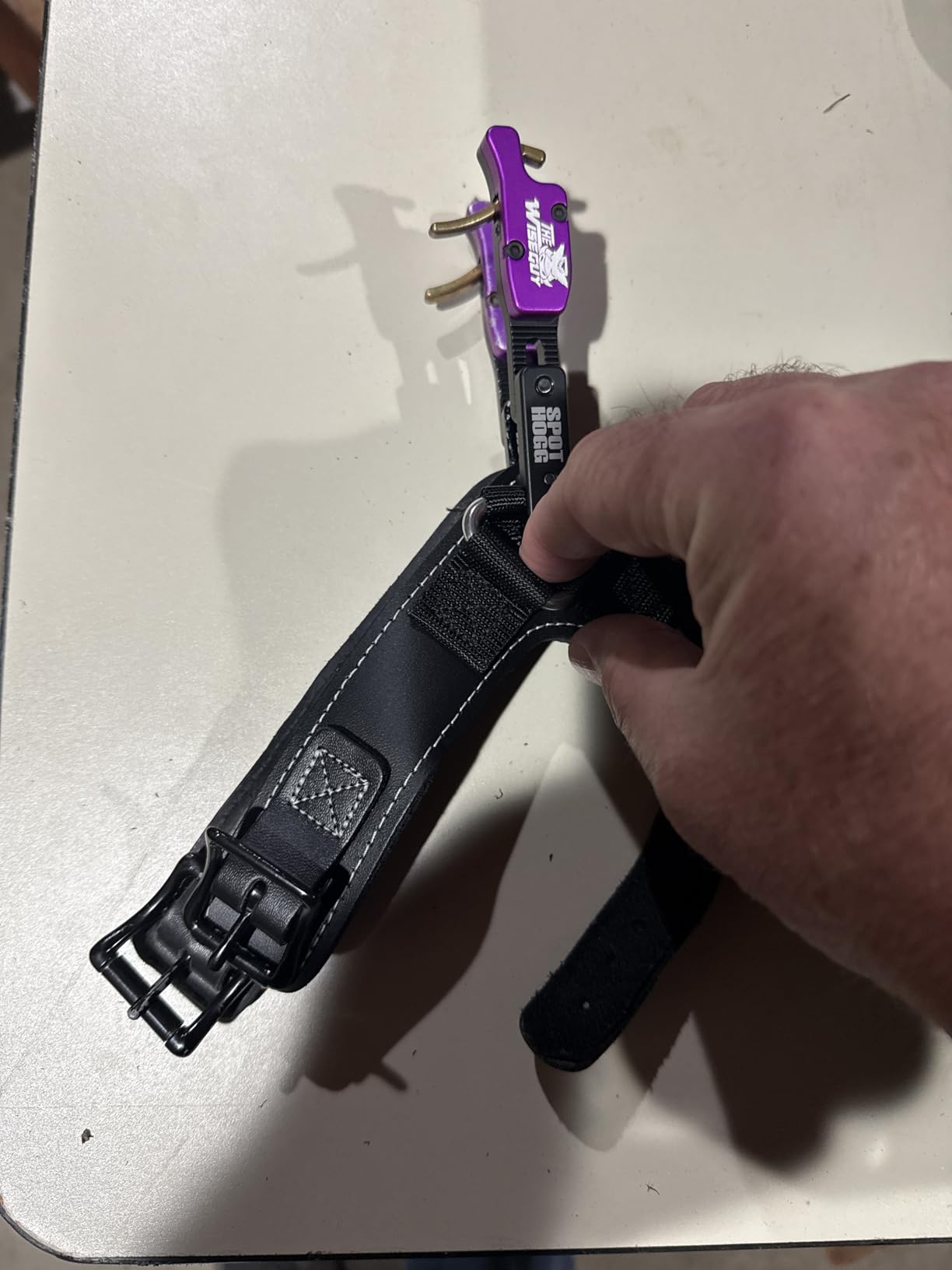
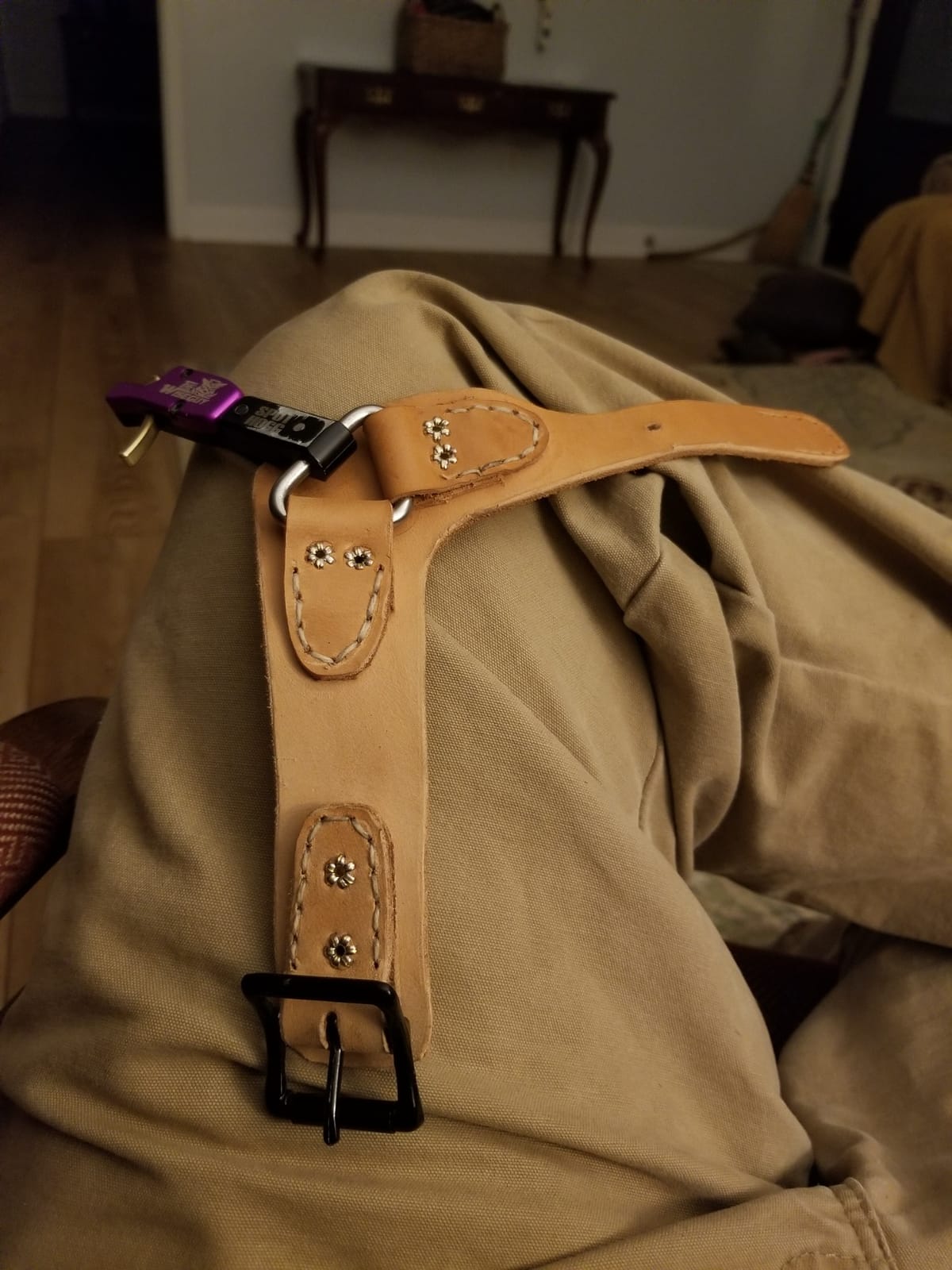
The forward trigger design is built to preserve draw length and speed, and the micro-adjustable length lets you set the fit precisely to your hand. For a beginner, that is a real advantage: you set it once and it stays set, even after a rough session.
The honest drawback is cost. This is the most expensive release in the roundup, and a first-timer cannot tell you yet whether you will still be shooting in six months. The second drawback is that zero travel leaves no room for error in finger placement until it becomes automatic.
Why this works long term
Nothing here is a gimmick. The adjustability, the fail-safe, and the rigid body all keep working as you progress from a beginner stance to a full draw at a longer shot. Buy it if you are certain you are staying with the sport.
Where it will frustrate a beginner
It asks for patience. The zero-travel trigger punishes a shaky draw hand, and micro-adjustments mean you will be tempted to fiddle. Set the travel, leave it alone for a month, and let your hand catch up.
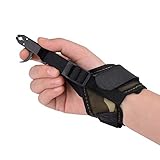
5. NIKA ARCHERY Caliper Release: Best Budget Release for Practicing at Home
- Lowest cost of any release in this roundup
- Comfortable enough for a full day
- Rotating head suits small hands
- Adjustable sensitivity
- Several owners report the release firing on its own
- Velcro strap is loud in a treestand
- Plastic-heavy feel and one-size strap
This is the cheapest release in the group and the one that answers the forum question about whether a low-cost Amazon release is any good. It is a genuine two-jaw caliper with a steel trigger, a 360-degree rotating head, and adjustable sensitivity. For target practice on a bow up to 75 pounds, it does the job.
The rotating head is worth crediting. It works for either hand, and the strap adjustability is enough to fit a small hand, which is exactly where most budget releases let you down. Several owners report measurable accuracy gains simply from shooting consistently rather than pinching the string.
The safety sensitivity is the real problem, and it comes up repeatedly. Multiple owners describe the release letting go without the trigger being pulled, which on a strung bow means an arrow in the wrong direction. There is also a note that you have to keep pushing the release forward through the draw or the string can slip off the jaws.
Both of those are reasons to treat this as a practice-yard release rather than a hunting release. The Velcro strap is loud enough that you would settle it long before you drew in a tree stand, and the plastic-heavy feel gives you less feedback than a metal mechanism. Tune the sensitivity down as far as it goes before your first session with it.
Why this works as a first release
It teaches you the draw cycle and the anchor for very little money, and the rotating head means a left-handed archer is not stuck with a compromise. If your goal is to learn the shot process on a backyard or field course, it does that.
Where it falls short
Premature firing reports are the dealbreaker for anyone who wants a release they trust in the field. If that describes you, save up for a strap release with a more deliberate trigger and a warranty behind it.
6. sntxmy 4-Finger Thumb Release: Best for Your First Handheld Thumb Release
sntxmy Bow Release for Compound Bow, Archery Release Trigger, Compound Bow Release, Thumb Release. (4 Finger Bow Release, Camo)
- Ranks first in the Archery Release Aids category
- Silent trigger owners notice immediately
- Four-finger handle reduces wrist strain
- Automatic jaw closure makes reloading fast
- 360-degree twisting takes real practice
- Trigger can develop dead space
- Some units arrive with a stripped lever screw
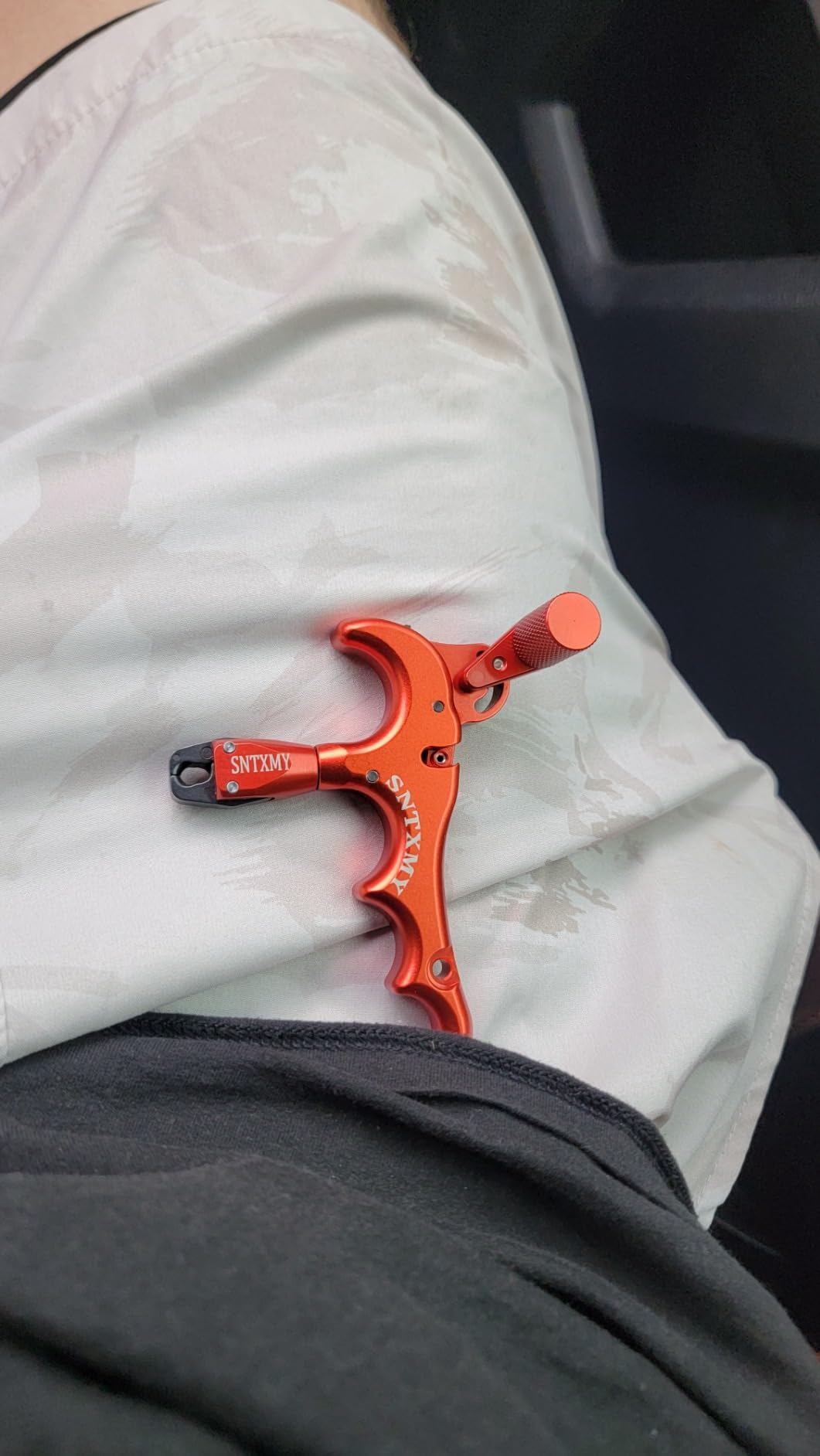
If you have decided to skip the wrist strap and learn a handheld thumb release, this is the one to start on. It sits at the top of the category ranking, it is a four-finger cast aluminum body, and the handle comes with a wrist strap and a small adjustment tool in the box.
The reason first-time thumb release users like it is the anchor. A four-finger handle sits against your jawbone instead of hanging off two fingers, so the sight picture becomes repeatable far faster than with a two-finger model. Owners converting from a wrist strap also report less wrist tension and fewer blisters over a long day.
The trigger is silent. That sounds like a small detail until you realize how much of a beginner’s shot timing comes from hearing the release work. It handles 80 to 100 pounds of string tension on a D-loop, so it covers most hunting setups as well as target bows.
Adjustment is the weak point. The thumb trigger can feel unresponsive if you over-adjust it, and the 360-degree rotation means the first few sessions feel awkward in a way that has nothing to do with your shooting. Several owners also received a stripped thumb lever screw or the wrong Allen wrenches, so check the hardware before you string up.
Why this is the right first thumb release
It is forgiving of small errors. Automatic jaw closure handles the D-loop for you, and the 360-degree head lets you mount it from an awkward angle instead of fighting the loop. For a beginner learning a new firing motion, that patience is worth more than a crisper trigger.
Where it will frustrate you
Trigger travel is noticeably longer and heavier than a strap release, so a one-month-old habit of squeezing a light trigger will not transfer. If your draw cycle feels rushed, go back to a strap model for a season rather than fighting this one.
7. LWANO S1 Bow Release: Best for Youth and Family Shooters
- Genuine strap length adjustment fits a wide range of wrists
- Quiet metal buckle closure
- Snappy trigger several owners prefer
- Colour range includes youth-friendly options
- Trigger can feel too stiff even after break-in
- Thick hook can spin until the angle is set
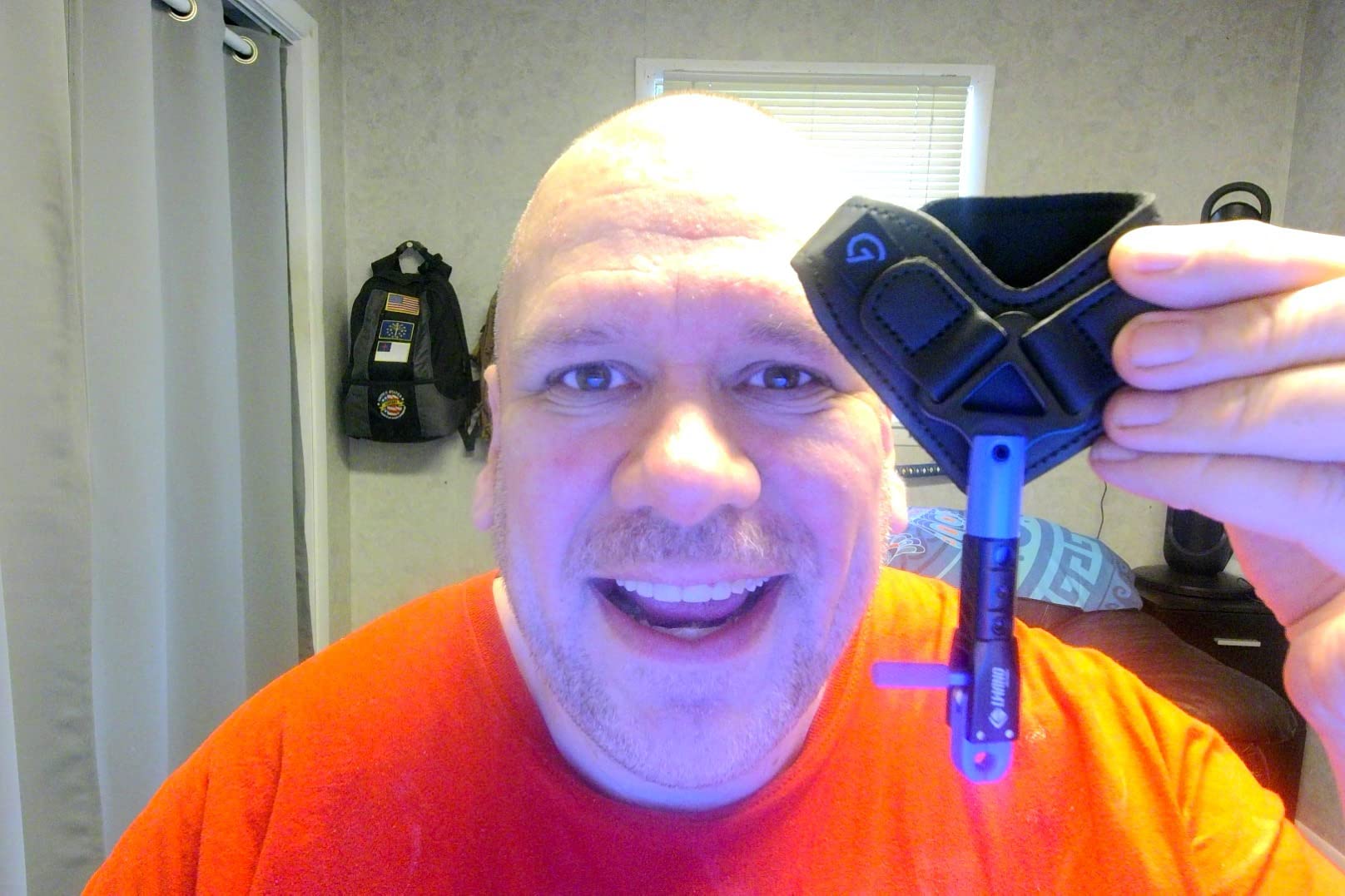
The LWANO S1 is the model I would hand to a parent buying for a growing archer. The strap is fully wrapped and genuinely length adjustable, so it fits a ten-year-old in September and the same archer two years later without a replacement. If you are shopping for a whole family, our kids archery set guide covers the bow side of that decision.
The buckle closure is quiet and the no-stretch fabric with a soft lining stays comfortable through a long session. The 360-degree rotating single caliper means the same release works for a right-handed and a left-handed archer, which matters when one rig serves the whole household.

Owners frequently buy more than one in different colours, which tells you how the finish holds up. The trigger is described as snappy, and several reviewers switched to it because it fires faster than slower-feeling releases.
The criticisms are consistent. The trigger can feel almost too sturdy, staying heavy even after break-in, and the hook is thick enough that it can spin until you set the angle yourself. There is also one report of a unit failing after roughly 300 shots. Check the trigger before each session with a young shooter, and inspect the hook for wear.
Why this works for a family
Adjustability across hand size is the whole point. A strap that fits properly is what keeps a new archer from fighting the release, and this one spans the widest range here without swapping parts.
Where it falls short
The stiff trigger is the trade for that solid build. A small archer with a light back wall may need the sensitivity turned all the way down, and if it still feels heavy, step up to a model with a lighter break.
8. NoxDyn Hybrid Thumb Release: Best for Full Adjustability on a Budget
NoxDyn 360 Rotating Bow Release for Compound Bow with Wrist Strap Camo
- Hybrid strap and thumb trigger steadies the grip
- CNC-machined aluminum resists wear
- Converts for either hand in under two minutes
- Trigger sensitivity and thumb button both adjustable
- Lowest rating in this roundup at 4.1
- Bulkier than a strap or bare thumb release
- Shortest warranty here at six months
This one is unusual and worth explaining. It combines a handheld thumb trigger with a padded wrist strap, so the draw weight transfers partly to your wrist and partly to your thumb. At first glance that sounds redundant. In practice it is a compromise for shooters who like the control of a thumb button but are not ready to commit fully to a handheld.
The build is genuinely better than the price suggests. It is CNC-machined, hard-anodized aluminum rather than a cast plastic body, at 100 grams, and the anodizing resists corrosion and wear. The head rotates through 360 degrees to cut string torque against the D-loop, and it converts to the other hand in under two minutes with a screwdriver.
Both the trigger sensitivity and the thumb button position adjust with the included wrenches, which is more adjustability than most releases in this roundup offer. That matters if your draw weight or your hand size is still changing.
The honest problem is the score. At 4.1 stars with 12 percent one-star reviews, this is the weakest rating in the group, and the complaints cluster around inconsistency between units rather than a single design flaw. The six-month warranty is the shortest here as well, so factor that in if you are hard on your gear.
Why the hybrid design helps a beginner
A wrist strap takes pressure off a shaky draw hand, which is the most common early problem. If you are not ready to hand all of that responsibility to a thumb button, this lets you take a step toward a handheld release without going all the way.
Where it falls short
You get the bulk of a strap release and the complexity of a thumb release, without the clean simplicity of either. If you want one thing done well, pick a dedicated strap model instead.
9. NoxDyn 4-Finger Thumb Release: Best for Target and 3D Shooting
- Comfortable anchor against the jawbone
- 360-degree head gives smooth consistent release
- Heavily adjustable for a new archer
- Reasonably priced for a machined body
- Trigger is very sensitive straight out of the box
- Thumb resting on the trigger can fire it early
- One report of the body opening mid-draw
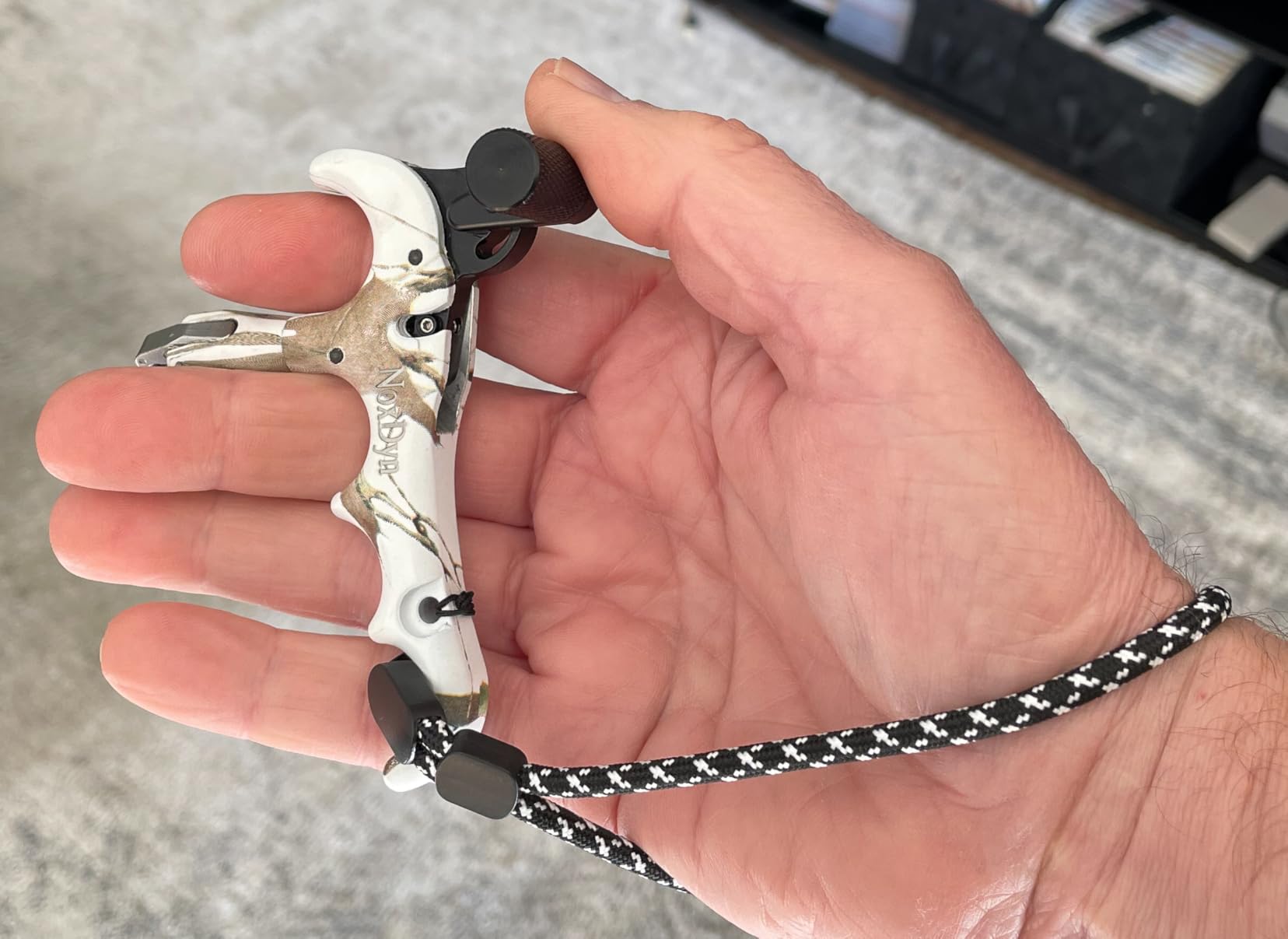
For an archer who wants a handheld thumb release for target or 3D work rather than hunting, this is the pick. The aircraft-grade aluminum body is CNC-machined with a hard-anodized finish, and the non-slip four-finger handle is shaped to anchor against your jawbone, which is where consistency comes from at 50 meters and beyond.
First-time thumb release owners report tighter groupings than they got from a wrist strap, and several describe comparing the build favorably against professional releases costing several times more. The 360-degree rotating head reduces string torque and D-loop friction, so the arrow leaves the string straight.
Both the trigger sensitivity and the thumb button position adjust with the included wrenches, so you can move from a heavy break to a light one as your draw cycle firms up. It is rated for high-poundage compound bows, which covers most hunting and target setups.
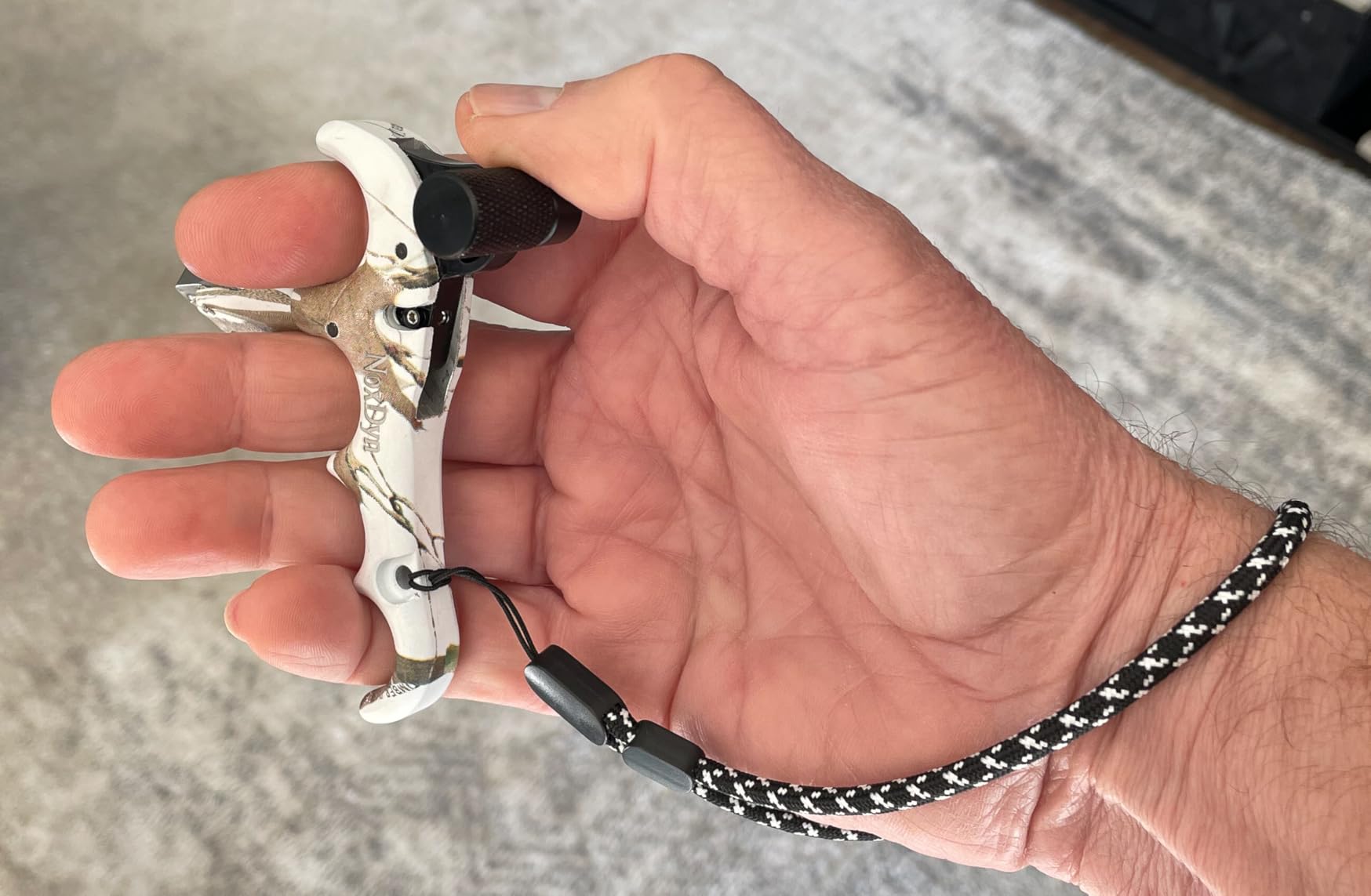
The caution is sensitivity, and it comes up more than once. The trigger is very light out of the box, and if your thumb rests on the button during the draw the release can fire before you are on the pin. Adjust it down on day one. There is also a single serious report of the body opening mid-draw and shattering a carbon roller on a 70-pound bow, which is worth knowing about even though it is a single instance.
Why this suits target shooting
Target work rewards a repeatable anchor more than a forgiving trigger. The four-finger grip and the adjustable button position let you set the release once and stop thinking about it while you watch the pin.
Where it falls short
The out-of-box sensitivity is a genuine safety issue in a field setting, and the six-month warranty is thin for gear that takes impacts. Test it hard on a foam target before you rely on it.
10. xxiaojun Wristband Release: Best for Setting Up Your First Release Quickly
xxiaojun Adjustable Wristband Release, 360° Rotatable Jaws Bow Release Aid.
- Put on with one hand
- Automatic clamp jaws make reloading fast
- Extension shaft adapts length to different hands
- Includes a D-loop rope in the box
- Head rotation is tight until broken in
- Not a true sear release for some shooters
- Included D-loop rope feels cheap
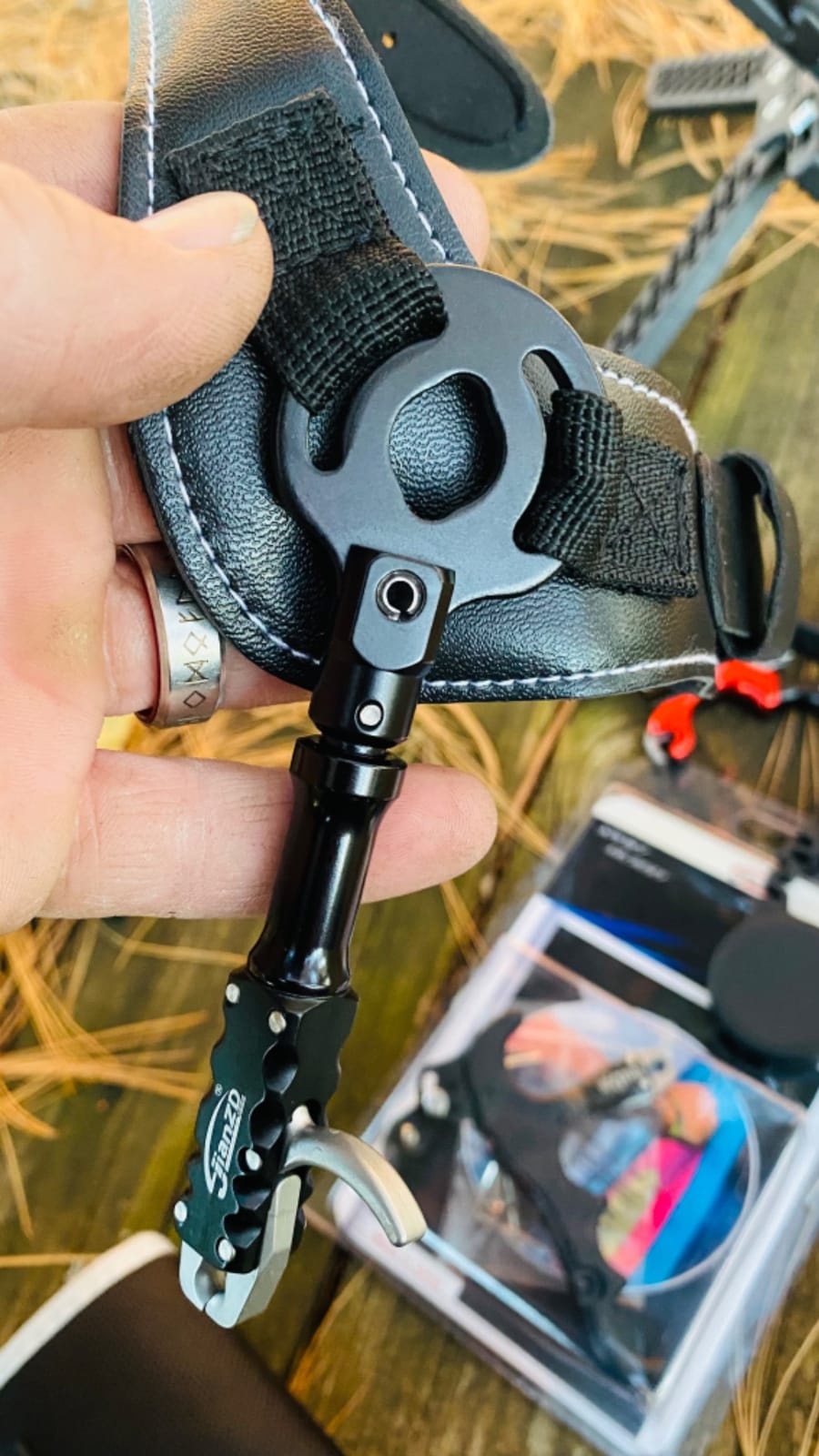
If your problem is that you cannot get a release onto the D-loop, this is the model built to solve that. It applies with one hand, the jaws close automatically, and the extension shaft spins to set the length for your hand. For a first bow, being able to mount the release without a two-handed struggle removes a real barrier.
It also comes with a 118-inch D-loop rope in the box, which saves you a second order if your bow shipped without one. The strap is no-stretch fabric with a soft interior lining, and the body has a hard oxidation treatment with a safety device, factory tested to 200 pounds.
The trigger feel is described as sensitive with a surprise-release quality that sits well at the anchor. That is a nice property for a compound shooter, where the string should be let off rather than pulled off.
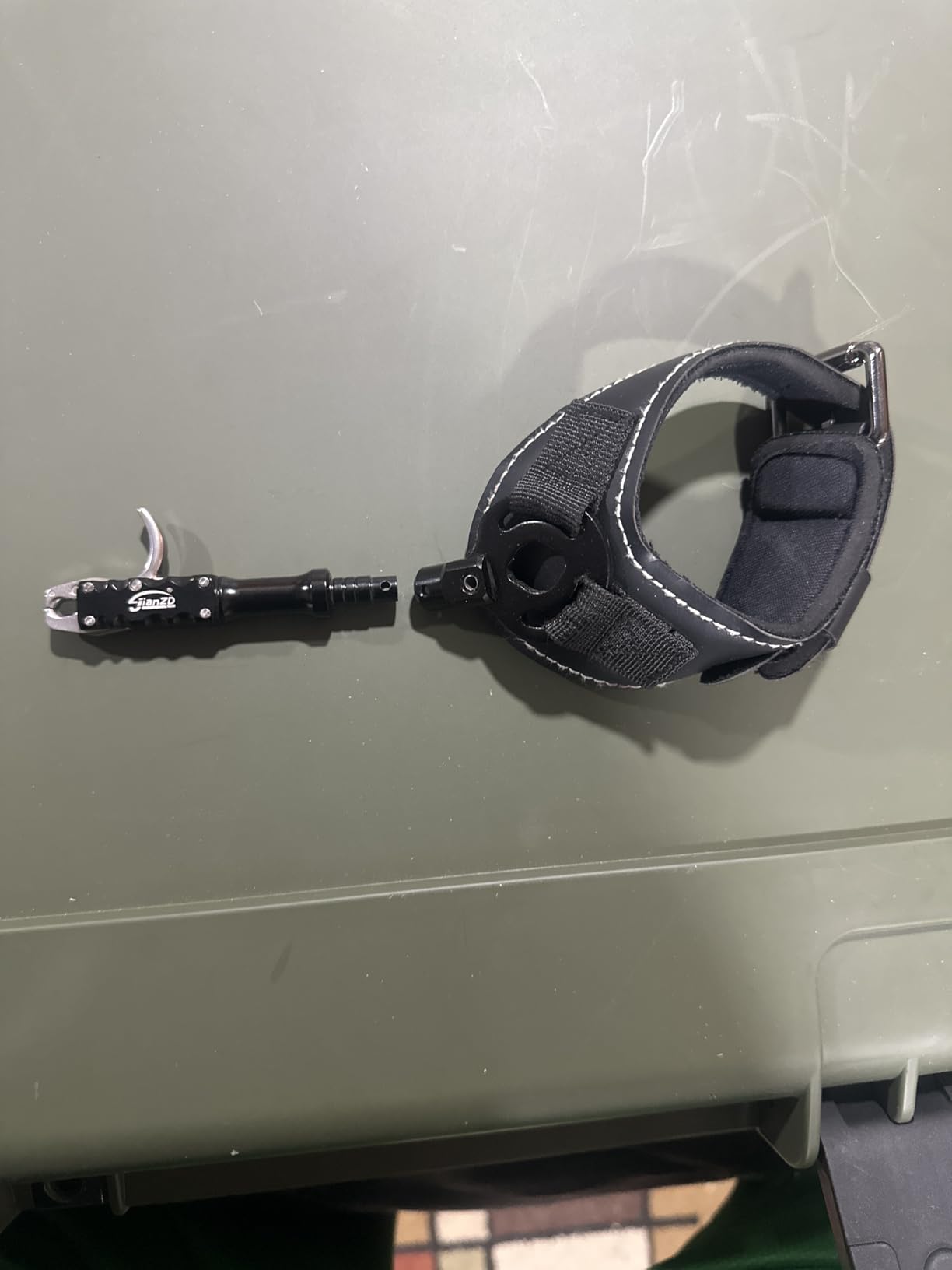
There are two real caveats. The head rotation is very tight out of the box and needs oil and about a week of use before it moves freely, which is the most common complaint in the reviews. And it is not a true sear release, so some shooters report pulling through the trigger rather than getting a crisp trip. The included D-loop rope also feels cheap next to a proper one.
Why this works for a brand-new setup
Everything about the first ten minutes is solved. One-hand application, automatic jaws, adjustable length, and a D-loop in the box. You can go from an unstrung bow to shooting the same day without a second trip for parts.
Where it falls short
It rewards patience, not out of the box performance. Oil the head before your first session and give it a week of use, and treat it as a practice release rather than the one you trust on a deer.
How to Choose a Bow Release: A Beginner’s Decision Guide
Most first releases are chosen by price, and most first releases are then returned because the fit was wrong. These are the five checks worth making before you order, in the order that matters.
Measure your hand before you pick a model
Measure from the crease at the base of your palm to the tip of your middle finger. Roughly 18 to 19 centimeters is a medium adult hand, and most strap releases are built for that range. A handheld release is sized by finger count instead: three-finger models suit smaller hands and four-finger models give you a solid jawbone anchor. If a model only offers one size, and your measurement sits at the edge of the range, pick a different model.
Check the D-loop throat before you order
Every release has a throat, the gap between its jaws, and that gap has to swallow the D-loop you actually have. Open hook designs are forgiving and easy to clip on one-handed. Caliper designs grip harder and are more consistent, but they are harder to mount quickly. Before buying a second release, run a finger along your current D-loop and check whether the stitching is thick, whether the loop is straight, and whether the cable serving is worn.
Decide strap or handheld honestly
A wrist strap is the more practical choice in the field because the release stays on your hand and cannot be dropped. A handheld thumb release gives you more control over how the release meets the string, which is the argument hunters make for it. If you shoot from a tree stand with gloves on, a strap release is the safer bet. If you are on a target line and want to develop a precise anchor, a four-finger handheld is the better teacher.
Understand resistance and hinge before you want one
A resistance release fires at a set holding weight a few pounds above the back wall, so it punishes any archer who does not pull straight through the draw. It is a good intermediate step between a thumb trigger and a hinge. A hinge has no trigger and fires by rotating through your hand using back tension, which is a surprise release that trains the mind rather than the fingers. Nobody should buy a hinge in their first season. Buy one when your groups stop changing and your problem is that you rush the last two inches of the draw.
Give any new release four to eight weeks
This is the single most useful thing a beginner can hear. Every switch to a new release changes your trigger feel, your anchor, and your sight picture, and your groups will usually widen before they improve. Shoot a minimum of four weeks at close range before you judge it, and eight weeks before you decide it is wrong. Experienced shooters on ArcheryTalk and Reddit r/Archery repeat the same advice, and it matches what we saw: the releases that looked worst in week one often looked best by week six.
Two more habits are worth building early. Re-run a walk-back tune after any release swap, because a different trigger timing changes nock travel and your nocking point may need to move. And buy a second release set to the same specifications, then shoot the backup weekly. Experienced hunters keep a spare for a reason: releases get dropped, and losing your only release mid-season is a bad day. If you are still choosing targets, our archery target roundup covers the surfaces that make tuning fastest.
Frequently Asked Questions
Are thumb releases more accurate?
No. The release itself does not make you accurate, and beginners improve from practice rather than hardware. What a thumb release does is remove the habit of punching the trigger and reward back tension, which produces a better shot process, and its accuracy ceiling is higher once you are past the learning curve.
What is the best resistance release for archery?
A resistance or tension release fires at a set holding weight a few pounds above the bow’s back wall, which makes it a middle ground between a thumb trigger and a hinge. For beginners it is useful because it forces a straight draw, but it will frustrate anyone who does not pull through the draw consistently. Experienced shooters usually move to one after several months.
How to shoot a bow with a release aid?
Clip the release onto the D-loop, set your nocking point, then dial the trigger travel and tension conservatively. Anchor, draw straight back along your jaw, focus on the pin, relax the release hand from the wrist down, and let the release fire the bow. The last step is the one beginners skip, and skipping it is what causes trigger punching.
What are the best archery releases in 2026?
For a first bow, our top three are the Tru-Fire Patriot as the best overall starter, the Tru-Fire Smoke Extreme as the best strap release for long practice days, and the Scott Archery Quick Shot as the best value choice. If you would rather start handheld, the sntxmy four-finger thumb release is the most beginner-friendly of the thumb models we tested.
Do I need a D-loop to use a release aid?
On a compound bow, yes. The release clamps onto a cord loop known as a D-loop that is fastened to the string, rather than onto the string itself, which protects the servings and gives the release something consistent to grip. Most compound bows arrive with one fitted, and if yours did not, budget for a replacement before your first session.
Conclusion
Start with a strap-mounted index finger release, because it teaches the draw cycle and the anchor with the least amount of new technique to absorb. The Tru-Fire Patriot is the one we would buy first: it has the most owner history in this roundup, a padded strap that stays comfortable, and enough travel adjustment to grow with you. Move to the Scott Quick Shot if you want a quieter buckle closure, and move to a four-finger handheld thumb release only once your shot process survives a release swap without rushing.
Whichever you pick, give it four to eight weeks, retune your bow after the switch, and keep a backup set to identical specifications. That habit alone will do more for your grouping in 2026 than any upgrade you make later.