
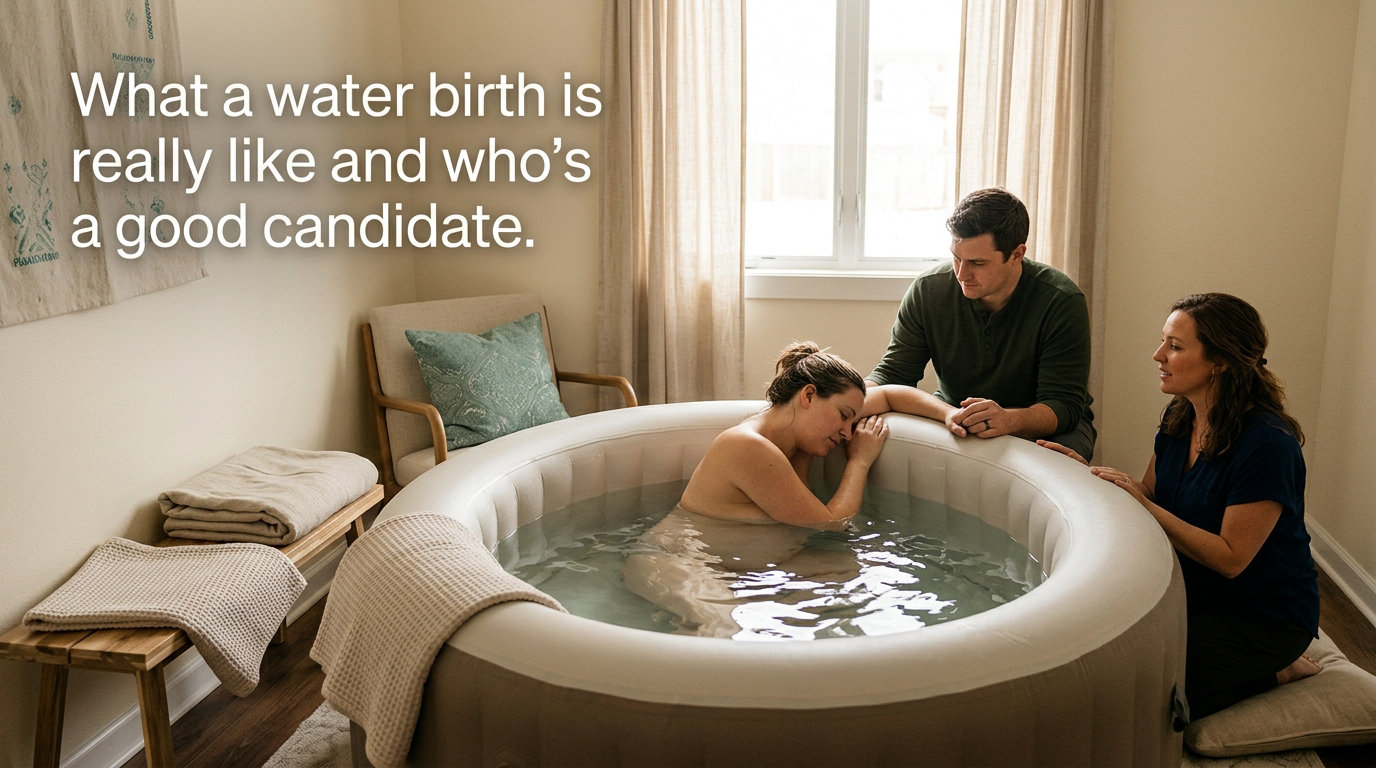
What a water birth is really like depends on who you ask, but most women describe it as one of the most empowering and physically relieving experiences of their lives. A water birth means at least part of your labor, delivery, or both happen while you are immersed in a deep birth pool filled with warm water. In this guide, I will walk you through exactly what water birth feels like, who makes a good candidate, and how to decide if it is right for your birthing journey.
I have spent months reviewing research, reading birth stories, and gathering insights from forums where thousands of women share their unfiltered experiences. You will learn the sensory details that research articles often miss, the specific medical criteria that determine if you qualify, and the practical realities of planning a water birth in 2026.
Table of Contents
What Is a Water Birth?
A water birth is the process of giving birth while immersed in a tub of warm water, typically between 97 and 100 degrees Fahrenheit. Some women choose to labor in the water and get out for the actual delivery, while others remain in the pool for the birth itself.
The concept is simple: warm water provides natural pain relief through hydrotherapy, allowing your muscles to relax between contractions. The buoyancy of the water supports your body weight, making it easier to change positions and find comfort during labor.
Water birth can take place in three main settings. Many hospitals now offer birth pools for labor, though not all allow delivery in the water. Birth centers typically have dedicated water birth rooms with professional-grade pools. Home births offer the most flexibility, with inflatable birth pools that can be set up in your living room or bedroom.
Who Is a Good Candidate for Water Birth?
Not everyone is suited for water birth. Medical professionals look for specific criteria to ensure both mother and baby remain safe throughout the process.
You are likely a good candidate for water birth if you meet these conditions:
- You have a low-risk pregnancy with no major complications
- You are between 37 and 41 weeks gestation
- Baby is in a head-down (vertex) position
- You are carrying a single baby, not multiples
- You have no history of significant perineal trauma
- You do not have pregnancy-induced hypertension or preeclampsia
- You want an unmedicated or minimally medicated birth experience
- You do not have active infections or fever
Age can also factor into the decision. Women between 17 and 35 generally have the best outcomes, though healthy women outside this range may still qualify with proper medical clearance. Your provider will assess your complete medical history before giving approval.
Many women who choose water birth are seeking a natural childbirth experience. If you want to avoid an epidural and prefer to manage pain through movement, breathing, and hydrotherapy, water birth might align with your goals.
Who Should Not Have a Water Birth?
Certain medical conditions and situations make water birth inadvisable. Safety must always come first, and knowing when to avoid water birth is just as important as knowing when to choose it.
You should not plan a water birth if any of the following apply:
- You have herpes, as the virus can transfer to baby in water
- Baby is in a breech or transverse position
- You are carrying twins, triplets, or other multiples
- You have been diagnosed with preeclampsia or pregnancy-induced hypertension
- You have diabetes requiring insulin management
- You have experienced excessive bleeding or placental issues
- You have an active infection or fever
- Your labor requires continuous fetal monitoring that cannot be done in water
- You are younger than 17 or older than 35 with additional risk factors
Even if you plan for a water birth, circumstances during labor may require you to exit the pool. If your labor stalls, if there are signs of fetal distress, if your water has been broken for an extended period with risk of infection, or if meconium is present in the fluid, your midwife or doctor will ask you to leave the water.
The ability to remain flexible is essential. Many women who hoped for water birth end up delivering traditionally, and that is perfectly okay. The goal is a healthy baby and a healthy mother, regardless of the method.
What a Water Birth Is Really Like: The Sensory Experience
This is where research articles often fall short. They can tell you statistics and safety data, but they rarely capture what water birth actually feels like in your body.
The first thing you notice when you lower yourself into the birth pool is the immediate warmth enveloping your body. The water is typically kept at body temperature or slightly warmer, around 97 to 100 degrees Fahrenheit. This warmth does not just feel pleasant; it actually helps your muscles release tension that you may not have realized you were holding.
As the contraction builds, you still feel the intensity. The pain does not disappear completely. However, the buoyancy changes everything. In water, you are weightless. You can move, sway, and adjust your position with a freedom that is impossible on a bed. Women often describe feeling like they have regained control over their bodies during a time when so much feels outside their control.
The sounds change too. Underwater, everything becomes muffled. Many women find this auditory isolation deeply calming. The sharp sounds of a busy hospital room fade away. You can focus inward, listening to your breath and your body rather than external distractions.
Between contractions, the water cradles you. You can rest your head back. Your partner can apply counter-pressure more effectively because your body is supported. The water continuously flows, creating a gentle rhythm that matches your breathing.
During the pushing phase, the sensation changes again. Many women report feeling more aware of their perineum and the baby’s descent. The warm water helps the tissues stretch gradually, which may reduce the likelihood of tearing. Some women describe the moment of birth as surprisingly gentle, the baby sliding out into the water and being brought immediately to their chest.
The dive reflex plays a fascinating role here. When a baby is born into water, they naturally hold their breath. They do not inhale water. Your provider will guide the baby to the surface within seconds, where they take their first breath in air.
Not every moment is serene. Some women report feeling too hot. Others find the buoyancy makes it harder to get traction for pushing. A few feel disappointed when they have to exit the pool for delivery due to hospital policy or changing circumstances. These realities are part of the honest picture.
Benefits of Water Birth
The benefits of water birth extend beyond just pain relief, though that alone is significant. Research consistently shows positive outcomes for mothers who choose this option.
Pain management is the most immediate benefit. The warm water stimulates the release of endorphins, your body’s natural pain relievers. The buoyancy reduces pressure on your joints and muscles. Many women find they need less pain medication, or none at all, when laboring in water.
Studies indicate that water immersion during the first stage of labor can shorten its duration. One theory is that relaxation allows the cervix to dilate more efficiently. When you are not fighting against tension, your body can focus on the work of labor.
Fetal positioning often improves in water. The buoyancy allows you to move freely, which helps babies find optimal positions for birth. Squatting, kneeling, and side-lying are all easier in water than on land, and these positions can help babies rotate and descend.
Perineal tearing may be reduced with water birth. The warm water helps tissues become more elastic. The controlled environment allows for slower, more gentle delivery of the baby’s head.
The psychological benefits deserve attention too. Women consistently report feeling more relaxed and in control during water births. Privacy is easier to maintain in a birth pool. The environment feels more intimate and less clinical. This emotional comfort can positively impact the entire birth experience.
For babies, the transition from womb to world may be gentler. They have spent nine months in amniotic fluid. Being born into warm water mimics that environment before they are lifted into the air. While research on long-term outcomes continues, the immediate comfort of this transition makes intuitive sense to many parents.
Risks and Safety Considerations
Understanding risks is essential for making an informed decision. While water birth is generally safe for low-risk pregnancies, complications can occur.
Cord avulsion is a rare but serious concern. This happens when the umbilical cord snaps as the baby is brought to the surface. Proper technique from an experienced provider virtually eliminates this risk. The baby should be brought up gently, not pulled quickly.
Infection control requires attention. Birth pools must be properly cleaned and maintained. At home, using a disposable liner and ensuring the pool is thoroughly sanitized between uses is critical. In hospitals and birth centers, strict protocols govern pool maintenance.
Water temperature matters more than many realize. If the water is too warm, it can raise the mother’s body temperature, which may increase the baby’s heart rate. Providers monitor temperature carefully, keeping it between 97 and 100 degrees Fahrenheit.
Transient tachypnea of the newborn is a breathing condition that has been associated with water birth in rare cases. This occurs when a baby takes faster breaths than normal after birth. While usually resolving quickly, it requires monitoring.
Professional organizations have weighed in on water birth safety. The American College of Obstetricians and Gynecologists (ACOG) states that immersion in water during the first stage of labor may be beneficial. However, they note that evidence is less clear about delivering in water. The American Academy of Pediatrics (AAP) emphasizes that water birth should only occur in properly supervised settings with clear protocols for emergencies.
Hyponatremia, or low sodium levels in the baby’s blood, has been documented in rare cases when water enters the baby’s lungs. This is extremely uncommon but highlights why experienced attendance matters.
The bottom line: water birth appears safe for carefully selected candidates when attended by qualified professionals who follow established safety protocols.
Where Can You Have a Water Birth?
Your choice of birth location significantly impacts your water birth options. Each setting has advantages and limitations.
Hospitals are increasingly offering water immersion for labor, but policies on actual water birth vary widely. Some hospitals have dedicated birth suites with permanent pools. Others allow portable inflatable pools. Many more allow laboring in water but require delivery on land. The best way to find out is to ask directly about their specific water birth policy, not just whether they have a tub.
Birth centers are often the sweet spot for water birth. They combine a home-like environment with medical equipment and trained staff. Most birth centers are designed with water birth in mind, featuring spacious pools and providers experienced in aquatic delivery. The atmosphere tends to be more relaxed than a hospital, with fewer interventions and more freedom of movement.
Home birth offers the most control over your environment. You choose the pool, the room, the temperature, and who attends. However, home water birth requires significant preparation. You need a qualified midwife experienced in water birth, a proper birth pool with heating capabilities, and a clear emergency transfer plan.
When comparing settings, consider these factors:
- Provider experience with water birth
- Emergency response capabilities
- Cost and insurance coverage
- Your comfort level with the environment
- Availability of pain relief alternatives if needed
- Postpartum care options
If your heart is set on water birth but your local hospital does not offer it, consider touring birth centers in your area or interviewing home birth midwives. Many women travel slightly further for the birth experience they want.
Advocating for water birth in a hospital setting can be challenging but not impossible. Some women have successfully requested portable pools or negotiated specific aspects of their birth plan. Having a doula who understands water birth can help you navigate these conversations with medical staff.
Preparing for a Water Birth
Preparation goes beyond simply deciding you want a water birth. Practical and emotional readiness will help your experience go smoothly.
If you are planning a home water birth, you will need to rent or purchase a birth pool. Inflatable options designed specifically for birth are safest. They have features like handles for gripping, a built-in seat for resting, and sufficient depth for full immersion. A disposable liner keeps the pool hygienic. You will also need a new hose for filling, a submersible pump for emptying, and a plan for heating the water to the proper temperature.
Your birth team matters enormously. Choose a provider who is genuinely experienced with water birth, not just someone who says they are okay with it. Ask specifically how many water births they have attended and what their emergency protocols involve. A provider who has managed complications in water will be better prepared than one who has only assisted straightforward cases.
Discuss with your partner what role they will play. Some partners get in the water too. Others prefer to support from outside, offering sips of water, cool cloths for the forehead, and words of encouragement. Clarify these expectations beforehand.
Pack your birth bag with water birth in mind. A bikini top or sports bra that you do not mind getting wet is practical. A robe for when you exit the pool is essential. Waterproof pillows can provide extra comfort.
Emotional preparation is equally important. Practice relaxation techniques that work for you. Visualize yourself in the water. Understand that flexibility is key. The women who report the most positive water birth experiences are those who entered labor with clear preferences but without rigid attachment to specific outcomes.
Frequently Asked Questions
Who is a good candidate for water birth?
A good candidate for water birth is someone with a low-risk pregnancy between 37 and 41 weeks gestation, carrying a single baby in head-down position, without conditions like preeclampsia, diabetes, or active infections. Women seeking a natural, unmedicated birth experience who are between 17 and 35 years old typically qualify. Your provider will evaluate your complete medical history to determine if water birth is safe for you.
Are water births actually better?
Water births offer significant benefits for pain relief, reduced need for medication, shorter labor duration, and lower rates of perineal tearing. Many women report feeling more relaxed and in control during water birth. However, ‘better’ depends on your priorities. For those wanting natural pain management, water birth is often superior. For high-risk pregnancies, traditional birth with medical interventions may be safer.
Why do hospitals not allow water birth?
Some hospitals restrict water birth due to liability concerns, lack of staff training, or insufficient emergency protocols. ACOG notes that evidence for water immersion during labor is stronger than evidence for delivery in water. Hospital policies vary widely. Many facilities allow laboring in water but require delivery on land. Finding a hospital that supports water birth often requires asking specific questions about their policies and protocols.
What are the disadvantages of a water birth?
Disadvantages include limited availability in hospitals, potential for overheating, inability to use continuous fetal monitoring in water, and rare risks like cord avulsion or infection. Some women find buoyancy makes pushing less effective. If complications arise, you must exit the pool quickly. Water birth also requires specific preparation and experienced attendants, which can limit your choice of providers and birth locations.
Conclusion
What a water birth is really like and who’s a good candidate comes down to understanding both the sensory experience and the medical criteria. For low-risk women seeking a natural birth, water immersion offers remarkable pain relief, freedom of movement, and a calmer environment.
The warmth, buoyancy, and privacy of water birth create conditions where many women feel most capable and in control. However, it is not suitable for everyone. High-risk pregnancies, certain medical conditions, and specific hospital policies may make traditional birth the safer choice.
If you are considering water birth, start the conversation early with your provider. Tour facilities that offer water birth. Talk to women who have experienced it. Prepare practically and emotionally. Most importantly, remain flexible. The best birth plan is one that prioritizes safety while honoring your preferences as much as possible.
Your birth experience matters. Whether in water or on land, informed choice is the foundation of a positive outcome.