
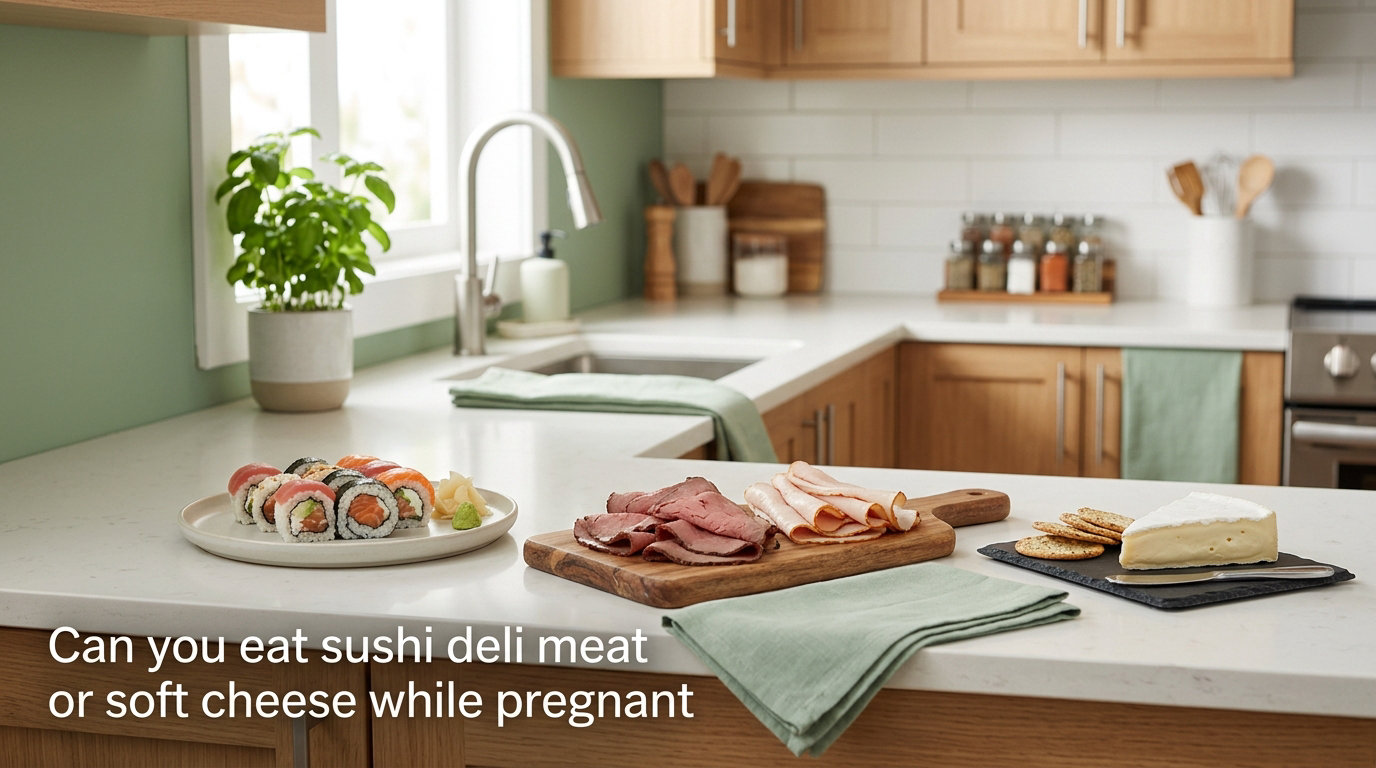
Pregnancy brings so many questions about what you can and cannot eat. One of the most common concerns I hear from expecting mothers is whether sushi, deli meat, or soft cheese are safe during pregnancy. These foods are everyday staples for many of us, and suddenly being told to avoid them can feel overwhelming.
The good news is that not all these foods are completely off-limits. Some just need proper preparation, while others should be avoided entirely until after your baby arrives. Understanding the reasons behind these guidelines helps you make informed choices without unnecessary stress.
According to the CDC guidelines for pregnant women, pregnant women are actually ten times more likely to get Listeria infection compared to the general population. This increased susceptibility is why food safety becomes so important during these nine months.
Table of Contents
Quick Answer: Can You Eat Sushi, Deli Meat, or Soft Cheese While Pregnant?
Here is the straightforward answer to what you came here for. Sushi with raw fish should be avoided during pregnancy, but cooked sushi rolls are safe to eat. Deli meat is only safe if heated to 165 degrees Fahrenheit until steaming hot. Soft cheese is safe if it is made with pasteurized milk.
Raw sushi carries risks of parasites, bacteria, and mercury exposure that can harm your developing baby. The FDA recommends avoiding all raw or undercooked seafood during pregnancy to minimize these risks.
For deli meats, the concern is Listeria bacteria which can grow even at refrigerator temperatures. Heating deli meat to 165 degrees Fahrenheit kills any potential Listeria contamination, making it safe to consume.
Soft cheeses become safe during pregnancy when they are made from pasteurized milk. The pasteurization process kills harmful bacteria including Listeria, Salmonella, and E. coli. Always check labels to confirm pasteurization status.
Why Pregnancy Changes Your Food Safety Needs
During pregnancy, your immune system naturally suppresses itself slightly. This happens to prevent your body from rejecting the growing fetus, which carries foreign DNA from the father. While this protective mechanism is essential for a healthy pregnancy, it also makes you more vulnerable to foodborne illness.
The CDC reports that pregnant women are ten times more likely to contract Listeria infection than non-pregnant healthy adults. Hispanic pregnant women face an even higher risk, being twenty-four times more susceptible. This dramatic increase in vulnerability is why standard food safety guidelines become stricter during pregnancy.
Why These Specific Foods Pose Risks
The foods we are discussing share common characteristics that make them potentially dangerous during pregnancy. Raw or undercooked foods can harbor parasites and bacteria that your compromised immune system cannot fight effectively. Refrigerated ready-to-eat foods provide environments where Listeria can multiply even while stored properly.
High-mercury fish pose a different threat entirely. Mercury crosses the placenta and concentrates in fetal tissues, potentially causing neurological damage and developmental problems. The effects of mercury exposure are cumulative and irreversible, making avoidance during pregnancy critical.
Foodborne infections during pregnancy can have devastating consequences beyond typical food poisoning symptoms. FoodSafety.gov pregnant women guidelines explain that Listeria infection during pregnancy can lead to miscarriage, stillbirth, preterm delivery, or serious illness in newborn babies. These severe outcomes make prevention essential.
Understanding Listeria and Pregnancy
Listeria monocytogenes is the bacteria that causes listeriosis, a foodborne illness particularly dangerous during pregnancy. Unlike most bacteria, Listeria can continue growing at refrigerator temperatures as low as 40 degrees Fahrenheit. This unique characteristic makes refrigerated ready-to-eat foods potential carriers.
Symptoms of listeriosis include fever, muscle aches, and sometimes nausea or diarrhea. Pregnant women typically experience only mild flu-like symptoms, but the infection can pass to the baby with devastating consequences. About one in five cases of listeriosis in pregnancy results in fetal loss.
Can You Eat Sushi While Pregnant? Everything You Need to Know
Sushi cravings during pregnancy are incredibly common. Many women find themselves daydreaming about their favorite spicy tuna roll or salmon sashimi. Unfortunately, raw fish sushi presents several risks that make it worth avoiding for nine months.
The good news is that you do not have to give up sushi entirely. Many delicious cooked and vegetarian options remain completely safe during pregnancy. Understanding which rolls to order can satisfy your cravings while keeping you and your baby protected.
Sushi You Should Avoid During Pregnancy
Any sushi containing raw or undercooked seafood should be avoided according to FDA food safety for moms-to-be. This includes sashimi (slices of raw fish), nigiri with raw toppings, and rolls containing raw fish. The risks fall into three main categories: parasites, bacteria, and mercury.
Raw fish can contain parasites like Anisakis simplex that cause severe gastrointestinal symptoms. Freezing fish before serving kills parasites, but many restaurants do not freeze fish properly or long enough to eliminate this risk entirely. Cooking fish to 145 degrees Fahrenheit is the only guaranteed way to kill both parasites and harmful bacteria.
High-mercury fish pose additional concerns. The FDA recommends avoiding shark, swordfish, king mackerel, tilefish, marlin, orange roughy, and bigeye tuna during pregnancy. Mercury is a neurotoxin that can damage your baby’s developing brain and nervous system. The effects are cumulative, so regular consumption increases risk significantly.
Safe Sushi Options for Pregnant Women
Cooked sushi rolls are completely safe during pregnancy when prepared fresh and handled properly. The California roll remains the most popular pregnancy-safe choice, featuring imitation crab (cooked), avocado, and cucumber. Imitation crab is made from cooked pollock fish, making it safe from both bacterial and mercury concerns.
Other excellent cooked options include the ebi roll (cooked shrimp), unagi roll (cooked eel), tempura rolls (battered and fried vegetables or shrimp), and vegetable rolls featuring avocado, cucumber, asparagus, and sweet potato. These options provide the sushi experience without any associated risks.
Cooked salmon and cooked tuna are also safe to eat in sushi rolls. Just ensure the fish reaches an internal temperature of 145 degrees Fahrenheit during cooking. Many restaurants offer specialty rolls featuring cooked seafood that satisfy even strong sushi cravings.
Mercury Levels in Fish: What to Know
Not all fish carry the same mercury risk. The FDA provides clear guidance on which fish are safest during pregnancy. Low-mercury options include salmon, trout, pollock, cod, catfish, sardines, anchovies, shrimp, crab, and canned light tuna. These fish provide essential omega-3 fatty acids that support your baby’s brain development.
Albacore (white) tuna contains more mercury than canned light tuna. The FDA recommends limiting albacore tuna to six ounces per week during pregnancy. Canned light tuna can be consumed more freely, up to twelve ounces per week.
The benefits of eating low-mercury fish during pregnancy actually outweigh the minimal risks. Omega-3 fatty acids, particularly DHA, are crucial for fetal brain and eye development. Aim for two to three servings of low-mercury fish per week as part of a balanced pregnancy diet.
Restaurant Tips for Pregnant Sushi Lovers
When ordering sushi while pregnant, communicate clearly with your server about your needs. Ask specifically for cooked rolls only, and request that no raw fish touch your order. Reputable restaurants take these requests seriously and prepare pregnancy-safe orders with appropriate care.
Pay attention to restaurant cleanliness and food handling practices. Choose establishments with high health inspection ratings and visible attention to food safety. Avoid sushi from grocery store delis or buffet-style setups where food may sit at improper temperatures for extended periods.
If you are unsure whether a particular roll contains raw fish, ask before ordering. Many rolls have similar names but different preparations across restaurants. California rolls are always safe, but spicy tuna, rainbow rolls, and dragon rolls typically contain raw fish and should be avoided.
Deli Meat During Pregnancy: Safety Guidelines and Heating Instructions
The guidance about deli meat during pregnancy often confuses expecting mothers. Many women report that their own mothers ate cold sandwiches throughout pregnancy with no issues. Understanding the actual risk level and proper precautions helps you make informed decisions without unnecessary fear.
The concern with deli meat centers on Listeria contamination. Unlike many foodborne bacteria, Listeria can survive and multiply in refrigerated conditions. Deli meats, cold cuts, lunch meats, and hot dogs have all been linked to Listeria outbreaks over the years.
Why Deli Meat Carries Listeria Risk
Deli meats and cold cuts are processed and sliced in environments where Listeria can contaminate the product after cooking. The slicing machines, storage containers, and handling procedures create opportunities for bacterial transfer. Once contaminated, the bacteria continue growing even while the meat stays refrigerated at the store and in your home.
Refrigerated pate and meat spreads present similar risks. These products often sit in refrigerated cases for extended periods and may not be heated before serving. The FDA recommends avoiding these entirely during pregnancy unless they are canned or shelf-stable.
Hot dogs and fermented or dry sausages like salami, pepperoni, and chorizo also require heating before consumption. While these products are often eaten cold, pregnancy safety guidelines recommend treating them like other deli meats requiring thorough heating.
How to Heat Deli Meat Safely for Pregnancy
Heating deli meat to an internal temperature of 165 degrees Fahrenheit kills Listeria bacteria instantly. This temperature ensures the meat is “steaming hot” throughout, not just warm on the outside. A food thermometer provides the most accurate way to verify this temperature.
Practical heating methods include microwaving slices until steaming hot, pan-frying in a skillet until sizzling, or baking in the oven until thoroughly heated. Letting the meat cool slightly before eating is fine as long as it reached 165 degrees Fahrenheit during heating.
Many pregnant women find that heating deli meat actually improves the flavor of hot sandwiches. A classic turkey melt with heated turkey and melted cheese becomes a satisfying pregnancy-safe alternative to a cold deli sandwich. Panini presses work excellently for heating deli meat while creating an enjoyable meal.
Safe Deli Meat Alternatives During Pregnancy
If heating deli meat feels inconvenient, several alternatives provide similar convenience without the Listeria concern. Home-cooked meats sliced fresh are completely safe. Roast a turkey breast or chicken at home, slice it, and use within three to four days for sandwiches.
Canned chicken and tuna provide convenient protein sources that require no heating. These shelf-stable products undergo high-heat canning processes that eliminate any bacterial concerns. Look for low-sodium versions to manage salt intake during pregnancy.
Hummus, avocado, and hard-boiled egg sandwiches offer nutritious alternatives to traditional deli meat options. These provide protein and healthy fats without any food safety concerns. Experimenting with new sandwich combinations can actually expand your pregnancy meal repertoire.
What About Restaurants and Deli Counters?
Restaurant deli sandwiches pose the same risks as home-prepared versions. When ordering at sandwich shops or delis, ask for your meat to be heated or toasted. Most establishments accommodate this request, and toasted sandwiches often taste better anyway.
Deli counter sliced meats at grocery stores require the same heating precautions as pre-packaged lunch meat. Whether sliced fresh or purchased in vacuum-sealed packages, treat all deli meats equally regarding heating requirements.
Some pregnant women choose to avoid deli meat entirely during pregnancy for peace of mind. This is a perfectly valid approach if the small but serious risk of Listeria causes you anxiety. There are plenty of nutritious alternatives available.
Soft Cheese Safety: Understanding Pasteurization and Pregnancy
Cheese is another category where pregnancy guidelines create confusion. Many favorite cheeses fall into the “soft cheese” category, leaving women wondering if they must give up feta on their salad, mozzarella on their pizza, or brie on special occasions.
The critical factor for cheese safety during pregnancy is pasteurization, not softness. Pasteurized milk undergoes heating to kill harmful bacteria including Listeria, Salmonella, and E. coli. Soft cheeses made from pasteurized milk are safe to eat during pregnancy.
Soft Cheeses to Avoid Unless Pasteurized
Certain soft cheeses pose higher risks when made from unpasteurized (raw) milk. These include brie, camembert, feta, queso fresco, queso blanco, queso de hoja, queso de crema, and blue cheeses like gorgonzola, roquefort, and danish blue.
These cheeses have higher moisture content and lower acidity than hard cheeses, creating environments where bacteria can grow more easily. When made from unpasteurized milk, they present significantly higher Listeria risks during pregnancy.
Imported soft cheeses are more likely to be made from unpasteurized milk. Many traditional European cheese-making methods use raw milk for flavor development. Always check labels carefully, especially on imported specialty cheeses.
Soft Cheeses That Are Safe During Pregnancy
Many soft cheeses are routinely made with pasteurized milk and are completely safe during pregnancy. Cream cheese, cottage cheese, ricotta, and mozzarella are almost always pasteurized in the United States. These cheeses provide excellent calcium and protein sources throughout pregnancy.
Hard cheeses are universally safe regardless of pasteurization status because their low moisture and high salt content prevent bacterial growth. Safe options include cheddar, parmesan, swiss, gouda, manchego, and similar aged cheeses. These can be enjoyed without any pregnancy-related restrictions.
When shopping for soft cheeses, read labels carefully for the word “pasteurized” or “made with pasteurized milk.” If the label does not specify pasteurization status, assume the cheese is unpasteurized and avoid it during pregnancy. When in doubt at restaurants, ask your server about pasteurization status.
What About Heated Soft Cheeses?
Heating soft cheese until steaming hot (165 degrees Fahrenheit) kills any potential Listeria bacteria, making it safe to eat even if originally unpasteurized. This means baked brie, heated queso dip, and cheese on pizza become safe options.
The key is ensuring the cheese reaches steaming hot throughout, not just melted on the outside. Baked brie until bubbling, queso fundido served sizzling, and well-heated feta on a Greek pizza are all pregnancy-safe when properly prepared.
However, soft cheese served at room temperature on cheese boards remains risky even if originally pasteurized. Once opened, pasteurized soft cheese can become contaminated with Listeria. Avoid soft cheeses that have been sitting out at parties or buffets during pregnancy.
Quick Reference: Foods to Avoid, Heat First, or Enjoy Safely
Keeping track of all the pregnancy food guidelines can feel overwhelming. This quick reference table summarizes the key recommendations based on guidance from CDC and FDA. Print this section or bookmark it for easy reference during your pregnancy.
Foods to Completely Avoid During Pregnancy
These foods carry risks that heating or preparation cannot eliminate. Avoid them entirely until after your baby is born.
Raw or undercooked fish and shellfish includes sushi with raw fish, sashimi, raw oysters, clams, ceviche, and carpaccio. These pose parasite and bacterial risks along with potential mercury exposure.
High-mercury fish to avoid include shark, swordfish, king mackerel, tilefish, marlin, orange roughy, and bigeye tuna. Mercury accumulates in these predatory fish and can harm fetal brain development.
Raw or unpasteurized milk and soft cheeses made from raw milk should be avoided entirely. This includes traditional imported soft cheeses that do not specify pasteurization.
Refrigerated pate, meat spreads, and smoked seafood like lox, nova style, and kippered salmon require heating before safe consumption. Unless heated thoroughly, avoid these products.
Foods That Require Heating to 165 Degrees Fahrenheit
These foods are safe during pregnancy only when heated until steaming hot throughout. Use a food thermometer to verify the internal temperature reaches 165 degrees Fahrenheit.
Deli meats, cold cuts, and lunch meats of all types require heating. This includes turkey, ham, roast beef, salami, pepperoni, and bologna. Heat until steaming hot before eating.
Hot dogs and fermented or dry sausages need thorough heating. While these are often eaten cold, pregnancy safety requires treating them like deli meats.
Cold smoked seafood including lox, nova style, kippered, and smoked salmon must be heated before consumption. Shelf-stable or canned versions are safe without heating.
Leftovers and ready-to-eat foods should be reheated to 165 degrees Fahrenheit throughout. Do not just warm these foods; ensure they reach steaming hot temperatures.
Foods That Are Safe to Eat Without Restrictions
These foods are generally safe during pregnancy when handled and stored properly. No special heating or preparation is required.
Cooked sushi rolls including California rolls, ebi rolls, unagi rolls, and vegetable rolls are safe options. Ensure all fish and seafood in the roll is fully cooked.
Low-mercury fish such as salmon, trout, pollock, cod, catfish, shrimp, crab, and canned light tuna are safe and beneficial. Aim for two to three servings weekly for omega-3 benefits.
Pasteurized soft cheeses including cream cheese, cottage cheese, ricotta, and mozzarella are safe choices. Hard cheeses of all types are also safe during pregnancy.
Properly heated leftovers and home-cooked meats that reach safe internal temperatures during cooking are safe to consume during pregnancy.
What If You Accidentally Ate Something on the Avoid List?
Despite our best intentions, accidents happen. You might take a bite of your partner’s deli sandwich before remembering. Perhaps you realize halfway through a cheese board that the brie was unpasteurized. These moments trigger immediate anxiety for many pregnant women.
The most important thing to remember is that the risk from a single accidental exposure is extremely low. While the guidelines exist for good reason, the actual statistical likelihood of contracting Listeria or another foodborne illness from one incident is minimal. Your body and your baby are likely completely fine.
Actual Risk Statistics to Provide Context
Understanding the actual numbers helps put accidental consumption in perspective. The CDC reports approximately 1,600 cases of listeriosis annually in the United States across the entire population. With about 3.6 million births per year, even if all cases occurred in pregnant women (which they do not), the risk would be less than 0.05 percent.
When listeriosis does occur in pregnancy, prompt treatment with antibiotics is highly effective. The key is recognizing symptoms early and seeking medical care quickly. Most women who receive appropriate treatment deliver healthy babies.
While the consequences of foodborne illness can be serious, the actual probability of contracting one from a single accidental exposure remains very low. Try not to let the fear of what might happen overshadow the reality of the low risk.
Symptoms to Watch For After Accidental Consumption
Listeria symptoms typically appear within one to four weeks of exposure, though they can show up as soon as three days or as late as seventy days after eating contaminated food. This wide window makes it difficult to connect symptoms to a specific food exposure.
Watch for fever, muscle aches, fatigue, nausea, vomiting, or diarrhea. Pregnant women with listeriosis often experience only mild flu-like symptoms themselves while the infection poses serious risks to the baby. Any fever during pregnancy warrants contacting your healthcare provider.
Other foodborne illnesses like Salmonella or Toxoplasmosis cause more immediate symptoms, usually within hours to a few days. These include severe gastrointestinal distress, fever, and body aches. While unpleasant, these infections are typically treatable and do not carry the same fetal risks as Listeria.
When to Contact Your Healthcare Provider
Contact your doctor or midwife if you develop any fever during pregnancy, especially if you recently ate a food on the avoid list. Fever in pregnancy always warrants professional evaluation, regardless of suspected cause.
Seek immediate medical attention if you experience severe abdominal cramping, vomiting that prevents hydration, bloody diarrhea, or signs of dehydration. These symptoms could indicate a serious infection requiring treatment.
Many healthcare providers will reassure you after a single accidental exposure and simply advise you to watch for symptoms. They may recommend blood tests only if you develop fever or other concerning symptoms. Trust your provider’s guidance rather than assuming the worst.
Moving Forward After an Accident
After an accidental consumption incident, return to following the guidelines without dwelling on what happened. One mistake does not mean your pregnancy is at risk. Focus on the many safe, nutritious foods you can enjoy throughout the remainder of your pregnancy.
Some women find that accidental exposures actually help them relax about the guidelines slightly. Understanding that the statistical risk remains low even after an “exposure” can reduce anxiety about food choices going forward. Balance caution with realistic risk assessment.
If you find yourself obsessing over food safety or experiencing significant anxiety about accidental exposures, discuss this with your healthcare provider. They can provide reassurance and help you develop a balanced approach to pregnancy nutrition that supports both physical and mental health.
Frequently Asked Questions About Pregnancy Food Safety
Is deli cheese safe for pregnancy?
Yes, most deli cheeses are safe during pregnancy if made from pasteurized milk. Hard cheeses like cheddar and Swiss are always safe, while soft cheeses like feta and mozzarella are safe only if pasteurized. Always check labels or ask your deli counter to confirm pasteurization status.
Why can’t you have deli meat or sushi when pregnant?
Deli meats and raw sushi pose risks during pregnancy because they may contain Listeria bacteria, which pregnant women are ten times more susceptible to. Raw fish can also contain parasites and high mercury levels. These contaminants can cross the placenta and harm your baby, potentially causing miscarriage, stillbirth, or developmental issues.
Is deli meat safe to eat while pregnant?
Deli meat is safe during pregnancy ONLY if heated to an internal temperature of 165 degrees Fahrenheit until steaming hot. Cold deli meat carries a small but serious risk of Listeria contamination. Heating kills the bacteria, making it safe to eat in hot sandwiches or heated preparations.
Are soft cheeses safe during pregnancy if pasteurized?
Yes, soft cheeses are safe during pregnancy if they are made with pasteurized milk. Always check the label for ‘pasteurized’ or ‘made with pasteurized milk.’ If you are unsure about a cheese’s pasteurization status, heat it until steaming hot (165 degrees Fahrenheit) to kill any potential bacteria before eating.
How common is Listeria in pregnancy from sushi?
Listeria from sushi is extremely rare, with an estimated risk of about one in twenty thousand. However, pregnant women are ten times more susceptible to Listeria infection than the general population. While the absolute risk is low, the consequences can be severe, including miscarriage or stillbirth, which is why health authorities recommend avoiding raw sushi during pregnancy.
Can Listeria be found in soft cheeses, deli meat, and raw milk?
Yes, Listeria can be found in soft cheeses made with unpasteurized milk, deli meats and cold cuts, refrigerated pate and meat spreads, smoked seafood, and raw milk. The bacteria can grow even at refrigerator temperatures, making proper food handling and heating essential for pregnancy safety.
Can I eat California rolls while pregnant?
Yes, California rolls are safe to eat during pregnancy. They contain imitation crab (which is cooked pollock fish), avocado, and cucumber. Since all ingredients are cooked or plant-based, there is no risk from raw fish or bacteria when properly prepared and handled.
Is cream cheese safe during pregnancy?
Yes, cream cheese is safe during pregnancy. Commercial cream cheese sold in the United States is almost always made from pasteurized milk. Check the label to confirm it says ‘pasteurized’ if you are concerned, but standard Philadelphia cream cheese and similar brands are pregnancy-safe.
What temperature should deli meat be heated to for pregnancy safety?
Deli meat should be heated to an internal temperature of 165 degrees Fahrenheit (74 degrees Celsius) to kill any potential Listeria bacteria. The meat should be steaming hot throughout. Use a food thermometer for accuracy, or heat until the meat is sizzling and too hot to touch immediately.
Can I eat feta cheese on a Greek salad while pregnant?
Feta cheese is safe during pregnancy if it is made from pasteurized milk. Many commercial feta brands in the United States use pasteurized milk. Check the label to confirm. If dining at a restaurant, ask if their feta is pasteurized. If unsure, heated feta on a baked Greek dish is safer than cold feta on a salad.
Key Takeaways: Eating Safely During Pregnancy
Navigating food safety during pregnancy does not have to be stressful. By understanding the reasons behind the guidelines, you can make confident choices that protect both you and your baby while still enjoying delicious meals throughout your pregnancy.
Remember these essential points. Avoid all sushi containing raw fish, but enjoy cooked rolls like California rolls and ebi rolls freely. Heat deli meats to 165 degrees Fahrenheit until steaming hot before eating. Choose soft cheeses only when made from pasteurized milk, or heat them thoroughly if uncertain.
The guidelines exist because pregnant women are ten times more susceptible to Listeria infection, and the consequences of foodborne illness during pregnancy can be serious. However, with proper handling and preparation, most of your favorite foods remain safe to enjoy.
If you do accidentally eat something on the avoid list, try not to panic. The actual risk from a single exposure is extremely low. Watch for symptoms like fever and contact your healthcare provider if you develop any concerning signs. Most accidental exposures result in no harm whatsoever.
Always consult with your healthcare provider about your specific pregnancy nutrition needs. They can provide personalized guidance based on your health history, cultural food practices, and individual risk factors. Every pregnancy is unique, and your doctor is your best resource for specific advice.
Eating safely during pregnancy is about making informed choices, not about perfection. Focus on the abundance of nutritious, delicious foods you can enjoy, and approach the guidelines with confidence rather than fear. You have got this.
Medical Disclaimer: This article is for informational purposes only and does not constitute medical advice. Always consult with your healthcare provider before making dietary decisions during pregnancy. The guidelines presented here are based on recommendations from the CDC, FDA, ACOG, and FoodSafety.gov as of 2026.
Sources: Centers for Disease Control and Prevention (CDC), Food and Drug Administration (FDA), American College of Obstetricians and Gynecologists (ACOG), FoodSafety.gov