
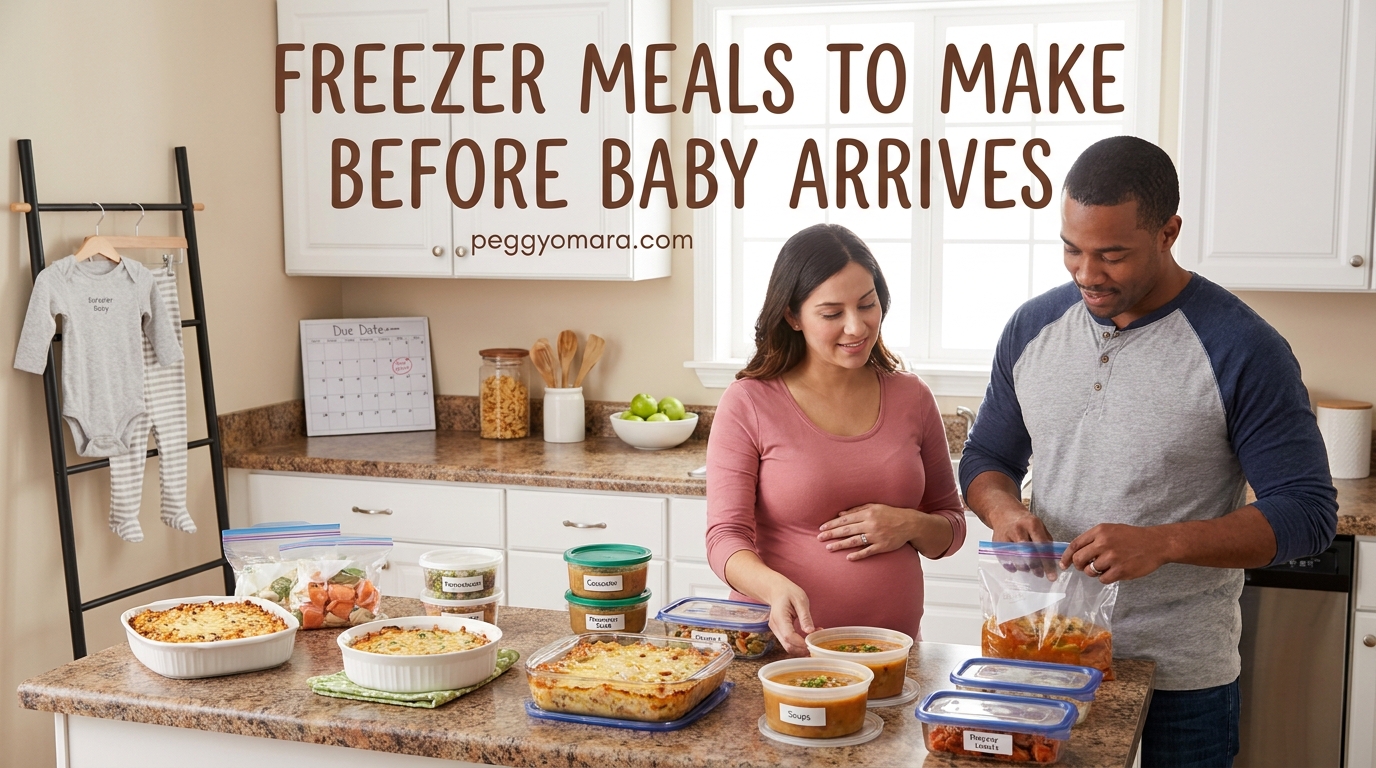
Those first weeks with a newborn are a beautiful blur of snuggles, sleepless nights, and figuring out how to do everything with one hand. The last thing you want to worry about is what is for dinner. That is exactly why freezer meals to make before baby arrives became my lifeline during my postpartum journey, and why I believe every expectant parent should have a stocked freezer before their little one makes their grand entrance.
When I was pregnant with my first, I remember standing in my kitchen at 36 weeks, completely overwhelmed by the idea of prepping dozens of meals. I scoured Pinterest, saved countless recipes, and wondered if I was starting too late or aiming too high. Looking back, I can tell you with absolute certainty: any amount of meal prep you do will help. You do not need to be a meal prep superhero to get through the fourth trimester with your sanity (and nutrition) intact.
This postpartum meal prep guide will walk you through everything you need to know about stocking your freezer before baby arrives. We will cover what meals freeze best, how many to make, when to start prepping, proper storage techniques, and plenty of recipe ideas that new parents actually want to eat. Whether you are a first-time mom planning for the unknown or a seasoned parent looking to do things differently this time around, you will find practical, realistic advice that honors both your time constraints and your nutritional needs.
Let us get your freezer ready for one of the most important transitions of your life.
Table of Contents
Why Freezer Meals Are Essential for New Parents?
The fourth trimester is real, and it is demanding. Your body is healing from birth, your hormones are adjusting, you are likely sleep-deprived, and you are learning to care for a tiny human who needs you around the clock. Cooking a nutritious meal from scratch? That becomes surprisingly difficult when you are holding a baby who only wants to be held.
Freezer meals to make before baby arrives solve multiple problems at once. They ensure you have nourishing food available even when you cannot leave the couch. They save money that might otherwise go to expensive takeout or convenience foods. They support your physical recovery by providing nutrient-dense options rich in protein, iron, and anti-inflammatory ingredients. And if you are breastfeeding, they can include lactogenic foods that support milk supply while keeping your energy levels stable.
I have talked with hundreds of new parents in online communities, and the feedback is consistent: the people who prepped freezer meals were incredibly grateful they did. One mom told me her frozen breakfast burritos were the only reason she ate before noon during those early weeks. Another said her freezer stash of soups and stews kept her family fed while she recovered from a cesarean birth. The peace of mind alone is worth the prep time.
What Meals Freeze Well for New Parents?
Not every meal is destined for freezer greatness. The best postpartum freezer meals share certain qualities: they reheat without becoming mushy, they provide balanced nutrition, they can be eaten with one hand, and they actually taste good after thawing. After testing dozens of recipes and gathering feedback from new parents, here is what consistently works.
Soups, stews, and chilis are freezer champions. They freeze flat in bags for easy storage, reheat beautifully, and provide hydration along with nutrition. Casseroles and baked pasta dishes work wonderfully too, especially when wrapped properly to prevent freezer burn. Breakfast items like burritos, muffins, and egg bites are surprisingly freezer-friendly and become the most-used items in your stash. Meatballs, marinated proteins, and pre-portioned smoothie packs round out a well-rounded freezer collection.
For breastfeeding moms, focus on meals rich in oats, flaxseed, leafy greens, healthy fats, and quality protein. These ingredients support milk production while providing sustained energy. For general recovery, prioritize anti-inflammatory foods like bone broth, turmeric, ginger, and omega-3 rich proteins. Your body is doing incredible healing work, and the right nutrition supports that process.
Freezer Meals to Make Before Baby Arrives: Breakfast Ideas (2026)
Breakfast is the meal that gets forgotten most often during the newborn phase. You are up at odd hours, your appetite is unpredictable, and finding time to make something nutritious feels impossible. Here are the breakfast freezer meals that new parents reach for again and again.
Baked Oatmeal and Overnight Oats
Baked oatmeal is a revelation for new parents. Make a large batch in a casserole dish, portion into squares, and freeze individually wrapped. You can reheat a square in the microwave in under two minutes. Add blueberries, apples, bananas, or nuts for variety. The oats provide sustained energy and are well-known for supporting milk supply in breastfeeding moms.
Overnight oats work differently for the freezer. Prepare individual portions in mason jars without the liquid, then freeze the dry ingredient mixes. When ready to eat, add milk or yogurt and let sit overnight (or a few hours) in the refrigerator. This gives you variety without much morning effort.
Freezer Breakfast Burritos
Breakfast burritos are hands-down the most popular postpartum freezer meal in every parent forum I have visited. They are portable, filling, customizable, and reheated perfectly from frozen. Scramble eggs with cheese, add sautéed vegetables, beans, or breakfast meat, wrap in tortillas, and wrap individually in foil then place in freezer bags.
The key is undercooking the eggs slightly and letting everything cool completely before assembly. This prevents soggy tortillas and watery fillings. Label each burrito with the contents so you can grab exactly what you are craving. A pro tip from experienced moms: make some with just eggs and cheese for sensitive stomachs, and load others up with veggies and protein for heartier appetites.
Egg Bites and Egg Muffins
Egg bites made in muffin tins are perfect for new parents. They are bite-sized, protein-packed, and reheat in the microwave in 30 seconds. Whisk eggs with cottage cheese or cream cheese for creaminess, add diced vegetables, cheese, and cooked meat if desired. Bake until just set, cool completely, and freeze in airtight containers with parchment paper between layers.
These are especially valuable for those early postpartum days when you need something you can eat with one hand while holding a sleeping baby. Keep a container of egg bites on the counter next to your nursing station for easy access.
Freezer-Friendly Muffins
Muffins are the unsung heroes of postpartum meal prep. Make double or triple batches of banana oat muffins, blueberry muffins, or bran muffins and freeze them individually wrapped. They thaw at room temperature in about 30 minutes or reheat beautifully in the microwave for 20 seconds. Pair with Greek yogurt or a hard-boiled egg for a balanced mini-meal.
Many new parents swear by lactation muffins made with brewer’s yeast, flaxseed, and oats. These ingredients may help support milk supply while providing a satisfying treat. Even if you are not breastfeeding, these nutrient-dense muffins beat processed snack bars any day.
Freezer Pancakes and Waffles
Yes, pancakes and waffles freeze beautifully. Make a huge batch on your prep day, let them cool completely on wire racks (this prevents sogginess), then freeze flat on a baking sheet before transferring to freezer bags. Reheat directly from frozen in the toaster or toaster oven. This technique maintains the crispy edges that make pancakes satisfying.
Protein pancakes made with Greek yogurt or cottage cheese in the batter provide more staying power than traditional versions. Serve with nut butter for additional protein and healthy fats that support postpartum recovery.
Lunch and Dinner Freezer Meals for Postpartum
Dinner is when freezer meals truly shine. After a long day of newborn care, having a nourishing meal ready to heat and eat feels like a luxury. Here are the lunch and dinner categories that work best for postpartum meal prep.
Soups, Stews, and Chilis
Soups are the perfect postpartum food. They are hydrating, comforting, easy to eat one-handed from a mug, and they freeze exceptionally well. The key is freezing them flat in heavy-duty freezer bags rather than in rigid containers. This saves precious freezer space and allows faster thawing.
The best soups for new parents include chicken noodle (use hearty pasta that holds up to freezing), lentil soup (high in iron and protein), vegetable beef soup, and creamy tomato soup. Avoid freezing soups with delicate dairy, potatoes that get grainy, or pasta that turns mushy. Add those elements fresh when reheating if desired.
Chili is a freezer superstar. Both meat-based and vegetarian versions freeze beautifully and provide substantial nutrition. Serve over baked sweet potatoes, with cornbread, or topped with avocado and cheese. The combination of protein, fiber, and complex carbohydrates keeps energy stable during demanding days.
Casseroles and Baked Pasta
Casseroles are the quintessential freezer meal for good reason. They are comforting, filling, and reheat to feed a hungry family or provide multiple meals for one person. The classics work beautifully: lasagna, baked ziti, shepherd’s pie, chicken and rice casserole, and enchilada bakes.
When freezing casseroles, you have two options. Assemble in a disposable aluminum pan, wrap tightly with plastic wrap then foil, and freeze unbaked. When ready to eat, thaw overnight and bake fresh. Alternatively, bake the casserole first, cool completely, portion into individual servings, and freeze those. The second method is better for solo eaters who do not want to commit to a whole casserole.
A note on pasta: slightly undercook pasta before adding to casseroles if freezing unbaked. This prevents mushy noodles after the second cooking. For rice dishes, use slightly less liquid than usual since rice continues absorbing moisture during freezing and reheating.
Meatballs and Marinated Proteins
Meatballs are incredibly versatile freezer assets. Make large batches of turkey, beef, or chicken meatballs, bake until cooked through, cool, and freeze on baking sheets before transferring to bags. They reheat quickly and can be added to pasta, served with frozen vegetables and rice, or eaten as protein-rich snacks.
Marinated raw chicken, beef, or pork can also be frozen in bags with their marinades. When you are ready to cook, thaw overnight and bake or slow cook. The meat marinates while freezing and thawing, resulting in flavorful, tender protein with zero day-of effort.
Slow Cooker and Instant Pot Freezer Packs
One of the smartest postpartum meal prep strategies is creating slow cooker freezer packs. These are bags of prepped ingredients that go straight from freezer to slow cooker. No thawing required. Combine raw protein, chopped vegetables, seasonings, and sauces in freezer bags, freeze flat, and add to your slow cooker with a splash of liquid when ready to cook.
Great combinations include chicken with salsa and black beans, beef stew meat with root vegetables and broth, or pork shoulder with barbecue sauce. These meals cook while you care for your baby and fill your home with comforting smells. The hands-off cooking method is perfect for days when you cannot stand at the stove.
One-Pan and Sheet Pan Meals
Pre-made sheet pan dinners are another brilliant option for postpartum. Combine raw protein and chopped vegetables with oil and seasonings in freezer bags. When ready to eat, thaw overnight, dump onto a sheet pan, and roast. This gives you a fresh-tasting meal with minimal active cooking time.
Popular combinations include chicken thighs with sweet potatoes and broccoli, sausage with peppers and onions, or salmon with asparagus and lemon. These meals feel more like fresh cooking than reheating, which can be psychologically satisfying when you are tired of thawed food.
Snacks and Treats That Freeze Well
New parents need snacks. Breastfeeding moms especially need convenient, nutrient-dense options they can grab while nursing or during those brief moments of baby sleep. Here are the freezer snacks that get the most use during postpartum.
Energy Bites and Protein Balls
No-bake energy bites made with oats, nut butter, honey, and add-ins like chocolate chips or dried fruit freeze wonderfully. Roll into balls, freeze on a baking sheet, then store in containers. These provide quick energy and healthy fats, perfect for the demanding early weeks.
Lactation Cookies
Whether or not you believe in their milk-boosting powers, lactation cookies are delicious and freezer-friendly. Make a double batch, portion the dough into balls, and freeze raw. Bake fresh cookies from frozen dough balls whenever the craving strikes. Warm cookies are a small joy during intense postpartum days.
Homemade Granola and Granola Bars
Homemade granola can be frozen in large batches and stays fresh for months. Serve over yogurt, with milk, or eat by the handful. Homemade granola bars wrapped individually make excellent grab-and-go snacks that beat store-bought versions in both nutrition and cost.
Smoothie Packs
Pre-portioned smoothie packs are genius for postpartum. Fill freezer bags with combinations of frozen fruit, leafy greens, flaxseed, and protein powder. When ready for a smoothie, dump the contents into a blender with liquid and blend. No measuring, no prep, just nutrition in a glass.
Great combinations include strawberry banana with spinach, tropical mango with kale, or blueberry with oats and almond butter. These provide hydration, vitamins, and calories without requiring you to chew when you might be too tired for a full meal.
Bone Broth
Bone broth deserves special mention for postpartum recovery. It is rich in collagen, minerals, and amino acids that support healing. Make large batches and freeze in individual portions, either in mason jars (leave expansion space) or in freezer bags. Sip plain as a warming drink, use as a base for quick soups, or add to grains for extra nutrition.
Many traditional cultures emphasize warm, mineral-rich broths for new mothers. Modern science supports this wisdom, as the glycine and collagen in bone broth support tissue repair and joint recovery after birth.
How to Store and Reheat Your Postpartum Freezer Meals?
Proper storage makes the difference between meals that taste fresh and meals that suffer from freezer burn or off-flavors. Here is exactly how to store and reheat your postpartum freezer meals for best results.
Storage Containers and Methods
For soups, stews, and chilis, heavy-duty freezer bags are the best storage method. Ladle cooled food into bags, press out all air, seal, and freeze flat. Once frozen, you can stack these like books in your freezer, maximizing space efficiency. Always place bags on a baking sheet until frozen solid to prevent leaks and maintain shape.
For casseroles and baked dishes, disposable aluminum pans with tight-fitting lids work beautifully. They stack well, go from freezer to oven, and eliminate the need to retrieve your good dishes from a sleep-deprived friend’s house later. Wrap the entire pan in plastic wrap, then foil, for extra protection.
For individual items like burritos, muffins, and egg bites, airtight containers with tight-fitting lids prevent freezer burn and keep flavors fresh. Use parchment paper between layers to prevent sticking. Vacuum sealing is excellent if you have the equipment, but not necessary for meals that will be consumed within three months.
Labeling Your Freezer Meals
Labeling is non-negotiable for postpartum freezer meals. You will not remember what is in that foil-wrapped package at 3 AM three months from now. Every item should have a label with: the contents, the date frozen, reheating instructions, and any allergen notes.
Use a permanent marker on freezer tape, or invest in a simple label maker for neater results. Some parents color-code labels by meal type (breakfast = yellow, dinner = blue) for easier identification. Include reheating instructions like “microwave 3 minutes, stir, then 2 more minutes” or “thaw overnight, bake at 375 for 45 minutes.” Your future sleep-deprived self will thank you.
Thawing and Reheating Methods
The safest way to thaw freezer meals is overnight in the refrigerator. This maintains food quality and safety. However, new parents do not always plan meals 24 hours ahead. For faster thawing, submerge sealed freezer bags in cold water, changing the water every 30 minutes. Small items thaw in an hour or two using this method.
For reheating, the microwave is your friend during postpartum, even if you prefer other methods normally. Remove food from freezer bags (never microwave plastic), place in microwave-safe dishes, cover with a damp paper towel to prevent drying, and heat in short intervals, stirring between each. Casseroles reheat beautifully in the oven from frozen or thawed states.
Slow cooker freezer packs go directly from freezer to slow cooker with no thawing. Add an extra hour to the cooking time if starting from frozen. The Instant Pot can also cook frozen meals using the pressure cooking function, though you will need extra liquid and time.
Freezer Storage Duration
Most properly stored freezer meals maintain quality for three months, with some lasting up to six months. Soups and stews hold up longest, up to six months. Baked goods like muffins and burritos are best within three months. Casseroles with dairy may develop texture changes after two to three months but remain safe to eat.
Quality matters more than safety for freezer storage. Food stored at 0 degrees Fahrenheit remains safe indefinitely, but flavor and texture degrade over time. For best results, aim to consume your postpartum freezer meals within the first three months after birth.
When to Start Prepping and How Many Meals to Make?
This is the question I hear most often: when should I start, and how much should I make? The answer depends on your energy level, freezer space, and support system. Here is a framework that has helped hundreds of expectant parents plan their prep without overwhelm.
When to Start Prepping
The ideal time to begin serious meal prep is between 32 and 36 weeks of pregnancy. Earlier than 32 weeks, and your meals sit in the freezer too long, potentially losing quality. Later than 36 weeks, and you risk going into labor before finishing, or simply running out of energy and mobility for standing kitchen work.
However, you can start earlier with strategic batch cooking. Any time you make a meal that freezes well during your second or third trimester, simply double the recipe and freeze half. This gradual approach spreads the work over months rather than cramming it into a few exhausting weekends.
The Good, Better, Best Framework
Use this framework to set realistic goals based on your situation:
Good: 10 to 15 dinner meals plus 5 breakfast options. This gives you two weeks of dinners and a week of breakfasts, enough to get through the immediate postpartum period when cooking feels impossible.
Better: 15 to 20 dinner meals, 12 to 15 breakfast servings, and 4 liters of bone broth. This covers approximately three weeks of dinners and two weeks of breakfasts, with nourishing broth for sipping throughout the day.
Best: 20 to 25 dinner meals, 20 to 24 breakfast servings, 6 liters of bone broth, and 2 to 3 batches of snacks or treats. This comprehensive stash covers a full month and provides variety that prevents meal fatigue.
Planning for Your Specific Situation
Consider these factors when deciding how many meals to make. If you have a partner who cooks, you need fewer meals than a single parent. If family is providing a meal train, plan for shorter coverage. If you are having multiples or anticipate a cesarean birth, aim for the higher end of recommendations since recovery may be longer.
Also consider your freezer space. A small apartment freezer cannot hold 30 meals. In that case, focus on nutrient-dense items that provide the most value per cubic inch: soups in flat bags, breakfast burritos, and bone broth. Quality over quantity always wins.
Materials You Need for Postpartum Meal Prep
Having the right supplies makes meal prep significantly easier. Here is what you need to successfully stock your freezer before baby arrives.
Essential Storage Supplies
Heavy-duty freezer bags in gallon and quart sizes are non-negotiable. The freezer-specific ones are thicker and prevent leaks better than storage bags. You will need dozens, so buy in bulk. Aluminum foil and plastic wrap provide extra protection against freezer burn for casseroles and wrapped items.
Disposable aluminum pans with lids are worth the small investment. They eliminate the problem of retrieving your good dishes later. Freezer-safe glass containers with tight lids work well for individual portions, though they take up more space than bags. Silicone freezer bags are an eco-friendly reusable option if you plan to continue meal prep beyond postpartum.
Labeling Supplies
Freezer tape and a permanent marker are the bare minimum for labeling. Masking tape falls off in the freezer, so do not substitute. A basic label maker produces neater, more professional-looking labels that are easier to read through frost. Pre-printed labels with fields for contents, date, and instructions save time during busy prep sessions.
Kitchen Equipment
You do not need special equipment, but certain tools make prep easier. A large stockpot for batch cooking soups and chilis. Multiple sheet pans for cooling and freezing items individually before bagging. A slow cooker or Instant Pot for hands-off cooking of large quantities. A food processor for quickly chopping vegetables for multiple recipes.
If you are buying anything new for this project, prioritize the freezer bags and aluminum pans. Everything else is a convenience, not a requirement.
Frequently Asked Questions
How many postpartum freezer meals should I make?
Aim for 15 to 25 dinner meals and 12 to 24 breakfast servings for comprehensive coverage. The Good, Better, Best framework suggests: Good (10-15 dinners, 5 breakfasts), Better (15-20 dinners, 12-15 breakfasts, bone broth), Best (20-25 dinners, 20-24 breakfasts, broth, and snacks). Adjust based on your freezer space, partner support, and whether you will have a meal train.
When to start prepping freezer meals for postpartum?
Start serious meal prep between 32 and 36 weeks of pregnancy. This timing ensures food stays fresh for postpartum use while allowing you to finish before birth. You can begin gradual batch cooking earlier by doubling recipes you already make and freezing half. Avoid starting major prep after 37 weeks since labor could begin at any time.
What are the best postpartum meals to freeze?
The best freezer meals are soups, stews, chilis, casseroles, breakfast burritos, egg bites, and muffins. These reheat well, provide balanced nutrition, and can often be eaten one-handed. Focus on nutrient-dense options rich in protein, iron, and anti-inflammatory ingredients to support recovery. Avoid meals with delicate dairy, raw vegetables, or fried foods that do not freeze well.
What freezer meals are good for breastfeeding?
Breastfeeding-friendly freezer meals include lactation cookies, oatmeal-based breakfasts, energy bites with flaxseed, and protein-rich dinners. Foods containing oats, brewer’s yeast, flaxseed, leafy greens, healthy fats, and quality protein support milk supply and maternal energy. Bone broth is especially beneficial for hydration and minerals. Stay well-hydrated regardless of what you are eating.
How long do postpartum freezer meals last?
Properly stored freezer meals maintain best quality for 3 months, with some lasting up to 6 months. Soups and stews hold up longest (up to 6 months). Baked goods and breakfast items are best within 3 months. Casseroles with dairy may develop texture changes after 2-3 months but remain safe to eat. Label everything with dates and aim to consume within 3 months of freezing for best taste.
What meals freeze well for new parents?
New parents need meals that freeze well AND reheat well, since texture changes can make some foods unappetizing. Top choices include: breakfast burritos, egg muffins, baked oatmeal, muffins, soups and stews, chili, meatballs, lasagna, enchiladas, shepherd’s pie, and slow cooker freezer packs. These provide one-handed eating options, balanced nutrition, and satisfying flavors even after thawing.
Final Thoughts on Freezer Meals to Make Before Baby Arrives
As you stand in your kitchen preparing for this incredible transition, remember that perfect is the enemy of good. You do not need to make every recipe in this guide or fill every inch of your freezer. Even five meals in the freezer is five meals you will not have to cook while recovering from birth and learning to parent a newborn.
The newborn phase is temporary, but intense. Having freezer meals to make before baby arrives gives you one less thing to worry about during a time when everything feels new and challenging. It is an act of self-care that pays dividends in nourishment, peace of mind, and the simple comfort of a hot meal at the end of a long day.
Start where you are, use what you have, and do what you can. Whether that means making a double batch of chili this weekend or hosting a full meal prep party with friends, every meal you freeze is a gift to your future self. You are preparing not just for birth, but for the beautiful, demanding, transformative weeks that follow.
You have got this, and soon, you will have a stocked freezer to prove it.