
I cleared out my cleaning cabinet last spring and counted 17 different bottles. Glass cleaner, all-purpose spray, bathroom scrub, floor cleaner, and a dozen more I barely used. The labels had words I could not pronounce. My kids were getting older and asking questions. I needed a simpler way.
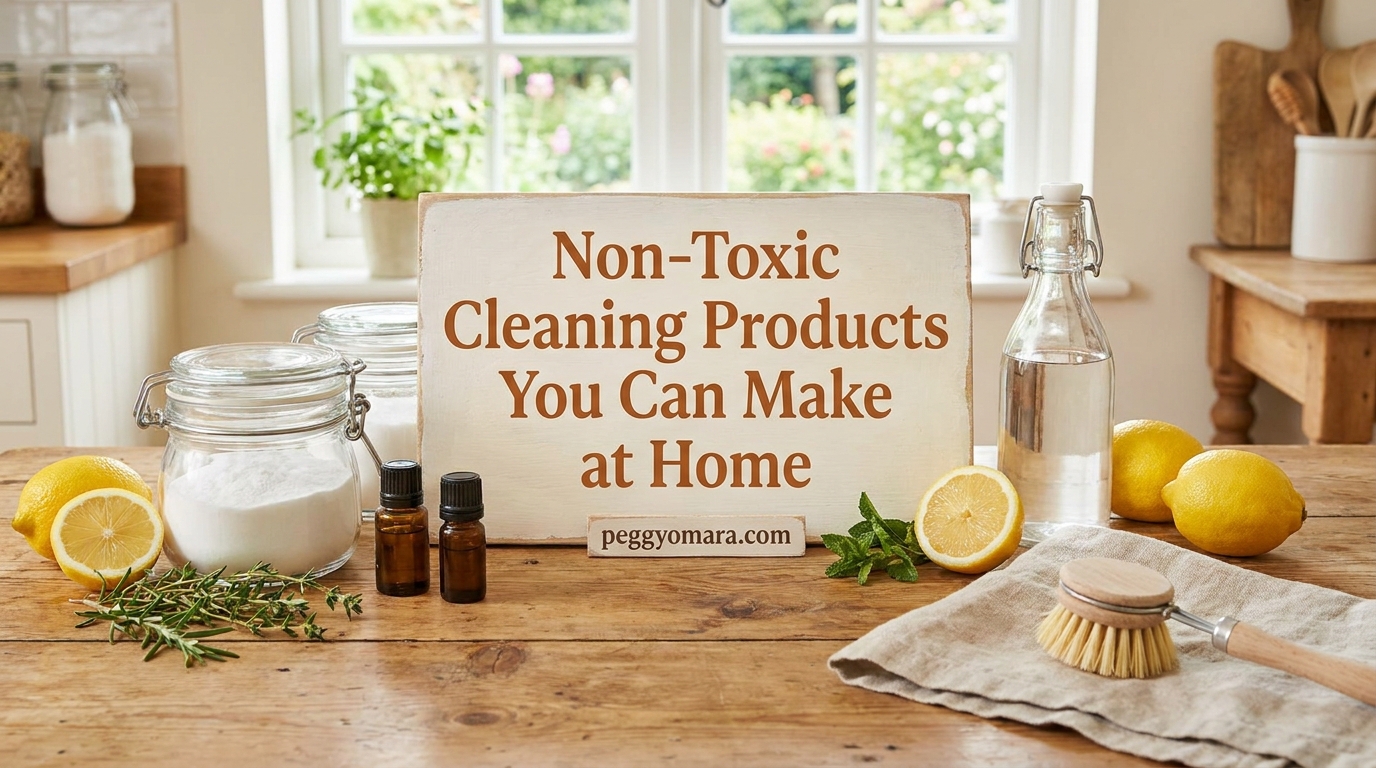
Making non-toxic cleaning products at home is easier than you think. You need about six basic ingredients. Most recipes take under two minutes to mix. The result cleans just as well as store-bought products without the chemical exposure.
In this guide, I share five recipes I have tested in my own kitchen and bathroom over the past year. Each one uses ingredients you probably already have. You will save money, reduce plastic waste, and know exactly what goes into every spray bottle.
Table of Contents
Common Ingredients You’ll Need
Before diving into recipes, stock your pantry with these basics. Each ingredient serves multiple purposes, so you will use them across different recipes.
White vinegar contains acetic acid that dissolves mineral deposits, cuts through grease, and kills bacteria. Buy the cheap distilled kind in the large jug.
Baking soda acts as a gentle abrasive for scrubbing. It also neutralizes odors and reacts with acids to break down grime.
Castile soap is a vegetable-based soap that cleans without harsh chemicals. Dr. Bronner’s is the most common brand, but any unscented castile works.
Lemon juice provides citric acid for cutting grease and adding fresh scent. Fresh lemons work best, but bottled juice works in a pinch.
Essential oils add fragrance and some antimicrobial properties. Tea tree, lavender, and lemon are popular choices. Use sparingly—a few drops go far.
Hydrogen peroxide (3% solution) disinfects without chlorine bleach. Keep it in a dark bottle since light breaks it down.
Total cost for all these supplies runs about $18. That same amount would buy three or four commercial cleaning products. Your homemade supplies will last months.
All-Purpose Vinegar Cleaner (2026)
This is my most-used recipe. I keep a bottle in the kitchen and another in the bathroom. It handles 90% of my cleaning needs.
What you need:
- 1 cup white vinegar
- 1 cup water
- 10-15 drops essential oil (optional)
- Spray bottle (16 oz)
How to make it:
Mix equal parts vinegar and water in your spray bottle. Add essential oil if you want to mask the vinegar smell. Shake before each use.
Best uses: Countertops, sinks, faucets, appliance exteriors, toilet seats, tile floors, mirrors (when dried with a cloth).
Do not use on: Natural stone like granite or marble (vinegar etches the surface), unfinished wood, or cast iron pans.
The vinegar smell fades within minutes as it dries. I add lemon essential oil to my kitchen bottle and tea tree to my bathroom bottle. Both smell clean without being overpowering.
Baking Soda Scrubbing Paste
Some messes need more than a spray. This paste scrubs away soap scum, baked-on food, and stubborn stains without scratching surfaces.
What you need:
- 1/2 cup baking soda
- 1-2 tablespoons castile soap
- 1 teaspoon water (if needed for consistency)
How to make it:
Stir baking soda and castile soap in a small bowl until you get a frosting-like paste. Add a few drops of water if it is too thick. Store in a sealed container.
Best uses: Bathtubs, shower tiles, sinks, grimy pots and pans, stained coffee mugs.
How to use: Apply with a damp sponge or cloth. Scrub in circles, then rinse thoroughly. For tough jobs, let the paste sit for 10 minutes before scrubbing.
I use this weekly on my kitchen sink. It removes coffee and tea stains that other cleaners miss. The castile soap cuts grease while the baking soda provides gentle abrasion.
Citrus Degreaser Spray
Kitchen grease demands something stronger than basic vinegar spray. The citrus oils in this recipe cut through cooking residue better than any commercial degreaser I have tried.
What you need:
- 2 cups water
- 1/2 cup white vinegar
- 1/4 cup lemon juice (fresh or bottled)
- 1 teaspoon castile soap
- Spray bottle (24 oz)
How to make it:
Combine all ingredients in your spray bottle. The castile soap helps the mixture stick to vertical surfaces like range hoods and backsplash tiles. Shake before each use.
Best uses: Stovetops, range hoods, greasy countertops, inside microwaves, cabinet fronts near the stove.
Pro tip: For baked-on oven messes, spray this mixture and let it sit for 15 minutes. The acid softens the grime so it wipes away easily.
The fresh lemon scent makes this my favorite cleaner for daily kitchen use. Unlike commercial degreasers that linger with chemical smells, this one leaves just a light citrus note.
Castile Soap All-Purpose Cleaner
Not every surface tolerates acid. This soap-based cleaner works safely on hardwood floors, sealed stone, and any surface where vinegar might cause damage.
What you need:
- 1 tablespoon castile soap
- 1 quart warm water
- Bucket or large spray bottle
How to make it:
Add castile soap to warm water and stir gently. Avoid shaking vigorously, which creates excess bubbles. For spray application, use a quart-size bottle filled three-quarters full.
Best uses: Hardwood floors, laminate, sealed stone countertops, painted walls, general dusting.
Important: This cleaner needs rinsing on most surfaces. Spray or mop with the solution, then wipe with plain water to remove soap residue.
I use this weekly on my hardwood floors. The castile soap lifts dirt without the harsh chemicals found in commercial floor cleaners. My floors look clean without the slippery residue some products leave behind.
Streak-Free Glass Cleaner
Commercial glass cleaners often contain ammonia, which irritates lungs and eyes. This recipe uses cornstarch for a streak-free shine without the chemical fumes.
What you need:
- 1/4 cup white vinegar
- 1/4 cup rubbing alcohol (optional, for faster drying)
- 1 tablespoon cornstarch
- 2 cups warm water
- Spray bottle (24 oz)
How to make it:
Dissolve cornstarch in warm water first to prevent clumping. Add vinegar and alcohol if using. Pour into spray bottle. Shake well before each use—the cornstarch settles.
Best uses: Windows, mirrors, glass tabletops, chrome fixtures, car windows.
The secret: Wipe with newspaper or a microfiber cloth, not paper towels. Paper towels leave lint that shows on glass. Old newspaper works surprisingly well and costs nothing.
The cornstarch might seem odd, but it prevents water spots and streaks better than vinegar alone. I clean my bathroom mirror weekly with this and have not seen streaks in months.
Safety Tips and Storage Guidelines
Natural ingredients are safer than harsh chemicals, but they still require common sense. Follow these guidelines to keep your household safe.
Never mix vinegar and hydrogen peroxide in the same bottle. The combination creates peracetic acid, which irritates airways. Use them separately.
Label everything clearly. Write the contents and date on each bottle. Even though these are food-safe ingredients, you want to know what you are spraying.
Keep away from children and pets. Store on high shelves. While non-toxic, concentrated vinegar and essential oils can cause stomach upset if ingested.
Shelf life varies by recipe:
- Vinegar-based sprays: 1 year (vinegar preserves the mixture)
- Citrus degreaser: 3 months (fresh lemon juice degrades)
- Baking soda paste: 6 months in a sealed container
- Castile soap solution: 1 month (water-based solutions can grow bacteria)
Surface warnings: Test any new cleaner on a hidden spot first. Natural stone, waxed surfaces, and antique finishes need special care. When in doubt, use the castile soap cleaner—it is the gentlest option.
How Much You’ll Save?
Let me break down the actual numbers. I tracked my costs for 2026 to compare homemade versus store-bought.
Homemade starter kit cost:
- White vinegar (1 gallon): $3
- Baking soda (4 lb box): $3
- Castile soap (32 oz): $10
- Lemons (2 lb bag): $4
- Essential oils (starter set): $12
- Spray bottles (5 pack): $8
- Total: $40
That $40 investment makes approximately 50 batches of cleaner. Each 16-ounce batch costs about $0.80.
Commercial alternative cost:
- All-purpose spray: $4
- Glass cleaner: $4
- Bathroom scrub: $5
- Degreaser: $5
- Floor cleaner: $6
- Total for equivalent products: $24
Those commercial bottles last about two months in my house. The homemade supplies last eight months. Over a full year, commercial products cost $144. Homemade supplies cost $40 for the first year, then about $20 for refills (vinegar, baking soda, lemons).
You save roughly $100 in year one. After that, annual costs drop to under $25 for a continuous supply.
Frequently Asked Questions
What cleaning products can I make at home?
You can make all-purpose spray cleaner, glass cleaner, scrubbing paste, degreaser, and floor cleaner using simple ingredients like vinegar, baking soda, castile soap, and lemon juice. These DIY alternatives replace most commercial cleaning products in your home.
Do baking soda and vinegar actually clean stuff?
Yes. Baking soda works as a gentle abrasive that scrubs away stains and neutralizes odors. Vinegar contains acetic acid that dissolves mineral deposits, cuts grease, and kills bacteria. Together they handle most household cleaning tasks effectively.
How to make a non-toxic cleaner at home?
Mix equal parts white vinegar and water in a spray bottle for a basic all-purpose cleaner. Add 10-15 drops of essential oil for scent. For scrubbing, mix baking soda with a small amount of castile soap to form a paste. Store in labeled containers and use within recommended shelf life.
What are some non-toxic cleaning products?
Non-toxic cleaning products include homemade solutions made from white vinegar, baking soda, castile soap, lemon juice, and essential oils. These natural ingredients clean effectively without harsh chemicals like ammonia, chlorine bleach, or synthetic fragrances found in commercial products.
Start Simple, See Results
You do not need to replace everything at once. Pick one recipe from this list and try it this week. The all-purpose vinegar cleaner is the easiest starting point.
Once you see how well these work, you will wonder why you ever bought seventeen different bottles. Making non-toxic cleaning products at home saves money, reduces waste, and gives you control over what touches your family’s surfaces. That is worth the small effort it takes to mix a spray bottle.