
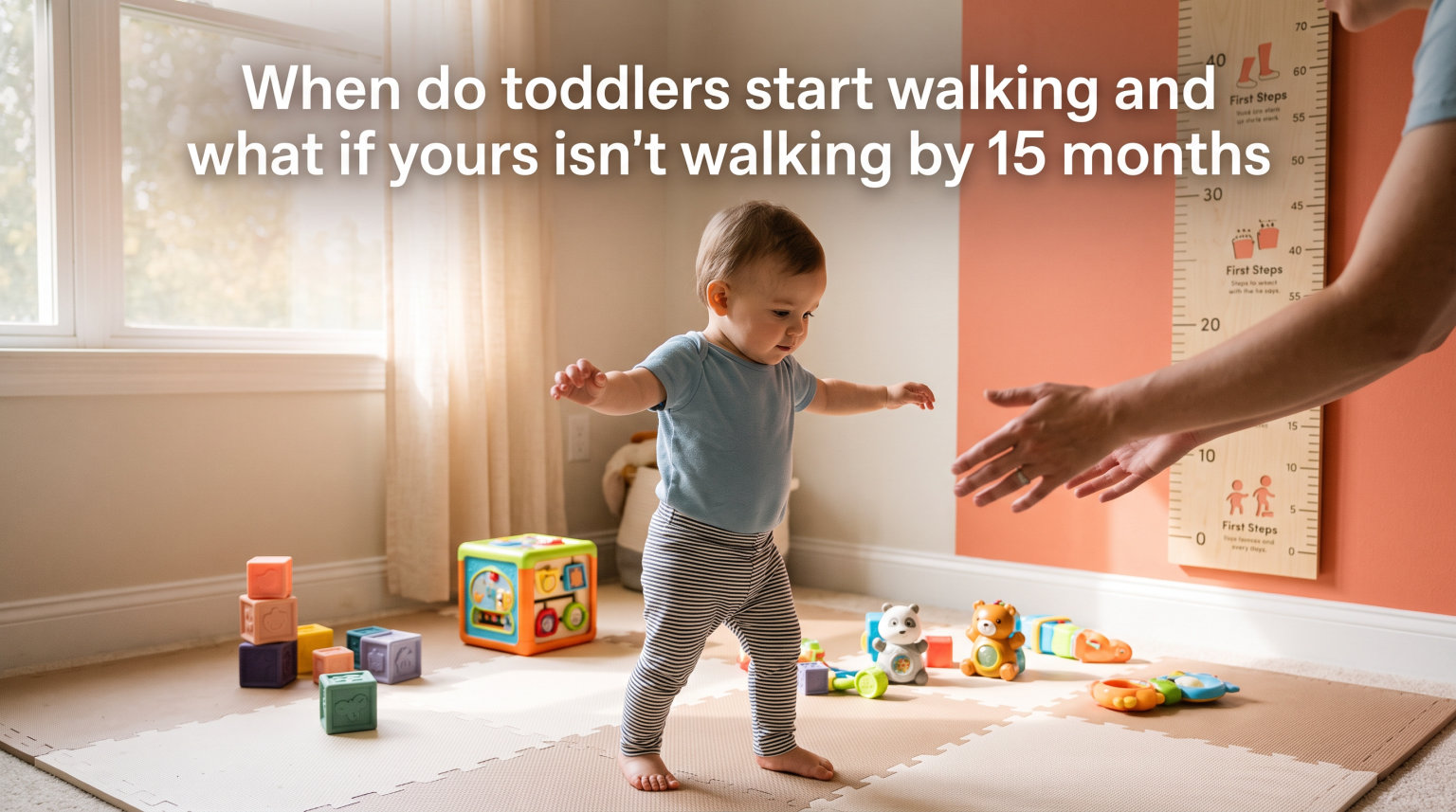
When do toddlers start walking? Most children take their first independent steps between 9 and 18 months of age. The average toddler starts walking somewhere between 12 and 15 months.
If your 15-month-old is not walking yet, you are not alone. Thousands of parents search for this exact question every month, usually late at night, usually after a playdate where another child walked circles around their own.
I have spoken with hundreds of parents about this milestone over the years. The anxiety is real, but the good news is that a 15-month-old who is not walking is still well within the normal range. This guide will walk you through what to expect, when to genuinely worry, and how to support your little one’s journey to independent steps.
Table of Contents
When Do Toddlers Start Walking
Toddlers typically start walking between 9 and 18 months. That is a nine-month window, which tells you just how much normal variation exists.
Some babies take their first steps at 9 months and are running by their first birthday. Others are perfectly content crawling, cruising, and exploring on hands and knees until 17 or 18 months. Both ends of this spectrum are completely normal.
The average age for independent walking falls between 12 and 15 months. If your child is within this range, they are tracking right on schedule. But remember that averages exist because of variation, not in spite of it.
What Counts as Walking
Independent walking means taking a few steps without holding onto anything. Some experts say five or six steps counts as “walking.” Others look for sustained movement across a room.
Your child does not need to be steady or graceful. Those first wobbly, wide-legged steps with arms held high count just as much as a confident 14-month-old striding across the playground.
Why the Range Is So Wide
Several factors influence when a child walks. Temperament plays a huge role. Cautious babies often wait until they are completely confident before letting go of furniture. More adventurous spirits might take earlier risks and tumble their way to walking sooner.
Body type matters too. Longer, heavier babies sometimes walk later because they have more weight to support and balance. Premature babies often reach milestones on their adjusted age timeline rather than their actual birth date.
There is also a family component. If you or your partner walked late, there is a good chance your child inherited that timeline.
Pre-Walking Milestones by Month
Walking does not appear out of nowhere. It builds on a foundation of earlier motor skills that develop in a predictable sequence. Understanding these pre-walking skills helps you see whether your child is on track, even if they have not taken those first solo steps.
Each milestone builds strength, balance, and confidence for the next stage. A child who is actively progressing through these stages is developing normally, even if independent walking is still weeks or months away.
Pulling Up to Stand (7 to 10 Months)
This is where walking preparation begins. Your baby uses furniture, your legs, or toy shelves to pull themselves from sitting to standing. This builds leg strength and teaches them how to bear weight on their feet.
Most babies master pulling up between 7 and 10 months. If your 15-month-old is not walking but has been pulling up for months, they are progressing normally through the skill sequence.
Cruising Along Furniture (9 to 13 Months)
Cruising means moving sideways while holding onto furniture for support. Your baby shuffles along the couch, coffee table, or crib rails, building strength and learning to shift weight from foot to foot.
This stage can last several months. Many parents worry when their child cruises for weeks without attempting independent steps. This extended cruising period is actually valuable practice. It builds the hip stability and balance needed for walking.
Standing Unassisted (10 to 16 Months)
The ability to stand independently without holding onto anything is a critical precursor to walking. This milestone shows your child has developed enough balance and core strength to support their body upright.
Many babies first discover they can stand alone accidentally while playing with two hands. They let go of furniture, focus on a toy, and suddenly realize they are standing unsupported. This moment often happens before parents realize the skill has emerged.
Pre-Walking Milestones at a Glance
| Milestone | Typical Age Range | What It Looks Like |
|---|---|---|
| Pulling to stand | 7-10 months | Uses furniture to get from sitting to standing |
| Cruising | 9-13 months | Side-stepping while holding onto furniture |
| Standing unassisted | 10-16 months | Brief periods standing without support |
| First independent steps | 9-18 months | Walking 5-6+ steps without holding on |
| Confident walking | 12-18 months | Walking across rooms, squatting, carrying items |
Is 15 Months Too Late for Walking
No, 15 months is not too late for walking. Your child is still within the normal developmental window.
By 15 months, many toddlers are walking confidently. But many others are still cruising, taking occasional independent steps, or focusing on other skills. If your 15-month-old is showing pre-walking skills like pulling up, cruising, or standing alone, there is rarely cause for concern.
The threshold for concern comes later. Most pediatricians begin evaluating for potential delays around 18 months if a child is not walking independently. Even then, many late walkers are perfectly healthy children who simply needed more time.
What Late Walker Actually Means
The term “late walker” typically refers to children who walk after 18 months. Before that point, most medical professionals consider a child within normal variation.
Between 15 and 18 months, many children transition from cruising to independent walking. Some do it suddenly over a weekend. Others take weeks of practice. Both patterns are normal.
Quality Matters More Than Timing
Physical therapists often emphasize that the quality of movement matters more than the age milestone. A 15-month-old who cruises smoothly, transitions between positions easily, and shows good balance is developing well. A child who is stiff, floppy, or unable to bear weight shows different concerns than one who simply has not let go yet.
How to Encourage Your Toddler to Walk
You cannot force a child to walk before they are ready. But you can create an environment that invites practice and builds confidence.
Practice Barefoot Indoors
Let your toddler practice barefoot on safe indoor surfaces. Bare feet provide better grip and sensory feedback than socks or shoes. Your child can feel the floor, adjust their balance, and develop stronger foot muscles.
Hard floors can feel slippery to little feet. Carpet or textured flooring gives better traction for early practice. If you must use socks, choose ones with grippy soles.
Use Push Toys, Not Baby Walkers
Push toys that your child stands behind and pushes forward are excellent for building confidence. They provide support while allowing natural stepping motion. Choose sturdy toys with a wide base that will not tip when your child pulls up on them.
Avoid seated baby walkers. The American Academy of Pediatrics recommends against them because they pose safety risks and do not help children learn proper walking mechanics. Walkers teach babies to push with their toes and lean backward, which is the opposite of real walking posture.
Create Cruising Opportunities
Arrange furniture so your child can cruise along safe, stable surfaces. Couches, sturdy coffee tables, and ottomans work well. Place enticing toys just out of reach to encourage movement along the cruising path.
Some parents create cruising “courses” through their living room. This gives babies a sense of adventure while building strength and coordination.
Reduce Support Gradually
When your child is ready, try offering just one finger for support instead of a full hand. This tiny reduction in assistance forces them to engage their own balance muscles. Many children surprise themselves by discovering they need less help than they thought.
You can also try sitting a few feet away with arms outstretched, encouraging your child to take steps toward you. Keep the distance short at first so success is achievable.
Set Up a Safe Environment
Children who feel safe take more risks. Remove sharp corners, secure furniture that could tip, and clear clutter from walking paths. When your child knows a tumble will not hurt badly, they are more willing to try independent steps.
Soft landing zones help too. Play mats, carpeted areas, or even practicing on grass outdoors can reduce the consequences of falling.
Red Flags: When to See a Doctor
While 15 months is not a concern threshold for most children, certain signs warrant professional evaluation. Here are the red flags that pediatricians and physical therapists watch for.
- No independent steps by 18 months
- Unable to bear weight on legs by 12 months
- No cruising or pulling up by 15 months
- Consistently stiff or floppy muscle tone
- Asymmetry (one side stronger or more active than the other)
- Loss of previously acquired skills
- No interest in moving or exploring
If your child shows any of these signs, schedule a conversation with your pediatrician. Early evaluation can identify whether any intervention would help or if your child simply needs more time.
The 18-Month Checkpoint
By 18 months, most children should be walking independently. If your child is not walking at this point, your pediatrician will likely recommend a developmental assessment. This does not mean something is wrong, but it does mean checking for any underlying factors that might benefit from support.
Early intervention services are available in most areas and can provide physical therapy if needed. These services are often free or low-cost and can make a significant difference for children who need extra help.
Reasons for Late Walking
If your child is approaching or past 15 months without walking, you may wonder why. Here are the most common reasons for delayed walking.
Prematurity Adjustment
Babies born prematurely often reach milestones based on their adjusted age rather than their actual birth date. If your child was born two months early, you might expect walking to emerge closer to 14-20 months rather than 12-18 months.
Use your child’s due date rather than birth date when evaluating milestones. This adjustment is especially important for babies born more than three weeks early.
Temperament and Personality
Some babies are naturally cautious. They do not take risks until they are absolutely confident of success. These careful children may walk later than their adventurous peers but often walk more steadily from the start.
Other babies are perfectionists who want to master cruising completely before attempting solo steps. They may cruise for months, building strength and skill, then walk confidently when they finally let go.
Motor Skill Preferences
Children focus on different skills at different times. A toddler working hard on language development might temporarily pause gross motor progress. Another focused on fine motor skills like stacking blocks or turning pages might devote less energy to walking practice.
These trade-offs are normal. Skills tend to develop in bursts rather than smoothly across all domains.
Medical Conditions
Certain medical conditions can affect walking timing. These include low muscle tone (hypotonia), hip dysplasia, cerebral palsy, or vitamin D deficiency. Vision problems or inner ear issues affecting balance can also play a role.
Most late walkers do not have medical conditions. They are simply on their own timeline. But evaluation can rule out or address any underlying factors.
Family History
If you, your partner, or siblings walked late, your child may follow the same pattern. Genetics influence developmental timelines more than many parents realize.
Parent Anxiety: You Are Not Alone
Let me say this directly to the worried parent reading at 2 AM: your concern is valid, your anxiety is normal, and you are not failing because your child is not walking yet.
I have seen the social pressure parents face. The playground questions. The well-meaning relatives asking, “Is she walking yet?” The internal comparison when you see a younger baby toddling confidently.
The Social Comparison Trap
Other parents rarely ask about walking from genuine medical concern. They ask to make conversation, to compare, to find their own reassurance. Your child’s walking timeline is not a reflection of your parenting quality.
Second-time parents often report being much less worried about walking delays. They have learned that children reach milestones on their own schedules, and that most eventually walk, run, and play regardless of when those first steps came.
When Worry Becomes Helpful
Some worry is productive. It motivates you to create opportunities for practice, to notice your child’s progress, and to seek evaluation if red flags appear. But worry becomes harmful when it steals your joy in your child’s current abilities.
Your 15-month-old is doing remarkable things right now. They are communicating, exploring, learning, and connecting with you. Walking will come. In the meantime, celebrate the skills they have mastered.
Trust Your Instincts
You know your child better than any chart, article, or well-meaning relative. If your gut tells you something is off, talk to your pediatrician. If your gut tells you your child is developing normally just on their own timeline, trust that too.
Parental intuition is powerful. Combine it with the knowledge that 15 months is still within the normal range, and you have a solid foundation for navigating this phase.
Frequently Asked Questions
Should I be worried if my 15 month old isn’t walking?
No, 15 months is still within the normal range for walking. Most children walk between 9 and 18 months, with the average falling between 12 and 15 months. If your child is showing pre-walking skills like pulling up, cruising along furniture, or standing independently, there is rarely cause for concern at this age.
What are the red flags for 15 month olds?
Red flags that warrant medical evaluation include: no independent steps by 18 months, unable to bear weight on legs by 12 months, no cruising or pulling up by 15 months, consistently stiff or floppy muscle tone, asymmetry between sides of the body, loss of previously acquired skills, or no interest in moving and exploring. Consult your pediatrician if you notice any of these signs.
Is 15 months considered a late walker?
No, 15 months is not considered late for walking. The term late walker typically refers to children who are not walking by 18 months. Before 18 months, most medical professionals consider children within normal developmental variation, especially if they are showing other pre-walking milestones.
What causes delayed walking in toddlers?
Common reasons for delayed walking include prematurity (use adjusted age), cautious temperament, focus on other developmental skills, family history of late walking, low muscle tone, hip dysplasia, or vitamin D deficiency. Most late walkers are healthy children who simply need more time. Evaluation can identify any underlying factors that might benefit from support.
Conclusion: When Do Toddlers Start Walking
When do toddlers start walking? The answer spans from 9 to 18 months, with most children finding their feet between 12 and 15 months. If your 15-month-old is not walking yet, they are still within the normal range.
Focus on the pre-walking milestones your child has mastered. Pulling up, cruising, and standing independently are all building blocks that lead to confident walking. Create opportunities for practice, but do not pressure or rush the process.
Trust your instincts as a parent. Celebrate your child’s unique timeline. And remember that in a few months, you will be chasing a running toddler and wondering why you ever worried about when those first steps would come.