
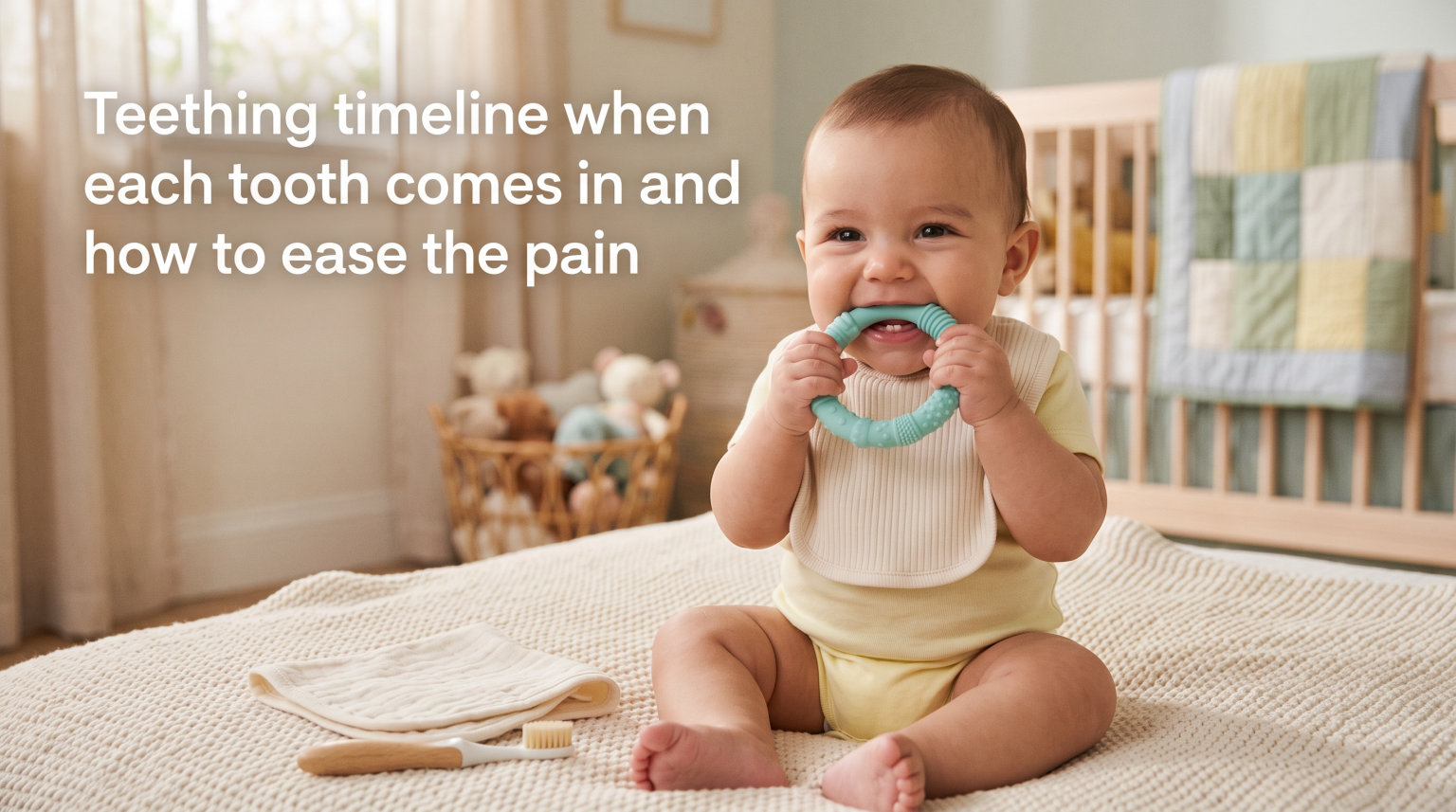
Watching your baby experience teething can feel overwhelming, especially when you are not sure what to expect. The teething timeline spans from approximately 4 months to 3 years of age, with most babies following a predictable pattern of tooth eruption. Understanding when each tooth comes in and how to ease the pain can transform this challenging period into a manageable milestone.
Every baby is different, and that is perfectly normal. Some infants sprout their first tooth at 3 months, while others may not show any teeth until after their first birthday. By age 3, most children will have a complete set of 20 primary teeth. This guide will walk you through each stage, help you recognize the signs, and share safe, effective ways to comfort your little one.
As a parent who has navigated these waters, I know the mixture of excitement and worry that comes with each new tooth. Let us explore what the American Academy of Pediatric Dentistry and pediatricians recommend, so you can feel confident supporting your baby through this natural developmental process.
Table of Contents
Teething Timeline: When Each Tooth Comes In
The baby teething timeline follows a generally consistent order, though timing varies between children. Most babies get their first tooth between 6 and 10 months, but the range of normal is wide. Below is a comprehensive chart showing the typical age ranges for each type of tooth.
| Age Range | Tooth Type | Location | Typical Duration |
|---|---|---|---|
| 6-10 months | Lower Central Incisors | Bottom front (2 teeth) | 3-7 days |
| 8-12 months | Upper Central Incisors | Top front (2 teeth) | 3-7 days |
| 9-13 months | Upper Lateral Incisors | Top sides (2 teeth) | 3-7 days |
| 10-16 months | Lower Lateral Incisors | Bottom sides (2 teeth) | 3-7 days |
| 13-19 months | Upper First Molars | Top back (2 teeth) | 5-8 days |
| 14-18 months | Lower First Molars | Bottom back (2 teeth) | 5-8 days |
| 16-22 months | Upper Canines (Cuspids) | Top between (2 teeth) | 5-8 days |
| 17-23 months | Lower Canines (Cuspids) | Bottom between (2 teeth) | 5-8 days |
| 23-31 months | Lower Second Molars | Bottom very back (2 teeth) | 7-10 days |
| 25-33 months | Upper Second Molars | Top very back (2 teeth) | 7-10 days |
This chart represents the typical baby teeth order, but remember that variations are completely normal. Some babies get teeth in pairs, while others erupt one at a time. The first molars and second molars often cause the most discomfort due to their larger size.
By age 3, your child should have all 20 primary teeth in place. These deciduous teeth serve important functions including helping with speech development, enabling proper chewing for nutrition, and holding space for permanent teeth that will arrive around age 6.
The 5 Stages of Teething
Understanding the five stages of teething helps you anticipate what is coming and prepare appropriate comfort measures. Each stage brings different teeth and varying levels of discomfort.
Stage 1: 4-8 Months – First Teeth (Lower Central Incisors)
The teething journey typically begins between 4 and 8 months with the lower central incisors. These are the two bottom front teeth. Many parents are surprised to discover that first tooth emerging. The gums may appear swollen and red in the center of the lower jaw.
During this stage, babies often experience increased drooling and may start putting everything in their mouths. The discomfort is usually mild for these first teeth, lasting about 3 to 7 days per tooth. Some babies show barely any symptoms, while others become fussy and have trouble sleeping.
Offer safe teething toys and cold washcloths during this stage. The pressure of biting down often provides relief. This is also an excellent time to establish good oral hygiene habits by wiping your baby’s gums with a soft, damp washcloth twice daily.
Stage 2: 8-12 Months – Upper Front Teeth
Stage 2 brings the upper central incisors (front teeth) followed by the upper lateral incisors (the teeth beside them). These upper teeth often cause more noticeable symptoms than the lower ones.
Parents frequently report increased irritability during this stage. The upper gum tissue can be more sensitive, and babies may refuse certain foods or prefer softer textures. You might notice your little one rubbing their face or pulling on their ears as the nerves in the gums connect to other areas.
This stage coincides with many developmental milestones like crawling and pulling to stand. The combination of physical growth and teething can make sleep challenging. Maintain consistent bedtime routines and offer extra comfort during this period.
Stage 3: 12-18 Months – First Molars
The first molars mark a significant shift in the teething timeline. These flat teeth in the back of the mouth are substantially larger than incisors and can cause more intense discomfort. They typically appear between 13 and 19 months for upper molars, 14 to 18 months for lower molars.
Many parents describe this as the most challenging stage before the final molars. The broad surface area of molars creates more pressure as they push through the gums. Symptoms often include increased drooling, disrupted sleep, and a strong desire to chew on hard objects.
Some babies may experience a low-grade fever during this stage. While teething does not cause high fevers, the inflammation in the gums can slightly elevate body temperature. Always monitor temperatures and consult your pediatrician if the fever exceeds 100.4 degrees Fahrenheit.
Stage 4: 16-24 Months – Canines
The canine teeth, also called cuspids, are the pointed teeth that fill the gaps between the front incisors and back molars. These typically emerge between 16 and 22 months for upper canines, 17 to 23 months for lower canines.
Canines can be particularly uncomfortable because they break through gum tissue that has not previously been disturbed. The pointed shape creates a different sensation than flatter teeth. Your toddler may become more verbal about their discomfort at this age.
Continue offering appropriate relief methods and consider introducing a soft toothbrush routine if you have not already. Even before all teeth are in, gentle brushing with a rice-grain smear of fluoride toothpaste helps establish healthy habits and removes bacteria from erupted teeth.
Stage 5: 25-33 Months – Second Molars
For many children, Stage 5 represents the most painful phase of teething. The second molars are the largest baby teeth and sit at the very back of the mouth. They typically appear between 23 and 31 months for lower second molars, 25 to 33 months for upper second molars.
By this stage, your child can communicate their discomfort more clearly. They may point to their mouth, ask for medicine, or refuse to eat certain foods. The discomfort from these large teeth can last 7 to 10 days per tooth.
Continue using the relief methods that have worked throughout the teething journey. Some parents find that ibuprofen is particularly helpful during this stage due to its anti-inflammatory properties. Always consult your pediatrician about appropriate dosing for your child’s age and weight.
Once these final molars emerge, your child’s primary tooth eruption is complete. Celebrate this milestone and maintain those dental care routines that will protect these 20 teeth until they begin falling out around age 6.
Signs and Symptoms of Teething
Recognizing teething symptoms helps you provide timely comfort and distinguish normal teething from illness requiring medical attention. While every baby experiences teething differently, these are the most common signs to watch for.
Drooling and Skin Rash
Excessive drooling is often the first sign parents notice. Your baby’s salivary glands become more active as teething begins, and they have not yet learned to swallow the extra saliva. This increased drooling can cause a rash on the chin, neck, and chest.
The constant moisture irritates sensitive baby skin, creating red, chapped patches sometimes called “drool rash.” To prevent this, keep a soft cloth handy to gently pat away drool. Apply a thin layer of barrier cream like petroleum jelly to protect the skin.
Change wet clothing promptly and use bibs to catch drool. While drooling peaks around 3 to 6 months, it often increases again with each new tooth. The rash usually clears quickly once you manage the moisture.
Irritability and Fussiness
Teething discomfort can make even the happiest baby fussy. The pressure of teeth moving through gum tissue creates a dull, persistent ache. Your baby may seem generally unhappy, cry more than usual, or be difficult to console.
This irritability typically comes and goes with each tooth. You might notice your baby is fine for days, then suddenly fussy for several days as a new tooth approaches. This pattern is completely normal and predictable once you recognize it.
Offer extra cuddles and comfort during fussy periods. Sometimes the distraction of play helps, while other times quiet, gentle soothing works better. Trust your instincts and remember that this phase is temporary.
Biting and Gnawing
The instinct to bite and chew intensifies significantly during teething. Counter pressure against the gums often brings relief. You will notice your baby gnawing on fingers, toys, furniture edges, and anything within reach.
This behavior serves a purpose beyond relief. The pressure helps break down the gum tissue, allowing the tooth to emerge. Provide safe, appropriate items for chewing like chilled teething rings or clean, cold washcloths.
Supervise your baby closely during this stage. Ensure they cannot access small objects that could pose choking hazards. For breastfed babies, biting can become an issue as teeth emerge. Gently remove your baby from the breast if biting occurs and offer a teething toy instead.
Sleep Disruption
Teething frequently disrupts sleep patterns. The discomfort often feels worse when lying down due to increased blood flow to the head and face. Many babies who previously slept through the night begin waking frequently.
Night waking associated with teething typically lasts 3 to 8 days per tooth. You might notice your baby is fine during the day but struggles at night. This happens because there are fewer distractions at night, making the discomfort more noticeable.
Some parents find that giving appropriate pain relief 30 minutes before bedtime helps their baby settle. Cold items before bed can also provide temporary numbness. Maintain consistent bedtime routines even during teething to provide comfort through predictability.
Ear Pulling and Cheek Rubbing
The nerves in the gums connect to other areas of the face, including the ears and cheeks. Babies often pull on their ears or rub their cheeks when teething, particularly when molars are emerging. This behavior is a response to referred pain.
While ear pulling can signal teething, it can also indicate an ear infection. The key difference is that teething-related ear pulling is intermittent and accompanied by other teething signs. Ear infections typically cause persistent pain and may include fever.
If ear pulling persists for more than a day or two, or if your baby seems genuinely distressed by ear discomfort, contact your pediatrician. They can examine the ears to rule out infection and provide peace of mind.
Low-Grade Temperature
Teething may cause a slight elevation in body temperature, but it does not cause true fever. The inflammation in the gums can raise temperature slightly, usually staying below 100.4 degrees Fahrenheit.
A temperature above 100.4 degrees Fahrenheit is not caused by teething and indicates your baby may have an illness. Contact your pediatrician if your baby develops a true fever, especially if accompanied by other symptoms like lethargy, poor feeding, or unusual fussiness.
Monitor your baby’s overall behavior along with temperature. A teething baby with a slightly elevated temperature will typically still eat, play, and interact normally. A sick baby will show more concerning changes in behavior and activity level.
Safe Ways to Ease Teething Pain
Helping your baby through teething requires a combination of comfort measures, safe remedies, and knowing when to seek additional support. Here are evidence-based approaches recommended by pediatricians and dental professionals.
Cold Therapy Methods
Cold provides natural numbing that can significantly reduce teething discomfort. The cold constricts blood vessels and temporarily dulls nerve sensations in the gums. However, it is important to use cold safely.
Chill teething rings in the refrigerator, not the freezer. Frozen rings can become too hard and may damage delicate gum tissue. A cold, wet washcloth also works well. Simply wet a clean washcloth, wring it out, chill it in the refrigerator, and let your baby chew on it.
Some parents offer cold foods like applesauce or yogurt to older babies who have started solids. For babies eating finger foods, chilled cucumber or banana can provide relief while encouraging healthy eating. Always supervise eating and ensure pieces are appropriately sized.
A cold spoon is another simple remedy. Place a clean metal spoon in the refrigerator for a few minutes, then gently apply the back of the spoon to your baby’s gums. The cool metal surface soothes while the smooth texture feels good against swollen tissue.
Gum Massage and Counter Pressure
Sometimes the simplest remedies are the most effective. Gently massaging your baby’s gums with a clean finger can provide immediate relief. The pressure distracts from the discomfort of the emerging tooth.
Wash your hands thoroughly, then use a clean finger to apply gentle pressure to the swollen gum area. Move your finger in small circles over the firm spot where the tooth is pushing through. Many babies instinctively push against your finger, which actually helps the tooth emerge.
Counter pressure works on the same principle. When your baby bites down on a firm teething toy or even your finger, the pressure against the gum helps relieve the sensation of the tooth pushing from below. This is why babies instinctively want to chew on hard things while teething.
Safe Teething Toys
The market offers countless teething toys, but not all are safe or effective. The American Academy of Pediatrics recommends choosing BPA-free silicone or natural rubber teethers. These materials are firm enough to provide counter pressure yet gentle on gums.
Avoid liquid-filled teething rings that could leak. Skip teething biscuits or crackers that can break into choking hazards. Simple designs often work better than complex ones with many parts. A basic silicone ring or natural rubber toy provides exactly what babies need.
Clean teething toys daily with soap and water. Check regularly for wear or damage, and replace worn toys immediately. Never attach a teething toy to your baby with a string or cord, as this creates a strangulation risk.
Some babies prefer different textures at different stages. Offer variety and observe what your baby gravitates toward. Some prefer smooth surfaces, while others like textured bumps that provide additional gum stimulation.
When to Use Medication
While non-medicinal approaches should be your first line of defense, sometimes babies need additional relief. Over-the-counter pain relievers can be used safely when appropriate.
Acetaminophen (Tylenol) is safe for babies of all ages and provides effective pain relief. Ibuprofen (Motrin, Advil) works well for babies 6 months and older and has the added benefit of reducing inflammation in the gums. Never give ibuprofen to babies under 6 months.
Both medications have different durations of action. Acetaminophen typically lasts 4 to 6 hours, while ibuprofen lasts 6 to 8 hours. Some parents find ibuprofen more effective for teething due to its anti-inflammatory properties.
Always consult your pediatrician for proper dosing based on your baby’s current weight. Use a proper measuring device, not a kitchen spoon. Follow dosing guidelines carefully and do not exceed recommended amounts. If you find yourself needing medication frequently, discuss with your pediatrician to rule out other issues.
What NOT to Use: FDA Safety Warnings
The FDA has issued specific warnings about certain teething remedies that can be dangerous for babies. Understanding what to avoid is just as important as knowing what works.
Benzocaine teething gels are not recommended for children under 2 years. These numbing gels can cause a rare but serious condition called methemoglobinemia, which reduces oxygen delivery to tissues. The FDA has repeatedly warned against these products for infants.
Homeopathic teething tablets and gels containing belladonna have also been flagged by the FDA. These products have inconsistent amounts of belladonna, a toxic substance, and have been linked to serious adverse events including seizures and difficulty breathing.
Amber teething necklaces pose strangulation and choking hazards. The claimed pain-relieving properties have no scientific basis, and the necklaces can wrap tightly around necks or break, releasing small beads that babies can choke on. Never use these necklaces, even with supervision.
Never apply alcohol to your baby’s gums. Old folk remedies involving whiskey or other spirits are unsafe and ineffective. Alcohol can be absorbed through gum tissue and cause serious harm to infants.
Teething and Sleep: A Parent’s Survival Guide
Nighttime teething creates some of the biggest challenges for parents. When your baby wakes crying at 2 AM, you need strategies that work quickly and safely.
The discomfort often intensifies at night because lying flat increases blood flow to the head and gums. Without daytime distractions, your baby focuses more on the discomfort. Understanding this helps you respond with appropriate measures.
Many experienced parents recommend giving pain medication 30 minutes before bedtime if you know a tooth is actively emerging. This timing allows the medicine to take effect before the worst night waking typically occurs. Of course, consult your pediatrician about this approach.
Create a teething survival kit for your nightstand. Include a clean, cold washcloth in a sealed bag, a safe teething toy, and any medication your pediatrician has approved. Having these items within reach prevents fumbling in the dark.
Maintain your regular sleep routines even during teething phases. Predictability provides comfort for babies. If your baby wakes, offer brief comfort and return them to bed. Avoid creating new sleep associations that will be hard to break once teething passes.
Remember that teething-related sleep disruption typically lasts 3 to 8 days per tooth. This is temporary, even when it feels endless. Take turns with your partner if possible, and give yourself grace during difficult nights.
Teething Myths Debunked
Old wives’ tales and misinformation about teething abound. Let us separate fact from fiction so you can make informed decisions about your baby’s care.
Myth: Teething causes high fever. Fact: Teething may cause a slightly elevated temperature, but it does not cause true fever above 100.4 degrees. If your baby has a high fever, look for another cause and contact your pediatrician.
Myth: Teething causes diarrhea. Fact: While teething babies may have slightly looser stools due to increased saliva, teething does not cause true diarrhea. Significant diarrhea indicates a digestive issue or illness.
Myth: Teething causes severe illness. Fact: Teething is a normal developmental process, not a sickness. If your baby shows signs of serious illness, do not dismiss it as “just teething.”
Myth: Early teething means better development. Fact: The timing of tooth eruption has no correlation with intelligence or developmental milestones. Babies who get teeth early or late are both completely normal.
Understanding these facts helps you recognize when symptoms require medical attention rather than teething remedies. Trust your instincts as a parent. If something seems wrong beyond normal teething discomfort, call your pediatrician.
When to Call the Doctor
Knowing when teething symptoms cross the line into illness is essential for keeping your baby healthy. While teething is uncomfortable, it should not make your baby seriously ill.
Contact your pediatrician immediately if your baby develops a fever above 100.4 degrees Fahrenheit. Teething does not cause true fever, and elevated temperatures indicate infection or illness requiring evaluation.
Seek medical attention for persistent diarrhea, vomiting, or refusal to eat or drink. These are not teething symptoms and can lead to dehydration quickly in infants.
Ear pulling accompanied by high fever, fluid drainage, or severe fussiness may indicate an ear infection rather than teething. Ear infections require medical treatment.
If your baby seems unusually lethargic, has trouble breathing, or shows a rash along with fever, seek immediate medical care. These are signs of serious illness unrelated to teething.
Trust your parental instincts. You know your baby better than anyone. If something feels wrong, it is always better to call your pediatrician and be reassured than to wait and worry.
First Dental Visit and Oral Care Basics
Establishing good dental habits early protects your child’s oral health for life. The American Academy of Pediatric Dentistry recommends scheduling your baby’s first dental visit by their first birthday or within 6 months of their first tooth erupting.
When to Schedule the First Dental Visit
Early dental visits serve multiple purposes. The dentist examines your baby’s mouth to ensure proper development, provides guidance on cleaning and care, and helps your child become comfortable with dental visits.
Choose a pediatric dentist who specializes in treating children. These offices are designed to be child-friendly, with staff trained to work with young patients. Starting early prevents dental anxiety and establishes a dental home for your child.
During the first visit, the dentist will count teeth, check for any problems, and demonstrate proper brushing technique. They will also discuss fluoride needs and answer any questions you have about your child’s oral development.
How to Brush Baby’s First Teeth
Start cleaning your baby’s mouth even before teeth appear. Wipe the gums with a soft, damp washcloth after feedings to remove bacteria and establish the habit.
Once teeth emerge, brush twice daily with a soft baby toothbrush. Use a rice-grain sized smear of fluoride toothpaste for children under 3. This tiny amount is safe if swallowed and provides protection against decay.
Make brushing part of your daily routine, typically after breakfast and before bedtime. Sing a song or make it a game to keep your baby engaged. Even when they protest, consistency matters for long-term health.
Fluoride Toothpaste Guidelines
The American Dental Association recommends fluoride toothpaste from the first tooth. Fluoride strengthens enamel and prevents cavities, even in baby teeth.
For children under 3, use a smear no larger than a grain of rice. From ages 3 to 6, use a pea-sized amount. Supervise brushing to ensure they do not swallow excess toothpaste.
If your local water supply does not contain fluoride, your dentist may recommend additional fluoride treatments. Discuss your water source with your pediatric dentist to determine the best approach for your child.
Frequently Asked Questions
How long does teething pain last with each tooth?
Teething pain typically lasts about 3-8 days per tooth. This includes a few days before the tooth erupts through the gums and a few days after. The discomfort comes and goes as each new tooth emerges, with waves of a few teeth coming in followed by calm periods.
How to help relieve pain from teething?
Safe teething pain relief includes gently massaging gums with a clean finger or cold washcloth, offering safe rubber or silicone teething toys, applying cold pressure with a spoon, and using pediatrician-approved pain relievers like acetaminophen or ibuprofen when needed.
What is the 7-4 rule for tooth eruption?
The 7-4 rule is a simple way to estimate how many teeth your baby should have. At 7 months of age, babies typically have their first tooth. After that, you can estimate the number of teeth by subtracting 4 from your child’s age in months. For example, at 12 months, most babies have about 8 teeth.
Which stage of teething hurts the most?
For most children, Stage 5 is the most painful stage of teething. This is when the second molars emerge between 25-33 months. These are the largest baby teeth and can cause significant discomfort. The first teeth and first molars are also commonly reported as particularly uncomfortable.
What age is teething pain the worst?
Teething pain tends to be worst between 25-33 months of age when the second molars come in. These are the largest baby teeth. However, each child experiences teething differently, and some find the first teeth at 4-8 months or first molars at 13-19 months most challenging.
What does the AAP recommend for teething?
The American Academy of Pediatrics recommends gentle gum massage with a clean finger, cold teething rings, and safe rubber or silicone teething toys for teething relief. The AAP warns against using benzocaine teething gels, homeopathic teething tablets, and amber teething necklaces due to safety risks.
Is infant Motrin or Tylenol better for teething?
Both can be effective, but ibuprofen (Motrin/Advil) lasts longer at 6-8 hours and has anti-inflammatory properties that may help with gum swelling. Acetaminophen (Tylenol) is gentler on the stomach. Never give ibuprofen to babies under 6 months. Always consult your pediatrician for proper dosing.
What is the best pain relief for babies teething?
The best pain relief for teething babies includes cold therapy with chilled teething rings or washcloths, pressure from gently rubbing gums with a clean finger, safe chewing with BPA-free silicone or natural rubber teethers, and pediatrician-approved acetaminophen or ibuprofen for babies 6+ months when needed.
Conclusion
The teething timeline from 4 months to 3 years represents a significant journey in your baby’s development. Understanding when each tooth comes in and how to ease the pain empowers you to support your little one through this natural process with confidence.
Remember that every baby is different. Some sail through teething with barely a fuss, while others struggle with each new tooth. Both scenarios fall within the range of normal. Trust your instincts, provide consistent comfort, and do not hesitate to contact your pediatrician when concerns arise.
By age 3, your child will have a complete set of 20 primary teeth. These teeth serve important functions until they begin falling out around age 6. The dental care habits you establish now will protect those teeth and set the foundation for lifelong oral health.
This phase, like all phases of early childhood, is temporary. The sleepless nights, the drool, the fussiness will pass. Soon you will be looking at your toddler’s bright smile, counting those 20 little teeth, and wondering where the time went. You have got this, and your baby is lucky to have you guiding them through every milestone.