
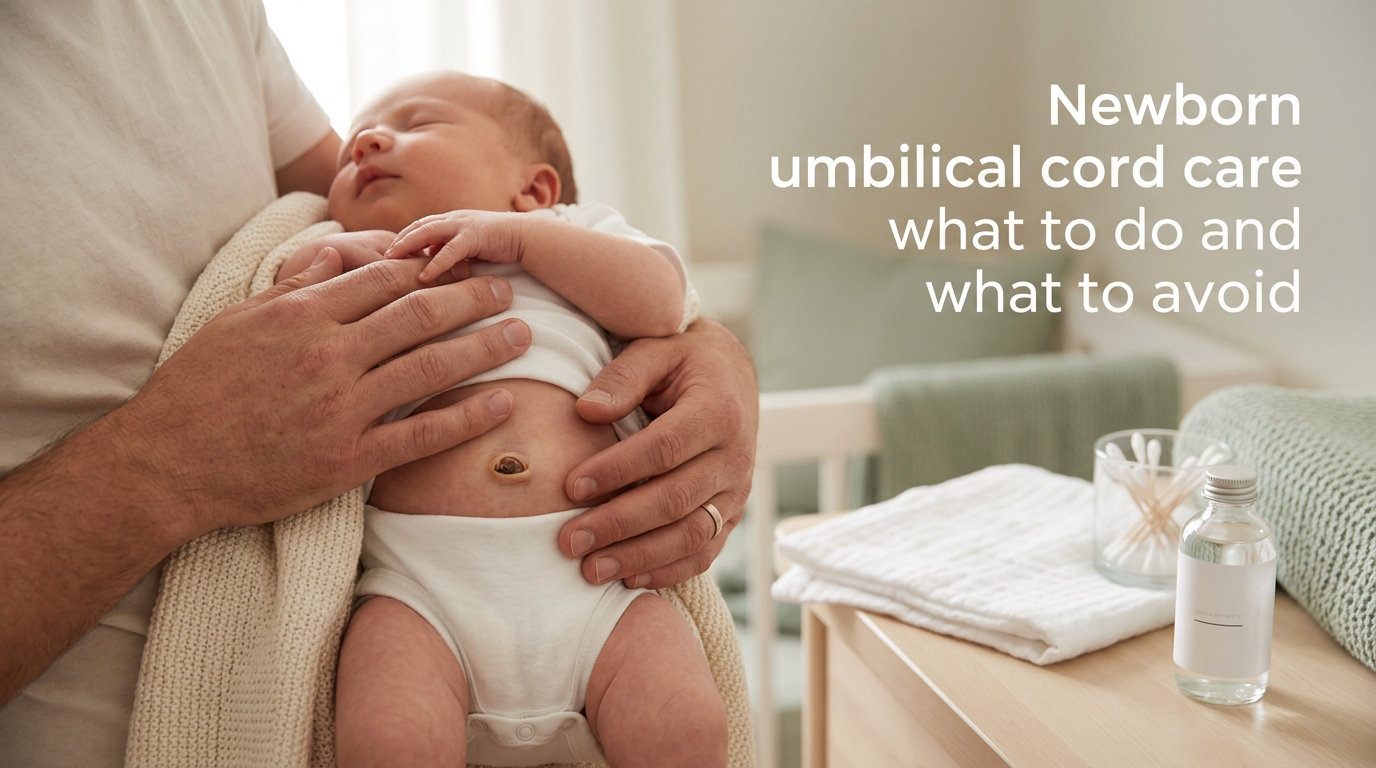
That tiny umbilical cord stump on your newborn’s belly can feel like a big responsibility. I remember staring at my daughter’s cord stump during those first diaper changes, worried I might do something wrong.
The good news? Newborn umbilical cord care is simpler than most new parents expect. With a few basic steps and some patience, that stump will dry up and fall off naturally within one to three weeks.
This guide covers exactly what to do and what to avoid, from daily care routines to warning signs that need a pediatrician’s attention.
Table of Contents
What Is the Umbilical Cord Stump?
The umbilical cord was your baby’s lifeline during pregnancy. It carried oxygen and nutrients from you to your growing baby.
After birth, your healthcare provider clamps the cord close to your baby’s belly and cuts the remainder. What stays attached is called the umbilical cord stump. It looks like a small, thick piece of tissue, often yellow-green at first.
Over the following days, this stump dries out through a natural process. It changes from yellow-green to brown, then black as it shrivels. Eventually, it falls off completely, leaving your baby’s belly button underneath.
Umbilical Cord Care: Do’s and Don’ts
Medical guidance has shifted over the years. Many grandparents remember cleaning cords with rubbing alcohol, but current pediatric recommendations favor a “dry care” approach.
Here’s what you need to know.
What You Should Do
Keep the stump dry. Moisture slows healing and creates an environment where bacteria can grow. Let air reach the cord stump as much as possible.
Fold diapers down. Most newborn diapers have a cutout for the cord, but if yours don’t, fold the front waistband down below the stump. This prevents friction and keeps the area exposed to air.
Give sponge baths only. Until the cord falls off, avoid submerging your baby in water. Use a damp washcloth for sponge baths instead.
Clean visible stool. If diaper contents get on the cord, gently clean the area with plain water and a soft cloth. Pat dry immediately.
Watch for changes. Check the stump during each diaper change so you notice any concerning developments early.
What You Should NOT Do
Do not use rubbing alcohol. While this was once standard advice, studies show cords heal faster without alcohol. The American Academy of Pediatrics now recommends dry cord care for most newborns.
Do not pull or pick at the stump. Even if it looks ready to fall off, let nature take its course. Pulling can cause bleeding and delay healing.
Do not cover with ointments or powders. These trap moisture and can introduce bacteria. The cord needs air, not products.
Do not submerge in bath water. Avoid bathtubs, infant tubs, and sink baths until the stump detaches and the area heals completely.
Do not use tight clothing. Onesies that press against the cord can cause irritation and trap moisture.
Step-by-Step Daily Cord Care Instructions
A consistent routine makes cord care feel manageable. Here’s what I recommend based on guidance from pediatricians and my own experience with three newborns.
Step 1: Prepare Your Supplies
Keep it simple. You need newborn diapers (with umbilical cutout if possible), soft washcloths, and clean cotton swabs for any cleaning.
Step 2: Check the Stump at Each Diaper Change
Lift the diaper fold and look at the cord. Normal signs include gradual darkening from yellow to brown to black, slight stiffness, and minor crusting around the base.
Step 3: Clean Only If Necessary
If the stump is clean and dry, leave it alone. If you see stool or discharge, dampen a cotton swab or soft cloth with plain warm water. Gently wipe away debris without rubbing the stump itself. Pat the area completely dry with a soft towel.
Step 4: Fold the Diaper Properly
If your diapers have a cord cutout, position the stump in that opening. For standard diapers, fold the front waistband down so it sits below the belly button. Fasten the diaper snugly at the legs but loose at the waist.
Step 5: Dress for Air Circulation
Choose clothing that doesn’t press against the cord. Kimono-style shirts that snap at the side work better than onesies that pull over the head and rub against the stump.
Step 6: Continue Until Healing Completes
Keep this routine until the cord falls off and the belly button looks healed with no discharge or redness. This typically takes 7 to 21 days.
How Long Does the Umbilical Cord Take to Fall Off?
Most umbilical cord stumps fall off between 5 and 15 days after birth. The average is around 2 weeks, but anywhere from 1 to 3 weeks falls within the normal range.
What to Expect Day by Day
Days 1-3: The stump looks wet and gelatinous, often yellow-green. You might see the plastic cord clamp still attached.
Days 4-7: Drying begins. The stump darkens to brown and feels firmer. The cord clamp typically comes off during this period.
Days 8-14: The stump turns black and shrivels significantly. It may look like a dried twig. Some parents worry about the appearance, but this is normal progression.
Days 15-21: The stump detaches, often catching parents by surprise during a diaper change. A small raw spot remains underneath.
If the cord hasn’t fallen off by 3 weeks, mention it to your pediatrician. Delayed separation happens occasionally and usually isn’t serious, but your doctor will want to check it.
Warning Signs of Infection: When to Call the Doctor
Infection of the umbilical cord stump, called omphalitis, is rare but serious when it occurs. Knowing the warning signs helps you act quickly.
Normal Healing Signs
These symptoms don’t require medical attention: mild odor similar to stale breath, small amount of clear or blood-tinged fluid on the diaper, crusting around the base, gradual color change from yellow to black.
Signs That Need Immediate Medical Attention
Fever. Any rectal temperature of 100.4°F (38°C) or higher in a newborn under 3 months requires immediate medical evaluation.
Redness spreading from the base. Mild pinkness at the edge can be normal, but red streaks or a growing red circle around the stump indicates infection.
Pus or foul-smelling discharge. Thick yellow, green, or white drainage signals bacterial infection.
Significant bleeding. More than a few drops of blood, or bleeding that doesn’t stop with gentle pressure, needs medical attention.
Swelling or warmth. If the skin around the stump feels hot, swollen, or noticeably different from surrounding skin, call your doctor.
Crying when touched. While newborns cry for many reasons, consistent pain when the stump area is gently touched can indicate a problem.
Lethargy or poor feeding. Any combination of cord changes with unusual sleepiness or refusal to eat warrants immediate evaluation.
Trust your instincts. If something looks wrong or you feel worried, call your pediatrician. It’s always better to check than to wait with a newborn.
What to Do After the Umbilical Cord Falls Off
The day the cord stump falls off is exciting, your baby officially has a belly button. But the care doesn’t stop quite yet.
Immediate Aftercare
When the stump detaches, you might see a small raw spot or a tiny amount of blood on the diaper. This is normal. Continue keeping the area dry and exposed to air for several more days.
You can usually start normal tub baths once the cord falls off, provided the belly button area looks healed with no open areas or oozing.
Umbilical Granuloma
Sometimes a small pink bump forms in the belly button after the cord falls off. This is called an umbilical granuloma. It’s not dangerous but needs treatment to prevent persistent drainage.
Your pediatrician can treat a granuloma quickly in the office with a simple procedure. Don’t attempt home remedies you find online. See your doctor for proper treatment.
When the Belly Button Looks Normal
Within a few days of the cord falling off, the belly button should look like a small dimple or shallow depression with smooth, healed skin. Some babies have an “outie” belly button naturally, while others have an “innie.” Both are normal.
If the belly button looks healed but has a persistent lump that bulges when your baby cries, mention it to your doctor. This could indicate an umbilical hernia, which usually resolves on its own but needs monitoring.
Clothing Tips and Practical Advice
Practical details make cord care easier day to day. Here’s what experienced parents recommend.
Onesies vs. Kimono-Style Shirts
Standard onesies pull over the head and have a snap closure at the diaper area. The fabric often rubs against the cord stump. Kimono-style shirts that open completely and snap at the side avoid this problem entirely.
If you prefer onesies, choose a larger size or fold the fabric down away from the cord. Some parents cut a small notch in the fabric where the cord sits, though this ruins the onesie for later use.
Diaper Selection
Many newborn diapers come with a umbilical cord cutout, a small curved notch at the waistband. These are worth buying for the first few weeks. If you have regular diapers, the folding technique works fine but requires more attention.
Handling Accidents
Blowouts happen. If stool gets on the cord, stay calm. Clean gently with plain water, pat dry thoroughly, and continue with your normal routine. One accident won’t cause infection if you clean it promptly.
Frequently Asked Questions
What not to do with umbilical cord?
Do not use rubbing alcohol or antiseptics, do not pull or pick at the stump even if it looks ready to fall off, do not cover with ointments or powders, do not submerge in bath water, and do not use tight clothing that presses against the cord. Let the stump dry naturally and detach on its own.
How to make a newborn belly button heal faster?
Keep the stump dry and exposed to air as much as possible. Fold diapers below the cord to prevent friction and moisture. Give only sponge baths until the cord falls off. Clean only if stool gets on the cord using plain water, then pat completely dry. Avoid handling the stump unnecessarily.
What are common umbilical cord problems?
Common issues include infection (omphalitis) with signs of redness, swelling, pus, or fever; umbilical granuloma forming a small pink bump after the cord falls off; delayed separation when the cord stays attached beyond 3 weeks; and minor bleeding when the cord detaches or with friction from diapers.
How to take care of a baby’s umbilical cord after it falls off?
Keep the belly button clean and dry for several more days. You can start normal tub baths once the area looks healed with no open spots or oozing. Watch for umbilical granuloma, a small pink bump that may need doctor treatment. The belly button should look completely healed within a few days.
Am I supposed to clean my newborn’s umbilical cord?
Usually no. Current medical guidelines recommend dry cord care, leaving the stump alone to heal naturally. Only clean the cord if stool or debris gets on it. Use plain water and a soft cloth or cotton swab, then pat thoroughly dry. Do not use alcohol, antiseptics, or daily cleaning on a clean, dry stump.
What is the proper care for the umbilical cords of newborns?
Proper cord care means keeping the stump dry and exposed to air, folding diapers below the cord, giving sponge baths only until healing completes, cleaning only when dirty with plain water, watching for warning signs of infection, and letting the cord fall off naturally without pulling or picking.
Should covering a newborn’s umbilical cord be avoided?
Yes, the cord should be exposed to air as much as possible. Fold diapers down below the stump rather than covering it. Choose clothing that doesn’t press against the cord, like kimono-style shirts instead of tight onesies. Covering traps moisture and slows healing, while air exposure helps the cord dry and detach faster.
Can you put an onesie on a newborn with umbilical cord?
You can, but it is not ideal. Onesies often rub against the cord and can trap moisture. If using onesies, choose a larger size, fold the fabric down away from the cord, or consider cutting a small notch. Kimono-style shirts that snap at the side are better options during the first weeks while the cord heals.
Conclusion
Newborn umbilical cord care comes down to three simple principles: keep it dry, let air reach it, and leave it alone. The days of complicated cleaning routines with rubbing alcohol are behind us. Modern pediatric guidance favors a hands-off approach that lets nature handle the healing process.
Most cord stumps fall off within two weeks, leaving a perfect little belly button behind. Watch for the warning signs we covered, but try not to worry. Infections are uncommon, and the vast majority of newborns heal without any complications.
Trust your instincts, follow these guidelines, and enjoy those first precious weeks with your baby. Before you know it, the cord stump will be a distant memory and you’ll be on to the next parenting adventure.