
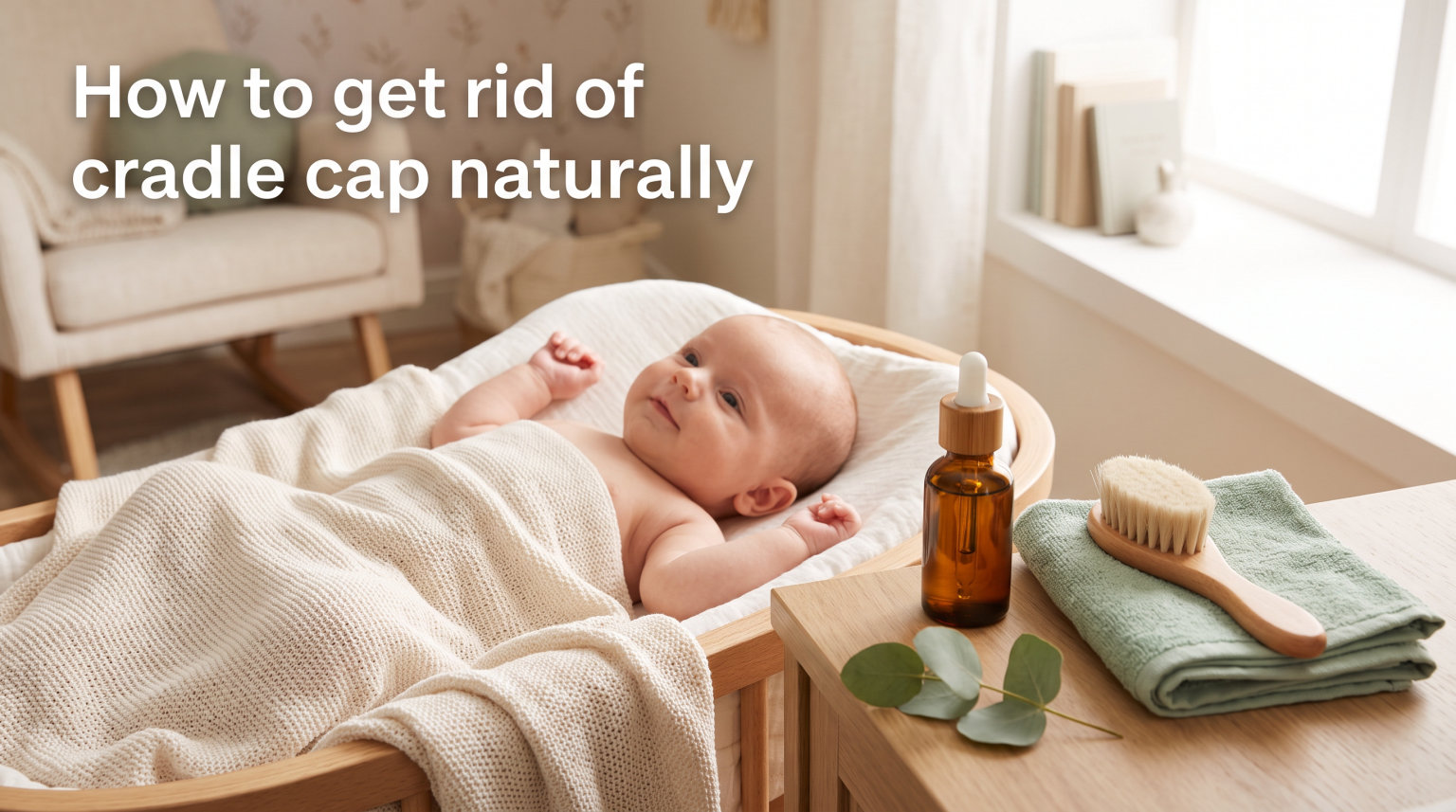
Noticing flaky, yellowish patches on your baby’s scalp can be alarming for any new parent. I remember the first time I saw those crusty scales on my little one’s head. My immediate thought was: is this something serious? The good news is that cradle cap is completely harmless, extremely common, and usually clears up on its own with gentle care. Learning how to get rid of cradle cap naturally gives you safe, effective tools to help your baby’s skin heal without harsh chemicals.
In this guide, I’ll walk you through everything I’ve learned from pediatricians, dermatologists, and fellow parents about managing cradle cap naturally. You’ll discover which home remedies actually work, what to avoid, and when it’s time to call the doctor. By the end, you’ll feel confident helping your baby through this completely normal phase.
Table of Contents
What Is Cradle Cap and Is It Harmful?
Cradle cap, medically known as infantile seborrheic dermatitis, is a skin condition that causes flaky, crusty, or greasy patches to form on your baby’s scalp. It typically appears during the first few weeks of life and can last anywhere from a few weeks to several months. Despite its somewhat alarming appearance, cradle cap is neither contagious nor a sign of poor hygiene or inadequate care.
The condition gets its common name from the cradle-like area where it most often appears. The medical term seborrheic dermatitis refers to inflammation of the sebaceous glands, which produce the natural oils that keep skin hydrated. While cradle cap most commonly affects the scalp, it can also appear on the eyebrows, behind the ears, around the nose, and even on the eyelids.
One question parents often ask is whether they should treat cradle cap or simply leave it alone. The honest answer is that both approaches are valid. Cradle cap doesn’t hurt your baby, and it will eventually clear up without any intervention. However, many parents prefer to gently treat it because the scales can become thick and unsightly, and there’s a certain satisfaction in helping your little one’s skin look healthy again.
How to Recognize Cradle Cap
Identifying cradle cap correctly helps ensure you’re treating the right condition. The telltale signs include yellowish or white scales that appear greasy or oily, thick crusty patches that may look like dandruff, and skin that looks reddish underneath the scales. The affected areas often feel slightly raised and rough to the touch.
Cradle cap most commonly appears on the top of the scalp, particularly around the fontanel (soft spot). However, don’t be surprised if you notice similar patches on your baby’s eyebrows, behind the ears, in the creases of the nose, or on the eyelids. These areas have a higher concentration of oil glands, making them more susceptible.
The condition typically emerges between two weeks and six months of age, with peak occurrence around three months. It rarely bothers babies, so if your little one seems uncomfortable or itchy, it might be worth considering whether you’re actually seeing eczema or another skin condition instead.
What Causes Cradle Cap?
Understanding what triggers cradle cap can help you feel less concerned about prevention and more focused on gentle treatment. The root causes stem from a combination of hormonal changes, natural skin processes, and the delicate balance of your baby’s developing skin microbiome.
During pregnancy, your hormones cross the placenta and stimulate your baby’s oil glands (sebaceous glands). These glands begin producing extra sebum, the oily substance that moisturizes and protects skin. After birth, as your baby’s hormone levels gradually adjust to life outside the womb, some oil glands remain overactive, leading to the buildup of sebum that characterizes cradle cap.
A yeast called Malassezia naturally lives on everyone’s skin, including babies. This yeast feeds on sebum, and when there’s excess oil present, the yeast can multiply more than usual. This overgrowth may contribute to the inflammation and scaling seen in cradle cap. However, this isn’t an infection in the traditional sense, and it doesn’t mean your baby needs antifungal medication.
Recent research has also explored the connection between the gut microbiome and skin health, sometimes called the gut-skin axis. While this science is still emerging, some studies suggest that a baby’s developing gut bacteria may influence skin conditions like cradle cap. This connection reinforces what many parents intuitively understand: a healthy foundation supports healthy skin.
How to Get Rid of Cradle Cap Naturally
Now for the practical steps. The following natural remedies have been used by parents for generations, and many are backed by pediatrician recommendations. Each method works by softening the scales so they can be gently removed, then keeping the scalp clean and moisturized to prevent recurrence.
Method 1: Oil Treatment (The Most Effective Approach)
Applying oil to your baby’s scalp is the foundation of most natural cradle cap treatments. The oil penetrates the scales, softening them so they can be gently lifted away without damaging the delicate skin underneath. This method consistently receives the highest praise from parents in online forums.
Here’s the step-by-step process that works best:
Step 1: Choose your oil. Coconut oil is the most popular choice among parents because it’s naturally antimicrobial and many babies already tolerate it well. Alternatively, you can use olive oil, mineral oil, or baby oil. If your family has nut allergies, avoid almond oil to be safe.
Step 2: Apply a thin layer of oil directly to the affected areas. Use just enough to coat the scales without making the scalp overly greasy. Gently massage the oil in with your fingertips using small circular motions.
Step 3: Let the oil sit for at least 15 minutes, or up to overnight if your baby tolerates it. The longer the oil has to penetrate, the more effective it will be at softening stubborn scales.
Step 4: Before washing, use a soft-bristled baby brush or washcloth to gently loosen the scales. Work in small circular motions, being careful not to press too hard or scrape the skin.
Step 5: Wash your baby’s hair with a mild, fragrance-free baby shampoo. Rinse thoroughly to remove all oil residue, as leftover oil can actually trap dead skin cells and make cradle cap worse.
Most parents find that repeating this treatment two to three times per week shows noticeable improvement within one to two weeks. One parent on Reddit shared that their baby’s cradle cap was completely gone after just two oil treatments combined with gentle brushing.
Method 2: Gentle Brushing Technique
The brushing step deserves special attention because done correctly, it can dramatically speed up the healing process. Done incorrectly, it can irritate your baby’s sensitive scalp. The key is gentleness and consistency.
Invest in a soft-bristled baby brush specifically designed for infant scalps. These brushes have ultra-soft bristles that won’t scratch or damage the skin. Some parents also use a soft silicone brush made for cradle cap, which can be particularly effective.
Always brush after applying oil, never on a dry scalp. The scales need to be softened before you attempt to lift them. Hold the brush at a slight angle and use gentle circular motions, working from the front of the scalp toward the back. Spend about five minutes on this step, taking breaks if your baby becomes fussy.
If you notice any redness, bleeding, or signs that your baby is uncomfortable, stop immediately. Some babies simply don’t tolerate brushing well, and that’s okay. You can rely more heavily on the oil treatment and washing method instead.
Method 3: Baking Soda Paste
Baking soda offers a simple, inexpensive alternative for parents who prefer not to use oils. Its mild alkaline properties can help break down the scales while being gentle on your baby’s skin.
To make a baking soda paste, mix one part baking soda with one part water until you achieve a thick, spreadable consistency. Apply this paste directly to the affected areas of your baby’s scalp, avoiding the eyes and face. Let it sit for up to ten minutes, then rinse thoroughly with warm water.
Follow up with a gentle baby shampoo to remove any residue. Some parents find that alternating between oil treatments and baking soda treatments works well for stubborn cases. As with all remedies, perform a small patch test first to ensure your baby’s skin doesn’t react negatively.
Method 4: Vaseline or Petroleum Jelly
This method comes highly recommended by parents in forums who report fast, effective results. One parent shared their success story: they applied Vaseline all over the affected areas for about five minutes, followed by a bath with scalp massage using a soft brush, and the cradle cap was completely gone after just two treatments.
The technique is straightforward. Apply a generous layer of petroleum jelly to your baby’s scalp about five to ten minutes before bath time. The thick consistency effectively softens even stubborn scales. During the bath, use a soft brush or washcloth to gently work the scales loose while the warm water helps wash everything away.
Follow with your regular baby shampoo to remove the greasy residue. Many parents appreciate this method because petroleum jelly is inexpensive, readily available, and has a long history of safe use on infant skin.
Method 5: Proper Shampooing Routine
Sometimes the simplest approach works best. Regular, gentle washing can prevent scales from building up and help existing cradle cap clear faster. The key is finding the right balance, as both over-washing and under-washing can contribute to the problem.
Choose a mild, fragrance-free baby shampoo specifically formulated for sensitive infant skin. Harsh or heavily scented products can irritate your baby’s scalp and potentially make cradle cap worse. Wet your baby’s scalp with warm water, apply a small amount of shampoo, and gently massage with your fingertips or a soft washcloth.
Most pediatricians recommend washing your baby’s hair daily or every other day when cradle cap is present. Once the condition clears, you can reduce to two or three times per week. Always rinse thoroughly to prevent shampoo residue from building up on the scalp.
How to Tell Cradle Cap Apart from Other Skin Conditions
Understanding the difference between cradle cap and similar-looking conditions helps you choose the right treatment and know when to seek medical advice. Many parents worry about whether they’re seeing cradle cap, eczema, or just dry skin.
Cradle cap appears as yellowish, greasy scales with a crusty texture. It typically doesn’t cause itching or discomfort, and you won’t see significant redness unless the scales have been picked at. It commonly affects the scalp, eyebrows, and behind the ears.
Eczema (atopic dermatitis) presents quite differently. The skin appears red, inflamed, and feels dry and itchy. Unlike cradle cap, eczema often causes obvious discomfort, and babies may try to scratch affected areas. Eczema can appear anywhere on the body, not just oil-gland-rich areas, and often runs in families with allergies or asthma.
Simple dry skin lacks the yellowish, greasy appearance of cradle cap. It looks flaky and feels rough but doesn’t form thick crusts. Dry skin often improves quickly with regular moisturizing and usually appears in patches across the body rather than clustering around oil glands.
Baby acne shows up as small red bumps or whiteheads, typically on the cheeks, nose, and forehead. Unlike cradle cap, it doesn’t involve scaling or flaking. Baby acne usually appears around two to four weeks of age and clears on its own without treatment.
What NOT to Do: Important Safety Warnings
While natural remedies are generally safe, there are important precautions every parent should follow. These warnings protect your baby from unnecessary discomfort and potential complications.
Never pick or scratch at the scales. I know it’s tempting, especially when you see a loose flake that seems ready to come off. But picking can cause small tears in the skin, leading to bleeding, infection, and potential scarring. It also hurts your baby, even if they can’t tell you.
Avoid using adult dandruff shampoos or medicated treatments unless specifically directed by your pediatrician. Products containing ketoconazole, selenium sulfide, coal tar, or zinc pyrithione are formulated for adult scalps and can be too harsh for your baby’s delicate skin.
Don’t use undiluted essential oils on your baby’s scalp. While some essential oils have beneficial properties, they are highly concentrated and can cause skin irritation or allergic reactions. Stick to gentle carrier oils like coconut or olive oil instead.
If you consider using raw honey as a natural remedy, remember this critical safety rule: never feed honey to babies under 12 months of age due to the risk of infant botulism. While topical honey use doesn’t carry the same risk, many parents prefer to avoid it entirely during the first year.
Prevention Tips for Parents
While you can’t completely prevent cradle cap, especially since it’s driven by hormones, you can take steps to minimize its severity and reduce the likelihood of recurrence. These daily practices support your baby’s overall skin health.
Incorporate gentle daily brushing into your routine even when cradle cap isn’t present. Using a soft baby brush for a few minutes each day helps distribute natural oils across the scalp and prevents buildup. Many parents find this becomes a pleasant bonding ritual that babies enjoy.
Maintain a consistent but not excessive washing schedule. Bathing your baby two to three times per week is usually sufficient, with gentle scalp washing included. Over-bathing can actually dry out the skin and trigger more oil production as the skin tries to compensate.
If you live in a dry climate or use heating during winter months, consider running a humidifier in your baby’s room. Dry air can irritate sensitive skin and potentially worsen cradle cap. Aim for indoor humidity between 30 and 50 percent for optimal comfort.
Keep your baby comfortably dressed to prevent overheating and excess sweating. Tight hats or caps can trap heat and moisture against the scalp, creating conditions where cradle cap might thrive. Choose breathable, natural fabrics whenever possible.
If your baby has dry skin in general, apply a gentle, fragrance-free moisturizer after bathing. While this won’t prevent cradle cap specifically, it supports overall skin health and barrier function, which may help your baby’s skin regulate itself more effectively.
When to See a Doctor
While cradle cap is harmless and home treatment is usually sufficient, certain situations warrant a call to your pediatrician. Knowing these warning signs helps you feel confident about when to seek professional help.
Contact your doctor if the cradle cap spreads beyond your baby’s scalp to large areas of the face, neck, or body. While mild spreading to eyebrows or behind the ears is normal, extensive body involvement may indicate a different condition requiring treatment.
Watch for signs of infection, which include redness that spreads beyond the scales, warmth in the affected area, swelling, or the presence of pus or yellow fluid. Any bleeding that doesn’t stop with gentle pressure also requires medical attention.
If your baby seems genuinely uncomfortable, fussy when you touch their scalp, or appears itchy, these could indicate that something other than cradle cap is present. Eczema, in particular, often causes discomfort that cradle cap does not.
Persistent cradle cap that doesn’t improve after several weeks of consistent home treatment should be evaluated. Your pediatrician may recommend a medicated shampoo or other prescription treatment to help clear stubborn cases.
Rarely, cradle cap that persists beyond 12 months of age or appears for the first time in older babies may need medical evaluation to rule out other skin conditions or nutritional concerns.
How Long Does It Take to Clear Up?
Setting realistic expectations helps you stay patient during the treatment process. The timeline for clearing cradle cap varies significantly from one baby to another.
With consistent treatment using the methods described above, many parents see noticeable improvement within one to two weeks. Some fortunate families report complete clearance after just two or three treatment sessions, especially when using the oil-and-brush combination.
However, it’s completely normal for cradle cap to persist for several weeks or even months. The condition often follows a pattern of clearing and returning during your baby’s first year, particularly during periods of hormonal fluctuation. This doesn’t mean your treatment isn’t working.
Untreated cradle cap typically resolves on its own within six to twelve months as your baby’s hormone levels stabilize and oil production normalizes. Remember throughout this process that cradle cap doesn’t bother your baby, so try not to let it bother you too much either.
Frequently Asked Questions
What is the quickest way to get rid of cradle cap?
The fastest method combines oil softening with gentle brushing. Apply coconut oil or petroleum jelly to your baby’s scalp for 15-30 minutes, gently brush with a soft baby brush to loosen scales, then wash with mild baby shampoo. Many parents report significant improvement after just two to three treatments.
Should you remove cradle cap or leave it alone?
Both approaches are valid. Cradle cap is harmless and will clear on its own without treatment. However, gently treating it with natural remedies can help scales clear faster and prevent buildup. Never pick or forcefully remove scales, as this can cause bleeding and infection.
What is the root cause of cradle cap?
Cradle cap is caused by a combination of factors: maternal hormones stimulating baby’s oil glands, overproduction of sebum (skin oil), and naturally occurring yeast called Malassezia that feeds on excess oil. It is not caused by poor hygiene, allergies, or infection.
Does breast milk cure cradle cap?
There is no scientific evidence that breast milk cures cradle cap, though some parents anecdotally report success. Breast milk contains antibodies and moisturizing properties, but established treatments like oil softening and gentle brushing have more consistent results and research support.
What’s a good home remedy for cradle cap?
The most effective home remedy is coconut oil treatment: massage into scalp, let sit 15-30 minutes, gently brush with a soft brush, then wash with mild baby shampoo. Alternative options include olive oil, mineral oil, petroleum jelly, or baking soda paste.
Is cradle cap bacterial or fungal?
Cradle cap is neither a bacterial nor a fungal infection, though yeast (a type of fungus called Malassezia) may contribute to its development. It is a form of seborrheic dermatitis driven primarily by hormones and oil overproduction. Cradle cap is not contagious.
Can baking soda get rid of cradle cap?
Yes, baking soda can help treat cradle cap. Mix equal parts baking soda and water to create a paste, apply to affected areas for up to 10 minutes, then rinse thoroughly. The mild alkaline properties help break down scales naturally. Always do a patch test first.
Can Vaseline remove cradle cap?
Yes, many parents successfully use Vaseline or petroleum jelly for cradle cap. Apply a layer to the scalp 5-10 minutes before bath time, then gently brush and wash during the bath. Some parents report complete clearance after just two treatments using this method.
Final Thoughts on Treating Cradle Cap Naturally
Learning how to get rid of cradle cap naturally gives you gentle, effective tools to help your baby’s skin during this normal developmental phase. The condition, while visually concerning, is completely harmless and incredibly common among infants. With simple remedies like coconut oil, gentle brushing, and proper washing techniques, you can safely manage cradle cap at home without resorting to harsh chemicals.
Remember that every baby is different. What clears cradle cap in days for one infant might take weeks for another. The methods described in this guide have worked for countless parents, myself included, and offer a safe starting point for your own journey. Trust your instincts, be patient with the process, and don’t hesitate to reach out to your pediatrician if you have concerns.
Cradle cap is temporary. Before you know it, those flaky patches will be a distant memory, replaced by your baby’s beautiful, healthy scalp. Until then, you’ve got this, and your baby is going to be just fine.