
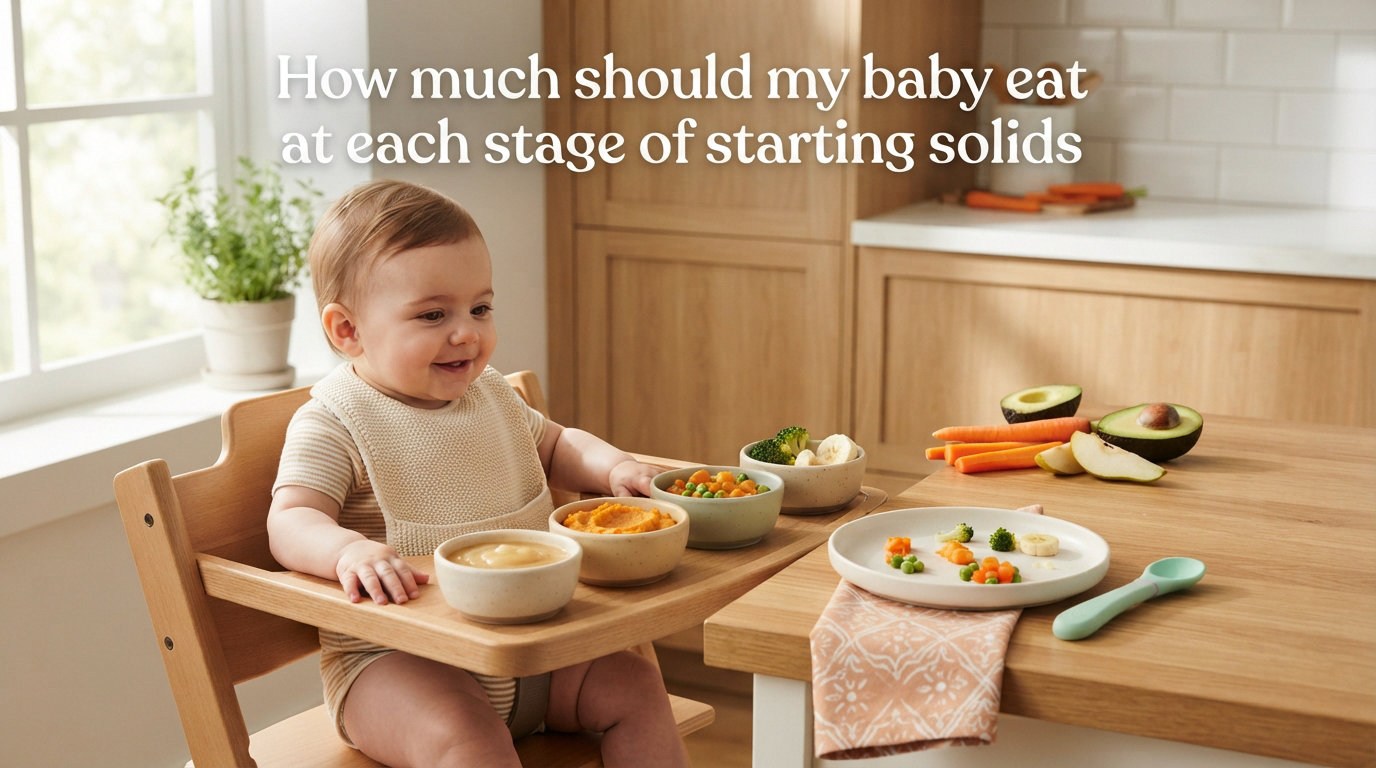
When my daughter turned six months old, I stared at the small bowl of iron-fortified cereal and wondered: is this actually enough food? The transition from exclusive milk feeding to introducing solids feels overwhelming for most parents. How much should my baby eat at each stage of starting solids is one of the most common questions I hear from new parents navigating this exciting milestone.
The American Academy of Pediatrics (AAP) recommends starting solids around 6 months of age, but they emphasize that breast milk or formula should remain the primary nutrition source throughout the first year. Your baby’s transition to solid foods is a gradual process that unfolds over several months, with portion sizes increasing slowly as your little one develops new skills and shows more interest in eating.
In this guide, I’ll break down exactly how much to offer at each stage, from those first tentative tastes to full family meals. I’ve pulled together recommendations from pediatric guidelines, real parent experiences, and feeding specialists to give you a clear roadmap for this journey.
Table of Contents
Signs Your Baby Is Ready for Solids
Before worrying about portion sizes, it’s important to confirm your baby is actually developmentally ready for solid foods. Starting too early can increase the risk of choking and allergies, while waiting too long might miss important windows for texture introduction and skill development.
Most babies show readiness between 4-6 months, though the AAP recommends waiting until closer to 6 months unless your pediatrician advises otherwise. Here are the key signs to watch for:
- Good head and neck control: Your baby can hold their head steady and sit with minimal support
- Lost the tongue-thrust reflex: That automatic tongue-pushing motion that protects babies from choking begins to fade
- Interest in food: Your baby watches you eat, reaches for your food, or opens their mouth when food approaches
- Ability to coordinate swallowing: Your baby can move food to the back of their mouth and swallow rather than pushing it back out
I remember noticing my daughter was ready when she started grabbing at my spoon during dinner and making chewing motions while watching me eat. Those little cues told me she was developmentally prepared to begin this exciting new chapter.
How Much Should My Baby Eat at Each Stage of Starting Solids
Now let’s dive into the specific portion guidelines for each stage of your solids journey. Keep in mind that these are general recommendations – every baby is different, and your pediatrician may provide personalized guidance based on your baby’s growth and development.
4-6 Months: Starting Out with First Foods
At this early stage, solid food is really more about exploration and learning than nutrition. Breast milk or formula still provides virtually all the calories and nutrients your baby needs. The goal is simply to introduce the concept of eating from a spoon and experiencing new flavors and textures.
Portion sizes: Start with just 1-2 teaspoons of food once daily. Over the course of 2-3 weeks at this stage, you can gradually increase to 1-2 tablespoons per feeding. Many babies only take a few spoonfuls at first, and that’s completely normal.
Frequency: Begin with one feeding per day, typically after a milk feeding when your baby is happy but not overly hungry or full. Timing these sessions when your baby is alert and content sets the stage for positive associations with food.
Food types: Iron-fortified infant cereal mixed with breast milk or formula is a traditional first food because it provides essential iron in a familiar consistency. Single-grain cereals like rice or oatmeal are gentle on developing digestive systems. Pureed single-ingredient vegetables and fruits work well too – think avocado, sweet potato, bananas, or pears. The key is introducing one new food at a time and waiting 3-5 days before trying another to monitor for reactions.
Consistency: Foods should be very smooth and thin, similar to the thickness of heavy cream or yogurt. You can thin purees with breast milk, formula, or water to achieve the right texture.
Duration: Most babies stay in this introductory phase for 4-8 weeks as they master the basic mechanics of swallowing from a spoon. There’s no rush to advance – let your baby’s comfort and skills guide the pace.
Milk intake: Breast milk or formula intake remains unchanged during this stage. Your baby still needs the same amount of milk feeds as before solids were introduced. Offer solids after a milk feeding to ensure they’re getting adequate nutrition from their primary food source.
6-8 Months: Building Texture and Variety
Once your baby has mastered the basics of swallowing smooth purees and is showing enthusiasm for mealtime, it’s time to gradually increase portion sizes and begin introducing more textures and flavors. This is where the real fun begins as your baby starts to experience a wider world of food.
Portion sizes: Increase to 2-4 tablespoons of food per meal. Some babies may eat up to 1/4 cup (4 tablespoons) of food at a sitting, while others may still only take a couple of tablespoons. Both are normal at this stage.
Frequency: Offer solids twice daily by around 7 months. Many parents find breakfast and dinner work well, with milk feeds continuing throughout the day as usual. The goal is gradually building toward a routine of three meals by around 9 months.
Food types: This is the time to expand beyond those first few foods. Introduce a variety of vegetables, fruits, and protein sources. Iron-rich foods are especially important around 6 months as babies’ natural iron stores begin to deplete. Consider pureed meats, beans, lentils, and iron-fortified cereals. You can also begin combining foods – think banana avocado mash or pea and pear puree.
Consistency: Gradually thicken purees to a consistency similar to applesauce. Begin introducing some mashed foods with tiny soft lumps to help your baby learn to manage different textures. Some parents also begin offering soft finger foods during this period for babies who show interest in self-feeding.
Finger foods introduction: If your baby is showing interest in self-feeding, you can offer soft, easy-to-grip foods like: – O-shaped cereals that dissolve easily in saliva – Small pieces of very soft, cooked vegetables – Soft fruits like banana or avocado cut into manageable pieces – Toast strips or crackers that dissolve well
Always test foods yourself first to ensure they’re soft enough to mash easily between your thumb and forefinger.
Milk intake: Breast milk or formula still provides the majority of nutrition. Most babies at this age continue with 5-6 milk feeds daily, though the volume may begin to decrease slightly as solid intake increases. Offer milk before solid meals to ensure your baby is getting the nutrition they need from their primary food source.
9-12 Months: Transitioning to Family Foods
By this stage, your baby is likely becoming a more confident and capable eater. The pace of advancement often accelerates as babies develop their pincer grasp and become more interested in feeding themselves. This is an exciting time of rapid skill development and growing independence.
Portion sizes: Offer 3-6 tablespoons of food per meal, increasing toward 1/2 cup as your baby’s appetite and skills grow. Many babies eat substantial amounts at this stage, while others remain light eaters. Follow your baby’s lead rather than focusing on specific amounts.
Frequency: Work toward three meals daily plus one or two snacks. Many babies naturally fall into a pattern of breakfast, lunch, dinner, and mid-morning and mid-afternoon snacks. Keep the timing flexible based on your baby’s hunger cues and your family’s routine.
Food types: This is the time to really expand your baby’s food world. Offer a wide variety of foods from all food groups. Table foods that the rest of the family is eating work well, with some modifications for safety and appropriateness. Include: – A variety of vegetables and fruits – Protein sources like meat, fish, eggs, beans, and dairy – Whole grains like pasta, rice, and bread – Healthy fats like avocado and olive oil
Consistency: Most babies can manage chopped table foods by 10-12 months. Foods should be soft and easily mashable, but don’t need to be pureed. Offer a variety of textures to help develop chewing skills. Some babies prefer finger foods entirely at this stage, while others still accept some spoon-feeding.
Self-feeding skills: By 12 months, many babies are feeding themselves a significant portion of their meals. Encourage this independence by offering appropriate finger foods and letting your baby practice with a spoon. Expect messy meals – it’s all part of the learning process.
Cup introduction: Around 9 months, begin offering small amounts of water in a cup with meals. A sippy cup or an open cup with a small amount of liquid helps your baby practice cup drinking skills. Breast milk or formula can also be offered in a cup as you begin transitioning away from bottle feeds.
Milk intake: Breast milk or formula intake typically decreases to around 16-24 ounces daily as solid food becomes a more significant part of your baby’s diet. Continue offering milk feeds, but begin shifting toward offering milk with meals rather than as separate feeding sessions. By 12 months, your baby should be getting most of their nutrition from solid foods, with milk becoming a complement rather than the primary source.
Quick Reference: Portion Sizes by Age
Sometimes you just need a quick reminder of appropriate portions without reading through detailed explanations. This table provides a handy reference guide for portion sizes at each stage of your solids journey.
| Age Range | Portion per Meal | Meals per Day | Food Consistency | Milk Intake |
|---|---|---|---|---|
| 4-6 Months | 1-2 teaspoons to 1-2 tablespoons | 1 meal | Smooth puree, thin consistency | Unchanged from pre-solids |
| 6-8 Months | 2-4 tablespoons | 2 meals | Thicker puree, some mashed textures | Slight decrease, still primary |
| 9-12 Months | 3-6 tablespoons toward 1/2 cup | 3 meals + optional snacks | Chopped table foods, finger foods | 16-24 oz, complement to solids |
Balancing Breast Milk or Formula with Solids
One of the most common sources of confusion for parents is figuring out how to balance milk feeds with solid food meals. How do you know if your baby is getting enough milk now that solids are part of the routine? How do you time feeds so your baby isn’t too full or too hungry for solids?
Here’s a practical approach that works for many families:
4-6 months: Continue with your usual milk feeding schedule. Offer solids 30-60 minutes after a milk feed, when your baby is content but not overly full. This ensures your baby is getting adequate nutrition from milk while still having interest in exploring new foods.
6-8 months: Most babies continue with 5-6 milk feeds daily, though the volume at each feed may begin to decrease slightly. Consider offering solids after the morning and evening milk feeds, or at times that work well with your daily routine. If your baby seems less interested in milk feeds as solid intake increases, try offering milk before solids rather than after.
9-12 months: As solid intake becomes more substantial, milk feeds naturally decrease. Most babies transition to 3-4 milk feeds daily by 12 months. Consider offering milk with meals rather than as separate feeding sessions. For example, offer breast milk or formula in a cup with breakfast and lunch, and perhaps before bedtime.
Signs your baby is getting enough: Regardless of the specific schedule, your baby’s growth and development are the best indicators of adequate intake. Your pediatrician will monitor weight gain and growth at regular checkups. Additional signs that your baby is getting enough nutrition include: – Six or more wet diapers daily – Regular bowel movements – Generally content between feeds – Meeting developmental milestones – Steady weight gain according to your pediatrician’s growth chart
Remember that the transition from milk to solids is gradual. Breast milk or formula remains the primary source of nutrition throughout the first year, with solid foods gradually taking on a more significant role. There’s no need to rush this process – every baby progresses at their own pace.
Sample Daily Feeding Schedule
Sometimes it helps to see how other families structure their days. Here’s a sample feeding schedule that demonstrates how solids and milk feeds can work together at different stages. Remember that every family’s schedule looks different, and flexibility is key.
Sample schedule for a 6-month-old (early solids stage):
- 7:00 AM – Breast milk or formula (morning feed)
- 8:00 AM – Breakfast solids (1-2 tablespoons cereal or puree)
- 10:00 AM – Breast milk or formula
- 1:00 PM – Breast milk or formula
- 4:00 PM – Breast milk or formula
- 6:00 PM – Dinner solids (1-2 tablespoons vegetable or fruit puree)
- 7:00 PM – Breast milk or formula (before bed routine)
Sample schedule for an 8-month-old (two solid meals):
- 7:00 AM – Breast milk or formula
- 8:00 AM – Breakfast solids (2-4 tablespoons – cereal, fruit, or yogurt)
- 10:00 AM – Breast milk or formula
- 1:00 PM – Breast milk or formula
- 5:00 PM – Breast milk or formula
- 6:00 PM – Dinner solids (2-4 tablespoons – vegetables, protein, fruit)
- 7:30 PM – Breast milk or formula (before bed)
Sample schedule for an 11-month-old (three meals plus snacks):
- 7:00 AM – Breast milk or formula with breakfast solids
- 9:30 AM – Morning snack (finger foods or small portions of table food)
- 12:00 PM – Lunch solids with breast milk or formula in a cup
- 3:00 PM – Afternoon snack
- 5:30 PM – Breast milk or formula
- 6:30 PM – Dinner solids with water in a cup
- 7:30 PM – Breast milk or formula (before bed, if needed)
These schedules are simply examples – adapt them to fit your family’s routine, your baby’s hunger patterns, and your pediatrician’s recommendations. The key is consistency and flexibility rather than following a rigid timetable.
Tips for Feeding Success at Every Stage
Beyond portion sizes and timing, there are several strategies that can help make feeding more enjoyable and successful for both you and your baby. These tips come from pediatric feeding specialists, experienced parents, and child development experts.
Follow your baby’s cues: Your baby is remarkably good at regulating their own intake when given the opportunity. Watch for signs of hunger like opening the mouth, leaning forward, or reaching for food. Equally important are signs of fullness like turning away, closing the mouth, or becoming distracted. Respect these signals rather than pushing for “one more bite.”
Create a positive mealtime environment: Make feeding a pleasant, pressure-free experience. Sit face-to-face with your baby, maintain eye contact, and offer smiles and encouragement. Avoid using screens or toys as distractions during feeding – this can interfere with your baby’s ability to recognize hunger and fullness cues.
Embrace the mess: Learning to eat is a messy process, and that’s okay. Expect food on the face, in the hair, and on the floor. Consider using a splash mat under the high chair and investing in some good bibs. Messy eating is part of how babies explore food and develop important sensory skills.
Introduce allergens carefully: Current research suggests that introducing potentially allergenic foods early may actually help prevent allergies. Talk to your pediatrician about when and how to introduce foods like peanuts, eggs, and dairy. When you do introduce these foods, do so one at a time and wait a few days before introducing another new food.
Handle food refusal gracefully: All babies go through phases of refusing foods, sometimes repeatedly. This is normal development, not a reflection of your parenting. Simply take the food away without comment and try again another day. Making a big deal out of refused food can create negative associations that make the problem worse.
Avoid common choking hazards: Until your baby is chewing well, avoid foods like whole grapes, nuts, popcorn, raw vegetables, hot dogs, and chunks of meat or cheese. Always supervise feeding closely and learn infant CPR and choking response. Safe eating practices are just as important as portion sizes and food variety.
Offer variety and repetition: It can take 10-15 exposures before a baby accepts a new food. Continue offering rejected foods periodically without pressure. Rotate through a variety of flavors and textures to help develop your baby’s palate and prevent picky eating patterns.
Frequently Asked Questions
How often should a 6 month old eat solids?
Most 6-month-olds eat solids once or twice daily. Start with one meal per day and gradually increase to two meals as your baby shows more interest and ability. Follow your baby’s cues – some are ready for two meals sooner than others.
What does a 6 month old feeding schedule with solids and formula look like?
A typical schedule includes 4-6 formula feeds (24-32 oz total) plus 1-2 solid food meals. Offer solids about an hour after a morning bottle, and optionally after an afternoon bottle. Always give formula first, followed by solids, until your baby is eating substantial amounts of food.
What are the best baby first foods at 4-6 months?
Iron-fortified infant cereal, pureed vegetables (sweet potato, carrots, peas), pureed fruits (banana, avocado, applesauce), and single-ingredient purees are ideal first foods. Introduce one new food at a time and wait 3-5 days before trying another to monitor for reactions.
How often should a 7 month old eat solids?
Most 7-month-olds eat solids twice daily. Offer breakfast and dinner, or lunch and dinner, depending on your schedule. Each meal should include 2-4 tablespoons of food. As your baby approaches 8 months, you can begin working toward three meals per day.
How much solid food should a 9 month old eat?
A 9-month-old typically eats 3-6 tablespoons per meal, working toward 1/2 cup. Offer three meals daily plus optional snacks. Focus on texture progression and introducing table foods rather than exact amounts – some babies are hearty eaters while others eat less.
How do I know if my baby is eating enough solids?
Your baby is eating enough if they’re growing well, producing 6+ wet diapers daily, and meeting developmental milestones. Your pediatrician monitors growth at checkups. Remember that milk remains the primary nutrition source throughout the first year – solids complement rather than replace milk initially.
Wrapping Up
Understanding how much should my baby eat at each stage of starting solids doesn’t have to be overwhelming. Remember that this is a gradual process that unfolds over months, not days. Start small, follow your baby’s cues, and gradually increase portion sizes and complexity as your little one develops new skills and shows more interest in food.
The guidelines I’ve shared provide a helpful framework, but every baby is different. Some are enthusiastic eaters from the first spoonful, while others take a more cautious approach. Both styles are normal. Your job is to offer nutritious foods at appropriate intervals and let your baby decide how much to eat.
If you’re concerned about your baby’s growth, feeding development, or if you notice specific issues like difficulty swallowing, extreme food refusal, or poor weight gain, consult your pediatrician. They can provide personalized guidance based on your baby’s specific needs and development.
The first year of feeding is about so much more than nutrition – it’s about building positive relationships with food, developing important motor skills, and laying the foundation for a lifetime of healthy eating. Take plenty of photos of those messy faces, celebrate the small victories, and trust that your baby is learning and growing at exactly the right pace.