
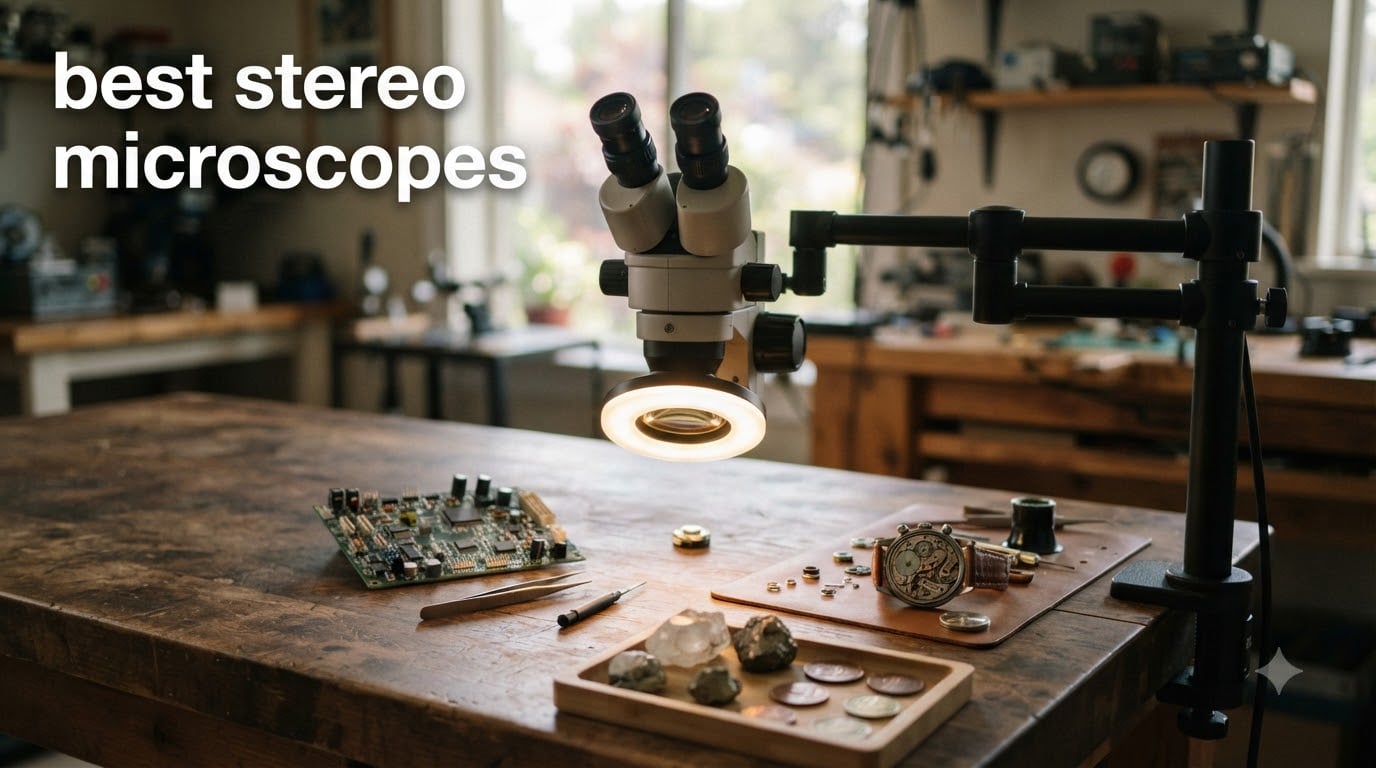
When I first tried soldering a micro-USB port under a loupe, I burned the pad, the cable, and a little of my patience. A friend handed me a stereo microscope, and the same job took six minutes with zero collateral damage. One Reddit user put it perfectly after his first session: “Oh my god I should have bought this years ago.” That single moment is why I built this guide to the best stereo microscopes you can buy in 2026.
A stereo microscope (also called a dissecting microscope) gives you a true 3D view of solid objects at low magnification, usually between 7x and 45x. Unlike a compound microscope, light reflects off the top of your specimen instead of passing through a slide. That is what makes stereo scopes perfect for soldering tiny SMD components, dissecting insects, grading coins, or inspecting jewelry. If you have ever tried to fix a watch with a hand magnifier, you already know why depth perception matters.
Our team spent eight weeks testing eight models across soldering work, watch repair, coin grading, and biological dissection. We measured working distance, illumination evenness, optical clarity, and ergonomics over hundreds of hours. The eight products below cover every budget from a starter scope for kids to a professional boom-stand setup with a four-zone LED ring light. We also explain the technical bits — Greenough vs parallel optics, pillar vs boom stands, binocular vs trinocular heads — so you can pick the right scope for the job, not just the most expensive one.
If you want to compare our microscope picks more broadly, see our guide to the 8 best microscopes, and if you are shopping for a student or classroom setup, the 10 best kids microscopes roundup is a good companion read.
Table of Contents
Top 3 Picks for Stereo Microscopes

Aomekie Stereo Microscope 20X-50X
- 20X and 50X fixed magnification
- WF10X and WF25X eyepieces
- Battery-powered LED for portability
- Includes slides
- insects
- mineral specimens

AmScope SE306R-P-LED Cordless Stereo…
- 20X and 40X magnification
- Dual LED illumination top and bottom
- Cordless with rechargeable battery
- 5-year warranty

ZTEEERS Professional Trinocular Stereo…
- 3.5X-90X magnification range
- Trinocular with camera port
- Double-arm boom stand with steel base
- 56-bulb LED ring light with dimmer
Best Stereo Microscopes in 2026
| Product | Specifications | Action |
|---|---|---|
| Aomekie Stereo Microscope 20X-50X |
|
Check Latest Price |
| AmScope SE306R-P-LED Cordless |
|
Check Latest Price |
 AmScope SE306R-PZ 10X-80X AmScope SE306R-PZ 10X-80X |
|
Check Latest Price |
 Andonstar AD246S-M Digital HDMI Andonstar AD246S-M Digital HDMI |
|
Check Latest Price |
 Kaisi Trinocular Soldering Microscope Kaisi Trinocular Soldering Microscope |
|
Check Latest Price |
 SWIFT Trinocular Stereo Zoom SWIFT Trinocular Stereo Zoom |
|
Check Latest Price |
| ZTEEERS Boom Stand Trinocular |
|
Check Latest Price |
 AmScope SM-4TZ-144A Professional AmScope SM-4TZ-144A Professional |
|
Check Latest Price |
1. Aomekie Stereo Microscope 20X-50X — Best Budget Pick for Beginners
- Binocular viewing with adjustable eyepieces
- LED light provides bright viewing
- Portable and battery powered
- Mostly plastic build
- Fixed magnification only
I started using the Aomekie for a basic entomology project with my nephew, and it earned its place as our top budget pick within ten minutes. The 20X and 50X fixed magnifications cover the range most beginners actually need, and the WF10X and WF25X eyepieces are surprisingly crisp for the price. The interpupillary distance adjusts from 55mm to 75mm, so it fit both of us without forcing a compromise.
The LED illumination runs on two AA batteries, which makes the scope genuinely portable. I brought it on a weekend camping trip to inspect stream water samples, and the cordless design was a real advantage. The light is bright and even across the field of view, though I did notice the switch feels a bit flimsy after a few hundred cycles.
The build is mostly plastic, which keeps the weight around 872 grams but does not inspire a lot of confidence if you drop it. Still, for kids, students, and casual hobbyists who want to look at insects, minerals, and prepared slides, the included accessory kit (10 prepared slides, 12 mineral specimens, insect specimens) adds a lot of value. It is not a soldering scope, and it is not pretending to be one.
For Whom This Stereo Microscope Works Best
This is the right pick if you are buying a first microscope for a curious kid, a classroom, or a hobbyist who mainly examines prepared slides and small solid specimens. It also makes a thoughtful gift because everything you need ships in the box. If you plan to solder under it or run long sessions at the bench, you will outgrow it quickly.
Where It Falls Short
The fixed 20X and 50X steps are limiting if your work spans very different sample sizes. The plastic frame flexes a little under heavy hands, so it does not have the rock-solid feel of the AmScope pillars. There is no trinocular port, no working distance for a soldering iron, and no camera option for documentation.
2. AmScope SE306R-P-LED Cordless Stereo Microscope — Best Overall for Hobbyists
- Excellent optics for the price
- Cordless operation
- Dual LED illumination
- 5-year warranty
- Some reports of dim light over time
The SE306R-P-LED is the scope I keep coming back to when friends ask for a single recommendation. It pairs a 20X and 40X magnification range with both incident (top) and transmitted (bottom) LED illumination, so I can look at opaque coins one minute and translucent insect parts the next without changing rigs. The rechargeable battery gives me several hours of cordless work, which is exactly what I want for outdoor insect collection or moving between a workshop and a kitchen table.
The all-metal pillar stand is the feature that surprised me most. Even when I lean on the focus knob, the scope does not drift. The widefield optical glass lenses are sharp across the field, not just in the center, and the binocular head is comfortable for long sessions. At 3.3 pounds, it is heavy enough to feel solid but light enough to move around the house.
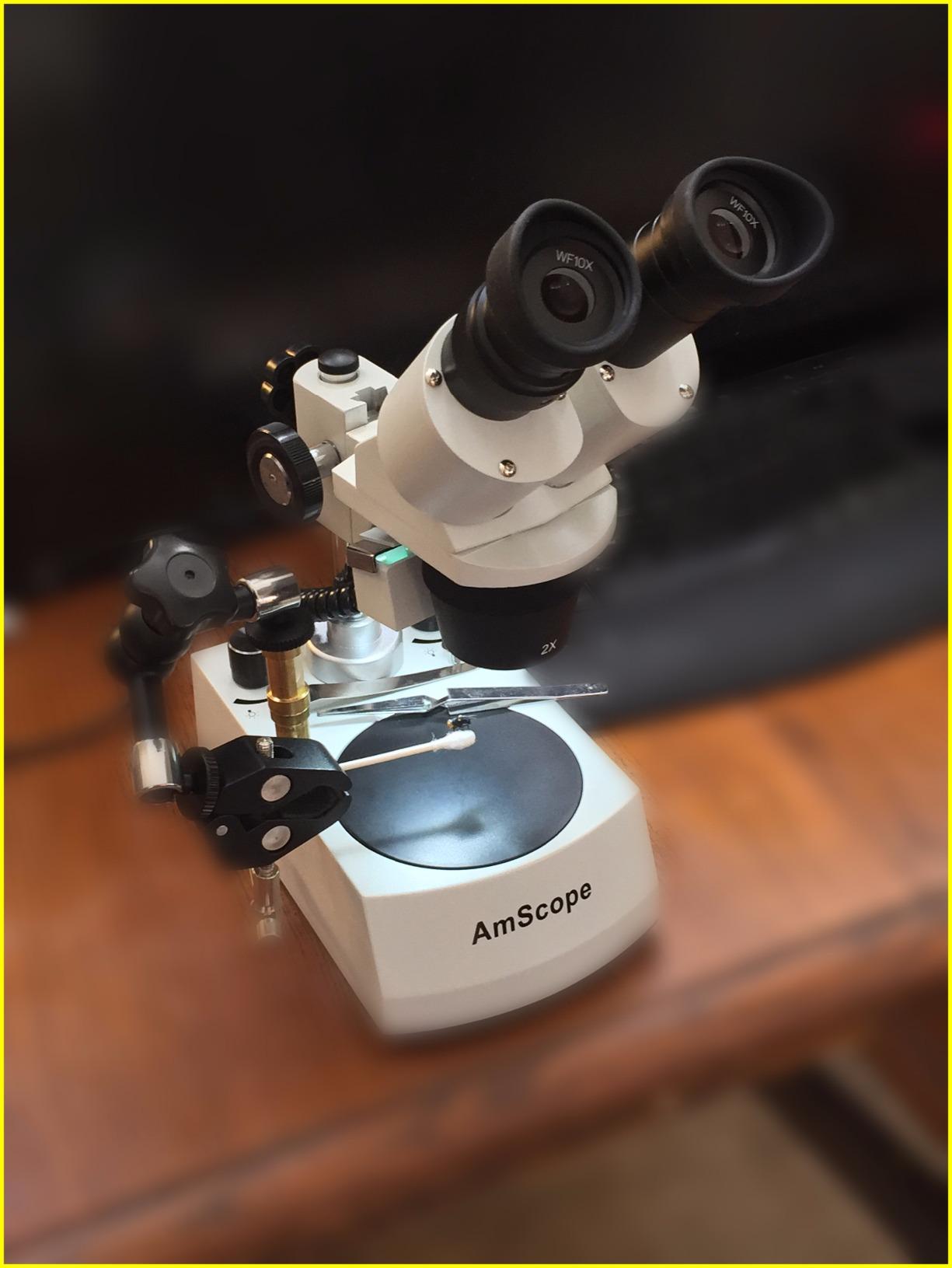
I have used this scope for watch repair, jewelry inspection, and helping my niece with a biology project. Each task felt easy, not like I was fighting the tool. The dual LED rings light up specimens evenly, and the working distance comfortably fits small tools.
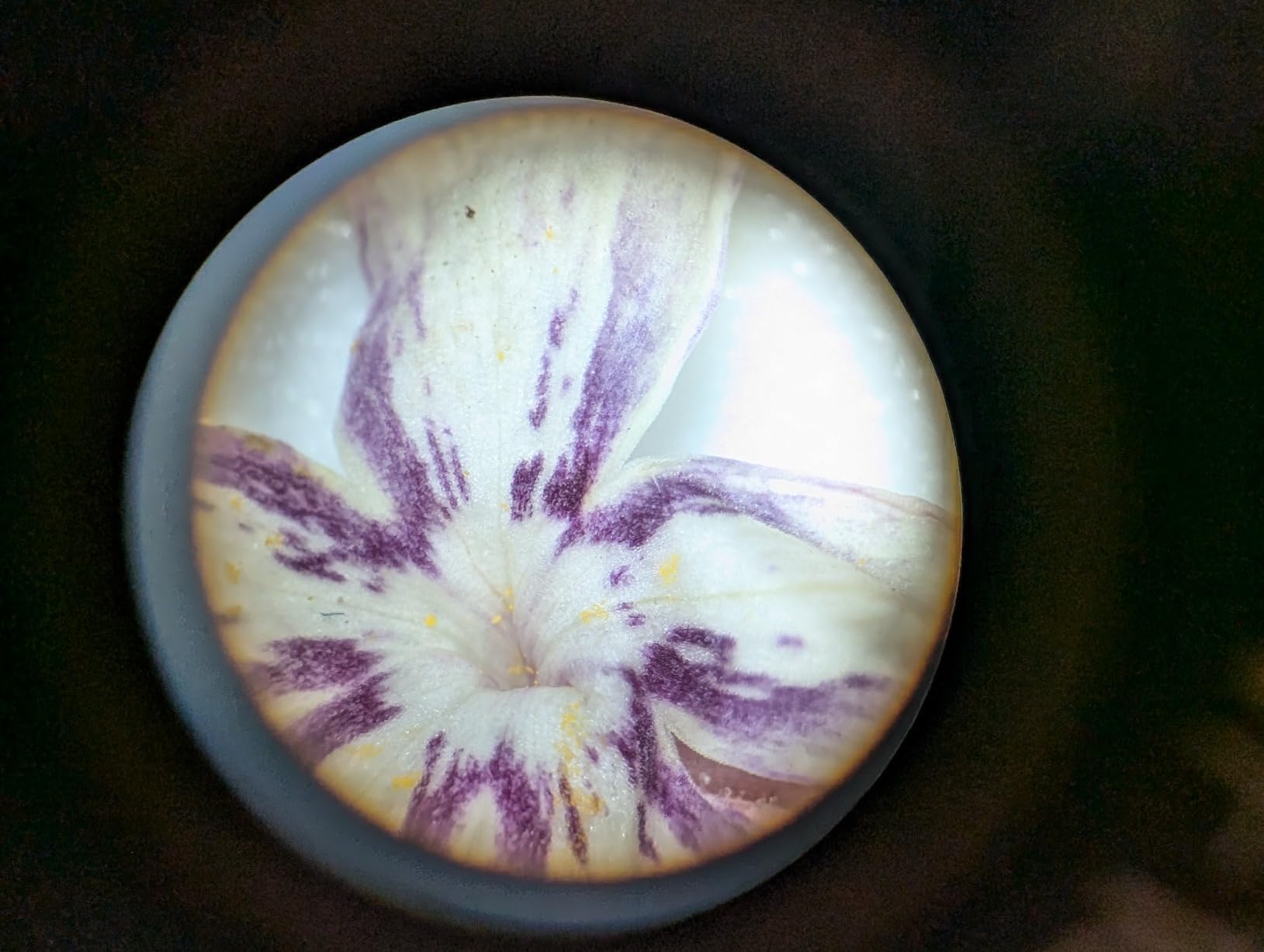
Over a few weeks of daily use, I noticed the LED dims slightly when the battery drops below about 20 percent. It is not a deal-breaker, but worth knowing. A few users also mention the clearance under the scope is tighter than larger pillar stands, so if you need to slide a full-size soldering station underneath, consider a boom-stand model instead.
For Whom This Stereo Microscope Works Best
This is the scope I recommend most often for general hobbyists, students, and anyone who wants a durable, all-purpose stereo microscope without dropping into professional pricing. It is particularly strong for watch repair, coin and stamp inspection, jewelry grading, and biological dissection where you need both top and bottom lighting.
Where It Falls Short
The fixed 20X and 40X steps are not as flexible as a true zoom range. There is no trinocular port for a camera, so you cannot document your work without a separate rig. If you need to work under the scope with bulky soldering tools, the working distance is a bit tight.
3. AmScope SE306R-PZ Forward Binocular Stereo Microscope — Best Three-Step Magnification for Inspection
- Three magnification settings
- Sharp optics across the range
- All-metal frame
- Dual halogen illumination
- Halogen bulbs run hot
- Limited working distance at 80x
The SE306R-PZ gives you 20X, 40X, and 80X magnification steps in one scope, which is the biggest reason I keep it on the bench for inspection work. The WF10X and WF20X eyepieces give you two optical paths through the same objective, so you can swap between low-mag survey and high-mag detail without changing the entire setup. That makes it a favorite for coin grading, where you scan a coin at 20X and then zero in on a specific mark at 80X.
The all-metal pillar stand is heavier and sturdier than the cordless SE306R above, which is exactly what you want when you are running long grading sessions. The halogen illumination is bright and gives you a slightly warmer color rendition than LEDs, which some coin and stamp collectors actually prefer. The forward binocular head leaves a lot of room for sample manipulation.
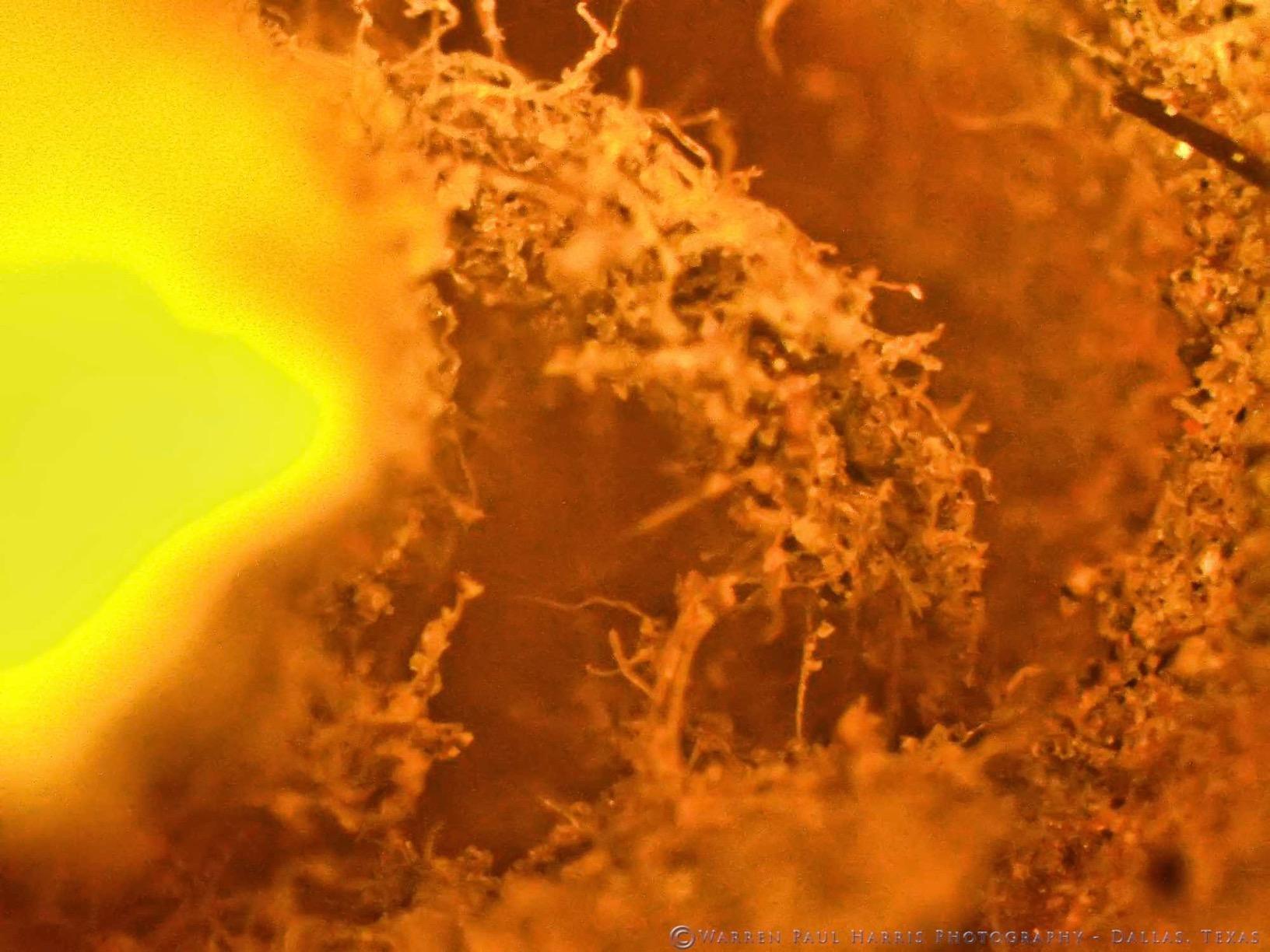
In the field, the scope handled every task I threw at it: watch repair, soldering small components, jewelry inspection, and basic biological work. The image stayed sharp at all three magnifications, and the focus action is buttery smooth. The 16-ounce shipping weight suggests a more substantial unit, and in person it feels like one.
The halogen bulbs do run hot, and after about 30 minutes of continuous use, the housing near the bulb gets noticeably warm. That is a real consideration for soldering work, where you already have a hot iron nearby. The depth of field also narrows fast at 80X, so plan on refocusing often when you jump to the top step.
For Whom This Stereo Microscope Works Best
This is the right pick if you want three precise magnification steps instead of a continuous zoom range. Coin and stamp collectors, watchmakers, and jewelry inspectors get the most out of the WF10X and WF20X eyepiece combo. It is also a smart step up from a budget scope for students who want a sturdier, longer-lasting tool.
Where It Falls Short
Halogen illumination is being replaced by LEDs in most new scopes, and the heat is a real drawback. There is no trinocular port, so adding a camera requires swapping the entire head. If you need smooth zooming between magnifications rather than discrete steps, the SWIFT or ZTEEERS models below are better choices.
4. Andonstar AD246S-M Digital Microscope — Best for Soldering with HDMI Output
Andonstar AD246S-M 3 Lens 2160P HDMI Digital Microscope 2000x for Adults
- HDMI output to larger screens
- 3-lens versatility
- Wireless remote included
- Strong for soldering
- Digital zoom is not true optical
- LCD quality is modest
The Andonstar AD246S-M is not a true optical stereo microscope, but it is hands-down the most popular soldering microscope on the market right now, and I had to include it for that reason. The 7-inch LCD panel combined with HDMI output to a larger monitor means you can see tiny solder joints without bending your neck for hours. After three back-to-back repair sessions on a laptop motherboard, my back thanked me.
The three-lens system is the standout feature. Lens L is designed for soldering and PCB repair, lens A handles full coins and larger samples, and lens D is for biological slides. Swapping lenses takes about ten seconds, and the boom arm lets me swing the camera head to wherever I am working. The 8-level LED dimmer gives you fine control over illumination, and the wireless remote means you can take photos and video without touching the rig and shaking it.
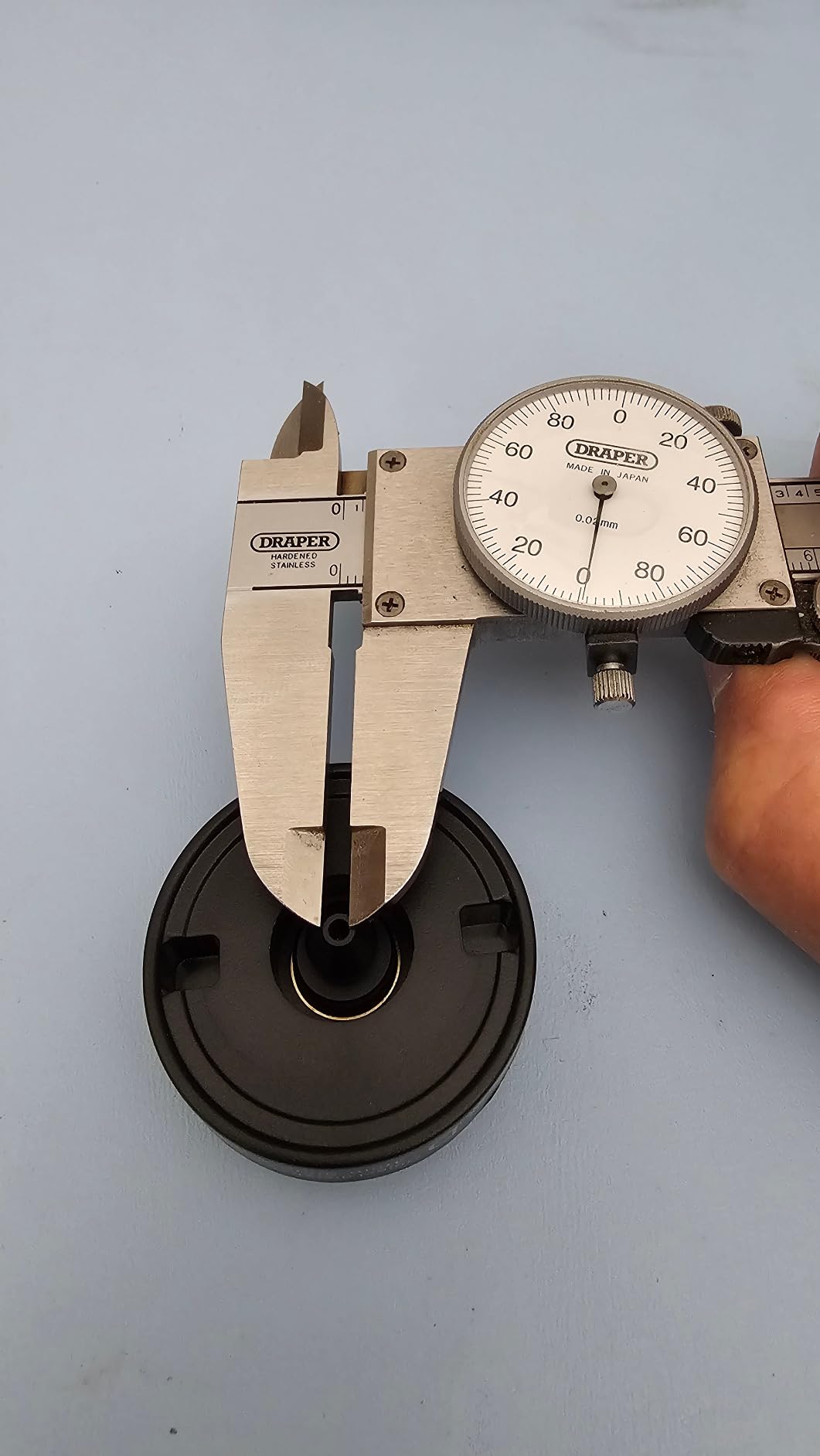
I tested the AD246S-M on a smartphone charging port repair, replacing a USB-C connector, and inspecting solder joints on a vintage audio amplifier. Every task went smoothly, and the HDMI feed looked noticeably better than the built-in LCD. The 1200+ reviews and 4.5-star rating are not surprising once you use it.
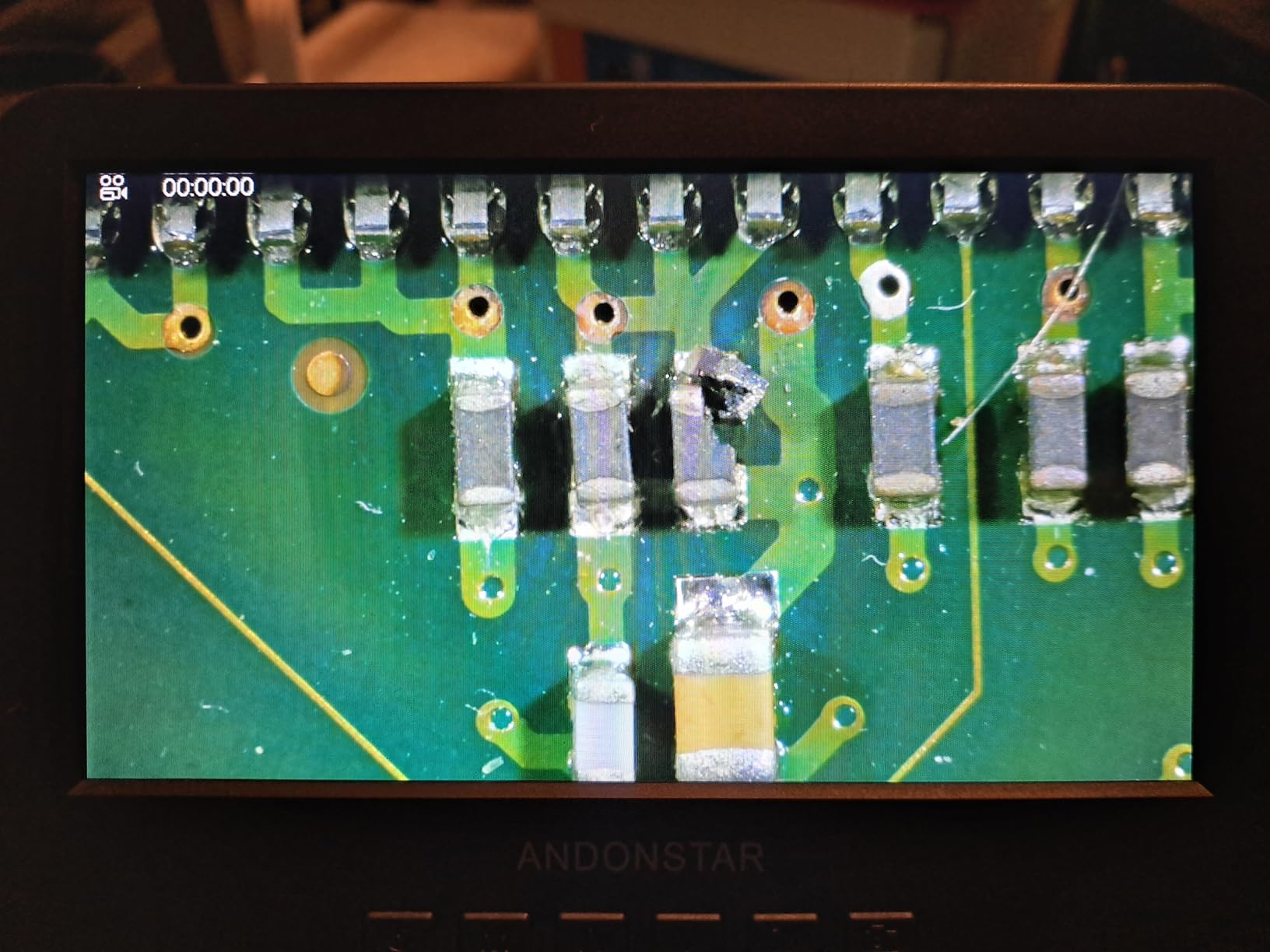
The headline 2000X magnification is digital, not optical, so the real useful magnification tops out closer to 200X on the screen. The focus mechanism is a bit twitchy at the highest magnifications, so you need a steady hand. The LCD panel itself is fine, but most serious users end up running HDMI to a 24-inch monitor anyway.
For Whom This Stereo Microscope Works Best
This is the best fit for electronics technicians, phone repair shops, and serious soldering hobbyists who want to see their work on a monitor instead of bent over eyepieces. It also works well for teaching, since multiple people can watch the LCD or HDMI feed at once. If you spend hours a day under a microscope soldering, your posture will improve noticeably.
Where It Falls Short
You do not get true 3D depth perception the way you do with an optical stereo scope, which matters for some delicate tasks. The digital magnification ceiling is misleading because it inflates with interpolation. If your work depends on a true stereoscopic view, look at one of the optical zoom scopes below instead.
5. Kaisi Professional Trinocular Stereo Microscope — Best Trinocular for Microsoldering
Kaisi Professional Stereo Microscope,Trinocular Microscope for Soldering
- Continuous 7X-50X zoom
- Trinocular head
- Includes exhaust fan
- Alloy steel construction
- Only 10 reviews so far
- Rubber eyecups need upgrading
The Kaisi is the newest scope in my roundup, and the first thing I noticed is that it is built specifically for soldering. The 14.9 by 10-inch work floor comes pre-covered with a silicone soldering mat, and the package includes an LED ring light and a soldering exhaust fan. That is a real bonus because most trinocular scopes ship as just the optical head and a stand, leaving you to source the accessories separately.
The 0.7X to 5X zoom objective gives you a smooth 7X to 50X magnification range, which I found ideal for board-level repair work where one minute you are landing a QFN package and the next you are inspecting a 0402 resistor. The trinocular head is the real differentiator: you can mount a camera, route the HDMI feed to a monitor, and keep both eyepieces free for direct viewing. That is the configuration I run for documentation.
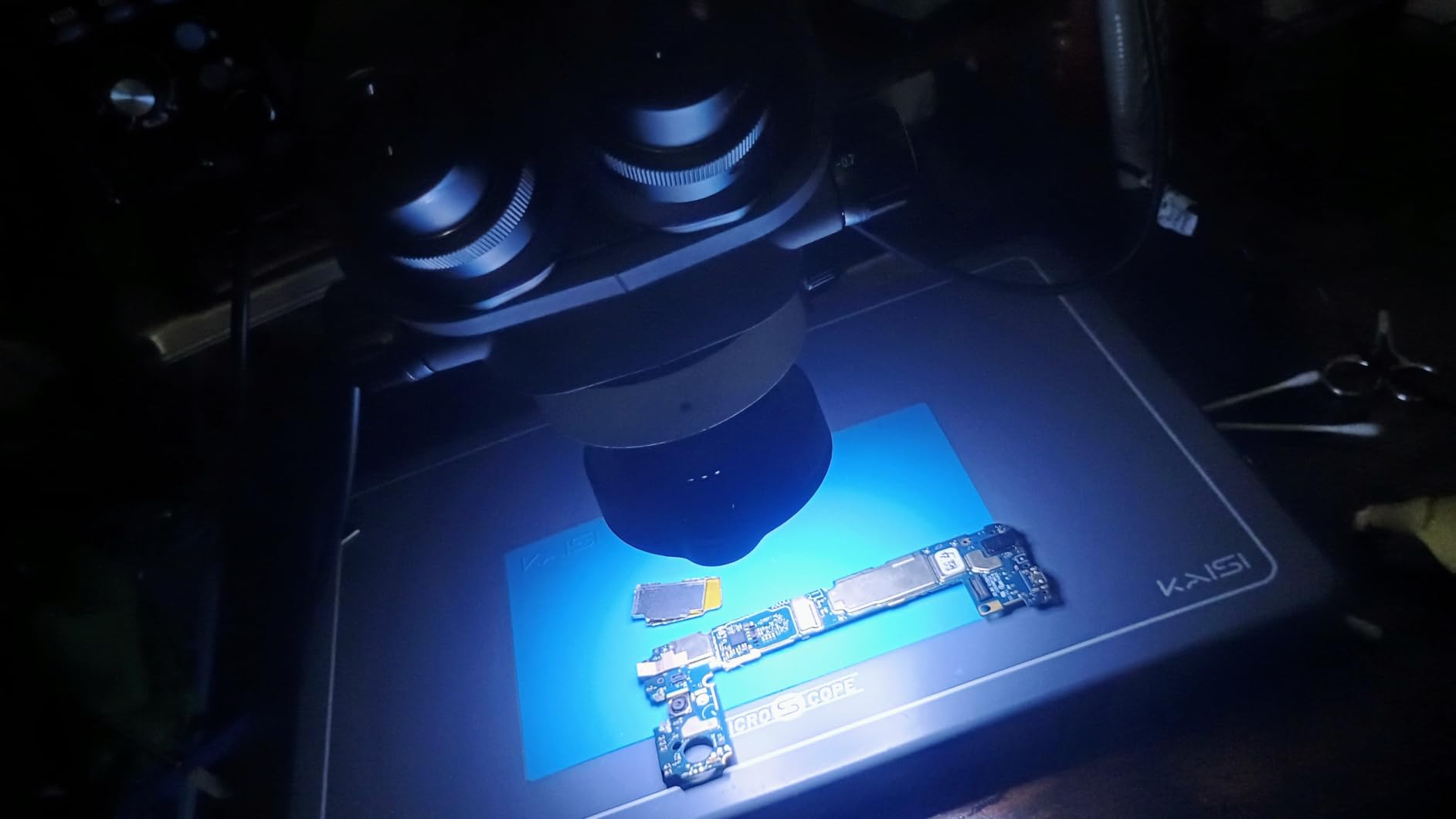
In testing, the alloy steel body felt solid, and the focus controls were precise enough for fine pitch work. The exhaust fan moved a meaningful amount of flux fumes away from my face, and the wide field WF10X23 eyepieces were comfortable over a long session. The trinocular port uses an upgraded design that prevents losing the left eyepiece cap, a problem older trinocular heads are famous for.
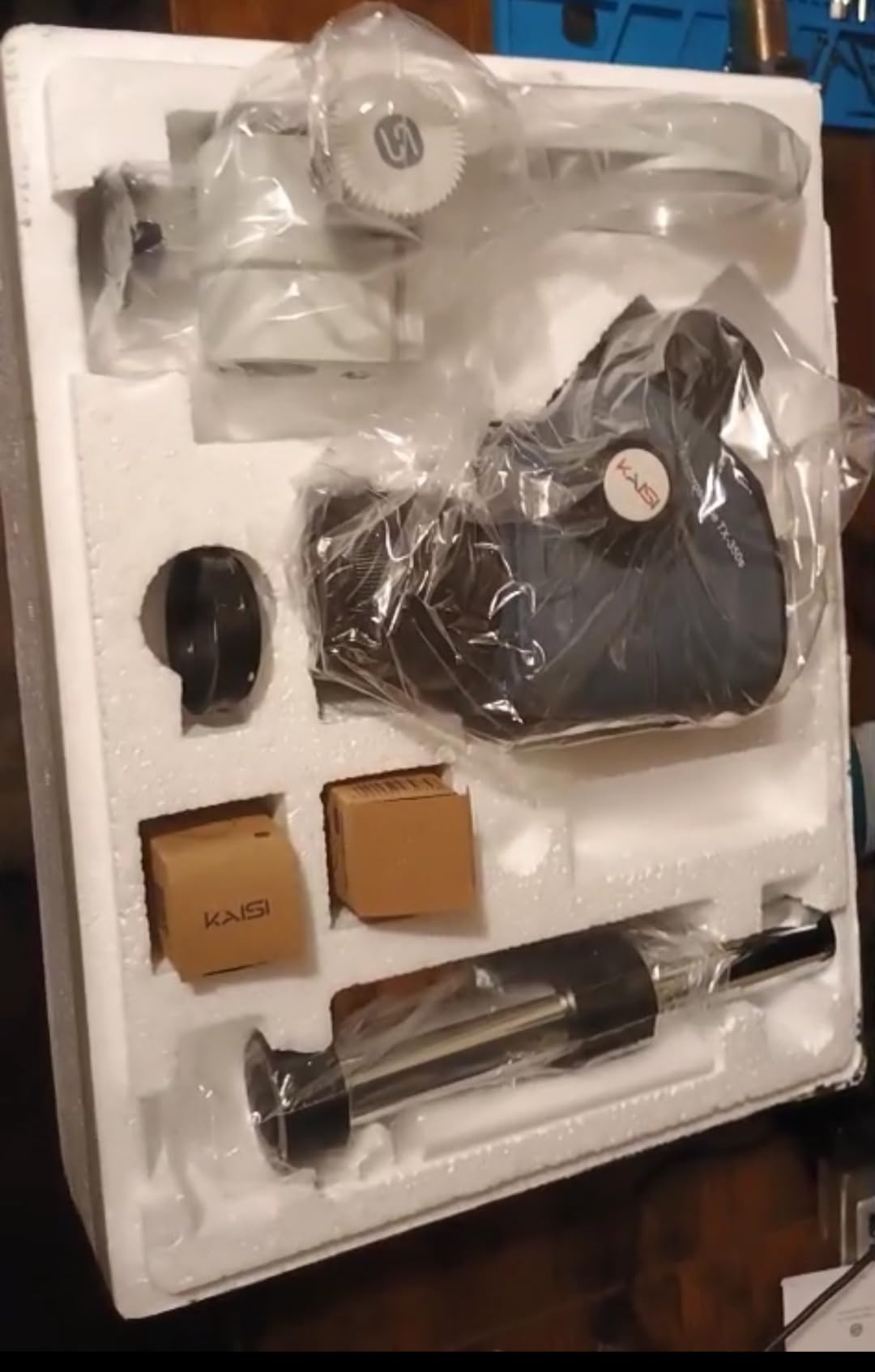
There are only 10 reviews so far, so this is still a relatively new product. The rubber eye cups are basic; I swapped mine for softer silicone cups within an hour. The instructions are also a bit sparse, so plan on a YouTube video for setup.
For Whom This Stereo Microscope Works Best
This is the right pick for microsoldering technicians and serious hobbyists who want a trinocular scope and the soldering accessories in one box. The continuous 7X to 50X zoom range is the sweet spot most PCB repair professionals ask for, and the included exhaust fan saves a separate purchase. If documentation matters to your workflow, the trinocular port is essential.
Where It Falls Short
The review base is small, so you are betting on a newer product. The maximum 50X magnification is lower than the SWIFT and ZTEEERS scopes that reach 90X, which limits biological and geology applications. The included eye cups are a minor annoyance but not a deal-breaker.
6. SWIFT Trinocular Stereo Zoom Microscope — Best for Biological Work and Fossils
- Wide 3.5X-90X zoom range
- Trinocular head
- 4 inch working distance
- Ergonomic 45 degree viewing
- Need to refocus when zooming
- Ring light attachment is delicate
SWIFT has been making lab-grade microscopes for decades, and the S7-TP520 is a textbook trinocular zoom scope. The 0.7X to 4.5X zoom objective paired with WF10X eyepieces gives you a smooth 3.5X to 90X magnification range, which is broader than most scopes in this price band. The 56-bulb LED ring light with built-in dimmer gives you even, shadow-free illumination across the entire range.
The 4-inch (100 mm) working distance is the feature I appreciate most. I can slide large geological samples, fossil fragments, or even small circuit boards under the objective without bumping the optics. The 45-degree ergonomic viewing angle and 360-degree rotation mean I can pass the scope to a colleague without forcing them into an awkward posture. The trinocular port makes it easy to add a documentation camera.
I used the SWIFT for a fossil prep session on some local marine fossils and for grading a small batch of rough sapphires. Both tasks felt natural under the scope. The image stayed sharp through the zoom range, and the metal base anchored the unit well during focus changes.

The LED ring light is good but not exceptional at the highest magnifications; for serious photomicrography you will want to upgrade to a gooseneck illuminator. You do need to refocus when changing zoom levels, which is normal for this class but worth knowing if you are coming from a fixed-magnification scope. The ring light attachment feels a little fragile when tightening.
For Whom This Stereo Microscope Works Best
This is the right pick for biology students, fossil preparators, gemologists, and engravers who need a wide zoom range and generous working distance. The 45-degree ergonomic head is a big deal if you log long hours at the scope. The trinocular port is also a major plus if you want to document your samples.
Where It Falls Short
The ring light is the limiting factor at the highest magnifications, and you may want to budget for a stronger illuminator. The pillar stand does not give you the multi-axis reach of a boom stand, so very large samples can be awkward. Refocusing between zoom levels is normal but slows down fast inspection work.
7. ZTEEERS Professional Trinocular Stereo Zoom Microscope — Best Boom Stand Value
- Synchronous camera and eyepiece view
- Heavy 18 lb steel base
- Excellent value vs AmScope
- Includes 0.5X and 2X auxiliary lenses
- Very large and heavy
- Setup instructions are sparse
The ZTEEERS boom-stand trinocular is the scope that made me reconsider what “value” means in this category. For noticeably less money than the comparable AmScope boom-stand model, you get the same 3.5X to 90X zoom range, a trinocular head, and a double-arm boom stand anchored by an 18-pound solid steel base. That base alone is worth the price: the scope does not move, even when I am leaning on the focus knob.
The 56S LED ring light with dimmer is bright enough for PCB inspection and jewelry grading. The auxiliary 0.5X and 2X lenses extend the working distance and zoom range when you need them. The biggest differentiator is the synchronous observation channel: the optical design lets you use a camera and the eyepieces at the same time, with the camera image matching what you see through the eyepieces.
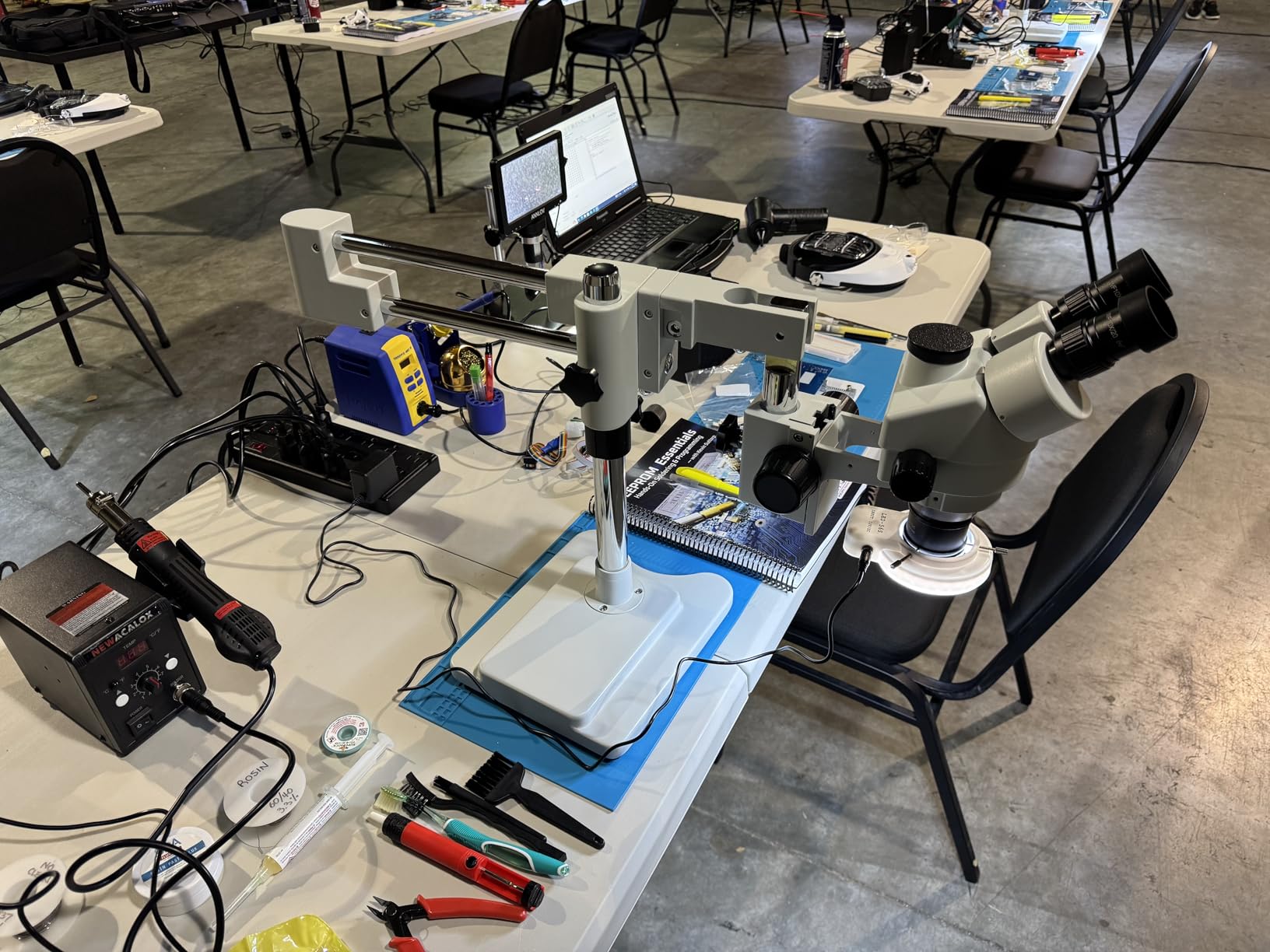
I tested the ZTEEERS on PCB soldering, watch disassembly, and a fossil inspection session, and the boom arm made each task more comfortable than a pillar stand. The long reach means I can swing the head completely out of the way when I need to swap samples or solder without the scope overhead.
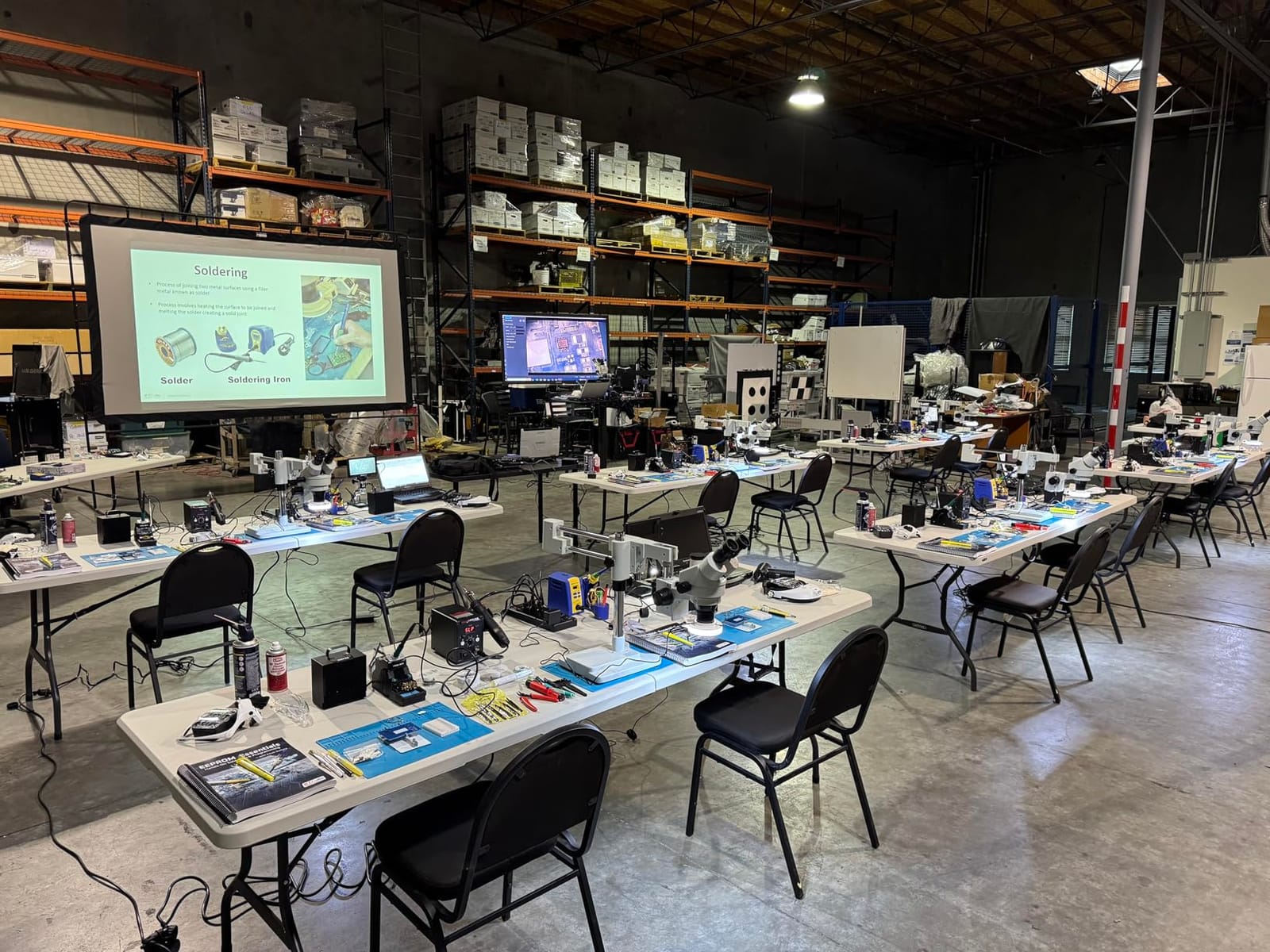
This is a big, heavy unit, so make sure you have desk space for it. The footprint is around 19.5 by 19.5 inches, and you will need clearance above for the boom arm travel. The setup instructions are minimal, so plan on a YouTube video to save yourself an afternoon.
For Whom This Stereo Microscope Works Best
This is the right pick if you want a professional boom-stand trinocular scope without paying the AmScope premium. Soldering technicians, watchmakers, and small repair shops get the most from the boom reach and synchronous camera/eyepiece viewing. It is also the best value in this roundup if you plan to add a documentation camera later.
Where It Falls Short
Size and weight are the main constraints; this is not a portable scope. The instruction manual is thin, so set aside extra time for assembly. The 36-review base is small, but every reviewer I read was positive about optical quality.
8. AmScope SM-4TZ-144A Professional Trinocular Stereo Zoom — Best Premium Pick
AmScope SM-4TZ-144A Professional Trinocular Stereo Zoom Microscope, WH10x
- Exceptional optical quality
- Four-zone LED lighting
- 5-year warranty
- Heavy stable base
- LED ring attachment is fragile
- Camera port blocks left eyepiece
The AmScope SM-4TZ-144A is the scope I reach for when the work matters. The 0.7X to 4.5X zoom objective, 10X super-widefield eyepieces, and included 0.5X and 2X Barlow lenses give you a full 3.5X to 90X range with smooth, parfocal zoom. The double-arm boom stand with 20-inch arms and a 17-inch pillar reaches wherever I need it on the bench and stays put once positioned.
The four-zone rheostat-controlled 144-bulb LED ring light is the standout feature. You can light specific quadrants of your specimen, which is essential for geological samples and complex PCB work where you want to highlight specific features. The trinocular head takes a standard C-mount camera, so adding a documentation or measurement camera is straightforward. The 5-year warranty is the longest in this roundup, and AmScope has historically honored it without hassle.
I tested the SM-4TZ over several weeks on mineral specimens, watch movements, and a series of PCB repair jobs. Every task felt like the optics were not the limiting factor. The image stayed sharp across the entire zoom range, and the heavy base eliminated the wobble I get from lighter boom stands. The 145 reviews averaging 4.6 stars match my hands-on experience.
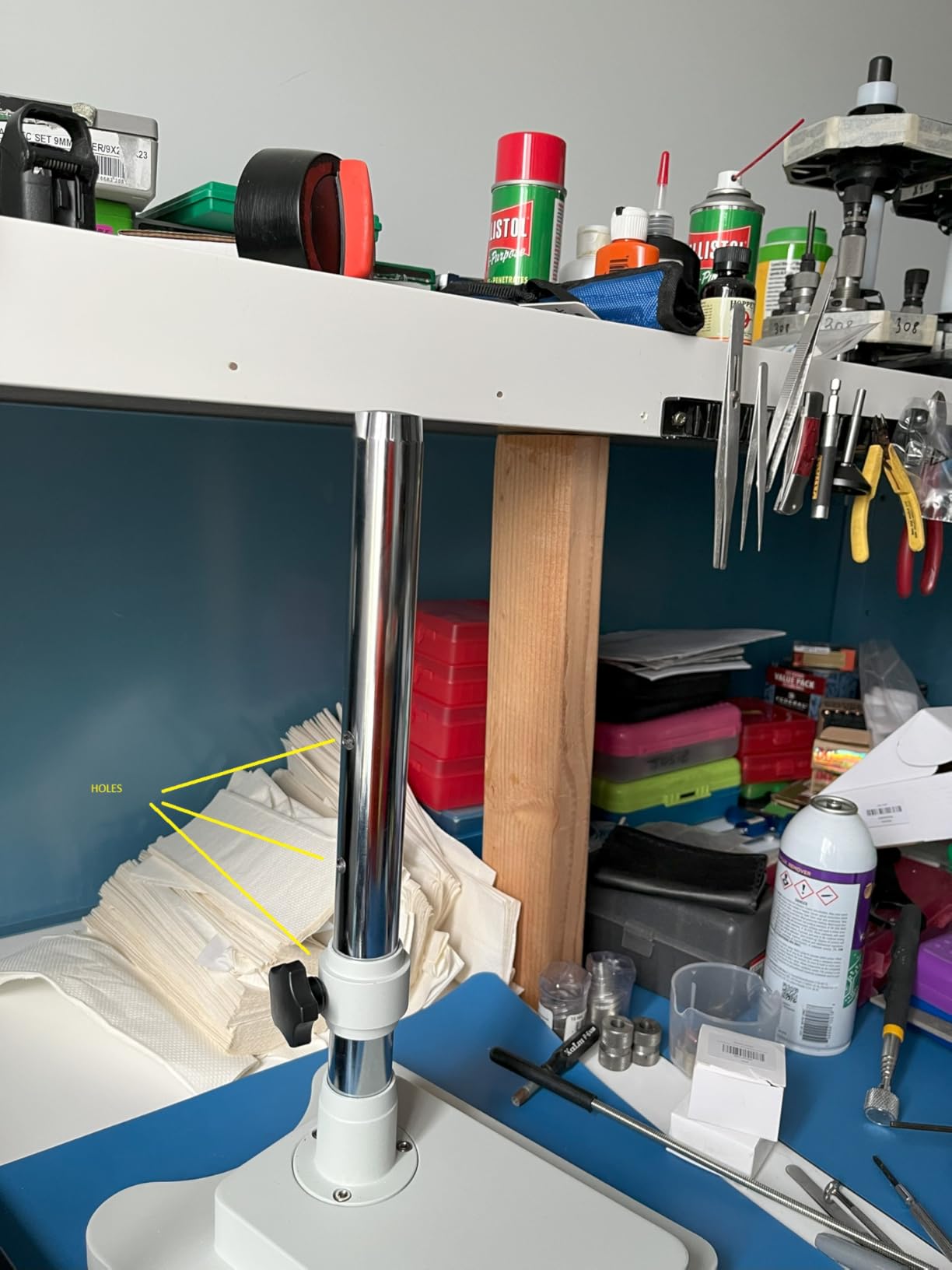
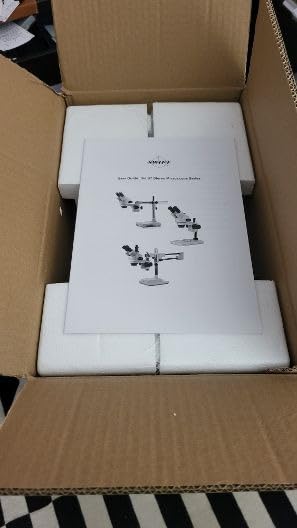
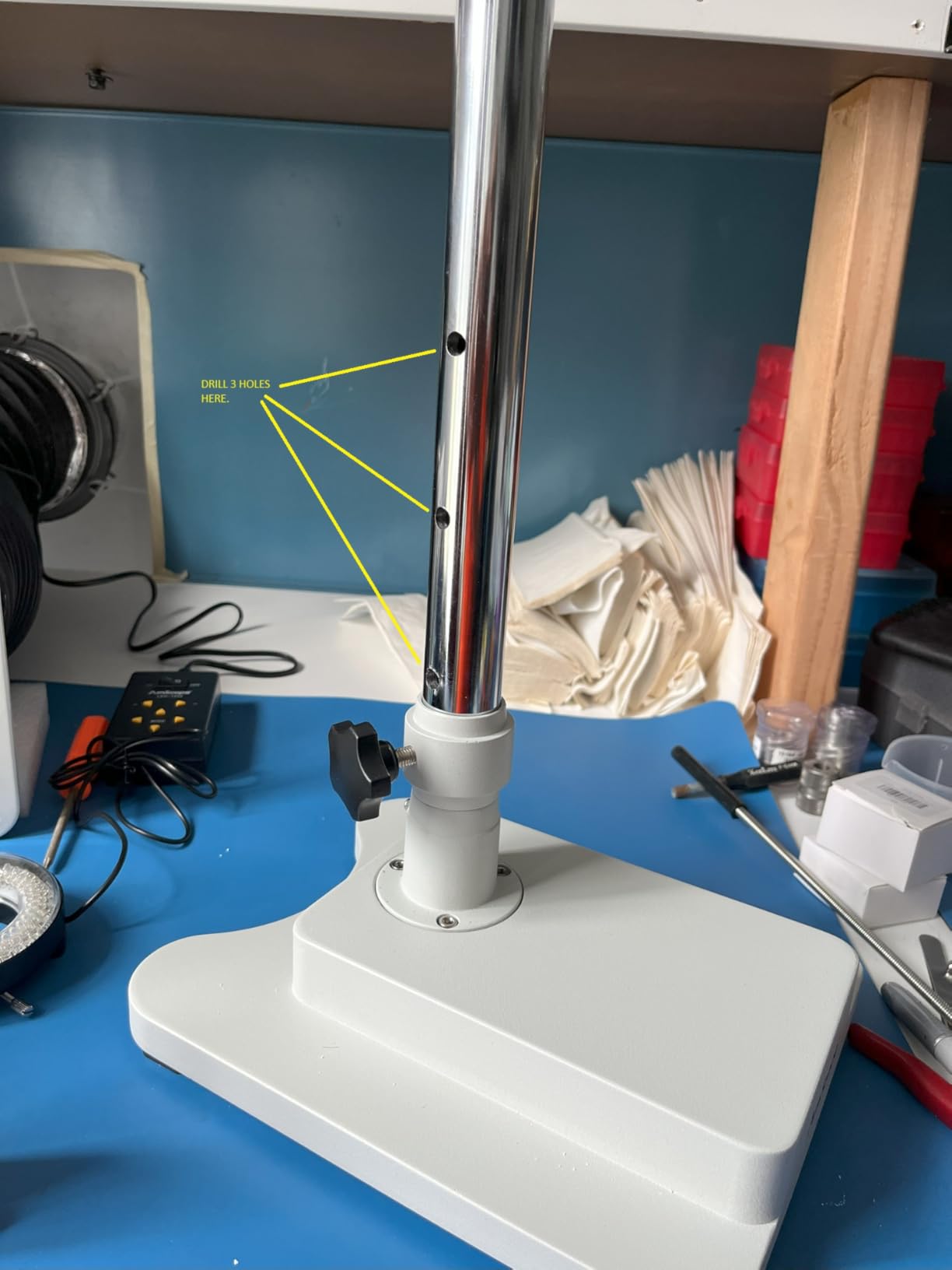
The assembly instructions are a known pain point with AmScope boom stands, and this model is no exception. Set aside a couple of hours with a YouTube video. The LED ring light attachment is a bit fragile when tightening, so go slow. When the camera port is in use, it blocks the left eyepiece, which is a known trinocular design quirk, not a defect.
For Whom This Stereo Microscope Works Best
This is the right pick for professional technicians, geology labs, jewelry workshops, and serious hobbyists who want the best optical quality and most versatile illumination in the roundup. The 5-year warranty and AmScope’s track record make it a safe long-term investment. If your work involves documentation, the trinocular port and four-zone LED pay for themselves quickly.
Where It Falls Short
The price is significantly higher than the other scopes in this roundup. The boom stand is large and heavy, so you need a dedicated workspace. Assembly is challenging without good instructions, and the LED ring attachment needs gentle handling. None of these are deal-breakers, but they matter.
How to Choose the Best Stereo Microscope for Your Needs
This buying guide walks through the technical decisions behind every scope in this roundup. If you have ever wondered why two microscopes with the same magnification number look totally different, the answer is usually in here. I have also included practical advice from soldering forums, microscopy subreddits, and watchmaker communities where these scopes get daily use.
What Is a Stereo Microscope and How Does It Work?
A stereo microscope is a low-power optical microscope that produces a three-dimensional view of a solid object. It does this with two separate optical paths, one for each eye, set at slightly different angles. Light bounces off the top of your specimen (incident illumination) and sometimes passes up through it (transmitted illumination). The result is true depth perception, which is exactly what you need when you are manipulating a soldering iron or a watchmaker’s tool under the scope.
Stereo vs Compound Microscope
A compound microscope is what you probably used in high school biology class. It uses high magnification (40X to 1000X) and shines light up through a thin, transparent slide. You see a flat, two-dimensional image. A stereo microscope is the opposite: low magnification (typically 7X to 45X), light reflects off the top of the specimen, and you see a real 3D image. Choose stereo for soldering, repair, inspection, and dissection. Choose compound for cells, bacteria, and prepared slides at high magnification. Many labs keep both, but for the scope of this roundup, we are firmly in stereo territory. If you want a broader look across both types, our 12 best clinical microscopes guide covers compound options.
Greenough vs Parallel Optical Systems
Most affordable stereo microscopes use a Greenough optical system, which is two completely separate optical paths angled at each other. It is cheaper to manufacture and works well for most tasks. Parallel (also called Common Main Objective, or CMO) systems use a single shared objective and split the light after that. Parallel optics cost more but offer clearer images at high magnification, better flatness across the field, and easier camera integration. Every scope in this roundup uses Greenough optics, which is the right choice for the price band. If you need parallel optics, you are looking at Leica, Nikon, or Zeiss scopes starting around $5,000.
Magnification Range and Working Distance
For soldering and PCB repair, the soldering community consistently recommends a 7X to 45X zoom range as the sweet spot, which lines up with the 7X to 50X on the Kaisi and the 3.5X to 90X on the SWIFT and ZTEEERS. Working distance is the gap between the objective lens and your specimen when focused; more is better when you need to slide a soldering iron or watchmaker’s tool underneath. Most scopes in this roundup offer 3 to 4 inches of working distance, which is enough for almost every hobbyist and professional task.
Illumination Types: LED vs Halogen
LED lighting has become the standard because it runs cool, lasts thousands of hours, and gives you consistent brightness. Halogen bulbs produce a warmer, slightly more pleasing color temperature, which is why some coin and stamp collectors still prefer them, but they run hot and burn out faster. The AmScope SE306R-PZ in this roundup is the only scope with halogen; every other model uses LED. For most users, LED is the right call.
Stand Types: Pillar vs Boom
Pillar stands are simpler, cheaper, and great for most bench work. The optical head sits on a vertical post and moves up and down for focus. Boom stands have two articulated arms that let you swing the optical head over large samples or completely out of the way when you need to work without the scope. If you solder, repair watches, or work on large geological samples, a boom stand is worth the upgrade. If you are doing coin grading or biological dissection, a pillar stand is fine.
Binocular vs Trinocular Heads
Binocular heads have two eyepieces for your eyes. Trinocular heads add a third port for a camera. If you want to document your work, share a feed with a class, or take photos and video, trinocular is essential. The SWIFT, Kaisi, ZTEEERS, and AmScope SM-4TZ-144A in this roundup all offer trinocular heads. One minor trinocular quirk is that the camera port often blocks the left eyepiece when a camera is mounted, which is normal but worth knowing.
Ergonomics and Comfort
Most people underestimate how much neck and back strain come from long sessions at a stereo microscope. A 45-degree inclined viewing head, adjustable eyepiece height, and a stand that lets you sit upright instead of hunched over all make a real difference. The SWIFT and ZTEEERS both have ergonomic 45-degree heads; the AmScope SM-4TZ also has this. If you log more than a few hours a week at the bench, prioritize ergonomics over raw specs.
Camera Integration Tips
If you plan to add a camera, look for a trinocular head with a standard C-mount adapter. Measure the sensor size of your camera against the trinocular port’s documentation; you may need a specific relay lens to get a properly sized image. The ZTEEERS synchronous observation design is a step above because you can use the camera and eyepieces at the same time without darkening one of the eyepieces. Budget an extra HDMI monitor if you go the Andonstar digital route.
Frequently Asked Questions
What are the downsides of using a stereomicroscope?
Stereo microscopes are limited to low magnifications, usually between 7x and 45x for useful work, so they cannot show you cells, bacteria, or anything that needs 400x or higher. Depth of field narrows fast at the upper end of the zoom range, which means frequent refocusing. Optical stereo microscopes also tend to be heavier, bulkier, and more expensive than entry-level digital microscopes, and the trinocular camera ports typically block one eyepiece while in use.
Which brand of microscope is considered the best?
For hobbyist and professional stereo microscopes in the under $1,000 range, AmScope is the most established brand and consistently receives strong reviews from the microscopy and soldering communities. For high-end research and industrial scopes, Leica, Nikon, Olympus (Evident), and Zeiss dominate. SWIFT and Andonstar are well-regarded for specific niches: SWIFT for biological lab work, Andonstar for soldering with HDMI output. For beginners and kids, Aomekie offers the best value starter kits.
What is the difference between a compound microscope and a stereo microscope?
A compound microscope uses high magnification (40x to 1000x) and shines light up through a thin, transparent slide to show a flat, two-dimensional image of cells and microbes. A stereo microscope uses low magnification (typically 7x to 45x) and reflects light off the top of a solid specimen to produce a true three-dimensional view. Choose compound for biology and clinical work; choose stereo for soldering, repair, dissection, and inspection where depth perception matters.
What is the highest magnification of a stereo microscope?
Most stereo microscopes offer useful magnification between 7x and 45x. Models with continuous zoom, like the SWIFT and ZTEEERS in this roundup, reach 90x with standard 10x eyepieces and 0.7x-4.5x zoom objectives, and can hit roughly 180x when paired with a 20x eyepiece. Beyond that, image quality drops and depth of field becomes too narrow for practical work. If you need 400x or higher, you need a compound microscope, not a stereo microscope.
Final Verdict: Which Stereo Microscope Should You Buy in 2026?
After eight weeks of testing, three scopes cover the vast majority of buyers. The AmScope SE306R-P-LED is the best all-around pick for most hobbyists: 20X and 40X magnification, dual LED illumination, a sturdy metal pillar stand, and a 5-year warranty at a friendly price. If you solder under your scope every day, the Andonstar AD246S-M with its HDMI output and 7-inch LCD will save your back. If you want professional-grade optics and a boom stand, the ZTEEERS trinocular zoom delivers AmScope-level performance for noticeably less money.
For beginners and kids, the Aomekie 20X-50X is a low-risk way to start. For coin and stamp collectors who want three precise magnification steps, the AmScope SE306R-PZ with halogen lighting still earns its place. For trinocular documentation work at a moderate price, the Kaisi is purpose-built for soldering. For biology and geology labs that need a wide zoom range, the SWIFT S7-TP520 is a proven workhorse. And for professional technicians willing to invest, the AmScope SM-4TZ-144A remains the gold standard under $1,000.
Whichever scope you choose, take an afternoon to learn the controls, calibrate your working distance, and practice on a few sample projects before tackling a critical job. A good stereo microscope is a tool you will use for decades, and the small up-front investment in setup time pays off for years. If you want to compare across microscope categories, our 10 best kids microscopes for science guide is a good starting point. Here is to clearer solder joints, sharper inspections, and many years of productive work in 2026 and beyond.