
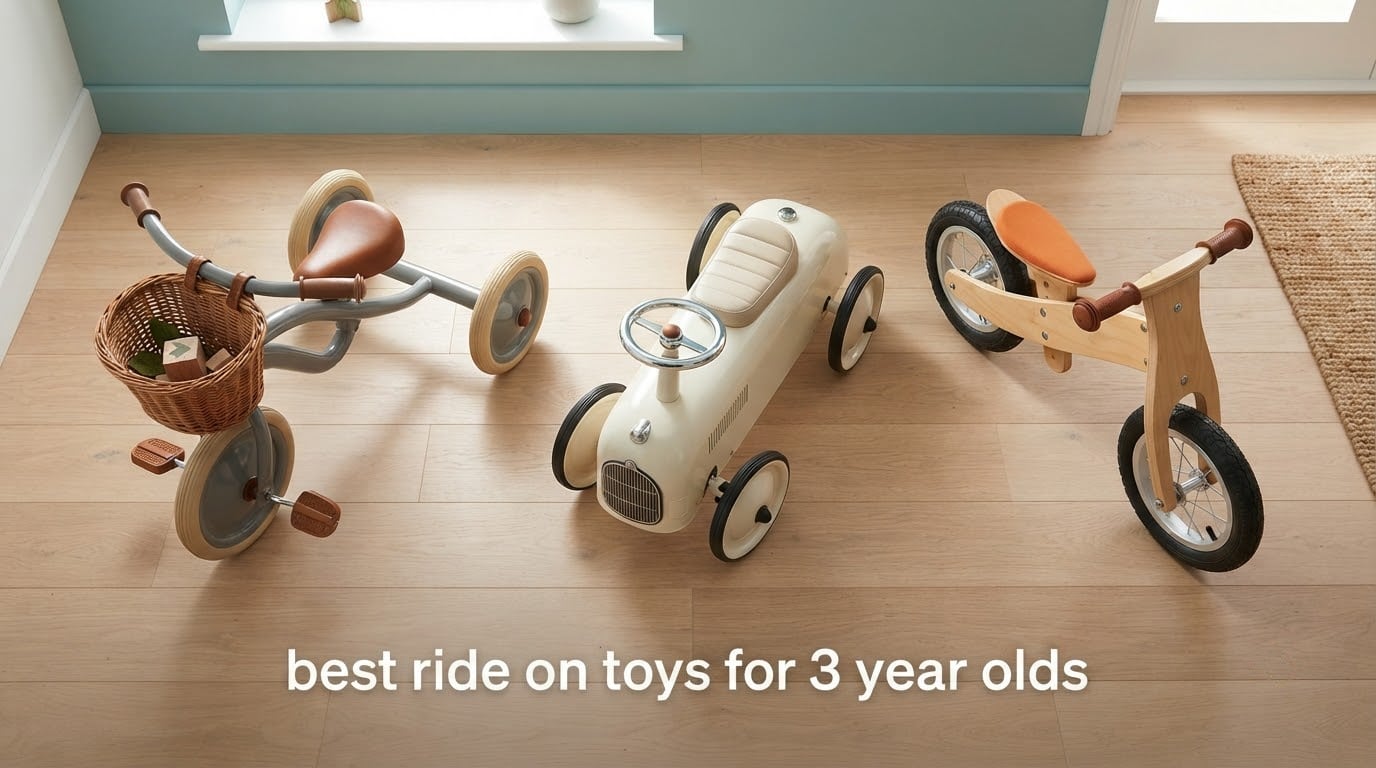
Three is the year most ride on toys get bought, and it is also the year parents start overthinking them. The category looks simple until you notice that a foot-to-floor push car, a pedal trike and a balance bike train completely different skills, and that the one your child can actually ride on day one may not be the one they are still using at four.
We spent several weeks working through the best ride on toys for 3 year olds with an eye on the details that listings bury: real weight limits, in-seam fit, which surfaces each toy actually handles, and how long assembly takes when you are doing it at bedtime. Everything in this guide is child-powered. None of our picks is a battery-powered 12V car, and we explain why in the buying guide.
Updated for October 2026. If you are also building out a gift list, our picks for the best STEM toys for 4 year olds and the best STEM toys for 2 year olds pair well with a ride-on for sibling age gaps.
Table of Contents
What is the best ride-on toy for a 3-year-old?
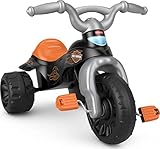
The best ride on toy for a 3-year-old is the Fisher-Price Harley-Davidson Tough Trike: a 4.7 star rating across more than 26,000 reviews, a 55 lb weight limit that will not be outgrown at four, and pedals a freshly turned three-year-old can actually reach. If your child will not pedal yet, a foot-to-floor push car like the Little Tikes Cozy Coupe is the safer starting point.
Top 3 Picks for Best Ride On Toys for 3 Year Olds (October 2026)
All 12 Ride On Toys at a Glance
Power type is the single most useful column here. Push means the child scoots with their feet, pedal means they drive with their legs, glide means no propulsion at all, and convert means the toy changes shape as the child grows.
| Product | Specifications | Action |
|---|---|---|
| Fisher-Price Harley-Davidson Tough Trike |
|
Check Latest Price |
| Little Tikes Fairy Cozy Coupe |
|
Check Latest Price |
 Step2 Whisper Ride II Step2 Whisper Ride II |
|
Check Latest Price |
 Strider 12 Sport Balance Bike Strider 12 Sport Balance Bike |
|
Check Latest Price |
 Step2 Push Around Buggy Step2 Push Around Buggy |
|
Check Latest Price |
 John Deere Sit N Scoot Tractor John Deere Sit N Scoot Tractor |
|
Check Latest Price |
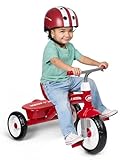 Radio Flyer Red Rider Trike Radio Flyer Red Rider Trike |
|
Check Latest Price |
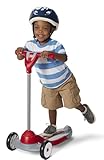 Radio Flyer My 1st Scooter Radio Flyer My 1st Scooter |
|
Check Latest Price |
 KRIDDO Toddler Tricycle KRIDDO Toddler Tricycle |
|
Check Latest Price |
 Lil Rider Wiggle Car Lil Rider Wiggle Car |
|
Check Latest Price |
 newyoo TR007 5-in-1 Tricycle newyoo TR007 5-in-1 Tricycle |
|
Check Latest Price |
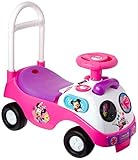 Kiddieland Minnie Mouse Activity Ride-On Kiddieland Minnie Mouse Activity Ride-On |
|
Check Latest Price |
1. Fisher-Price Harley-Davidson Tough Trike: the pick most parents start with
- Sturdy frame that toddlers ride confidently
- Easy-grip handlebars sized for small hands
- Under-seat storage for snacks and toys
- Light enough for one adult to move
- Tool-requiring assembly takes real time
- Lift-up seat detaches easily
- Pedal reach suits children closer to three
The Tough Trike is the one I recommend to a parent asking for a single toy that works. It is a pedal trike, which means a three-year-old can either push it along with their feet or sit up and pedal, and that dual approach is why it holds up across the whole fourth year rather than being outgrown in eight months.
Outward appearances matter more for this age than most spec sheets admit, and the Harley-Davidson graphics do real work. A child who has seen a John Deere or a motorbike on a farm show recognises this immediately, which cuts down the resistance you get from a three-year-old who does not want to sit down and pedal yet.

The frame is plastic but not flimsy, with a wide wheel base, large foot pedals and handlebars sized for small hands. Rugged tread tires handle a driveway or a packed dirt path, and 83% of the more than 26,000 ratings are five stars, which is the largest review base of any pick in this guide.
The 55 lb weight limit is the number that matters most. The average three-year-old sits around 30 to 40 lb, so there is real headroom here, and parents in forum threads repeatedly note that a 35 lb trike is finished before the fourth birthday.

Why the pedal reach works at exactly three
Reviews note the pedals are reachable for children closer to three rather than two. That is the honest limitation and also the reason it works: a trike that is too small frustrates a newly three-year-old, and one that is too large gets carried.
The trike weighs 7.5 lb, so one adult can move it between rooms or lift it into a car without a fight. That matters if you are using it at a grandparents’ house or moving between an apartment and a park.
Where this one disappoints
Assembly is the weak point. Reviews describe a process that wants a hammer and screwdriver and more patience than you have at 8pm, and the lift-up storage seat detaches easily and is awkward to refit.
Plastic colours can fade with prolonged sun exposure, so a toy that lives on a sunny patio will look tired sooner than one kept in shade. If your child pedals hard and fast with no brake, supervise on anything sloped.
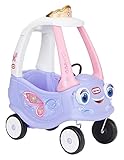
2. Little Tikes Fairy Cozy Coupe: best foot-to-floor car with pretend-play extras
- Parent push handle makes walks easier
- Working horn and clicking ignition switch
- Removable floorboard for easy mounting
- Front wheels spin 360 degrees
- Adult assembly required
- Bulky through tight doorways
- Some children need the floorboard to reach the pedals
The Cozy Coupe is the default first ride-on car and it earns that status. The removable floorboard is the detail that matters most: a three-year-old scoots with their feet on it, and you take it out when they are ready to sit up with feet down to the floor.
The parent push handle turns it into a stroller alternative, which is why it appears in so many stroller-walk conversations. Parents repeatedly single it out as the ride-on that lets a child keep up on a long walk instead of being carried.
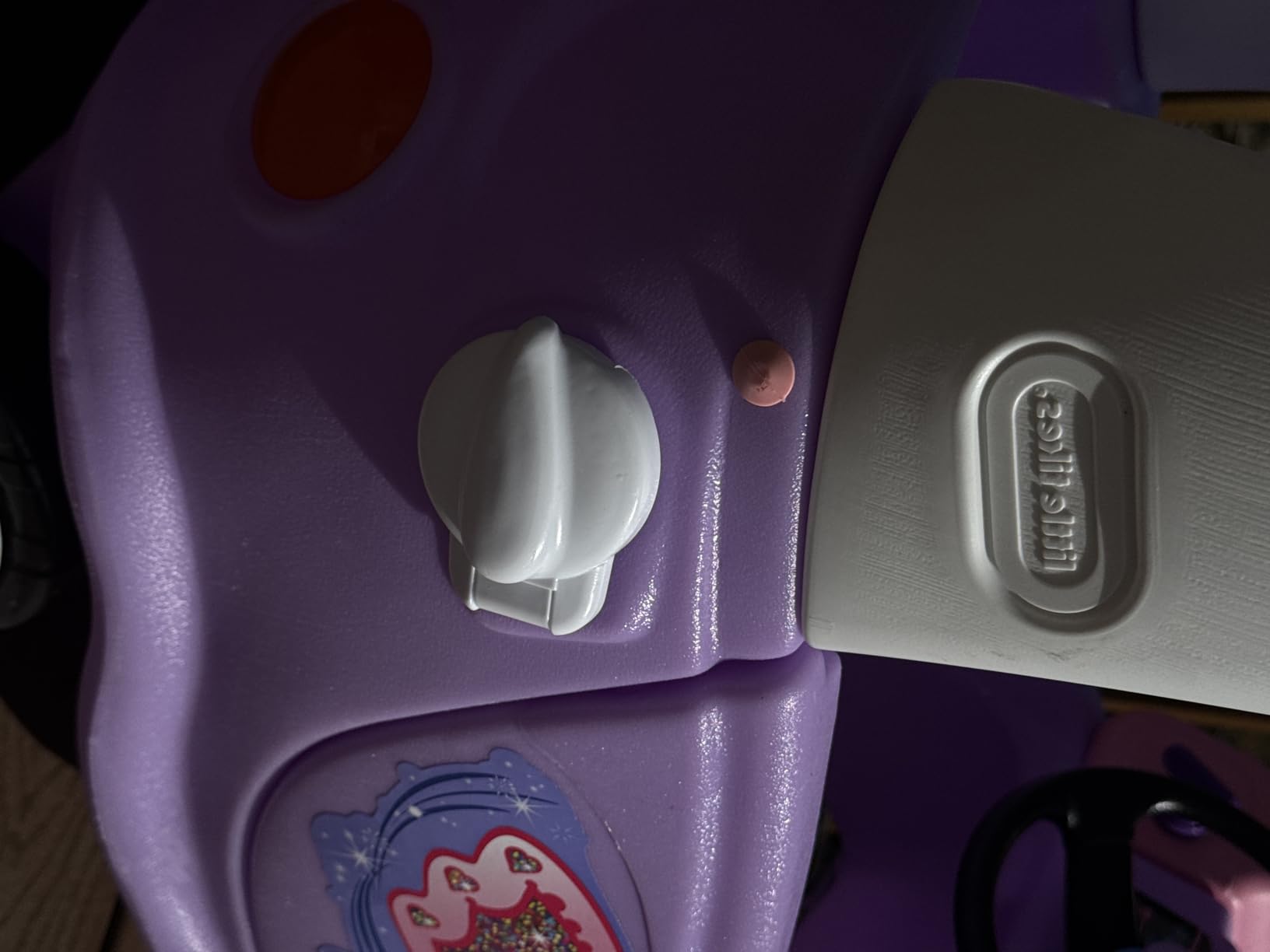
Pretend play is where this one earns its keep. A working horn, a moving clicking ignition switch and a gas cap that opens and closes give a three-year-old something to do in the ten minutes it takes them to decide they are finished with the driving. 83% of more than 17,000 ratings are five stars.
The build is double-walled plastic that wipes clean, rated from 18 months to 5 years, and made in the USA with a 90 day warranty against manufacturer defects. Front wheels spin a full 360 degrees, so a child who cannot yet steer can still turn the car and feel in control.
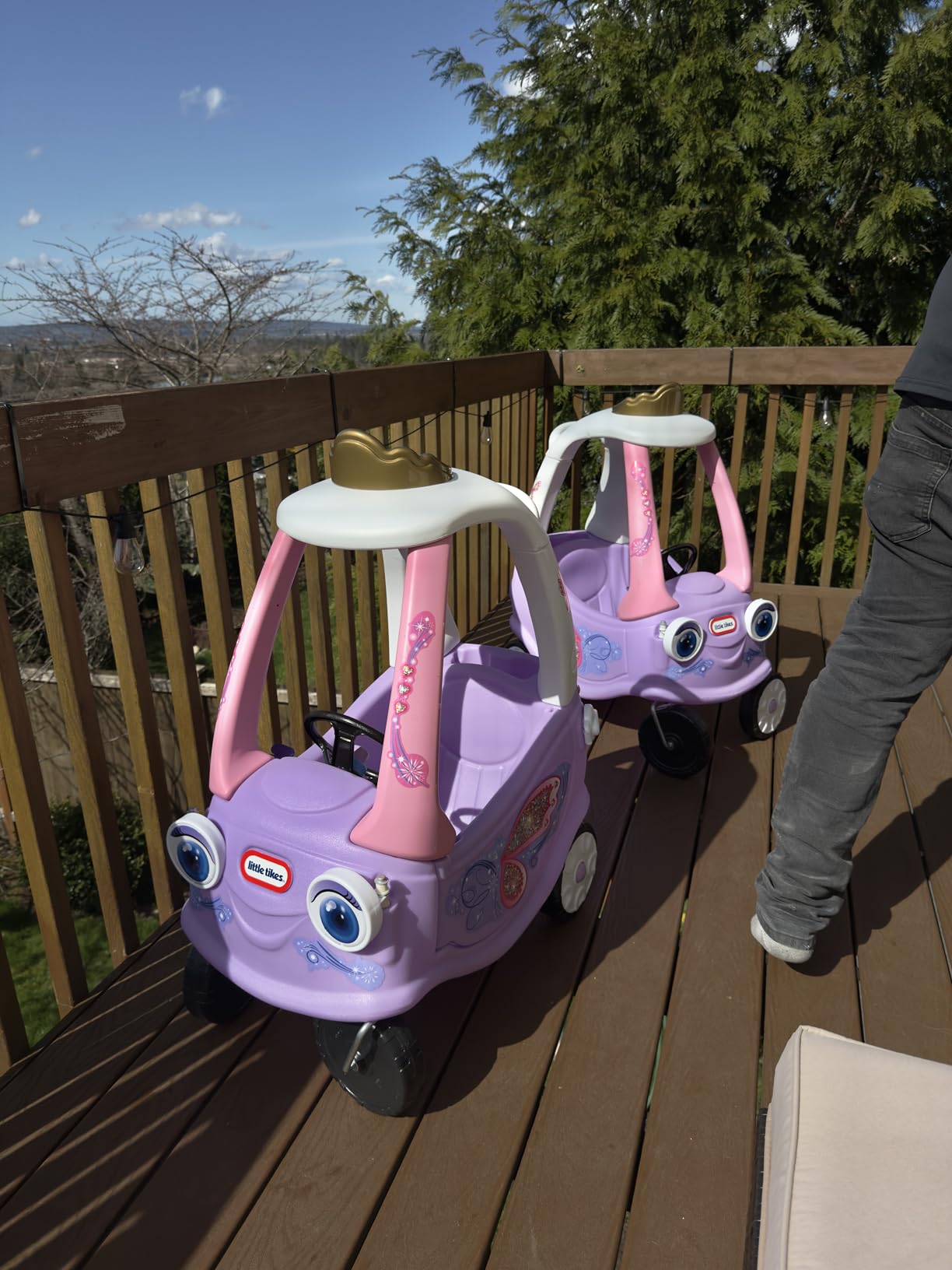
Check the cockpit size before you buy
Reviews flag that the cabin is roomy enough that some children need the floorboard left in place to reach down. If your child is tall for their age, that is a good sign for longevity rather than a problem.
At 29.5 inches long and 36 inches tall, it is a large footprint. Measure your hallway and your car boot before committing, because this is the one most often described as bulky to move through tight spaces.
Where this one disappoints
It ships requiring adult assembly, so plan for an hour rather than assuming a five-minute build. The 50 lb limit is lower than the Tough Trike’s, which matters if you are buying for a big three-year-old.
It is also the least interesting choice for a child who has already had a plastic car. Everything here is plastic with no wood or metal structure, so if your child is ready for something more substantial, step up to a trike.
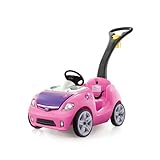
3. Step2 Whisper Ride II: the push car that grows past 3
- Smooth quiet wheels on floors and pavement
- Ergonomic wide parent handle
- Generous cabin legroom and storage
- Double-walled plastic wipes clean
- Assembly takes 1.5-2 hours
- Fixed front wheels need handle pressure to turn
- Handle must be unscrewed to fold
The Whisper Ride II is built around a 45 inch frame, which is noticeably longer than the other push cars here. That extra length is what gives a three-year-old proper legroom, and it is the reason this car is still comfortable at four while smaller models are not.
It is also the quietest option on smooth surfaces. The wheels are designed to whisper, which makes it the pick for a flat in a building where a squeaky plastic car at suppertime would not be tolerated.
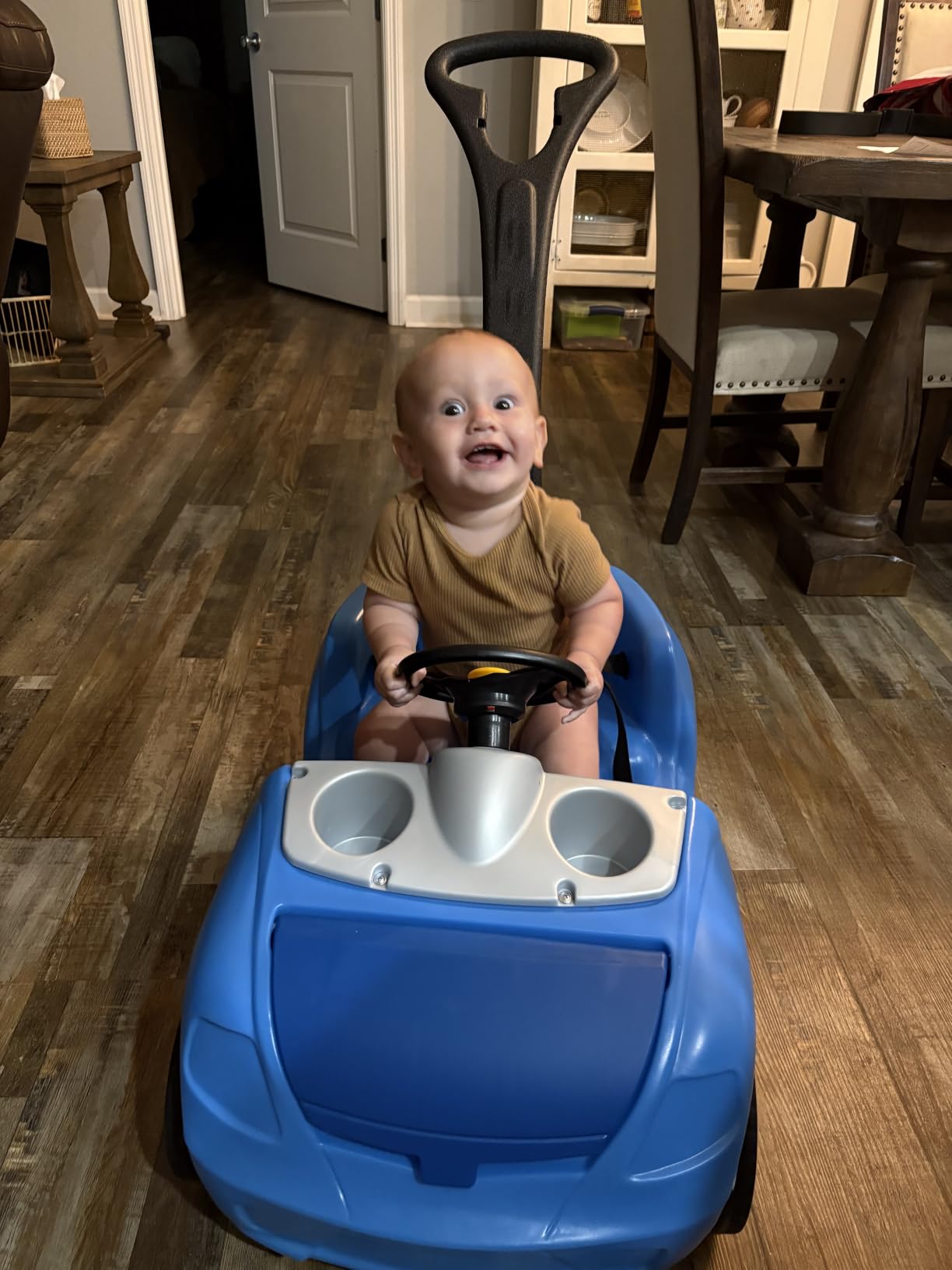
Safety and pretend play are both well covered: an easy-latch adjustable seat belt, a real car horn, a steering wheel, dashboard cup holders and storage under the hood for snacks and toys. Double-walled plastic resists chipping, fading, cracking and peeling, and it carries a two year limited warranty.
With more than 16,000 ratings at 4.6 stars and 84% five-star share, this is a well-proven design. The extra-wide rear grip handle also makes it one of the most comfortable push cars for an adult to use on a long walk.
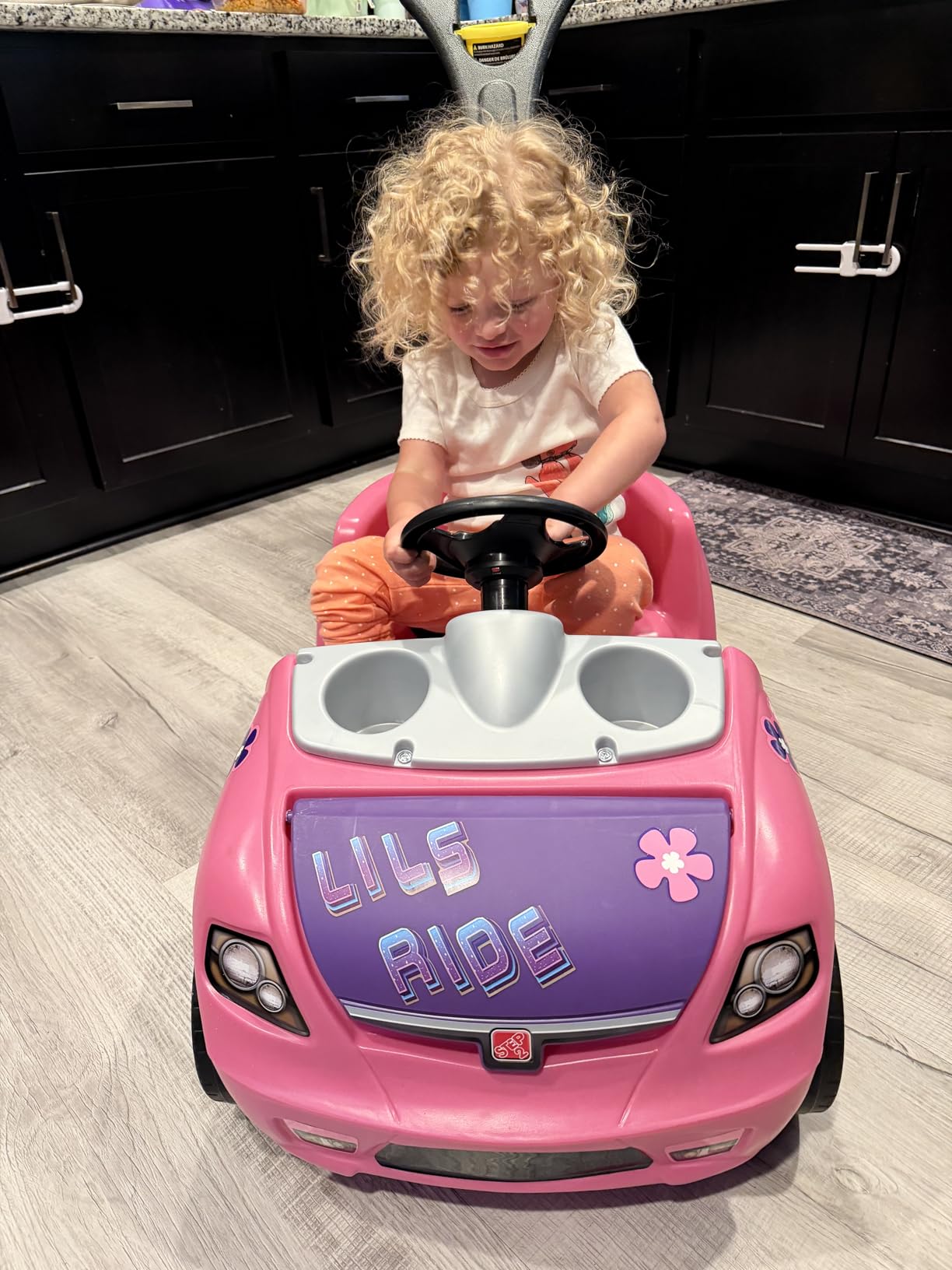
How much room your child actually needs
Most three-year-olds scoot rather than sit up straight, so a long chassis is less about height and more about leg extension during the scoot. If your child has already outgrown a Cozy Coupe, this is the natural next size up.
The folding handle is a genuine help for car boots and grandparents’ houses, though it still needs unscrewing before it folds properly. Budget for that extra step rather than assuming it collapses in one motion.
Where this one disappoints
Assembly is the biggest barrier. Reviews describe one and a half to two hours of building, and picture-only instructions with no written steps. Start it after a nap, not at bedtime.
The front wheels are fixed rather than swivelling, so tight turns need you to press down on the handle to lift them. A few reviewers also find the front wheels feel flimsy once the car has been through a few years of use.
4. Strider 12 Sport: the best balance bike for a first rider
- Highest rating in this roundup at 4.8
- Never-flat 12 inch foam rubber tires
- Seat and bars adjust for ages 1 to 4
- Light steel frame a child can steer
- Most expensive pick in this guide
- No pedals and no brake of any kind
- Inseam limit of 12-18 in caps longevity
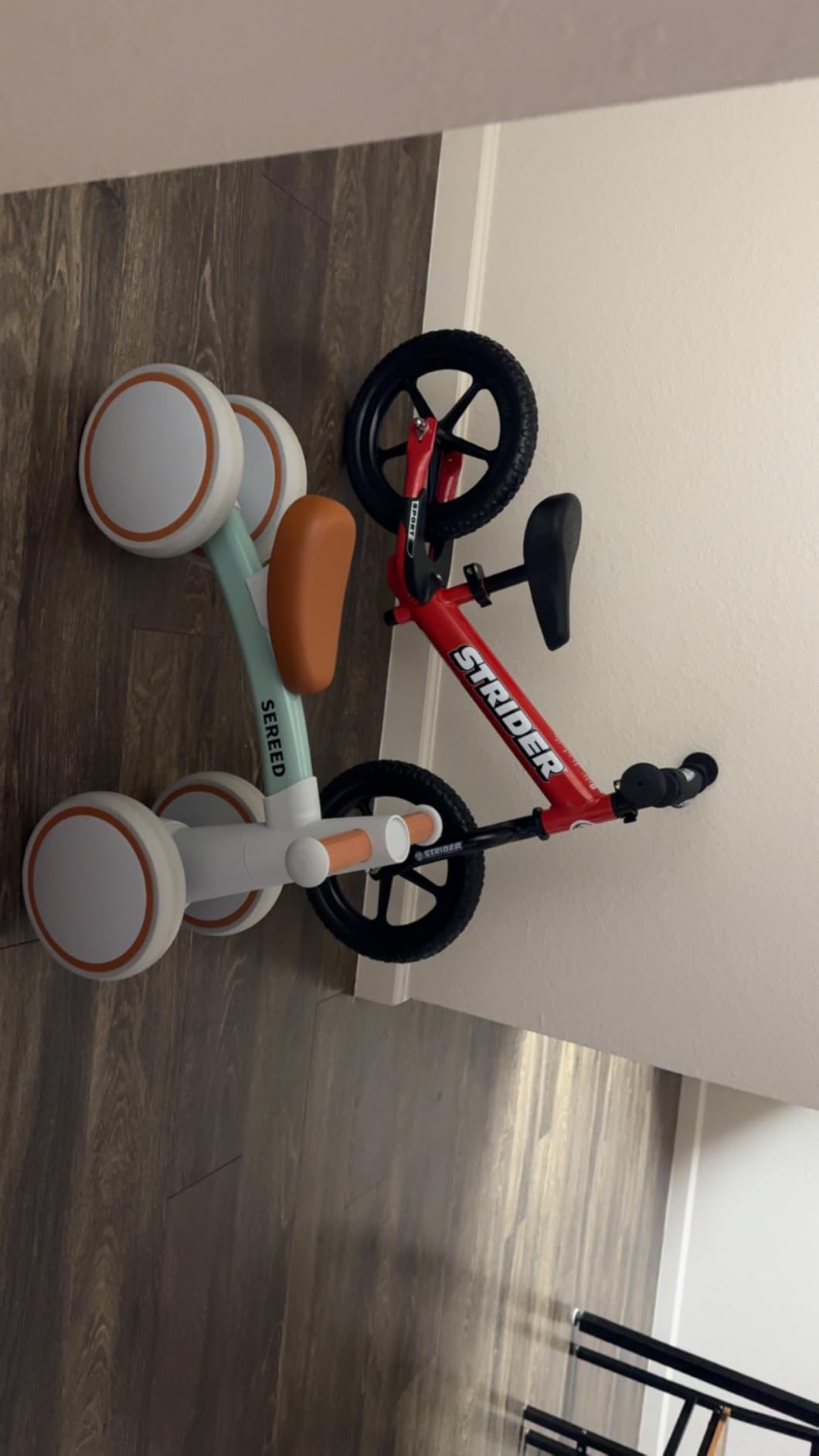
The Strider 12 Sport is the highest rated product in this guide at 4.8 stars with 89% of more than 11,000 ratings at five stars. It is also the only pedal-free option, which is deliberate: a balance bike teaches a child to stabilise at speed rather than to pedal while wobbling.
That is why balance bikes are the recommendation that comes up most often in parent forums for a child’s first ride-on. Without pedals, a child cannot push off and then fall over trying to remember which way to steer at the same time.
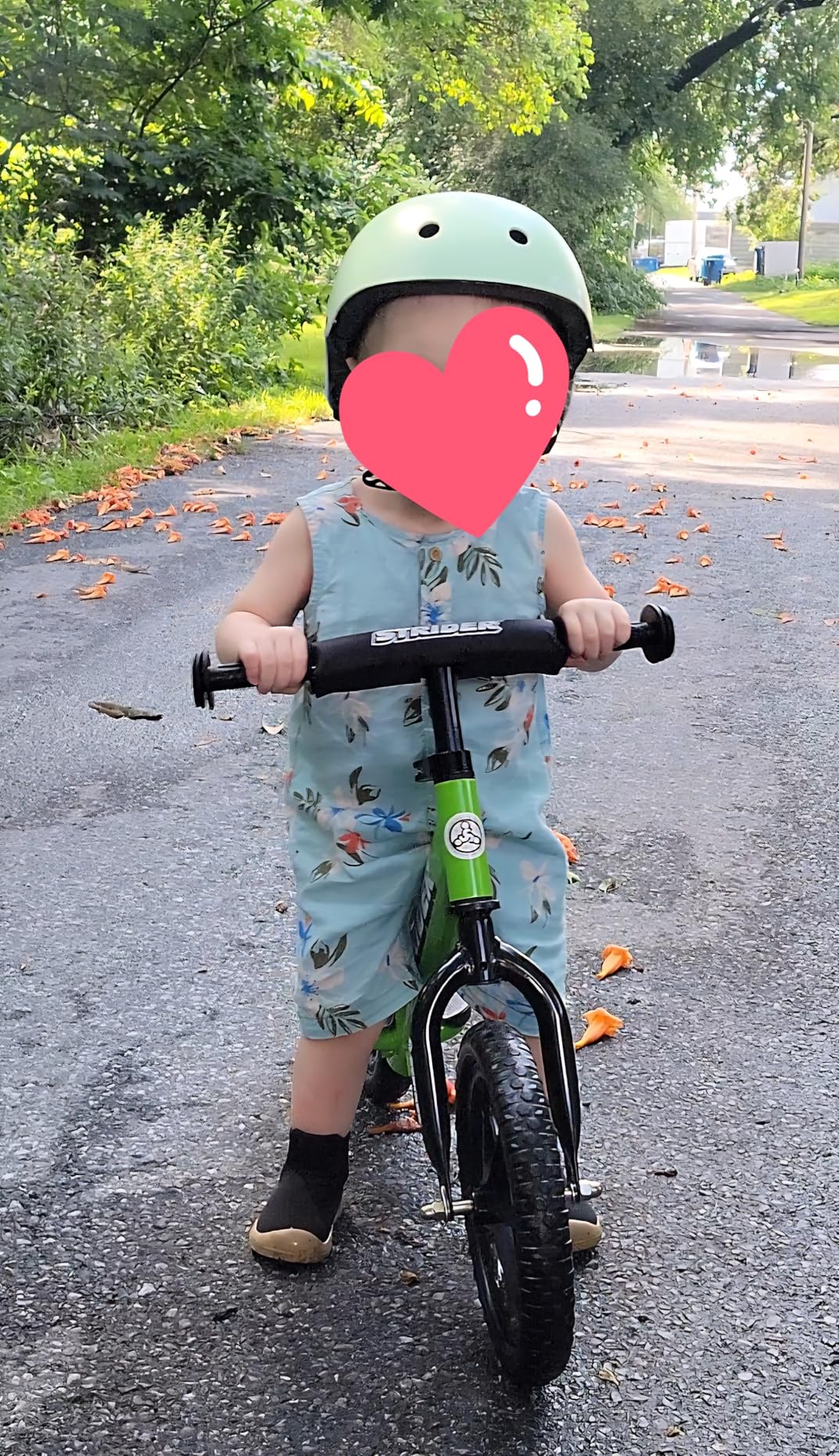
The build is where the money goes. Never-flat 12 inch foam rubber tires need no maintenance and roll smoothly over pavement, and the steel frame weighs 6.7 lb, light enough for a three-year-old to turn the bike by shifting their weight alone.
Seat height adjusts from 11 to 17 inches to fit an inseam of 12 to 18 inches, and the handlebars adjust with it. That range covers a three-year-old comfortably and leaves room to grow, with a 60 lb maximum and a two year limited warranty.
Measure the inseam before you order
This is the only pick where a single measurement decides the outcome. Sit your child on the floor with legs straight and measure from the seat to the floor. Between 12 and 18 inches means it fits well; above that, they will outgrow it sooner than you expect.
Because the frame is light and the tires are flat-free, this is also the best balance bike to move between surfaces. It is a genuine indoor and outdoor option rather than a driveway-only toy.
Where this one disappoints
It carries the highest price of the twelve, and for a first ride-on that is a real consideration. There is no brake, no pedals and no propulsion beyond gliding, so it is a balance tool rather than transport.
A child who wants to go somewhere rather than practise balance will get impatient with it. If your three-year-old is already confidently running and climbing, a pedal trike will hold their attention far longer.
5. Step2 Push Around Buggy: quiet indoor stroller substitute
- Very smooth and quiet wheels
- Real seat belt and horn
- Compact folding handle loads easily
- Body wipes clean in seconds
- Picture-only assembly instructions
- Fixed front wheels for tight turns
- Heavier than smaller push cars at 14.2 lb
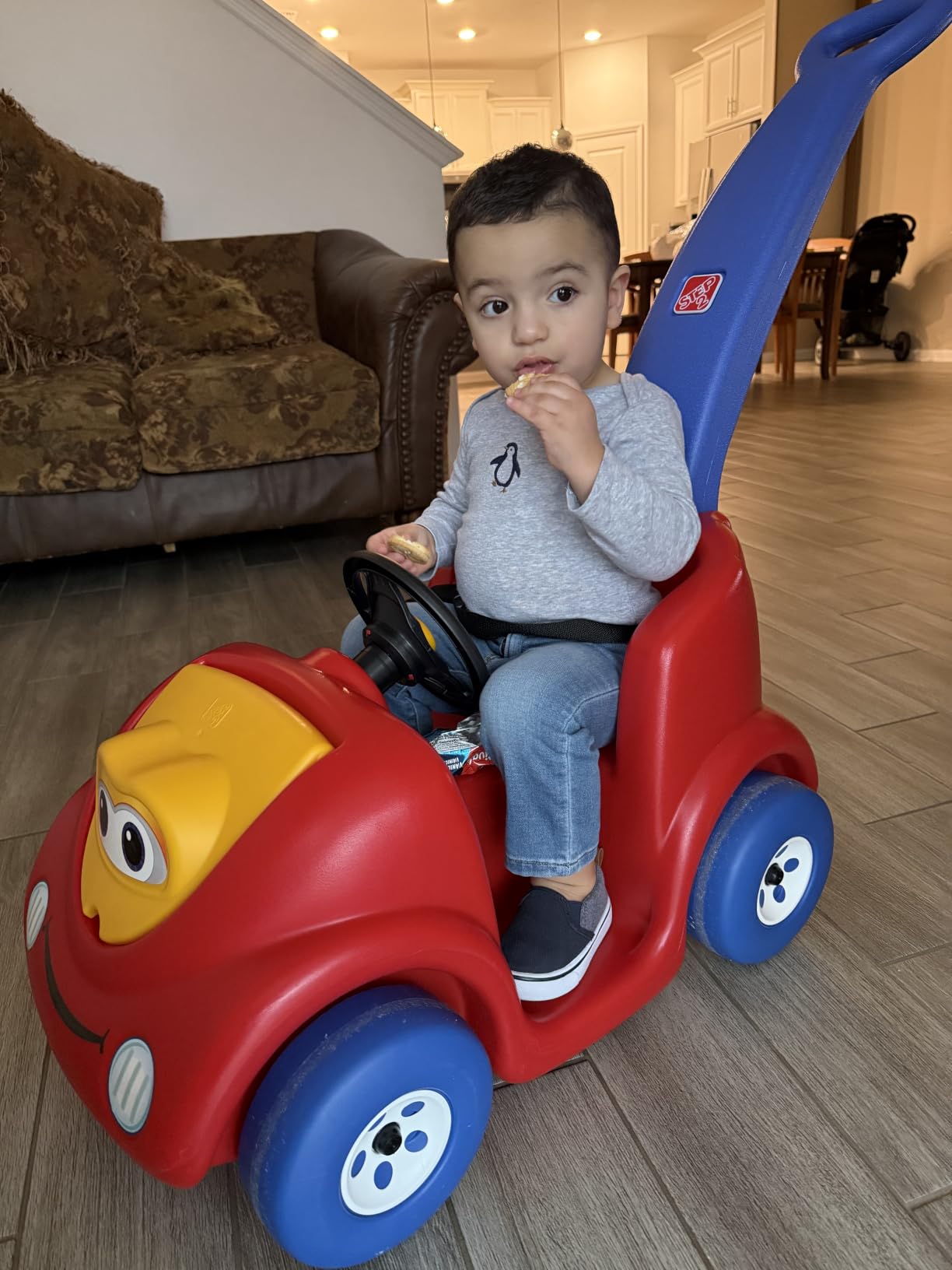
The Push Around Buggy is the shorter, lighter-footprint sibling to the Whisper Ride, and for a three-year-old who has just arrived at the top of its age range it is arguably the better fit. The manufacturer rating stops at 3 years, so treat it as a now-and-next-year toy rather than a long-term one.
Where it wins is noise and manoeuvrability. The smooth wheels are praised for indoor floors and pavement, and at 43.5 inches long it turns in a hallway where the 45 inch Whisper Ride does not.
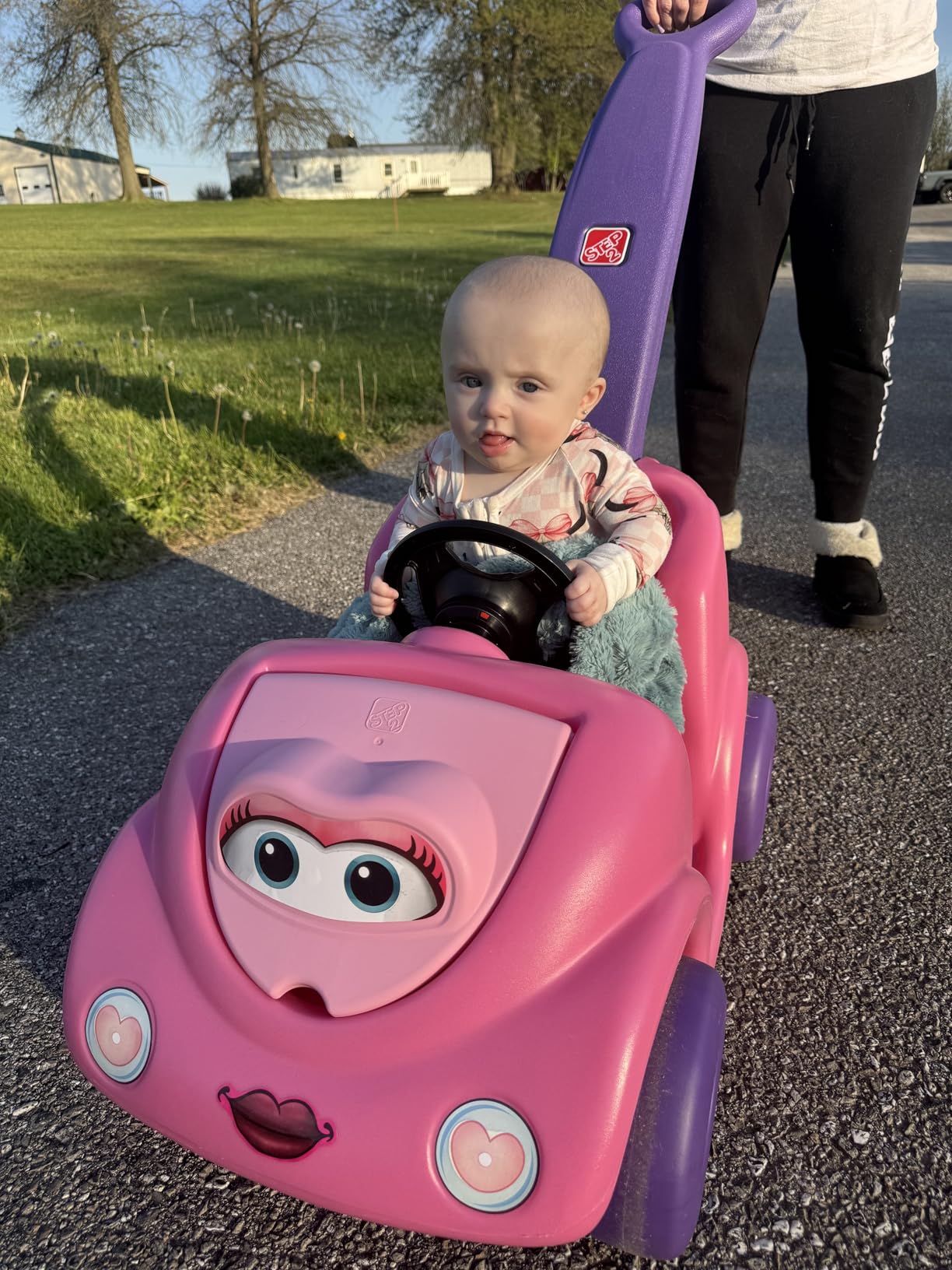
It still comes with the full safety kit: an easy-latch adjustable seat belt, a real horn, a steering wheel, dashboard cup holders and under-hood storage. Double-walled plastic resists chipping and fading, and a two year warranty covers manufacturer defects.
With 4.7 stars across nearly 10,000 ratings and 87% five-star share, the satisfaction level is high. Parents single it out as a good value for a stroller substitute that survives a wipe-down after every outing.
Is the age range a problem at three?
No, but plan the handover. The stated range is 19 months to 3 years, and at 50 lb a large three-year-old is near the ceiling. If your child is average sized, you will get a full year of use.
Its 14.2 lb weight is the practical drawback. That is heavier than the tractor at 3.9 lb, so if you are moving between rooms or carrying it up stairs alone, the lighter option wins.
Where this one disappoints
Picture-only instructions cause most of the frustration at assembly. Some parents also find the fixed front wheels mean tight corners require pressing down on the handle to lift them.
If you are buying for a four-year-old rather than a three-year-old, look at the Whisper Ride II instead. It is rated to four years and gives more legroom for a similar type of ride.
6. John Deere Sit N Scoot Tractor: the lightest and smallest option
John Deere Ride On Toys Sit ‘N Scoot Activity Tractor for Kids Ages 18 Months and Up, Green
- Very light at 3.9 lb so a child can steer it
- Assembly finishes in minutes
- Works on indoor floors and outdoor surfaces
- Officially licensed John Deere details
- Smaller than buyers expect
- Front wheels can loosen or fail to steer
- Decals peel if used outdoors
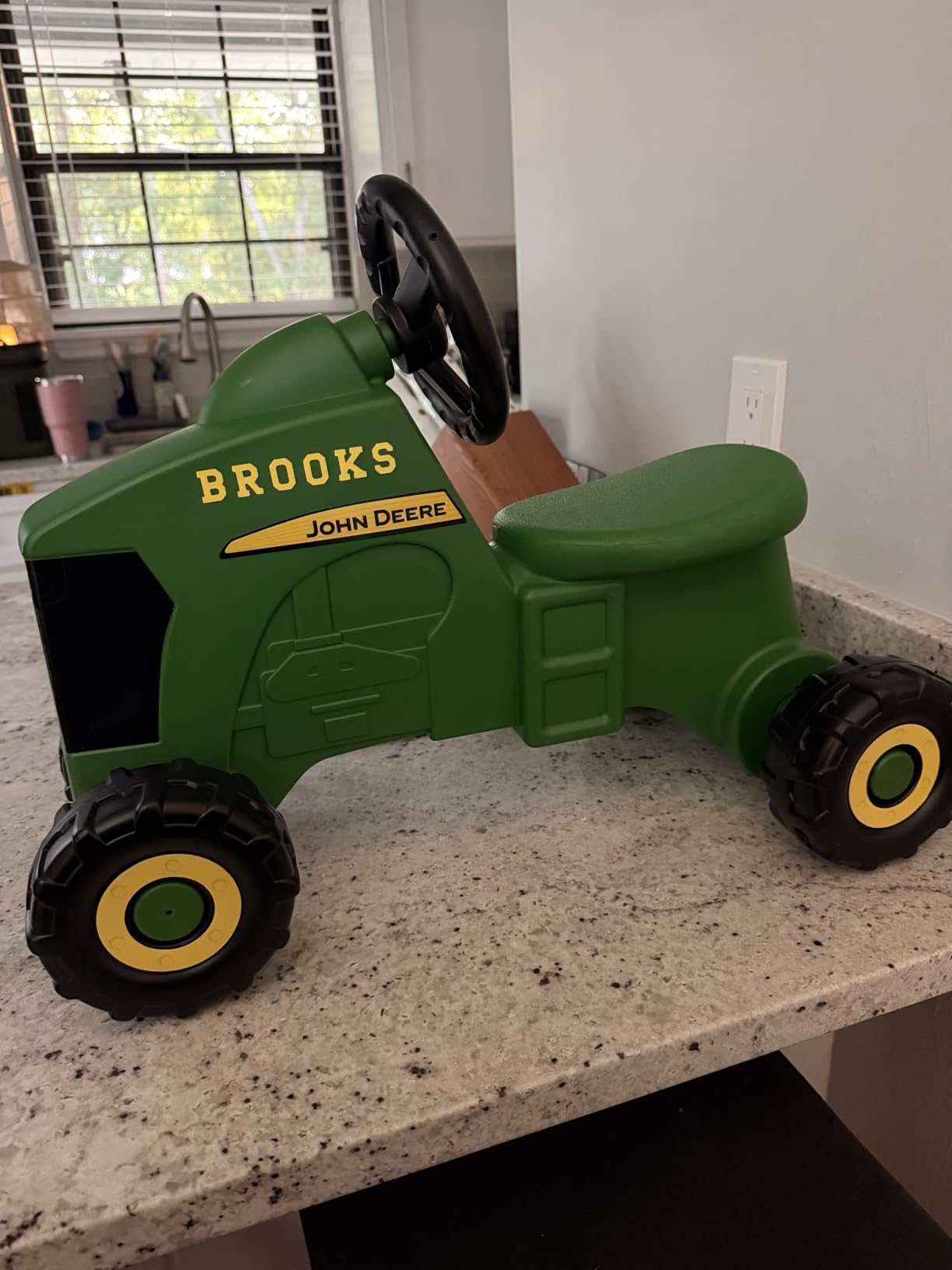
At 3.9 lb, this tractor is the lightest thing in the roundup by a factor of two, and that single fact changes where you can use it. A child can turn it in a small room or a narrow hallway without an adult helping, which is the whole point at this age.
Officially licensed John Deere colours and details do the same work here that Harley graphics do on the Tough Trike. Children who have seen a real tractor know exactly what this is, and they climb on without being asked.
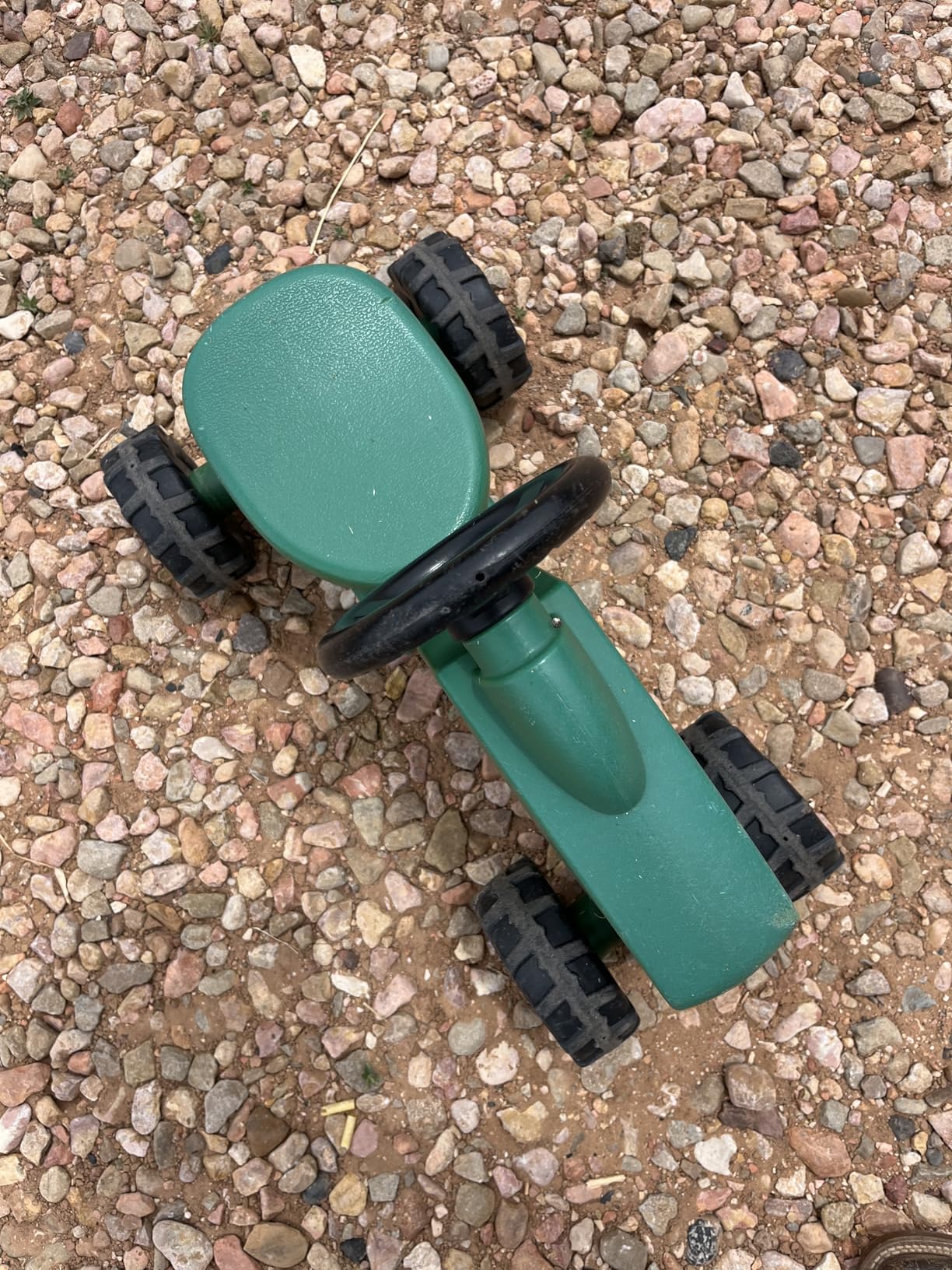
It is a foot-to-floor design with a wide wheelbase for stability, rated from 18 months to 3 years with a 60 lb maximum. At 21 by 12 by 16.5 inches it is small enough to store in a hall cupboard rather than blocking a doorway.
This is the pick for an apartment with no garden and no storage. Reviewers consistently praise the quick assembly and how easily it wipes down, and nearly 10,000 ratings give you a solid read on it.
What the weight limit hides
A 60 lb rating sounds generous next to the 50 lb push cars, but the real limit here is size. The seat and wheelbase are sized for 18 to 36 months, and reviews repeatedly describe it as smaller than buyers expected.
Many three-year-olds outgrow the physical size well before they hit 55 lb. If your child is tall, measure the seat height against their inseam before choosing this over the Cozy Coupe.
Where this one disappoints
It carries the lowest rating of the picks with 4.4 stars, and 6% of more than 9,700 ratings are one star. The specific complaints are loose or non-turning front wheels, and decal stickers that peel if the tractor spends time outdoors.
Treat it as an indoor toy rather than a driveway toy. It is a good fit for a small flat, and a poor fit for a rough yard or a child who needs something to grow into.
7. Radio Flyer Red Rider Trike: the steel-frame trike that lasts
- Steel frame survives years of daily use
- Smooth stable steering for small hands
- Adjustable seat grows from 2.5 to 5
- Covered rear storage bin
- Front splash guard slips sideways
- Rear trunk lid can pop open
- Handlebar clamp needs tight tightening
This is the only alloy steel trike in the roundup, and reviewers say you can feel the difference. Multiple owners describe it as still being in good shape after years of daily use, which is a different durability conversation from a plastic push car.
It is rated from 30 months to 5 years, which makes it the pick for a child you expect to be riding trikes for a long time. The adjustable seat is what delivers that range, letting a three-year-old start and a five-year-old carry on.

Quietride wheels roll smoothly on sidewalks and driveways, and the comfortgrip handlebars give a three-year-old something they can actually hold. Steering is described as smooth and predictable, which is a genuine skill advantage over a fixed-wheel push car.
The covered rear storage bin holds snacks and toys, and a seat-back hand grip makes curb lifts and car trips a one-handed job. Registering the product extends the warranty from one year to two.

Why steel changes the longevity maths
A plastic trike can flex and rattle after two summers. A steel frame carries the same weight limit with far less flex, which matters if the toy gets handed down or reused with an older sibling.
It is also the easiest of the tricycles to carry for an adult at 9.9 lb, with the seat-back grip as a designed handle. For grandparents who want a trike to keep in a garage, that is a real convenience.
Where this one disappoints
Two small parts cause most of the friction in reviews. The front splash guard slips sideways and pops back into place, and the rear trunk lid can spring open while the child is riding.
The handlebar clamp needs very tight tightening to stop it turning, and the instructions lean on pictures rather than words. Budget ten minutes and a proper grip to set it up properly.
8. Radio Flyer My 1st Scooter: the gentle first scooter
- Two front wheels give real stability
- Simple rear foot brake a toddler can reach
- Textured non-slip deck
- Light frame a parent can carry easily
- Fixed handlebar height cannot grow
- Steering feels twitchy at first
- Rear suspension adds weight on smooth ground
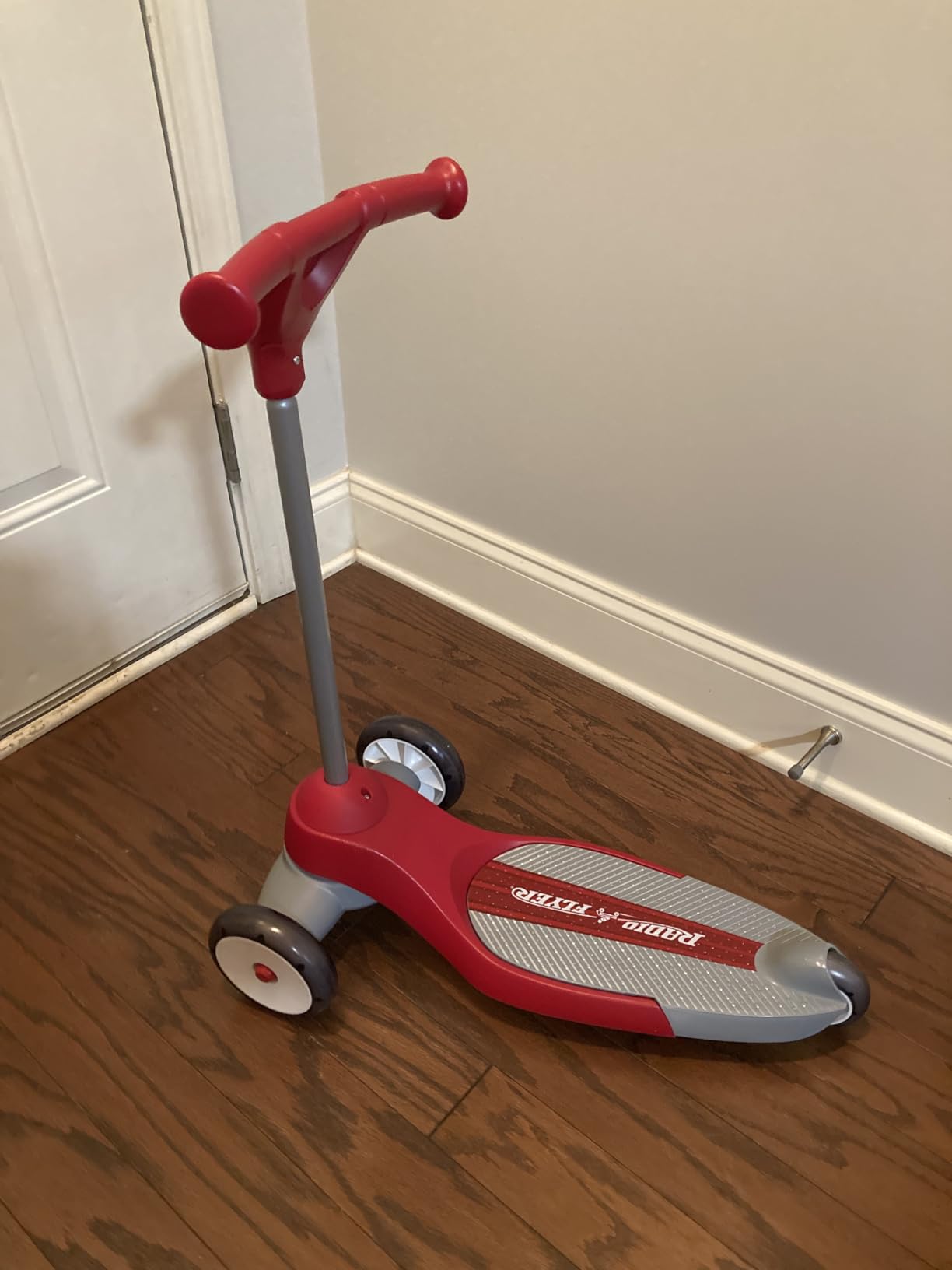
A three-wheel scooter is a step up in challenge from a push car, and the Radio Flyer My 1st Scooter is built for exactly that. The two front wheels and extra-wide base give a beginner a genuinely stable platform while they work out how to steer.
At 4.4 lb it is the second lightest thing here, and the fixed 27 inch handle height suits children from 2 to 5 without any adjustment. That means no fiddling, and also no growth headroom.
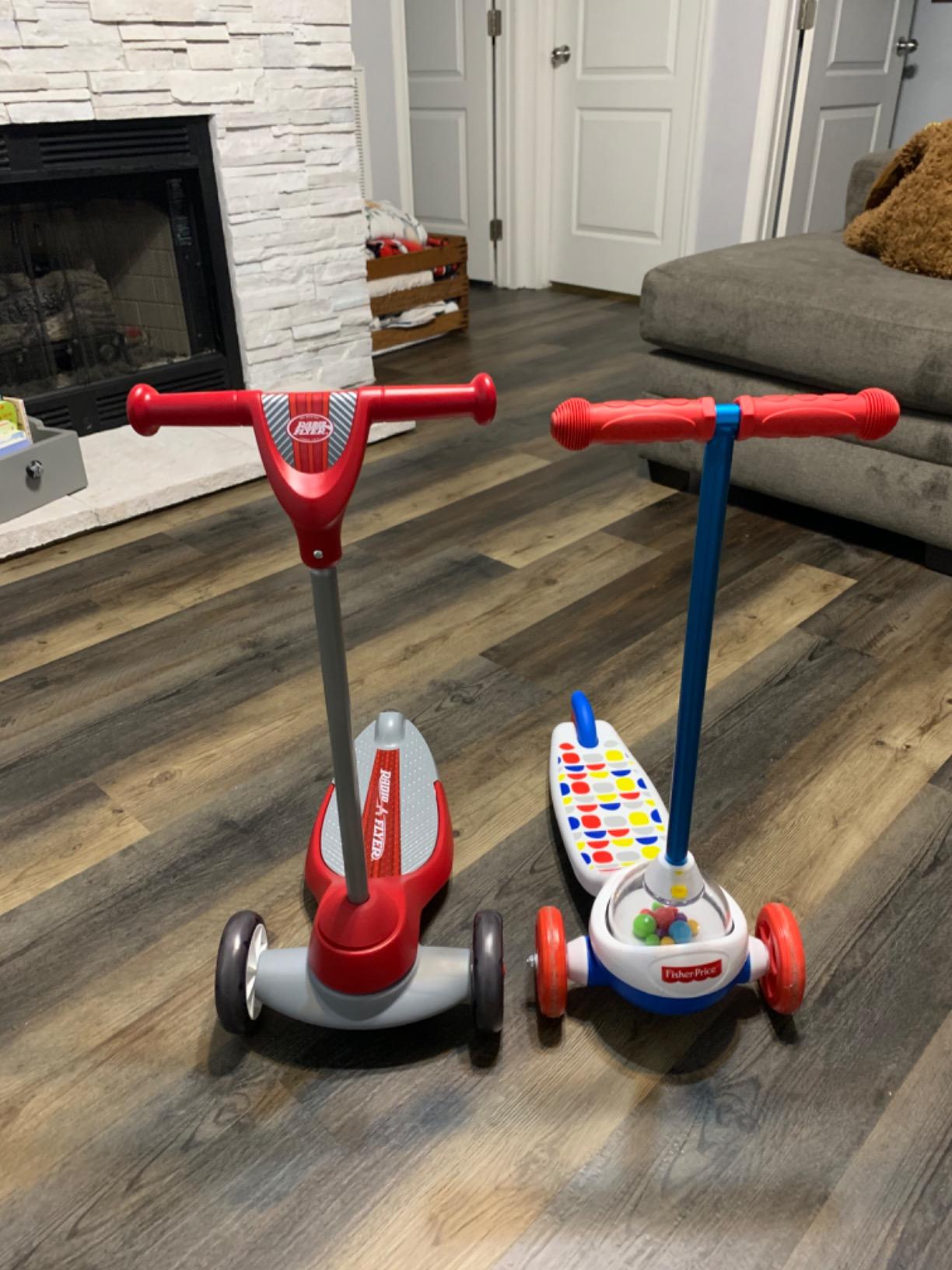
The rear foot brake is a real brake a small child can reach and understand, which is unusual at this age. The textured non-slip deck stops a foot slipping when they push off, and solid 5 inch wheels with rear suspension smooth out pavement cracks.
With more than 8,900 ratings at 4.5 stars and 77% five-star share, satisfaction is strong. Parents describe it as a genuine first ride that builds balance and coordination rather than something to grow out of in a month.
Is a scooter too advanced at three?
For a confident three-year-old who runs well, no. A balance bike first is the gentler on-ramp, but a three-wheel scooter with a wide base absorbs a lot of early wobble that a two-wheel scooter cannot.
The surface matters more than the age. This is a pavement, driveway and park path toy. Do not put it on grass, gravel or sand, where the small solid wheels will dig in and stop.
Where this one disappoints
The fixed handlebar is the clearest limit. Once your child passes 27 inches of handle height, this is finished, so measure rather than estimate before you commit.
Steering can feel twitchy during the first few sessions, and the rear suspension adds weight without much benefit on smooth ground. Give it a calm week on a flat path before taking it anywhere busy.
9. KRIDDO Toddler Tricycle: the budget trike that snaps together
- Tool-free assembly in about 10 minutes
- Wide wheelbase reduces tipping risk
- Adjustable seat grows with the child
- Silent shock-absorbing wheels for indoor floors
- No brakes of any kind
- Pedalling backward moves the trike back rather than braking
- Mode learning curve for younger riders
The KRIDDO is the pick if assembly time is the thing stopping you. It snaps together without tools in roughly ten minutes, which is a genuine difference from the one and a half to two hours the Step2 push cars can take.
The triangular frame with extended rear wheels and a wider wheelbase is designed specifically to reduce roll-over while a child is learning to steer. For a three-year-old who has never pedalled before, that geometry does real work.
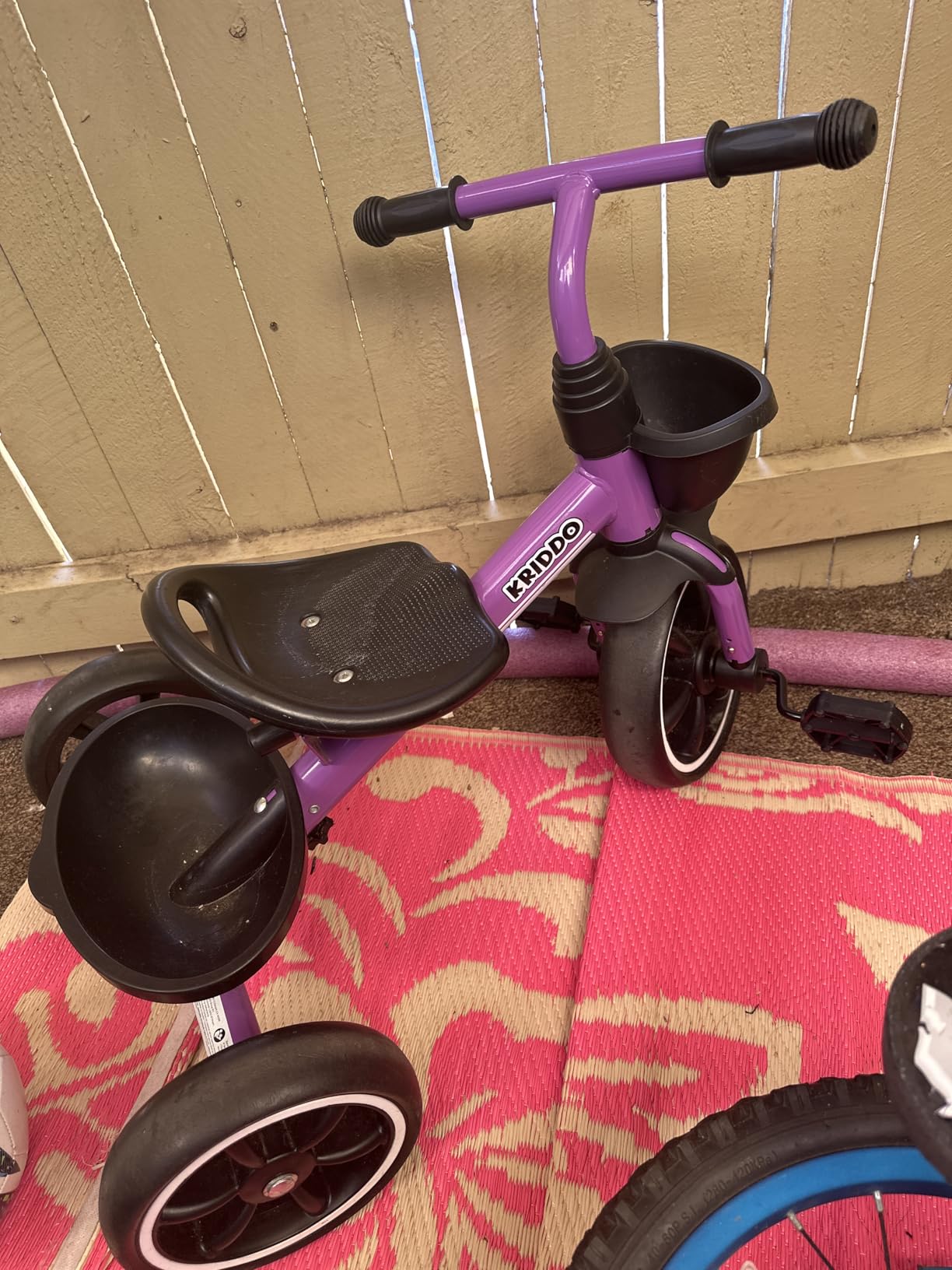
It is also the quietest tricycle here. The shock-absorbing solid wheels are described as suitable for indoor floors, so it works in a flat without the noise a hard plastic wheel makes on a laminate floor.
Materials are BPA-free with matte nontoxic paint, and the frame is carbon steel, so it is not the flimsiest build at the lower end of the range. More than 7,900 ratings at 4.6 stars back that up, with 81% five-star share.
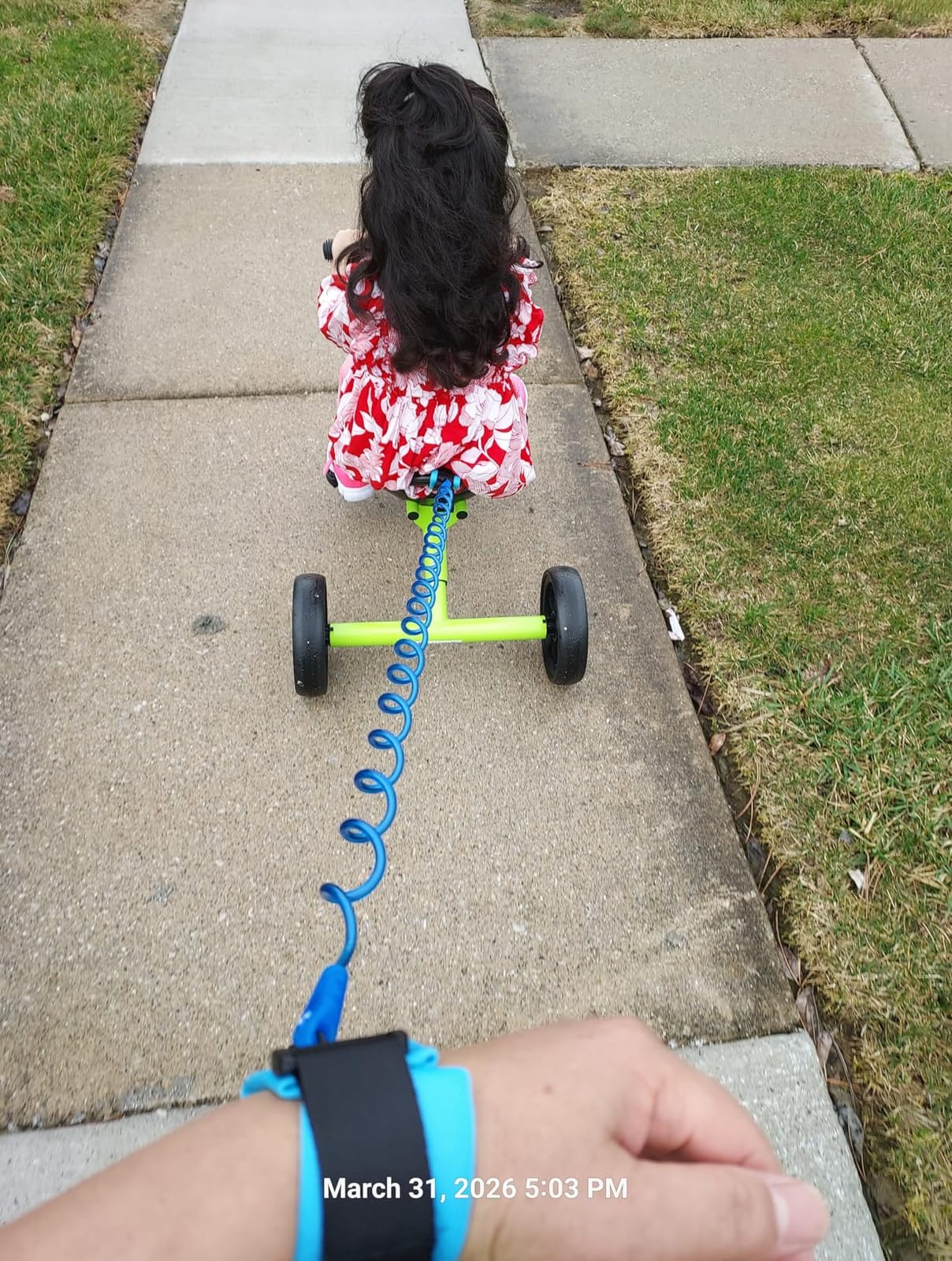
The brake question you must answer yourself
There are no brakes on this trike, and that is not a flaw the manufacturer hides. A child who pedals hard has no way to slow down except dragging a foot, which on a sloped driveway is a genuine risk.
On flat ground, with room to run out and an adult nearby, it works well. On any slope or near steps, choose a different trike. Decide this before you buy, not after.
Where this one disappoints
It carries a one year warranty, the shortest meaningful cover among the tricycles here. The Tough Trike and the Steel Radio Flyer both hold up better over a longer ownership period.
It is also a smaller trike than the Tough Trike, so a larger three-year-old may outgrow it sooner. Check the size against your child rather than trusting the age label.
10. Lil Rider Wiggle Car: the ride-on that outlasts the child
Lil’ Rider Wiggle Car, Ride on Toy for Ages 3 and Up, Blue
- No batteries
- gears or pedals to break
- 110 lb limit far above every other pick
- Twist-and-go builds core balance
- Works on smooth indoor floors and pavement
- Not suitable for wood floors
- grass or rough ground
- No brake and no parent steering handle
The Wiggle Car is a foot-to-floor ride with a 110 lb weight capacity, which is more than double every other pick here. That single number means a three-year-old can start on it and a much older sibling can keep using it, which changes the value calculation completely.
There is nothing to charge, nothing to wind up and nothing to replace. Twist-and-go propulsion with no gears, batteries or pedals means a child who is rough with a toy has nothing to break.
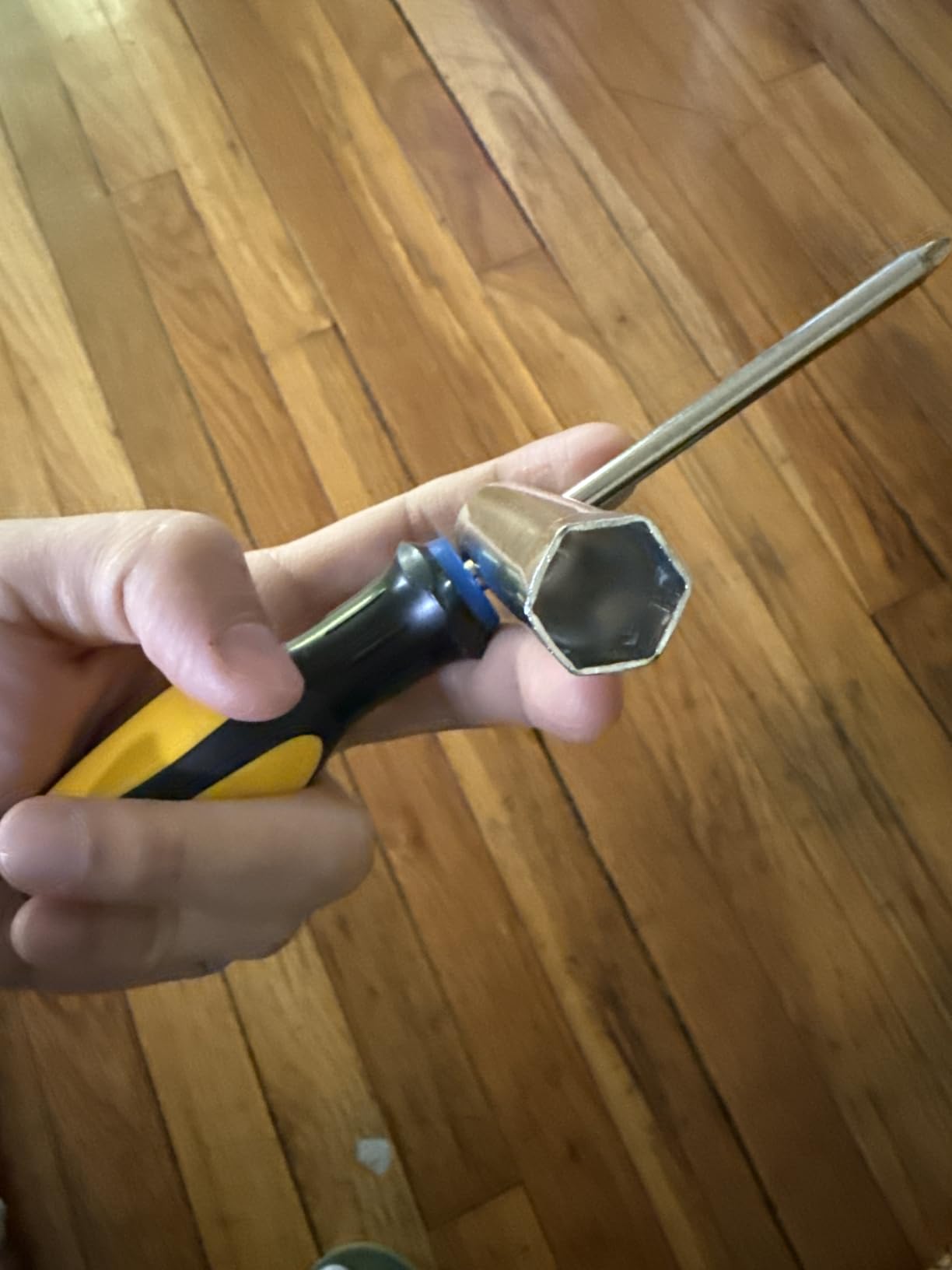
The low base with a double triangle structure is what makes it feel stable at first, and the twist motion builds core balance and steering control in a way a pedal trike does not. It is rated from 3 years up to 6.
It is also the most surface-dependent product in the guide. The manufacturer specifies linoleum, concrete, asphalt or tile, and explicitly excludes wood floors, so check what is underfoot before you buy.
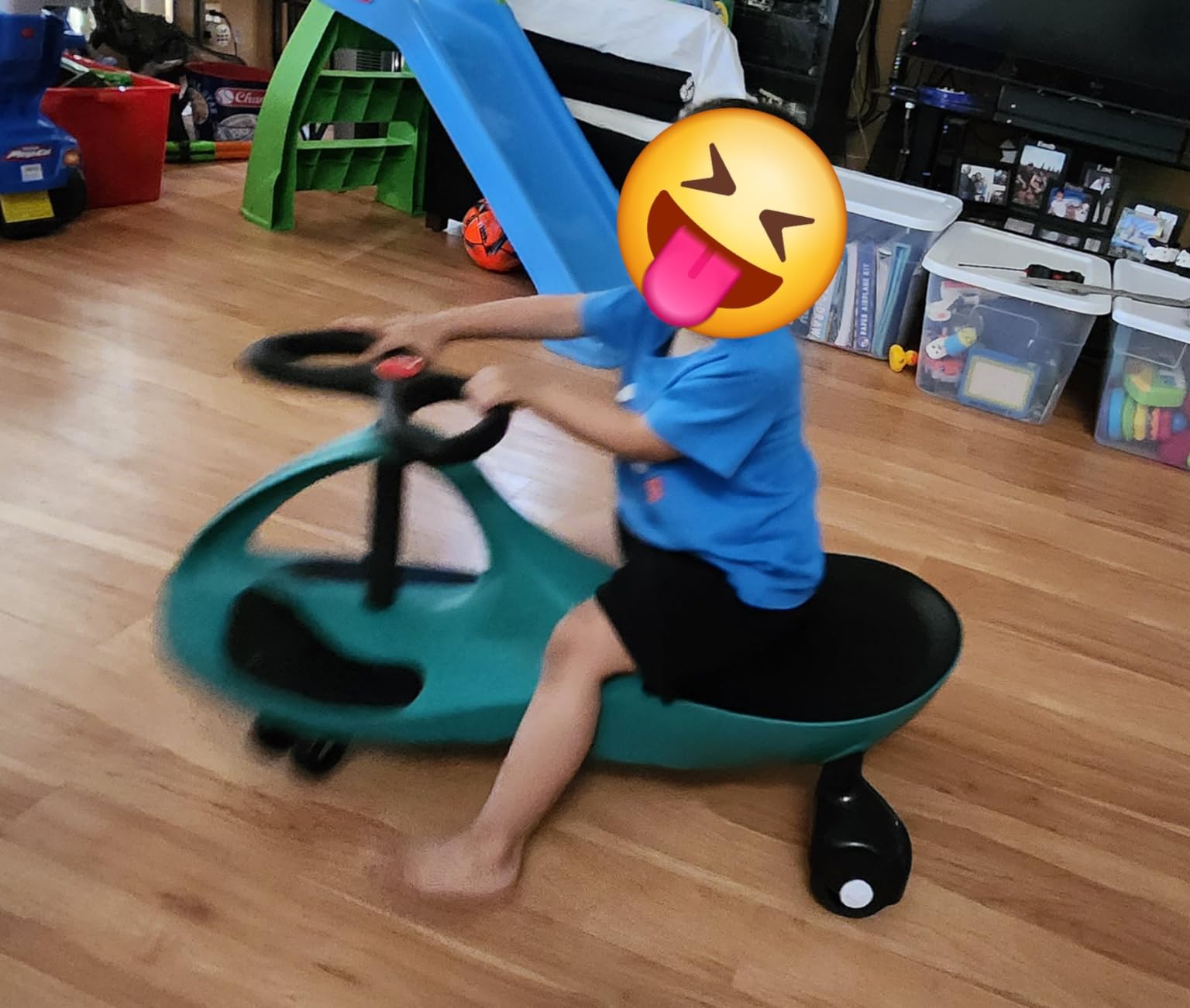
Check your floor surface first
This is the one pick where the surface rules out a home entirely. If you have wood floors, a carpeted living room or a garden, the Wiggle Car is the wrong choice no matter how good the weight capacity looks.
Lino, tile, concrete and asphalt make it excellent. In a ground-floor flat with hard flooring, it is a strong indoor option that needs no batteries and no charging point.
Where this one disappoints
It has the lowest rating here at 4.3 stars, and 9% of more than 7,800 ratings are one star. Surface disappointment drives most of that, along with the absence of any brake or parental steering.
There is no parent push handle, so a child who is not yet walking independently cannot be wheeled along in it. And with only a 30 day manufacturer warranty, it is the least protected pick in the roundup.
11. newyoo TR007 5-in-1: one toy that converts as the child grows
newyoo TR007 5-in-1 Tricycle for Toddlers 1-3, Toddler Bike, Birthday Gift
- Five modes from push tricycle to pedal bike
- Parent handlebar rotates 135 degrees
- Handlebar seat and pedals adjust on one button
- EVA shock-absorbing wheels
- 35 lb capacity is the lowest in the roundup
- Mode conversion takes practice for young riders
The TR007 answers a problem no other pick here addresses: what happens when your child is ready for a different kind of ride every few months. Five modes cover push tricycle, push balance bike, tricycle, balance bike and pedal bike, all on one carbon steel frame.
The parent steering handlebar rotates 135 degrees and adjusts to adult height, so you control the direction on walks. That is a meaningfully different feature from a fixed push handle, and it is why this one works in a stroller-walk routine.
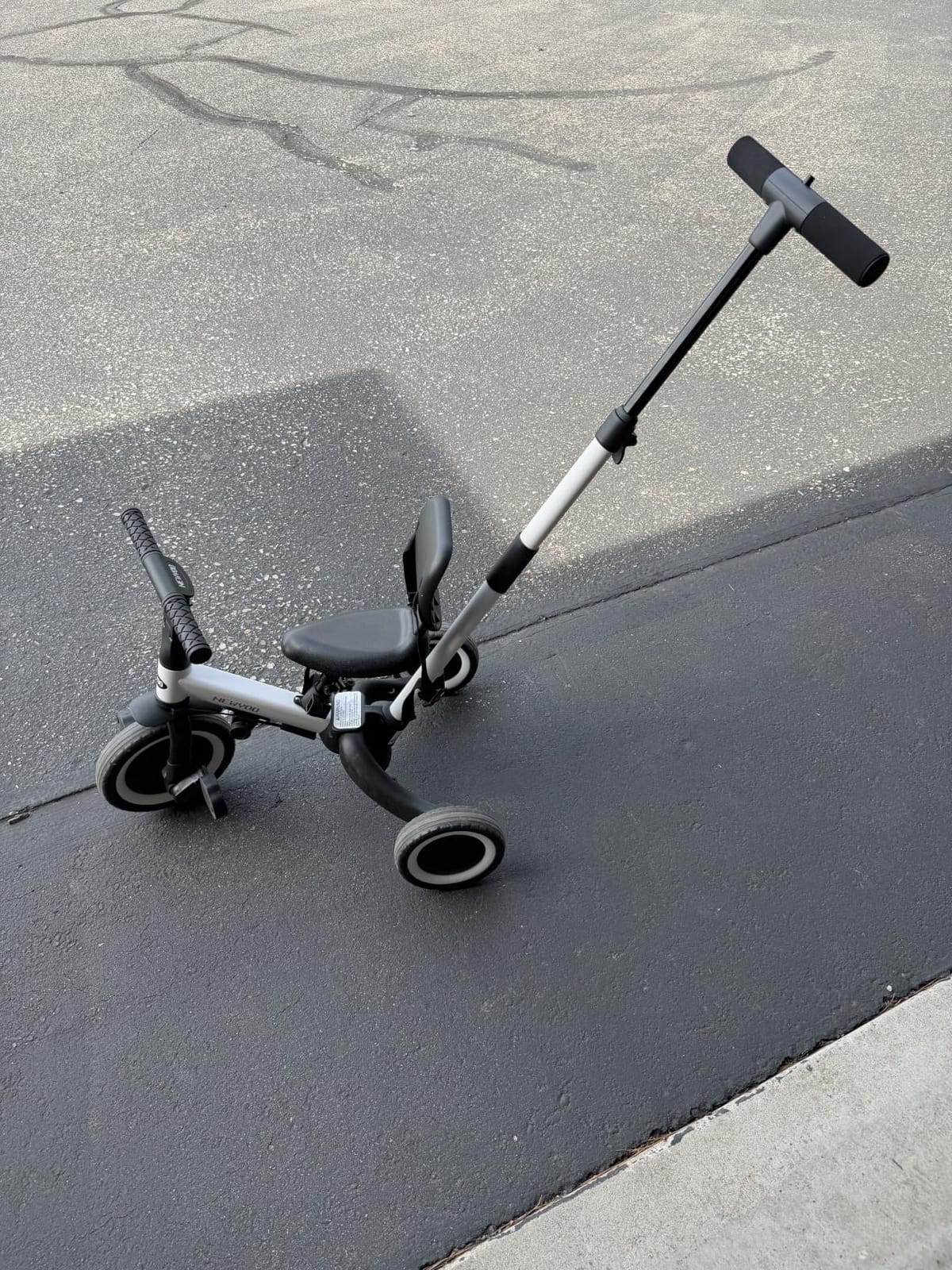
A single red release button adjusts the handlebar, seat and pedals across three pedal positions, so conversions take seconds rather than tools. The carbon steel frame and EVA solid shock-absorbing wheels are EN188 and ASTM approved.
Spare parts are listed as available for three years, which is unusual and reassuring for a convertible toy. More than 5,200 ratings at 4.5 stars reflect that parents like getting one product to last across a range.
Who the 35 lb limit rules out
Thirty-five pounds is the lowest capacity in the roundup and the first thing to check. The average three-year-old sits between 30 and 40 lb, so a heavier three-year-old may be at or over this limit from day one.
Measure before you order. If your child is on the larger side for three, the Tough Trike at 55 lb or the Strider at 60 lb is the safer long-term choice despite fewer modes.
Where this one disappoints
It sits at the upper end of the tricycle pricing here, which is the trade for the five-way conversion. Parents who end up using two modes most of the time may feel they paid for versatility they did not need.
Mode conversion also takes practice, so a one or two-year-old needs help switching. A three-year-old will manage it, but plan for a few confusing sessions at the start.
12. Kiddieland Disney Minnie Mouse Activity Ride-On: the ready-to-gift pick
Kiddieland Disney Minnie Mouse My First Activity Ride-On, Toddler Push Car
- Arrives fully assembled and ready to play
- Lights horn and engine sounds drive pretend play
- Clock and peekaboo window add fine-motor practice
- Sturdy wide base that does not tip
- Steering wheel stiff for small hands
- Batteries need replacing after about 2 hours
- Weak on grass and pavement
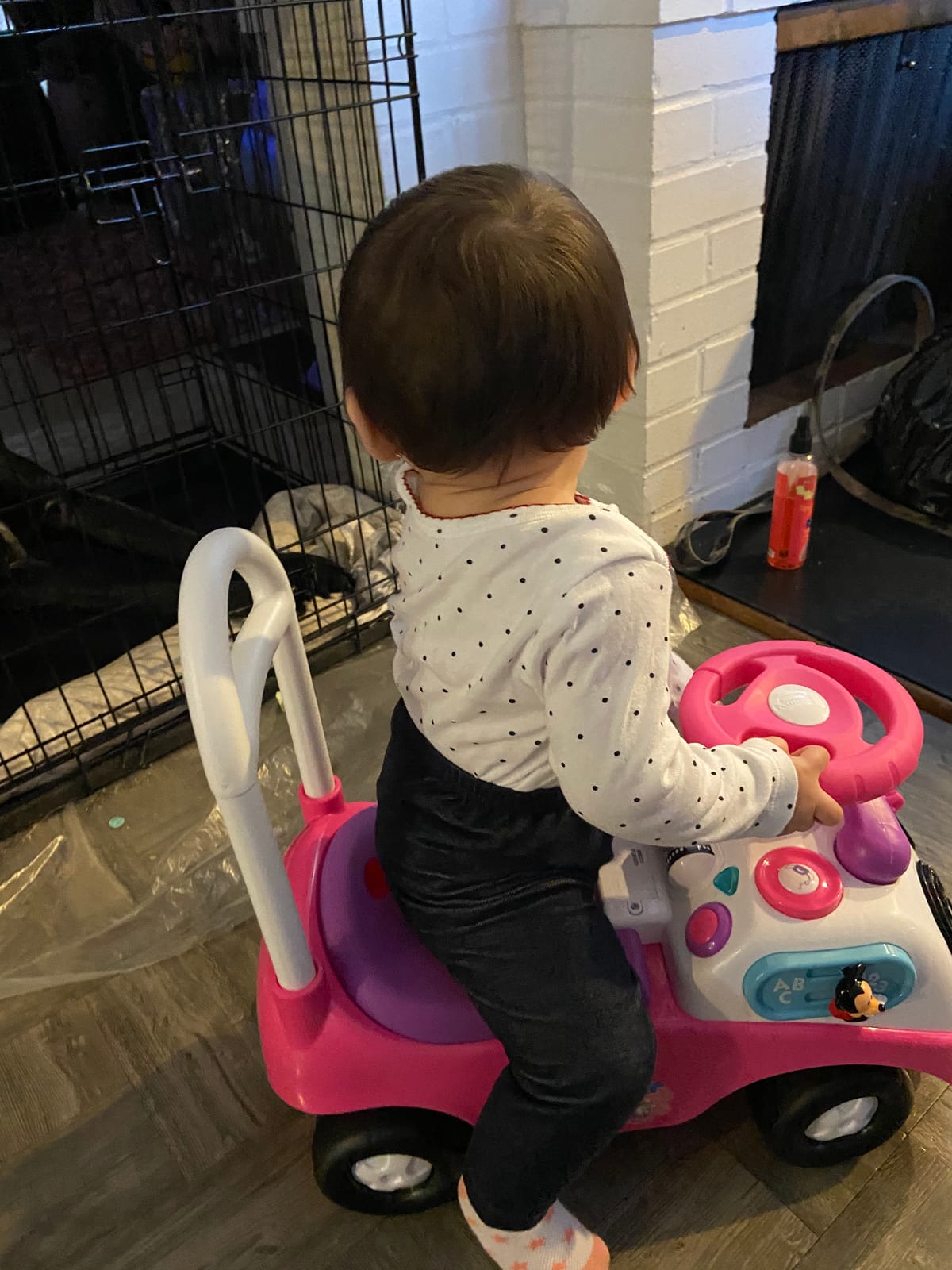
This is the pick when the toy needs to be in a child’s hands on the morning it is unwrapped. It arrives fully assembled, with two AA batteries included, so there is no build step and no waiting for a parent with a screwdriver.
It ties for the highest rating in this guide at 4.8 stars, with 86% of more than 5,000 ratings at five stars. The activity features are what hold a young child’s attention: flashing signals, a beeping horn, revving engine effects and a moveable steering wheel.
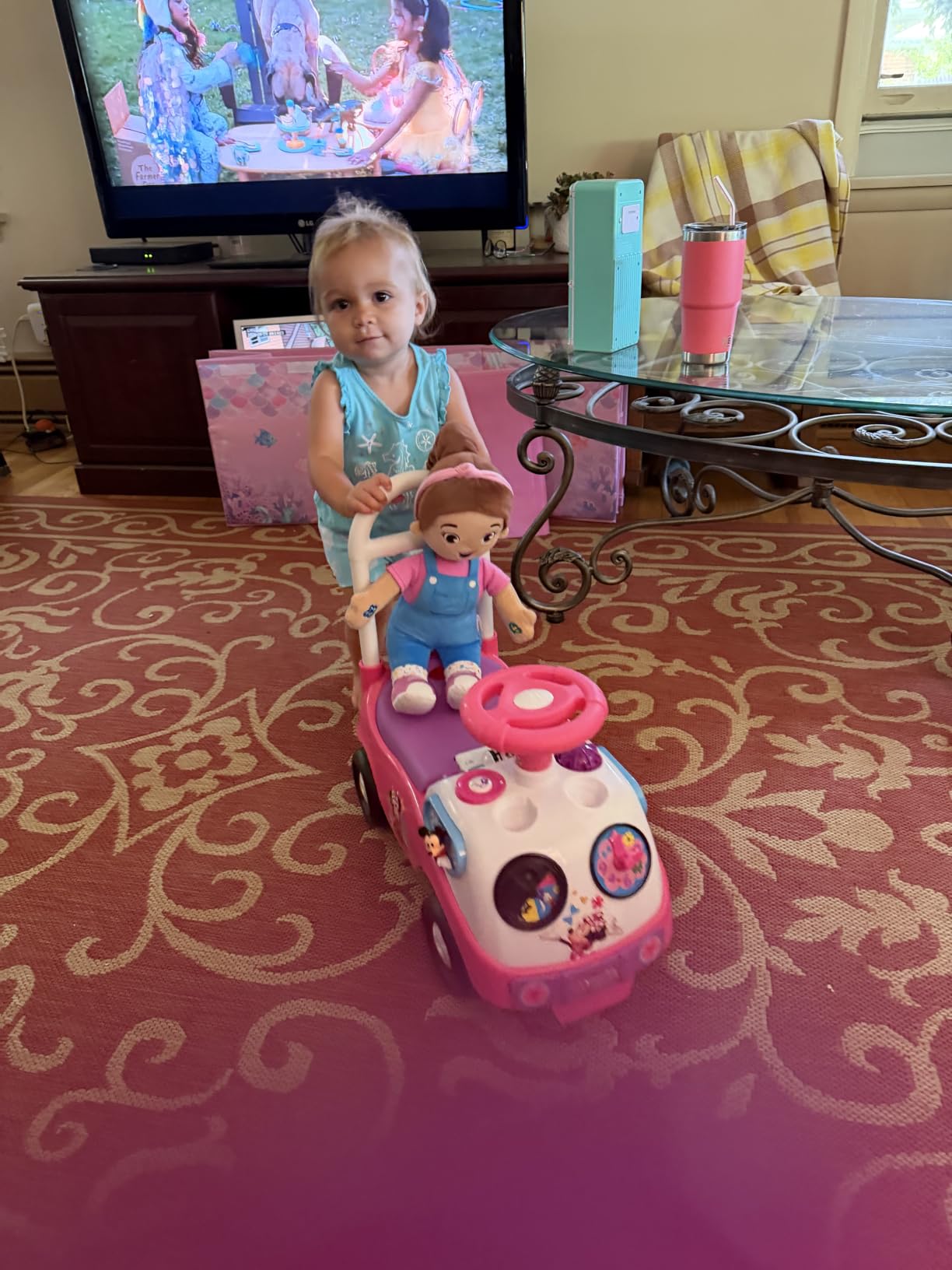
There is genuine learning content folded in. Turnable clock hands and a slide-back peekaboo window give a three-year-old something to do with their hands that is not driving, and the wide wheelbase with a low seat is described by reviewers as not tipping.
It weighs 5.2 lb, so a child can scoot it around a room themselves, and at 19.6 by 9.5 by 18.5 inches it stores easily. It is rated from 12 months to 3 years with a 50 lb maximum.
Battery life is the thing to plan around
Two AA batteries give roughly two hours of average use, and the flashing lights and sounds drain them faster than plain play would. Budget for a regular replacement cycle rather than expecting a single set to last.
That is a small price for a toy with no charging cable, no wall adapter and no lead-acid battery to store safely. The simplicity suits a third birthday or a Christmas morning.
Where this one disappoints
The rear push handle pops off, so do not rely on it for pushing a child on a walk. The steering wheel can also be stiff for small hands, which is ironic on a toy whose main feature is pretending to drive.
It performs poorly on grass or pavement, so it is an indoor toy. And it carries no manufacturer warranty, which is a real gap for a powered ride-on at this age.
How to Choose: Power Type, Surface, and Storage
The best ride on toys for 3 year olds are not ranked by speed. They are ranked by whether your child can use them today, in the space you actually have, without an adult lifting them over an obstacle every two minutes.
Start with power type. A foot-to-floor push car is scooted with the legs while sitting, and it is the lowest barrier to entry. A pedal trike requires coordinating pushing off the ground with steering, which most three-year-olds can do but enjoy less. A balance bike has no pedals at all and teaches stability first. A scooter is the hardest of the four because the child stands and steers while propelling.
Next, be honest about the surface. The Wiggle Car is superb on lino and useless on wood or grass. The Strider handles almost anything because of its foam tires. The tractor is built for hard floors. Getting this wrong is the most common reason a ride-on ends up in a garage within a month.
Finally, measure. The Whisper Ride is 45 inches long and the Cozy Coupe is 29.5 inches; the difference decides whether you can get it through a door. If you are in a flat, weigh the footprint before anything else, and remember that a 14.2 lb push car is not a one-person carry up stairs.
If your child is ready for building and problem-solving alongside physical play, our guides to STEM toys for 8 year olds cover the next stage up, but at three the priority is balance and coordination.
What to Skip at Age 3
Skip anything rated from 5 years or older, even if your child is tall for three. The age label on a pedal trike or a balance bike reflects leg reach, not just size, and a three-year-old who cannot plant both feet will not ride it.
Skip 24V electric vehicles. They are designed for children considerably larger than a three-year-old, and the speed and mass work against a child who cannot yet judge distance reliably. A parent remote helps, but it is a mitigation rather than a solution.
Skip battery-powered cars with no parent remote if you have any street, driveway or slope within reach. Parents describe children reaching the street in seconds, and a three-year-old cannot self-rescue if the vehicle stalls on uneven ground.
Skip anything without a stated weight limit. It is the number parents ignore most and the one that decides whether the toy survives past the fourth birthday. Every pick in this guide lists one.
Skip two-wheel scooters. They are a genuine step up in difficulty and a step up in broken collarbones, and there is no version of one that suits a child who has just turned three.
Safety Notes for Three-Year-Old Riders
Supervision is not optional at this age, and it is close supervision rather than supervision from a window. A three-year-old does not reliably understand that a driveway slopes or that a car is coming, and the fastest ride-ons here create that risk in seconds.
Use the seat belt or harness whenever the toy has one. Both Step2 push cars ship with an easy-latch adjustable belt, and it takes seconds to fit and removes a whole category of falls.
Helmets matter for anything faster than a push car. For a pedal trike, a balance bike or a scooter, a properly fitted helmet is the single cheapest safety improvement you can make, and it is the item parents most often skip.
Keep ride-ons off slopes, steps and gravel. Check the weight limit against your child and against any sibling who might use it, and re-check both when they have a growth spurt.
For electric ride-ons in general, charge sealed lead-acid batteries on a hard floor away from bedding, keep the charger out of reach, and unplug it once charging finishes. None of the twelve picks here needs charging, which removes that whole category of risk from your decision.
Frequently Asked Questions
What is the best ride-on toy for a 3-year-old?
The best ride on toy for a 3-year-old is the Fisher-Price Harley-Davidson Tough Trike, rated 4.7 stars across more than 26,000 reviews with a 55 lb weight limit that will not be outgrown at four. If your child will not pedal yet, a foot-to-floor push car such as the Little Tikes Fairy Cozy Coupe is the easier starting point.
Do 3 year olds need a balance bike or a tricycle?
A balance bike is better if your child is confident on their feet, because removing pedals means they learn to stabilise at speed before they learn to pedal. A pedal trike is better if your child wants to go somewhere rather than practise, since it provides propulsion and steering together. Many families start with a balance bike and move to a trike at four or five.
Are 12V ride on cars safe for 3 year olds?
Most 12V cars are rated 3 and up, but that rating reflects weight rather than leg reach or judgement. Parents report children reaching a street in seconds, and electric cars stalling on uneven grass where a three-year-old cannot push them free. If you want one, buy only with a working parent remote and use it on flat, enclosed ground with close supervision.
What to buy a 3 year old who has everything?
Buy a category of toy rather than another plastic car. A balance bike, a three-wheel scooter or a steel-frame trike each teach a different skill and are far less common in a toy box than a foot-to-floor car. A convertible 5-in-1 trike also has staying power because it changes shape as the child grows.
What ride on toy works best indoors with no yard?
A foot-to-floor push car on hard flooring, or the Lil Rider Wiggle Car if your floor is lino, tile or concrete. Both run quietly, need no charging, and store against a wall. Avoid anything with grass-only tires, and check the floor finish first because the Wiggle Car is not suitable for wood.
The Bottom Line
The Fisher-Price Harley-Davidson Tough Trike is our pick for the best ride on toys for 3 year olds because it combines a 55 lb weight limit, a pedal reach that suits a freshly turned three-year-old, and the largest review base in the category at 4.7 stars across more than 26,000 ratings.
If your child is not pedalling yet, go foot-to-floor with the Little Tikes Fairy Cozy Coupe. If balance and coordination are the goal, spend more on the Strider 12 Sport and measure the inseam first. In a small flat with hard floors, the John Deere tractor at 3.9 lb is the one that gets used most.
Whichever you pick, check the weight limit, check the floor surface, and plan close supervision. Those three steps decide whether a ride-on is still being ridden at five.
Last updated for October 2026. We may earn a commission when you buy through links on this page, which does not change the order of our recommendations.