
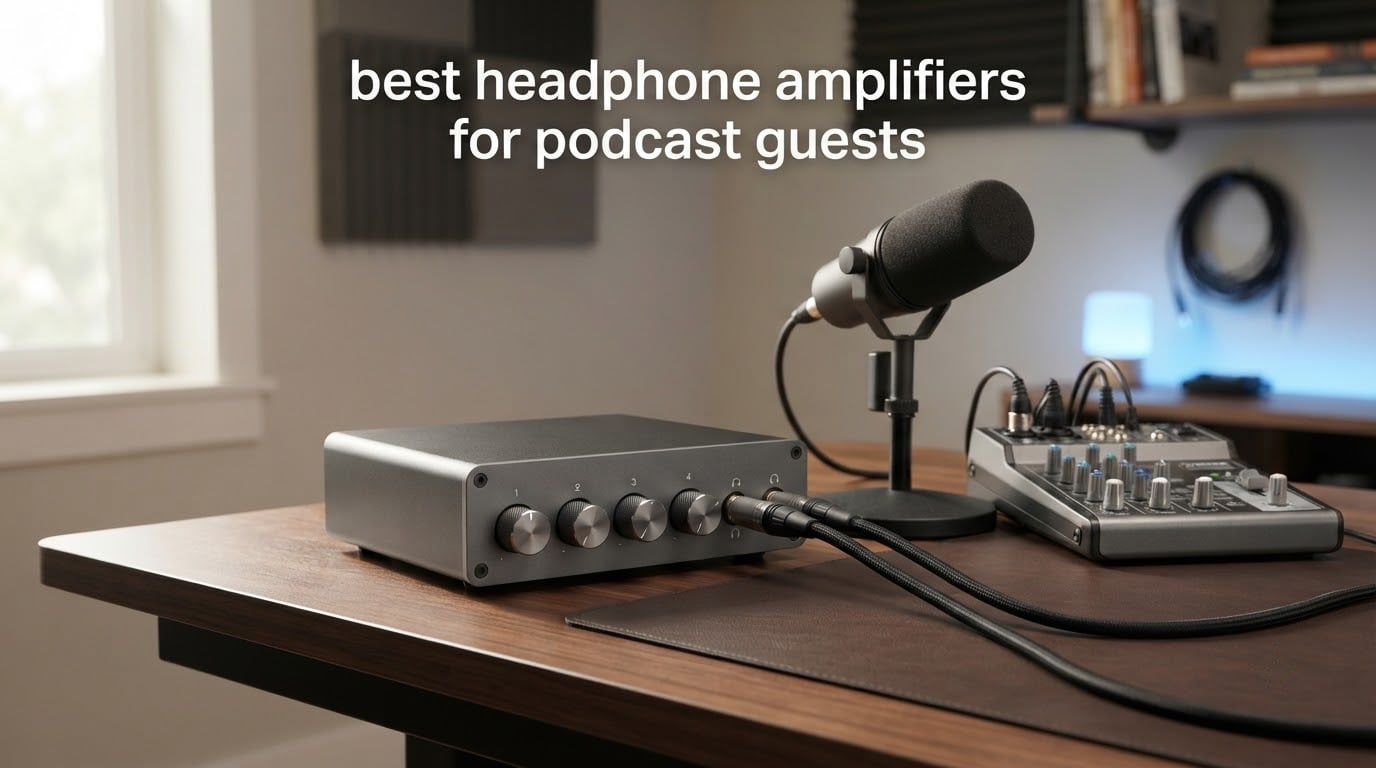
A headphone distribution amplifier for podcast guests is a small box with four to eight headphone outputs and one volume knob per output, so everyone in the room can hear the same mix at a level that is comfortable for them.
That one sentence covers the whole idea. You feed a single stereo line output from your mixer or audio interface into one input, and the amp copies that signal out to every headphone jack while letting each person set their own level. No more passing one pair of cans around the table while the host guesses whether the guest can hear.
We have assembled the best headphone amplifiers for podcast guests after comparing channel counts, jack types, per-channel volume, power draw and noise behaviour across ten current multi-channel units. The list covers everything from a four-way box for a two-host-and-one-guest interview to an eight-channel unit for roundtable panels. If you want the wider audiophile take on the category first, our general headphone amplifier roundup covers single-unit headphone amps for listening, which is a different job entirely from guest monitoring.
Table of Contents
Why Guests Need Their Own Volume Control?
Hearing levels vary enormously between people, and headphone models vary just as much in sensitivity. The guest who grew up with loud open-back cans may barely register the level a host considers comfortable, while an older guest with ordinary closed-back headphones might need the desk turned all the way up.
Without individual control, one of two things happens. Either everyone hears a level set by the loudest pair in the room, which tires out the person with the most sensitive headphones, or you set it for the quietest pair and the host monitors at a level that invites drift off the mic.
Podcast forums make this point constantly. Guests arrive with whatever headphones they own, every pair sounds at a different loudness on the same amp, and the host ends up re-adjusting between every take. Independent per-channel pots turn that into a one-time setup problem.
There is a second reason to monitor on headphones rather than speakers: bleed. Anything playing out of your monitors leaks into the microphone, and the guest hears their own voice a fraction of a second late. Closed-back headphones in a headphone distribution amp keep that loop clean.
Top 3 Best Headphone Amplifiers for Podcast Guests (October 2026)
The three boxes below cover the setups most podcasters actually record. The Mackie HM-4 is the one we would buy first, the Pyle PHA40 is the established budget default, and the FIFINE N6 is the cheapest credible metal-bodied option.

Mackie HM-4 Headphone Amplifier
- 4 independent outputs
- Metal chassis
- Quiet noise-free output

Pyle PHA40 4-Channel Amplifier
- 4 headphone outputs
- Independent volume knobs
- Compact housing
All 10 Headphone Amplifiers Compared in 2026
Every box below takes one stereo input and sends it to multiple headphone outputs with independent volume per channel. Check the channel count against your headcount before anything else, then confirm the jack sizes match your headphone collection.
| Product | Specifications | Action |
|---|---|---|
| Mackie HM-4 4-Channel Headphone Amplifier |
|
Check Latest Price |
| Pyle PHA40 4-Channel Portable Headphone Amp |
|
Check Latest Price |
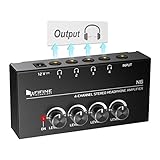
| FIFine N6 4-Channel Metal Headphone Amplifier |
|
Check Latest Price |
 LZSIG LHA1 4-Channel Amp with Bass Boost LZSIG LHA1 4-Channel Amp with Bass Boost |
|
Check Latest Price |
 Behringer HA8000 V2 8-Channel Amplifier Behringer HA8000 V2 8-Channel Amplifier |
|
Check Latest Price |
 Rockville RHPA4 4-Channel Headphone Amp Rockville RHPA4 4-Channel Headphone Amp |
|
Check Latest Price |
 Bolanle PH400 4-Channel Amp, 8 Outputs Bolanle PH400 4-Channel Amp, 8 Outputs |
|
Check Latest Price |
 STABCL S-600 6-Channel Headphone Amp STABCL S-600 6-Channel Headphone Amp |
|
Check Latest Price |
 Neoteck NTK190us 4-Channel Stereo Amp Neoteck NTK190us 4-Channel Stereo Amp |
|
Check Latest Price |
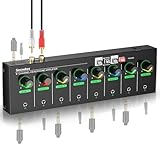 socodox 8-Channel Amp, 16 Outputs socodox 8-Channel Amp, 16 Outputs |
|
Check Latest Price |
1. Mackie HM-4 Headphone Amplifier: Best Overall for Two Hosts and a Guest
- Exceptionally clean noise-free output
- Four independent level controls
- Metal chassis with weighted pots
- Compact enough to velcro to a stand
- Plug and play with no power troubleshooting
- Only 1/4 inch TRS jacks so 3.5mm cans need an adapter
- No dedicated power on/off switch
- A small share pick up interference beside other gear
The HM-4 is the unit we keep coming back to for a standard interview setup: two hosts, one in-studio guest, and a producer listening in on a fourth pair. Four outputs, four pots, one input. It has been the reference point in our own guest-monitor setups for the simple reason that nobody has to fiddle with anything.
Output noise is the standout. At 4.6 stars across 1928 reviews, the repeated line is that it stays quiet from low volume to high volume, with no hum and no crackle. For podcast work that matters more than detail retrieval, because a noisy floor can end up baked into the file when guests run open mics.
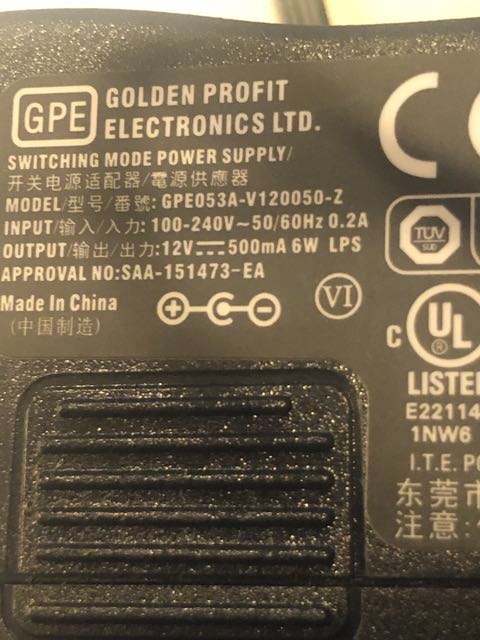
The build is a metal chassis rather than plastic, at 8 ounces and 2.3 by 4.3 by 2 inches. That size is genuinely portable, so a two-person show can pack it into a road case with the interface and a short XLR run. The pots feel weighted and smooth, which matters when you hand the box to a guest and they adjust their own level mid-session.
Headroom is the practical strength here. Owners and engineers describe it as a headphone preamp with enough gain for high-impedance studio headphones such as the AKG Q701, which means you are not limited to cheap closed-back cans handed to walk-in guests.
What to check before you commit
The jack situation is the one real limitation. Every output is 1/4 inch TRS, so if your guests turn up with consumer headphones or earbuds you will need 3.5mm to 6.35mm adapters. Our advice is to keep a small pouch of adapters in the studio rather than letting the host hunt for one on record day.
There is no power switch, only an indicator light, so the unit stays on until you unplug it. A small number of owners also report hum when the box sits directly next to a switching power supply or a laptop charger. Keep a foot of space between the amp and other electronics and the problem does not appear.
Who it suits and who should skip it
It suits any two, three or four person in-studio recording where everyone shares one monitoring mix. If you are monitoring a guest with an unusual pair of high-impedance headphones, this is still the right box.
Skip it if your show runs six or more people at a table, or if your group insists on mixing earbuds and studio cans. In those cases look at the six-channel and eight-channel options further down, which accept 3.5mm plugs directly.
2. Pyle PHA40 4-Channel Headphone Amplifier: Budget Pick for Shared Monitoring
- Powers four headphone pairs from one source
- Independent volume on every channel
- Low-noise amplification at maximum volume
- Very compact footprint
- 1/4 inch TRS input pairs with mixers
- Plastic enclosure feels less premium
- Only 1/4 inch jacks so 3.5mm cans need an adapter
- No stereo or mono mode switch
It has the most ratings in this roundup by a wide margin at 2721, and that consistency is the reason it stays on our list. It is the box most podcasters end up owning without deliberately shopping for one.
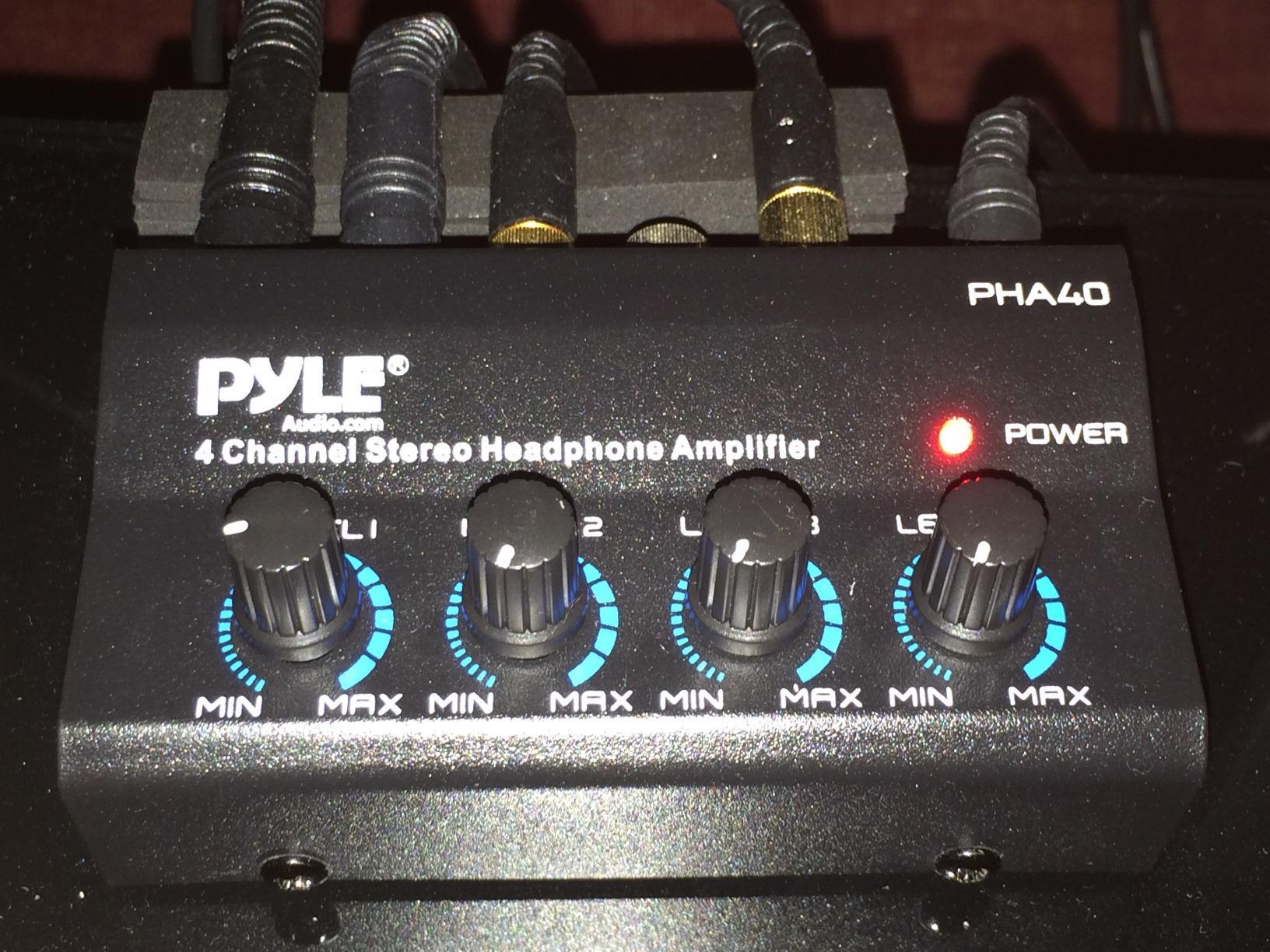
Functionally it does the core job and nothing more. Four 1/4 inch TRS headphone outputs, four independent rotary volume controls, and a single 1/4 inch TRS input that takes the line out or headphone out of your mixer or interface.
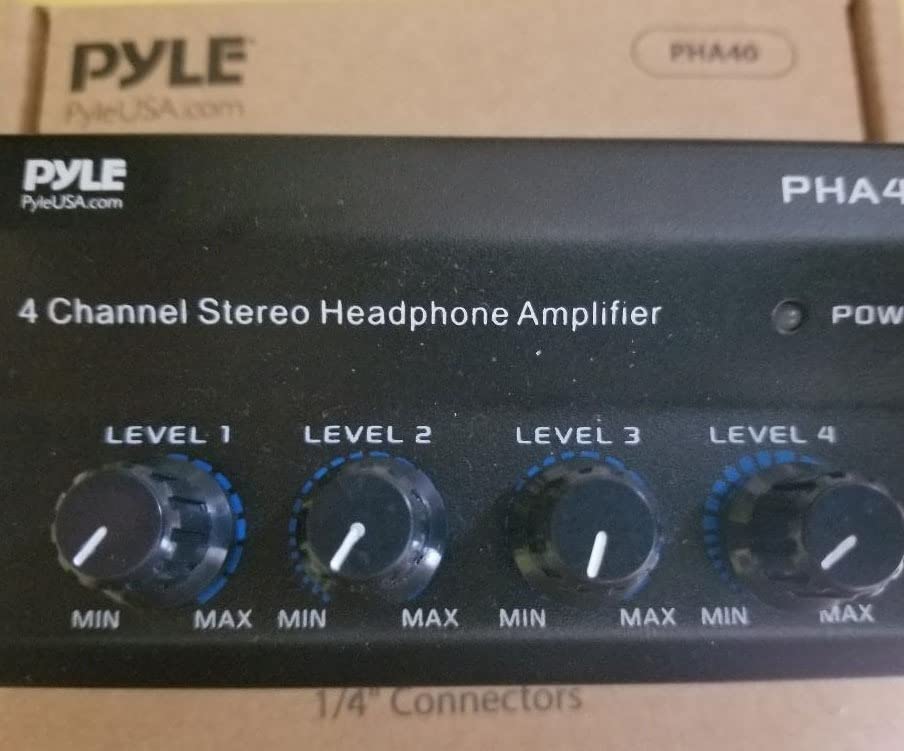
Buyers consistently single out three things: the four separate knobs, the low-noise amplification at full volume, and the size. At 4.07 by 1.18 by 2.24 inches it is the smallest footprint here, which suits a small desk where the interface already occupies the space.
The housing is plastic rather than metal, and you can feel the difference when you pick it up next to a metal-bodied unit. That said, for monitoring rather than critical mastering, the acoustics do not change. What matters is that guests can reach their own pot and set a comfortable level.
What to check before you commit
There is no stereo or mono switch. If you are monitoring a single mic channel rather than a full stereo mix, you have to feed it as a matched stereo pair or use mono cabling at the source. Most podcasters are monitoring a stereo mix from a digital mixer, so this rarely comes up.
Because every jack is 1/4 inch, plan on adapters for any guest arriving with earbuds or lightweight consumer headphones. It is also worth noting that the amp adds gain rather than level, so a mixer headphone output already turned all the way up can still distort before the amp does anything.
Who it suits and who should skip it
It suits a small interview show, a two-host podcast with a rotating guest, or anyone who wants the four-channel job done for less than the cost of a decent microphone stand. The review volume is genuinely reassuring here.
Skip it if you plan to move into live-audience recording, or if your producer needs a separate mix from the guests. One input and four outputs means everyone hears exactly the same thing, with no way to send a different feed to the host.
3. FIFine N6 4-Channel Stereo Headphone Amplifier: Best Value
- Four independent volume knobs
- Solid metal construction
- Minimal distortion with all four connected
- Compact for stage and studio
- Power adapter and indicator included
- TRS and TS cables are not included
- All ports are 1/4 inch so 3.5mm earbuds need an adapter
- It distributes one input rather than mixing four
The N6 answers the same question as the PHA40 for a little less, with a metal chassis instead of plastic. At 4.4 stars from 1951 ratings it sits just behind the Mackie on rating while offering the same four-channel layout, which makes it the value alternative in the shortlist.
Connections are 1/4 inch TRS on both sides: one source input and four headphone outputs. Each output has its own volume knob, and owners report minimal distortion and no signal loss even with all four headphones plugged in.
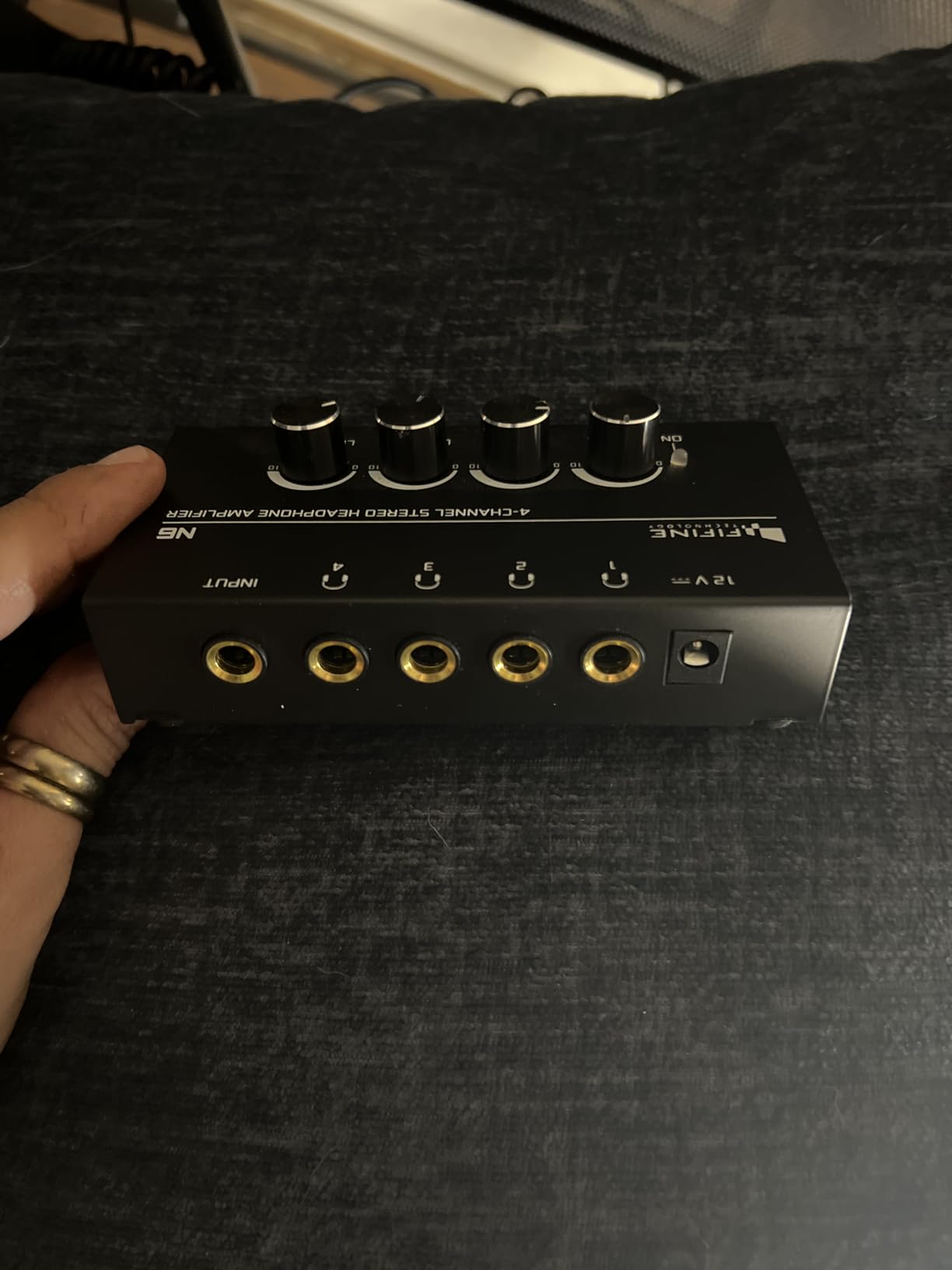
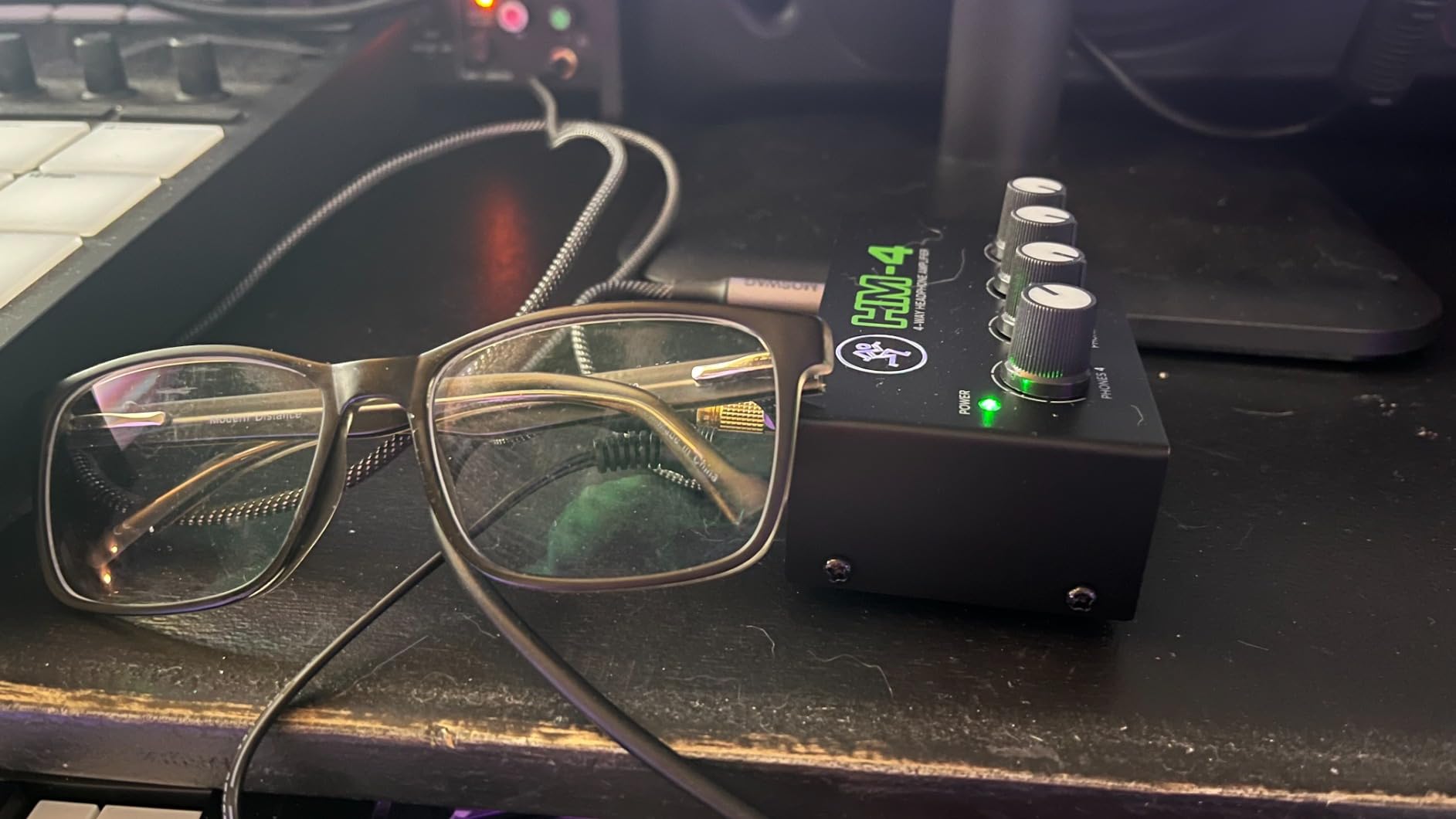
The 12V DC adapter and power indicator light are included, so there is no hunting for a spare power supply on record day. That is a small thing, but cheap unpowered-brick designs are exactly where hum problems start.
Buyers also mention tight connections and smooth-turning knobs, which sounds minor until you hand the box across a table to a guest. A pot that crackles as it moves is worse than no pot at all.
What to check before you commit
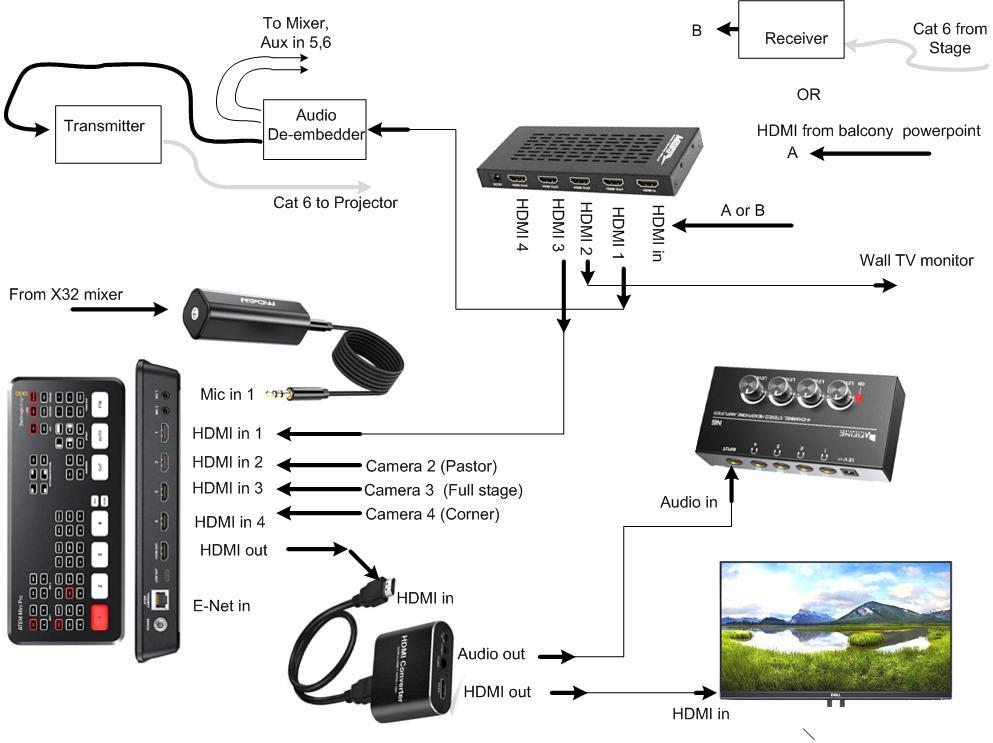
Cables are not in the box. You will need a 1/4 inch TRS cable from your mixer or interface to the amp, plus four headphone cables, and that adds up quickly across a whole panel setup. Budget for the cables before you budget for the amp.
The topology confuses first-time buyers more than any other spec on this page. This is one input going to four outputs, not four inputs summed to one output. If you are hoping to combine four separate mic channels through it and monitor the sum, it will not do that.
Who it suits and who should skip it
It suits new podcasters who have just moved past a single interface headphone jack and now have a second person in the room. It also suits students and livestreamers who need four monitoring positions on a small budget.
Skip it if you already own good 1/4 inch cables and want the strongest noise performance at this channel count, or if your setup needs mono mode switching for single-channel mic monitoring. For clean monitoring across a bigger panel, read on.
4. LZSIG LHA1 4-Channel Headphone Amp with Bass Boost: Best Flexible Four-Way
LZSIG Headphone Amplifier with Bass Boost, 1‑IN Multi‑OUT, 12V, 4 Channel
- Per-channel volume plus a master level
- Very low noise floor with ROHM op-amps
- Bass boost and stereo or mono switches
- Metal chassis rated beyond 100 ohm
- Accepts 1/4 inch and 1/8 inch plugs
- Adds a slight tonal shift to the mix
- No shielded 1/8 inch cable included
- Not a mixer
- one input and four outputs
The LHA1 carries more switching than the other four-channel boxes here, starting with a stereo or mono button next to a bass boost toggle, plus a master level that lifts all four channels together when the whole table needs to come up.
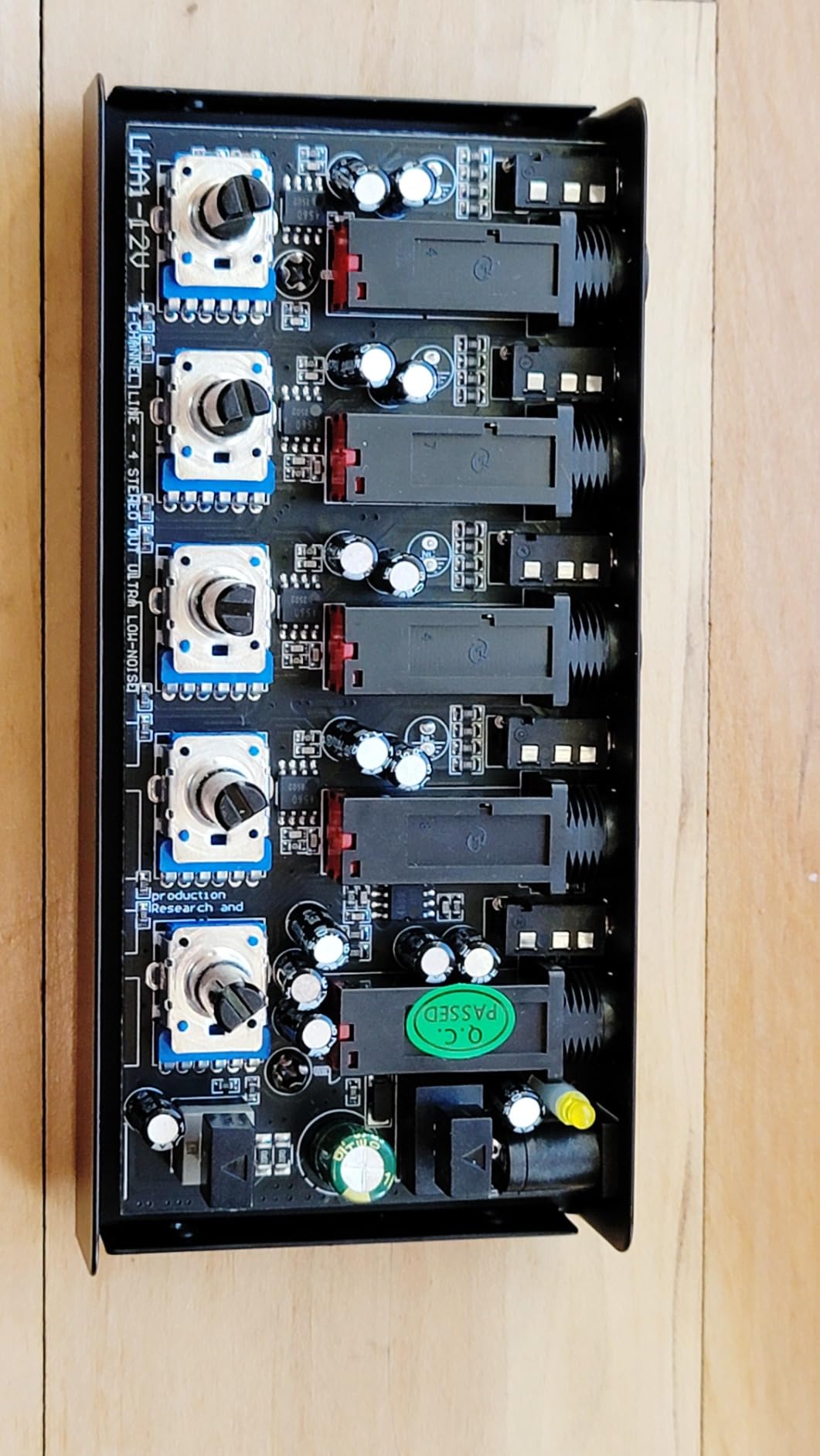
Underneath, it uses five ROHM low-noise operational amplifiers and supports 32 to 100 ohm headphones. At 4.5 stars from 695 ratings, the noise floor is the thing owners praise most often, especially at high gain.

Owners report it comfortably driving 250 ohm studio headphones such as the Beyerdynamic DT 770 Pro, which many cheap four-way boxes cannot do. If your guest headphones are wired and heavy, this one keeps up.
It also accepts both 1/4 inch and 1/8 inch TS and TRS plugs, so mixed headphone collections connect without a bag of adapters. At 4.13 by 2.95 by 0.98 inches and 12 ounces it is thin enough to sit under a desk shelf.
What to check before you commit
The most substantive criticism in the reviews is that the amp adds a slight tonal shift compared with a direct interface feed. For shared guest monitoring that is harmless, but if you plan to make critical mix decisions from a headphone feed, listen critically first.
The bass boost is a fixed switch, not an adjustable control. It helps when guests want more low end on a voice playback, and it colours the signal when you do not want it, so decide per session rather than leaving it on by default.
Who it suits and who should skip it
It suits a four-person roundtable where different people bring different headphone impedances and you want one box that can drive all of them without strain. The master level helps during setup checks.
Skip it if you want a perfectly transparent monitoring path for final mix decisions, or if you need more than four people on record. The channel count is the hard limit here.
5. Behringer HA8000 V2 8-Channel Amp: Best for Large Panels and Live Audience
- Eight channels feeding up to 16 headphone pairs
- LED level meter on every channel
- Direct input plus Main In 1 and 2 per channel
- Rack-mountable chassis
- Enough gain to stop maxing the mixer
- Main In sources only reach channels with no direct input engaged
- Bulkier and heavier than four-channel boxes
- Overkill for a two-person setup
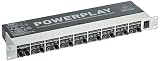
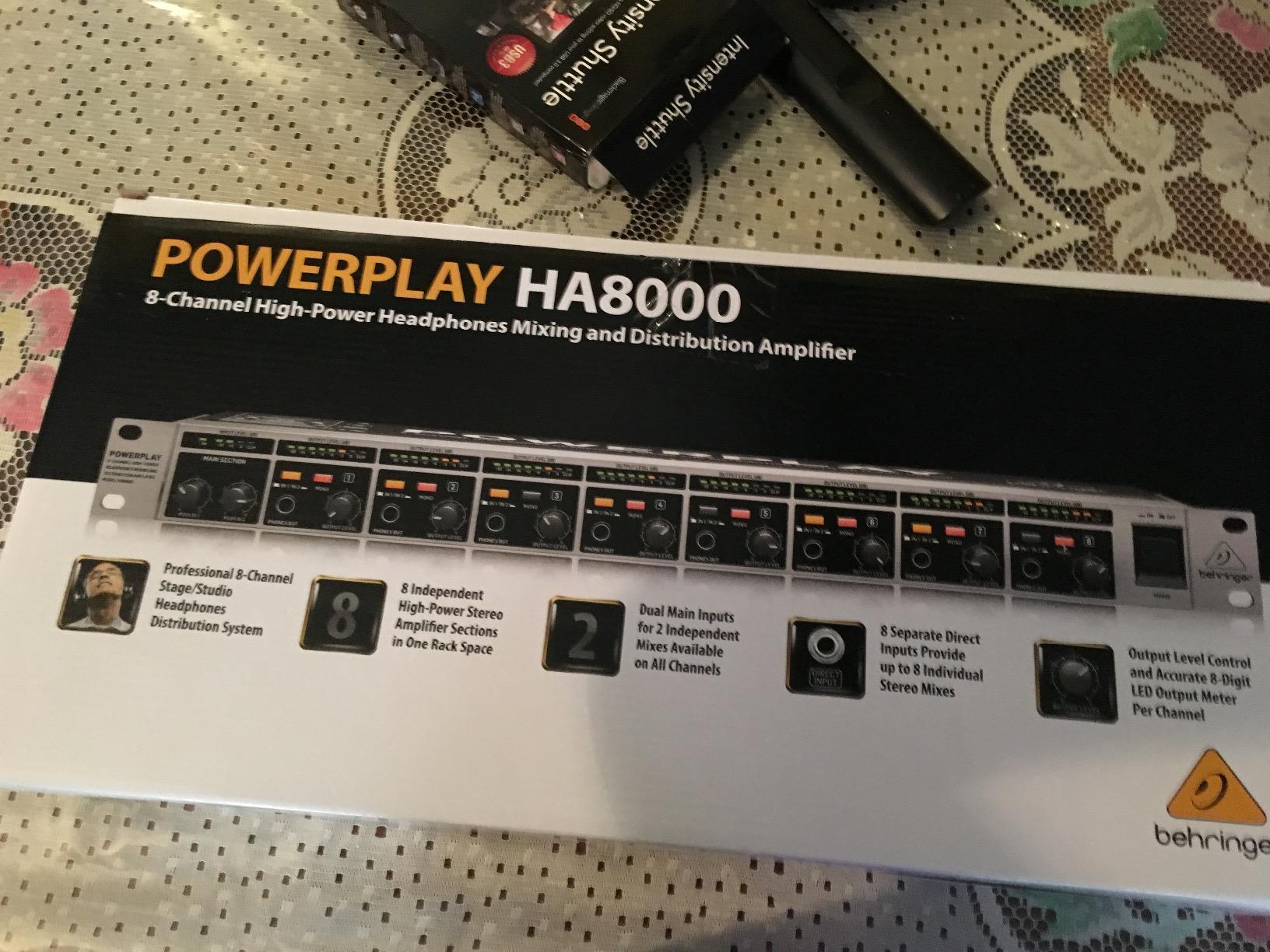
The HA8000 V2 is the answer to the question podcast forums keep asking: what do you use for six, seven or eight guests? Eight discrete high-power channels, each with its own level control, in a 19-inch rack-mountable chassis.
Each channel drives loads down to 8 ohms, which is the key spec for high-impedance and in-ear monitoring. The eight-digit LED output meter per channel is genuinely useful in a live setting because you can see signal presence without walking the room.
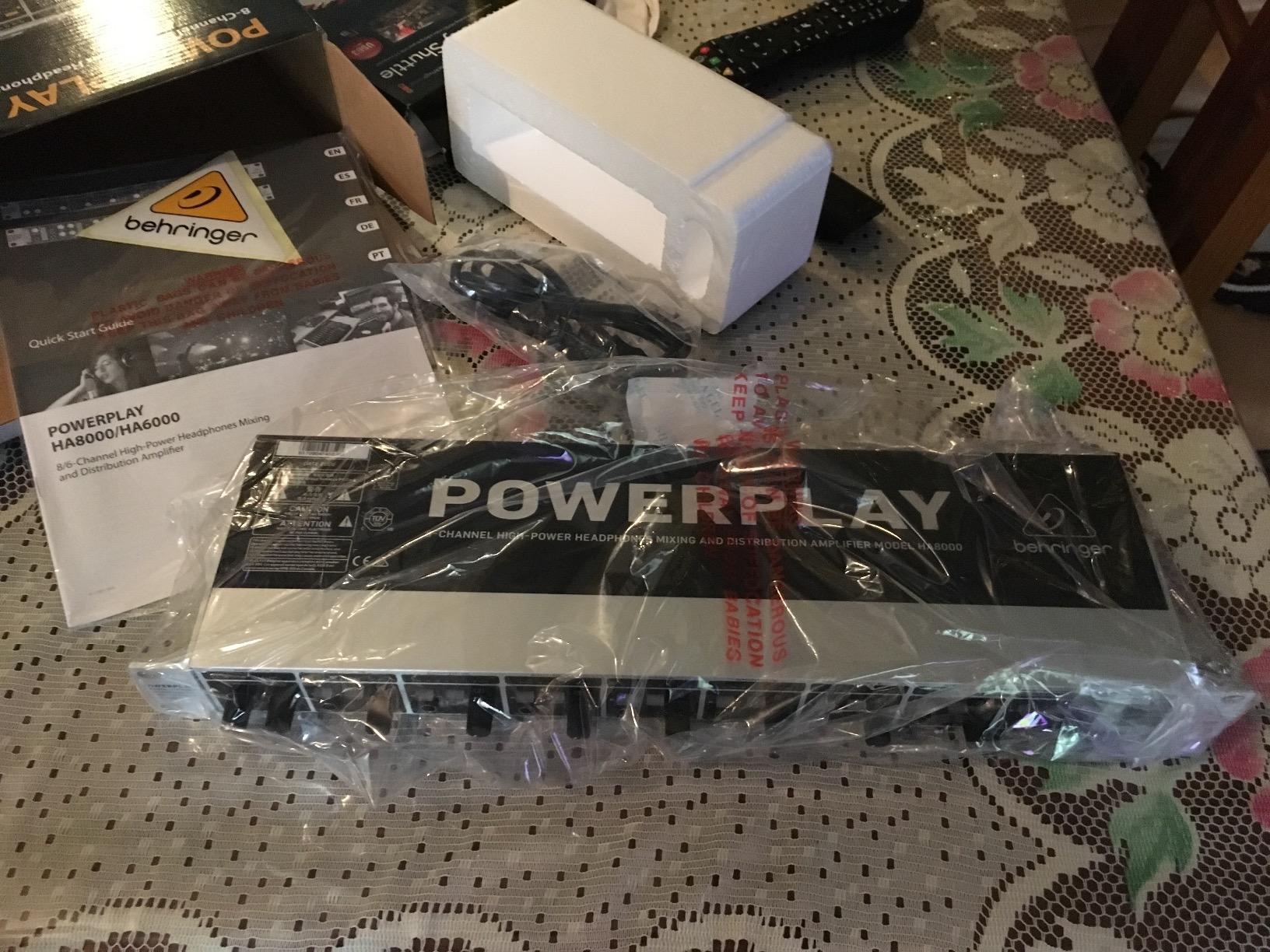
Owners in church, band and studio settings report easy setup and plenty of clean gain for wired in-ears. The headline capability is that up to 16 headphone pairs can be connected at once, using the dual output arrangement on each channel.
For a roundtable show this is the box that removes the cable spaghetti. Everyone plugs in, everyone has a pot, and the rack position keeps the desk clear. At 5.3 pounds it is a deliberate step up in size from the four-channel units.
What to check before you commit
Routing is the learning curve. Each channel has a direct input plus a Main In 1 or Main In 2 selector, and Main In sources are only audible on channels where no direct input is engaged. Read the routing diagram before the session, not during it.
Also be honest about scale. If you record two people at a table, this is the wrong size box and you will waste the extra channels and the rack space. Match the unit to the headcount you actually have on the recording day.
Who it suits and who should skip it
It suits a live-audience recording, a six to eight person panel, or a rehearsal room where players monitor silently in-ear. The per-channel meters and rack format are made for that environment.
Skip it for a standard interview show with three people. Two four-channel boxes chained together will do the same job at a fraction of the size, which is how most podcasters scale past four.
6. Rockville RHPA4 4-Channel Amp: Best USB-Powered Desk Unit
Rockville RHPA4 4 Channel Professional Headphone Amplifier, Stereo/Mono
- Both 1/4 inch and 3.5mm outputs on every channel
- Individual volume per channel
- USB-A powered with no separate power brick
- Compact metal housing with rubber feet
- Aimed at studio and podcast monitoring
- Only 69 reviews so the long-term record is thin
- Some buyers report noise at higher levels
- No LED level meters per channel
The RHPA4 solves a specific annoyance: every other four-channel box here needs a mains adapter or a DC brick, and the RHPA4 runs from a USB-A port. That makes it the easiest unit to move between a laptop-based remote setup and a fixed studio.
The output layout is the other selling point. Each of the four channels carries both a 1/4 inch and a 3.5mm jack, so up to eight headphones can be connected at once. Mixed headphone collections plug in without adapters, which solves the walk-in guest problem neatly.
There is a stereo or mono toggle for the setup, and individual volume per channel. The metal housing measures 4.6 by 3 by 2.36 inches with rubber feet, so it stays put on a crowded desk.
What to check before you commit
The review base is small at 69 ratings, so the long-term reliability record is thinner than the units ranked above. A minority of buyers report noise at higher volume levels, which matters if you are monitoring quietly and precisely.
There are no LED level meters, so you check signal by listening rather than by looking. That is acceptable in a quiet studio and frustrating in a live room with a noisy audience.
Who it suits and who should skip it
It suits a home studio or mobile kit where power outlets are scarce, and any guest group that mixes earbuds with full-size headphones. USB power keeps the box light and simple to pack.
Skip it if you need a known noise floor under live conditions, or if you want visible per-channel signal indication. In either case, spend the money on a metal four-channel unit with a mains supply.
7. Bolanle PH400 4-Channel Amp: Best for Eight Outputs from Four Channels
Bolanle PH400 4-Channel Headphone Amplifier 8-Output 3.5mm 6.35mm 250Ω
- Eight outputs across four channels with no adapters
- Punchy output with a low noise floor
- High power drives ATH-M50x and MDR-7506
- Compact metal housing
- LED knob ring reads in a dim room
- Some units add hiss at higher gain settings
- Crosstalk rises when pots are turned far past noon
- Knob colours rotate instead of per channel
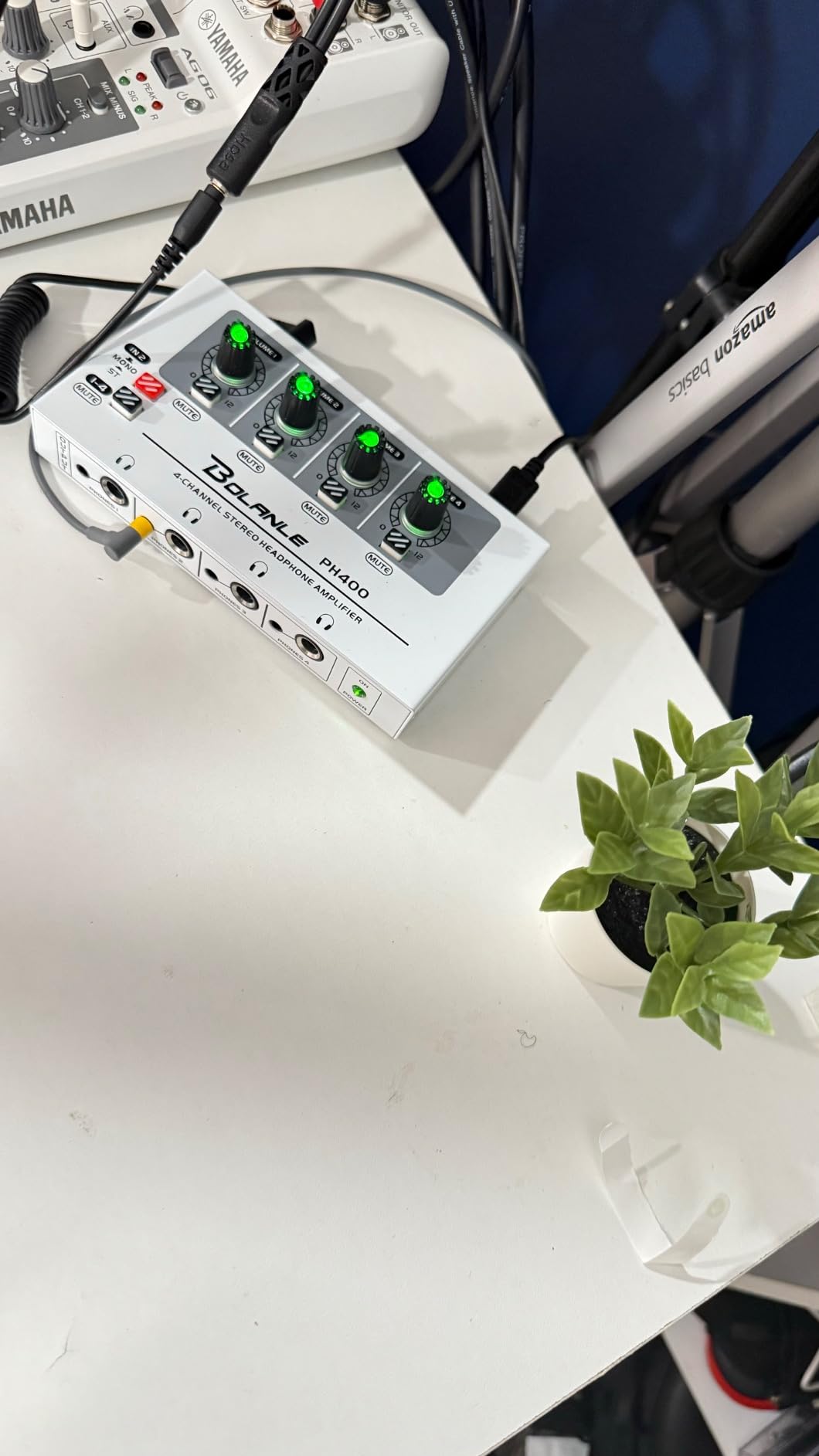
The PH400 does something no other four-channel box here does: every channel has both a 3.5mm and a 6.35mm output, giving eight total outputs. Two people can share a channel, or a guest can bring earbuds, without anyone hunting for an adapter mid-session.
It is rated for professional headphones up to 250 ohm, and reviewers name studio models like the Audio-Technica ATH-M50x and Sony MDR-7506 as pairs it drives well. That is real headroom, not just a loud volume knob.
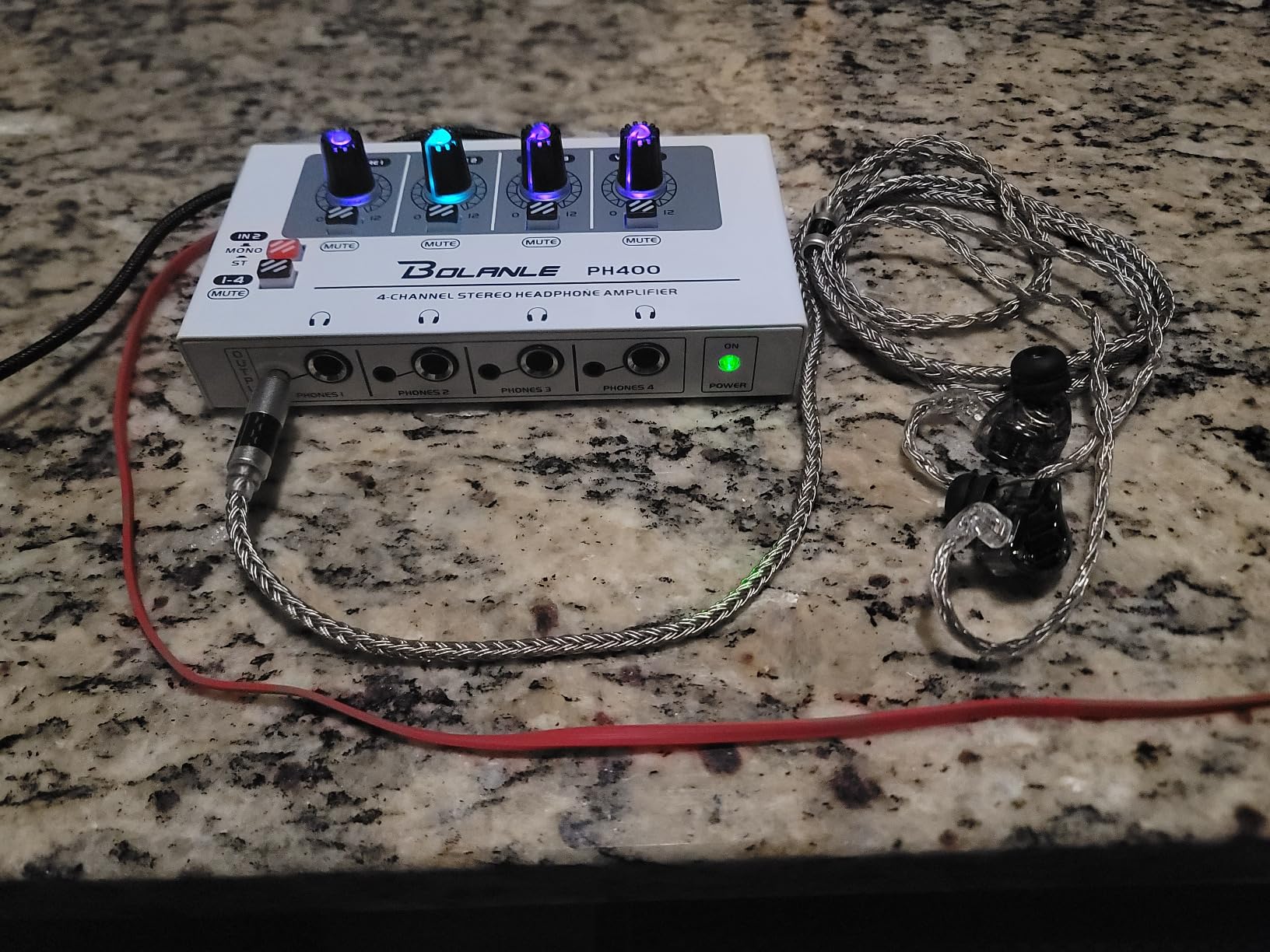
The 7-colour LED ring around the volume knob makes levels easy to read in a dim studio, and the housing is a compact 5.75 by 3.11 by 0.98 inches with DC 5V/3A power. One year manufacturer warranty is stated.
What to check before you commit
Hiss is the recurring caution. Some units add audible white noise at higher gain settings, and channel-to-channel crosstalk increases once the pots are turned well past noon. For shared guest monitoring that is tolerable, but for mix decisions it is not.
The LED colours rotate rather than staying fixed per channel, so the ring is a level indicator rather than a channel identifier. If you run eight outputs you will lose track of which pair is which.
Who it suits and who should skip it
It suits a show where guest headphones vary wildly, from consumer earbuds to wired studio models, and where adapter cables are a reliable source of frustration. The 250 ohm rating covers the heavier headphones too.
Skip it if you need the quietest possible monitoring path and plan to mix from that feed. Choose a lower-gain four-channel unit with fewer bells and whistles instead.
8. STABCL S-600 6-Channel Headphone Amp: Best for Six Guests
- Six independent channels cover larger guest counts
- Both 3.5mm and 6.35mm inputs and outputs
- Noise-reduction chip keeps output clean at full volume
- Aluminium unibody chassis
- Mono and stereo switch for mic feeds
- Only 98 reviews so long-term data is thin
- About 11 percent one-star ratings
- One input and six outputs
- it distributes rather than mixes
The S-600 sits in the gap between four-channel and eight-channel boxes, and for a six-person panel it is the right size. Six stereo channels, each with its own volume control, with both 3.5mm and 6.35mm jacks on input and output.
Having both jack sizes on the input side is genuinely useful. Many interfaces ship with a 3.5mm headphone jack and many mixers use 1/4 inch, so whichever you own, the box connects without an adapter at the source end.
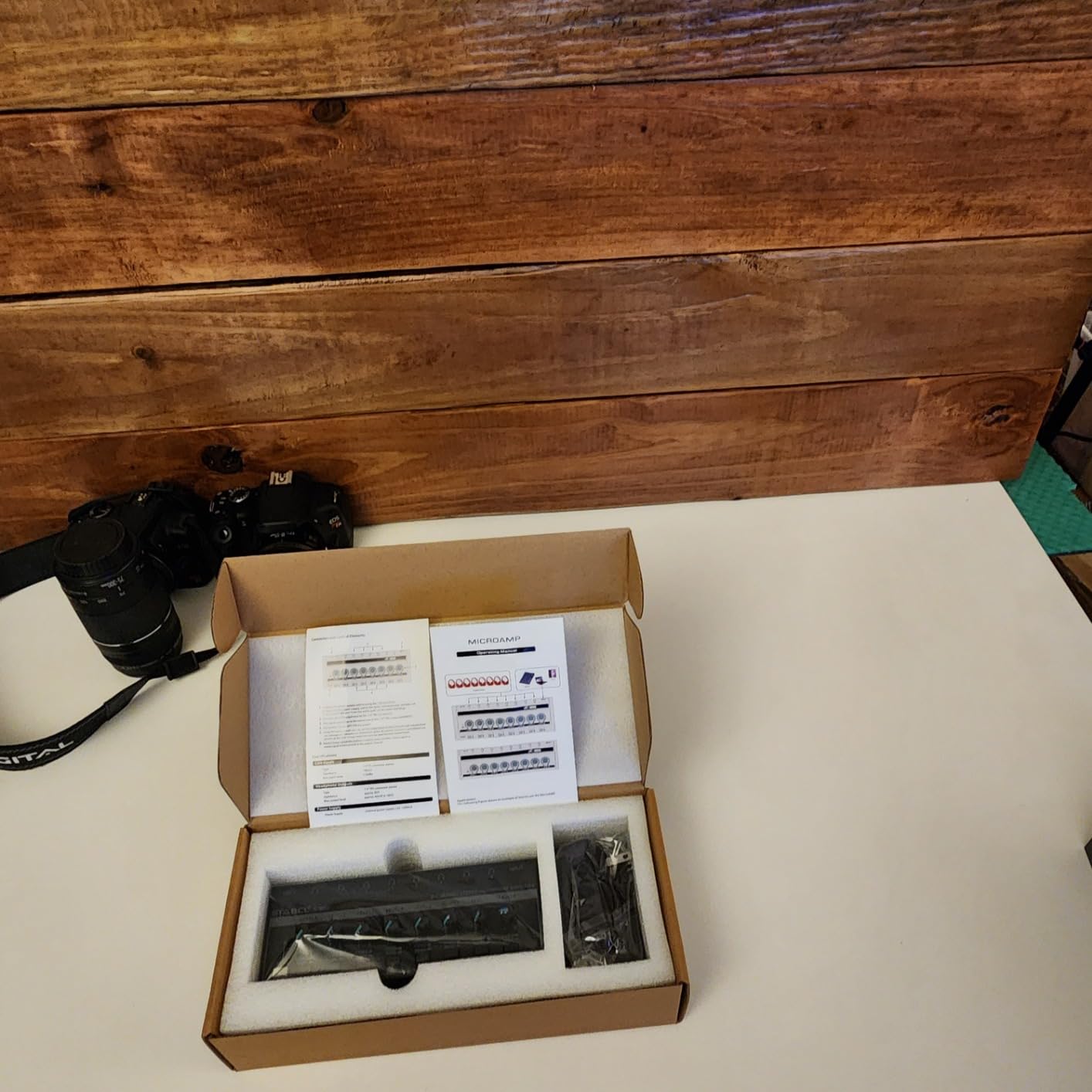
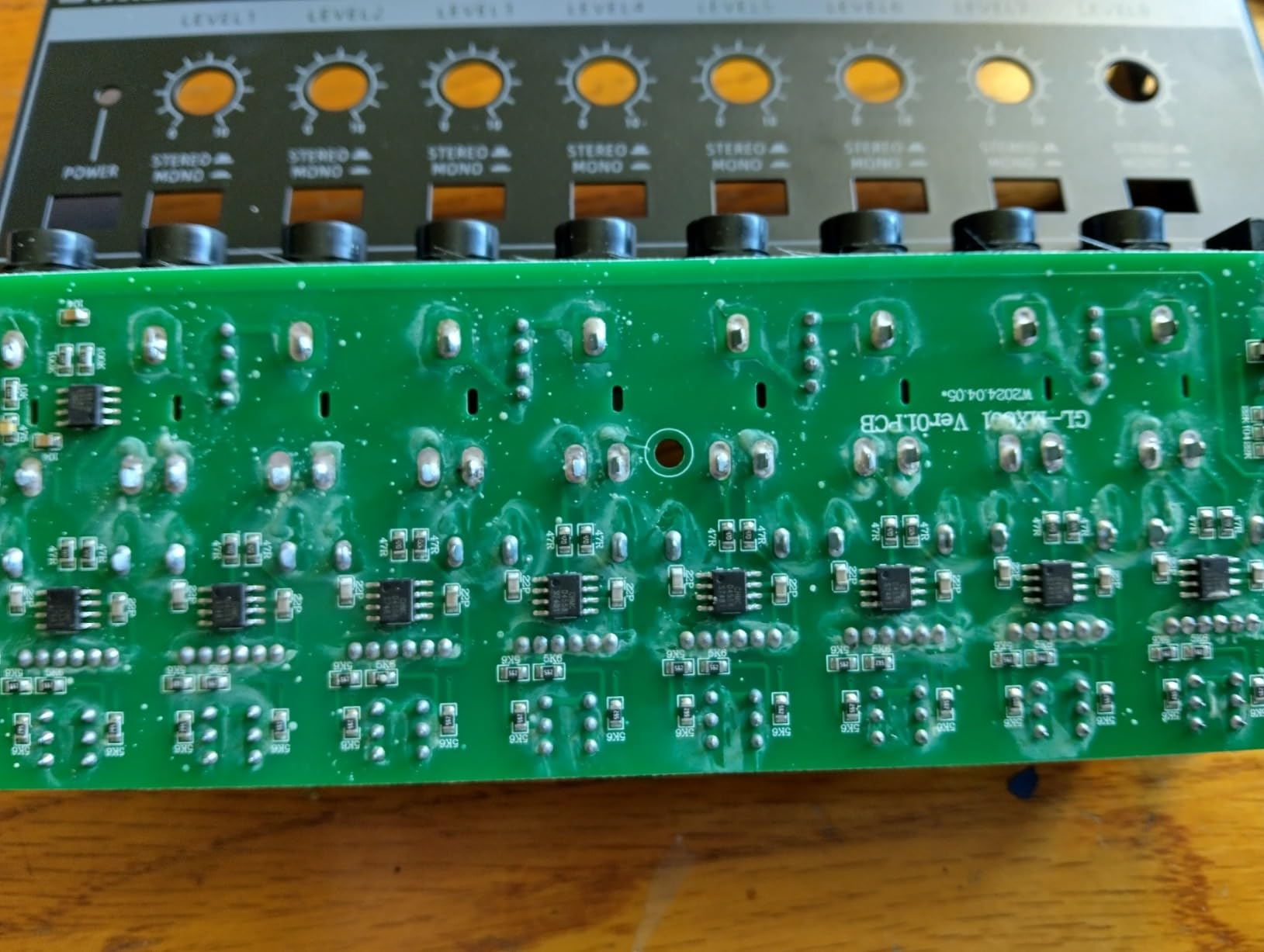
Inside is a noise-reduction chip and high-power stages that reviewers say stay clean and distortion-free at maximum volume. The aluminium alloy unibody construction gives it real desk weight, and it runs from the included 12V AC adapter.
What to check before you commit
The sample size is the concern. At 98 reviews there is not much long-term data, and around 11 percent of ratings are one star, with noise named as the recurring complaint. Read recent reviews before you commit to this one.
Like the other boxes here, it is a distribution amp rather than a mixer. One input, six outputs. If you need to sum two separate mic feeds before monitoring, that has to happen upstream in your mixer.
Who it suits and who should skip it
It suits a six-person interview or a small band rehearsal-style silent monitoring session, especially when half the players use earbuds and half use full-size headphones. The dual jack layout on every channel removes adapter juggling.
Skip it if you need eight or more positions, in which case the eight-channel boxes are the right call, or if noise performance in a treated room is your top priority. Check recent owner feedback first.
9. Neoteck NTK190us 4-Channel Stereo Amp: Best for Loud, High-Impedance Monitoring
Neoteck 4 Channel Stereo Headphone Amplifier Audio Mono/Stereo Amplifier
- Plenty of gain for high-impedance headphones
- Clear noise-free output at maximum volume
- Full metal housing reduces interference
- Mono and stereo button included
- Power adapter
- cord and 3.5mm cable in the box
- Very high gain can startle a guest at full volume
- A small number of boxes emit noticeable hiss
- Bass judged less full than a direct feed
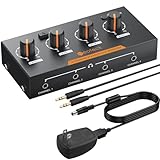
The NTK190us is the four-channel box to consider when your guests bring demanding headphones. Four independent stereo sections rated at 5 watts each give it far more gain than a typical budget distribution amp, and buyers frequently mention it helping hard-of-hearing listeners hear the mix properly.
The full metal housing is not just a weight story. It reduces electromagnetic pickup, which is why the reported noise behaviour is clean even at maximum volume, assuming the included ultra-low-noise operational amplifier is doing its job.
It includes a power adapter, a magnetic-ring power cord and a 3.5mm audio cable, so it works out of the box. An 18 month warranty is stated. Connections are 3.5mm, with a mono and stereo button for mic-fed sources.
What to check before you commit
That much gain cuts both ways. The output is loud enough that a channel set to maximum can startle a guest who puts headphones on without warning. Set every pot to minimum before the session and walk the levels up with the guests listening.
A small number of boxes emit a noticeable white-noise hiss, and the bass response is judged less full than a direct interface feed with no built-in EQ. For voice monitoring that trade is usually fine, but it is a trade.
Who it suits and who should skip it
It suits a show where a guest uses high-impedance studio headphones or has difficulty hearing at normal levels, and where you need real gain rather than a louder knob. The included cables also make it the friendliest first box to own.
Skip it if your setup is all 1/4 inch studio gear, since the connections are 3.5mm and you will need adapters on every headphone. In that case a 1/4 inch native unit saves you the cable clutter.
10. socodox 8-Channel Amp with 16 Outputs: Best for Large Rooms on a Budget
socodox 8 Channel Headphone Amplifier, 16 Outputs Stereo Audio Amplifier
- Eight channels with 16 headphone outputs
- Individual volume per channel with LED-lit knobs
- Accepts 1/4 inch
- 1/8 inch TRS and RCA inputs
- Stereo and mono switching
- Metal housing with rubber feet
- Lowest average rating in this roundup at 4.0 stars
- Hum when the box shares a mains socket with other gear
- Buyers advised to use mid-range RCA cables
The socodox unit gets eight channels and 16 headphone outputs into a metal housing weighing 1.32 pounds, with 7-colour backlit volume knobs. For streaming and podcast rooms where more people than expected end up needing monitoring, that channel count is the appeal.
Input flexibility is unusual at this size. It accepts 1/4 inch, 1/8 inch TRS and RCA inputs across four input channels, and a stereo and mono toggle adapts the output to different monitoring jobs.
It runs from a 12V DC charger with a 5.5 foot cable, and the dual 5532 and 4580 operational amplifiers are specified for clarity and power. Anti-slip rubber feet keep it stable on a crowded desk.
What to check before you commit
This is the lowest-rated unit in the roundup at 4.0 stars, with 63 percent five-star ratings but 14 percent one star. The critical reviews concentrate on hum and interference, particularly when the box shares a power socket or cabling with other electronics.
Buyers are also cautioned to use mid-range RCA cables rather than the cheapest available. If your source is an interface with a single headphone jack, keep the signal path short and test for buzz before the first guest arrives.
Who it suits and who should skip it
It suits a livestream or panel setup where eight monitoring positions are needed on a modest budget and the room is already power-conditioned. The illuminated knobs also help in a dim streaming space.
Skip it for a quiet studio where the noise floor matters more than channel count, or if your only need is four outputs. For four people, a metal four-channel box from this roundup is the better buy.
How Many Headphone Amp Channels Do You Actually Need?
Count bodies in the room, including a producer if they monitor on headphones, then match the number. Most home podcast mistakes come from buying a four-channel box for five people or a two-way splitter for three.
Two people: two channels. Many interfaces already have two outputs, so check your interface before buying.
Three people (two hosts plus a guest): three channels, and a four-way box gives you a spare.
Four people: four channels. This is the standard interview setup and the reason most four-channel boxes exist.
Five to six people: six channels, or chain two four-channel boxes from a passive splitter.
Seven to eight people: eight channels, either one eight-channel unit or two four-channel boxes fed from the same source.
Beyond four channels, two four-channel boxes chained together is the standard podcast approach. Feed the same line output into both units with a passive Y cable, and each box handles four people. The r/audioengineering FAQ describes headphone distribution precisely this way: one input split so every listener has independent volume control.
If you want the producer on a different feed from the guests, the amp alone will not do it. That decision happens upstream in your mixer, and the amp simply distributes whatever you send it.
How to Wire a Headphone Amp to Your Mixer or Interface
Line out is the correct source for a distribution amp in almost every podcast setup. The mixer’s line out or main out is a clean, level-controlled stereo signal, and the headphone out exists mainly for a single person.
Here is the order we use. First, set your mix to the level you want everyone to hear. Second, run a 1/4 inch TRS cable from the mixer main or line out to the amp input. Third, set every amp volume pot to minimum before plugging anyone in. Fourth, plug in headphones one pair at a time and bring each level up while that person listens.
Using the mixer headphone out into a distribution amp works, and forum users do it with small inline amps, but you inherit the interface headphone stage’s noise and level ceiling. If you plan to fill every channel, line out gives you more headroom.
Do not expect the amp to combine sources. These boxes have one input. If you need two mic channels summed before monitoring, sum them in the mixer first, then feed the result to the amp.
Headphone Amp vs Headphone Splitter: Which One Do You Need?
A splitter gives everyone the same volume. An amplifier gives everyone their own volume. That single sentence decides almost every purchase in this category.
A passive Y cable costs almost nothing and halves the available level each time you split, so by three pairs everyone is listening to a quiet, and occasionally noisy signal. An audacityteam forum user notes you can get away with Y cables if the headphones are identical and the levels are pre-set, which is exactly the assumption a podcast with walk-in guests cannot make.
Buy a splitter when every person uses the same headphone model and never adjusts anything. Buy an amplifier when guests bring their own cans, when hearing levels differ, or when anyone might need more level than the source provides.
When You Do Not Need a Headphone Amplifier
If you record solo, your interface headphone jack is enough. If your guests join over a video call, everyone monitors their own end of the call and no distribution amp is involved anywhere.
Two people sharing one identical pair of headphones in turn also needs nothing extra. The amplifier earns its place the moment a third person is in the room, or the moment headphones are not all the same.
One related exception: if the audience, not the performers, needs to hear the show, you are after a different category entirely. Our guide to 70V amplifiers for venue sound covers that job rather than per-person monitoring.
It is worth knowing the other direction too. If your problem is gain in a keyboard rig rather than monitoring in a room, our guide to keyboard amplifiers covers that separate category, and none of the boxes on this page will help with it.
Headphones to Pair With Each Amp Channel
Closed-back headphones are the podcast default because they limit headphone bleed into the microphone. Studio models in the 250 ohm range are the usual choice for guests, and the higher-gain units in this roundup drive them without strain.
Consumers searching for podcast headphones often land on open-back models, which sound better for music but leak. If someone insists on open-backs in the room, place them further from the mic and keep the amp gain low so nobody pushes the level to compete with leakage.
On volume control specifically, in-line headphone controllers exist and solve the problem for one person on one pair. They do not scale to a table of four. For shared rooms, per-channel pots on the amplifier are the reliable answer.
On hygiene, keep a dedicated pair for guests and wipe earcups between sessions. Long cables that reach from the desk to a guest chair also reduce cable noise, which is the other common source of hum people blame on the amplifier.
Frequently Asked Questions
Do I need a headphone amplifier for podcasting?
You need one if you record two or more people in the same room and want each person on their own headphones. If you record solo or your guests join over a video call, your interface headphone jack is enough and a distribution amplifier adds nothing.
How many headphone amps do I need for 4 guests?
One four-channel unit covers four people from a single source. If you have five to eight people in the room, chain two four-channel boxes from a passive Y splitter so all eight channels carry the same mix, or move to a six or eight-channel unit.
Can I use a headphone splitter instead of an amplifier?
Only if everyone wears the same headphone model and nobody adjusts the level. A passive splitter sends one level to all pairs and loses level with each split. An amplifier copies the same mix to every jack but gives each person an independent volume control.
How do I connect a headphone amp to my mixer?
Run a 1/4 inch TRS cable from the mixer main or line out to the amplifier input, set every channel volume to minimum first, then plug in one headphone pair at a time and raise each level while that person listens. The amplifier distributes one input and does not mix multiple mic feeds.
What is the best headphone amp for studio use?
For a standard podcast studio with two to four people, a four-channel metal unit with one volume control per output is the right choice. Clean noise-free output matters more than audiophile refinement, because monitoring noise can end up in the recording.
Why does my headphone amp buzz or hum?
Hum usually comes from a power adapter sitting close to the audio gear or from a ground loop in the cabling. Keep the amplifier a foot away from other electronics, use a shielded cable to the mixer, and try a different mains socket. Buying a metal-bodied unit with a DC supply also helps.
Final Verdict for Podcast Guest Monitoring
The Mackie HM-4 is our pick for the best headphone amplifiers for podcast guests in 2026, because four clean, quiet, independent channels cover the standard interview setup and nothing else is required. It stays the box we reach for when three people and a producer are in the room.
Below that, the PHA40 and the FIFine N6 handle the same job for less, while the LZSIG LHA1 adds switches and gain for stubborn headphone impedances. Above four people, the STABCL S-600 covers six and the Behringer HA8000 V2 covers a full eight-channel panel or live audience.
Before you buy anything, count the bodies in the room and check your jack sizes. Then set every volume pot to minimum before the first guest puts their headphones on.