

When you have eight or more people crowded around your table, the last thing you want is a game that leaves half the group bored or eliminated in the first five minutes. I have hosted dozens of game nights over the past three years, and I can tell you that choosing the right party board game for large groups makes the difference between an unforgettable night and an awkward silence.
In 2026, the best party board games for large groups are designed to keep everyone engaged from start to finish. They use team-based mechanics, simultaneous play, or quick rounds so nobody sits idle for long. I tested these games with friends, family, and even coworkers at team-building events to find the ones that actually work when the headcount gets high.
Whether you are planning a holiday gathering, a birthday party, or a casual weekend game night, this guide covers ten options that scale beautifully and can be taught in under five minutes. I also included a few cooperative board games for families if you want to build a well-rounded collection.
Table of Contents
Top 3 Picks for Best Party Board Games for Large Groups (September 2026)
Before we get into the full list, here are the three games I reach for most often when the guest list grows. Each one offers a different style of play, so you can match the mood of your group.

CGE Codenames Board Game (2nd Edition)
- Word association gameplay
- Team-based strategy
- 4-8+ players
- 2nd Edition with refreshed art

The Chameleon Award-Winning Bluffing Game
- Bluffing social deduction
- 3-8+ players
- 15-minute rounds
- Multiple editions available

Taco Cat Goat Cheese Pizza Card Game
- Fast 10-15 minute rounds
- 2-8 players
- Easy to learn
- Highly portable
Best Party Board Games for Large Groups in 2026
Here is a quick look at all ten games side by side. I included player count, game type, and the key feature that makes each one worth considering.
| Product | Specifications | Action |
|---|---|---|
 Cards Against Humanity Cards Against Humanity |
|
Check Latest Price |
| CGE Codenames Board Game 2nd Edition |
|
Check Latest Price |
 Secret Hitler Secret Hitler |
|
Check Latest Price |
 Double Bananagrams Word Game Double Bananagrams Word Game |
|
Check Latest Price |
 One Night Ultimate Alien One Night Ultimate Alien |
|
Check Latest Price |
| Taco Cat Goat Cheese Pizza |
|
Check Latest Price |
 LCR Left Center Right Dice Game LCR Left Center Right Dice Game |
|
Check Latest Price |
 Wavelength Mind Reading Party Game Wavelength Mind Reading Party Game |
|
Check Latest Price |
| The Chameleon Bluffing Board Game |
|
Check Latest Price |
 Herd Mentality Family Board Game Herd Mentality Family Board Game |
|
Check Latest Price |
1. Cards Against Humanity – The Classic Adult Icebreaker
- Hilarious party game for adults
- Easy to learn and play
- High replay value with expansion packs
- Great icebreaker for parties
- Works well with 4-20+ players
- Not suitable for children or easily offended players
- Replay value decreases with same group
- Some cards contain edgy humor
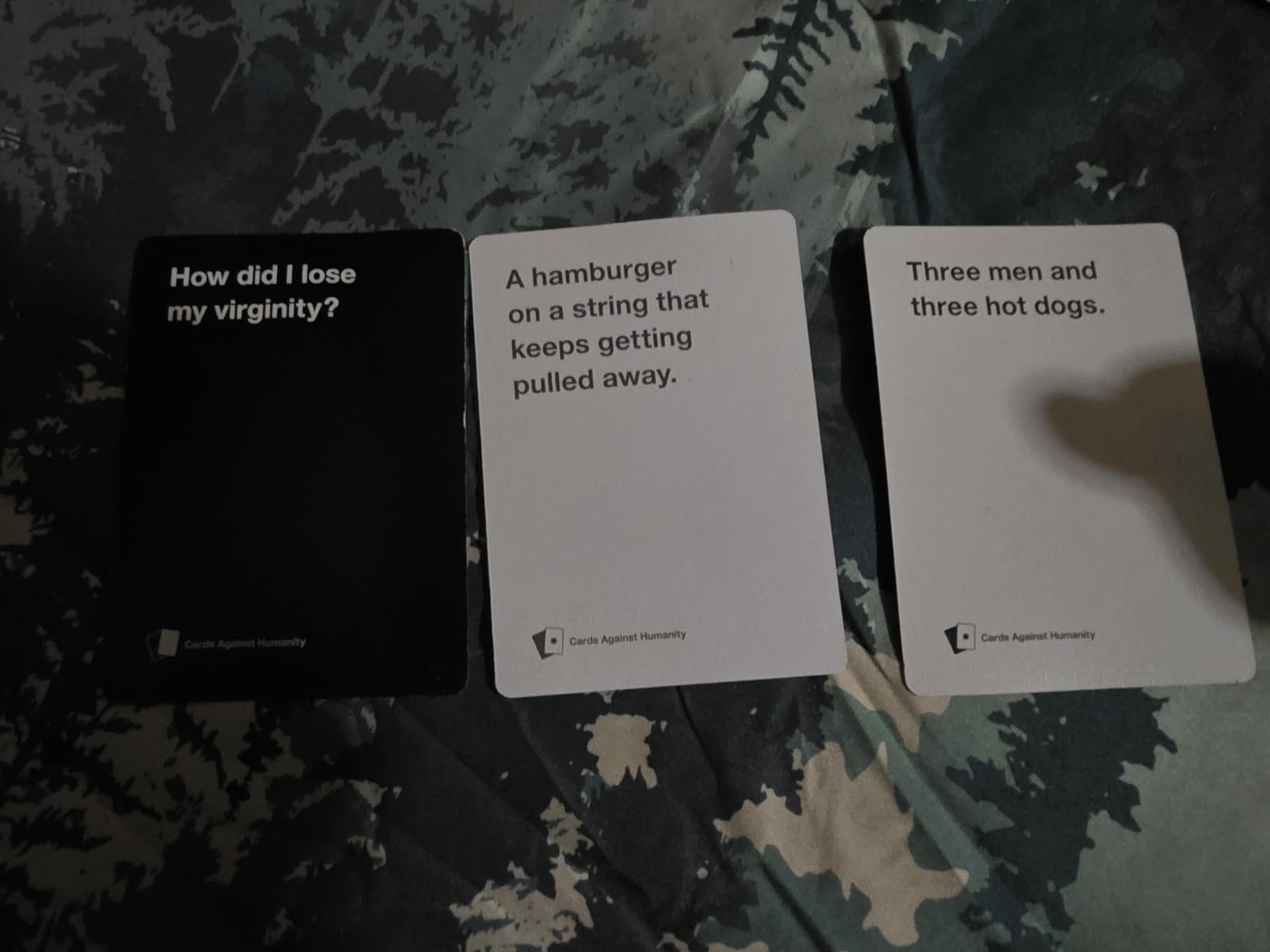
I first played Cards Against Humanity at a New Year’s Eve party with fourteen people, and I have never heard a room laugh that hard. The rules are simple: one player reads a black card, and everyone else submits their funniest white card. The judge picks the winner, and then the role rotates.
What makes this game special for large groups is that there is no player limit. I have played with six people and with twenty people, and both sessions worked perfectly because everyone plays simultaneously. Nobody waits for a turn, and the downtime between rounds is maybe thirty seconds.
I have owned the same box for two years, and I still discover card combinations I have never seen before. The version 2.0 set includes over 150 new cards compared to the original, so even if you played the first release, there is fresh material here. If your group starts memorizing cards, the expansion packs add thousands of new combinations.
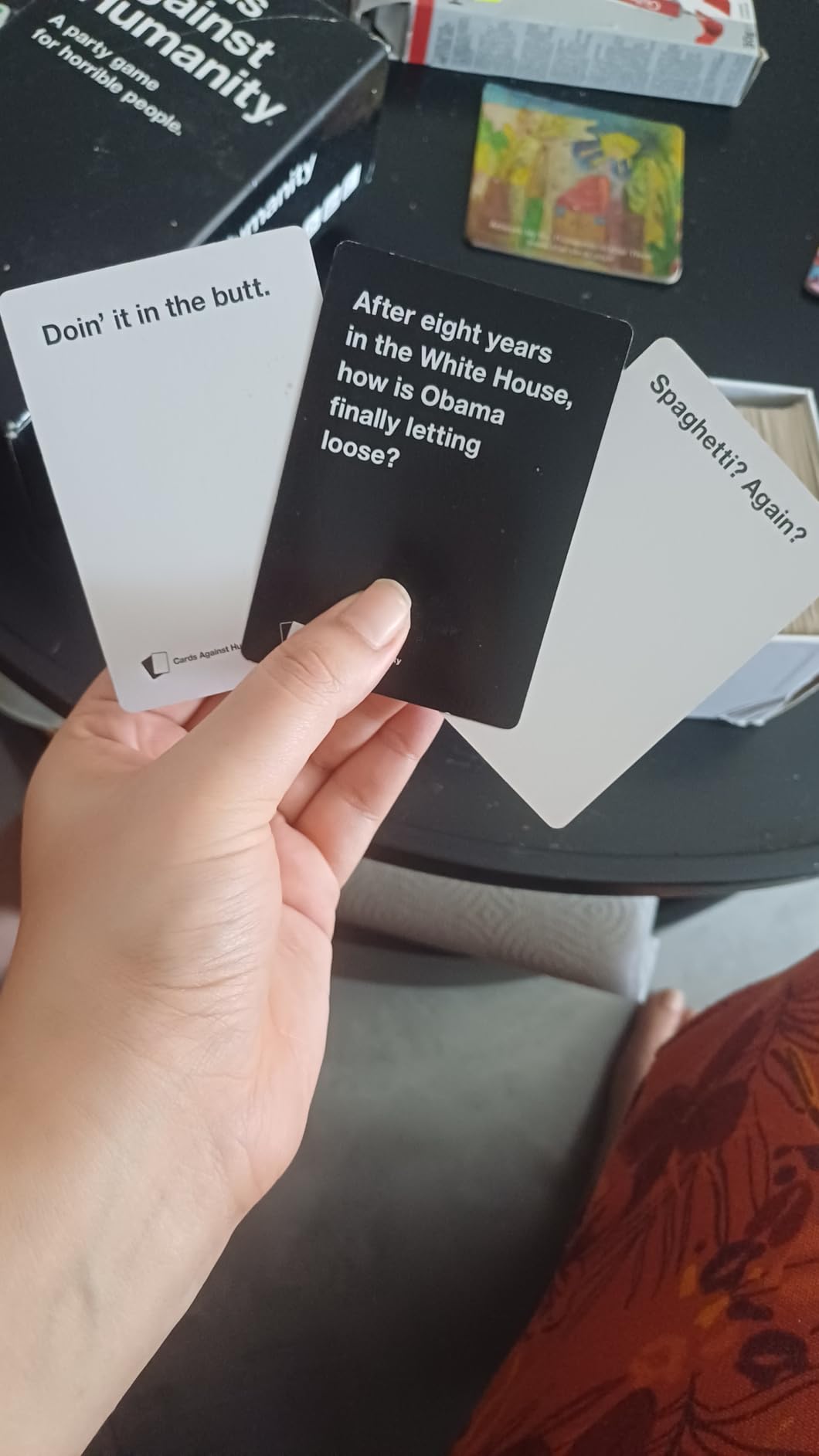
From a technical standpoint, the card stock is thick and holds up well to spilled drinks and rough handling. The box is compact enough to toss in a tote bag, which matters when you are hauling games to a friend’s house. I will say that the humor is genuinely edgy, and I have seen a few people bow out after one round because they were uncomfortable with the content.
The game works best when everyone in the room has a similar sense of humor. If you have a mixed group of close friends and new acquaintances, I recommend starting with a lighter game first and then bringing this out once the group has warmed up. That strategy has saved me from at least two awkward evenings.
One downside I noticed is that the replay value drops if you play with the exact same five people every week. The surprise factor fades when you know everyone’s comedic style. Rotating in new players or buying an expansion pack solves this problem completely.
Who Will Enjoy This Game Most
This game is perfect for adult friend groups who already know each other well and are not easily offended. I bring it to bachelor parties, adult birthday gatherings, and casual Friday nights where the goal is to laugh until it hurts.
It is not a good fit for family reunions with children, office parties with HR present, or conservative groups. I made the mistake of bringing it to a mixed-age family dinner once, and I spent the rest of the evening apologizing to my aunt.
Component Quality and Longevity
The cards are printed on heavy cardstock with a matte finish that resists fingerprints. After dozens of game nights, my deck still looks nearly new. The included box is sturdy cardboard with a magnetic closure, which keeps everything organized.
I have seen cheaper knockoff versions online, but the official set is worth the purchase for the card quality alone. The expansion packs use the same stock, so everything shuffles together cleanly without mixing card sizes or textures.
2. CGE Codenames Board Game (2nd Edition) – Best Team Word Game
- Quick to learn and play
- Excellent replay value
- Works with various group sizes
- Promotes teamwork and communication
- Family-friendly content
- Requires at least 4 players
- Spymaster thinking time can create downtime
- Less suitable for 2-player games
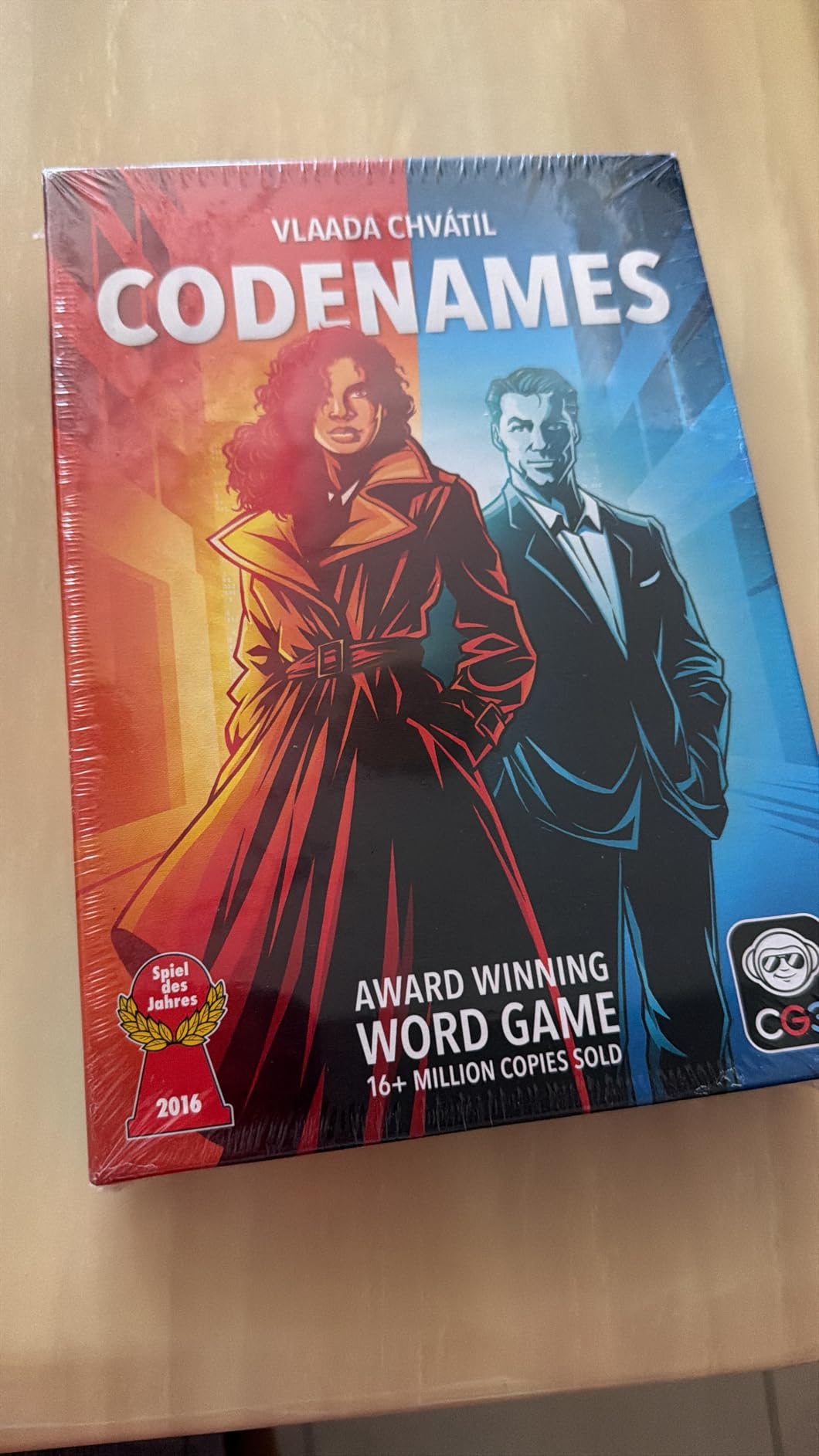
Codenames is one of the best party board games for large groups because it splits everyone into two teams, so even a table of twelve feels intimate and competitive. I have played this at least twenty times since picking up the 2nd Edition, and it never gets old. The spymaster gives a one-word clue and a number, then the team tries to guess which words on the grid belong to them.
The 2nd Edition includes refreshed art, a better box insert, and revised word cards that remove some of the more obscure terms from the original. I noticed the new cards immediately because my family stopped arguing over whether a word was too American or too obscure. The gameplay is smoother, and the rulebook is streamlined.
I love that Codenames keeps every single player involved at all times. Even when it is not your turn to guess, you are leaning over the table, whispering theories, and trying to decode the spymaster’s logic. There is no elimination, and the rounds are short enough that a losing team always wants a rematch.
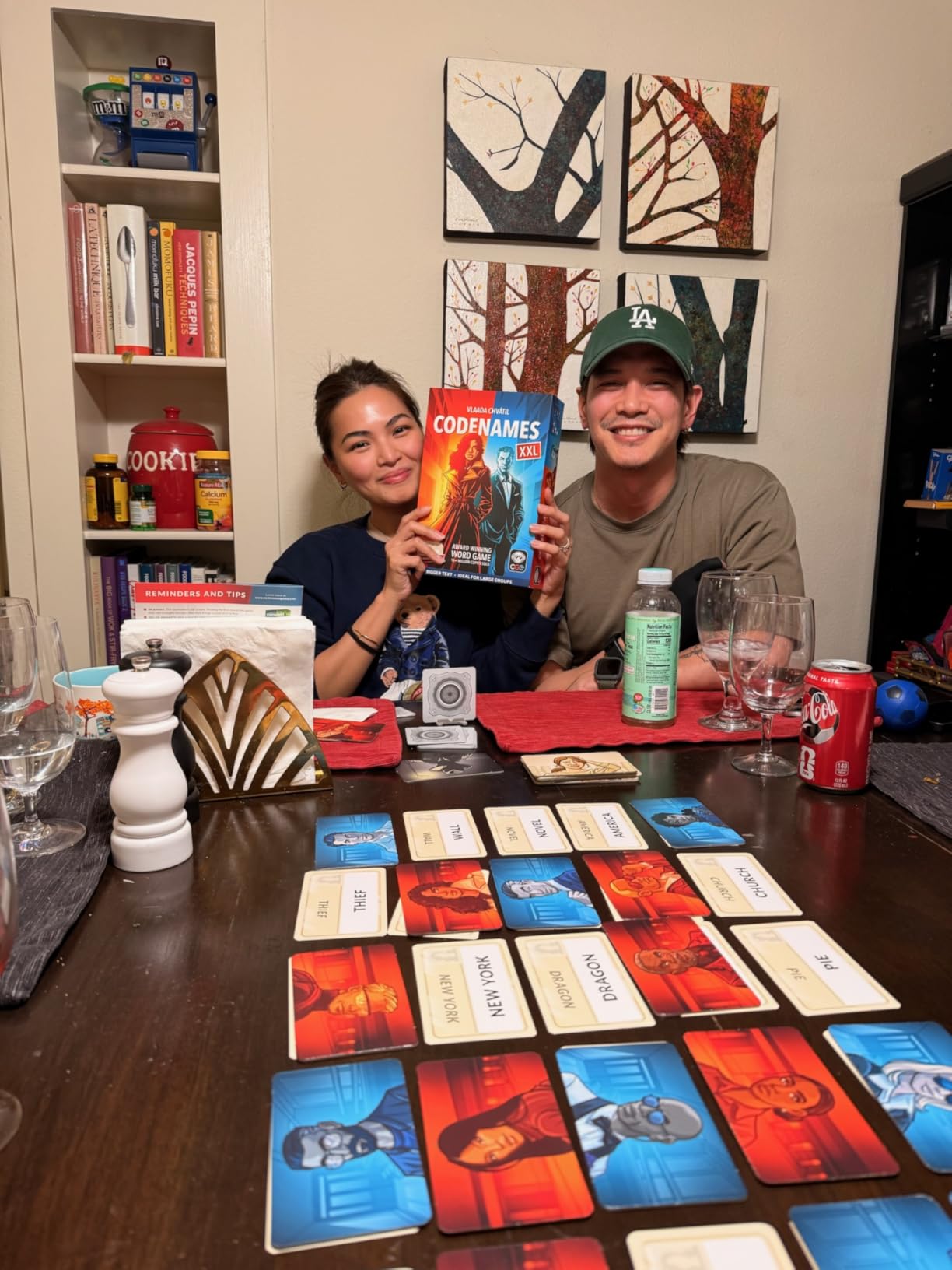
Technically, the game scales beautifully from four to eight or more players. With exactly four, you get two spymasters and two guessers, which is intense. With eight or more, you get a lively team debate before every guess. I have even played with ten by adding extra guessers to each side, and the rules accommodated us without any house modifications.
The component quality is solid. The agent tiles are thick cardboard, the key cards are durable, and the card stand for the spymaster is a nice touch. The 2nd Edition box insert actually holds everything in place, unlike the first edition where the cards slid around every time I moved the box.
The only real drawback is that the spymaster can slow down the game if they overthink their clue. I usually enforce a two-minute timer for clue-giving, which keeps the energy high and prevents one person from agonizing over a perfect three-card link. Without that timer, I have seen rounds stretch to five minutes of silent thinking.
Best Group Size and Setup Tips
I find Codenames shines brightest with six to eight players. At that size, the team discussions are loud and energetic without becoming chaotic. Setup takes about ninety seconds: lay out the five-by-five grid, hand out the team tiles, and deal a key card. You can explain the rules in under three minutes.
If you have more than ten people, I recommend running two games side by side or playing in tournament style. The game does not officially support more than eight, but I have seen groups of twelve rotate in and out between rounds successfully.
Why the 2nd Edition Beats the Original
The revised word list in the 2nd Edition is the biggest upgrade. The original had some dated pop-culture references and region-specific terms that confused international players. The new edition fixes that while keeping the same core gameplay that made Codenames a modern classic.
The art refresh is subtle but appreciated. The new agent illustrations are cleaner, and the color palette is easier to read from across the table. These small changes add up to a better experience, especially for older players who struggled with the contrast in the first edition.
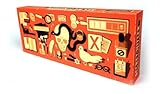
3. Secret Hitler – Premium Social Deduction for Serious Groups
- Intense social deduction gameplay
- Beautiful premium components
- High replay value
- Creates memorable moments
- Works best with 7+ players
- Requires 5+ players to play
- May be politically sensitive for some
- Learning curve for new players
I bought Secret Hitler after a friend brought it to a game night and our group played six rounds in a row. This is a social deduction game where players are secretly divided into Liberals and Fascists, with one player taking the role of Hitler. The Liberals must pass policies and find Hitler, while the Fascists quietly push their agenda without revealing themselves.
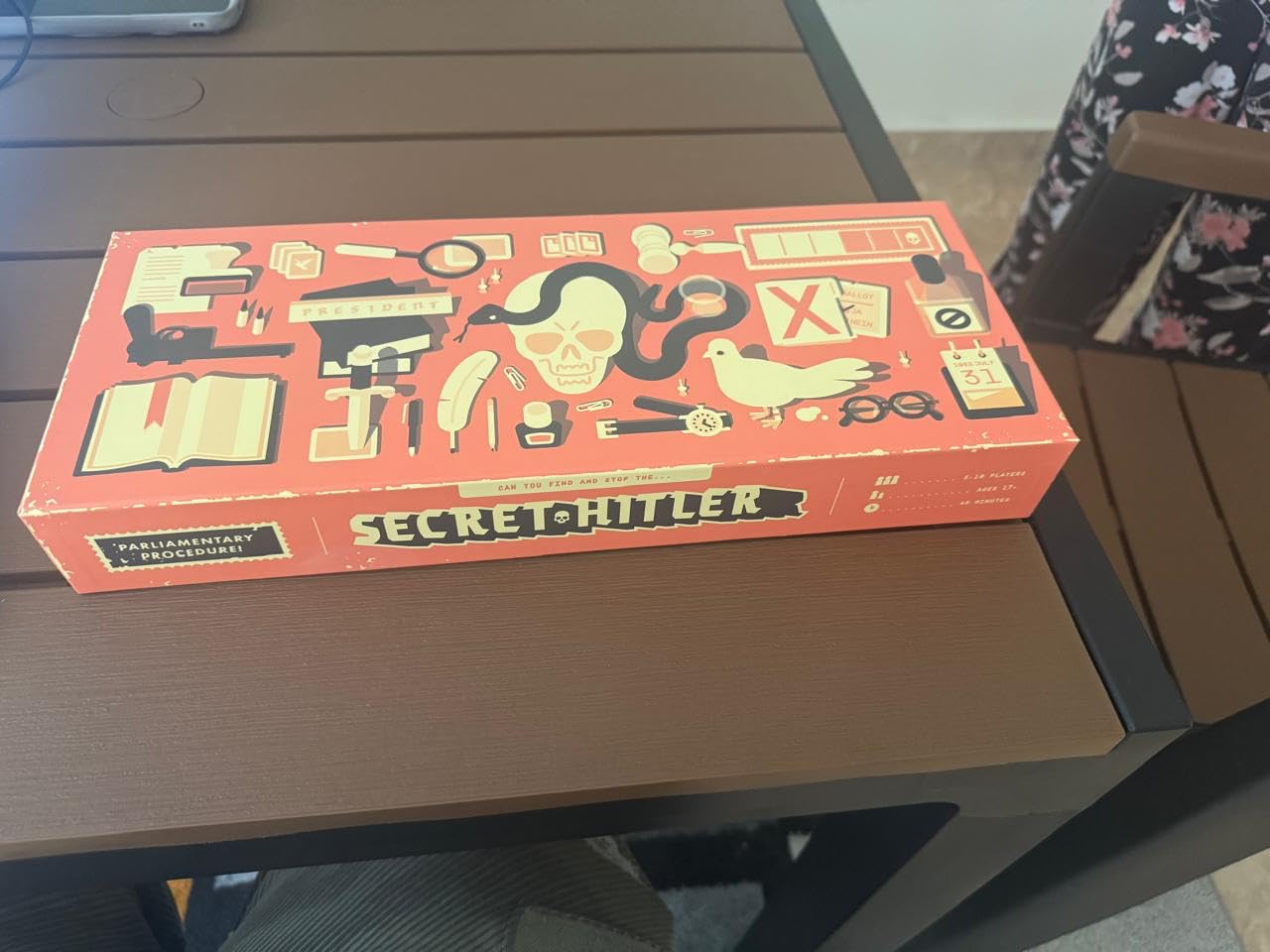
The components are what immediately set this apart from every other game on my shelf. The policy tiles are thick wood with a foil inlay, the election tracker is a solid board, and the envelopes for secret roles feel like quality stationery. I have had guests pick up the box just to admire the weight and texture of the pieces.
With seven to ten players, the game creates genuine tension. I have seen friendships tested by a perfectly timed policy play, and I have watched quiet players transform into master manipulators. The rounds are quick, but the accusations and debates between rounds can last twenty minutes. That is where the real entertainment happens.
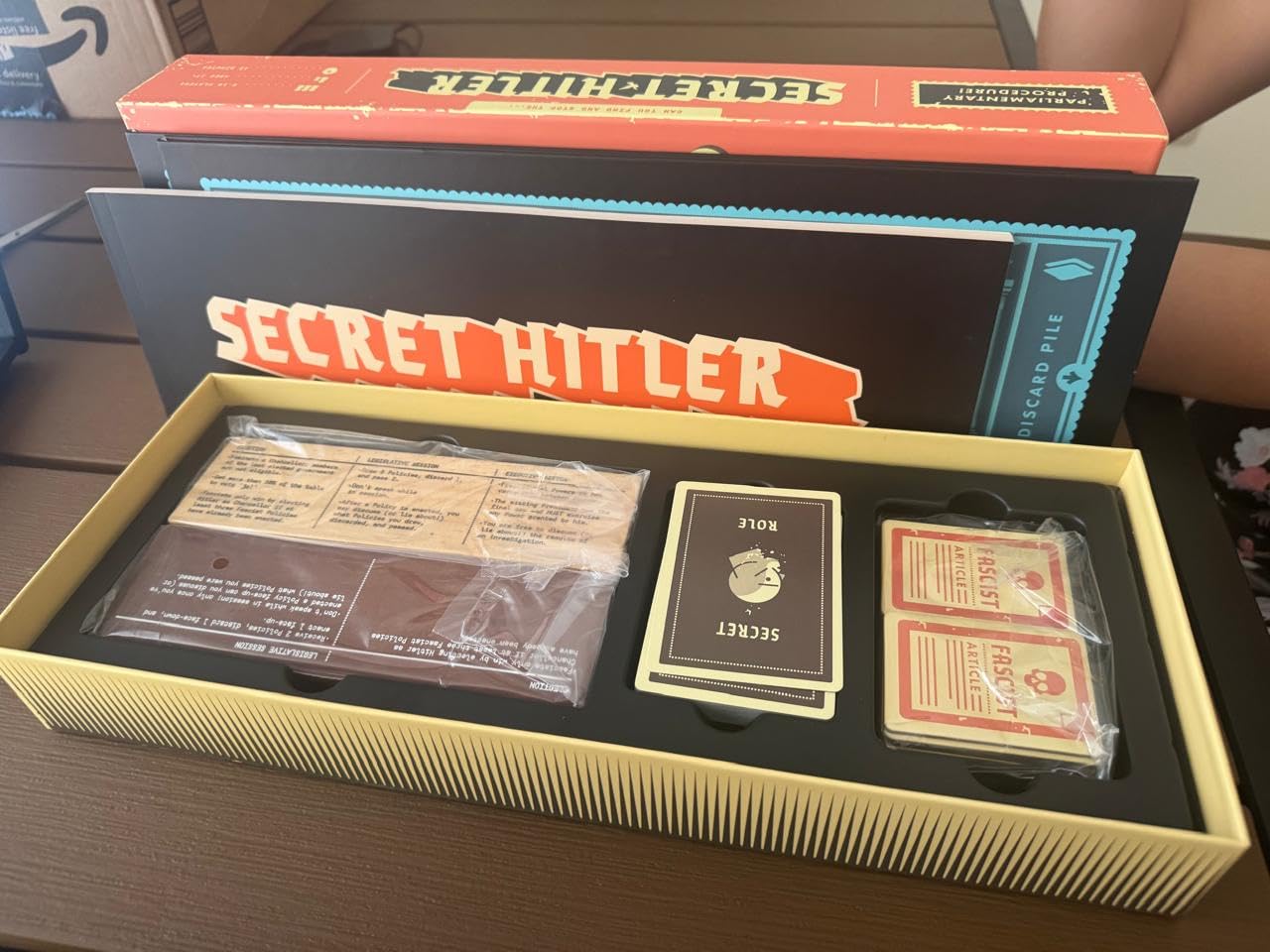
Technically, the game requires at least five players to function, but I strongly recommend seven or more. With five or six, the odds are too straightforward, and experienced players can solve the puzzle too quickly. At seven, the room is large enough that alliances form, betrayal feels personal, and the fascists have real cover.
The rulebook is well-written, but I found that new players need one full game to truly understand how the policy deck and presidential powers interact. I always play a practice round with open roles the first time I teach it. After that, everyone grasps the flow, and the second round is where the real game begins.
The political theme does not bother my group, but I have met people who are uncomfortable with the World War II imagery. If your crowd is sensitive to that, you might want to choose a different social deduction game. I have never had an issue, but it is worth considering before you buy.
Best Setting and Group Dynamic
Secret Hitler is ideal for competitive friend groups who enjoy negotiation and bluffing. I bring it out when I have a mix of gamers and semi-gamers who are willing to lie to each other for fun. It works at house parties, weekend gatherings, and even some team-building events where the culture is playful.
It is not a good fit for casual family gatherings with young teens or for groups where people take deception personally. I once played with a couple who argued about a policy play for an hour after the game ended. That was the last time I invited them to a social deduction night.
Component Durability and Storage
The wooden policy tiles are thick enough to survive drops and spills. I have knocked the board off the table once, and nothing chipped or cracked. The secret envelopes are paper, so they will wear out eventually, but they are standard envelope sizes and easy to replace.
The box is compact for the component quality, but I added a small rubber band to keep the policy tiles from sliding during transport. That is my only storage complaint, and it is a minor one given how beautiful everything looks on the table.
4. Double Bananagrams Word Game – Fast Word Race for Up to 16
- Fast-paced word building game
- Educational and entertaining
- Portable banana-shaped case
- Suitable for ages 7 and up
- Works with 1-16 players
- Some versions lack wild tiles
- Language-specific English tiles
- Double set may be excessive
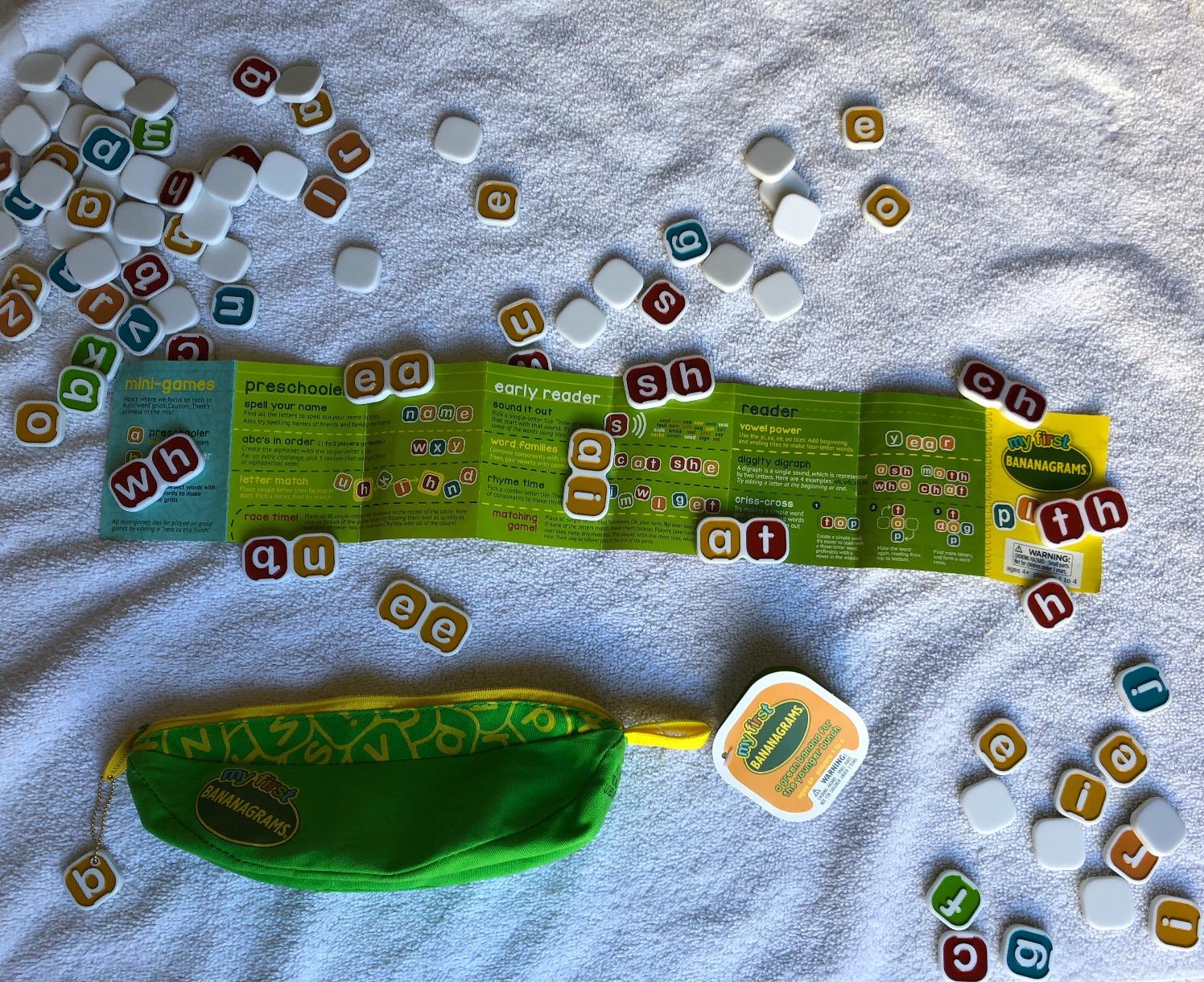
Double Bananagrams is the scaled-up version of the classic word game, and it is specifically designed for larger groups. Everyone draws letter tiles and races to build a personal crossword grid. The first person to use all their tiles shouts “Bananagrams,” and everyone else has to draw more tiles and rearrange their grids.
I played this at a family reunion with twelve people ranging from ages ten to seventy, and everyone was equally competitive. The rules are simple enough that a child can explain them, but the gameplay is deep enough that English majors and crossword enthusiasts still feel challenged. I love that nobody is eliminated, and the game ends when someone wins, not when others lose.
The double set includes twice as many tiles as the standard version, which is essential for large groups. With sixteen players, you need every single tile. I tried running a twelve-player game with the regular Bananagrams once, and we ran out of letters halfway through. The double version solves that problem completely.
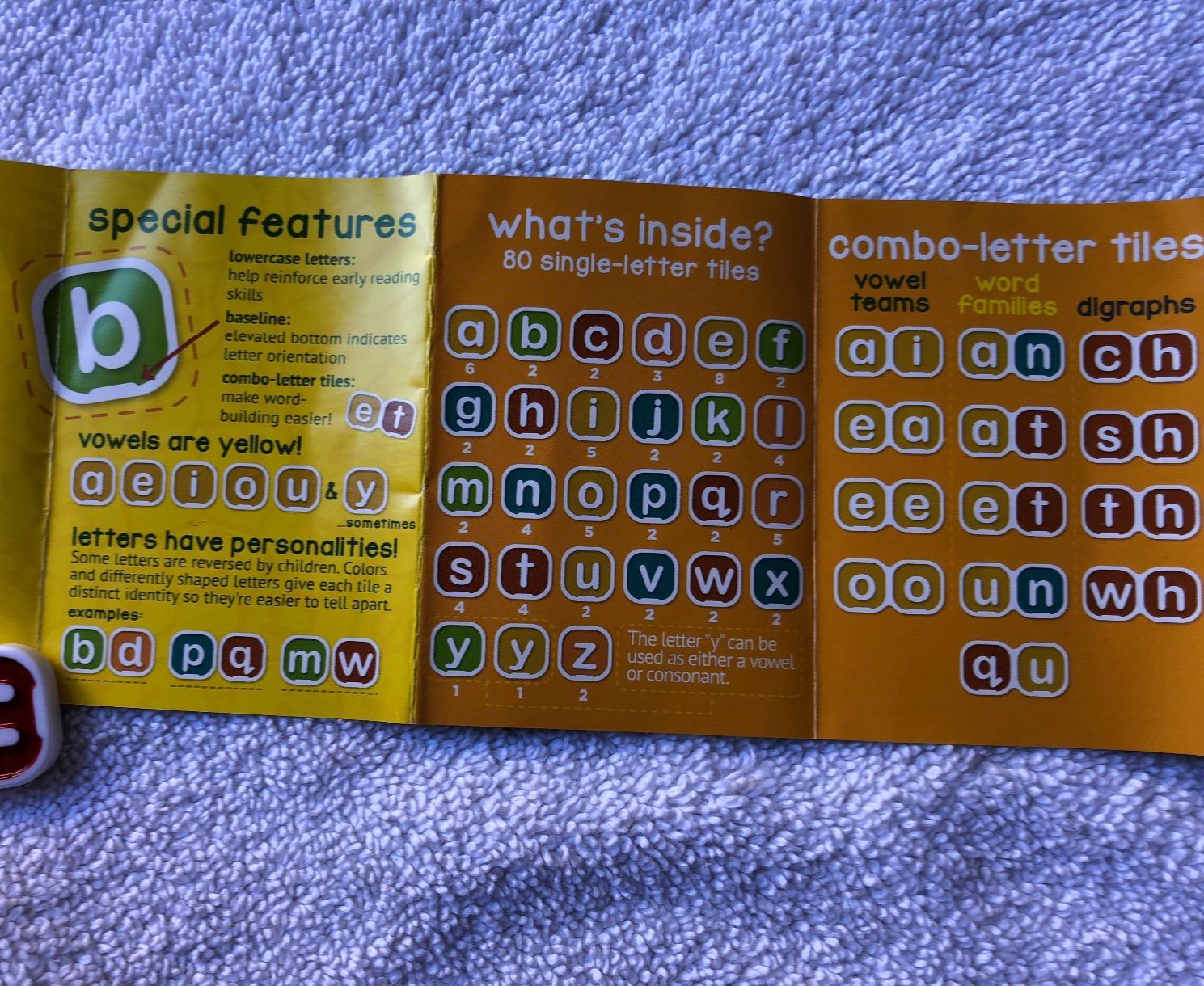
Technically, the game is language-specific, so you need the English tile set if your group speaks English. The tiles are thick plastic with embossed letters, and they have held up to two years of travel in the banana case. That case is genuinely charming and practical. I toss it in my backpack without worrying about losing pieces.
The speed aspect makes this game exciting. I have seen quiet players become surprisingly aggressive when they are one tile away from finishing. There is no turn-taking, so the table is always noisy and active. I usually play three or four rounds in a row because the reset time is literally zero seconds.
The only downside is that the double version might be overkill for a casual couple or a small family. If you rarely play with more than four people, the standard version is cheaper and more practical. But if you host large groups even occasionally, the double set is the right buy.
Educational Value and Age Range
This is one of the few games on my list that I feel genuinely good about giving to kids. It builds spelling skills, vocabulary, and spatial reasoning without feeling like homework. I have used it in tutoring sessions as a reward activity, and students ask to play it again.
The manufacturer recommends ages seven and up, which I think is accurate. Younger children can play with help, but they will struggle to build crosswords quickly. I have seen a six-year-old team up with a parent, which works well and keeps everyone included.
Portability and Travel Use
The banana case is a brilliant design. It is soft-sided fabric with a zipper, so it squishes into tight spaces. I have taken Bananagrams to beaches, camping trips, and airport terminals. The tiles are waterproof enough to survive a light splash, though I would not submerge them.
I also appreciate that there is no board, no setup, and no instructions to forget. You just dump the tiles and start playing. That simplicity makes it my default travel game when I am packing light but want to bring something for a crowd.
5. One Night Ultimate Alien – Quick Social Deduction with App Support
- Fast 10-minute rounds
- No player elimination
- Free app narrates the game
- Works with 3-10 players
- High replayability with role combinations
- Requires 4+ players for best play
- Cards can scuff over time
- Learning curve for abilities
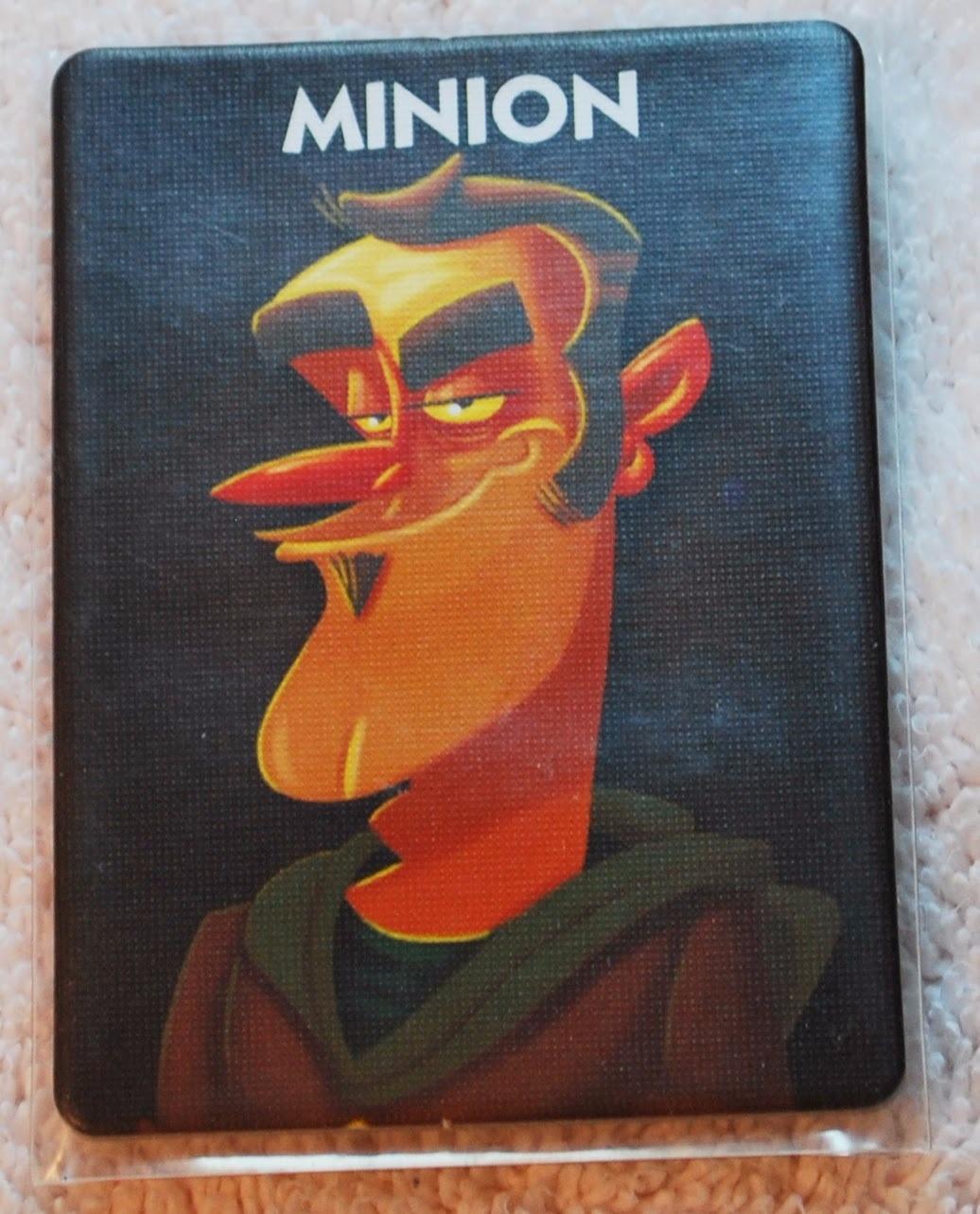
One Night Ultimate Alien is the sci-fi themed entry in the popular One Night series, and it has become my go-to filler game when I have a big group and not a lot of time. Each round lasts about ten minutes, and the free companion app handles all the narration and timing. You just pass the phone around the table, and it tells everyone when to open their eyes, use their abilities, and vote.
I played six consecutive rounds with eight people at a recent barbecue, and nobody wanted to stop. The alien theme is fresh, and the new roles add abilities that were not in the original Werewolf version. My favorite is the Groob role, which forces players to reveal information in a way that creates total chaos. I have never seen a round end without at least one person shouting in disbelief.
The app integration is what makes this game party-ready. You do not need a designated moderator, which means everyone gets to play. The voice acting is surprisingly good, and the sound effects add atmosphere. I have played in a dark room with the app volume up, and it felt like a completely different experience than a standard card game.

Technically, the game works with as few as three players, but I think four is the realistic minimum. With three, the deduction is too simple. With six to eight, the bluffing and role interactions create genuine suspense. I have played with ten, and while it is crowded, the app keeps the structure tight so it never drags.
The card stock is standard for this price range, but I sleeved my set after a few months because the cards started showing wear from frequent shuffling. The box is small, which is great for travel, but it does not include card dividers. I added a small foam insert to keep the roles separated.
The learning curve is real for new players. Each role has a unique ability, and first-timers often forget what they are supposed to do when the app calls their name. I solve this by printing a simple cheat sheet for each role and placing it on the table. After two rounds, everyone remembers their abilities.
Best Use Case and Event Type
This game is perfect for casual drop-in parties where people arrive and leave at different times. Because each round is standalone, new players can join between games without disrupting the flow. I used it at a housewarming where guests floated in and out, and it worked beautifully.
It is also great for mixed groups where some people love social deduction and others are skeptical. The ten-minute commitment is low enough that even hesitant players will try one round. By the end of that round, they are usually asking to play again.
App Integration and Accessibility
The free app is available on both iOS and Android, and it works offline. I have never had it crash during a game. The narration is clear, and the timer is adjustable if you want to give new players more time to read their roles. I appreciate that the developers update the app periodically with new voice packs.
For players with hearing difficulties, the app does have subtitles, but the experience is better with audio. I have played with one deaf friend who used the subtitles and found the game fully accessible. The visual prompts on the phone screen are large and easy to read.
6. Taco Cat Goat Cheese Pizza – Reflex-Based Card Game
Taco Cat Goat Cheese Pizza Card Game by Taco Cat Games, Age 7+, 2-8 Players
- Easy to learn within minutes
- Fast 10-15 minute rounds keep everyone engaged
- Compact and portable for travel
- Good quality cards
- Works for all ages 7+
- Can get chaotic and loud during gameplay
- Physical slapping may cause hand discomfort
- Some buyers received different versions than pictured
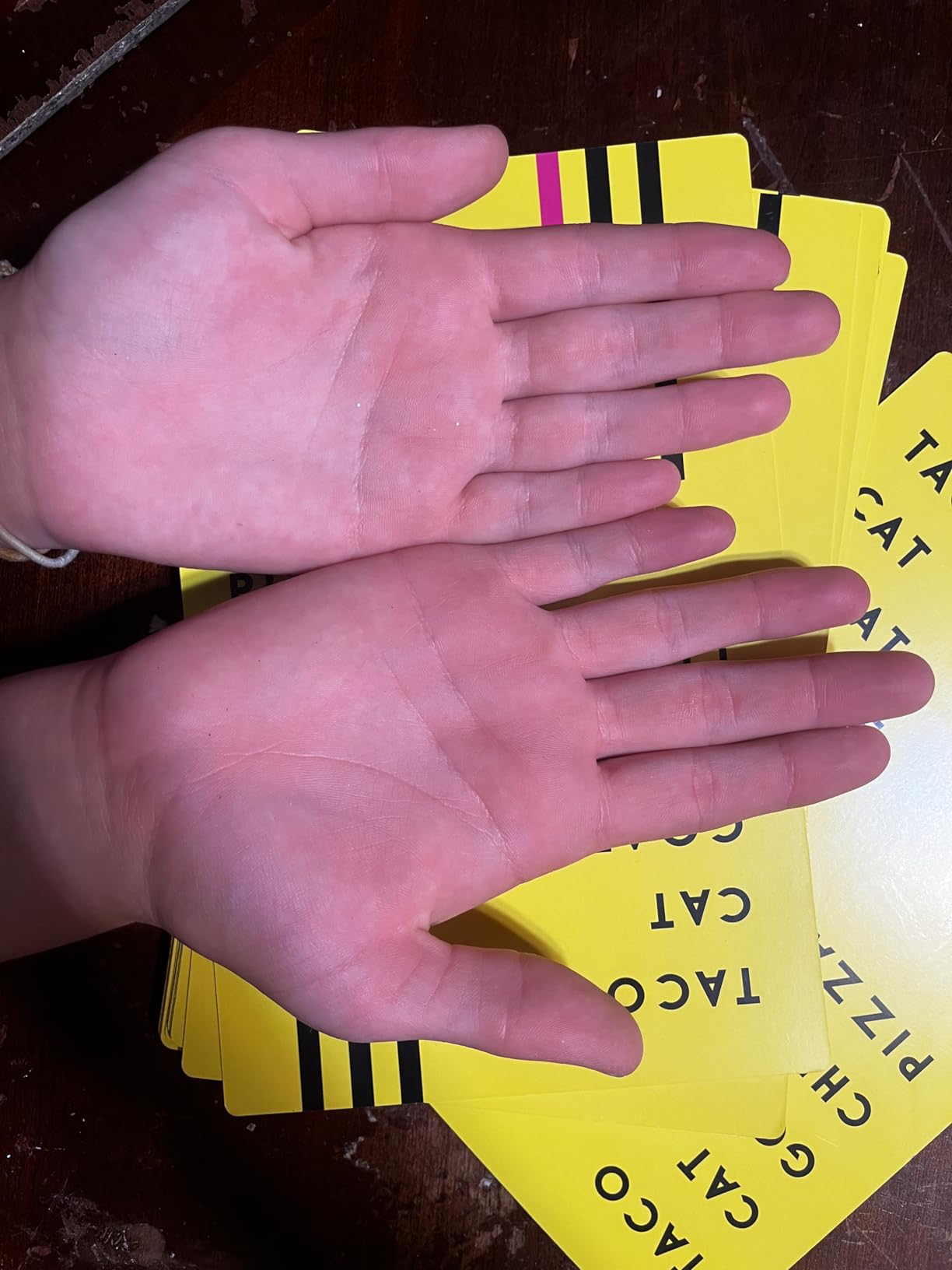
I keep a copy of Taco Cat Goat Cheese Pizza in my glove compartment because it is the perfect emergency game. The rules are so simple that you can start playing within sixty seconds of opening the box. Everyone takes turns flipping a card while saying the next word in the sequence: taco, cat, goat, cheese, pizza. When the spoken word matches the card, everyone slaps the pile. The last person to slap takes the stack.
This game gets physical, loud, and competitive in the best possible way. I played with six adults at a picnic, and within three minutes we were all laughing and nursing sore hands. The physical slapping mechanic is what makes it memorable. It breaks the social ice instantly because nobody can maintain their dignity while frantically slapping a pile of cards.
At under ten dollars, this is the cheapest game on my list, and it delivers more laughs per dollar than anything else I own. I have given it as a stocking stuffer three times, and every recipient has thanked me later. It is small enough to fit in a purse, and the rounds are short enough that you can play while waiting for food at a restaurant.
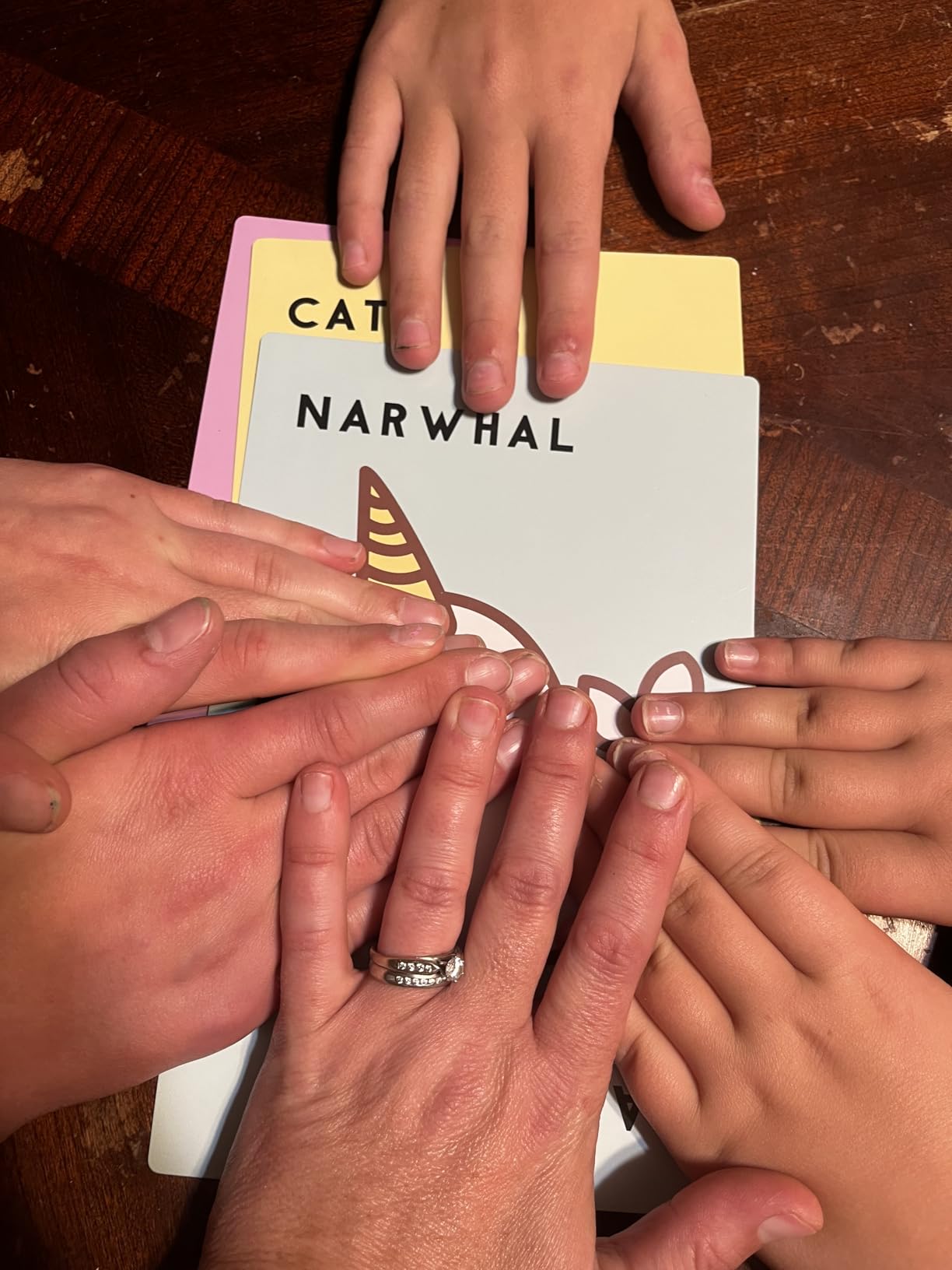
Technically, the game supports two to eight players, but I think four to six is the sweet spot. With two players, the slapping is less frantic. With eight, the pile becomes too wide, and people on the ends struggle to reach. The cards are decent quality, though I have seen some wear after heavy use. I recommend playing on a soft surface like a tablecloth rather than a hard picnic table, which scuffs the card edges faster.
The 10-15 minute runtime is accurate for most groups, though I have seen competitive tables stretch a single round to twenty minutes because everyone is playing defensively. There is no deep strategy, but there is a surprising amount of mind games in the timing. Experienced players learn to hesitate just long enough to bait a premature slap.
I did receive a slightly different card back design than the one pictured online, but the gameplay was identical. This seems to be a common issue with multiple print runs. It does not affect play at all, but collectors should be aware.
Physical Gameplay and Space Requirements
You need a flat surface where everyone can reach the center. A standard coffee table works for up to six players. For eight players, a dining table is better. I have played on the floor at a campsite, and while it worked, the uneven ground made slapping harder. Indoors on a table is ideal.
The game is genuinely loud. If you are in a quiet venue or playing late at night with sleeping children nearby, this is not the right choice. I save it for daytime parties, outdoor events, and game nights where noise is not an issue.
Why It Works for Mixed Age Groups
Children and adults compete on equal footing here. A ten-year-old has the same reflexes as a thirty-year-old, and the simple rules mean there is no knowledge gap. I have seen grandparents beat teenagers consistently because they have better timing and patience.
The manufacturer recommends ages seven and up, which is accurate. Younger children can understand the rules, but the slapping mechanic requires coordination they might not have. I have played with a six-year-old who enjoyed it, but she needed a grown-up to help her reach the pile quickly.
7. LCR Left Center Right Dice Game – Simple Luck-Based Fun
- Super easy to learn
- Great for all ages 6+
- Quick gameplay
- Portable tin packaging
- Works with large groups
- Pure luck game with no strategy
- Game length depends on group preference
- Requires 3+ players minimum
LCR is the simplest game on this list, and that is exactly why it works for large groups. You roll three dice and follow the instructions: L means pass a chip left, C means pass a chip to the center pot, and R means pass a chip right. The last player with chips wins. There is zero strategy, which means everyone from drunk party guests to sleepy children can play without thinking.
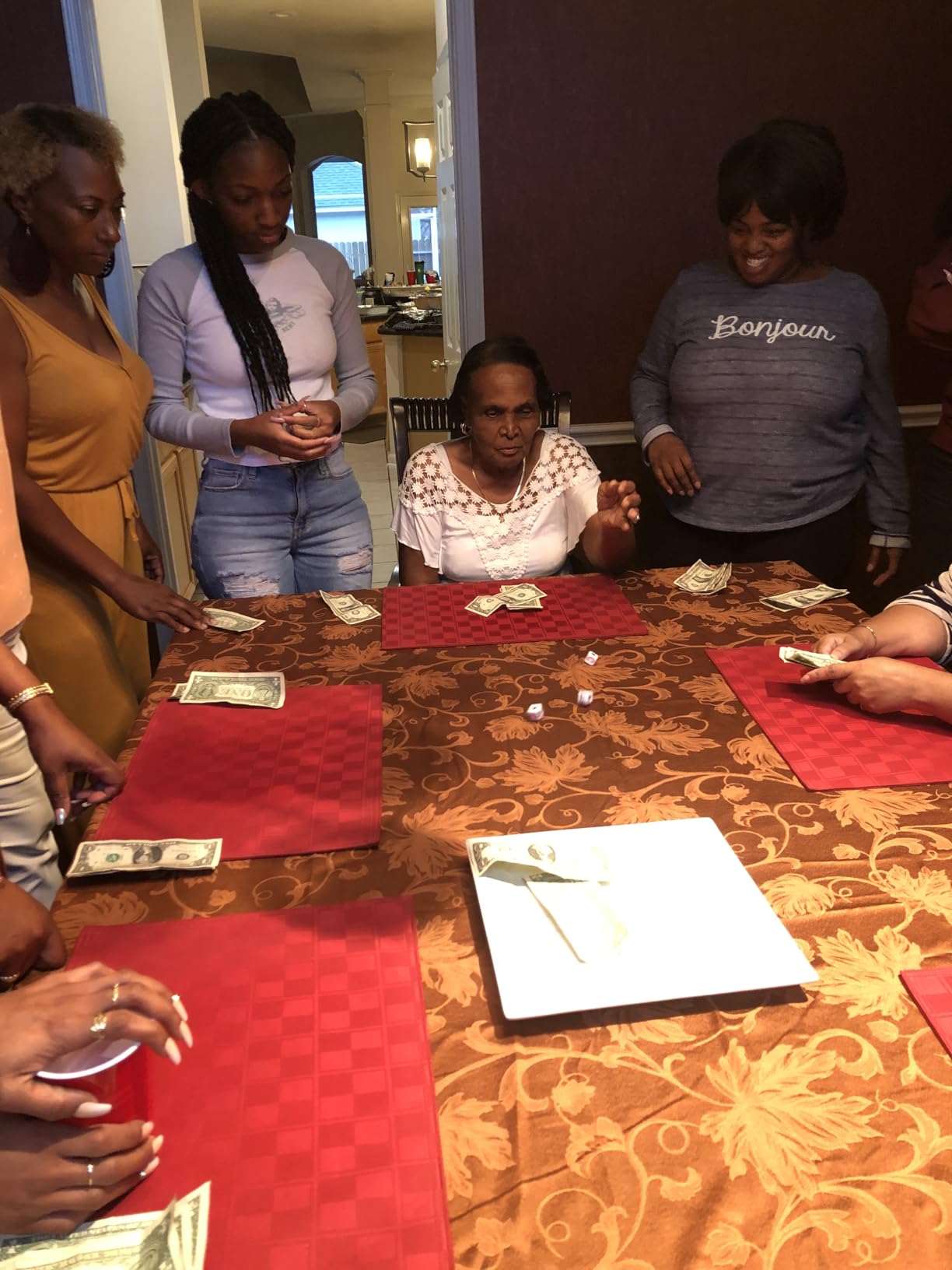
I played this with fifteen people at a family reunion, and the table was completely engaged despite the fact that nobody was making decisions. The tension comes from watching the dice roll and hoping you do not lose your last chip to the center. I have seen someone go from one chip to winning the entire pot in three rolls, and the room erupted.
The game is genuinely addictive in a low-stakes way. I usually play with three chips per person and a round takes about five minutes. We ran a tournament bracket with twenty people at a New Year’s party, and it was the highlight of the night. Because there is no skill involved, everyone feels like they have a chance to win.
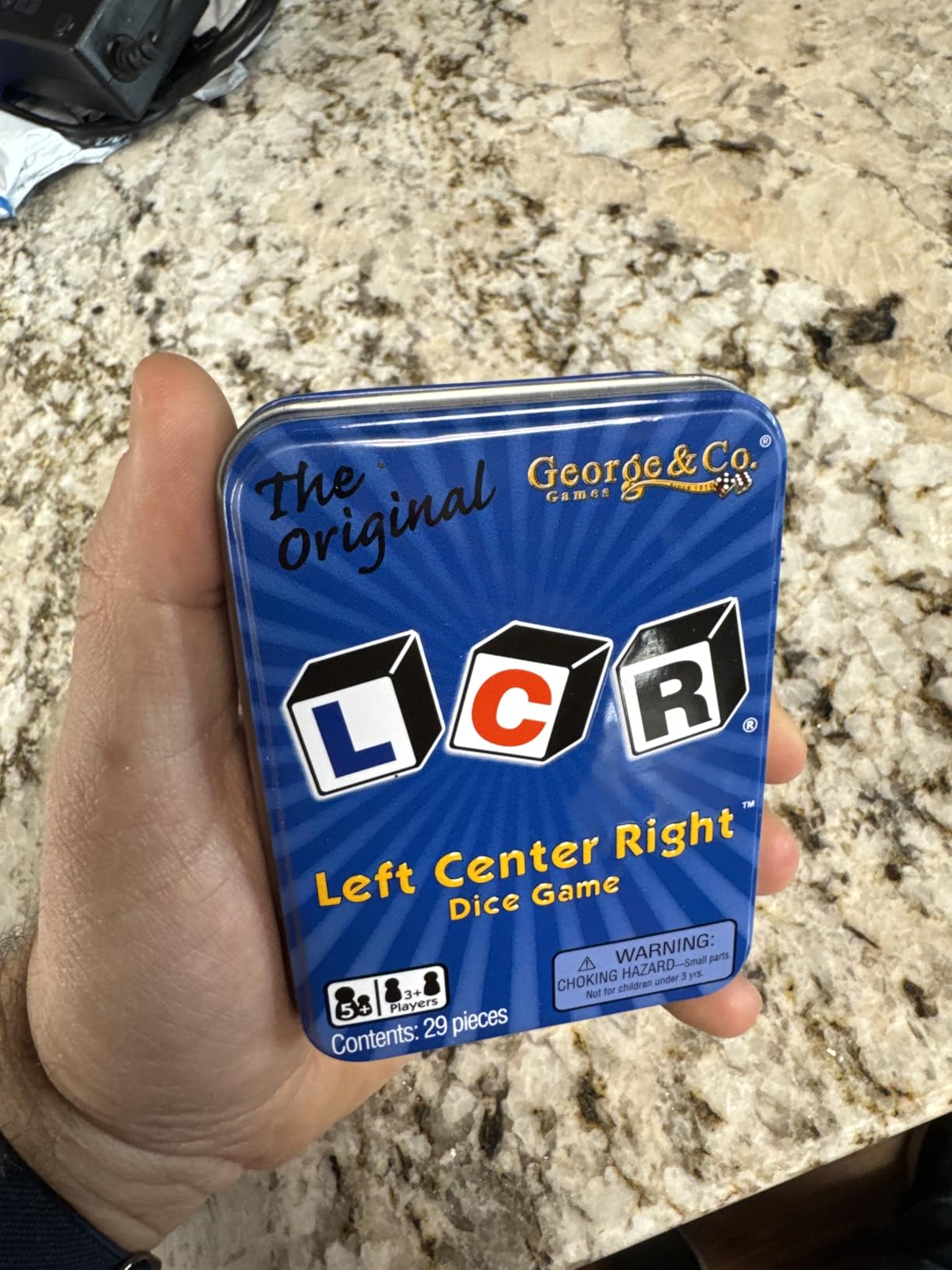
Technically, the game requires three players minimum, but there is no maximum. I have played with twenty by using poker chips instead of the included tokens. The dice are standard size and weight, and the tin case is surprisingly durable. I have carried this in my pocket to bars and restaurants, and the tin has never bent or opened accidentally.
The included chips are small plastic discs, but I prefer using quarters, candy, or snacks as wagers. Using M&M’s as chips makes the game infinitely more exciting because the winner literally eats the pot. I have also used dollar bills at adult parties, which adds a tiny gambling element without any real risk.
The only real criticism is that there is no strategy whatsoever. If your group loves games where skill matters, they will get bored after two rounds. I use LCR as an opener or a palate cleanser between heavier games. It is never the main event, but it is always a crowd-pleaser.
Best Uses and Group Types
LCR is ideal for family reunions, school events, and casual parties where you need a game that requires no explanation. I have taught it to groups where half the people did not speak English, and the dice symbols are universal enough that language is not a barrier. That makes it my default game for mixed-language gatherings.
It is not a good fit for competitive gamers who want to outplay their opponents. I once brought it to a board game meetup with serious strategy players, and they politely played one round before switching to a complex Eurogame. Know your audience.
Customization and House Rules
The basic rules are so simple that you can layer on house rules without breaking the game. I sometimes add a rule where rolling three C’s means you take the center pot instead of passing to it. Another variation I like is letting players trade one chip with a neighbor before rolling. These tweaks keep the game fresh for regular players without adding complexity.
I also recommend investing in a larger chip set if you play with more than ten people. The included chips are enough for about eight players. Poker chips or even bottle caps work as substitutes, and they make the game feel more substantial on the table.
8. Wavelength: The Mind Reading Party Game – Spectrum Guessing
- Ingenious serious and funny gameplay
- Quick setup and easy rules
- Top-notch components
- Works for small and large groups
- High replay value
- Higher price point
- Wheel can move when opening closing
- Some advanced prompts can be divisive
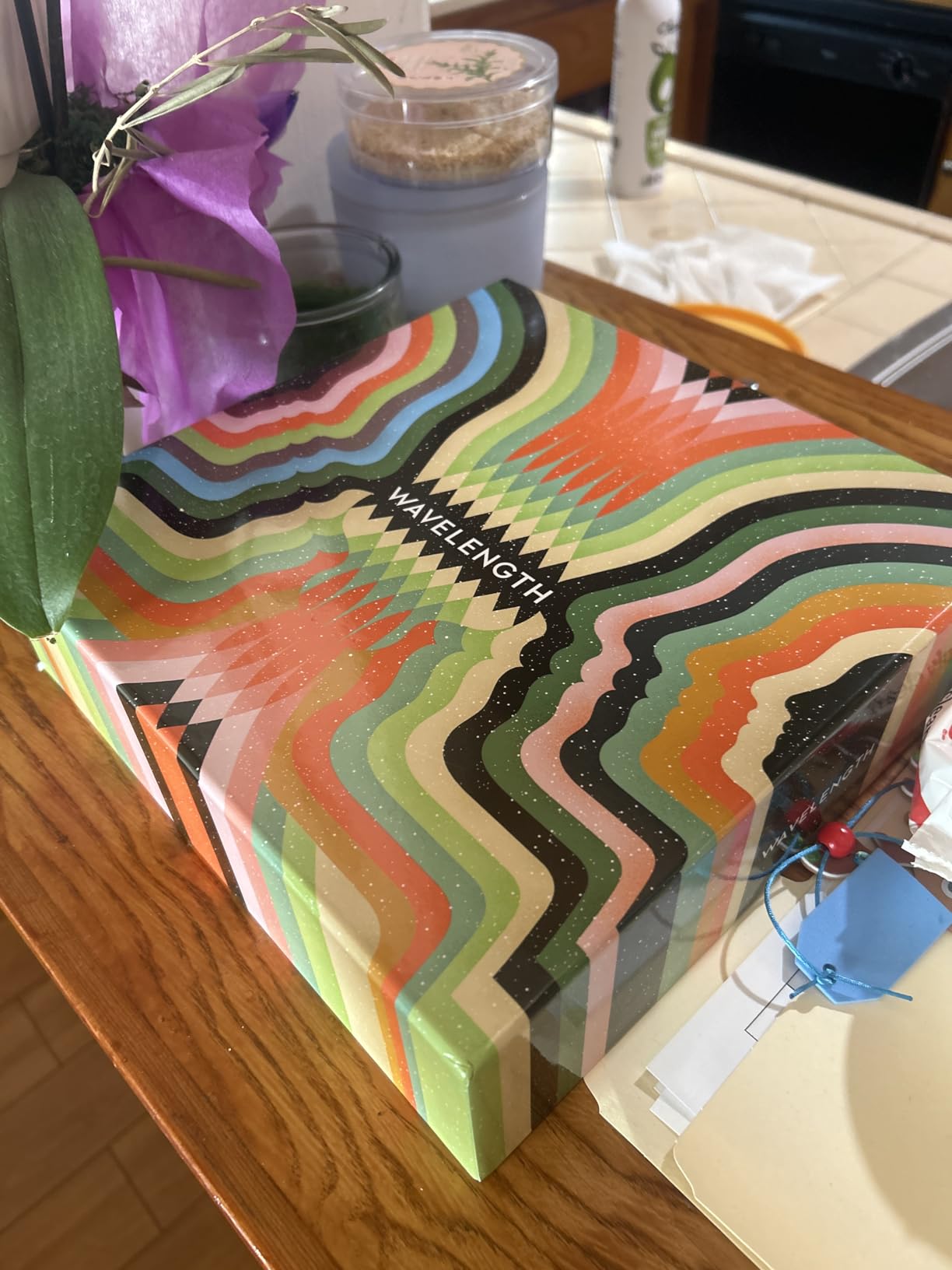
Wavelength is the most unique game on this list, and it is the one that consistently surprises first-time players. One player draws a card with two extremes, like hot versus cold or wizard versus not a wizard. They then spin a hidden dial to a point on the spectrum and give a clue to their team. The team has to guess where the dial landed. The closer they are, the more points they score.
I played this with ten people at a dinner party, and the conversations it sparked were better than the game itself. When the clue-giver said “my ex-boyfriend” for the hot-cold spectrum, the table debated for ten minutes about what that meant. The game is essentially an excuse to have interesting conversations, and it works because the spectrum prompts are genuinely clever.
The physical component is a plastic wheel device with a clever hiding mechanism. The clue-giver can see the dial position, but the rest of the team cannot. The device is satisfying to open and close, and it has a nice heft to it. I have had multiple guests ask where I bought it because they wanted one for their own collection.
Technically, the game works with as few as two players, but it is clearly built for groups. I have played with twelve, and the team format kept everyone involved. The basic cards are accessible, and the advanced cards add nuance for experienced players. I recommend starting with the basic deck for the first game, then mixing in advanced cards once the group understands the flow.
The setup is almost instant. You pull out the wheel, shuffle the cards, and start playing. The rulebook is one page, and I explain it in about thirty seconds. That makes Wavelength a fantastic option when people are tired of learning complex rules and just want to start playing.
The only physical issue I have noticed is that the wheel can shift slightly when you open and close the device. It is not enough to ruin the game, but it can cause a one or two point swing. I hold the device steady when opening it, and that solves the problem completely.
Conversation Quality and Social Impact
Wavelength is the best game I own for turning strangers into friends. The clues require personal context, so you learn how people think. I have played this with coworkers at a retreat, and by the end we understood each other better than we would have after a week of small talk. If you want a game that builds connection, this is it.
The advanced cards do touch on topics that can be divisive, like politics or religion. I usually remove those cards before playing with a new group. The basic deck is plenty entertaining without risking awkward disagreements.
Component Design and Table Presence
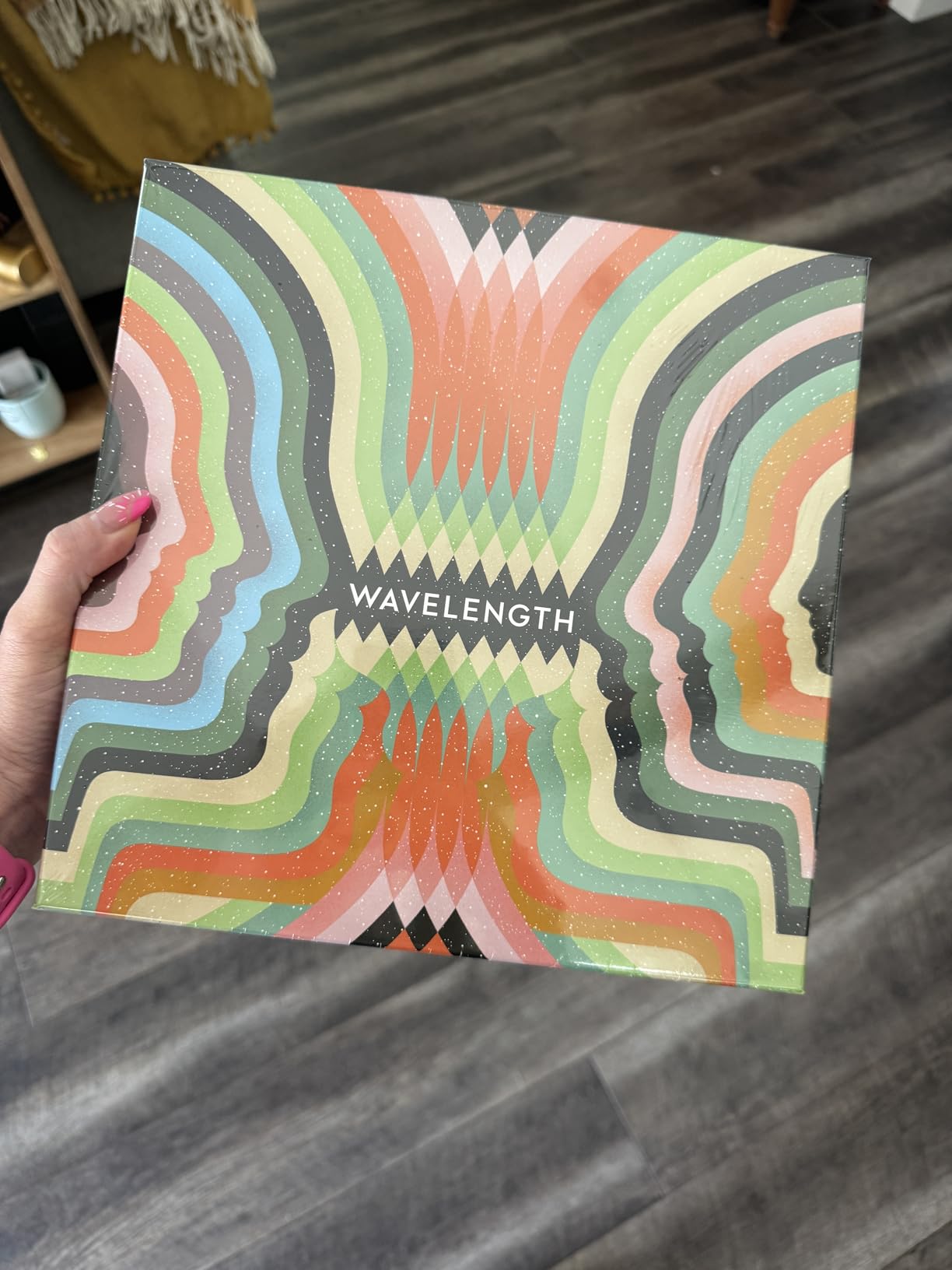
The plastic wheel is the centerpiece, and it is beautifully designed. The color gradients are clean, the scoring tokens are thick acrylic, and the card art is minimalist and modern. This is a game that looks good on a table, which matters if you are hosting a party where people take photos.
The box is larger than most card games, but it is still portable. I bring it to game nights in a canvas tote with several other options. The size is worth it because the wheel device is what makes the game special. A smaller box would require a flimsier component, and that would ruin the experience.
9. The Chameleon – Award-Winning Bluffing Game
- Easy to learn in 2 minutes
- Engaging social deduction
- Great for parties and families
- Multiple editions available
- High replay value
- Younger players mixing with adults can be challenging
- Some versions have fewer cards than full edition
- Topics can repeat with same group
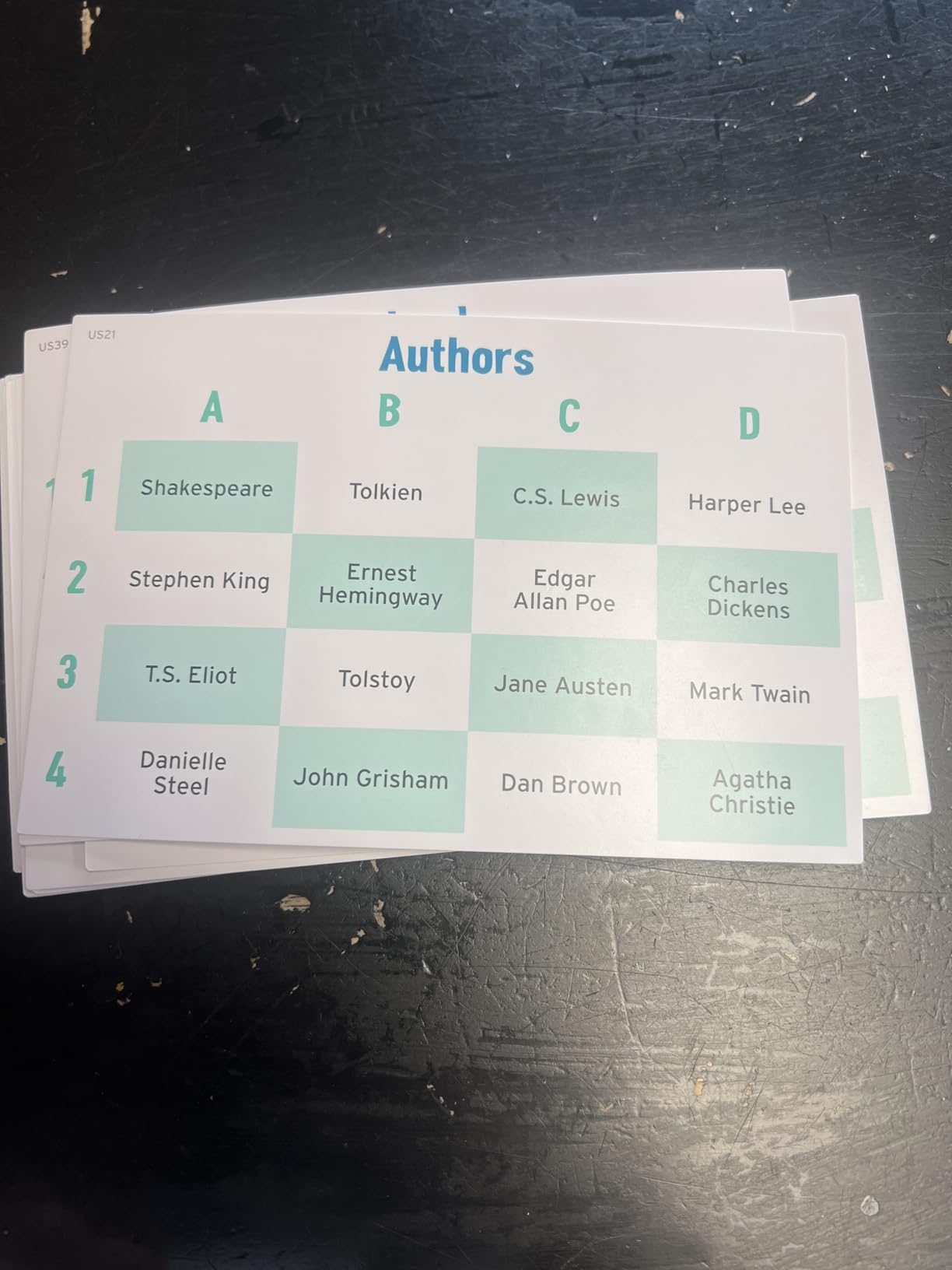
The Chameleon is a bluffing game that plays like a faster, friendlier version of social deduction classics. Everyone knows a secret word except one player, who is the chameleon. Players take turns giving one-word clues to prove they know the secret word. The chameleon tries to blend in by giving vague clues. After everyone speaks, the group votes on who they think the chameleon is.
I have played this with groups of six and eight, and it is consistently hilarious. The chameleon is constantly sweating while trying to sound confident, and the innocent players are paranoid about sounding too suspicious. The best moments happen when the chameleon accidentally guesses the exact secret word and wins despite being caught. I have seen that happen twice, and both times the room cheered.
The game is remarkably easy to teach. The rulebook says two minutes, and that is accurate. I usually explain the concept in one minute and then play a practice round with open cards. By the second round, everyone is bluffing naturally. That low barrier to entry makes it perfect for parties where you do not want to spend twenty minutes teaching rules.
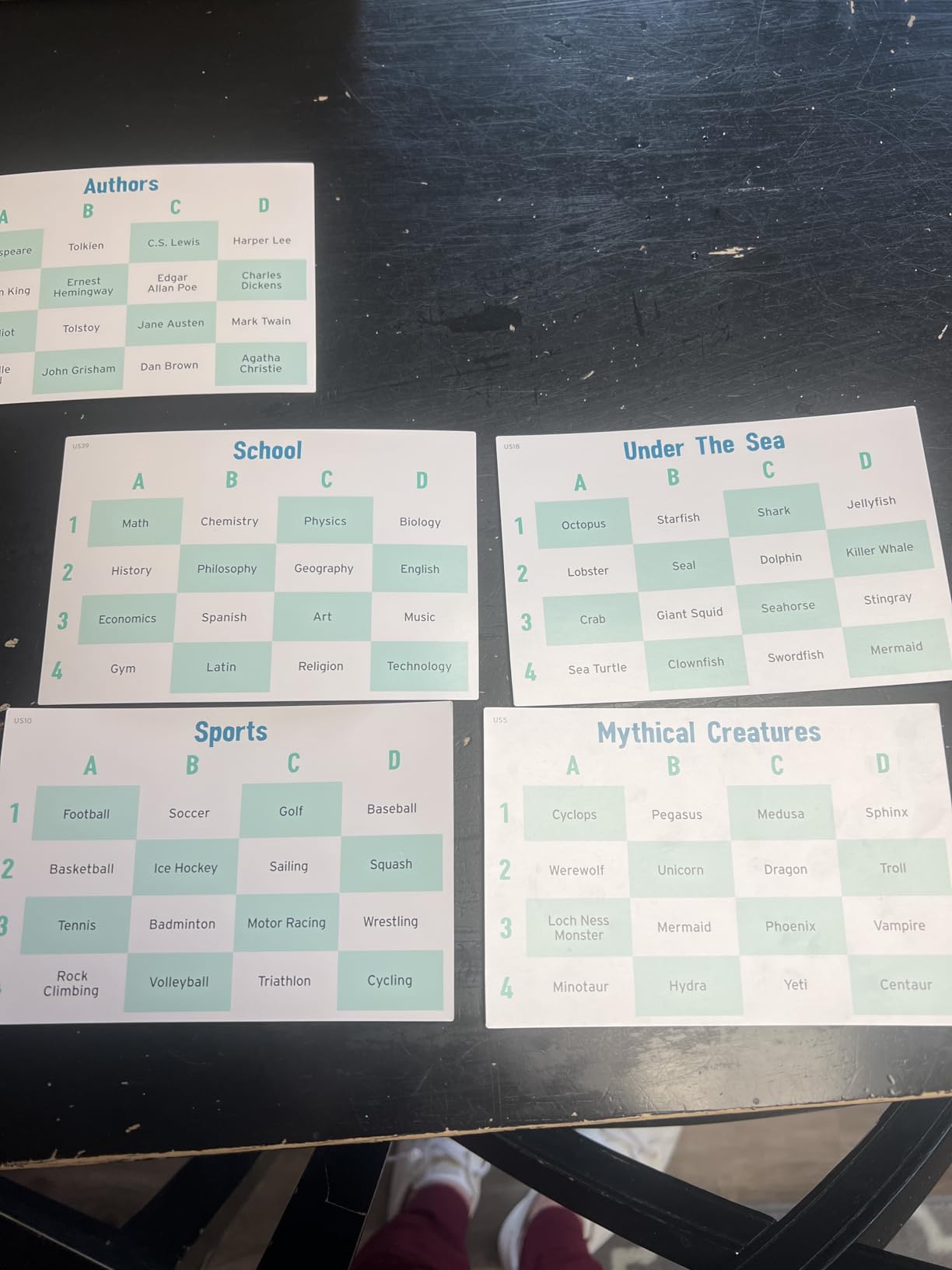
Technically, the game supports three to eight players, but I think five to seven is the ideal range. With three, the chameleon is too easy to identify. With eight, the clues get too chaotic, and the chameleon has too much cover. At six, the balance is perfect. The included edition comes with eighty extra secret words, which extends the replayability significantly.
The card quality is good, and the chameleon card is distinct enough that nobody accidentally reveals their role by grabbing the wrong card. The game board for voting is compact and functional. I appreciate that the box is small enough to fit on a crowded coffee table without taking up space that should belong to drinks and snacks.
The one issue I have run into is that certain topics repeat if you play with the same group weekly. After about fifteen sessions, my regular group started memorizing some of the secret words. The expansion packs are affordable and solve this problem, but I wish the base game included even more cards.
Best Player Count and Pacing
I recommend The Chameleon for groups of five to seven people who want a social deduction game without the heavy theme of something like Secret Hitler. The fifteen-minute playtime means you can play three or four rounds in an hour, and each round feels fresh because the secret word changes.
This is also a great game for families with teenagers. The content is clean, and the bluffing is playful rather than manipulative. I have played with my thirteen-year-old niece, and she was better at bluffing than most of the adults.
Expansion Options and Replayability
Big Potato offers multiple editions of The Chameleon, including a travel version, a pictures edition, and a movie-themed expansion. I own the travel version for camping trips, and it uses the same rules with smaller cards. The pictures edition is excellent for younger players or mixed-language groups because the clues are visual rather than verbal.
If you find the base game getting repetitive, the expansion packs are worth the money. They add hundreds of new topics without changing the rules. I rotate between two expansions and the base game, and I have not seen a repeated topic in over a year of regular play.
10. Herd Mentality – Udderly Hilarious Group Thinking Game
- Excellent for large groups 4-20
- Easy to learn in 30 seconds
- Fast 20-minute rounds
- Creates laughter and debates
- Works for all ages 10+
- Need more cow chips for large groups
- Younger kids may struggle with crowd thinking concept
- Questions can run out with frequent play
Herd Mentality is the newest game on my list, and it has already earned a permanent spot in my party game rotation. The concept is simple: flip over a question, write down your answer, and if your answer matches the majority, you win a cow token. The player who is the odd one out gets the pink cow of doom, which means they cannot win until someone else takes it from them.
I played this with twelve people at a housewarming party, and the debates over which answer was “most popular” were the highlight of the night. One question asked what food people would eat every day for a year, and the group was split between pizza and tacos. The minority voters argued passionately that sushi was the obvious choice, and everyone else booed them. It was genuinely funnier than most comedy shows I have watched.
The game rewards conformity rather than creativity, which is a refreshing change from most party games. You do not win by being clever; you win by thinking like the crowd. That twist creates a weird psychological tension where everyone second-guesses their genuine opinion. I have watched confident players change their answers at the last second because they were afraid of being the odd one out.
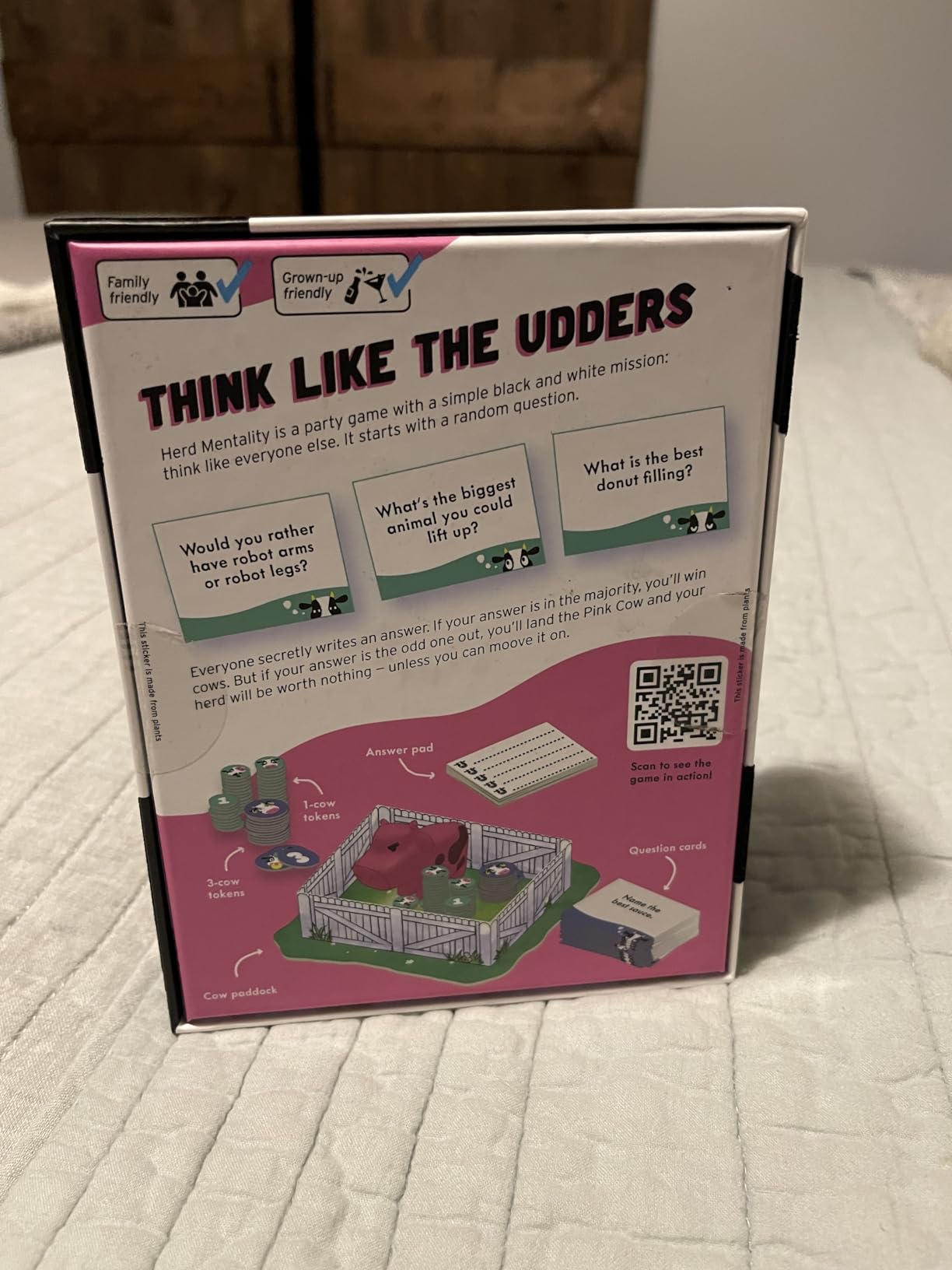
Technically, the game supports four to twenty players, and it genuinely works across that entire range. I have played with four, and it is surprisingly competitive because the odds of being the odd one out are high. With twelve, the majority is more predictable, but the pink cow mechanic keeps everyone invested because nobody wants to be stuck with it.
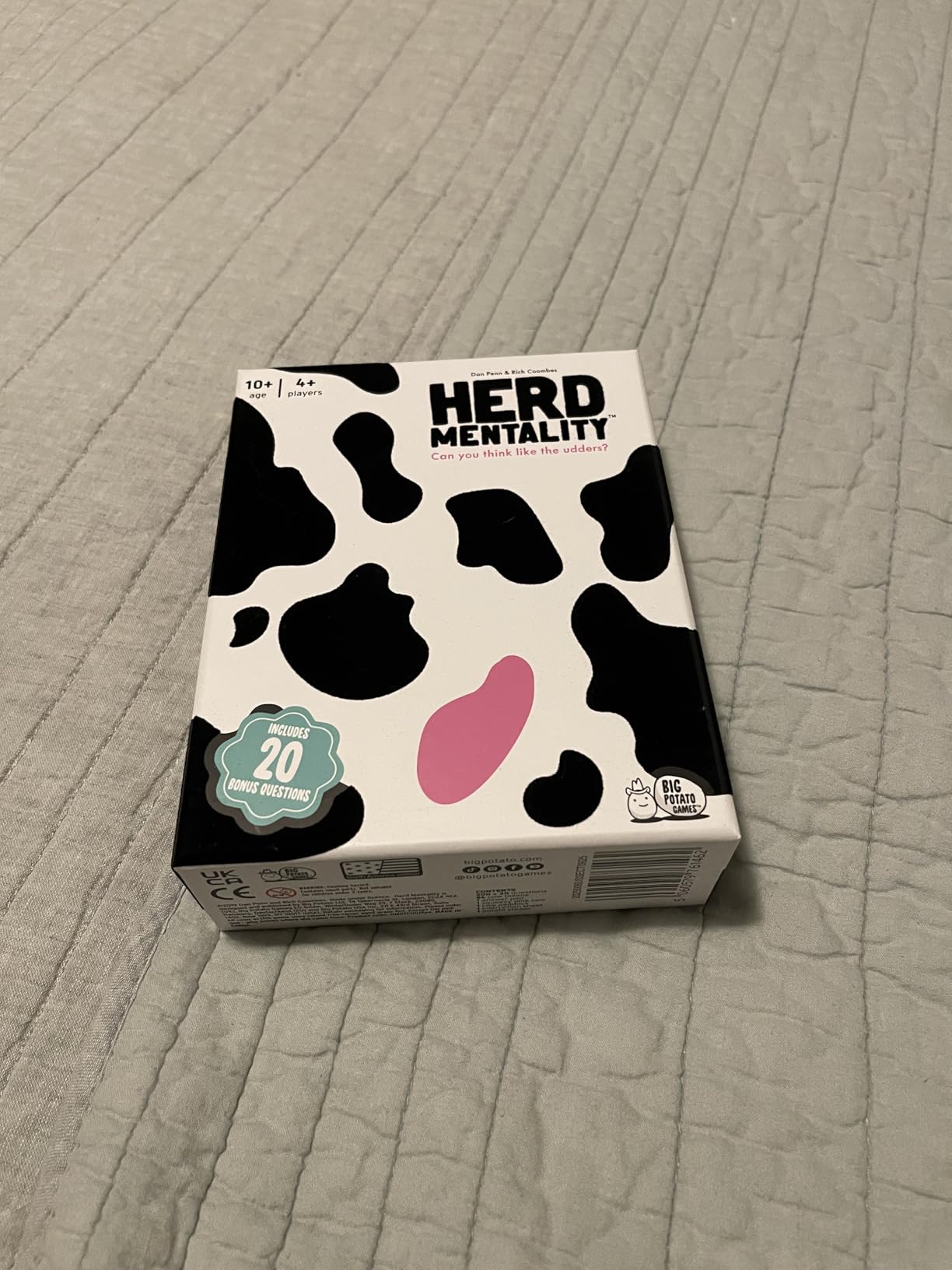
The included cow tokens are cute but limited. With a full table of twenty, you might run out of the standard cow chips. I solved this by adding a bag of poker chips in matching colors. The question cards are thick and well-printed, and the box includes twenty extra exclusive questions that are not in the standard version.
The questions are family-friendly and age-appropriate, which makes this a safe choice for mixed gatherings. I have played with teenagers and grandparents in the same group, and everyone contributed answers. The humor comes from the group dynamic, not from edgy content, so it works in almost any social setting.
Group Size and Tournament Play
Herd Mentality is the best game on this list for groups of twelve or more. The larger the group, the more accurate the majority becomes, and the funnier the minority arguments get. I have run a tournament bracket with sixteen people, and it worked because the rounds are quick and the pink cow creates a narrative that carries across multiple games.
If you have fewer than six players, I recommend choosing a different game. The odds become too random, and the group thinking aspect loses its punch. I tried it with four once, and it was fine but not memorable. With eight or more, it is consistently one of the best options in my collection.
Why It Works for Mixed Experience Levels
This is the game I bring out when I have a mix of serious gamers and people who claim they hate games. There are no complex rules, no strategy to learn, and no way to be bad at it. You just write down your answer and hope the crowd agrees with you. I have converted several “game-haters” with Herd Mentality because it feels like a conversation rather than a competition.
The only requirement is that players can read and write. Younger children who are not confident writers will struggle, which is why the manufacturer recommends ages ten and up. I have played with a nine-year-old who loved it, but she needed help spelling some of her answers.
How to Choose the Best Party Board Game for Your Group in 2026?
Picking the right game comes down to understanding your guests, your space, and your goals. I have learned these lessons through dozens of game nights, and they have saved me from bringing the wrong box more than once.
Start by counting your expected players. Some games scale beautifully from four to twenty, while others have a narrow sweet spot. If you are unsure about the headcount, choose a game like Herd Mentality or LCR that has no upper limit. That way, late arrivals can jump in without disrupting the game.
Next, consider the experience level of your group. If you have a mix of serious gamers and casual guests, avoid heavy social deduction games like Secret Hitler until the group has warmed up. I usually start with something fast and light like Taco Cat Goat Cheese Pizza, then move to deeper games if the energy stays high. You can also explore family puzzles and activities as a quieter alternative for guests who prefer calmer entertainment.
Think about the physical space. Slapping games and dice games need a flat surface where everyone can reach the center. Social deduction games work better in a circle where people can make eye contact. If you are playing outdoors, choose a game with durable components that can handle wind or uneven tables. I ruined a paper card game at a beach once, and I still regret it.
Time is another factor. If you have two hours, you can run a full tournament of LCR or play multiple rounds of Codenames. If you only have thirty minutes, One Night Ultimate Alien or The Chameleon fit perfectly. I always check the clock before choosing a game because nothing kills the mood like being forced to stop mid-round.
Finally, consider content sensitivity. Adult humor games like Cards Against Humanity are fantastic for the right crowd and disastrous for the wrong one. When in doubt, choose a family-friendly option like Codenames or Wavelength. You can always bring out the edgier games later once you know the room. For storing your growing collection, I recommend looking at game and puzzle storage solutions to keep everything organized.
Key Features to Look For
Look for games with no player elimination. When someone is knocked out in the first five minutes, they will spend the rest of the evening on their phone. Every game on this list keeps all players active until the end, which is a rule I now enforce for any game I recommend.
Quick setup and teardown are essential for party environments. I avoid games that require fifteen minutes of board assembly or complex card sorting. The best party games can be set up while explaining the rules, which saves time and keeps momentum.
Replayability matters because you do not want to buy a game that is fun once and then forgotten. Games with expansion packs, variable roles, or random card draws stay fresh longer. I have played Codenames over fifty times, and the word grid is different every single round.
Frequently Asked Questions
What are the best party board games for large groups?
The best party board games for large groups include Codenames for team word association, Herd Mentality for groups up to 20 players, and Cards Against Humanity for adult-only gatherings. Other excellent choices are Wavelength for spectrum guessing, Secret Hitler for social deduction, and LCR for simple luck-based fun that works with any group size.
What party games work for groups of 10 or more?
Games that support 10 or more players include Herd Mentality, which works with 4 to 20 players, and Cards Against Humanity, which accommodates 4 to 20 or more. Double Bananagrams supports up to 16 players, while LCR has no upper limit. Wavelength and One Night Ultimate Alien also scale well to 10 or 12 players.
What are good team party games for adults?
Team party games for adults include Codenames, where two teams race to identify secret agents, and Wavelength, where teams guess where a hidden dial falls on a spectrum. Cards Against Humanity works well for large adult groups, and Secret Hitler creates intense team alliances through social deduction.
Which party games are easy to learn for beginners?
The easiest games to learn include LCR, which takes under 30 seconds to teach, and Taco Cat Goat Cheese Pizza, which most groups understand in under a minute. Herd Mentality and The Chameleon both require about two minutes of explanation, and even complex games like Codenames can be taught in under five minutes.
What board games work best for adults indoors?
Indoor party games for adults should be compact, quiet enough for home settings, and engaging without requiring much space. Codenames, Wavelength, and The Chameleon are excellent indoor choices. Cards Against Humanity and Secret Hitler also work well indoors, though they work best with dedicated table space and comfortable seating.
Final Thoughts on the Best Party Board Games for Large Groups
After testing these games across dozens of gatherings, I can confidently say that the best party board games for large groups share one trait: they keep everyone involved. Whether you prefer the word association of Codenames, the social deduction of Secret Hitler, or the chaotic energy of Taco Cat Goat Cheese Pizza, there is an option on this list that fits your group.
In 2026, I recommend starting with Codenames and Herd Mentality as your foundation. They cover the widest range of group sizes and experience levels, and both are easy to teach. From there, add Wavelength for deeper conversations, Cards Against Humanity for adult-only nights, and LCR as your backup for any occasion. If you are building out your full collection, you might also want to check our guides to cooperative board games for families and family puzzles and activities for quieter entertainment options.
The right game turns a good party into a great one. Pick one from this list, clear your table, and get ready to laugh. Your guests will thank you.