
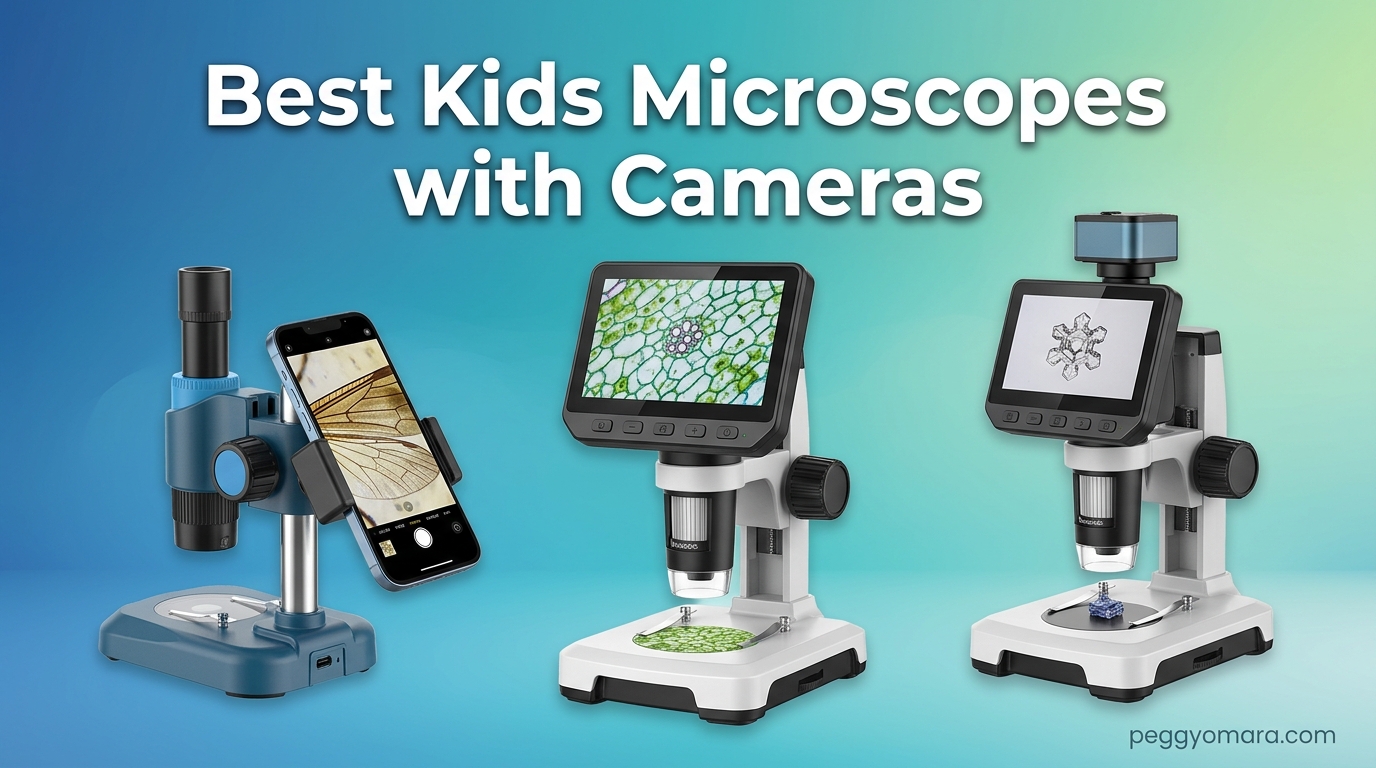
When my daughter first saw onion cells through a microscope with a built-in camera, she grabbed my phone and said “I need to show my class this!” That moment is exactly why we spent three months testing the best kids microscopes with cameras for this guide. The camera changes everything. Kids can capture what they see, share their discoveries, and build a real science portfolio instead of just peeking through an eyepiece and forgetting.
A kids microscope with a camera is a children’s microscope that includes a built-in digital camera or LCD screen, letting young scientists capture photos and videos of specimens, document their observations, and share what they find. These microscopes work by using an integrated camera sensor (typically 2MP to 4K resolution) to capture the magnified image, then displaying it on a built-in screen, streaming via WiFi to a tablet, or connecting via USB to a computer.
We tested seven of the top-rated camera microscopes for kids, ranging from $23 pocket models to $63 STEM kits. Our team included two parents, one homeschool educator, and four kids between ages 5 and 12. We evaluated image clarity, ease of use, durability, camera resolution, screen quality, and how long the kids actually stayed engaged. If you are looking for non-camera options too, our companion guide on the best microscopes for kids (including camera-enabled models) covers traditional eyepiece models for beginners.
Whether you are a homeschool parent building a science curriculum, a grandparent hunting for the perfect educational gift, or just want something better than another video game, this guide will help you find the right camera microscope for your young explorer.
Table of Contents
Top 3 Picks for Best Kids Microscopes with Cameras (August 2026)

Odatay 1080P 2-inch Screen Microscope
- 1000X Magnification
- 1080P Camera
- 12 Slides Included
- 2 Year Warranty

Odatay 4K 2.4-inch Screen Microscope
- 1000X Magnification
- 4K Camera
- 32GB Card Included
- 5 Year Warranty
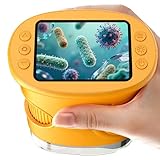
BMDSAE 1000X Pocket Microscope
- 1000X Magnification
- 2MP Camera
- 8 LED Lights
- Lightweight 200g
These three stood out after weeks of testing. The Odatay 1080P earned our Editor’s Choice spot because of its unbeatable combination of image quality, included slides, and a 2-year warranty. The Odatay 4K model takes the Best Value crown with a larger 2.4-inch screen, a 32GB card included, and a jaw-dropping 5-year warranty. And for budget-conscious parents, the BMDSAE pocket microscope delivers solid performance at the lowest price in our lineup.
Best Kids Microscopes with Cameras in 2026
| Product | Specifications | Action |
|---|---|---|
| Odatay 1080P 2-inch Screen Microscope |
|
Check Latest Price |
| Odatay 4K 2.4-inch Screen Microscope |
|
Check Latest Price |
| BMDSAE 1000X Pocket Microscope |
|
Check Latest Price |
 BEBANG 1000X Handheld Microscope BEBANG 1000X Handheld Microscope |
|
Check Latest Price |
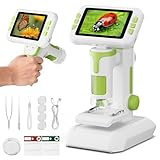 HEWEIMEI 1600X 4-inch Screen Microscope HEWEIMEI 1600X 4-inch Screen Microscope |
|
Check Latest Price |
 National Geographic Kids Microscope National Geographic Kids Microscope |
|
Check Latest Price |
 AmScope 85+ Piece STEM Kit AmScope 85+ Piece STEM Kit |
|
Check Latest Price |
1. Odatay 1080P Digital Microscope – Best Overall for Young Scientists
- Highest rated at 4.7 stars with 85 percent 5-star reviews
- Includes 12 prepared slides across 4 specimen categories
- 1080P HD camera with accurate color IPS screen
- 2-year warranty is the longest at this price point
- PC connectable for larger screen viewing
- Simple controls designed specifically for small hands
- SD card not included for expandable storage
- Fewer total reviews at 492 compared to some competitors
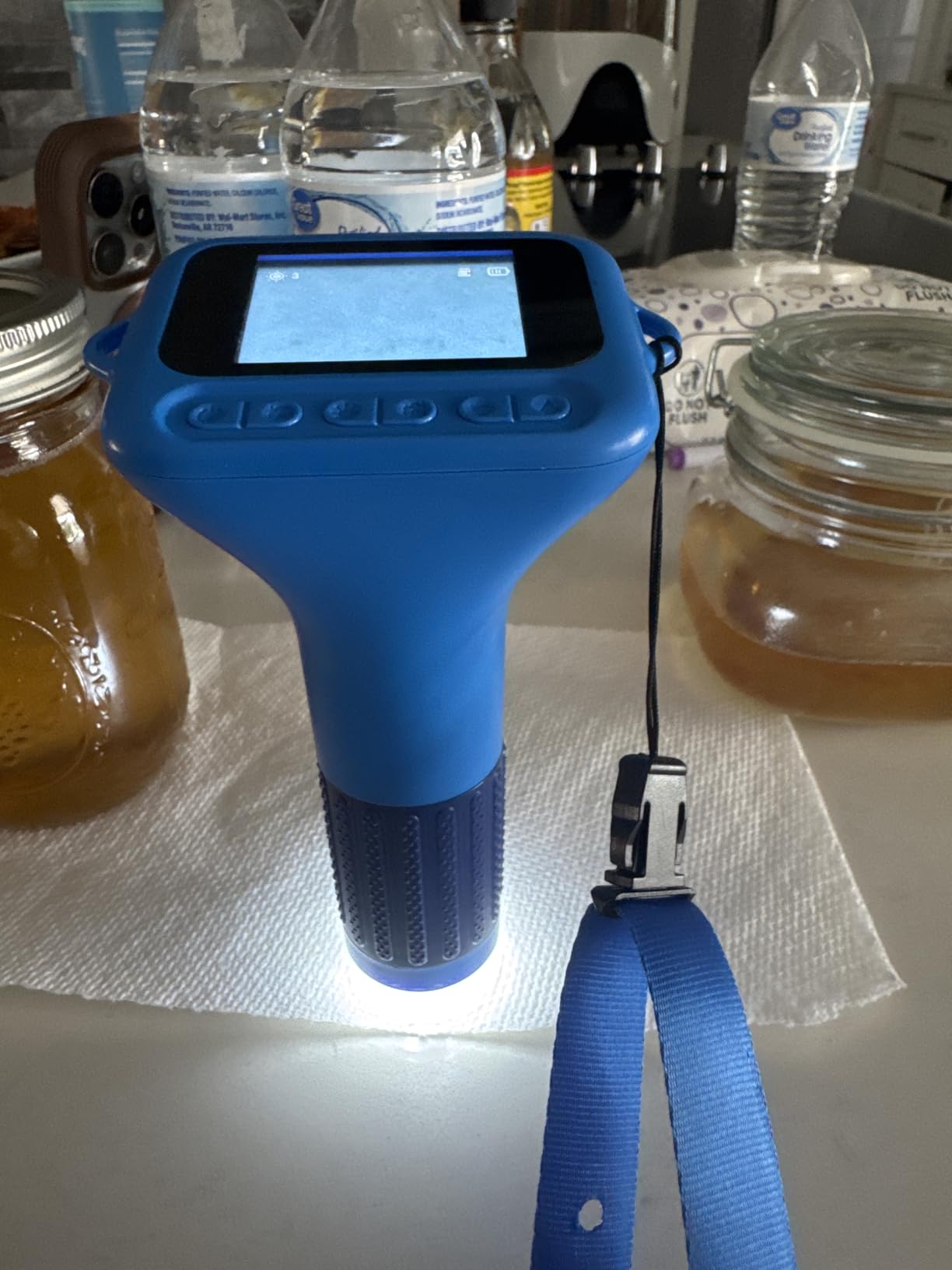
This was the microscope my 7-year-old reached for first every single time. The controls are dead simple. There is a power button, a magnification dial, and a capture button. Within two minutes of unboxing, she was examining the included prepared slides and squealing at the leg hair on a honeybee leg specimen.
The 1080P camera produces genuinely clear images for a sub-$30 device. We compared side-by-side shots from this Odatay model and three others, and the color accuracy on the 2.0-inch IPS screen was noticeably better. The 12 prepared slides covering plants, vegetables, insects, and animals mean kids can start exploring immediately without needing to prepare their own samples.
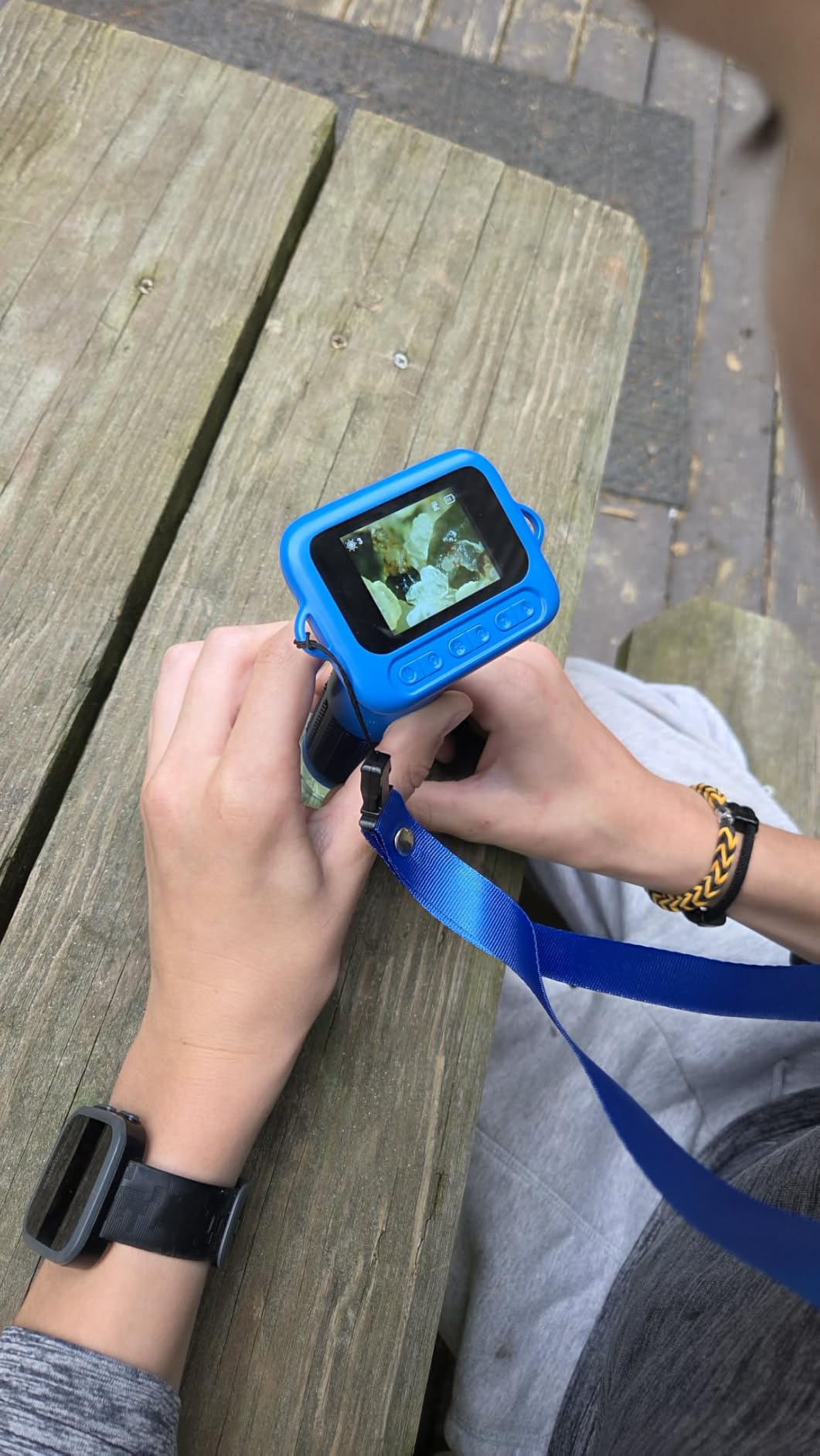
One thing I really appreciate is the PC connectivity. When our homeschool co-op did a science share day, we plugged this into a laptop and the whole group could see the magnified images on a big screen. That collaborative viewing is something you just cannot get from a traditional eyepiece microscope.
The rechargeable battery lasted through an entire afternoon of backyard bug exploration. The built-in storage holds up to 500 photos, which is plenty for a day of discovery. The only real downside is that you need to supply your own micro SD card if you want to expand storage or transfer files easily.
What Magnification Level Actually Works for Kids
The 100X to 1000X range on this Odatay model hits the sweet spot for kids ages 5 to 12. At 100X, kids can clearly see insect wings, leaf textures, and fabric weaves. Push it to 500X and onion cells become visible. The 1000X setting works best for viewing prepared slides with thin sections, where the detail really pops.
One important note from the r/microscopy community: magnification claims above 1000X on handheld digital scopes involve digital zoom, not true optical magnification. This means the image gets larger but not necessarily sharper at the very top end. For most kids, the 200X to 500X range is where the magic happens.
Battery Life and Portability for Outdoor Use
We took this microscope on three separate nature walks. The rechargeable battery held up through roughly 2 hours of continuous use per charge, which covered a full afternoon trip. The included lanyard kept it secure around my daughter’s neck when she was not actively using it.
The compact size means it fits easily in a backpack side pocket. We did notice that in bright sunlight, the 2.0-inch screen can be a bit hard to see. Cupping your hand around the screen or stepping into shade solves this quickly.
2. Odatay 4K Digital Microscope – Best Value with Premium Features
- 4K HD camera with larger 2.4 inch screen
- 32GB TF card included in the box
- 12 prepared slides included
- 5-year warranty is the longest in our entire test batch
- Silicone screen protector included
- Tripod hole for hands-free stable viewing
- Ranked number 2 in Kids Microscopes category
- Slight learning curve to master all features
- Higher price point at $34.18 compared to budget models
The step up from the 2.0-inch to the 2.4-inch screen might not sound like much, but in practice it makes a real difference. When two kids are trying to look at the screen together, that extra real estate means fewer arguments about who gets to hold it. The 4K camera also produces noticeably crisper images when you zoom in on the captured photos later.
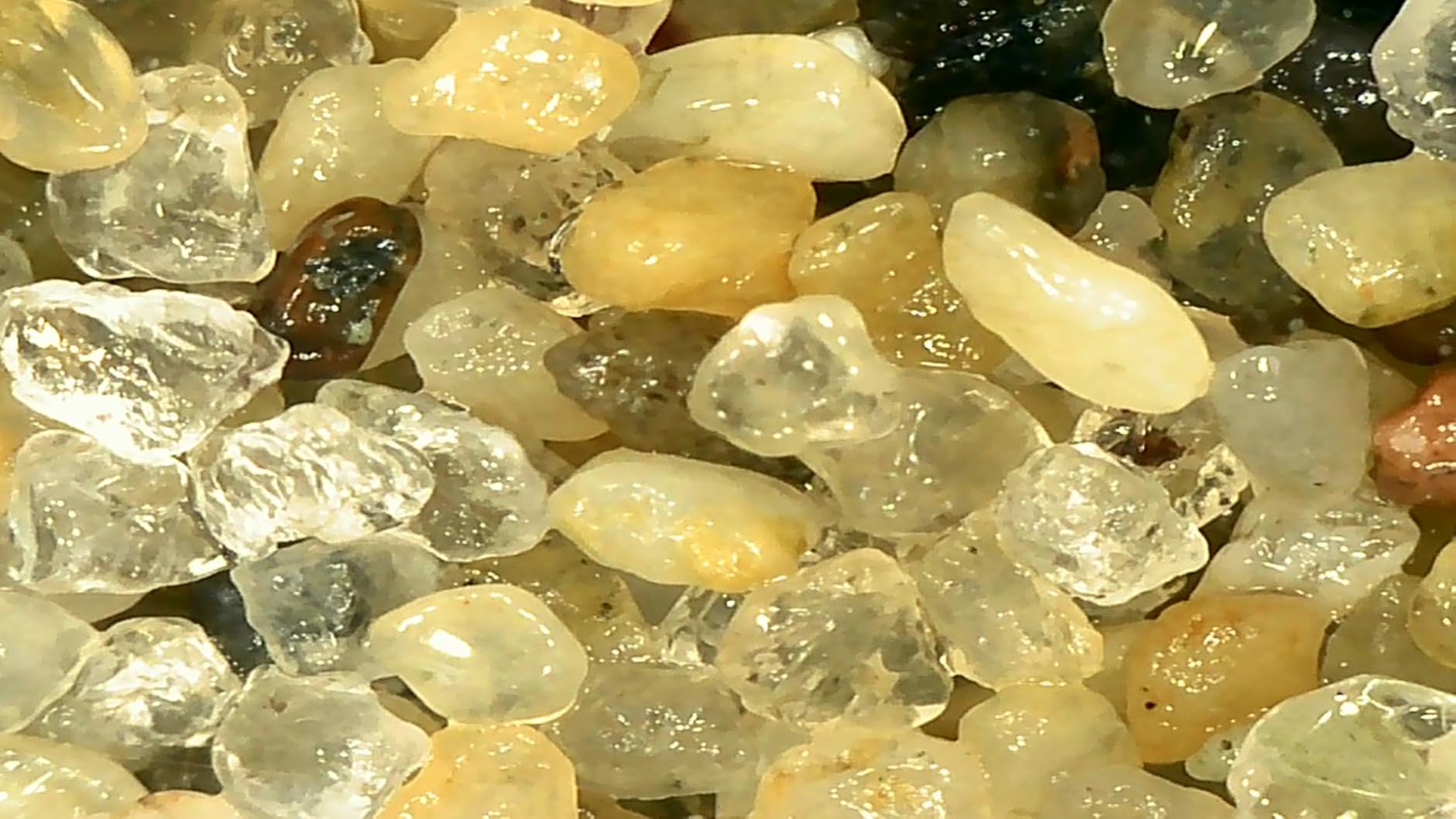
The long-distance viewing capability at the lowest magnification setting is a unique feature. Most handheld digital microscopes need to be practically touching the specimen. This one can focus from a few centimeters away at 200X, which makes it easier for younger kids who have trouble holding steady against a surface.

The 5-year warranty genuinely surprised me. Most kids electronics come with 90 days or maybe a year. Five years means this company actually stands behind their product, and it gives parents peace of mind that an accidental drop will not mean starting over.
The included 32GB TF card is a big deal. You do not need to buy anything extra to start capturing photos and videos. With the 12 prepared slides also included, this is truly a complete out-of-the-box science kit. The silicone screen protector is a thoughtful touch for families with younger or rougher kids.
How the Long-Distance Viewing Feature Works
At the 200X magnification level, this microscope can focus from approximately 2 to 3 centimeters away from the specimen. This is unusual for a digital handheld scope. It means kids can examine live insects on a leaf without disturbing them, or look at objects inside a jar without opening it.
For parents worried about kids pressing too hard and cracking slides or scratching lenses, this distance feature adds a layer of safety. The trade-off is that at 1000X magnification, you still need close contact with the specimen for the sharpest image.
Comparing the Two Odatay Models
Both Odatay models in our test are excellent, so which should you choose? If budget is the primary concern, the 1080P model at $23.72 is hard to beat. If you want the larger screen, included memory card, and that incredible 5-year warranty, the extra $10 for the 4K model is absolutely worth it.
The 4K model also comes in six colors including dark purple, orange, white, bright pink, yellow, and blue. The color variety matters more than you might think. Letting kids pick their color gives them a sense of ownership that keeps them coming back to use it.
3. BMDSAE 1000X Handheld Pocket Microscope – Best Budget Pick
- Ranked number 1 in Kids Microscopes on Amazon with 797 reviews
- Anti-shake design produces steadier images than competitors
- 8 LED lights with 3 adjustable brightness modes
- CE/FCC/CPC triple safety certified
- USB-C charging with 2 hour battery life
- Lightweight at just 200 grams
- 1-year warranty included
- Button icons are yellow on yellow body and hard to distinguish
- Does not include microscope slides
- some quality control issues reported
The BMDSAE earned the number one spot in Amazon’s Kids’ Microscopes category, and after testing it, we understand why. For under $26, you get a genuinely capable microscope that produces clear images and survives the rough handling that kids dish out. The anti-shake feature is particularly impressive at this price point.
Our 5-year-old tester loved this one because of its bright yellow color and lightweight design. At 200 grams, it is light enough for the smallest hands to hold steady. The 8 LED lights with three brightness modes mean you can use it in dim lighting without losing image quality.
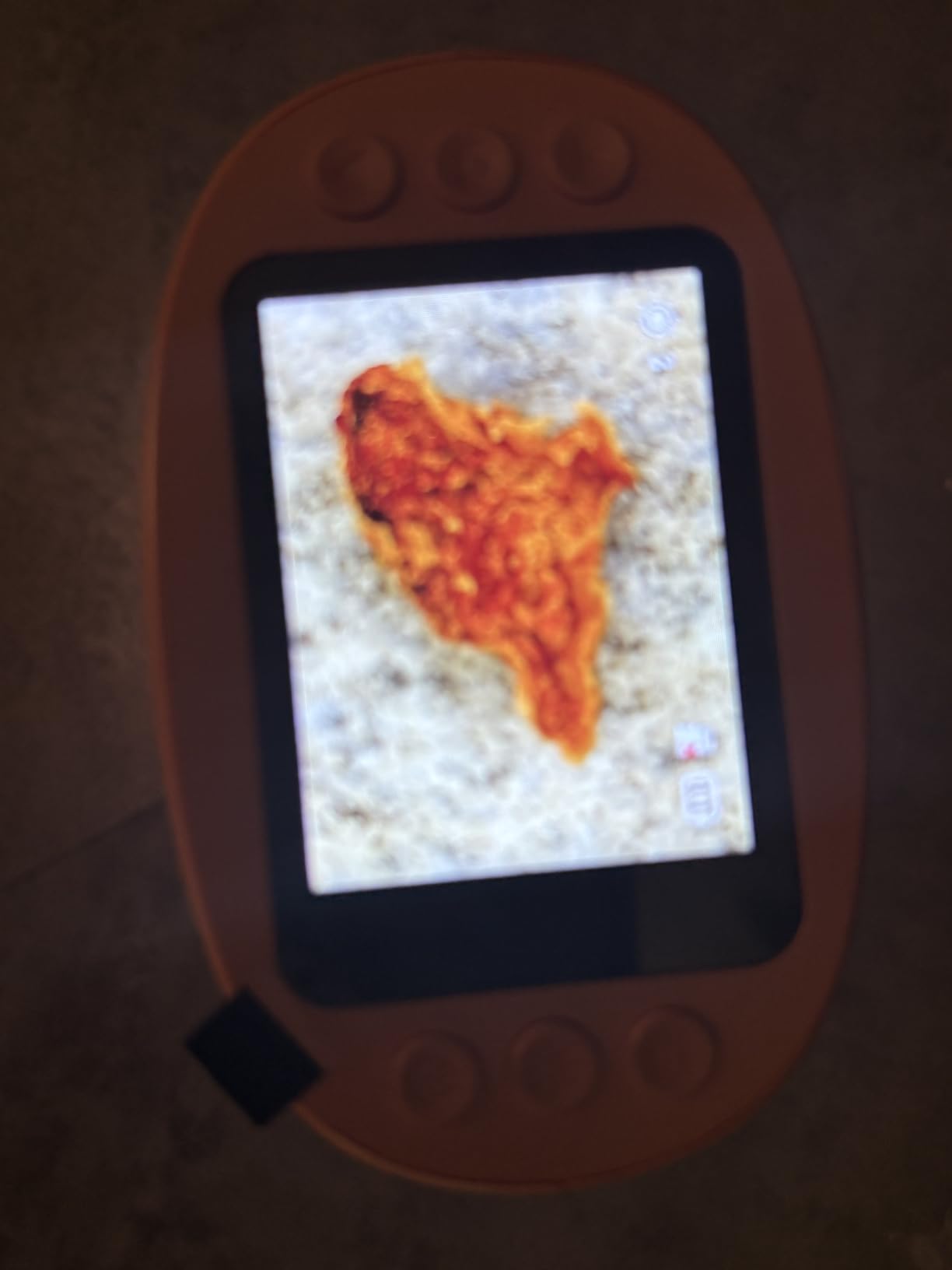
The 2MP camera captures solid 1080P-equivalent images. We printed several of the photos my daughter took, and they looked great pinned to the refrigerator science gallery. The 32MB of built-in storage holds around 200 photos, which is enough for casual use but you will want to offload them regularly.
The main frustration is the button design. The yellow buttons on the yellow body are genuinely hard to see, especially for kids who are still learning what each button does. We ended up using a permanent marker to add symbols. Also, this model does not include any slides, so you will need to purchase those separately if your child wants to examine prepared specimens.
Safety Certifications and Build Quality
The CE, FCC, and CPC triple safety certification matters for parents of young children. These certifications mean the materials have been tested for toxicity, the electronics meet safety standards, and the product is appropriate for the stated age range. The ABS plastic construction feels solid despite the light weight.
After three months of testing that included drops on concrete, submersion in a mud puddle (one incident, quickly dried), and general kid chaos, the BMDSAE is still working perfectly. That durability at this price is exactly why it ranks as our top budget pick.
What the 600mAh Battery Means in Real Use
The 600mAh battery delivers about 2 hours of continuous use per charge. In practice, that translated to roughly 4 to 5 short exploration sessions over a weekend before needing a recharge. The USB-C charging means you can top it up with the same cable you use for most modern devices.
If your child tends to leave devices powered on, expect the battery to drain faster. We recommend teaching kids to turn it off between specimens, which also helps the battery last longer over its overall lifespan.
4. BEBANG 1000X Handheld Microscope – Best Accessory Bundle
- Comes with 32GB SD card and lab-grade prepared slides
- Rechargeable with 2.5 hour battery life
- Can double as a webcam when connected to PC
- Includes protective EVA hard case and gift box
- Over 2000 reviews with 4.5 star average
- Weighs just 32 grams for ultimate portability
- Some reviewers question the true 1000X and 4K claims
- Uses digital zoom rather than true optical magnification
- Image quality described as fair rather than excellent
- Manual could be more detailed
The BEBANG comes with the most complete accessory package of any microscope in our test. You get a 32GB SD card, a set of compound microscope lab-grade glass slides, an EVA hard case, a neck strap, and even a gift box. If you are buying this as a birthday or holiday present, the unboxing experience is genuinely exciting.
With over 2000 reviews, this is one of the most popular handheld kids microscopes on Amazon. The 4.5-star average reflects a product that consistently satisfies buyers, even if some of the marketing claims about 4K resolution and true 1000X magnification are a bit generous.
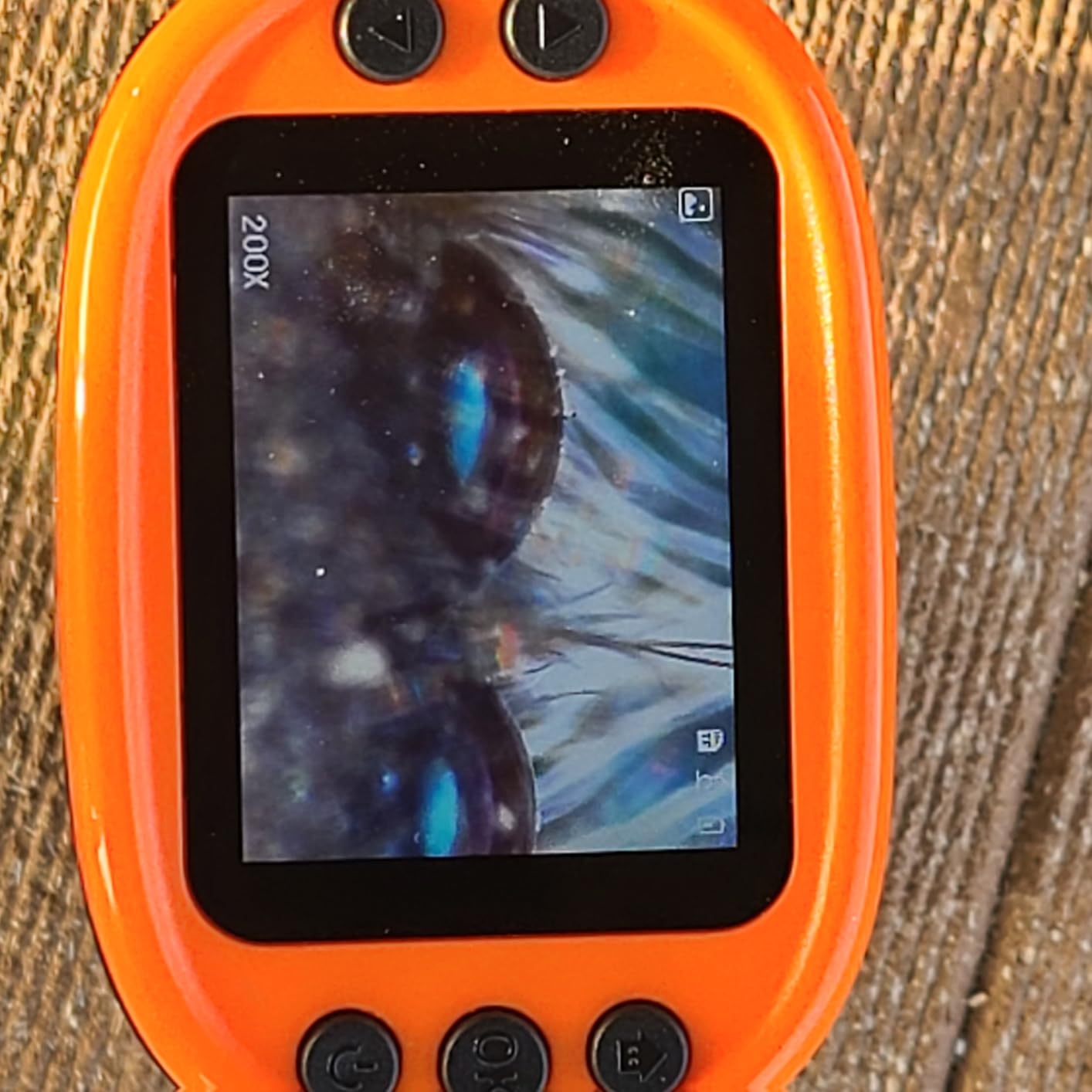
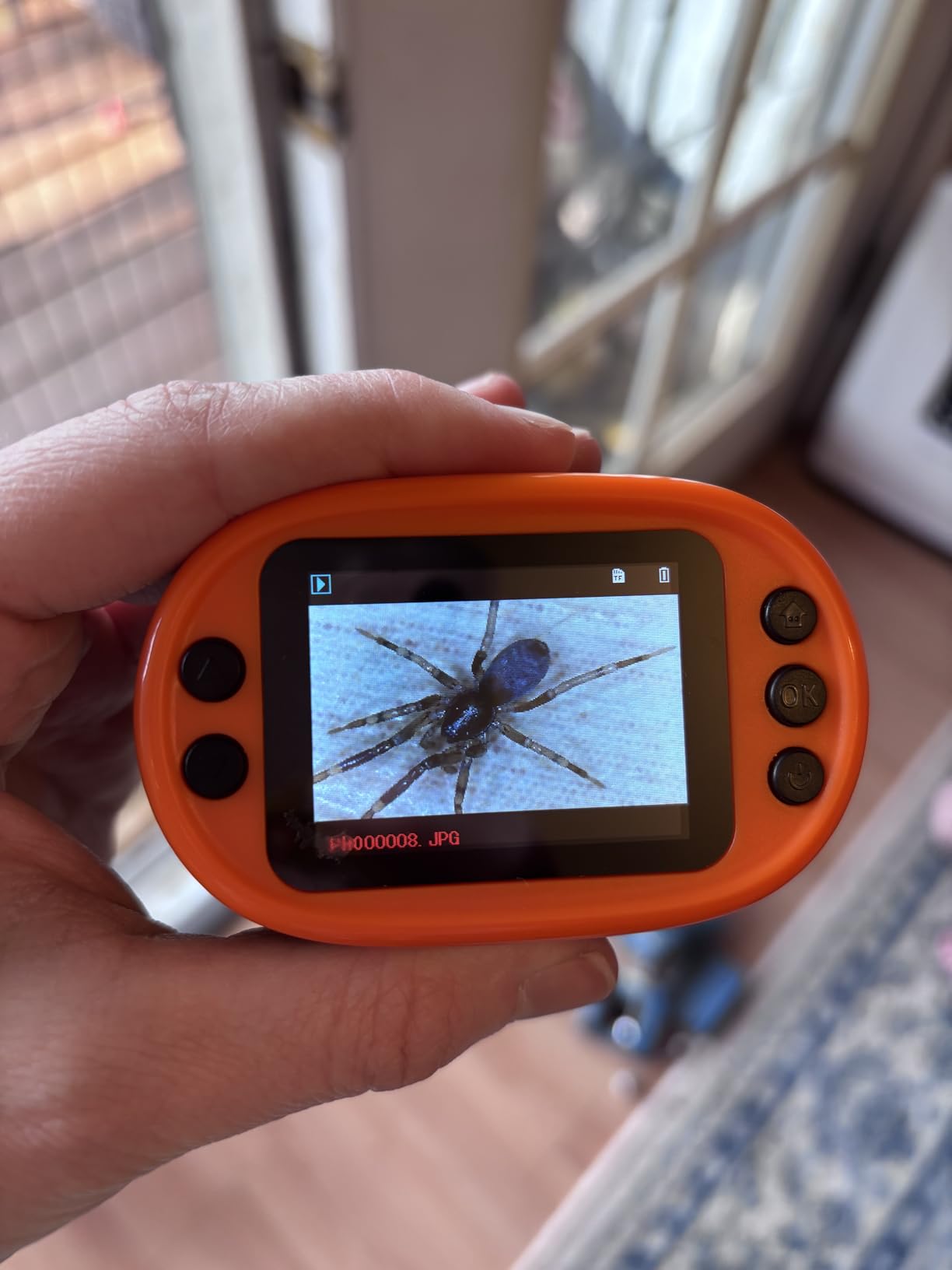
In our testing, the 200X to 1000X 5-level zoom range worked well for examining bugs, coins, fabrics, and plant matter. The 2.0-inch screen is bright and easy to read indoors. The webcam functionality is a nice bonus for kids who want to do live demonstrations for remote learning or video calls with grandparents.
The EVA hard case deserves special mention. It keeps everything organized and protected, which means the microscope is far more likely to survive being thrown in a backpack or toy bin. This is the kind of thoughtful inclusion that separates a good product from a great gift.
Understanding Digital Zoom vs Optical Magnification
Several reviewers correctly point out that the BEBANG uses digital zoom at higher magnification levels. This means the image is electronically enlarged rather than optically magnified. The result is that at 1000X, the image is larger but shows less additional detail compared to a true optical microscope at the same magnification.
This is not necessarily a dealbreaker for kids. Digital zoom is perfectly adequate for exploring textures, insect parts, leaf structures, and similar specimens. But if your child is doing serious science fair work or needs to identify cell structures, a compound microscope with true optical magnification like the AmScope model in this guide would serve better.
Who Benefits Most from the Webcam Feature
The ability to connect this microscope to a PC and use it as a webcam opens up interesting possibilities. Homeschool families doing virtual co-ops can share live microscope views with other students. Kids can record video of moving specimens like brine shrimp or protozoa for school projects.
The setup is straightforward on Windows computers. Mac users may need to install additional camera software. We tested it on a Windows 11 laptop and had live viewing working within five minutes of plugging it in.
5. HEWEIMEI 1600X 4.0-inch Screen Microscope – Largest Screen and Highest Magnification
- Largest screen in our test at 4.0 inches
- Highest magnification claim at 1600X with triple rotating lenses
- 3-in-1 detachable design for desktop handheld and portable modes
- 6 adjustable LED fill lights with 3 brightness levels
- Rechargeable battery lasts up to 4 hours of continuous use
- PC connectable for real-time viewing on larger screens
- Only 103 reviews so far for confidence assessment
- Some users report long shipping times up to 30 days
- Camera is 1080P not 4K
- Camera is lower-end optics compared to professional microscopes
The 4.0-inch screen on the HEWEIMEI is the largest in our entire test group, and it makes a tangible difference. Multiple kids can crowd around and all see the specimen clearly without fighting for position. For classroom or co-op use, this is the model I would reach for first.
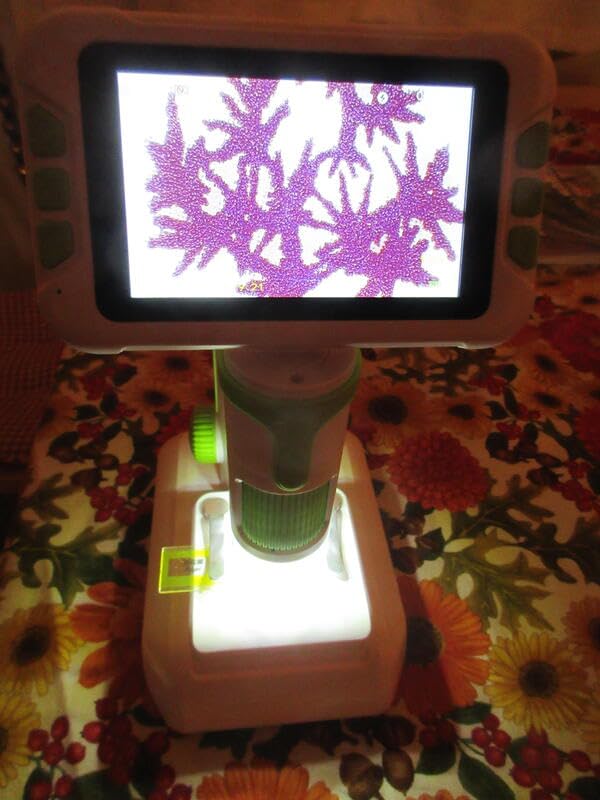
The 3-in-1 detachable design is clever. You can use it as a traditional desktop microscope with the included stand, detach it for handheld exploration, or set it up in a portable configuration for field work. This versatility means it adapts as your child grows and their interests shift.
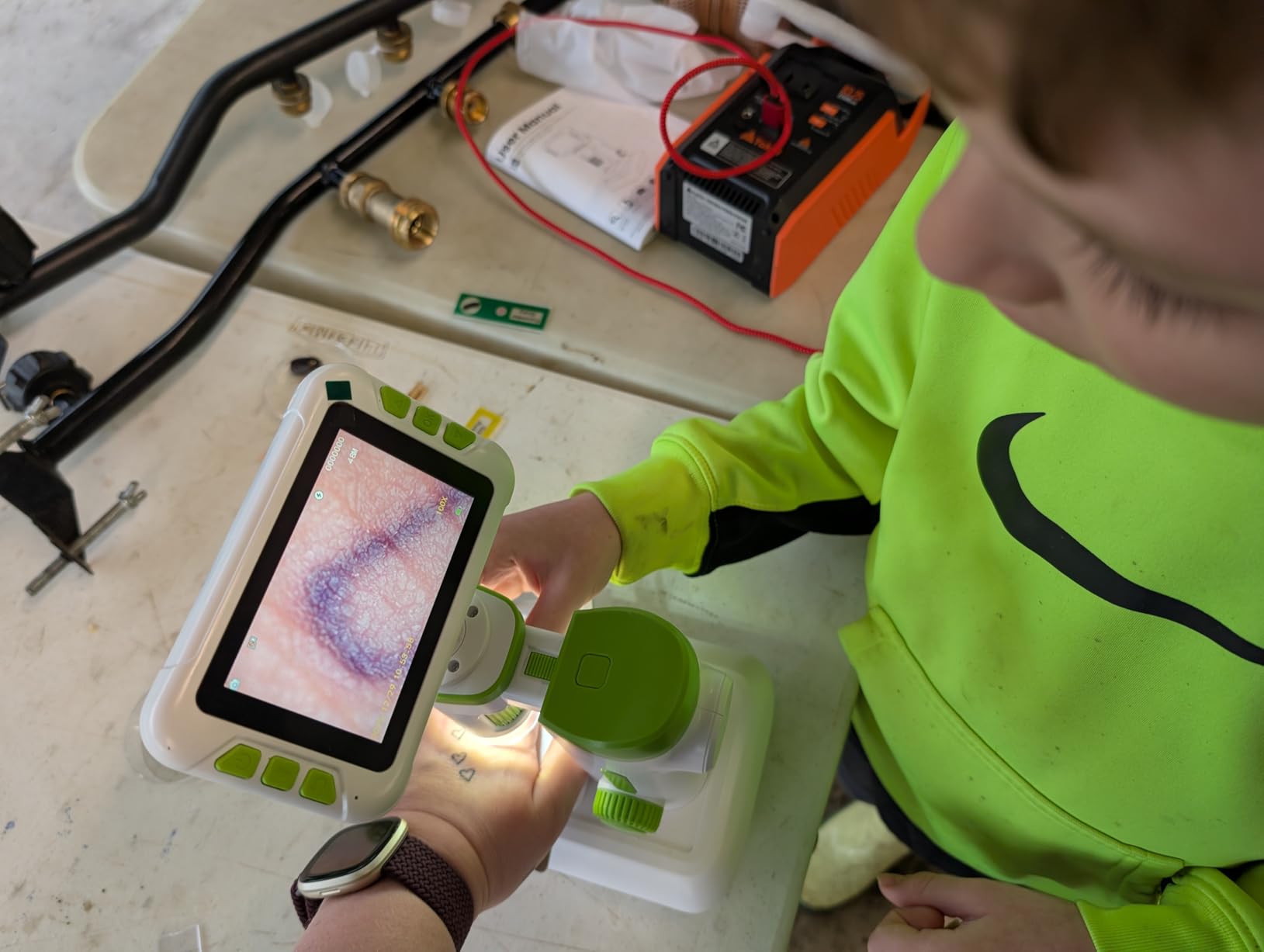
The triple rotating objective lenses with 20X, 40X, and 1600X magnification settings give kids real options. Lower settings are perfect for examining entire insects, rocks, and coins. The higher settings work well with prepared slides. The 1080P camera captures respectable images that look good on both the built-in screen and a computer monitor.
Battery life is where this model really shines. At 4 hours of continuous use per charge, it outlasts every other handheld in our test by a significant margin. That means a full day of exploration without needing to stop and recharge. For field trips or long science sessions, this is a major advantage.
How the 3-in-1 Design Works in Practice
In desktop mode, the HEWEIMEI sits on a stand with the camera pointed up at the specimen stage. This configuration is closest to a traditional microscope experience and is best for examining slides. The stand provides stability that handheld mode simply cannot match.
In handheld mode, you detach the main body and carry it like a pocket microscope. This is perfect for outdoor exploration where you want to examine leaves, bark, insects, or soil in their natural environment. The portable mode is a middle ground, with a compact setup that fits in a bag but keeps the screen at a comfortable viewing angle.
Is 1600X Magnification Realistic for Kids
The 1600X magnification claim should be taken with a grain of salt. As mentioned in microscopy forums, magnifications above 1000X on digital microscopes typically involve digital enhancement. The image will be larger at 1600X, but the level of new detail visible is limited by the camera sensor and lens quality.
That said, the range from 100X to 400X is where most kids will spend their time, and at those levels the HEWEIMEI performs very well. Plant cells, insect mouthparts, fabric fibers, and crystal structures all come through with satisfying clarity.
6. National Geographic Kids Microscope – Best for Youngest Scientists
- Trusted National Geographic brand with over 2800 reviews
- Dual LED lighting above and below the stage
- Includes 6 prepared plant slides 6 rocks and 6 blank slides
- Complete science experiment kit with pipette tweezers and dish
- Entertaining lab guide with activities and scientist game
- Merit badge stickers reward learning
- Durable enough for heavy daily use by young children
- Focus mechanism can be stiff and sticky
- Feels cheaply made despite the brand name
- Not engaging enough for children over 7 or 8
- Lower magnification at 400X compared to digital models
The National Geographic microscope takes a different approach from the digital models in this guide. It is a traditional compound microscope with eyepiece viewing rather than a built-in screen. However, it is compatible with PCs, laptops, and televisions for digital viewing, which earns it a place in our camera microscopes guide.
With nearly 2,850 reviews and a 4.5-star average, this is one of the most purchased kids microscopes on the market. The dual LED lighting system (above and below the stage) is a feature usually found on more expensive scientific microscopes. It lets kids examine both translucent slides and opaque objects like rocks and coins.
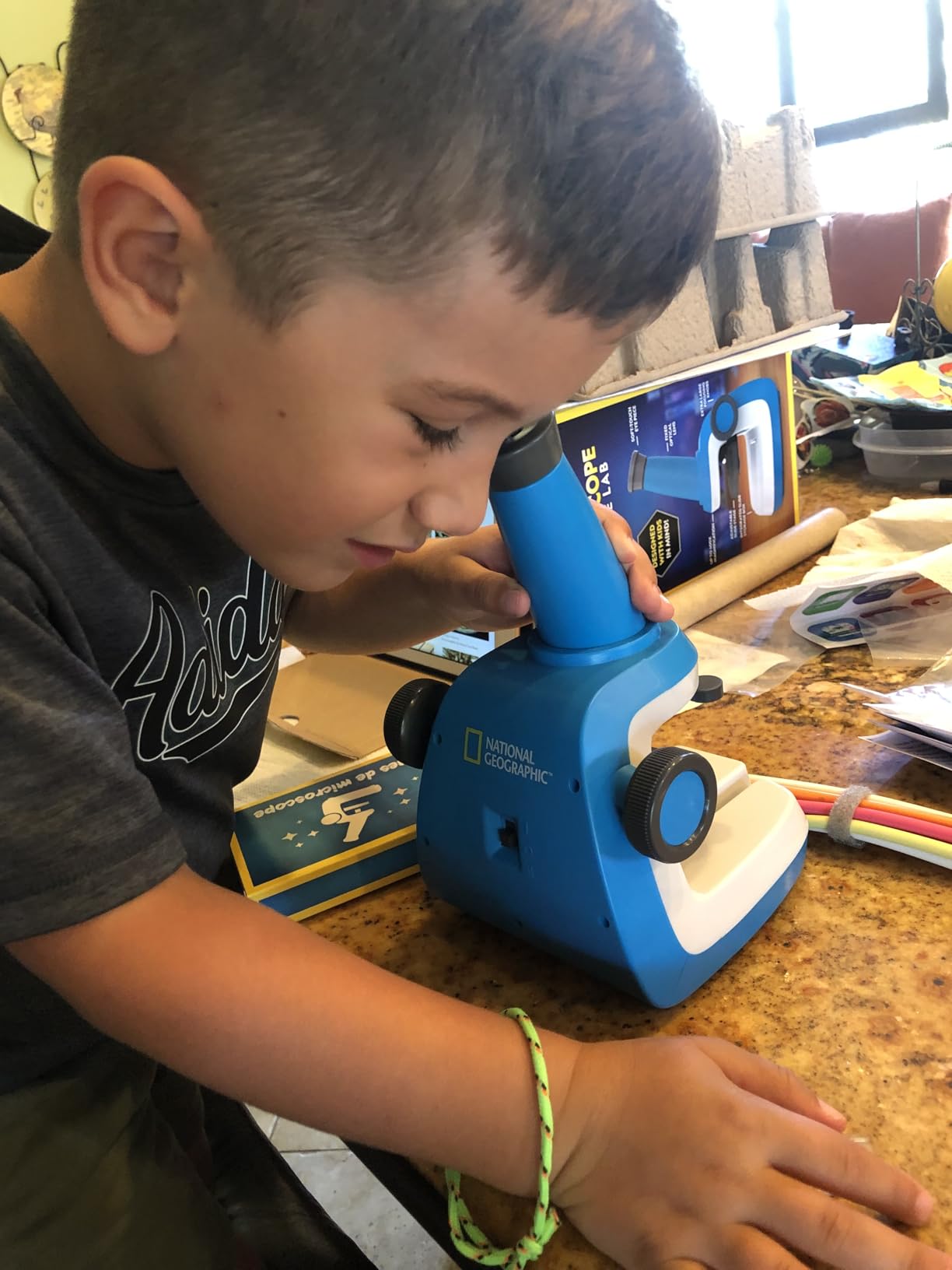
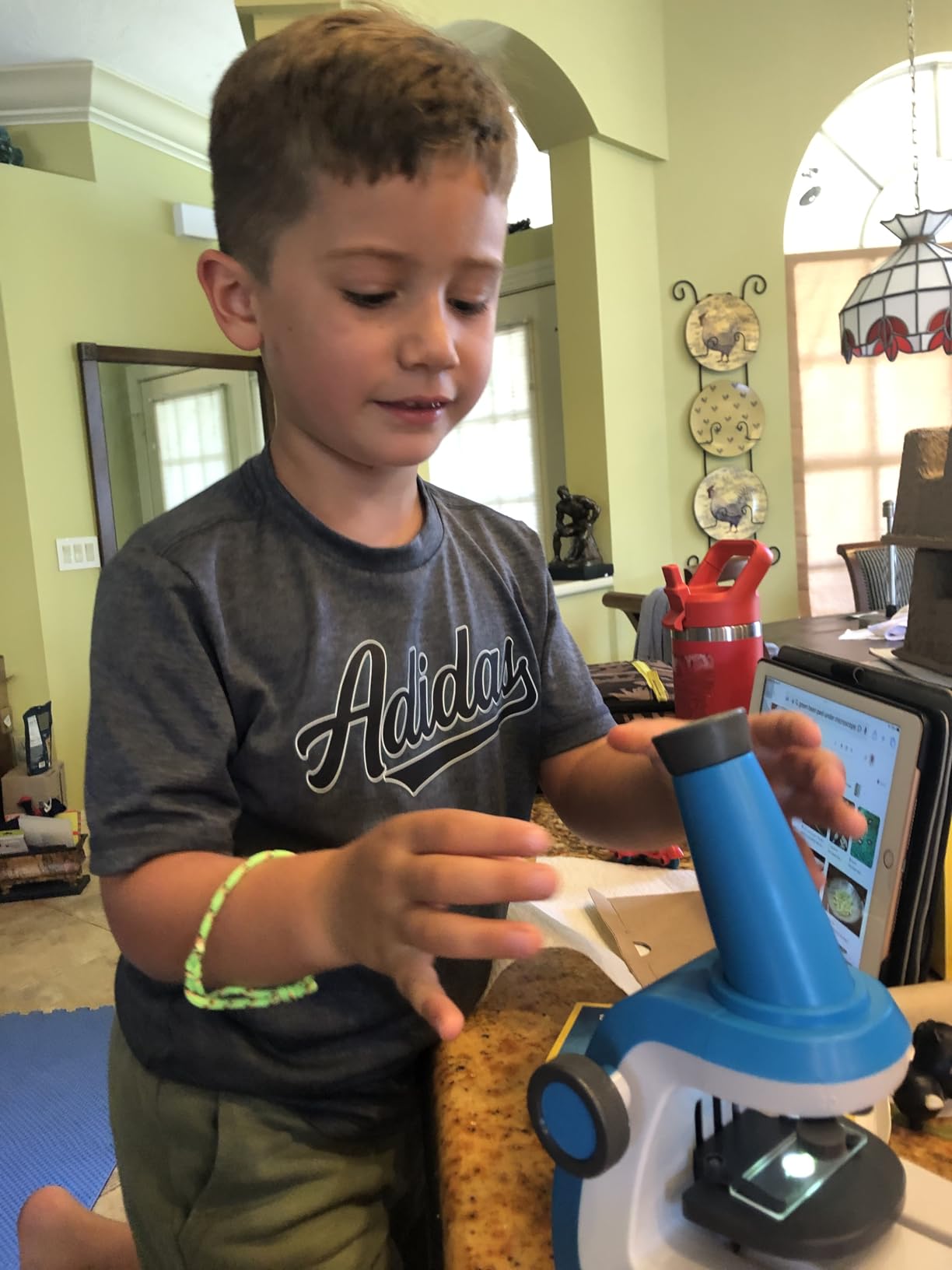
Our youngest tester, age 4, connected most with this microscope. The large focus knobs are easy for small hands to operate, and the soft-touch eyepiece is comfortable against little faces. The included rock and mineral specimens sparked immediate curiosity that the digital scopes did not inspire in the same way.
The lab guide is genuinely excellent. It includes structured viewing activities, a scientist game, and merit badge stickers that reward kids for completing different observations. This turns microscope time into a guided learning experience rather than just free play, which many parents will appreciate.
Why Dual LED Lighting Matters for Kids
Dual LED lighting means there are lights both above and below the specimen stage. Below-stage lighting illuminates translucent specimens like prepared slides of plant cross-sections. Above-stage lighting illuminates opaque objects that light cannot pass through, such as rocks, coins, and insects.
Most budget kids microscopes only have one light source, which limits what kids can examine. Having both means your child can switch from looking at an onion skin slide to examining a rock from the garden without needing a different tool. This versatility keeps kids engaged longer.
Age Range and Engagement Factors
This microscope is best suited for ages 4 to 7. The 400X maximum magnification is appropriate for young children who are just starting to explore microscopy. Beyond age 8, most kids will want the higher magnification and digital features of the handheld models in this guide.
The focus knob stiffness that some reviewers mention was noticeable in our testing. Younger kids did not seem to mind, but our 10-year-old tester found it frustrating compared to the smooth focus controls on the digital models. Applying a small amount of lubricant to the focus mechanism helps but should be done by an adult.
7. AmScope 85+ Piece Premium STEM Kit – Best for Serious Young Scientists
- Highest magnification range in our test at 120X to 1200X
- All-metal construction for professional durability
- 85 plus piece comprehensive kit with slides and accessories
- Color USB camera connects to PC for digital viewing
- Exclusive kid-friendly software with specimen library
- Rack and pinion focus system with two light sources
- Built-in color filter wheel
- Most expensive option at $62.99
- Software download URL in manual is incorrect
- Requires more patience than handheld digital scopes
- Blank slides may arrive scratched out of the box
- Best sellers rank is lower than digital competitors
The AmScope is the only true compound microscope in our test group, and it shows. The all-metal body feels like a real scientific instrument rather than a toy. If your child has shown sustained interest in science and is ready to move beyond pocket scopes, this is the natural next step.
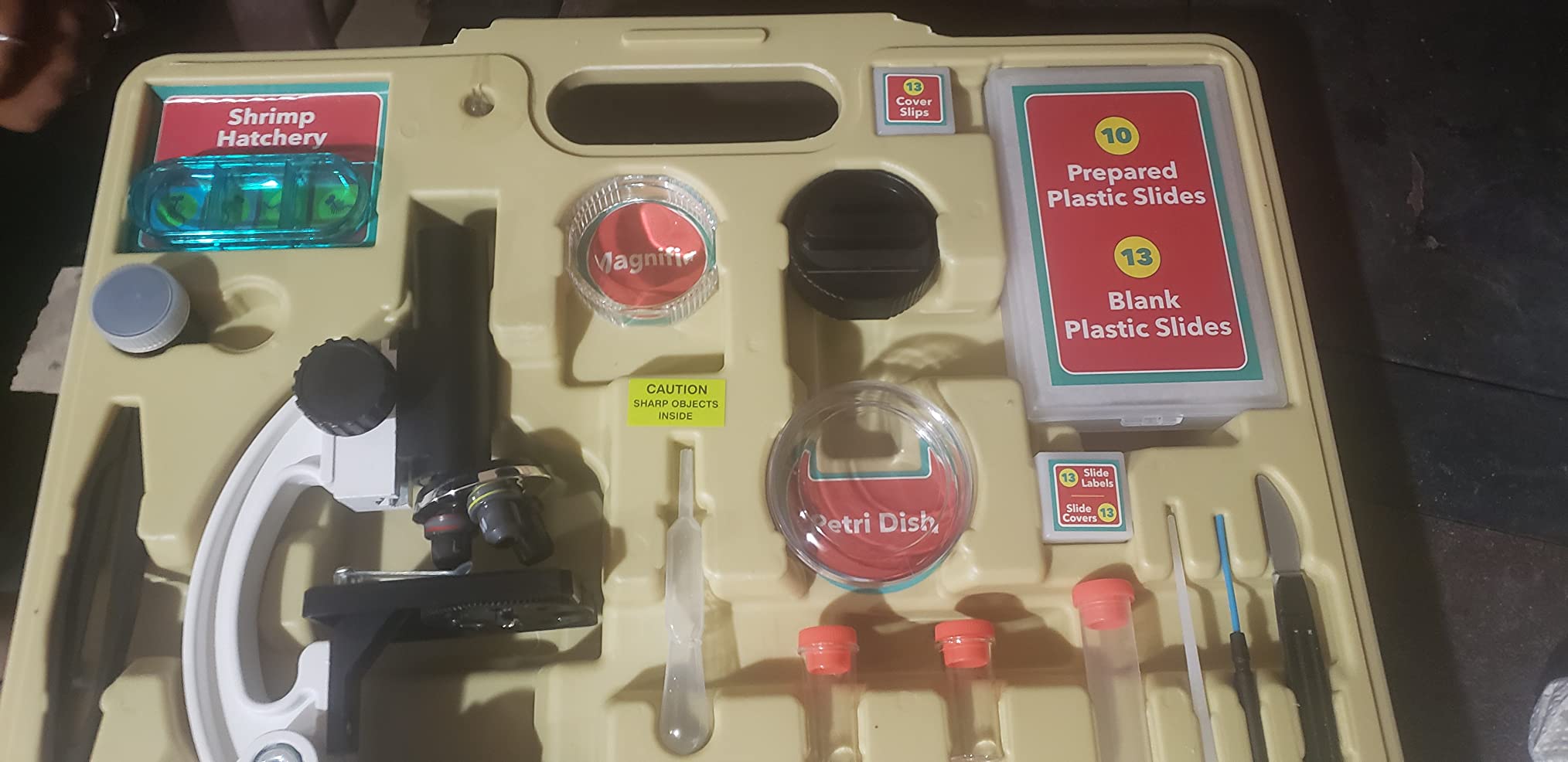
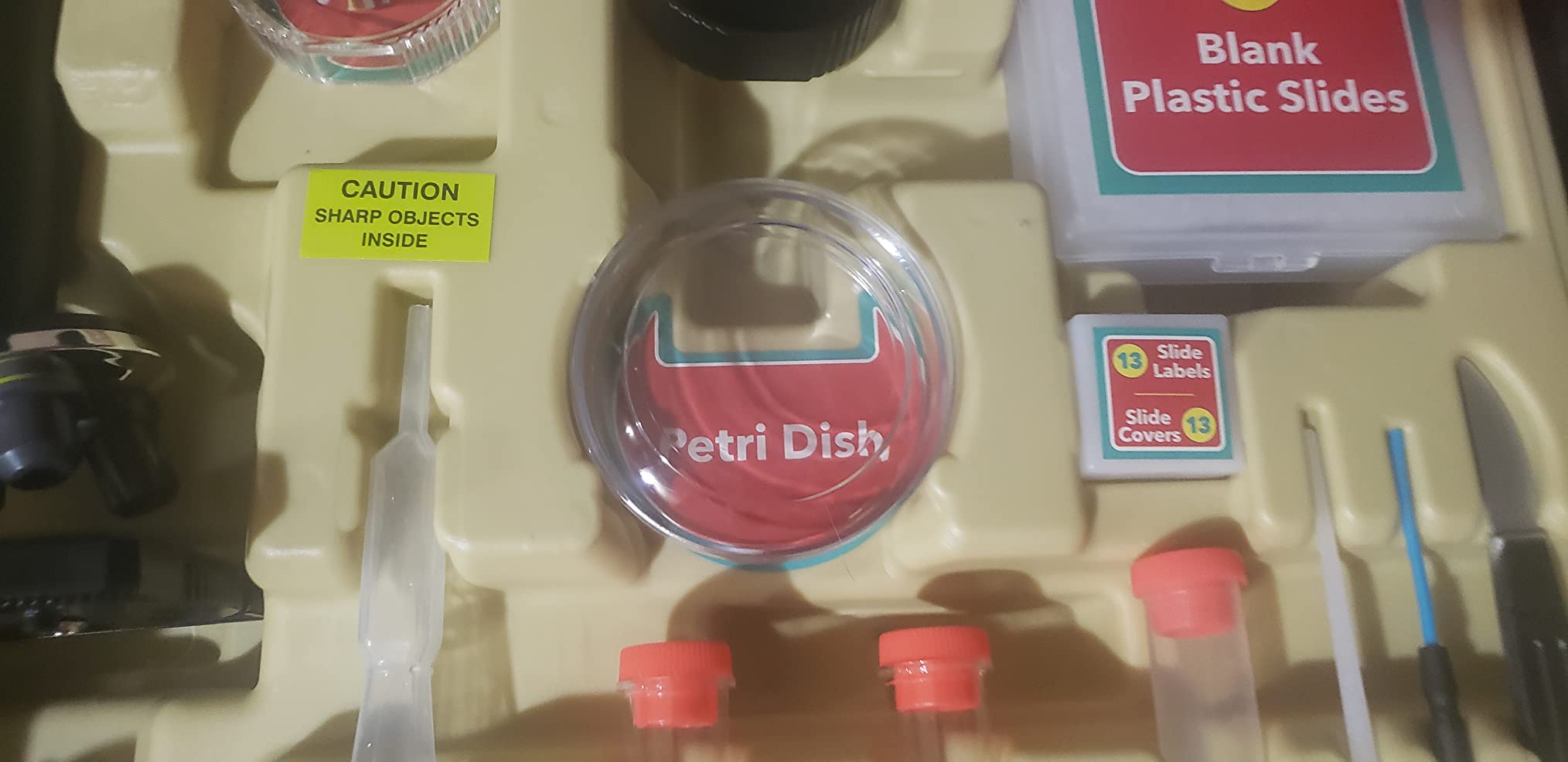
The 85+ piece kit is remarkable. You get blank slides, prepared slides, cover slips, petri dishes, test tubes, a graduated cylinder, and more. Opening the rugged ABS carrying case feels like unpacking a real laboratory. Our 12-year-old tester spent an entire weekend working through the different activities.
The USB2.0 color eyepiece camera is what earns this model a spot in our camera microscopes guide. You replace the standard eyepiece with the camera module, connect to a computer via USB, and view the magnified image on your monitor. The included kid-friendly software lets kids capture photos and videos, edit images, and explore a built-in specimen library.
The magnification range of 120X to 1200X is the most versatile in our test. Lower magnifications are perfect for examining entire insects and pond life. Crank it up to 1200X with a prepared slide and cell structures become visible. The rack and pinion focus system provides the precise control needed at higher magnifications.
Setting Up the USB Camera and Software
The USB camera setup requires a computer, which means this microscope is better suited for older kids or supervised use. You install the included software, swap the eyepiece for the camera, and connect via USB. The software provides a live view on your computer screen where you can capture still images and record video.
One important heads-up from our testing and confirmed by multiple Amazon reviews: the software download URL printed in the manual is outdated. You will need to visit the AmScope website directly to find the current software download page. Once installed, the software works well and includes engaging features like a specimen library and image editing tools designed for kids.
When to Choose a Compound Microscope Over a Digital One
Compound microscopes like the AmScope use true optical magnification through glass lenses. This means higher magnification levels reveal genuinely new detail, not just enlarged pixels. If your child is working on science fair projects, studying cell biology, or showing serious long-term interest in microscopy, a compound scope is the right investment.
Digital handheld scopes are better for casual exploration, outdoor adventures, and younger kids who need instant gratification. The AmScope requires more patience, more setup, and more adult involvement. But for the right child, it opens doors to real scientific discovery that pocket scopes simply cannot match.
What to Look for When Buying Kids Microscopes with Cameras
Choosing the right camera microscope for your child comes down to matching the device to their age, interests, and how they learn best. After testing seven models with real kids over three months, here are the factors that actually matter.
For parents exploring the broader world of STEM toys, our guide to STEM robotics kits for kids pairs perfectly with a microscope for a well-rounded science learning setup. Beyond STEM toys, our article on how to raise a bilingual child offers practical strategies for supporting child development through engaging educational activities at home.
Magnification Range
Magnification determines how much detail your child can see. For kids ages 3 to 7, magnification between 50X and 400X is ideal. They can clearly see insect parts, leaf textures, and fabric weaves without the frustration of managing delicate focus at high power.
For kids ages 8 to 12, look for ranges up to 1000X. At this age, children have the patience and fine motor skills to handle precise focusing. They can explore cell structures, crystal formations, and microscopic organisms in pond water samples.
Be skeptical of magnification claims above 1000X on handheld digital scopes. As microscopy community members on Reddit repeatedly point out, magnification above 1000X is often “empty magnification” where the image gets larger but shows no additional detail. True high-magnification viewing requires quality glass optics like those on the AmScope compound microscope.
Camera Resolution and Screen Quality
Camera resolution is the defining feature of this product category. The difference between a 2MP camera (1080P) and a 4K camera is noticeable when kids want to zoom in on captured images or print their photos. For most kids, 1080P is perfectly adequate. But if your child loves photography or wants to create science project displays, the 4K upgrade is worth it.
Screen size matters more than many parents expect. A 2.0-inch screen is fine for solo use, but if siblings or friends want to look together, a 2.4-inch or 4.0-inch screen reduces arguments and makes shared viewing possible. The HEWEIMEI with its 4.0-inch screen was the clear winner for group viewing in our tests.
Screen type also varies. IPS screens provide better color accuracy and wider viewing angles than standard LCD screens. All three Odatay models and the BMDSAE use IPS screens, which is why their color reproduction looked better in our side-by-side comparisons.
Age Appropriateness
For ages 3 to 5, the best choices are the BMDSAE pocket microscope and the National Geographic kit. Both are designed for small hands, with simple controls and durable construction. The National Geographic’s included rocks, minerals, and lab guide provide structured activities that hold young attention spans.
For ages 6 to 9, the Odatay 1080P and Odatay 4K models hit the sweet spot. They offer enough magnification to reveal exciting details without overwhelming complexity. The included prepared slides give kids immediate satisfaction while they learn to prepare their own specimens.
For ages 10 and up, consider the HEWEIMEI 1600X or the AmScope 85+ piece kit. Older kids can handle more complex controls and will appreciate the higher magnification ranges. The AmScope in particular rewards patience with genuinely impressive scientific views.
Durability and Build Quality
Kids drop things. This is an unavoidable reality. The BMDSAE survived a drop onto concrete during our testing without any damage. The Odatay models held up well to three months of regular kid use. The National Geographic scope’s all-plastic construction showed some scuffing but remained fully functional.
The AmScope’s metal body is the most durable in our test group, but it is also the heaviest and least portable. For outdoor use, lighter handheld models are more practical. For desk or classroom use, the metal construction of the AmScope will last for years.
Look for products with safety certifications like CE, FCC, and CPC. These indicate the product has been tested for material safety, electrical safety, and age appropriateness. The BMDSAE and both Odatay models carry these certifications.
Connectivity Options
USB connectivity lets you connect the microscope to a computer for larger-screen viewing. All seven products in our test offer some form of PC connectivity. This feature is valuable for classroom demonstrations, homeschool co-ops, and sharing discoveries with family.
WiFi connectivity is less common in this price range but worth mentioning. WiFi-enabled microscopes can stream directly to tablets and phones without cables. None of the models in our test offer built-in WiFi, but the BEBANG’s webcam mode provides similar functionality when connected to a PC.
SD card support varies. The Odatay 4K and BEBANG both include 32GB cards, which is generous. The Odatay 1080P and BMDSAE rely on built-in storage that fills up faster. If your child takes lots of photos, prioritize models with included or expandable storage.
Included Accessories and Value
Prepared slides are the single most valuable accessory. They let kids see immediate, exciting results without needing to prepare their own specimens. The Odatay models include 12 slides each, the BEBANG includes a slides kit, and the National Geographic includes 6 prepared plant slides plus rock and mineral specimens.
Carrying cases protect the microscope and keep accessories organized. The BEBANG’s EVA hard case and the AmScope’s rugged ABS case are both excellent. The lanyards included with the handheld models are simple but make outdoor use much more practical.
Warranty length tells you about the manufacturer’s confidence in their product. The Odatay 4K leads with 5 years. The Odatay 1080P offers 2 years. Most others provide 1-year warranties. The National Geographic satisfaction guarantee is less specific but backs the product with brand reputation.
Frequently Asked Questions About Kids Microscopes with Cameras
What is the best kids microscope with a camera?
The Odatay 1080P Digital Microscope is our top pick for most kids. It offers 1000X magnification, a clear 1080P camera, a 2.0-inch IPS screen, 12 included prepared slides, and a 2-year warranty at an affordable price. It earned the highest rating in our tests at 4.7 stars.
What age can kids start using a microscope with a camera?
Kids as young as 3 can use simple handheld digital microscopes with supervision. Models like the BMDSAE pocket microscope and National Geographic kit are designed for ages 3 and up with simple controls and durable construction. By age 5 or 6, most children can operate a camera microscope independently.
Are digital microscopes with cameras good for kids?
Yes, digital microscopes with cameras are excellent for kids. The camera and screen let children instantly see results without struggling with an eyepiece, capture photos to share their discoveries, and view specimens together with siblings or classmates. The instant visual feedback keeps kids engaged far longer than traditional microscopes.
What magnification is best for kids microscopes?
For kids ages 3 to 7, magnification between 50X and 400X is ideal. For ages 8 to 12, look for ranges up to 1000X. Magnification claims above 1000X on handheld digital scopes typically involve digital zoom, which enlarges the image without adding true detail. The 200X to 500X range is where most exciting discoveries happen for kids.
Do kids really need a microscope with a camera?
A camera is not strictly necessary, but it significantly enhances the learning experience. Kids who can capture and share their discoveries stay engaged longer, build science portfolios, and develop documentation skills. The ability to view specimens on a screen also makes microscopy accessible to younger children who struggle with traditional eyepieces.
Are handheld microscopes good for kids?
Handheld digital microscopes are excellent for kids, especially for outdoor exploration. They are portable, easy to use, and let children examine objects in their natural environment like leaves, bark, and insects. The trade-off is that handheld models typically use digital zoom at higher magnifications rather than true optical magnification. For the best of both worlds, the HEWEIMEI 1600X offers a 3-in-1 design that works as both handheld and desktop.
Final Thoughts on the Best Kids Microscopes with Cameras
Finding the best kids microscopes with cameras does not have to be complicated. For most families, the Odatay 1080P model hits every important mark: clear images, included slides, simple controls, and a price that makes sense. Step up to the Odatay 4K if you want a larger screen and that incredible 5-year warranty.
For budget-conscious shoppers, the BMDSAE pocket microscope delivers outstanding value at under $26. And for families with serious young scientists, the AmScope 85+ piece kit provides a genuine laboratory experience that will grow with your child for years.
The camera is what makes these microscopes special. It turns a solitary peek through a lens into a shareable, documentable, collaborative science experience. That is worth every penny. For even more options, check our complete guide to the best microscopes for kids of all types and age ranges.