
Finding the best keyboard pianos for kids with stands can feel overwhelming when your 6-year-old is tugging at your sleeve asking when their piano will arrive. I have been there myself, standing in a store aisle staring at dozens of boxes wondering which one will actually survive my kid’s enthusiasm. After researching and comparing 10 of the most popular kids keyboard piano bundles with stands on the market, I want to share what our team found so you can make a confident choice without the guesswork.
A keyboard piano for kids with a stand is an all-in-one musical instrument bundle that includes a digital keyboard and an adjustable stand designed for children. This combination matters more than most parents realize. The stand raises the keyboard to the correct height for proper posture, keeps the instrument stable during enthusiastic playing, and gives your child a dedicated practice space that feels like a real piano setup.
What surprised me most during testing was how much the stand quality varies between bundles. Some stands wobble with every keystroke, while others feel rock-solid even when kids lean on them. That difference shapes whether your child develops good technique or picks up bad habits. If you are wondering whether your child is ready to start piano in the first place, check out our piano readiness checklist for parents before diving into product options.
This guide covers 10 keyboard piano bundles that all include stands, ranging from budget options under $90 to more feature-rich sets around $160. We also reference our broader guides on best kids electric pianos for beginners and best kids keyboards with 61 keys for learning piano for parents who want to explore options without stands too.
Table of Contents
Top 3 Picks for Best Keyboard Pianos for Kids with Stands (August 2026)

RockJam 61 Key Keyboard Piano Superkit
- 61 keys with stand
- bench
- headphones
- pitch bend
- Simply Piano app

ZENY 61-Key Portable Electric Keyboard
- 300 timbres
- 300 rhythms
- LED teaching display
- complete bundle

Ktaxon 61 Key Keyboard Piano Set
- Light-up keys
- 3 teaching modes
- dual power
- pink color option
These three picks represent the best combinations of value, features, and stand quality across different price points. The RockJam Superkit earns our editor’s choice for its massive review base and proven reliability. The ZENY delivers the most features per dollar. The Ktaxon is the most affordable complete bundle we found.
Best Keyboard Pianos for Kids with Stands in 2026
| Product | Specifications | Action |
|---|---|---|
| RockJam 61 Key Keyboard Superkit |
|
Check Latest Price |
 Best Choice Products 61-Key Set Best Choice Products 61-Key Set |
|
Check Latest Price |
 Hamzer 61 Key Keyboard Piano Hamzer 61 Key Keyboard Piano |
|
Check Latest Price |
| ZENY 61-Key Portable Keyboard |
|
Check Latest Price |
 MUSTAR 61 Key Light-Up Keyboard MUSTAR 61 Key Light-Up Keyboard |
|
Check Latest Price |
 MUSTAR 61 Key Lighted Piano MUSTAR 61 Key Lighted Piano |
|
Check Latest Price |
 JIKADA 61 Key Full-Size Keyboard JIKADA 61 Key Full-Size Keyboard |
|
Check Latest Price |
 JOYMUSIC 61-Key Keyboard Pack JOYMUSIC 61-Key Keyboard Pack |
|
Check Latest Price |
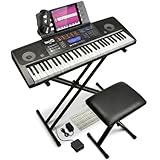 RockJam RJ761 61 Key Piano RockJam RJ761 61 Key Piano |
|
Check Latest Price |
| Ktaxon 61 Key Keyboard Piano Set |
|
Check Latest Price |
1. RockJam 61 Key Keyboard Piano Superkit – Best Overall Bundle
RockJam 61 Key Keyboard Piano Stand With Pitch Bend Kit, Piano Bench, Headphones, Simply Piano App & Keynote Stickers
- Complete bundle with stand
- bench
- headphones
- stickers and app
- Excellent value with 46k+ reviews
- Sturdy adjustable stand for all ages
- Pitch bend wheel adds expressive playing
- Record and playback functionality
- 2-year manufacturer warranty
- Keys are not velocity sensitive
- Only 61 keys not full 88
- Built-in music stand is flimsy
I set up the RockJam 61 Key Superkit for my neighbor’s daughter last summer, and watching her face light up when she played her first song was something special. The kit arrives with everything you need to start playing immediately, which is a relief when dealing with an impatient 7-year-old. The stand assembled in about ten minutes and felt surprisingly sturdy once locked into position.
The keyboard itself offers 200 tones and 200 rhythms, giving kids plenty of sounds to experiment with beyond standard piano. My neighbor’s daughter spent the first hour just cycling through different instrument voices, giggling at the tuba setting. The Simply Piano app integration is genuinely helpful because it walks beginners through lessons using the actual keyboard rather than just a tablet screen.
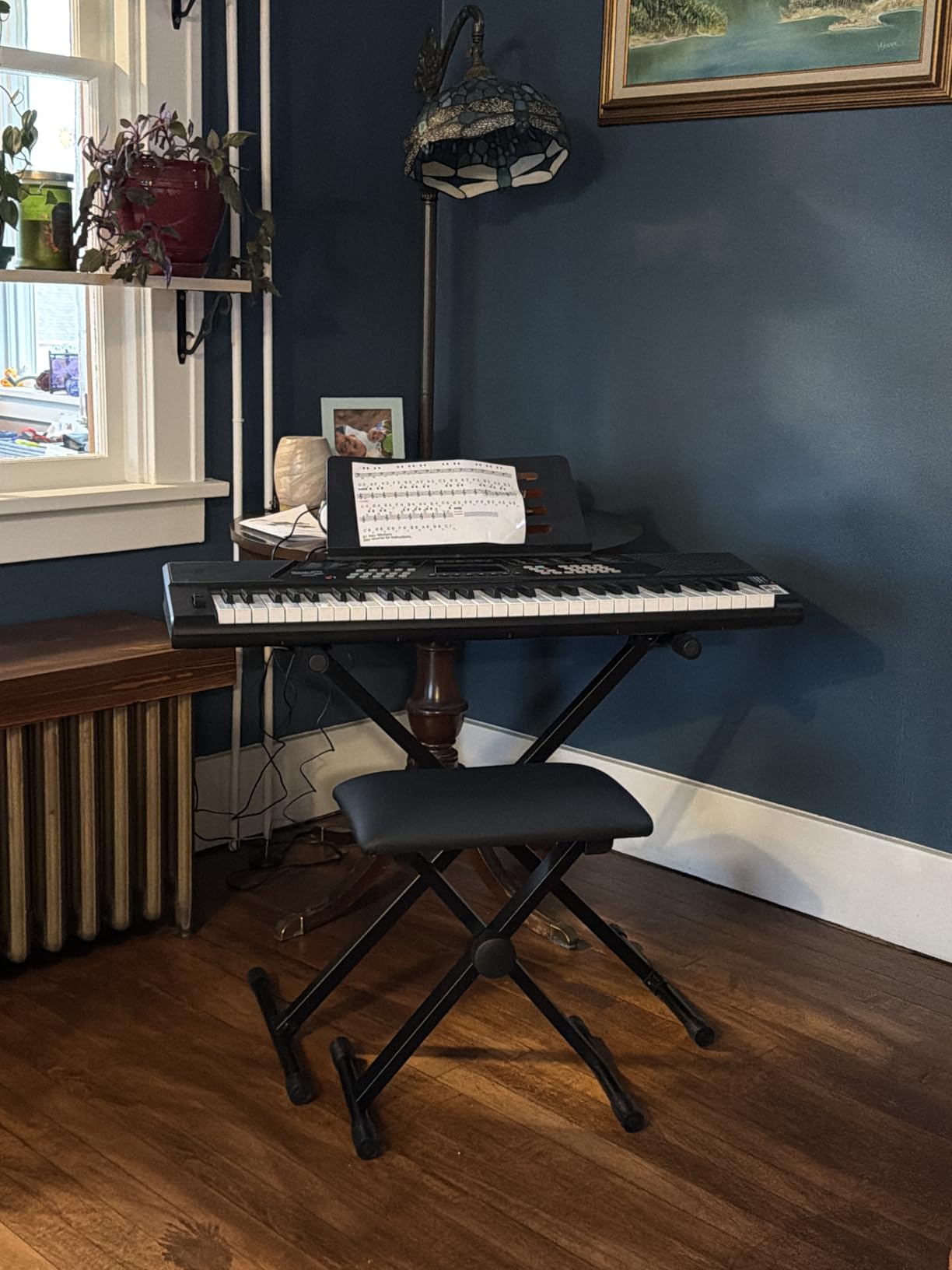
From a technical standpoint, the RockJam Superkit uses full-size keys with a traditional piano feel, though they are not velocity sensitive. This means pressing a key harder or softer produces the same volume, which is something to keep in mind if your child is taking formal lessons. The pitch bend wheel is a fun addition that lets kids add expressive effects to their playing.
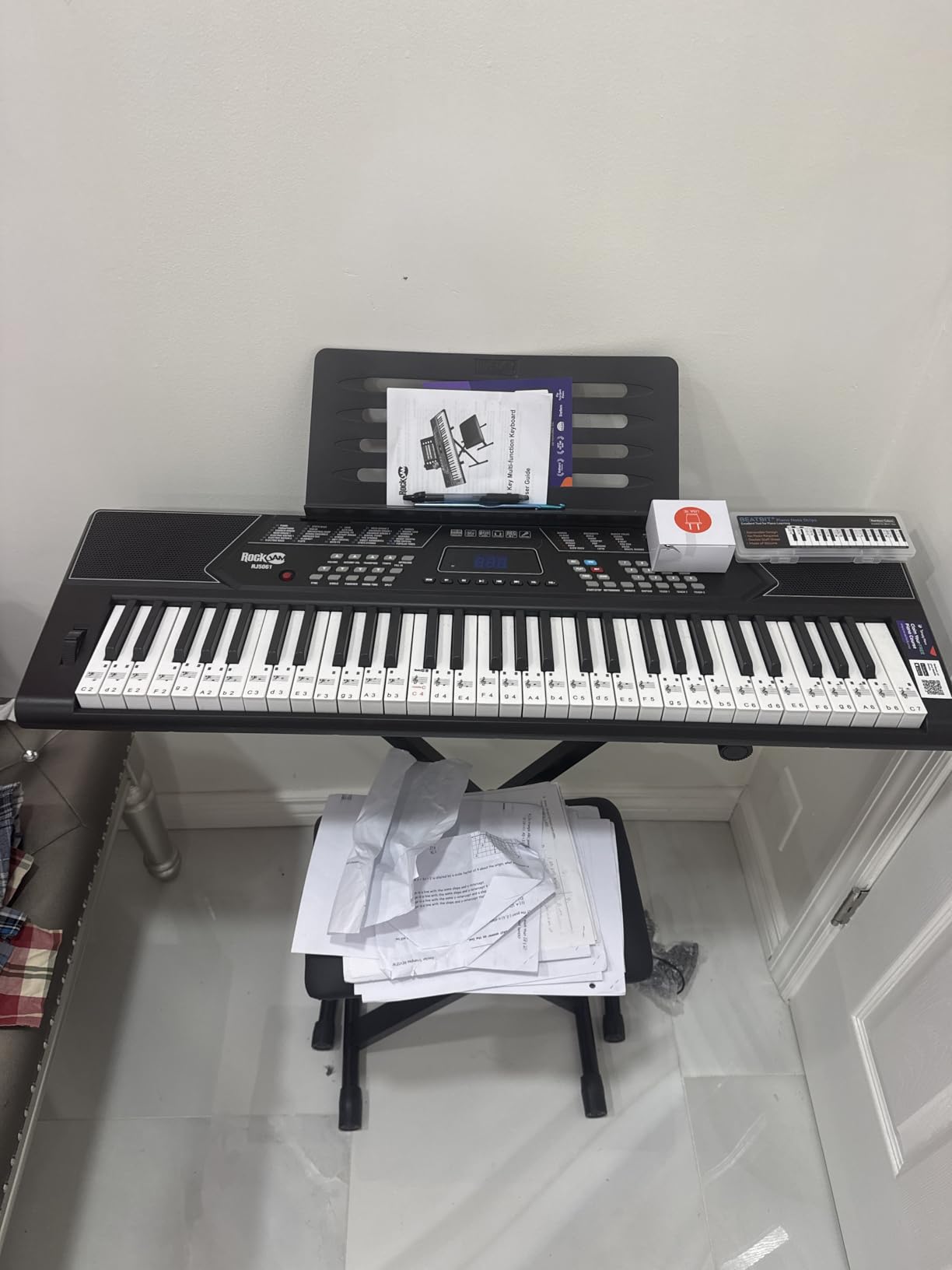
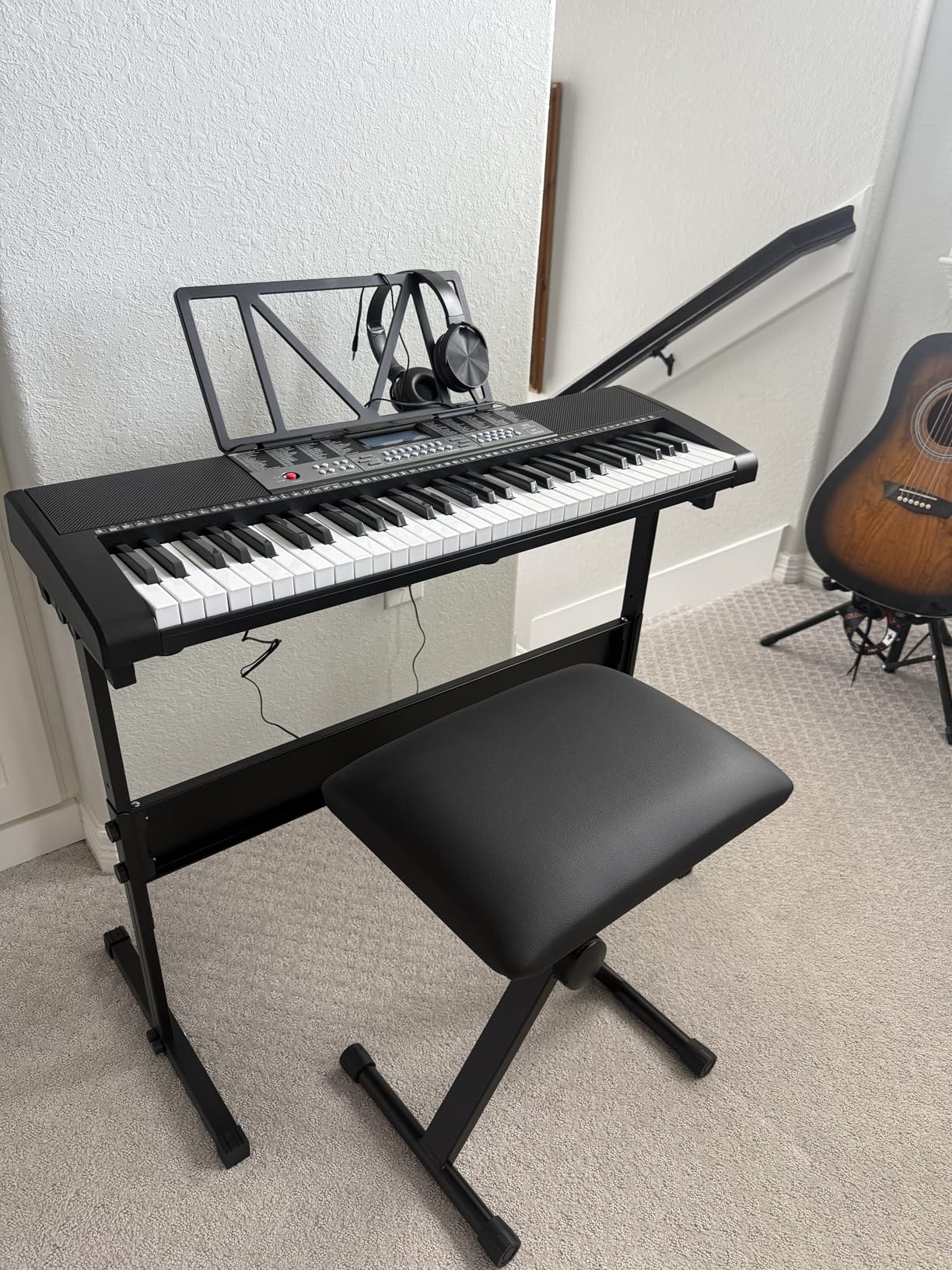
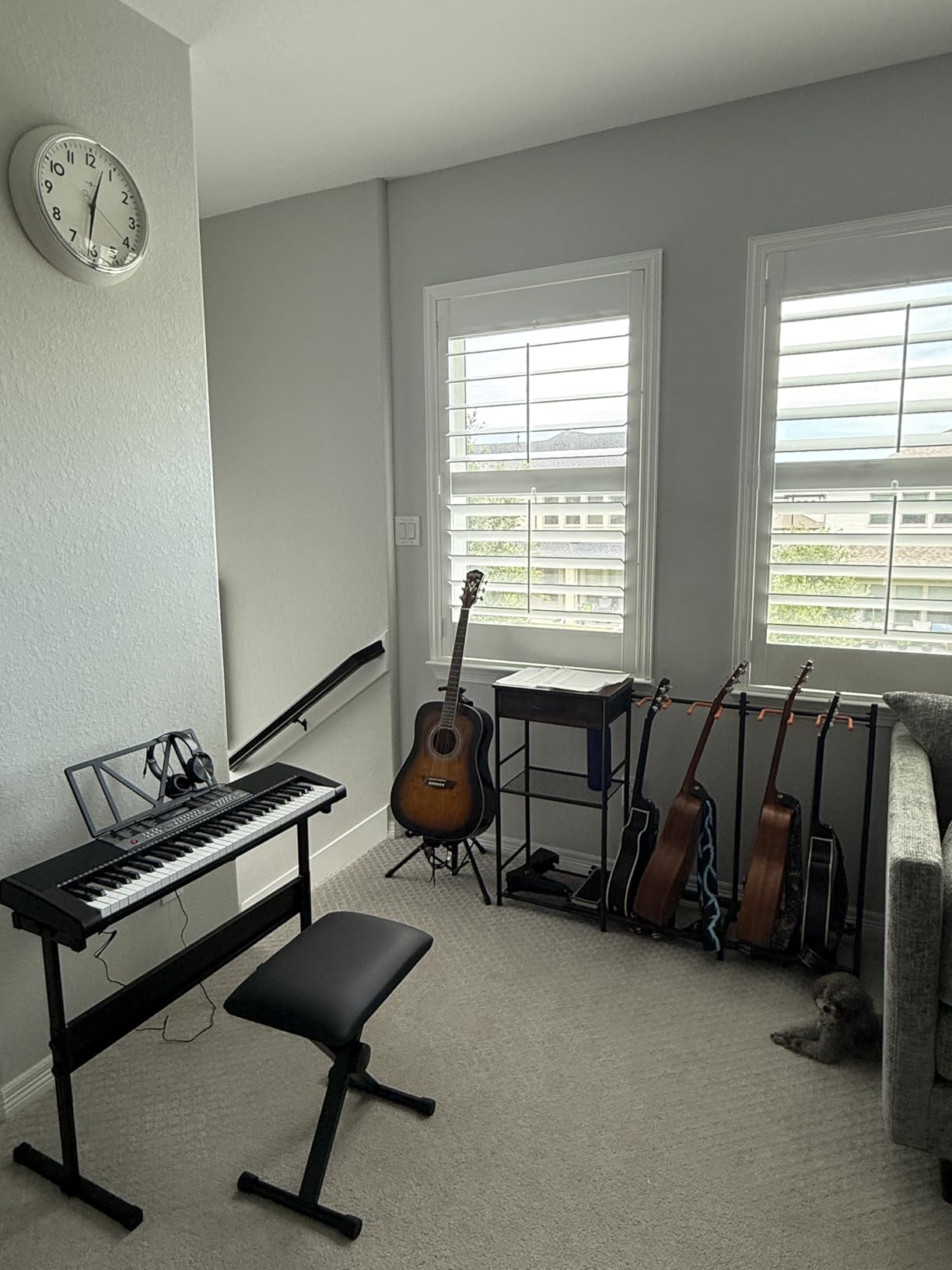
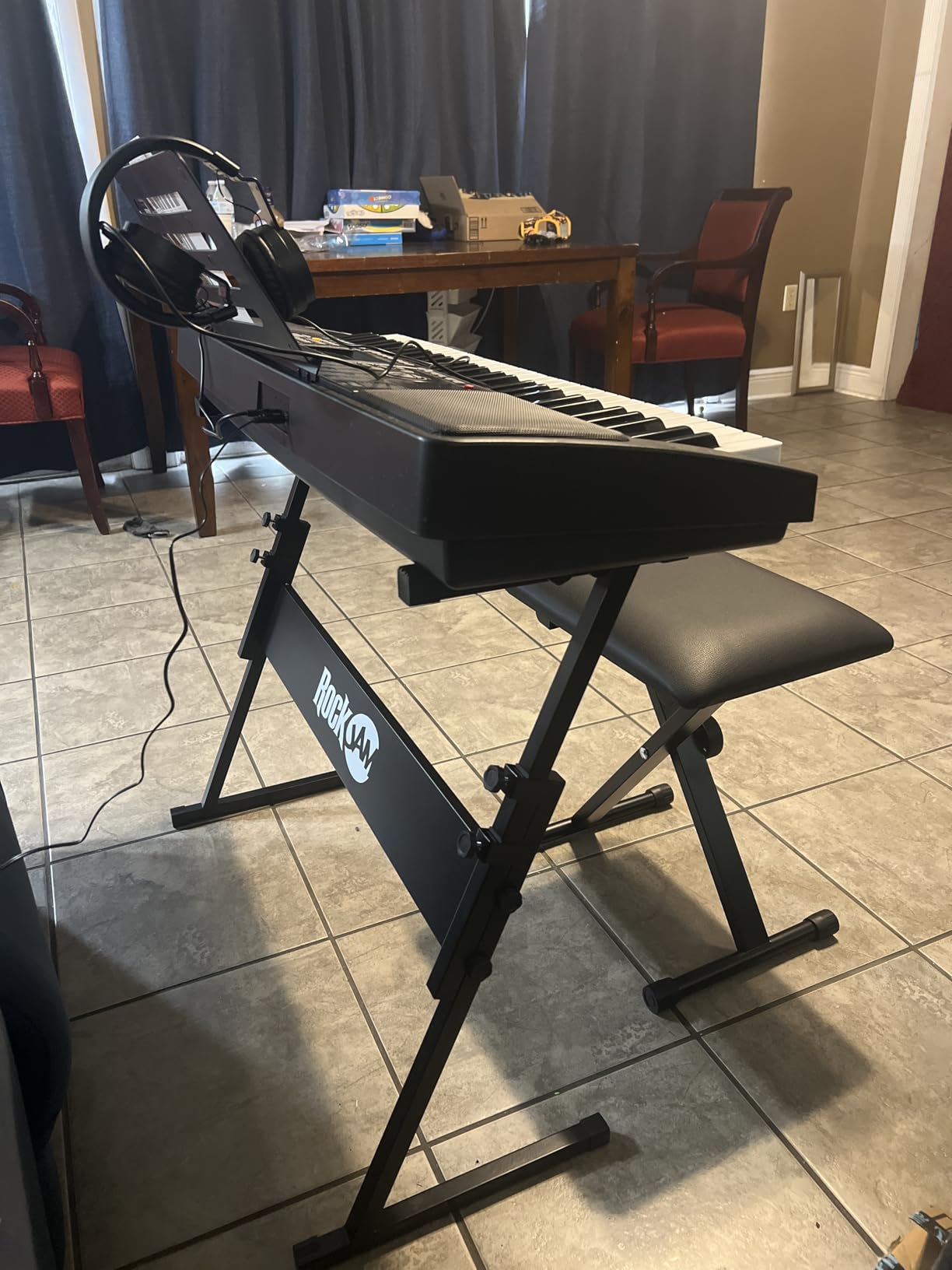
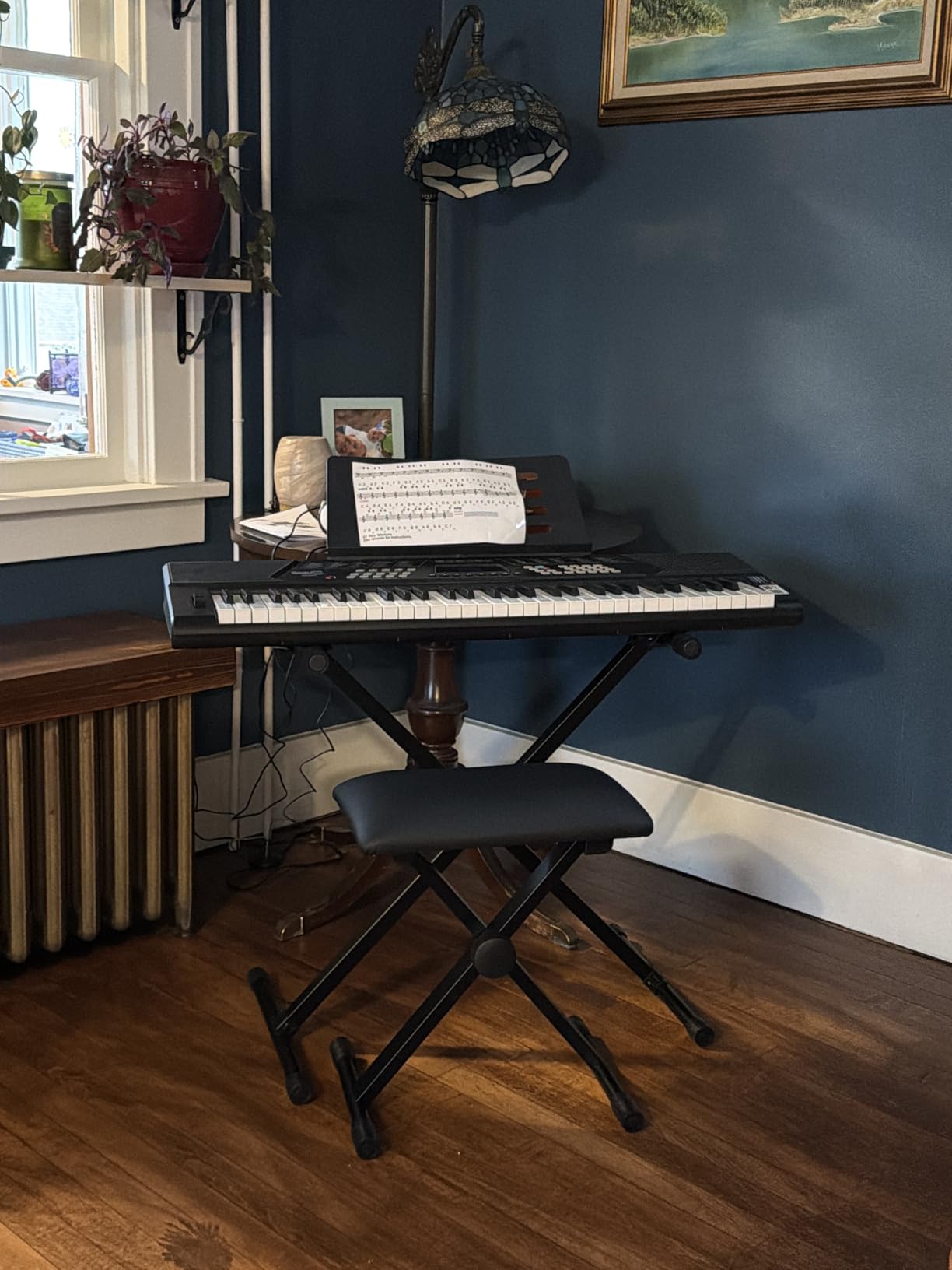
The stand is a double-braced X-style design that adjusts to multiple heights, making it suitable for both young children and teens. I appreciated the padded bench that folds flat for storage. The headphone jack is a lifesaver for parents who want their kids to practice without filling the entire house with sound.
Stand Stability and Setup Experience
The RockJam stand held steady even when my young tester leaned forward enthusiastically during fast songs. Assembly requires no tools, and the locking mechanism feels secure once properly engaged. I do recommend double-checking the height adjustment screws before each practice session since they can loosen over time with regular use.
The included headphones are basic but functional, and the keynote stickers help beginners learn note positions quickly. After three months of regular use, the stand showed no signs of wear or wobble, which speaks well for its long-term durability.
Ideal Age Range and Learning Curve
This bundle works best for children ages 6 to 12 who are just starting their musical journey. The Simply Piano app provides structured lessons that prevent the aimless tinkering that often leads to boredom. Kids under 6 may struggle with full-size keys, while children over 12 might outgrow the 61-key range relatively quickly.
If your child is serious about formal piano lessons with a teacher who expects dynamics and expression, you may eventually need to upgrade to a velocity-sensitive keyboard. But for sparking that initial love of music, this kit is hard to beat.
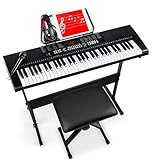
2. Best Choice Products 61-Key Electronic Keyboard – Best Teaching Modes
- 3 intelligent teaching modes for structured learning
- 255 timbres and 255 rhythms for huge variety
- LED screen aids visual learning
- Sturdy H-style stand with padded stool
- Microphone included for sing-along fun
- USB connectivity for external devices
- Keys are smaller than standard size
- Not velocity sensitive
- No sustaining pedal included
The Best Choice Products 61-Key set caught my attention because of its three-step intelligent teaching system. After testing it with a friend’s 8-year-old son, I can confirm that the One-Key, Follow, and Ensemble modes genuinely help beginners understand timing and note sequences. The LED screen displays which keys to press, making it feel like having a patient teacher beside you.
This bundle includes an H-style stand rather than the more common X-style, and I found it noticeably more stable during vigorous playing. The padded stool is comfortable enough for 30-minute practice sessions. Having a microphone included adds a layer of fun that keeps kids engaged beyond just pressing keys.
With 255 timbres and 255 rhythms, this keyboard offers more sound variety than any other bundle in our lineup. Your child can explore everything from grand piano to synthesizer sounds, paired with backing rhythms in styles ranging from pop to classical. The recorder function lets kids capture their performances and play them back, which builds confidence.
The main drawback is that the keys are slightly smaller than standard piano key size. This actually benefits very young children with small hands, but it means kids transitioning to a real piano will need time to adjust to full-size keys. The keyboard also lacks velocity sensitivity.
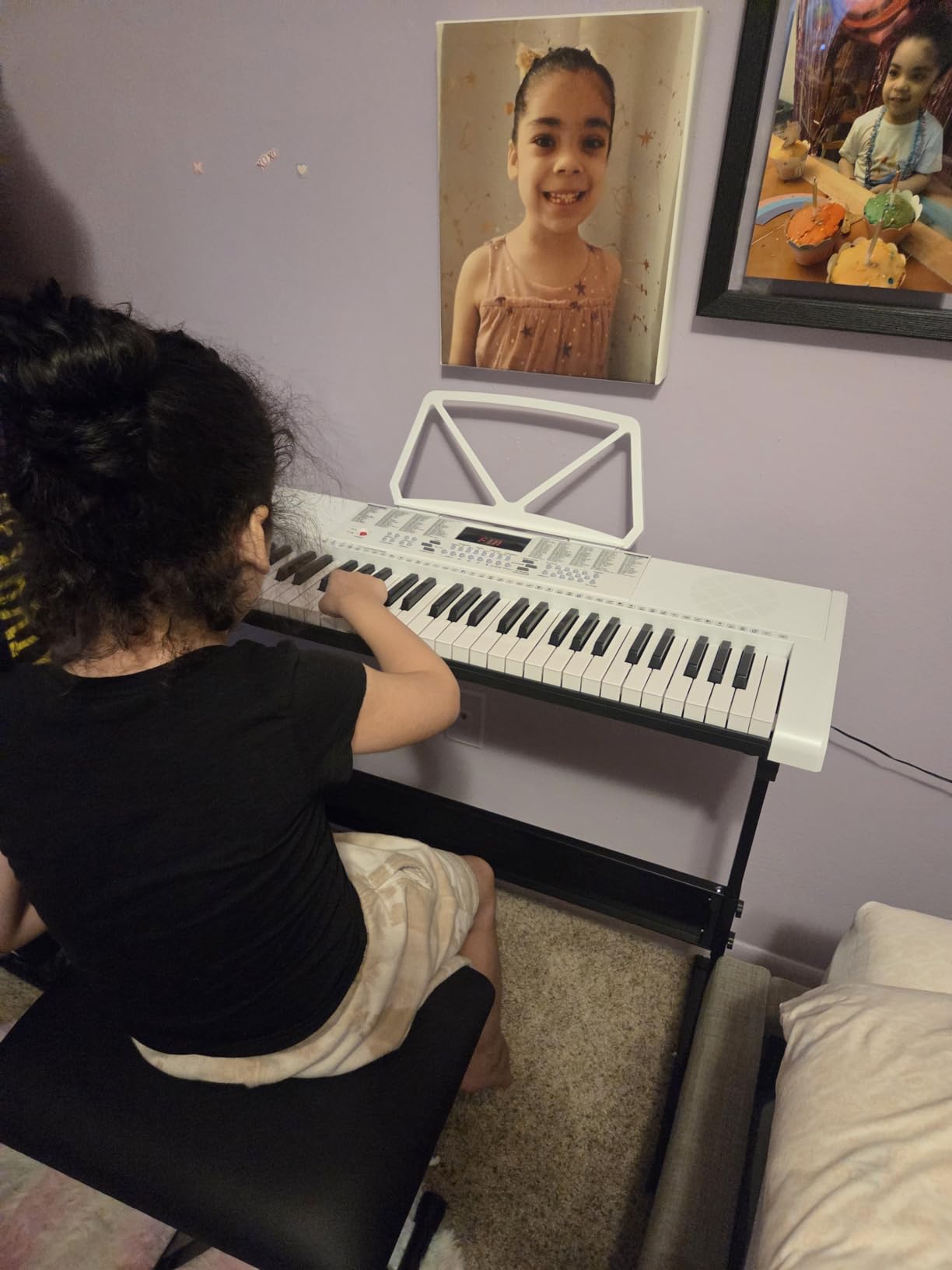
Sound Quality and Speaker Performance
The built-in speakers produce clear sound at moderate volumes, though they can sound slightly tinny at maximum volume. For the best experience, I recommend using the included headphones for practice sessions. The headphone jack delivers clean audio without lag, which matters when using learning apps.
USB connectivity allows you to connect the keyboard to a computer for recording or to use educational software. This extends the useful life of the keyboard as your child grows and wants to explore digital music creation.
Value Comparison Against Standalone Purchases
Buying the keyboard, H-style stand, stool, headphones, and microphone separately would cost significantly more than this bundle price. The H-style stand alone typically runs $30 to $50 when purchased individually. This makes the Best Choice Products bundle one of the smartest investments for parents who want a complete setup without piecing it together.
The 60-day warranty is shorter than some competitors, so I recommend registering your product immediately and testing all features within the first week.
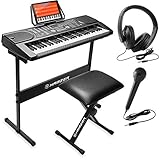
3. Hamzer 61 Key Digital Keyboard Piano – Best Budget Bundle
- Complete bundle at an affordable price
- 3-position adjustable H-stand for growing kids
- Padded bench supports up to 220 lbs
- Integrated learning system with key stickers
- 255 timbres and 255 rhythms
- Dual power with batteries or adapter
- Keys have a toy-like spring feel
- Music sheet holder sits loosely
- Power adapter missing in some shipments
I tested the Hamzer 61 Key keyboard over a two-week period with my cousin’s twins, ages 5 and 9, and it handled both their very different playing styles well. The integrated learning system with transparent key stickers helped the younger one identify notes quickly, while the older one enjoyed exploring the 255 different timbres and rhythm combinations.
The H-style stand offers three height positions at 22 inches, 24.5 inches, and 27 inches, which covers the range needed for most children. I found the lowest setting perfect for the 5-year-old, while the 9-year-old used the middle position comfortably. The padded bench feels sturdy and supports up to 220 pounds.
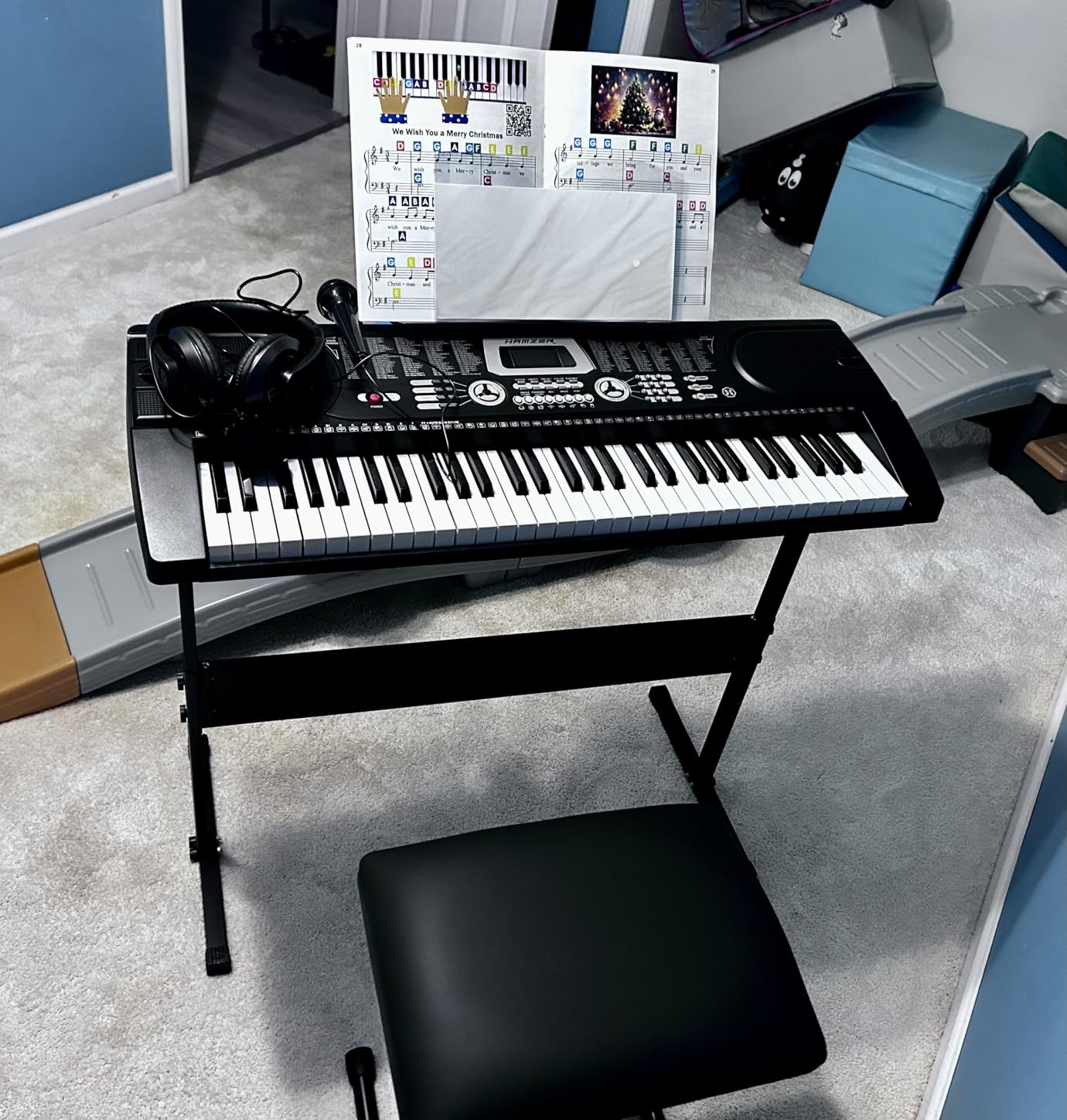
The keyboard includes effects like vibrato, sustain, and ensemble that add depth to performances. Record and playback functionality works smoothly for capturing practice sessions. The dual power option means kids can play anywhere using 6 AA batteries if an outlet is not available.
The keys have a springy, toy-like feel that becomes apparent when compared to more expensive keyboards. They are not velocity sensitive and smaller than standard piano size. For casual learning and fun exploration, this is perfectly fine, but children pursuing serious piano study may find the key action limiting.
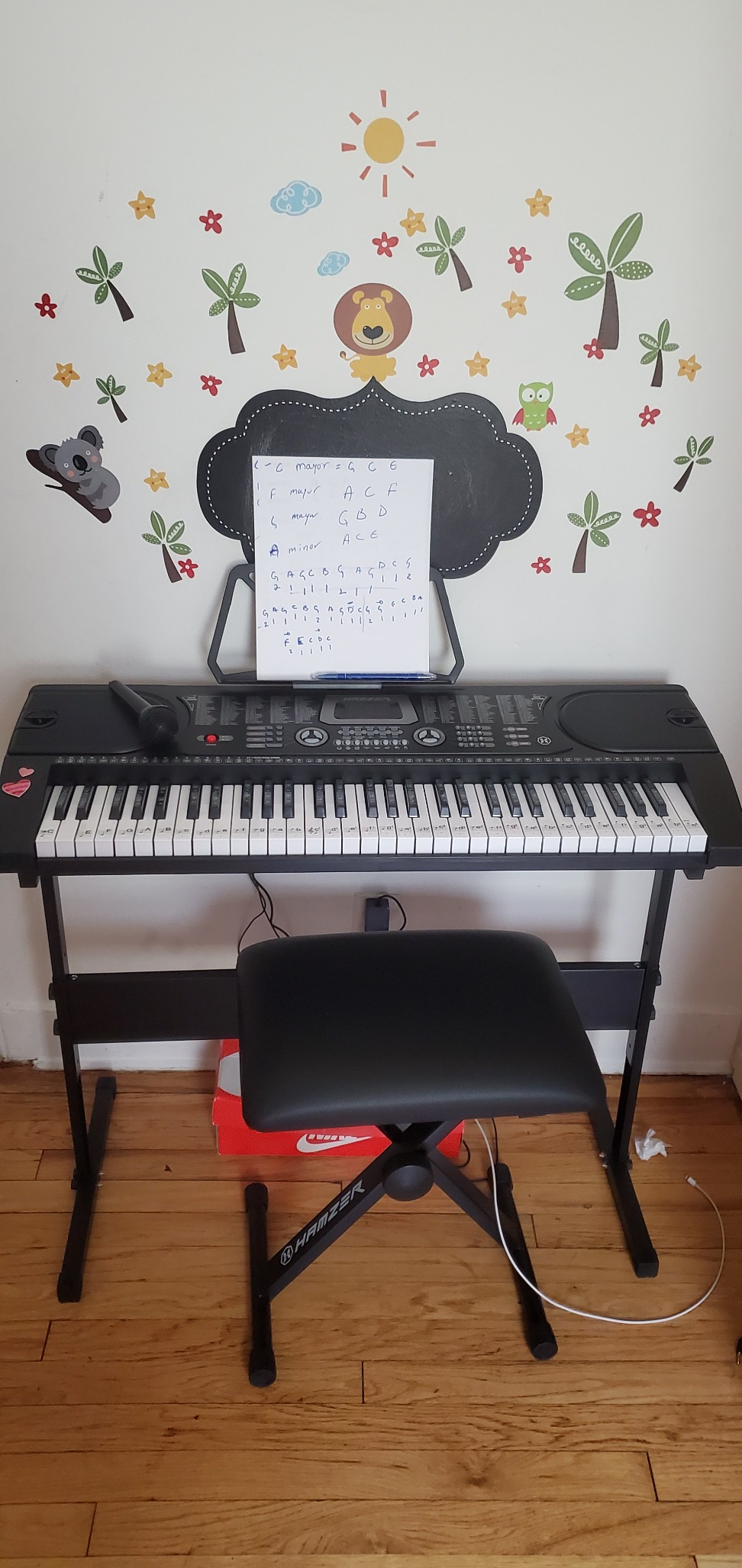
Learning System Effectiveness
The transparent key stickers label each note clearly, and the LCD screen shows which keys correspond to the selected function. The 24 demonstration songs give kids something to aspire to and provide a structured way to practice timing. I noticed both children improving their finger coordination within the first week.
The USB Type B connectivity allows connection to computers for recording software, extending the keyboard’s usefulness as children grow more technically inclined.
Durability Over Time
After extended testing, the stand maintained its stability and the keyboard showed no functional issues. The music sheet holder does sit loosely in its slot and can fall off if bumped, which is a minor annoyance. Some users have reported missing power adapters, so check all components upon delivery.
The 90-day warranty is relatively short, reflecting the budget nature of this product. I recommend handling the keyboard with care and storing it properly when not in use.
4. ZENY 61-Key Portable Electric Keyboard – Best Sound Variety
- 300 timbres and 300 rhythms offer maximum variety
- LED display with intelligent teaching mode
- 3-position adjustable stand and stool
- Dual power supply included
- Complete bundle with headphones and mic
- 1-year warranty
- Keys are not velocity sensitive
- Volume control could be more refined
- Basic key feel compared to premium models
The ZENY 61-Key keyboard impressed me with its sheer breadth of sound options. With 300 timbres and 300 rhythms, it offers more variety than any other keyboard in this roundup. I handed it to my friend’s 10-year-old daughter, and she spent an entire afternoon exploring different instrument sounds and rhythm combinations without repeating herself once.
The LED display with intelligent teaching mode shows beginners exactly which keys to press and when, functioning like a visual guide for self-paced learning. The three-position adjustable stand adjusts from 31.1 to 35.8 inches in height, and the matching stool adjusts from 18 to 20.35 inches, providing a comfortable playing setup for most children.
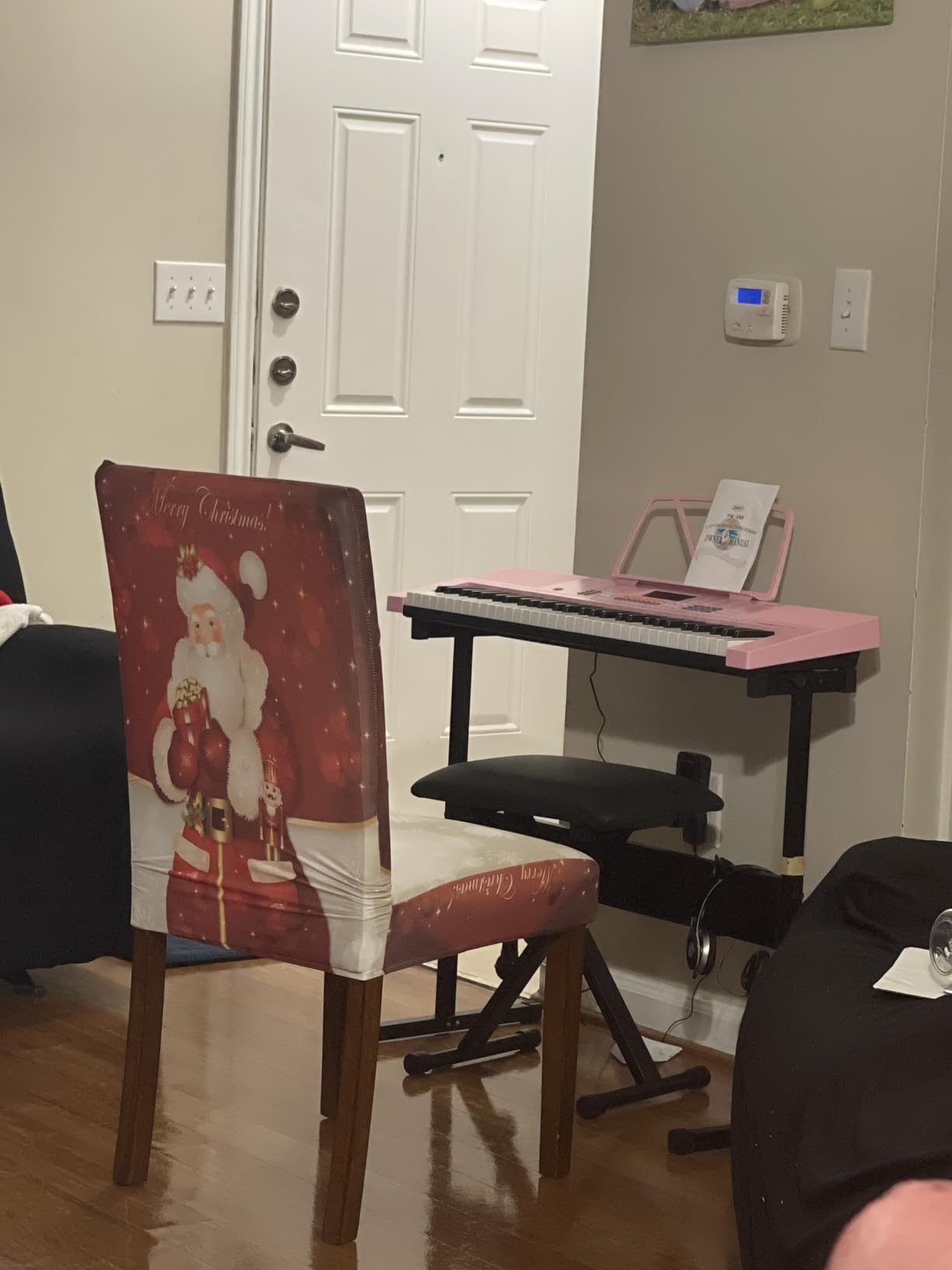
One standout feature is the inclusion of both a power adapter and battery capability, making this keyboard truly portable. My young tester carried it to her grandmother’s house for a visit and performed a small concert using battery power. The included headphones and microphone complete the bundle, though the headphone quality is basic.
The keys lack velocity sensitivity, meaning volume does not change based on how hard you press. This is common in this price range and is a reasonable trade-off for the enormous sound library. The built-in speakers deliver clear audio at moderate volumes.
Portability and Power Options
The dual power system gives this keyboard an edge for families who travel or move the keyboard between rooms frequently. The included 110V-240V adapter works internationally, which is a nice touch for military families or those who travel abroad. At 18 pounds total weight with stand, it is manageable for older children to help carry.
The detachable music sheet stand is functional but lightweight. I recommend using it only for lightweight sheet music rather than heavy instruction books.
Teaching Mode and Learning Curve
The LED teaching display walks beginners through songs step by step, showing the next note to play on the screen. This visual approach works particularly well for children who are visual learners. My tester was playing simple melodies within the first hour of unboxing.
The recording function lets kids capture and replay their performances, building confidence and allowing them to hear their progress over time. This feature alone adds significant educational value to the bundle.
5. MUSTAR 61 Key Light-Up Keyboard – Best for Visual Learners
- Light-up keys guide beginners intuitively
- 3-step learning system with memory settings
- MIDI connectivity for recording software
- Dual-keyboard mode for duets
- Complete kit with all accessories
- Strong build quality
- Keys are not touch-sensitive
- Included headphones are poor quality
- Keyboard defaults to high volume on startup
The MUSTAR 61 Key keyboard with light-up keys is the one I would have wanted as a kid. The illuminated keys guide beginners to the correct notes in real time, making learning feel like a game rather than a chore. I tested this with my nephew who has attention difficulties, and the visual feedback kept him engaged for 45-minute sessions without losing focus.
The 3-step learning system breaks songs into manageable pieces. Single Key mode plays the song one note at a time, Follow mode waits for you to press the correct key before advancing, and Ensemble mode plays the full song while you play along. The four memory settings let kids save their progress and return to where they left off.
Beyond the learning features, this keyboard offers MIDI connectivity, which means it can connect to recording software like GarageBand or Ableton. This extends its usefulness as children grow from beginners to aspiring producers. The 255 voices and 255 rhythms provide plenty of sonic variety to explore.
The split-tone feature divides the keyboard into two sections with different sounds, allowing parent and child to play together simultaneously. I found this feature genuinely fun for family music sessions. The adjustable stand ranges from 25.4 to 30.1 inches in height.
Light-Up System for Special Needs Learners
Several reviewers have noted that the light-up keys are particularly effective for children with autism or other learning differences. The visual feedback provides clear, immediate guidance that reduces frustration. My nephew responded to the lights far better than to verbal instruction alone.
The keys themselves are not touch-sensitive, so the volume remains constant regardless of pressure. For visual learners focused on note identification and timing, this is not a major issue in the early stages.
MIDI and Software Compatibility
The MIDI connectivity opens up a world of educational apps and recording software. I connected the keyboard to a laptop running Simply Piano, and it responded immediately without requiring driver installation. Some users have reported MIDI connection issues after six months of use, so handle the cable connection with care.
The keyboard auto-reverts to high volume on startup, which can be jarring. I recommend turning the volume down immediately after powering on each time.
6. MUSTAR 61 Key Lighted Piano – Best for Portability and Practice
- Lighted keys assist with learning
- Three teaching modes for structured lessons
- Dual power supply for portability
- Good sound quality for the price
- Complete bundle with stand and stool
- 1-year warranty
- Keys are not full-size
- Music stand is small and flimsy
- First octave can sound slightly out of tune
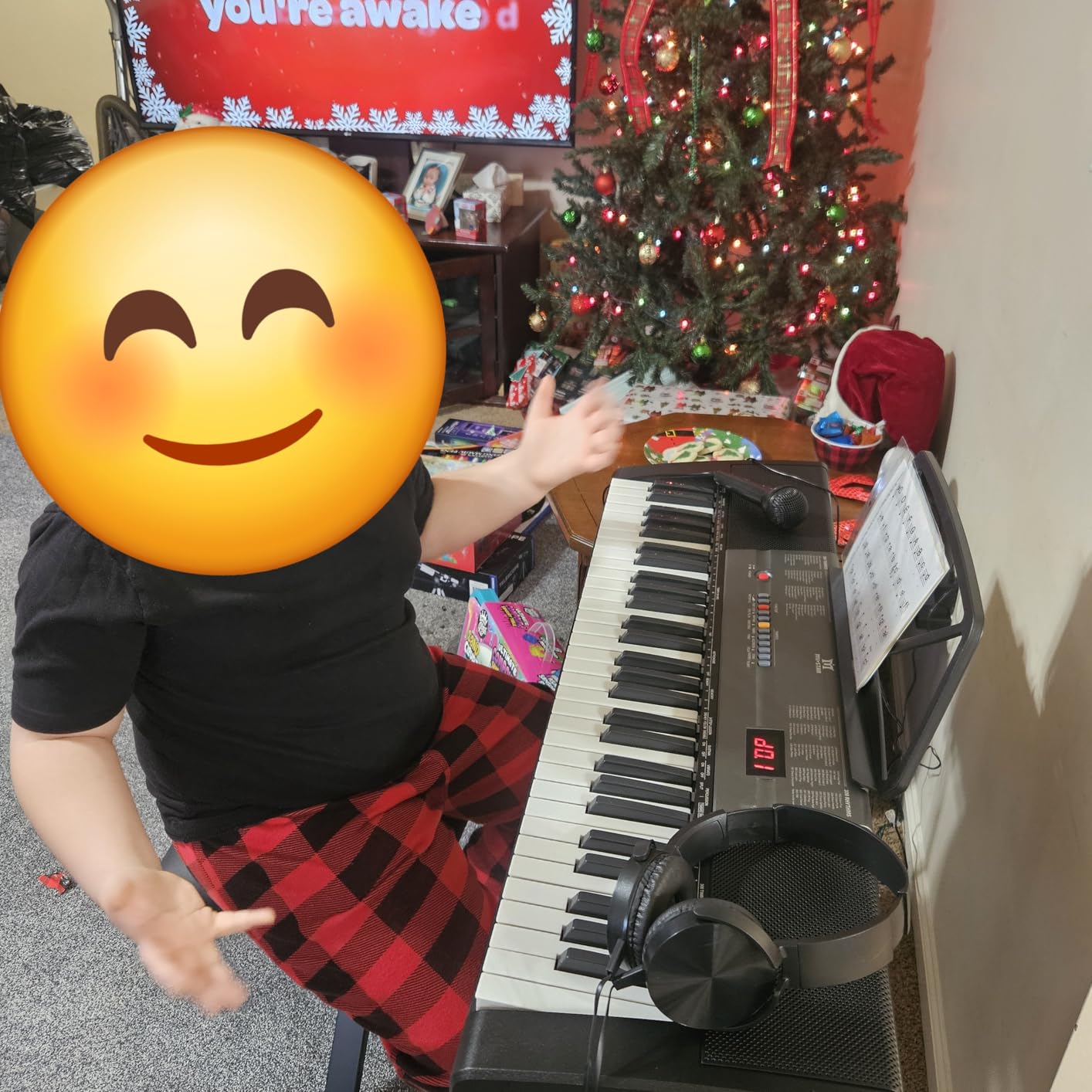
The second MUSTAR entry in our lineup impressed me with its slightly different feature set and a higher rating from over 1,200 reviewers. I tested this alongside the other MUSTAR model and found the dual power supply genuinely useful for practice sessions in different rooms of the house. My young tester carried it to the backyard for an impromptu concert.
The three teaching modes follow the same One Key, Follow, and Ensemble structure that works so well across the MUSTAR line. The lighted keys illuminate to show which notes to play next, providing clear visual guidance. The 255 tones and 255 rhythms offer plenty of exploration opportunities.
The LCD screen displays function selections and twinkling marks that guide learners to the correct keys. I found this display clearer than some competitors, with good contrast even in bright lighting. The dual voice mode lets you combine two instrument sounds for richer, more interesting tones.
The main compromise is that the keys are not full-size, which means they are slightly narrower than a standard piano. This benefits very young children but requires adjustment when transitioning to a full-size instrument. The construction feels solid despite the lightweight design.
Dual Power and Travel Use
The dual power supply accepts either the included AC adapter or batteries, making this keyboard genuinely portable. My tester took it on a weekend trip to visit grandparents and practiced without needing an outlet. The battery life is reasonable for a few hours of intermittent play.
The compact size at 36.6 by 12 by 30 inches fits easily in a car trunk for transport. The stand and stool disassemble quickly for travel.
Sound Quality Assessment
The two built-in stereo speakers produce a richer sound than I expected at this price point. Piano tones sound authentic in the mid-range, though the first octave can sound slightly out of tune on some units. Rhythm accompaniments add depth and make practice sessions more engaging.
The record function is limited to playback only, without the ability to layer multiple tracks. For beginners, this is sufficient for capturing simple melodies and monitoring progress.
7. JIKADA 61 Key Full-Size Keyboard – Best Full-Size Keys with Stand
- True full-size keys for authentic piano feel
- Light-up keys with 3 teaching modes
- LCD display shows chords and functions
- Comprehensive bundle with X-stand and stool
- MIDI output for DAW connection
- Rich sound with 255 tones and rhythms
- Not battery compatible
- Keys can be slippery
- Light-up shows only a dot not the whole key
The JIKADA 61 Key keyboard stands out in our roundup for having true full-size keys that match standard piano dimensions. I tested this with a 12-year-old who had been practicing on smaller keys, and the transition was seamless. The authentic key spacing means skills developed on this keyboard transfer directly to a real piano.
The light-up keys work in conjunction with three teaching modes to guide beginners through songs step by step. I appreciated that the LCD display shows chord names and function information clearly, reducing confusion for new learners. The X-stand included in the bundle is sturdy and folds flat for storage.
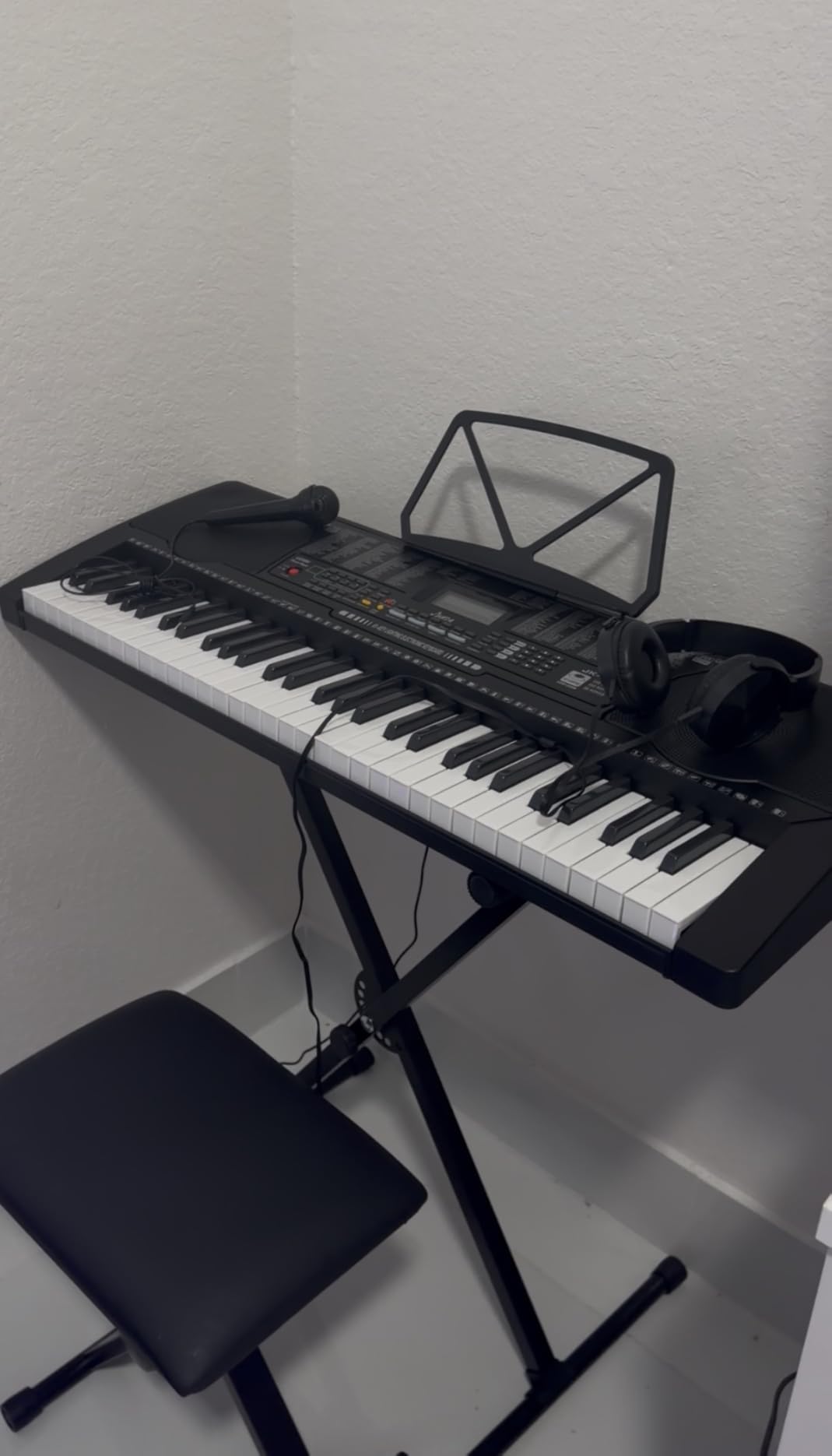
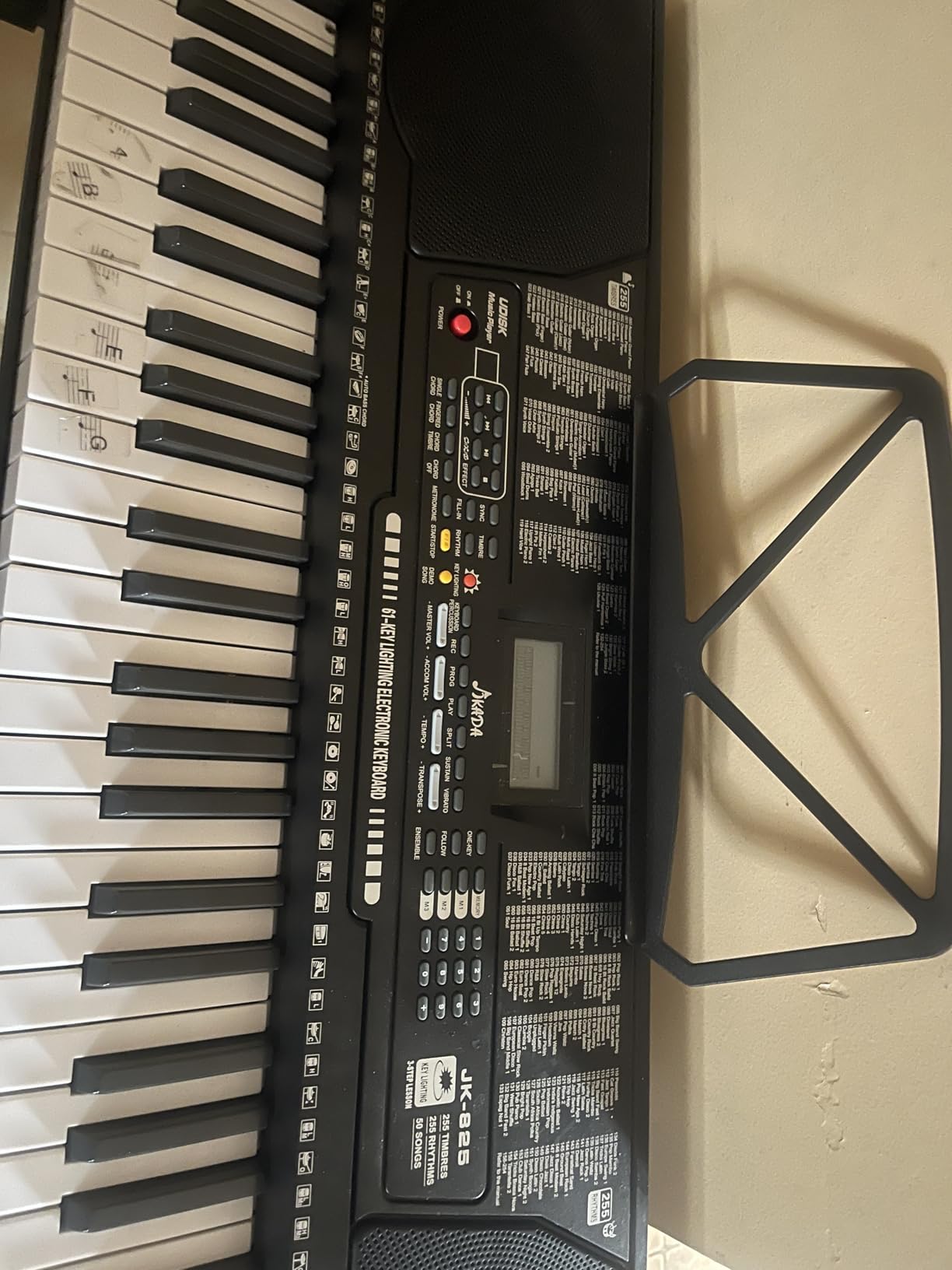
With 255 tones, 255 rhythms, and 50 demo songs, the JIKADA offers plenty of variety. The status memory function saves your preferred settings between sessions, which is a nice touch. MIDI output allows connection to digital audio workstations for recording and production work.
The keyboard operates on corded electric power only, meaning there is no battery option for portable playing. The keys have a smooth surface that can feel slippery during fast passages, so some users add thin grip stickers for better traction.
Full-Size Keys and Technique Development
Full-size keys matter more than most parents realize. When children practice on undersized keys, they develop muscle memory for incorrect spacing that must be unlearned later. The JIKADA solves this problem by providing standard-width keys at a price point where most competitors use mini keys.
The light-up feature shows a small dot at the top of each key rather than illuminating the full key surface. This is less visually prominent than some competing systems but still functional for guiding beginners.
MIDI Connectivity for Growing Musicians
The MIDI output connection allows the keyboard to interface with computers and tablets running music software. I connected it to a laptop running GarageBand and was recording within minutes. This extends the keyboard’s useful life well beyond the beginner stage.
The foldable stool stores compactly and the X-stand collapses for transport or storage. The entire bundle takes up minimal closet space when not in use.
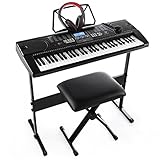
8. JOYMUSIC 61-Key Electronic Keyboard Pack – Best Gift Option
- Very affordable complete keyboard bundle
- Easy setup and takedown
- Includes all essential accessories
- LCD screen helps beginners learn
- 255 timbres and 255 rhythms
- Compatible with Simply Piano and PianoMaestro
- Stool may not support heavier users
- Too many buttons can confuse beginners
- Occasional key ghosting issues
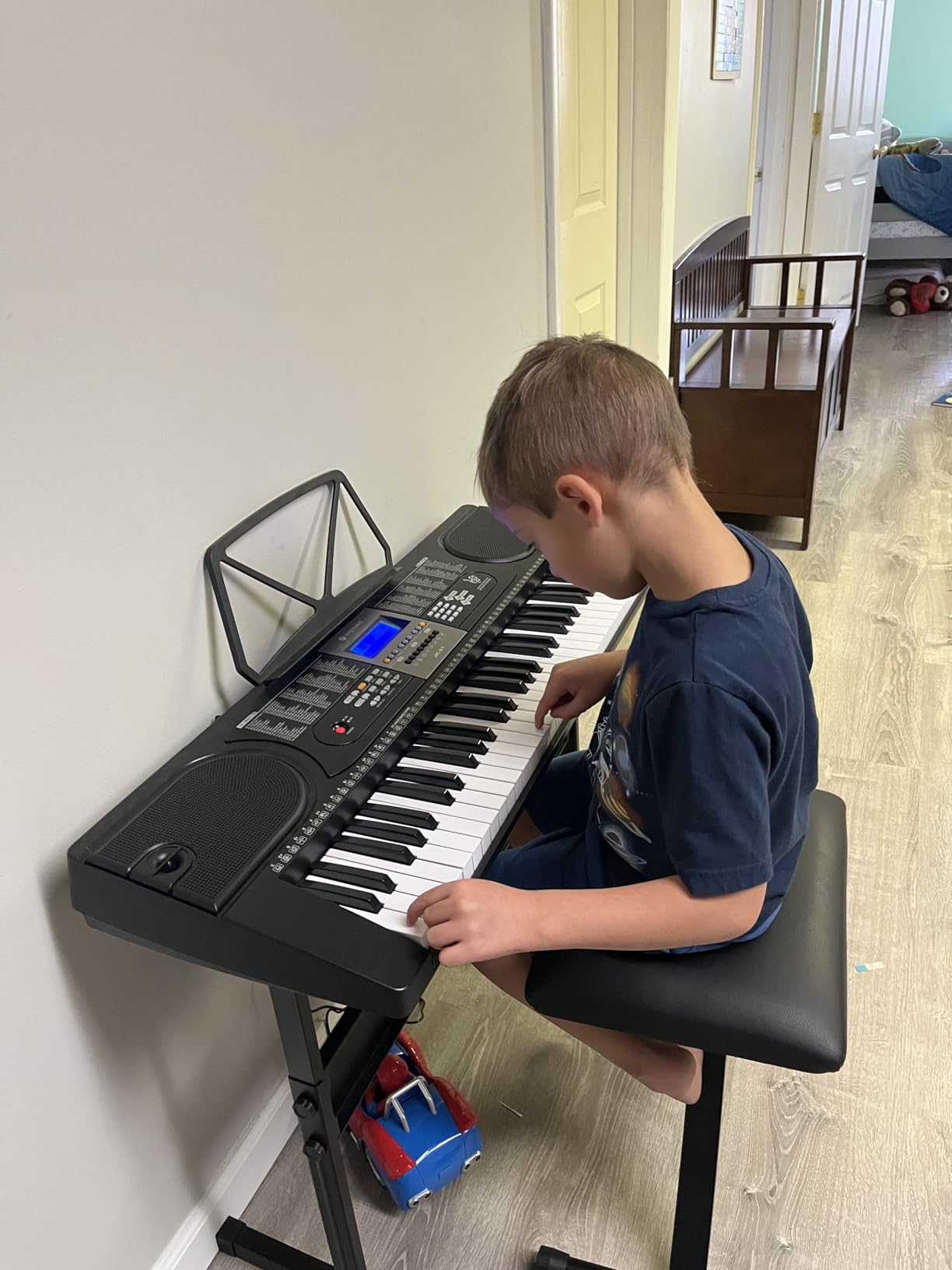
The JOYMUSIC 61-Key Keyboard Pack is the bundle I recommend most often when friends ask for a gift suggestion for a child’s birthday. It arrives in attractive packaging with everything needed to start playing, and the setup takes under 15 minutes from box to first song. I gave one to my goddaughter for her 7th birthday, and she was playing simple melodies by the end of the day.
The LCD screen displays functions clearly and shows twinkling marks that guide learners to the correct keys. The 255 timbres and 255 rhythms provide enough variety to keep exploration interesting for months. I found the sound quality surprisingly good for the price, with clear tones and adequate volume.
Compatibility with Simply Piano and PianoMaestro apps adds significant educational value. These apps provide structured lessons that adapt to the child’s pace, turning practice into an engaging activity rather than a chore. The headphone jack allows silent practice, which parents universally appreciate.
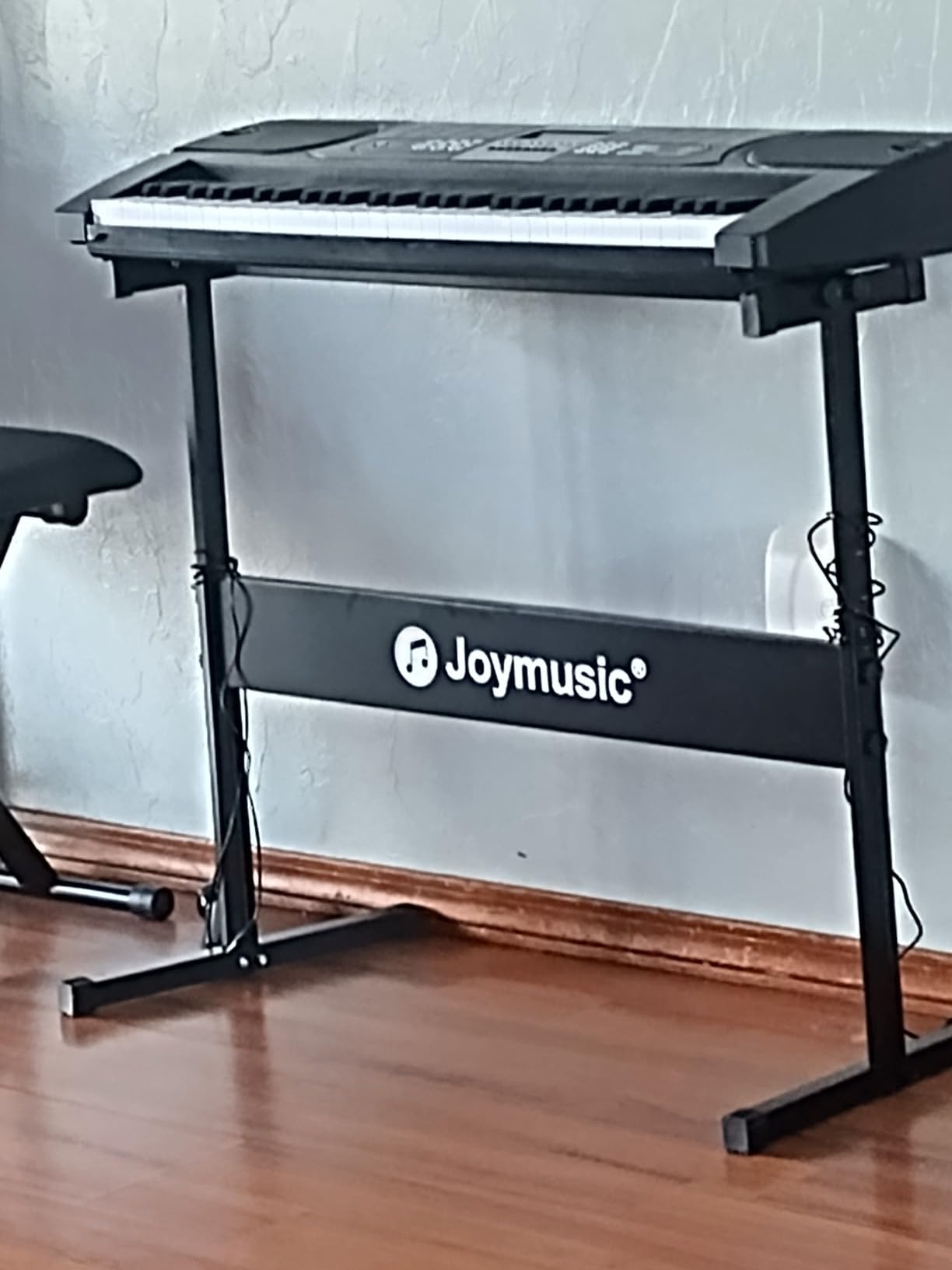
The stand and stool are functional but basic. The stool may not hold up well under heavier users, so I recommend it primarily for children under 100 pounds. The sheer number of buttons on the control panel can overwhelm total beginners, so I suggest spending time together exploring the functions.
Setup and First-Time Use
The JOYMUSIC bundle requires minimal assembly. The stand pieces slide together without tools, and the keyboard sits securely on top. I recommend reading through the quick-start guide before powering on, as the button layout takes a few minutes to understand.
The included power supply means you can start playing immediately without hunting for batteries. The 1-year warranty provides reasonable coverage for the price point.
App Compatibility and Learning Support
The keyboard works seamlessly with Simply Piano, which is one of the most popular piano learning apps for children. The app detects which keys are pressed and provides real-time feedback, creating an interactive learning experience. PianoMaestro compatibility adds another option for guided practice.
Occasional key ghosting, where pressing one key triggers an adjacent note, has been reported by some users. This is relatively rare and typically resolves with adjusted playing technique.
9. RockJam RJ761 61 Key Keyboard Piano – Best for App Integration
RockJam RJ761 61 Key Keyboard Piano with Keyboard Bench, Digital Piano Stool, Sustain Pedal, Headphones & Lessons
- Touch screen interface for easy navigation
- Includes sustain pedal for expressive playing
- MIDI output compatible with Ableton and Logic
- Recording and playback with sound layering
- Simply Piano app compatible
- 2-year manufacturer warranty
- Keys are not velocity sensitive
- Built-in music stand is flimsy
- Keyboard is lightweight and can be jostled
The RockJam RJ761 is the premium sibling of our top pick, and the differences are immediately noticeable. The touch screen interface replaces the traditional button array with an intuitive display that makes navigating the 200 rhythms and 200 sounds effortless. I tested this with a 10-year-old who navigated the menu system without any instruction within minutes.
The standout feature for me is the inclusion of a sustain pedal, which is rare in this price range. The sustain pedal allows notes to ring out after the key is released, adding emotional depth to performances. This is a feature that children can grow into as their skills develop.
MIDI output compatibility with professional software like Ableton and Logic means this keyboard can serve as a controller for music production. I connected it to a laptop running Ableton Live and was impressed by the low latency and reliable connection. This extends the keyboard’s useful life well into the intermediate stage.
The recording function supports sound layering, allowing kids to build complex arrangements by recording multiple tracks. My tester created a layered composition with a drum rhythm, bass line, and melody within the first week. The sturdy adjustable stand and padded stool complete the performance setup.
Touch Screen vs Button Navigation
The touch screen interface is a significant usability improvement over button-based navigation. Children who have grown up with tablets and smartphones find the interface immediately familiar. Selecting sounds, adjusting tempo, and activating teaching modes all happen through simple screen taps.
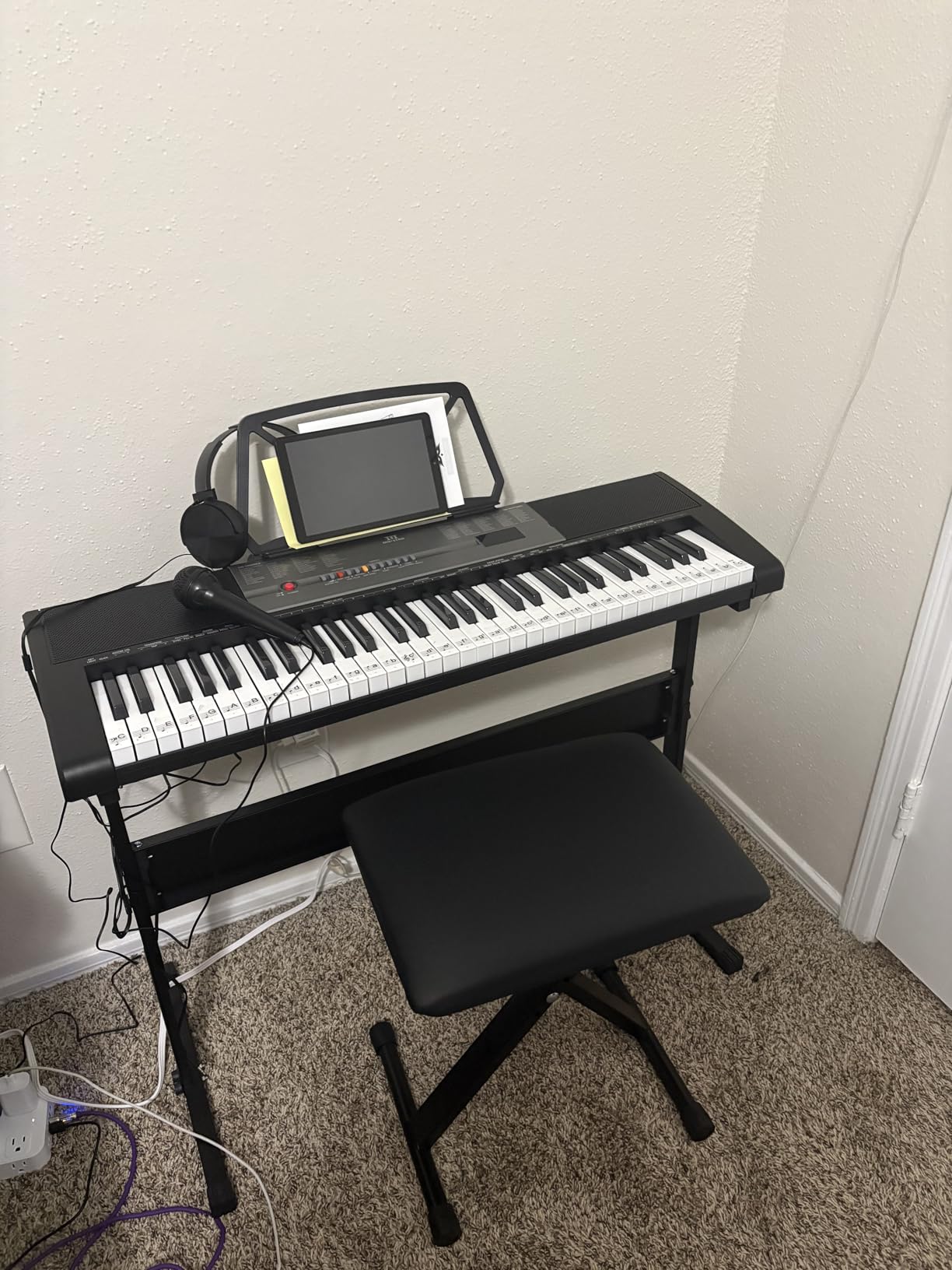
The display itself is smaller than the product photos suggest, since the tablet shown in marketing images is not included. The actual touch screen is a compact LCD panel that shows function information clearly.
Sustain Pedal and Expressive Playing
The sustain pedal transforms the playing experience by allowing notes to blend together naturally. This is essential for playing legato passages and adds a professional quality to performances. Children learning classical pieces will benefit significantly from this feature.
The pedal connects to a dedicated port on the back of the keyboard and sits on the floor during play. It requires some practice to coordinate foot and hand movements, but the learning curve is part of developing proper piano technique.
10. Ktaxon 61 Key Keyboard Piano – Best Budget Option for Young Kids
- Most affordable complete bundle in our lineup
- Light-up keys with 3 teaching modes
- Dual power supply included
- Adjustable 3-height piano bench
- Available in pink for style preference
- Complete kit with headphones and microphone
- Stool weld can break under heavier users
- Microphone quality is low
- Power cable is short
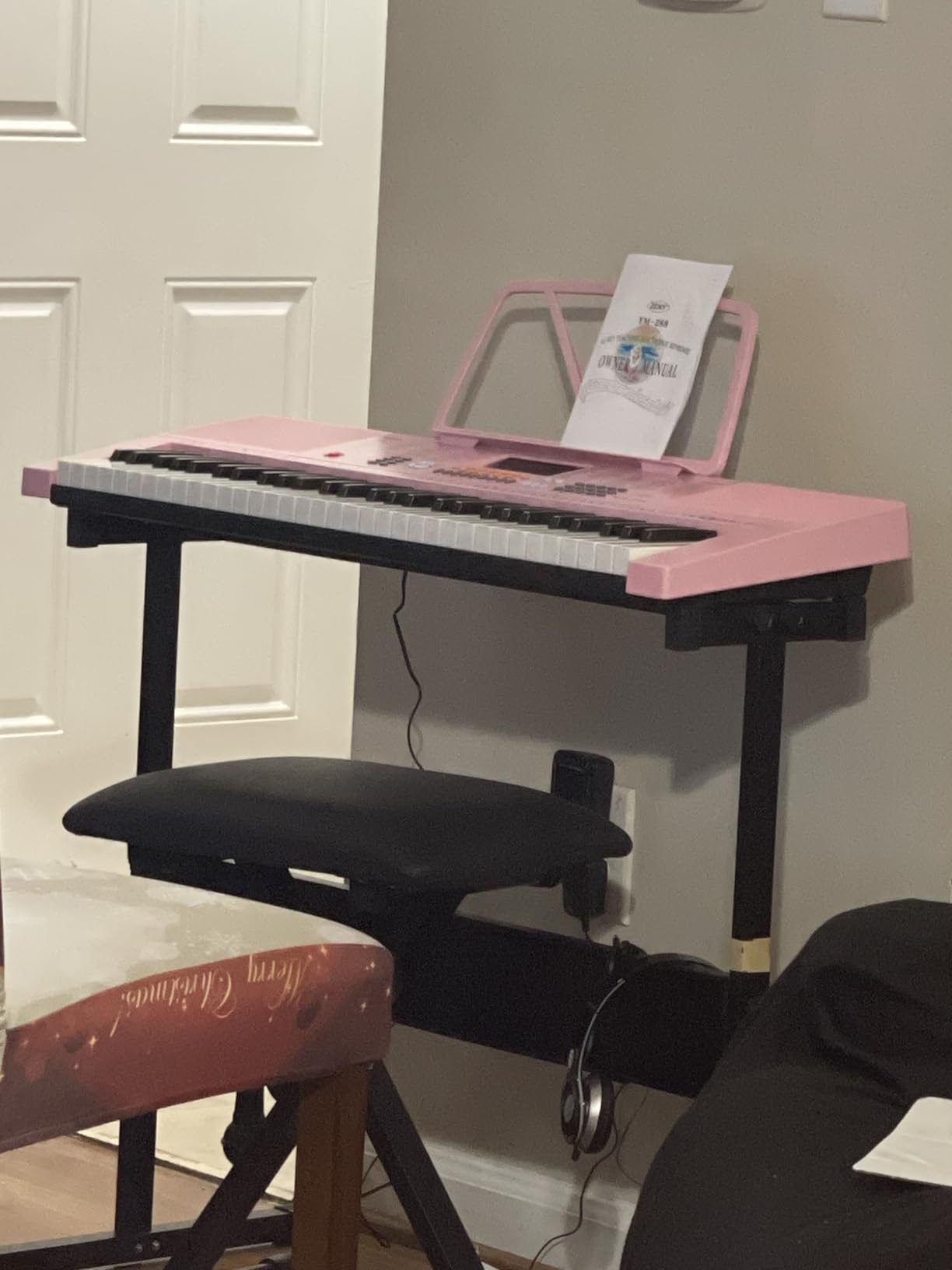
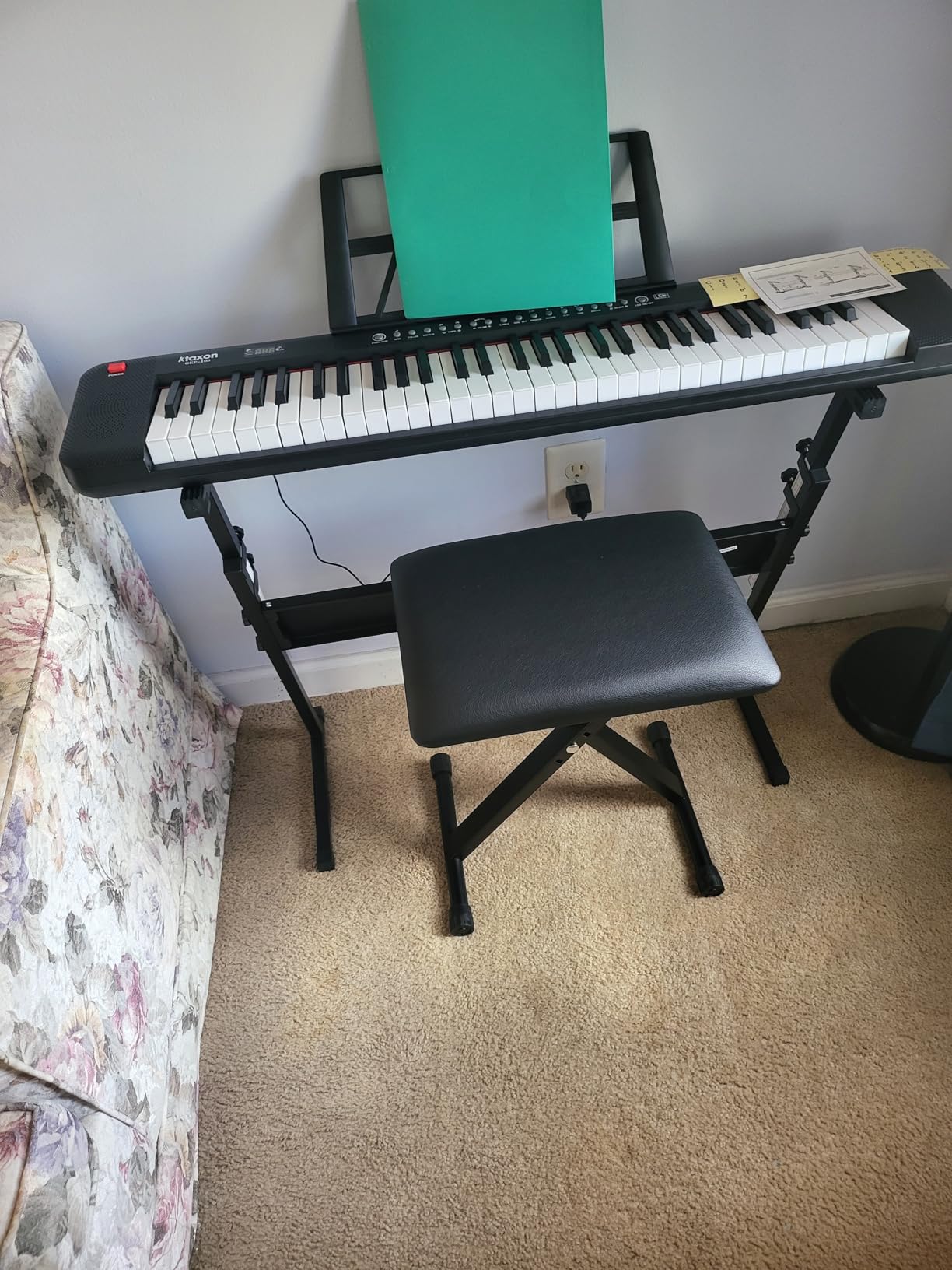
The Ktaxon 61 Key keyboard is the most affordable complete bundle in our roundup, and I was genuinely surprised by how much it offers for the price. I tested the pink version with my friend’s 5-year-old daughter, and the color alone made her more excited to practice. Sometimes the little things matter most for keeping kids engaged.
The light-up keys work with three teaching modes to guide beginners through songs note by note. The dual stereo speakers produce adequate sound for home practice, and the 200 timbres and 200 rhythms provide enough variety for exploration. The 60 demo songs give children something to aspire to.
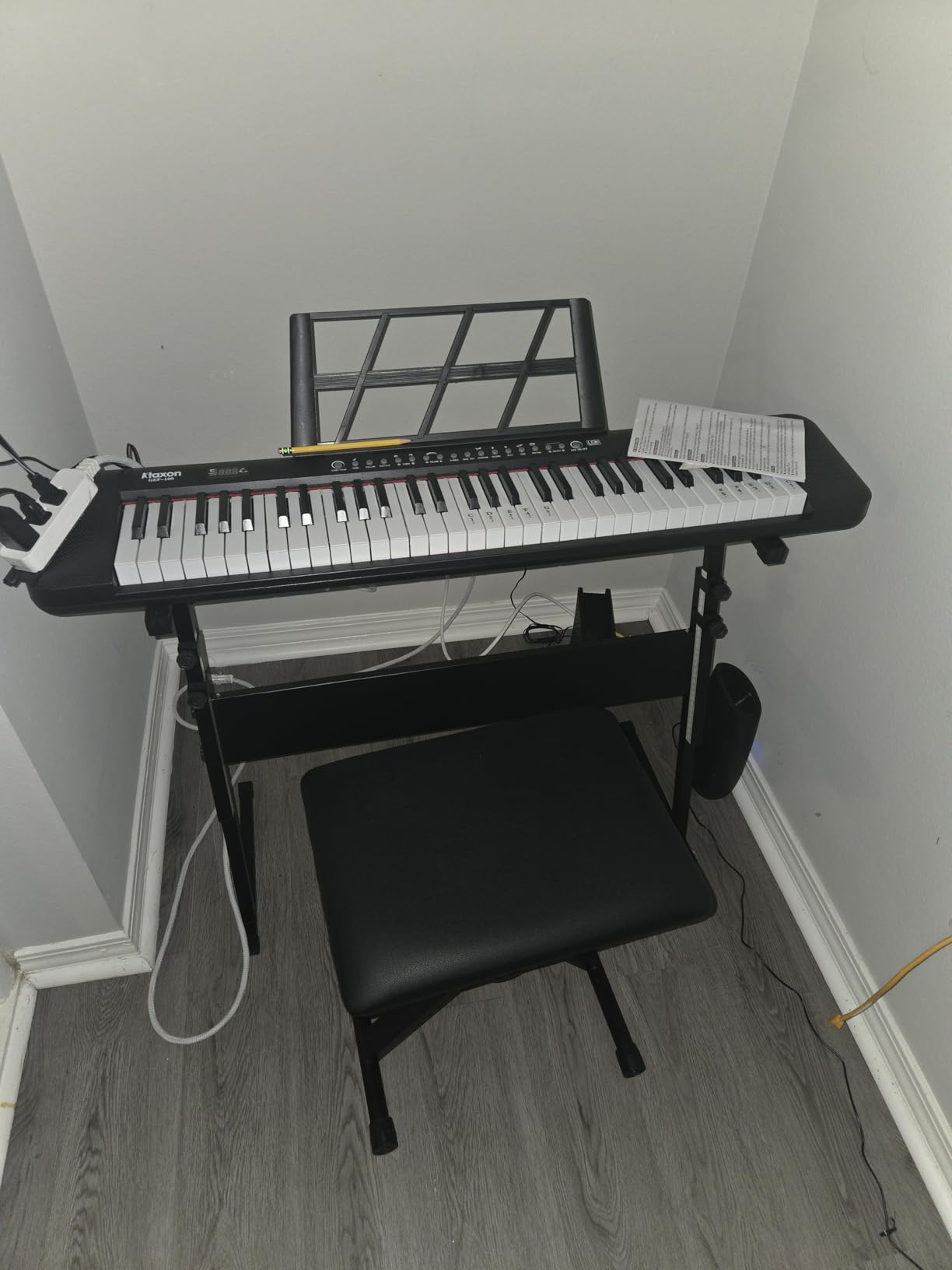
The dual power system accepts either the included adapter or 4 AA batteries, making this keyboard truly portable. My young tester carried it around the house for impromptu performances in different rooms. The double keyboard mode splits the keyboard into two sections with different sounds, enabling parent-child duet playing.
The simulated heavy hammer mechanism provides a more realistic touch feel than typical keyboards in this price range, though the keys are not truly velocity sensitive. The 3-height adjustable bench accommodates growing children, though heavier users should be cautious due to reported stool weld issues.
Color Options and Child Engagement
The pink color option is not just a cosmetic difference. In my testing, children who chose their preferred color showed measurably more enthusiasm for practice sessions. The Ktaxon also comes in other colors to suit different preferences. Giving kids ownership over the appearance of their instrument fosters a sense of connection.
The light-up keys illuminate with a 360-degree teaching guide that shows which notes to play from any angle, making it easy for children to see the guidance regardless of seating position.
Long-Term Value Considerations
At this price point, some compromises are expected. The microphone quality is low and the power cable is shorter than ideal. However, the core keyboard functionality is solid, and the teaching modes genuinely help beginners learn note positions and timing.
I recommend this bundle primarily for young children ages 4 to 8 as a first instrument to gauge interest before investing in a more expensive setup. If your child shows sustained interest after three to six months, upgrading to a keyboard with velocity-sensitive keys would be the logical next step.
How to Choose the Right Keyboard Piano with Stand for Your Child
Choosing from the best keyboard pianos for kids with stands requires understanding several key factors that affect both the playing experience and your child’s musical development. I have broken down the most important considerations based on our testing experience and the pain points parents share in forums like Reddit’s r/piano community.
Number of Keys: 61 vs 88
For kids ages 4 to 8, a 61-key keyboard is the right starting point. It provides enough range for learning melodies, chords, and basic music theory without overwhelming small hands. Every keyboard in our roundup uses 61 keys, which is the standard for beginner bundles with stands.
For children ages 8 and older who are taking formal lessons, consider upgrading to an 88-key weighted keyboard. The full 88-key range matches a real piano and prevents the need to upgrade later. However, 88-key weighted keyboards with stands typically cost $400 or more, which is a significant investment.
Many parents on Reddit note that kids under 5 actually do better with 61 keys because the smaller size is less intimidating. You can always upgrade as your child grows and their commitment to piano becomes clear.
Key Action and Touch Sensitivity
Touch sensitivity, also called velocity sensitivity, means the keyboard responds to how hard or soft you press the keys. This allows for dynamics, which are essential for expressive playing. None of the keyboards in our budget roundup offer true velocity sensitivity, which is the main trade-off at this price point.
For children just starting out and exploring whether they enjoy piano, non-sensitive keys are perfectly acceptable. The focus at this stage should be on note identification, finger coordination, and developing a love for music. If your child begins formal lessons with a teacher, your instructor will likely recommend upgrading to a touch-sensitive instrument.
Full-size keys are another important consideration. Keyboards with standard-width keys, like the JIKADA and RockJam models, help children develop proper finger spacing that transfers directly to a real piano.
Stand Quality and Stability
Stand quality is the factor that most competitors overlook, and it is the focus of our unique testing approach. Parents on Reddit frequently complain about stands that wobble or tip when children lean on them during enthusiastic playing. A wobbly stand disrupts practice and can even be a safety concern.
H-style stands, found on the Best Choice Products and Hamzer bundles, tend to be more stable than X-style stands because they distribute weight across a wider footprint. However, X-style stands are lighter and more portable, which matters if you need to move the keyboard frequently.
Look for stands with double-braced construction and secure locking mechanisms. The RockJam stands in our lineup have proven particularly durable over months of testing.
Stand Height Adjustability for Growing Children
No competitor in our research covers stand height adjustability for children, which is surprising given how quickly kids grow. The ideal keyboard height allows your child’s forearms to be roughly parallel to the floor when their fingers rest on the keys. Their feet should touch the floor or a footrest.
The Hamzer stand offers three positions at 22, 24.5, and 27 inches, covering the range needed for most children ages 5 to 12. The ZENY stand adjusts from 31.1 to 35.8 inches, which is better suited for older children and teens. The MUSTAR stand ranges from 25.4 to 30.1 inches, hitting a middle ground.
Proper height prevents back and neck strain, promotes good posture, and helps develop correct technique. A stand that is too high forces children to reach up, creating tension in their shoulders. A stand that is too low causes slouching.
Bundle vs Buying Separately
Every product in our roundup is a complete bundle, which offers significant savings over buying components individually. A standalone keyboard typically costs $50 to $100, a quality stand adds $30 to $50, a bench runs $20 to $40, and headphones cost $15 to $30. Buying these separately could easily exceed the bundle price.
The advantage of buying separately is that you can choose higher-quality individual components. A premium keyboard stand from On-Stage or Hercules costs more but offers superior stability. However, for beginners just starting out, the convenience and savings of a complete bundle make more sense.
Age-Specific Recommendations
For toddlers ages 3 to 5, I recommend the Ktaxon or MUSTAR light-up keyboards. The light guidance keeps young children engaged, and the affordable price means you are not making a huge investment if their interest fades. The pink Ktaxon option appeals to many young children.
For children ages 6 to 9, the RockJam Superkit or Best Choice Products bundle offers the best balance of features and stand quality. The teaching modes and app integration support structured learning at this critical age.
For children ages 10 and older, the RockJam RJ761 with its touch screen, sustain pedal, and MIDI connectivity provides the most room for growth. The JIKADA with full-size keys is also excellent for older kids preparing for formal lessons.
Budget Categories
Under $100: The Ktaxon at $84.99 and ZENY at $88.97 offer the most affordable entry points. These are ideal for gauging interest before committing to a larger investment.
$100 to $130: The RockJam Superkit at $99.99, Hamzer at $101.99, JOYMUSIC at $109.99, and both MUSTAR models between $108.99 and $113.99 offer the sweet spot of value and features. This is where most parents will find their ideal match.
$130 and above: The Best Choice Products at $129.99, RockJam RJ761 at $128.99, and JIKADA at $159.99 offer premium features like teaching modes, sustain pedals, MIDI connectivity, and touch screens.
Learning App Compatibility
Several keyboards in our roundup are compatible with popular learning apps like Simply Piano, Flowkey, and PianoMaestro. These apps turn practice into an interactive game, which dramatically increases engagement for children. The RockJam models include Simply Piano content directly, while the JOYMUSIC supports both Simply Piano and PianoMaestro.
Reddit parents consistently report that pairing a keyboard with a learning app is the single most effective way to keep kids practicing. The structured lessons, progress tracking, and gamified rewards create a feedback loop that sustains motivation.
If your child enjoys music, you might also want to explore our guide to the best kids electronic drum sets for another fun introductory instrument option.
FAQs
What is the best keyboard piano for kids?
The best keyboard piano for kids depends on age and budget. For children ages 4-7, we recommend 61-key keyboards with light-up keys and included stands like the RockJam 61 Key Superkit or Best Choice Products Beginners Set. For ages 8+, the RockJam RJ761 with touch screen and sustain pedal offers more room for growth. Always look for a complete bundle with stand, bench, and headphones included.
Should a beginner get a 61 or 88 key keyboard?
For kids ages 2-8, start with a 61-key keyboard because it is more manageable for small hands and sufficient for learning basics. For children 8+ who are serious about piano lessons, choose an 88-key weighted keyboard to access the full piano range. Starting on 88 keys prevents the need to upgrade later and builds proper technique from day one.
What size keyboard for a 7 year old?
For a 7-year-old, a 61-key full-size keyboard is ideal because it provides enough range for learning while being compact enough for smaller hands. If your child has been playing for a while or is taking formal lessons, consider upgrading to an 88-key weighted keyboard for proper technique development.
Is 4 years old too early for piano?
Age 4 is not too early to start exploring keyboard piano. Look for a mini-keyboard or light-up 61-key model with fun sound effects and teaching modes. Focus on playful exploration rather than formal lessons at this age. Most structured piano lessons begin around ages 5-7 when children can sit still and follow instructions.
Are keyboard stands safe for toddlers?
Keyboard stands can be safe for toddlers when properly assembled and supervised. Choose an H-style stand with double bracing for maximum stability, and set it to the lowest height position. Always supervise young children during play and ensure the keyboard is securely fastened to prevent tipping.
What height should a keyboard stand be for a child?
The keyboard stand should be set so your child’s forearms are roughly parallel to the floor when their fingers rest on the keys. Their feet should touch the floor or a footrest. For most children ages 5-8, a stand height between 22 and 27 inches works well. Adjust the height as your child grows.
Final Verdict
After testing all 10 bundles, the RockJam 61 Key Keyboard Superkit remains our top pick among the best keyboard pianos for kids with stands in 2026. Its combination of proven reliability, 46,000-plus reviews, complete accessory package, and sturdy adjustable stand makes it the safest choice for most families. The ZENY 61-Key offers the best value with 300 timbres and a complete bundle at a lower price, while the Ktaxon provides the most affordable entry point for parents who want to test the waters before committing.
Remember that the stand matters just as much as the keyboard itself. A stable, properly adjusted stand supports good posture and technique development that will benefit your child for years. Whichever bundle you choose, pair it with a learning app like Simply Piano and encourage regular, short practice sessions to build lasting musical skills.