
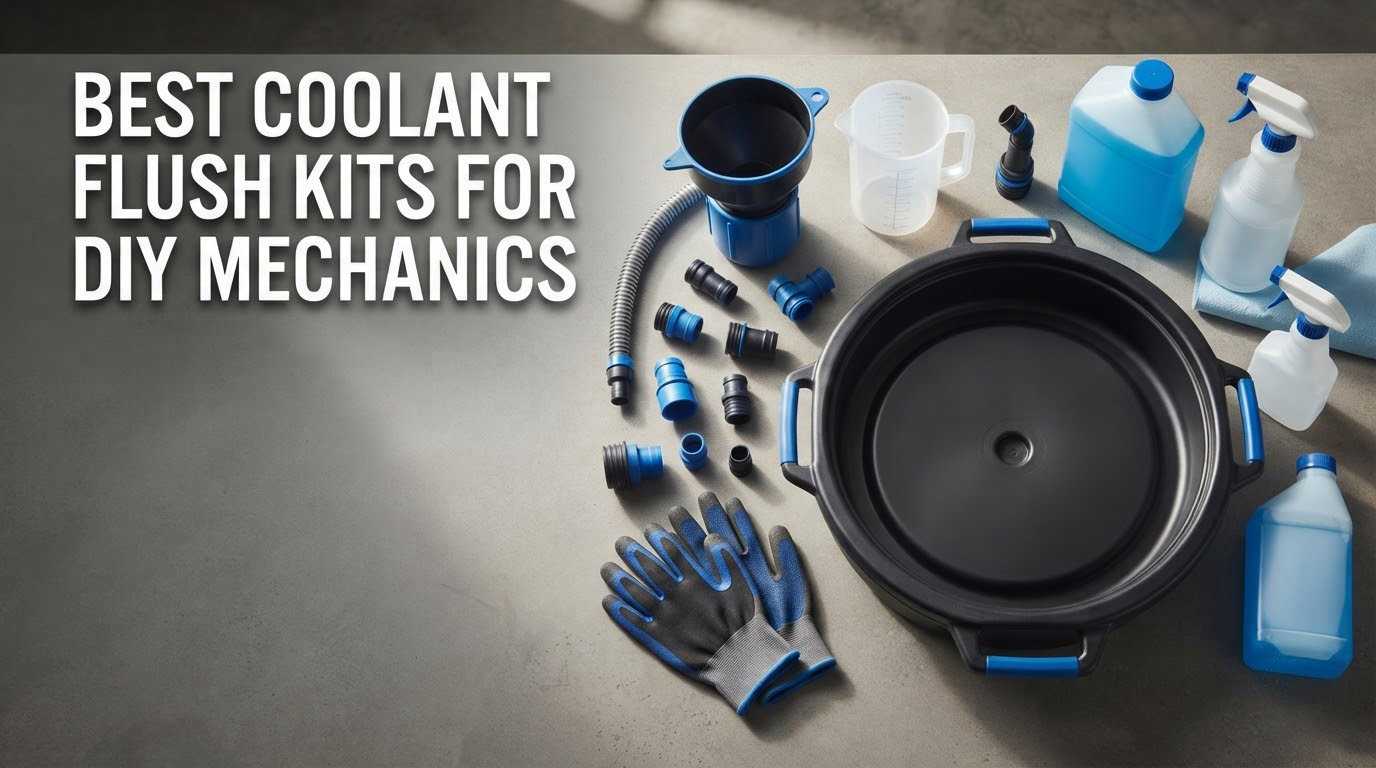
Most DIY mechanics buy a coolant flush kit expecting a clean slate for their cooling system and get a plastic funnel instead. That mismatch is why picking the right radiator flush kit matters more than the brand name on the box. After working through the available tools, these are the best coolant flush kits for DIY mechanics in 2026, and the honest answer depends on which problem you are actually trying to solve.
There are four families of tool sold under the flush kit label. Some are no-spill filling funnels that solve air pockets during the refill. Some are vacuum purge and refill rigs that pull the air out before coolant goes in. Some are pressure testers that hunt leaks. And some are back-flush guns aimed squarely at a clogged heater core. A kit that is perfect for one of those jobs is frequently useless for the other three.
We spent weeks working through ten of the most-reviewed kits on the market, matched each to the job it was actually built for, and documented the failure modes that show up in owner reviews. This guide covers all ten, explains when flushing is a mistake, and walks through the procedure that avoids the trapped air lock that turns a two-hour job into a weekend. If you are outfitting a garage right now, our mechanic creeper picks are the other half of the same setup.
Table of Contents
Top 3 Picks for DIY Coolant Flushes in 2026

EPAuto Spill Proof Funnel Kit
- 60 oz capacity
- Color-matched cap adapters
- 5 inch extension and 45 degree elbow
- Prevents spills and air pockets
OEMTOOLS 87009 No-Spill Funnel Kit
- 15 piece set
- Integrated fluid stopper
- 5 filler neck adapters
- 45 degree adapter and extension
OEMTOOLS Vacuum Refill and Pressure Kit
- Vacuum purge then refill
- Doubles as a leak tester
- 5 bushings plus cone adapter
- 70 to 110 psi working range
What Is a Coolant Flush Kit?
A coolant flush kit is a tool or chemical product used to circulate fresh fluid through a vehicle’s cooling system, clearing rust, scale and degraded coolant out of the radiator, water jacket and heater core before the system is refilled with clean antifreeze. A simple drain-and-refill only empties the radiator. A real flush pushes fluid through the rest of the circuit.
The four archetypes you will run into:
Chemical flush and fill – a cleaner poured into the system, circulated, then drained. Cheap and slow.
No-spill filling funnel – a vented funnel with vehicle-specific adapters that refills without trapping air or dumping coolant on the garage floor.
Vacuum purge and refill kit – pulls a vacuum on the empty system, then refills and purges simultaneously so no air can enter.
Pressure tester and back-flush gun – pressurizes the system to find leaks, or reverses flow through a heater core to clear it.
Best Coolant Flush Kits at a Glance (October 2026)
Every kit below solves a different problem. The type column matters more than the brand, and it is why we list the job next to each one.
| Product | Specifications | Action |
|---|---|---|
| EPAuto Spill Proof Radiator Coolant Filling Funnel Kit |
|
Check Latest Price |
| OEMTOOLS 87009 No-Spill Coolant Funnel Kit, 15 Pc Set |
|
Check Latest Price |
| OEMTOOLS Coolant Vacuum Refill and Pressure Tester Kit |
|
Check Latest Price |
 SWANLAKE 18-Piece No-Spill Coolant Funnel Kit SWANLAKE 18-Piece No-Spill Coolant Funnel Kit |
|
Check Latest Price |
 UView 550000 Airlift Leak Checker and Airlock Purge Kit UView 550000 Airlift Leak Checker and Airlock Purge Kit |
|
Check Latest Price |
 HORUSDY No-Spill Coolant Funnel Kit, Spill Proof Bleeder HORUSDY No-Spill Coolant Funnel Kit, Spill Proof Bleeder |
|
Check Latest Price |
 OMT 33-Piece Master Coolant Pressure and Vacuum Refill Kit OMT 33-Piece Master Coolant Pressure and Vacuum Refill Kit |
|
Check Latest Price |
 Lisle 60900 Heater Core Hose Backflush Tool Lisle 60900 Heater Core Hose Backflush Tool |
|
Check Latest Price |
 SMART JERRY Upgraded Coolant Bleeder Funnel Kit SMART JERRY Upgraded Coolant Bleeder Funnel Kit |
|
Check Latest Price |
 SEDY 22-Piece No-Spill Funnel Kit with Siphon Hose Pump SEDY 22-Piece No-Spill Funnel Kit with Siphon Hose Pump |
|
Check Latest Price |
1. EPAuto Spill Proof Radiator Coolant Filling Funnel Kit – Best Overall Coolant Flush Aid
- Prevents spills and trapped air pockets during refills
- Color-matched cap adapters for dedicated vehicle applications
- 5 inch extension bar and 45 degree elbow reach caps under shrouds
- 60 fluid ounce capacity suits full system refills
- Backed by USPTO Patent No. US10519019B2
- Adapter fit depends on matching the correct cap size
- All-plastic construction wears at the threads and gasket
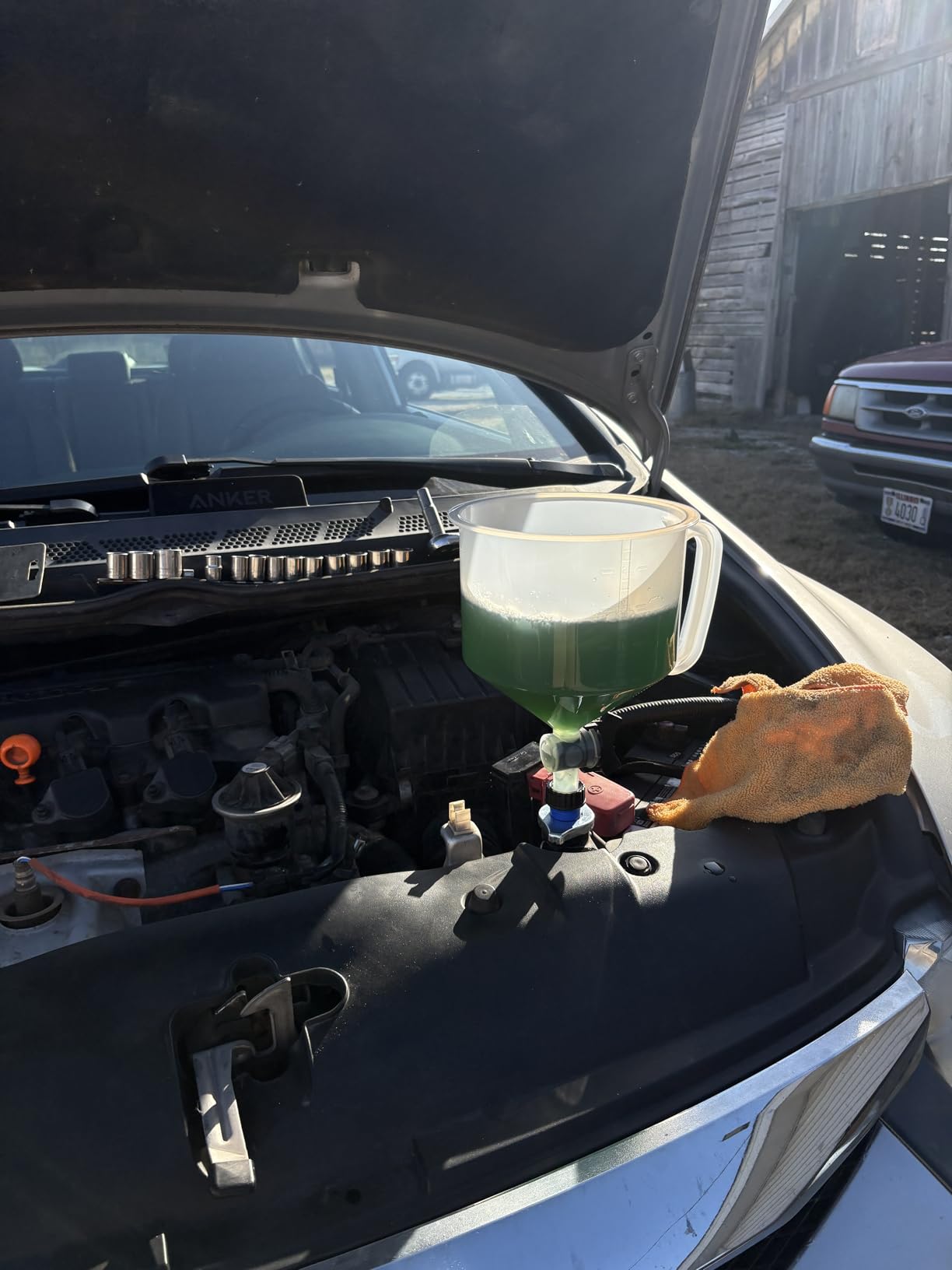
With more than 20,000 reviews behind it, the EPAuto AQ-001-1 is the tool we ended up reaching for most often in the garage. It is not a flushing machine and it does not circulate anything. It is the refill half of the job, and it is the half that decides whether your fresh coolant goes in clean or goes in foamy.
The 60 fluid ounce reservoir is the detail that matters most in practice. Most small cars take roughly that much for a full drain and refill, which means most people can do the whole job from one jug without a mid-job top-up. Transparent plastic lets you watch the level instead of guessing at the surge tank line.
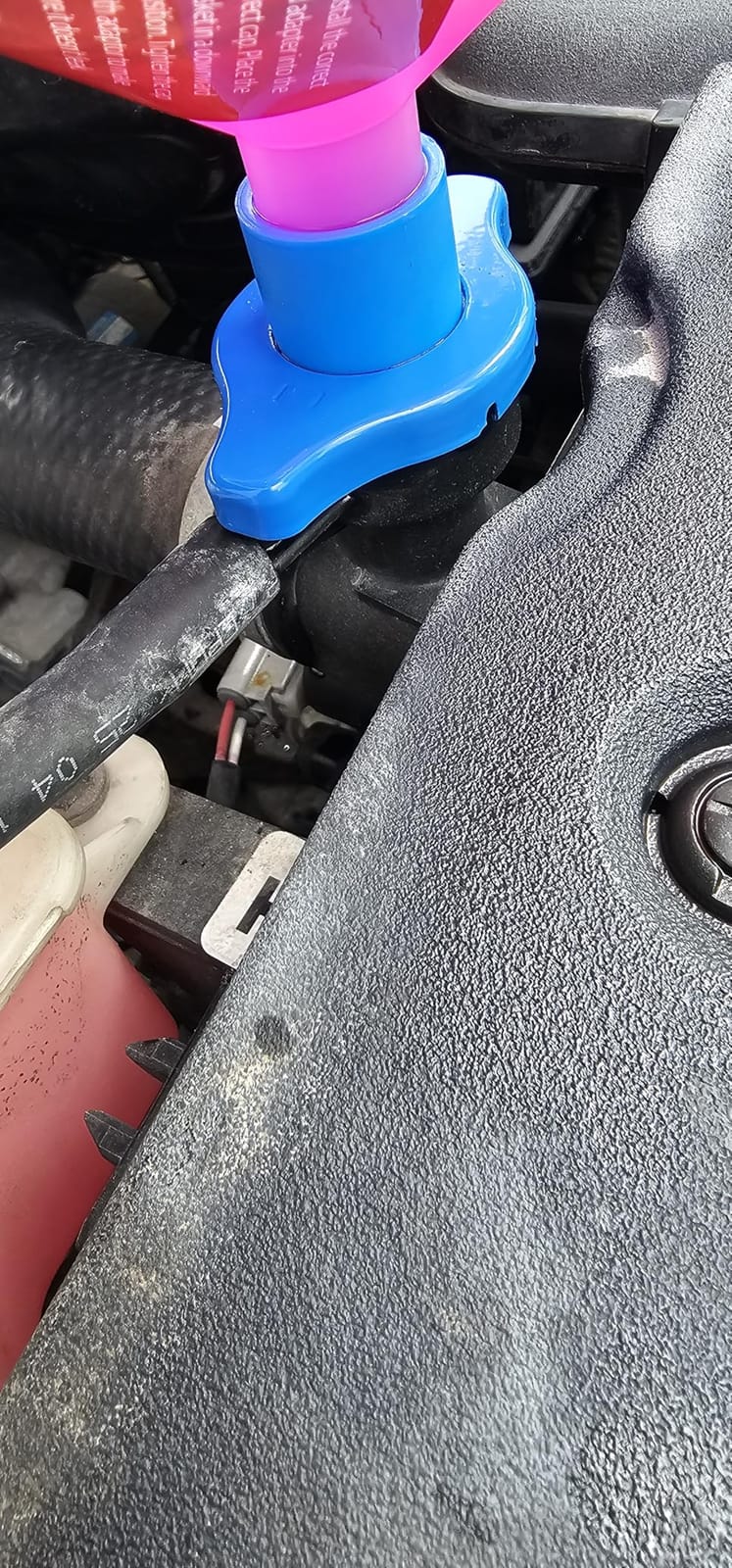
The color-matched cap adapters are a clever bit of design. Each adapter corresponds to a specific radiator cap thread pattern, so instead of a rubber cone that squashes unpredictably, the funnel threads onto the neck and makes a positive seal. The 5 inch extension bar and 45 degree elbow then let you reach filler necks that sit under an engine shroud or behind a fender liner.
That combination is what prevents air pockets. A plain funnel pouring into a neck with a gap around it pulls air down into the system as fast as it pushes coolant in. Owners credit this design with keeping heater output steady and the level stable, which is exactly what a good refill should feel like.
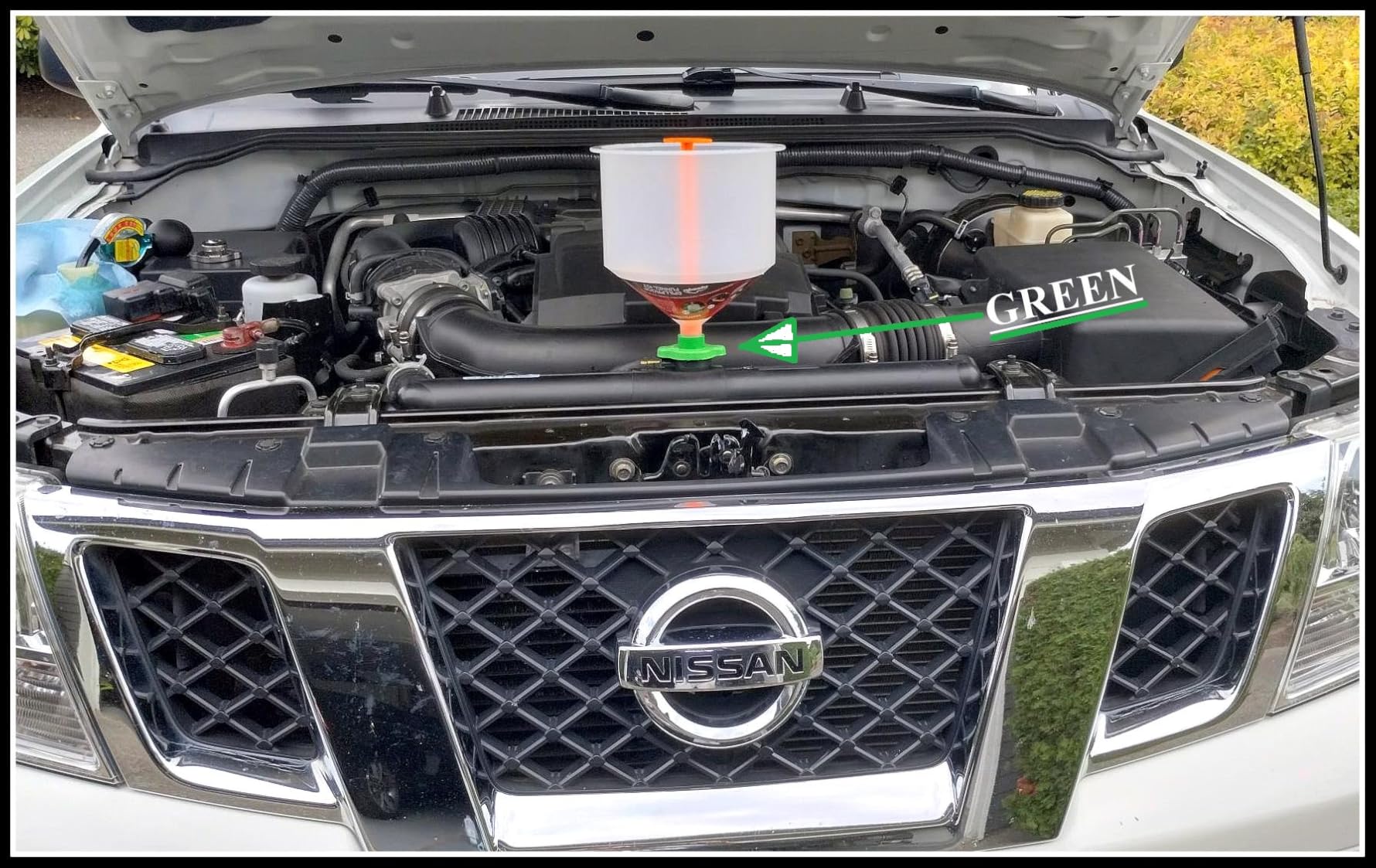
Best for: routine coolant changes and avoiding air locks
If you are doing scheduled coolant service or topping off after a repair, this is the kit to buy. It handles the two things DIYers actually struggle with, which are spilled coolant and trapped air, and it does both without a compressor or a shop air supply.
It is also the easiest entry point. No hoses to route, no vacuum to pull, no gauge to read. If this is your first time servicing a cooling system, this is the least intimidating way to do it well.
Where it falls short: adapter fit is not universal
The only real complaint owners raise is fitment. You need to identify your radiator cap size before you order, and a mismatch means the funnel will not seal. All-plastic construction is the other note, with the threads and gasket as the parts that eventually give out.
Check your cap size and measure the neck clearance under the shroud before you buy, and this tool does the job properly for years.
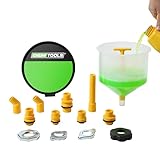
2. OEMTOOLS 87009 No-Spill Coolant Funnel Kit – Best Value Filling Kit
- Integrated fluid stopper prevents drips when removing the funnel
- 45 degree angled adapter and 5 inch extension reach tight filler necks
- Complete 15-piece set covering coolant and oil filling jobs
- Transparent body makes coolant level easy to read
- Adapter sizing must be matched to the vehicle filler neck
- Lightweight plastic body feels less substantial than metal alternatives
Where the EPAuto concentrates on one cap style, the OEMTOOLS 87009 covers five. That breadth is why it earns its place as the best value pick: one case handles a domestic sedan, a European hatchback and a truck filler neck without a second purchase.
The feature we like most is the integrated fluid stopper. Once the level reaches the mark you pull the stopper, flow stops, and you remove the funnel with coolant still in it. On a plastic funnel in a driveway that single detail saves most of the mess.
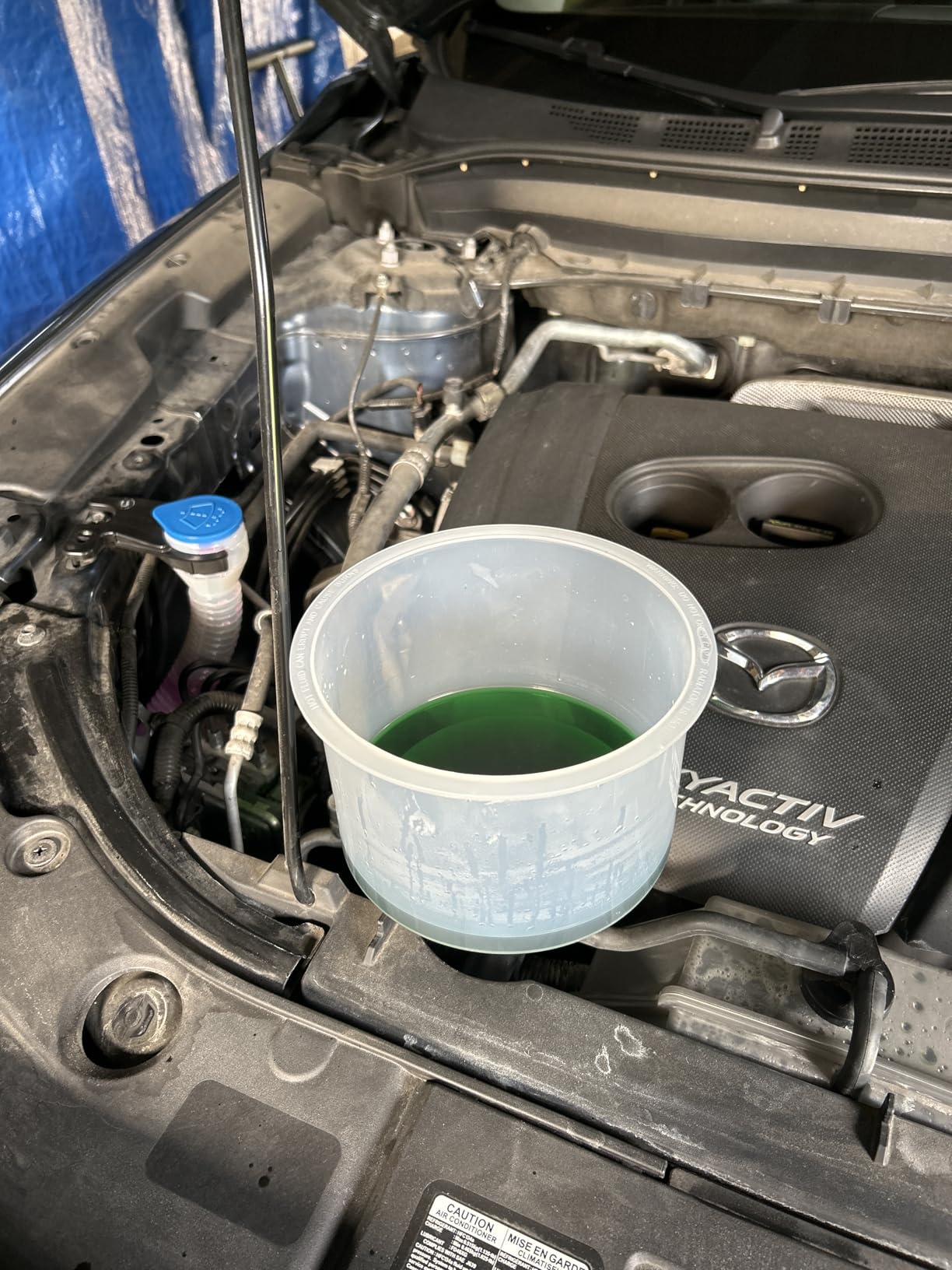
The set breakdown is sensible rather than padded. You get four cap adapters, five filler neck adapters, three extension pieces, the stopper and a transparent funnel, and the 45 degree adapter is what solves the awkward filler necks sitting far back under a shroud.
Ratings sit at 4.6 across nearly 9,000 reviews, with owners singling out the reach extensions and the anti-drip stopper as the parts that set it apart from a basic funnel. The company has been building shop tools for a long time, and that shows in the parts count.
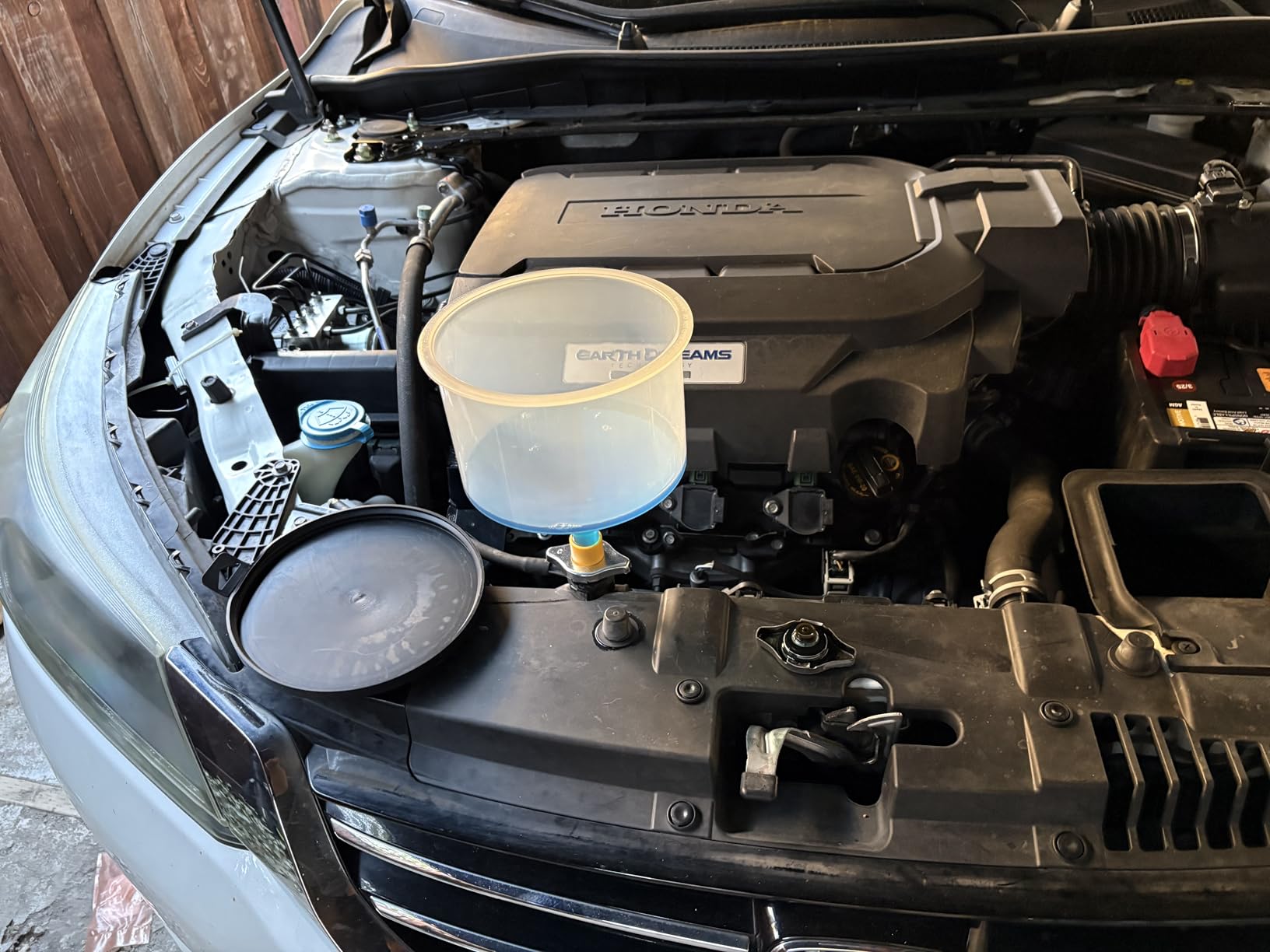
Best for: a mixed fleet or a garage with more than one vehicle
Five filler neck adapters in one case is the reason to pick this over a single-adapter kit. If you own anything built after roughly 2000 and you have ever been burned by a funnel that would not seal, the variety here removes that gamble.
It doubles as an oil filling funnel too, so for anyone who does their own oil changes it earns its drawer space twice over.
Where it falls short: light plastic and fitment guessing
The plastic body is noticeably lighter and thinner feeling than metal alternatives, and it is the most common minor complaint. You still have to confirm the neck size fits before filling.
Treat it as a consumable shop tool rather than a lifetime purchase, and for the money it is hard to argue with.
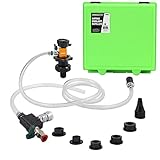
3. OEMTOOLS Coolant Vacuum Refill and Pressure Tester Kit – Best for Eliminating Airlocks
OEMTOOLS Coolant Vacuum Refill Kit, Coolant Pressure Tester Kit, 5 Adapter
- Pulls a strong vacuum and refills the system in about a minute
- Doubles as a vacuum leak tester before coolant is added
- Custom-fit expanding rubber bushings plus a tapered cone adapter seal most necks
- Works with a small pancake compressor as well as a shop compressor
- Requires a separate air compressor which is not included
- Supplied air fitting is not a standard quick-disconnect
- Intake strainer can be too large for some antifreeze jugs
This is the tool that changes the character of the job. Instead of pouring coolant in and chasing bubbles for an hour, you pull a vacuum on the drained system, open the fill valve and let coolant get pulled in by the vacuum. Because the void is already gone, the fluid arrives with no air to trap.
Owners describe converting what was a multi-hour burping session into roughly a minute of filling, and that matches how the tool works mechanically. It is the single biggest time saver in this whole list if air locks are a recurring problem for you.
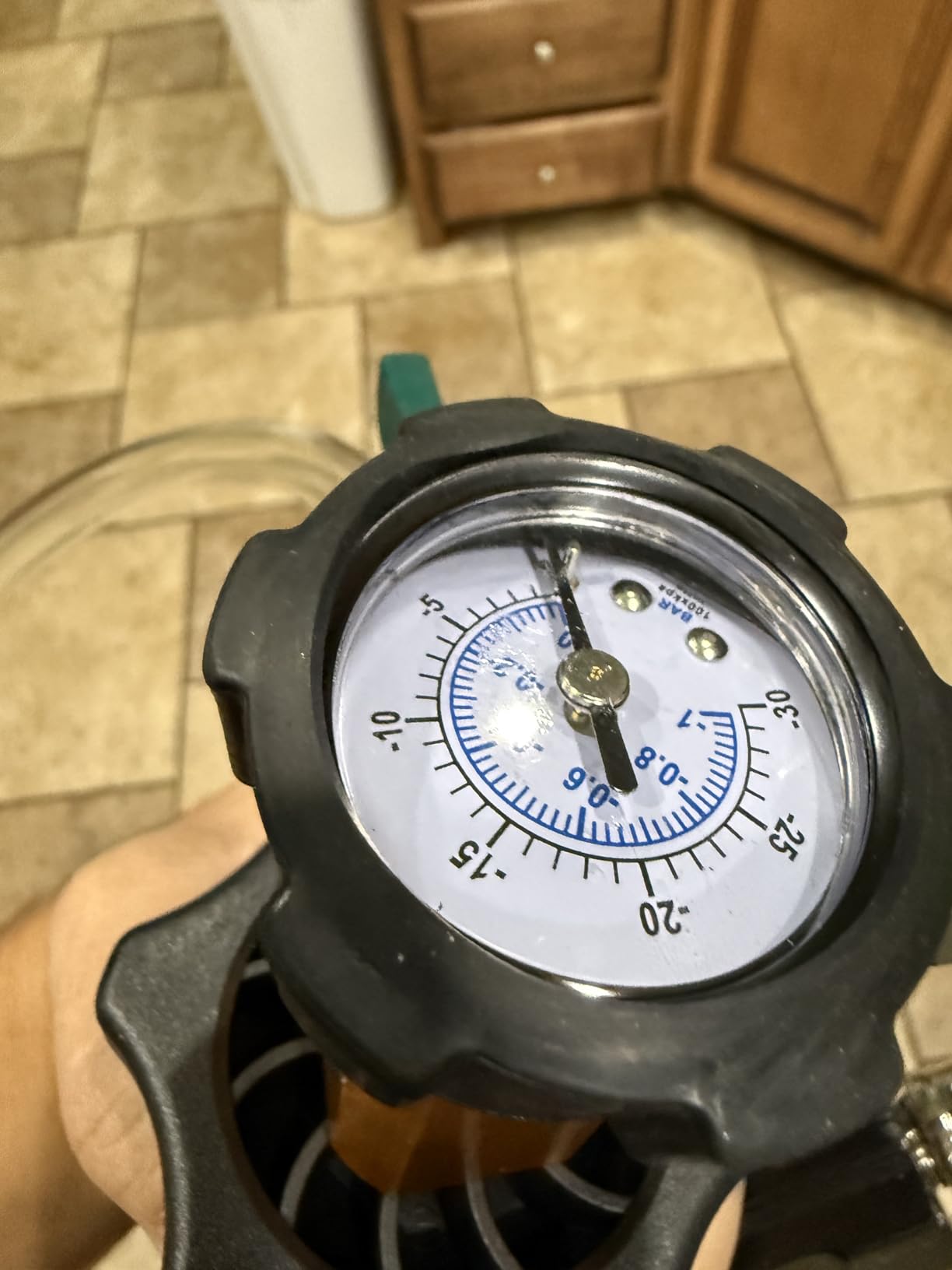
It also works as a leak tester before any coolant goes in. Hold the vacuum and watch the gauge. If it climbs back toward zero, you have a leak and you just found it while the system was still empty and easy to trace. That diagnostic use alone justifies the tool for anyone chasing an overheating complaint.
Sealing is handled by five expanding rubber bushings plus a tapered cone adapter, which together cover most filler necks. The recommended working range is 70 to 110 psi, and a small pancake compressor is enough to hold it. The unit itself weighs about 4.6 pounds and is a manageable one-handed carry.
Best for: repeated service and anyone tired of burping air
If you flush more than once a year, work on customer vehicles, or keep ending up with a low coolant warning a week after a clean refill, this is the correct purchase. It removes the most common DIY failure mode in cooling system work.
It pairs well with a basic filling funnel. The vacuum tool is for the awkward fills, the funnel is faster for routine top-ups.
Where it falls short: setup friction
You need your own air compressor, and that is a real cost if you do not have one. The supplied air fitting is not a standard quick-disconnect, so expect a small parts-store trip. The intake strainer is also too wide for some antifreeze jug mouths.
None of that is fatal, but it is a short list of annoyances you should know about before the first use.
4. SWANLAKE 18-Piece No-Spill Coolant Funnel Kit – Best for Universal Fit
- Complete 18-piece set with adapters
- both funnel sizes and a cleaning cloth
- Integrated fluid stopper reduces dripping on removal
- 5 inch straight extension and 2.5 inch angled elbows reach recessed fill points
- Works on radiators and surge tanks across GM
- Ford and many imports
- Compatibility varies by model and year so neck size should be checked first
- All-plastic construction
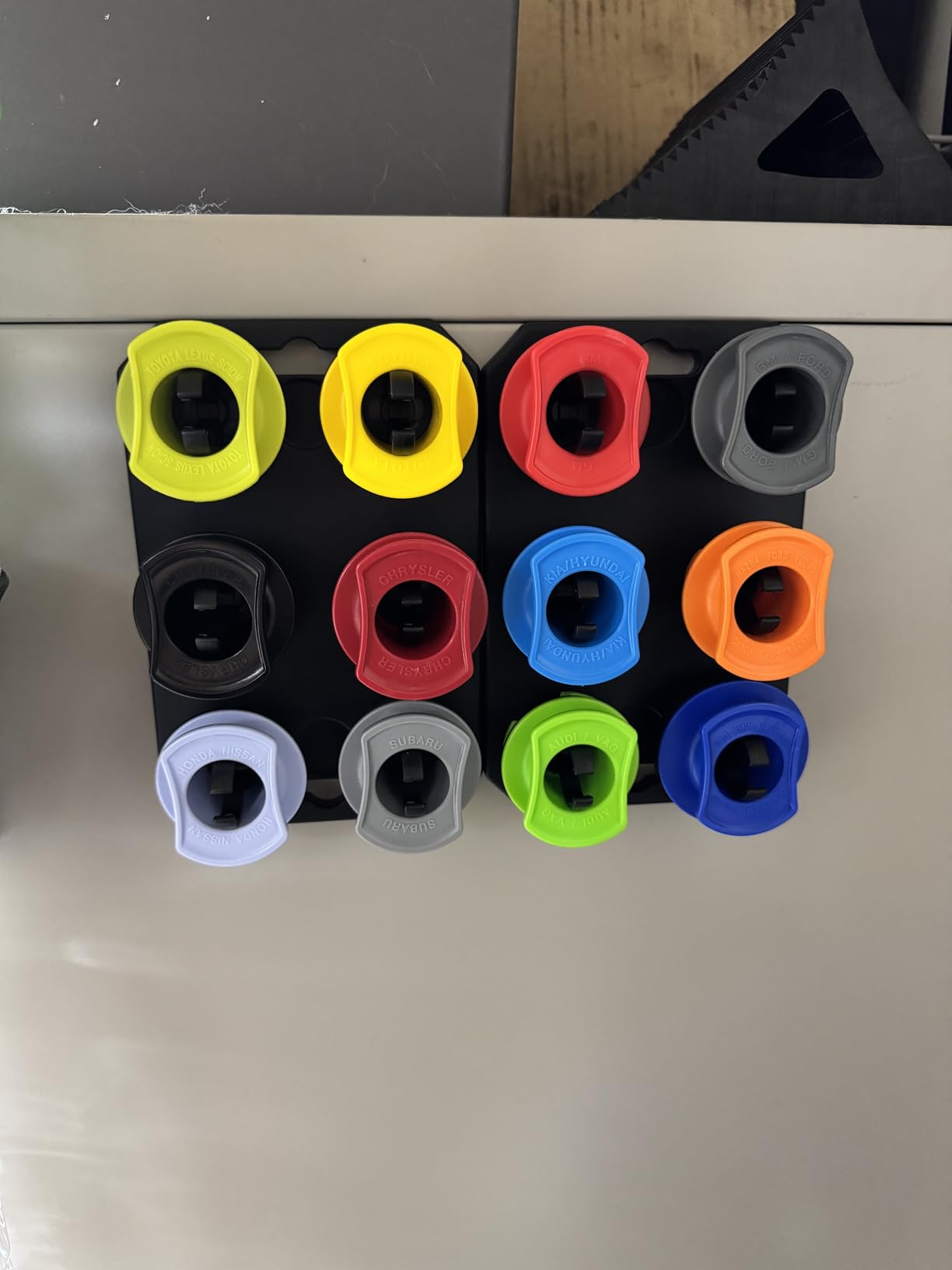
The SWANLAKE kit solves a problem the single-adapter funnels cannot: you do not know what your filler neck takes until the funnel is in your hand. Eighteen pieces covering two funnel sizes, several adapters, a straight extension and a pair of angled elbows is the broadest layout in the group of filling kits.
Including both a small and a large funnel is genuinely useful. A 2 liter reservoir is right for a car, and the larger funnel is what you want on a truck or an SUV with a bigger cooling system. Having both in one case means one purchase covers the driveway.
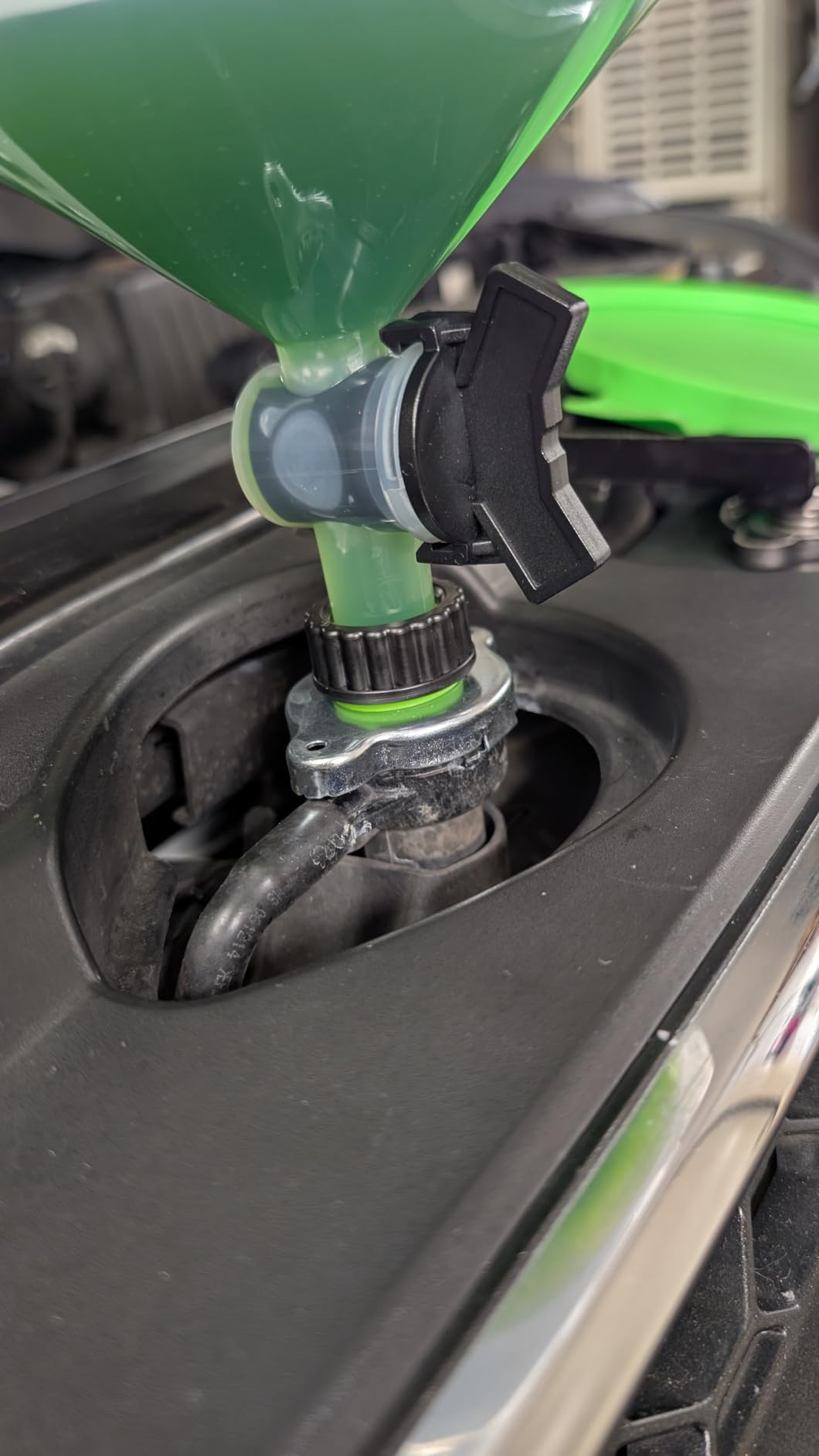
Coverage extends to surge tanks as well as radiator necks, which is helpful on vehicles where the fill point moved behind the engine. The integrated fluid stopper handles the removal drips that make a driveway cleanup necessary after every job.
Owners also appreciate that a 10 inch cleaning cloth is in the case. It is a small thing that is genuinely absent from most kits and genuinely useful, since you are dealing with glycol residue that stains everything it touches.
Best for: unknown vehicles and mixed-era garages
Buy this if you have ever ordered a funnel and found out the neck did not match. The adapter variety means a second attempt is usually a swap rather than a new order, and it covers GM, Ford and a good share of import filler necks.
It is also a sensible grab for a roadside kit, since the extra pieces take up almost no room and cover the situations you will not plan for.
Where it falls short: universal is not the same as guaranteed
Fitment still varies by model and year, so measure the neck before ordering. The all-plastic build is the other recurring note. Breadth of parts cannot fix a neck size that falls outside the set.
Take five minutes with a caliper first. That is the whole workaround.
5. UView 550000 Airlift Leak Checker and Airlock Purge Tool Kit – Best for Leak Detection
- Fills the whole system including the heater core and eliminates trapped air
- Vacuum hold doubles as a rigorous leak test that stays stable for hours
- Rugged metal construction that technicians report lasting for years
- Cone adapter and universal connectors cover a wide range of vehicles
- Single-compartment case is not padded so loose parts can knock the gauge
- Hoses must be swapped between vacuum and fill and the hose is short for large trucks
- Gauge sits on top so a mirror is needed on elevated reservoirs
- Included instructions are minimal
Available since 2004 and still going, the UView 550000 is the oldest tool in this group and the one technicians mention most often by name. It is also the only one here built primarily for holding a stable vacuum long enough to trust the leak test result.
That leak test is the underrated half. Pull a vacuum, close the valves and leave it. If the gauge holds steady for minutes, the system is sound. If it drifts back up, you have a leak, and you have found it before a single quart of coolant went in. Owners report that the hold stays stable for hours.
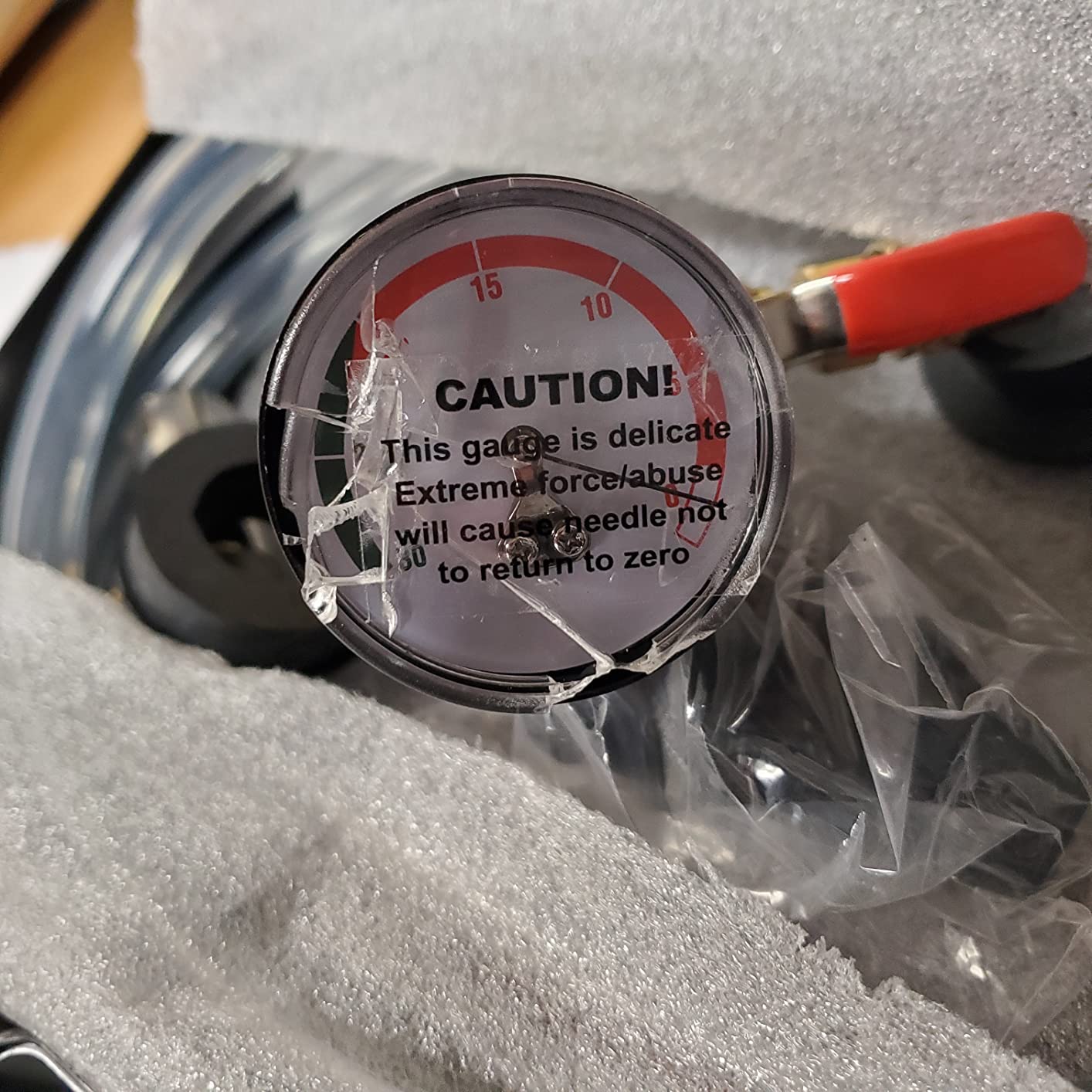
The refill side pulls coolant in through the vacuum, which means the heater core fills properly instead of holding a trapped bubble. The metal construction is the reason several owners describe a decade or more of service, and the unit is made in the USA with a 1 year warranty.
At 4.55 pounds and roughly 9.5 by 12.7 inches it is a real piece of equipment rather than a plastic accessory. Universal connectors and a cone adapter cover cars, trucks and off-road vehicles, which is where the metal build earns its keep.

Best for: diagnosing a cooling system you do not trust
If the engine has a history of overheating and you do not know why, find the leak before you touch the coolant. This tool separates a leaking system from an air lock problem, which are two very different repairs.
It is also the right choice for a truck or SUV with a larger radiator where a small plastic setup will not keep up.
Where it falls short: case and hose annoyances
The single-compartment case is not padded, so loose parts can bang the gauge in transit. You switch hoses between the vacuum and fill positions, and the supplied hose is short on a large truck. The gauge also sits on top, which means a mirror on an elevated reservoir.
Video walkthroughs fill the documentation gap. All of these are manageable once you know about them.
6. HORUSDY No-Spill Coolant Funnel Kit – Best for Controlled Fill
HORUSDY No-Spill Coolant Funnel Kit, Spill Proof Funnel Bleeder with Adapters. Universal Fitment
- Unique rotary switch gives real control over overflow and air bubbles
- Graduated scale on the funnel body for measuring coolant
- Reinforced thread design resists leaking at any angle
- Includes 5 adapters
- 4 filler caps
- two 45-degree elbows and two 5-inch extensions
- Adapter fit still needs checking against the vehicle filler neck
- Listed piece count and unit count differ between the title and the spec
Every other filling funnel on this list stops flow by pulling a plug or squeezing a stopper. The HORUSDY uses a rotary switch on the side of the funnel, which lets you throttle the pour instead of committing to all or nothing. For a slow fill into a hard-to-reach neck, that is a genuine improvement.
The printed scale on the funnel body is the other feature owners call out. It is not a substitute for a refractometer, but it stops the guesswork of pouring an estimated amount and then chasing a cold heater later to see if the system took it.
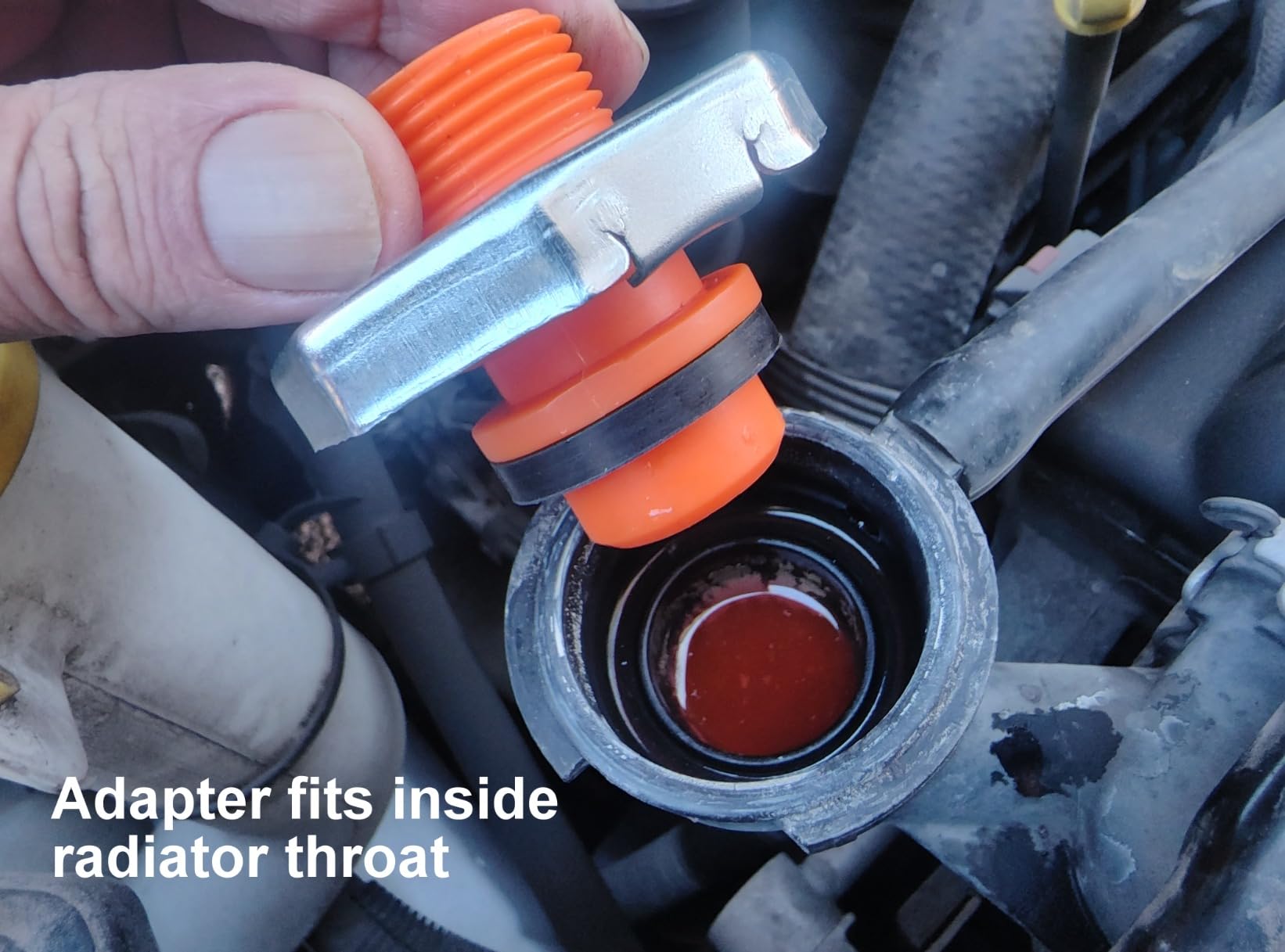
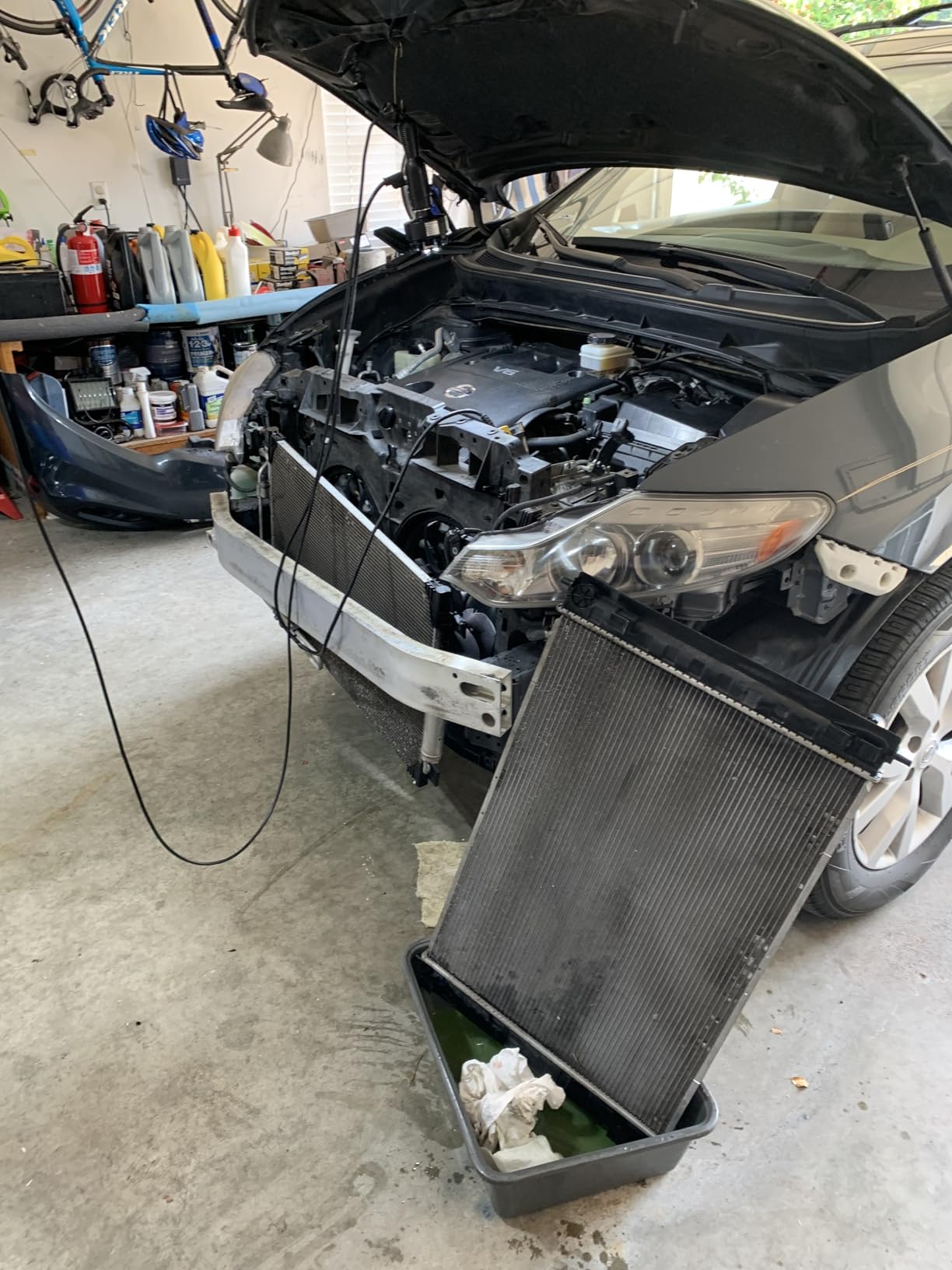
Fitment uses five adapters and four filler caps, with two 45 degree elbows and two 5 inch extensions for reach. The wide end measures 3 inches, the body is clear plastic at 2 liter capacity, and the reinforced thread pattern is designed to resist leaking when the funnel is working at an angle.
Ratings hold at 4.5 across roughly 1,800 reviews, with the switch and the scale doing most of the work in owner comments. If you fill cold systems in cold weather with thick coolant, the throttling is more than a gimmick.
Best for: measured fills and awkward filler locations
Pick this one if you want to know how much went in rather than assume it. The scale and the controlled flow make it good for partial top-ups on cars where the system capacity is not printed anywhere you can reach.
The extension and elbow combination handles the vehicles where the fill point is buried behind a wheel liner or a shield, which is a larger share of modern vehicles than most product copy admits.
Where it falls short: fitment and a confusing count
Universal fitment still means you need to check the neck. The listing also disagrees with itself on whether the set is 15 pieces or 14, so confirm what is actually in the case when it arrives.
Neither issue affects the tool, but both are worth knowing before you order.
7. OMT 33-Piece Master Coolant Pressure and Vacuum Refill Kit – Best Combined Set
OMT Coolant Pressure Tester Kit, 33pc Master Vacuum Refill Kit, 23 Adapters
- Combines a pressure tester and a vacuum fill tool in one kit
- 22 color-coded snap-on adapters shared by both tools
- Hand pump reaches about 40 psi on the gauge
- Molded case and size markings make parts easy to identify
- Several components are stiff plastic and can crack if overtightened
- Adapters do not fit every vehicle and no fitment chart is included
- Coolant can spill from the adapter when pressure is released
- Large attachments can fall out when the case is opened
The OMT kit bundles both halves of serious cooling system work into one case. You get a hand-pump pressure tester to find leaks under pressure and a vacuum purge and refill tool to fill without air, sharing 22 color-coded snap-on adapters between the two functions.
The pressure side reaches about 40 psi on the gauge, which is above the rating on most radiator caps, so it can find both a gush and a slow seep. Owners report it catching leaks that a visual inspection missed, including at the header tank, the heater matrix and the water pump area.
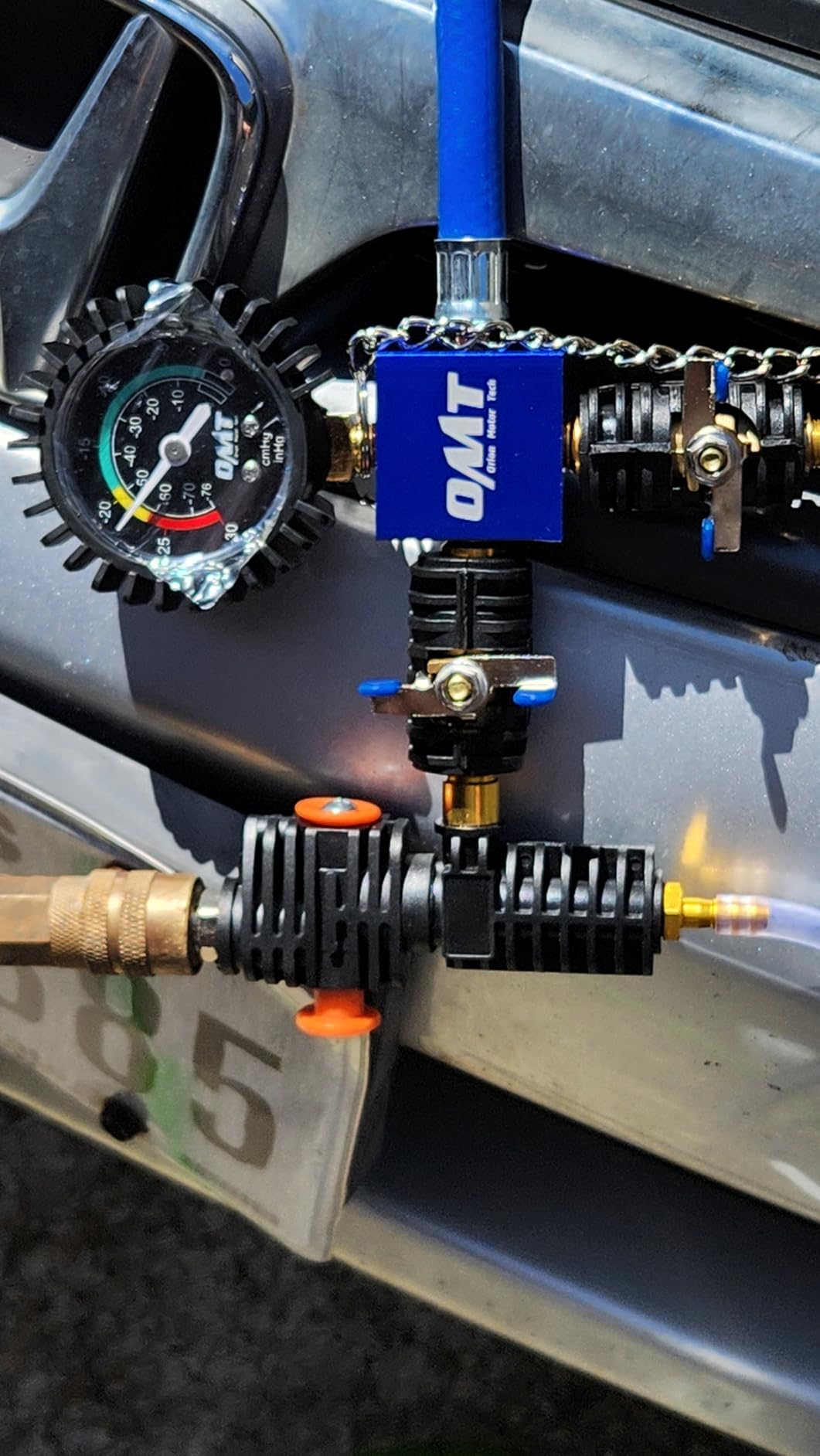
Coverage is broad on paper, with adapters listed for BMW, Ford, Opel, Fiat, VW, Porsche, Mercedes-Benz, Nissan, Peugeot and Chrysler. It weighs close to 10 pounds and measures roughly 16.9 by 13.8 inches, so this is a kit that lives in a truck bed or a cabinet, not a glovebox.
At 4.1 across about 750 reviews it is the lowest rated product here, and the reason is consistent: several components are stiff plastic rather than metal, and overtightening can crack them. Supporters still call it the best value of the full pressure and vacuum category. Plan to snug the fittings rather than crank them.
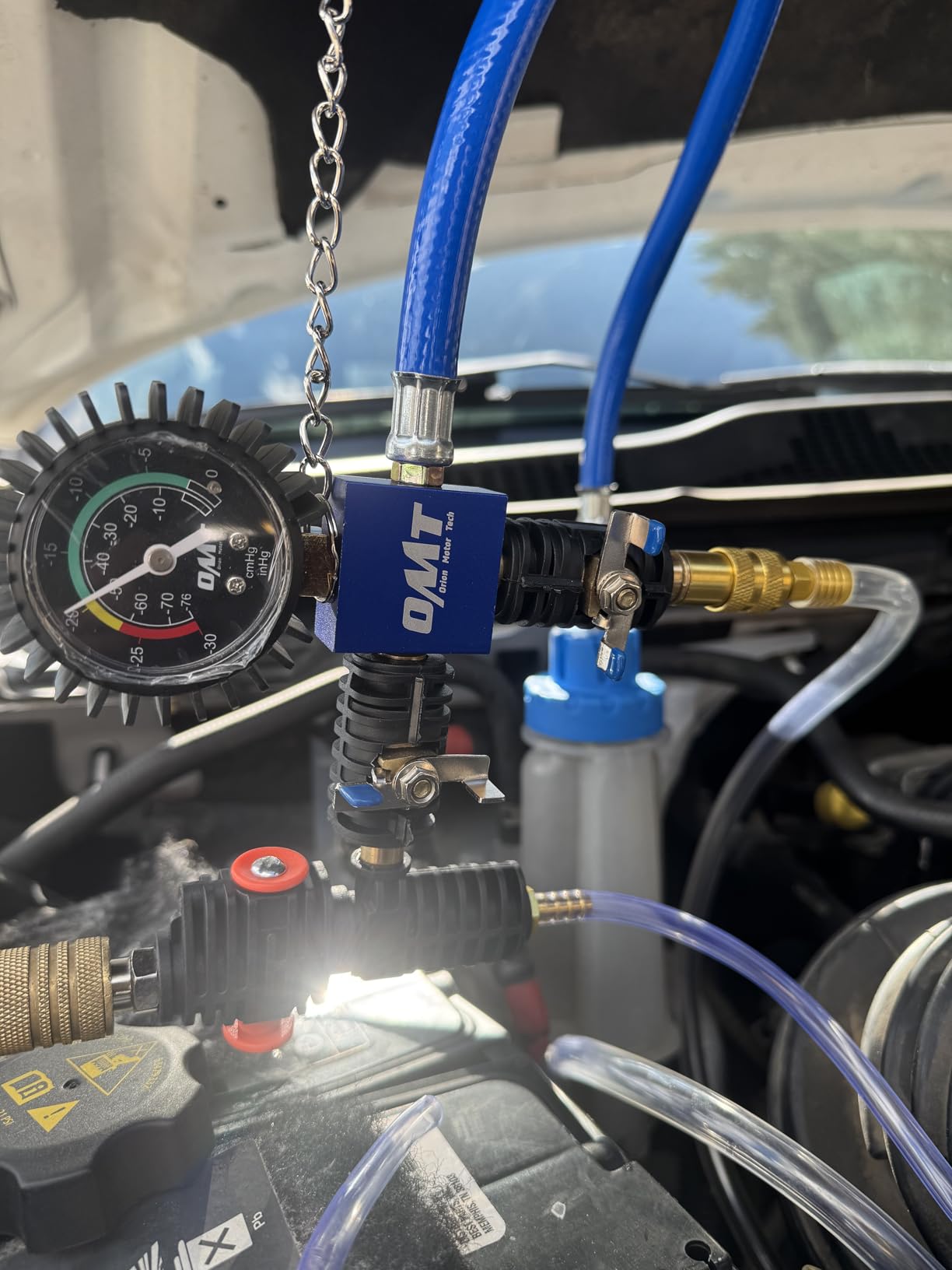
Best for: leak hunting across many European makes
Nothing else in this group pressures the system. If you own a European car, work on one, or want to test a cooling system before installing a radiator, the pressure half is the reason to own this case.
It is also the one kit here that covers both the diagnostic and the refill step, which saves a second purchase if you were going to buy a pressure tester anyway.
Where it falls short: plastic parts and missing fitment data
Stiff plastic fittings that crack under a wrench, an absent adapter-to-vehicle chart, and coolant that releases from the adapter when you drop pressure are the three complaints that recur. Large attachments can also walk out of the case when it is opened.
Own it for the adapter range, treat it carefully, and it will do both jobs.
8. Lisle 60900 Heater Core Hose Backflush Tool – Best for Clogged Heater Cores
- Stepped tip slips into 1/2-inch
- 5/8-inch and 3/4-inch hose with no clamps needed
- Trigger controls water pressure one-handed so aluminum cores are not over-pressurized
- Insulated handle stays safe when running hot water through the core
- Reversing flow direction clears cores that regular forward flushing cannot
- No compressed air inlet on this version so purging is slower than the air-equipped model
- Very large hose diameters may need a fabricated adapter
Everything else on this list treats the heater core as a side effect of filling the system. The Lisle 60900 is built for one job: pushing water backwards through a heater core to break up the sludge that a forward flush never dislodges. If your heat output died after a neglected service interval, this is the tool that fixes it.
The stepped tip is the clever part. It slips into 1/2 inch, 5/8 inch and 3/4 inch hose without a clamp, so you disconnect a heater hose, push the tip in and clamp it lightly. That gets you to a core that is otherwise buried behind a dashboard.
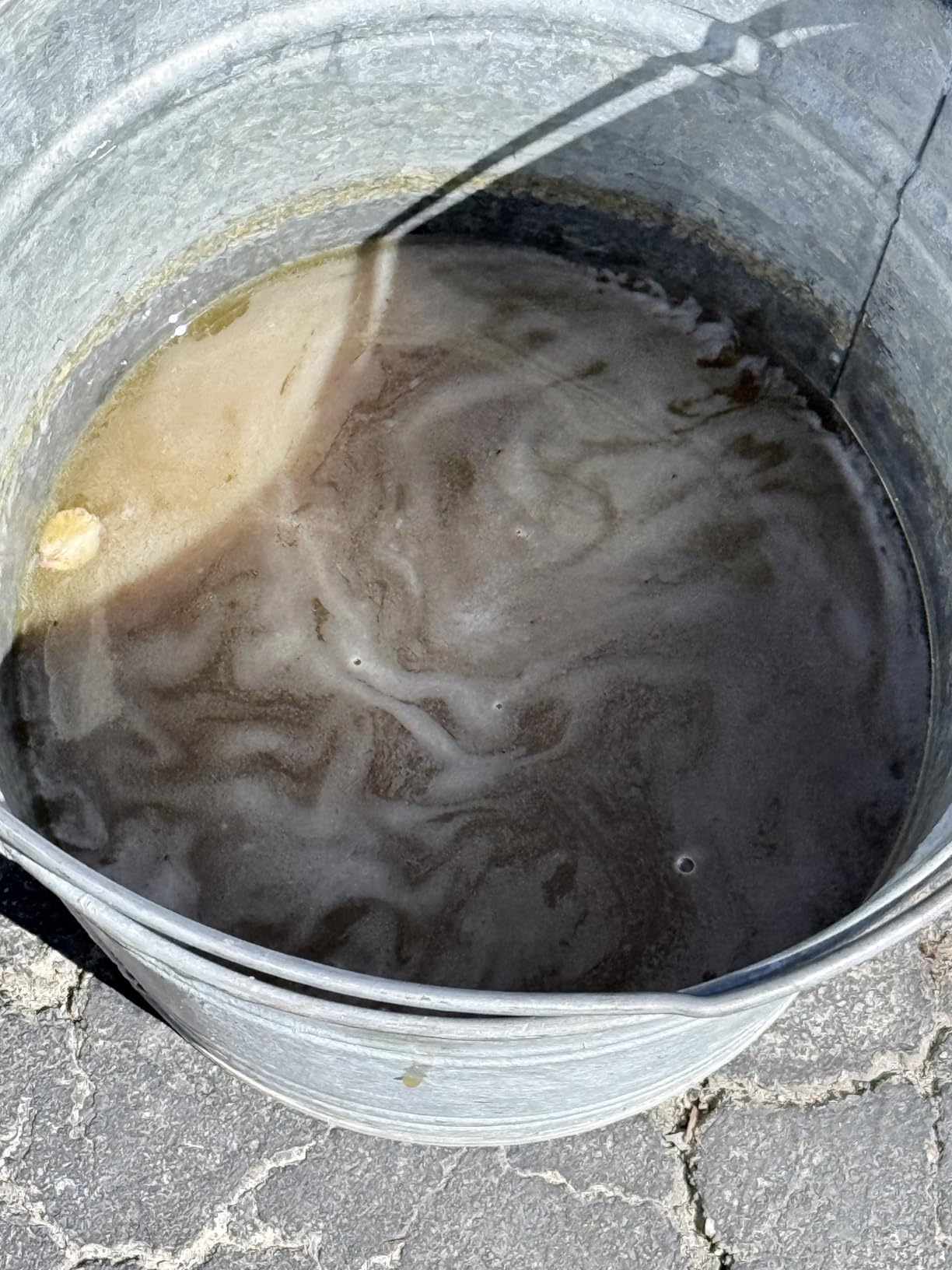
Pressure is on the trigger, which is exactly right for aluminum cores. Squeezing harder sends more flow, and easing off stops it, so you can pulse the flow to move debris without over-pressurizing a fragile core. The handle is metal and insulated, which matters when you run hot water through it.
Owners describe saving a heater core and the dashboard teardown that would have followed. It weighs 12.8 ounces, needs nothing but a garden hose, and at 4.7 across 636 reviews it holds the highest rating among the specialist tools here.
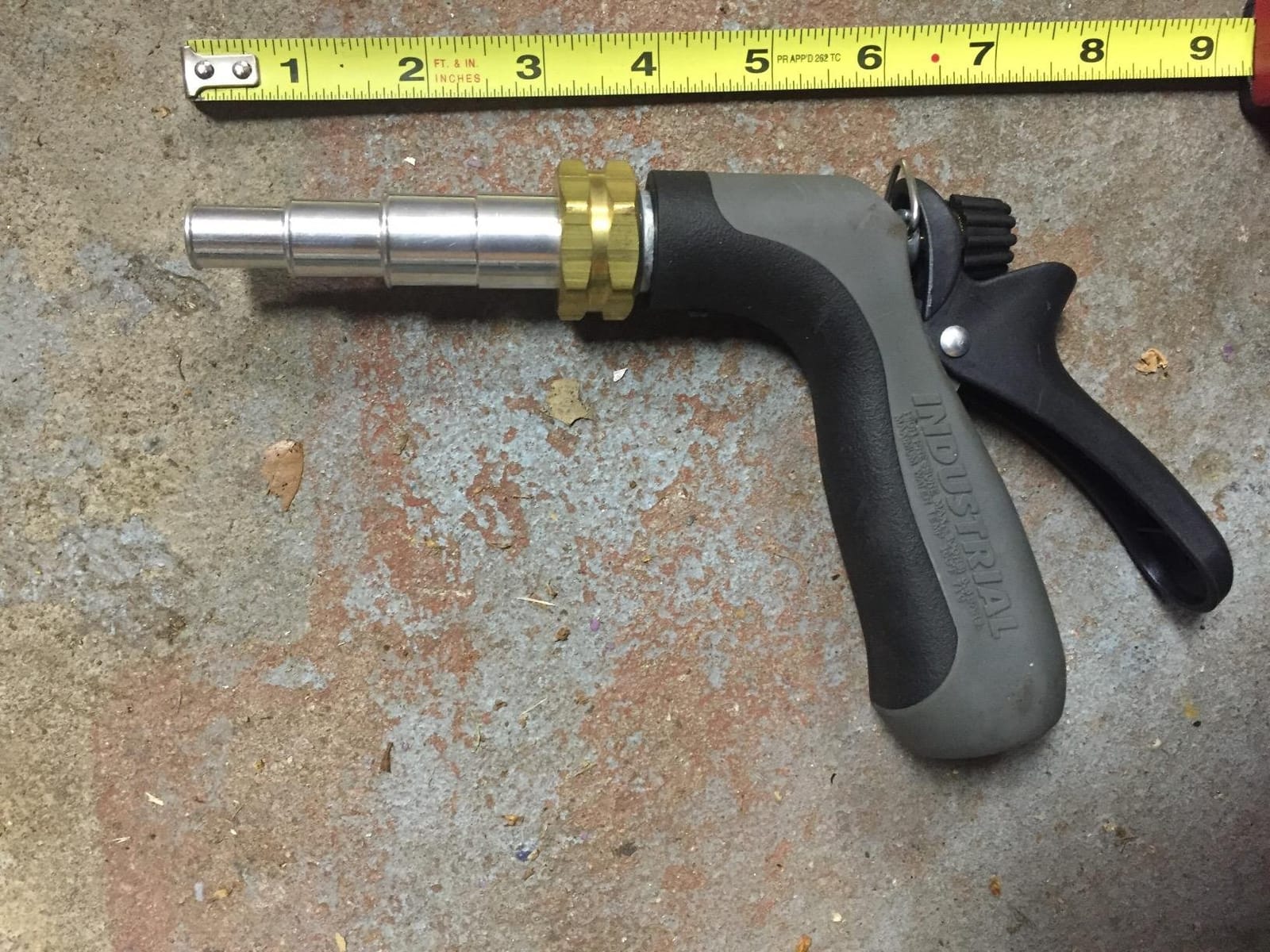
Best for: weak heat output and a cooling system that was never flushed
If the blower works and the fan runs but the air stays cold, suspect a blocked core rather than a bad thermostat. This tool reverses the flow direction and physically moves the debris, which pouring coolant through the system in the normal path will not do.
It is also a good tool to own alongside a good no-spill funnel. One cleans the core, the other fills the system without air. Very different problems, very different tools.
Where it falls short: no air inlet, narrow hose range
This version has no compressed air inlet, so purging is slower than the air-equipped variant. Very large hose diameters need an adapter fabricated from flexible tubing.
For most vehicles the stepped tip covers the sizes you will meet, and for a metal tool of this simplicity there is not much else to fault.
9. SMART JERRY Upgraded Coolant Bleeder Funnel Kit – Best for Organized Storage
2026 Upgraded Coolant Bleeder Funnel Kit, Radiator Burping Funnel
- Built-in shut-off valve controls flow instead of a separate stopper
- Rubber-gasket adapters seal well enough to drain excess back into the jug
- Translucent body with a clear scale shows how much coolant is added
- Lid doubles as storage for caps and adapters
- Two new threaded caps for Ford and VW/Audi broaden fitment
- Body is plastic apart from the metal caps so it needs gentle handling
- Some adapter sizes such as the Honda one can be too tight
The detail that makes this kit different is the lid. It stores the caps and adapters, which sounds trivial until you have counted a small bag of threaded caps that went missing the last time you did a coolant service. Nothing gets lost, nothing rattles, and the case stays together between jobs.
Instead of a removable plug, the shut-off valve is built into the funnel body. Because it is fixed in place, you cannot lose it, and the gasketed adapters are tight enough that excess drains back into the jug instead of onto the driveway.
Capacity is 77 oz in a translucent body with a clear scale, so you can read the level from the driver’s seat. The kit ships with five adapters, six caps, two straight extensions, two 45 degree elbows and the lid, and the two threaded caps added for Ford and VW/Audi widen the fitment beyond generic neck sizes.
Ratings sit at 4.5 across 568 reviews, with owners pointing at the integrated valve and the storage lid as the parts that reduce frustration. Body construction is PA-6, polypropylene and TPR, with metal caps, and the wide end measures 6.2 inches across.
Best for: people who lose small parts
Pick this if you have never found one of your filler caps after a job, or if your garage is shared and parts migrate. The lid solves a real problem that no other kit in this group addresses.
The rubber-gasket adapters are also the tightest sealing here, which makes it a good choice for a vehicle where you want to drain surplus back into the jug rather than catch it.
Where it falls short: plastic body and tight adapters
Everything except the caps is plastic, so it wants careful handling. The Honda adapter in particular can run tight enough that owners bend the prongs slightly to get a fit.
Small adjustments, no dealbreakers, and the storage lid compensates for the lightweight build.
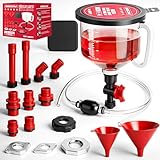
10. SEDY 22-Piece No-Spill Funnel Kit with Siphon Hose Pump – Best for Moving Coolant
- Siphon hand pump and PVC hoses add fluid transfer capability beyond a plain funnel
- Rotary switch gives precise control over overflow and bubbles
- 5 inch straight extensions and 45 degree elbows handle awkward fill points
- Clear directional arrow on the siphon bulb makes the flow path easy to set up
- Polypropylene parts rated only to 212 F so not suitable for high-heat flushing
- Neck size should be verified before ordering
- Four listed variants mean bundle contents can differ from the title
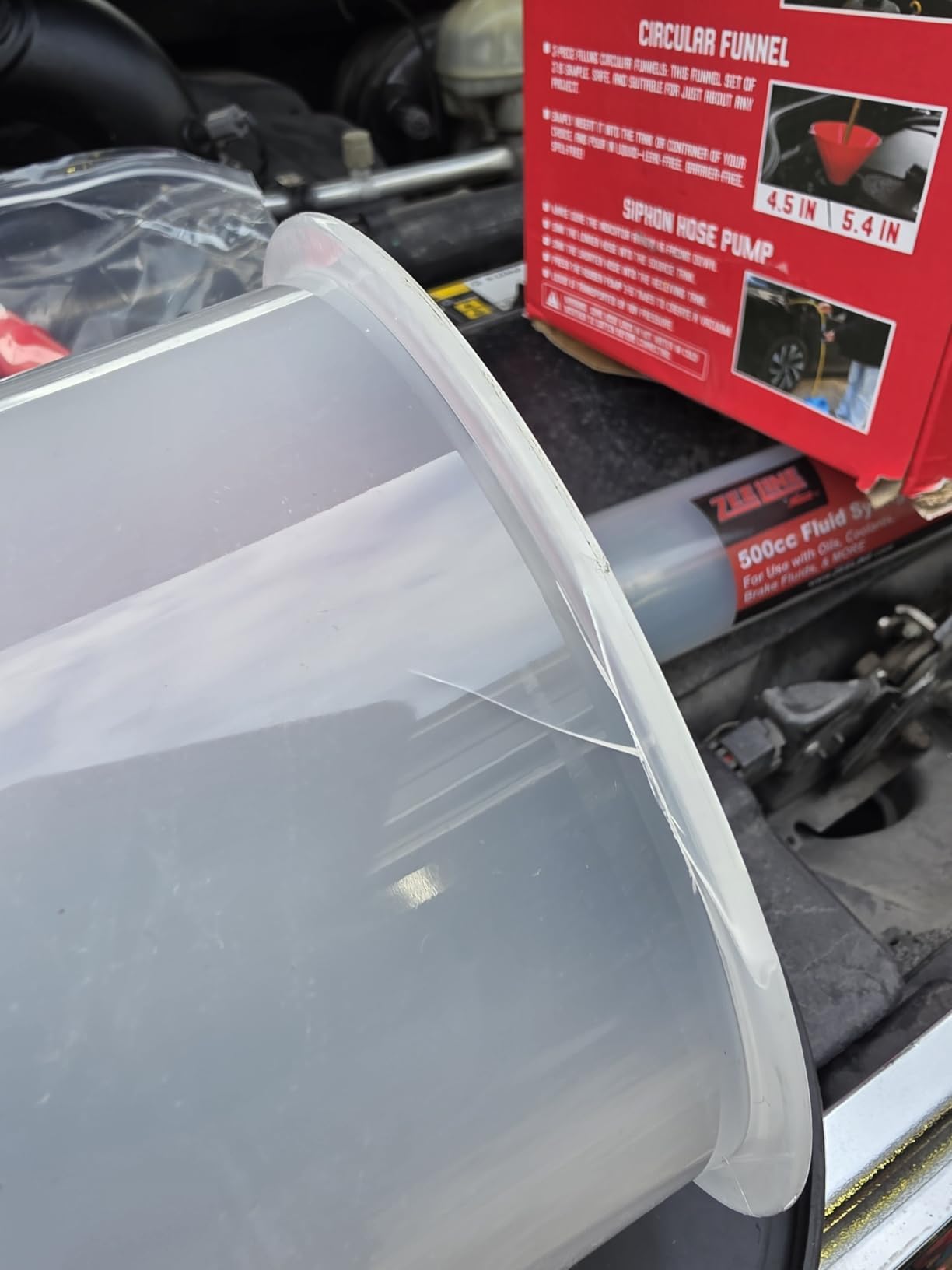
Every other funnel on this list is a passive funnel. The SEDY kit adds a siphon hand pump and PVC hose, which means you can move coolant out of a system or into a remote reservoir instead of only pouring it. That turns it into a two-way tool rather than a one-way one.
The pump bulb has a clear directional arrow molded into it, so you set the flow path correctly the first time instead of blowing a hose full of air and wondering why nothing moves. Owners name the pump addition as the main reason they picked this kit over a standard no-spill funnel.
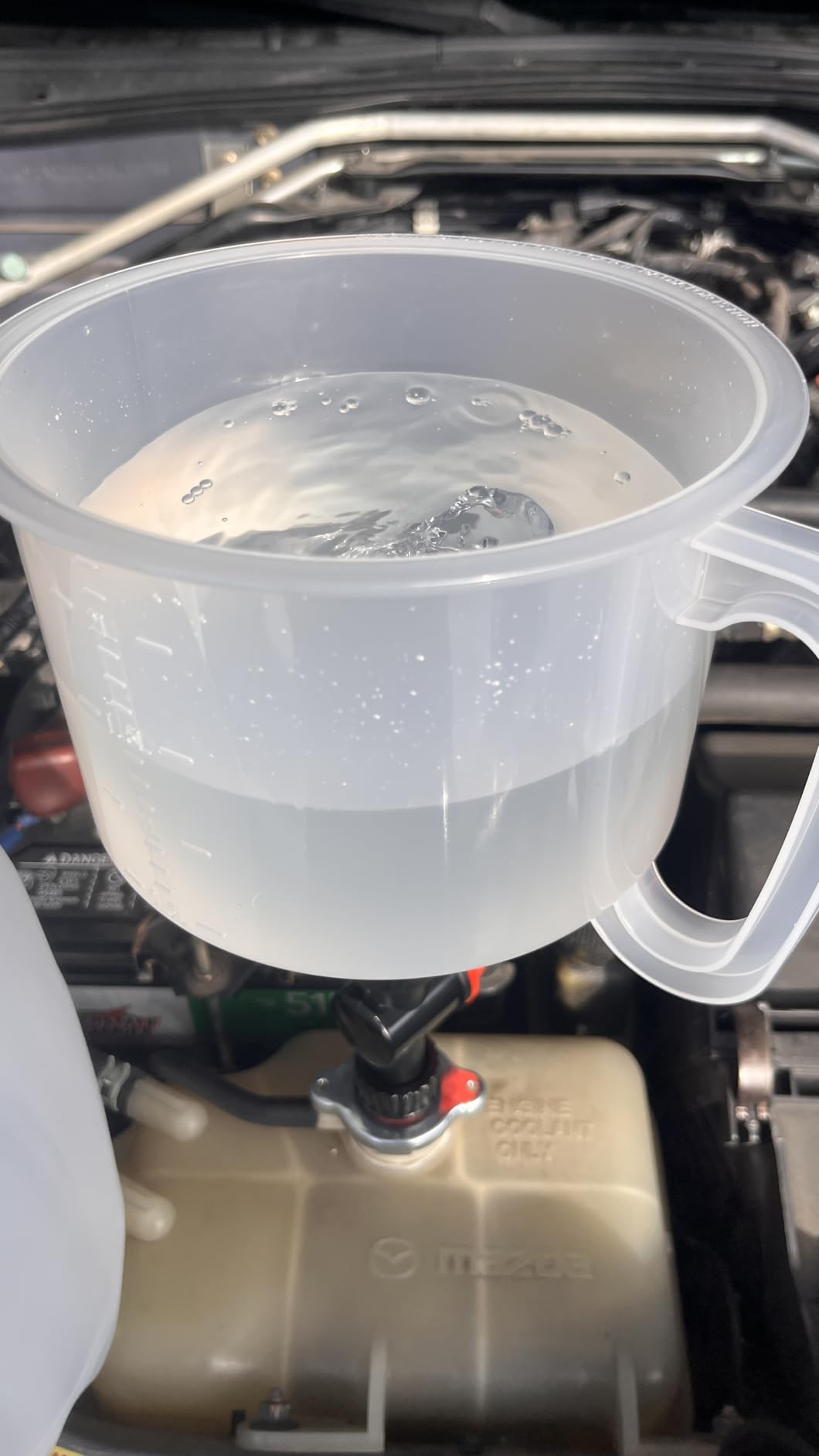
The rest is familiar ground: a rotary switch for throttling, a scale for measuring, and 5 inch extensions with 45 degree elbows for reach. Ratings hold at 4.4 across 513 reviews, and the build mixes PVC and polypropylene in a red body weighing just under a kilogram.
The temperature rating is the detail worth reading twice. The polypropylene parts are rated to 100 degrees Celsius, so they are not for a hot system, while the nylon parts carry a 160 degree Celsius rating. Flush cold, which you should be doing anyway.
Best for: remote reservoirs and transfers between vehicles
Some vehicles fill from a surge tank tucked against the firewall where lifting a jug is awkward. A siphon hose solves that, and it also lets you drain an awkward system into a container without wrestling a pan underneath it.
If you own a hot rod or a project car with a relocated radiator, the transfer capability is the argument for owning this rather than any other funnel.
Where it falls short: a 212 degree ceiling and unclear contents
The polypropylene ceiling rules it out of any hot flush work, which is a real limit for a kit that otherwise looks like it could do it. Neck size should be confirmed, and because several bundle variants exist, the contents may not match the title exactly.
For cold service the siphon capability is worth the extra parts.
How to Actually Flush Your Cooling System
A DIY flush is straightforward once the order of operations is right. The single most common mistake is doing it warm, because opening a hot system scalds and pressurizes. Work cold, every time.
Work on a cold engine. Let the vehicle sit until the radiator neck is cool to the touch. This is not a formality, it is the whole safety margin.
Confirm the coolant spec first. Check the owner manual or the cap sticker for the required chemistry. A flush means you will be filling an empty system, so you need the right fluid before you start draining.
Lay out your catch containers. Two large tubs work better than one. A passenger side system holds several gallons and one pan means a second trip halfway through.
Drain from the radiator petcock if the vehicle has one. If it does not, pull the lower radiator hose into a tub instead.
Disconnect the heater hoses at the engine and let them drain into a tub if you can reach them. A large share of old coolant hides here.
Fill with distilled water to about half the system volume. Tap water works in soft areas but adds minerals that defeat the point of flushing.
Run the engine with the cabin heater on maximum. This forces flow through the heater core, which is the technique mechanics across the forums repeat more than any other. Without it you are only rinsing the radiator.
Let it circulate for about ten minutes, then shut down and drain again. Repeat until what comes out runs clear.
Refill with your coolant mix through a no-spill funnel, or use a vacuum purge and refill kit to fill without air.
Check the level cold, then warm, then cold again. Pressure expands the fluid when hot, so a level that reads full when cold may be low when it matters.
Recheck after the first drive and again a week later. A stable level is the sign the system holds pressure.
Dispose of the old coolant properly. Take it to a household hazardous waste facility or an auto parts store that accepts it. Never pour it down a storm drain and keep it away from animals, because glycol is toxic to pets in small quantities.
How to Avoid an Air Lock
An air lock means a pocket of air trapped in the system, and it is the reason a routine coolant change turns into a never-ending top-up cycle. Air expands when hot, pushing coolant out of the radiator while the gauge climbs toward the danger zone, and the symptom is a car that overheats intermittently after a flush that was supposed to fix it.
Here is what actually prevents it, in order of effectiveness:
Use a no-spill filling funnel. The seal at the neck is what stops air being drawn in with the coolant. A loose funnel pours air and fluid together.
Fill slowly. Most filling funnels have a fluid stopper or a rotary valve. Close it periodically so the neck can drain rather than sucking air back.
Vent the high points. Bleed screws at the thermostat housing, the surge tank and the heater core are there for a reason. Open them until coolant flows, then close them.
Run the heater on high during the flush so the heater core is the first circuit to fill, not the last.
Do not remove the radiator cap on a hot system to speed things up. The pressure release sprays boiling coolant across the engine bay.
Purge with the engine off first. Squeeze the upper radiator hose until it stops being hard and full of air before you start the engine.
On a system that keeps losing coolant after a proper fill, a vacuum purge kit solves the problem outright rather than iterating on it. Pull the air out first and the coolant has nowhere to trap.
Troubleshooting: What Went Wrong
Most disappointing flushes fall into one of five patterns, and each has a cause you can identify before you start taking things apart.
The car overheats right after a clean flush. Almost always an air lock. The system took the coolant but is holding a pocket of it, which expands when hot and pushes the level down. Go back to the vent-and-fill sequence, work the heater on maximum until the outlet hose is warm to the touch, and check the level cold rather than warm.
Low coolant warning returns within a week. Either a leak or a still-trapped air pocket. Do a vacuum hold test before touching anything else, because a system that passes the test is full and the problem is elsewhere. If it fails, you have found your fault and no amount of topping up will fix it.
The heater is still cold after the flush. The heater core is still blocked. Nothing poured through the system in the normal direction will clear a clogged core, which is the one job the Lisle back-flush tool is built for. Reversing the flow is what moves the debris.
Foaming or a rising level in the expansion tank. You have air in the system rather than a coolant leak, and foaming shows the fluid is aerated. A vacuum refill clears it faster than repeated top-ups, because the air leaves the system before the coolant enters it.
The level drops but no fluid appears under the car. Look inside the cabin. Heater cores leak into the passenger footwell far more often than people expect, and the carpet padding hides it. A dry cabin and a falling level is a very common finding on an older car.
Buying Guide: How to Choose a Coolant Flush Kit
Match the kit to the problem, not the marketing. Most buyers end up with a tool that does not address what is actually wrong with their car. If the heat output faded, the answer is a back-flush tool. If the level keeps dropping, the answer is a leak test. If the system is simply overdue, the answer is a filling funnel and a bottle of the right coolant.
Decide between a flush and a simple drain and refill. A drain and refill empties the radiator and the hoses. A flush circulates fluid through the water jacket and the heater core. A flush is worth it after a long interval, after overheating, before a new radiator goes in, and on any used car you have just bought. It is not worth it on a modern sealed system that has been serviced on schedule and still looks clean.
Check adapter fit before you order anything. Every filling funnel on this list is described as universal, and every one of them has an owner-reported fitment complaint. Measure your radiator neck, or count the threads on the cap, and match it against the adapter list. This takes five minutes and prevents the most common return reason in the category.
Think about vehicle size. Small cars usually take 3 to 4 gallons. Pickups and SUVs can take considerably more, which is why a 2 liter funnel means several trips and why the kits with larger reservoirs and siphon pumps earn their place. A truck also means a bigger radiator and a longer fill, so a vacuum kit saves more time there than it does on a compact car.
Get the coolant chemistry right. Use the specification your manufacturer calls for and do not mix chemistries. Extended-life coolant is not universally compatible with a conventional green or a Dex-Cool-style coolant, and mixing them can produce a gel that blocks small passages. If you are unsure of the spec, a refractometer reads the freeze point directly and takes about a minute to use.
Use distilled water for flushing. Tap water works in soft regions but adds the minerals you are trying to remove, which is exactly the tradeoff DIYers in hard-water areas worry about. Distilled water also makes it obvious when the system is finally running clear, because there is nothing in the water to cloud it.
Budget for the extras. A kit is one part of the job. You also need a drain pan or two, the correct coolant in the correct quantity, a set of hose clamps, basic PPE and somewhere to put the old fluid. Related workshop picks like our water-saving fixture guide share the same idea of planning for the whole job rather than the one part you are shopping for.
Consider a shop power flush only if a kit will not get there. A shop machine can push fluid backwards through the entire circuit at volume and flow. A kit cannot match that. For most systems a DIY flush with two tubs and a no-spill funnel gets the same result, but a machine earns its keep on a system with heavy sludge or a badly blocked heater core.
For non-car projects, the same logic applies. If your real problem is water rather than coolant, a home cooling system guide covers the same fill, vent and leak logic on a different circuit.
When Not to Flush Your Cooling System
Flushing is not always the right move, and doing it at the wrong moment can turn a small job into an engine repair.
Straight after a head gasket replacement. Fresh gasket sealant needs time to cure, and a hard flush can move it before it sets. Follow the repair procedure rather than flushing by habit.
If the thermostat is stuck open or missing. A stuck-open thermostat dumps coolant out of the bypass before the radiator ever sees it, and you will never achieve a full fill.
On a cast iron or classic engine with no heater hose access. Aggressive flushing can dislodge rust that has been sealing a chronic leak for decades. Changelogs and forums on older vehicles repeatedly warn about this.
On a modern sealed system with no service history issues. If the fluid is clean, the level is stable and the engine has never run hot, a flush adds risk and costs coolant for no measurable gain.
When the system is currently losing coolant. Find the leak first. Flushing a system with a hole in it just spreads the damage and contaminates the fresh coolant.
On a system full of stop-leak. Stop-leak particles can clog a heater core or a small passage. Drain it fully before adding new coolant.
DIY Flush vs. Shop Flush: What the Time Is Worth
Shop machine flushes are faster in wall clock terms, but the comparison is less one-sided than the marketing suggests.
A shop flush costs you the visit. You hand over the keys, wait, collect the car, and the machine does the circulation at volume and in reverse. That is genuinely faster than anything you can rig at home, and it is the only reliable way to push heavy sludge out of a badly blocked circuit.
A DIY flush costs you the evening. Plan on a few hours including draining, flushing, refilling, checking levels and cleanup. The time is mostly waiting, not working, and the cleanup is the part people forget to budget for.
What a shop cannot do for you. It cannot tell you why the system lost coolant, and it will happily flush a system that still has a leak. The vacuum leak check and pressure test in this list find the fault first, which is the part that actually protects the engine.
Where DIY wins clearly. On a routine service interval, on a car with a clean system, and on any vehicle where you need to inspect the cooling system while you are in it. A shop flush is not a repair, and it does not diagnose anything.
For most people the honest answer is that you flush at home, and you keep a pressure tester in the garage for the times you need to know why.
Frequently Asked Questions
What is the best product for flushing an engine coolant?
For most DIYers the best tool is a no-spill filling funnel with vehicle-specific adapters, because the majority of failed flushes are caused by trapped air during the refill rather than by poor flushing. A vacuum purge and refill kit is the better choice if you flush more than once a year or keep losing coolant after a clean fill.
Can I flush my own cooling system?
Yes. Drain the system, flush it with distilled water, run the engine with the cabin heater on maximum for about ten minutes, drain again, then refill through a no-spill funnel. Always start with a cold engine. If the system is losing coolant, find the leak before you flush.
Do radiator flushes really work?
They do, but a drain and refill is not the same thing. A simple refill only empties the radiator and the hoses, while a flush circulates fluid through the water jacket and the heater core. The difference matters most on a neglected system where sludge has settled out of line.
Is a cooling system flush the same as a radiator flush?
In practice they are the same job. The radiator is one component of the cooling system, and what people call a radiator flush usually means flushing the whole circuit. Flushing only the radiator leaves the water jacket and the heater core holding old coolant.
Which radiator flush is better, Prestone or Blue Devil?
Both are chemical cleaners that work the same way, so the deciding factor is the label. Match the product to your coolant chemistry and follow the dwell time printed on the can. Neither is a substitute for circulating water through the system, and both work best after a drain and refill.
How much cooling system flush do I need?
Enough to fill the system to about half for flushing, then enough to fill it completely afterwards. Small cars usually take 3 to 4 gallons in total while pickups and SUVs take considerably more, so check the system capacity before you buy so you are not caught short mid-job.
Best Coolant Flush Kits for DIY Mechanics: The Verdict
The best coolant flush kits for DIY mechanics in 2026 are not competing for one crown, because they are solving different problems. The EPAuto filling funnel is the one we would own first for the quality and reach of its adapters and the 60 ounce reservoir. The OEMTOOLS 87009 is the smarter buy if you own more than one vehicle and want five filler neck options in one case.
If trapped air is your recurring problem, the OEMTOOLS vacuum refill kit removes the cause rather than managing the symptom, and it doubles as a leak tester. The UView 550000 is the professional-grade answer for a system you do not trust, with a stable vacuum hold and metal construction. The Lisle 60900 is a specialist worth adding for any car with weak heat output, and the OMT set earns its space if you work on European vehicles and want pressure testing in the same case.
Whichever one you pick, the technique matters more than the tool. Work cold, use distilled water, run the cabin heater on maximum to force flow through the heater core, vent the high points, and refill through a sealed adapter. That sequence is what turns a flushing job into a job that stays fixed. If you are still putting the finishing touches on the workshop, our ceiling lighting guide covers the other upgrade most garages need.