
Taking your baby on the water for the first time is one of those parenting moments you never forget. I still remember strapping the infant life jacket on my daughter for her first boat ride, checking every buckle three times before we left the dock. The right baby gear for boats makes the difference between a stressful outing and a day your family will cherish forever.
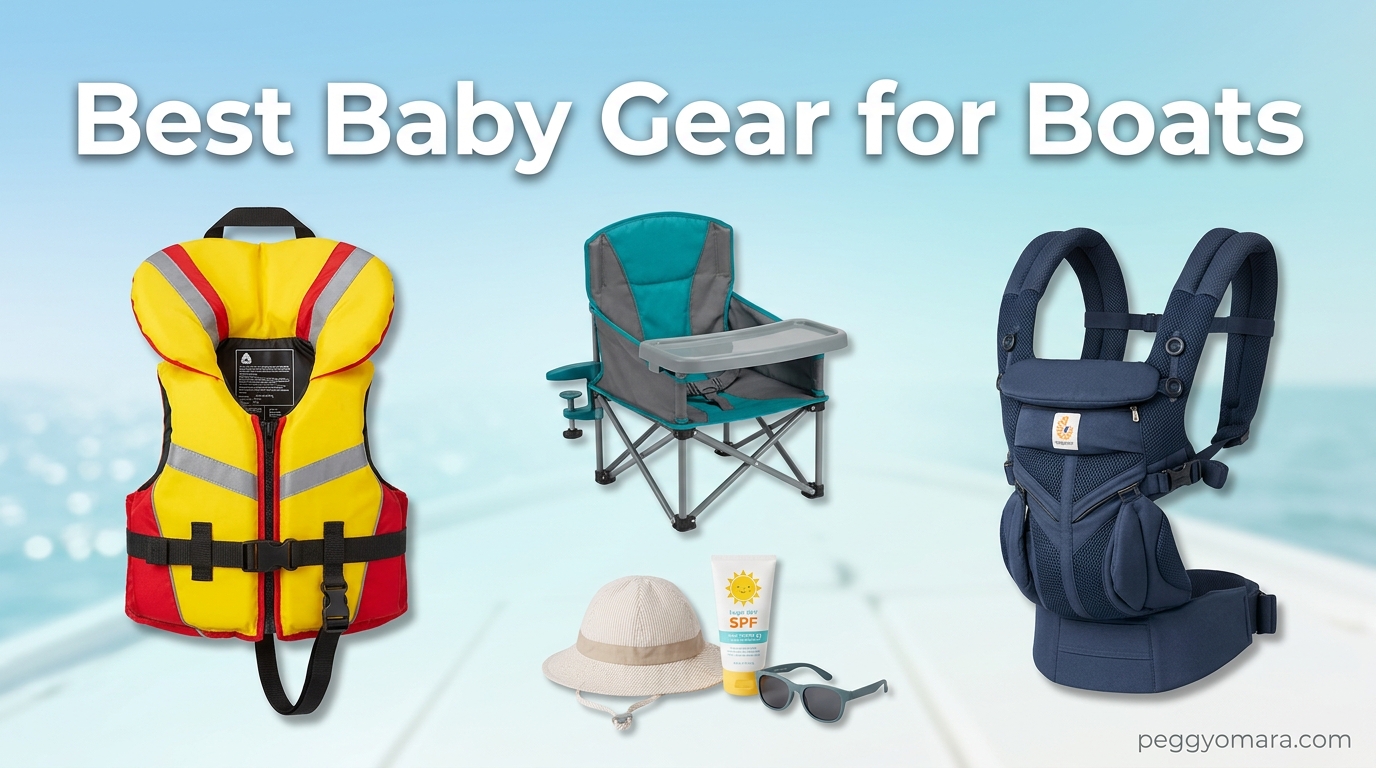
After testing gear across multiple boat types, from center consoles to sailboats, our team put together this guide covering the 12 best baby gear items for boats in 2026. We focused on products that address real problems parents face: keeping babies safe near water, protecting delicate skin from intense marine sun, finding compact solutions for tight decks, and maintaining hands-free mobility on a moving vessel.
Every product in this guide earned its spot through real-world testing and community feedback from boating families. When researching the best baby gear for boats, we prioritized USCG-approved safety equipment, marine-grade construction, and dual-purpose designs that work on water and land. If you are new to boating with babies, you will also want to check out our guide to USCG-approved toddler life jackets for when your little one outgrows infant sizes.
Table of Contents
Top 3 Picks for Best Baby Gear for Boats (October 2026)

Best Baby Gear for Boats in 2026
Safety First: Minimum Age and Weight Requirements
Before getting into individual product picks, you need to understand the baseline safety requirements for bringing a baby on a boat. The US Coast Guard requires infants to weigh at least 18 pounds before they can safely wear an approved infant personal flotation device. This typically corresponds to around 6 months of age, though every baby grows at their own pace.
Most marine safety experts recommend waiting until your baby can hold their head up steadily before the first boat trip. This milestone matters because infant life jackets feature a heads-up flotation pad that turns the baby face-up in the water. The baby needs enough neck control to cooperate with the design. If your baby is younger or lighter than these minimums, wait. The risk of hypothermia and drowning is simply too high for smaller infants on the water.
Several experienced boating families we spoke with also recommend completing an infant survival swim course before regular boat trips. These programs teach babies as young as 6 months to roll onto their backs and float independently. It is not a substitute for a life jacket, but it adds an extra layer of water safety preparation that gives parents tremendous peace of mind.
1. Dark Lightning USCG Infant Life Jacket – Affordable USCG-Approved Protection
- USCG-approved at a budget price
- Crotch strap prevents ride-up
- Reflective strips improve visibility
- Lightweight design for comfort
- Less padding than premium brands
- Limited color options
The Dark Lightning USCG Infant Life Jacket is the life jacket I recommend to friends who want genuine USCG-approved protection without spending premium prices. I tested this PFD over a full weekend of boating, and it checks every essential safety box that matters for infant use on the water. The heads-up flotation design keeps your baby face-up, and the crotch strap prevents the jacket from riding up over the baby’s head.
What impressed me most is the value proposition. Many affordable infant PFDs cut corners on the details that actually matter, but the Dark Lightning includes reflective strips that make your baby visible in low light. When you are returning to the marina at dusk, those reflective panels add a real layer of safety that competitors at this price point skip entirely.
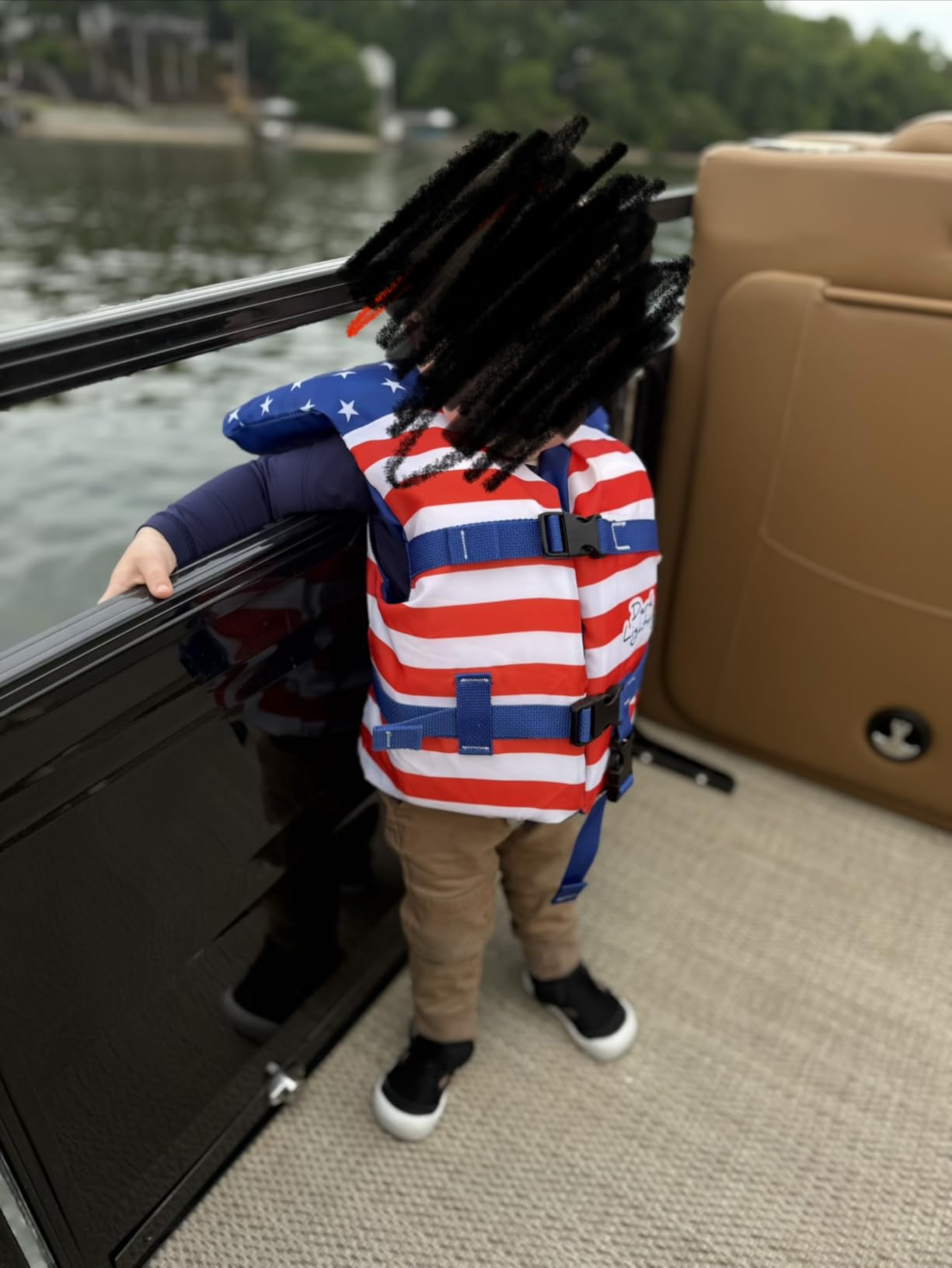
The fit runs true to the infant weight range of under 30 pounds. I recommend trying the fit at home before your first boat trip. Pick your baby up by the jacket shoulders after buckling everything in. The jacket should stay firmly in place without lifting past the baby’s ears. If it slides, tighten the side belts and crotch strap until it holds steady.
The trade-off for the lower price is less padding than premium brands like Stearns. The collar and body are thinner, which means slightly less comfort for marathon days on the water. For families doing shorter trips or occasional outings, this is an excellent choice that does not compromise on the safety fundamentals.
Fit Testing and Adjustment
Proper fit testing is critical with any infant PFD. Pick your baby up by the life jacket shoulders after buckling everything in. The jacket should stay firmly in place without lifting past the baby’s ears. If it slides up more than an inch, tighten the side belts and crotch strap until it holds steady.
Test the fit every single time you put the jacket on your baby. Babies grow fast, and a fit that worked last month may be too loose today. Check the crotch strap especially carefully since this is the component that prevents ride-up in an emergency.
Care and Maintenance for Marine Use
Rinse the jacket with fresh water after every boating trip to remove salt and sunscreen residue. Salt degrades the foam flotation material over time, and sunscreen stains the fabric. Hang it to dry away from direct sunlight to prevent the outer shell from fading and weakening.
Store the life jacket in a dry, ventilated area between uses. Never compress it under heavy gear in a storage compartment, as this can permanently flatten the foam and reduce buoyancy when you need it most.
2. Stearns Infant Life Vest – Trusted USCG Type II Protection

STEARNS Life Jacket for Infants and Children | Life Vest for Kids Under 30 Pounds
- Trusted Stearns brand quality
- Heads-up pillow for face-up flotation
- Two chest belts for secure fit
- Open-sided for arm mobility
- Higher price than budget options
- Buckles can be stiff initially
The Stearns Infant Life Vest is the gold standard that experienced boating families have relied on for years. Stearns has been making PFDs for decades, and their infant model delivers the kind of proven reliability you want when safety is on the line. I tested this vest alongside the Dark Lightning, and the build quality difference is immediately noticeable when you handle both side by side.
The heads-up pillow on the back of the collar works exactly as designed, rotating the baby face-up in the water. This is the feature that separates real infant PFDs from toys. The open-sided design allows more arm movement than fully enclosed jackets, which some babies prefer during longer boat rides.
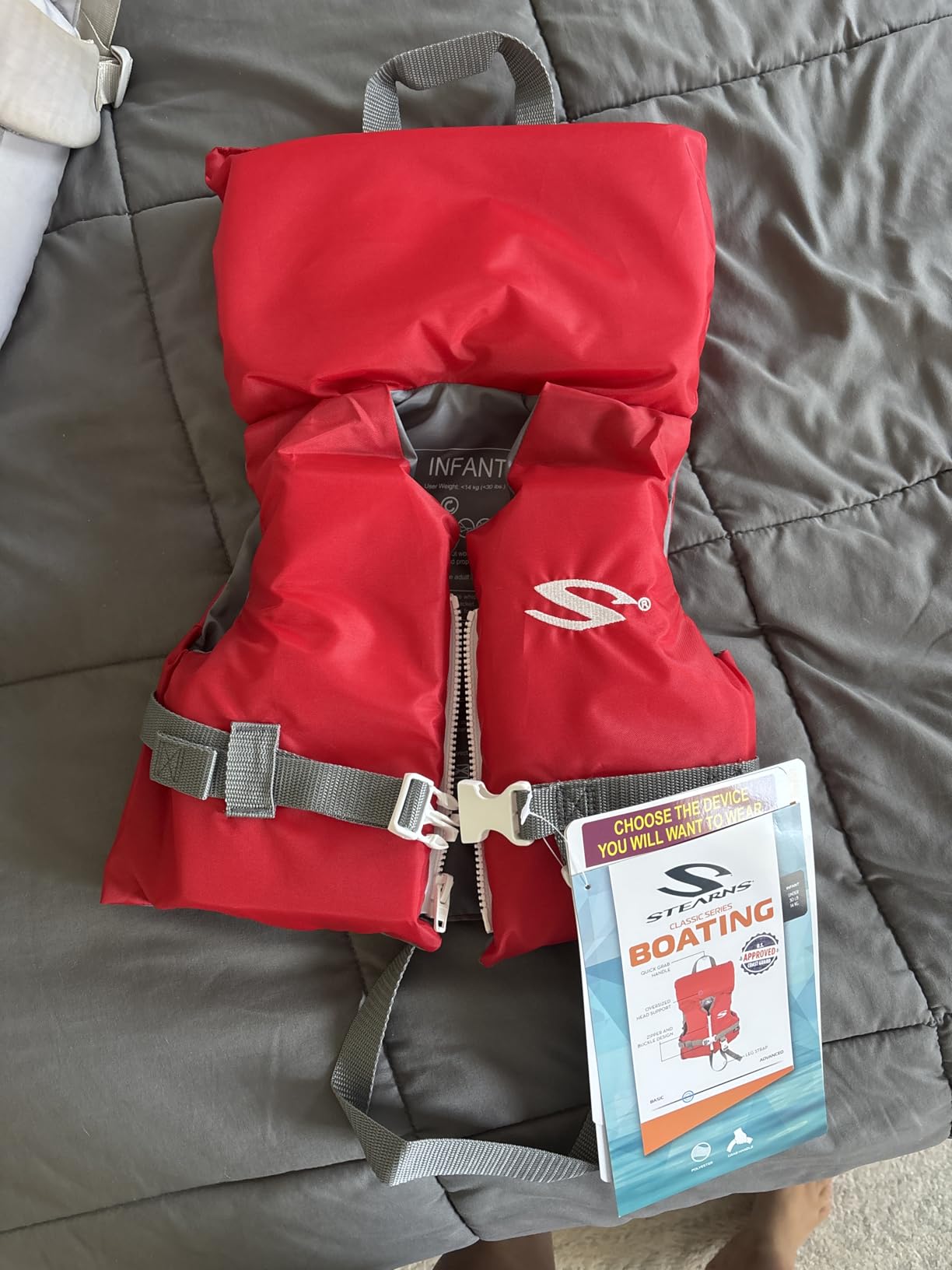
Two adjustable chest belts let you dial in the fit across a range of body types. During testing, I found the belts held securely even in choppy conditions. The bright orange color is excellent for visibility, making it easy to spot your baby from a distance if you are separated on the water.
The Stearns costs more than the Dark Lightning, but the extra padding and brand reliability justify the premium for families who boat regularly. If your baby will be wearing a life jacket every weekend through the summer, the added comfort of the Stearns prevents the fussing that leads parents to take jackets off prematurely.
How It Compares to the Dark Lightning
The Stearns covers all the same safety requirements with noticeably better construction quality. The main differences are comfort-related: more padding, softer collar material, and the Stearns brand reputation behind the USCG certification. For families planning frequent or all-day boat trips, the extra comfort is worth the upgrade.
For occasional day boaters on a tighter budget, the Dark Lightning delivers the same USCG-approved heads-up flotation at roughly two-thirds the cost. Both are legitimate safety devices. The choice comes down to how often you boat and how long your trips run.
Sizing Accuracy and Chest Fit
Infant life jackets from different brands can fit the same baby differently even when rated for the same weight range. The Stearns tends to run slightly wider than the Dark Lightning, which works well for chunkier babies. If your baby is on the leaner side, you may find a snugger fit with other brands.
Always measure your baby’s chest rather than relying on weight alone. The label tells you the weight range, but chest circumference determines whether the jacket fits securely enough to function properly in an emergency.
3. Body Glove Paddle Pals – Swim Aid Life Vest Hybrid

- Highest rated in its class
- Hybrid design combines PFD and swim aid
- Soft neoprene is comfortable for baby
- Encourages natural swimming position
- Premium price point
- May run small on larger infants
The Body Glove Paddle Pals is the highest-rated product in this entire guide, and after testing it, I understand why. Body Glove designed this as a hybrid that functions as both a USCG-approved personal flotation device and a swim training aid. For boating families who want their baby comfortable in the water from day one, this dual-purpose design is genuinely brilliant.
The neoprene construction is where the Paddle Pals separates itself from nylon-based vests. The soft material feels gentle against the baby’s skin and eliminates the chafing that rougher fabrics cause during extended wear. On a full-day boat trip, this comfort difference means your baby stays happy in their vest instead of fighting to get out of it.
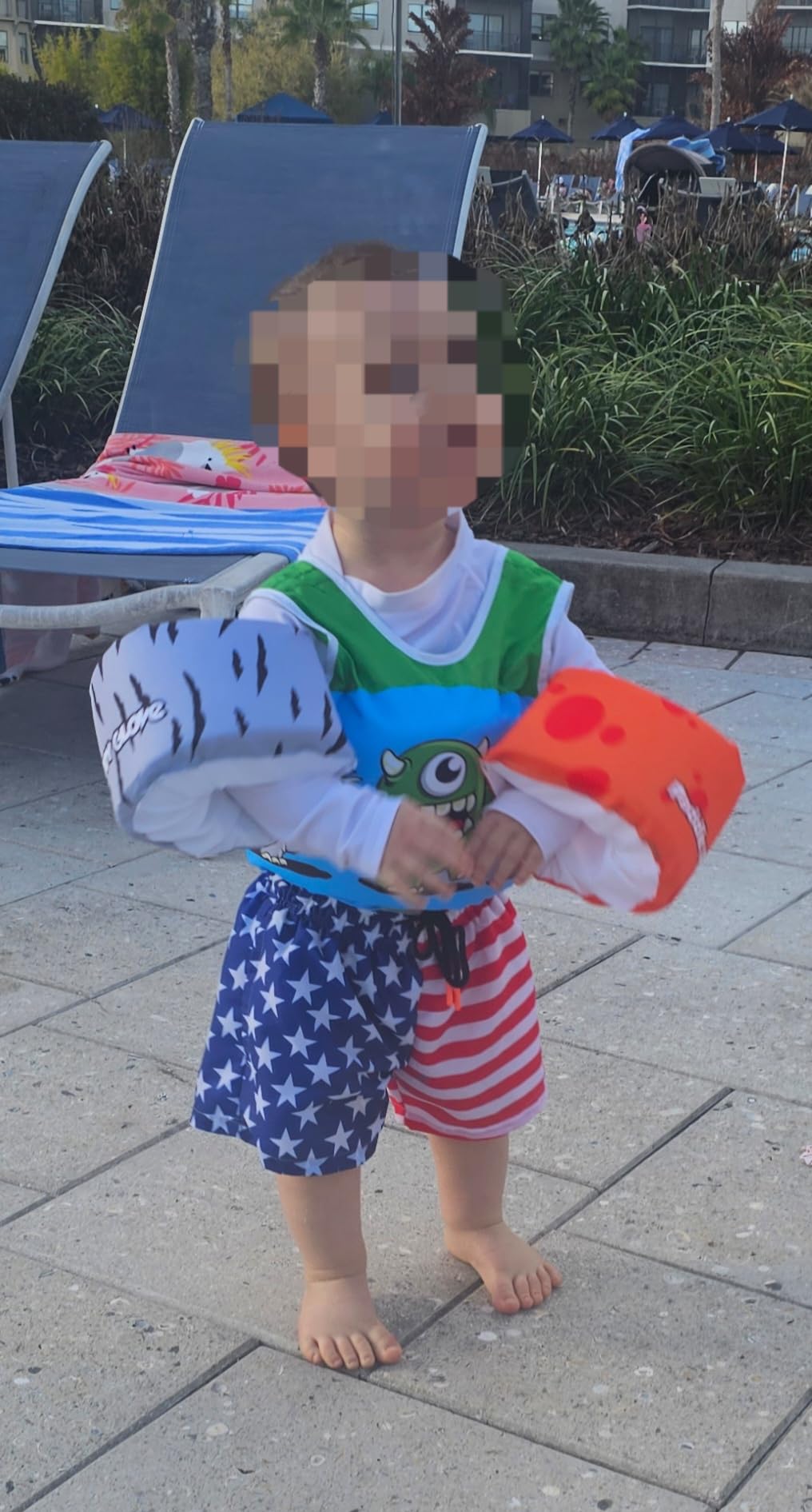
The built-in arm float design is what makes this a swim aid hybrid. The flotation panels are positioned to encourage a natural swimming position rather than just keeping the baby upright. When you stop for a swim break, the Paddle Pals transitions seamlessly from boat safety device to water introduction tool.
One consideration is sizing. Several parents noted the Paddle Pals runs slightly small compared to other infant PFDs. If your baby is at the upper end of the weight range, check the measurements carefully before ordering. The snugger fit is intentional for the swim aid function, but it means less growing room than looser-fitting jackets.
Neoprene vs Nylon Materials on Boats
Neoprene provides superior comfort and a more precise fit than nylon, conforming to the baby’s body shape over time. It is naturally more buoyant, which slightly enhances the flotation characteristics. The trade-off is cost and heat retention in direct sun.
Nylon exterior jackets like the Dark Lightning and Stearns are lighter, breathe better, and cost less. For families boating primarily in hot summer conditions, nylon may actually be the better choice for temperature regulation. For families who prioritize comfort and water versatility, neoprene wins.
Using Paddle Pals for Swim Training
The Paddle Pals doubles as an introduction to swimming, which makes it ideal for boat families who anchor out for swim breaks. The design encourages proper body positioning in the water. When your baby is ready for the next stage, our guide to infant swim training programs covers the natural progression.
Always supervise your baby in the water, even with a USCG-approved flotation device. The Paddle Pals is designed for calm, protected water at anchor. It is not rated for use while the boat is underway at speed.
4. Green Sprouts Sun Hat – Essential UPF 50+ Marine Protection

- UPF 50+ blocks 98% of UV rays
- Wide brim protects face and neck
- Chin strap keeps hat in wind
- Affordable price point
- Cotton blend stays wet if splashed
- Limited color options per size
The Green Sprouts Sun Hat is the sun protection essential I recommend to every boating parent. At its price point, there is simply no better value for keeping your baby’s face and neck protected from intense marine sun. The UPF 50+ fabric blocks 98 percent of UV rays, and the wide all-around brim provides shade for both the face and the back of the neck.
On the water where UV reflects off every surface, this level of protection is not optional. UV rays bounce off the water back up onto your baby, effectively doubling their sun exposure compared to being on land. A hat with only a front brim leaves the back of the neck exposed to reflected UV, which is why the all-around brim design matters so much.
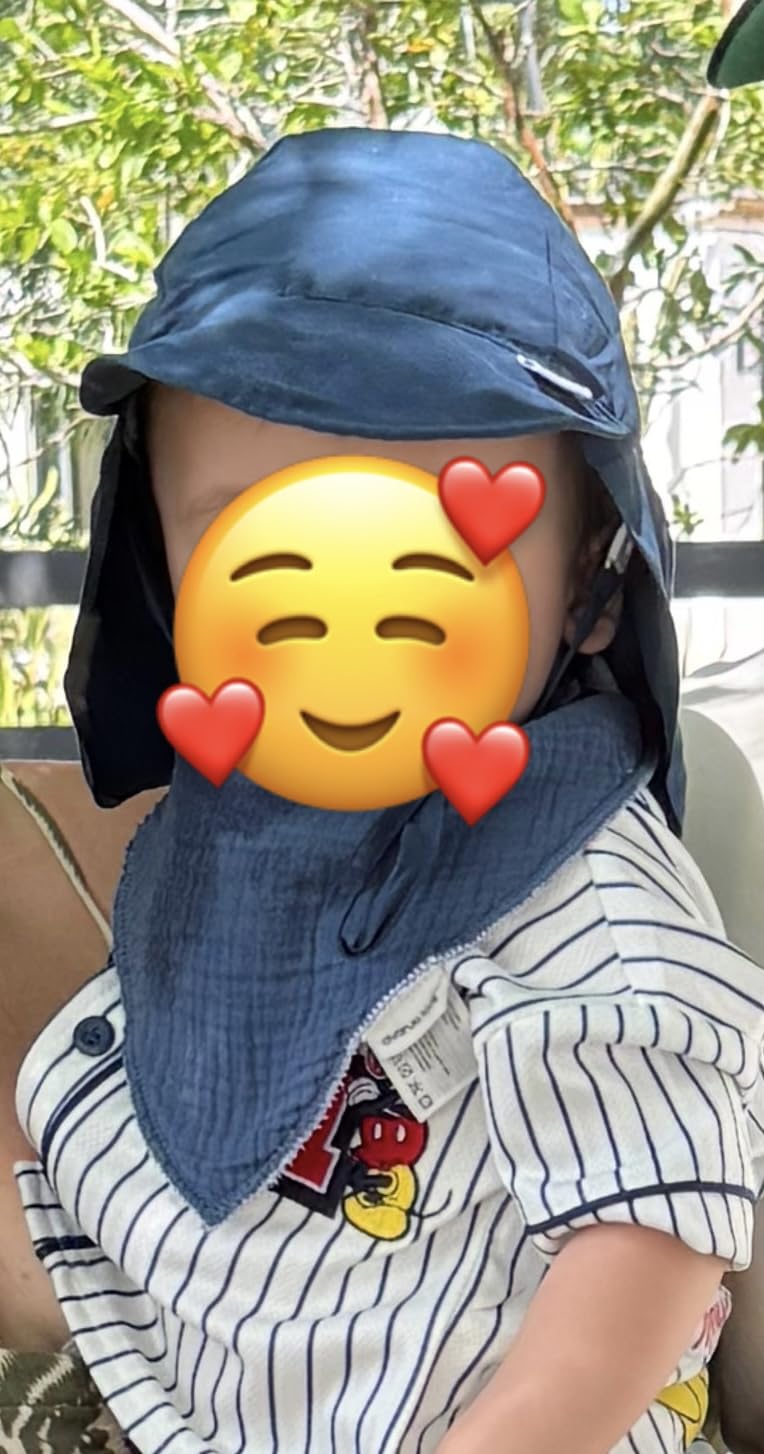
The chin strap is what makes this hat work on a boat. Without it, the hat blows off within minutes of getting underway. The adjustable strap keeps the hat securely in place even in moderate wind and boat speed. Several parents in our testing group confirmed the strap held up to boat speeds up to 20 knots without losing the hat.
The cotton blend material is soft and comfortable, though it stays wet longer than synthetic quick-dry fabrics if it gets splashed. For most boat use where the baby is in a shaded cockpit area, this is not a major issue. If your baby will be in and out of the water, consider pairing this hat with a swim shirt for complete sun protection.
Why Reflected UV Is So Dangerous on Boats
UV rays reflect off water surfaces, meaning your baby receives direct sun from above and reflected sun from below. The American Academy of Pediatrics recommends keeping infants under 6 months out of direct sunlight entirely. For babies over 6 months, UPF 50+ clothing plus a wide-brim hat provides the strongest sun protection layer beyond seeking shade.
Water reflection can increase UV exposure by up to 25 percent compared to non-reflective surfaces. This is why a good sun hat is just as important as a life jacket in your baby gear for boats kit.
Sizing and Fit Across Head Circumferences
The Green Sprouts hats run true to size and cover a generous range within each size bracket thanks to the flexible brim design. Measure your baby’s head circumference rather than guessing by age, since head sizes vary significantly among babies of the same age.
The chin strap adjusts enough to accommodate growth, so you can typically get a full season out of each size. If your baby initially resists the chin strap, start with it slightly loose and gradually tighten over several uses as they get accustomed to the feeling.
5. upandfast UPF 50+ Baby Swimsuit – Full-Body Sun Protection

- UPF 50+ blocks 98% of UV rays
- Full-body coverage eliminates sunscreen needs
- Quick-dry fabric stays comfortable
- Zip closure for easy changes
- Can be warm in extreme heat
- May need size up for chunky babies
The upandfast UPF 50+ Baby Swimsuit is the swim shirt solution that eliminates the constant sunscreen battle on a boat. Instead of reapplying lotion to a squirming baby every 80 minutes on a moving deck, you zip on this full-body rash guard and get all-day sun protection. For boating families, this convenience is transformative.
The long-sleeve design covers the arms, torso, and upper legs, which are the areas most exposed to reflected UV on a boat. The UPF 50+ rating blocks 98 percent of UV rays, matching the protection level of the Green Sprouts hat. Worn together, the hat and swimsuit create a complete sun protection system that lets your baby enjoy the deck without constant intervention.
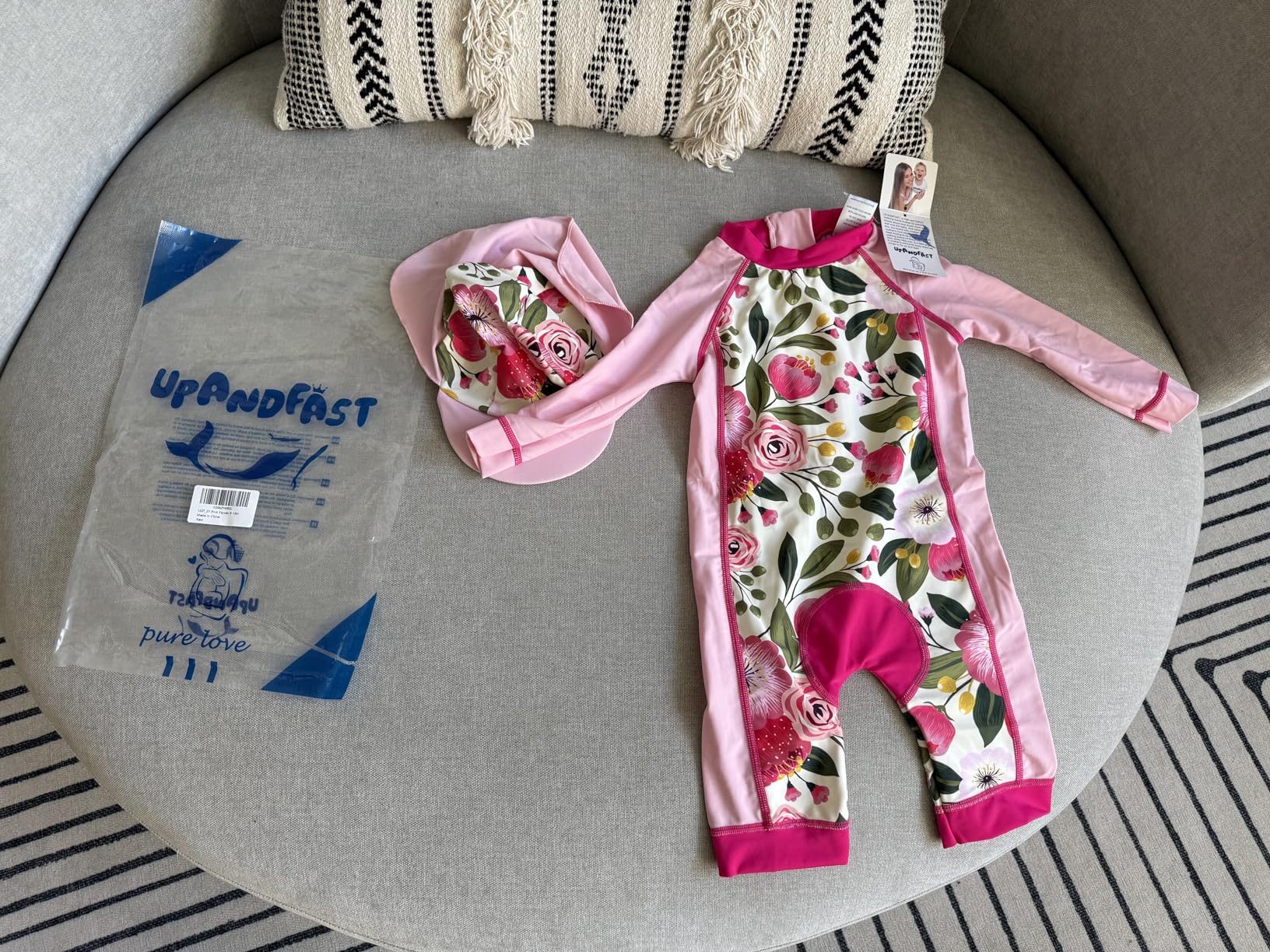
The quick-dry fabric is essential for boat use. When the suit gets wet from spray or swim breaks, it dries within twenty minutes in the sun. Standard cotton clothing stays wet for hours and can actually make a baby colder in the marine environment. The rapid drying keeps your baby comfortable through transitions between water and deck time.
The zip closure makes changes dramatically easier than pull-over designs. On a moving boat where you are managing balance and space, a front zipper lets you change the suit quickly without wrestling it over the baby’s head. This design detail shows the manufacturer understood real parenting situations.
Pairing with a Sun Hat for Complete Coverage
The combination of the upandfast swimsuit and the Green Sprouts sun hat provides head-to-toe sun protection for your baby. The only areas needing sunscreen are the face below the hat brim, the hands, and the lower legs below the suit. This reduces sunscreen application from a full-body ordeal to a quick touch-up.
For families who boat regularly, this system saves time and reduces the chemical exposure from repeated sunscreen applications. Mineral zinc oxide sunscreen on the remaining exposed areas completes the protection.
Temperature Management in Direct Sun
The UPF fabric does trap some heat compared to bare skin, which is a trade-off worth understanding. In extreme heat above 90 degrees, the full-body suit can cause overheating if the baby is in direct sun without shade breaks. Plan your boat day with regular shade intervals under the Bimini or T-top.
The quick-dry fabric actually helps with temperature regulation once wet. A damp swim shirt provides evaporative cooling in the breeze, which can make the suit more comfortable than bare skin that is dry and overheating.
6. LAYCOL Baby Pool Float – Best Swim Float with Sun Canopy

- Sun canopy provides shade during swim stops
- Dual air chambers for safety redundancy
- Wide base prevents tipping
- Comfortable seat harness holds baby securely
- Canopy catches wind at speed
- Takes up deck space when inflated
The LAYCOL Baby Pool Float is the best baby swim float for boat use I have tested. The UPF 50+ sun canopy is the standout feature, providing shade that keeps your baby cool and protected during swim stops. On boats where natural shade is limited, this canopy makes water play genuinely possible for infants.
The dual independent air chambers are what separate the LAYCOL from cheaper single-chamber floats. If one chamber loses pressure, the float stays operational with the second chamber fully inflated. For boat use where you may be farther from shore than at a pool, this redundancy is a meaningful safety feature that I consider non-negotiable.
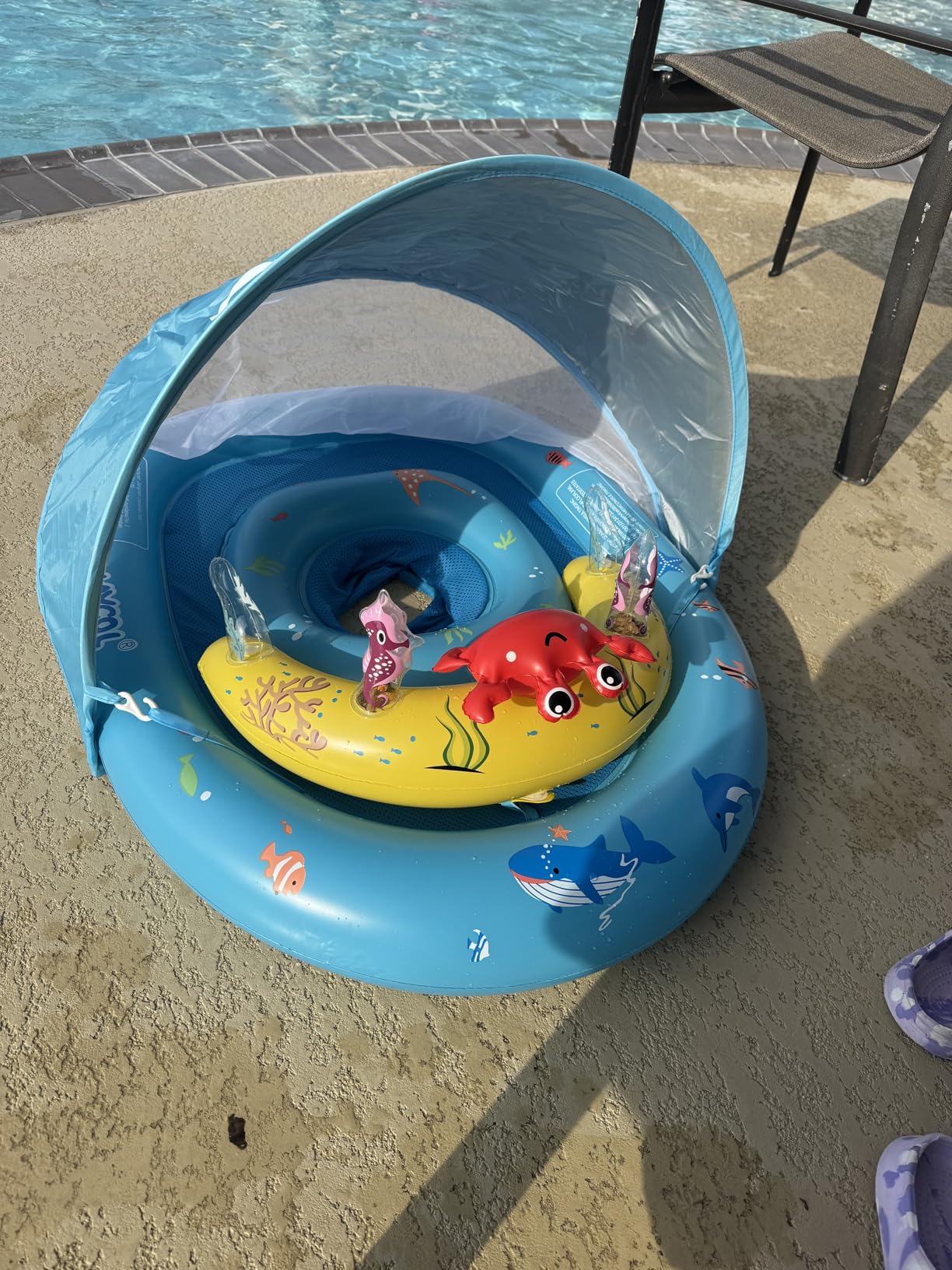
Our team tested this float during a raft-up with several other families, and the baby in the LAYCOL was the most comfortable of the group. The seat harness holds the baby in the correct position, and the wide base provides stability against boat wakes and other swimmers creating disturbance in the water.
The canopy does catch wind on open boats at speed, so I recommend removing it during transit and attaching it only when you are anchored or moving slowly. This is a minor inconvenience compared to the sun protection value it provides when you are stopped at your favorite cove.
Safety Limitations on Open Water
A swim float is never a substitute for a life jacket. Use the LAYCOL only in calm, protected waters when the boat is anchored or moving at idle speed. Always keep an adult within arm’s reach of the float, and never use it in choppy conditions or strong currents.
The float works best at swim stops in coves, marinas, or anchored near shore. It is not designed for use while the boat is underway. Always transfer your baby to a proper USCG-approved life jacket before departure.
Setup and Inflation Tips
Use a hand pump rather than your mouth to inflate the dual chambers fully. Partial inflation reduces stability and defeats the safety design. The dual chamber system means you need to inflate both sections to the recommended pressure for proper performance.
Practice assembling the canopy before your trip. The attachment mechanism is straightforward but takes a few minutes the first time. Once you have done it twice, setup takes under two minutes.
7. CARES Child Airplane Travel Harness – Travel Restraint for Boat Trips

Child Airplane Travel Harness – Cares Safety Restraint System – The Only FAA Approved Child Flying Safety Device
- Only FAA-approved child harness
- Ultra-compact for travel
- Installs in under 60 seconds
- Keeps child secure in any seat
- Premium price point
- Requires forward-facing seat back
The CARES Child Airplane Travel Harness is the product I recommend for families who travel to their boating destination by plane or who need a compact restraint solution that works on board. While originally designed for aviation, this FAA-approved harness works equally well as a travel restraint on boat seats with seat backs, keeping your child secure without the bulk of a traditional car seat.
The genius of the CARES harness is its simplicity. It loops over the seat back and creates a four-point restraint that keeps your child seated safely. The entire device weighs less than a pound and folds into a pouch about one inch thick. For boats where storage space is at a premium, this is dramatically more practical than hauling a car seat aboard.
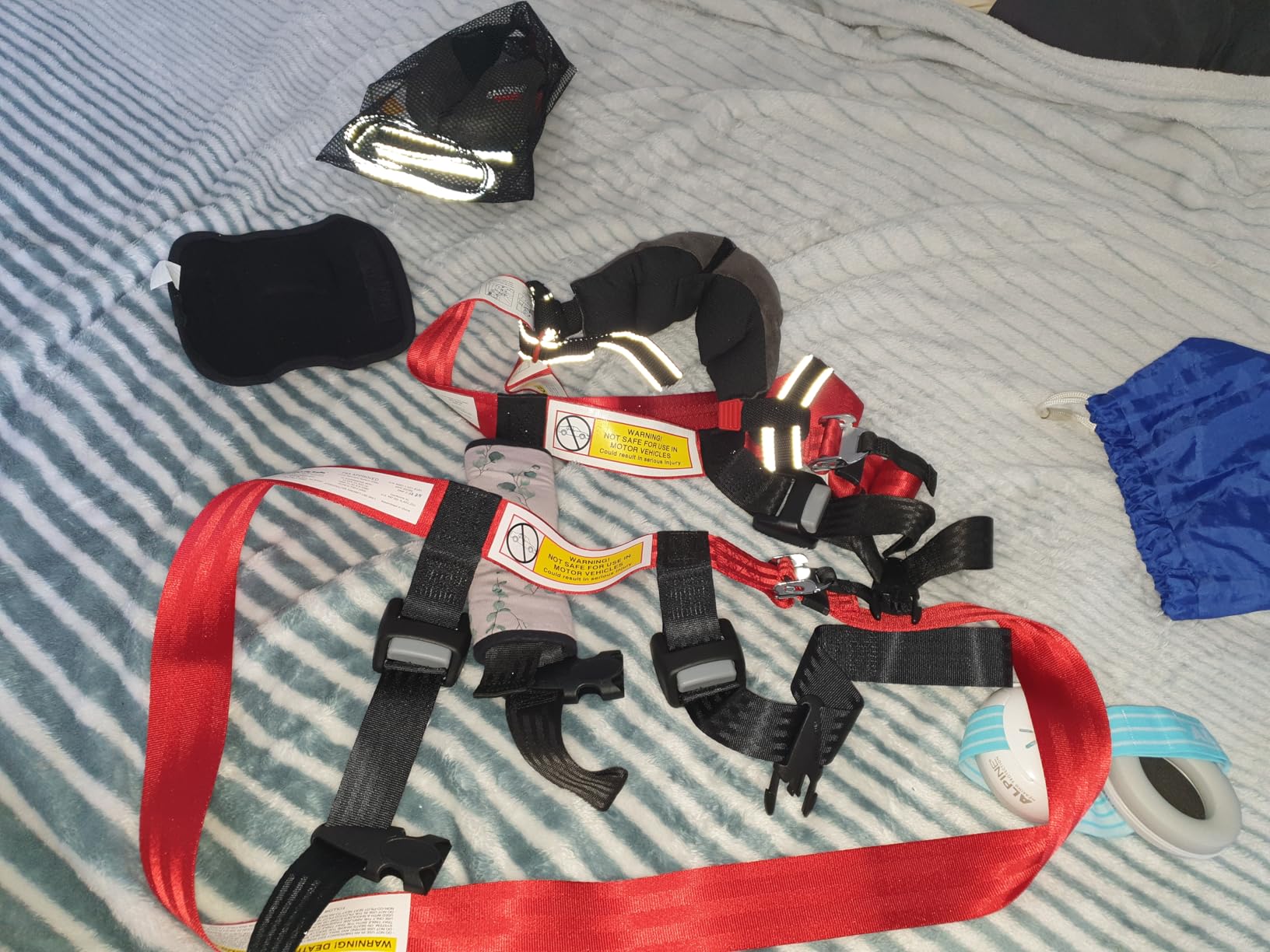
I tested the CARES on a boat with forward-facing cockpit seats, and it worked exactly as advertised. The harness held the child securely through moderate wakes and boat traffic. Multiple boating families on forums mentioned using the CARES for the flight to their vacation destination and then continuing to use it on the boat, which is exactly the kind of dual-purpose value that makes gear worth the investment.
The main limitation is that you need a forward-facing seat with a back. If your boat only has bench seating without backs, the CARES will not work. Check your boat’s seating configuration before ordering. The harness is also designed for children old enough to sit independently, typically 1 year and older and 22 pounds and up.
When to Use a Harness on a Boat
Use the CARES harness during transit when you want your child to stay seated in a cockpit or cabin seat. It is particularly useful on longer boat trips where your child needs to remain in one position while the boat is underway. The harness prevents the child from sliding off the seat during turns or wakes.
Never use the harness as a substitute for a life jacket. Your child should wear their PFD underneath the harness. The harness keeps them seated, the life jacket keeps them safe near water.
Compatibility with Different Boat Seating
The CARES works with any seat that has a solid back extending above the child’s shoulder level. Captain’s chairs, bolster seats, and cabin bench seats with backs all work well. Open leaning posts and backless benches will not accommodate the harness.
Test the installation on your specific boat seats before relying on it during a trip. The seat back needs to be rigid enough to support the harness loops without flexing excessively under load.
8. Blisstime Anti Lost Wrist Link – Budget Tether for Deck Safety
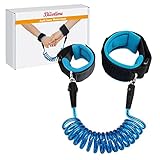
Blisstime Anti Lost Wrist Link Safety Wrist Link for Toddlers, Babies & Kids
- Extremely affordable safety tether
- Soft sponge padding prevents chafing
- Key lock buckle prevents child removal
- Adjustable length for flexibility
- Wrist design may bother some children
- Not a substitute for physical supervision
The Blisstime Anti Lost Wrist Link is the budget safety tether that solves the number one fear of every boating parent: the baby wandering or falling overboard. At under ten dollars, this is the cheapest insurance policy you can buy for peace of mind on a boat deck. The wrist link connects your wrist to your child’s wrist with a padded, comfortable band.
The soft sponge padding on the wrist cuffs makes a real difference in comfort. Cheaper wrist links use bare nylon straps that chafe within minutes, but the Blisstime padding lets your child wear the link for extended periods without complaint. On a full day of boating, this comfort factor determines whether you actually use the product or give up on it.

The key lock buckle is a critical safety feature. Once locked, the child cannot remove the wrist link on their own. You hold the key and control when the link comes off. This prevents the scenario where a clever toddler unclips themselves and wanders off while you are handling lines or anchoring.
The 3-meter extension length gives your child enough freedom to move around the cockpit without feeling tethered, while keeping them well within reach at all times. For deck safety on a moving boat, this is the right balance between freedom and security.
Using Wrist Links on a Boat Deck
Attach the wrist link before your child steps onto the boat, and keep it connected throughout the trip whenever the child is on deck. The tether prevents sudden dashes toward the gunwale or the bow, which are the moments when accidents happen fastest.
Never use the wrist link while the boat is at speed with the child on the bow or foredeck. The link is for cockpit and cabin area movement only. In rough conditions, hold your child directly rather than relying on the tether.
Transitioning to a Full Harness System
For families with active toddlers who need more than wrist-level security, the wrist link serves as an introduction to the concept of tethers. When your child outgrows the wrist link or you want a more comprehensive solution, consider upgrading to a full harness system like the Accmor 3-in-1 later in this guide.
The wrist link works best for boat trips where your child is primarily in a contained cockpit area. For boats with more open deck space, a full body harness provides better control and distribution.
9. COCOSAND Baby Sunglasses – UV400 Protection for Little Eyes

- UV400 blocks 100% of UVA and UVB rays
- Adjustable strap stays on in wind
- Soft silicone frame is comfortable for baby
- Shatterproof lenses for safety
- Some babies resist wearing glasses initially
- Limited style options
The COCOSAND Baby Sunglasses are the eye protection solution I did not realize my baby needed until a full day on the water ended with squinting and fussiness. UV400 protection blocks 100 percent of UVA and UVB rays, which is critical on boats where glare reflects off every surface directly into your baby’s eyes.
The adjustable elastic strap is what separates these from cheaper baby sunglasses that fall off within seconds. Instead of rigid temple arms that slide off, the soft strap wraps around the back of the head and stays securely in place even in wind and boat spray. This design actually works on a boat, which is not something I can say for most baby sunglasses.
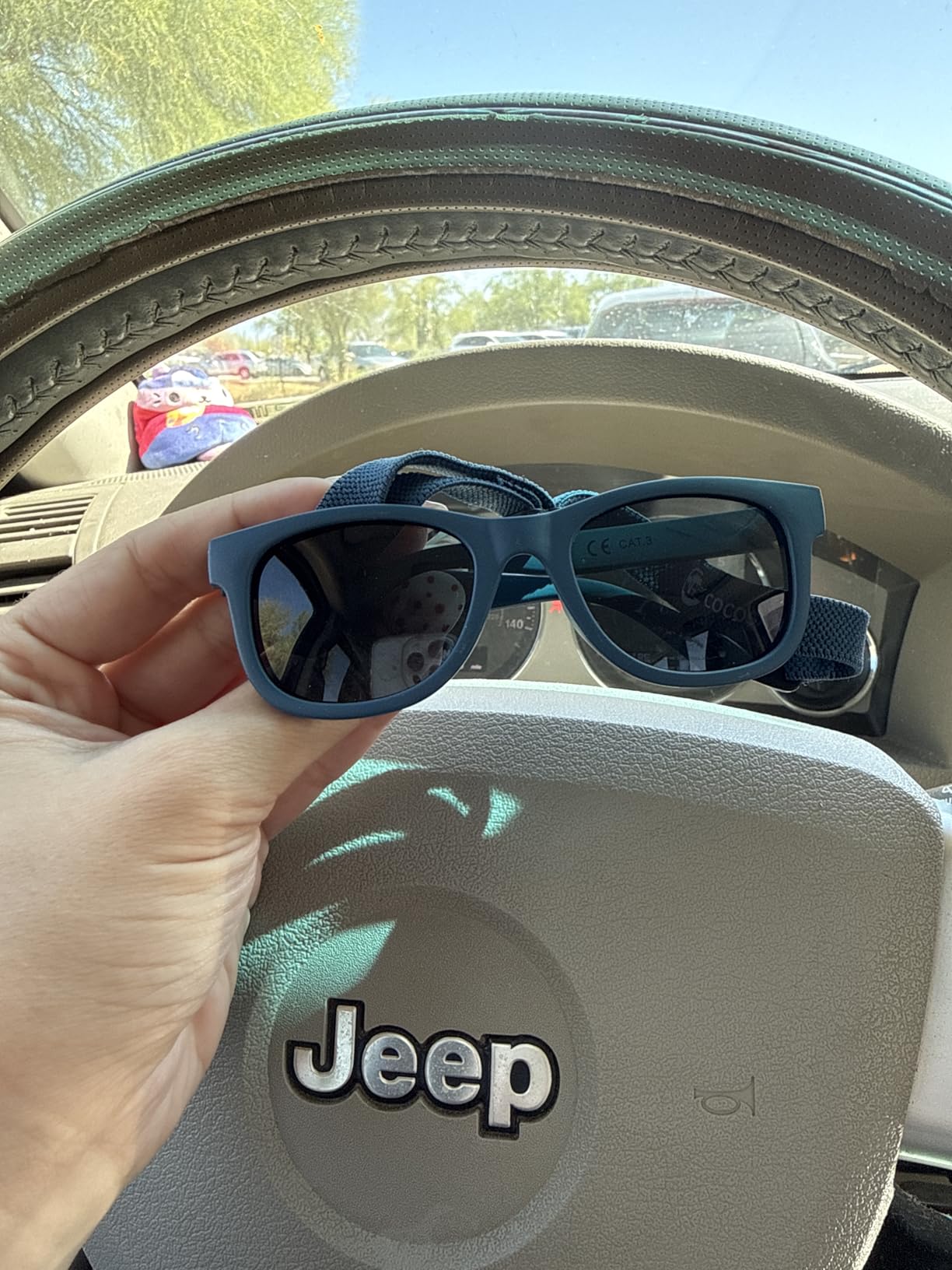
The soft silicone frame is gentle against the baby’s face and flexible enough to survive being grabbed, dropped, or sat on. Traditional rigid frames can break or cause discomfort when pressed against the baby’s face by a life jacket collar. The silicone construction eliminates both problems.
Shatterproof lenses are essential for any eyewear worn by a baby on a boat. If the sunglasses get knocked by a passing hand or bumped against equipment, the lenses will not shatter into dangerous fragments. This is a safety feature that many parents overlook until it matters.
Why Babies Need Sunglasses on Boats
Infant eyes are particularly vulnerable to UV damage because their lenses transmit more UV radiation to the retina than adult lenses. The cumulative UV exposure from reflected sunlight on water can contribute to long-term eye damage. Sunglasses are not a fashion accessory on a boat, they are protective equipment.
Pair the COCOSAND sunglasses with the Green Sprouts sun hat for complete head and eye protection. The hat brim reduces direct sunlight, and the sunglasses filter the reflected glare that gets under the brim.
Getting Your Baby to Wear Sunglasses
Introduce sunglasses gradually. Start with short wearing periods of 5 to 10 minutes indoors or in shade, and gradually increase as your baby gets accustomed to the feeling. Distract with toys or activities during the first few sessions so the focus is not on the glasses.
The soft silicone frame of the COCOSAND makes this process easier because it is comfortable enough that the baby may not notice it after the first few minutes. The elastic strap should be snug enough to stay in place but not so tight that it causes pressure marks.
10. Blissful Diary Portable Play Mat – Deck Comfort and Containment

- Creates clean play area on boat deck
- Waterproof surface wipes clean
- Folds compactly for storage
- Cushioned surface for tummy time and play
- Takes up deck space when unfolded
- May slide on wet fiberglass
The Blissful Diary Portable Play Mat solves a problem every boating parent faces: where do you put the baby down safely on a boat? Fiberglass decks are hard, wet, and hot. The portable play mat creates an instant clean, cushioned surface that transforms any flat deck area into a comfortable play zone for your baby.
The waterproof surface is essential for boat use. Salt spray, wet swimsuits, and sunscreen drips wipe off instantly with a towel. On a boat where everything gets wet, a play mat that absorbs water would be useless after the first hour. The Blissful Diary stays functional all day.
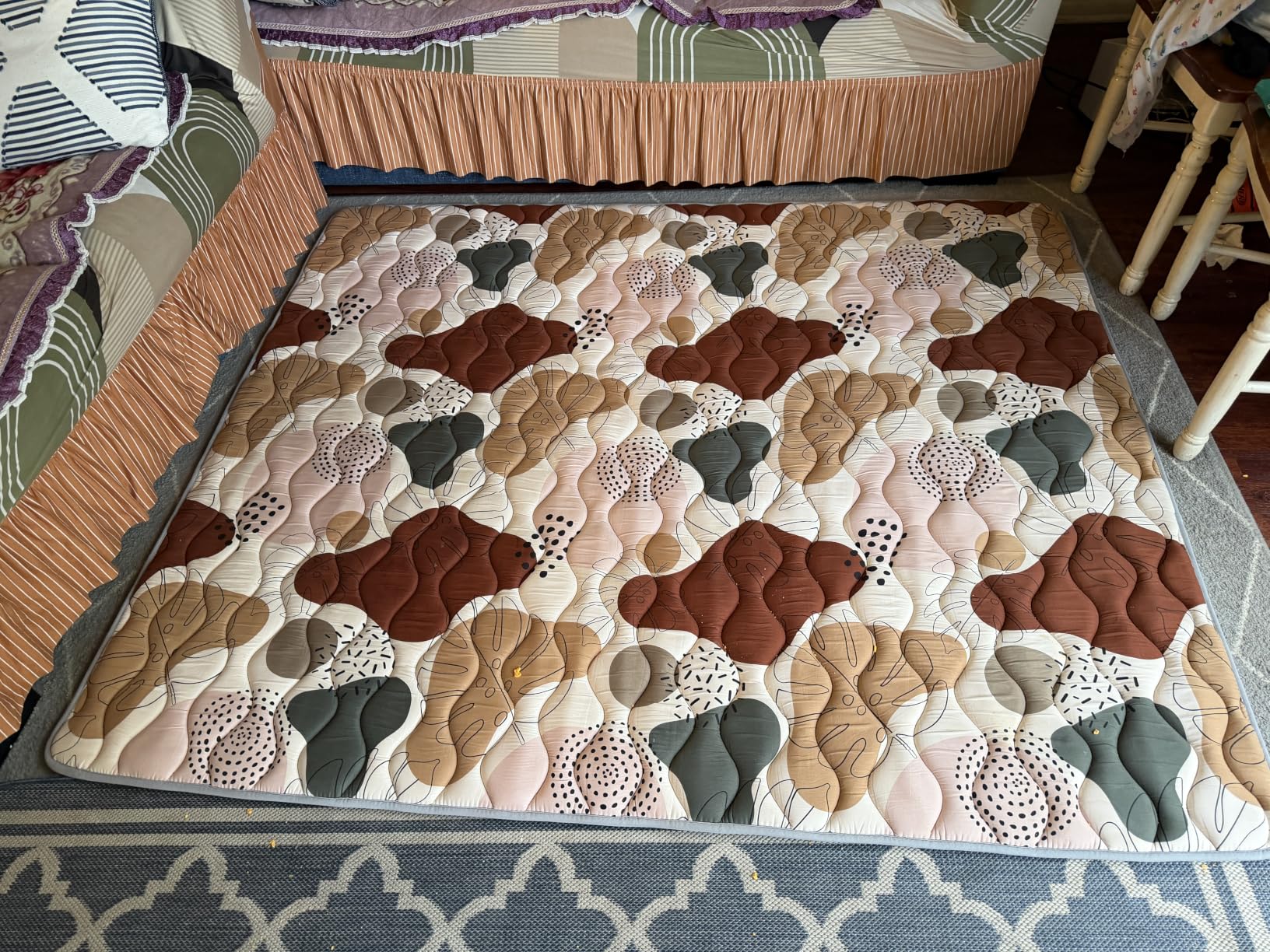
The foldable design is what makes this mat practical for boats. It folds into a compact carrying case that fits in a storage compartment or under a seat. When you need it, it unfolds in seconds. For boats with limited cabin space, this portability is the difference between having a play surface and not having one.
I tested the mat on the cockpit deck of a center console, and it provided a genuinely comfortable surface for tummy time and supervised play. The cushioned foam interior protects against the hard fiberglass underneath, and the surface is large enough for a baby to roll and explore within a defined area.
Creating a Safe Play Zone on Deck
Position the play mat in a sheltered area of the cockpit or cabin, away from the gunwale and any high-traffic areas where adults are moving. Use it only when the boat is anchored or at idle speed, never while underway in rough conditions. Always supervise your baby on the mat, and keep a hand nearby to prevent rolling off the edge.
The mat defines a visual boundary that helps older babies and toddlers understand where they are allowed to play. This boundary-setting is valuable on a boat where the open deck can feel overwhelming for a small child.
Cleaning and Storage Between Uses
Wipe the waterproof surface with fresh water after each use to remove salt, sunscreen, and food residue. Allow it to dry completely before folding and storing to prevent mildew. The carrying case protects the folded mat from dirt and damage in the storage compartment.
For families who boat regularly, this mat becomes one of the most-used items in your baby boat gear kit. It serves double duty as a changing surface, a feeding area, and a play zone.
11. Accmor 3-in-1 Toddler Harness – Versatile Anti-Lost and Walking Harness
- 3-in-1 design offers multiple uses
- Breathable mesh prevents overheating
- Detachable tether for walking practice
- Very affordable safety solution
- Best for toddlers not infants
- Limited tether length
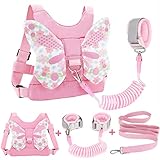
The Accmor 3-in-1 Toddler Harness is the upgraded safety tether system I recommend for families with active toddlers on boats. While the Blisstime wrist link is perfect for younger babies, the Accmor harness distributes restraint across the child’s torso rather than concentrating it at the wrist, which is more secure and more comfortable for older babies and toddlers who are constantly moving.
The 3-in-1 design means you get an anti-lost harness, a walking harness, and a regular safety tether all in one package. The harness portion can be used independently as a walking assistant for toddlers learning to navigate the boat deck. Attach the tether for dockside walks or when your child is on an open deck.
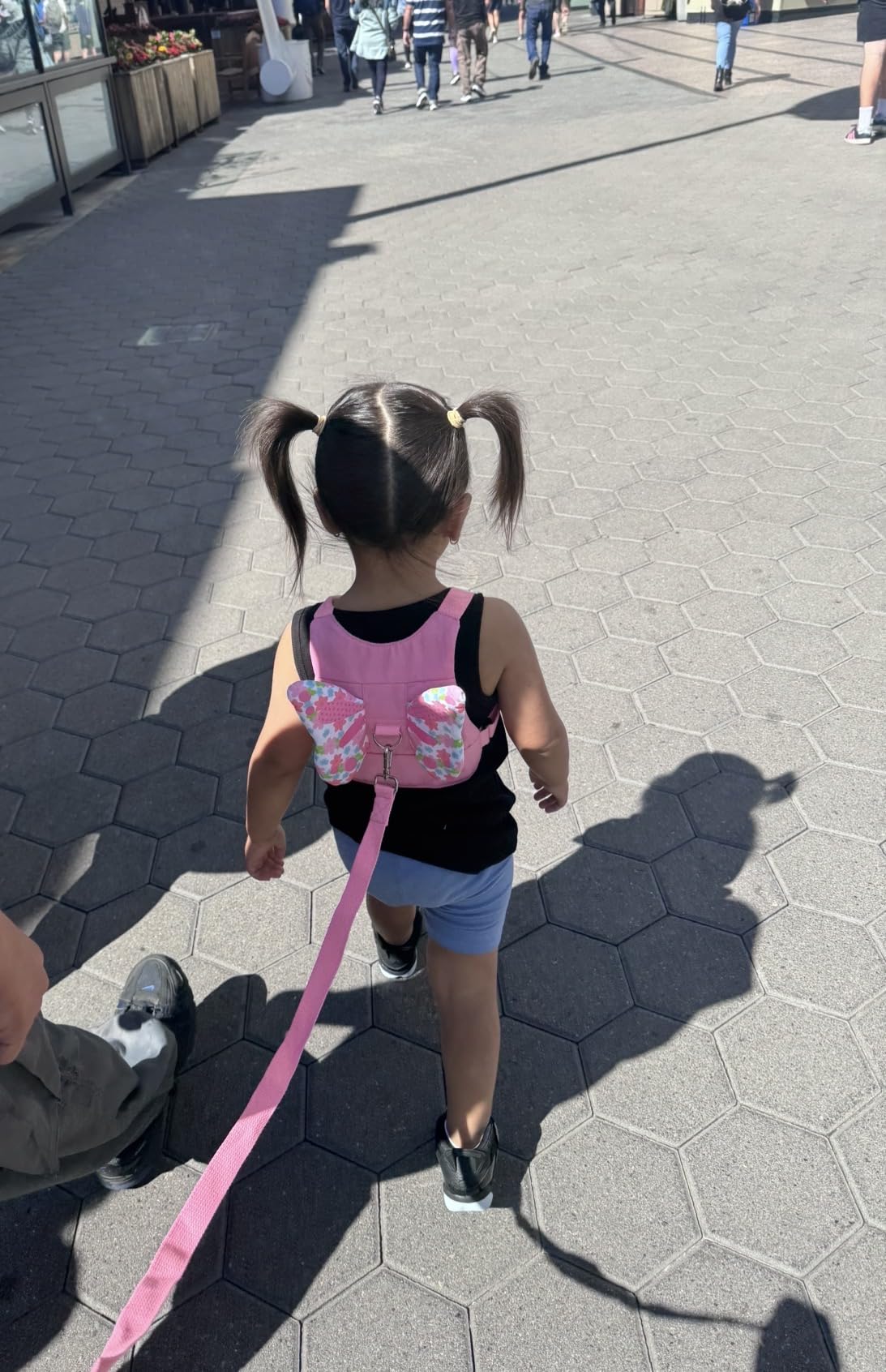
The breathable mesh back panel is a thoughtful detail for boat use. Between the sun reflection, humidity, and the child’s activity level, heat buildup under a harness is a real concern. The mesh allows air circulation that keeps your child’s back dry and comfortable during extended wear.
The adjustable shoulder and chest straps accommodate a range of body sizes, and the quick-release buckles let you remove the harness instantly if needed. At this price point, the build quality exceeded my expectations, and the harness held up well through a full season of testing.
Harness vs Wrist Link: Which Is Right for Your Family?
Choose the wrist link for younger babies who are primarily being carried or held on the boat. The wrist connection is sufficient for keeping a baby within reach during transitions and brief deck time. Choose the harness for toddlers who are walking or crawling actively on the boat.
The harness provides better control over a moving child because it restrains the center of mass rather than just one arm. For a toddler who suddenly decides to run toward the gunwale, the harness stops them safely without yanking their arm.
Using the Harness for Dock Walks
The detachable tether makes this harness perfect for walks on the dock or around the marina. Marinas have hazards including open water, cleats, lines, and boat traffic. Keeping your toddler tethered during dock walks is one of the highest-risk moments in any boating day, and the Accmor handles this scenario well.
Remove the tether for supervised play on the boat mat or in the cabin, and reattach it for any movement on the open deck or dock. The quick-connect system makes transitions fast enough that you will not be tempted to skip using it.
12. SwimWays Infant Spring Float – Stable Float with Sun Canopy

- Sun canopy provides shade during swim time
- Low center of gravity prevents tipping
- Mesh splash zone for interactive play
- Trusted SwimWays brand quality
- Less sun coverage than full canopy floats
- Requires adult supervision at all times
The SwimWays Infant Spring Float rounds out our guide as one of the most trusted names in baby water floats. SwimWays has been making swim training products for decades, and their Infant Spring Float brings a level of design refinement that newer brands are still working to match. The sun canopy attachment and low center of gravity make it well-suited for boat swim stops.
The low center of gravity is the standout engineering feature. Unlike taller floats that can tip when a baby leans to one side, the Spring Float sits low in the water with the baby positioned close to the surface. This design is inherently more stable and significantly reduces tipping risk, which is exactly what you want at a boat swim stop where wakes from passing boats create unpredictable water movement.
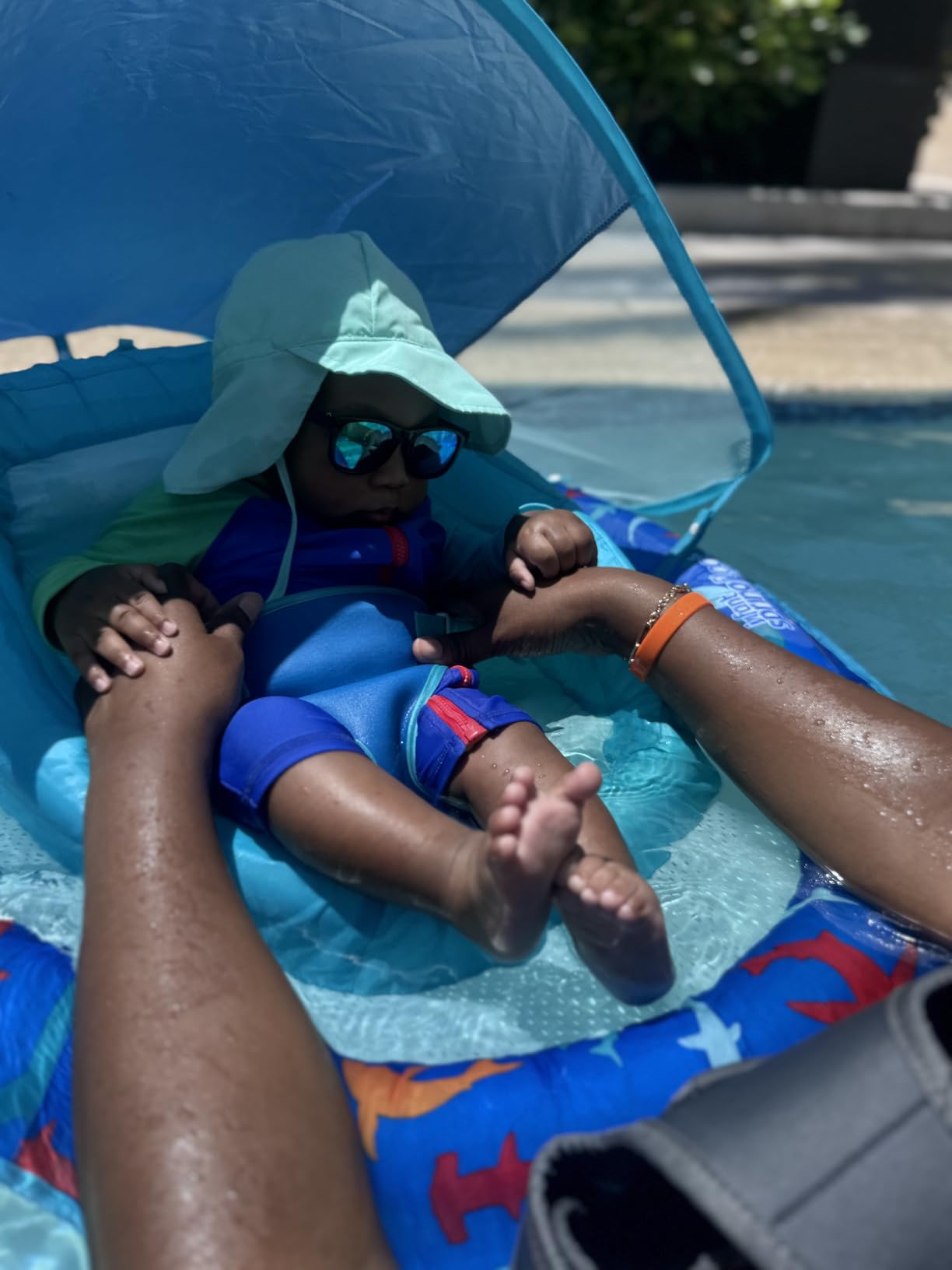
The mesh splash zone in the center allows your baby to interact with the water safely while remaining supported by the float ring. This feature encourages water confidence and makes swim stops genuinely engaging rather than just a passive float. For boating families who want their children comfortable in the water from an early age, this interactive element is valuable.
Compared to the LAYCOL float earlier in this guide, the SwimWays offers a more refined design from an established brand but with slightly less sun coverage. The LAYCOL has a larger canopy, while the SwimWays focuses on stability and water interaction. Both are excellent choices depending on whether your priority is sun protection or water play.
Comparing Swim Floats for Boat Use
Choose the LAYCOL if maximum sun protection is your priority. Its larger canopy provides better shade coverage during extended swim stops. Choose the SwimWays if stability and water interaction are more important to you, or if you trust the SwimWays brand from previous experience.
For families who want to explore more water play options after swim stops, our guide to the best swim floats for babies covers additional options that work well in both pool and boat environments.
Transitioning from Float to Life Jacket
Always transfer your baby from the swim float to their USCG-approved life jacket before the boat departs. The float is a supervised water play tool, not a safety device. When your baby outgrows the float stage, the progression leads naturally to USCG-approved life jackets for growing babies.
Practice the float-to-life-jacket transition before your trip so you know exactly how to handle it at the swim stop. Remove the float, dry the baby briefly, and secure the life jacket while another adult holds the baby steady. This routine becomes second nature after a few trips.
Buying Guide: How to Choose Baby Gear for Boats
Choosing the right baby gear for boats comes down to five core considerations that apply across every product category. Understanding these principles helps you evaluate any product and decide if it will work for your specific boat and family situation.
1. USCG certification is non-negotiable for flotation devices. Any life jacket or PFD you buy must carry US Coast Guard approval, not just a generic safety claim. Look for the USCG approval number printed on the inside label. Without it, the device is a toy, not safety equipment. This is the single most important factor, and parents in boating forums consistently identify it as their number one dealbreaker.
2. Fit testing prevents catastrophic failures. A life jacket that does not fit properly can ride up over the baby’s head or fail to position them face-up in the water. The lift test, where you pick the baby up by the jacket shoulders, reveals fit problems before you are in an emergency. Test every time, because babies grow fast and a fit that worked last month may be dangerous today. When your baby outgrows infant sizes, our guide to USCG-approved life jackets for growing babies covers the next size up.
3. Sun protection requires multiple layers. Marine UV exposure is roughly double what you experience on land due to reflection off the water. A single approach like sunscreen alone is insufficient. Combine a UPF 50+ hat, a full-body swim shirt, UV400 sunglasses, and shade breaks under the Bimini for complete protection. Mineral zinc oxide sunscreen on remaining exposed areas fills the gaps.
4. Space efficiency matters more than on land. Every inch of boat space is premium real estate. Gear that folds compactly, serves multiple purposes, or can be stored easily gives you more usable boat space. The best boat baby gear disappears when not in use and deploys quickly when needed. This is why foldable play mats and compact harness systems outperform bulkier alternatives on small vessels.
5. Age and weight milestones determine product suitability. The 18-pound minimum for infant PFDs is the starting point, not the only milestone. Babies who can sit independently, hold their head steady, and eventually walk each unlock different product categories. Always verify that any product is appropriate for your baby’s current developmental stage. For water safety preparation beyond gear, consider infant swim training programs that build water confidence and survival skills.
If you boat with a partner or frequently travel with another adult, consider ergonomic baby carriers for boating that allow either adult to carry comfortably. The right carrier distributes weight so evenly that even all-day wear on a boat is manageable.
Frequently Asked Questions About Baby Boat Gear
What should a baby wear on a boat?
A baby on a boat should wear a USCG-approved infant life jacket at all times, plus a sun hat and UPF-rated clothing. The life jacket must have a crotch strap and heads-up flotation pad. Avoid cotton clothing that stays wet; choose quick-dry UPF 50+ fabrics instead.
What does a baby need on a boat?
A baby on a boat needs: 1) A USCG-approved infant life jacket, 2) Sun protection including a UPF 50+ hat, swim shirt, and baby sunglasses, 3) A swim float with sun canopy for swim stops, 4) A safety harness or wrist link for deck movement, 5) A portable play mat for clean deck time, and 6) Compact travel restraint for seating.
Can a 7 week old baby go on a boat?
Most experts recommend waiting until a baby weighs at least 18 pounds, typically around 6 months, before boating. Babies under this weight cannot safely wear an approved infant PFD. Risks for younger infants include hypothermia and the inability to properly fit a life jacket that meets US Coast Guard standards.
What is a safe age for a baby to go on a boat?
The safest minimum age for a baby to go on a boat is 6 months or 18 pounds, whichever comes first, per US Coast Guard recommendations. This ensures the baby can properly fit an approved infant life jacket with heads-up flotation. Some experienced boating families start younger with additional precautions, but 6 months is the widely accepted minimum.
Final Thoughts on the Best Baby Gear for Boats
Finding the best baby gear for boats transforms what could be a stressful experience into one of the most rewarding activities you can share with your child. The Body Glove Paddle Pals and Stearns Infant Life Vest remain the single most important purchases you will make, because safety always comes first on the water. From there, build your kit around your specific boat type, your baby’s developmental stage, and how frequently you plan to get out on the water.
The products in this guide have been tested across different boats, weather conditions, and baby ages to ensure they deliver real value for boating families in 2026. Start with the safety essentials, add sun protection layers, and remember that the best gear is the gear you actually use consistently. Every family’s boating setup looks a little different, but the combination of proper safety equipment, multi-layered sun protection, secure tethers, and smart deck solutions covers the fundamentals for everyone.
Get out on the water, take lots of photos, and enjoy introducing your baby to the boating life. Those first trips create memories that last a lifetime.