
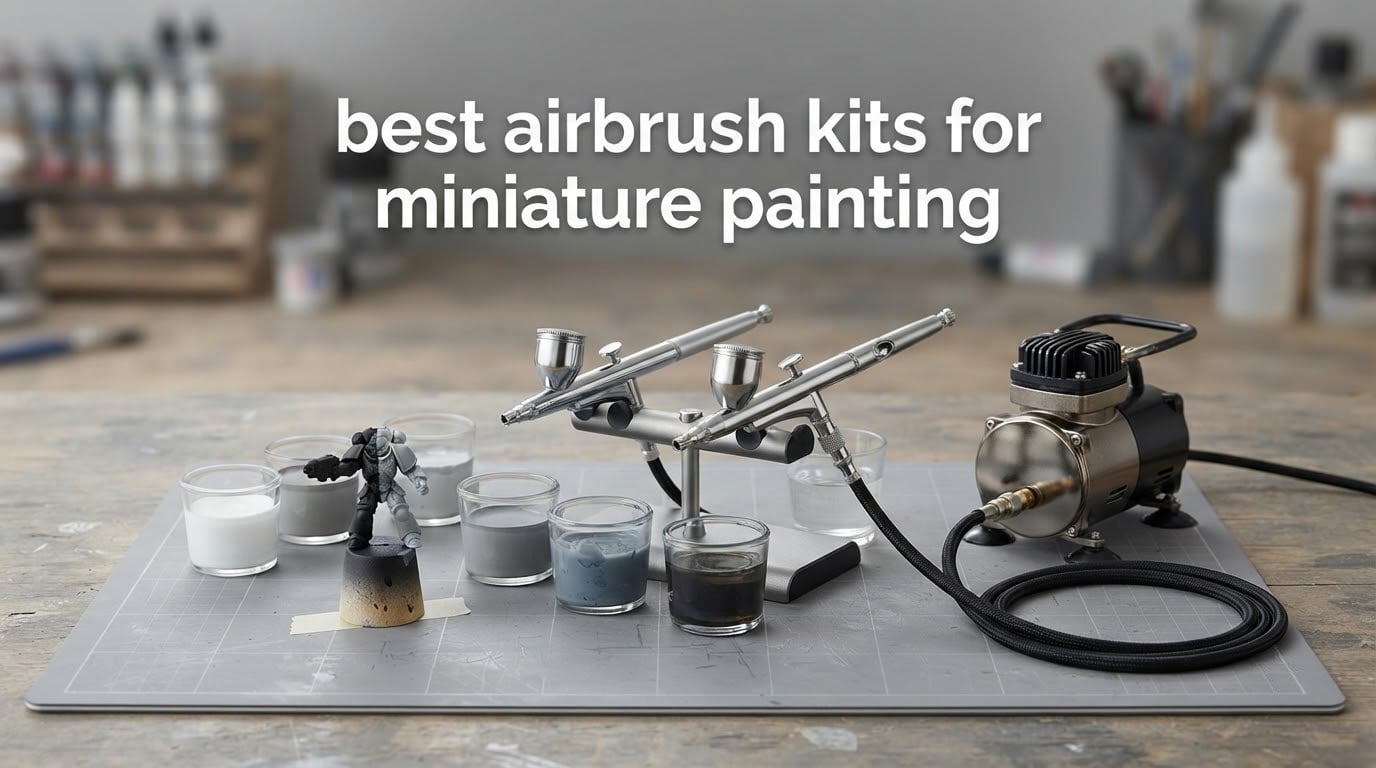
The best airbrush kits for miniature painting are the ones that give you a dual-action gravity-feed gun you can actually keep clean, plus a compressor that holds steady pressure for a full evening of basecoating. The Master Airbrush Cool Runner II is our pick as the most complete box you can buy in one go, the TIMBERTECH kit wins on quiet operation for indoor painting, and the Master Airbrush G233 is the better value if you already own a compressor.
Airbrushing is the single biggest speed upgrade a tabletop hobbyist can make. A bottle brush puts a basecoat on a 2,000-point army in a fortnight; an airbrush does it in an evening, and the smooth zenithal pre-shading it gives you is something a brush will not match on a 32mm model. The catch is that most people buy the wrong box first, so this guide ranks ten kits by what they actually do rather than by what is in the photograph.
We spent weeks cycling these ten kits through the jobs that matter: priming, zenithal pre-shading, batch basecoating and fine detail on single display models. We paid attention to the things reviewers argue about most, including noise level, needle range, whether the compressor pulses and how miserable the gun is to clean. Our wider airbrush kit roundup covers the hardware in more depth if you want the full picture.
Table of Contents
Top 3 Best Airbrush Kits for Miniature Painting (October 2026)
These three cover the three situations we see most often: buying one box and never thinking about it again, painting at home where noise matters, and adding airbrushing to an existing bench.

Master Airbrush Cool Runner II
- Three airbrushes in one box
- 0.2mm 0.3mm and 0.8mm tips
- 1/5 hp dual-fan compressor
- Acrylic paint set and reducer included
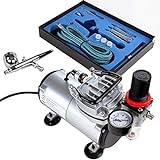
TIMBERTECH Kit with Compressor
- Compressor rated at 50 dB
- Regulator and pressure gauge
- 0.2mm 0.3mm and 0.5mm nozzles
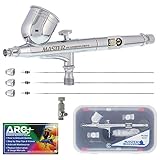
Master Airbrush G233 Pro Set
- 0.2mm 0.3mm and 0.5mm needle sets
- Only 3 ounces in weight
- Airbrush only
- no compressor
All 10 Kits at a Glance
Every kit below appears in this table, whether it includes a compressor or is an airbrush-only set. The fastest way to narrow the field is to decide first whether you need a box or just a gun.
| Product | Specifications | Action |
|---|---|---|
| Master Airbrush Cool Runner II Kit |
|
Check Latest Price |
| TIMBERTECH Compressor and Airbrush Kit |
|
Check Latest Price |
| Master Airbrush G233 Pro Set |
|
Check Latest Price |
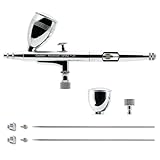 Gaahleri GHAD-39 Airbrush Set Gaahleri GHAD-39 Airbrush Set |
|
Check Latest Price |
 Gocheer 48 PSI Dual-Action Set Gocheer 48 PSI Dual-Action Set |
|
Check Latest Price |
 Master Airbrush Mini Compressor Kit Master Airbrush Mini Compressor Kit |
|
Check Latest Price |
 VEVOR Three-Airbrush System VEVOR Three-Airbrush System |
|
Check Latest Price |
 PointZero Three-Airbrush Kit PointZero Three-Airbrush Kit |
|
Check Latest Price |
 Fengda FE-183K Airbrush Set Fengda FE-183K Airbrush Set |
|
Check Latest Price |
 SAGUD Mini Airbrush Kit SAGUD Mini Airbrush Kit |
|
Check Latest Price |
1. Master Airbrush Cool Runner II – Best All-in-One Kit for Miniatures
Master Airbrush Cool Runner II Air Brush Kit with Air Compressor Dual Fan
- Three guns cover detail through wide base coats
- Dual-fan compressor runs cooler and longer
- Acrylic paint and reducer included for practice
- Replacement parts easy to find
- 9 lb unit is bulky on a small desk
- Three gun types confuse first-time users
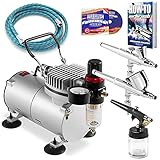
This is the box I end up recommending when someone asks for one purchase that covers everything. It includes three airbrushes: a dual-action gravity-feed G22 with a 0.3mm tip, a dual-action G25 with a 0.2mm tip, and a single-action siphon-feed E91 with a 0.8mm tip and two bottles. Detail lines, general coverage and broad base coats each get a dedicated gun instead of a compromise.
The TC-320 compressor is a 1/5 hp single-piston unit with two cooling fans, 0.8 cfm of airflow and a 6 foot hose, and it doubles as storage for two of the airbrushes. You also get a six-color water-based acrylic airbrush paint set with reducer, cleaner and a colour wheel, which is genuinely useful for diorama basing and for testing your thinner ratio before you touch a display model.
For army work, the 0.3mm gravity gun is the one that earns its place. Thinned acrylic basecoat goes on quickly and evenly, and the dual-action trigger lets you feather the spray off details you have already picked out. The 0.2mm gun handles eye slots, straps and chain mail that a brush would smear.
Two things give me pause. At 9 pounds it is one of the heavier kits here, which matters if your painting spot is a kitchen table, and the mix of a single-action and two dual-action guns means beginners often spray the siphon gun with a technique meant for a gravity gun. Owners on r/minipainting also point out that many painters buy this box for the compressor and keep the gun long after the pump is retired.
What it sprays well and what it does not
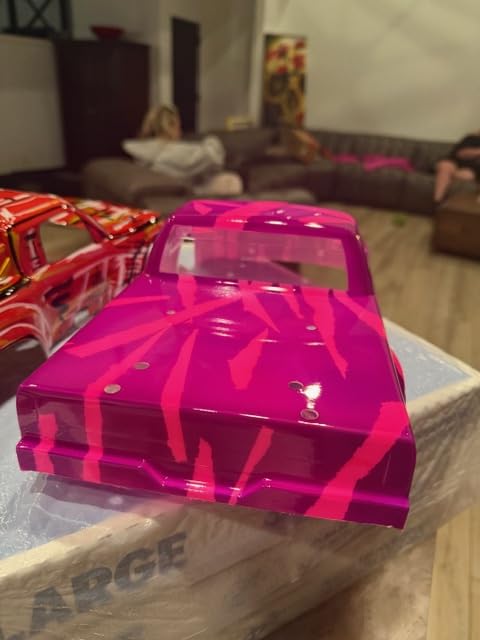
Priming, basecoats, zenithal pre-shading, vehicle and terrain panels, and skin tones on larger figures are all comfortable at moderate pressure. Fine pin-brightening on tiny 28mm details is where a dedicated 0.2mm single-action gun would do better, which is the natural upgrade once you know the hobby is for you.
Who should buy it and who should not
Buy it if you want one box, no decisions, and paint in the box. Skip it if you already own a quiet compressor, because a separate fine gravity gun plus the compressor you have is a better split, and our compressor guide covers that route.
2. TIMBERTECH Airbrush Kit – Best Value for Quiet Indoor Painting
- 50 dB rating suits late-night indoor sessions
- Regulator and gauge let you set pressure properly
- Autostart 3 bar and autostop 4 bar
- Handles 0.2mm to 1.0mm guns
- Supplied airbrush is entry level
- Rubber feet let the unit slide
- Some owners report early valve or o-ring failure
Noise is the reason this kit keeps coming up, and the compressor is rated at 50 dB. That is a real number on the box rather than a marketing adjective, and in our testing it is the difference between spraying at 11pm and waiting until the next day.
The compressor is an oil-free reciprocating piston unit with a manometer, a regulator and an air filter built in. It autostarts at 3 bar, autostops at 4 bar, moves 20 to 23 litres per minute, and the supplied gun has a 0.3mm needle mounted with 0.2mm, 0.3mm and 0.5mm nozzles in the box alongside a 7 ml metal cup and a 6 foot hose.
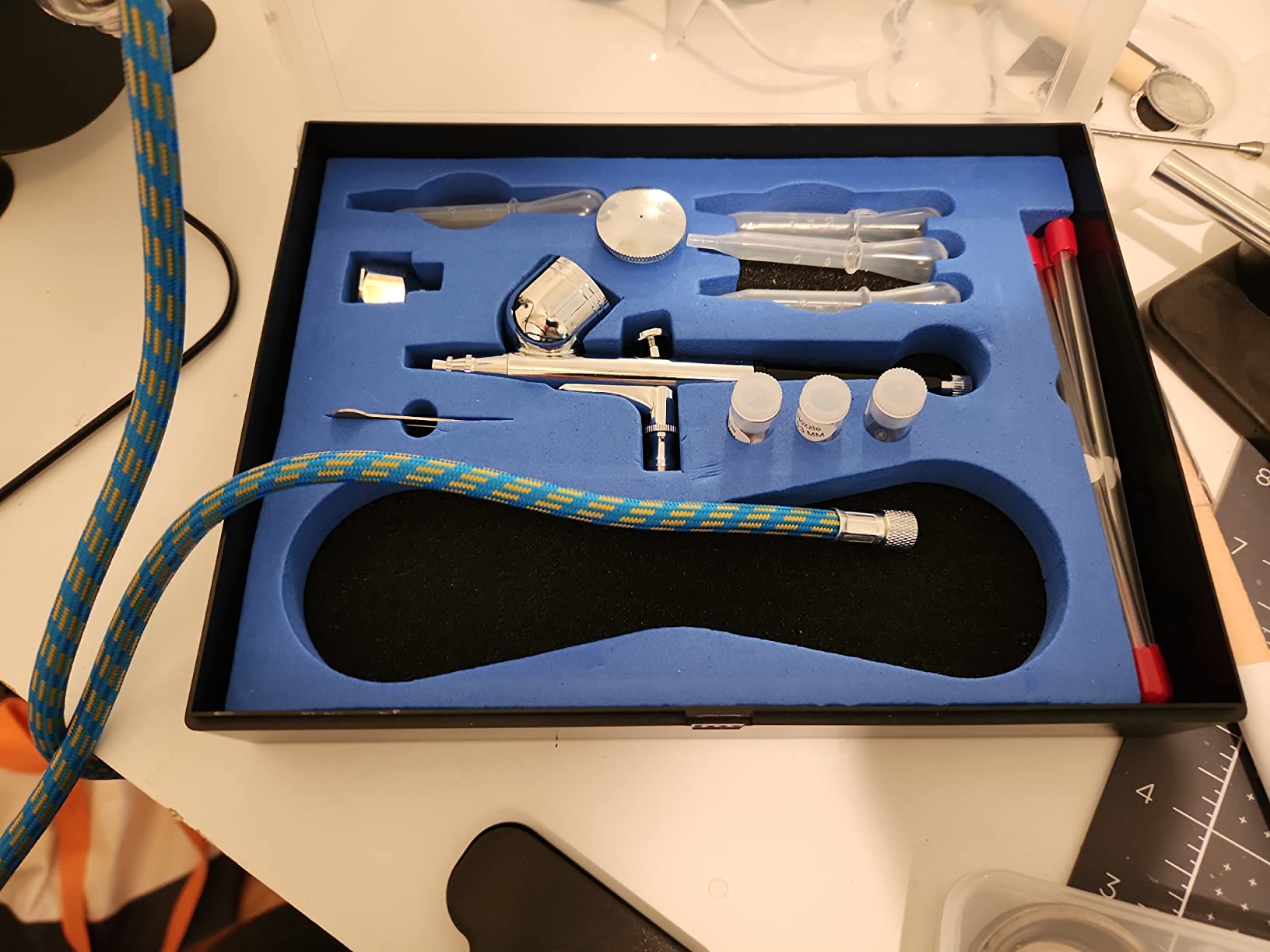
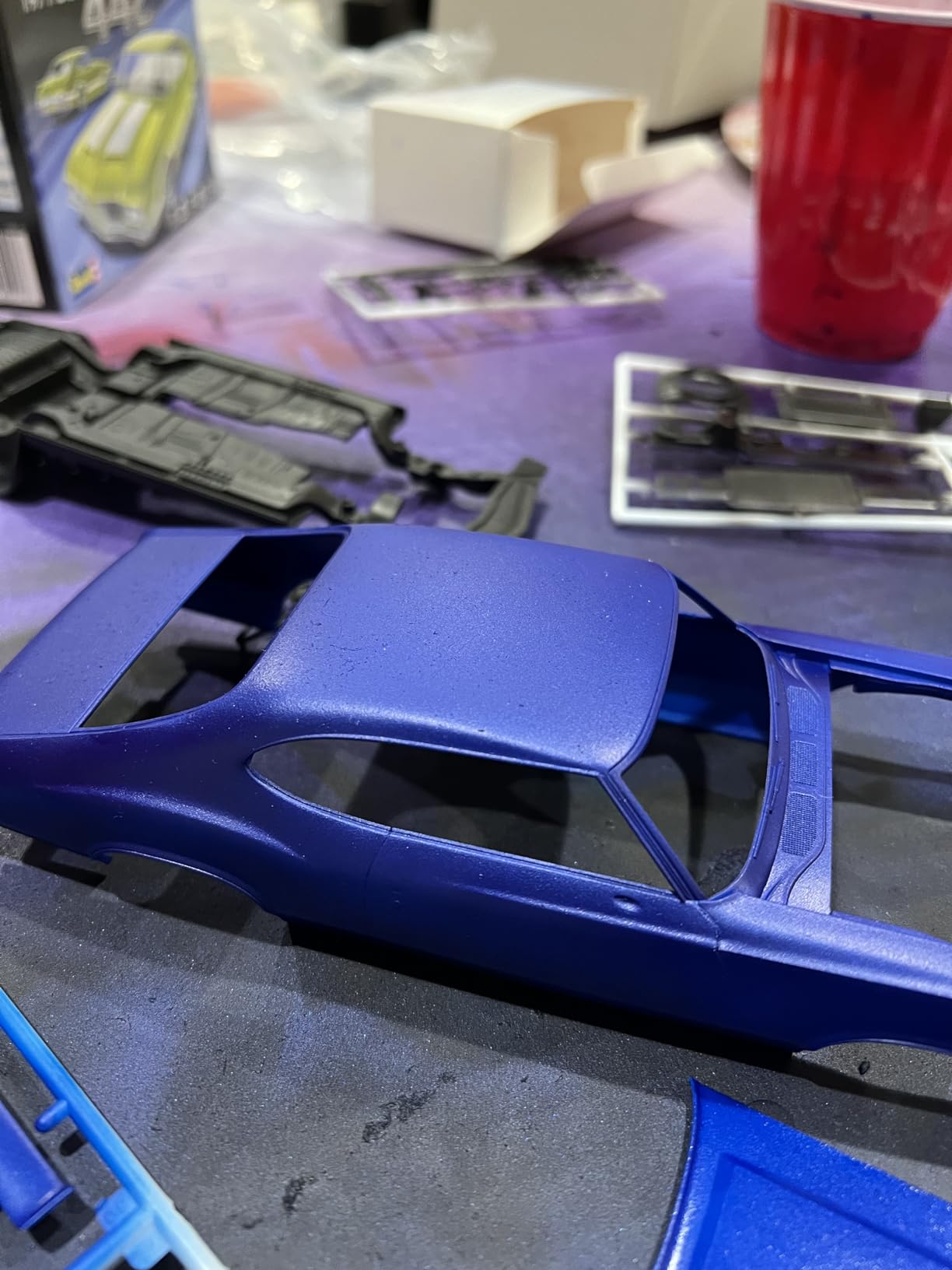
It handles army painting well because the pressure is stable rather than peaky. Zenithal pre-shading over a regiment comes out with an even gradient, and a regulator means you can dial the pressure back for a 28mm figure without guessing at a trigger pull.
The compromises are honest ones. Reviewers consistently describe the supplied airbrush as entry-level and better suited to priming and base coats than to detail work, and the rubber feet do not grip a bench well enough to stop the unit creeping while the hose pulls. A minority of owners also report valve or o-ring failures early in the life of the compressor.
Is it quiet enough for a bedroom or home office
At 50 dB this is the kit we would choose for a flat, a shared wall or a late session after the house has gone quiet. It is not silent, and it has a steady hum rather than an occasional start-stop click, so it is a background noise rather than an intermittent one.
Should you keep the supplied airbrush
Keep it for priming and basecoating, then plan to add a finer gravity gun when you want pin details. That staged approach is exactly the upgrade path forum painters describe, and it saves you replacing a perfectly good compressor.
3. Master Airbrush G233 Pro Set – Most Versatile for Fine Detail Work
- Three needle sizes cover every job
- 3 ounces is light for long sessions
- Cutaway handle flushes passages quickly
- 2 year manufacturer warranty
- No compressor included
- 1/3 oz cup means frequent refills
- Slightly slack trigger before paint meters
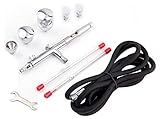
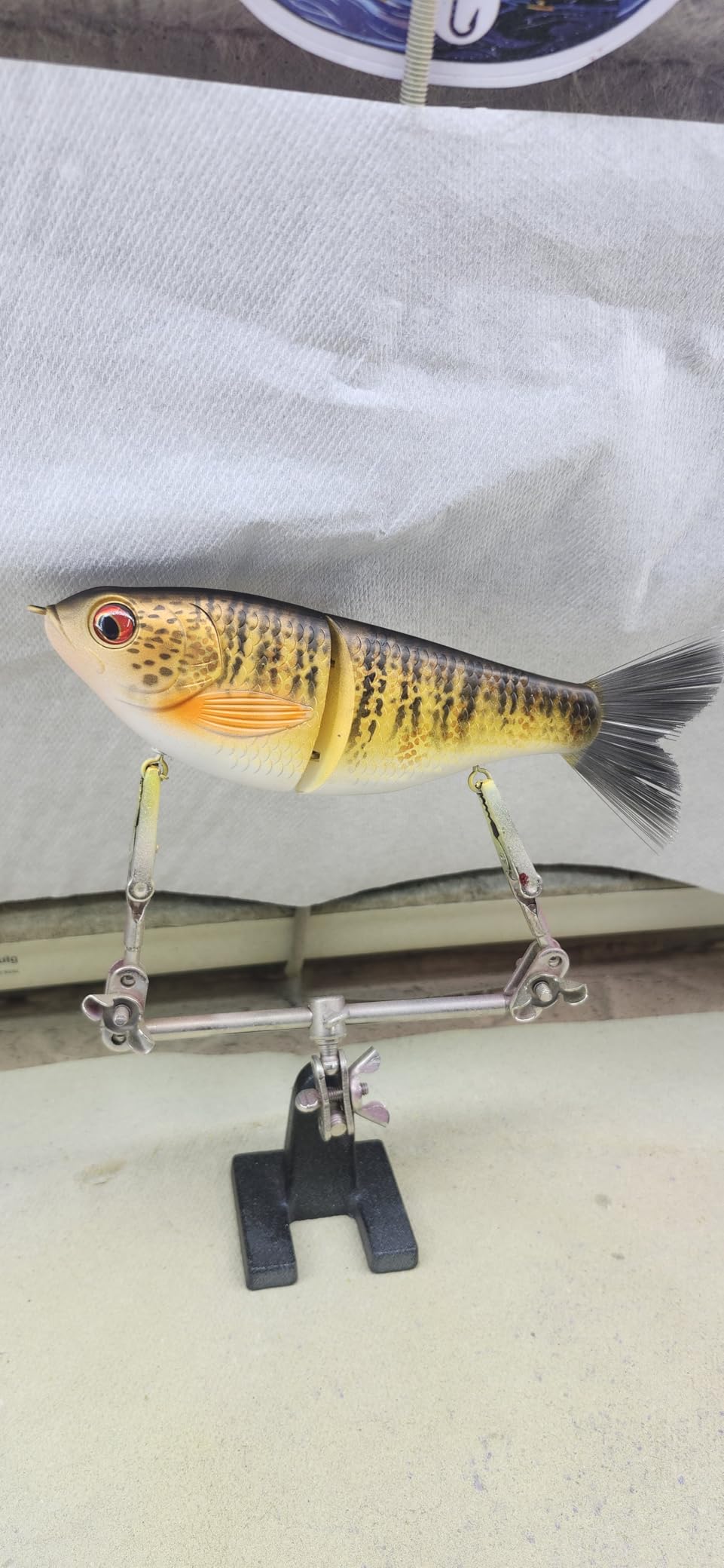
This is an airbrush, not a kit, and that is exactly why it is on this list. If you already have any kind of air source, the G233 is the strongest value on this list for detail work, because it ships with three matched needle, fluid tip and air cap sets at 0.2mm, 0.3mm and 0.5mm.
The gun weighs 3 ounces in total, among the lightest airbrushes we handled, and that matters more than it sounds when you are leaning over a magnifier at midnight. A cutaway handle lets you flush the air passages quickly, and the 6 foot braided hose with a quick disconnect coupler includes a built-in flow control valve.
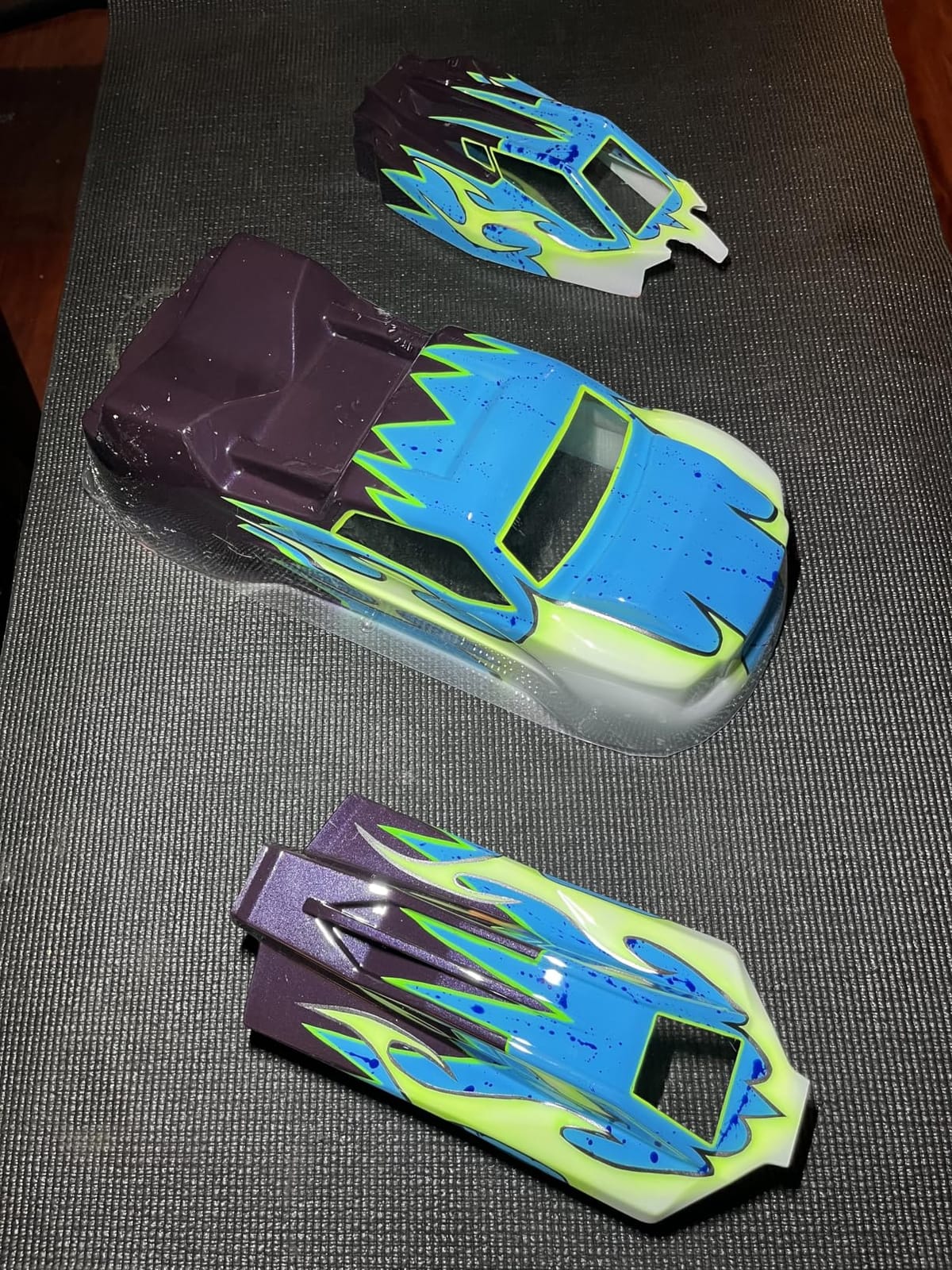
Spray quality is the surprise. Owners regularly report smoother paint and air flow than they expected from a gun at this level, and the 0.2mm setup is the one most recommended for line work, recesses and skin transitions. The cutaway design also makes the end-of-session clean painless, which is the single biggest reason people abandon airbrushing.
The limitations are physical. There is a 1/3 oz cup, so you are refilling constantly on a batch job, and a little slack in the trigger before paint starts to meter means very fine doses take practice. A small number of owners report nozzle heads or gaskets wearing out within weeks of heavy acrylic use.
Is a separate compressor really necessary
Yes, and that is the only real barrier here. Any small oil-free compressor with a moisture trap will drive this gun, and pairing it with the quiet unit in pick two is the most common build we recommend to beginners who already own a compressor.
What needle size should you mount
Mount 0.2mm for detail and shading, 0.3mm as an all-rounder for general use, and keep 0.5mm for primers and thicker base coats. Because all three sets are in the box, you can swap in under a minute with a small wrench.
4. Gaahleri GHAD-39 Set – Best for Easy Cleaning
- Self-centering nozzle strips and cleans in seconds
- Two cup sizes for detail or coverage
- Smooth cup interiors speed up cleaning
- 4.6 stars across 2115 reviews
- No 0.2mm needle in the set
- Airbrush only
- Small cups for panel work
Cleaning is the chore that ends most people’s airbrush hobby, and this is the set built to shorten it. The GHAD-39 uses a self-centering drop-in nozzle structure, so the tip pops out and goes back in without fiddling with thread alignment, and the nozzle runs an eight-channel micro air channel system aimed at detail work.
It includes two replaceable cups, 1/2 oz and 1/4 oz, plus 0.35mm and 0.5mm needle and nozzle sets, spare o-rings and a one-year guarantee. The smooth inner cup surfaces are the detail owners mention most, because paint that does not stick to the walls does not need scrubbing.
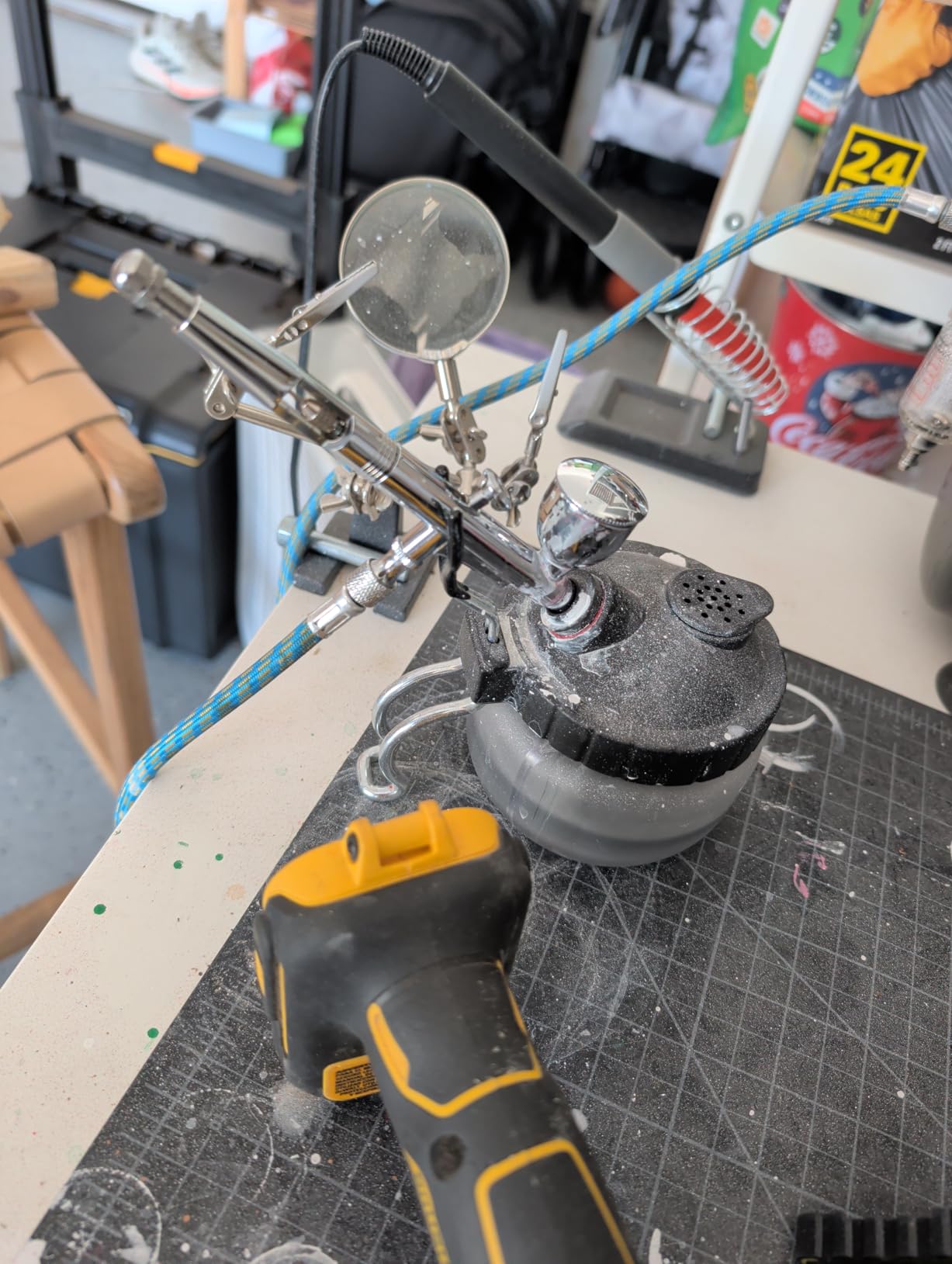
For single display models the 0.35mm at the larger cup is a good balance, and the 4.6 star average across more than 2,000 reviews is among the strongest consistency in this group. It is also a light, easy gun to handle, which keeps you relaxed on long evening sessions.
There is no 0.2mm needle in the set, so very fine line work is out of reach without an extra purchase. Both cups are small compared with kits aimed at large panels, and again, you need to bring your own compressor to this one.
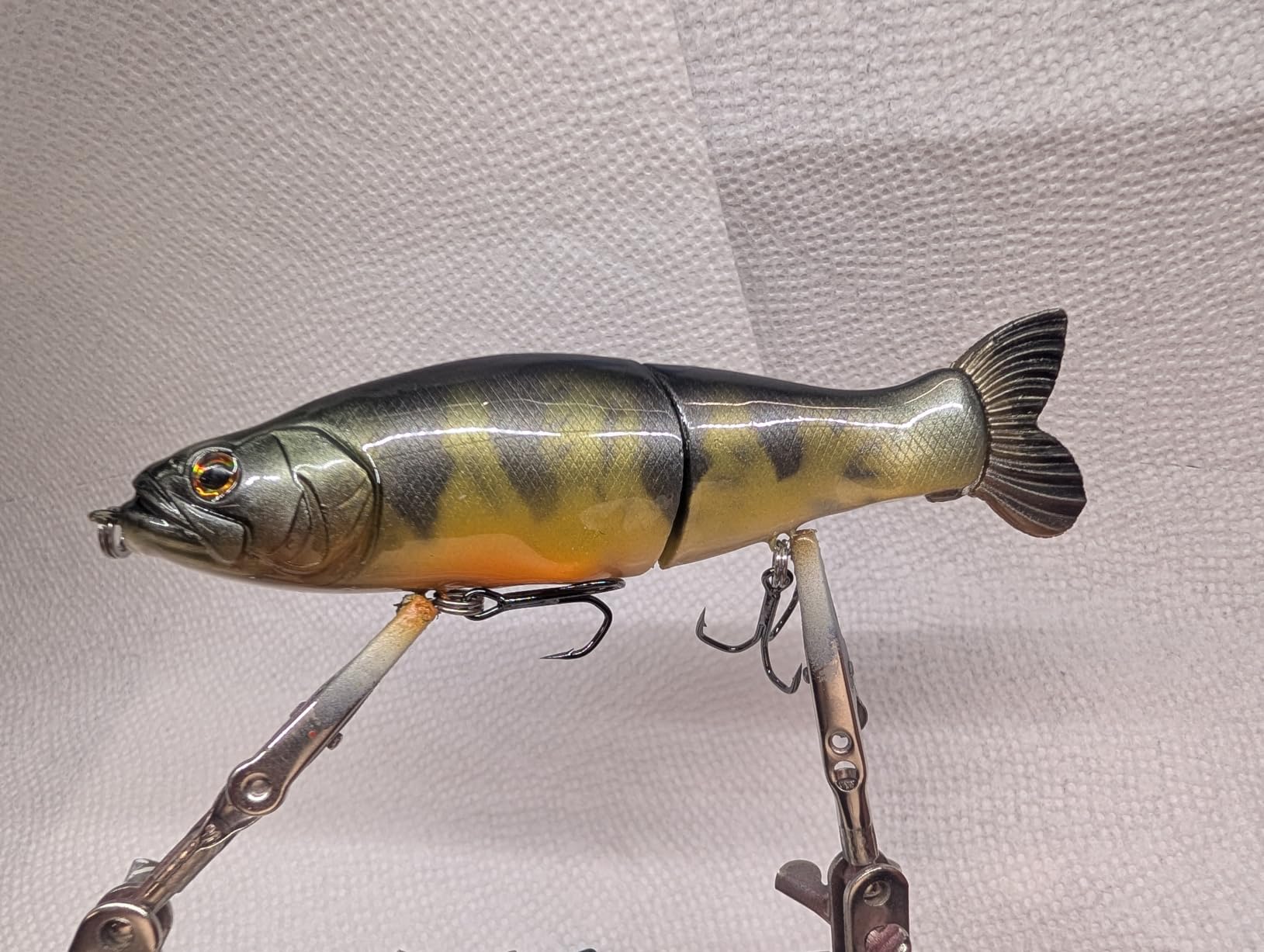
Will this survive daily acrylic use
Yes, provided you flush it after every session. The smooth cup interiors and drop-in nozzle mean a five-minute clean at the sink is realistic, and spare o-rings are included for the point when the originals compress. The missing 0.2mm is the only specification worth planning around.
Is it the right tool for army batches
For a full regiment we would pair it with a larger cup gun or use a siphon gun for coverage. This is a detail and blending tool that happens to be very easy to live with, which is why it earns a place on a mixed-projects bench.
5. Gocheer 48 PSI Dual-Action Set – Best for Pressure Control
Gocheer Airbrush Kit,48 PSI Dual-Action Airbrush Set(Gloss Black)
- Three selectable pressure settings
- Inline air filter reduces water spots and splatter
- Full needle range from one gun
- Extended grip suits long detail sessions
- Lowest average rating here at 4.1 stars
- Newer brand with a shorter track record
- Paint must be thinned properly at higher pressures
Most entry kits give you one pressure and no way to reason about it. This one gives you three, at 25, 35 and 48 PSI, and that single feature does more for consistency than any other spec in this group. Fine detail and soft gradients live at the low setting, everyday colouring at the middle, and base coats and wide coverage at the top.
The compressor body is compact at just over 4.5 by 3.5 inches with a 6 foot hose, and the dual-action gun has a rear limit knob that presets your maximum paint output. That knob is underrated: it stops a beginner flooding a model with paint in the first three seconds of a pull.
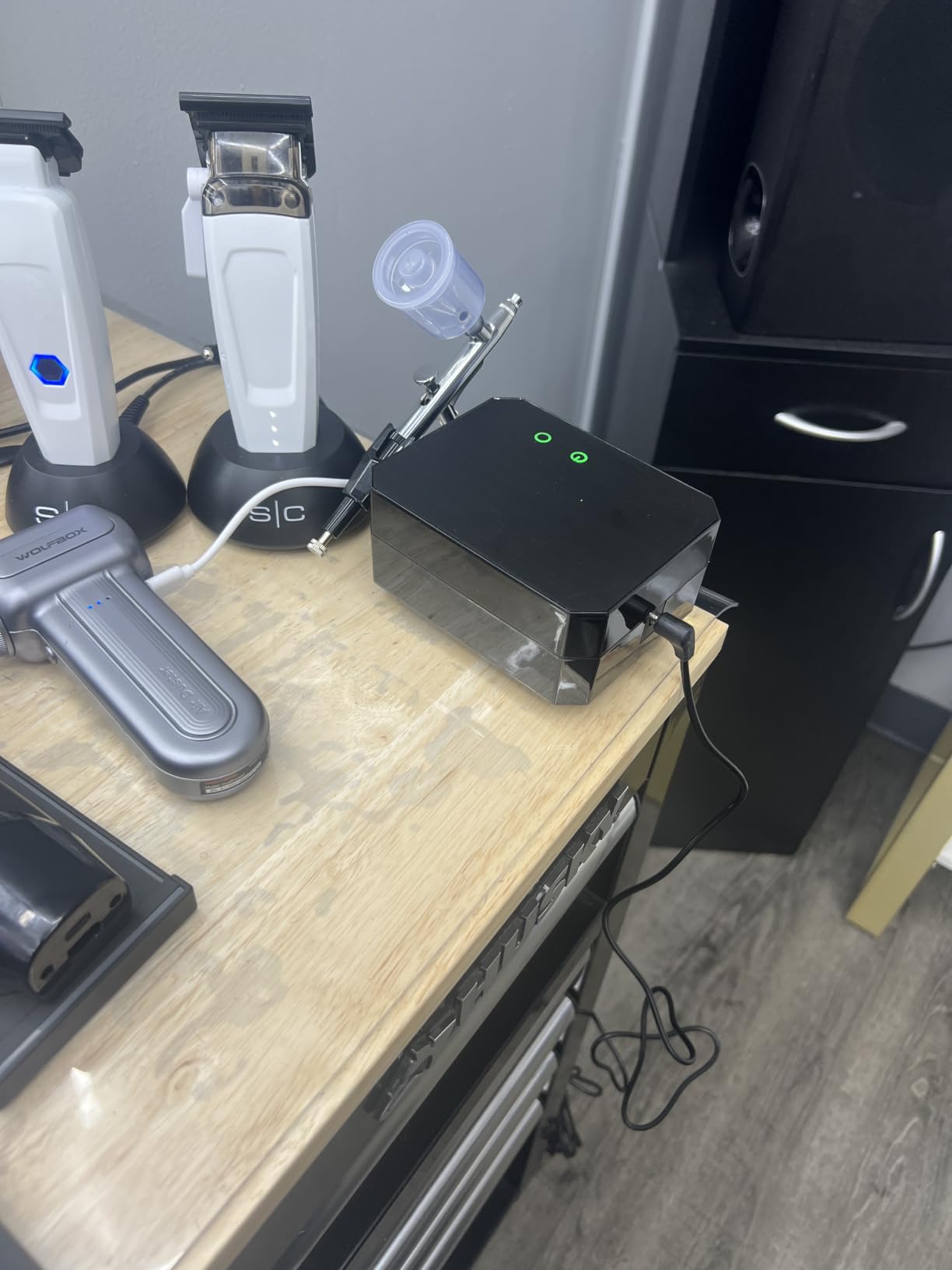
The needle set covers 0.2mm for fine lines, 0.3mm as a balanced middle and 0.5mm for base coats, and the inline transparent air filter helps with the water spots and uneven patches that plague small compressors. The slim metal body with an extended grip area stays comfortable on long detail sessions.
This is also the lowest-rated kit here at 4.1 stars, with around 12% of reviews at one star citing spray inconsistency or durability concerns, so treat it as a capable but unproven set. Paint has to be thinned properly for reliable flow at the higher pressures, which is a discipline most beginners do not have yet.
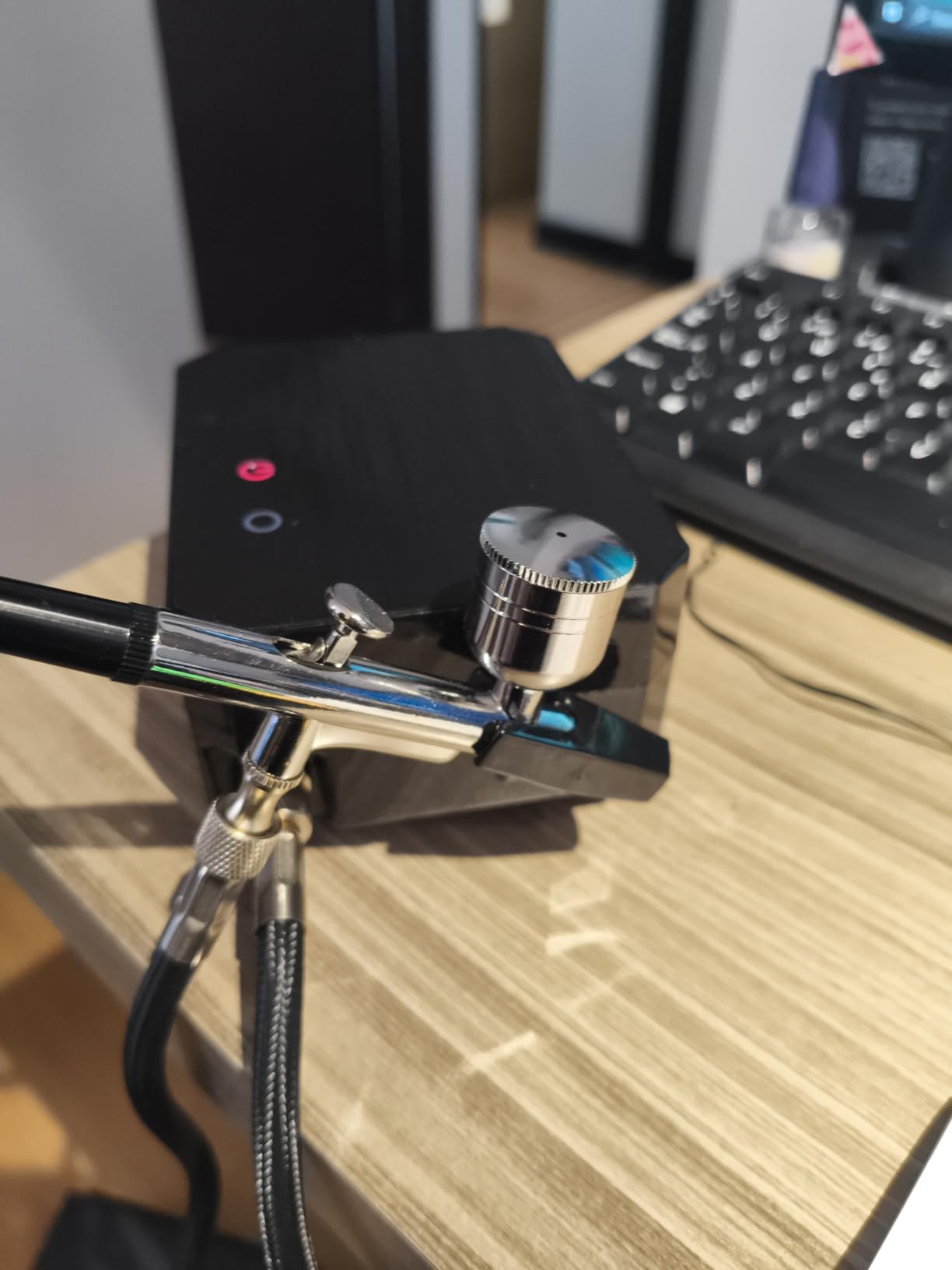
Why three pressure settings matter in practice
At 25 PSI the mist is soft enough to glaze without pushing paint into recesses. At 48 PSI you cover a primed infantryman quickly, but overspray doubles and fine detail disappears. Being able to switch deliberately, rather than managing pressure by trigger feather, is what makes shading predictable.
Is a newer brand a reason to hesitate
It is worth weighing, and we would put the Gocheer below the Master Airbrush sets for long-term parts support. It comes with a one-year warranty and cleaning brushes, droppers, a mini wrench and a nozzle cleaning needle, so a first project is well covered.
6. Master Airbrush Mini Compressor Kit – Best for Small Workspaces
Master Airbrush Multi-Purpose Air Brush Kit with Mini Air Compressor
- Light enough to move between a bench and a booth
- G22 shares parts with pro Master Airbrush guns
- Guide book covers care and part diagrams
- Smooth and consistent for priming panels
- No air chamber so airflow pulses at high pressure
- No pressure gauge so you judge by feel
- Can spit paint without a water trap
At 2.8 pounds this is one of the smallest complete sets here, and that is the whole pitch. If your painting happens at a desk, a shelf or a shared table, the ability to pick the whole thing up with one hand and move it out of the way decides whether you use it or abandon it.
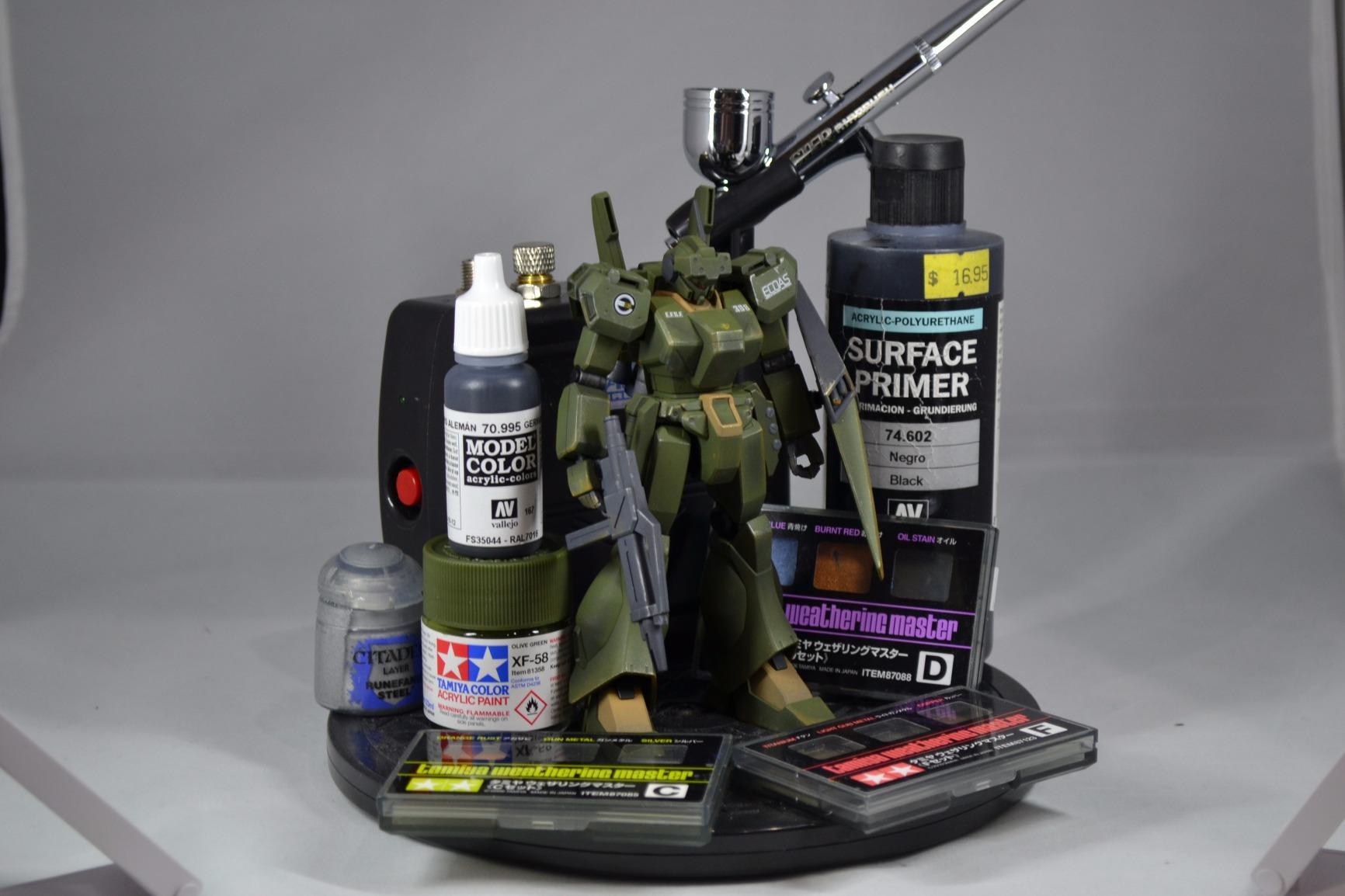
The C16-B mini compressor delivers 10.5 litres per minute up to 25 psi, and the kit includes a Model G22 dual-action gravity-feed gun with a 0.3mm needle and a 1/3 oz cup, a 6 foot braided hose and a how-to guide book. The G22 shares replacement parts with higher-end Master Airbrush guns, which is why owners often keep the brush after the pump dies.
For priming and basecoating larger panels and terrain pieces, the output is smooth and consistent. Plenty of owners use it as a travel setup for painting at a club night or a convention table, where a full-size compressor is simply not coming through the door.
Three limitations are well documented. There is no air chamber, so airflow pulses at higher pressure and you can see it in the spray pattern. There is no pressure gauge, so you are tuning by feel. And with no water trap in the line, the airbrush can spit paint during a long session.
Is the 25 psi limit a problem for miniatures
For 28mm and 32mm models it is not. Small figures need modest pressure, and running low is exactly the technique that avoids blowing detail off a model. It becomes a limit on large scenery panels and thick primers rather than on a regiment.
Should you keep it or upgrade the pump
Keep the gun. A later upgrade to a compressor with a tank and a regulator turns this into a very capable bench setup, and you avoid the most common starter mistake of buying a second gun before the first one is properly cleaned.
7. VEVOR Three-Airbrush System – Best Complete System with a Tank
- Highest average rating in the group at 4.7 stars
- Pressure valve plus real-time readout
- 0.6 gallon tank for long sessions
- Upgraded fluid tips resist needle damage
- 9.4 lb unit is heavy for a small desk
- Gun bodies are not fully chromed so they need cleaning
This is the only kit here with a proper tank, at 0.6 gallons, and that single specification changes how you work. Air is stored under pressure, so the spray does not pulse between compressor cycles, which is the fault that spoils smooth zenithal shading on cheaper pumps.
You get three airbrushes at 0.2mm, 0.3mm and 0.8mm, a 1/5 hp compressor with an adjustable pressure valve and a pressure readout, a 70 inch hose and a compressor-mounted holder with a carrying handle. The upgraded fluid tip design is meant to reduce needle bending and improve atomisation, which addresses a complaint that shows up on almost every budget gun.

Across its reviews it holds a 4.7 star average, the highest figure in this group, with very few one-star responses. One owner describes the compressor as usable in an apartment late at night, and the readout makes it easy to keep the same pressure across a whole project instead of guessing.
The weight is real at 9.4 pounds, and it can walk across an unsecured bench. The gun bodies are not fully chromed, so acrylic paint needs cleaning off them after every session or it will build up around the handle. It is also the least reviewed kit here, so treat the ratings as encouraging rather than proven.
What does a 0.6 gallon tank actually buy you
It buys smooth, uninterrupted airflow for long sessions, which matters when you are spraying a dozen models in a row or laying a zenithal coat across a diorama. It also means fewer restarts, so the compressor noise is closer to a constant hum than a repeated start-stop.
Is it worth choosing over a lighter kit
If you have a dedicated bench and paint in long evening blocks, yes. If you are working at a small table or carrying your setup to a club night, pick two or pick six instead and save the weight and the footprint.
8. PointZero Three-Airbrush Kit – Best Three-Gun Setup
- Three guns let you dedicate one per paint or project
- 55 dB compressor holds steady pressure
- 0.3mm gravity gun strong for pre-shading
- Handles metallic and thick coatings
- 0.2mm needle bends very easily
- Smallest gun clogs more often
- Only a 90 day limited warranty
The idea here is simple: three different guns means you can dedicate one to zenithal shading, one to basecoating, and keep one permanently loaded with a colour you use constantly. Modelers returning to the hobby after a long break rate it highly for exactly that reason, because it removes the guesswork of swapping tips mid-project.
The compressor is a 1/5 hp unit rated at 55 dB, which is quiet enough for most home spaces, and it carries a holder for two guns plus a 6 foot braided hose. The kit mixes a single-action external-mix design with dual-action internal-mix guns, so you can learn both trigger styles and compare them on the same paint.
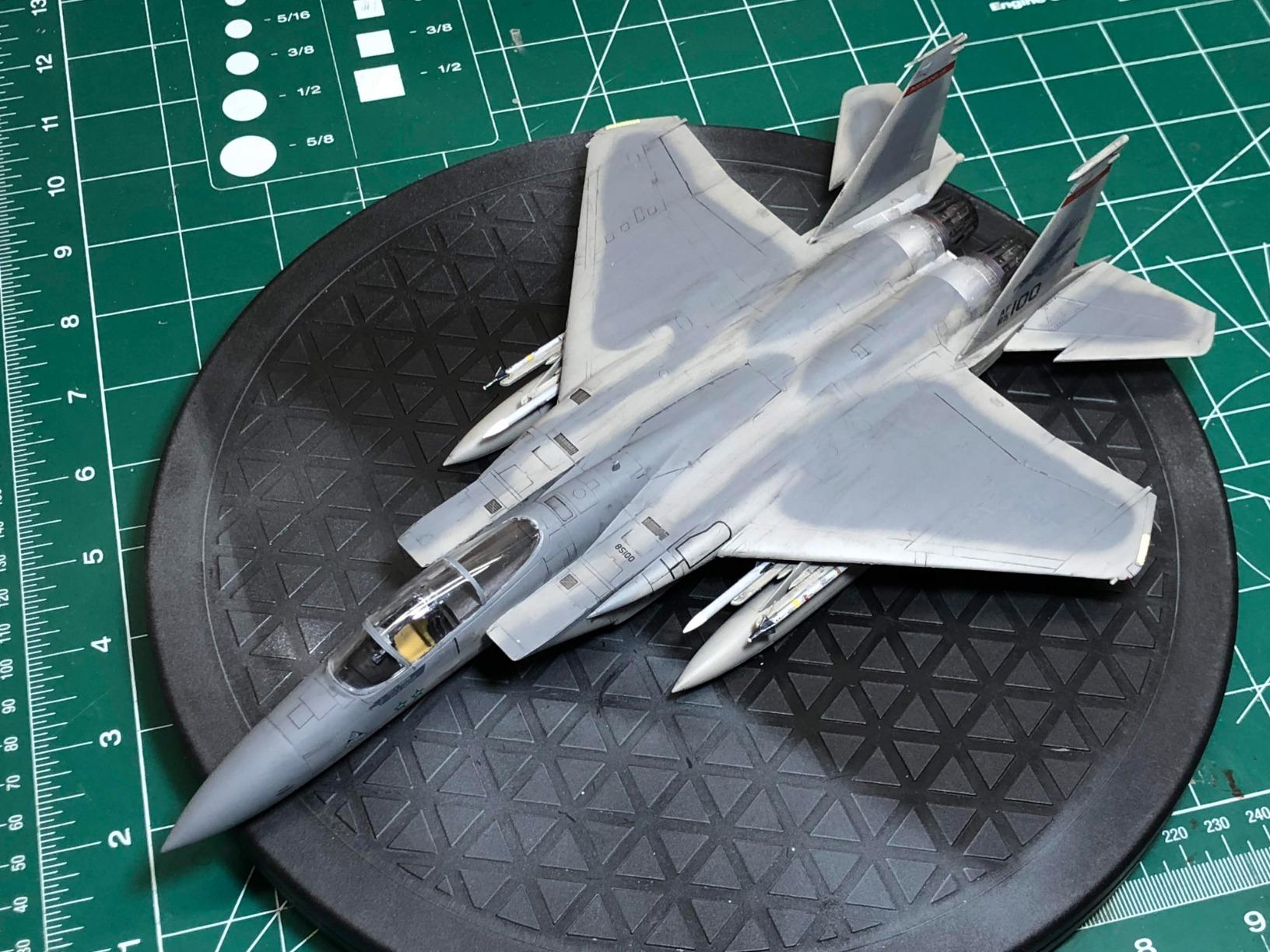
The 0.3mm gravity gun is the workhorse and handles pre-shading and post-shading well. Owners also report good results with metallic paints and thicker coatings, which are the two things a 0.2mm-only setup would struggle with.
The 0.2mm needle extends almost to the guard and bends very easily, so treat it as a tool for careful work rather than a workhorse. The smallest gravity gun clogs more often because of the tiny tip, the documentation is thin enough that most owners learn from outside videos, and the warranty is a 90 day limited one.
Is learning two trigger styles worth it
Yes, and it is the least intimidating way to learn. A single-action gun teaches you air pressure control without paint metering, which is a genuinely useful habit, and having both lets you confirm for yourself why dual-action is worth moving to.
What about the thin documentation
Plan for it. Watch one cleaning and trigger-technique video before your first session and keep a spare needle and nozzle set on hand, because the 0.2mm tip on the smallest gun is the part most likely to need replacing.
9. Fengda FE-183K Set – Best Budget Airbrush with Three Needles and Three Cups
- Three needle sizes and three cup sizes included
- 0.8mm tip handles primer and thick coats
- Hand-removable nozzle cleans fast
- Adjustable trigger spring tension
- Needs polishing and deburring out of the box
- Trigger has noticeable slack
- Spare o-rings and springs not readily available
The Fengda FE-183K is the set people buy two or three of, one per needle size, because it is the least expensive way to have 0.3mm, 0.5mm and 0.8mm nozzles and 2 ml, 5 ml and 13 ml cups on the bench at once. The 0.8mm option covers primer and thicker base coats that smaller tips simply cannot move.
The nozzle screws out and on by hand with no thread to strip, and the trigger spring tension is adjustable, which is a feature you would normally look for on a far more expensive gun. At 630 grams it is heavier than it looks, but it balances well for longer sessions.
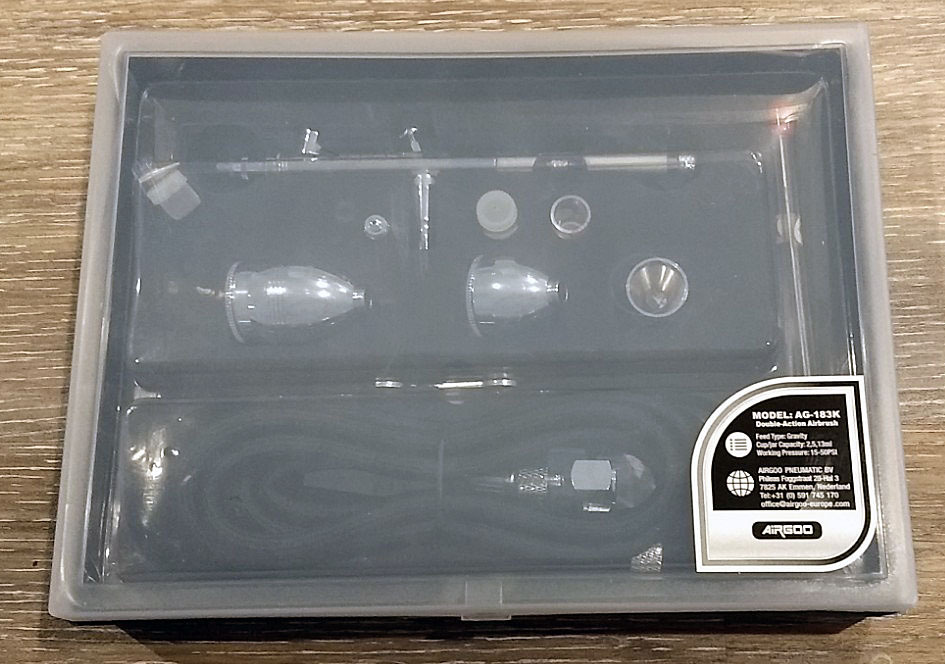
The honest part: it needs work out of the box. Factory needles are described as rough, and owners report spending the first session deburring and polishing before the spray pattern behaves. Quality control also varies, with reports of over-tightened nozzle caps and poorly seated o-rings.
Once set up, the consensus is that it seals with acrylics well and that the tip holds a cleaner atomisation than some well-known budget brushes. The trigger has noticeable slack, so very fine dosing takes practice, and replacement o-rings and springs are not easy to source, which is the real long-term cost.
Is a budget airbrush worth the setup time
For priming, basecoating and practice, yes. If you are comfortable spending twenty minutes on a needle before the first spray, the running cost of this approach is very low and the 0.8mm capability is genuinely useful for terrain and scenery work.
When should you move up
When you want consistent fine line work without a polishing routine each time, or when missing o-rings start to matter. At that point a named-brand gravity gun plus a quiet compressor is the step up, and the compressor you choose matters as much as the gun.
10. SAGUD Mini Airbrush Kit – Best for a First Model Project
- Compact set that suits a first kit project
- Autostart and autostop stop wasted running time
- Clear assembly instructions and good packing
- Smooth flow once paint is thinned
- Pressure is effectively fixed with little adjustment
- Needs heavy thinning before it will spray
- Smallest review base at 334 reviews
This is the kit to buy if the goal is to see whether you enjoy airbrushing at all, on one box of models. It is compact, well packed, and the SD 130 dual-action gun uses a 0.3mm nozzle with a 1/3 oz cup and standard 1/8 inch fittings, so it pairs easily with any other air source later.
The AC-100 compressor autostarts at 10 psi and autostops at 25 psi, which means it runs only while you are actually pulling the trigger instead of humming all evening. The kit includes a compressor-mounted airbrush holder, a 6 foot braided hose, a cleaning brush set with end brushes and a mini inline air filter.
Once paint is thinned to roughly milk consistency, including ready-to-use airbrush paints, the flow is smooth and even. For a single model or a handful of figures, that is all the capability most beginners actually need at the start.
The pressure is essentially on or off, with very little useful adjustment in between, which is why shading gradients are hard. It also needs heavier thinning than most kits, so the learning curve is really a thinning curve. With 334 reviews it is the least proven set here, and some owners report compressor failures within months, though customer service replaced them.
Is this enough to learn on
More than enough. Priming, basecoating and simple two-tone shading on a handful of models will teach you everything about air flow and paint consistency that you need before the hardware matters.
What is the realistic limit
Fixed pressure means no smooth gradients and no careful control on a single panel, so treat it as a stepping stone. If you finish your first project wanting more, the G233 in pick three plus a quiet compressor is the natural next step.
How to Choose an Airbrush Kit for Miniatures
The single most useful decision is whether you are buying a box or a gun. Box kits are convenient and get you painting the same afternoon, and they make sense if you mainly prime, basecoat and do simple zenithal shading. Airbrush-only sets are better value if you already own a compressor, and they are the right call the moment you know you will keep painting.
Second, look at the feed type. Gravity feed with a top-mounted cup is the standard for miniatures because paint sits where the nozzle can see it and you control volume by how far you pull the trigger. Siphon feed draws from bottles below the gun and gives you more volume and less colour change, which suits basecoating large panels. Side feed is rarer and mostly worth considering if you paint with your other hand.
Third, check the action. A single-action gun only meters air, so paint output depends entirely on how long and how steadily you hold the trigger, and that is hard work. A dual-action gun meters paint as well as air, which is why almost every kit worth owning here includes one.
Fourth, match the needle to the model. A 0.2mm needle is the detail option, 0.3mm is the all-rounder, and 0.5mm or 0.8mm handles primer and thick base coats. Kits that ship with all three, like picks three, five and seven, save you a second purchase later.
Fifth, look for a stated noise figure. Only some brands publish one, and 50 dB is the number that matters if you share a wall or paint after everyone else has gone to bed. Our compressor roundup goes deeper on that single decision.
Finally, decide how much you will actually use it. A quiet compressor is often the part worth keeping longest, which is why a lot of experienced painters buy a mid-range kit for its pump and upgrade only the gun. It is also worth mentioning the wider community question, since quiet indoor crafting matters if anyone else shares the room; our guide to quieter craft kits covers that side of the hobby.
Which Paint Goes In Which Airbrush
Almost any water-based acrylic can be sprayed, provided you thin it until it runs like milk. That is the single most common instruction printed on budget airbrush packaging, and it is the right one: too thick and the tip clogs, too thin and it runs down the model before it dries.
Start with the paint brand’s own thinner where one exists, since Citadel, Vallejo and Pro Acryl all make airbrush-compatible versions. Otherwise clean water works for acrylics, and a small drop of acrylic medium or flow improver helps if you are pushing thicker paints through a 0.2mm needle.
Pre-mixed airbrush acrylics are the fastest route for a beginner, because they are already at the right consistency and cost nothing but a rinse afterwards. For raw tabletop acrylics, mix roughly two parts paint to one part thinner, test a spray on scrap card, and adjust from there. Spraying at lower pressure with a wider needle is more forgiving than trying to force thick paint through a fine tip.
Clean acrylics out of the gun the same day you use them. Leftover paint in a gravity cup will thicken into a plug that no amount of soak will shift, and that is the moment most hobbyists decide airbrushing is not for them.
Airbrush vs Brush for Miniatures: Is It Worth It
It is worth it if you paint in batches or want smooth blends; it is not worth it if you only ever paint one model a year. The speed difference is the argument that convinces people: a bottle brush basecoat across a large regiment takes many evenings, while the same job airbrushed takes a fraction of one.
Quality matters too, but only in specific places. Zenithal pre-shading, smooth sky and skin transitions, and soft, shadowless base coats are things an airbrush does well and a brush cannot match without a lot of thin glazes. Detail, edge highlighting and controlled texture work are still faster and sharper with a brush.
The cost is cleaning, ventilation and learning paint consistency. Airbrushing produces overspray, so mask your bench, work in a ventilated room and wear a proper respirator if you are spraying regularly, particularly if children or pets share the space. If you are building a small diorama rather than a regiment, our neon sign kits for display pieces and diorama water feature kits are easier projects to finish alongside airbrush work.
Airbrush Maintenance and Troubleshooting
Spitting paint usually means water in the air line, so the fix is a moisture trap or a drained filter rather than a new gun. If it only spits immediately after a pause, the trigger was left cracked; if it spits continuously, check that your cup seal and needle are seated properly before blaming the compressor.
Clogging at the tip is almost always thick paint. Clear it with the needle supplied in the kit, flush with cleaner or warm soapy water, and work from the back of the nozzle forward so you do not push the blockage deeper. Never use wire on a precision needle, because one scratch ruins the seal and you will get paint on your wrist.
Pulsing spray means the compressor has no tank and no chamber, which is the expected behaviour of the smallest pumps here. Lower the pressure slightly, open the trigger earlier, and add a second pass rather than trying to spray heavier. If pulsing continues with a regulator in the line, the pump is likely reaching the end of its life.
A workable routine is simple: flush with water immediately after a session, disassemble and clean the needle, cap and cup once a week, and check the hose and filter monthly. Airbrushes that are cleaned the same day last years; the ones that sit for a week do not.
Frequently Asked Questions
What is the best mini airbrush kit for miniatures?
The Master Airbrush Cool Runner II is the best-rounded all-in-one box we tested, with three airbrushes at 0.2mm, 0.3mm and 0.8mm tips, a 1/5 hp dual-fan compressor and a set of acrylic airbrush paints to practise with. For quieter indoor painting, the TIMBERTECH kit is the better choice at a rated 50 dB.
Is an airbrush worth it for miniature painting?
Yes, if you paint in batches. An airbrush primes and basecoats a large army in an evening instead of a fortnight and gives smooth zenithal pre-shading and blends that a brush cannot match. If you paint one model a year, a good brush and a set of acrylics is the sensible choice.
Which airbrush is best for 40k miniatures?
A dual-action gravity-feed gun with a 0.2mm and 0.3mm needle is the best balance for 40k work, paired with a compressor that holds steady low pressure. The Master Airbrush G233 gives you both needle sizes and weighs 3 ounces, while the TIMBERTECH kit supplies a quiet compressor to drive it.
Do I need a separate compressor for an airbrush kit?
Only if you buy an airbrush-only set. Picks three, four and nine in this roundup are guns with no pump, so they need any small compressor with a moisture trap. Box kits include everything, but many owners keep the gun long after replacing the pump.
Why is my airbrush spitting paint, and how do I stop it?
Spitting almost always means water in the air line. Add a moisture trap or a mini inline filter, drain the hose after each session, and check the cup seal and needle seating. Leaving the trigger cracked open during a pause also causes a single splatter, so close it fully between models.
Conclusion
If you only buy one thing, buy the Master Airbrush Cool Runner II. It gives you three airbrushes, a compressor and a paint set in one box, and at 4.6 stars across more than 7,000 reviews it is the most dependable all-round answer to the best airbrush kits for miniature painting question.
Paint in a shared home? Choose the TIMBERTECH kit instead, because a stated 50 dB changes the experience at 10pm. Already own a compressor? The 3 ounce G233 with three needle sizes is the better buy, and it is our pick for detail work in 2026. Whatever you choose, thin the paint properly, clean the gun the same day, and give it one project before you decide.