
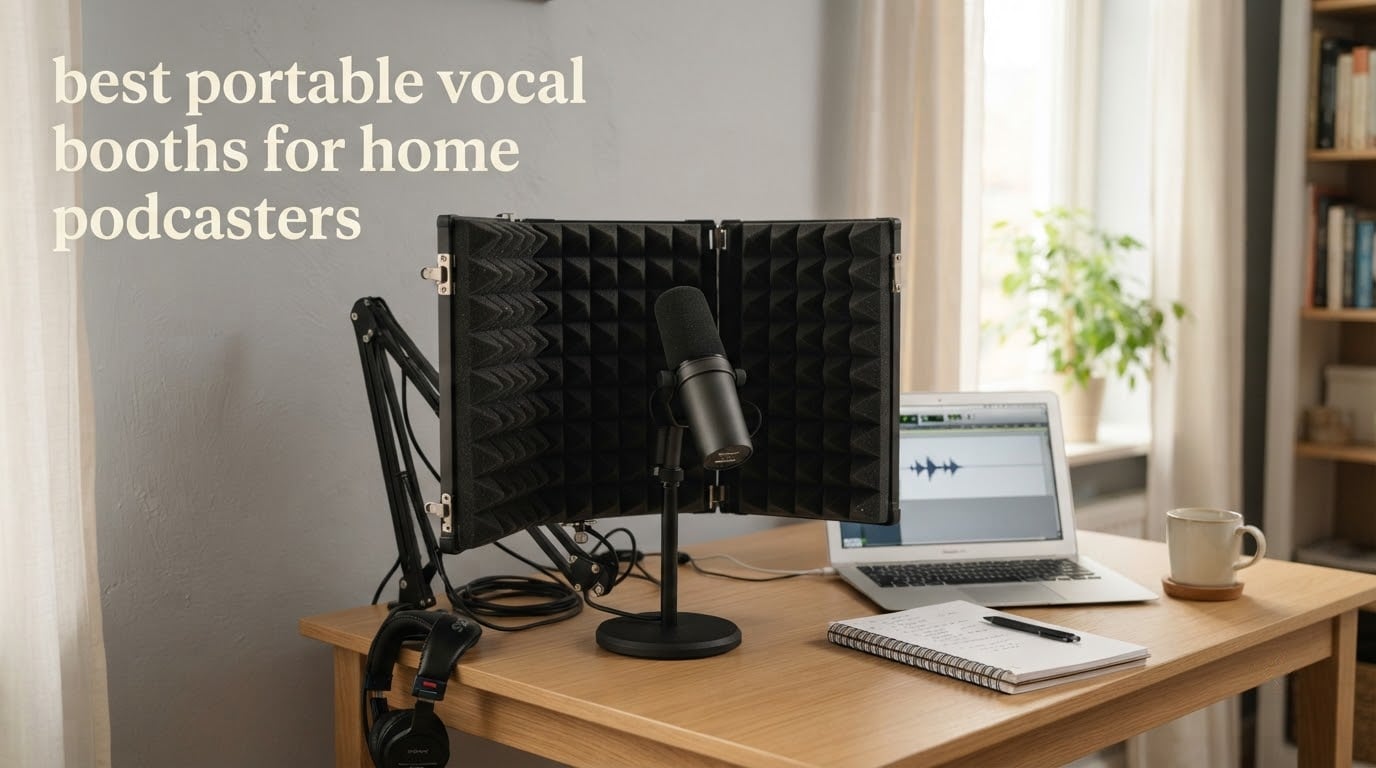
Most home podcasters do not have a treated room. They have a bedroom with a sloped ceiling, a closet that smells of laundry detergent, or a spare corner where the neighbours can hear every take through the wall. That is exactly the problem the best portable vocal booths for home podcasters solve: they wrap a microphone and the person speaking into it in dense absorbing material, so the room reflections that smear your consonants never reach the mic in the first place.
We spent October 2026 going through the current category end to end. Ten booths and shields are below, ordered by how confidently we would recommend them, with the manufacturer noise and reverb claims kept exactly as published and the reviewer-reported drawbacks left in. If you have not chosen a microphone yet, start with our guide to the best vocal microphones — a booth cannot rescue a noisy microphone.
One thing to say up front, because the whole category is vague about it: these products absorb room reflections. Most of them do not stop traffic, heating vents or a barking dog. A Reddit thread in r/audioengineering raised the objection engineers usually make — that booths produce very good sound rather than great sound — and it is fair. Read the honest-limits section further down before you buy, and if you need an enclosed hard-sided room for a phone or laptop instead, our acoustic phone booth picks are a different category entirely.
Table of Contents
What Is a Portable Vocal Booth?
A portable vocal booth is a foldable, self-contained acoustic enclosure that wraps around a microphone and the person speaking into it. Dense material such as high-density foam, acoustic blankets or multi-layer panels lines the interior, so room reflections are absorbed instead of bouncing back at the mic.
The result is a drier, cleaner, more professional vocal take from an untreated room, without drilling, plastering or landlord permission. Units range from a 2 lb desktop shield you can hold in one hand to a 46 lb pop-up enclosure you stand inside.
Top 3 Picks for Best Portable Vocal Booths for Home Podcasters (October 2026)

TroyStudio Portable Vocal Booth
- 2 inch dense egg-crate foam
- 8 x 10 x 12 inch interior
- Folds flat for travel


Snap Studio Portable Vocal Booth
- Fits performers up to 6 ft 8 in
- Pro Sound Blankets
- Collapses into one duffel bag
Portable Vocal Booths at a Glance in 2026
Every product below appears with its own ASIN, the key specifications that actually change the recording, and our verdict on who it suits.
| Product | Specifications | Action |
|---|---|---|
| TroyStudio Portable Vocal Booth |
|
Check Latest Price |
| Dmsky Microphone Isolation Shield |
|
Check Latest Price |
 SwaykTech Studio Recording Mic and Shield Kit SwaykTech Studio Recording Mic and Shield Kit |
|
Check Latest Price |
| Snap Studio Portable Vocal Booth |
|
Check Latest Price |
 TONOR Microphone Isolation Shield TONOR Microphone Isolation Shield |
|
Check Latest Price |
 sE Electronics RF SPACE Reflexion Filter sE Electronics RF SPACE Reflexion Filter |
|
Check Latest Price |
 VOCTENT 360-Degree Reverb Isolation Booth VOCTENT 360-Degree Reverb Isolation Booth |
|
Check Latest Price |
 RDCMKL Portable Recording Booth RDCMKL Portable Recording Booth |
|
Check Latest Price |
| lunacme Portable Recording Booth |
|
Check Latest Price |
 ISOVOX 2 Home Vocal Booth ISOVOX 2 Home Vocal Booth |
|
Check Latest Price |
1. TroyStudio Portable Vocal Booth — the One Almost Everyone Keeps
- Removes echo in untreated rooms
- Folds flat into a suitcase
- Under a minute to set up
- Works with almost any mic and stand
- Open front blocks no outside noise
- Fabric shell can flex over time
- Foam pieces can bow out of frame
This is the shield we ended up recommending to the most people, and the reason is the review count. Nearly 2,000 owners have rated it, which gives you a much clearer picture of long-term behaviour than any spec sheet. The 65% five-star share is the highest concentration of top marks anywhere in this list.
Set-up is genuinely a one-person job. The frame opens, the foam panels sit inside on elastic bands, and you are recording. Breakdown is around twenty seconds, which matters more than it sounds if you share a room with a sleeping child or a housemate who works nights.
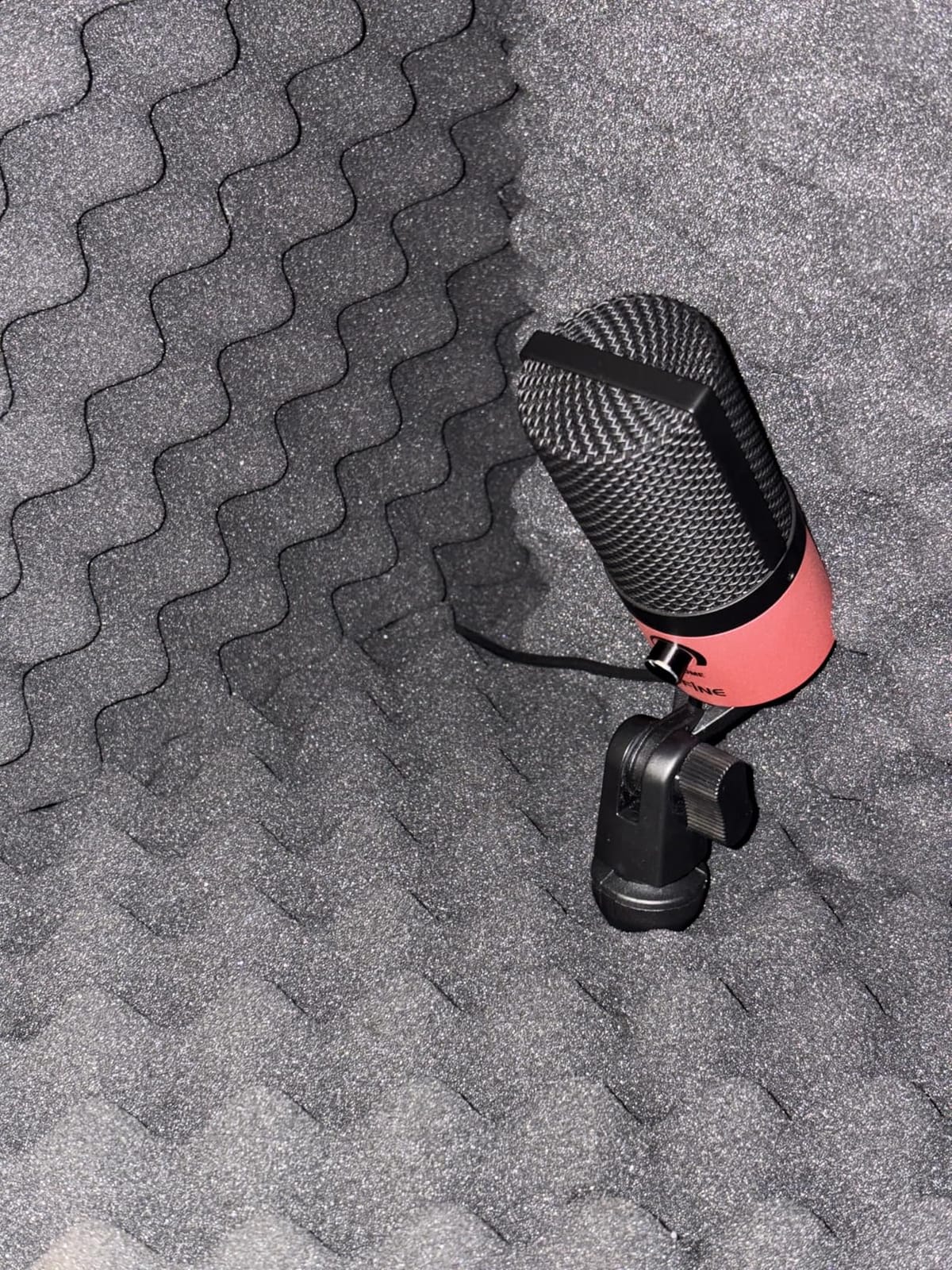
The build is thinner than it looks in photographs. At 2.02 pounds this is foam on a fabric shell, not a rigid enclosure, and a minority of reviewers report the shell bowing at the horizontal joint after months of daily use. That is a fair trade for something that fits in a carry-on.
Foam pieces are inconsistently sized and do not always fill the corners the way the product photos suggest. I found gaps at the rear corners, though they made a smaller difference to the final take than the size mismatch implies.
What size room do you need for this shield?
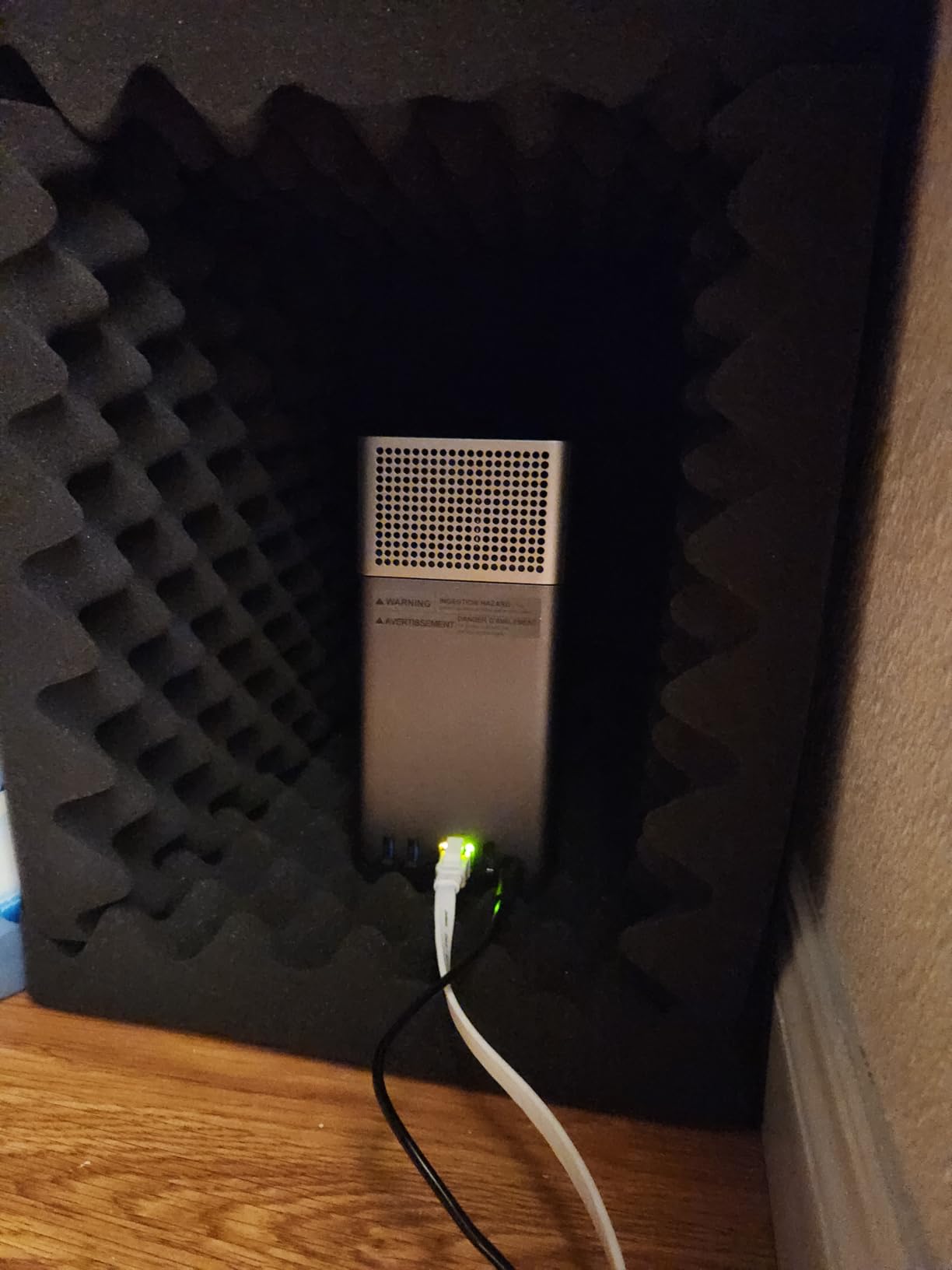
Almost none. At 8 x 10 x 12 inches inside, it sits on a desk, a boom arm, or the floor next to a stand, and it works with vocal, condenser, USB, phone and pen-recorder microphones. The pre-drilled cable and stand pass-through holes mean you do not have to route anything awkwardly.
The important caveat is that it is a reflection filter, not a soundproof box. The front is open, so a fridge hum or a passing bus sits in the recording exactly as it would without the shield.
Who should skip this shield?
Skip it if your problem is outside noise rather than reverb, because no amount of open-front foam changes traffic or an air conditioner. Skip it too if you need to stand and move while talking, since the enclosure wraps the mic rather than the performer.
Also skip it if you are very tall and seated for long sessions. The interior is compact, and taller users consistently report the frame pressing in around them.
2. Dmsky Microphone Isolation Shield — Best Value Pick
- Three layers reduce echo and ambient noise
- Sturdy steel stand and metal back panel
- Quick assembly
- Panels fold for storage
- Tripod can wobble if bumped
- Accessory tray is very small
- Pop filter fittings feel thin
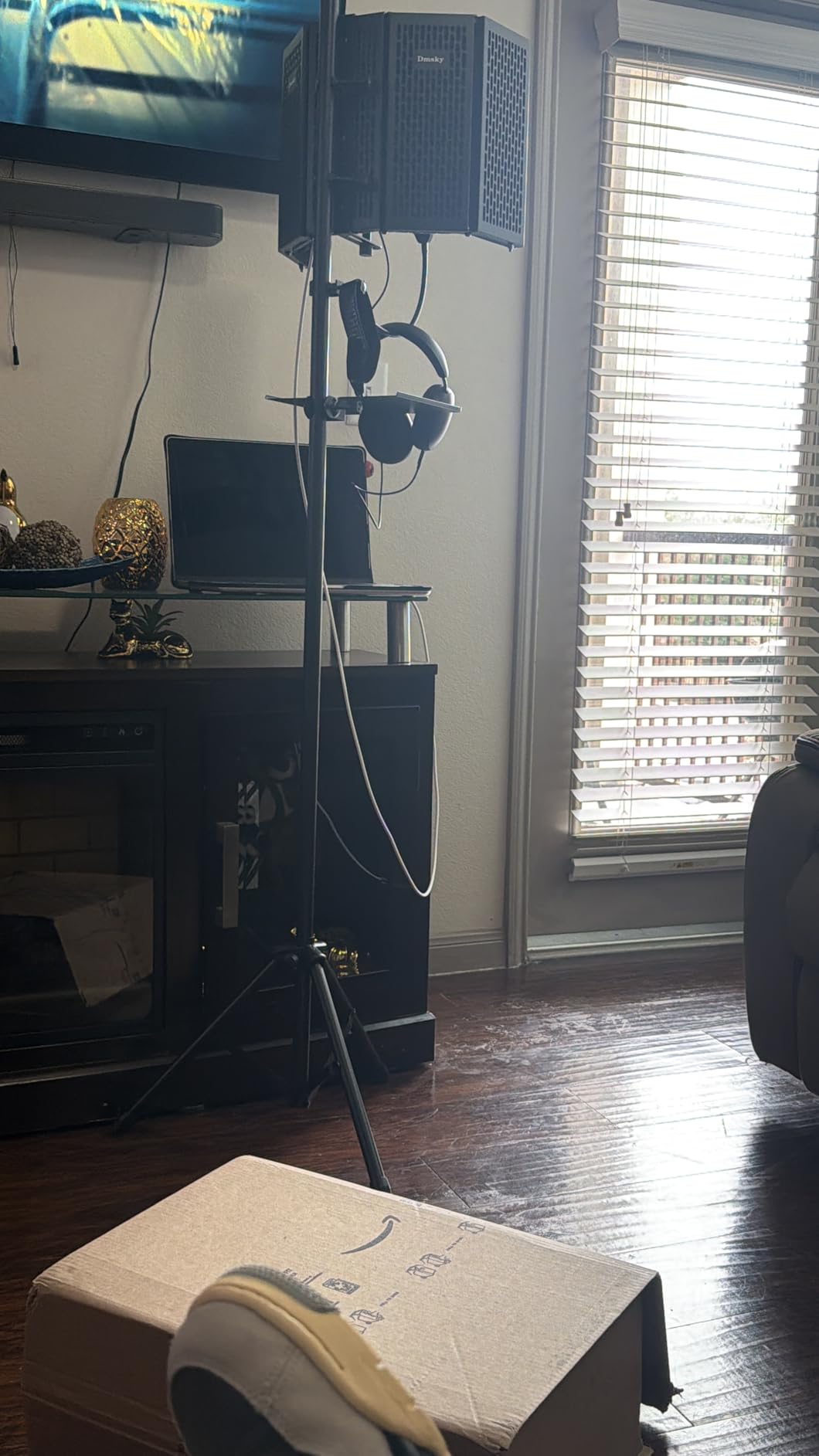
The Dmsky shield carries the highest average rating in the group at 4.6, and with 788 reviews behind it that is not a small sample. It is also the pick I send people who want a floor-standing setup rather than something clipped to a desk.
What separates it from cheap foam panels is the triple-layer build: a reflective layer, a filter layer and an absorbing layer, spread across five folding panels. Reviewers consistently report a real drop in echo and ambient noise, and the steel stand with a heavy tripod base makes it feel like studio hardware rather than an accessory.
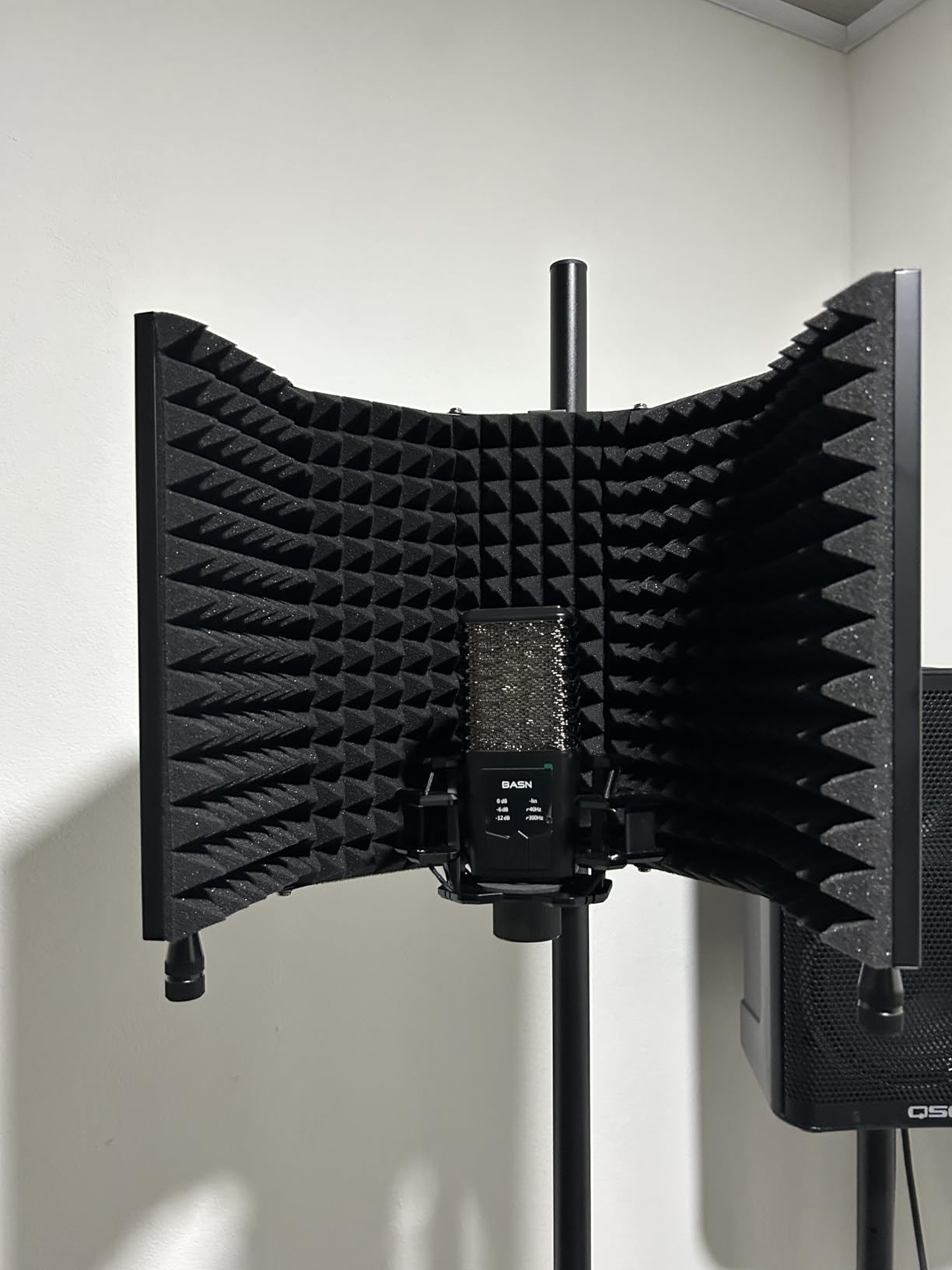
Height adjustment runs from 42 to 71.5 inches on the shield itself, with a 78.7 inch stand, so seated and standing both work without swapping hardware. You can also mount it directly on a mic stand and skip the tripod entirely, which is what a lot of owners do.
The recurring minor complaint is the accessory tray, which reviewers describe as very small. A few buyers also reported a missing microphone link piece that the seller resolved, and the tripod can feel slightly wobbly if you bump it.
Is the stand tall enough for standing recording?
Yes, for most people. The 78.7 inch stand with an adjustable shield height of 42 to 71.5 inches covers a seated and a standing performer on the same unit, which is unusual at this level. The included 3/8 to 5/8 inch adapter also means most large-diaphragm condensers mount without an extra part.
What it cannot do is carry a heavy multi-layer condenser plus a full shock mount and a second arm. Keep the load sensible and the adjustment stays solid.
Is it worth choosing over a plain foam panel?
Yes, if you want a floor-standing rig that you can reposition between takes and rooms, and no if you just want something to soften a plosive-heavy voice at a desk. The build quality and adjustability are the reason to spend here rather than on another egg-crate panel.
The honest caveat is that like the rest of this list it treats the room, not the neighbours. Panel count does not change that.
3. SwaykTech Studio Recording Microphone and Shield Kit — the Complete Starter Box
- Everything in one box
- No drivers needed
- Shield improves vocal clarity
- Good first home studio kit
- Missing or mismatched screws reported
- Instructions largely unusable
- Mic audio is entry level
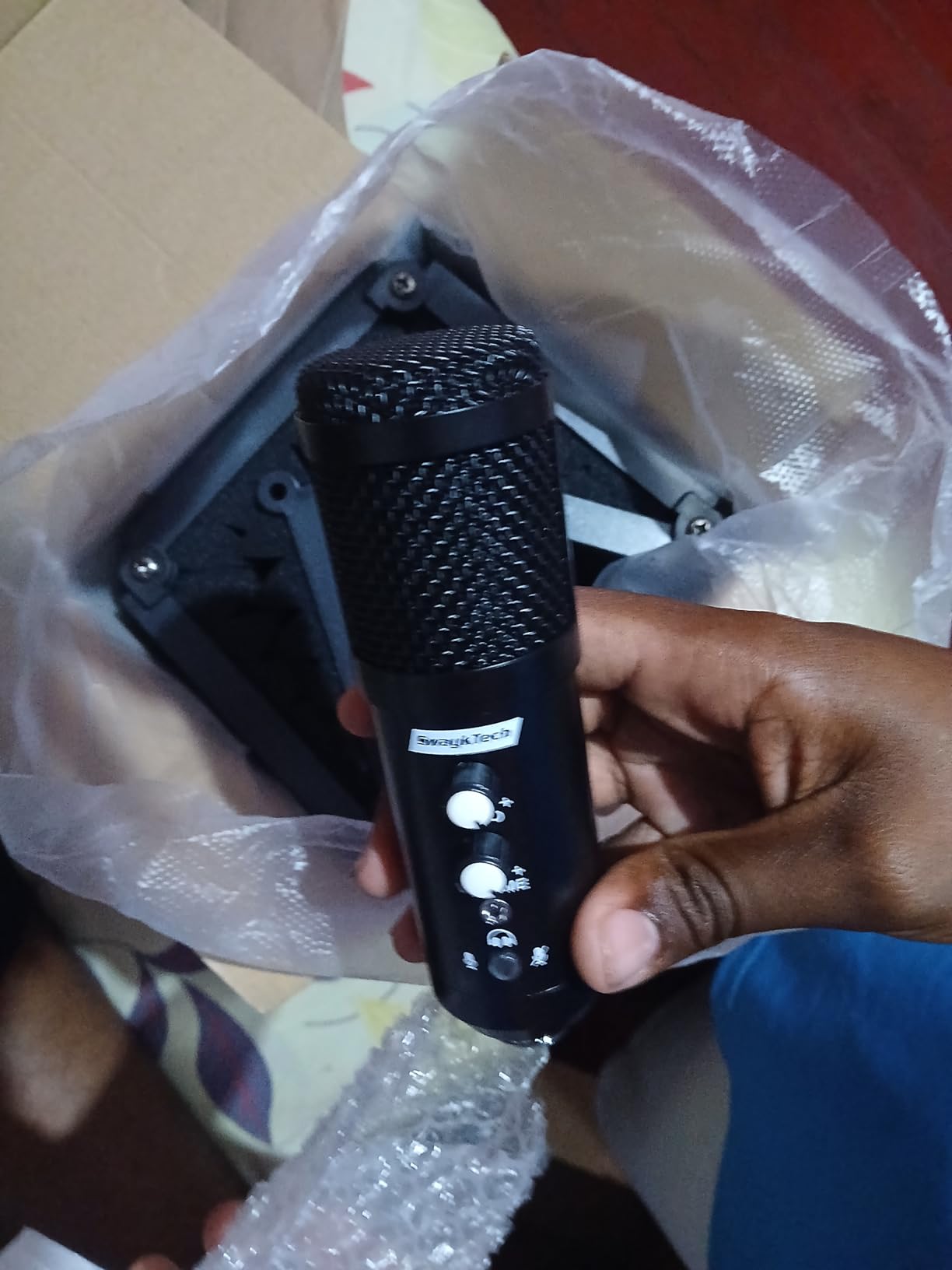
This is the only kit on the list that ships a microphone as well as a shield, and for someone starting from nothing that is the whole point. The USB condenser, the five-panel isolation shield, the pop filter, the tripod and the cable all arrive in one box.
It is plug and play with a cardioid USB mic, so no drivers and no interface. Reviewers treat the shield as the reason the mic sounds better than a bare USB mic in a reflective room, which is exactly what you are buying it for.
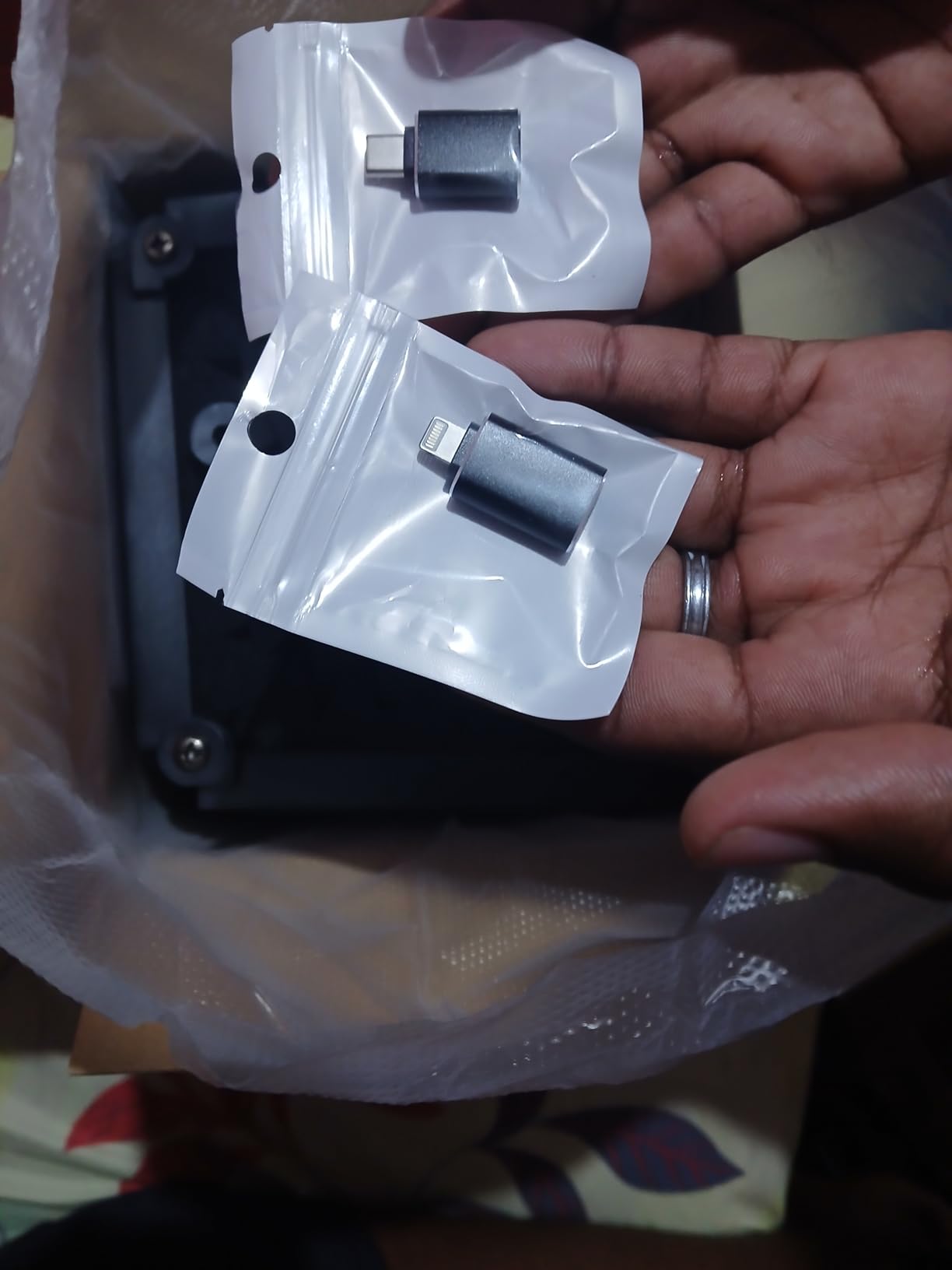
The dominant complaint thread is assembly, not sound. Several buyers reported missing or mismatched screws that left the kit unable to build, and the included instructions are described as largely unusable. Check the hardware bag against the parts list before you start.
The other recurring note is that the bundled microphone is entry level. If you already own a decent mic, buy the Dmsky shield instead. If you do not, this is a genuinely complete first setup for a home podcast.
Do you need to buy a separate microphone?
No, if you have nothing. The bundled USB condenser is a large-diaphragm cardioid mic with a 75 dB signal-to-noise ratio, real-time monitoring and a one-button mute, which covers narration and podcast hosting without further spending.
Yes, if you already own a microphone, or if you plan to sing seriously. Once the room is handled, microphone quality is the next upgrade that actually moves the sound, and our vocal microphone guide covers that step.
Is the bundled kit worth the assembly risk?
It is worth it if this is a first home studio and you want one purchase rather than three. The 386 reviews at a 4.1 average show the product itself is fine, with the friction concentrated in packaging rather than the design.
If you are comfortable with a screwdriver and a few minutes of assembly, the risk is small. If you want something that works the second it is unboxed, the TroyStudio shield is a safer first buy.
4. Snap Studio Portable Vocal Booth — Best for Full-Body Recording
Snap Studio Portable Vocal Booth, Original & Best for Home Studio Recording
- Encloses the whole performer
- Roomy enough to move inside
- Packs into one duffel bag
- LED lights and device mounts included
- Does not block outside noise
- 46.2 pounds is heavy to move
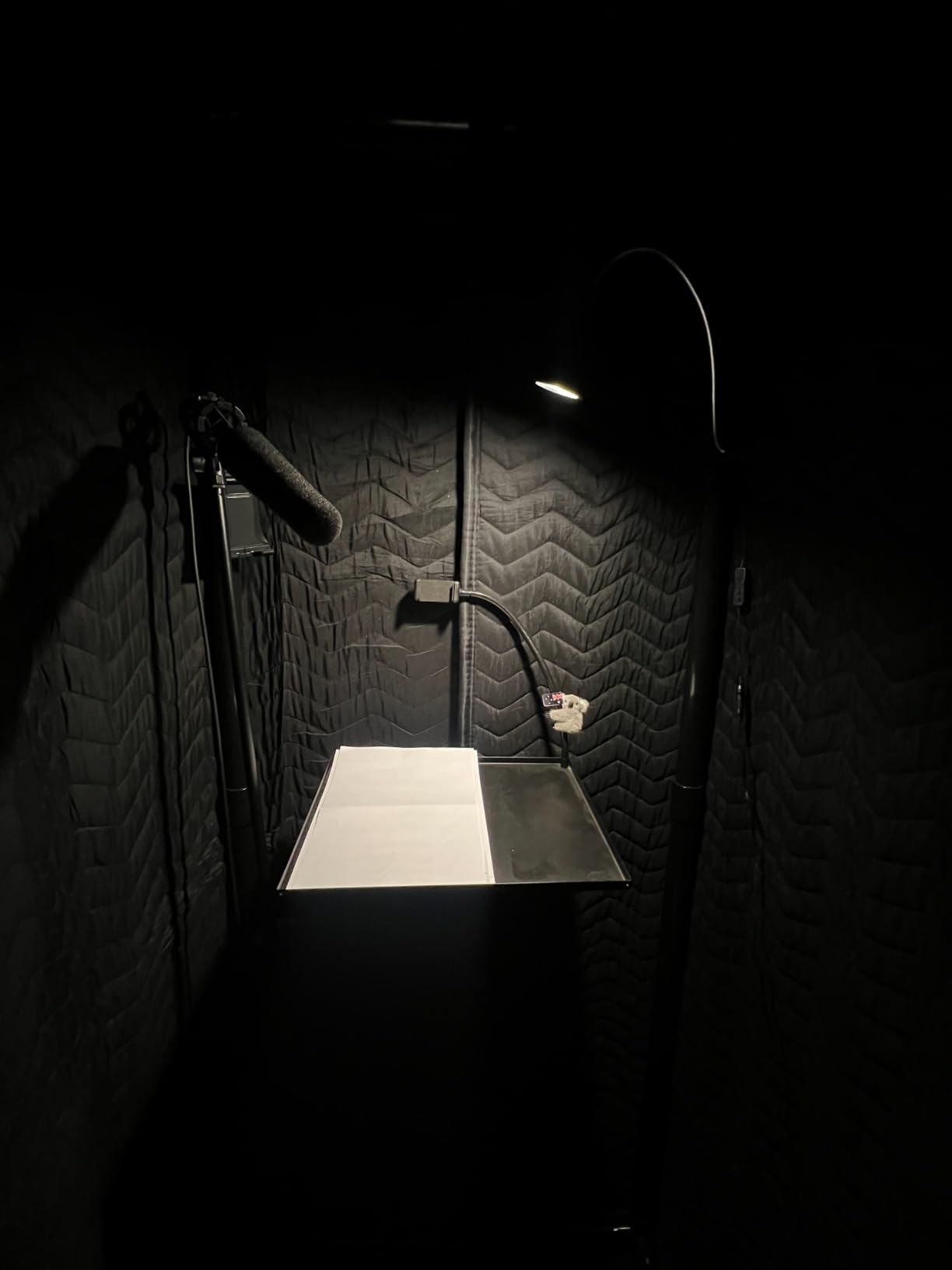
The Snap Studio booth is the only unit here you stand inside, and that changes the recording in a way no shield can. Rather than absorbing reflections that hit the microphone, it absorbs reflections around your whole body, which is where most of the room energy comes from when you are speaking.
It fits performers up to 6 ft 8 in tall on a 33 x 33 inch footprint with 5.5 sq ft of interior floor space. That is enough to stand, move, and have a mic stand inside without feeling cramped — and height clearance is a complaint we hear constantly about smaller enclosures.
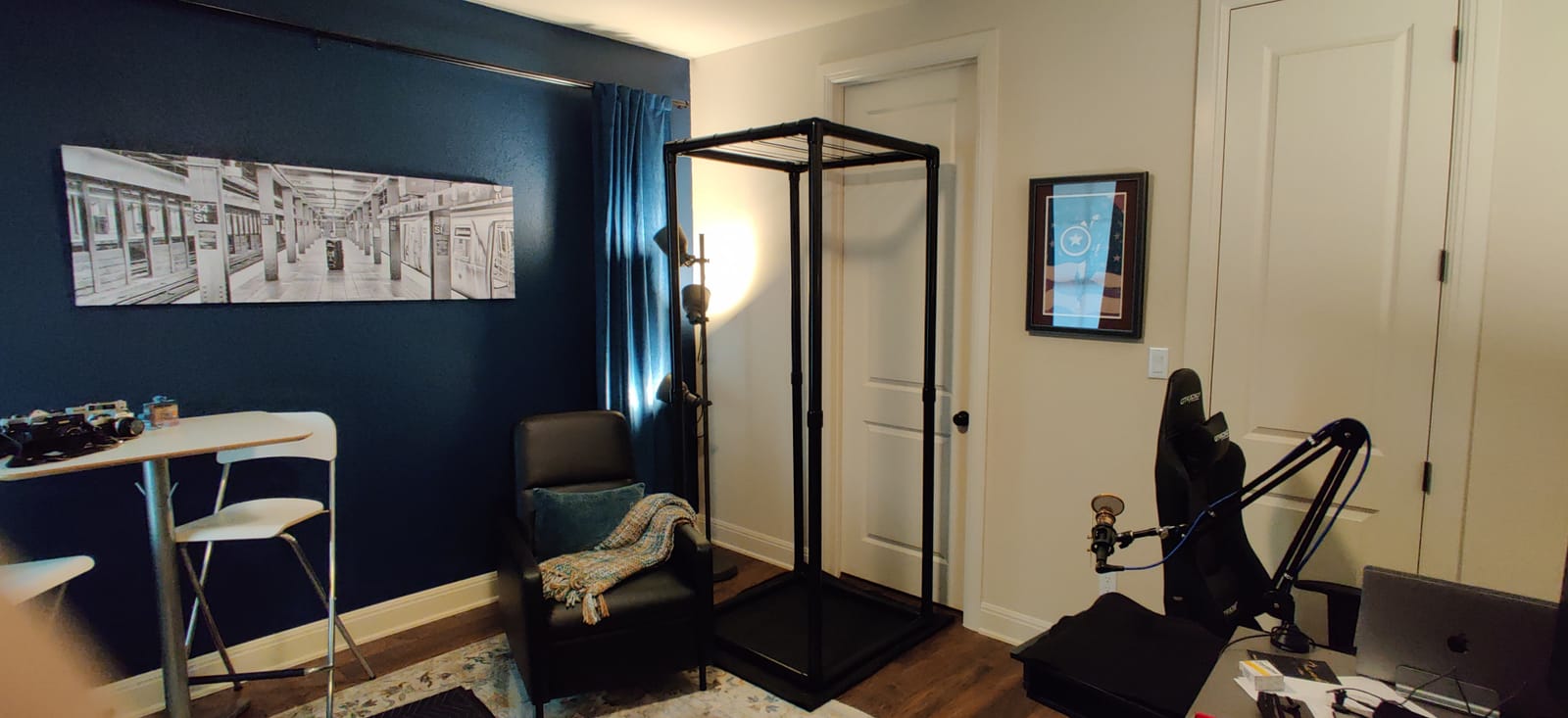
The pop-up frame sets up in minutes and collapses into a single diamond-stitched duffel bag. Wireless multicolor LED lights with a remote, a smartphone and tablet mount, and a mic adapter are all included, so it doubles as a filming corner for video podcasting.
Two things to be straight about. The manufacturer explicitly states this is not soundproof — it reduces echo, reverb and light decibels only. And at 46.2 pounds, moving it between rooms is a two-person job in practice even if the bag makes it look portable.
Can you record two people in this booth?
Two seated hosts is realistic on the 5.5 sq ft floor; two people with stands, laptops and cables gets tight fast. The 44 x 44 inch XL enclosures are the safer choice for a two-person remote show, and our acoustic phone booth guide covers the alternative of recording guests separately.
For a single host, the standing space is the reason to choose this over any shield. Reviewers describe it as visibly cleaning up recordings in a normal home room.
Is it worth paying more than a desk shield?
Only if your voice and body are the problem, not just your microphone. If you already sit at a treated desk and the room is small, the Snap Studio buys you enclosure you do not need.
It is worth it if you record standing, move between takes, or want a dedicated corner that folds away when the show is finished. At 386 reviews and a 4.4 average, the long-term picture is solid.
5. TONOR Microphone Isolation Shield — Best for Streaming Setups
TONOR Microphone Isolation Shield for Studio with Tripod Stand, Vocal Booth
- Box design covers far more than a flat panel
- Reinforced frames and heavy tripod
- Telescoping pole fits seated and standing
- Mic pole doubles as a device tray
- Larger footprint than flat shields
- Mic weight limited to about 4.4 pounds
The TONOR takes the panel concept and closes it into a box, which is why owners report better isolation than flat shields at a similar size. Five high-density foam and sound-absorbing boards wrap the microphone, with hardened plastic frames at the front and back for rigidity.
The manufacturer claims prevention of up to 96 percent of indoor reverb. Treat that as a marketing figure rather than a measurement, but the direction of the effect is consistently reported by owners as a noticeably drier take.
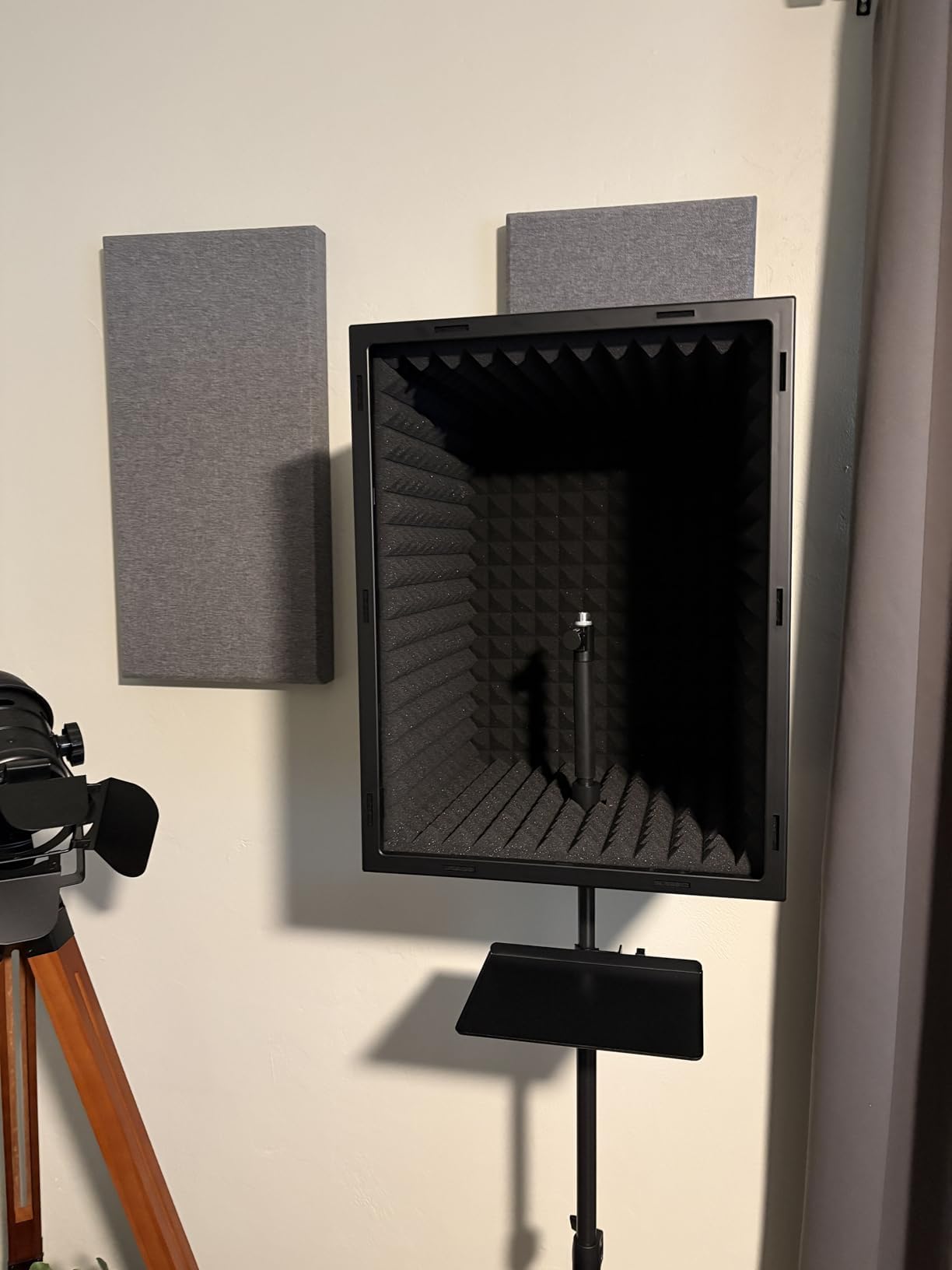
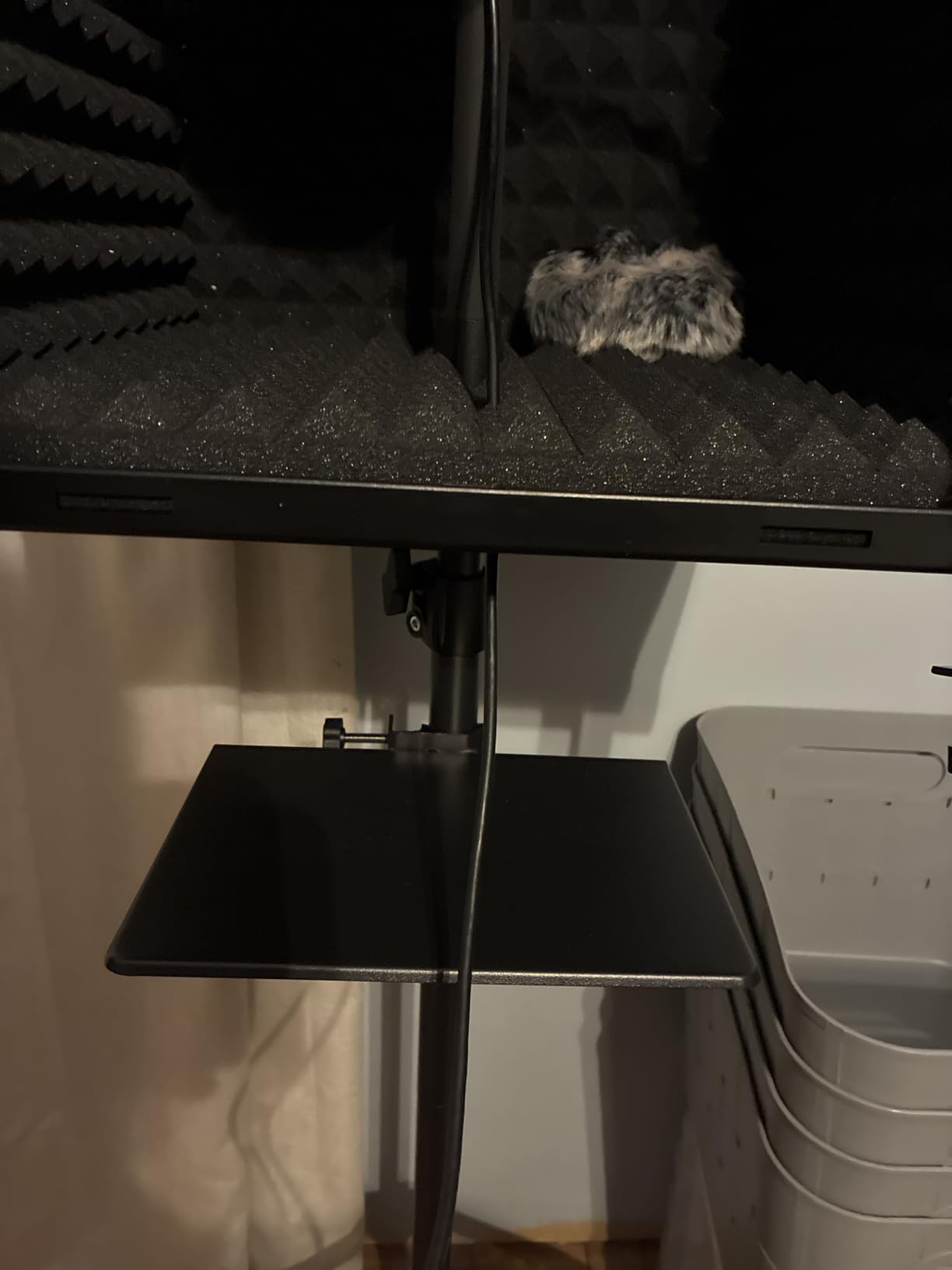
My favourite detail is the telescoping pole. It adjusts from 51.2 to 74.8 inches, so the same unit works for a seated interview and a standing stream, and the mic fixing pole doubles as a tray for a phone or tablet. Installation takes about five minutes.
The trade-offs are footprint and weight. At 10.14 pounds with a 15 x 15 x 19.7 inch exterior, it needs real desk space, and the mount is rated for microphones up to 4.4 pounds — enough for most condensers, not for a heavy studio model with a large shock mount.
Will it fit a large-diaphragm condenser?
Yes, as long as the mic stays under about 4.4 pounds with its mount. The interior is 12 x 13.6 x 16.7 inches, which is roomy for a USB or dynamic mic and comfortable for most side-address condensers, and a 3/8 to 5/8 inch adapter is included.
If your microphone plus shock mount exceeds the weight limit, look at the sE Electronics filter instead, which is built for large-diaphragm condensers without a stated weight cap.
Is a box shield better than a flat one?
For reflection control, generally yes, because the enclosed design removes the open side that leaks reflected energy past the mic. For footprint, no — a box shield always takes more desk space than a folding panel.
Reviewers consistently single out the stability of the reinforced frames and the heavy steel tripod as the reason the box does not flex while you talk. That rigidity is what the cheaper kits on this list lack.
6. sE Electronics RF SPACE Reflexion Filter — Best Studio-Grade Build
- Deep air gaps avoid comb filtering
- All-metal hardware feels professional
- Full-bandwidth control without colouration
- Lockable mic stand mounting
- Heavier than foam shields
- Can tilt a light mic stand
- Small parts feel less premium
The RF SPACE is the oldest design in this roundup and still the most considered. sE Electronics patented a multi-layer filter with deeper air gaps between layers, and that spacing is the point: shallow single-layer shields can comb-filter your voice, and this one was engineered specifically to avoid it.
It is also all metal, with no plastic and no low-cost foam anywhere in the build. Reviewers consistently describe it as a clear step up from foam shields, and the difference in feel is obvious the moment you handle the frame.
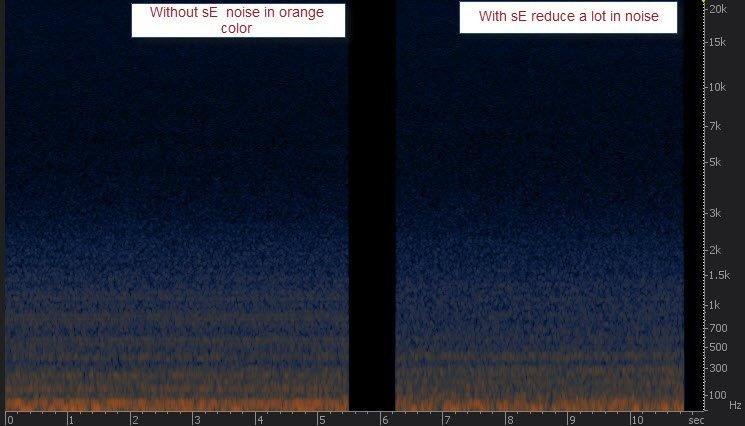
The lockable mounting hardware clamps to mic stands and drum hardware and keeps the position fixed once you have dialled it in. Reviewers report consistent results across apartments, studios and hotel rooms, which is a more useful statement than any percentage claim.
At 8.8 pounds it is noticeably heavier than a foam shield, and owners report it can tilt a light mic stand. The mic holder can also be awkward when routing an XLR cable, and the screws feel cheaper relative to the frame than the rest of the build.
Is it worth spending more for metal construction?
Yes, if you record often or travel. Metal does not flex, does not degrade with humidity the way fabric shells do, and holds its position, so your mic placement stays the same from session to session.
Less obviously yes if you record occasionally in one room. A foam shield does the same acoustic job for a fraction of the outlay, and the audible difference between a well-placed shield and this one is much smaller than the difference between a well-placed shield and no shield.
Will it fit a large-diaphragm condenser?
Yes — it is the pick on this list for large-diaphragm condensers, and it also fits most mid-size mics. The lockable hardware means you can leave the mic in place between sessions, which is where the construction quality pays back.
It comes with a two-year warranty, extended to three years if you register online, which is longer coverage than most fabric booths in this category offer.
7. VOCTENT 360-Degree Reverb Isolation Booth — Best for Travel Packing
Voctent Portable Vocal Booth for Recording, Sound Booth for Home Studio
- Full 360 degree absorption
- Blankets far thicker than moving blankets
- Vacuum bags make packing genuinely easy
- Professional packaging
- Not soundproof
- Interior warms during long sessions
- Two people recommended for assembly
VOCTENT is the pick for anyone who records in more than one place, and the reason is the packing system rather than the acoustics. The blankets ship in vacuum-sealed compression bags with a hand pump and straps, so a full 360-degree booth genuinely fits in luggage instead of a van.
The blankets themselves are the other standout. They are roughly twice the thickness of typical competing booths, made with sound-absorbing cotton and dense fabric, individually washable, and reviewers consistently describe them as noticeably better than moving blankets. The floor blanket covers about 97 percent of the interior floor.
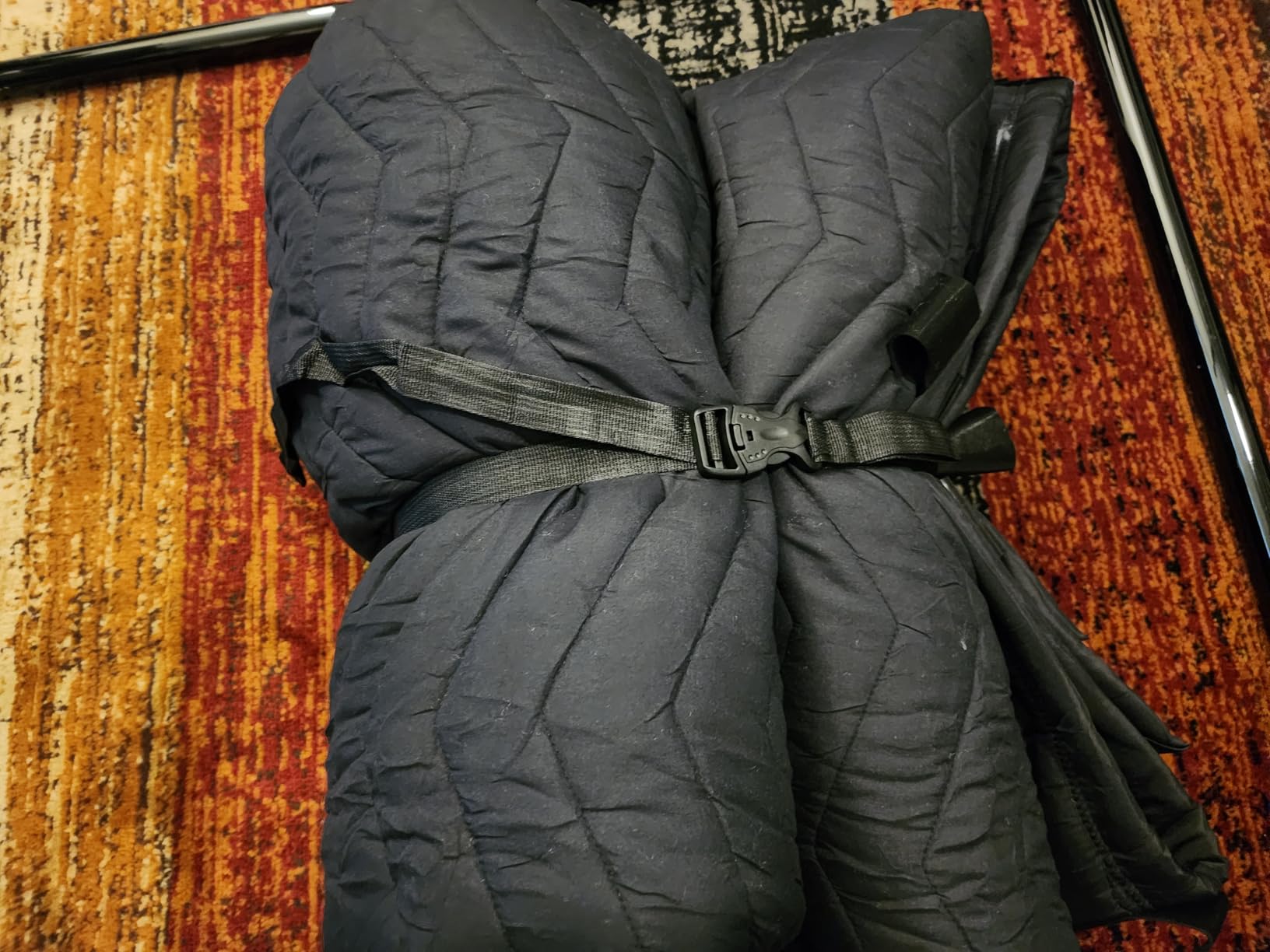
Assembly uses a pre-cut PVC frame with no glue required, attaching the blankets with Velcro straps. That is a genuinely tool-free process, though the 74 reviews make clear two people are sensible for the frame itself.
Extras are unusually well thought out: a USB-C rechargeable LED lamp with multiple colour temperatures, a tray for your audio interface, an iPad and phone mount, and a duffel bag. The white interior also reads as brighter and less claustrophobic than a black booth, which matters over a long session.
Is the interior tall enough to stand up in?
The L size is 33.5 inches by 33.5 inches with an 83 inch height, and the XL is available at 44 by 44 by 83 inches. Both are walk-in formats rather than mic-only enclosures, and the XL is the version that fits a desk and still leaves room to stand.
Check your ceiling clearance before ordering either. These are tall units, and a low ceiling is the most common reason a full enclosure cannot go where you want it.
Will it block noise from the next room?
No. Reviewers are clear that this treats room echo rather than external noise, and the booth is not soundproof. If your neighbours are the actual problem, you need acoustic panels in the room plus a good microphone with a low self-noise floor, not a fabric booth.
One other thing to check: a small number of buyers reported a missing roof or floor blanket, which customer service replaced quickly. The warranty itself is only three months, which is short for a booth of this size, so check the blanket count on arrival.
8. RDCMKL Portable Recording Booth — Best for Echo Control on a Budget
RDCMKL Portable Recording Booth, Foldable Vocal Booth for Home Studio
- Covers far more of the room than a desk shield
- Very dark interior
- Includes phone and script holder
- Big improvement in echoy rooms
- Assembly is slow with no instructions
- Cramped interior for taller users
- No shelf or desk surface inside
- Blocks no outside sound
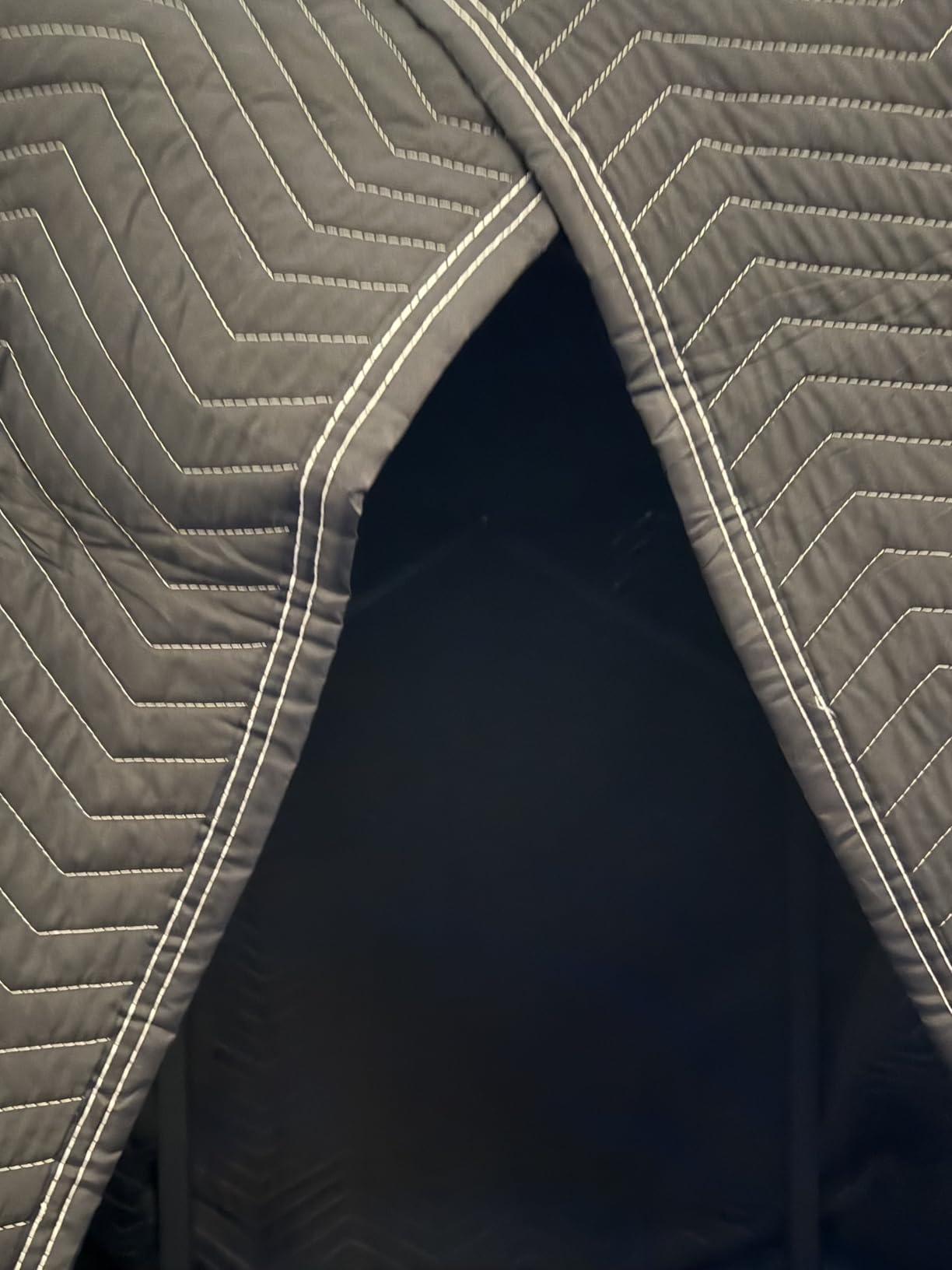
RDCMKL does one thing: it wraps a whole recording area in absorbing blanket rather than sitting on your desk. For a genuinely echoey room — bare walls, hard floor, high ceiling — that larger covered area makes a bigger audible difference than upgrading a small shield.
Reviewers report dramatic improvement in echo control in cheap rooms, and the very dark interior is a quiet bonus for anyone who records at night or does not want a light in frame. The foldable frame packs into the included travel bag when the show is finished.
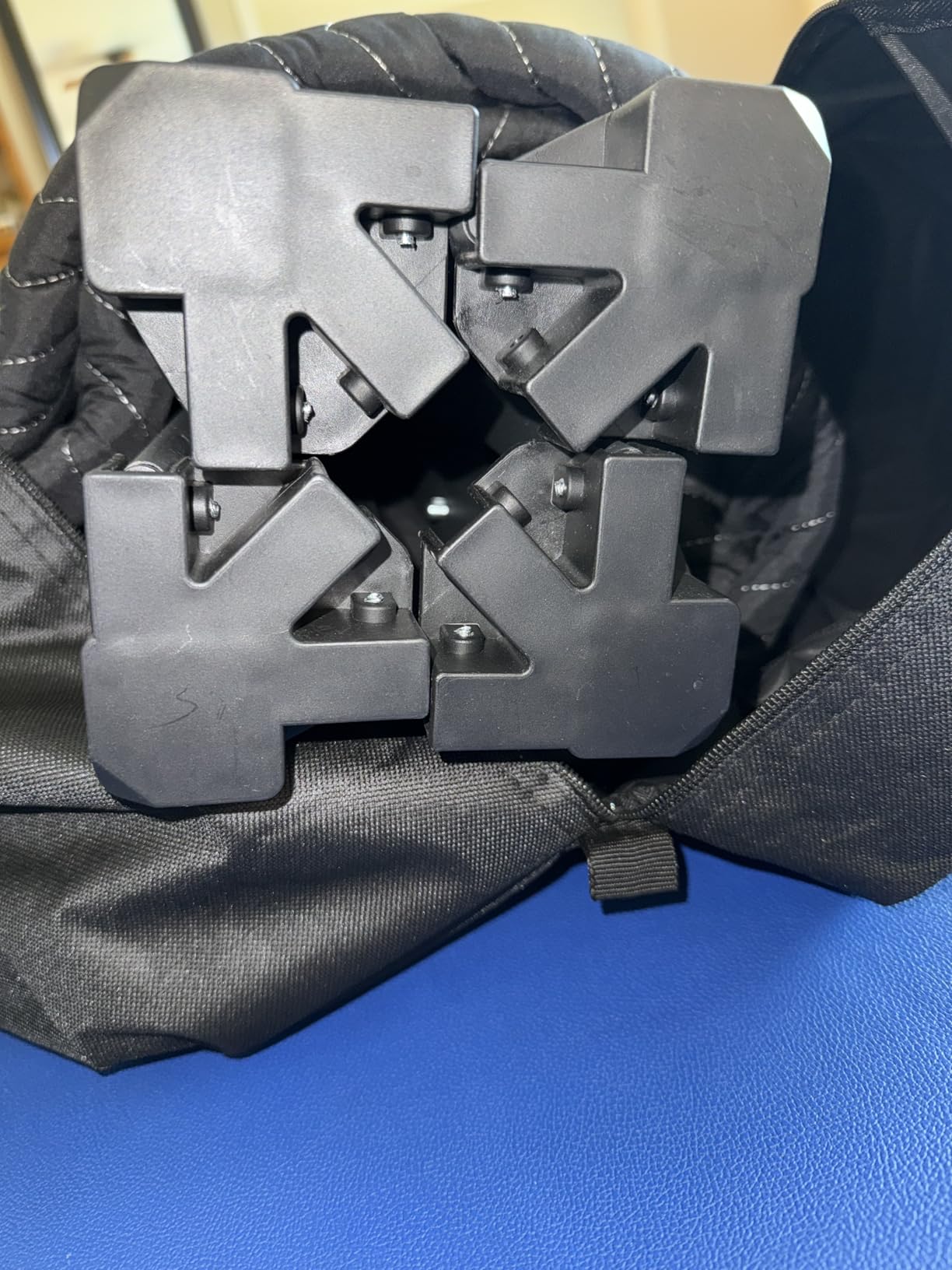
The phone and script holder at eye level is more useful than it sounds for audiobook and narration work, and there is a cable pass-through for mic and XLR runs. The footprint is 33 by 33 by 80 inches at 35.7 pounds, so it is a corner unit rather than a portable one.
Setup is the weak point and reviewers are blunt about it. Assembly is described as difficult and time-consuming with no instructions included, the interior is cramped and awkward to sit in for taller users, and there is no shelf or desk surface for equipment inside.
Is it tall enough for a tall person?
This is the most common complaint on the product, so treat it seriously if you are over six feet. At 33 by 33 by 80 inches the enclosure is snug rather than comfortable, and several reviewers describe the interior as awkward for taller users.
If you are tall, move up to a 44 by 44 inch enclosure or a stand-in booth such as the Snap Studio, which explicitly fits performers up to 6 ft 8 in.
Is the enclosure worth the assembly effort?
If your main problem is reverb in a hard, unfurnished room, yes — the covered area is large enough to change the take more than any desk shield will. Bring a friend and allow real time for the build, because no instructions are included.
Note that reviewers specifically object that it does not block outside sound at all, and some units arrived without cable pass-throughs. Check the frame on arrival before you start recording.
9. lunacme Portable Recording Booth — Best for Audiobook Narration
Portable Vocal Booth,Recording Booth Sound Booth for Recording Echo-Free Vocals Complete Home Recording Studio Foldable with Travel Bag for Voiceovers, Podcasts & Music
- Kills reflections well below comparable booths
- Heavy well-constructed sewn blankets
- Collapses into the carrying bag
- Good value for voiceover work
- Pop-up frame is hard to raise alone
- Included device holders are low quality
- Interior warms and needs airflow
lunacme is pitched at long-form voice work, and the blanket weight is the argument. Reviewers credit the thick, well-constructed blankets sewn together as one unit with reflection control and ambient noise reduction that punches above the booth’s price band.
The all-in-one pull-out frame is the selling point for anyone who records in different rooms. It collapses into the included carrying bag for mobile work, and the manufacturer claims up to 90 percent reverberation and noise absorption — again, a marketing figure rather than a measurement.
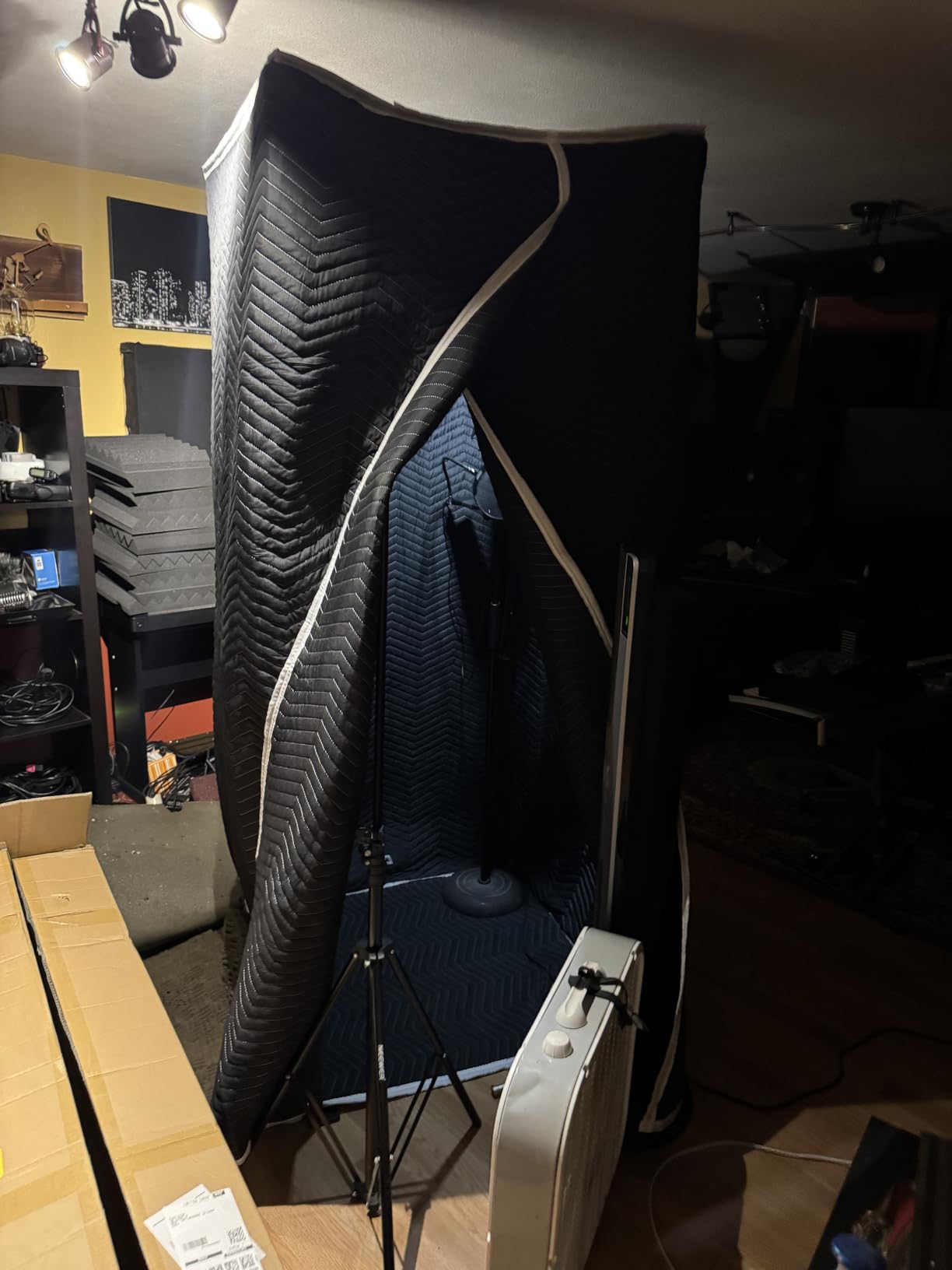
Read the complaints carefully, because they are specific. The pop-up frame is described as awkward and exhausting to raise single-handed, the included iPad and phone holders are low quality, and the interior gets warm enough that it needs airflow.
Quality control is the other theme, with buyers reporting broken pins and a broken carrying case on arrival. The blankets themselves are not fully sound deadening, so your voice can leak out and echo back in at low volume.
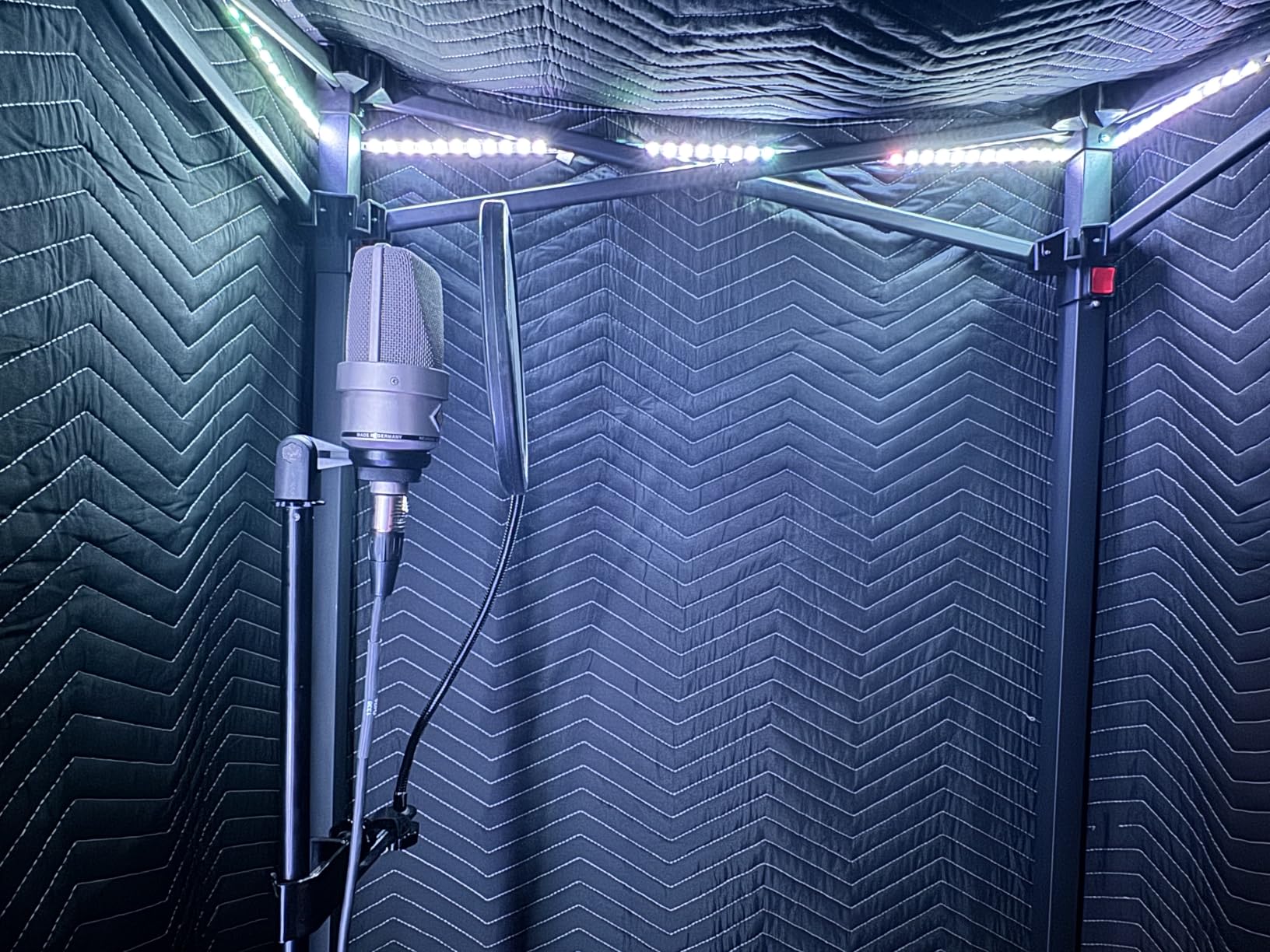
Is it good enough for audiobook recording?
Yes for the room problem. Audiobook work is all voice, all day, in an untreated room, which is exactly the situation a thick blanket enclosure fixes. The recorded narration is the priority over setup convenience.
For a mobile rig, the one-handed frame difficulty is a real problem. Have a second person available for the first build of each session, and check the pins and carrying case on arrival.
Does it stop sound leaking out to neighbours?
Not reliably. Reviewers report the blankets are not fully sound deadening, so your voice leaks out at speaking volume and can echo back in. If a neighbour is the problem, treat the room with broadband panels and choose a microphone with a low self-noise floor instead.
For narration on a single track using a portable recorder rather than a studio interface, the enclosure still does its job on the reflections that would otherwise smear every chapter.
10. ISOVOX 2 Home Vocal Booth — Best for a Permanent Setup
- Hard shell far more durable than fabric booths
- Internal mount fixes mic position
- Built-in light for a usable space
- Full-body enclosed recording
- Heavy with a fixed footprint
- Costs far more than portable fabric booths
- Single colour option
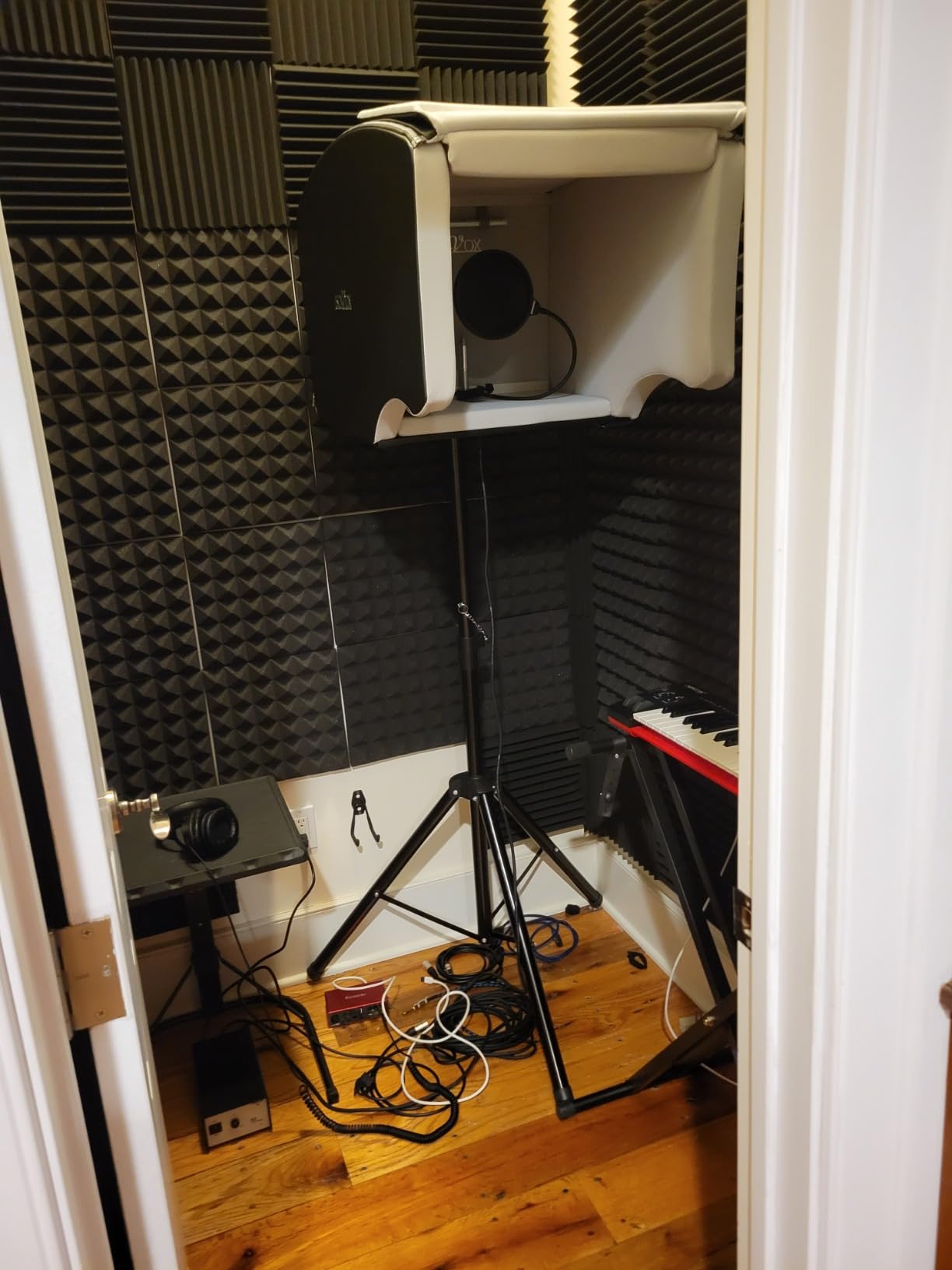
The ISOVOX 2 is the odd one out, and that is why it is here. Every other product is fabric, foam or folding panel; this is a stainless steel hard shell with an internal mic mount, a built-in LED light and a walk-in style enclosed booth. It is closer to a permanent studio fixture than a portable accessory.
That rigidity is the point. Reviewers value the hard shell as a more permanent alternative to fabric booths that flex and degrade, and the internal mic mount keeps the microphone in exactly the same position every session, which is worth real money once your recording is consistent.
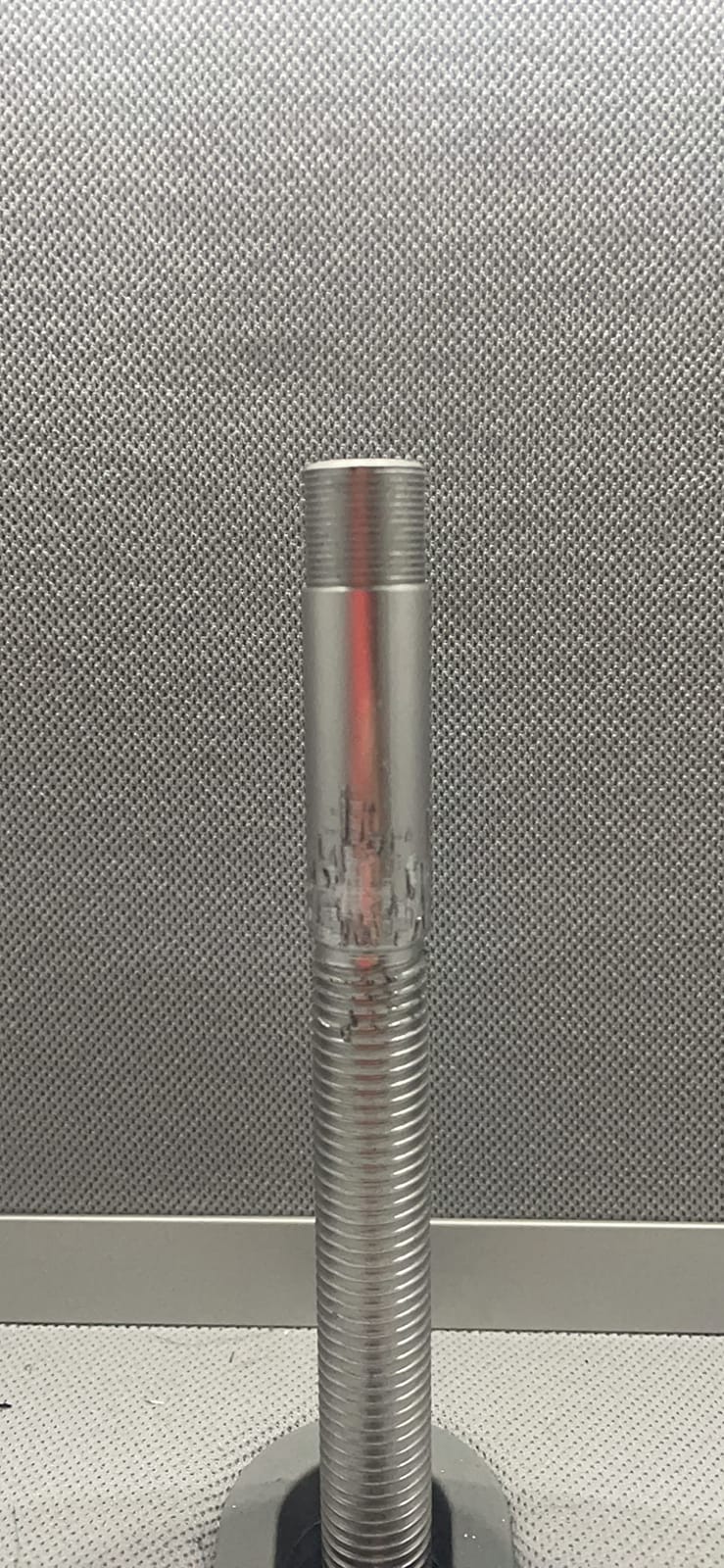
The listed internal size is 31.49 by 19.29 by 18.89 inches, with overall dimensions of 32.68 by 19.69 by 21.65 inches. Confirm your floor space before committing — this footprint is deep and the unit does not fold away.
At 24.2 pounds with a fixed footprint, and priced well above the portable alternatives, the honest drawback is that it is a commitment. The rating sits at 4.0 from 40 reviews, so the long-term owner picture is thinner here than elsewhere on the list.
Is it worth paying more than a fabric booth?
If the booth has a permanent home and you record every week, yes. A hard shell will outlast fabric, and the fixed internal mic mount means your capture chain is identical take after take.
If you need to move it between rooms or you are still working out whether you will keep recording, no. At 24.2 pounds with a fixed footprint, this is the least portable product we reviewed.
Does the steel shell stop outside noise?
Partly, and the practical caveats still apply. It encloses the performer for a genuine full-body recording environment, but a lightweight steel shell is not a soundproof room and low-frequency noise still passes.
Only one colour is offered, which limits how it fits into an existing studio, and the reviews are thinner than the rest of this list at 40.
How We Picked and What We Looked At
We ranked these on four things, in this order. First, review volume and rating together, because a 4.3 from nearly 2,000 owners tells you far more about month-six behaviour than a 5.0 from a handful. Second, whether the product actually addresses reverb, the problem it claims to address. Third, physical practicality: weight, folded size, footprint and setup time. Fourth, build materials and the length of warranty.
Every specification in this article comes from the manufacturer listing for that product, and every positive and negative point comes from the customer review data attached to it. Where a manufacturer publishes a percentage — 96 percent reverb prevention, 90 percent absorption, 92.7 percent reverb reduction — we have reported it as a claim and not treated it as a measurement.
We deliberately did not publish our own decibel readings. A single room, a single microphone and a single test position produce numbers that look authoritative and transfer to nobody else’s setup. If you want repeatable figures, run the same test yourself: fix the microphone position, record ten seconds of silence and speech bare, then repeat inside the booth, and compare on the same waveform scale.
Absorption vs Isolation: Which One Do You Actually Need?
Almost every disappointment in this category comes from one confusion, so here is the distinction in plain terms. Absorption means taking sound energy out of the room so it stops bouncing. Isolation means stopping sound crossing between spaces. A portable vocal booth is built for the first and almost never achieves the second.
That is not a criticism of the products. A soft, foldable, 2 lb object cannot stop sound passing through fabric, and the two goals need opposite materials: absorption wants thick, soft, porous surfaces, while isolation wants dense, heavy, airtight mass. The marketing language blends them, which is where the complaints come from.
Choose absorption if your problem is echo, reverb, a bright room, or a voice that smears. Choose isolation only if the space itself is the issue, and for that, buy proper treatment in the room rather than a portable booth.
What a Portable Vocal Booth Cannot Fix
Booths do not stop low-frequency energy. Traffic rumble, a fridge compressor, HVAC, a washing machine downstairs and a plane overhead all live in the low end, which fabric and foam barely touch. This is the single most common complaint in the reviews, and it is a physical limit, not a quality problem with any product on this list.
Booths do not stop outside noise generally. Every product here except the hard-shell ISOVOX is described by its own manufacturer as reducing reflections rather than blocking sound. The Snap Studio listing states plainly that it is not soundproof.
Booths do not fix plosives. A pop filter does, and the SwaykTech kit, the Dmsky shield and the TroyStudio all handle a mic and a pop filter in the same footprint.
So if your actual problem is noise rather than reverb, spend the money in a different order. Treat the room with broadband panels, then choose a microphone with a good self-noise floor and directional rejection — our vocal microphone guide covers that decision — and only then consider a booth.
What to Look for When Buying a Portable Vocal Booth
1. Match the product to the problem
Reverb problem, small room, occasional recording: a folding shield is enough. Standing performer, movement, video podcasting: you need a full-body enclosure. Noise from outside the room: neither helps, and you need room treatment. Decide this first, because it eliminates most of the list instantly.
2. Check height clearance honestly
This is the most under-considered spec. Compact shields are fine seated but tight for tall users, and enclosure reviews repeatedly mention cramped interiors. The Snap Studio explicitly fits performers up to 6 ft 8 in. If you are over six feet, filter out anything without a stated height.
3. Weight and folded size decide portability
The range is enormous: 2.02 pounds for the TroyStudio folding to a 12 x 12 x 6 inch pack, up to 46.2 pounds for the Snap Studio. If the booth lives in one room, weight is irrelevant. If it moves between a home and a holiday let, the travel bag and the number of people needed to lift it decide the purchase.
4. Look at what the enclosure is made of
All-plastic and thin fabric frames flex, and a flexing frame changes your mic position between sessions. Hardened frames, reinforced PVC and metal hardware hold their shape. The sE Electronics RF SPACE is all metal, and it is noticeably heavier for exactly that reason.
5. Confirm microphone compatibility before you buy
Check the mount type — a 3/8 to 5/8 inch adapter covers most large-diaphragm condensers — and any weight limit. The TONOR is rated for microphones up to 4.4 pounds, which rules out a heavy condenser with a full shock mount. Also check whether the stand mounts separately or needs the included tripod.
6. Work out what is actually in the box
A phone and tablet mount, a pop filter, a device tray, an LED lamp and an audio interface tray genuinely help, and the difference between kits is mostly in these small parts. Reviews complain most often about the accessories rather than the acoustic panel.
7. Check the warranty and the shipping condition
Warranty length varies from a three-month period on the VOCTENT to a two-year period extended to three on the sE Electronics. For fabric booths, inspect every blanket, pin and strap on arrival — missing pieces are the most commonly reported problem, and customer service resolved most of them quickly.
Recording in an Apartment With Neighbours and a Noise Curfew
The scenario that motivates most home podcasters is not a bad room, it is a rented one. A thread on r/audioengineering asked directly about a home vocal booth, and the practical constraints that came up were neighbours, a night-time noise limit, and the fact that you cannot drill into a wall you do not own.
Start by being honest about which direction your problem runs. If sound from outside is entering your recording, a portable booth will not solve it. If the issue is your own voice carrying into the hallway, you are in a slightly better position, because a closed fabric enclosure does attenuate the direct path — but the lunacme reviews show it is not fully sound deadening.
The workaround most people land on is volume and time rather than equipment. Recording at a level that does not project, scheduling sessions when the building is quiet, and treating the room with broadband panels to lower how much you have to project at all, tends to solve a neighbour problem more reliably than any booth.
There is also a legitimate DIY route. A commenter on GearSpace described building a portable booth from 1 inch PVC and ordinary moving blankets on a T-shaped boom mic stand frame, and said it worked pretty well. That is a legitimate weekend project for an experimental recording, and a reasonable way to find out how much booth you actually need before spending.
Recording With Two People in One Booth
Two-person remote shows are the most common paid podcast format, and they are the least considered in this category. A single shield is built for one microphone. Two microphones inside one small enclosure means the mics sit closer together, closer to each other’s reflections, and closer to the wall between you.
The practical requirement is floor space. The 44 by 44 inch enclosures are the ones worth considering for a two-person show, because a 33 by 33 inch footprint with two stands, two laptops and a cable run is genuinely tight. Check whether the enclosure has a tray for an interface and a mount for a laptop, since managing cables on the floor is what makes a cramped two-person session unworkable.
Headphone monitoring is the other decision. If your interface offers a direct hardware monitor, both hosts can speak comfortably without headphone bleed, which matters far more in a small reflective space. Otherwise use closed-back headphones and keep levels low. Our enclosed phone booth guide covers the alternative of recording guests separately, which gives you a dry take for each host with far less risk of overlap.
Do not try to record both hosts in a compact desk shield. You will spend the session fighting the space rather than the conversation.
Ventilation, Heat and Condensation Inside Sealed Booths
Nobody mentions this until they have recorded a two-hour session inside a closed booth. Reviews across the full-body enclosures repeatedly mention warmth, with the VOCTENT and lunacme users noting the interior heats up during long sessions. In a small fabric enclosure with no airflow, that heat is unavoidable.
The fix is session planning. Record in blocks of 30 to 45 minutes, step out between them, and keep a door or gap open between takes if the noise outside allows. If you are in a genuinely quiet period, an open door costs you less than a fatigued voice.
Condensation is the second issue, and it is specific to condensers. A cold microphone in warm, humid air inside a sealed booth can pick up moisture on the capsule, particularly with a large-diaphragm condenser on a boom stand close to the mic. Pop the filter off and let the mic acclimatise for a few minutes after you enter a warm booth, and store the mic in a dry location between sessions rather than leaving it inside the enclosure.
None of the enclosures on this list includes a fan, so ventilation is something you manage with session length and timing rather than with hardware.
Frequently Asked Questions
How effective are portable vocal booths?
They are very effective at removing echo and reverb from an untreated room, which is usually the largest audio problem in a home setup. They are not effective at blocking outside noise such as traffic, HVAC or neighbours, because soft fabric and foam absorb sound energy rather than stopping it passing through. Buy for reverb, not for noise.
What is the best portable voice booth?
For most home podcasters the TroyStudio foldable shield is the strongest all-round choice, with nearly 2,000 reviews backing how it performs after months of use. If you want a full-body enclosure and record standing, the Snap Studio booth fits performers up to 6 ft 8 in. If your room is hard and unfurnished, a larger blanket booth beats any desk shield.
How much do vocal booths cost?
Entry-level folding shields and pop-up fabric booths sit in the lower tier, mid-tier tabletop and floor-standing enclosure kits occupy the middle, and rigid hard-shell booths sit at the top. The useful comparison is not raw cost but coverage: a desk shield treats reflections at the microphone, while a full-body enclosure treats the whole recording area and costs considerably more.
What is a good portable soundproof booth for home use?
No portable booth on the market is truly soundproof, and the manufacturers generally say so. A good portable vocal booth for home use is one that wraps the microphone and performer in thick absorbing material, giving a dry, echo-free take. If you need real isolation between rooms, buy permanent acoustic treatment and a microphone with a low self-noise floor instead.
What is the best booth for recording vocals?
For a singer, choose a full-body enclosure rather than a desk shield, because most room energy comes from your body and the walls around you rather than from reflections at the microphone. A booth with enough height clearance to stand comfortably and a floor blanket matters more than brand. Confirm the interior dimensions against your height before ordering.
What is the best setup for home vocal recording?
Start with a directional microphone with a low self-noise floor mounted in a shock mount, then add a pop filter on a separate arm. Add a portable vocal booth around the microphone and a reflection filter in front of it, and treat the first reflection points on the wall behind and beside you. Finally, add broadband panels or thick curtains to the wall and floor behind the microphone.
Conclusion
The best portable vocal booth for most home podcasters is the TroyStudio foldable shield. It costs almost nothing in effort, folds flat enough to travel, and has the largest body of long-term owner feedback in the category at nearly 2,000 reviews. It fixes reverb, which is the problem most untreated rooms actually have.
If you record standing or want a dedicated corner that folds away, move up to the Snap Studio enclosure. If your room is hard and unfurnished and reverb is severe, a larger blanket booth such as the VOCTENT or the RDCMKL covers more area than any desk shield can. And if you already own a good microphone, the sE Electronics RF SPACE is the build that will still look right in five years.
Whatever you choose, pick it for reverb, not for noise, and check the height clearance before you click through. In 2026, the best portable vocal booths for home podcasters remain the cheapest meaningful upgrade you can make to a home recording chain.