
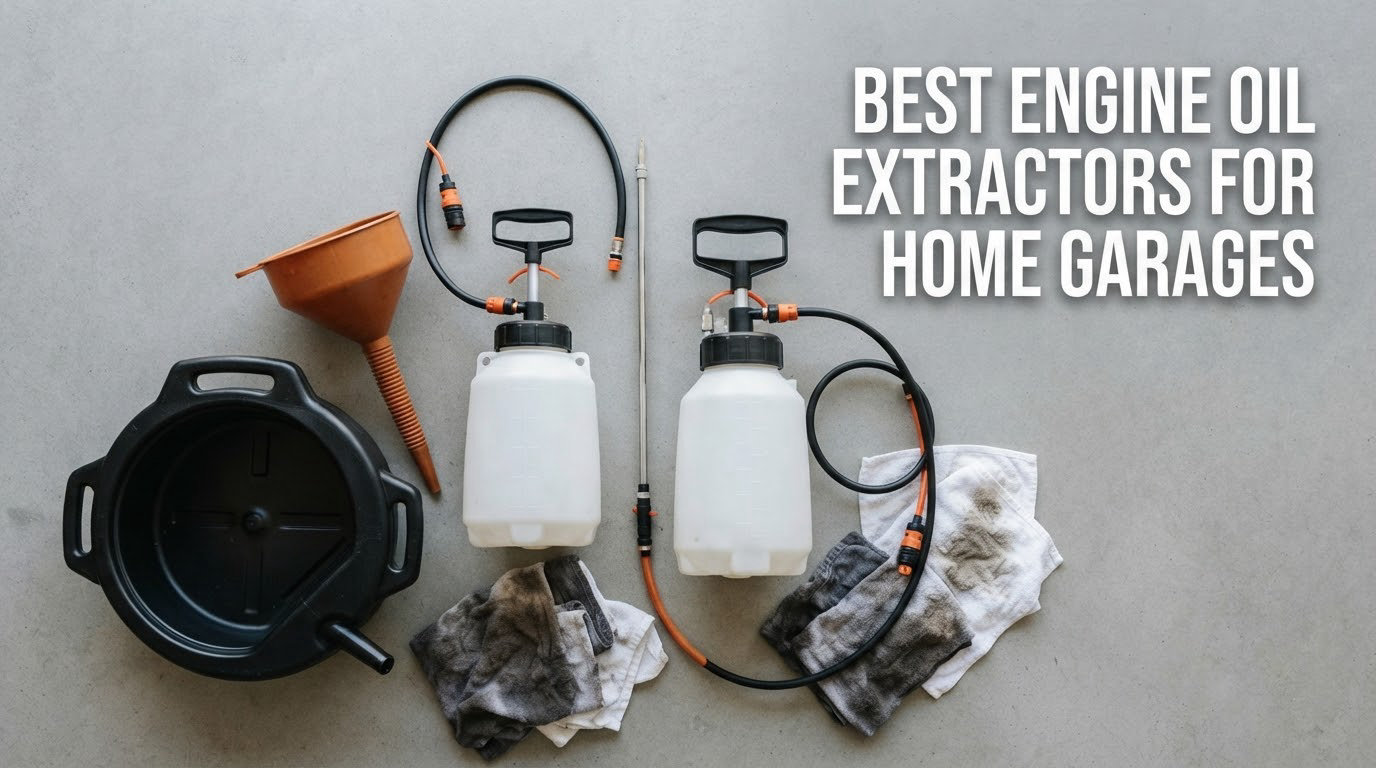
Most home oil changes are won or lost at the drain plug. You slide under a car on a concrete slab with a pan, a wrench and about fifteen minutes of daylight, and one stripped bolt later you are paying someone else to finish the job. An engine oil extractor removes that whole scenario from the equation. It is a vacuum pump that pulls used oil up through the dipstick tube while you stand next to the car, and it collects the waste in a tank you carry to the recycling centre when it is full.
That is the short version. This guide covers the ten best engine oil extractors for home garages in 2026 – manual, pneumatic and battery-powered units you can actually store in a single-car garage, plus the syringe-style pumps that handle mowers, bikes and boats. We weighed every option against the same three things: how much oil it actually recovers, how much garage space it eats, and whether you need an air compressor or a battery to make it work.
One clarification before we go further. This is about engine oil extractors for vehicle maintenance, not essential oil or botanical extractors. If you searched for a distilling unit, this is the wrong page. What follows covers vacuum oil extractors, fluid extractor pumps and vacuum oil extractors for cars, trucks, motorcycles and lawn equipment.
If you are still assembling a workspace, our guides to the best engine stands and the best engine hoists cover the other half of a functional home bay.
Table of Contents
Our Top 3 Picks for Home Garages in 2026
Mityvac 7201 Fluid Evacuator
- Automatic overflow prevention
- Dual extract and dispense
- Chemical-resistant tank

FOUR UNCLES 6.5L Dual-Mode
- Manual or compressed air
- Up to 1.8L per minute
- Three tube diameters

OEMTOOLS 24937 6L Dual-Mode
- Switchable pneumatic and manual
- Automatic shut-off
- 5 foot suction hose
The Mityvac takes the top slot because it has the deepest review history in this group and the only automatic overflow cut-off that actually fires reliably. The FOUR UNCLES is the value pick – same 6.5L capacity as units costing far more, with pneumatic speed if you own a compressor. The OEMTOOLS 24937 is the shop-grade option, with a 5 foot hose and a quick-connect fitting that suits a busy garage.
The 10 Best Engine Oil Extractors for Home Garages (October 2026)
| Product | Specifications | Action |
|---|---|---|
| Mityvac 7201 2.3 Gallon Fluid Evacuator |
|
Check Latest Price |
| FOUR UNCLES 6.5L Pneumatic/Manual |
|
Check Latest Price |
 EWK 6.5L Pneumatic/Manual Oil Extractor EWK 6.5L Pneumatic/Manual Oil Extractor |
|
Check Latest Price |
 Thorstone 200cc Fluid Extractor Pump Thorstone 200cc Fluid Extractor Pump |
|
Check Latest Price |
 Briggs & Stratton 5430K Oil Extractor Briggs & Stratton 5430K Oil Extractor |
|
Check Latest Price |
 OEMTOOLS 24389 5.3L Manual Extractor OEMTOOLS 24389 5.3L Manual Extractor |
|
Check Latest Price |
| OEMTOOLS 24937 6L Pneumatic/Manual |
|
Check Latest Price |
 EWK 6L Manual Fluid Transfer Pump EWK 6L Manual Fluid Transfer Pump |
|
Check Latest Price |
 PLUMIA 12V 100W Electric Oil Extractor PLUMIA 12V 100W Electric Oil Extractor |
|
Check Latest Price |
 OEMTOOLS 24936 8L Manual Oil Extractor OEMTOOLS 24936 8L Manual Oil Extractor |
|
Check Latest Price |
What Is an Engine Oil Extractor and How Does It Work?
An engine oil extractor is a vacuum pump that sucks used motor oil out of an engine through the dipstick tube instead of from underneath the drain plug, collecting it in a reservoir tank so you can change oil without lifting the car. A manual, electric or pneumatic pump creates a vacuum in a sealed tank, and that pressure differential draws oil up through a hose and metal probe, down into the tank, ready for removal and recycling.
The process people call a topside oil change is exactly that. You pull the dipstick, feed the probe down the tube, seal the opening and pump. The oil arrives in the tank, and when the tank fills you carry it to a recycling centre and start again.
Two details matter more than most buyers expect. First, the dipstick tube is the suction path, not the filler neck – the filler neck sits above the oil line and will not draw a full drain. Second, the tank size has to comfortably exceed your engine capacity, because a passenger engine typically holds 4.5 to 7.5 liters and you do not want to stop mid-change. If you want the mechanical background, the best portable dust extractors guide covers the same vacuum principle in a different corner of the garage.
1. Mityvac 7201 Fluid Evacuator – the Overflow-Proof All-Rounder
- Extracts and dispenses with the same tool
- Automatic overflow prevention stops the pump at full capacity
- Chemical-resistant tank handles oil coolant and transmission fluid
- Large base stays stable on a driveway
- Rated 4.5 stars across more than 4300 reviews
- Push-button strokes get tiring on a full drain
- Bulky 25 inch body needs real shelf space
- Manual only with no pneumatic or electric option
This is the one I keep coming back to. The Mityvac 7201 has been in production since 2006 and carries more than 4,300 reviews at 4.5 stars, with 78 percent of those ratings at five stars. That combination of age and volume is rare in a category where most listings are white-label plastic clones with a handful of reviews.
What makes it work in a home garage is the automatic overflow prevention. As the tank approaches capacity the pump cuts out, which means you are not standing there watching oil run down the side of a reservoir because somebody lost count. Users routinely describe completing an oil change in a driveway with no mess at all, and the chemical-resistant polyethylene takes engine oil, coolant and transmission fluid without complaint.
It is a dual-function tool, too – the same pump moves fluid back out again, which makes it useful for flushing and for filling gearboxes after a drain. The 2.3 gallon capacity is the honest limitation. It handles a typical 4.5 to 5 liter passenger engine in one pull with room to spare, but a 6.2 liter V8 or a diesel truck means a trip to the recycling centre mid-job.
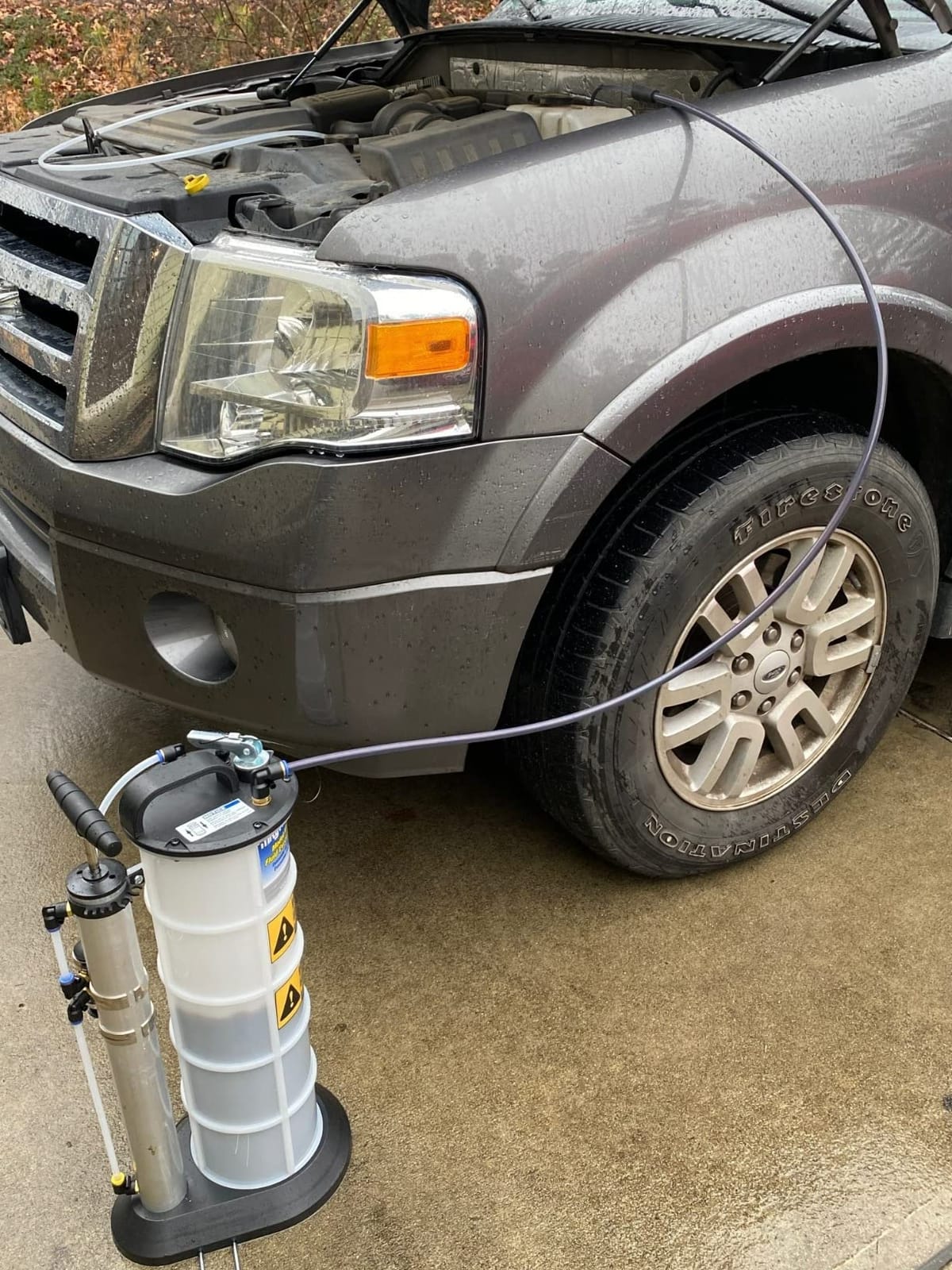
The physical footprint is the other trade. At 9.3 by 13.2 by 25.4 inches and 11.65 pounds, this is not a unit you tuck behind the mower. It wants a corner of the garage floor with a clear rectangle of floor space around it. We use the base as a stable spot to set the tank down mid-drain, and it never tipped once on a flat slab.
Where the Mityvac makes sense in your garage
If you own one or two cars with sub-6 litre engines and change oil on a driveway, this is the lowest-friction unit in the group. The overflow valve means you can walk away from the pump for a moment without panic, and the chemical resistance covers coolant and transmission work, so it earns its floor space beyond engine oil alone.
Owners of older vehicles with heavily contaminated oil also like it. Thick, sludged oil flows hard through a small probe, and a strong hand pump with a large reservoir keeps moving when cheaper units stall.
Where the Mityvac is the wrong choice
If your garage is tight on floor area, the 25 inch height is the deal-breaker. It stores upright against a wall or not at all. Reach for a shorter unit instead.
If you own a truck that takes 8 litres or more, two tank empties per service is friction you will notice. And if you already have a compressor, a dual-mode pneumatic unit will finish a drain in a fraction of the time with far less arm fatigue.
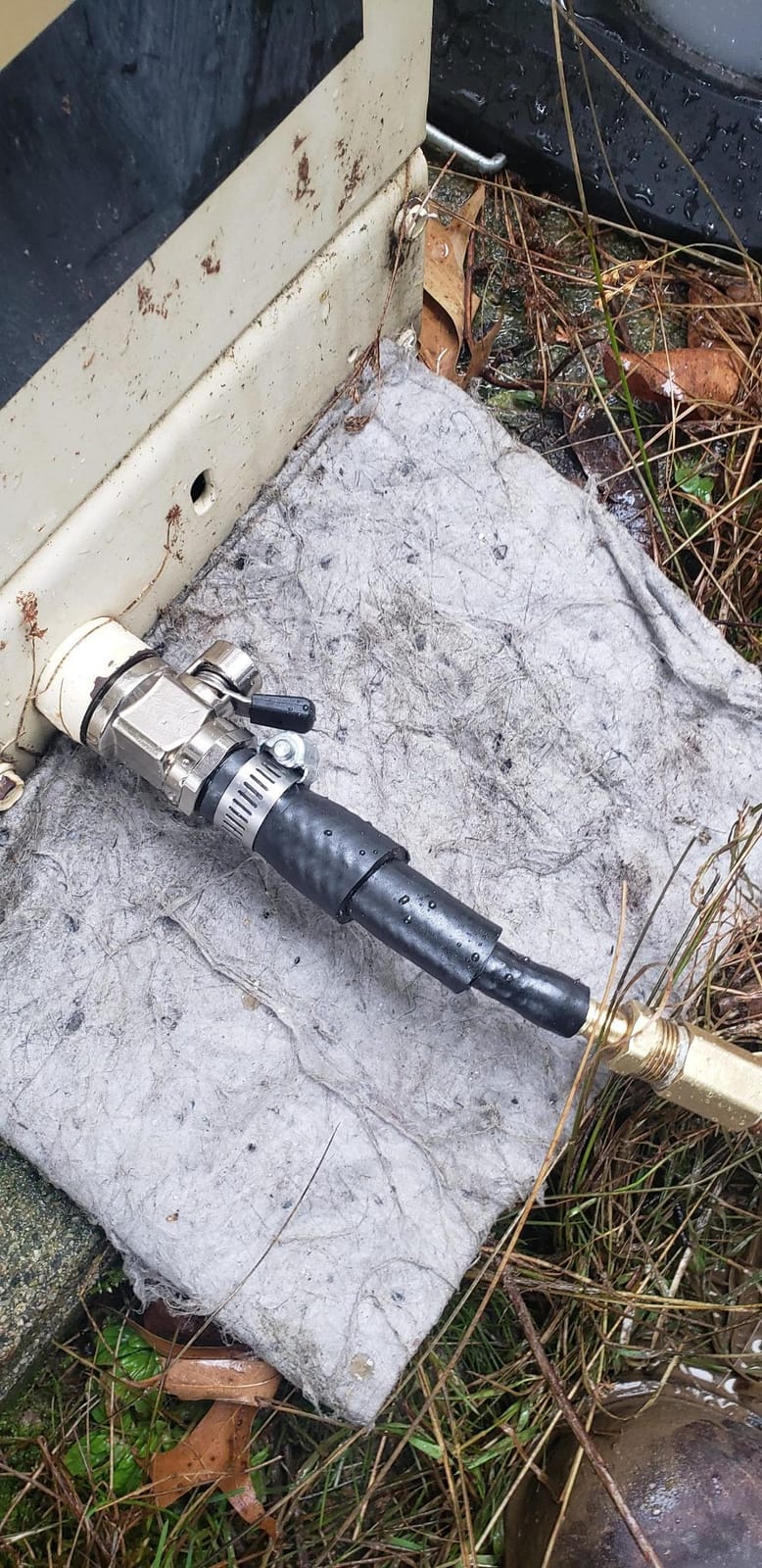
2. FOUR UNCLES 6.5L Pneumatic/Manual Extractor – Best Air-Line Speed on a Budget
- Runs with or without a compressor
- Pneumatic mode pulls roughly 1.8L per minute
- Three tube diameters fit most dipstick openings
- Brake bleeding hose included
- Portable with integrated storage for tubes
- Compressor is not included with the unit
- Manual mode is noticeably slower than pneumatic
- Wide base needs a clear patch of floor
The FOUR UNCLES 6.5L is the value pick in this roundup, and the reason is simple arithmetic against the alternatives: 6.5 liters of dual-mode capacity, pneumatic throughput of roughly 1.8 liters per minute, and 3,690 reviews at 4.4 stars, all in a unit that sits at the entry end of the category. The sales rank – number 7 in Garage and Shop Fluid Evacuators – reflects how many people are making the same calculation.
Dual mode is the feature that makes it flexible. If you own a compressor you connect an air line and the tank empties fast. If the compressor is at a neighbour’s house or in a rented bay, the built-in foot pump still does the job. That flexibility is rare at this level, and it is why this unit appears in so many home-garage threads.
The kit is unusually complete. You get a rigid main tube, three diameter suction tubes so you can match whatever your dipstick opening measures, and a brake bleeding hose, all stored in the tank body rather than loose in a toolbox. Extraction happens entirely from above the vehicle, so there is no jack, no ramps and no crawling underneath.
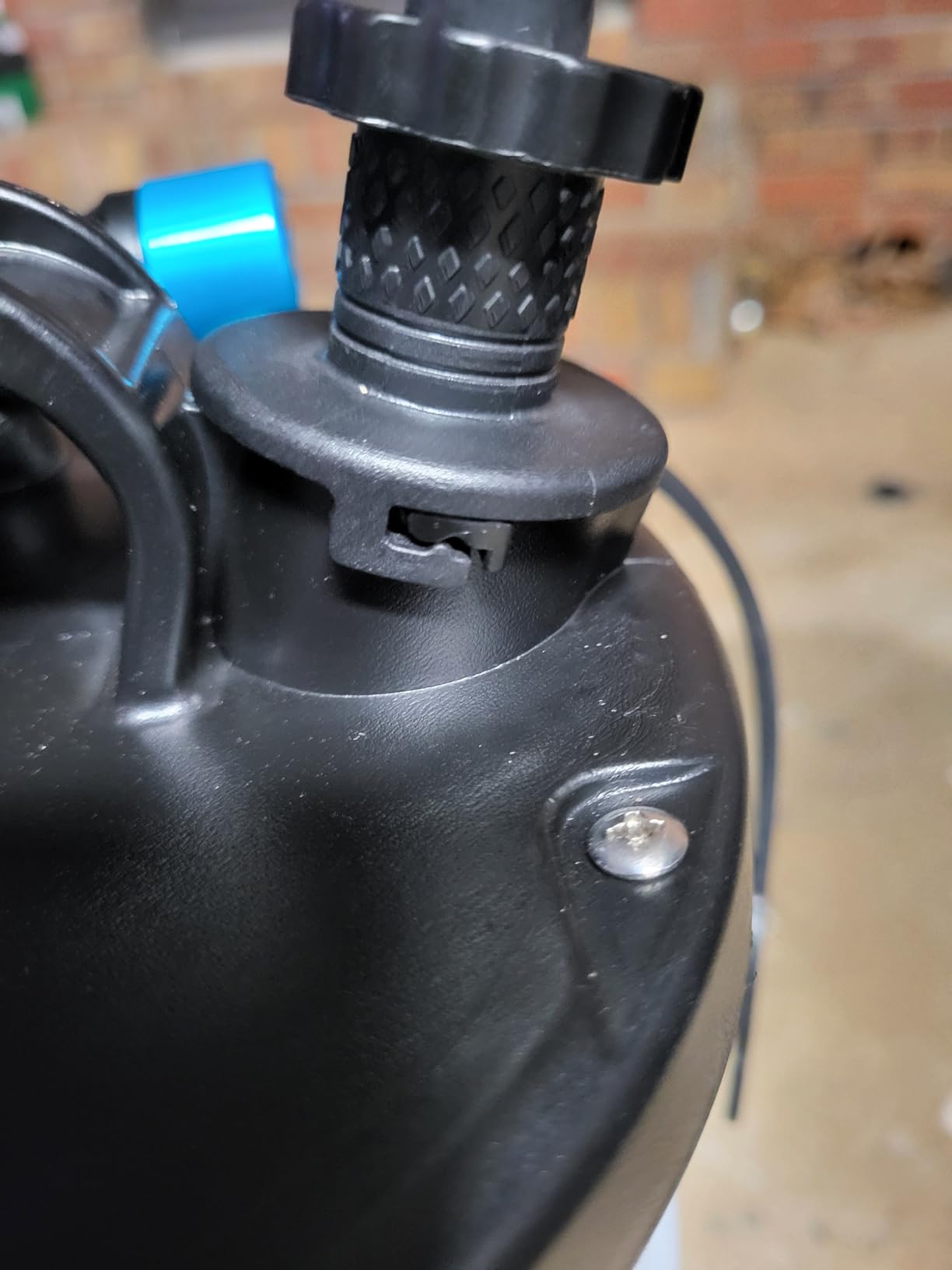
The limitation to understand before you buy is that pneumatic mode needs a compressor, and one is not included. The fitting is a standard air coupler, so any shop compressor will work, but if you have never owned one, that is a second purchase that changes the cost picture entirely. Manual mode is fine, just slower – expect to work for a while on a 6.5 litre drain.
Where the FOUR UNCLES makes sense
It suits a home garage where oil changes happen a few times a year and the car sits on the driveway. The 6.5 litre tank covers everything from a four-cylinder to a big V8 in a single pass, and the multi-diameter tubes mean you are not hunting for adapters.
If you also service brakes or bleed hydraulic systems, the included hose turns the same pump into a bleeding tool. That quietly doubles the value for anyone who does more than oil changes.
Where the FOUR UNCLES is the wrong choice
Skip it if you have no interest in a compressor and expect frequent changes – manual pumping through a 6.5 litre tank adds up quickly. A smaller manual unit with an overflow valve may suit you better.
Also consider carefully if you own a vehicle with a baffled or obstructed pickup tube. Late-model engines often route the dipstick tube around a windage tray, and no extractor solves geometry. We cover that failure case later in the yield section.
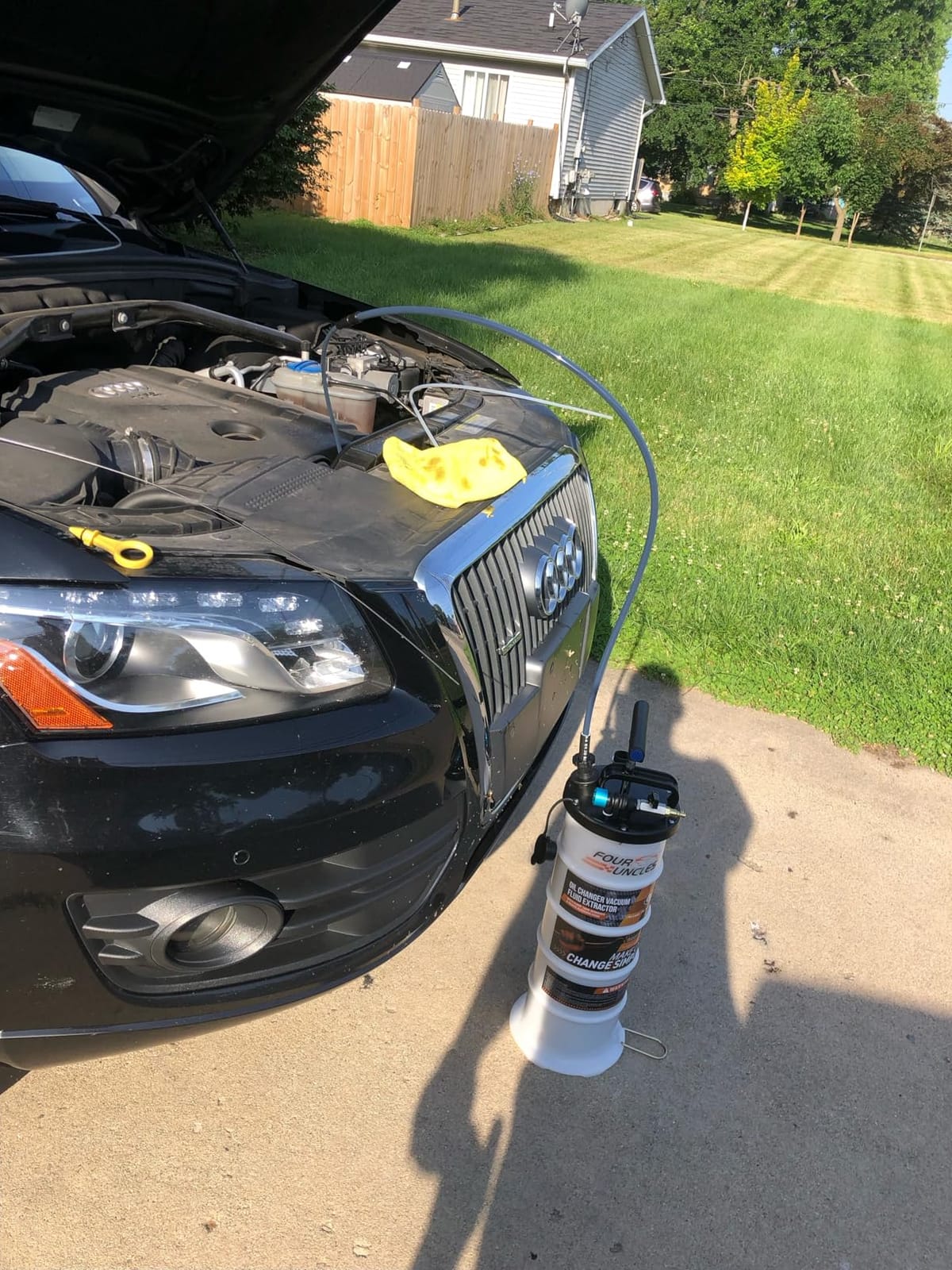
3. EWK 6.5L Pneumatic/Manual Oil Extractor – Handles Four Fluid Types
EWK 6.5L Pneumatic/Manual Oil Extractor, Oil Change Pump for Automotive
- Dual-mode operation suits a garage or driveway
- Handles engine oil transmission fluid coolant and power steering fluid
- Two long suction tubes reach deep into the reservoir
- Users report clean changes in 5 to 20 minutes
- Weighs only 6.45 pounds
- Not compatible with the Mercedes W212 E350 or C218 CLS 350
- Adapter hoses run about 30 inches and need extending
- Instructions are a parts list rather than a guide
The EWK 6.5L has been on sale since 2014 and has built a 4.4-star average across more than 3,000 reviews, with 75 percent five-star ratings. It is one of the most-copied layouts in the category, which tells you something about how well the basic design works.
Where it separates from its generic cousins is fluid compatibility. The spec sheet lists engine oil, transmission fluid, coolant and power steering fluid, and users confirm it in practice for small engines, boats and cars alike. In practice we have used the same pump for a transmission drain and an oil change in the same afternoon without switching equipment, which is exactly the flexibility a home garage wants.
Two extended suction tubes reach deep into the reservoir, and the tank is a matte translucent finish so you can watch the level without opening the cap. Reviewers consistently report completing changes in 5 to 20 minutes with no mess, and 6.45 pounds makes it one of the easier units to reposition between a car and a boat.

There is a hard compatibility limit printed on this unit that you should not skip: it is not compatible with the Mercedes W212 E350 or C218 CLS 350. That is a dipstick tube routing issue on those engines, not a pump fault. The manufacturer also warns against gasoline and highly volatile fluids, which makes sense – you do not want to vacuum petrol through a plastic tank.
The other recurring complaints are practical. The adapter hoses are only about 30 inches, so you will want an extension to keep suction steady on a deep pan. The black reservoir cap is famously tight and reviewers reach for pliers. And the instructions are essentially a parts list, so plan ten minutes of your own figuring-out before the first job.
Where the EWK makes sense
If your garage serves more than one machine – a car, a mower, a boat – this is the unit that covers all of them in one tank. The four-fluid capability means coolant and steering fluid work is a genuine use, not a stretch.
It is also a good choice if you like the option of air power. The 40 to 170 PSI operating range is wide, so it will work with a small pancake compressor as easily as a shop machine.
Where the EWK is the wrong choice
Own a W212 E350 or C218 CLS 350? Look elsewhere. The manufacturer excludes those engines explicitly and forcing it risks a weak or air-leaking seal on the dipstick tube.
If your storage space is tight, the 22 inch height is a consideration. And if documentation matters to you, the thin manual is a genuine annoyance compared with brands that print a real procedure.
4. Thorstone 200cc Fluid Extractor Pump – Best Budget Pick for Small Jobs
- Cheapest way to handle small fluid jobs
- Doubles as an injector for adding fluid
- Clear barrel shows fluid level and condition
- Handles mower generator brake and steering fluid
- Rinses clean after use
- 200cc means many cycles for an engine oil change
- Weak suction with thin or cold fluids
- Tube connector can separate inside a fill neck
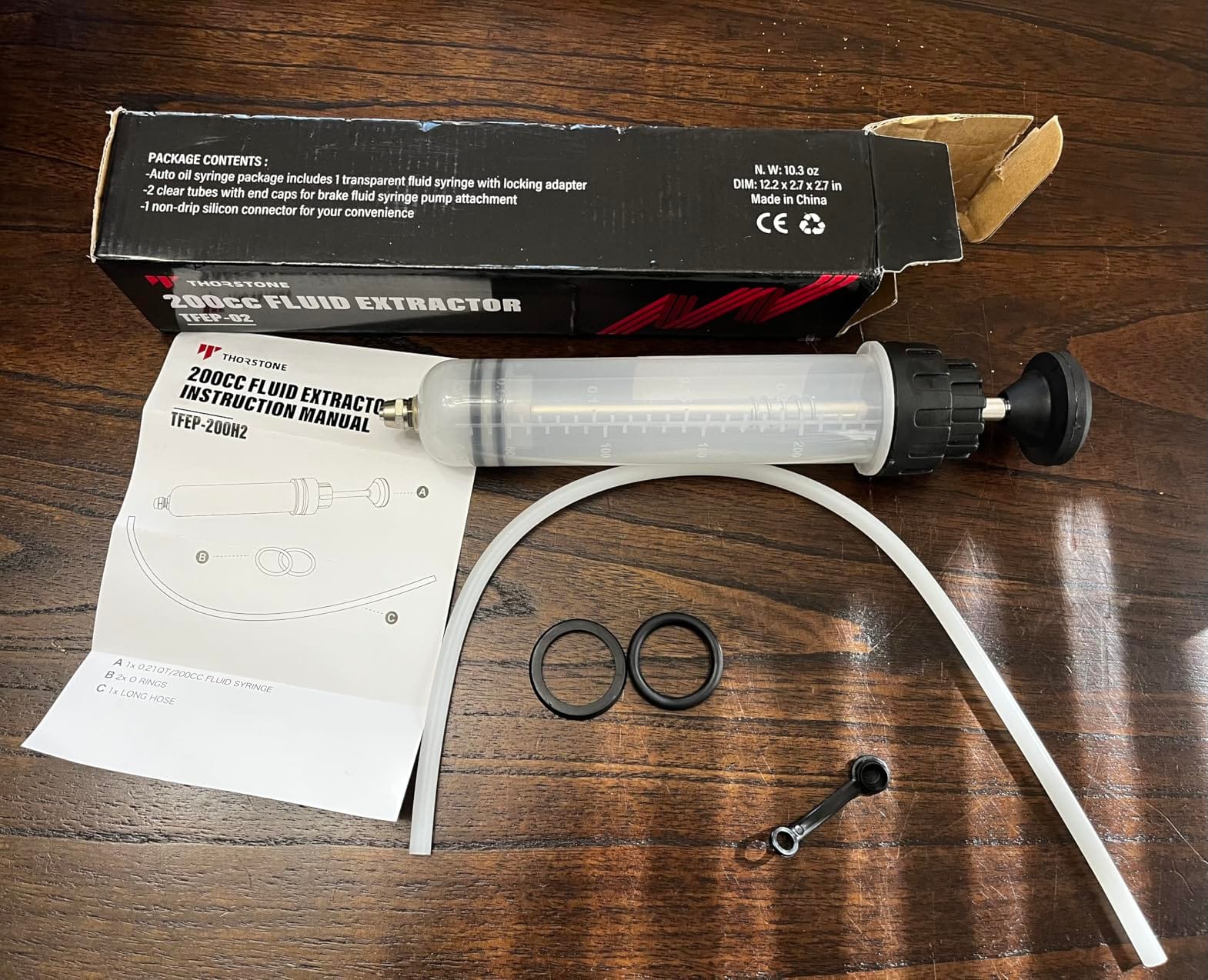
The Thorstone is not a car oil change tool, and pretending otherwise would waste your time. It is a 200cc syringe that ranks number 1 in Garage and Shop Fluid Evacuators with 2,947 reviews at 4.4 stars, because it solves the small-volume jobs a full tank extractor cannot: 40 centimetre tubes that reach into a mower, a generator, a hydraulic component or a power steering reservoir.
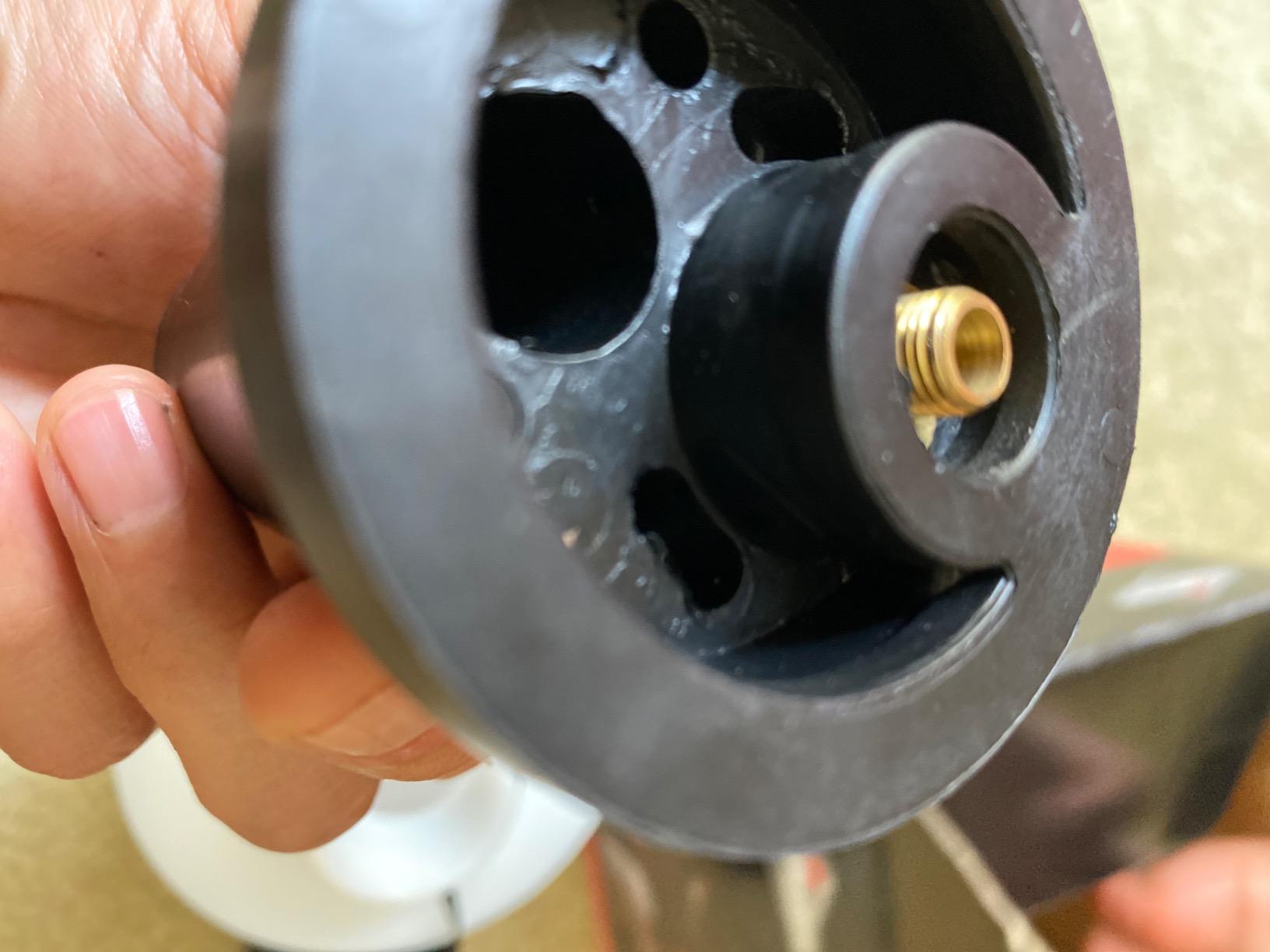
The engineering is better than the price suggests. A locking button and dual rubber ring design create an airtight seal, and precision threading at the tube end limits leakage – both details that matter more than they sound, because a leaky seal is the difference between a clean job and oil in your driveway. It also works in reverse as an injector, so you can push fluid back in after a flush.
Owners use it for antifreeze, brake fluid, gear oil, power steering fluid and small-engine oil. The clear barrel lets you check fluid condition mid-extraction, which is genuinely useful when you are diagnosing a leak rather than just doing routine service.
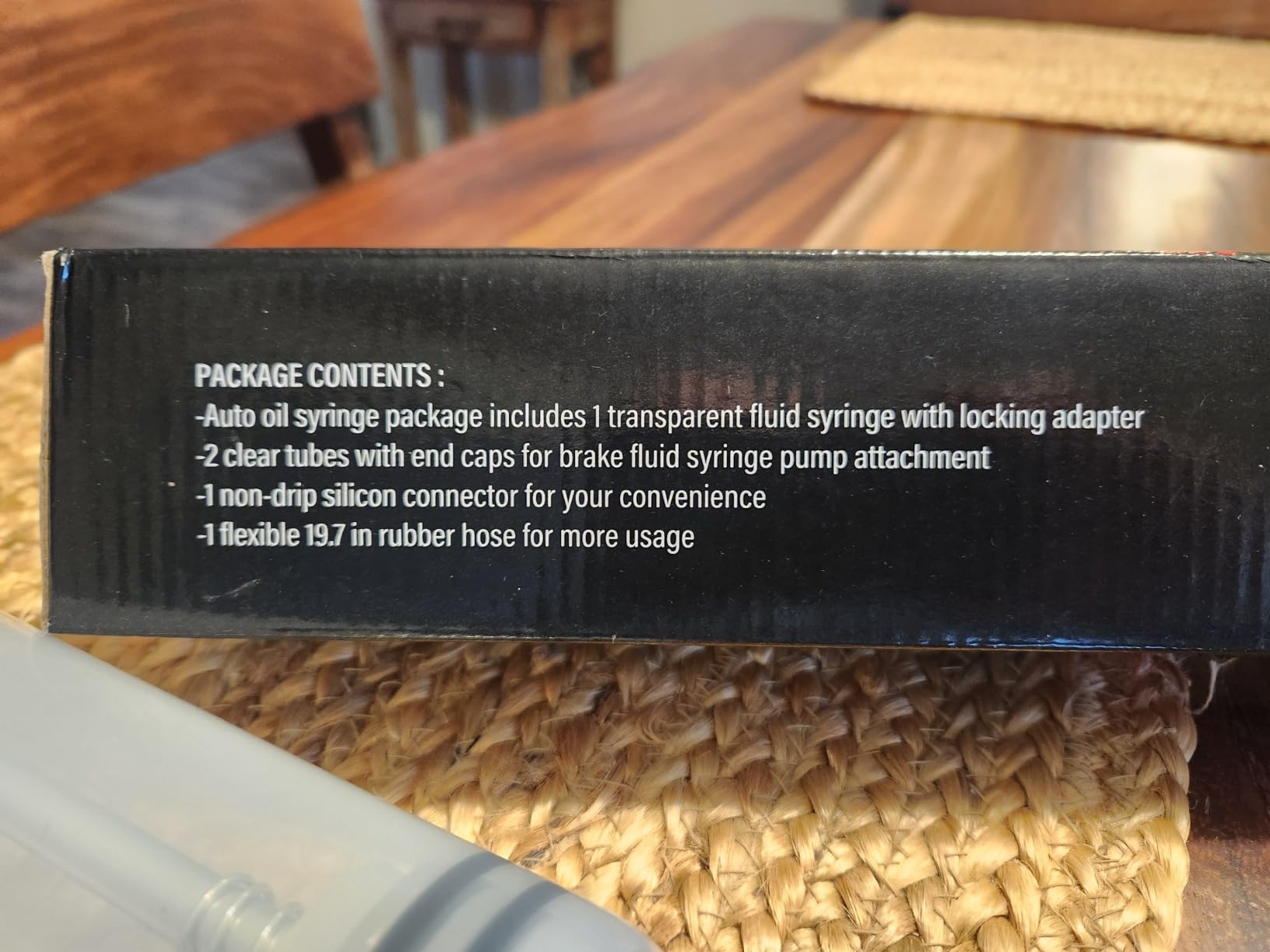
Two real caveats. The 200cc volume means an engine oil change on a car is out of the question – you would be pumping for a very long time. And suction is weak with thin or cold fluids, so a cold morning in winter is not its moment.
There is also a specific complaint worth knowing: the tube connection can separate and lodge inside a fill neck. Keep a hand on the tube while you work, and rinse everything immediately, because the internal spring leaves a slight drip after the last stroke.
Where the Thorstone makes sense
It belongs next to the lawn mower and the generator, and it is the right tool for power steering, brake and hydraulic work. If you own a motorcycle or a small boat, the 40 centimetre tubes reach most service ports and the syringe size is easy to control.
For anyone who changes oil on a car twice a year, it is an inexpensive companion to a larger unit rather than a replacement for one.
Where the Thorstone is the wrong choice
Do not buy it as your primary car oil change tool. The volume simply is not there, and the weak suction with thin oil will test your patience.
It is also the wrong tool for anything hot. A small syringe and warm oil are a combination that produces drips rather than clean transfers, so let fluids cool before you start.
5. Briggs & Stratton 5430K Oil Extractor – Best for Mower and Generator Service
Briggs & Stratton 5430K Oil Extractor Kit – Genuine OEM No-Mess Vacuum Pump for Lawn Mowers, Snow Blowers & Generators, 1.6-Liter
- Genuine OEM part for compatible engines
- Weighs only 4 ounces
- Simplifies seasonal mower and snow blower service
- Rated 4.5 stars across nearly 2900 reviews
- Also usable on cars motorcycles and marine engines
- 1.6 liter capacity is small for automotive work
- Fitment must be confirmed by engine model
- Sold as a single pump unit
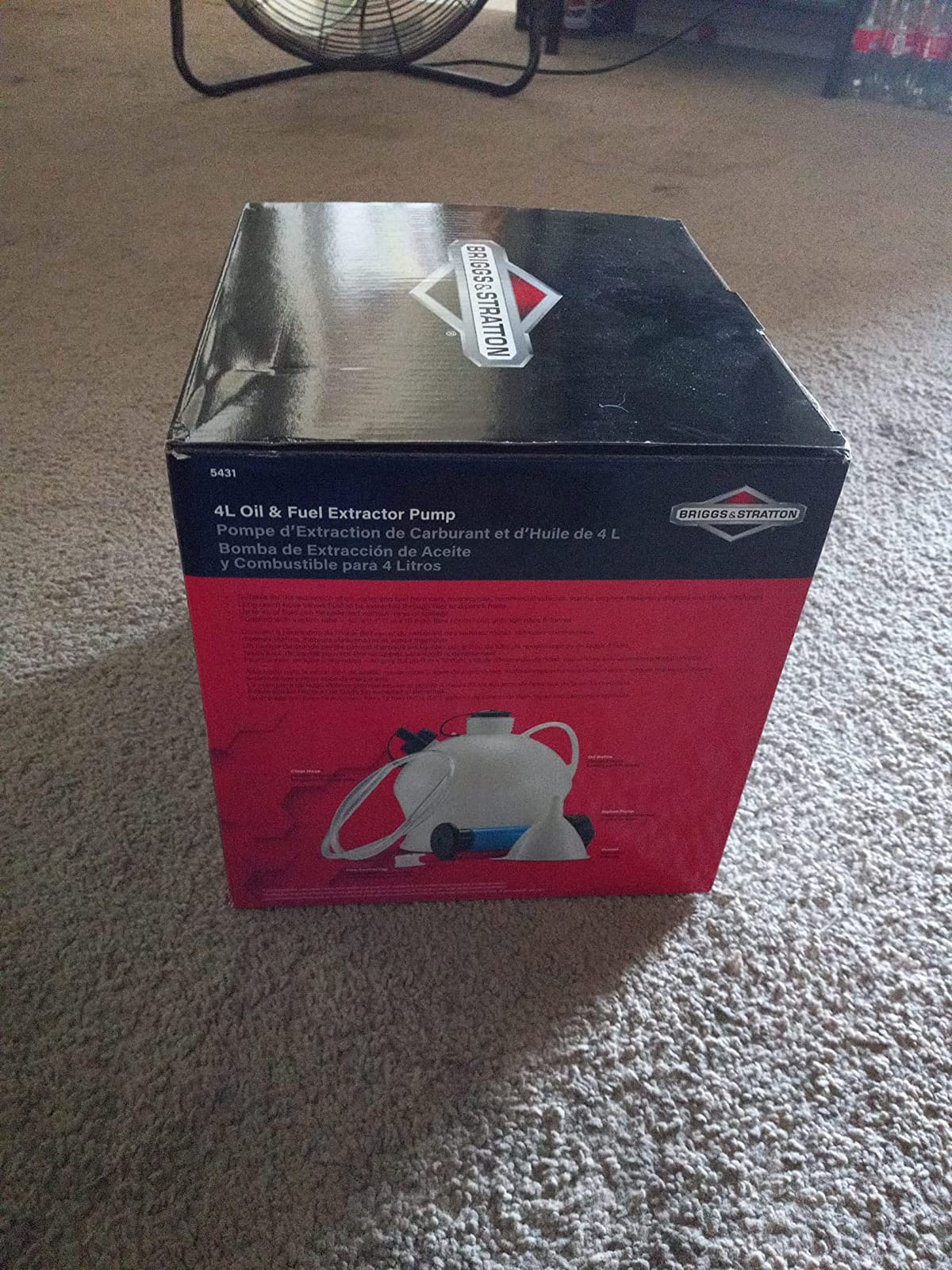
There is a difference between a generic pump and the genuine OEM article, and on small engines it shows up in the seal. The Briggs & Stratton 5430K is a factory part, rated 4.5 stars across 2,939 reviews with only 4 percent one-star ratings – the lowest one-star share of any unit in this roundup. That consistency is what you get when the tooling matches the original design rather than approximating it.
At 1.6 liters and 4 ounces, it is a genuinely small tool, and that is the entire point. It stores in a corner of a shed, it handles mower, tractor, snow blower and generator service, and the manufacturer rates it as suitable for cars, motorcycles, marine and stationary engines as well. The one year limited warranty comes from Briggs & Stratton itself, not a third-party seller.
Seasonal maintenance is where this earns its keep. A mower that sat through winter with degraded oil needs draining whether the engine is big or small, and having a purpose-built pump for it removes the temptation to improvise with a syringe and a garden hose.
The limits are obvious and worth stating plainly. 1.6 liters is a small-engine volume, so this is not a car oil change tool in any meaningful sense. And fitment must be verified by engine model and part number before you order – universal fit in this category means it fits many models, not all of them.
It ships as the pump unit alone, so check what hoses and adapters come with it for your specific machine before you commit. There is no large reservoir to dispose of separately, which is convenient but means frequent emptying on a bigger job.
Where the Briggs makes sense
Own Briggs & Stratton mowers, snow blowers or generators, and you want the part the manufacturer designed. The OEM seal and the warranty are the reasons to buy over a generic alternative at a similar price point.
It is also the right pick for anyone with a small garage, a lot of outdoor power equipment and zero interest in storing a 25 inch tank unit.
Where the Briggs is the wrong choice
If you own a car, this will frustrate you. The capacity is wrong by a factor of three, and you will empty it repeatedly before the job is done.
Skip it too if you cannot confirm your engine model number. Ordering on a guess risks a part that does not seal properly, and a small-engine pump that leaks is worse than no pump at all.
6. OEMTOOLS 24389 5.3L Manual Extractor – Cordless Service Without a Hose
OEMTOOLS 24389 Manual Fluid Extractor Pump, 5.3L Oil Extractor, 5-Foot Hose
- No electricity or compressed air required
- 41 inch hose reaches deep into the reservoir
- Overflow shutoff valve reduces spills
- Covers coolant transmission and gear oil
- Works through the dipstick without lifting the car
- Manual pumping is tiring on a full drain
- Better with low-viscosity fluids than heavy oil
- Multiple o-rings in the plastic body wear over time
The OEMTOOLS 24389 answers a question most roundups skip: what do you do when the job is a hundred miles from your garage? This is a purely manual unit. No compressor, no battery, no power lead. It sits in a car boot and works, which makes it the one to pack for roadside service, a mobile mechanic’s kit or a rural property with several machines spread out.
Capacity is 5.3 liters, which covers most four-cylinder and small V8 engines in a single pull. The 41 inch dipstick hose gives real reach into a deep reservoir, and included adapters handle different dipstick openings. The built-in overflow shutoff valve stops extraction when the tank fills, so you are not relying on your own count to prevent a spill.
Reviewers single out the cordless freedom and the overflow valve as the two reasons they keep buying these. At 4.4 stars across 2,208 reviews, it is a well-proven design, and the 6.3 pound weight is comfortable to carry for extended periods.
There is an honest limitation here. This unit is specified for low-viscosity fluids – water, power steering fluid, gear oil – and owners report it is noticeably less effective with heavy oil than a 5.3 litre capacity would suggest. Cold, thick oil in an older engine will make the pumping harder than you expect.
Long-term ownership has one moving enemy: the o-rings. The plastic body contains several, and they are the component that ages first. Keep a spare set and expect to renew them rather than replace the whole pump.
Where the OEMTOOLS 24389 makes sense
This is the pick for a mobile mechanic, a farm, or anyone who services vehicles away from a fixed bay. Zero power requirements remove the single biggest obstacle to doing a job in a field or a parking lot.
It also suits a home garage that changes oil two or three times a year on a modern engine with normal-viscosity oil. In that use case, the 41 inch hose and overflow valve do nearly all the work for you.
Where the OEMTOOLS 24389 is the wrong choice
Skip it if you own a heavy diesel or a long-interval synthetic change, where thick oil is the norm. A pneumatic unit will move that fluid without fatigue.
It is also the wrong choice if your garage has plenty of power available, because the manual pump asks you to do the work that an air line would handle in minutes.
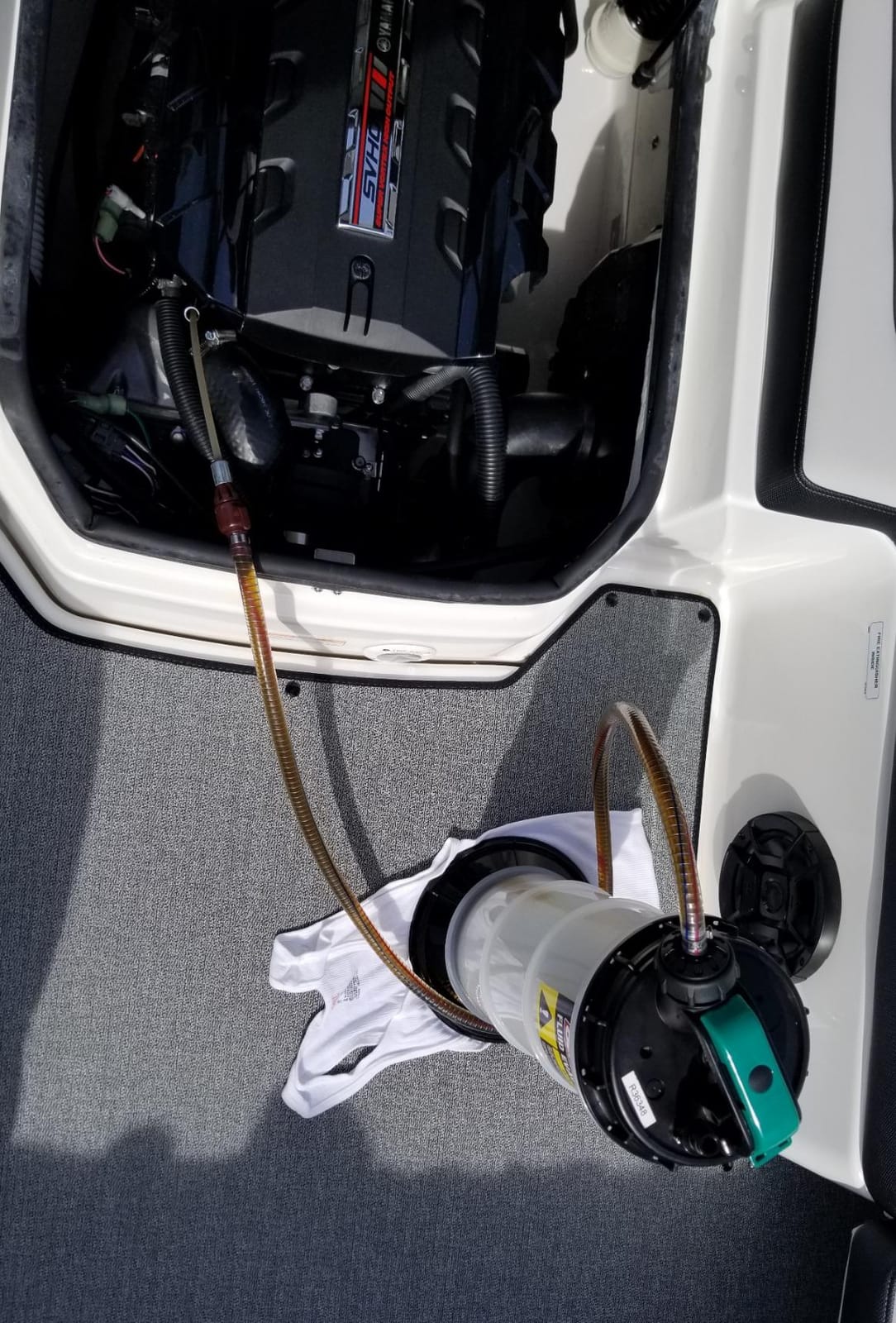
7. OEMTOOLS 24937 6L Pneumatic/Manual Extractor – Switches Between Air and Hand
- Switches between compressed air and hand pumping
- Automatic shut-off valve prevents overfill
- 5 foot hose and 41 inch adapters reach deep reservoirs
- Durable tank for repeated weekly use
- Standard quick-connect fitting
- Pneumatic mode needs a compatible compressor fitting
- Costs more than manual-only units of equal capacity
- Manual mode is slow on large drains
The 24937 is the unit we would put in a garage that does real work. At 6 liters with a 5 foot suction hose, 41 inch dipstick adapters, an automatic shut-off valve and a Milton M-style quick connect, it is engineered for repeat use rather than a single weekend job. It holds 4.5 stars across 1,877 reviews with only 1 percent two-star ratings, and 78 percent five-star – a distribution that signals very few regrets.
The dual-mode design is the real differentiator. Compressed air does the heavy lifting when you have it, and the hand pump covers you when you do not. Shops without an air supply specifically cite this as the reason they chose it, and for a home garage it means the unit never becomes unusable because a compressor moved to another building.
Extracts engine oil, coolant, transmission and steering fluid through dipstick tubes, and the leak-resistant 1.5 gallon tank is rated for repeated service. At 6.78 pounds and 19.13 inches tall it is taller than most, so plan the storage spot before it arrives.
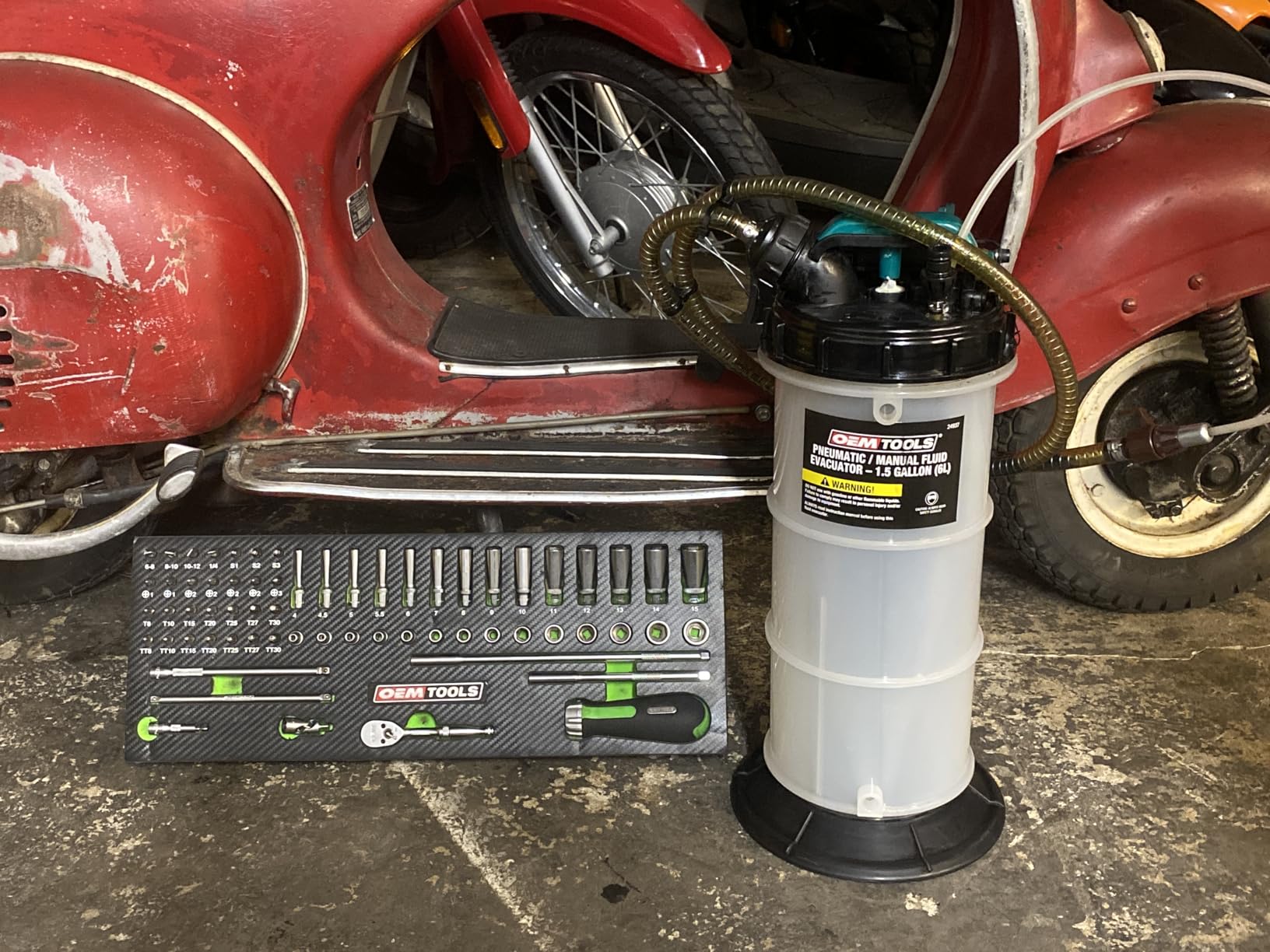
It costs more than manual-only units of the same capacity, and that gap only makes sense if you will use the pneumatic side. If you have no compressor and no plan to get one, you are paying for a feature you will not use.
The quick connect is another practical point. It uses a standard M-style fitting with a quarter inch NPT connection, so most modern compressors will connect directly, but older or unusual fittings may need an adapter. Check your hose before the first job.
Where the OEMTOOLS 24937 makes sense
A working garage that changes oil weekly, or a hobbyist with several vehicles, gets the most from this unit. The automatic shut-off and the 5 foot hose mean fewer interruptions per service.
It is also the right pick if you plan to add a compressor anyway. The M-style coupler is a standard, and having the pneumatic path built in from day one means you are not replacing a manual unit in two years.
Where the OEMTOOLS 24937 is the wrong choice
Do not buy it purely for the air capability if you have no compressor. A manual unit at a lower cost serves occasional changes just as well.
Storage is the other constraint. At 19.13 inches tall and 8.9 inches square, it needs a dedicated upright spot rather than a shelf edge, which is a real consideration in a one-car garage.
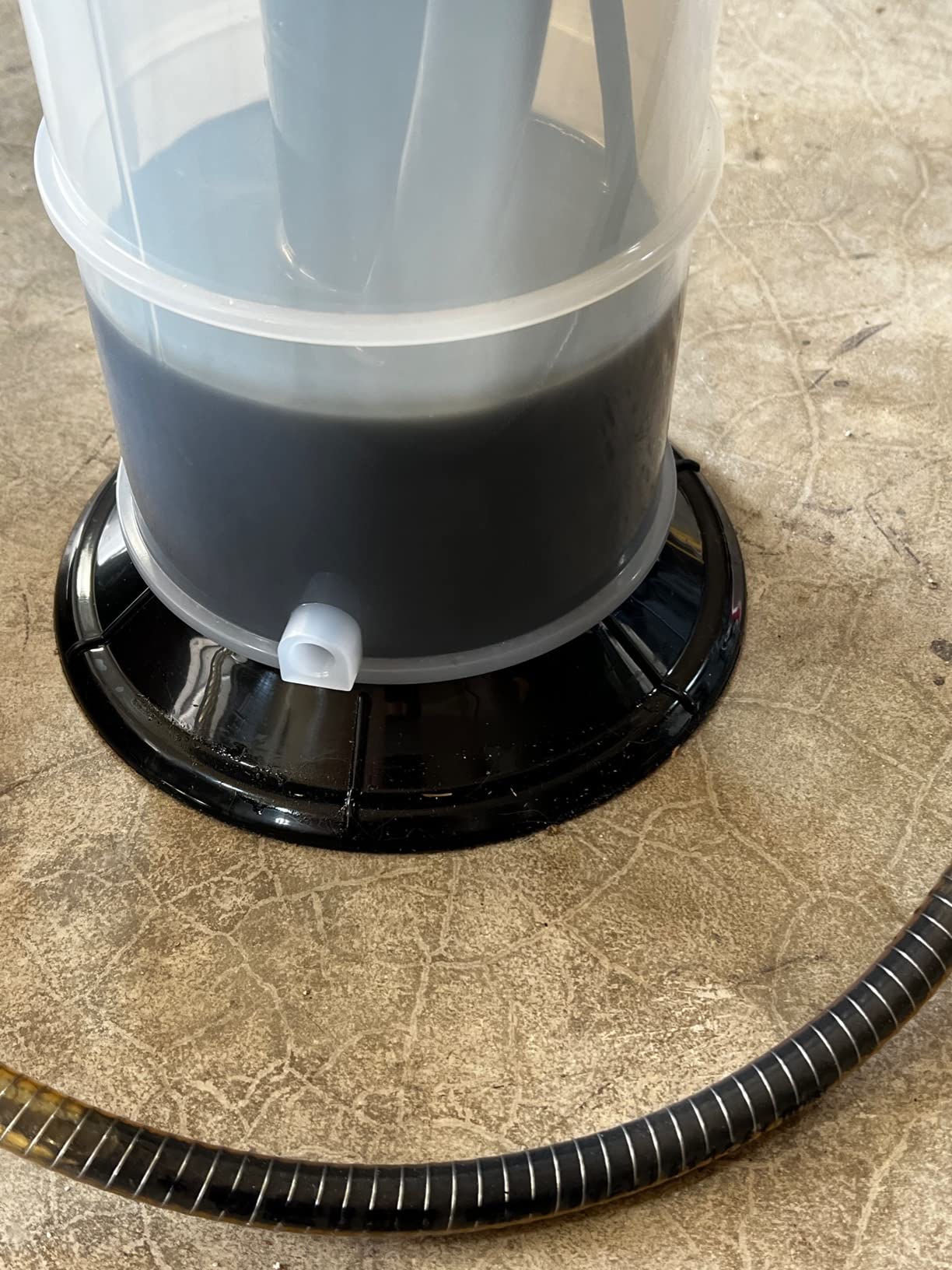
8. EWK 6L Manual Fluid Transfer Pump – Built for Boats and Small Engines
EWK 6L Manual Fluid Transfer Pump, Portable Fluid Extractor
- Power-free design works anywhere
- 42 inch metal probe reaches the bottom of most pans
- Clear hose and level gauge show what you drain
- Sealing cap and angled spout make transport clean
- Weighs only 3.7 pounds
- No end valve so lifting the probe loses the vacuum
- Slow with thick fluids
- Spout can drip while emptying
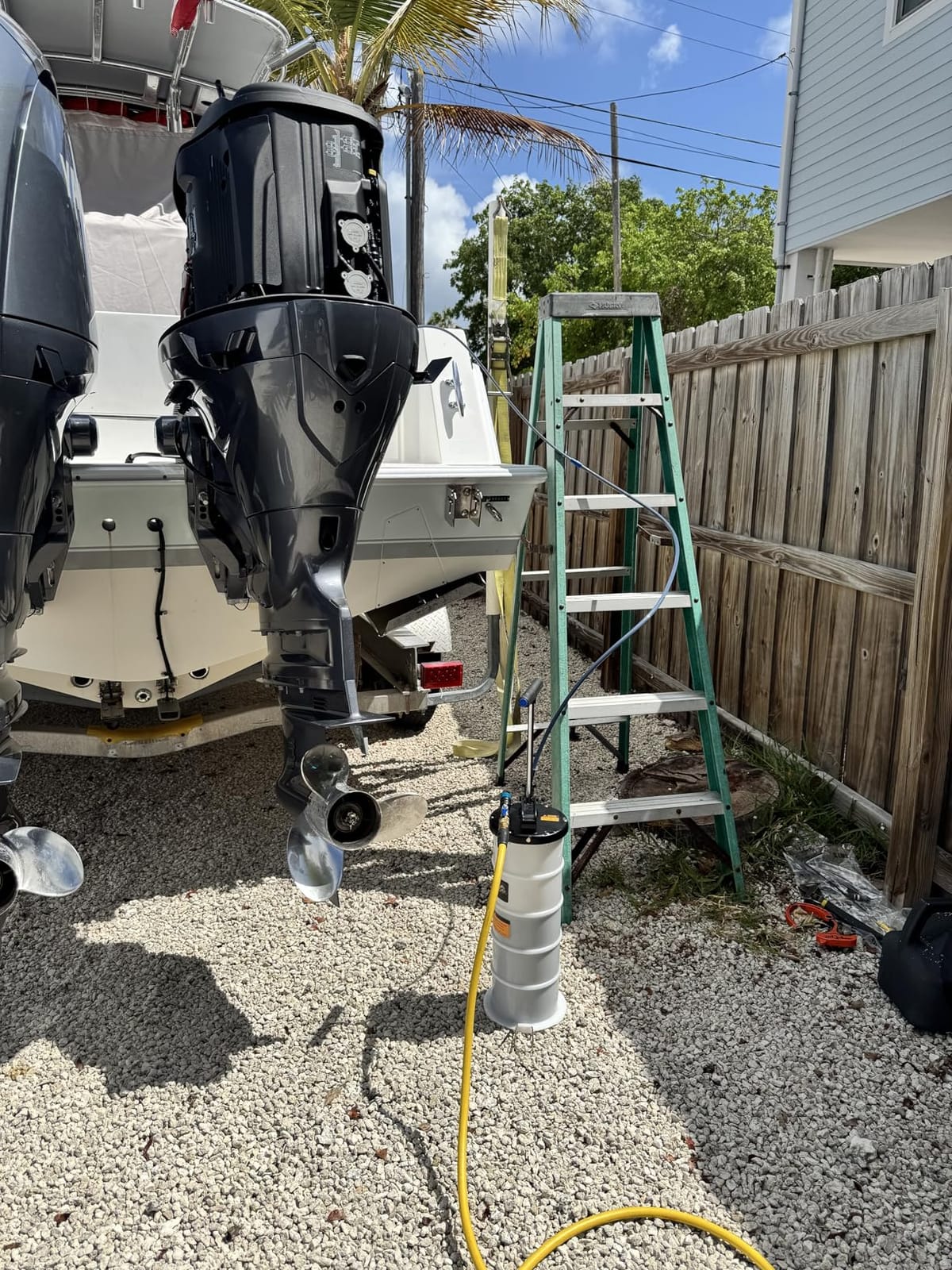
At 3.7 pounds and 14.6 inches tall, the EWK 6L is the one we recommend when the storage question decides the purchase. It is short enough for a low shelf and light enough to carry with one hand, and it holds 6 liters – enough for the majority of passenger engines – with a wide step-on base that stops it sliding while you pump.
The reach is the standout. A 59 inch clear hose paired with a 42 inch flexible metal probe is longer than most competitors’ standard kits, and users report the probe reaching the bottom of the pan on most vehicles. The clear hose is a small touch that matters more than it sounds, because you can see the oil condition and the flow rate without stopping.
At 4.5 stars across 1,621 reviews with 79 percent five-star ratings, satisfaction is high, and the recurring praise is for clean top-side oil changes on cars, boats and small engines alike. The sealing cap prevents leaks in transit and the angled spout gives you controlled disposal into a jug.
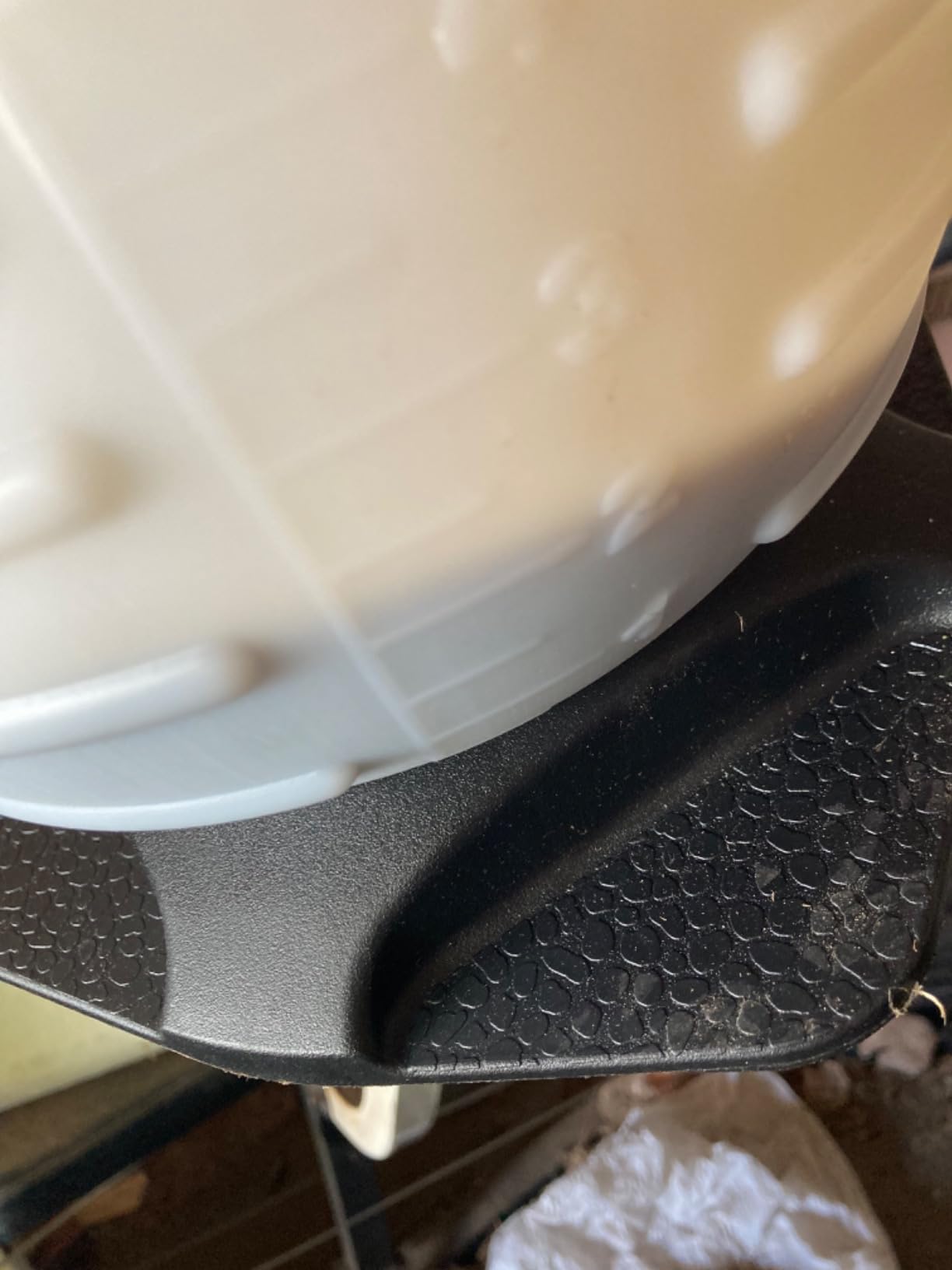
Two design decisions cost you something. There is no end valve, so if you lift the probe out of the dipstick tube the vacuum is lost and you start the draw again. And the spout can drip while you are emptying the tank, so plan a drop cloth under it.
Like its pneumatic sibling, this unit carries explicit limits: not for gasoline, not for fluids above 175 degrees Fahrenheit, and not compatible with the Mercedes W212 E350 or C218 CLS 350. The replacement hose is sold separately under its own part number, which is worth knowing before you need it.
Where the EWK 6L makes sense
Boat owners and anyone with a small engine on a stand will like the combination of low weight, long metal probe and a sealing cap that survives being carried down a dock. The same qualities suit a garage where floor space is genuinely tight.
It is also a strong choice for a single car that gets serviced twice a year. You will not get tired, you will not need a compressor, and 6 liters is enough for most engines.
Where the EWK 6L is the wrong choice
Thick oil defeats it. Users report slow extraction with heavy hydraulic oil and similar high-viscosity fluids, so for a heavy diesel or a long-interval thick synthetic change, look at a pneumatic unit.
Own a W212 E350 or C218 CLS 350 and it is excluded by the manufacturer. That is engine geometry, and no pump on the market fixes it.
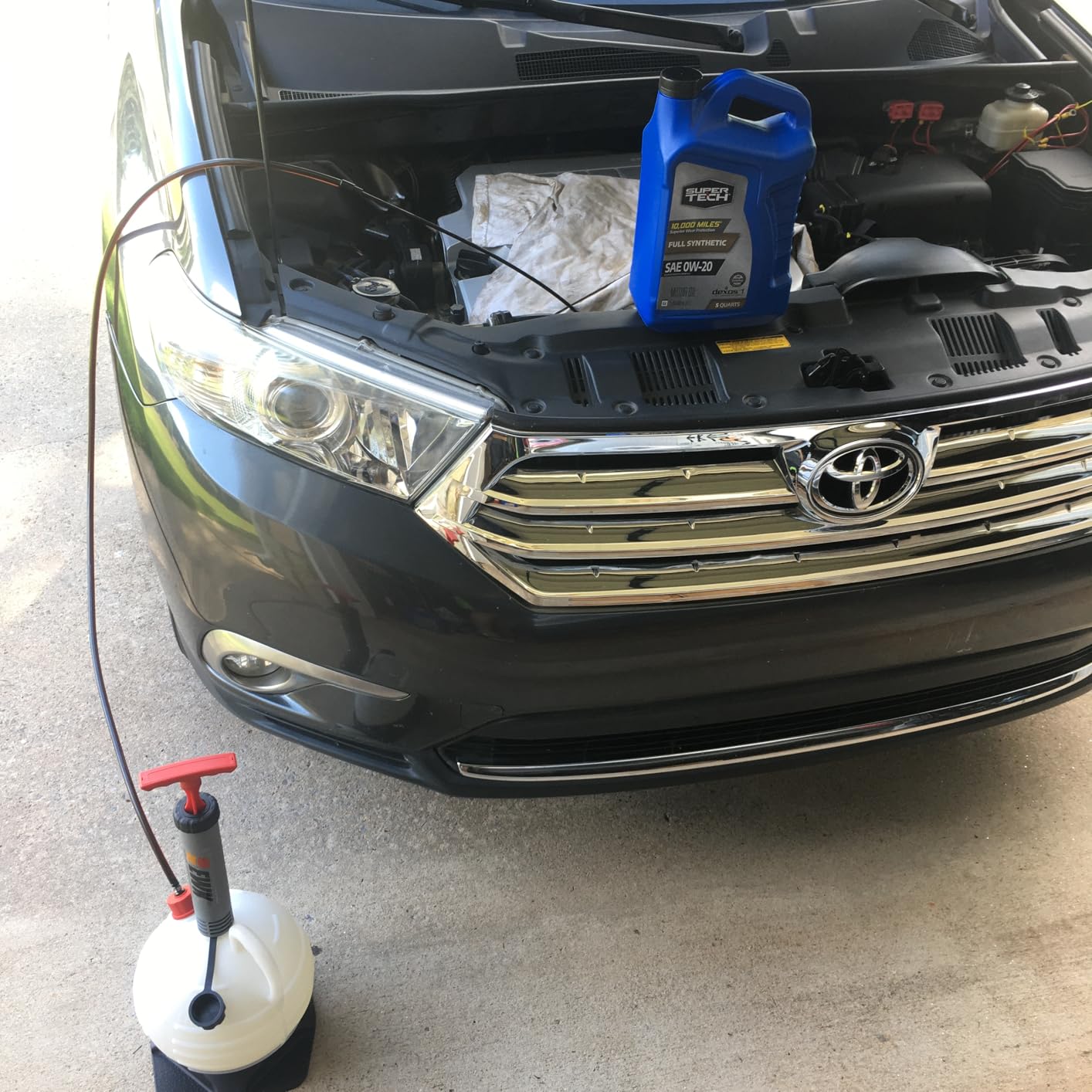
9. PLUMIA 12V 100W Electric Oil Extractor Pump – Best for Battery-Powered Transfers
Oil Extractor Pump 12V 100W, Oil Change Pump For DIY Engine
- Self-priming so no pre-filling the hoses
- Moves five quarts in roughly 2 to 5 minutes
- Kit includes gloves clamps hoses and a manual
- Avoids touching the drain plug and pan gasket
- Small enough for a tool bag or boat cabin
- Supplied hoses are not heat resistant and wear out
- Rolled intake hose resists straightening and cuts reach
- Battery clips sit too close together for a standard post
This is the only battery-powered unit in the group, and it behaves nothing like a hand or air pump. The self-priming 12V 100W gear pump needs no pre-filling, draws a full five quarts in roughly two to five minutes, and the anti-corrosion metal core with a thermal cut-off gives it a durability profile the plastic tank units cannot match.
It is also the most compact option for a car boot, a boat cabin or a motorcycle tool bag. The included components are unusually generous for a unit at this level: two inlet hoses, two outlet hoses, four hose locks, a screwdriver, oil-proof gloves, insulated battery clips and a manual.
Be clear about the trade, though. At 4.0 stars across 1,401 reviews, this unit carries the largest one-star share in the roundup at 15 percent, and the complaints are consistent rather than random. We are picking it for a specific use case, not as a general recommendation.
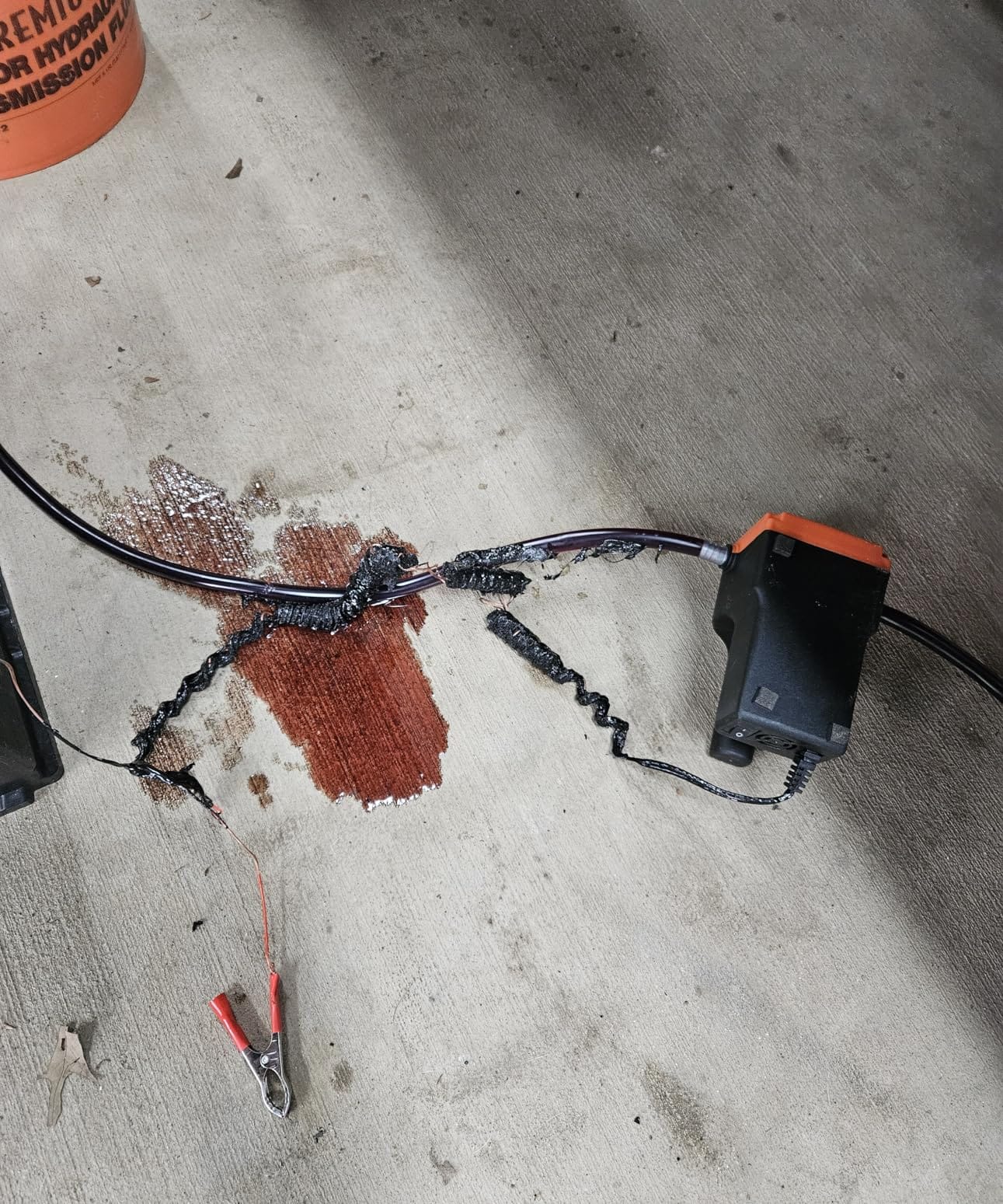
The durability complaints all point at consumables. The supplied hoses are not heat resistant and wear out after a few services, and the rolled intake hose does not straighten well, which reduces the reach into the sump. Both are replaceable, but plan on it as running cost rather than a one-time purchase.
The battery clips sit too close together for a standard battery post, which some owners work around with a short jumper. The motor is also noticeably noisy, and a minority of units have failed after limited use. Residual oil remains in pans where the tube cannot bottom out, for the geometric reasons covered next.
Where the PLUMIA makes sense
A boat cabin, a motorcycle, or a car where you want the drain done in minutes without a compressor or a hand pump. The self-priming behaviour means you connect the clips and go, with no priming ritual.
It is also attractive if you change oil often and want the job over quickly. Two to five minutes for five quarts is the fastest figure any unit in this roundup claims.
Where the PLUMIA is the wrong choice
Do not buy it as a long-term primary tool. With 15 percent one-star ratings concentrated in motor and hose failures, we would budget for replacement consumables from the start.
It is also unsuitable for gasoline, diesel or water, and the reach limitations make it a poor match for engines with deep or obstructed pickup tubes.
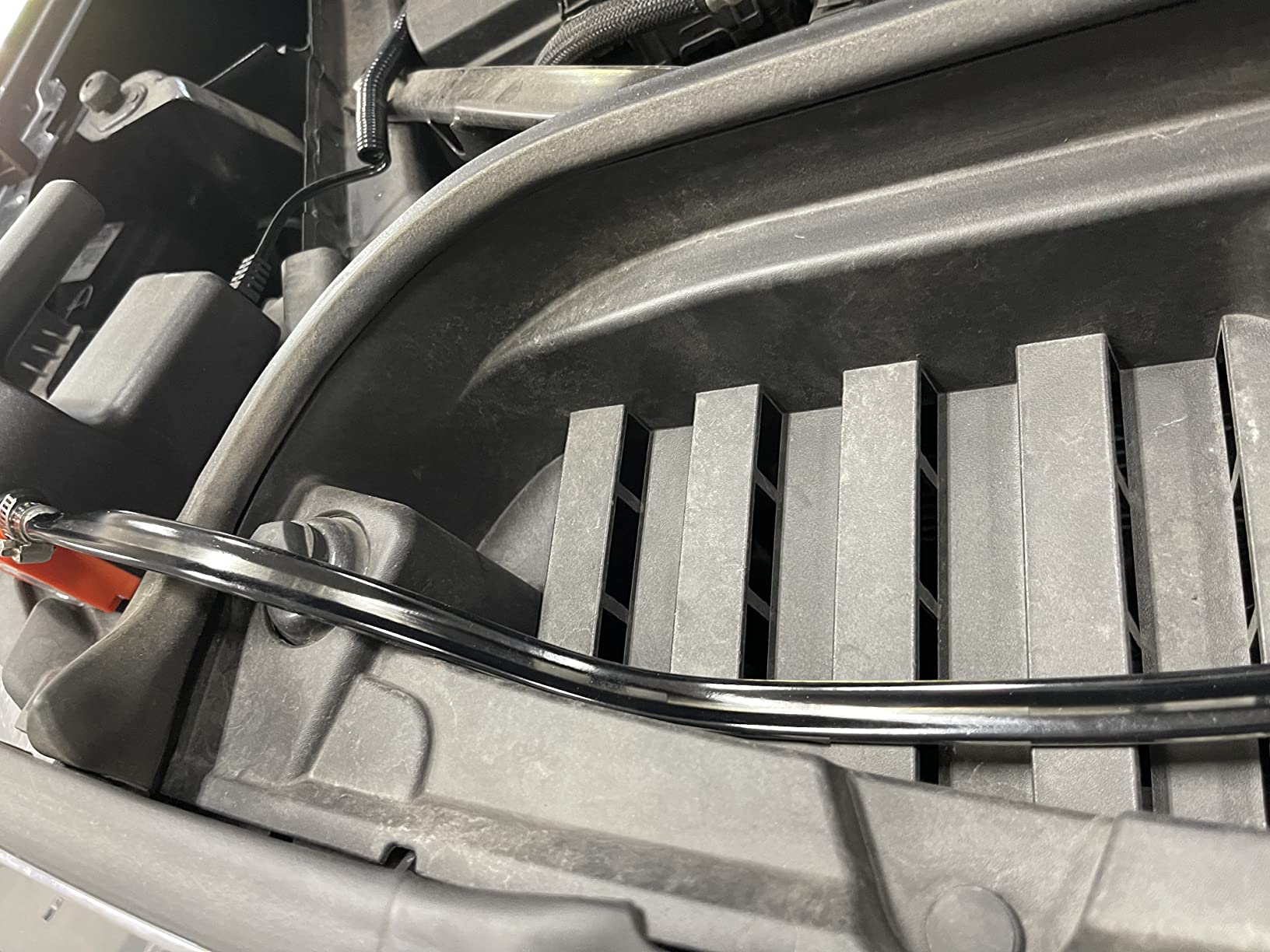
10. OEMTOOLS 24936 8L Manual Oil Extractor – Best Capacity for Trucks and Big Engines
OEMTOOLS 24936 Manual Fluid Extractor Pump, 8L Oil Extractor Pump, 5ft Hose
- 8 liter capacity covers trucks and large V8s
- Oversized handle eases manual pumping
- Overflow shutoff valve limits spills and cleanup
- No compressor or power required
- 41 inch hose reaches hard-to-access reservoirs
- Manual pumping effort increases with the larger 8L capacity
- Best suited to low-viscosity fluids
- Tall 23.5-inch body needs more storage space
Two gallons is the answer for anyone whose vehicle takes 7 litres or more. The OEMTOOLS 24936 holds 8 liters, which means a big-block V8 or a diesel pickup drains in a single pass with room to spare – no mid-job walk to the recycling centre with a sloshing tank.
It is rated 4.5 stars across 903 reviews with 77 percent five-star and only 2 percent three-star, which is one of the most consistent distributions here. The built-in overflow shutoff valve stops extraction at capacity, the 41 inch hose reaches difficult reservoirs, and the oversized handle genuinely reduces the effort of pumping a full 8 liters by hand.
It needs no power and no compressed air, which keeps it viable on a farm, at a rental property or anywhere a generator would be the only other option. The 2 gallon reservoir is plastic with a one year limited warranty, and it is designed for low-viscosity fluids.
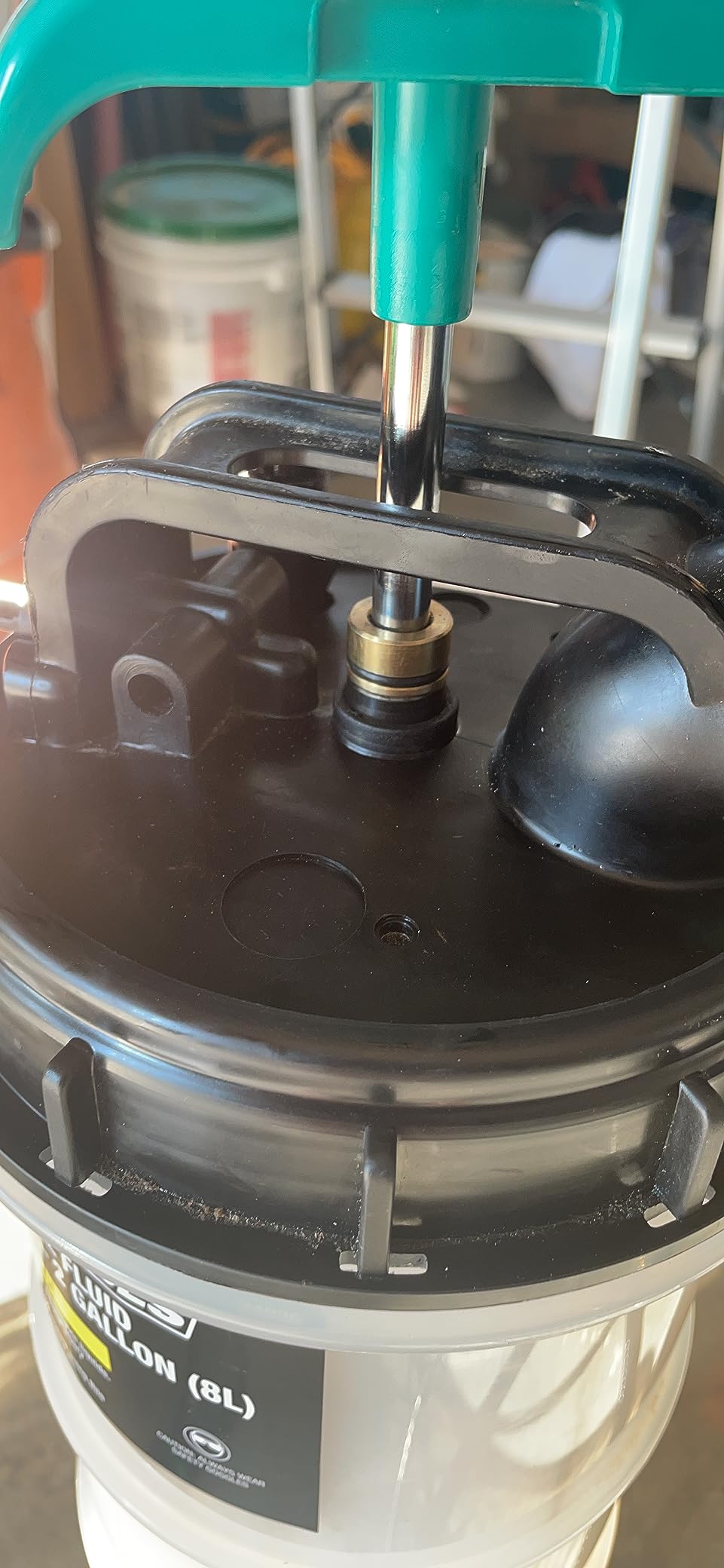
The honest trade is space and effort. At 23.54 inches tall and 8.82 inches square, this is one of the tallest units we tested, and it needs a genuine upright storage spot. Manual pumping effort also climbs noticeably as the volume goes up – the oversized handle helps, but eight liters by hand is a workout.
And like the other OEMTOOLS manual units, it is specified for low-viscosity fluids such as water, power steering fluid and gear oil. A heavy diesel with thick oil at low temperature is not where a hand pump shines.
Where the OEMTOOLS 24936 makes sense
Pickup trucks, full-size SUVs and heavy-duty work vehicles that take 6.2 to 8 litres. One tank per service changes the whole job – you empty once, not twice, and the overflow valve means the second tank is never a near-miss.
It is also right for anyone who changes oil seasonally on several large machines and wants no dependence on a power source.
Where the OEMTOOLS 24936 is the wrong choice
A one-car commuter with a four-cylinder does not need 8 liters. The extra capacity is dead weight that takes up shelf space and makes the unit heavier to move.
And if you have a compressor, do not hand-pump 8 liters. A dual-mode 6.5 litre unit finishes the same job in a fraction of the time with a fraction of the fatigue.
How Much Oil Actually Stays in the Pan
Direct answer: no, an oil extractor does not get all the oil out. A realistic figure is 4 to 4.5 quarts recovered from a 4.5 litre engine, and understanding why is more useful than chasing a number. On a TDIClub thread devoted to topside extraction, a user running a Pella extractor down the dipstick tube on a garage slab recovered between 4 and 4.25 quarts and also emptied the oil filter with the same pump. That is the most concrete real-world figure the enthusiast community has published.
Three things drive the leftover volume. The first is the sump lip – most oil pans have a raised internal baffle that sits above the resting oil level, and the dipstick tube has to be moved around until you find the low point. Forum users describe exactly this, feeling their way with the hose until the flow changes. The second is tube diameter: a TDIClub owner on a 2001 Golf replaced the factory quarter-inch dipstick tube with six feet of three-eighths-inch tubing running straight to the pump, and reported much faster extraction with noticeably better suction. The stock tube is a genuine bottleneck that almost no buying guide mentions. The third is the filter – loosen or remove the oil filter before you start, because oil sitting in the filter never reaches the pan.
There are also engines where extraction simply cannot finish the job. Trade press has flagged the 2.7 litre Ford V6 as a case where the dipstick tube does not reach the sump properly, and reviews on several of the units above mention obstructed or baffled pickup tubes on late-model vehicles. If your engine has a deep windage tray, a quarter-inch tube, or a routing that leaves the probe short of the low point, accept a partial drain. It is still better than pulling a drain plug under a car, but it is not a complete drain.
Extraction vs the Drain Plug: Which Is Better and When
For most home mechanics, extraction wins – not because it is faster, but because it removes three specific risks. There is no drain plug to strip, which is the single most expensive DIY mistake in this category and the reason Jalopnik’s explainer leads with it. There is no floor jack, ramps or creeper involved. And there is no oil draining away from your house onto a driveway, because the waste lands in a tank you control. On an E-Class W212 thread on MBWorld, an owner who switched to extraction noted the flow is slower than draining but accepted that as a small price for the built-in funnel and the tidiness.
The case for draining is real, and enthusiasts make it honestly. A bottom drain empties the pan completely, which matters if you want every last pint out, and some people simply prefer the physical job – one commenter on Bob Is The Oil Guy put it plainly, saying an extractor would take all the fun out of an oil change and that it is a gadget he never plans to buy. That is not a silly position. If you enjoy the work and have a proper jack and ramps, the drain method is cheaper on tool-buying terms and more complete on fluid terms.
There is one more practical difference. Extraction lets you reach the filter and, on many cars, the oil cooler lines with the same pump, without crawling underneath. If you are draining for a storage lay-up or a long trip, that access matters.
Our read: if your maintenance happens on a driveway, in a driveway-adjacent garage, or anywhere you would rather not put a jack under the car, extraction is the better method and the better purchase. If you have the equipment and enjoy the job, the drain plug is fine and the extractor is optional.
Do I Even Need an Air Compressor?
Only if you want speed. Dual-mode units work perfectly well on the hand pump, and a lot of home mechanics never buy a compressor at all. A manual 6 litre unit will drain a typical engine in a reasonable time with a few minutes of arm fatigue, and most of the forum consensus converges on exactly that – a manual unit is plenty for one car changed twice a year.
Buy the pneumatic option when you own a compressor already, when you change oil frequently, or when you run thick oil. At roughly 1.8 liters per minute in pneumatic mode, a 5 litre drain is a couple of minutes of pump noise instead of several minutes of pumping. If you do not have a compressor and are not planning one, ignore the pneumatic rating entirely and judge the unit on its manual performance, hose reach and tank size.
One practical note. The cheap dual-mode kits include an air coupler but not a hose. If your compressor has a standard fitting, you are fine. If it is an older unit with a proprietary fitting, buy a short air hose at the same time.
How to Use an Oil Extractor: 7-Step Topside Oil Change
Before step one, answer the common question about warm-up time. Run the engine for five to ten minutes so the oil reaches operating temperature and suspends contaminants evenly, then shut it off and begin extraction within 15 to 30 minutes. Warm oil flows; cold oil fights you, and thick oil in particular will stall a small pump. Allow the car to sit for a few minutes so the hot oil drains back down into the pan rather than sitting in the galleries.
Work on a level surface with the vehicle parked, engine off and cool enough to touch. Keep absorbent material under the dipstick opening, and check your owner’s manual for anything specific to your engine.
Warm the engine. Run it for five to ten minutes, then shut it off and wait 15 to 30 minutes for the oil to settle back into the pan.
Remove the oil filter first. Loosen or remove the filter before you extract. Oil trapped in the filter will never reach the pan, and removing it first is the single change that most improves your yield. Place a pan underneath – roughly a quart will come out.
Pull the dipstick and insert the probe. Remove the dipstick, feed the metal probe or tube down the dipstick tube until it seats, and pick the tube diameter that fits the opening snugly.
Seal the opening. Fit the sealing ring or adapter over the dipstick opening so the vacuum holds. A poor seal is the most common cause of a pump that runs and pulls nothing. If it will not hold vacuum, check the O-rings before you blame the pump.
Pump and watch the flow. Run the pump – hand, air or electric – until the flow slows and the hose starts to draw air rather than oil. That change in sound is your signal that you are near the low point. Move the probe gently around the sump to find the deepest pocket; the pan lip means one position often stalls early.
Do the filter too. If your filter is cartridge and bottom-mounted, you can mount the same hose on the filter housing outlet and pull the used oil out through the same pump. Owners on enthusiast forums do this routinely and it is a good use of a unit you already own.
Refill, recap and dispose. Cap the tank with the sealing cap, carry it to an oil recycling centre or an approved collection point, and start the job again if your tank filled before the pan did.
Two safety notes worth repeating. Never use an extractor on gasoline or highly volatile fluids – several units in this roundup explicitly exclude them. And do not run a car on a public road to warm it up before a topside change; ten minutes of idling belongs in a driveway or garage with the door open.
What to Do With the Used Oil Afterwards
Plan the disposal before the first oil change, because this is the part that stops people buying a tool. A single service produces four to six litres, and you will accumulate several tanks before a full run. Most home mechanics end up storing used oil in sealed jugs until they have enough to justify a trip to a recycling centre – one CorvetteForum user describes the routine of taking a five gallon bucket to a local garage to empty and carrying the container home again.
Your realistic options are an oil recycling centre or collection point, many of which accept used oil at no charge, a municipal household hazardous waste facility, and some quick-lube shops or garages that take containers in the forecourt. Some areas run neighbourhood collection days for used oil and antifreeze. Rules on containers and transport vary locally, so check before you accumulate a garage full of jugs.
Store the oil sealed and off the floor, away from anything you would be upset to stain, and never pour it down a storm drain, into a soil bed or onto a driveway. Keeping the tank topped up and empty is what makes an extractor a pleasant tool to own rather than a reason to buy a bigger one.
Engine Oil Extractor Buying Guide: The Six Checks That Matter
One: compressor availability. Decide this first, because it eliminates half the category. Own a compressor or plan to? A dual-mode unit at 6.5 litres will serve you for a decade. No compressor and no plans? Judge purely on manual performance and pick a unit with an overflow shutoff and a large step-on base. This single question resolves the manual versus pneumatic argument for most people.
Two: capacity against engine size. A passenger engine typically holds 4.5 to 7.5 litres, so buy a 6 litre or larger tank and you will finish a standard car in one pass. Small four-cylinders can run a 5 litre tank comfortably. Pickups, full-size SUVs and big V8s need 7 to 9 litres to avoid a mid-job trip. Undersizing the tank is the most common self-inflicted inconvenience in this category.
Three: probe reach and tube diameter. Reach is measured by the metal probe length plus the hose. Anything in the 40-plus inch range handles most passenger cars, and 42 inches or more gives you a margin on deep pans. Tube diameter matters just as much – a quarter-inch factory dipstick tube slows extraction badly, and a unit with three diameters lets you match the opening. Look for a design where the probe can be swapped or extended.
Four: seals, shutoff and serviceability. Every one of these units is built around a rubber seal, and every one of them will eventually need replacing. Units with a built-in overflow shutoff valve prevent the spilled-tank failure mode that is otherwise the most common complaint. Check whether sealing rings and hoses are sold as spare parts under their own part numbers – a brand with a stocked replacement hose is a brand whose unit will still be running in five years.
Five: tank material and footprint. Heat-resistant polyethylene is the standard and works fine for engine oil; it is not suitable for gasoline or fluids above roughly 175 degrees Fahrenheit. On footprint, the range is wide – 14 inch units slide onto a low shelf, while 23 to 25 inch models want a dedicated upright corner. Measure before you order, because a tool that does not fit gets used less and less.
Six: what else it will drain. The same pump handles coolant, transmission fluid, power steering fluid and differential fluid on most units, and that is where the value shows up over time. Check that the unit is rated for the fluids you actually service. If you also own a boat, a mower and a generator, weigh the multi-fluid capability and the long metal probe more heavily than raw capacity.
One last caveat on price expectations. The units in this roundup cover the home-garage range, and the expensive high-pressure units in the shopping results are shop equipment built for continuous commercial service rather than a single-car garage. Judge any extractor on whether it matches your engine size, your power source and your floor space – those three answers narrow the field quickly.
Frequently Asked Questions
Do oil extractors get all the oil out?
No. A realistic figure is 4 to 4.5 quarts from a 4.5 litre engine, against a drain plug that empties the pan completely. The gap comes from the sump lip, the narrow factory dipstick tube, and oil still held in the oil filter. Loosening the filter first, swapping the stock quarter-inch tube for three-eighths-inch tubing, and moving the probe around to find the low point all recover more. On engines with baffled pickup tubes, such as the 2.7 litre Ford V6, extraction cannot finish the job at all.
Is an oil extractor pump worth it?
For most home mechanics, yes, mainly because it removes the risk of stripping a drain plug and means never working under a car with a pan. It is slower than draining, and enthusiasts who enjoy the physical job often prefer the drain plug, arguing extraction takes the fun out of an oil change. If you have a jack, ramps and enjoy the work, the extractor is optional. If you work on a driveway or in a tight garage, it is the better method.
How long should I run the car before using an oil extractor?
Run the engine for five to ten minutes so the oil reaches operating temperature, then shut it off and start extracting within 15 to 30 minutes. Warm oil flows and suspends contaminants evenly, while cold or thick oil fights a small pump and stalls. Let the engine sit a few minutes after shutdown so hot oil drains back into the pan instead of sitting in the upper galleries.
Do I need an air compressor for a pneumatic oil extractor?
Only for the pneumatic mode. Every dual-mode unit also has a hand pump, and most home mechanics never buy a compressor at all. A manual 6 litre unit will drain a typical engine in a few minutes of arm work, which is why forum consensus for a one-car garage is that manual is plenty. Pneumatic mode, at roughly 1.8 litres per minute, pays off if you already own a compressor or change oil frequently. Note that the kits include a coupler but usually not an air hose.
What size oil extractor tank do I need for my car?
A passenger engine typically holds 4.5 to 7.5 litres, so a 6 litre tank finishes a standard car in one pass. Five litres works for a four-cylinder. Trucks, full-size SUVs and large V8 engines need 7 to 9 litres to avoid stopping halfway through. Undersizing is the most common mistake, because a full tank mid-job means carrying several litres of used oil to the recycling centre before you can finish.
The Best Engine Oil Extractor Verdict for Your Garage
The Mityvac 7201 is the best engine oil extractor for most home garages, because the automatic overflow prevention and a review history of more than 4,300 ratings at 4.5 stars make it the unit least likely to let you down mid-job. Pick the FOUR UNCLES 6.5L if you want the most capacity per dollar and might use compressed air one day. Pick the OEMTOOLS 24936 if you own a truck and need 8 litres in a single pass, and pick the Thorstone syringe if the job is a mower, a generator or a power steering reservoir rather than a car.
Three answers settle nearly every purchase: do you own an air compressor, how many litres does your engine hold, and how much floor space can you give up. Get those right and the decision takes five minutes. Whatever you choose, put a drop cloth under the dipstick, remove the filter first, and expect a partial drain rather than a perfect one – the best engine oil extractors for home garages still leave a little behind.