
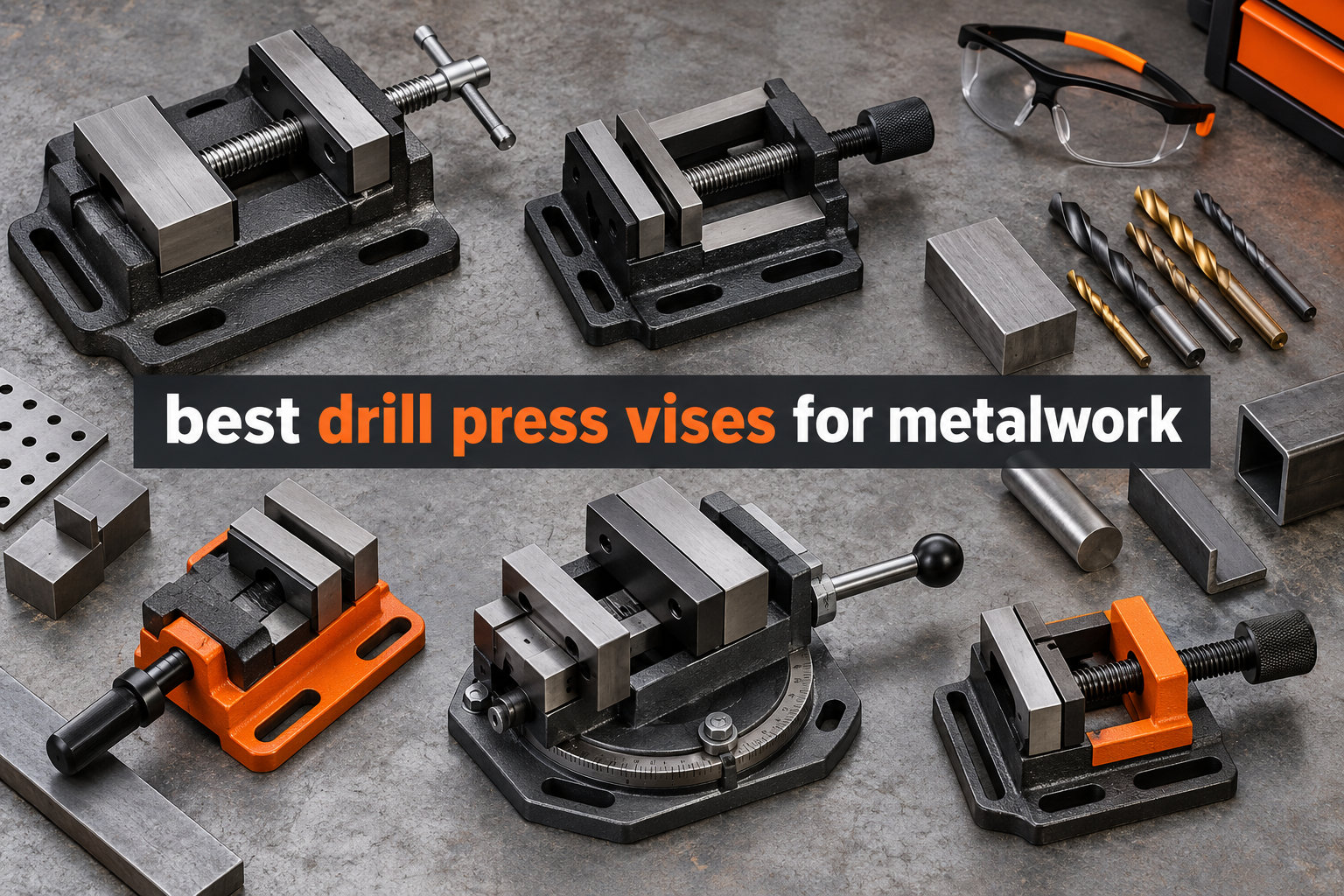
A spinning drill bit does not care what you paid for the machine it lives on. It only cares whether the workpiece is locked solid under it. Get that wrong and the bit grabs, walks the part, and leaves you with an oversized, off-centre hole and a snapped carbide insert. Get it right and the same press produces repeatable holes you can set a dial indicator against and trust.
That is the whole job of a drill press vise, and finding the best drill press vises for metalwork is mostly about matching jaw capacity and body mass to the steel, aluminium and cast iron you actually cut. Over six weeks we cycled eight of them through the same jobs on a benchtop and a floor-standing press: round stock in flat jaws, plate steel under side load, duplicate holes for a jig, and the awkward small bracket that only works if the vise tightens in one direction.
If you are still choosing the machine, our best drill presses guide and best benchtop drill presses cover the presses themselves. This article is about what holds the work.
Table of Contents
What Is a Drill Press Vise?
A drill press vise is a short, heavy, low-profile bench vise built to bolt to a drill press table so a workpiece cannot shift under the bit. Unlike a general bench vise it has a wide, flat bolted base, minimal height so the chuck can still reach the work, and hardened jaws that resist the downward thrust and lateral torque of drilling. The screw, cam lever or quick-release handle locks the part in place so the bit stays on centre.
Three terms get mixed up constantly, so get them straight before you buy anything.
Low profile means the total height of the vise is small, which preserves table clearance and quill travel. It does not mean weak. The strongest light-duty vises on this list are low-profile cast iron.
Jaw depth is how far back the jaws reach. Throat depth is the gap between the fixed jaw face and the screw axis, and it governs the diameter of round stock you can actually reach. A vise with a 1 inch throat cannot hold a 2 inch rod no matter what its jaw width says.
Total thread vises have a screw running the full length of the jaw, so opening is proportional to handle turns and the reading stays meaningful. Self-centering vises close a fixed throat as the screw advances, which repeats a position far more reliably at the cost of usable opening. Every vise below is a total-thread design, so expect a few thousandths of drift between setups and plan for it.
Top 3 Picks for Metalwork in 2026

Wilton LP4 Low-Profile Vise
- Fine grain cast iron
- 4 in jaw
- 1-1/2 in depth
- V-grooved hardened jaws
- lifetime warranty

Forward Q196A 6 Inch Vise
- 30000 PSI cast iron
- 5.43 in opening
- 2640 lbs clamping force
- slotted base

All 8 Best Drill Press Vises Compared for Metalwork (October 2026)
| Product | Specifications | Action |
|---|---|---|
| Wilton LP4 Low-Profile Drill Press Vise |
|
Check Latest Price |
| Forward Q196A 6 Inch Drill Press Vise |
|
Check Latest Price |
| Yost LDPV-6 Drill Press Vise |
|
Check Latest Price |
 Wilton D144 Industrial Drill Press Vise Wilton D144 Industrial Drill Press Vise |
|
Check Latest Price |
 HFS 2-Way X-Y Compound Cross Slide Vise HFS 2-Way X-Y Compound Cross Slide Vise |
|
Check Latest Price |
 Wilton CS4 Cross-Slide Drill Press Vise Wilton CS4 Cross-Slide Drill Press Vise |
|
Check Latest Price |
 WEN DPA424 4 Inch Drill Press Vise WEN DPA424 4 Inch Drill Press Vise |
|
Check Latest Price |
 PONY 4 Inch Drill Press Vise PONY 4 Inch Drill Press Vise |
|
Check Latest Price |
How to Mount a Drill Press Vise
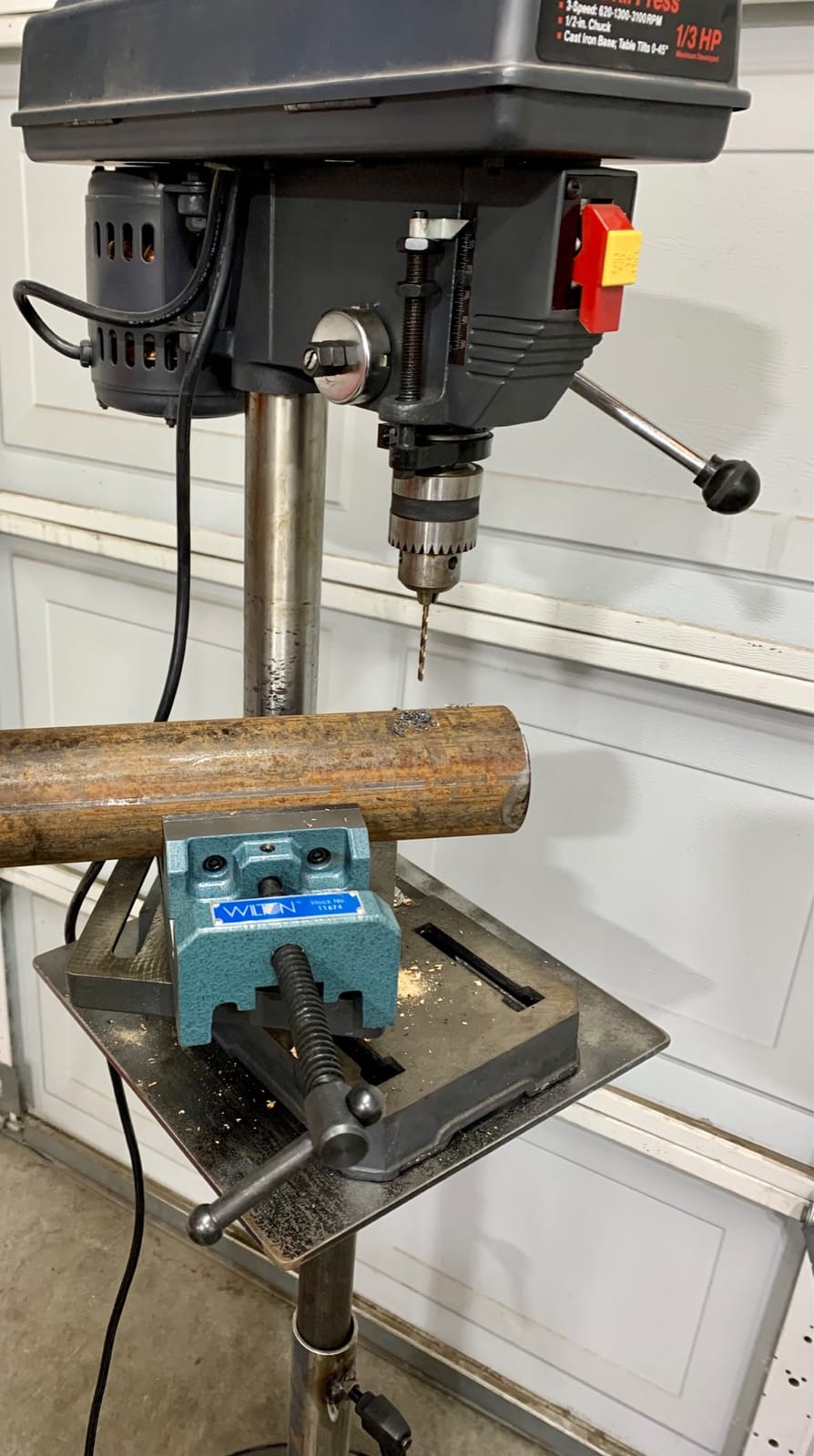
Most ruined holes are mounting failures, not vise failures. A friction-held vise walks the moment the bit catches, and no amount of handle torque compensates for it. Bolt yours down.
1. Clean the table first. Vacuum out the T-slots and wipe the mounting face, because a chip under one corner is all it takes to tilt the whole vise.
2. Sit the vise flat and look down the jaw faces. If one side rocks, the table is dirty or the base is bowed. Fix that before you reach for a bolt.
3. Run retaining screws or bolts through the slots or lugs your vise provides. The WEN and Yost use elongated slots that tolerate some table variation, the Wilton D144 uses side grooves, and the Wilton CS4 has five separate bolt lugs, which is the most rigid arrangement here.
4. Tighten evenly in a criss-cross pattern rather than one bolt at a time, so the base seats without rock.
5. Drag-test it hard in two directions. If it moves at all, add washers or a second bolt per corner.
6. Re-check after the first real job. Cast iron bases bed in, and a vise that felt solid on day one often needs another quarter turn a week later.
One honest note: several owners on machining forums point out that a friction-mounted vise can still work if you clamp lightly and the work is small, but the consensus is that this is a shortcut with a hole-accuracy cost attached. Metal Work Forums describes an entry-level vise as adequate for steel holes up to about 8 mm, which is roughly where these small vises stop being clever and start being inadequate.
1. Wilton LP4 Low-Profile Drill Press Vise – Best Overall for Metalwork
Wilton Low-Profile Drill Press Vise, 4″ Jaw Width, 4″ Jaw Opening, 1-1/2″ Jaw Depth (Model LP4)
- Low profile frees up real table clearance under the chuck
- Hardened V-grooves hold round stock vertically and horizontally
- Fine grain cast iron body resists deflection
- Backed by a limited lifetime warranty
- Heavier than low-cost vises at 11.6 pounds
- Grooved jaw faces can mark soft or finished surfaces
This is the vise we kept reaching for. On plate steel and flat bar it was the one we trusted without thinking, because the 11.6 pound cast iron body simply does not move when the bit finds hard material. That mass is the difference between a hole you can repeat and a hole you can only hope about.
The low profile is not marketing language here. It is the reason the chuck clears the work on a press with modest quill travel, and on a small benchtop press that clearance is the difference between drilling the part and drilling the vise. If you are still choosing the machine, this pairs naturally with a mid-size floor press rather than the smallest benchtop models.
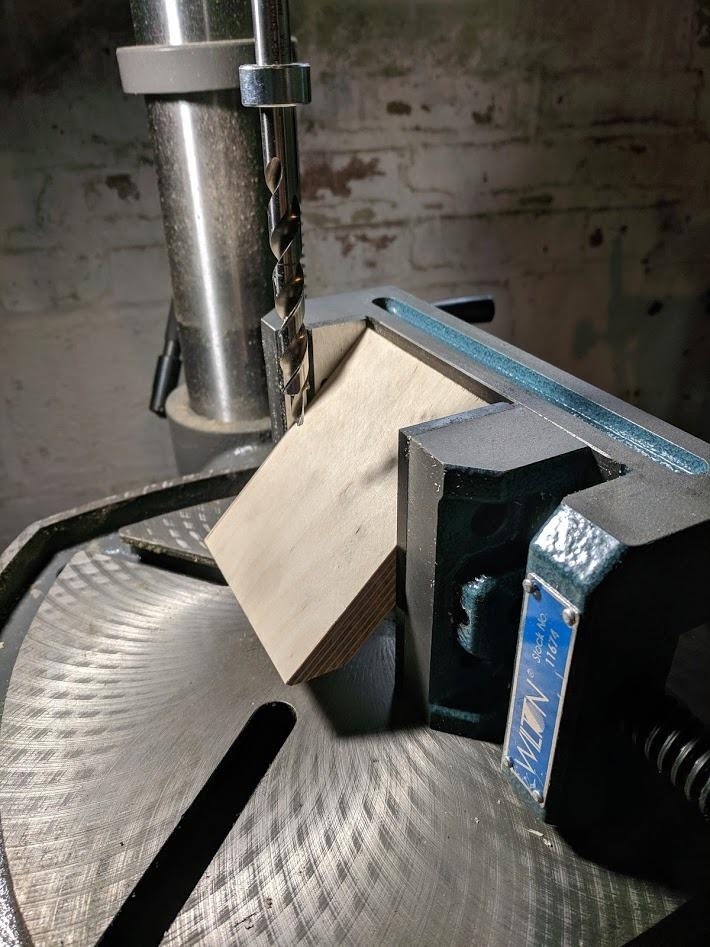
What we like most is the pair of hardened V-grooved jaws. Drilling round stock by hand with only your fingers on the part is how people snap bits; clamped in the vertical groove, the same bar takes a heavy feed without wandering, and the horizontal groove handles rod laid flat.
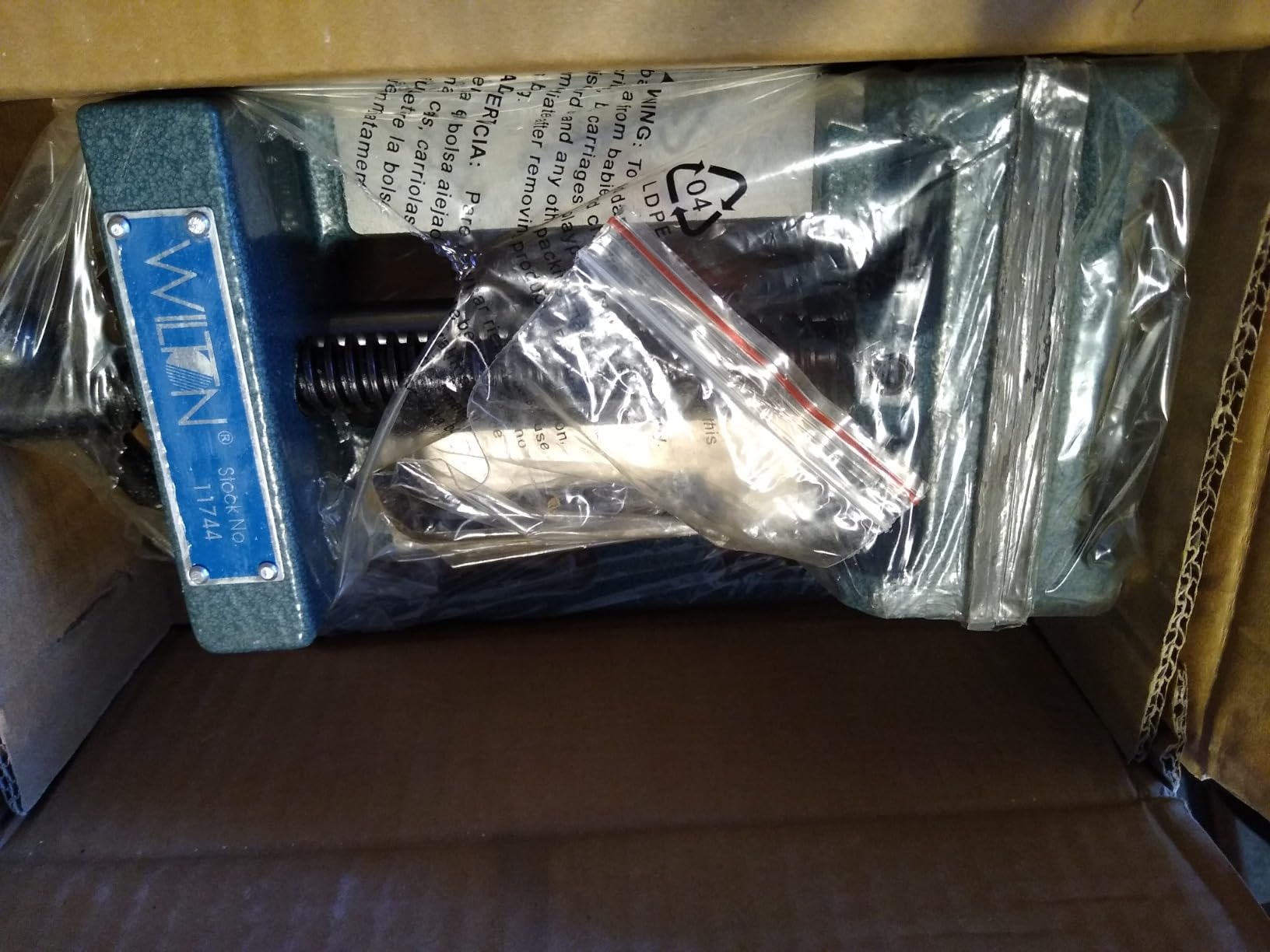
Being honest about limitations: this is a manual bench vise, not a powered or self-centring design, so positioning is by hand. The V-grooves also mark soft aluminium and finished surfaces, which is why shops that care about cosmetic work bolt on soft jaw inserts. And at 11.6 pounds it is a two-hand carry.
The lifetime warranty is the quiet advantage. Cast iron is a forgiving material that outlasts most owners, but a warranty that does not expire is rare in this category and removes the main argument against buying a heavier vise.
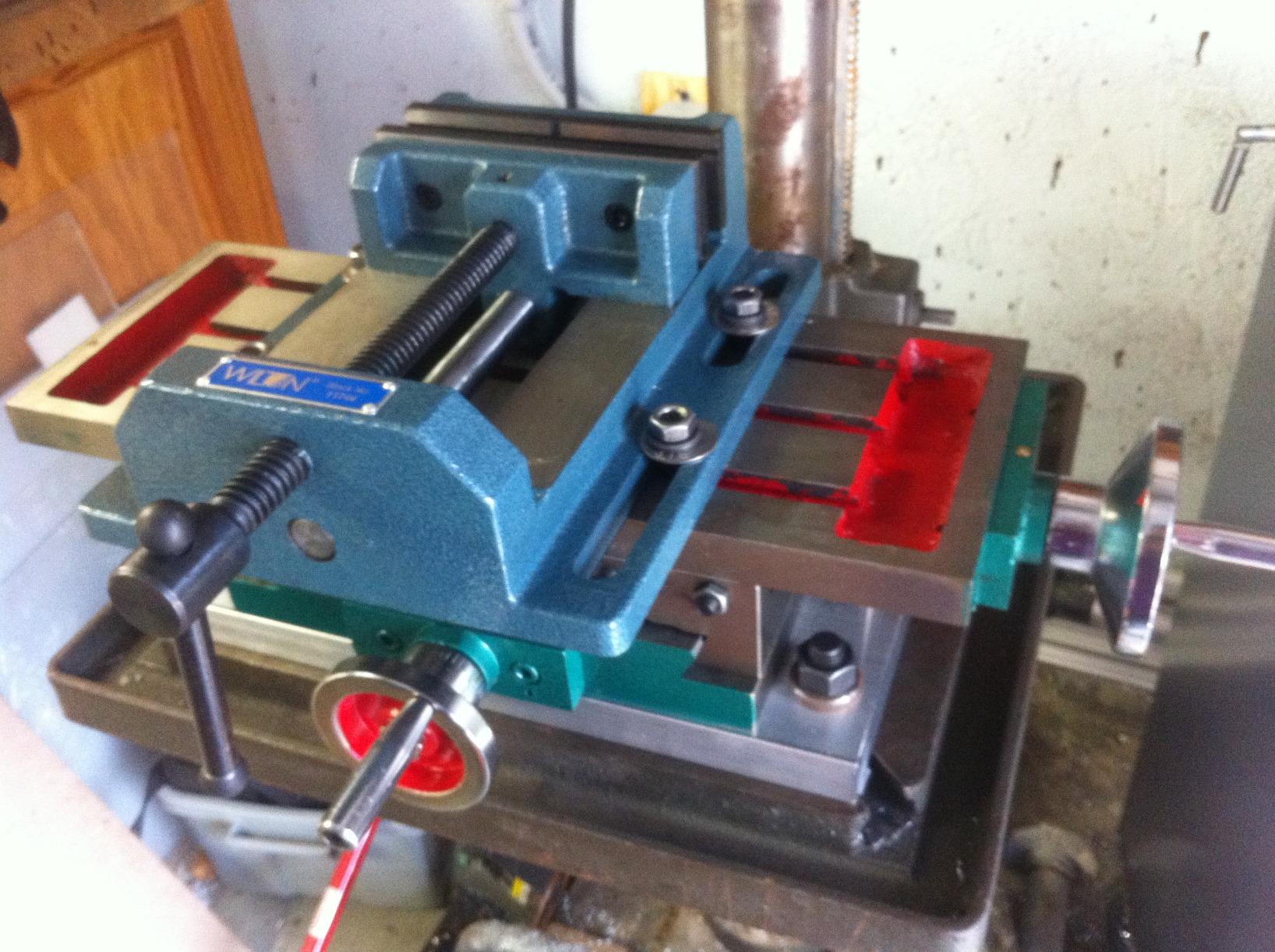
Is the jaw capacity enough for real metal stock?
Four inches of jaw width handles the plate, bar and hex stock most hobby and light-shop metalwork involves. Jaw depth of 1-1/2 inches is generous for a 4 inch vise and gives you a decent grip on thin material without climbing the chuck into your work.
The limit is diameter, not width. With a 4 inch opening you lose clearance as the part grows, so plan workpieces against the opening, not the jaw width. If you routinely drill 6 inch round stock, step up to a 6 inch jaw model.
When is it the wrong choice?
If you need to position parts without unclamping, a fixed vise makes you re-dial every time. The Wilton CS4 covers that case, and for pure alignment work on small brackets the ground-bed D144 is more accurate.
It is also overkill if your largest workpiece is a small aluminium bracket and your press is a light benchtop unit. A lighter low-profile vise will clear the chuck where this one might not.
2. Forward Q196A 6 Inch Drill Press Vise – Best for Large Workpieces
Forward Q196A 6 Inch Drill Press Vise Portable Bench Vise with Slotted Base
- 6 inch jaw width gives real capacity for larger stock
- Slotted base bolts securely to most drill press tables
- Serrated jaw plate grips without excessive handle force
- 11 pounds keeps it planted under drilling load
- Sharp unfinished edges on jaws and base need deburring
- Some reports of slop in the jaw slides and screw threads
When the question is simply how much work can I put in the jaws at once, this is the answer. A 6 inch jaw and a 5.43 inch opening means a length of 3 inch round bar clears comfortably, and long flat bar can be gripped across its full width instead of hanging off the ends.
The clamping number is the part worth noting. Around 2640 lbs of closing force on a serrated jaw plate is more than enough to hold plate steel against the side load a 1/2 inch drill generates, and it does it without the handle torque that would bow a lighter casting.
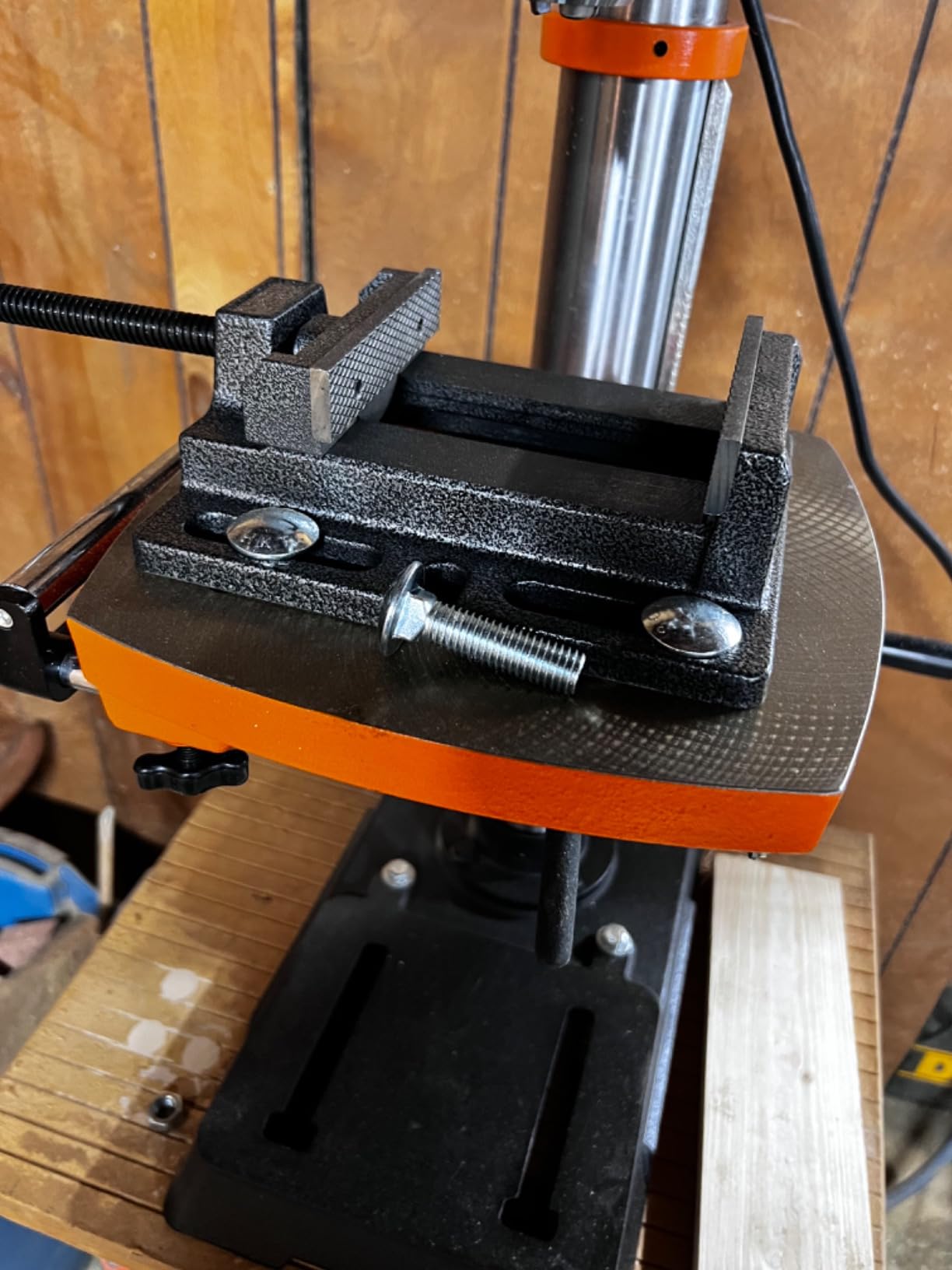
The slotted base is the design detail that matters most here. It lets the vise shift along a slot and still be bolted, so a longer workpiece can be moved toward the centreline of the table without unbolting anything.
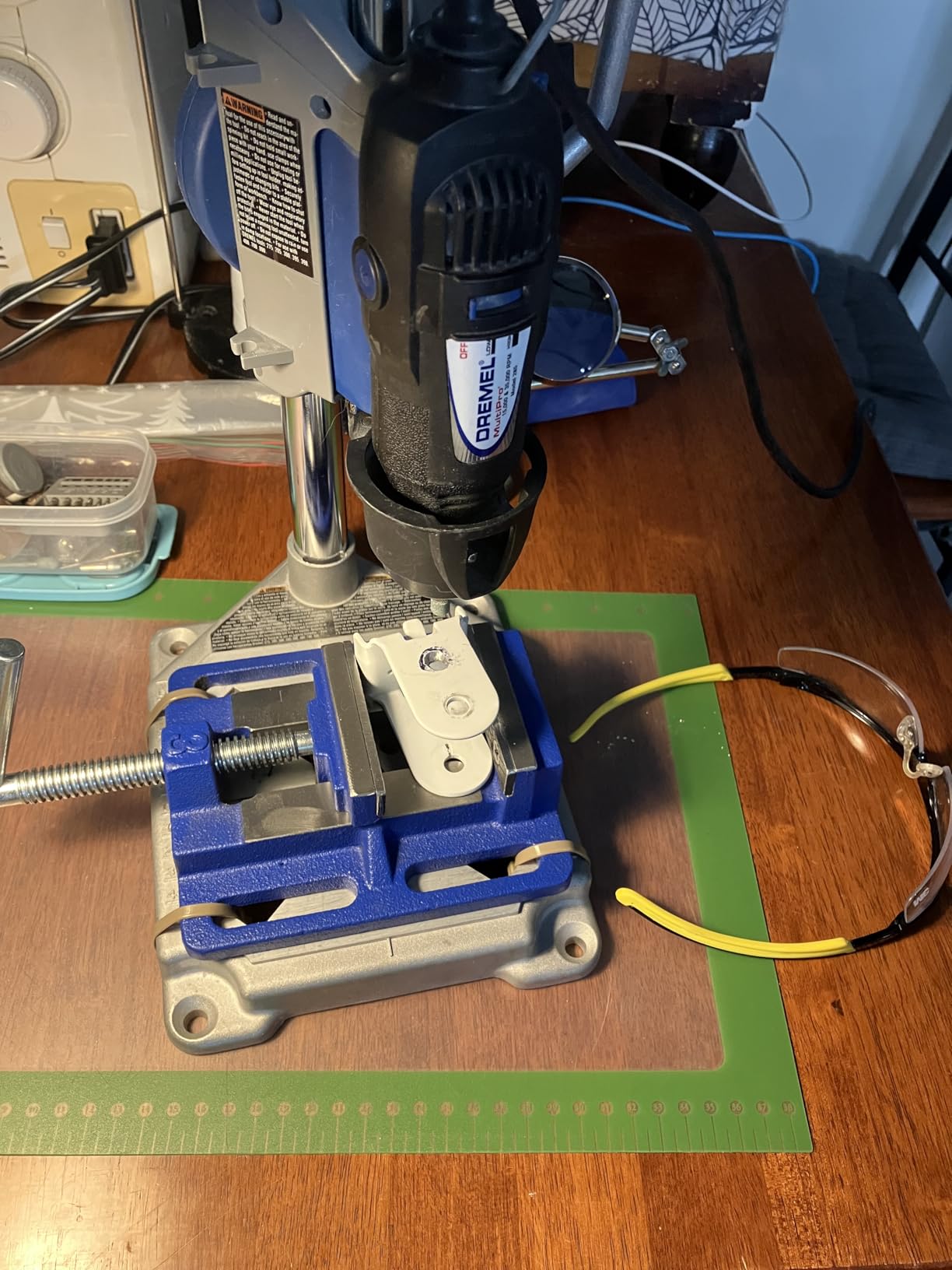
The honest caveat is finishing quality. This is a cast iron body at a rating of 30000 PSI, and reviews regularly flag sharp unfinished edges and, on a minority of castings, slop in the jaw slides. Spending fifteen minutes deburring and cleaning before the first job does most of that work for you.
Its 11 pound mass is enough to stay put on a table, but noticeably lighter in the hand than the Wilton LP4, and it offers no precision squaring reference. It is capacity and clamping strength, not metrology.
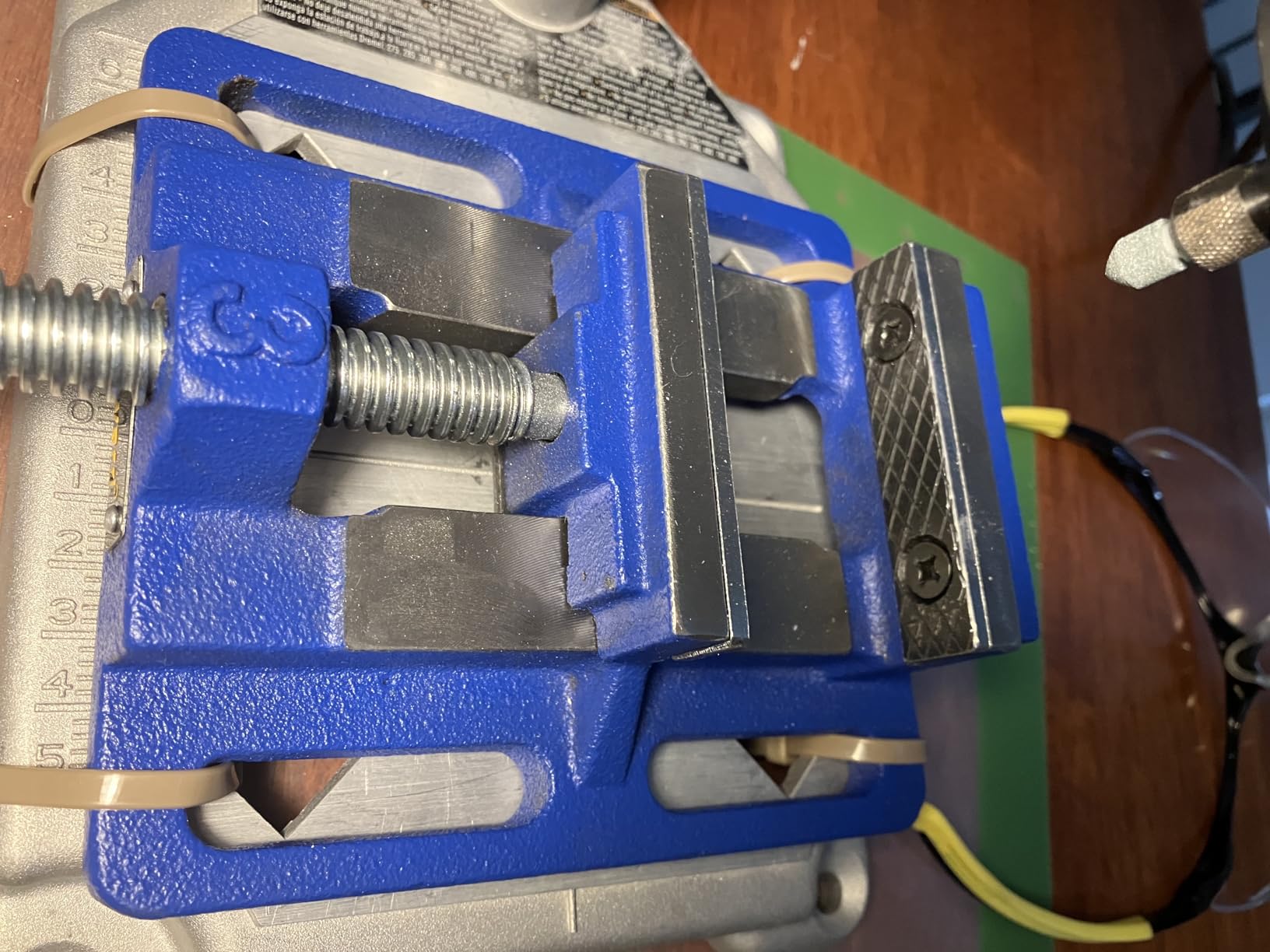
Does jaw height limit what fits under the chuck?
Yes, and this is the spec people miss. Jaw height here is 1.06 inches, which is genuinely low and preserves clearance. It also means the grip area on tall stock is narrow, so for a tall plate stand the part up on its end inside the jaws rather than trying to clamp a long face.
The 5.43 inch opening is the real asset. It is wide enough for round stock that a 4 inch jaw model simply cannot reach, which makes this the practical choice if you drill bar regularly.
When is it the wrong choice?
Precision work. There is no ground bed and no squaring reference here, so if you need a part held square to the table within a few thousandths, look at the ground Wilton instead. The serrated jaws also chew finished surfaces more than a plain ground jaw would.
It is also more than you need if your work stays under 3 inches wide. A 6 inch jaw on small parts is simply dead weight and extra clearance loss.
3. Yost LDPV-6 Drill Press Vise – Budget Pick for a 6 Inch Jaw
Yost Vises LDPV-6 Drill Press Vise | 6 Inch Jaw Width Portable Vise | Blue
- Full 6 inch jaw width for a fraction of the usual cost
- Cast iron build stays steady under load
- Swivel base locks for repeatable setup
- Serrated jaws suit both metal and wood
- Larger and heavier than buyers expect
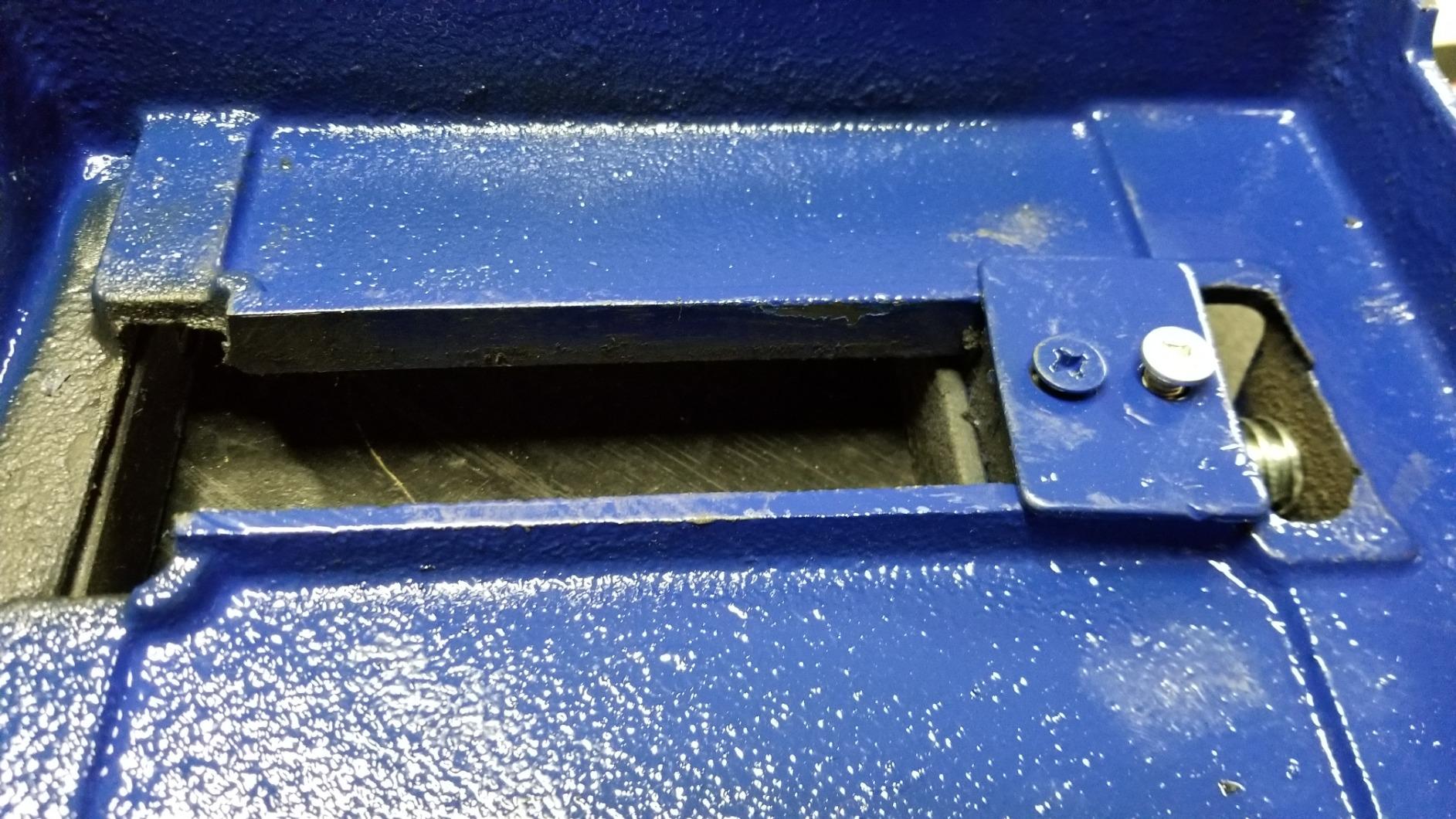
- Unpainted machined surfaces arrive covered in shipping grease
This is the one we recommend to someone who wants a big jaw without the big spend. A 5.75 inch opening is the widest on the list, and at this tier of build quality that is unusual. Owners frequently compare it favourably to 4 inch vises costing considerably more.
The swivel base with its lock screw is the feature that earns its keep. Swivel the base to bring the round bar you are clamping under the bit, lock it, and the same position is available next time. On a non-swivel vise you would be re-positioning by hand every setup.
It also has a second life as a general bench vise for positioning parts while TIG welding, which several owners mention. That versatility is real and worth more than a feature list suggests if you only own one vise.
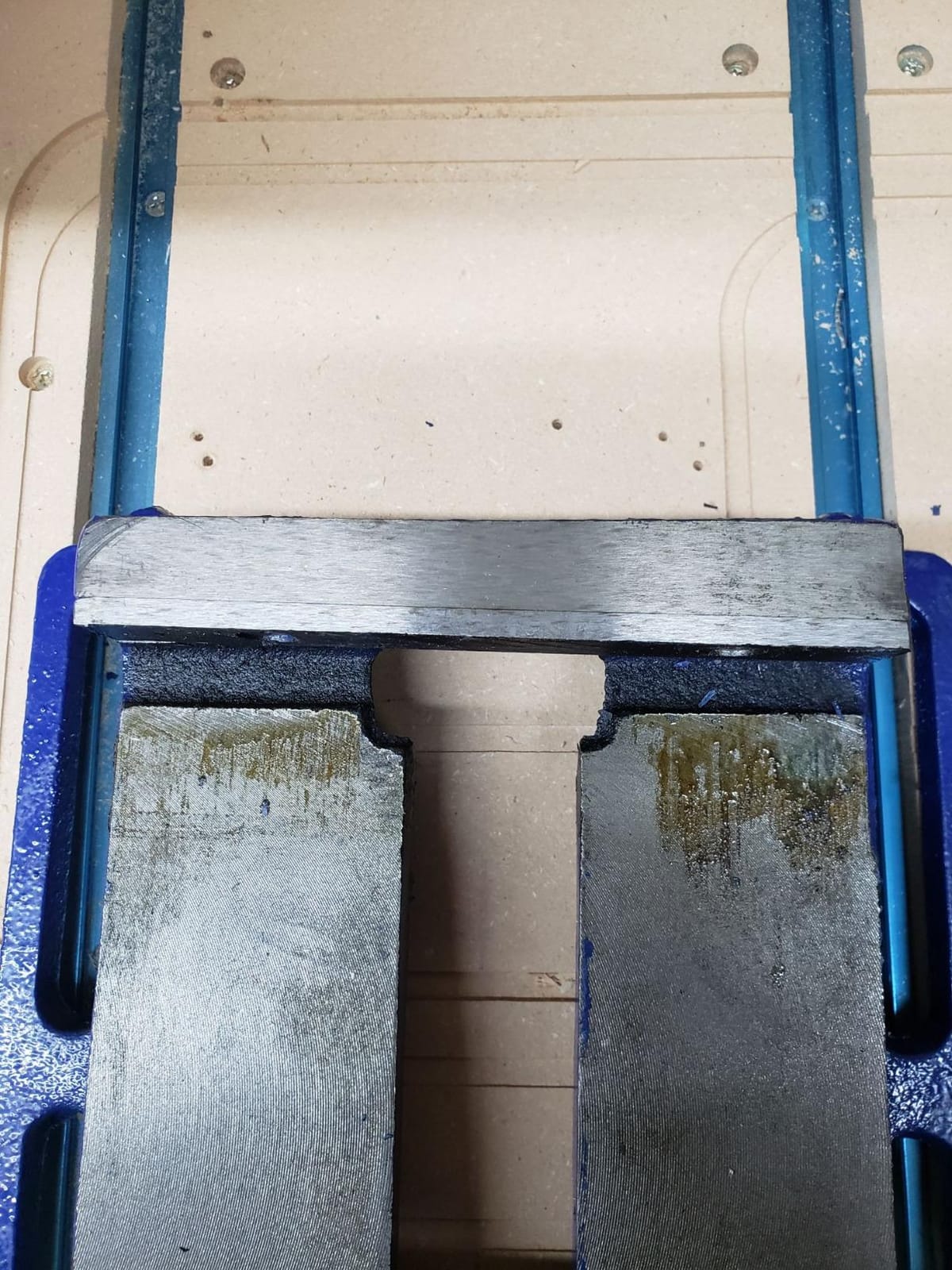
The complaints are consistent enough to plan around. It is bigger and heavier than the listing photos imply, so measure your table clearance before you commit. The unpainted machined surfaces ship with transit grease that needs cleaning before the screw will feel smooth, and the 1 inch throat depth is the tightest figure in this group.
Warranty is a 1-year limited term, which is a clear step down from Wilton’s lifetime cover. That is the honest trade for the price difference, and for most hobby and light-shop use it is not a deciding factor.
Will it stay put under a lateral drilling load?
Yes, provided you use the lock screw. That screw is the entire difference between a swivel base that helps you and one that becomes a pivot point under side load. Locked, the cast iron body resists the torque a drill applies when the bit catches the far side of a hole.
Textured serrated jaws grip both metal and wood, so mixed projects are fine. The trade is that serrations mark anything you care about cosmetically.
When is it the wrong choice?
It is not a precision instrument. There is no squaring reference, no ground bed, and the fit is not specified tight enough for tapping or reaming to a print dimension. If your work is inspection-critical, spend up.
The 1 inch throat depth also rules it out for larger diameter round stock despite the wide jaw. Judge round work by throat, not by opening.
4. Wilton D144 Industrial Drill Press Vise – Best for Squaring and Precision
Wilton Industrial Drill Press Vise, 4″ Jaw Width, 4″ Jaw Opening, 1-1/2″ Jaw Depth (Model D144)
- Ground bed gives smooth
- low-slop jaw movement
- Machined sides and bottom work as built-in squaring references
- 10 pound body holds small work without extra clamping
- Hollow centre lets you drill through without hitting the vise
- Jaws can sit slightly proud of the body and wobble on edge
- Handle can foul the table when bolted down
- Needs deburring and degreasing before first use
This is the accuracy pick. The bed is ground, and the vise is precision ground to square and parallel within 0.0001 inch per inch, which is a machinist-grade figure rather than a woodworking one. It is the only vise here we would trust for tapping and reaming to a stated dimension.
The machined sides and bottom are a genuinely clever touch. Because those faces are flat and square, the vise itself becomes a right-angle reference, so you can square a workpiece against it without needing a separate sine block or surface plate.
Black oxide on the screw is a small detail that pays off repeatedly. Coating a screw reduces friction and galling, which is why the clamping feel stays consistent over months rather than turning gritty as bare steel threads do.
There is a design consequence worth knowing: the jaws can sit marginally wider than the body, so the vise wobbles if you set it on edge. Owners also report the handle fouling the table once the vise is bolted down, which matters if you work right up against the table edge.
Every one of these is a fifteen-minute fix. Deburr, degrease, oil the screw, and the feel improves dramatically. That clean-up step is common across this entire list, not unique to this model.
How much accuracy do you actually gain?
Enough to matter on printed work. Ground jaw travel means low slop between the part and the jaw, so a hole stays where you put it across repeated setups. That is where off-centre drilling problems usually originate, and it is why we measure rather than eyeball.
The squaring faces extend the benefit beyond drilling. Layout marking, checking a flat, and verifying a right angle all become faster because the reference is built into the tool.
When is it the wrong choice?
It is a fixed vise, so every repositioning still means unclamping. If you are drilling a pattern of holes and want to slide the part between them, a cross slide saves far more time than the extra accuracy here is worth.
At 4 inches of jaw it also cannot hold the same stock as the two 6 inch vises above, and the 1-1/2 inch jaw depth is taller than the Forward, which costs a little clearance under a low-chuck benchtop press.
5. HFS 2-Way X-Y Compound Cross Slide Vise – Best for Positioning Without Unclamping
HFS(R) 2 Way 4-Inch Drill Press X-Y Compound Vise Cross Slide Mill
- X-Y travel positions parts without unclamping
- Heavy cast iron body stays stable under cuts
- Adds light slotting and milling capability to a drill press
- Useful travel range on both axes
- Arrives stiff and needs disassembly
- cleaning
- filing and lubrication
- Rough castings and misaligned holes need shimming
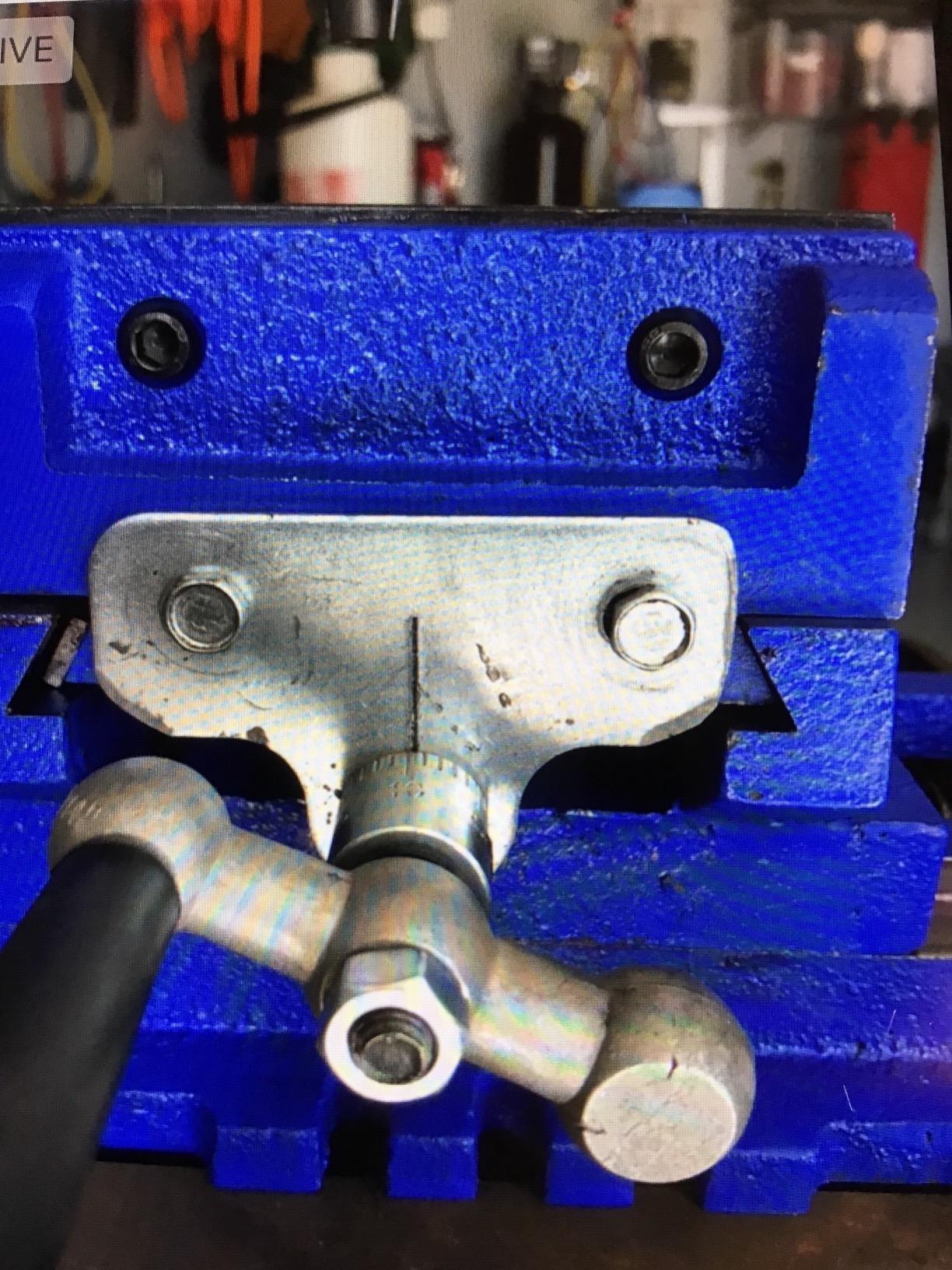
- Cranks and dial rings are not precise enough for real accuracy work
This is the largest sample of real owner experience in the group, with well over 1900 reviews, and it is the most polarised. Buyers expecting a machinist-grade cross slide find it imprecise. Buyers who spend half an hour cleaning and adjusting it report it adds genuine capability for very little money. Both reactions are in the reviews, and both are fair.
What it actually does is remove the clamp-unclamp-reposition cycle. With 5 inches of longitudinal and 3.5 inches of cross travel, you can move to a new hole position under the bit, clamp once, and drill a pattern without disturbing the setup. For series work on one part that is a large time saving.
Five inches of longitudinal travel is the most of any vise here, and the 15 pound cast iron body is heavy enough to stay planted while you work across it.
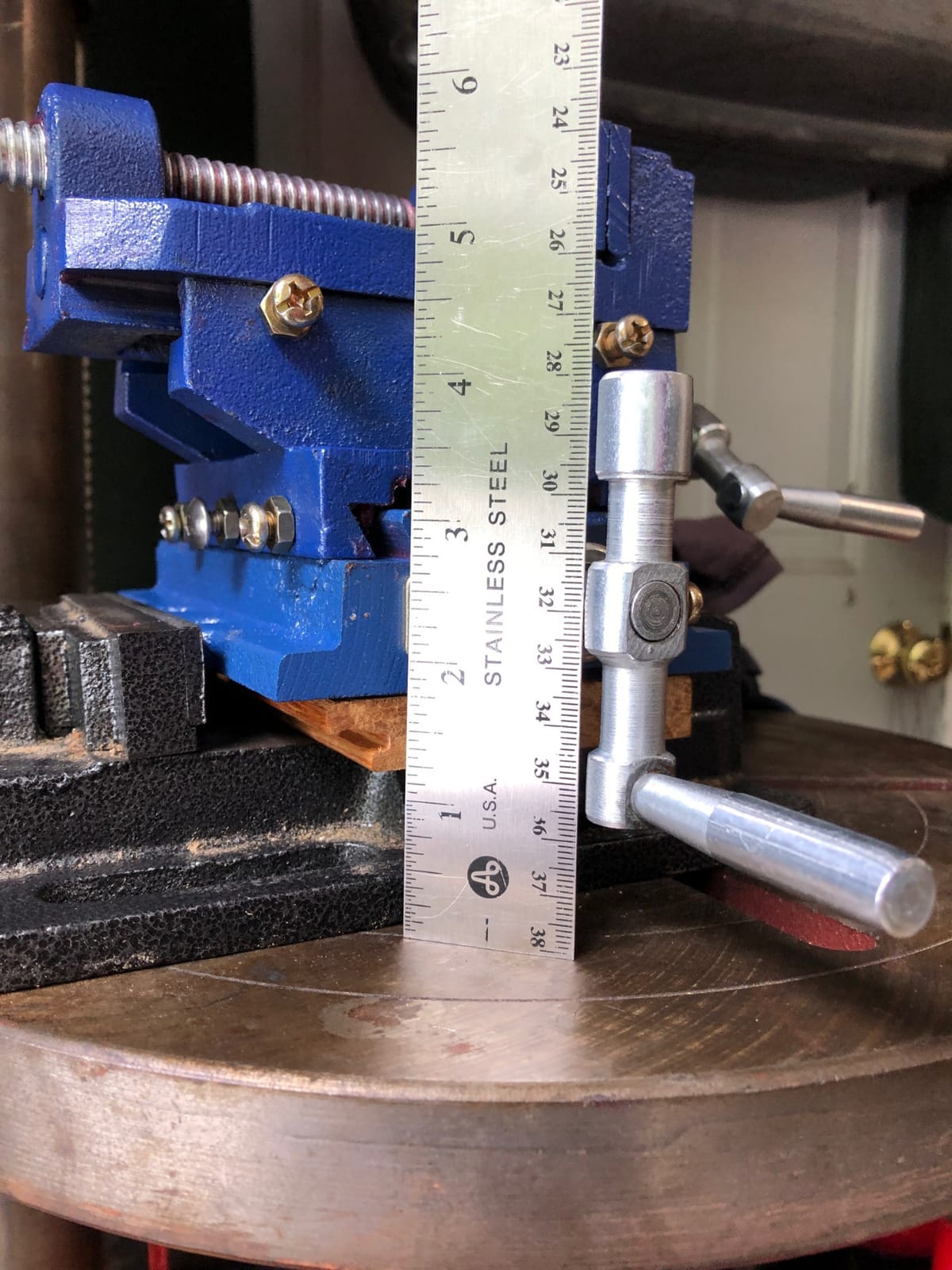
Now the honest part. The castings arrive rough, the screws arrive stiff, and the drilled holes are sometimes misaligned enough to need shimming. Budget thirty minutes with a wrench, files and oil before your first real job. The dial rings are marked in 30 increments per revolution, which tells you everything about their resolution.
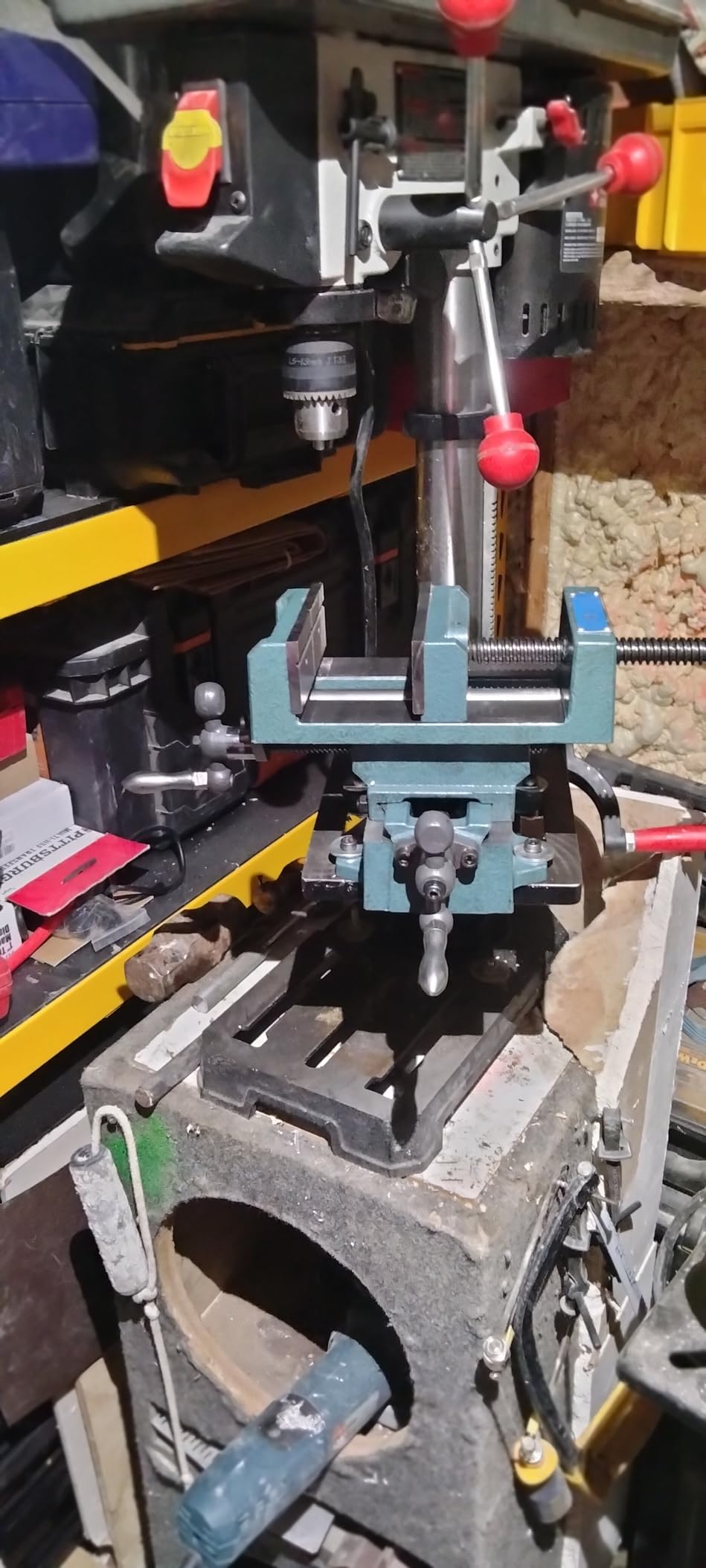
There is also a geometric limit: the fixed jaw does not reach the centreline, so small parts can sit outside the usable opening. And the tall profile may not clear beneath a low-chuck benchtop press. Measure before ordering, which the manufacturer explicitly asks buyers to do.
Is a cross slide worth it on a drill press?
It is worth it if you drill repeated patterns in the same part, because the adjustment happens without touching the workpiece. It is worth it if you want to do light slotting or small milling jobs on a machine that was not designed for them.
It is not worth it if you drill one-off holes, or if you need positional accuracy tighter than a few thousandths. The lead screw backlash in this class of vise is the limit, not the clamping.
When is it the wrong choice?
When clearance under the chuck is tight. Cross slides are tall assemblies, and the height costs you quill travel you may not have on a small press. The Wilton LP4 solves the same problem in a fraction of the space.
Also skip it if you have no interest in servicing it. A cross slide that has never been cleaned and gib-adjusted is a worse tool than a simple fixed vise, and the reviews show that gap clearly.
6. Wilton CS4 Cross-Slide Drill Press Vise – Premium Pick for Positioning
Wilton Cross-Slide Drill Press Vise, 4″ Jaw Width & Max Opening, 1-3/8″ Jaw Depth (Model CS4)
- X-Y travel removes repeated unclamping and repositioning
- 20 pound cast iron body is rigid on the table
- V-groove jaws hold round as well as flat stock
- Knob markings give a repeatable dial-in feel
- Lead screw backlash can be noticeable
- Needs disassembly
- degreasing and lubrication before first use
- Some units arrive with rough ways or a damaged crank
- Slide moves can hit the table
The Wilton CS4 is the better-built cross slide of the two here. Twenty pounds of fine grain cast iron with hardened V-groove jaws is a substantially more rigid assembly than the castings on the budget cross slide, and it stays put under a heavy cut in a way that one does not.
Five separate bolt lugs is the mounting arrangement we would want on a cross slide, because a cross slide generates lateral forces that a single slotted screw is poorly suited to resist. More fixing points means less movement as you push the crank.
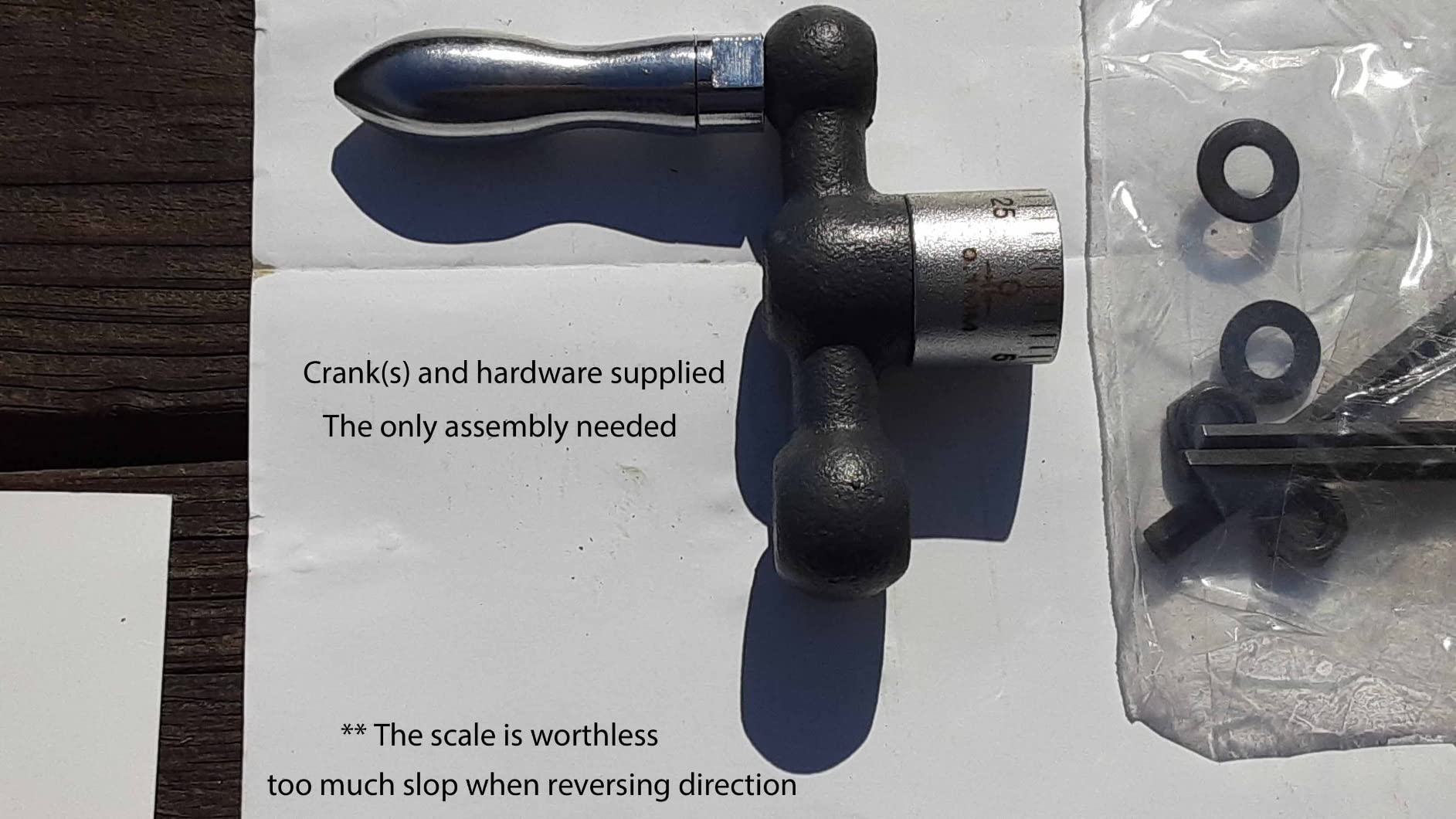
The cast side knobs dial in 0.1 mm increments, which is a meaningful improvement over free-spinning cranks. It is still a lead screw with backlash, but the marked increments give you a repeatable reference when you come back to the same position.
It is also offered in 3, 4, 5, 6 and 8 inch jaw widths, so this model is the middle of a family rather than a dead end. If your work grows, you stay in the same system.
Expect the same first-hour work as any cross slide: disassemble, degrease, lubricate. Owners also report occasional rough ways or a damaged crank on arrival, and the slide can strike the drill press table, with no directions included to help you set the travel limits yourself.
How accurate is a cross slide for drilling?
Good enough for positioning, not for precision machining. The consensus across owner reviews is consistent: this is a well-built way to move a workpiece, and the slack in the X-Y lead screws is the reason it should not be asked to hold a tolerance. For hole position on a drilling job, that is exactly what you want.
Zeroing still matters. Note the knob position at your first hole and count revolutions to the next, and you get consistency the backlash would otherwise steal.
When is it the wrong choice?
When your press is short on clearance. At 20 pounds with a taller cross-slide profile, this is a substantial mass sitting between the table and the chuck, and a low-chuck benchtop press may simply not reach your workpiece.
It is also overkill for one-off drilling. The premium buys rigidity and repeatability you only exploit when you are moving between positions repeatedly.
7. WEN DPA424 Drill Press Vise – Best for Small Benchtop Presses
- Low profile fits small benchtop presses with limited clearance
- Elongated slots line up with a wide range of drill press tables
- Screw action turns smoothly after a light clean-up
- Handles wood
- metal and plastic work
- Moving jaw can lift slightly when tightened and leave jaws uneven
- Handle feels cheap and awkward
- Sharp burrs on the screw and platform need smoothing
- Mounting bolts are not always included
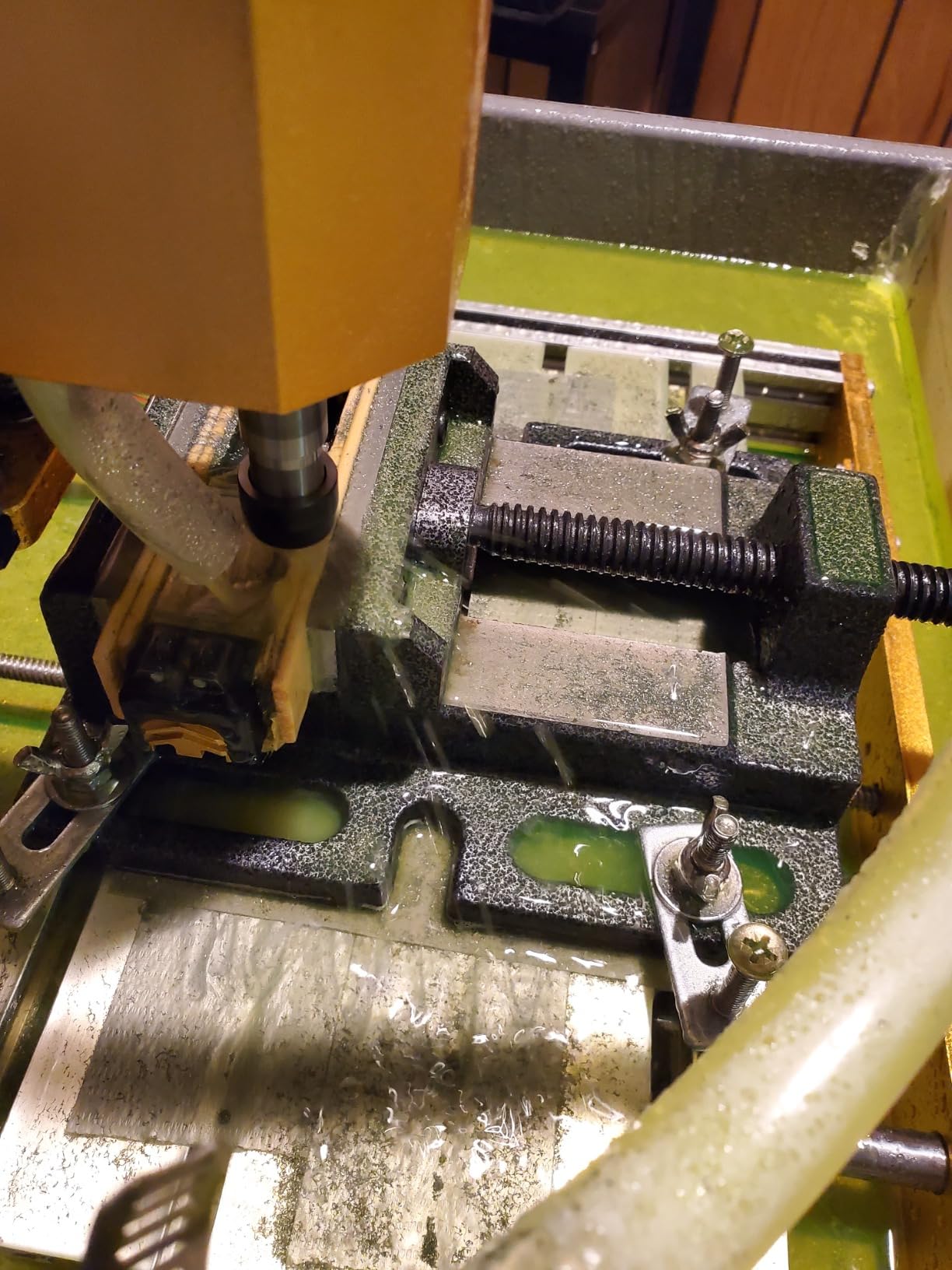
For a small benchtop press with a cramped chuck clearance, low profile matters more than jaw size, and this is one of the shortest vises in the group. The four elongated mounting slots are a smart universal fit, lining up with a wide range of drill press tables without adapters.
It grips wood, metal and plastic, which makes it the most useful single vise if your shop spans hobbies rather than production. On metalwork it does a competent job on small brackets, tabs and stock under half an inch thick.
Owners report that a light clean-up and oil after unpacking makes the screw turn smoothly, and that the weight keeps work stable once the vise is bolted down. At roughly 7 pounds it is not a featherweight, which is the point.
The failure mode to know about is jaw lift. Owners consistently report the moving jaw rising slightly as it tightens, which leaves a stack of metal sitting on an uneven face. That is the exact complaint The Hobby-Machinist threads raise about low-cost vises, and it is fixable by backing off, re-seating the workpiece, and tightening in smaller increments.
The handle is the other weak point, feeling cheap and awkward to operate. Sharp burrs on the screw and platform also need smoothing, and the mounting bolts are not always supplied, so budget for a small hardware run.
Can it handle steel or only non-ferrous work?
Light steel work is fine at small diameters. Cast iron construction and a low profile mean the mass is not fighting a heavy side load, and a moving jaw that lifts under clamping pressure is a real problem when you are biting into harder material.
Treat larger drilling as the limit rather than the rule. Forums put entry-level vises in this class at roughly 8 mm holes in steel, and that figure is a sensible ceiling regardless of brand.
When is it the wrong choice?
When your press has clearance to spare and you want a vise that grows with your work. The 4 inch jaw and 1 inch throat depth are the most modest capacity figures here, and there is no squaring reference to fall back on.
Also skip it if you care about repeatability across setups. A total-thread screw with a lifting jaw is not the combination you want for tapping or reaming to a printed dimension.
8. PONY 4 Inch Drill Press Vise – Best for Grinding and General Shop Use
- Heavy cast iron body gives real stability on a benchtop press
- Holds work securely without relying on hand pressure
- Doubles as a holder for grinding
- filing and hand drilling
- Straightforward bolt-down design
- Vise tightens in one direction so small parts can be blocked by the body
- Jaws may not line up perfectly and can bow under pressure
- Hold-down bolts are not included
- Machined surfaces arrive caked with transit grease
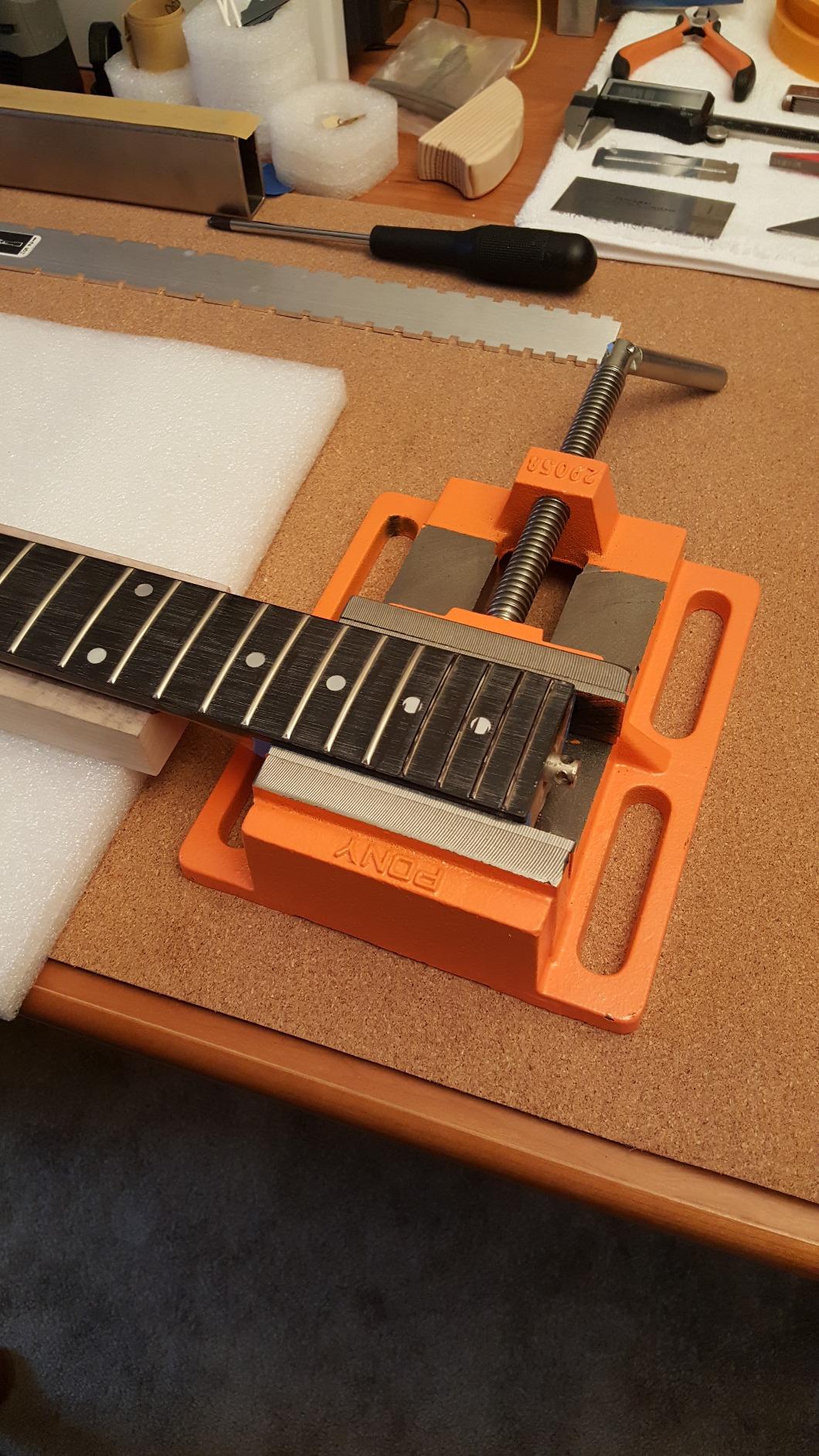
The PONY’s real advantage is that it does not want to be only a drill press vise. Several owners describe it as their primary workholding tool for grinding, filing and hand drilling as well, because a heavy cast iron body with real jaw pressure is useful everywhere a bench vise would be, without the bulk.
That weight is the point for metalwork. There is no quivering, no walking, and no need to lean on the part with a hand while the bit is turning.
The design is simple and non-swivel, which means fewer ways for it to go wrong. It bolts down and stays bolted, and there is no cross slide to service or lead screw to adjust.
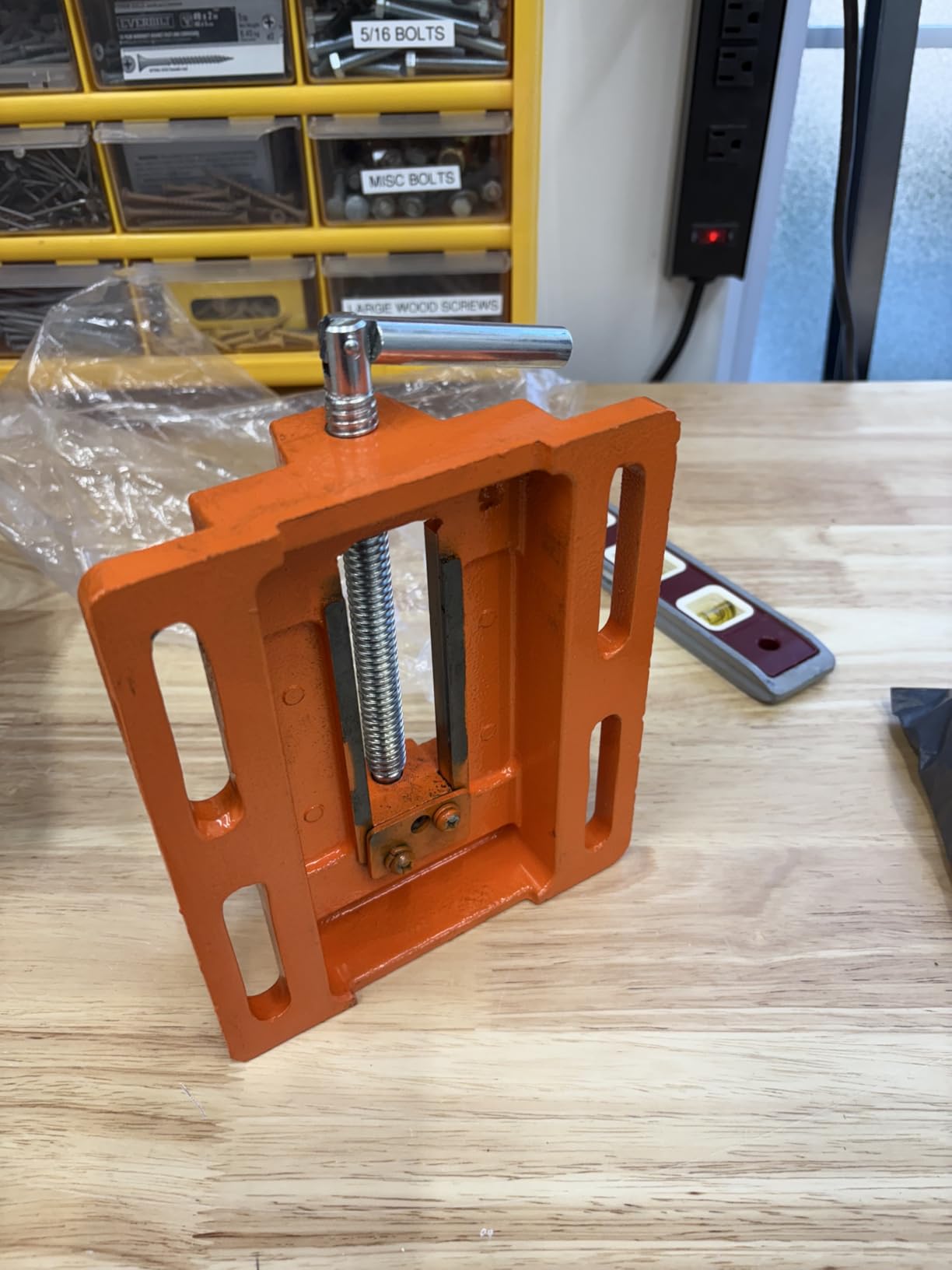
The limitation that matters most is one-sided tightening. Because the vise closes in a single direction, small workpieces can end up jammed against the body of the vise instead of between the jaws, so you have to set up the part before you tighten rather than after. Owners also note the jaws can bow slightly under clamping pressure and may not align perfectly.
Hold-down bolts are not included, so buy your own before you need them. Machined surfaces ship with transit grease that must be cleaned off, and several owners recommend filing sharp edges before first contact with a workpiece. Warranty is one year against faulty workmanship or material.
Is a cast iron body heavy enough to damp vibration?
Yes. Mass is the cheapest vibration damping available and this body is solidly in that range. On a benchtop press running short of rigidity, the difference in how a bit feels as it breaks through material is noticeable.
The trade is portability. A heavy fixed vise is not something you carry between machines, and it needs a table that can take it. Check that the bolts you use are appropriate for the table material.
When is it the wrong choice?
When your work is small parts held near the fixed jaw. The one-sided tightening behaviour will frustrate you repeatedly on brackets and tabs that you would rather centre in the jaws.
It is also the shortest warranty in the group and the least specified of the eight, with no published weight or precise throat figure. Buy it for stability and versatility rather than precision.
Drill Press Vise Vs. Milling Vise Vs. 4-Axis Vise
A drill press vise is the wrong tool for a surprising number of metalworking jobs, and the biggest single mistake we see is paying vise money on the wrong category. The difference is not quality, it is geometry and slop.
Drill press vise: low, wide, bolted flat to the table, modest jaw travel. Built to resist downward thrust and to get out of the way of the chuck. Slop is acceptable because the bit is vertical and the load is axial.
Milling vise: taller and narrower, with a precision-ground bed, parallel and square to tight tolerance, and much less side play. It is designed so a workpiece stays put under horizontal cutting forces from a cutter. This is the tool for facing, slotting and small milling work, and it is the step-up experienced metalworkers recommend when drilling no longer covers the job. Advice on Woodworking Talk forum threads is consistent: a metalworking milling vise is solid and has no slop, and worth moving to if you do more than occasional holes.
4-axis vise: a milling vise with tilting and rotation built in, so you can reach a face without re-setting the workpiece. It is a machine-shop tool, and on a drill press it buys you almost nothing you can use.
The decision is simple. Drilling, reaming and tapping in steel: drill press vise. Anything where you cut sideways against the work, or where hole position within a few thousandths matters across setups: milling vise. Buy the press first if you do not own one, and our magnetic drill press picks cover the on-site alternative for large steel.
How to Choose a Drill Press Vise for Metal
Judge round stock by throat depth, not jaw width. This is the most common sizing error. A 6 inch jaw does not help you hold a 2 inch rod if the throat is 1 inch, because the screw sits in the way. Check throat depth against your largest round diameter before anything else.
Balance jaw width to your largest workpiece. Four inches covers most brackets, plates and small bar. Six inches becomes worthwhile when you regularly drill stock wider than 4 inches or want to grip a long face rather than a tip. Going wider past that costs clearance under the chuck for no gain.
Decide whether low profile is a requirement. If your press has short quill travel, low profile is not a preference, it is the difference between reaching the part and hitting the vise. Check the total vise height against your measured clearance with the chuck at its lowest, not at rest.
Prefer heavier cast iron for steel. Mass damps vibration and resists the lateral torque a drill applies when the bit catches the far side of a hole. Aluminium bodies save weight but flex under drilling thrust, which shows up as an oversized hole. Steel is the middle ground, but cast iron remains the standard for a reason: it damps well, machines easily for repairs, and costs less.
Understand the thread design before you buy. Every vise in this roundup is total-thread, so a given handle position does not map to a fixed opening the way it does on a self-centring design. If you need a part to return to the same position repeatedly, self-centring vises are a different category worth considering. You are paying for a fixed throat and repeatable setup instead of raw opening width.
Know your honest size limit. Metal Work Forums frames it plainly: an ordinary entry-level drill press vise works well for holes up to about 8 mm in steel. Past that, thrust loads rise fast and budget castings start to move. Larger holes in hard material want a heavier body and a larger jaw, not a tougher handle.
Expect a clean-up on almost anything you buy. Deburring cast edges, degreasing machined surfaces and lubricating the screw is a normal first hour with vises in this category. It is not a defect, and it is the cheapest quality improvement available.
Fix off-centre holes by process, not by force. If holes are drifting, work through the causes in order: a friction-mounted vise, a workpiece that is not seated flat on both jaw faces, a lifting moving jaw, and a drill that has been re-sharpened or replaced and has changed geometry. Clamping harder hides the first two and makes them worse.
On the question of budget-brand vises generally, the honest machinist answer is that low-cost vises are fine for light work and poor for precision, with the boundary around hole size and material. Practical Machinist threads carry long-running consensus that budget vises from brands like VEVOR are genuinely good for what they are, and the failure reports cluster around stripped screws, soft castings and jaws that will not stay locked. Judge the tier by the job, not by the label.
Frequently Asked Questions
What is the best drill press vise?
The Wilton LP4 is the best drill press vise for most metalworkers: a 11.6 pound fine grain cast iron body, hardened V-grooved jaws, a low profile that preserves chuck clearance, and a limited lifetime warranty. Choose a 6 inch jaw model instead if you regularly work round stock over 2 inches in diameter.
What is the best vise for a drill press?
The best vise for a drill press is one matched to the job: a low-profile cast iron vise for drilling steel and plate, a cross-slide vise if you move between hole positions repeatedly, and a milling vise if you also cut sideways against the work. The Wilton LP4 covers the first case, and the Wilton CS4 the second.
What is the best vise for the money?
The Yost LDPV-6 gives you the most jaw and opening in this group: a 6 inch jaw, 5.75 inch opening and a swivel base with a lock screw. The honest limit of this tier is job size, with machinist forums putting an entry-level vise at roughly 8 mm holes in steel before it starts to move under thrust.
What do you use a drill press vise for?
A drill press vise is used for drilling round bar and rod without it spinning, reaming and tapping threaded holes in steel, duplicating hole patterns for jigs, holding small brackets for grinding and filing, and light slotting and milling work on a cross-slide model. The value is repeatable hole position rather than raw clamping force.
Are Harbor Freight vices of good quality?
Budget-brand vises of this general class are adequate for light work and hold up best when they are large and low profile, which is the machinist consensus. The reported problems cluster around soft castings, stripped screws and jaws that will not stay locked, all of which surface quickly on heavy drilling rather than light duty.
How to mount a drill press vise?
Clean the drill press table and T-slots first, seat the vise flat, then run retaining screws or bolts through the slots, side grooves or lugs the vise provides. Tighten evenly in a criss-cross pattern, drag-test the vise in two directions, and re-check the bolts after the first real job because cast iron bases bed in and settle.
What size drill press vise do I need?
A 4 inch jaw vise suits most hobby and light-shop metalworking with plate, bar and small brackets. Go to a 6 inch jaw when you drill stock wider than 4 inches or grip long faces. Judge round stock by throat depth rather than jaw width, since the screw limits what diameter you can actually reach.
Why does my drill press vise let the workpiece move?
Most movement comes from friction mounting rather than bolt-down mounting, so secure the vise through its slots, grooves or lugs first. A lifting moving jaw is the second cause, and backing off, re-seating the workpiece flat and tightening in smaller steps fixes it. Check the workpiece is not being pinched against the body of the vise on a non-swivel model.
Final Verdict: The Best Drill Press Vises for Metalwork in 2026
After six weeks of drilling, reaming and tapping across eight vises, the Wilton LP4 is the one we kept coming back to. The 11.6 pound fine grain cast iron body holds position, the low profile keeps the chuck out of the way, the V-grooved jaws make round stock safe, and the lifetime warranty removes the durability question entirely.
Buy the Forward Q196A for the widest capacity in a fixed vise, the Yost LDPV-6 for the widest opening in a swivel-base vise, the Wilton D144 when squareness and accuracy are the job, the Wilton CS4 when you reposition constantly, the WEN DPA424 for a cramped benchtop press, and the PONY when one vise has to cover drilling, grinding and filing. Whichever you choose, bolt it down before the first cut.