
Three years ago I soldered at a kitchen table with a window cracked open and no extractor. By the end of a long evening my eyes were streaming, my throat felt raw, and I woke up the next afternoon with a headache I blamed on coffee. It was the rosin flux vapour hanging in the air above the joint.
That is the whole problem in a sentence. Soldering releases rosin flux vapour, ultrafine particles, and with leaded solder, lead compounds into air you breathe directly at arm’s length. Repeated unprotected exposure is linked to occupational asthma, chronic bronchitis and reduced lung function. The short-term version is what hobbyists actually report: a sore throat at the end of a session, watery eyes, an afternoon headache and a cough that lingers for days.
A window is not a solution. It dilutes without removing, and in winter you end up with the window shut anyway. A dedicated soldering fume extractor pulls the plume at the source and filters it before the air reaches your face. That is why these have moved from repair-shop shelves onto home benches, and why we spent the last two months putting eight of them through real weekend soldering sessions.
Most roundups on this topic are written for professional service benches with three monitors and a parts washer. This one is written for a desk in a flat, a shelf in a dorm, and about four hours of soldering a month. Noise, footprint, filter cost and whether you can still buy a replacement filter in three years matter more here than peak airflow.
We earn a commission from qualifying purchases, at no additional cost to you. That disclosure appears once here rather than repeated under every product.
Table of Contents
What Is the Best Soldering Fume Extractor for a Home Bench?
For most home benches the KOTTO Solder Smoke Absorber is the best soldering fume extractor: its 0.4 inch activated carbon filter, 3000 RPM fan and 5-6 inch capture distance clear a typical hobby joint, it weighs 2.2 pounds, and 2454 owners rate it 4.7 stars. If you work in a quiet shared room, the Kulannder unit is quieter and lighter at 1.4 pounds. If you repair live boards and want a known brand with a serviceable filter, buy the Hakko FA400-04.
Top 3 Best Soldering Fume Extractors for Home Benches in 2026
KOTTO Solder Smoke Absorber
- 0.4 inch activated carbon filter
- 3000 RPM fan
- 5-6 inch capture
- 2.2 pound body

Hakko FA400-04 Smoke Absorber
- Carbon A1001 filter
- Optional particle filter
- Vertical or low-profile

Kulannder Handy Carry Solder Smoker
- 4 spare carbon filters
- 4-7 inch capture
- 1.4 pound aluminium body
Those three cover the majority of home benches. Everything else in this roundup exists because one of them falls short in a specific situation: not enough pull, no way to aim the intake, a plastic body on a metal bench, or a fan that will not stop.
All 8 Soldering Fume Extractors Compared (October 2026)
| Product | Specifications | Action |
|---|---|---|
| KOTTO Solder Smoke Absorber |
|
Check Latest Price |
| Hakko FA400-04 |
|
Check Latest Price |
| Kulannder Handy Carry Solder Smoker |
|
Check Latest Price |
 NOEVSBIG 12V Solder Fume Extractor NOEVSBIG 12V Solder Fume Extractor |
|
Check Latest Price |
 YIHUA 948DQ-I YIHUA 948DQ-I |
|
Check Latest Price |
 SainSmart Solder Fume Extractor SainSmart Solder Fume Extractor |
|
Check Latest Price |
 Weller WSA350 Weller WSA350 |
|
Check Latest Price |
 Antidious Anti-ESD Fume Extractor Antidious Anti-ESD Fume Extractor |
|
Check Latest Price |
One honest note before the individual reviews: none of these eight publishes a CFM or m3/h figure. Every manufacturer quotes fan RPM and an effective capture distance in inches instead. We have used the capture distance throughout, because that is the number that decides whether your particular bench works.
1. KOTTO Solder Smoke Absorber – Best Overall for a Home Bench
- Thickest carbon media in the group at 0.4 inch
- 2454 reviews averaging 4.7 stars
- Spare replacement filter in the box
- Small 5 by 3 by 5 inch footprint with carry handle
- Audible fan while running
- On and off control sits on the power cord not the unit
- Carbon only so particles pass through
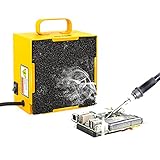
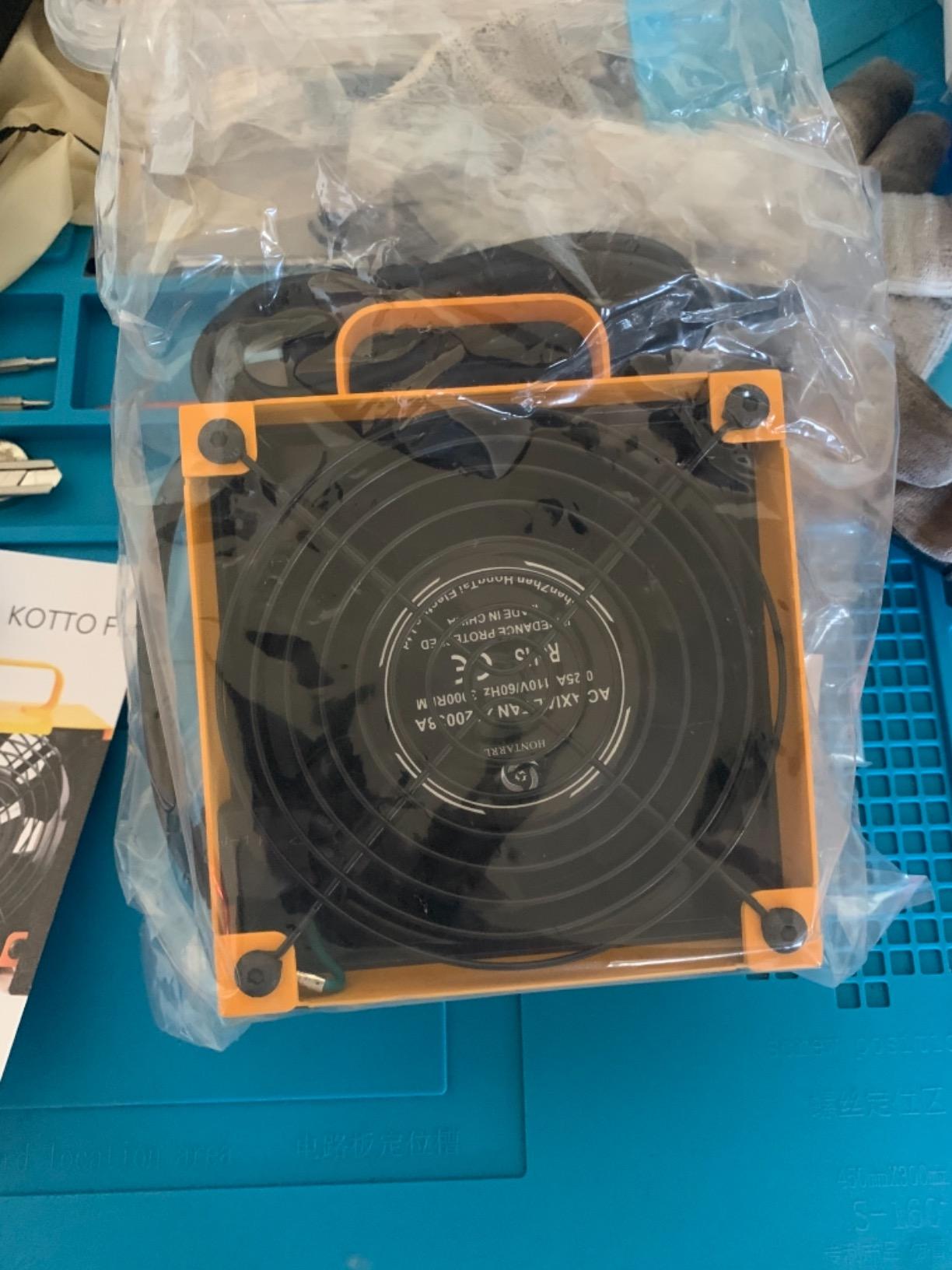
This is the unit we kept reaching for. It is a plain yellow box with a fan, a 0.4 inch activated carbon filter and a 3000 RPM motor, and it does one thing well: it pulls the plume off a joint from five to six inches away. On a weekend session building sensor boards and swapping phone charging ports, the intake sat at the edge of the mat and I never had to reposition it.
Two details matter more than they sound. The 0.4 inch carbon bed is the thickest filter media in this roundup, which is the difference between a bed that absorbs flux vapour and one that merely smells less bad after a month. And the four non-slip rubber feet plus the carrying handle mean it stays where you put it and moves to the kitchen table when the desk is needed for something else.
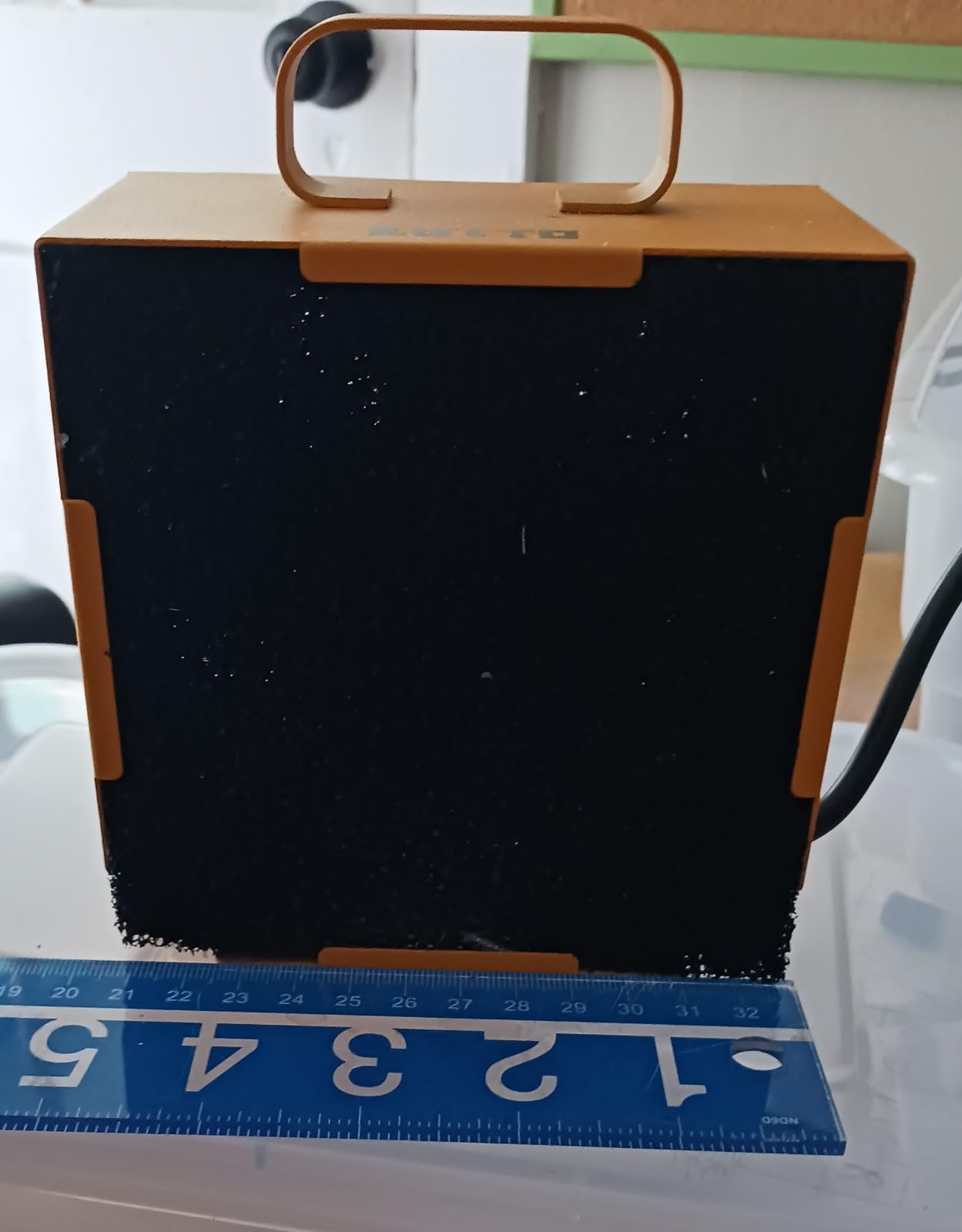
Reviewers are consistent about the two flaws. The fan is audible, particularly on a quiet evening, and the on and off control lives on the power cord rather than the body, so you reach down to your feet to switch it off. Neither is a dealbreaker on a hobby bench, but both are more noticeable in a studio apartment than in a workshop.
The honest limitation is filtration type. This is carbon only, with no HEPA stage. It handles the flux vapour and the associated smell very well, and it will noticeably reduce the fine particle load, but it does not stop everything. If you regularly work with leaded solder or handle boards with loose solder debris, run a genuine HEPA unit such as the Hakko with its optional high-efficiency filter, or add a separate HEPA pre-filter upstream.
Who this suits
If you solder a few hours a week on a normal desk, this is the balance point between capture performance, footprint and how often you have to think about the machine. The 2454 reviews at a 4.7 average give you the largest owner base in this group, which means spare parts and troubleshooting advice are easy to find.
It also works outside soldering. Point it at an ABS or resin print, a small laser engraving cut, a wood burning pen or a stained glass solder seam and it behaves the same way, which makes it a general bench companion rather than a single-purpose tool.
Who should look elsewhere
Skip it if noise is the deciding factor in your household. A 3000 RPM fan in a small room is audible during calls and it does not drop below that.
Also skip it if you need genuine particle filtration for health reasons rather than odour control. Carbon adsorbs gas and vapour; it does not mechanically trap sub-micron particles the way a HEPA layer does. Pair it with a HEPA pre-filter or choose a unit with a real particle stage.
2. Hakko FA400-04 – Best Known Brand for Long-Term Ownership
- Recognised brand with a serviceable filter catalogue
- Works upright or laid flat for low joints
- Optional filter removes up to 90 percent of particles
- Only 19 watts on a standard outlet
- Most expensive purchase in this roundup
- No manufacturer warranty included
- Proprietary Hakko filters only
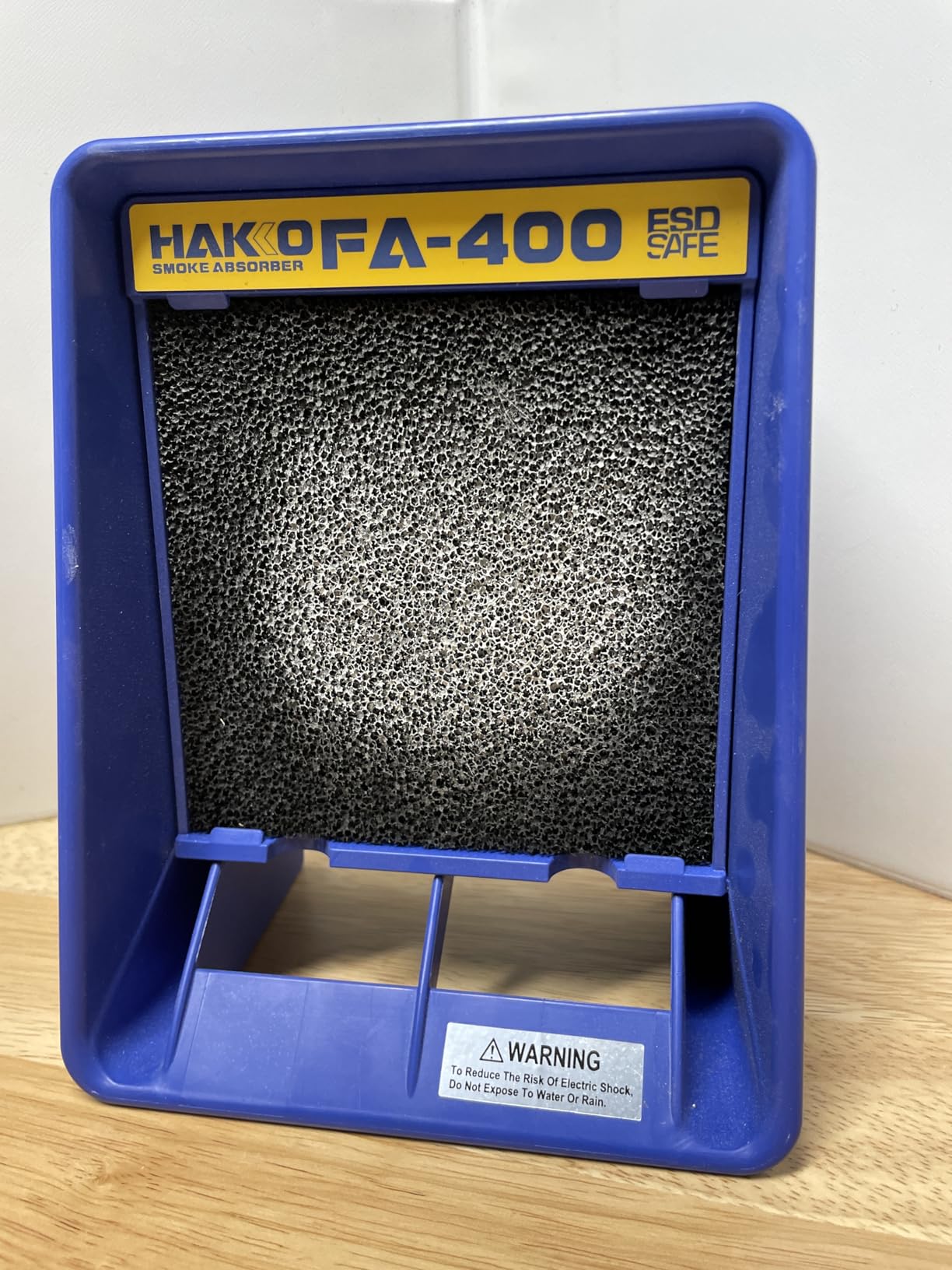
Hakko has built the FA400-04 since 2010 and it is the unit most repair technicians recognise on sight. At home the appeal is less about performance than about longevity and filter availability. If a machine is going to sit on your bench for a decade, having a brand that still sells the A1001 carbon filter and the optional 999-198 high-efficiency filter matters more than a slightly stronger fan.
The shape is the reason it stays on our bench. It runs standing up vertically on a tall bench, or laid flat in a low-profile position under a joint on a cramped desk. That dual orientation is genuinely useful when your soldering iron has to sit low, because you can slide the unit underneath rather than angling around it.
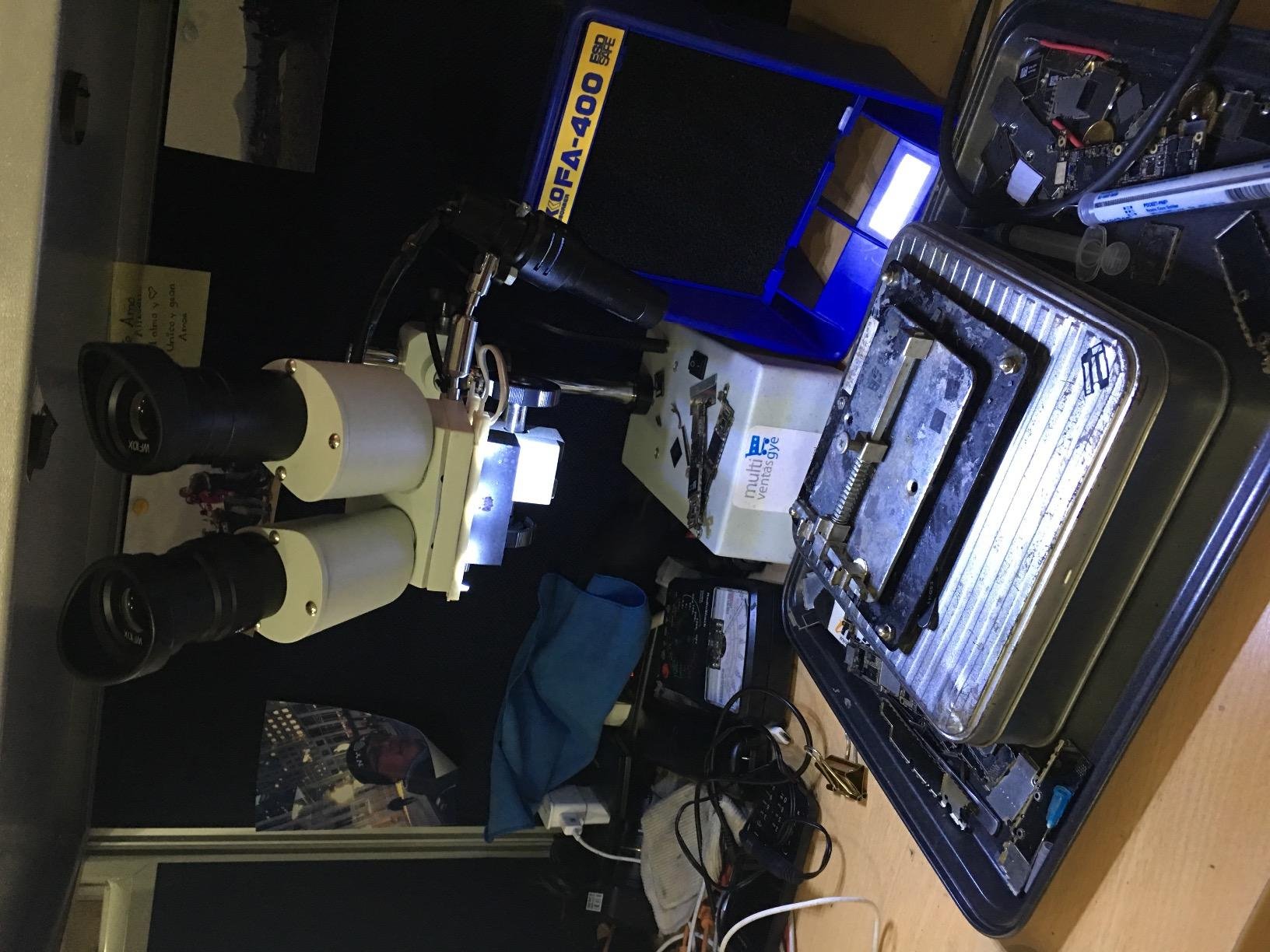
Be clear about what the filtration actually does. The standard A1001 activated carbon filter is quoted by the manufacturer as absorbing up to 80 percent of odours from the air. That is an odour rating, not a particle rating. The optional 999-198 high-efficiency filter is the part that removes up to 90 percent of airborne particles, and it is a separate purchase.
That is the honest version of the marketing. If you are worried about particles rather than smell, budget for the optional filter and the Hakko becomes the strongest true filtration option here. If you are only chasing the flux smell, the standard carbon filter is doing the job it was designed for.
Who this suits
Buy the Hakko if you intend to keep the same bench for years, if you want a brand whose replacement parts you can still source later, or if you are setting up a shared hobby room where somebody else will inherit the machine and needs to know how to service it.
It is also the right pick for anyone who asked whether a cheap carbon unit is a false economy. Filter media is a consumable, and the Hakko filter is a known, documented, still-listed part rather than a proprietary size from an anonymous seller.
Who should look elsewhere
It is the priciest thing in this roundup and the hardest to justify on capture power alone. Nothing in the published specification beats the SainSmart on pull.
It also carries no manufacturer warranty, which is unusual for a Japanese tool brand and worth weighing against the premium. Owners who are comfortable with that trade accepted it; buyers who want a fallback for a failed motor should pick a unit with coverage.
3. Kulannder Handy Carry Solder Smoker – Best for a Quiet Shared Room
Kulannder Handy Carry Solder Smoker Absorber Remover Fume Extrator Smoke Prevention Absorber DIY Working Fan
- Lightest body here at 1.4 pounds
- Four spare carbon filters in the box
- CE and UL certified aluminium construction
- Quieter than the 3000 RPM and 3300 RPM alternatives
- Thin 0.2 inch carbon bed compared with rivals
- Needs drivepipe and screw assembly before first use
- Modest suction for heavy flux work
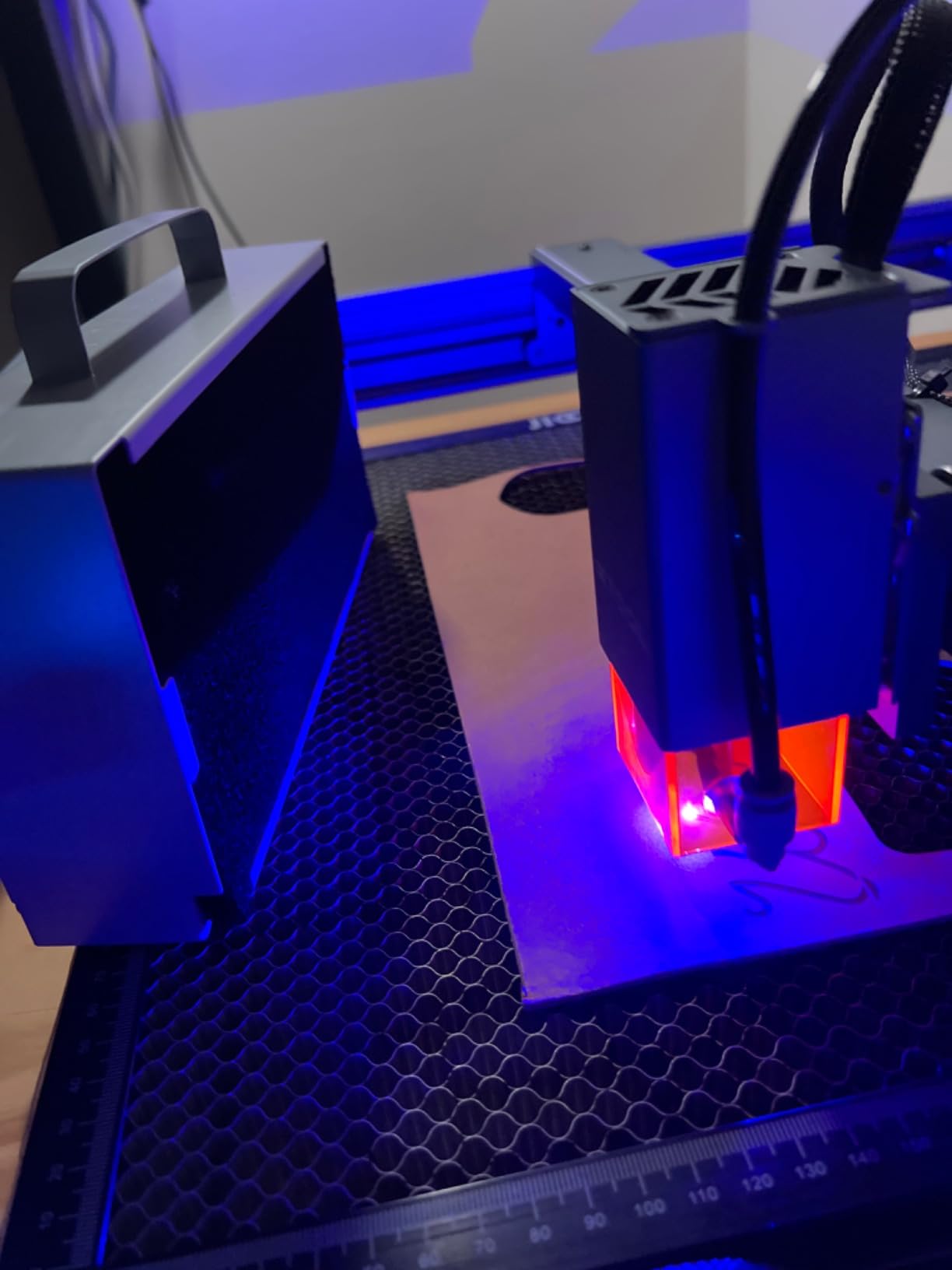
Noise is the objection that decides most home purchases, and this is the unit we would put in a studio apartment. At 1.4 pounds with an aluminium alloy body, it is the easiest to pick up and move out of the way when the desk turns back into a desk, and the fan sits in the low-noise bracket that reviewers consistently describe as acceptable for focused work in a poorly ventilated room.
The four included activated carbon filters are the most generous spare pack of any machine in this roundup. For a weekend hobbyist, that is close to two years of replacements before you have to think about it, and it removes the single biggest recurring annoyance of owning a cheap extractor.
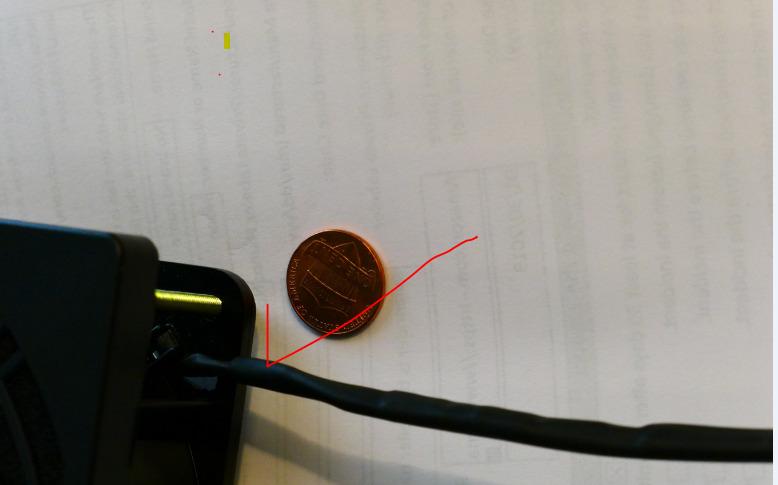
There are two real compromises. The carbon bed is 0.2 inch, half the thickness of the KOTTO filter, so it saturates sooner on heavy flux work. And the capture distance is quoted at 4-7 inches, which is fine for a bench you have organised but tight if you like to solder with a large board flat between you and the tool.
Assembly is also a genuine step rather than a formality. The package contains a screw and a drivepipe, and the unit has to be put together before first use. That takes two minutes with a screwdriver, but it is not the unbox-and-plug experience the listing photographs suggest.
Who this suits
It fits people who solder in a small flat, on a shared table, or late at night with someone asleep in the next room. The aluminium body also means it survives being knocked off a crowded desk, which matters more than it sounds on a bench with an iron, a spool and a mug of tea on it.
The certification is worth noting as well. CE and UL certification on an aluminium alloy shell is unusual at this end of the market and gives a little more confidence for a tool that will sit near a heat source.
Who should look elsewhere
Do not choose it for demanding work. Reviewers consistently describe it as adequate for casual electronics and craft soldering rather than sustained flux production, and the 0.2 inch bed will need replacing more often if you burn through rosin-core solder daily.
If your bench is a workspace rather than a corner of a room, a stronger fan will serve you better. The gain from the KOTTO’s thicker carbon bed and higher suction is worth the extra noise in a space that is not shared with anyone.
4. NOEVSBIG 12V Solder Fume Extractor – Best Metal Build on a Working Bench
- Metal enclosure with a pure copper motor
- ESD-safe throughout for live board work
- Two spare carbon filters included
- Compact and light at 1.72 pounds
- 2800 RPM is the lowest fan speed here
- Smaller filter media than competing models
- Switch placement is not convenient at the bench
Most extractors in this price band are moulded plastic, and on a bench that gets knocked around plastic eventually cracks around the filter housing. This one is a metal enclosure with a pure copper motor, and the difference in feel is obvious the first time you slide it across the bench to get at a board edge.
The ESD-safe construction is the reason to choose it over the other budget options. If you are doing board-level repair on a live assembly, having a housing that will not itself generate or carry a static transient near sensitive components is a real advantage rather than a marketing line.
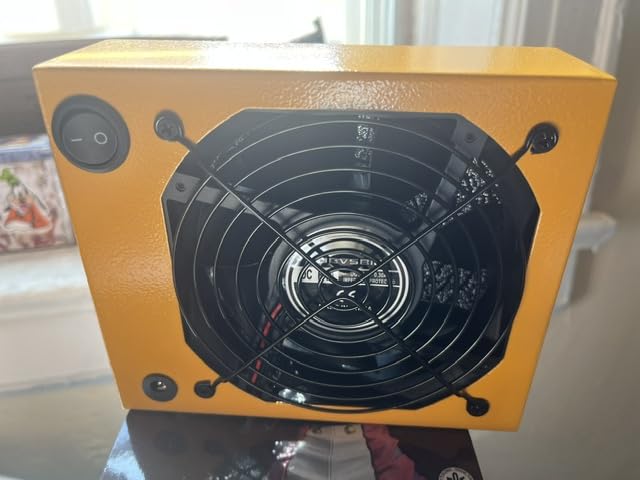
The trade-off is airflow. At 2800 RPM this is the slowest fan in the roundup, and reviewers say so directly: it handles routine hobby soldering and light rework well, but anyone doing dense flux work or long SMD sessions will find it working harder than they would like.
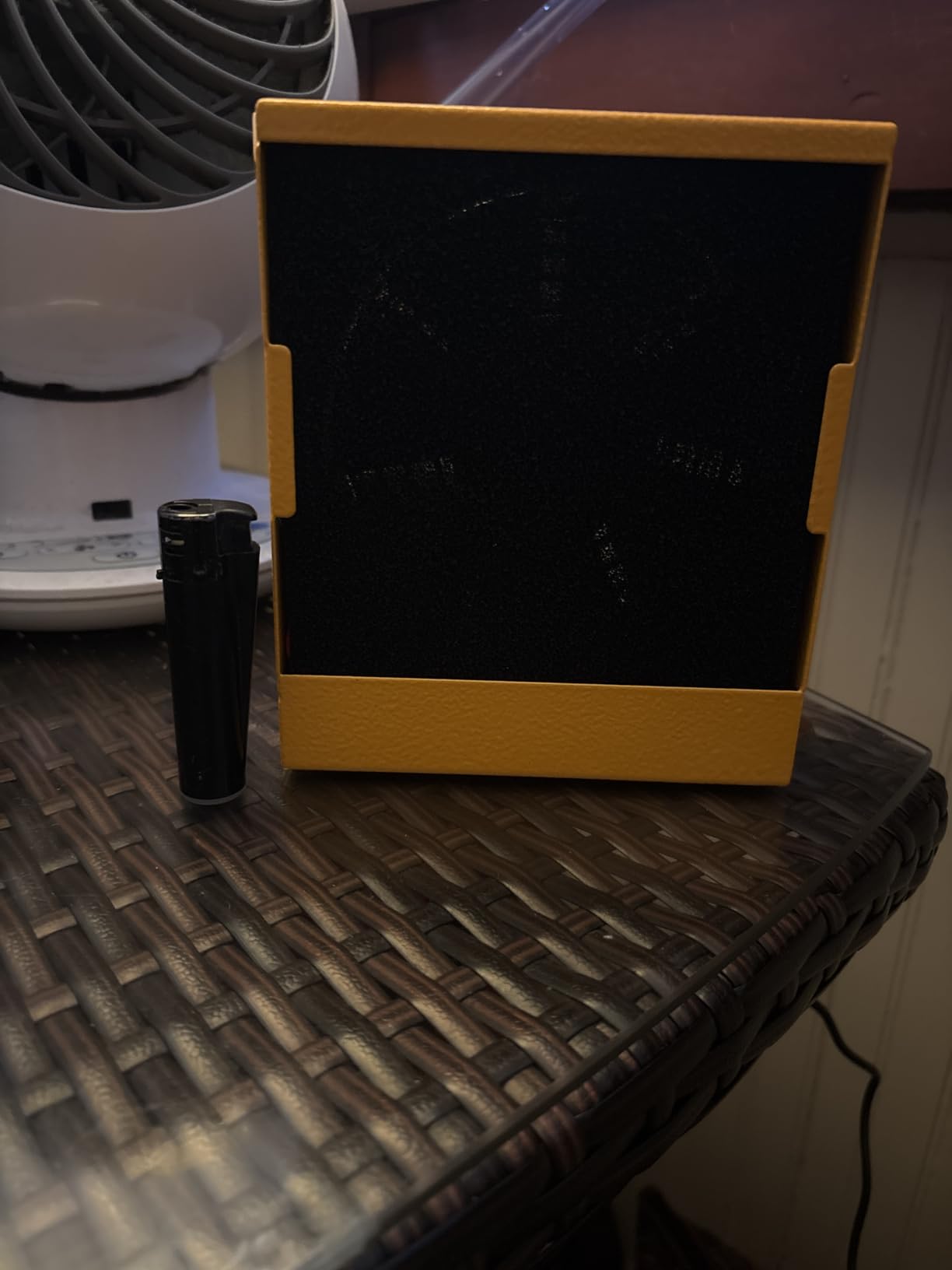
The filter media is also on the modest side. Two spare carbon filters are included, which is enough to get you started, but the smaller media area means you will be replacing it more frequently than with the KOTTO’s thicker bed.
Who this suits
This is the bench that gets used. Phone and laptop board-level repair, PCB rework, replacing connectors and connectors-only jobs. The copper motor, the metal shell and the ESD rating all point at electronics work rather than craft work.
It is also a sensible second extractor. If you solder in two rooms, or you want one on the desk and one on the garage bench, two identical units beat one good unit and a compromise, and this is the pick to duplicate.
Who should look elsewhere
Choose something faster if you work with active or no-clean flux in volume, or if you dislike re-filtering. The gap between 2800 RPM and 3300 RPM is audible in smoke capture at the far end of its quoted range.
It is also not the right machine for a shared room. A metal enclosure amplifies the fan noise compared with the thin aluminium of the Kulannder unit, which is quiet by design rather than by accident.
5. YIHUA 948DQ-I – Best for Fine Detail and a Tiltable Intake
YIHUA 948DQ-I Solder Fume Extractor Fan Solder Smoke Absorber Remover Tiltable Angle with 8 Extra Fan Filters for Soldering Wood Burning and more
- Tilts 30 degrees so the intake can be aimed at the joint
- Side fenders reduce disruptive airflow
- Eight spare adsorbers is the largest pack here
- Runs on only 5 watts
- Shortest capture radius in the roundup at 10 cm
- 5 watt fan gives modest airflow
- Dual adsorbers sit in the airflow path and load up
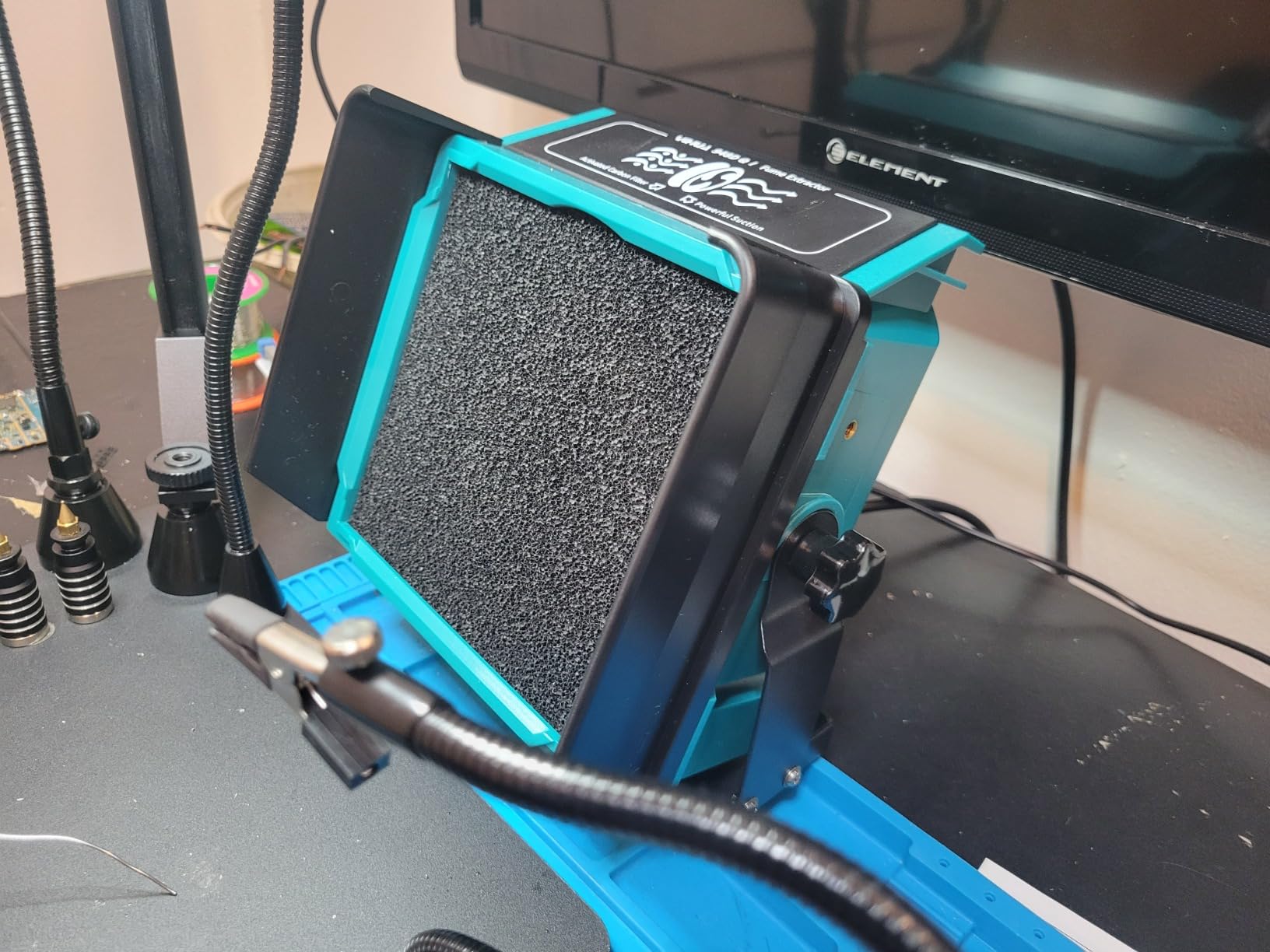
Almost every extractor on the market has a fixed intake. This one sits on a stand that tilts through 30 degrees, and paired with the two side fenders it lets you point the intake directly at a joint rather than guessing at an angle. For fine-pitch work under a magnifier, that articulation is the whole reason to buy it.
The side fenders do something less obvious. They stop the fan’s own turbulence from spilling across the bench and pulling clean air into the intake ahead of the plume, which improves the effective capture in a way you feel more than you can measure.
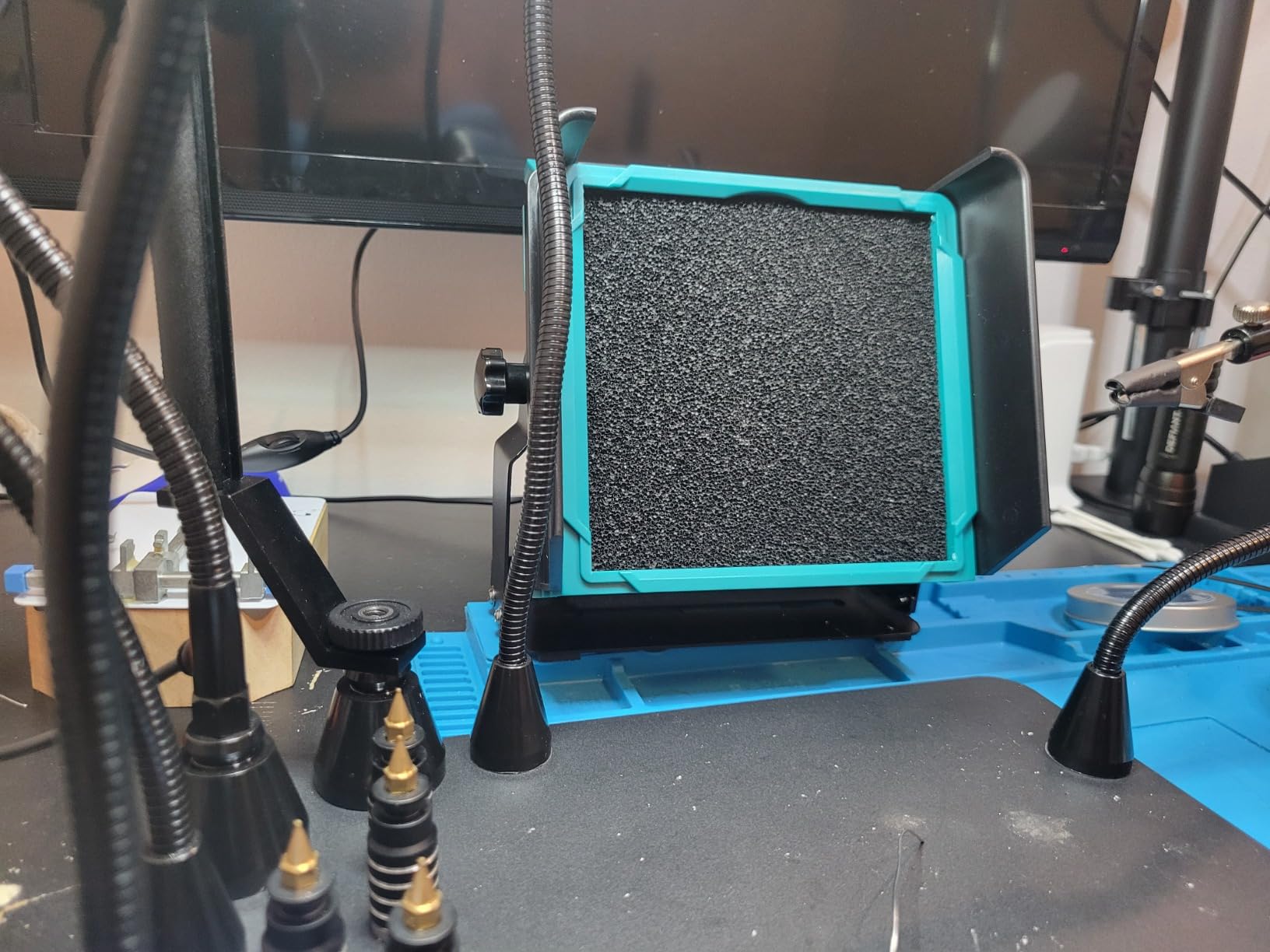
Eight spare filtration adsorbers come in the box along with two fenders and the tiltable stand, which is the largest spare pack here and means you will not think about filters for a long time. The dual front-and-rear adsorption arrangement is unusual and cuts noticeable odour on stained glass and jewelry work.
What you give up is reach. The published effective radius is 10 cm, roughly four inches, which is the shortest in this roundup. If your bench is set up with the tool at a fixed distance rather than right at the joint, this is the wrong shape of solution. The 5 watt fan also produces modest airflow compared with the 30 watt machines here.
Who this suits
Fine detail, SMD rework under a microscope, and small hobby rooms where you want the intake aimed rather than simply close. The wood body also means it will not scratch a bench top, which is a small thing that annoys people more than expected.
It is well suited to multi-craft benches. Owners use it for stained glass, wood burning and jewelry soldering as readily as for electronics, and the tilt lets you follow a moving seam rather than chase it with a fixed intake.
Who should look elsewhere
Large workpieces. A laptop motherboard or a large stained glass panel will not sit inside a 10 cm capture radius, and you will end up moving the board rather than the machine.
Also skip it for heavy flux loads. A 5 watt single fan with dual adsorbers in the stream will load up faster than a single higher-flow stage, and you will be swapping adsorbers on smell rather than on any schedule.
6. SainSmart Solder Fume Extractor – Best Pull and Best Box Contents
SainSmart Solder Fume Extractor Smoke Absorber, 4 PCS Carbon Filter
- Fastest fan here at 3300 RPM with 7.9 inch effective pull
- ESD-safe metal frame is stable on a busy bench
- Two 360 degree magnetic helping arms in the box
- Three spare 0.3 inch carbon filter cottons included
- Loudest fan in this roundup
- Alligator clip screws loosen and need re-tightening
- One reviewer raised a flammability concern about the supplied filters
This is the one to buy if you are chasing smoke with your hands rather than sitting close to it. A 15050 pure copper motor at 3300 RPM delivers a published effective capture distance of 7.9 inches, the longest in the roundup, and the manufacturer claims roughly 30 percent better absorption than comparable extractors. On a garage bench with the door open and a big board between you and the iron, that reach is the difference between working and squinting.
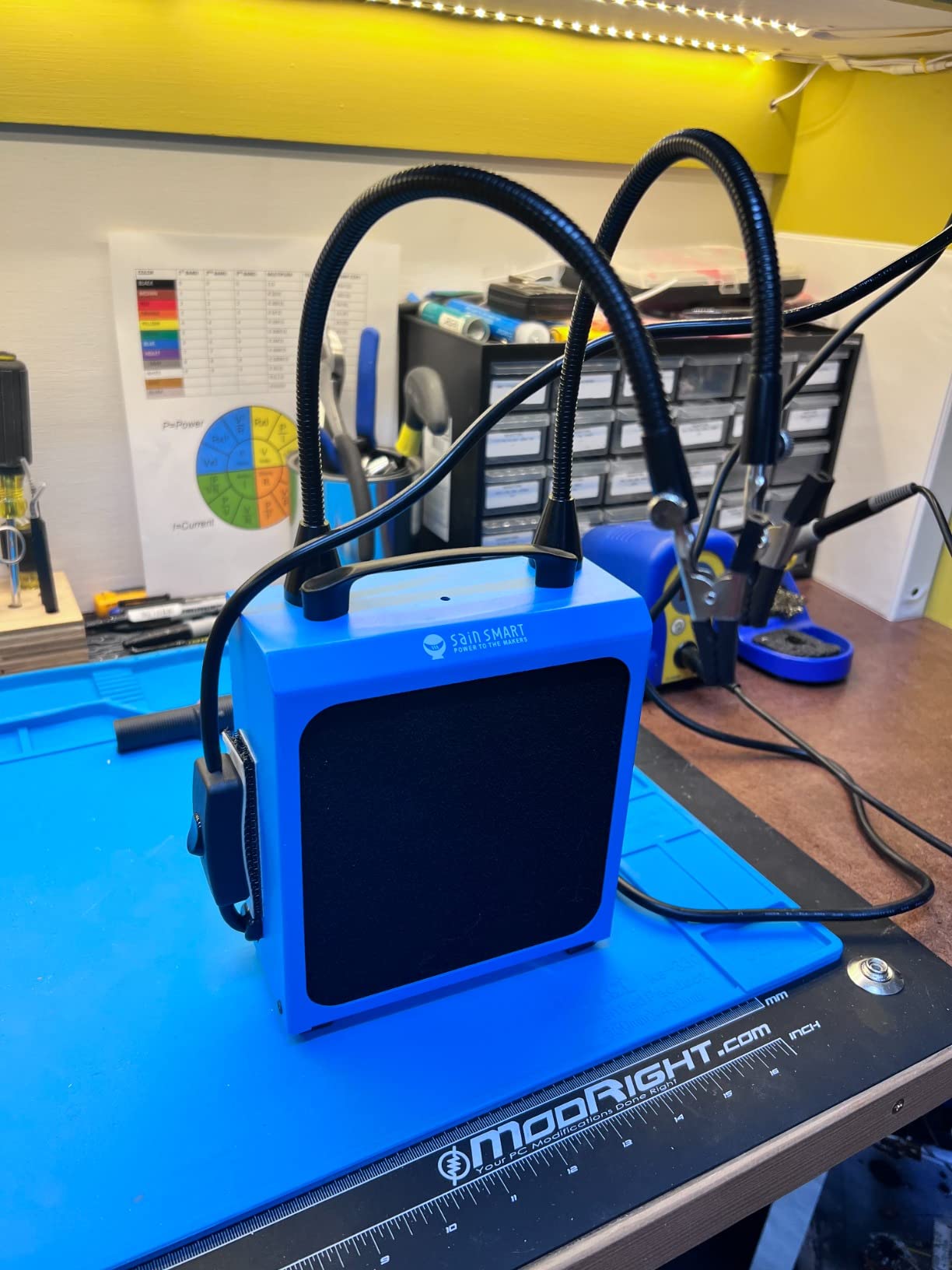
The box also solves a problem most people hit in week one. Two flexible magnetic helping hands that rotate through 360 degrees and swing out of the way are included, and on small boards they genuinely hold a wire while you work. That alone would cost money to add separately.
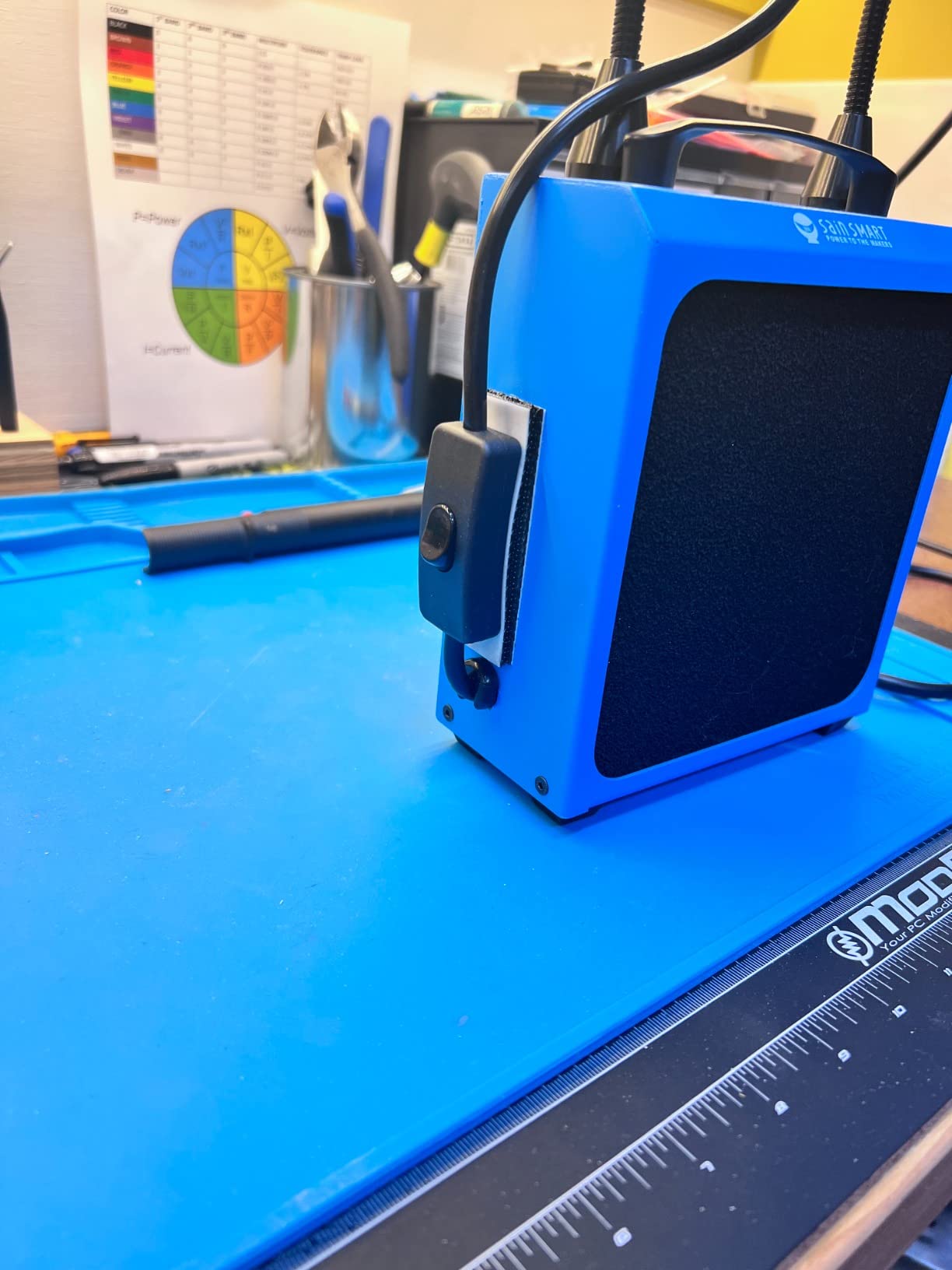
Noise is the cost. This is the loudest machine in the roundup by a clear margin, and reviewers raise it as the main complaint. In a shared room or a late-night session it is intrusive enough that you will switch it off for the fine-pitch bits and back on for the through-hole joints.
Two further warnings. The magnetic arm clips are only secure for small items such as tiny printed circuit boards, and the alligator clip screws loosen quickly and need frequent re-tightening, which is irritating when you are mid-task.
One reviewer also raised a concern about the flammability of the supplied plastic-based carbon filters under high airflow, and recommended aftermarket filters. We did not reproduce that test, so treat it as a single report rather than a finding, but it is a reasonable prompt to check the media before running it hot for long stretches. The manufacturer suggests replacing the 0.3 inch filter cotton about every three months.
Who this suits
A garage, a workshop, or any bench where you are not worried about noise and the work is big. It also makes sense for anyone who wants helping hands in the box, since that is a real productivity add-on rather than a gimmick once the screws are tightened.
The metal frame and four rubber feet keep it planted on a busy bench, and the 1.3 metre cord with an in-line switch is long enough to sit the machine on the floor if your bench has no room at the edge.
Who should look elsewhere
Anywhere someone else has to hear it. A studio, a shared office, a room with a sleeping child. Loudness is not a preference here, it is the reason people return these units.
Also reconsider it for fine-pitch microscope work. A 7.9 inch plume pull is designed to catch smoke across a distance, and the small helping-hands clips are not sized for the fine components where you would want the reach.
7. Weller WSA350 – Best for Active Flux Work
- Purpose-built for active and high-flux work
- Quiet fan that reviewers call distraction-free
- ESD-safe construction for board repair
- Genuine Weller part with a known filter code
- Fixed angle with no adjustment
- Only one spare filter in the box
- Filter supply is limited compared with generic units
Weller describes the WSA350 as being for workspaces using more active fluxes, and owners who use it that way back that up. If your soldering is mostly lead-free with no-clean or mild rosin, almost anything in this roundup handles it. If you work with active flux, water-soluble flux cores or anything that smokes hard, this is the one built for the job.
It is also consistently reported as quiet, and that combination is unusual: strong flux handling with a fan you can sit next to. On a long evening of desoldering a board that had been potted in old flux, it kept up without becoming the loudest thing in the room.
The fixed shape is the limitation. There is no tiltable stand, no gooseneck and no adjustable angle, so you set the position once and work around it. That is fine on a stable bench and frustrating on a desk where the board keeps moving.
Buying the machine also buys you one replacement WSA350F filter in the box, and reviewers mention the ongoing supply of that proprietary filter as a constraint. It is a real Weller part with a documented code, which is better than an unnamed proprietary size, but it is not as freely available as a generic cotton filter.
Weigh it against the Hakko if you are torn. The Weller is cheaper and quieter, the Hakko is more flexible in placement and offers a genuine optional particle filter. If flux load is your problem, the Weller wins.
Who this suits
Repair work involving old, unknown or heavily fluxed boards. Vintage radio restoration, salvaged electronics, anything where you do not control what has been on the joint before you got to it.
It is also a good choice for a shared room where the other person is not a hobbyist and does not want a constant fan in the background, provided your flux load is not high.
Who should look elsewhere
Skip it if your work is angle-sensitive. No adjustment means no compensation for a board that shifts, a joint under a lip, or a cramped desk where the only clear position is behind the work.
Skip it if you are a heavy user. One spare filter and a constrained supply chain is a thin buffer compared with the four and eight spare packs offered by the Kulannder and YIHUA machines.
8. Antidious Anti-ESD Fume Extractor – Best for a Cluttered Desk
- Smallest footprint here at 4.7 inches square and 0.36 inch thick
- On-board power switch instead of a cord switch
- ESD surge protection for live board work
- 1.74 pound body runs horizontal or vertical
- Weakest suction of the rated units
- Foam filters load quickly and need frequent replacement
- Several owners call it a budget stand-in for a better machine
When bench space is the binding constraint, this is the one that fits. At 4.7 inches square and 0.36 inch thick it slides into the gap beside a keyboard or under a monitor arm, and it works either horizontally or vertically depending on where you have space. At 1.74 pounds you can move it with two fingers every time you rearrange.
The on-board power switch is a small detail that changes daily use. Most competing machines put the control on the power cord, which means reaching down to the floor of the desk. This one has a switch you can find without looking.
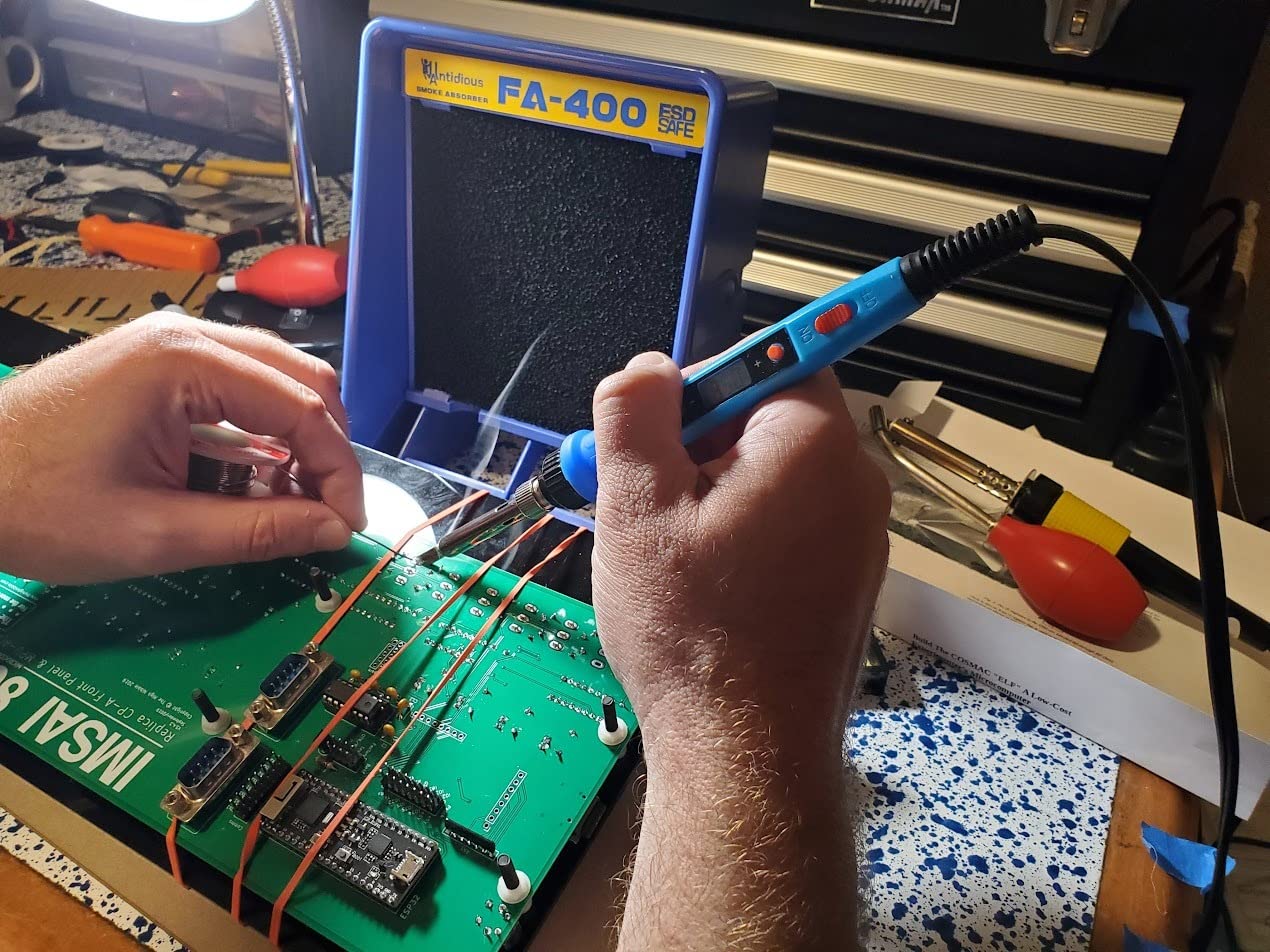
The honest problem is airflow. This is the lowest-rated machine in the roundup at 4.3 stars across 369 reviews, and the recurring complaint in those reviews is that it simply does not move much air. Capture is quoted at 4-5 inches, which is workable only if you are disciplined about keeping the intake at the joint.
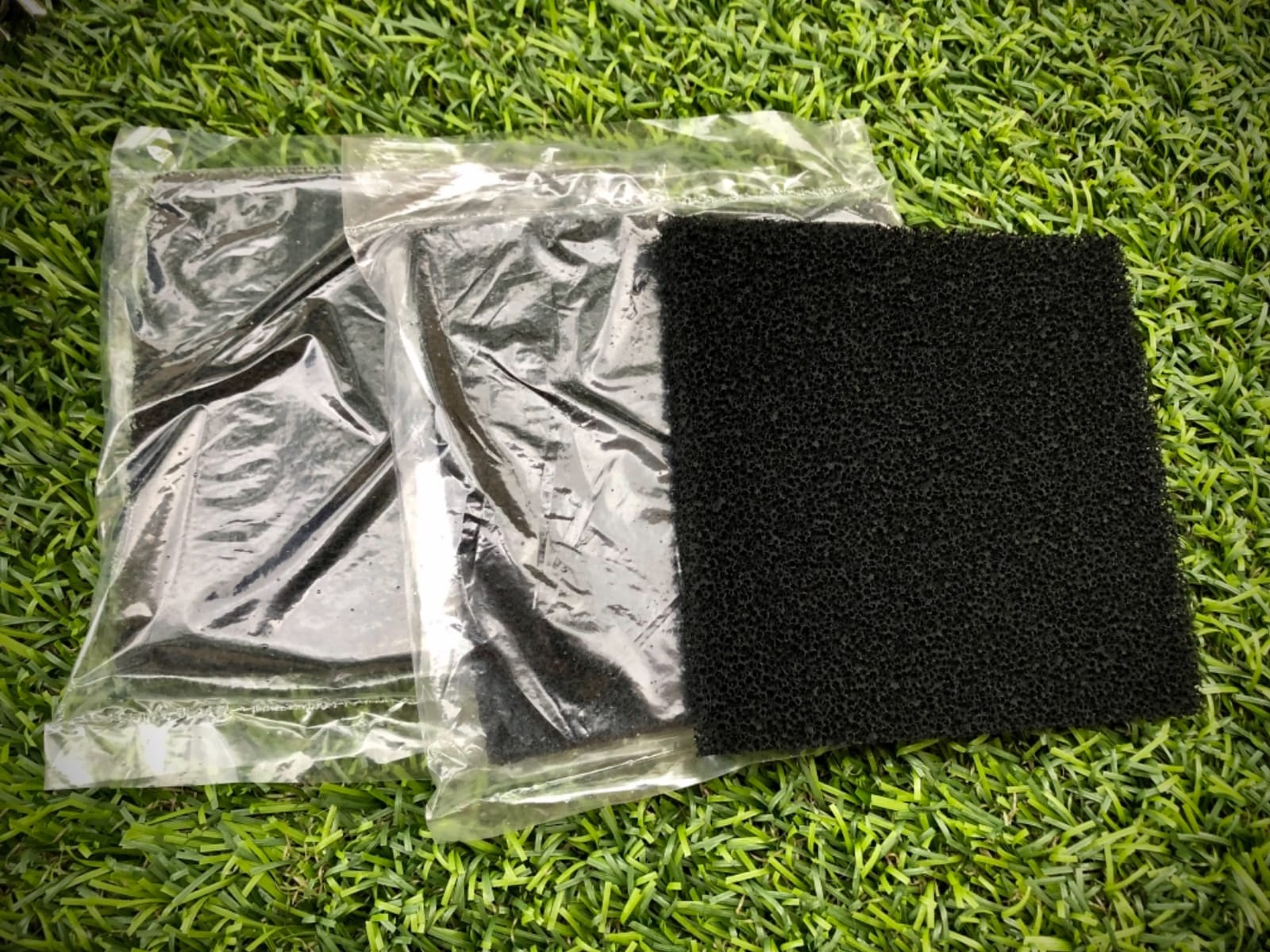
Foam-based filters are the second issue. Two spare urethane foam and activated carbon filters are included, but foam loads up quickly with fine particulate and needs swapping more often than a thick carbon bed. Budget accordingly, or expect to change media on smell rather than on any schedule.
For the sake of completeness, the EC motor is rated for more than 57000 hours of working life, which is a genuinely long figure and suggests the motor itself will outlive the filters by a wide margin.
Who this suits
Small desks, dorm rooms and anyone who works on a laptop plus a small mat rather than a dedicated bench. The low profile also works for fine electronics where the joint is only an inch or two from the board surface and you cannot get a large unit close.
It is a reasonable second machine too, a cheap dedicated unit for a second room, with the main extractor reserved for the noisy work.
Who should look elsewhere
Anyone doing sustained sessions. Owners doing demanding flux work are the ones recommending higher-RPM alternatives, and the weak airflow plus fast-loading foam filters make this a poor choice for long evenings.
It is also not a filtration solution. Activated carbon over a foam bed handles odour well enough and nothing more, so do not treat it as particle control on live or contaminated boards.
How to Choose a Soldering Fume Extractor for a Home Bench
Seven criteria, in the order that actually decided our picks. Ignore the rest until you have settled these.
What CFM and Airflow Does a Home Bench Actually Need?
None of the eight machines publishes a CFM or m3/h figure, which is a genuine gap in this category. What they do publish is fan RPM, and the range here runs from 5 watts and a 5-blade fan on the YIHUA to 30 watts and 3300 RPM on the SainSmart.
For a single hobby bench, a mid-range motor around 2800-3000 RPM with a thick carbon bed is the sweet spot. Below that you will be repositioning constantly; above it you are buying noise you cannot use in a shared room.
Activated Carbon vs HEPA: Do You Solder Lead-Free?
Direct answer: if you solder lead-free with no-clean or mild rosin flux, activated carbon is sufficient for a home bench and a HEPA layer is optional. If you still use leaded solder, or work on boards with loose debris, or want true particle control, you want a HEPA stage.
The mechanism matters. Activated carbon adsorbs gas and vapour on the surface of the media, which is why it kills flux odour so effectively. A HEPA filter physically traps particles down to 0.3 microns, which is why it stops fine particulate. They solve different problems and neither substitutes for the other.
There is a budget path worth knowing, borrowed from r/soldering discussion: fit a cheap HEPA pre-filter upstream of a carbon unit. It approximates HEPA-level particle removal on a machine that has a strong fan, for far less than buying a new machine. Check it is physically compatible with your model before you buy anything.
Noise: Living With an Extractor in a Shared Home
Nobody publishes a verified decibel figure for these machines, so use the phone call test. Start a call with the extractor running and talk normally for a minute. If you have to raise your voice, it is too loud for your household.
On that basis, the Kulannder and the Antidious are the two quiet picks here, the Weller is quiet for a machine built for active flux, and the SainSmart is the one that fails the test outright. The SainSmart earns its place with raw pull, not with volume.
If you are mounting anything overhead rather than on the desk, our guide to fume extraction arms covers the options that take noise out of the room entirely.
Effective Capture Distance Beats CFM on a Small Bench
Capture distance is the number that decides whether your bench works, and the published figures here run from 10 cm on the YIHUA to 7.9 inches on the SainSmart. Most home work falls in the 4-7 inch band, with the KOTTO at 5-6 inches and the Hakko positioned close by convention.
Two rules from our own bench. Keep the intake within its quoted range rather than at the far end of it, and angle the intake at the plume rather than placing it beside the work. A unit sitting 8 inches away on the far side of a board will capture far less than the same unit at 4 inches beside the joint.
Filter Life, Filter Cost and Filter Availability
Filter cost is the hidden expense every buyer meets, and it varies more than the machines do. Included spare counts range from one filter in the box for the Weller to eight adsorption adsorbers for the YIHUA and four carbon filters for the Kulannder.
For a weekend hobbyist, anything with three or more spares effectively covers the first year. Beyond that, the replacement interval differs by media and load; the SainSmart manufacturer suggests about every three months for its 0.3 inch carbon cotton under normal hobby use, and carbon-only units in this roundup saturate on smell returning rather than on any clock.
Check availability before you buy, not after. The safe picks are the branded machines, where the Hakko A1001 and 999-198 and the Weller WSA350F are documented parts with ongoing supply. Generic carbon units depend on a specific filter size from one seller, and if that seller stops, the machine becomes shelf weight. The same buying logic applies whatever you are shopping for; our picks for larger workshop extraction are in the guides to welding fume extractors and fume hoods.
Footprint, Mounting and Where to Put It on a Cramped Desk
On a small bench, placement matters more than any spec. The Hakko runs upright or laid flat, which lets you slide it under a low joint. The YIHUA tilts 30 degrees so the intake can be aimed. The SainSmart can sit on the floor with its 1.3 metre cord if the bench edge is full.
Avoid setting any unit flat with the exhaust facing down onto the bench surface with no clearance. Recirculated air needs somewhere to go, and a blocked exhaust pushes air back across the work.
One more option for a small space: an 80mm computer fan in a printable housing with a carbon filter is a legitimate weekend-build alternative that costs very little. It will not match a metal-cased machine on durability, and the housing needs to be airtight for it to work properly, but it is a reasonable way to fill a temporary gap.
Frequently Asked Questions
Is a fume extractor necessary for soldering?
For any regular home soldering, yes. A window dilutes fumes but does not remove them, and in cold weather it gets shut anyway. A benchtop extractor pulls the plume at the joint and filters it before the air reaches your breathing zone. If you solder more than a few times a month, or anyone in the room has asthma, it is close to essential rather than optional.
What is the best fume extractor for soldering?
For most home benches the KOTTO Solder Smoke Absorber is the best soldering fume extractor, with a 0.4 inch activated carbon filter, a 3000 RPM fan and a 5-6 inch capture distance across 2454 reviews. The Hakko FA400-04 is the better long-term buy for filter availability, and the Kulannder unit is the quietest option in a shared room.
What CFM do I need for soldering fume extraction?
No unit in this category publishes a CFM or m3/h figure, so judge by fan RPM and effective capture distance instead. For a single hobby bench, a motor around 2800-3000 RPM with a thick carbon bed is the practical sweet spot, giving roughly 4-7 inches of reliable capture. Above 3300 RPM you are buying noise you cannot use in a shared room.
Are solder fume extractors worth it?
Yes, if the alternative is a window or nothing. Reviewers and long-time hobbyists consistently report the difference as immediate: no sore throat at the end of a session, no watery eyes, and no afternoon headache. The hardware typically lasts many years, so the ongoing cost is filters rather than replacement units, and most budget models include three or more spares to cover the first year.
How often should I replace filters in a fume extractor?
Replace carbon filters when the flux smell returns, since smell is the most reliable indicator on budget units with no clog alert. Manufacturers suggest roughly every three months for heavier hobby use with a thick carbon cotton. A weekend hobbyist using a light lead-free solder will go far longer. Foam-based filters load faster and need swapping more often than thick activated carbon beds.
Final Verdict for 2026
Buy the KOTTO Solder Smoke Absorber if you want one machine that covers a normal home bench without compromises you will notice. Its 0.4 inch carbon bed, 3000 RPM fan and 5-6 inch capture are the best-balanced combination here, and 2454 owners at 4.7 stars make it the least risky purchase on the list.
Buy the Kulannder unit instead if the extractor shares a room with a partner, a child or a housemate. It is the quietest and lightest option, and four spare carbon filters remove the recurring-cost worry for a year. Buy the Hakko FA400-04 if you plan to keep the bench for a decade and want a brand whose filters you can still find; add the optional high-efficiency filter if particles rather than odour are your concern.
Then match the rest to your problem. The NOEVSBIG has the metal build and ESD rating for board-level repair. The YIHUA tilts to follow fine-pitch work. The SainSmart has the longest reach and helping hands in the box, and is loud enough for a garage. The Weller is built for active flux. The Antidious fits a desk with no room on it.
Whichever you choose, put it within its quoted capture distance, angle it at the plume, and run it before the iron gets hot. That last habit matters more than the model.