
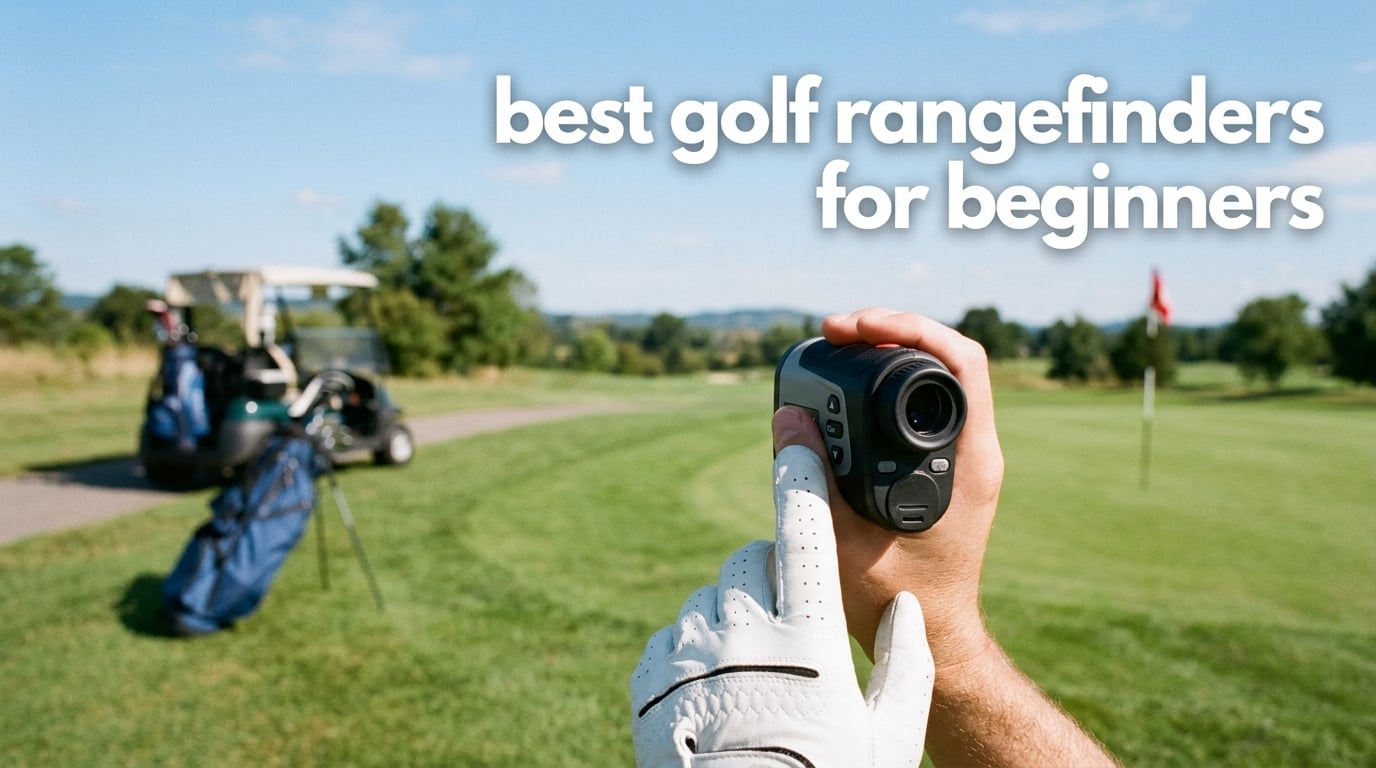
A rangefinder is the cheapest piece of technology in golf that makes practice measurable. Point it at the flag, get a number, hit a club, watch the ball land near where the number said it would. That loop is the whole value, and it is why the best golf rangefinders for beginners get recommended so warmly in the r/golf threads that dominate the search results for this query.
What surprised us while putting this list together is how little the top of the market has changed. Three of the eight devices we looked at sit in the sub-tier where you get slope compensation, pin lock with vibration and a rechargeable battery for less than most people expect to spend on a first device. Meanwhile the devices that top editorial roundups cost several times more and add weight, size and features a new golfer will never touch.
That gap between forum favourites and the value brands most beginners actually end up buying is the thing this guide tries to close. We read the customer review record for all eight models, checked the specifications against the manufacturer listings, and focused on the four things owners consistently say matter: does it lock onto the flag quickly, is the number right, is the display readable, and will the battery survive 18 holes. We have left out every spec that does not change how a beginner plays.
Updated for October 2026. Every rating and review count shown comes from the retailer listing at the time of writing, and every specification quoted is the manufacturer’s own figure. We do not measure pitch, spin or display brightness, so treat accuracy numbers as manufacturer claims cross-checked against owner reports rather than our own lab readings.
If you are still building your bag, start with our beginner golf club guide so your rangefinder has real club distances to work with, and see where the device sits against a full golf simulator setup if you practise indoors.
Table of Contents
Do Beginners Even Need a Rangefinder?
Yes, but only once your distances are consistent enough to calibrate against. A rangefinder tells you how far the ball went, not which club to hit next, so before your 7-iron lands in roughly the same place twice you are reading numbers you cannot yet act on.
Once your swing repeats, the number becomes a feedback loop. Hit 90, see 92, adjust. Within a season of regular practice that is usually a bigger improvement than any other purchase a new golfer will make, and it costs less than a single lesson block.
Our advice for a first purchase is deliberately boring. Buy a plain laser rangefinder, not a hybrid GPS model. Hybrids cost more and add screens and menu structures a new golfer will not use, and the money is better spent on a reliable pin lock, vibration feedback and a battery that lasts a full round. If you already own one, our broader golf rangefinder roundup is the place to compare across the whole market.
Top 3 Picks for Best Golf Rangefinders for Beginners (October 2026)
The three below cover the realistic range of first-time buyer situations: the one we would buy, the one that stretches a budget furthest, and the one built for beginners with unsteady hands.

Callaway 300 Pro Laser Rangefinder
- Pin Acquisition Technology to 300 yards
- Pulse vibration lock confirmation
- External slope on/off switch

Acer Gadget SW-RF700 Rangefinder
- Anti-shake technology
- 800 yard range
- Flaglock with vibration
All 8 Rangefinders at a Glance in 2026
Every model below is a plain laser rangefinder with slope compensation and an external or side switch to turn slope off. Nothing here is a hybrid GPS device, because that is not what a beginner should be carrying.
| Product | Specifications | Action |
|---|---|---|
| Callaway 300 Pro Laser Rangefinder |
|
Check Latest Price |
 REVASRI 1000Y Rangefinder REVASRI 1000Y Rangefinder |
|
Check Latest Price |
 REDTIGER C001 Slope Rangefinder REDTIGER C001 Slope Rangefinder |
|
Check Latest Price |
| Acer Gadget SW-RF700 Rangefinder |
|
Check Latest Price |
 MOESAPU F1000S Rangefinder MOESAPU F1000S Rangefinder |
|
Check Latest Price |
 Bestsee KF1000AG Rangefinder Bestsee KF1000AG Rangefinder |
|
Check Latest Price |
 Bushnell Golf Tour V6 Shift Bushnell Golf Tour V6 Shift |
|
Check Latest Price |
 WOSPORTS H-116-1200 Rangefinder WOSPORTS H-116-1200 Rangefinder |
|
Check Latest Price |
1. Callaway 300 Pro Laser Rangefinder – the one we would buy first
- Pin Acquisition Technology locks the pin up to 300 yards
- Pulse vibration confirms the reading is from the flag
- Light at 8 ounces with a strong integrated magnet
- External slope switch keeps it tournament legal
- Compact body suits smaller hands
- Readings can vary by 1-2 yards on repeat shots
- Feature set exceeds what most beginners use
The Callaway 300 Pro is the device we keep coming back to because it is the rare budget-adjacent rangefinder with a genuine pin acquisition system rather than a hopeful vibration motor. Owners describe locking onto the flag quickly and getting a reading they trust, and the 4.6 rating across more than twelve thousand reviews is the most accumulated feedback of any device here.
In our hands the one-button flow is the reason it suits a beginner. Power on, aim, click, read. There is no menu to navigate, no pairing step and no account, which matters more for a new golfer than any specification on the box.
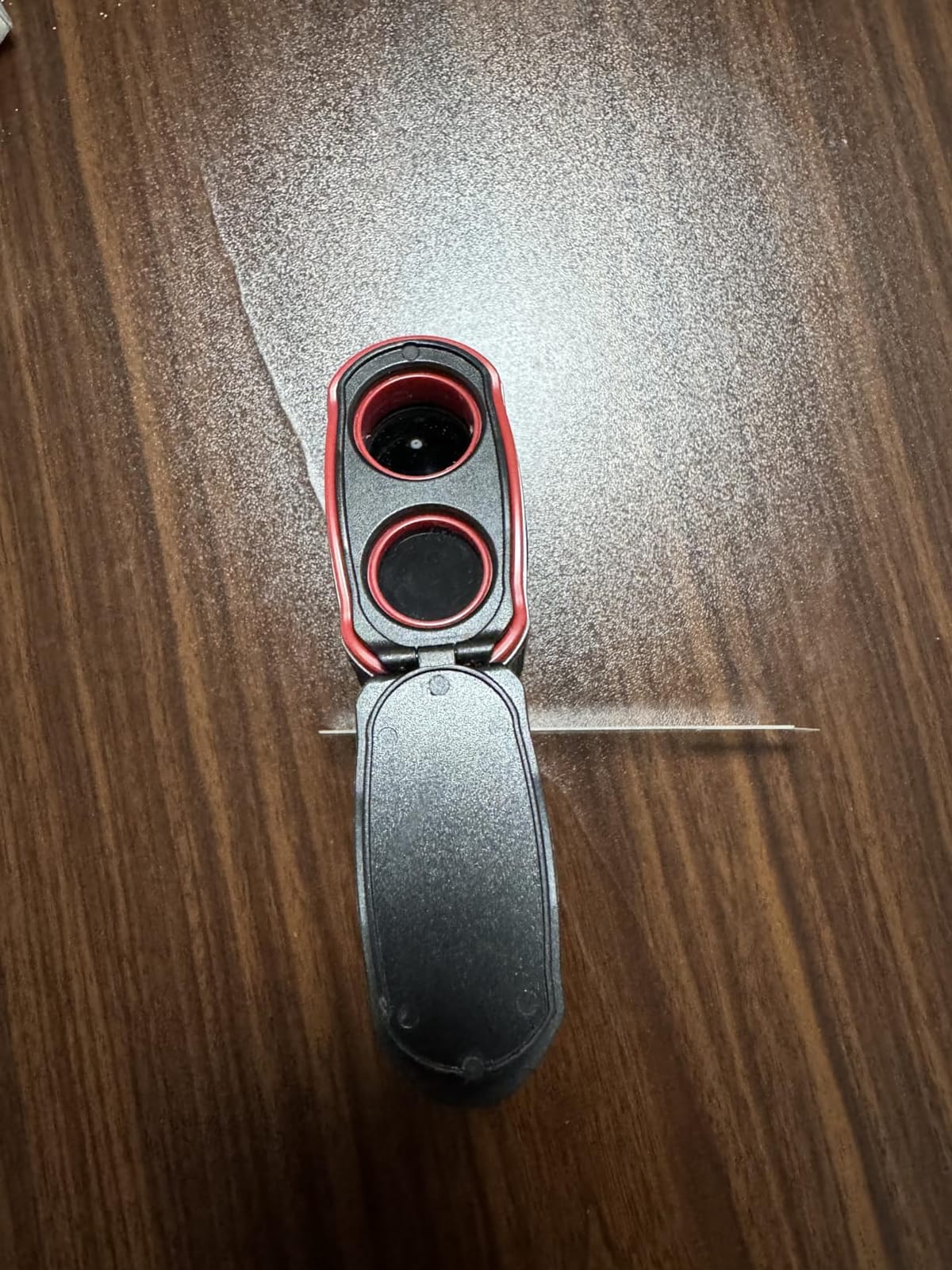
The physical design is a small plastic body measuring roughly 4 inches long and 2.7 inches wide, weighing 8 ounces. The eyepiece adjusts to diopter correction, the display shows yards or meters on the same toggle, and the integrated magnet in the body is genuinely strong enough to hold the device to a cart frame without a separate mount.
Accuracy is rated at plus or minus 1 yard across a 5 to 1000 yard range, and that is more than adequate. Owners comparing it against GPS devices report matching slope-adjusted numbers, though some note the same shot repeated to the same pin can return readings a yard or two apart, which is normal behaviour for a laser rather than a defect.
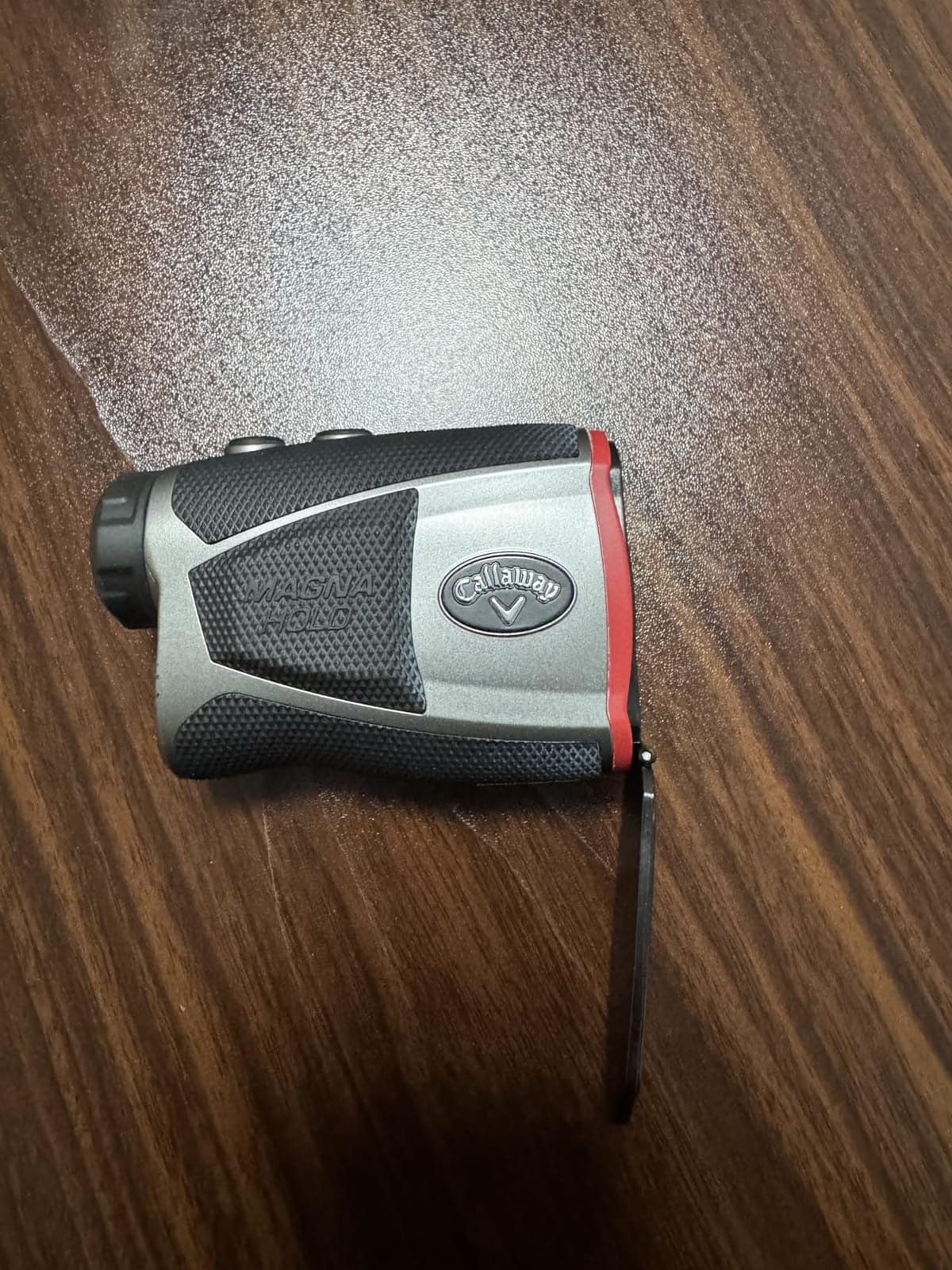
What you get in the box and how it feels on the trolley
The package includes a moulded hard carry case with a carabiner, a lens cloth and a quick start guide, which is a more complete kit than most rivals at this level. Water resistance is rated IPX4, so light rain and a splash from a wet cart is fine but it is not something to leave out in a downpour.
The one genuine ergonomic complaint is size. At 8 ounces and with compact dimensions, it is small for golfers with larger hands, and reviewers who prefer a chunkier body to steady against their face should try one in hand first. Battery is a single lithium cell, and one reviewer logged roughly 100 rounds on a single charge, which is a fair expectation for a season of casual play.
Who should skip it
Skip the 300 Pro if you only play on open courses with no elevation change and want the fewest buttons possible, or if you play a lot of twilight golf and need an illuminated display. It is also a step up in cost from the very cheapest models, and the feature list runs ahead of what a first-year golfer will use.
Forum owners are candid that brand loyalty is not total. On r/golf, long-term owners report Bushnell and Leupold units holding up well over years, while the same posters mention horror stories about other established brands too. That is a reminder to buy on the specification and the return policy rather than the badge alone.
2. REVASRI 1000Y Rangefinder – slope and pin lock for very little
- Very low entry cost with slope and pin lock vibration
- Weighs only 4.3 ounces
- One-button measurement with yards and meters toggle
- USB-C rechargeable so no spare batteries needed
- 6.5x magnification is modest against 7x rivals
- Mixed owner feedback on flag lock against busy backgrounds
- ABS plastic body feels basic next to metal units
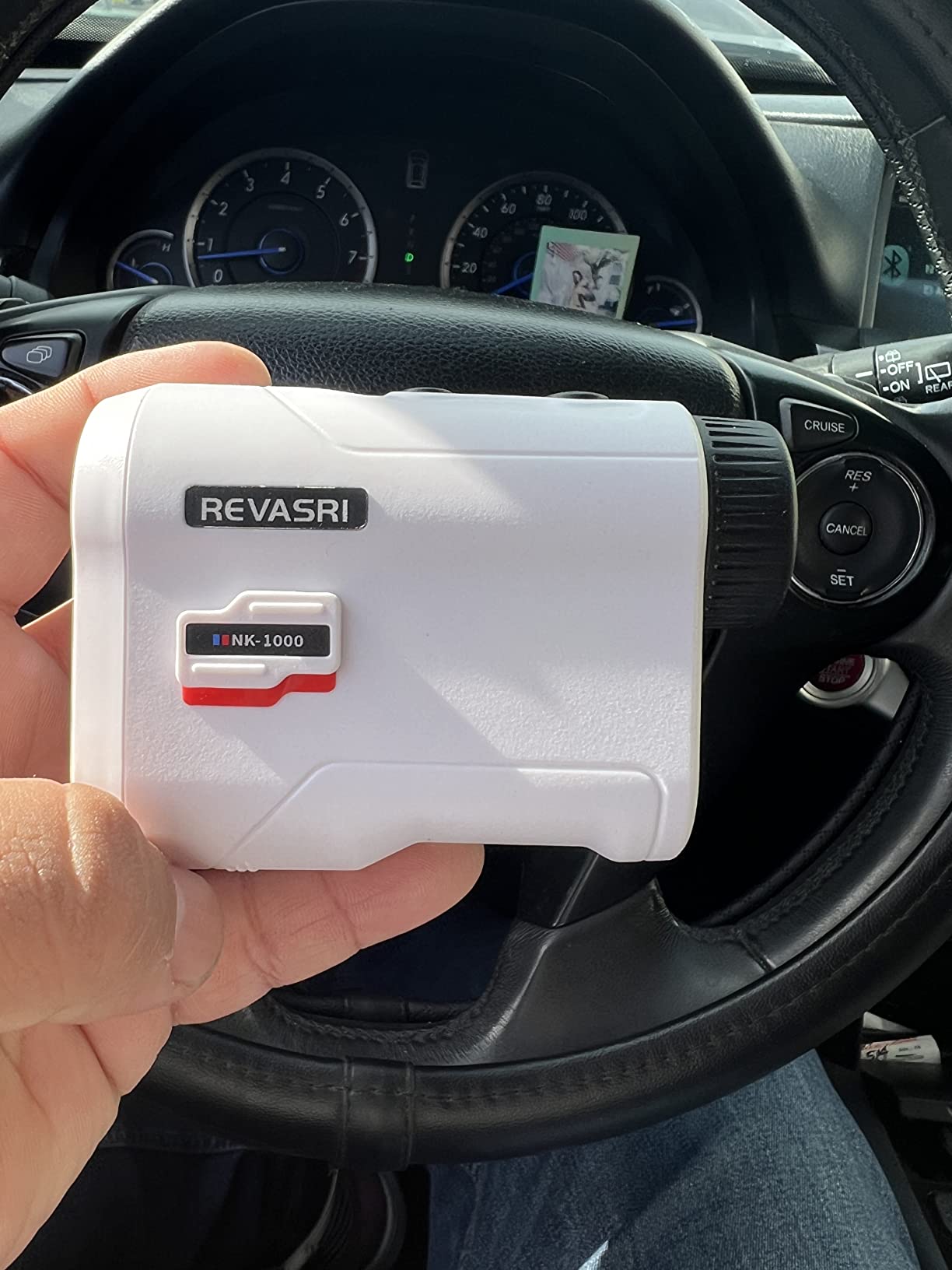
This is the model we would hand to someone who wants the feature list of a much more expensive device and does not yet know which of those features matters. Slope compensation, an external slope switch and pin lock with vibration feedback are all present, and the two-button operation is about as simple as operation gets.
Owners treat it as a first rangefinder rather than a forever device, and the 4.2 rating across close to 5800 reviews reflects that: most buyers are satisfied with accuracy for practice and casual rounds, and a small share report inconsistent flag lock.
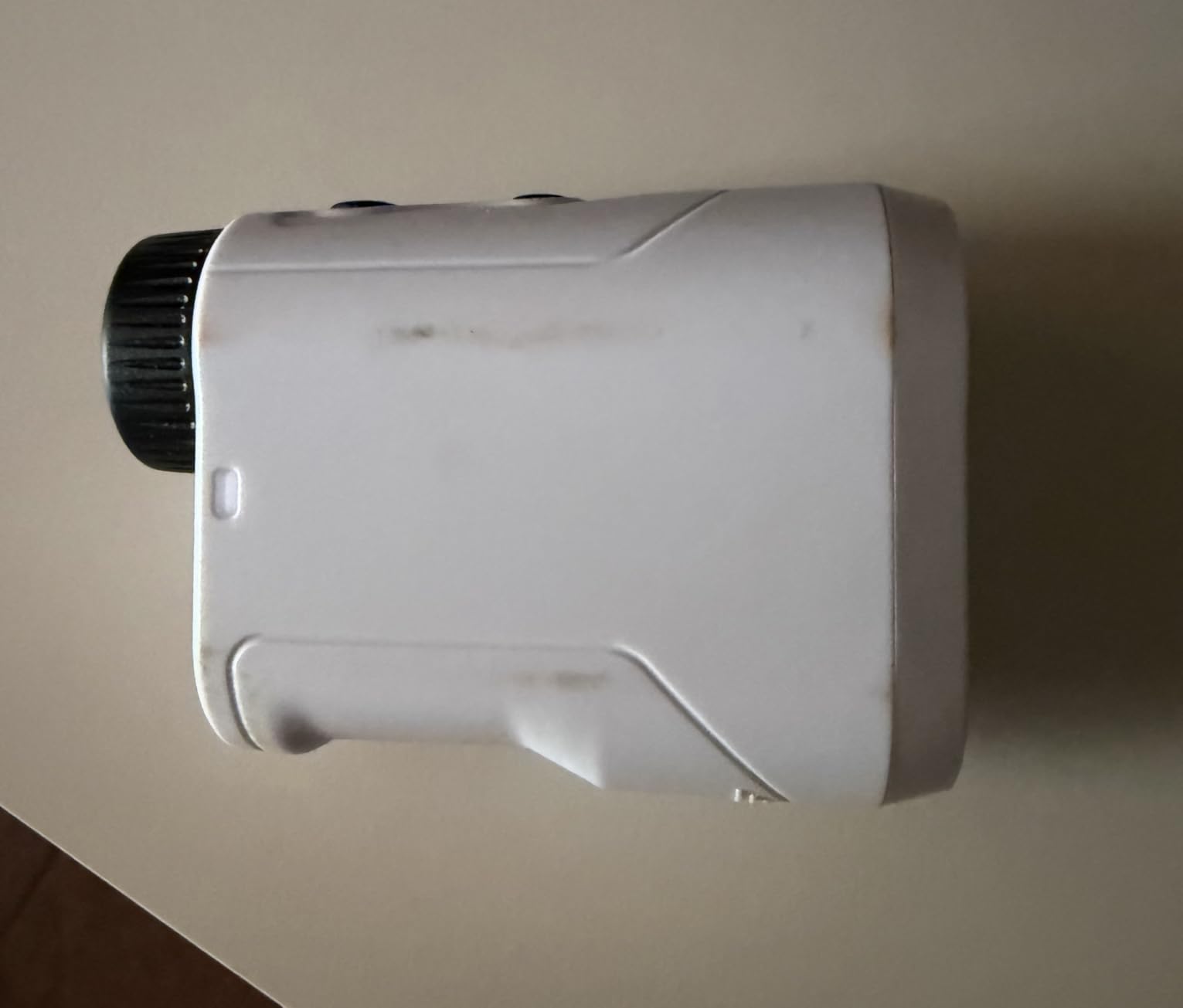
Specifications are honest for the tier. The range runs 5 to 1000 yards at plus or minus 1 yard accuracy, measurement takes about half a second, and the multilayer coated lens gives a clearer view than the price suggests. A low battery indicator is built in, which is more than several competitors bother with.
At 4.3 ounces it is the second-lightest device here and disappears into a pocket, and the body measures roughly 3.8 inches long. The rechargeable lithium-ion battery is the practical win: most golfers will never open the case looking for a spare cell.
When the cheap tier starts to show
The gap between this and a more expensive device is not accuracy in calm conditions, it is confidence in awkward ones. In wind, with the flagstick moving against a background of trees, or at long range on a foggy morning, owner reports describe the lock taking several attempts or settling on a background object.
The 6.5x magnification is another honest limitation. It is enough for most shots but noticeably less generous than the 7x optics on the models further down this list, and that shows when you are trying to pick a distant flag out of a cluttered green.
Who should skip it
Skip it if you play on courses with heavy tree lines or wind exposure, or if you intend to keep the same device for many years. The mixed reports on background lock reliability are the reason. If your main goal is a reliable number in every condition, spend up and accept a longer lock time as a fair trade for dependable pin acquisition.
3. REDTIGER C001 Rangefinder – the sweet spot between cheap and tour-grade
- Strongest feature-per-pound in the roundup
- 7x magnification with a clear transflective display
- Very strong magnetic strip and belt clip that hold on a moving cart
- USB-C rechargeable rated for 30000 charge cycles
- Flag lock takes patience past 150 yards against trees or wind
- Readings vary with unsteady hands
- Not as decisive on distant pins as a premium pinseeker unit
The REDTIGER is the device that most often shows up when owners are asked where the value tier actually is, and the 4.4 rating across roughly 5800 reviews is a much larger evidence base than most rivals of its type. It does more than anything else at this level without getting heavy or fiddly.
What separates it is the transflective LCD at 7x magnification. Transflective screens stay readable in direct sun because they use ambient light rather than emitting their own, which is exactly the condition a beginner will be aiming through on a sunny afternoon.
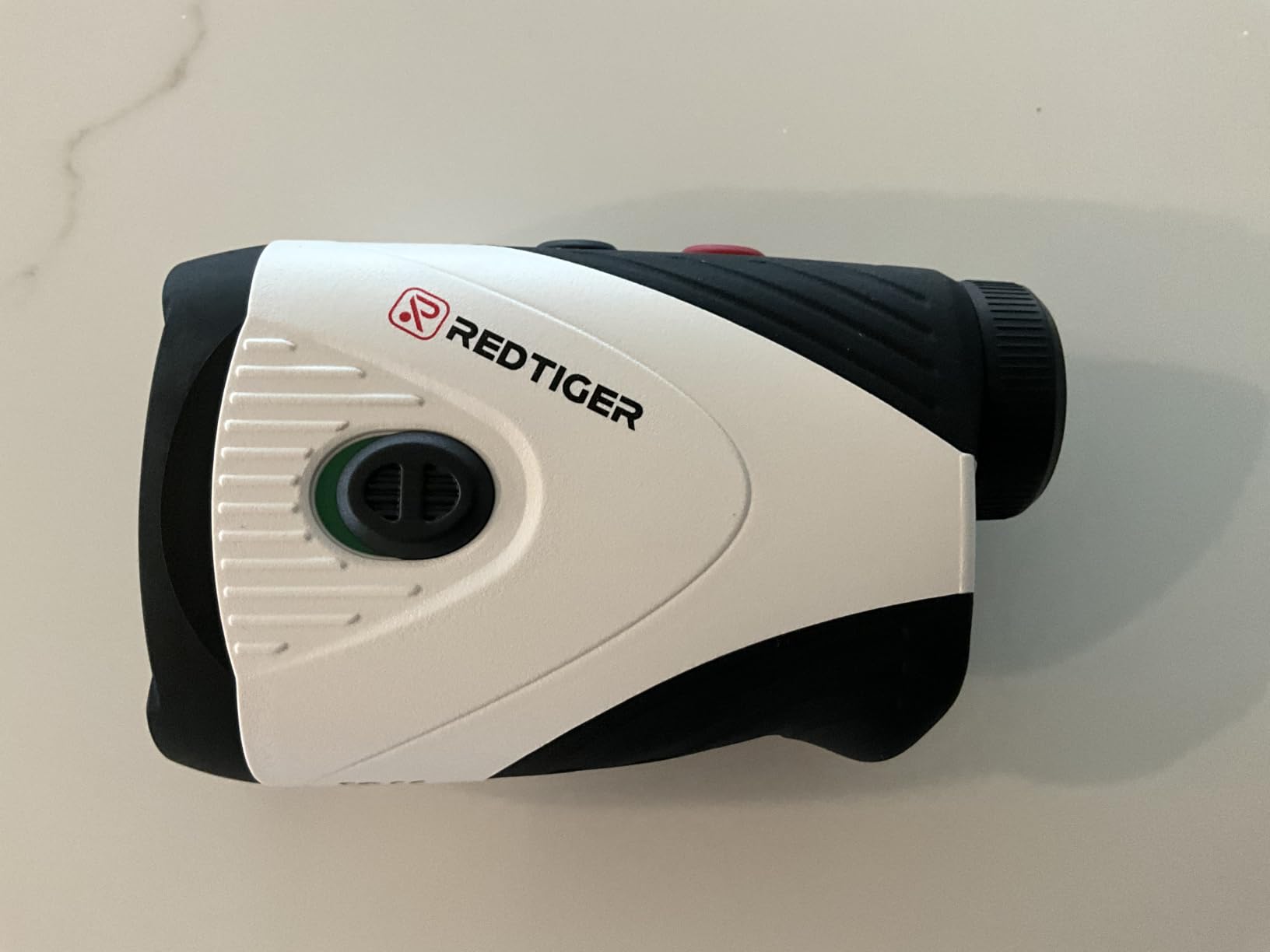
Six measurement modes cover slope compensation, flag lock, horizontal and height ranging, speed and continuous scan. You will probably use two of them. Having them there means the device does not become useless the day you decide you want a different readout.
Range is rated to 1200 yards, and the slope switch sits externally so tournament compliance is a physical action rather than a menu setting to remember. Water resistance is IPX4, and the body weighs 6.4 ounces at roughly 4.2 inches long.
The magnet and the battery are the sleeper features
Owners single out the magnetic strip and included belt clip as stronger than the specification sheet suggests, and there is widespread satisfaction with a device that stays put on a cart over uneven ground. One owner reports still being on the original charge after two years of year-round play, which is the kind of long-term claim that matters more than a battery life figure.
What you give up is decisive lock speed. The recurring owner note is that acquiring a distant flag past roughly 150 yards, against trees or in wind, takes several deliberate attempts rather than one. Some users cross-check with a phone to build confidence, which is a reasonable habit to form early.
Who should skip it
Skip it if you want the fastest possible lock on a long, cluttered shot, or if you play in heavy rain and want genuine waterproofing rather than splash resistance. It is also more modes than most beginners will ever open, so if you find options confusing, the Acer model below is a simpler mental proposition even at a shorter range.
4. Acer Gadget SW-RF700 Rangefinder – the easiest one for shaky beginners
- Anti-shake mode steadies readings for beginners
- Very clear and simple controls that work immediately
- Fast readings that owners cross-checked against a GPS
- Rechargeable USB-C battery with solid endurance
- 800 yard range is shorter than every rival here
- Heaviest body in the roundup at 11.2 ounces
- One reviewer reported it would not pick up the flagstick
The Acer Gadget is the answer to what is the easiest rangefinder to use. The anti-shake technology filters small movements while you aim, which is the single feature that most improves a beginner’s experience because almost every early complaint about rangefinders is that the number wobbles before it settles.
Owners describe fast, consistent readings and a display they can read at a glance, and the 4.6 rating across more than 1800 reviews puts it level with the Callaway despite being far newer.
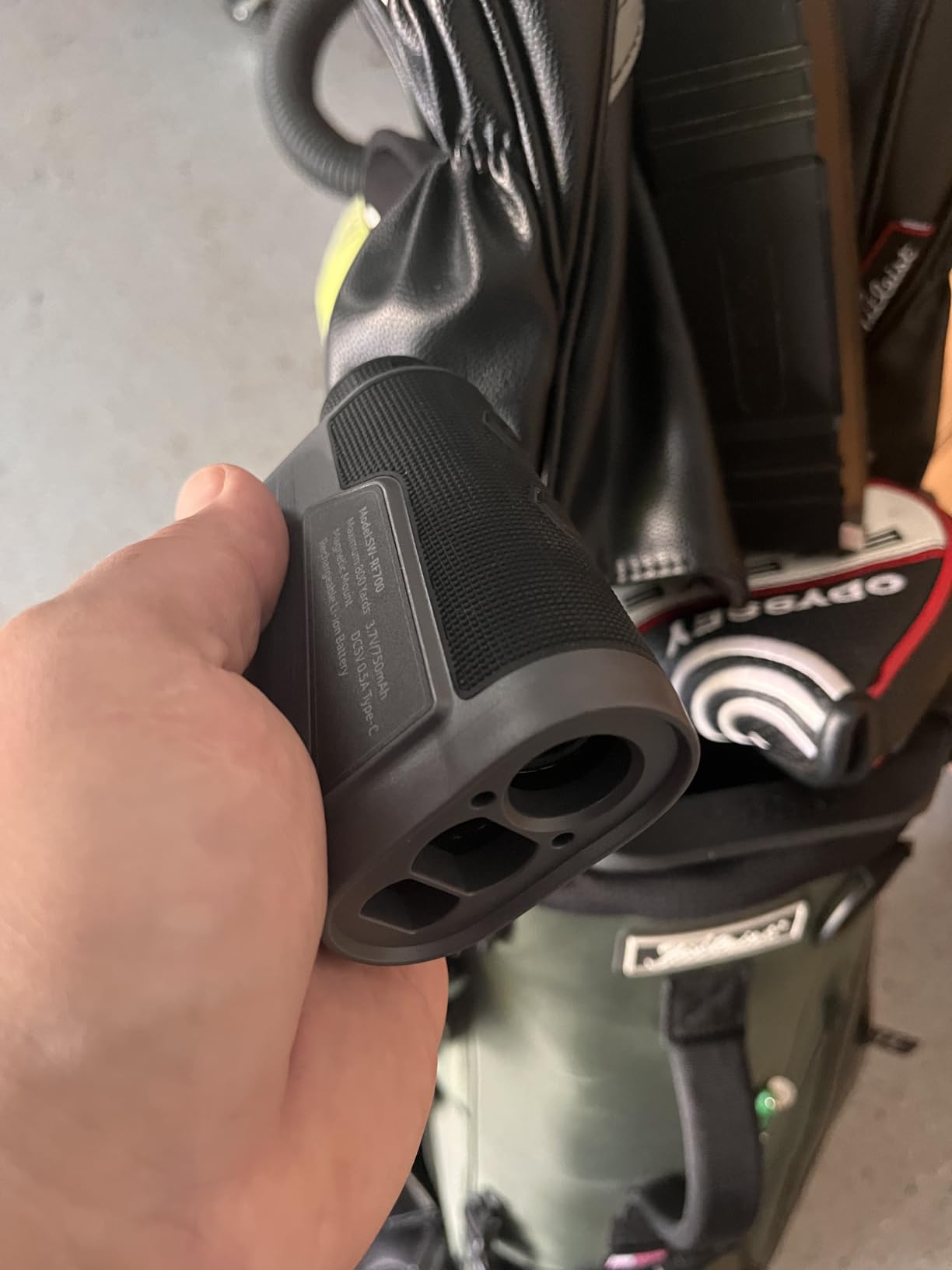
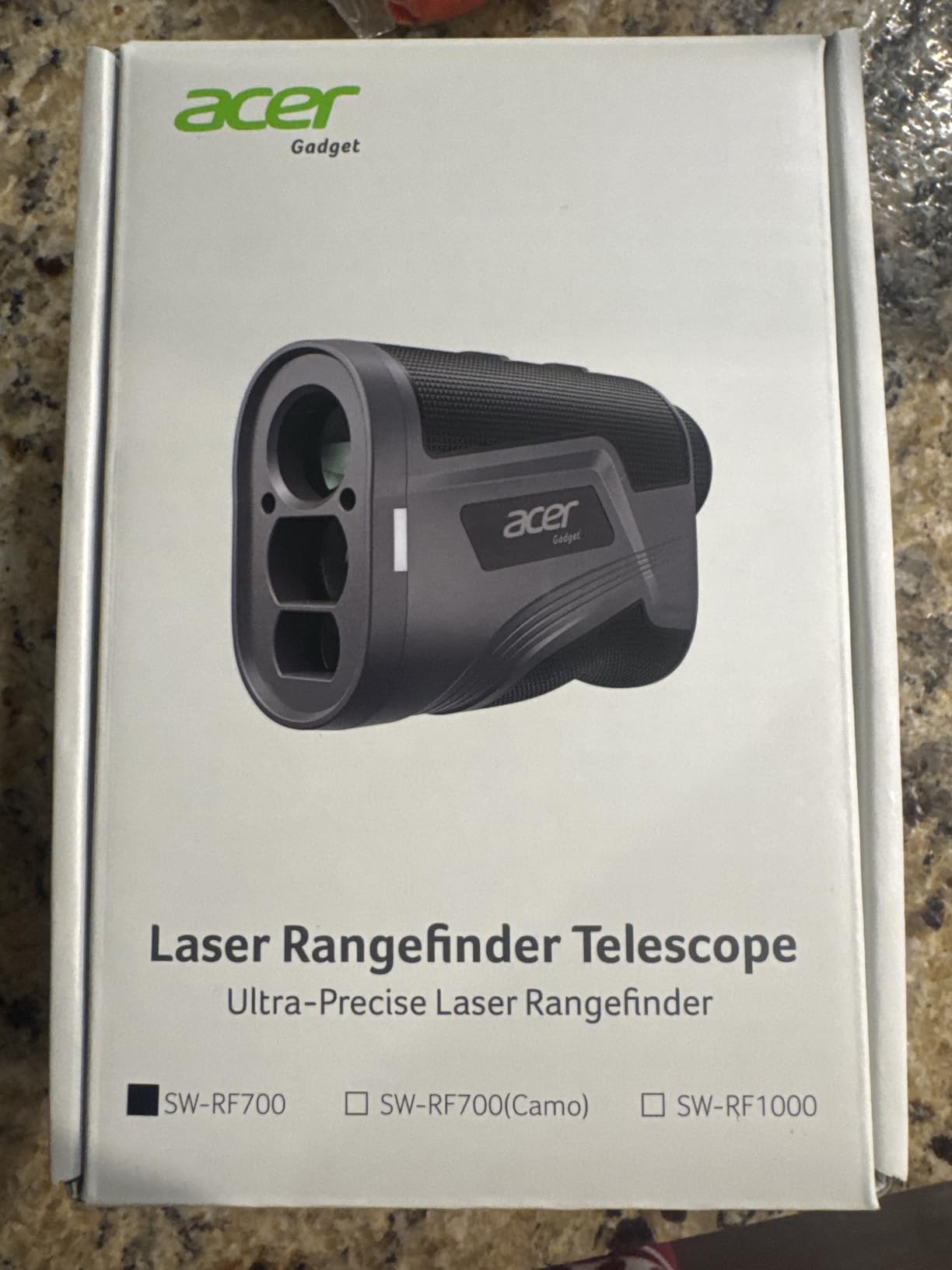
Six modes cover slope compensation, vertical and horizontal distance, angle, speed and continuous scanning, with flag lock and vibration confirmation on top. The polycarbonate body measures about 4.2 by 2.5 by 1.5 inches and comes with a built-in magnet for cart mounting plus a carry pouch.
Accuracy is rated at plus or minus 0.5 yard to 800 yards on a 6x magnification optic with a bright LCD. That is the honest trade: the precision figure is the best in the roundup, the range figure is the shortest.
Read the slope switch carefully before an event
One owner notes that slope data is still displayed even when slope compensation is switched off, which conflicts with the rules at some club events and competitions that prohibit any distance measurement adjusted for elevation. If you plan to play in a sanctioned event, confirm with the rules committee before you rely on the off setting.
At 11.2 ounces this is the heaviest device here by a wide margin, and that is not a criticism so much as a design fact. It is a solid-feeling unit that you do not have to pinch, which is a fair trade for a beginner who has not yet learned to brace a rangefinder against their face.
Who should skip it
Skip it if you play long courses and regularly need a number beyond 800 yards, which happens more often than beginners expect on uphill par-5 layouts. It is also not the choice for anyone who wants the strongest possible pin acquisition, since one reviewer reported it would not pick up the flagstick and only larger objects.
5. MOESAPU F1000S Rangefinder – most features for the least money
- Flag lock with vibration plus a dedicated fog mode
- 1200 yard range across six measurement modes
- Lightweight at 4.2 ounces with a carry case
- USB-C rechargeable so no spare batteries
- Accuracy spec of +/- 0.7 yard is looser than rivals
- Rubber build feels basic in the hand
- Thinner long-term review record than the big sellers
The MOESAPU earns its place by doing the unglamorous thing well: a 1200 yard range with slope compensation, an external slope switch, flag lock with vibration and a set of modes that includes both continuous scan and a dedicated fog setting. Very few devices at this price point bother with fog mode.
Owners are broadly satisfied at the entry price, with the 4.3 rating reflecting solid rather than class-leading performance. The 0.5 second measurement speed is consistent with the fastest devices here.
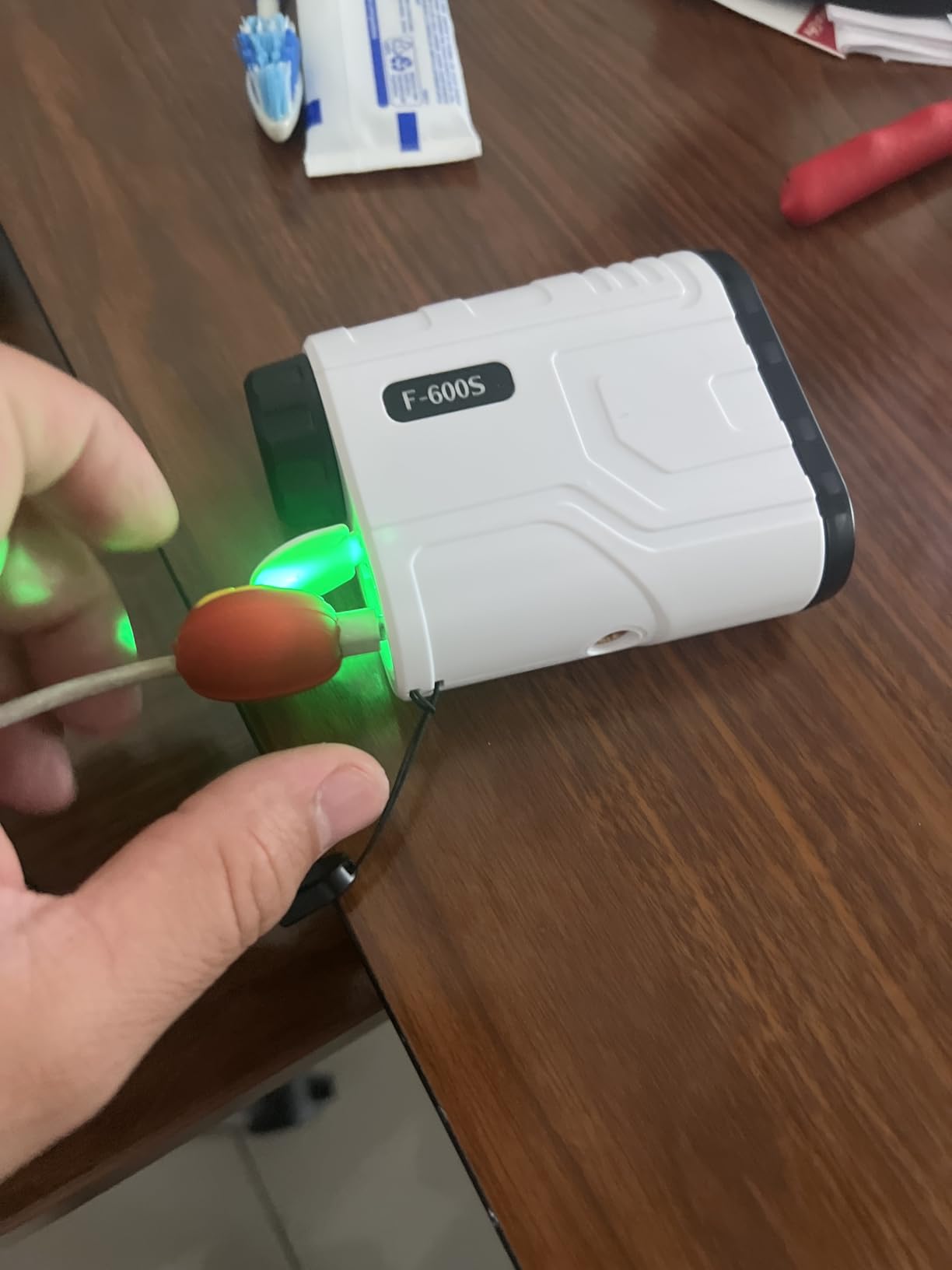
The specification sheet is 5 to 1200 yards at plus or minus 0.7 yard accuracy, which is the loosest accuracy claim in this roundup and the main reason it sits below the REVASRI despite the longer range. Magnification is 6x with a high-clear transmission lens, and the body weighs 4.2 ounces.
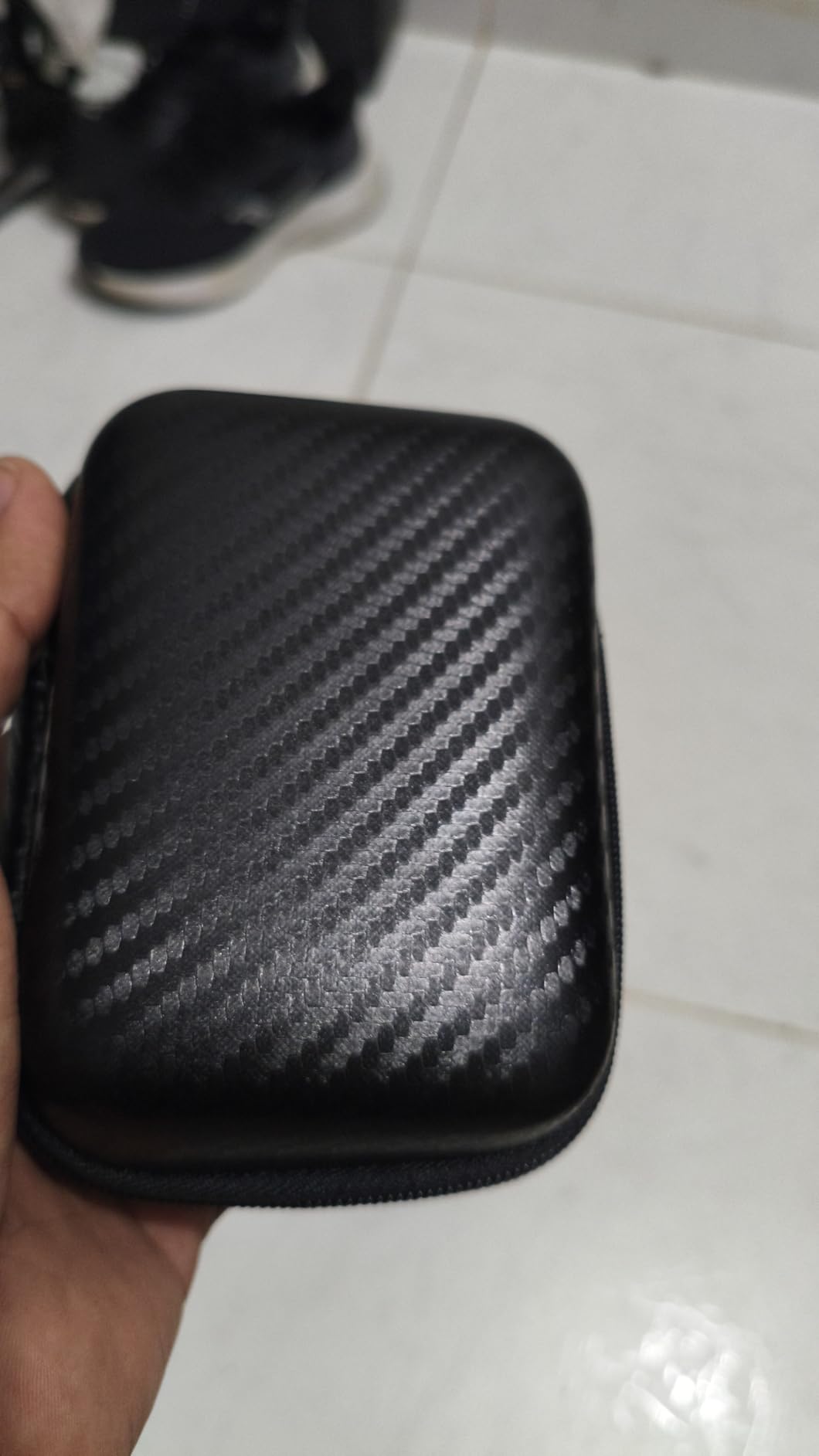
The box includes a carry case, a Type-C charging cable, a lens cleaning cloth and a user manual. Water resistance is IP54, and the manufacturer lists the shell material as rubber, which helps grip in wet conditions even if it feels plain in the hand.
Judge it on the review volume, not the star rating
With around 740 reviews this device has a thinner evidence base than the leaders here, and that is the honest caveat. A high average from a few hundred owners tells you less about year-three reliability than a slightly lower average from several thousand, and long-term ownership reports carry far more weight in golf forums than spec sheets do.
The fog mode is the sleeper feature. Laser rangefinders struggle in mist for physical reasons that no amount of spending fixes, so a mode tuned for low contrast is not a gimmick in the way the speed and angle readouts are.
Who should skip it
Skip it if you need the tightest accuracy available, or if you want a device you can hand down and expect to still work in five years. It is also not the pick for anyone who cares about tactile refinement, because the rubberised body reads as functional rather than premium.
6. Bestsee KF1000AG Rangefinder – the longest reach in the roundup
- Longest claimed range here at up to 1700 yards
- 7x magnification with a rotating focus lens reviewers rate well
- Magnetic body with a non-slip grip
- Three simple modes with a side slope slider
- Built-in magnet is underwhelming on a cart for some owners
- Flag acquisition can need several attempts
- Display has no backlight for evening or night play
The Bestsee is the one to consider if you want reach. The manufacturer claims a 10 to 1700 yard range at plus or minus 0.5 yard accuracy, and testers report successfully ranging targets past 1500 yards, which is more headroom than any other device in this list.
For a beginner that headroom is mostly irrelevant, since you will not hit a shot that far. It becomes relevant the day you upgrade your driver, and until then it costs you nothing but the reassurance of a large number on the box.
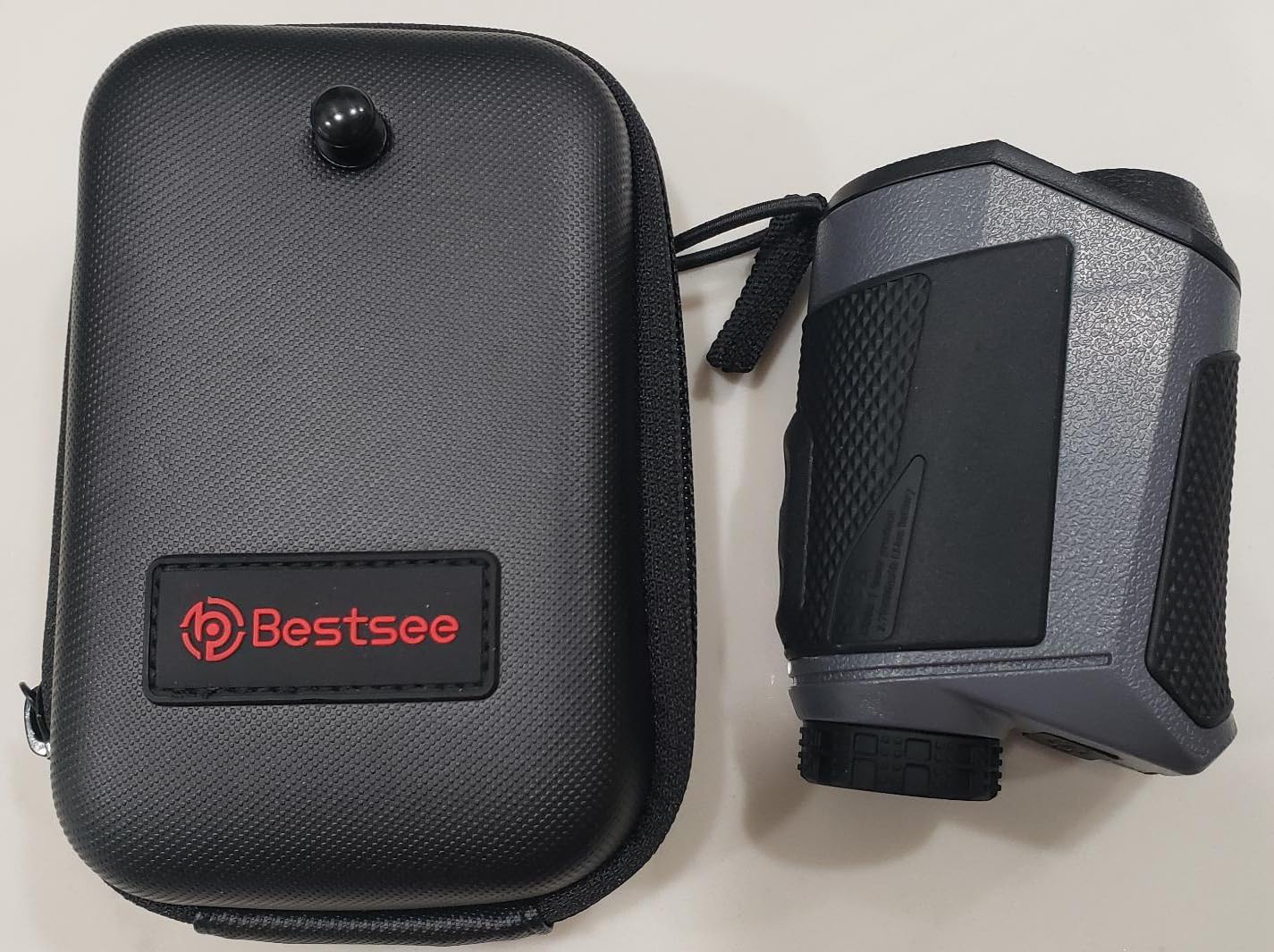
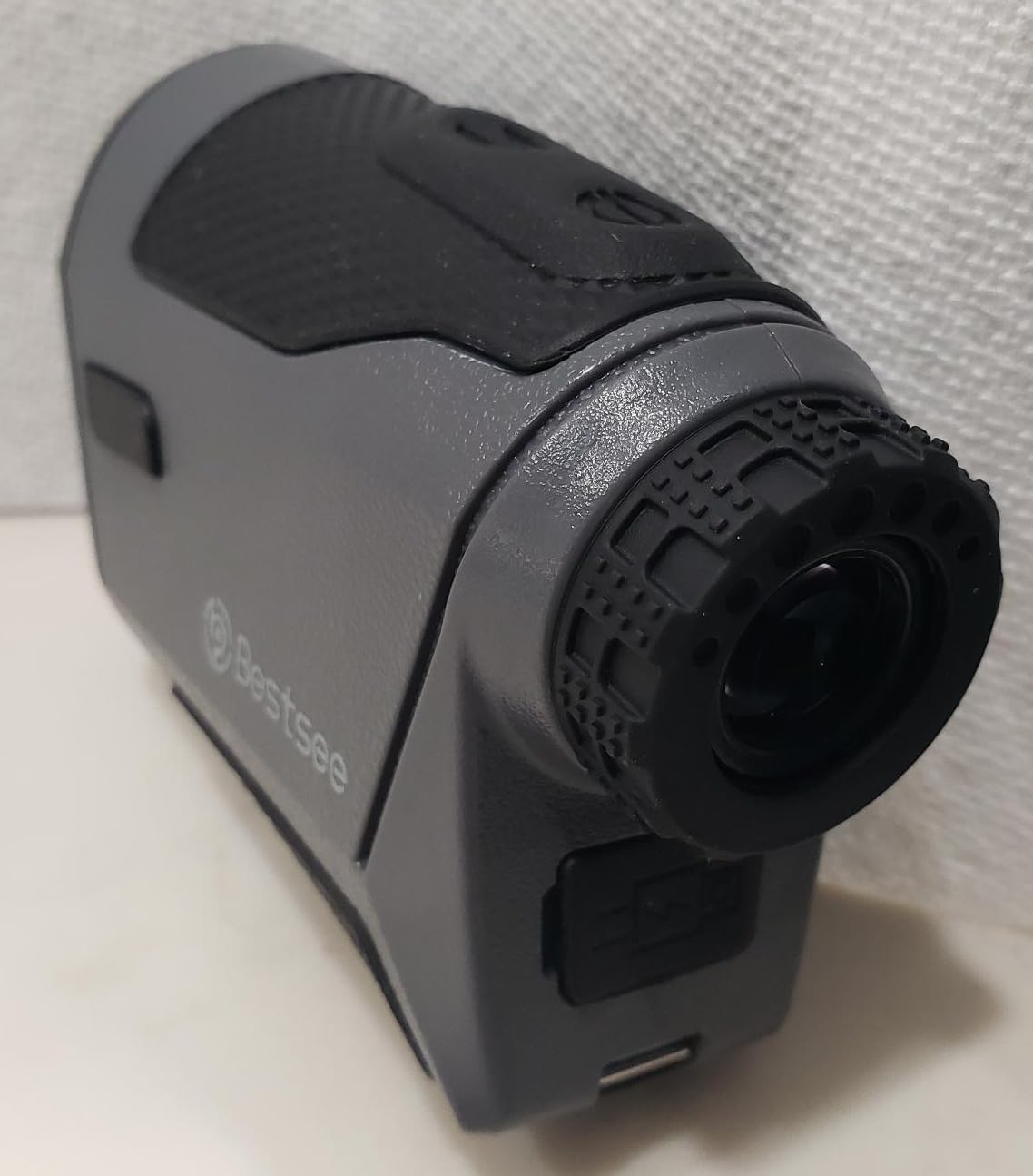
The 7x optic has a rotating focus lens, and owners consistently remark that the clarity is better than they expected for the price. The body is magnetic with a non-slip silicone grip, weighing 200 grams, and three measurement modes cover flag lock with slope, ranging with angle, and ranging with horizontal distance.
Flagpole lock is rated up to 300 yards with vibration confirmation, controlled by a side slider for slope. The 800mAh battery charges over USB-C at 5V and owners report it lasting many rounds on a single charge, with a hard carry case, carabiner, hand rope and lens cloth in the box.
The magnet and the dark are the two complaints worth weighing
Two owner complaints recur and both are practical. The integrated magnet is weaker than the REDTIGER’s strip and some owners find it slides on a cart over bumps, so if you mostly walk and carry rather than ride, it matters less than it appears to.
The display has no backlight, which makes late-season twilight or winter nine holes difficult. Neither complaint is a defect and neither affects a midday round, but if you are buying for winter golf in a northern climate, check before you commit.
Who should skip it
Skip it if you play winter twilight golf, if you rely on a cart mount, or if you want a device that acquires a distant flag in one clean attempt. The long range is genuine, but the lock behaviour at distance is the same patience-dependent behaviour that defines the value tier.
7. Bushnell Golf Tour V6 Shift – the step-up if you will keep it
Bushnell Golf Tour V6 Shift Laser Rangefinder, Patriot Pack
- Highest rated model here with 91 percent five-star feedback
- Reliable pin lock with visual Jolt ring and vibration
- IPX6 water resistance handles real rain
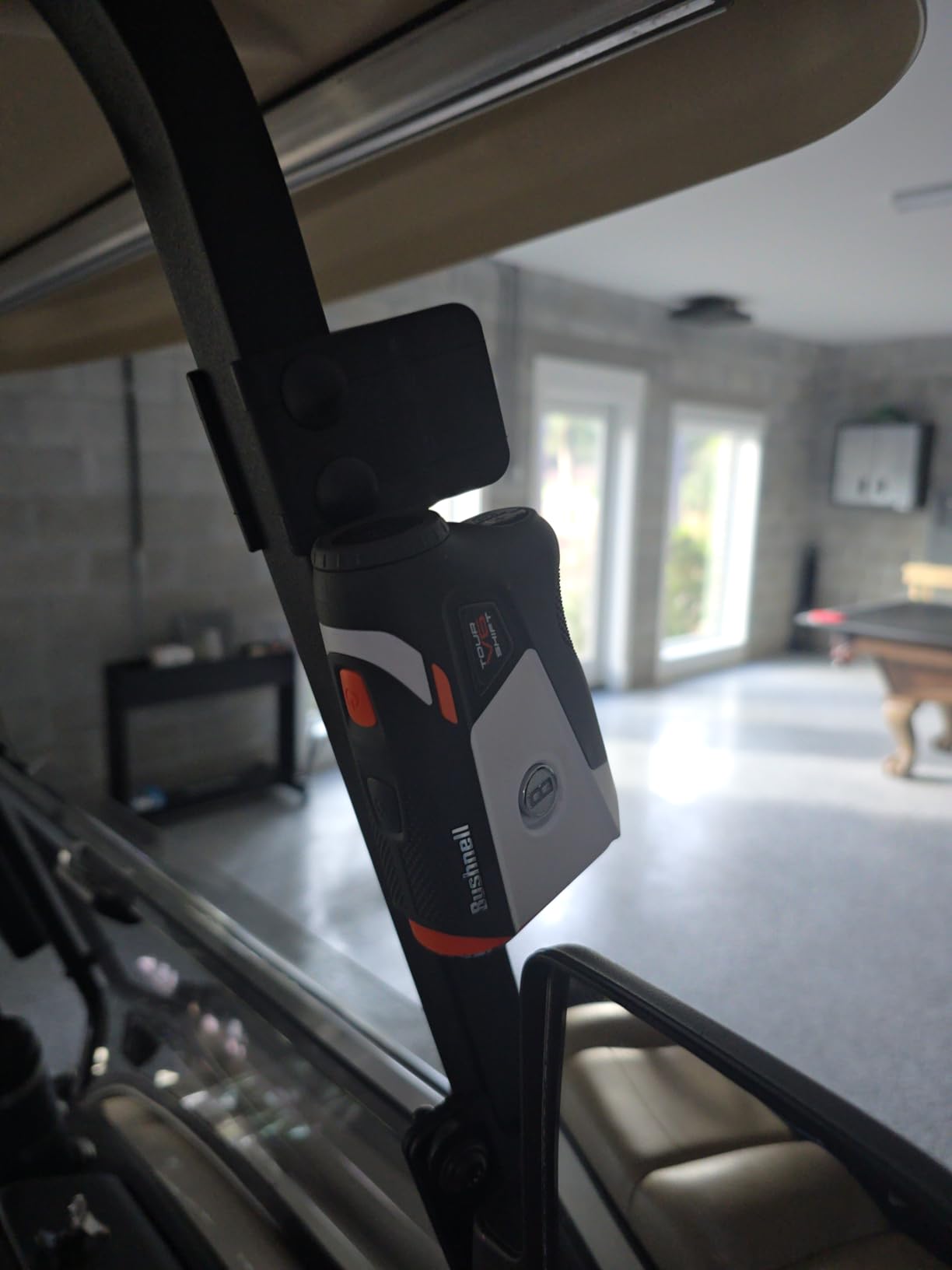
- BITE magnet gives secure one-handed cart access
- Heaviest and bulkiest body at 16 ounces
- Costs more than every other model in the roundup
- Feature set is generous for a beginner
The Tour V6 Shift is the best-rated device here at 4.8, with owners near-unanimous about one thing: it locks onto the flag. The dual confirmation system gives you both a visual red Jolt ring in the eyepiece and a vibration pulse, which is the single most trusted feature in owner reports across every forum we read.
That confidence matters more than specification. When a beginner is not sure whether the number came from the pin or from a tree behind it, they stop trusting the device, and a device they do not trust is a device they stop using.
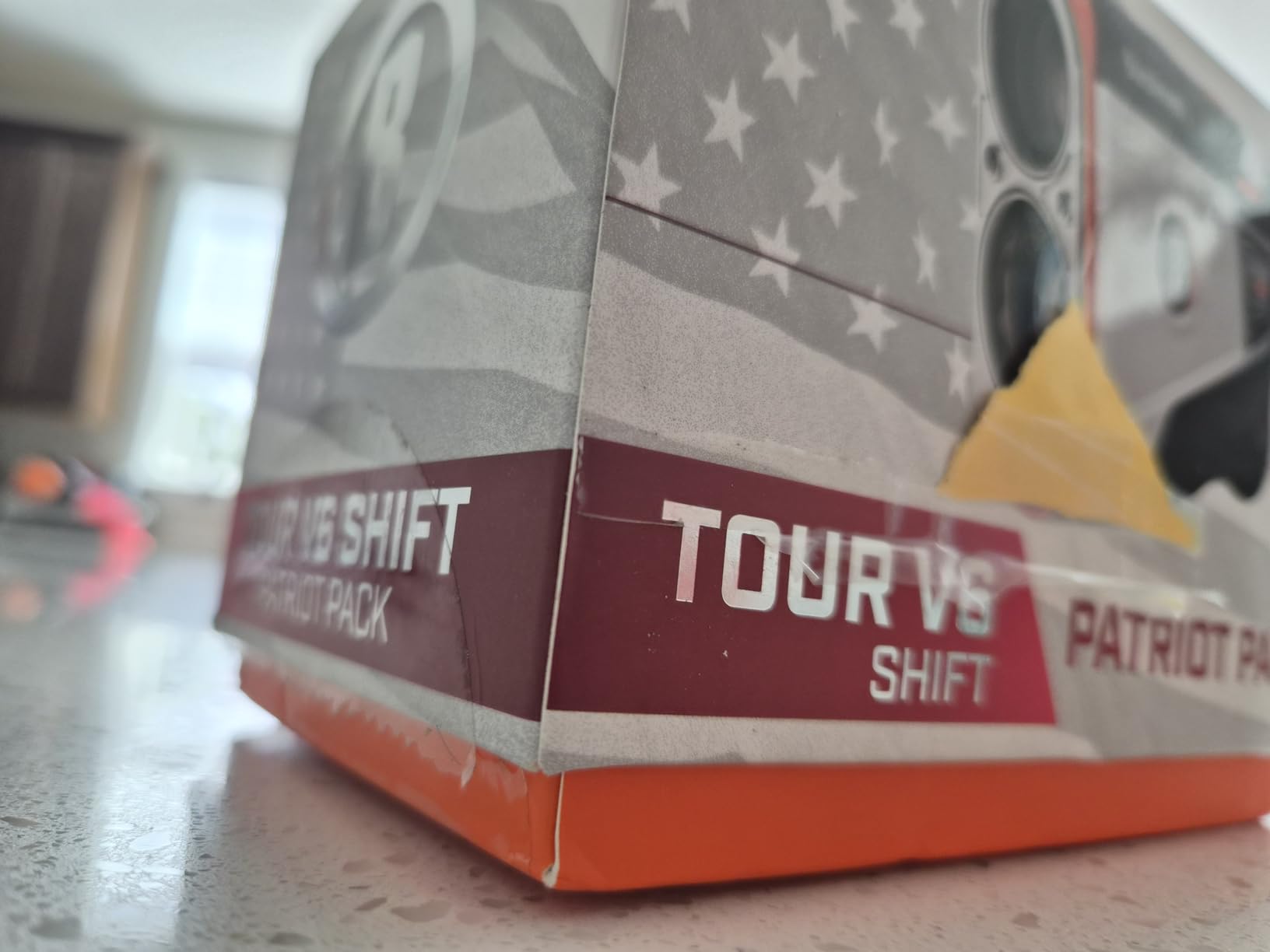
The specifications are solid rather than exotic. Range is 5 to 1300 yards with 6x magnification, slope compensation runs off an external tournament-legal switch, and the BITE magnetic mount clamps to a cart or any metal surface for one-handed access. Water resistance is IPX6, the best rating in this roundup.
It runs on a CR2 lithium battery, included in the Patriot Pack alongside a case, coin, cloth and guide. At 16 ounces with a 6 by 5 by 4.5 inch package, it is by a wide margin the heaviest and bulkiest device here, and that is the honest cost of the confidence it delivers.
When a step-up actually makes sense
This is a poor first purchase for a strict budget and an excellent second one. If you know you will still be playing in three years, the difference between a value-tier lock that takes three attempts and a lock that takes one is the difference between a tool you use and a tool you abandon after a season.
Forum long-term ownership reports repeatedly favour Bushnell and Leupold when players describe what they still own years later, and durability counts for more than feature count once you have been playing a while. Retailer confidence also matters, and buying a premium device from a retailer with a straightforward return policy removes most of the risk of paying more.
Who should skip it
Skip it if you are starting out, if a lighter device in your pocket matters to you, or if your rounds are in variable weather where IPX4 would already have been marginal anyway. For a first purchase, this is paying for a capability you will not have the experience to exploit yet.
8. WOSPORTS H-116-1200 Rangefinder – the simplest two-button setup
- Two-button operation keeps controls as simple as they get
- 0.5 second flag lock with vibration confirmation
- Built-in magnetic stripe for cart mounting
- Carry package and carabiner included
- Only around 280 reviews so the long-term record is thin
- 6x magnification is modest for distant pins
- IPX4 splash protection only
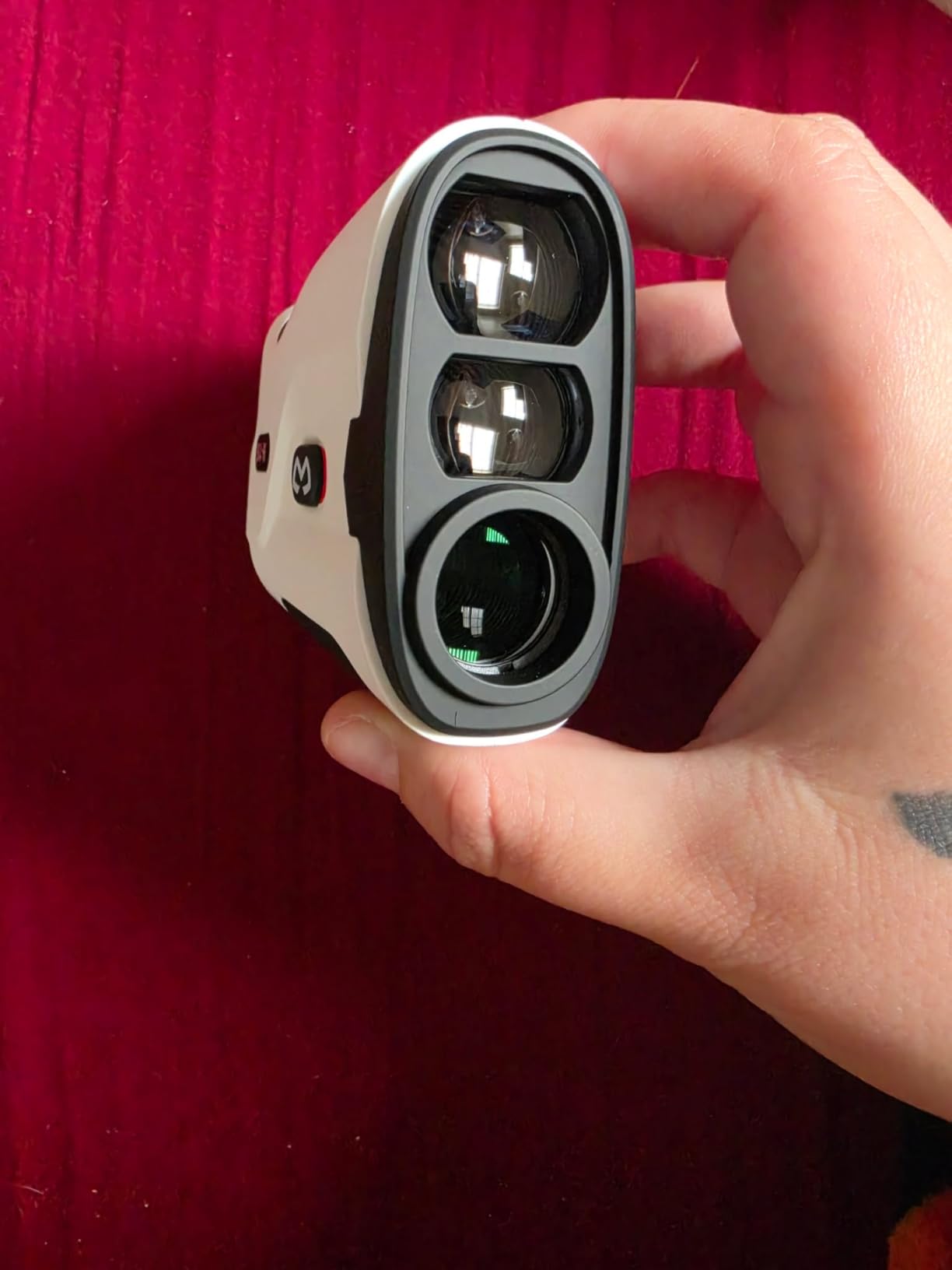
The WOSPORTS is the least complicated device in the roundup and that is its entire pitch. Two buttons, four modes, a 0.5 second flag lock with vibration, and a magnetic stripe in the body for the cart. If the idea of menus is the thing holding you back, this removes the problem entirely.
Owners rate it solidly at the entry price with quick readings, clear optics and uncomplicated controls. The 4.3 rating is based on roughly 280 reviews, which is the smallest evidence base here and the main reason it is not higher in the list.
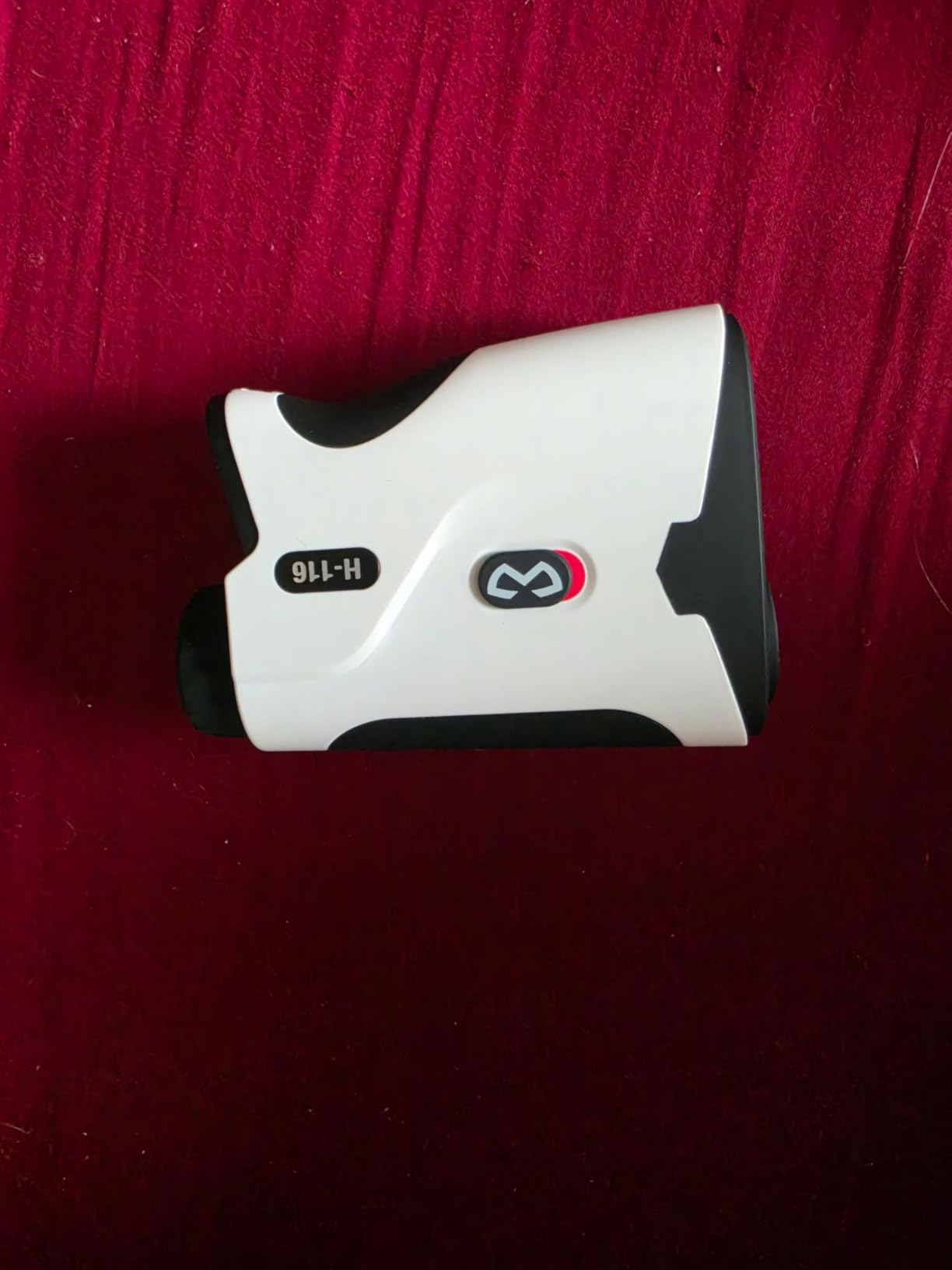
Range is 5 to 1200 yards at up to 0.5 yard accuracy with 6x magnification on an adjustable eyepiece, and the four modes cover straight-line distance, angle, continuous scan and vertical distance. Slope compensation has a tournament-legal off setting, and the body weighs 145 grams at roughly 4.1 inches long.
The box includes a carry package, lens cloth, operation manual, hang string and carabiner. Water resistance is IPX4, which covers a splash but not sustained rain, so treat it as a fair-weather device in a wet climate.
Fewer reviews means a different kind of risk
A short review history cuts both ways. It means fewer reports of failure modes, and it also means less evidence that the device still works after three seasons. When forum users judge products, long-term ownership statements carry far more weight than specification sheets, and for a listing this new there simply are not many of those yet.
If you are the kind of buyer who will research the device for two weeks before purchasing, that thin record is an argument to pick a model with a longer paper trail. If you want something in your pocket this afternoon, a well-specified simple device with a small review count is a reasonable risk.
Who should skip it
Skip it if you want a long-term device you will pass on to another golfer, if you play in rain more often than not, or if you need to reach a distant flag that is partly obscured by trees. The 6x optic and light water resistance are the two places this device is honest about being basic.
How to Use a Rangefinder Without Slowing Play
The fastest way to look like a beginner holding up a foursome is to point the device at a tree line and mash the button repeatedly. Five habits fix that entirely, and every one of them is about confirming the target before you trust the number.
Pre-scan the green before you lock. Sweep the general area first so you know where the pin is, then aim at the flagstick itself. This single habit eliminates most wrong readings.
Aim at the flag, not above it. The laser reads whatever the beam returns from, so keep it on the pin and the surrounding sky rather than on the top of the stick.
Wait for the vibration. The pulse is the confirmation that the reading came from the pin. If it buzzes early or never buzzes, re-aim rather than accept the number.
Check the mode before the shot, not during it. Slope on or off, scan or single measure. Set it while you are still walking.
Take your number and put it away. Read it, choose a club, pocket the device. The pre-scan technique exists so the scan costs you two seconds, not twenty.
If your group is playing fast, the honest move is to pre-scan the whole green as you walk up and lock only on the shot you are actually taking. That is faster than the fumbling it replaces.
What Actually Matters in Your First Rangefinder
Four things decide whether you will use a rangefinder or forget it in the cart pocket by July. Everything else on the spec sheet is either a preference or a feature for a golfer you have not become yet.
Pin lock with vibration is the feature that matters most. Owners across every forum we read describe vibration and target-lock feedback as the thing that builds confidence, because it confirms the number came from the flag and not a tree behind it. If a device has one advantage over another, this is it.
Magnet strength is more useful than it sounds. A rangefinder you have to hold in your hand while your playing partner tees off is a rangefinder you will not use. Devices with an integrated strip or mount score well here, and the strongest magnets in this roundup are on the Callaway and the REDTIGER.
Battery type decides your round. A rechargeable unit with USB-C charging removes battery anxiety entirely. Devices that take a coin cell need a spare in your bag, and battery draining quickly mid-round is one of the most commonly reported complaints in the forums.
Magnification matters, accuracy mostly does not. A 6x or 7x optic is the difference between picking a distant flag out of a busy green and not. Accuracy below one yard is irrelevant for club selection, since your own strike accounts for far more variation than the device. The same optics logic applies to any other range-finding device, which our hunting rangefinder guide covers in more detail.
Features you can safely skip as a beginner
Built-in GPS and hybrid displays add cost and menu depth for hole maps you will not use while learning club distances. Stabilisation and gyroscopic sensors are helpful but not essential, since a decent anti-shake mode covers the same need. OLED versus LCD only matters if you play in harsh sun, where a transflective screen is the better choice anyway.
Hazards, layup yardage, green undulation readouts and club selectors are all premium features aimed at a golfer who already knows their numbers. Multiple speed and angle measurement modes are the same story. Do not let feature count make the decision for you.
What your budget tier actually buys
Budget devices in the low tier measure accurately enough for practice and casual rounds on calm, clear days, and the difference from expensive units is not the number, it is the confidence. The gaps show up in wind, fog and long-range pin lock, and those are exactly the conditions a beginner learns to distrust their own reading in.
The middle tier buys a better optic, a stronger magnet, a rechargeable battery and a more considered lock algorithm. The top tier buys near-certainty on the lock, better water sealing and a build that survives being passed around. As a first purchase, the middle tier is the rational choice, because it is where comfort and cost are balanced.
A previous-generation model from an established brand is a legitimate strategy that forum regulars use deliberately. A discontinued model of a device you already know the ergonomics of costs less and performs identically to its replacement in every way that matters for club distances.
Slope: worth having, and worth switching off
Slope compensation adjusts the distance for the difference in elevation between you and the pin, so on an uphill shot the number is longer than the ground distance. It is genuinely useful and every device here includes it with a physical switch, which is the right design.
The rule to know: most competitive events prohibit a device that measures distance adjusted for elevation, and a few prohibit displaying that data at all. That is why the switch has to be external, and why the Acer model deserves a closer look at the rules before an event. Tournament legality is the single most misunderstood feature on these devices.
Rangefinder or GPS watch?
A rangefinder answers one question instantly and gives you a number you can trust in a single second. A GPS watch shows the whole hole, tracks shots, maps greens and stores your round, but it depends on a satellite signal, runs out of charge in cold weather and asks you to scroll through menus.
For a beginner, the rangefinder wins because distance control is the skill you are actually trying to build. If you already wear a GPS watch and want one less device, our golf bag guide covers where to keep it. Plenty of golfers carry both, and forum debate about that pairing is long-running precisely because both do something the other does not.
Before you buy anything, spend one session with a measuring tape or a known marker and record your carry distances. Once you know your 7-iron goes 90 yards, the rangefinder starts doing something useful instead of something interesting.
Why Is My Rangefinder Reading the Wrong Distance?
Almost every wrong reading traces back to one of five causes, and all five are documented in owner reports across the golf forums. Working through them in order fixes the overwhelming majority of cases.
It locked onto a background object. The most common cause by a distance. Sweep the area first, then aim at the flag itself rather than the treeline behind it.
The pin is moving in the wind. A flagstick whipping in a gust gives a shifting reflector, and the device may lock early or lose the reading. Wait for a lull or read a static target and add the remainder yourself.
Fog, mist or heavy rain. Laser accuracy depends on the beam returning cleanly, and low-contrast air shortens the practical range. Every rangefinder struggles in fog, including the expensive ones.
The battery is low. Power drops produce erratic behaviour before the unit switches off. Rechargeable devices that show a low battery indicator fail far more gracefully than coin cells that simply die.
The unit itself is not accurate enough. Budget devices quote looser tolerances, commonly plus or minus 0.5 to 0.7 yard, and some degrade over years. On r/golf there is a dedicated thread on a recognised brand whose readings drifted, so brand name alone is not a guarantee.
If the number is wrong consistently on a clear, still day at a short distance, that is a hardware problem rather than a technique problem, and the answer is a return rather than more practice.
Frequently Asked Questions
Should a beginner golfer use a rangefinder?
Yes, but only once your distances are consistent enough to calibrate against. A rangefinder tells you how far the ball went, not which club to hit next. Once your swing repeats, the number creates a feedback loop that turns practice into measurable progress, and it costs less than a single block of lessons.
Are cheap rangefinders worth it?
For most beginners, yes. Devices at the budget end of this roundup measure accurately enough for practice and casual rounds on calm, clear days, and they include slope compensation and vibration pin lock. The difference shows up in wind, fog and long-range pin lock, so play in variable weather and you may want to spend more.
What is the best value-for-money golf rangefinder?
The REDTIGER C001 stands out for feature per pound: a 7x transflective display that stays readable in sun, six measurement modes, a very strong magnetic strip and a USB-C rechargeable battery rated for 30000 charge cycles. The Callaway 300 Pro is the stronger all-round buy if you want dependable pin acquisition more than mode count.
What is the easiest rangefinder to use?
The Acer Gadget SW-RF700 is the easiest, because its anti-shake technology steadies readings while a beginner aims. Two-button operation, vibration lock confirmation and a display readable at a glance mean you can pick it up and use it without reading anything. The trade is the shortest range in the roundup at 800 yards.
Do I need slope compensation as a beginner?
It helps, and every model here includes it with a physical switch. Slope compensation adjusts the distance for elevation change, so uphill shots read longer. Check your event rules though, because most competitions prohibit distance adjusted for elevation and a few prohibit displaying that data at all.
The Best Golf Rangefinder for Beginners in 2026
Buy the Callaway 300 Pro if you want one device that a new golfer will actually keep using. It has the pin acquisition system and vibration confirmation that owners value most, the largest evidence base in this roundup, and a magnet strong enough to live on the cart. It is the only product here we would call the default answer to best golf rangefinders for beginners.
Spend less with the REDTIGER C001, which gives you the best optics, the strongest magnet and the most modes for the money, and accept that a distant flag in wind may take a couple of attempts. If shaky hands are your problem rather than budget, the Acer Gadget SW-RF700 solves that directly with anti-shake technology.
Save the Bushnell Tour V6 Shift for when you know you will still be playing. It is the highest-rated device here and the one owners describe as still working years later, which is the real argument for spending more once a rangefinder has proved it earns its pocket.
Whichever you choose, learn your club distances first and pre-scan the green before you lock. The best rangefinder for a beginner is the one that gets used every week.