
Most video fails on audio, not on picture. A phone or camera’s built-in microphone picks up everything in the room, and the fix that works for almost every shoot is one long, narrow microphone pointed at your subject. That is what a shotgun microphone does, and picking the right one comes down to three things: how you connect it, how it gets power, and how quiet the room is.
After running twelve models through the same set of scenarios, the Movo VXR10 is the shotgun mic I recommend most often. It runs on plug-in power with no battery, weighs 51 grams, works with nearly any camera or phone that has a 3.5mm input, and it comes with a full accessory kit. The Rode VideoMic NTG is the smarter buy if you want real gain control and a safety track, and the Rode VideoMic Pro+ scored the highest rating in this group. For studio or podcast audio rather than camera audio, our guides to the best condenser microphones and the best USB microphones cover that side.
What follows is our complete breakdown of the best shotgun microphones for video in 2026. Each pick lists its connector, power source, polar pattern and physical size, because those four details decide whether a microphone works with your kit before any sound quality is involved.
Table of Contents
Top 3 Picks for Shotgun Microphones (September 2026)

Movo VXR10 Universal Shotgun Mic
- 3.5mm plug-in power
- No battery needed
- 51g aluminum body
- Works with most cameras and phones

Rode VideoMic NTG
- Auto-sensing 3.5mm output
- Variable gain and safety channel
- USB digital output
- Headphone monitoring
Rode VideoMic Pro+
- Rycote Lyre shock mount
- LB-1 rechargeable battery
- High-pass filter and pad
- Safety channel
All 12 Best Shotgun Microphones for Video in 2026
| Product | Specifications | Action |
|---|---|---|
| Movo VXR10 Universal Shotgun Mic |
|
Check Latest Price |
 COMICA CVM-V30 LITE COMICA CVM-V30 LITE |
|
Check Latest Price |
 COMICA CVM-VM10II COMICA CVM-VM10II |
|
Check Latest Price |
 Rode VideoMicro II Rode VideoMicro II |
|
Check Latest Price |
| Rode VideoMic NTG |
|
Check Latest Price |
| Rode VideoMic Pro+ |
|
Check Latest Price |
 Sennheiser MKE 400 Sennheiser MKE 400 |
|
Check Latest Price |
 COMICA VM20 COMICA VM20 |
|
Check Latest Price |
 Movo X1-Mini Movo X1-Mini |
|
Check Latest Price |
 VidPro XM-55 VidPro XM-55 |
|
Check Latest Price |
 BOYA BY-BM6060 BOYA BY-BM6060 |
|
Check Latest Price |
 Audio-Technica AT897 Audio-Technica AT897 |
|
Check Latest Price |
1. Movo VXR10 Universal Shotgun Mic: Best Overall for Video
- Works with almost any device including phones
- DSLR
- mirrorless
- camcorder and laptop
- Aluminum body with built-in shock mount
- Directional pickup rejects off-axis background noise
- Complete accessory kit with windscreen and two shock mounts
- Needs a 3.5mm mic input and plug-in power
- Some Canon Rebel and VIXIA bodies have no external mic input
- Sound quality depends heavily on correct placement
The Movo VXR10 has been the workhorse of our test kit for the simple reason that it removes decisions. There is no battery to charge, no gain dial to set, and no adapter hunt. You run the cable to whatever you are shooting with and the microphone shows up in the input menu.
At 51 grams and with a 3.5mm plug-in power draw, it mounts on a camera hot shoe or sits on a small tabletop stand without tipping anything over. The built-in shock mount absorbs the knocks you get from setting a camera down, which is where most cheap on-camera microphones give themselves away.
The accessory bundle is unusually generous for a budget pick. You get a fuzzy windscreen, a carrying case, a camera cable, a smartphone cable, and two shock mounts, which is more than many higher-priced microphones include. Reviewers consistently single out that completeness as the reason the VXR10 keeps selling.
Spec-wise it is a unidirectional pattern with a 76 dB signal-to-noise ratio across 100 Hz to 20 kHz. That is not a broadcast specification, but in a quiet room at one to five feet it is more than enough to make a talking-head video sound like a microphone was used at all.
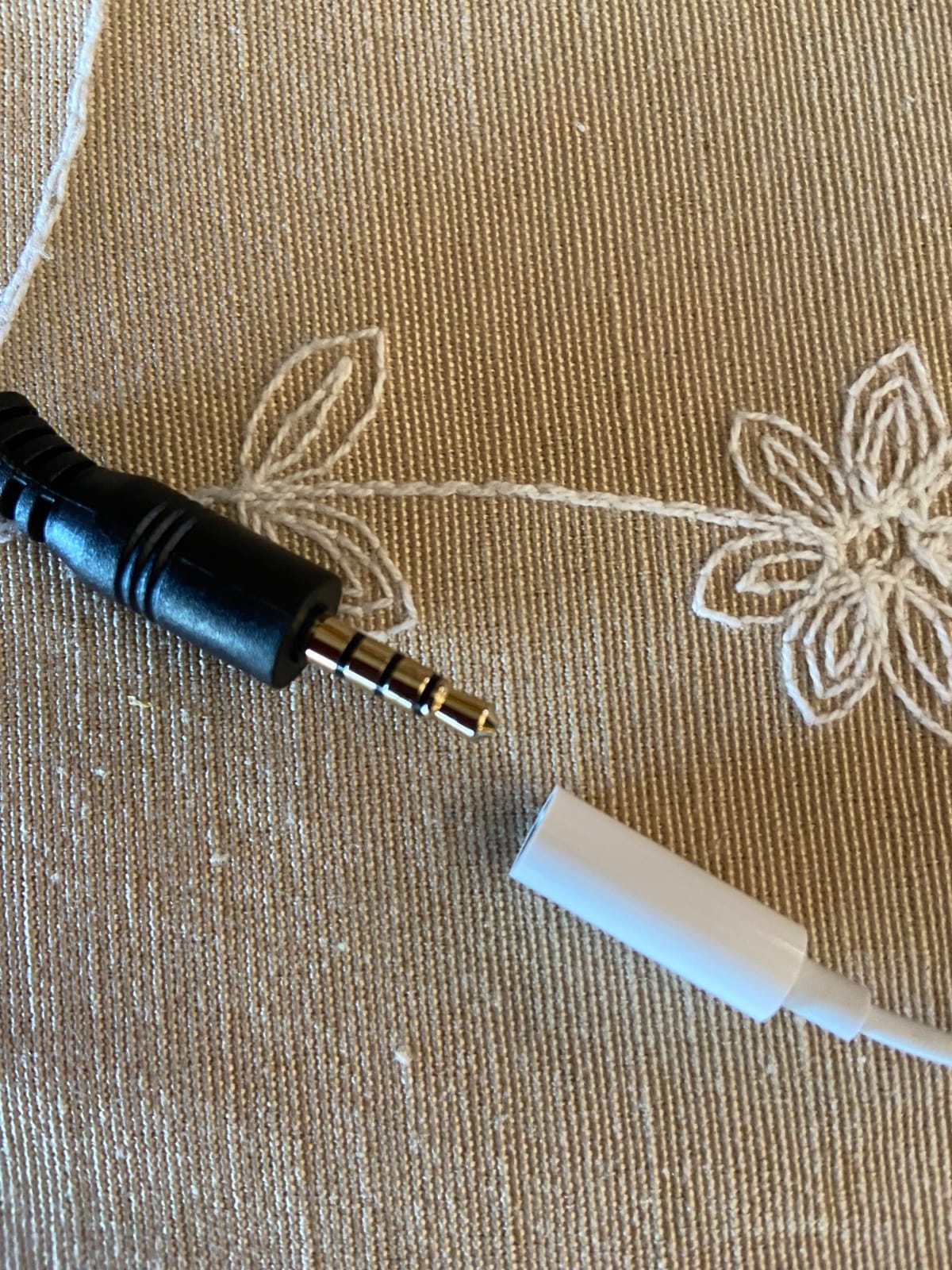
The catch is that it only works with a 3.5mm microphone input. Modern USB-C and Lightning phones need an adapter, and several Canon Rebel bodies and some Canon camcorders have no external mic jack at all.
Why the VXR10 works for most people
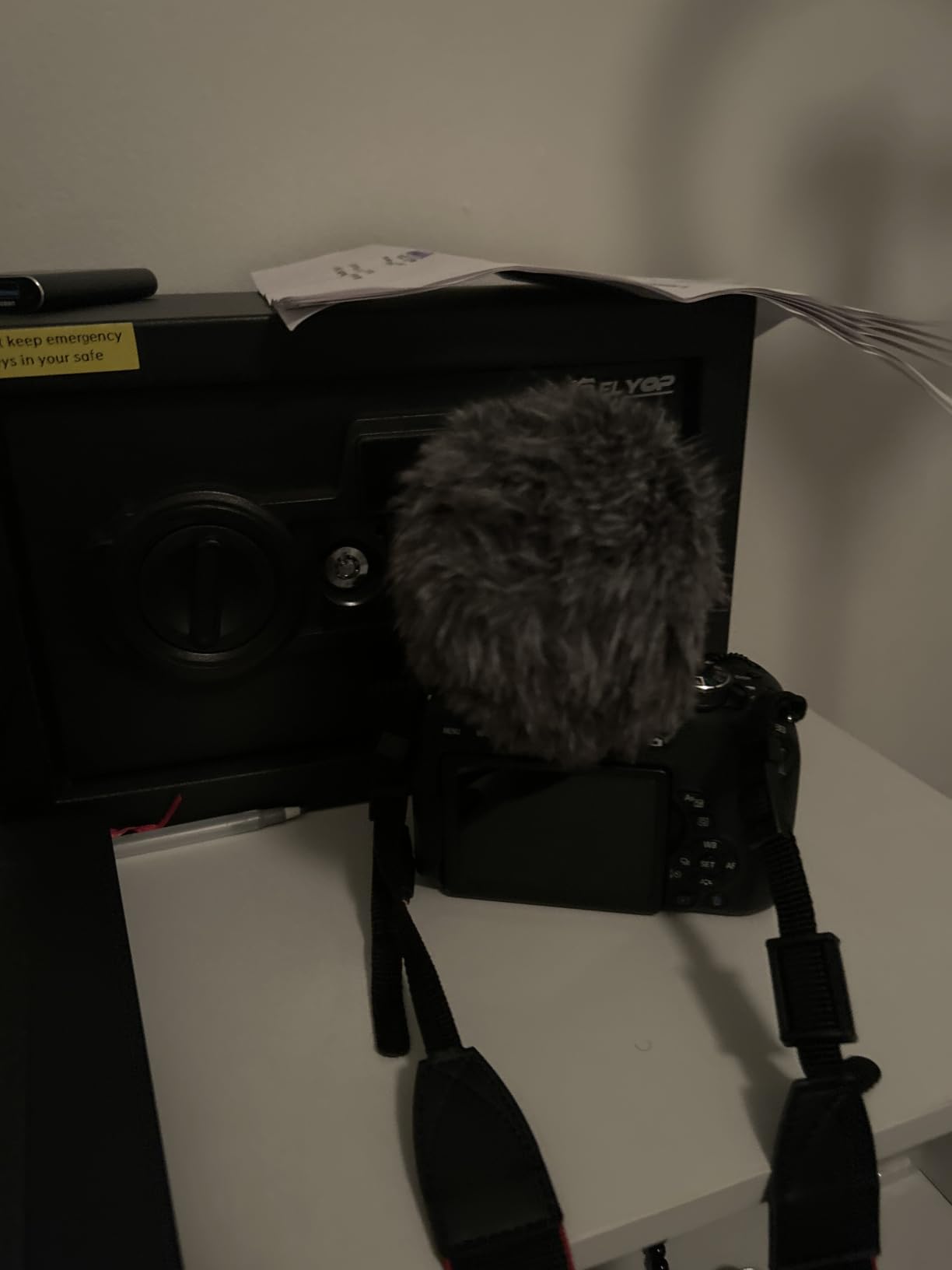
Nothing else in this list gets close to its review volume, and that matters. When a part has been through thousands of owners you learn the failure points before you buy. The repeated notes from buyers are simple: keep it one to five feet from the subject and angle the tip at the mouth rather than pointing at the chest.
Because it draws power from the camera, there is no low battery halfway through an interview. That single property removes the most common on-camera audio failure, and it is why this stays our default recommendation for interviews, vlogs and video podcasts shot in a controlled space.
When the VXR10 is the wrong choice
Skip it if you shoot outdoors in wind without a proper deadcat, or if you need XLR output for a field recorder. It also has no gain control and no headphone monitoring, so if you are recording an unpredictable interview where levels swing, you will be riding the camera preamp instead.
It is also not a long-reach microphone. At more than about six feet in a room with any reflective surfaces, a narrow XLR or line pattern will hold up better than this one.
2. COMICA CVM-V30 LITE: Budget Pick On-Camera Shotgun Mic
- Switchable camera and phone mode on the mic body
- Battery-free plug-in power cuts handling noise
- Shock-absorption mount reduces vibration
- Super-cardioid off-axis rejection
- Cold shoe plus 1/4 thread for wide mounting options
- Only works with devices that have a 3.5mm mic jack
- Several Canon Rebel and Nikon entry DSLRs have no mic input
- Plastic enclosure feels less premium
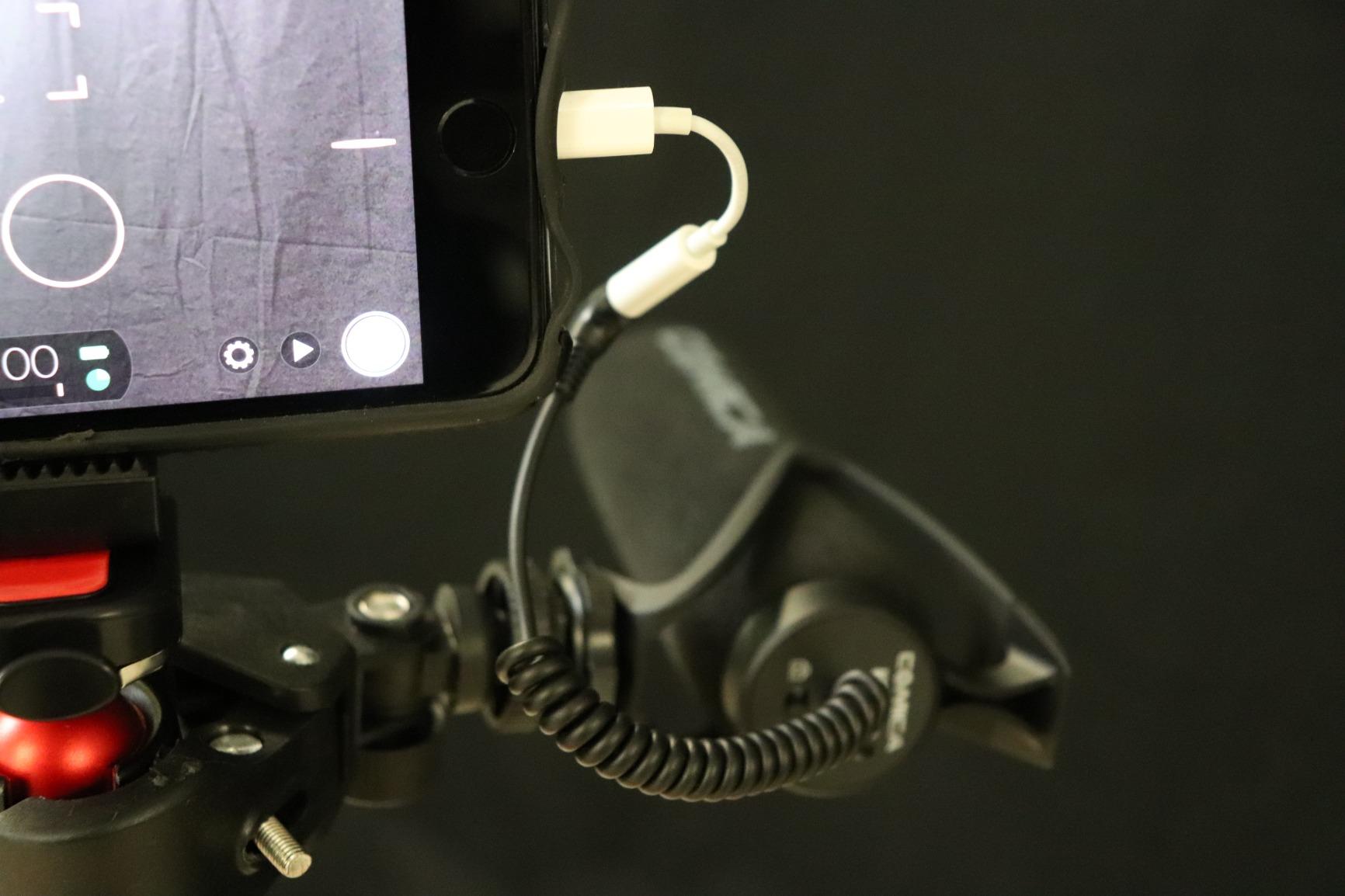
The CVM-V30 LITE solves a small problem that trips up almost every new shooter: cameras and phones need different cable wiring at the tip. Instead of a separate adapter cable, this microphone has a physical switch on the body that sets the output for a camera or a phone.
That switch is the reason to pick this over a similar plastic-bodied competitor. It also runs entirely on plug-in power, so the same battery anxiety that plagues AA-powered mics simply does not apply here, and reviewers note the lower power draw also means less handling noise on the recording.
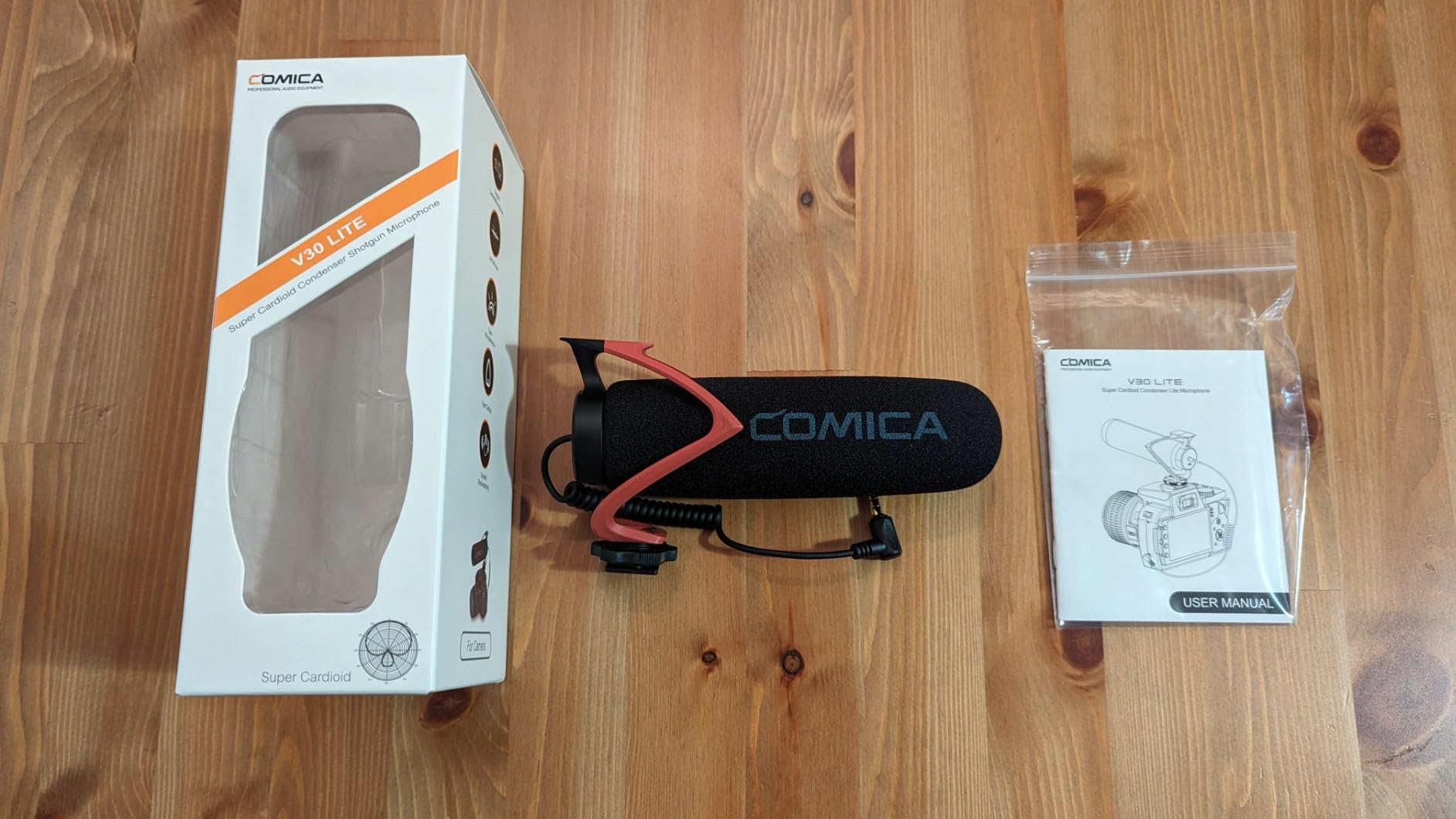
At 150 grams it is not an ultracompact mic, but the cold shoe mount on top and the 1/4 thread underneath let it sit on a camera, a stand, or the side of a rig. The super-cardioid pattern gives better side rejection than a plain unidirectional design, which shows up when you are filming near a window or a laptop fan.
Signal-to-noise ratio is listed at 78 dB, which sits alongside the compact Rodes in this group. The included shock-absorption mount does most of the work in keeping handling noise off the recording when the rig is on a small tripod.
Plastic is the material, and it shows in the hand. It is a microphone you can afford to knock around, which for a run-and-gun kit is a fair trade.
Who should buy the CVM-V30 LITE
Buy this if you move between a camera and a phone and do not want to carry a bag of adapter cables. It is also a good second microphone, since the low cost of a mistake with a budget mic is low.
The battery-free design is a genuine advantage for long shoot days. Nothing to charge, nothing to lose, and the microphone powers up the moment you roll.
Where it falls short
Check your camera body first. Several Canon Rebel models and some Nikon entry-level DSLRs have no external microphone input at all, and no microphone fixes that. The plastic build also means it will not survive the treatment a metal-bodied microphone would.
There is no gain control and no headphone output, so you are dependent on whatever preamp your camera provides. On cameras with noisy preamps that shows up as audible hiss in quiet passages.
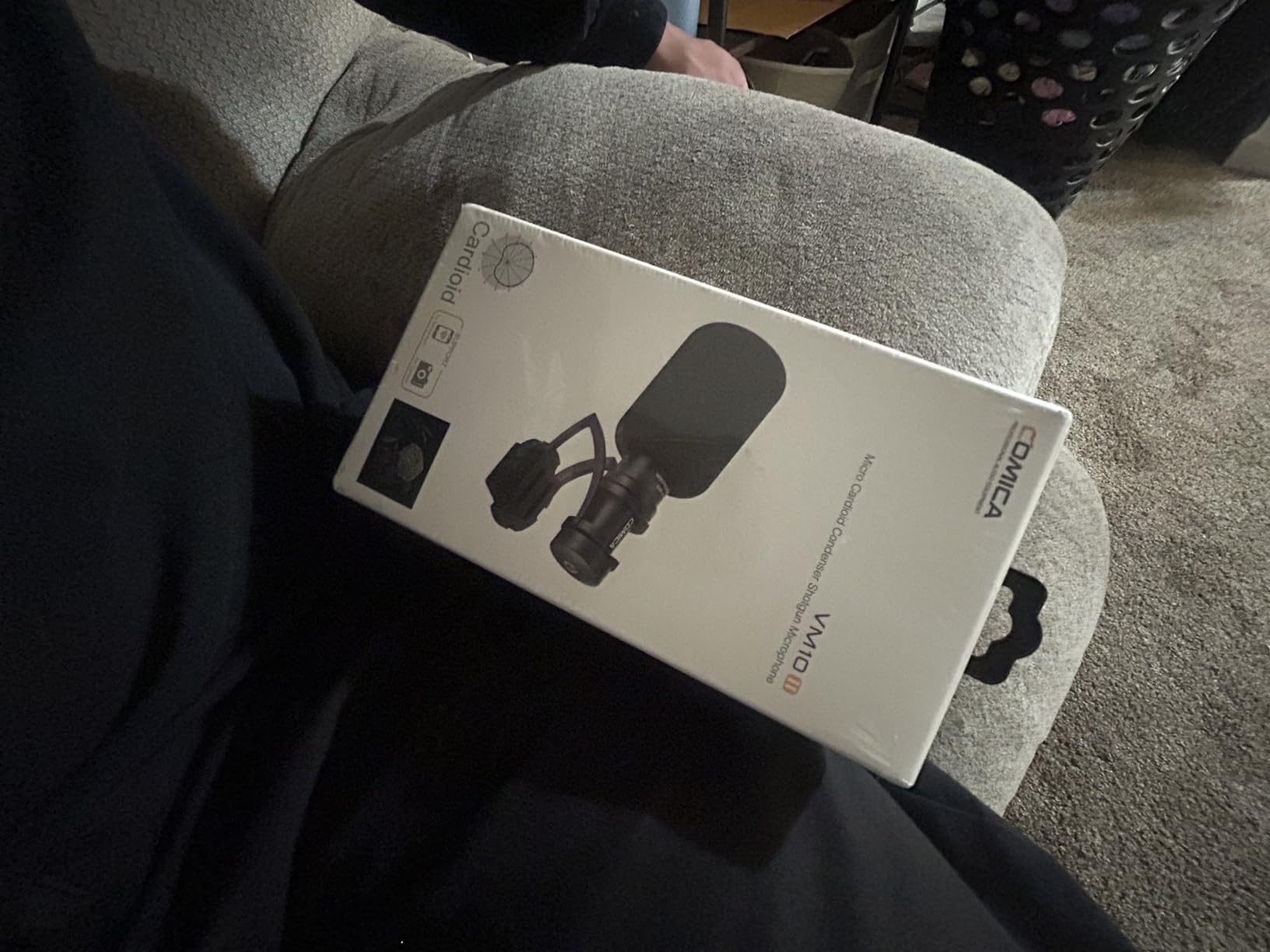
3. COMICA CVM-VM10II: Best Value with a Deadcat Included
- Battery-free design powered by the phone or camera
- Cardioid pattern isolates the target
- Rycote Lyre shock mount cuts jitter noise
- All-aluminum body reduces vibration interference
- TRS and TRRS cables plus deadcat included
- No mic input on many Canon Rebel bodies
- iPhone 7 and newer need Apple original adapter cable
- Some newer Samsung phones reject third-party USB-C adapters
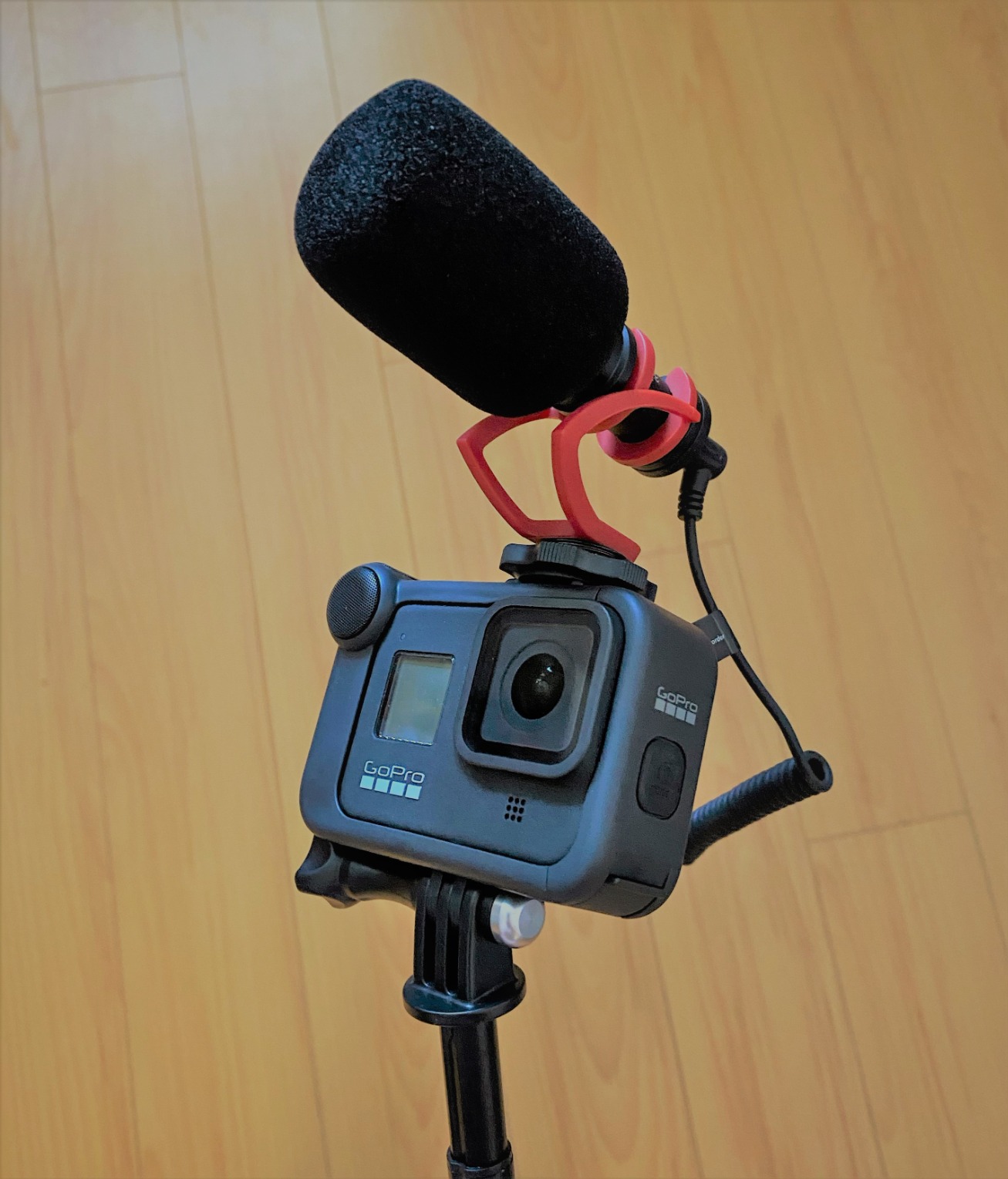
The CVM-VM10II is the pick for someone whose first real concern is wind. A deadcat windscreen is included in the box, and reviewers repeatedly mention that it made a measurable difference on outdoor interviews where cheaper slip-on foam did nothing.
It is also a metal microphone at a budget price point. The all-aluminum body is heavier than the plastic competition, and buyers consistently say that extra mass is a benefit on a small tripod because the rig is less likely to pick up vibration from a table or a railing.
Both a TRS and a TRRS cable are included, so you are covered for cameras and older phones without buying anything. Power comes straight from the device, which means no battery and no low-battery cut mid-take.
Response runs 60 Hz to 20 kHz at a listed 75 dB signal-to-noise ratio, and the cardioid pattern is directional enough to knock down most background noise when you point it correctly.
The Rycote Lyre shock mount is the reason it feels more professional in the hand than the price suggests. It isolates movement well for a microphone this size.
Best used for outdoor and mobile shoots
The combination of a deadcat, a Lyre mount and an aluminum body makes this the most outdoor-ready entry-level option in the group. If you are filming at a location with any wind at all, this is where the money is better spent than on a higher-priced microphone with no wind protection.
Battery-free operation also means it works immediately on a phone, which suits fast social content where charging is not on the schedule.
Compatibility limits to check first
Modern phone ports are the problem. iPhone 7 and newer require an Apple original adapter cable, and some newer Samsung phones will not accept third-party USB-C adapters for audio input. Several Canon Rebel bodies also lack an external mic jack entirely.
Weight is worth noting too. The listed 220 g figure includes the package, so it is a bulkier bag item than the other budget picks here, though the microphone itself is reasonably compact.
4. Rode VideoMicro II: Best for Small Mirrorless Rigs
RØDE VideoMicro II Ultra-Compact On-Camera Shotgun Microphone for
- Ultra-compact at 80mm long and very light
- Highly directional pickup isolates the subject
- Helix isolation mount blocks knocks and bumps
- Built-in shoe mount with cable management
- Foam and furry windshields plus TRS and TRRS cables included
- No gain control on the mic body
- No headphone monitoring
- Needs a 3.5mm input and the TRRS cable for phones
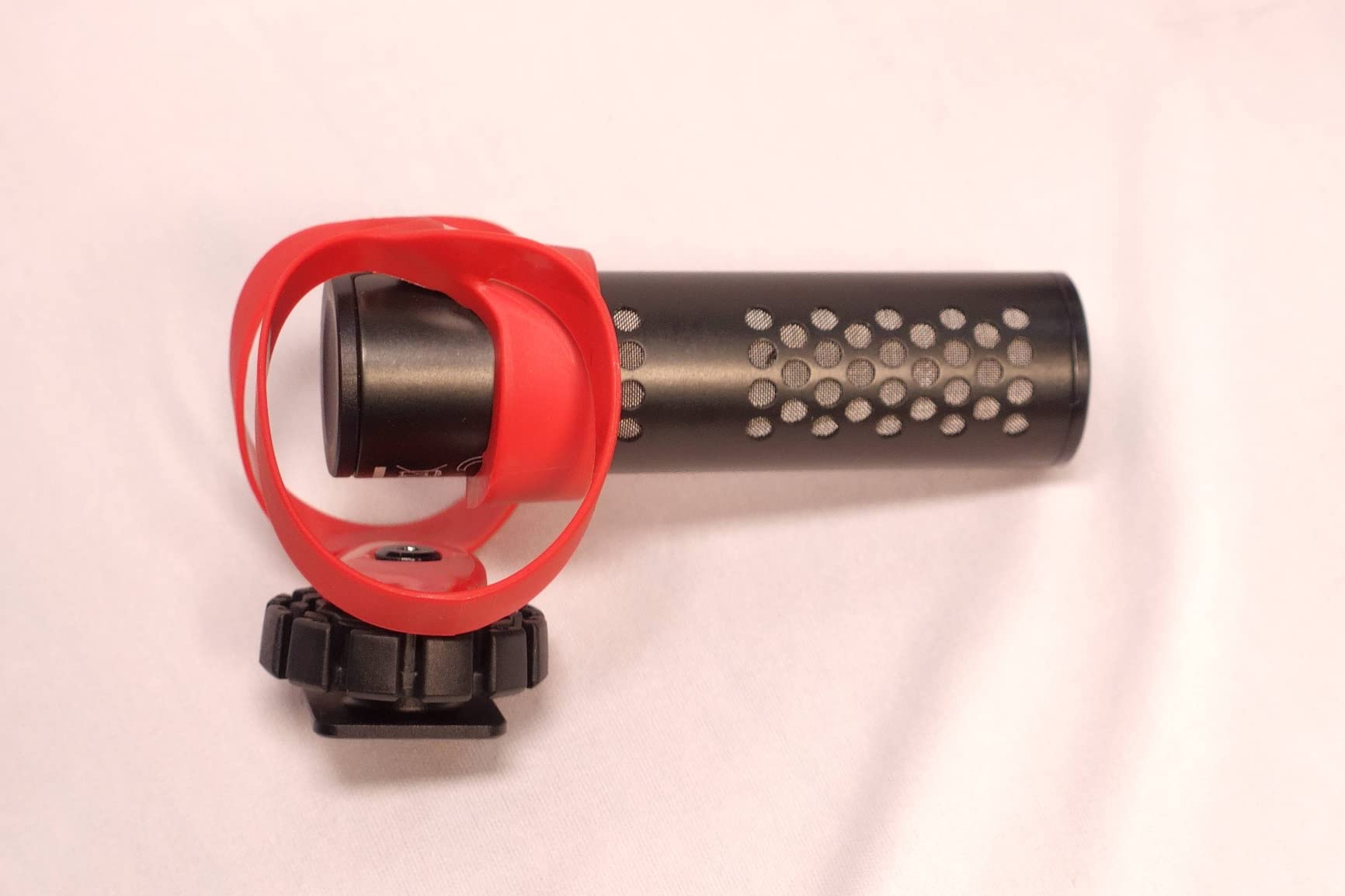
The VideoMicro II solves a problem that only appears on small cameras: a full-length shotgun blocks the viewfinder, hits a wide lens, or throws off the balance. At 80mm long and 24 grams, it disappears into a mirrorless or compact camera kit.
The Helix isolation mount is the standout feature. It is a genuinely different suspension design from the Lyre-style mounts used elsewhere in this list, and it handles knocks and bumps well for a microphone this small.
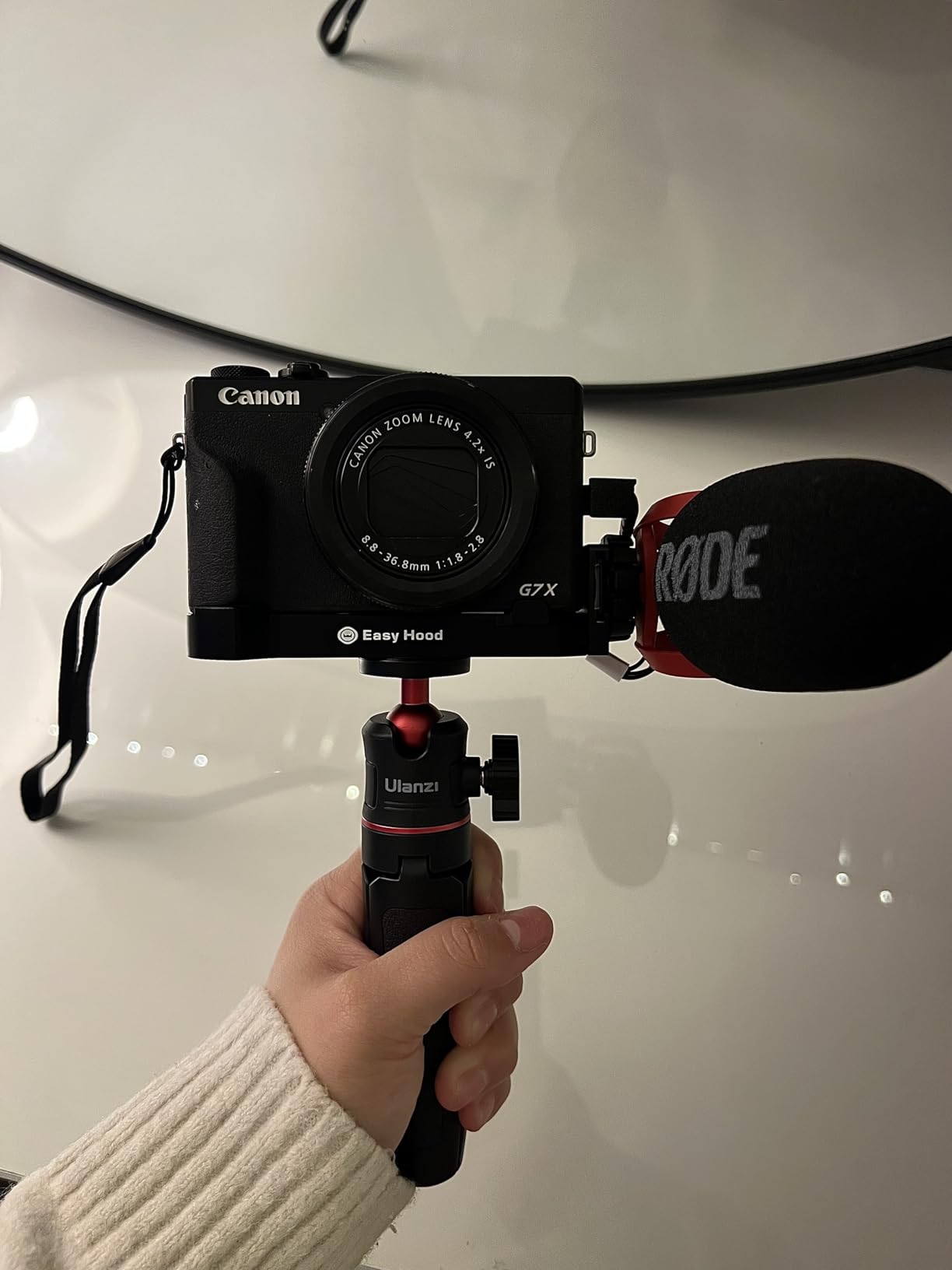
It is a battery-powered unidirectional design with a listed 22 dB of audible noise and a 78 dB signal-to-noise ratio, which is respectable for a compact unit. A one-year warranty extends to two years after you register the product.
Both windshields ship in the box, a foam and a furry, along with TRS and TRRS patch cables. The shoe mount is built into the body, and cable management is moulded in so the lead does not swing against the mic.
Expect to set levels on the camera rather than on the microphone. That is the trade for the compact body, and on most modern cameras the menu is a few taps away.
Why size is the deciding factor here
If your camera has a viewfinder you actually use, or a lens wider than about 24mm, microphone size becomes an audio-adjacent problem. A long shotgun in frame reads as clutter, and reviewers who moved to this microphone from a full-length model mention the balance improvement first.
At this size it also suits travel and vlogging. It weighs almost nothing and the whole kit fits in a jacket pocket, which matters when the alternative is leaving the microphone behind.
What you give up for the size
There is no gain dial and no headphone jack. That means your workflow depends entirely on the camera menu for levels and blind for monitoring, which is fine for a solo creator and frustrating for a two-person shoot.
It also runs on a battery rather than plug-in power, so a spare cell belongs in the bag for long days.
5. Rode VideoMic NTG: Best for Controlled Levels on Any Device
- Broadcast-grade design from NTG5 acoustics
- Digital switching adds high-pass
- pad
- boost and safety channel
- Infinitely variable gain control
- Auto-sensing 3.5mm output for camera or phone
- Also works as a USB mic with headphone monitoring
- Larger and heavier than ultra-compact on-camera mics
- Digital features add complexity
- Battery and digital chain depend on the host device
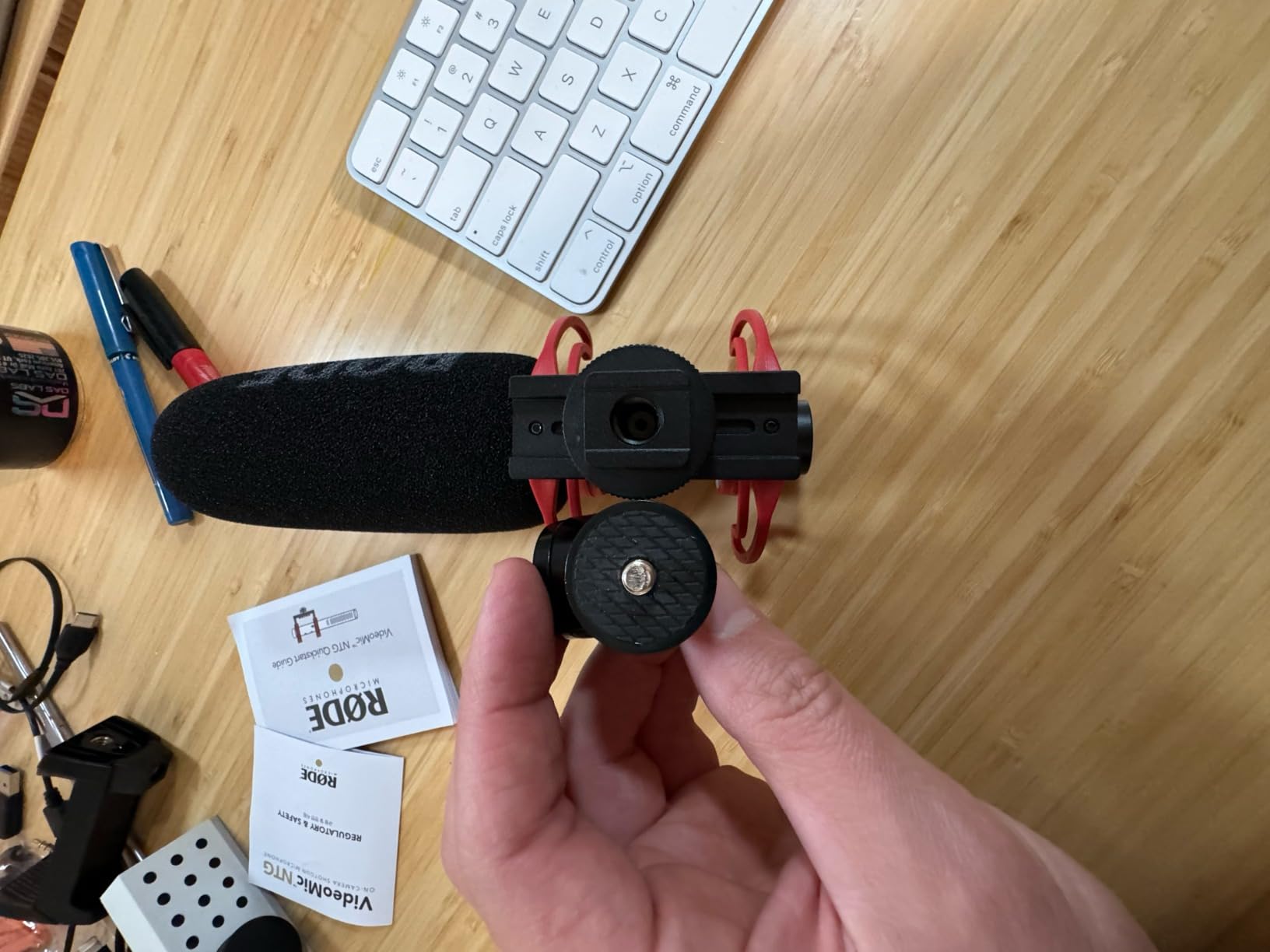
The VideoMic NTG is the microphone we reach for when a shoot can go wrong. The safety channel records a second track at a reduced level, so if your subject shouts or you clip a take, the clean version is already there.
It runs from an internal rechargeable battery, 2x AA, or micro USB for continuous power, and the automatic power function switches it off when you unplug. That single feature removes the dead-air problem where a hot mic keeps recording while you set up the next shot.
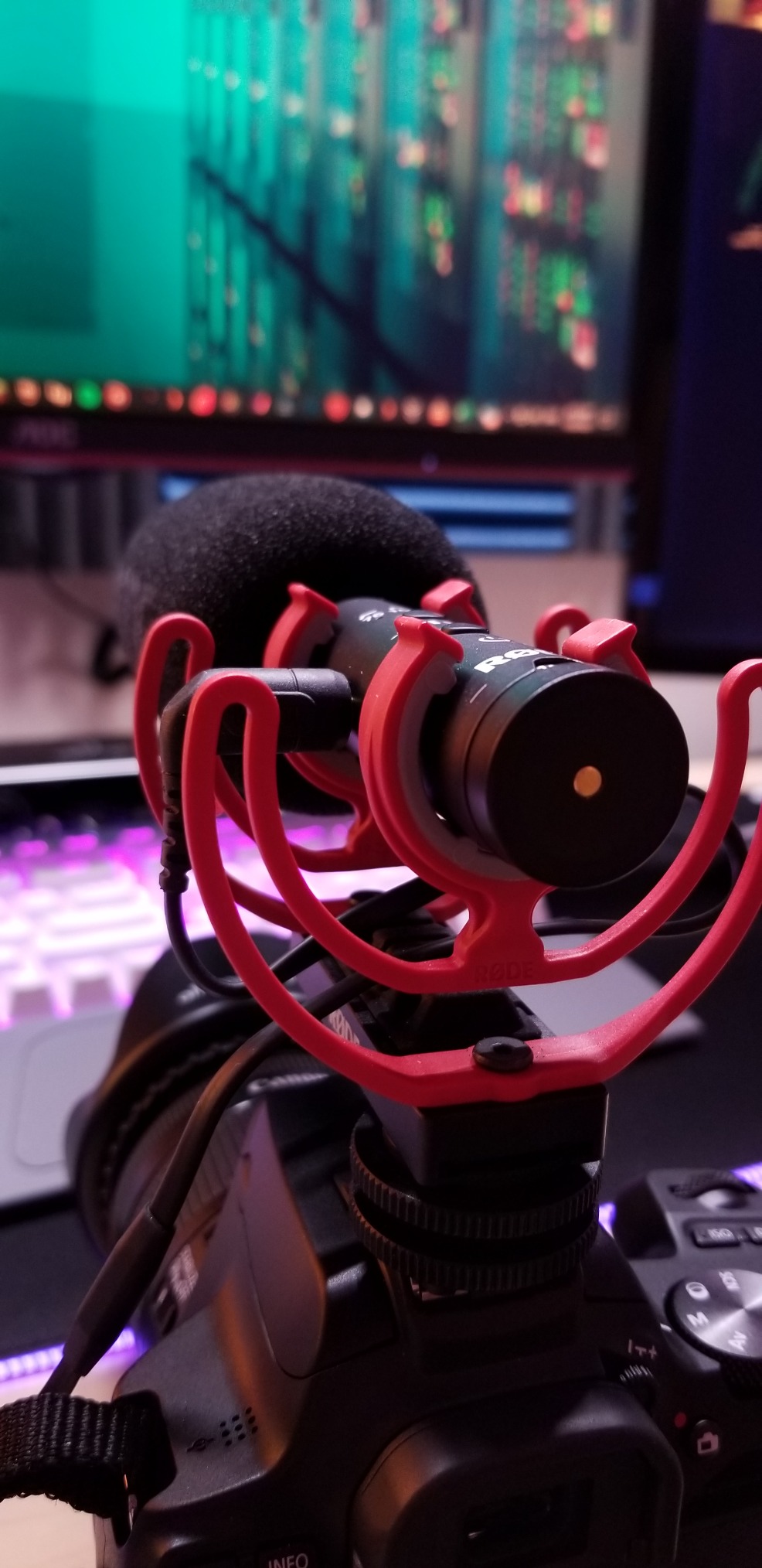
The acoustics come from the NTG5 line, with a 20 Hz to 20 kHz range and a listed 79 dB signal-to-noise ratio. Reviewers describe the sound as natural and uncoloured, which is the word you want when the video has to sit next to broadcast material.
The infinitely variable gain control is the feature that changes a working day. You set the level once on the microphone and the camera becomes a backup rather than the primary control.
Auto-sensing output is genuinely clever. Plug into a camera and it behaves like an analogue microphone; plug into a computer or tablet and it becomes a full USB microphone with a 3.5mm headphone output for monitoring.
Why the safety channel and gain dial matter
An interview is not predictable. One person speaks quietly for four minutes and then leans in to make a point. With a fixed-output microphone you ride the camera preamp and hope, or you clip. The safety track here means the worst case is a slightly dull take rather than a ruined one.
For anyone who edits audio afterwards, having the high-pass filter, the minus 20 dB pad and the high-frequency boost set at the source removes work from the timeline. It is a ten-year warranty on a microphone built for that kind of use.
Where the NTG is more than you need
At 94 grams it is noticeably present in frame on a compact camera, and the digital section adds menus you will never open. If you shoot a single talking head in a quiet room with a camera preamp you trust, this is more capability than the job requires.
iOS devices need a Rode Lightning cable for the digital path, and the quality you get depends on how the host device handles the USB signal.
6. Rode VideoMic Pro+: Best for Run-and-Gun Battery Versatility
- Rich clear sound reviewers rate as a large step up
- Rycote Lyre suspension with improved capsule and tube
- Automatic power function switches off when unplugged
- Built-in battery door keeps spares from getting lost
- Runs on LB-1 battery
- 2x AA or micro USB
- Picks up more low-end energy than some rivals
- Awkward with phones because of adapter needs
- Some users report hum from USB power bank use
The VideoMic Pro+ carries the highest rating in this roundup, and the reason is not exotic. It is a well-suspended, well-shielded microphone that accepts three different power sources and switches itself off when you unplug it.
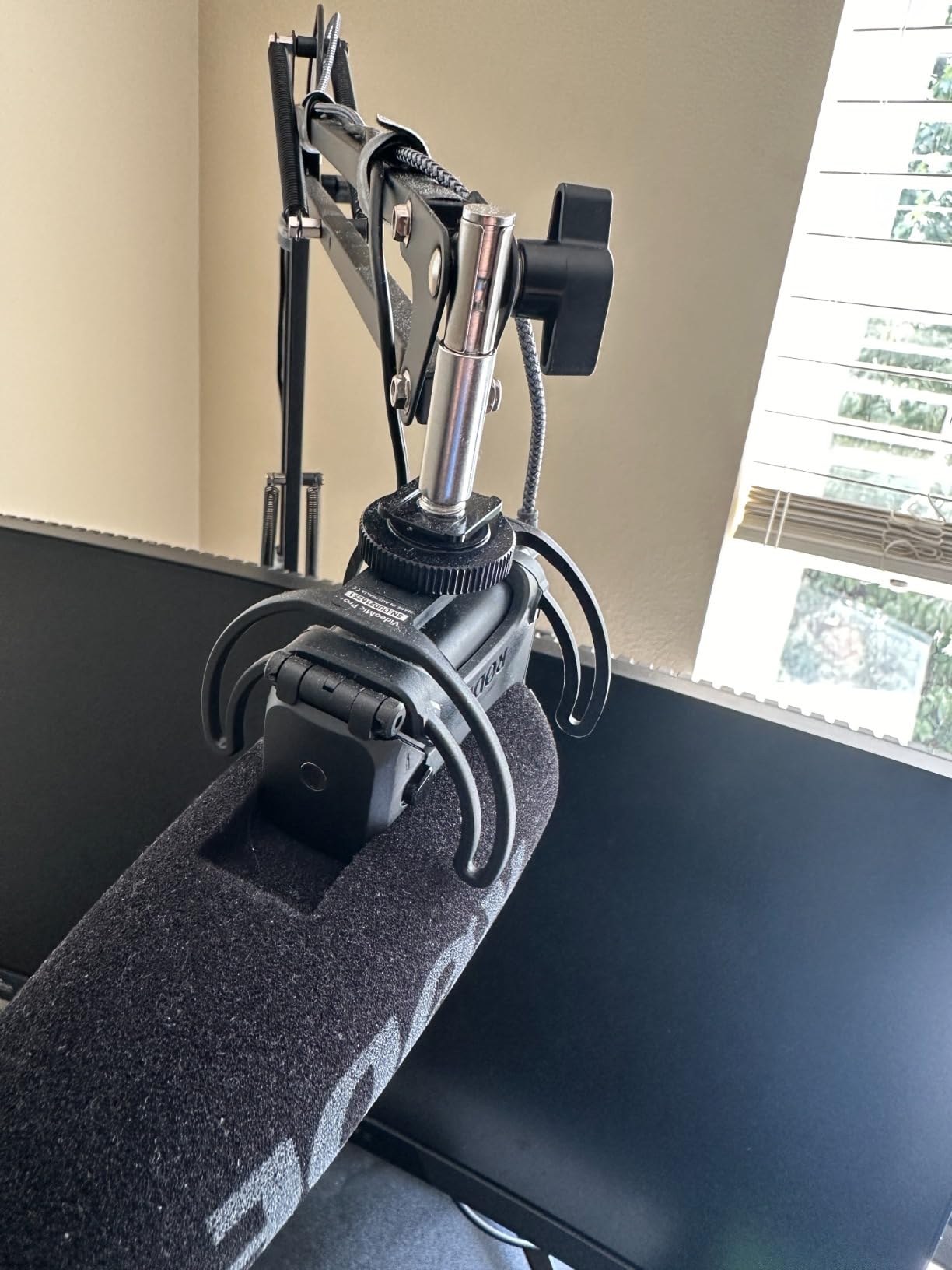
The Rycote Lyre suspension is paired with an improved capsule, line tube and windshield in this generation. Reviewers describe the result as rich and clear, and the difference against a bare plastic microphone is obvious on a talking head.
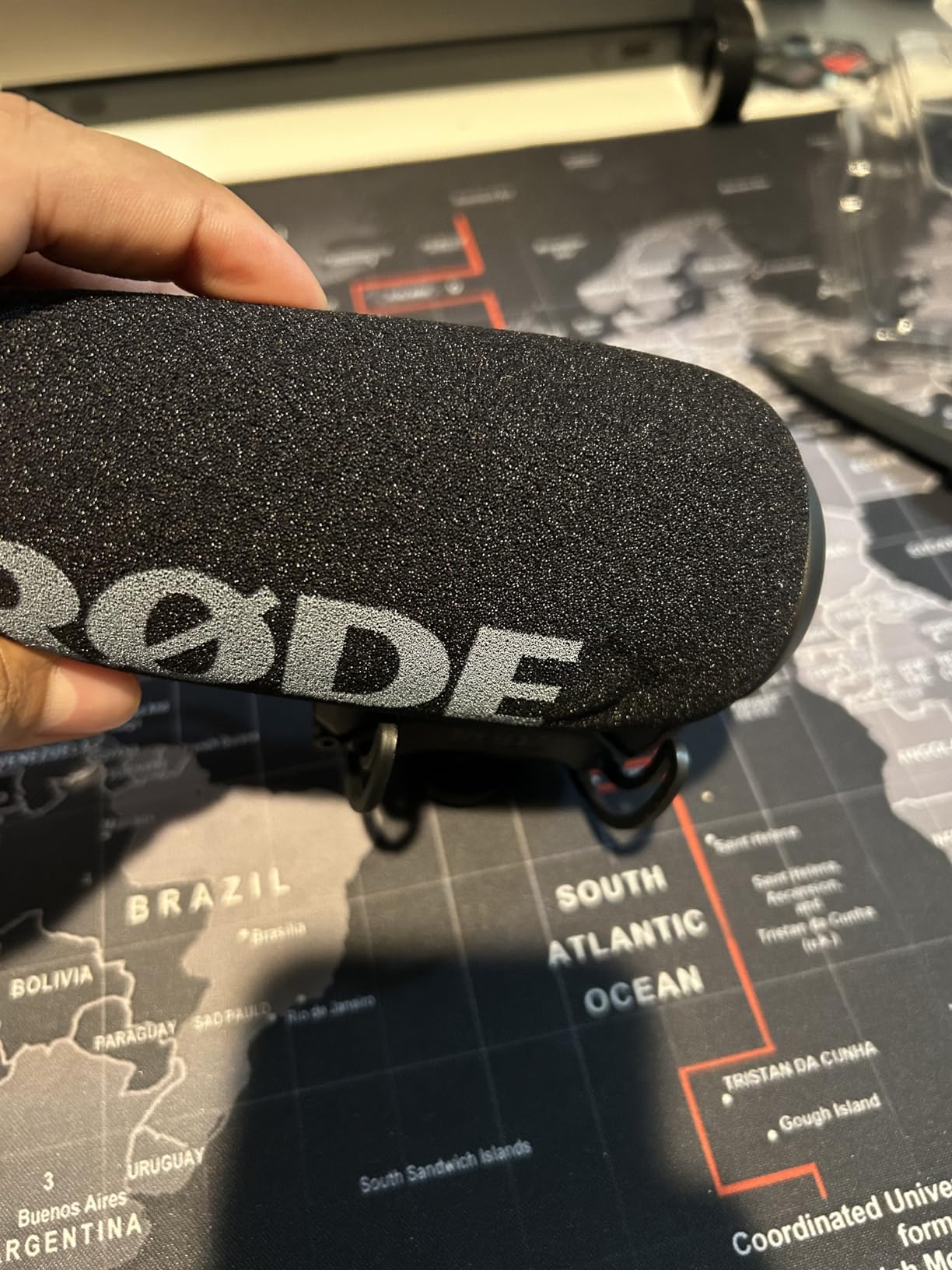
Power options are the standout practical feature. The included LB-1 lithium-ion battery charges from the mic, two AA cells work in a pinch, and micro USB gives continuous power for a long locked-off take.
Digital switching gives a high-pass filter, high-frequency boost, pad and safety channel, all handled at the source. Response is listed at 40 Hz to 20 kHz with a 74 dB signal-to-noise ratio.
At 4.32 ounces it is one of the lighter metal-bodied microphones here, which matters when it is on top of a camera all day. A ten-year warranty backs it.
Best for mixed shooting days
Three power options means you are never stuck. If the LB-1 dies mid-shoot you drop in AA cells instead of ending the day, and that flexibility is the reason many crews keep this as a house microphone.
The built-in battery door is a small design decision that saves real time. The spare lives in the microphone, so it cannot be left behind in a bag. Automatic power-off means no hot-mic hiss between takes.
Known quirks to plan around
It picks up more low-end energy than some competing models, which can read as a lack of crispness until you apply a high-pass in post. If you are recording indoors on carpet this is a non-issue; on hard floors it is worth reaching for the filter.
Some users report hum when powering from a USB power bank, and using it with a phone requires several adapters. The power indicator is on the back, so it is not visible at a glance.
7. Sennheiser MKE 400: Best for Vlogging and Run-and-Gun
- Highly directional super-cardioid pickup
- Integrated wind protection and internal suspension
- Low-cut filter plus 3-step sensitivity switch
- Interchangeable TRS and TRRS cables
- Integrated headphone output with volume control
- Output falls off sharply at longer distances
- No secondary safety channel
- Cold shoe can twist and it cannot power on and off with the camera
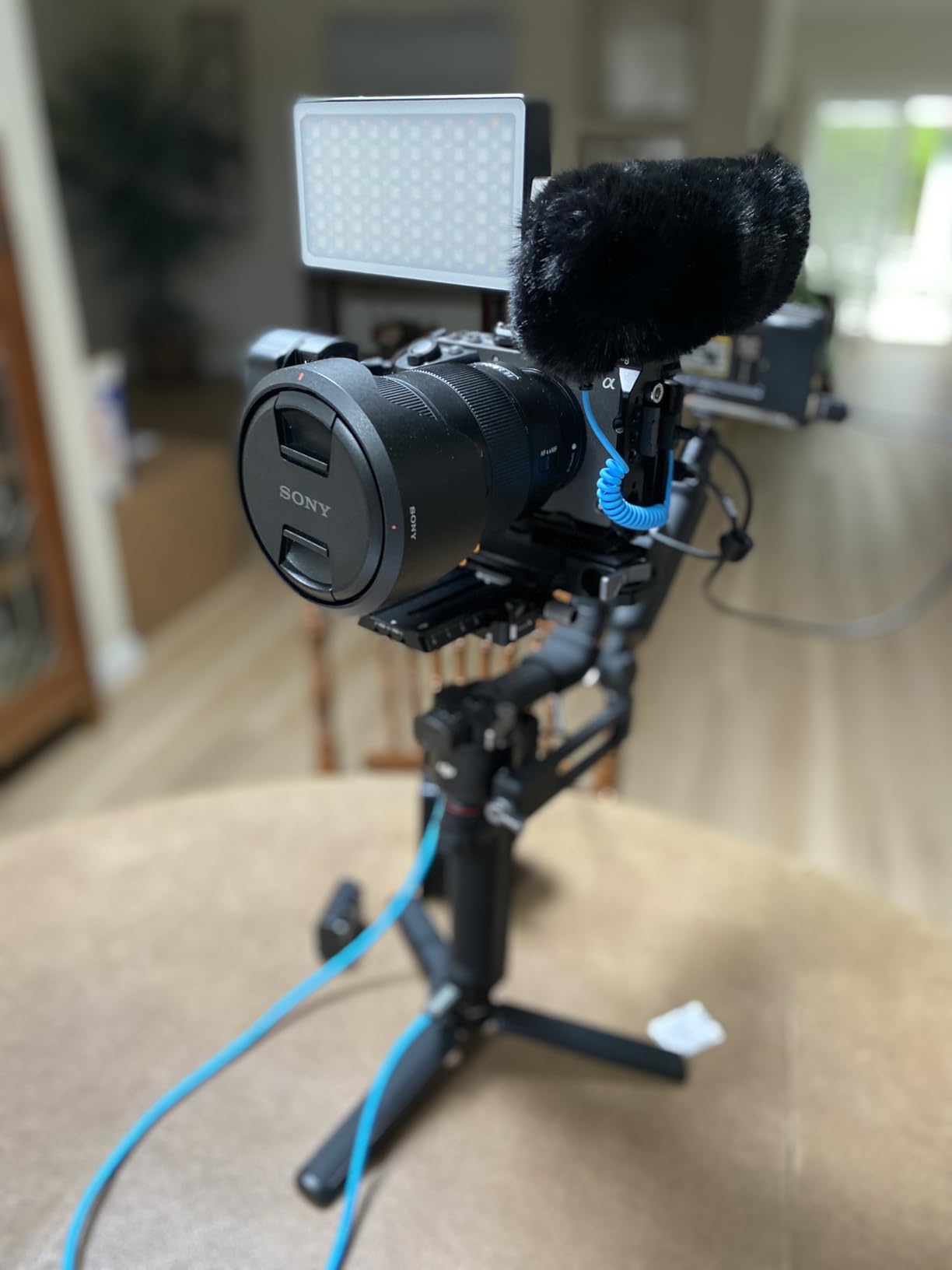
The MKE 400 is built for a vlogger. The headphone jack is on the front of the body, so you plug headphones in, turn the level down, and check the recording before you hit record rather than after.
That front-mounted jack also changes how you rig it. On a small camera you can keep monitoring without a cable loop hanging off the side, and reviewers regularly point out that the built-in low-cut filter plus the three-step sensitivity switch give real control in a changing environment.
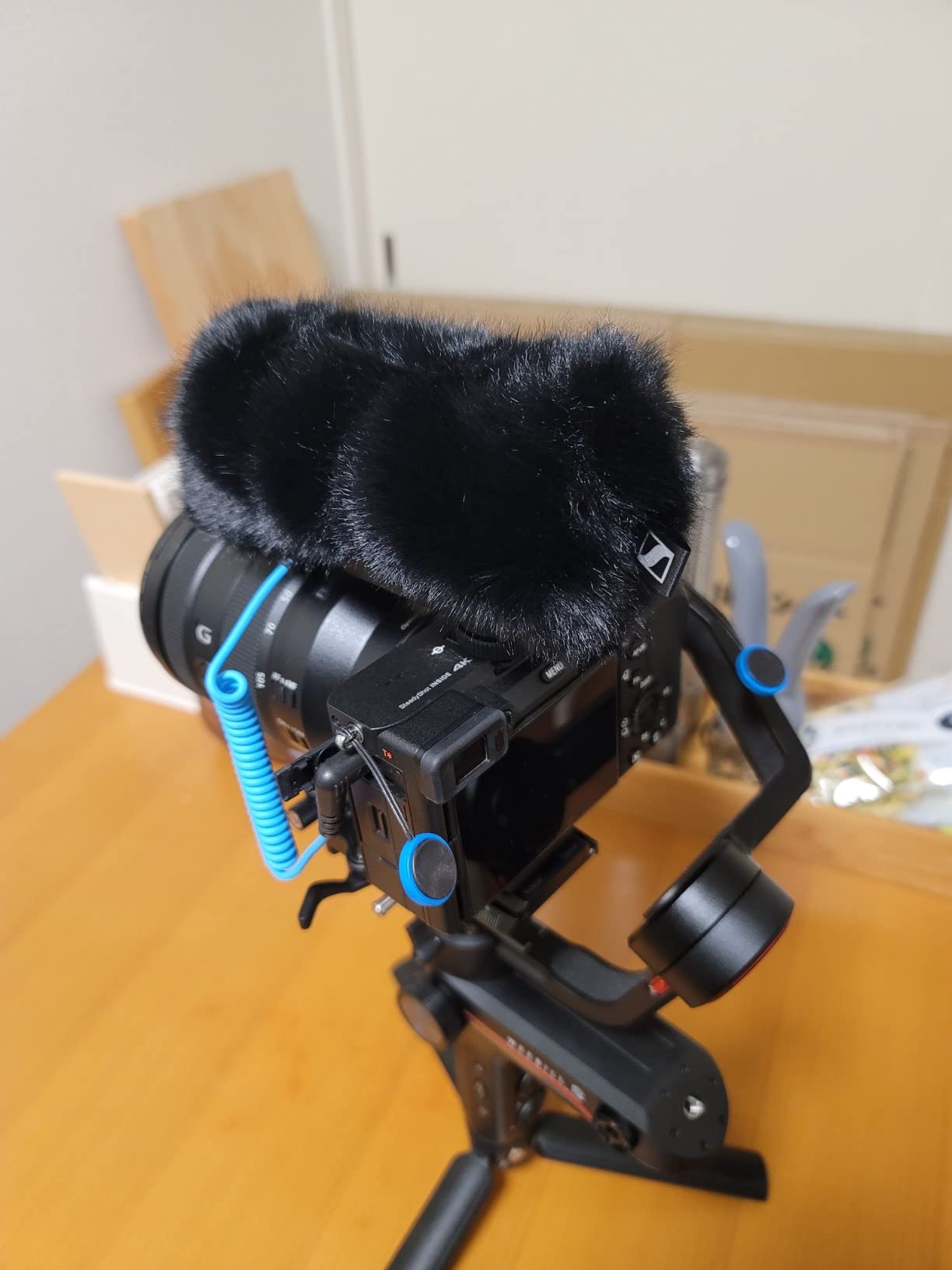
Self-noise is listed at 25 dB, which is low for an on-camera microphone, and the super-cardioid pattern is tight enough for street interviews. Frequency response is not specified on the listing, but the character is described as clear and slightly forward.
Wind protection and the internal suspension mount are built in rather than bolted on, so the microphone works straight out of the box. Interchangeable TRS and TRRS cables cover cameras and mobile devices, and a windscreen and pouch are included.
Power is a single AAA cell, which is easy to source anywhere, and a two-year manufacturer warranty applies.
Why the built-in monitoring changes a solo workflow
Most on-camera microphones are blind. You record, then play it back, then fix it. The MKE 400 lets you hear the input level while you speak, so you notice a rustling jacket or a whispering passage at the time you can still fix it.
Combined with the 3-step sensitivity switch and low-cut filter, that is enough control for a solo creator who has to move quickly between locations.
Where it stops working
Output falls off sharply past arm’s length, so it is not a substitute for a boom microphone in a treated studio. There is no safety channel, and it will not power on and off with the camera, so you switch it manually.
The cold shoe mount can twist, there is no hot shoe option, and action cameras need a third-party adapter.
8. COMICA VM20: Best Gain and Filter Control Without XLR
- OLED display shows battery and power status during a shoot
- Two low-cut filters at 75Hz and 150Hz
- Stepless gain knob from -43dB to -23dB
- Up to 60 hours on the internal battery and usable while charging
- Full metal body at only 84g
- No XLR cable included
- Needs an internal rechargeable battery rather than standard cells
- Bigger bundle than a bare entry-level mic
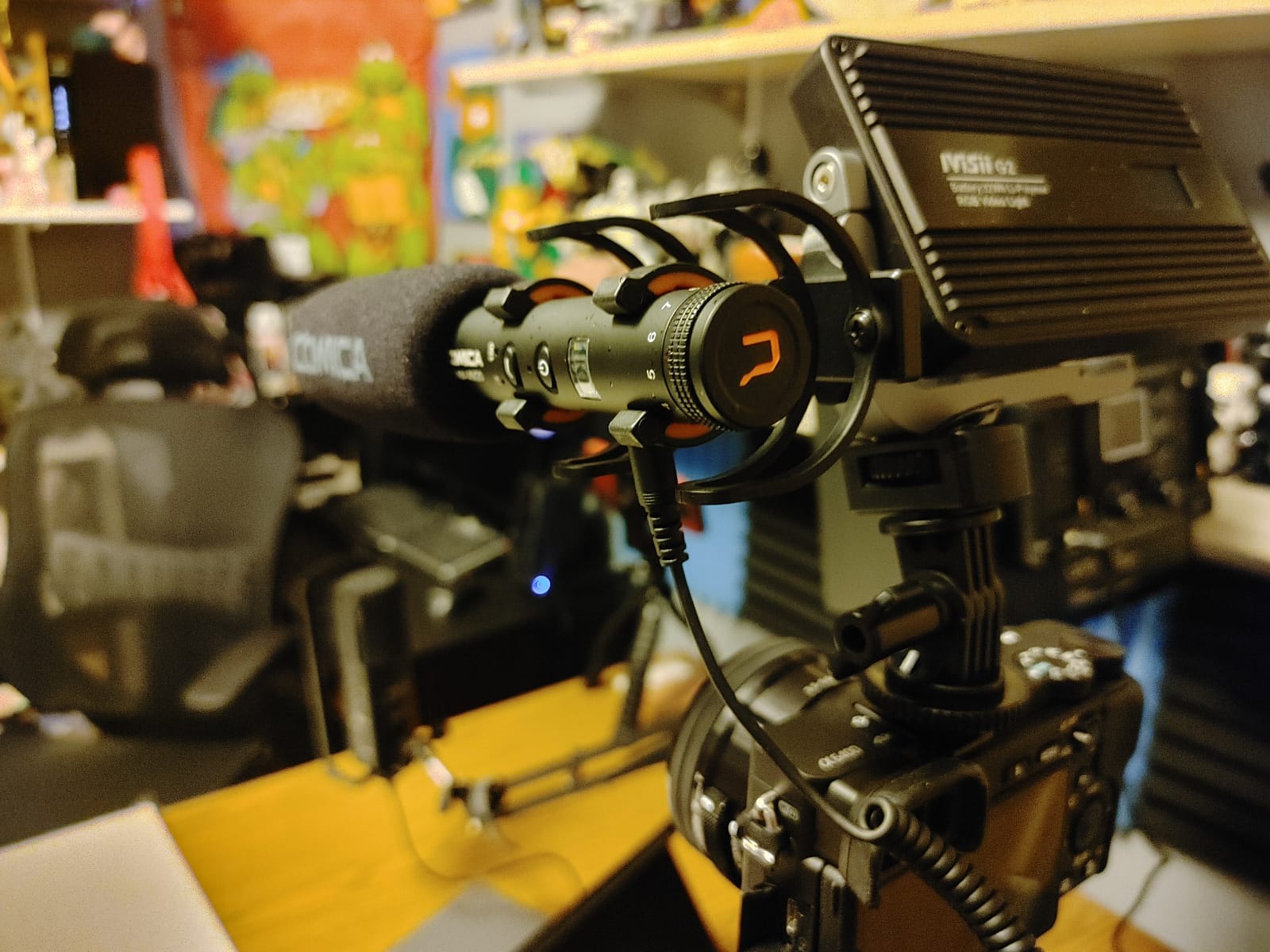
The VM20 is the only microphone in this group with a screen on the body. The OLED display shows battery level and power status in real time, which removes the single most common complaint about internal-battery microphones: not knowing how much charge is left.
You also get a stepless gain knob covering minus 43 dB to minus 23 dB, and two low-cut filter settings at 75 Hz and 150 Hz. That second filter is the one to use outdoors, where traffic and wind energy sits low in the spectrum.
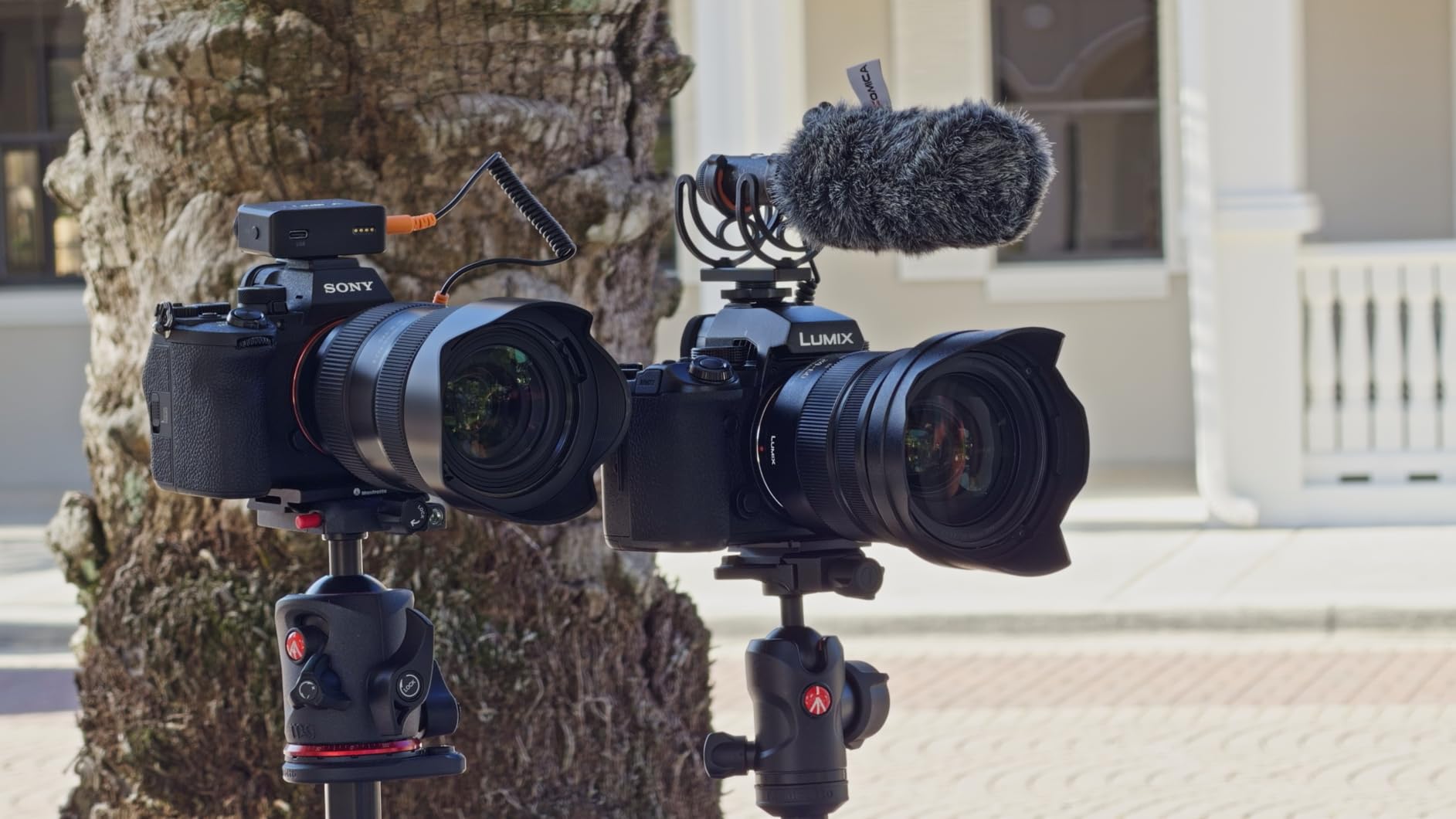
The internal 300mAh battery is listed at up to 60 hours and charges over USB-C in about three hours. Critically, it can be used while charging, so a long interview does not have to end for a battery swap.
At 84 grams in a full metal body, it is lighter than several metal microphones in this roundup while still including a Rycote shock mount, a windscreen and a wind muff.
Sound is a super-cardioid pattern, which is the right shape for interviews and video podcasts where you want to reject a laptop fan or an air vent across the room.
Why the gain dial and display are worth paying for
Reviewers who mix fast consistently rate the on-mic gain control as the feature that stands out. You set the level on the microphone, glance at the OLED display to confirm it, and stop touching the camera menu.
For a shooter who also uses a field recorder or an audio mixer, that matters. The dual low-cut filters let you switch between an indoor rumble setting and an outdoor wind setting without re-dialling anything.
Where the VM20 stops short
It outputs 3.5mm TRS and TRRS only, and no XLR cable is included. That means it cannot feed a field mixer or a two-channel recorder directly, which rules it out of professional ENG work.
It also needs its own internal rechargeable battery rather than plug-in power or standard cells. It comes with a one-year warranty, the shortest here.
9. Movo X1-Mini: Best for USB-C and Phone-First Shooting
- Works across phones
- cameras
- recorders
- tablets and laptops
- USB-C digital output up to 24-bit
- Aluminum body with integrated Rycote shock mount
- Battery-free plug-in power
- Furry windscreen that stays on
- Hard-sided case with foam cutouts
- Shock mount clamps are hard to slide on and off
- Supplied case is tight once the kit is assembled
- High sensitivity makes peaking easy without careful placement
The X1-Mini is the pick if your video is made on a phone or a modern tablet with a USB-C port. It outputs both analogue 3.5mm and 24-bit digital over USB-C, and the digital path is a step cleaner than the analogue route on most host devices.
It runs on plug-in power, so there is no battery anywhere in the chain. The signal is sent to both channels, which removes the mono-placement workaround that makes some dual-mono microphones annoying in the edit.
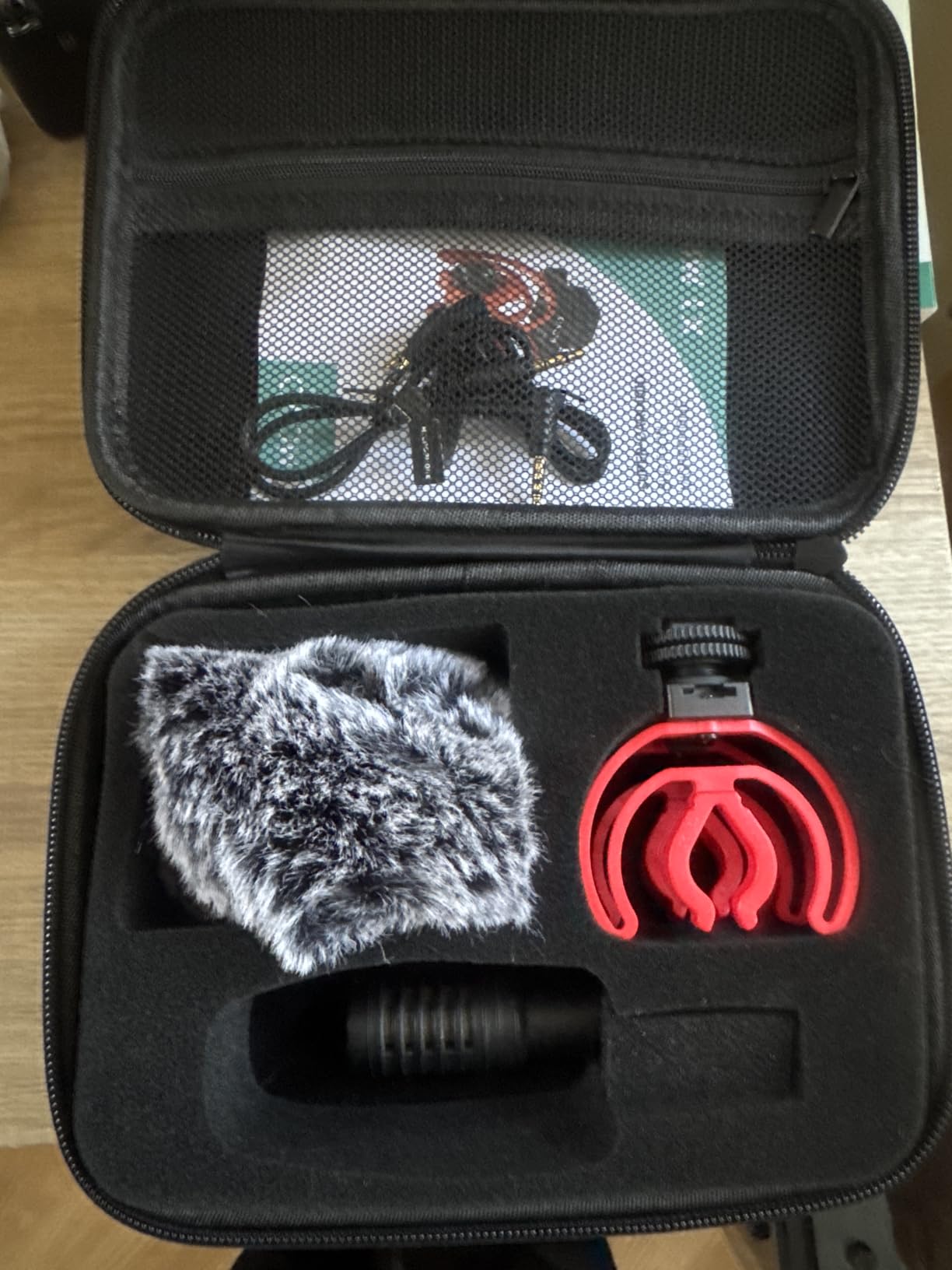
Specifications are strong for the tier: a super-cardioid pattern, 80 dB signal-to-noise ratio, 2200 ohm impedance, and an aluminum body with an integrated Rycote shock mount.
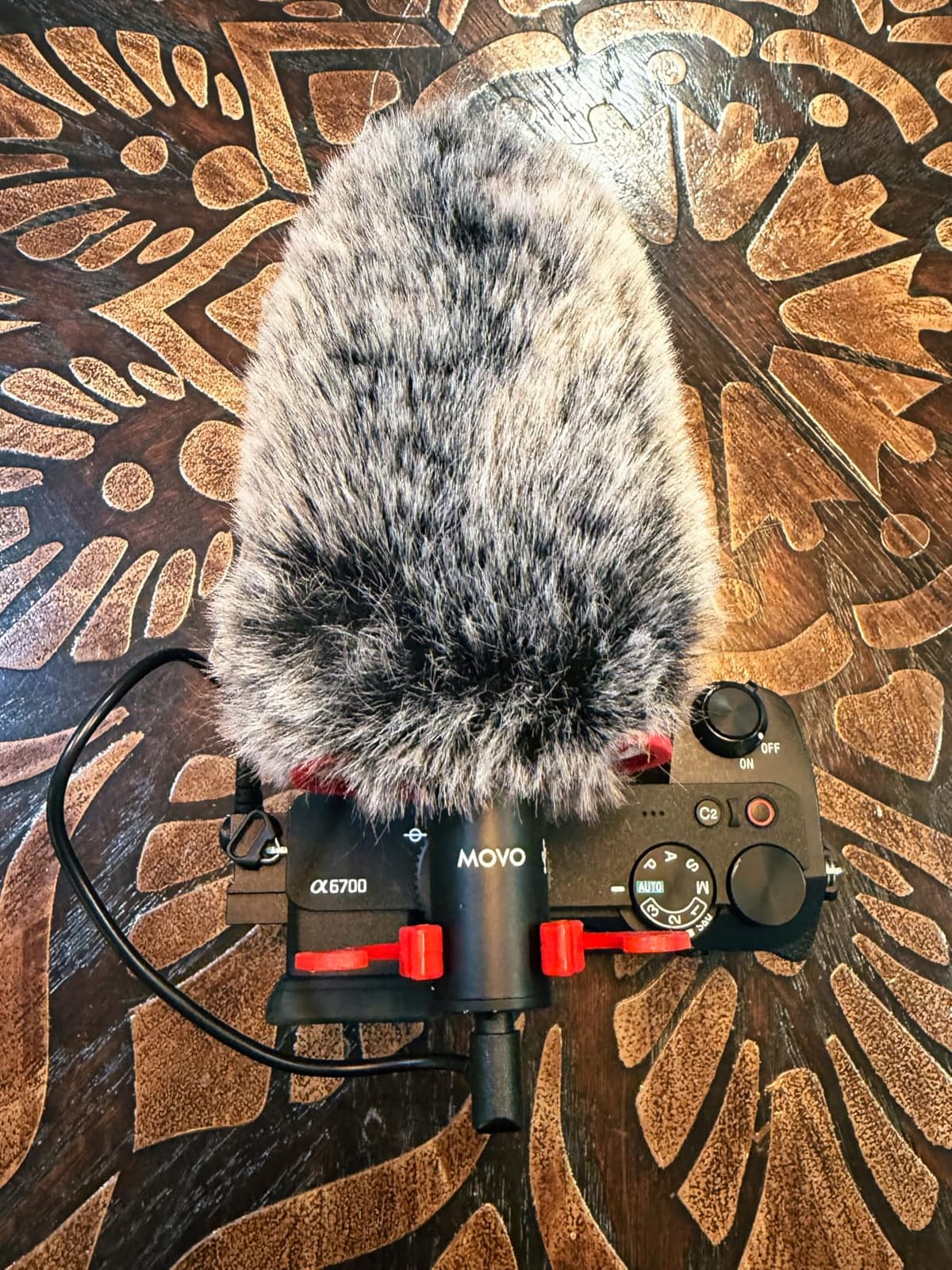
The bundle is unusually complete for a compact microphone. You get the mic, a Rycote shock mount, foam and furry windscreens, TRS and TRRS cables, a USB-C digital cable and a hard-sided case with foam cutouts and a mesh compartment.
That furry windscreen is worth noting. Reviewers say it stays on properly, unlike the slip-on foam covers that fall off in wind.
Why the digital output is the reason to buy it
Analogue 3.5mm from a phone goes through the phone’s own converter. The USB-C path bypasses that and delivers up to 24-bit resolution, which is why users describe the digital mode as slightly cleaner rather than dramatically different.
It is also the simplest way to get real shotgun directionality onto a modern phone without a dongle that blocks the charging port.
Two gripes worth knowing
The Rycote shock mount clamps are stiff. Almost every reviewer mentions this, and it is annoying to reassemble between shots, so leave the microphone mounted unless you are changing devices.
The included hard case is slightly too small to close with everything assembled, and the high sensitivity means placement is critical. Too close and it distorts; aim off-axis and you pick up more room than you intended.
10. VidPro XM-55: Best Kit for XLR and 3.5mm Together
- 13-piece kit covers mounts cables stand and windshields
- Strong off-axis attenuation with intelligible voice reproduction
- Aluminum alloy body that does not feel plasticky
- Runs from a single AA battery so phantom noise is not a factor
- Works with XLR 3.5mm and 6.3mm inputs
- Included XLR cables feel thin and flimsy
- Adapting XLR to 3.5mm drops impedance and can degrade audio
- Cramped case and cables wound too tightly to fit back
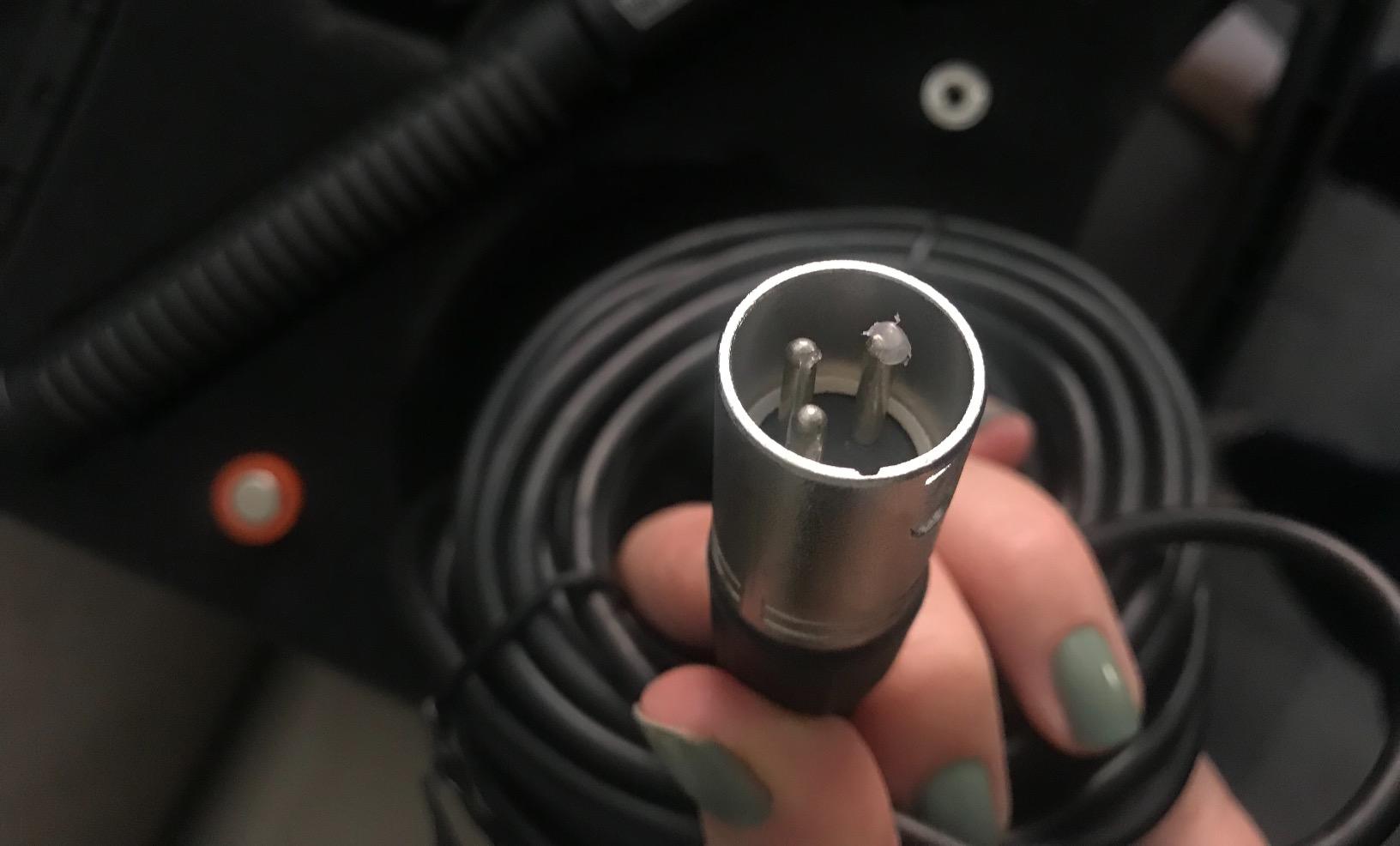
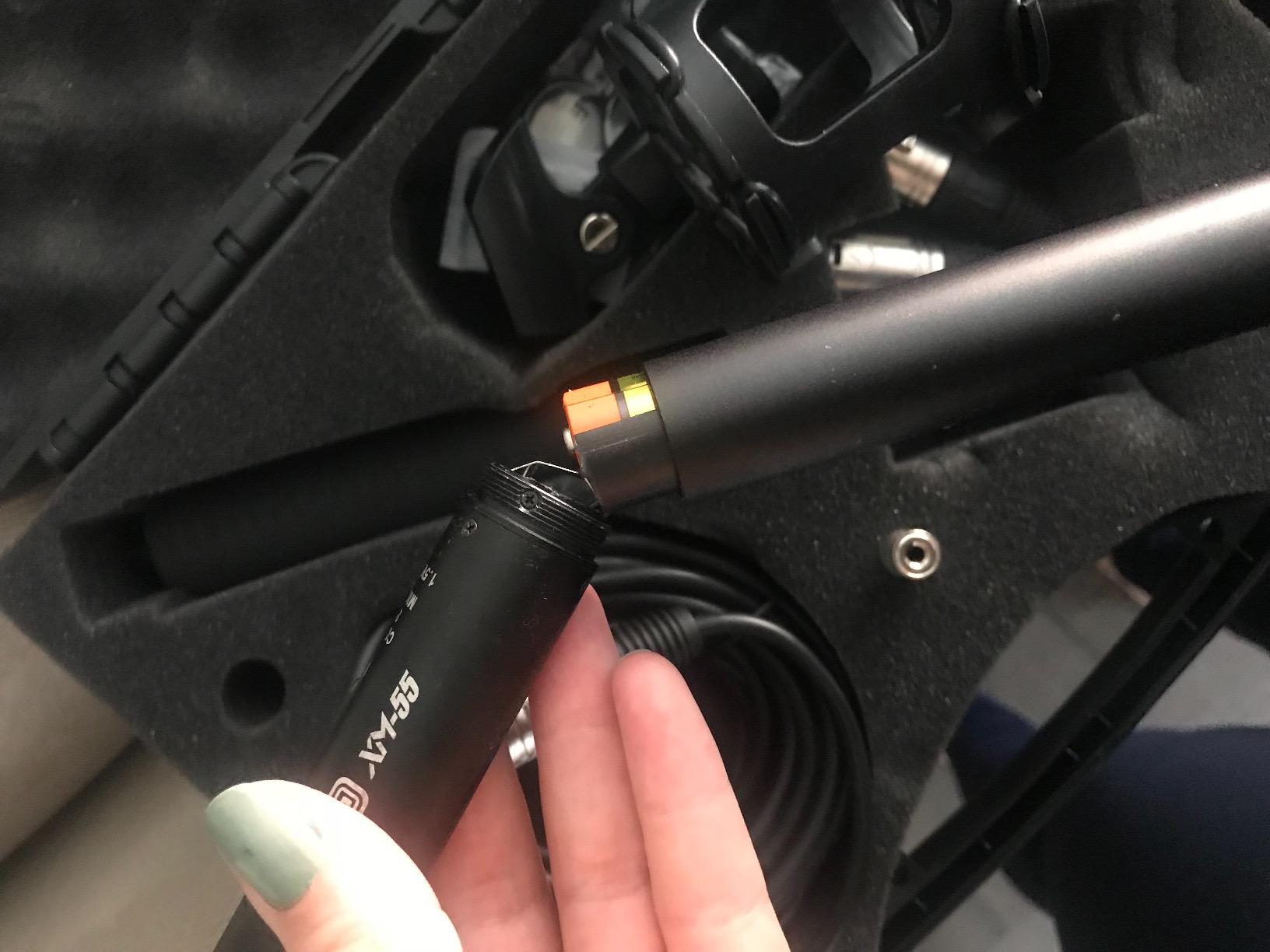
The XM-55 is a kit rather than a microphone. Thirteen pieces cover a case, a suspension shock mount, an adjustable stand mount, a camera shoe adapter, a hand grip, a wind muff, a wind shield, two XLR cables, an XLR-to-3.5mm cable, a 3.5mm-to-6.3mm adapter and a battery.
That breadth is the reason it keeps showing up. You can put it on a camera, on a boom, on a tripod or into a mixer with nothing else in the bag. Long-term users report hundreds of interview shoots on the same unit.
Audio is a super-cardioid pattern with a 100 Hz to 16 kHz response and a listed 74 dB signal-to-noise ratio. The narrower low end is a plus indoors, where rumble is the enemy.
It runs from a single AA battery, which means no phantom power noise and no requirement for a recorder that supplies 48V. That makes it a straightforward bridge between an older camera and a field mixer.
The aluminium alloy body does not feel plasticky, and the deadcat windscreen measurably reduced HVAC noise for owners shooting indoors.
Who benefits from a kit this complete
Anyone starting out gets the whole accessory list in one purchase instead of assembling a boom rig piece by piece. The stand, boom and camera shoe mounts alone would cost more than the microphone.
Multiple mounting threads are supported, including 5/8 inch stands, 3/8 inch booms, quarter-inch tripods and camera shoes, so the same microphone follows you from a desk interview to a location shoot.
Build quality is the weak spot
The most repeated complaint is the included cables. Buyers describe them as thin and cheap, and one reviewer had a connector pull out of the microphone body. Buy a proper XLR cable as an upgrade before a paid shoot.
There is also a technical catch: running the XLR output into a 3.5mm input reduces impedance and can degrade the audio, so an inline transformer or impedance adapter helps. The case is cramped and the long cable winds too tightly to fit back inside.
11. BOYA BY-BM6060: Best Step Into Broadcast ENG
BOYA XLR Microphone BY-BM6060 Super-Cardioid Shotgun Condenser Microphone with 24 48V Phantom Power for Camera Film Interview ENG/EFP Outdoor Recording
- Built for ENG and EFP video and broadcast work
- 3-pin XLR output works with 24-48V phantom power
- Super-cardioid focus with low-noise circuitry
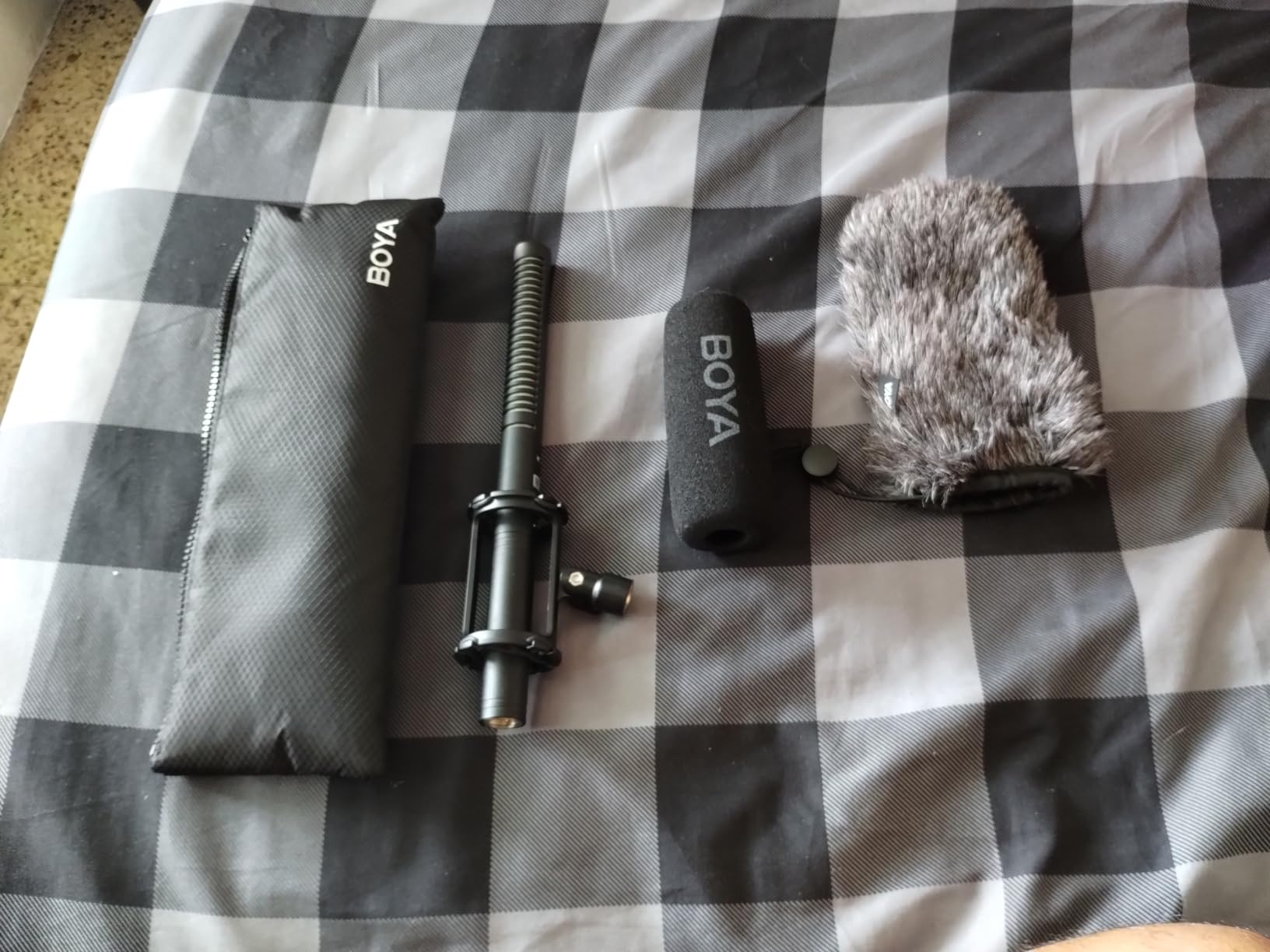
- Shock mount plus fur and foam windshields included
- Cold shoe mount with 1/4 thread and a two year warranty
- XLR only so it needs an interface for a camera 3.5mm jack
- Longer barrel and 230g body are bulkier than compact mics
- Needs a separate shock mount or recorder to be usable
The BY-BM6060 is a genuine broadcast-style microphone: a 3-pin XLR output, a super-cardioid pattern and 24 to 48V phantom power compatibility. That is the same connection a field mixer or a two-channel recorder expects.
The clever part is the fallback. When phantom power is unavailable, the microphone runs from a single AA battery through the same XLR cable. That means it can serve a documentary crew in the morning and a camera operator with an interface in the afternoon.
Response runs 60 Hz to 20 kHz with a listed 80 dB signal-to-noise ratio and 200 ohm impedance, which is a normal spec sheet for ENG condenser microphones.
The package includes a suspension shock mount plus both a fur windshield and a foam windshield. A cold shoe mount with a quarter-inch thread on the body lets it attach to a DSLR directly or to a stand.
At 230 grams and with a longer barrel, it is the heaviest microphone in this roundup. It is built to be boomed, not balanced on a compact mirrorless body.
Why XLR access changes the ceiling
3.5mm output limits you to a camera’s built-in preamp. XLR output means you can feed a field recorder with proper preamps, run a longer cable, and add a second microphone on a second channel for an interview. That is a real workflow upgrade, not a spec-sheet difference.
It is also the cheapest way into ENG-style shooting for a small team that already owns a recorder or an interface.
Why it will not suit a camera-only kit
There is no 3.5mm output, so plugging it straight into a camera jack does not work without an interface. That extra box is the main reason people return it.
You will also need to source a shock mount, cables and a recorder separately if you have not bought them, which erodes the value compared with the kit options in this roundup.
12. Audio-Technica AT897: Best Narrow-Angle Pickup at Distance
Audio-Technica AT897 Line/Gradient Shotgun Condenser Microphone
- Purpose-built for ENG and EFP video and broadcast
- Short 11 inch barrel keeps it out of the shot
- Smooth natural on-axis sound
- Narrow acceptance angle for long-distance pickup
- Stainless steel body with switchable low-frequency roll-off
- Five-year limited warranty
- XLR output needs a recorder or interface
- Very narrow pattern so there is no usable off-axis audio
- No shock mount or windscreen included
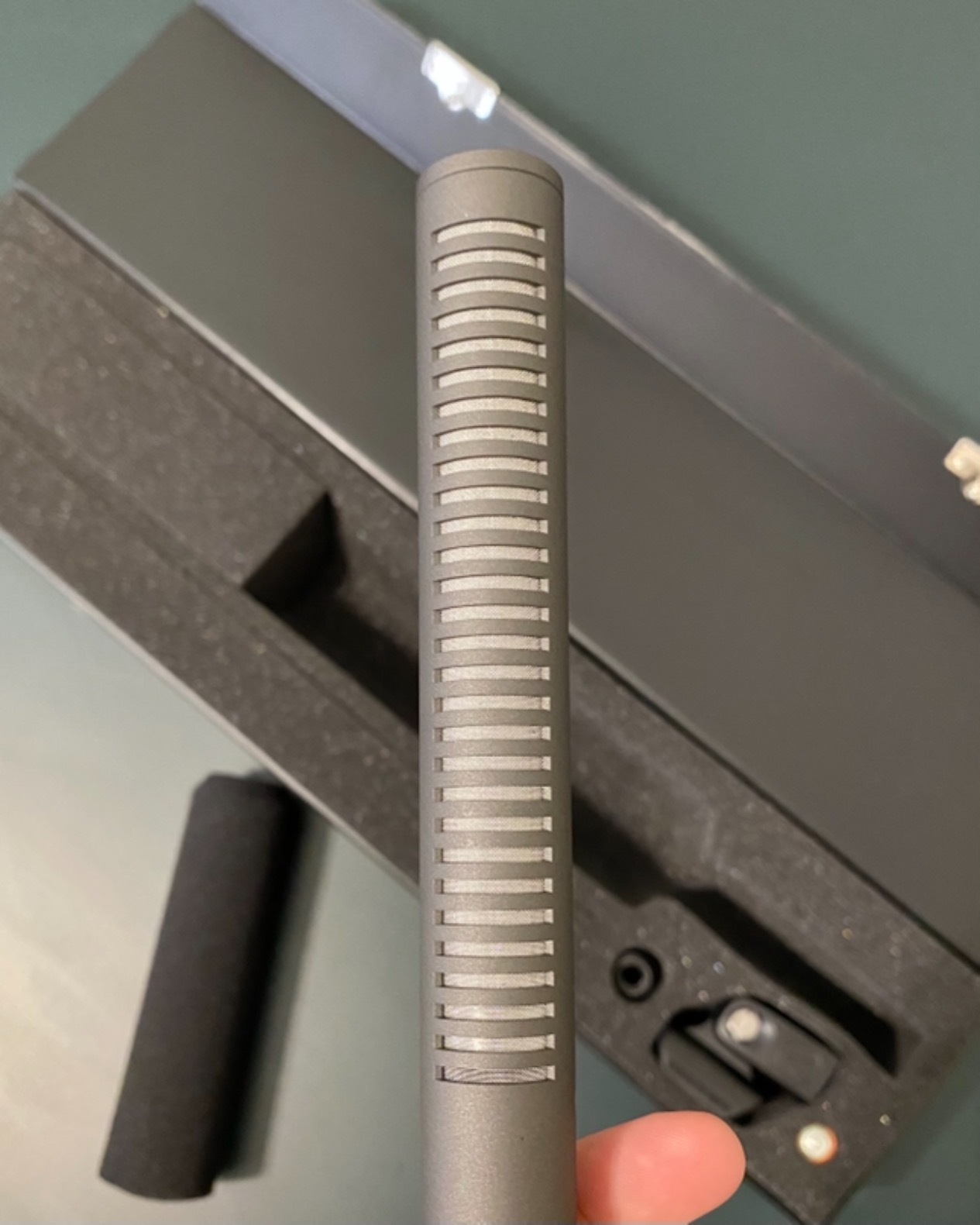
The AT897 is the shortest XLR shotgun in this group at 11 inches, and that is the whole point. Owners shooting on compact digital cameras use the small barrel to keep the microphone out of frame without losing the reach an XLR pattern provides.
Its line and gradient pattern is narrower than a super-cardioid. Sound arriving along the axis is captured smoothly and naturally, and everything off that axis is rejected. Reviewers value the on-axis quality for interview subjects at a distance.
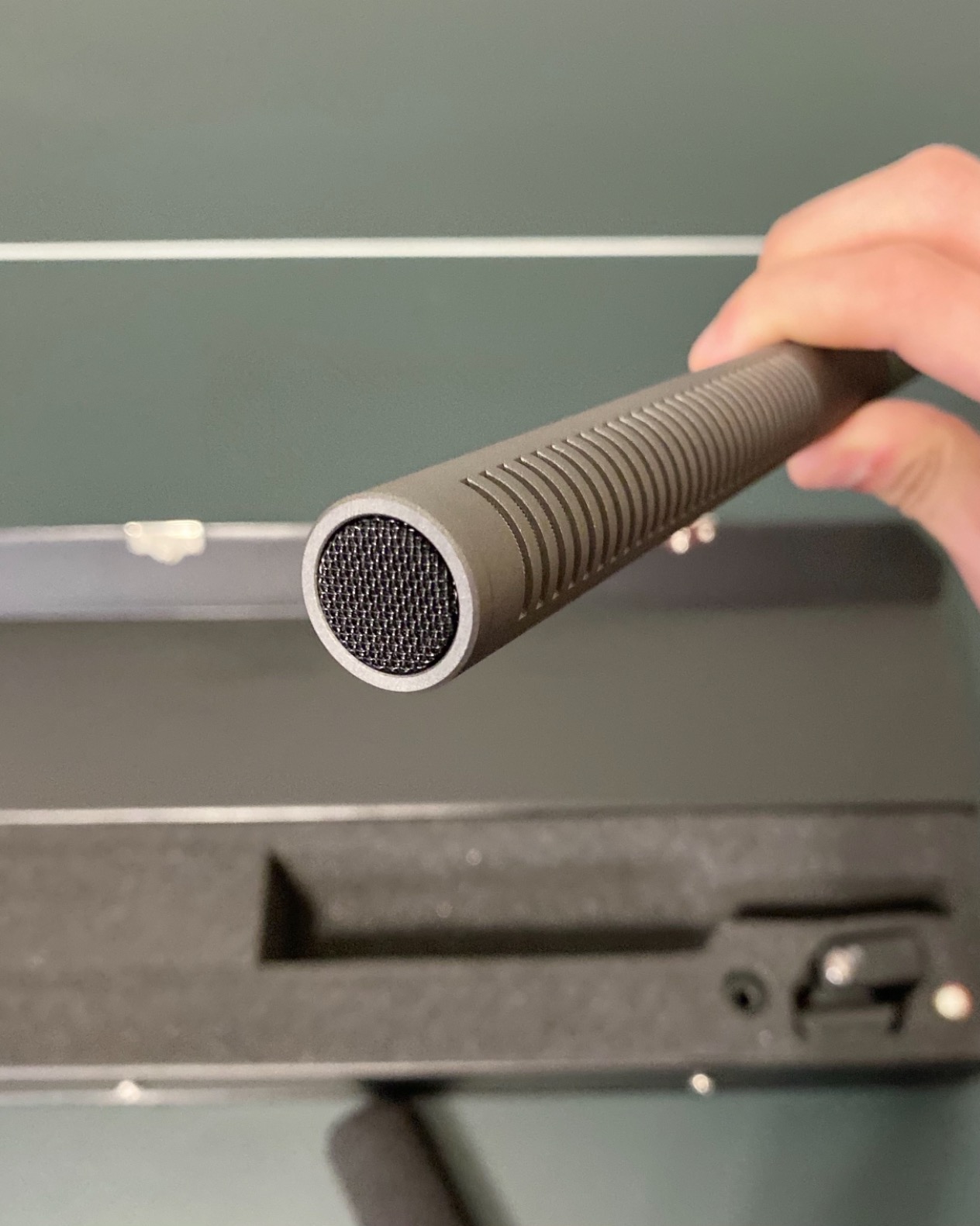
It operates from phantom power or a single AA battery, with a switchable low-frequency roll-off for rumble control. Response is 20 Hz to 20 kHz with a listed 77 dB signal-to-noise ratio and 200 ohm impedance.
The body is stainless steel, which is why it carries a five-year limited end-user warranty, the longest here. It is a long-standing broadcast part, not a new release.
At 5.12 ounces and with the short barrel, it is far easier to hide than a full-length boom microphone.
When a narrow pattern earns its keep
Reach only works in a controlled acoustic environment. In a quiet room, a narrow line pattern lets you record a subject from across the space without carrying a boom, and the short barrel keeps the frame clean.
It is a strong match for corporate video, lecture capture and scripted narration where the position of the speaker is fixed and known in advance.
Limitations you need to plan for
XLR output means a recorder, mixer or interface, so it does not connect to a camera mic jack. The pattern is very narrow, which means there is no usable audio off-axis or at close range beyond the axis, so you cannot wander off-mic.
No shock mount or windscreen is included. Audio-Technica’s mount and windshield are normally bought separately, so budget for them.
Shotgun vs Lav vs Handheld: Which Mic for Which Shoot
Choosing a shotgun microphone when the shot calls for something else is the most common expensive mistake in video audio. The right tool depends almost entirely on how many people speak, how far away they are, and how much the room reflects.
One speaker, moving around, camera-only setup: a shotgun microphone. It is the only option that isolates one person without touching them, and it works with a single camera input.
Two speakers seated at a table: a shotgun microphone still works, but position it so both mouths sit inside the acceptance cone. Alternatively run two lavalier microphones into a two-channel recorder for genuinely even levels, which is a different edit but a more reliable one.
Moving presenter, wide shots, visible clothing: a lavalier microphone. It follows the person, ignores the room entirely and survives an untreated space far better than any shotgun. Our guide to the best dynamic microphones covers the lavalier side of the choice.
Live performance, noisy venue, no operator: a dynamic handheld microphone. Off-axis rejection comes from the dynamic capsule itself rather than from a tube, and the form factor is what the audience expects to see.
No operator available, or a long boom shot: if you cannot get the microphone close, a shotgun microphone is the only real answer, and it needs a boom pole or a blimp. If you cannot get close either, you are relying on an untreated room, which no microphone fixes.
Desktop or streaming: this is a USB microphone conversation rather than a shotgun one. Our best USB microphones guide covers that format, and for voice-led shows the best podcasting microphones roundup is the better read.
How to Choose a Shotgun Microphone
Four questions decide which microphone you should buy, and all four come before sound quality. Get the connector and power right and the audio works; get them wrong and nothing else matters.
1. What can you plug into? A 3.5mm jack goes into a camera mic input, a phone, or many laptops. XLR goes into a field recorder, a mixer, or a camera with a real XLR input, and it needs a recorder that supplies 48V phantom power unless the microphone can run on batteries. USB-C digital output connects to modern phones, tablets and computers and gives you a digital signal instead of an analogue one. A camera with only a headphone jack cannot take a microphone at all.
2. How will it get power? Plug-in power means the microphone draws a small current from the device, which is the simplest option and the one with no failure mode at the worst moment. Battery power, whether AA, AAA or an internal rechargeable cell, is more flexible but adds something to charge. Phantom power is the professional standard and needs a recorder or mixer, not a camera.
3. How quiet is the room? A wide pattern such as unidirectional or cardioid is more forgiving indoors. A narrow super-cardioid or line pattern reaches further and rejects more, but it also picks up less usable audio when the subject is close and off-axis. Reflection is the real enemy: in a hard untreated room, a shotgun microphone makes the speaker louder but also makes the room louder, and the ratio between them does not improve.
4. How big can it be? Length matters more than weight. A long shotgun blocks a viewfinder, collides with a wide lens, and throws off the balance of a small mirrorless body. The 11-inch and 80mm options in this roundup exist for exactly that reason. Weight matters mainly if the microphone is on a stand rather than on the camera.
Self-noise and signal-to-noise ratio: these figures describe how quiet the microphone is when nothing is being recorded. A higher ratio is better, and anything above about 70 dB is usable in practice. On a camera with a noisy preamp, the microphone’s own noise can be the limiting factor, which is another argument for a recorder with real preamps.
RF-bias and humidity: traditional condenser microphones can be damaged by moisture in humid or coastal locations. RF-bias designs are markedly more resistant. Among the picks here, the Audio-Technica AT897 and the BOYA BY-BM6060 are the two with a stainless steel or aluminium body to consider for marine or tropical work.
Accessories you will need: a shock mount to stop handling noise, a deadcat or furry windscreen for anything outdoors, a boom pole and a blimp if you are working at a distance, a spare battery or a second charge if the microphone is not plug-in powered, and a headphone monitoring path. A well-made XLR cable is worth buying separately, because the included ones on budget kits tend to be thin.
The Downsides of Shotgun Microphones and When to Skip One
A shotgun microphone solves off-axis rejection, and that is the only problem it solves. Everything it does not do tends to surprise people who buy one without knowing what it is for.
It cannot fix an untreated room. A shotgun microphone makes the speaker louder, and the room reflections get louder with them. The signal-to-reverb ratio stays roughly where it was. In a hard room with bare walls, a cheap lavalier microphone placed two inches from the mouth will beat a good shotgun mounted on the camera every time.
It falls apart at distance. On-axis sound is captured, off-axis sound is rejected, and the balance between the two changes with distance. Inside a few feet the rejection works. Beyond that the level drops faster than the room noise does, and a mix, a boom, or a different microphone becomes the better tool.
It is not forgiving of movement. If the subject turns their head, steps sideways or leans out of frame, the off-axis rejection that makes it good in one position works against you in the next. A lavalier microphone does not have this problem.
Handling and cable noise are on you. Boom work introduces low-frequency rumble from fingers, cable movement and knocks. Without a shock mount and a blimp, a long shoot is a collection of thumps.
There is no proximity effect to lean on. The bass boost a handheld microphone gives you when it is close to a mouth does not exist here, so voices recorded with a shotgun can sound thin without careful placement.
It only isolates one axis. Two people talking at a table will not sit in one acceptance cone equally. If both need to be recorded cleanly at the same time, two microphones into a two-channel recorder is the professional answer.
Skip a shotgun microphone if you are recording a conversation between several people, filming in an untreated reflective room, or shooting a moving subject in wide shots. In all three cases, a lavalier microphone or a multi-channel recorder solves the problem better.
How to Position a Shotgun Microphone: The 3:1 Rule
The 3:1 rule is a placement guideline: the microphone should be roughly three times closer to your subject than your subject is from the nearest competing sound source. If a fridge hums four feet behind your subject, the shotgun microphone should sit about a foot in front of the subject rather than back at the camera.
The rule exists because off-axis rejection is relative. Moving the microphone closer to the subject increases the difference between wanted and unwanted sound. A microphone two feet from the subject hears the subject far more strongly than it hears a sound source six feet behind them, even with a fairly ordinary pattern.
Find the competing sound first. Note the loudest unwanted source: a window, an air conditioner, a passing car, a second speaker.
Measure the distance from your subject to that source.
Place the microphone at roughly one third of that distance from the subject. Point the tip at the mouth, not the chest, and keep the line tube off any reflective surface.
Set gain once. If the microphone has a gain control, set it here and leave it. Ride levels on the device only if something unexpected happens.
Record ten seconds and check it. Play back with headphones before you settle into a long take. Watch for rumble, room tone and any peaking.
For boom work, add the accessory chain in this order from the microphone outward: microphone, shock mount, blimp with a furry windscreen, boom pole. A deadcat alone will not stop low-frequency rumble from handling, and a shock mount alone will not fix wind.
For on-camera work, check three things before you roll: the tip is aimed at the subject and not at a wall, the gain is not clipping, and the headphone level is low enough that you will not leak into the microphone.
How to Fix Audio in an Untreated Room?
If your recordings sound like they were made in a stairwell, the room is the problem, and no microphone purchase fully solves it. This is the single most common complaint in the forums around home office and bedroom video podcasts, and it shows up again every time a new microphone goes out of the box with the same disappointing result.
Use a room with soft contents. Bedding, curtains, carpet, upholstered furniture and wardrobes full of clothes absorb reflections. A walk-in closet full of hanging garments is a genuinely effective recording booth and costs nothing to test.
Record close. The single biggest improvement available to you is moving the microphone closer to the source. A lavalier two inches from the mouth records almost no room, because the room is too quiet relative to the voice at that distance.
Build a soft fort around the subject. A duvet over a chair, a heavy blanket draped behind the subject, or a tent of blankets over the whole setup all reduce reflections effectively.
Cut the low end. A high-pass filter on the microphone, or the low-cut filter built into several of the picks above, removes the rumbling energy that makes a small room sound bigger than it is.
Accept some of it in the edit. A little dialogue compression and gentle EQ on the final mix does more for intelligibility than any microphone change at this stage.
If the room cannot be changed and the subject moves, change microphone type. A shotgun microphone is the wrong tool for an untreated room, however good it is.
Frequently Asked Questions
What is the best microphone for video shooting?
For most single-subject video work, the best microphone for video shooting is a shotgun microphone pointed at the subject from a short distance. The Movo VXR10 is the simplest starting point because it runs on plug-in power and works with most cameras. The Rode VideoMic NTG is the stronger choice once you want gain control and a safety track.
What is a good shotgun microphone for a camera?
A good shotgun microphone for a camera needs to match the camera input. If the camera has a 3.5mm microphone jack, choose a 3.5mm model such as the Movo VXR10 or the Rode VideoMicro II. If it has an XLR input or you use a field recorder, choose an XLR model such as the Audio-Technica AT897 or the BOYA BY-BM6060. Check the camera manual first, because some entry-level bodies have no microphone input at all.
What are the downsides of using a shotgun mic?
The main downsides are that a shotgun microphone cannot fix reverb in an untreated room, its off-axis rejection weakens as the subject moves further away or off axis, handling noise passes straight through without a shock mount, and it isolates only one speaker at a time. It also has no proximity effect, so close-miked voices can sound thin.
What type of microphone is best for recording videos?
It depends on the shot. One speaker who moves needs a shotgun microphone. Two or more seated speakers need two lavalier microphones into a two-channel recorder. A visible presenter on camera needs a lavalier. A noisy venue or live performance needs a dynamic handheld. An untreated room needs the closest lavalier placement you can achieve rather than any camera-mounted microphone.
Do shotgun microphones need batteries?
Some do and some do not. Models described as using plug-in power, such as the Movo VXR10 and the COMICA CVM-V30 LITE, draw a small current from the camera or phone and need no battery. Others, including the Rode VideoMicro II, the Sennheiser MKE 400 and the Rode VideoMic Pro+, run on AA, AAA or an included rechargeable battery. XLR models that support phantom power can usually fall back to a battery when a recorder is not available.
What is the 3 to 1 rule for microphones?
The 3 to 1 rule says the microphone should be about three times closer to the subject than the subject is to the nearest unwanted sound source. If a fridge sits four feet behind your subject, place the shotgun microphone about one foot in front of the subject. Moving closer increases the difference between wanted and unwanted sound, which is what off-axis rejection actually measures.
The Verdict: Which Shotgun Microphone Should You Buy in 2026
Buy the Movo VXR10 if you want one microphone that works today with the camera or phone you already own. It needs no battery, weighs 51 grams and ships with a shock mount and windscreen. Add the Rode VideoMic NTG if interviews can get loud and you want gain control plus a safety track, the COMICA VM20 if you want an on-mic gain dial and battery readout, or the Audio-Technica AT897 if you shoot on XLR and need reach without the microphone appearing in frame.
Whatever you choose, check the connector first and get the microphone within a couple of feet of the subject. Those two habits solve more bad recordings than any upgrade in this roundup.