
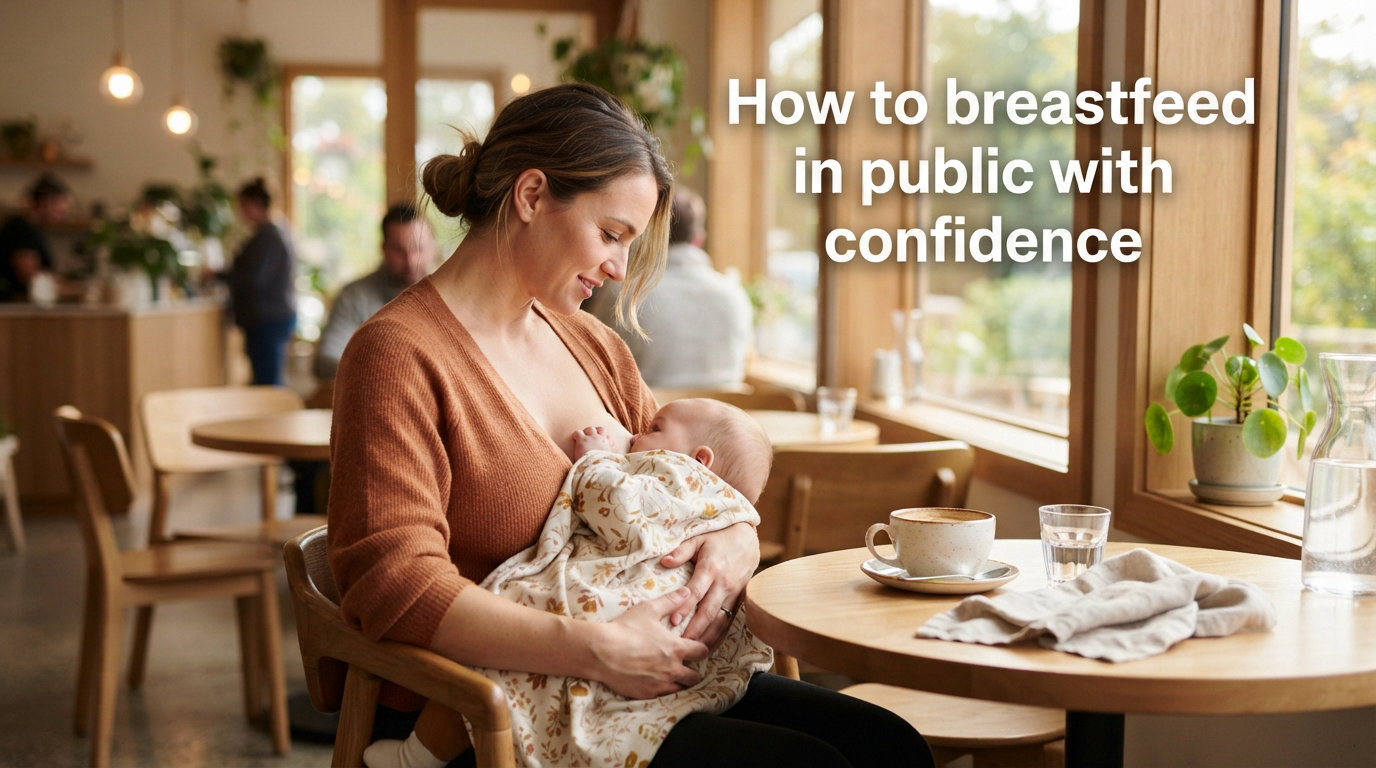
Learning how to breastfeed in public with confidence is one of the most empowering skills a new mother can develop. Your baby deserves to eat whenever hunger strikes, regardless of where you happen to be. Yet many mothers feel nervous about nursing outside their homes, worried about unwanted attention or negative reactions from strangers.
I have worked with hundreds of breastfeeding mothers over the past 12 years, and I can tell you this: every mother feels some apprehension at first. That flutter of anxiety before your first public nursing session is completely normal. The good news? With the right preparation and mindset, you will move from nervous beginner to confident nursing mother faster than you expect.
This guide gives you practical strategies, legal knowledge, and emotional tools you need to breastfeed anywhere your baby gets hungry. By the end, you will understand your rights, know exactly what to wear and do, and feel ready to handle any situation that comes your way.
Table of Contents
Why Breastfeeding in Public Matters
Public breastfeeding is about more than simply feeding your baby. It is about normalizing a natural biological function that has sustained infants for all of human history. When mothers nurse in public, they help the next generation grow up understanding that breastfeeding is normal, healthy, and nothing to hide.
Breastfeeding in public also protects your freedom as a mother. You should not be confined to your home for months because your baby needs to eat every few hours. Running errands, meeting friends, returning to work, or simply enjoying a walk in the park should all remain accessible to you. Your baby needs nourishment, and you deserve to live your life.
Every time you nurse in public with confidence, you make it easier for the next mother who sits down in that same spot. You become part of a quiet revolution that supports breastfeeding families everywhere.
Know Your Legal Rights
Understanding your legal protections removes much of the fear surrounding public breastfeeding. In the United States, federal law protects your right to breastfeed in any public or private location where you are otherwise authorized to be. This means if you can legally be there, you can legally breastfeed there.
All 50 states, the District of Columbia, Puerto Rico, and the Virgin Islands have laws that specifically allow women to breastfeed in any public or private location. Many states have additional workplace protections requiring employers to provide break time and private spaces for pumping.
Some states go further, exempting breastfeeding from public indecency laws entirely. A handful require certain public facilities to provide dedicated nursing rooms, though these are supplemental to your right to nurse anywhere. No state requires mothers to use covers or move to specific areas.
Knowing these rights gives you confidence. If someone ever suggests you cannot breastfeed where you are, you can calmly explain that you are within your legal rights. Store employees, restaurant staff, and security guards cannot legally ask you to stop, move, or cover up.
Building Confidence Before You Go Out
Confidence begins at home. Before you venture into busy public spaces, spend time practicing the physical and emotional skills you will need. This preparation dramatically reduces anxiety when the real moment arrives.
Practice in Front of a Mirror
Set up a full-length mirror and practice latching your baby while seated. This exercise reveals exactly what others can see, and you might be surprised by how little is actually visible. Your baby covers most of your breast naturally, and your clothing can handle the rest. Many mothers report feeling relieved after this exercise because the view from outside looks far more discreet than it feels from inside.
Start with Supportive Audiences
Your first public nursing attempts should happen in friendly environments. Try nursing at a lactation support group, a friend’s house, or a mother-and-baby meetup where breastfeeding is expected and welcomed. These low-pressure situations build your skills without the worry of judgment.
Bring a Support Person
For your first outings, consider bringing your partner, a friend, or family member who supports your breastfeeding goals. Having someone to talk to, block unwanted views, or simply provide moral support makes those initial attempts much easier. Many mothers find their confidence grows exponentially once they realize nobody is paying attention.
What to Wear for Easy Public Nursing
Your clothing choices can make public breastfeeding almost effortless or unnecessarily challenging. The right outfit allows discreet access without complicated maneuvering or excessive exposure.
Nursing-Specific Clothing
Nursing tops and dresses have hidden openings, lift-up panels, or discreet zippers that provide quick breast access. These garments look like regular clothing but function like specialized gear. Invest in three to five nursing tops for your regular rotation, especially for early months when feeds are frequent.
Nursing bras with drop-down cups or clip-down panels are essential. Choose styles that open easily with one hand while you support your baby with the other. Practice opening and closing the clasps at home until the motion becomes automatic.
Regular Clothing Strategies
You do not need a special wardrobe to nurse in public. Two-piece outfits work beautifully: lift your shirt from the bottom while the neckline stays in place. This exposes only a small strip of skin at your midsection. Dark colors and busy patterns camouflage any accidental exposure better than light solids.
Layering provides excellent coverage. A loose tank top under a button-down shirt or cardigan creates multiple access points. You can lift the undershirt while the outer layer drapes naturally over your baby, creating a cozy nursing cocoon without any additional cover.
Scarves and Shawls as Accessories
A large scarf or pashmina serves double duty as an accessory and emergency cover. Simply drape it over your shoulder before nursing, then let it fall naturally across your baby if you want extra coverage. This looks intentional and stylish rather than furtive.
How to Subtly Breastfeed in Public
The actual mechanics of public nursing become simple with practice. Follow these steps for smooth, discreet feeding sessions anywhere you go.
Step 1: Find Your Spot
Look for a comfortable seat with back support. Face away from the main flow of traffic when possible. A booth at a restaurant, a bench against a wall, or a chair in a quiet corner all work perfectly. You do not need a special nursing room, though one is nice if available.
Step 2: Position Yourself and Baby
Settle into your seat and arrange your nursing cover, blanket, or shawl if you plan to use one. Some mothers position these first, while others latch the baby then drape coverage. Try both approaches at home to discover your preference.
Position your baby using whatever hold works best for you. The cradle hold works well in most public seats. Cross-cradle gives you excellent control for latching. Football hold works beautifully in restaurant booths with your baby tucked beside you.
Step 3: The Two-Finger Trick
The two-finger trick helps you latch your baby while maintaining coverage and control. Place your index and middle fingers in a V-shape on either side of your areola. This flattens the breast slightly and gives your baby a clear target. Once baby opens wide, quickly remove your fingers and guide baby onto the breast.
This technique also helps with positioning. Your fingers create a visual barrier that keeps fabric from falling onto your baby’s face while you arrange your clothing. Practice this motion at home until it feels natural.
Step 4: Latch and Settle
Bring your baby to your breast quickly once their mouth opens wide. A swift, confident motion reduces fumbling and exposure time. Your baby’s head will naturally block most views of your breast once latched. Let your clothing settle around them.
Most passersby will assume you are simply holding a sleeping baby. The nursing position looks like cuddling to casual observers. Relax your shoulders and breathe. Tension transmits to your baby and can interfere with their latch.
Step 5: Nursing Discreetly Without Drawing Attention
Continue your normal activity while nursing. Read your phone, sip a drink, or chat with your companion. Acting natural helps you feel natural. The more casual you appear, the less attention you attract.
If you need to adjust your position or relatch, take your time. Brief adjustment pauses are normal and unremarkable. Most people in public spaces are absorbed in their own activities and genuinely do not notice breastfeeding mothers around them.
Using Nursing Covers and Baby Carriers
Nursing covers and babywearing gear provide additional privacy options for mothers who want them. Understanding how to use these tools effectively helps you choose what works for your comfort level.
Nursing Cover Options
Nursing covers come in several styles. Apron-style covers drape over your neck and cover your front completely, often with a rigid neckline that lets you see your baby. Infinity scarf styles convert from accessory to cover instantly. Blanket-style covers simply drape over you and baby.
Practice with your cover at home before using it in public. Some babies dislike having fabric over their heads and may fuss or pull at covers. Others settle right in. You will not know your baby’s preference until you try.
Babywearing and Breastfeeding
Many baby carriers, slings, and wraps allow discreet nursing while keeping your hands free. Soft-structured carriers often loosen to lower baby to breast height. Ring slings adjust easily for nursing positions. Stretchy wraps support your baby snugly against your chest.
Breastfeeding in a carrier takes practice but becomes second nature. The fabric of the carrier itself provides coverage. Your baby’s body blocks the view. You can literally nurse while walking through a store or standing in line, and nobody will realize.
Start practicing babywearing nursing at home over a soft surface or bed. Once you feel secure, try short outings. This technique becomes invaluable for mothers of multiple children who need to nurse while supervising toddlers.
Reading Your Baby’s Feeding Cues
Successful public breastfeeding starts before your baby gets frantic. Learning to recognize early hunger signs lets you begin nursing calmly rather than rushing to feed an upset infant.
Early Hunger Signs
Watch for rooting movements, where your baby turns their head and opens their mouth searching for a breast. Sucking on hands, fingers, or clothing indicates growing hunger. Alertness and increased movement often precede crying.
Respond to these early cues promptly. A calm baby latches more easily and nurses more efficiently than one who has worked themselves into a distressed state. Early feeding also prevents crying that draws unwanted attention.
The 3 3 3 Rule for Breast Milk
While not strictly about public nursing, understanding milk storage helps mothers feel confident about feeding schedules. The 3 3 3 rule states that freshly expressed breast milk lasts 3 hours at room temperature, 3 days in the refrigerator, and 3 months in the freezer. This knowledge helps you plan outings without worrying about milk spoilage.
Timing Your Outings
Plan outings around your baby’s natural feeding patterns when possible. A recently fed baby gives you a window of time for errands. However, remain flexible. Babies do not follow schedules perfectly, and hunger can strike unexpectedly.
Finding Feeding-Friendly Locations
Knowing where to nurse comfortably removes the stress of location hunting when your baby gets hungry. Scout potential spots before you need them.
Nursing Rooms and Family Facilities
Many shopping malls, airports, museums, and large retail stores provide dedicated nursing rooms or family lounges. These spaces typically offer comfortable seating, changing tables, and sometimes play areas for older children. They provide a quiet option when you want privacy.
However, these rooms are amenities, not requirements. You have the right to nurse anywhere, including right in the middle of the food court if that is what works for you and your baby.
Ideal Starter Locations
For your first public nursing attempts, choose locations that feel safe and low-pressure. Outdoor park benches offer fresh air and natural spacing from others. Bookstore cafes tend to have relaxed atmospheres where people mind their own business. Stores with fitting rooms can work in a pinch if you need temporary privacy.
Women’s lounges in department stores, community center lobbies, and hospital cafeterias all tend to be accepting environments. Once you build confidence in these gentler spaces, busier locations feel manageable.
Handling Criticism and Negative Reactions
Despite legal protections and growing normalization, some people still react negatively to public breastfeeding. Preparing for these encounters helps you respond calmly and effectively.
Common Negative Reactions
Most negative comments fall into predictable categories. Someone might suggest you move to a bathroom. They might ask you to cover up. They might make rude remarks about modesty or appropriateness. Occasionally, someone might claim you are violating some rule or law.
Remember: in virtually all cases, you are legally in the right. The person making comments is misinformed, uncomfortable with normal biology, or simply rude. Their discomfort does not override your baby’s need to eat or your legal rights.
Response Scripts That Work
Having prepared responses prevents you from freezing or getting flustered. Here are several approaches:
For “Can you go somewhere else?”: “I am legally allowed to breastfeed here, and my baby needs to eat now. Thank you for understanding.”
For “Can you cover up?”: “I appreciate your concern, but I am comfortable nursing this way. We will be done shortly.”
For rude or aggressive comments: “I am exercising my legal right to feed my baby. If you have concerns, you are welcome to contact [store management/local authorities], but I am not required to move or stop.”
For questions about legality: “Actually, state law protects my right to breastfeed in any public location. I would be happy to show you the statute if you would like to learn more.”
When to Escalate
If an employee asks you to leave or stop nursing, ask to speak with a manager. Many businesses have policies supporting breastfeeding mothers even when individual employees are unaware. Escalating often resolves the situation immediately.
If you are harassed by another customer, seek staff assistance. They can intervene or relocate the disruptive person. Document any incidents where your rights are violated, including photos of signage, names of employees involved, and details of what occurred. You may have grounds for a discrimination complaint.
In most cases, simply continuing to nurse while maintaining eye contact and a calm demeanor ends the confrontation. Difficult people typically back down when they realize you will not be bullied.
Building Long-Term Confidence
Every public nursing session builds your confidence for the next one. What feels nerve-wracking today will feel routine within weeks. Trust the process and celebrate your progress.
Connect with other breastfeeding mothers who understand your journey. Online communities, local support groups, and lactation consultants all provide encouragement and practical advice. Hearing that other mothers faced the same fears and overcame them normalizes your experience.
Your partner plays a crucial role in your confidence. Share this article with them so they understand how to support you. An encouraging word, strategic positioning to block views, or simply holding your drink while you nurse all make a difference.
Remember why you are doing this. You are nourishing your child, protecting their health, and claiming your freedom as a mother. Those priorities outweigh any temporary discomfort or awkward encounters. You are doing important work every time you breastfeed, regardless of location.
FAQs
What is the 4 4 4 rule for breastfeeding?
The 4 4 4 rule refers to breast milk storage guidelines, though this varies slightly by source. Generally, it suggests freshly expressed milk lasts 4 hours at room temperature, 4 days in the refrigerator, and 4 months in the freezer. However, current CDC guidelines suggest up to 4 hours at room temperature, up to 4 days refrigerated, and 6-12 months frozen for optimal quality. Always smell milk before feeding if concerned about freshness.
What is the two finger trick for breastfeeding?
The two finger trick involves placing your index and middle fingers in a V-shape on either side of your areola to flatten the breast and guide your baby to latch. This technique helps create a clear target for your baby while keeping fabric away from their face. It also helps with positioning during public nursing when you want to maintain coverage and control.
How to subtly breastfeed in public?
To breastfeed subtly in public: 1) Wear nursing-friendly clothing or two-piece outfits for easy access, 2) Position your baby using their body to naturally block views, 3) Use the two-finger trick for controlled latching, 4) Face away from main traffic when possible, 5) Act natural and continue normal activities while nursing, 6) Consider a scarf or nursing cover if desired, 7) Remember that most people do not notice breastfeeding mothers because the baby covers most visibility.
When did you feel comfortable breastfeeding in public?
Most mothers report feeling comfortable breastfeeding in public after 3-5 successful outings, though this varies by personality and experience. Confidence typically builds over the first month of regular public nursing. Starting with supportive environments like breastfeeding groups or friendly cafes helps accelerate comfort. Each positive experience reduces anxiety for the next one. Many mothers say they felt completely natural nursing in public by the time their baby was 2-3 months old.
How to cover up when breastfeeding in public?
You can cover up while breastfeeding using several methods: nursing covers with rigid necklines that allow you to see your baby, infinity scarves that drape naturally over your shoulder and baby, receiving blankets tucked into your bra strap, baby carriers whose fabric provides natural coverage, or simply positioning your baby and clothing strategically so little is exposed. Practice your chosen method at home first. However, covering is a personal choice, not a legal requirement.
What should I do if someone criticizes me for breastfeeding in public?
If someone criticizes you for public breastfeeding, stay calm and remember your legal rights. You can respond with simple statements like: u0022I am legally allowed to breastfeed hereu0022 or u0022My baby needs to eat, and this is the normal way babies eat.u0022 Most confrontations end quickly when you remain confident. If an employee challenges you, ask to speak with a manager. Document serious incidents if your rights are violated. Joining breastfeeding support communities beforehand gives you emotional backup for these rare encounters.
Conclusion
Learning how to breastfeed in public with confidence takes time, practice, and the right knowledge. You now understand your legal rights, know what to wear for easy access, have practical techniques for discreet nursing, and possess scripts for handling any negative reactions. These tools transform what feels daunting into something completely manageable.
Start small. Practice at home, then try a quiet cafe or park bench. Bring support for your first attempts. Each successful nursing session builds the confidence that carries you through the next one. Before long, you will nurse anywhere without a second thought.
Your baby deserves to eat when hungry, and you deserve to live your life fully. Public breastfeeding connects these two truths. Go forward with confidence, knowing you are exercising a protected right and doing exactly what mothers throughout history have done: feeding their babies with love and care, wherever that needs to happen.