
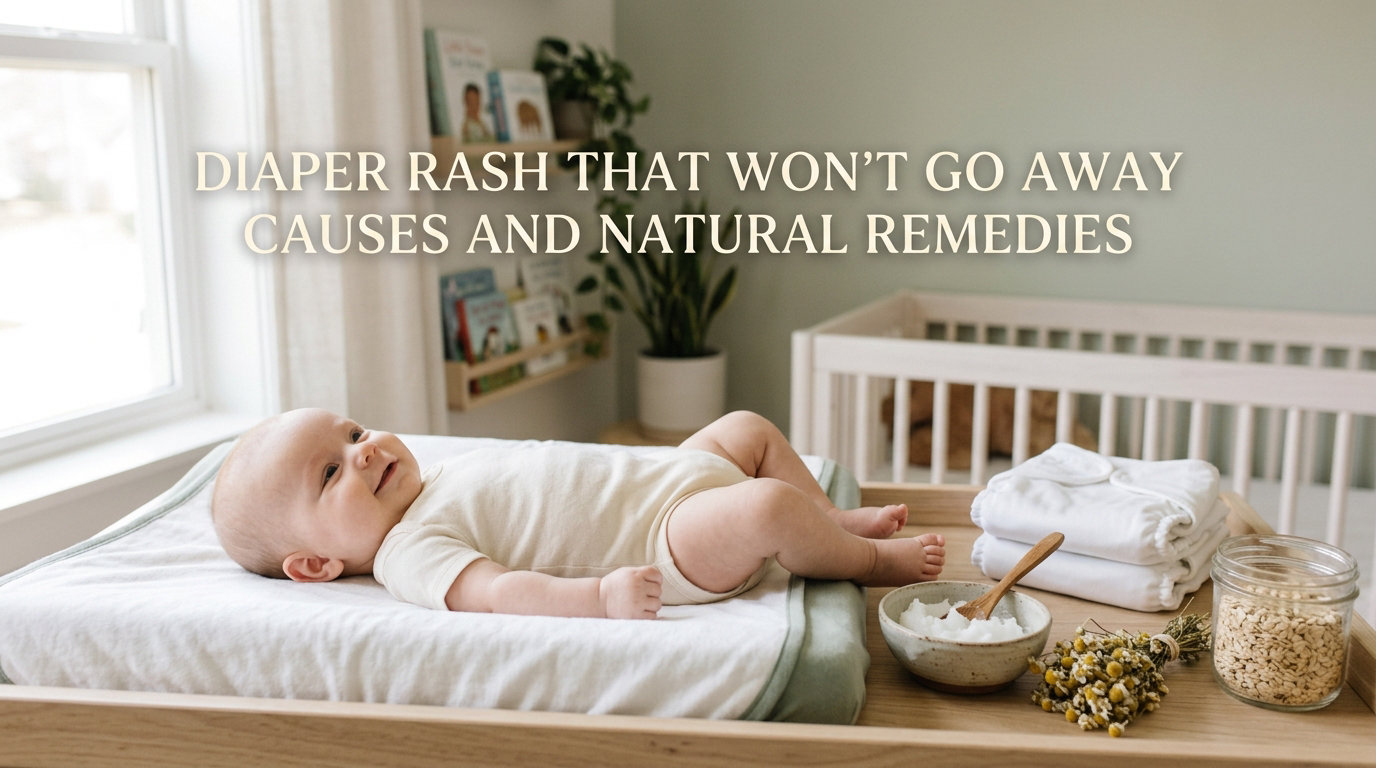
Nothing prepares you for the helplessness of watching your baby suffer from a diaper rash that just won’t heal. You’ve tried every cream, changed diapers constantly, maybe even switched diaper brands – but that angry redness persists. I’ve been there, and so have countless other parents who reach out in desperation after weeks of unsuccessful treatments.
Diaper rash that won’t go away is typically a persistent irritation or infection of a baby’s diaper area that lasts more than a few days despite standard home treatment. While most diaper rashes clear up within 3-5 days with proper care, persistent rashes often signal an underlying issue that regular diaper creams can’t address – usually a yeast infection, bacterial overgrowth, or a chronic irritant you haven’t identified yet.
Understanding what’s really causing your baby’s stubborn diaper rash is the first step toward effective treatment. Once you identify whether you’re dealing with yeast, bacteria, or a specific irritant, you can choose the right natural remedies to finally heal your baby’s skin and provide the relief they need.
Table of Contents
What Is Diaper Rash (and Why Some Won’t Go Away)
Diaper rash, medically known as diaper dermatitis, is a common form of inflamed skin that appears in the diaper area. Most babies will experience at least one episode of diaper rash before age 2, and while typical cases respond well to basic care and barrier creams, some rashes become persistent problems that resist standard treatments.
Why do some diaper rashes refuse to heal? The answer usually lies in what’s happening beneath the surface. When moisture, friction, and irritants break down the skin’s protective barrier, it creates an opportunity for yeast (Candida) or bacteria to invade and multiply. Unlike simple irritation from wetness or friction, these infections create a cycle of inflammation that regular zinc oxide creams can’t interrupt.
The skin in the diaper area is particularly vulnerable because of constant exposure to moisture, friction from rubbing, and contact with irritants found in urine and stool. When this delicate skin barrier is compromised, it becomes susceptible to infections that are self-perpetuating – the more inflamed the skin becomes, the more susceptible it is to further irritation and infection.
Timeline expectations matter here. A typical diaper rash should show improvement within 2-3 days of proper treatment. If your baby’s rash persists beyond 5-7 days despite your best efforts, or if it seems to be getting worse rather than better, you’re likely dealing with more than just simple irritation and need a different approach.
Common Causes of Diaper Rash That Won’t Go Away
Identifying why your baby’s rash won’t heal is crucial to choosing the right treatment. While all diaper rashes look similar at first glance – red, irritated skin in the diaper area – the underlying causes vary significantly and require different approaches.
Yeast Infection (Candida Diaper Rash)
Yeast infections are among the most common reasons diaper rashes won’t heal with standard treatments. Candida albicans, the same yeast that causes thrush, thrives in warm, moist environments – exactly the conditions found in a diaper. Unlike typical irritant rash, yeast rashes often appear as bright red patches with distinct, raised borders. You might notice small red bumps or “satellite lesions” – tiny pustules that spread beyond the main rash area.
Yeast diaper rashes typically don’t respond to regular diaper creams because they’re not addressing the fungal overgrowth. In fact, the moisture-trapping properties of some barrier creams can actually make yeast infections worse by creating the perfect environment for fungal growth.
Bacterial Infection
Bacterial infections can develop when the skin barrier is broken down and bacteria enter through tiny cracks or abrasions. These infections often appear more intense than typical rashes, with deep redness, warmth, swelling, and sometimes yellow crusting or oozing. Bacterial rashes may have a foul odor and can be extremely painful for your baby.
Unlike yeast rashes, which tend to have defined borders and satellite spots, bacterial infections often appear as a single area of intense inflammation that may feel warm to the touch. These require different treatment approaches and can lead to more serious complications if left untreated.
Irritant Contact Dermatitis
Chronic irritant dermatitis occurs when the skin is repeatedly exposed to substances that trigger inflammation. This could be fragrances in wipes, certain diaper materials, detergents used on cloth diapers, or even specific foods in your baby’s diet (or your diet if you’re breastfeeding). Unlike infections, irritant rashes typically improve when you remove the offending substance – but identifying the specific irritant can be challenging.
Babies with sensitive skin are particularly prone to irritant dermatitis, and the cycle can be frustrating: the rash makes the skin more sensitive, which means it reacts to substances that previously caused no problem, leading to more inflammation and continued rash.
Antibiotic-Related Rashes
Antibiotics are a common culprit behind persistent diaper rashes. These medications kill off beneficial bacteria along with harmful ones, disrupting the natural balance of microorganisms in the digestive tract and on the skin. This disruption allows yeast to overgrow, leading to antibiotic-resistant diaper rashes that persist until the bacterial balance is restored.
If your baby recently completed a course of antibiotics (or if you’re breastfeeding and took antibiotics yourself), this could explain why the rash won’t respond to typical treatments. The solution involves addressing the yeast overgrowth while supporting the restoration of healthy bacterial balance.
Food Allergies and Sensitivities
Sometimes persistent diaper rash signals a food allergy or sensitivity. Common culprits include dairy, soy, eggs, and wheat, though any food can potentially trigger a reaction. If you’re breastfeeding, foods in your diet can affect your baby through your breast milk. For formula-fed babies, the formula itself might be the issue.
Food-related rashes often accompany other symptoms like digestive upset, eczema, or respiratory issues, but not always. Some babies experience isolated diaper rashes as their only symptom of food sensitivity. These rashes persist until the offending food is identified and removed from the diet.
Teething and Diarrhea
Teething often increases saliva production, which can change the composition of stool and make it more irritating to the skin. Additionally, teething babies sometimes experience loose stools or diarrhea, leading to more frequent bowel movements and increased skin exposure to irritants. This combination can create a rash that seems stubborn because the underlying cause (teething) keeps triggering it.
Teething-related rashes typically resolve once the teething episode subsides, but in the meantime, they require extra vigilant diaper care and protection strategies to prevent the rash from becoming severe enough to develop secondary complications.
Environmental Factors
Environmental conditions you might not consider can contribute to persistent rashes. High humidity increases moisture in the diaper area, while hot weather leads to more sweating and potential heat rash complications. Even seasonal changes can affect skin sensitivity.
For cloth diaper users, detergent buildup, ammonia formation from urine, or inadequate sanitizing can create chronic irritation. Some babies simply react to specific materials or fabric combinations. These environmental factors mean that even your best efforts might not resolve the rash until you address the underlying environmental trigger.
How to Tell If Diaper Rash Is Fungal, Bacterial, or Irritant
Differentiating between rash types is crucial because each requires a different treatment approach. Here’s how to identify what you’re dealing with:
Yeast (Fungal) Rash Signs:
Bright red rash with raised, distinct borders. Satellite lesions – small red bumps or pustules spreading beyond the main rash area. Rash persists despite regular diaper cream use. Rash may be in skin folds and creases. Recent antibiotic use or thrush infection. No improvement after several days of standard treatment.
Bacterial Infection Signs:
Deep red or purple coloration. Warmth in the affected area. Swelling or puffiness. Yellow crusting, oozing, or pus. Foul odor. Fever or systemic illness signs. Extreme tenderness causing intense pain. Rapid spreading beyond diaper area.
Irritant Dermatitis Signs:
Redness primarily in areas contacting diaper or wipes. No satellite lesions or defined borders. No fever or warmth. Improves with more frequent changes and barrier cream. Worse after certain foods, products, or diaper brands. No oozing, crusting, or raised borders.
If you’re unsure about what type of rash your baby has, or if the rash is severe, spreading, or accompanied by fever, consult your pediatrician for proper diagnosis. Accurate identification is essential for effective treatment.
Diaper Rash That Won’t Go Away: Natural Remedies That Actually Work
Once you understand what’s causing your baby’s persistent rash, you can choose targeted natural remedies to address the specific issue. Based on both research and real parent experiences, here are the most effective natural approaches for stubborn diaper rash.
1. Air Exposure and Diaper-Free Time
Nothing works as effectively as air exposure for healing persistent diaper rash. The warm, moist environment inside a diaper is exactly what allows rashes to flourish and prevents healing. Giving your baby diaper-free time allows the skin to dry completely and creates an environment where yeast and bacteria struggle to survive.
For best results, aim for at least 20-30 minutes of diaper-free time 3-4 times per day. Lay your baby on a waterproof pad or towel during awake time. Even 10 minutes after each diaper change can make a significant difference. Many parents report seeing improvement within just 24-48 hours of consistent air exposure routines.
2. The Right Cleansing Approach
How you clean your baby’s diaper area matters tremendously for persistent rashes. Avoid commercial wipes that contain alcohol, fragrance, or harsh preservatives – these ingredients can exacerbate already irritated skin. Instead, use plain warm water and soft cloths for cleansing.
Pat the area gently rather than rubbing. Rubbing further irritates inflamed skin and can even create micro-abrasions where bacteria can enter. Consider using a squirt bottle with warm water to rinse without wiping at all. After cleaning, allow the area to air dry completely – don’t rush this step. You can use a hair dryer on cool, low setting from a safe distance if needed, but air drying is preferable.
3. Coconut Oil (With Important Caveats)
Coconut oil is one of the most popular natural remedies for diaper rash, and for good reason. It contains lauric acid, which has antifungal and antibacterial properties, and creates a protective moisture barrier. However, coconut oil isn’t right for every situation.
For irritant rashes and mild yeast infections, coconut oil can be very effective. Apply a thin layer after cleaning and drying the area. However, if your baby’s rash is caused by a fungal infection, coconut oil might not be strong enough alone, and in rare cases, some babies are allergic to coconut products.
Use only virgin, unrefined coconut oil for medicinal purposes. If you don’t see improvement within 3-4 days, or if the rash worsens, discontinue use and try another approach.
4. Calendula Cream
Calendula (marigold) has been used for centuries to heal skin irritations, and modern research supports its effectiveness. Calendula promotes skin cell regeneration, reduces inflammation, and has mild antifungal properties that make it particularly useful for persistent rashes.
Look for pure calendula cream without added fragrances or harsh preservatives. Apply after each diaper change, focusing on clean, dry skin. Calendula is gentle enough for daily use and safe for most babies, though as with any product, discontinue if you notice any adverse reaction.
5. Colloidal Oatmeal Baths
Colloidal oatmeal is oats ground into a fine powder that disperses in water, creating a milky bath that soothes and protects irritated skin. Oats contain compounds called avenanthramides that reduce inflammation and itching, making oatmeal baths particularly helpful for babies with painful, irritated rashes.
For a colloidal oatmeal bath, grind plain, unflavored oats into a fine powder using a blender or food processor. Add about 1/3 cup to warm bathwater and swirl to disperse. Let your baby soak for 10-15 minutes, then gently pat dry without rinsing. This can be done daily until the rash improves.
6. Breast Milk Application
For breastfeeding mothers, breast milk is a readily available remedy that many parents swear by. Breast milk contains antibodies, antimicrobial properties, and healing compounds that can help clear up persistent diaper rash naturally.
Express a small amount of breast milk and gently rub it onto the clean, dry diaper area. Allow it to air dry completely before putting on a fresh diaper. This can be done after each diaper change. While research on breast milk for diaper rash is limited, countless parents report success with this gentle, accessible approach.
7. Shea Butter
Shea butter is rich in fatty acids and vitamins that nourish and repair damaged skin. It creates an effective barrier against moisture while allowing the skin to breathe, making it an excellent choice for persistent irritant rashes.
Choose raw, unrefined shea butter for maximum medicinal benefits. A little goes a long way – warm a small amount between your fingers and apply a thin layer to clean, dry skin. Shea butter is particularly effective when used overnight for extended protection during longer sleep stretches.
8. Witch Hazel for Weeping Rashes
For rashes that are oozing or weeping, witch hazel can be incredibly helpful. This natural astringent helps dry out excess moisture while reducing inflammation and promoting healing. It’s particularly useful for bacterial rashes with crusting or oozing.
Use alcohol-free witch hazel pads or apply with a soft cloth. Gently pat the affected area and allow to dry completely before applying any barrier product. Witch hazel can be drying, so use it only while the rash is actively weeping, then switch to more moisturizing remedies once the oozing stops.
9. Probiotics for Gut-Skin Balance
For babies with recurrent or persistent rashes, especially those related to antibiotic use or yeast overgrowth, probiotics can help restore healthy bacterial balance. The gut-skin connection is well-documented, and supporting gut health often translates to improved skin health.
Baby-specific probiotic drops are available, or breastfeeding mothers can take high-quality probiotics themselves – beneficial bacteria pass through breast milk. Probiotics work gradually over time, so consider this as part of a longer-term strategy rather than expecting immediate results.
10. Chamomile Tea Compresses
Chamomile has anti-inflammatory and soothing properties that can help calm angry, irritated skin. For babies who resist diaper changes due to pain, chamomile compresses can provide immediate relief and make treatment easier.
Brew strong chamomile tea and allow it to cool completely. Soak soft cloths in the tea and apply gently to the diaper area for 5-10 minutes. The cool temperature combined with chamomile’s soothing properties can reduce discomfort and inflammation. Always test the temperature on your wrist first to ensure it’s not too cold.
Step-by-Step Natural Treatment Protocol
For best results with stubborn diaper rash, follow this comprehensive approach combining multiple natural remedies:
Step 1: Increase diaper changes to every 1-2 hours, immediately after any bowel movement.
Step 2: Clean with warm water only – no wipes. Pat dry gently or air dry completely.
Step 3: Apply 20-30 minutes of diaper-free air time at least 3 times daily.
Step 4: Apply targeted natural remedy based on rash type (calendula for general irritation, coconut oil for mild yeast, etc.)
Step 5: Use a protective barrier of plain zinc oxide cream or natural alternative after remedies are absorbed.
Step 6: Consider colloidal oatmeal bath once daily for severe irritation.
Step 7: For suspected yeast, add probiotics and consider natural antifungal approaches consistently for 7-10 days.
Most parents see improvement within 3-5 days of this comprehensive approach. If there’s no improvement after 7-10 days, or if the rash worsens at any point, consult your pediatrician.
Common Mistakes That Keep Diaper Rashes From Healing
Sometimes the solution isn’t adding new treatments but stopping practices that are preventing healing. Avoid these common mistakes that can keep diaper rashes lingering longer than necessary.
Using Wipes with Irritating Ingredients
Many baby wipes contain alcohol, fragrance, and preservatives that irritate already sensitive skin. Even wipes labeled “natural” or “sensitive” can contain problematic ingredients. For persistent rashes, switch to plain warm water and soft cloths for cleansing.
Rubbing Instead of Patting
Friction makes diaper rash worse. When cleaning or applying creams, gently pat rather than rub. Use a dabbing motion with minimal pressure. This simple change can significantly reduce irritation and allow healing to begin.
Not Changing Diapers Frequently Enough
Even with the best creams and treatments, diaper rash won’t heal if the skin is constantly exposed to moisture and irritants. Increase diaper change frequency to every 1-2 hours during awake time, and immediately respond to any bowel movement. Nighttime changes may be necessary for severe rashes.
Skipping Barrier Protection
While you’re treating the underlying cause, you still need to protect the skin from ongoing moisture and irritation. A thin layer of plain zinc oxide cream or natural barrier creates a protective layer that allows healing to occur beneath it. Apply after natural remedies have been absorbed.
Using Cornstarch or Baby Powder
Old recommendations suggested cornstarch or baby powder for diaper rash, but we now know these can be harmful. Cornstarch provides food for yeast to grow, potentially worsening fungal infections. Baby powder poses inhalation risks and can actually cause more irritation. Stick with proven barrier creams and natural remedies.
Treating Yeast Rash with Regular Diaper Cream
Standard diaper creams don’t address fungal infections. If you suspect yeast (based on the signs described earlier), regular diaper creams alone won’t resolve the issue. You need antifungal treatment along with the moisture control and barrier protection that regular creams provide.
When to See a Doctor for Diaper Rash
Most diaper rashes improve with home treatment, but certain situations require medical attention. Don’t hesitate to consult your pediatrician if you notice any of these red flags:
Fever or Systemic Symptoms
A fever of 100.4°F (38°C) or higher in a baby under 3 months, or any fever accompanied by lethargy, poor feeding, or other signs of illness, requires immediate medical evaluation. These symptoms may indicate a bacterial infection that has spread beyond the skin.
Rash Spreading Beyond Diaper Area
If the rash extends beyond the diaper area to the abdomen, back, legs, or genitals, this suggests a more widespread infection or condition that needs medical assessment. Certain rashes that mimic diaper rash can actually be entirely different conditions requiring different treatment.
No Improvement After 7-10 Days
Despite your best efforts with appropriate treatments, some rashes persist. If you’ve been consistently treating what appears to be a yeast or bacterial rash for 7-10 days without improvement, consult your doctor. There may be an underlying issue you haven’t identified, or a prescription-strength treatment may be needed.
Signs of Bacterial Infection
Deep red or purple coloration, warmth, swelling, yellow crusting or oozing, and extreme tenderness are all signs that bacteria may be involved. Bacterial skin infections can progress rapidly and may require antibiotic treatment.
Blisters, Open Sores, or Bleeding
Broken skin creates entry points for bacteria and can lead to serious infections. If the rash has progressed to blistering, open sores, or significant bleeding, medical evaluation is necessary. These symptoms indicate severe irritation or infection that requires professional treatment.
Rash in Very Young Babies
Babies under 6 weeks old with diaper rash should be evaluated by a healthcare provider. Their immature immune systems and delicate skin make them more vulnerable to complications, and rashes in this age group sometimes indicate conditions beyond typical diaper dermatitis.
Prevention Strategies to Keep Diaper Rash Away
Once you’ve successfully treated your baby’s persistent diaper rash, prevention becomes the priority. These strategies can help prevent recurrence and keep your baby’s skin healthy.
Frequent Diaper Changes
The most effective prevention strategy is simply changing diapers frequently. Aim for every 1-2 hours during awake time, and immediately after any bowel movement. This minimizes the time skin is exposed to irritants and moisture, creating an environment where rashes struggle to develop.
Gentle Cleansing Technique
Use warm water and soft cloths rather than commercial wipes. Pat gently rather than rubbing. Allow the area to air dry completely before applying barrier protection. These simple habits prevent the minor skin damage that can develop into persistent problems.
Consistent Barrier Cream Use
A thin layer of barrier cream at every diaper change creates protective coating that prevents irritants from reaching the skin. Plain zinc oxide cream is effective and well-tolerated by most babies. Apply to clean, dry skin, focusing on areas where rash typically develops.
Proper Diaper Fit
Diapers that are too tight create friction and trap moisture against the skin, while diapers that are too loose allow leaks that increase exposure to irritants. Ensure proper fit with space for two fingers at the waist, and adjust sizing as your baby grows.
Diet Considerations
For breastfed babies with recurrent rashes, consider potential food triggers in your diet. Common culprits include dairy, soy, eggs, and nuts. For formula-fed babies, discuss formula options with your pediatrician if rashes persist despite excellent hygiene practices.
Cloth Diaper Care
If using cloth diapers, ensure proper washing with adequate detergent and hot water to remove bacteria and ammonia buildup. Avoid fabric softeners which can leave irritating residues. Some babies do better with certain materials – experiment with natural fibers vs. synthetic options if recurrent rashes continue.
Dealing with a diaper rash that won’t go away is exhausting and emotionally draining, but with the right identification of the underlying cause and targeted natural treatments, even the most stubborn rashes can be resolved. Be patient with the process, consistent with your approach, and don’t hesitate to seek medical guidance when needed. Your baby’s comfort and health are worth the effort, and relief is possible with the right combination of natural remedies and attentive care.
FAQs
What to do if a diaper rash is not going away?
If diaper rash persists beyond 5-7 days, identify the underlying cause. Increase diaper changes, use only warm water for cleansing, provide air exposure, and apply targeted remedies. For suspected yeast, add natural antifungals like calendula. For bacterial infections with oozing or crusting, consult your pediatrician for proper treatment.
How to fix diaper rash naturally?
Natural remedies for diaper rash include air exposure and diaper-free time, coconut oil for mild cases, calendula cream for inflammation, colloidal oatmeal baths for soothing, breast milk application for antimicrobial benefits, and probiotics to restore healthy bacterial balance. Cleanse with warm water only and apply remedies to completely dry skin.
How do you treat a stubborn diaper rash?
Treat stubborn diaper rash by first identifying if it’s yeast, bacterial, or irritant-based. Increase diaper frequency to every 1-2 hours. Clean with warm water only, no wipes. Provide 20-30 minutes of air exposure 3-4 times daily. Apply targeted remedies (calendula for irritation, natural antifungals for yeast). Use plain zinc oxide as barrier protection. If no improvement in 7-10 days, see your pediatrician.
What can be mistaken for diaper rash?
Conditions mistaken for diaper rash include eczema (atopic dermatitis), psoriasis, seborrheic dermatitis (cradle cap extending to diaper area), allergic reactions to foods or products, bacterial infections like impetigo, and viral rashes. These conditions require different treatments than typical diaper rash. If the rash has unusual features, spreads beyond the diaper area, or doesn’t respond to standard treatment, consult your pediatrician.
How to tell if diaper rash is fungal?
Fungal diaper rashes typically appear as bright red with raised, distinct borders. Look for satellite lesions – small red bumps or pustules spreading beyond the main rash. The rash often persists despite regular diaper cream use and may be in skin folds and creases. Recent antibiotic use or presence of thrush are additional indicators. Fungal rashes typically don’t respond to standard diaper creams alone.
Why won’t a diaper rash go away?
Diaper rashes won’t heal when they’re caused by underlying issues like yeast infection, bacterial overgrowth, or unidentified irritants. Yeast rashes require antifungal treatment. Bacterial infections need medical intervention. Food sensitivities or allergies may be triggering inflammation. Antibiotic use can cause yeast overgrowth. Environmental factors like humidity, cloth diaper buildup, or product sensitivities may be perpetuating the problem.
How long does stubborn diaper rash last?
With proper treatment, most stubborn diaper rashes improve within 3-5 days and resolve within 7-10 days. Yeast infections typically require 7-14 days of consistent treatment. Bacterial infections need medical treatment and may resolve faster with antibiotics. Irritant rashes should improve within 2-3 days once the irritant is removed. If no improvement after 10-14 days of appropriate treatment, consult your pediatrician.
Can teething cause diaper rash that won’t go away?
Yes, teething can cause persistent diaper rash due to increased saliva production, which can change stool composition and irritate the skin. Teething babies may also experience loose stools or diarrhea, leading to more frequent bowel movements and increased skin exposure to irritants. This creates a cycle where the rash persists because teething continues. Address symptoms with frequent changes, barrier protection, and soothing remedies until teething subsides.