
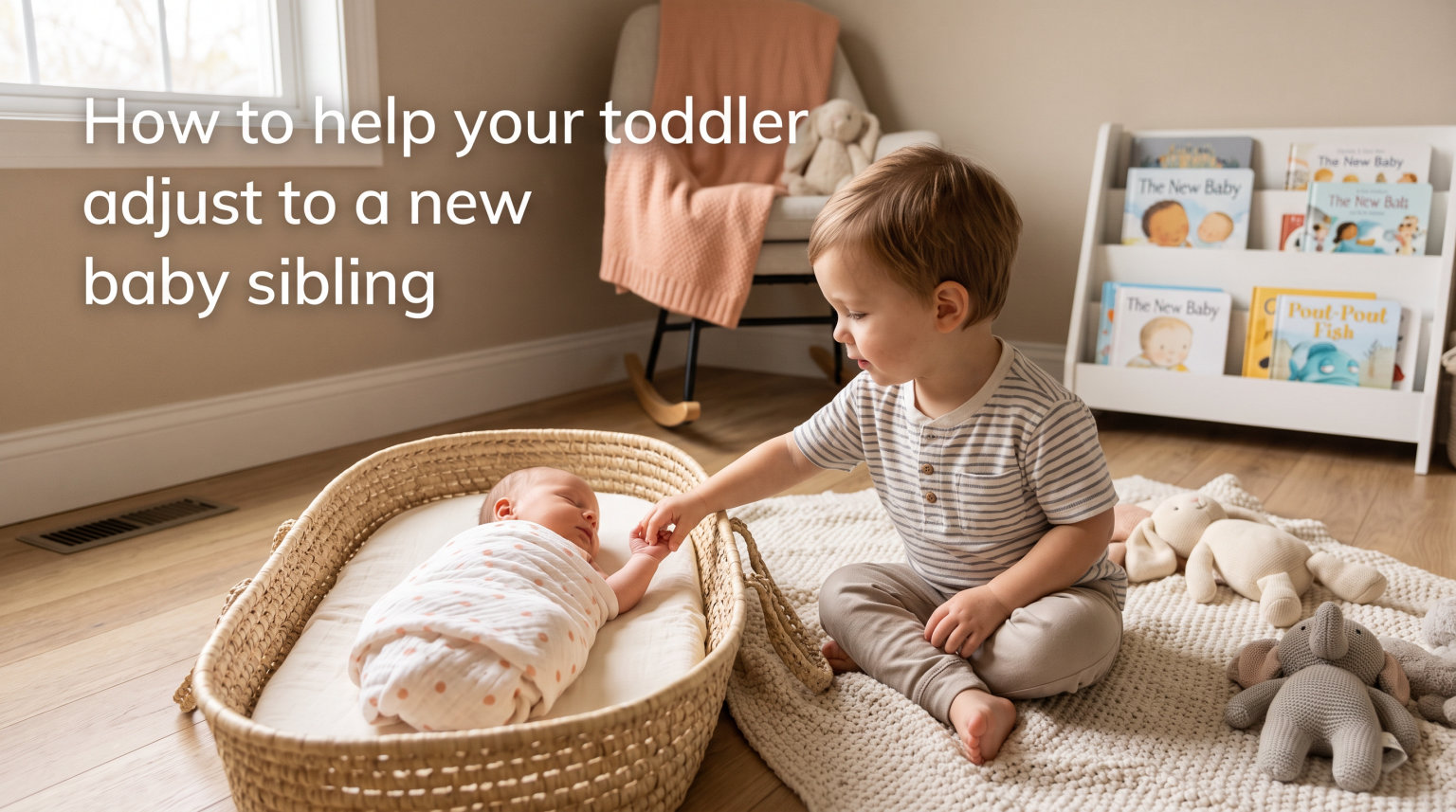
Bringing home a new baby is one of life’s most joyful transitions. Yet for your toddler, this arrival can feel like their entire world has shifted overnight. Learning how to help your toddler adjust to a new baby sibling takes patience, empathy, and consistent strategies that honor both your children’s needs.
Most toddlers show signs of jealousy, regression, or behavioral changes in the first few weeks. These reactions are completely normal and temporary. With the right preparation and daily practices, you can guide your family through this transition while preserving your toddler’s sense of security.
In this guide, I will share practical, age-specific strategies for preparing your toddler before birth, managing the early days home, and building a positive sibling bond that lasts. You will learn what behaviors to expect, how long adjustment typically takes, and when to seek additional support.
Table of Contents
Understanding Your Toddler’s Reaction
Your toddler’s reaction to a new sibling depends largely on their age, temperament, and the preparation they received. Most children experience a mix of curiosity and uncertainty. Some immediately adore the baby. Others need weeks or months to warm up.
Temperament plays a significant role. Flexible children often adapt quickly to family changes. More sensitive children may need extra reassurance and time. Self-contained toddlers might seem unaffected outwardly while processing big emotions internally. There is no right or wrong reaction. What matters is responding with patience and consistency.
Common Signs of Sibling Jealousy
Jealousy in toddlers often appears indirectly. Your child may act out when you hold the baby or become suddenly clingy when your attention shifts. These behaviors signal a need for reassurance, not defiance.
Watch for these common signs your toddler is jealous of the new baby:
Increased tantrums or whining when you nurse or hold the baby
Asking to be held constantly, especially when you are busy with the newborn
Refusing to share toys or space with the baby
Telling you to send the baby back or give them away
Waking at night after previously sleeping well
Increased defiance and testing limits
Trying to get between you and the baby physically
Many parents report that severe jealousy often peaks around two to three weeks after birth. This timing coincides with the initial novelty wearing off and the reality of permanent change setting in.
Regression Behaviors Are Normal
Regression is one of the most common responses to a new sibling. Your potty-trained toddler may start having accidents. Your independent sleeper may want a bottle or crib again. Your chatterbox may start babbling like a baby.
These behaviors are normal and temporary. Your toddler is not being manipulative. They are seeking the comfort and attention they associate with being your baby. Most regression resolves within a few months as your child adjusts to their new role.
Age-Specific Reactions
Two-year-olds often struggle most with the transition. At this age, children are deeply attached to their primary caregiver and have limited verbal skills to express complex emotions. They may act out aggressively or become extremely clingy.
Three and four-year-olds generally handle the transition better. They can understand explanations more fully and participate in helping. However, they may also feel more acutely aware of the permanent shift in family dynamics. They need extra acknowledgment of their feelings and consistent reassurance that they are still loved.
How to Prepare Your Toddler Before Baby Arrives
Preparation makes a significant difference in how smoothly your toddler adjusts. The key is starting early and using age-appropriate methods that your child can understand and engage with.
Preparing Your 2-Year-Old
At age two, concrete experiences work better than abstract explanations. Start by pointing out babies in your daily life at the store, park, or in books. Use simple language about what babies do: cry, sleep, nurse, and need lots of help.
Practice with a doll. Show your toddler how to hold the baby gently and support the head. Let them help pack baby supplies or set up the nursery. These hands-on activities build familiarity without overwhelming them with words.
Avoid making promises you cannot keep. Do not tell your child the baby will be a playmate immediately. Be honest that babies mostly eat and sleep at first. This honesty prevents disappointment later.
Preparing Your 3 to 4-Year-Old
Older toddlers can handle more detailed conversations. Read books about becoming a big brother or big sister together. Talk about your own childhood sibling experiences if you have them.
Recommended books include:
I’m a Big Brother or I’m a Big Sister by Joanna Cole
The New Baby by Mercer Mayer
Waiting for Baby by Rachel Fuller
Daniel Tiger: The Baby Is Here by Becky Friedman
Involve your toddler in choosing baby items like blankets or clothing. Let them pick a small gift to give the baby at the hospital. This participation builds ownership and positive anticipation.
Managing Your Own Emotions
Your toddler absorbs your emotional state. If you express anxiety about the transition, they will likely feel anxious too. Share your excitement about the new baby while also validating that some things will change.
Talk positively about your toddler’s upcoming role. Use phrases like “our baby” rather than “my baby” to emphasize that this is a family addition, not a replacement. Let them know they are becoming something special: a big brother or big sister.
The First Days Home: Making the Introduction
The initial meeting between your toddler and new baby sets the tone for their early relationship. A thoughtful introduction helps your older child feel included rather than replaced.
Setting Up the First Meeting
Have someone else hold the baby when your toddler first arrives. This allows you to greet your older child with open arms and full attention. They have been waiting for you. The baby can wait thirty seconds more.
Let your toddler approach the baby on their own terms. Do not force them to look, touch, or interact immediately. Some children want to see the baby right away. Others need time to settle in first.
When they are ready, guide them to sit down and offer a gentle touch. Use the term “soft touches” repeatedly. Show them how to stroke the baby’s hand or foot rather than the face or head.
What to Say and Do
Frame the baby as belonging to your toddler too. Say things like “This is your baby brother” or “The baby needs you to be gentle.” This language positions them as an important helper rather than a displaced child.
Many parents find success saying things like “Baby, I need to help your big brother right now” when the toddler needs attention. This simple phrase validates your older child’s needs and shows that they still matter.
Expect your toddler to have little interest in the baby at first. That is perfectly normal. Brief, positive interactions are more valuable than forced, lengthy visits.
Your Partner’s Essential Role
The non-birthing parent plays a critical role in these early days. They can manage toddler care while you recover and nurse. They ensure your older child gets outings, playtime, and normal routines.
Partners should also model positive behavior toward the baby. When both parents show affection and care for the newborn, it teaches your toddler that this new family member is loved and safe. However, partners should also carve out special one-on-one time with the toddler to maintain their bond.
Daily Strategies That Help Toddlers Adjust
The first days home are just the beginning. Long-term adjustment requires consistent daily practices that reinforce your toddler’s place in the family and their special role as the older sibling.
Give Special Jobs to Your Big Kid
Nothing builds confidence like responsibility. Give your toddler age-appropriate jobs that make them feel essential to the baby’s care.
Two-year-olds can fetch diapers, choose the baby’s outfit, or push the stroller. Three and four-year-olds can help with baths, sing lullabies, or announce when the baby wakes. These tasks should be optional, not forced. If your toddler refuses, simply move on without pressure.
Praise their efforts specifically. Instead of “good job,” say “You picked the perfect diaper. The baby feels cozy now.” This connects their contribution to the baby’s wellbeing.
Protect One-on-One Time
Individual attention is the most powerful tool for helping your toddler adjust. Even ten minutes of focused, uninterrupted time can fill their emotional tank for hours.
Schedule this time during the baby’s nap or when your partner can hold the newborn. Let your toddler choose the activity. Put away your phone and give them your complete presence. Many parents report that one-on-one time is literally the only thing that helped their child through the transition.
Some families create a special toy box reserved only for when you nurse or feed the baby. This gives your toddler something exciting to look forward to during times when your attention is divided.
Acknowledge All Feelings Without Judgment
Your toddler needs permission to feel however they feel. Never dismiss their emotions with phrases like “Don’t be jealous” or “You love the baby, don’t you?” These statements teach them to hide their true feelings.
Instead, name what you observe. “You seem sad when I hold the baby. You want me to hold you too.” This validation helps them process emotions rather than act them out. It is okay for them to feel mad, sad, or left out sometimes.
Also acknowledge positive moments. When they are gentle with the baby or help with a task, comment on it. “I noticed you spoke softly so the baby could sleep. That was kind.”
Managing Breastfeeding and Care Tasks
Feeding times are often the hardest for toddlers. You are physically tied to the baby, often in a quiet space, for extended periods. Your toddler may act out specifically during these times.
Prepare a basket of special toys or books that only come out during nursing. Let your toddler sit beside you with a snack or activity. Some toddlers want to watch or even pretend to nurse a doll themselves. This is normal and harmless.
If your toddler asks to nurse again after weaning, respond calmly. “I know you miss that special time. Would you like to cuddle instead?” Most children ask out of curiosity or a desire to reconnect, not a genuine need to resume breastfeeding.
Maintain Routines and Consistency
Predictability creates security. Keep your toddler’s routines as consistent as possible: same bedtime, same childcare arrangement, same rules. Avoid making major changes like potty training or moving to a big kid bed during the first few months with the baby.
Consistency also applies to discipline. Do not let misbehavior slide because you feel guilty or overwhelmed. Your toddler feels safer when boundaries remain clear. If you are too exhausted to enforce a rule, ask your partner to step in.
How Long Does It Take for a Toddler to Adjust?
Parents consistently ask how long the adjustment period lasts. The honest answer is: it varies, but most families see significant improvement within three to six months.
The Typical Timeline
The first two weeks often feel like a honeymoon phase. Many toddlers are curious and even proud of the new baby. By week three, reality sets in. The baby is not leaving, and your attention is permanently divided.
Weeks three through eight tend to be the most challenging. Jealousy behaviors peak. Regression may appear. Tantrums might increase. This is the period when parents need the most support and patience.
By month three, most toddlers have settled into a new normal. They understand the baby’s place in the family. Six months often brings genuine affection and even early friendship. Many parents report that things got much better around the six-month mark.
Factors That Affect Adjustment
Several factors influence how quickly your toddler adapts. Age matters: two-year-olds typically take longer than four-year-olds. Temperament matters: sensitive children need more time. The age gap matters: an eighteen-month gap creates different dynamics than a three-year gap.
Your consistency and support matter most of all. Toddlers with parents who maintain routines, offer one-on-one time, and validate feelings adjust faster than those whose needs are dismissed or ignored.
When to Seek Additional Support
While most adjustment difficulties resolve with time, some situations warrant professional help. Contact your pediatrician or a child psychologist if you observe:
Persistent aggression toward the baby after two months
Complete withdrawal or refusal to interact with family members
Severe sleep disruption that does not improve
Loss of previously mastered skills lasting more than six weeks
Your own feelings of overwhelming resentment or inability to cope
Early intervention helps prevent small problems from becoming entrenched patterns. Trust your instincts if something feels wrong.
Handling Challenging Behaviors
Even with the best preparation, challenging behaviors will arise. How you respond shapes whether these behaviors become temporary reactions or lasting problems.
Managing Aggression Toward the Baby
Hitting, pinching, or rough handling must be addressed immediately for safety. Remove your toddler from the situation calmly but firmly. “I cannot let you hit the baby. Hitting hurts.”
Never leave your toddler unsupervised with the newborn, even for thirty seconds. Use baby carriers, playpens, or closed doors to create physical separation when you cannot watch both children closely.
After the immediate danger passes, help your toddler identify what triggered the aggression. Were they feeling left out? Overstimulated? Hungry? Address the underlying need, not just the behavior.
Responding to Regression
When your potty-trained toddler has accidents or your independent sleeper wants a bottle, respond with patience rather than frustration. Regression is a temporary coping mechanism.
Accommodate reasonable requests without shame. If they want a bottle at bedtime for a few weeks, that is okay. If they need help with toileting again, provide it calmly. Most children return to their previous skills once they feel secure again.
Avoid babying your toddler excessively or forcing them to act like a baby. Neither extreme helps. Simply meet them where they are with warmth and consistency.
Dealing with Extreme Clinginess
Some toddlers become virtually glued to their parent after a new baby arrives. They cry at separation, demand to be held constantly, and refuse independent play.
Extra one-on-one time is the antidote to clinginess. When your toddler’s emotional tank is full, they can tolerate more distance. Also ensure they are getting enough sleep and food, as tired, hungry children cling more.
Practice brief separations to rebuild confidence. Start with two minutes in a safe space while you shower or fold laundry. Gradually extend the time as they learn you always return.
Navigating Tantrums and Defiance
Tantrums often increase during this transition. Your toddler is processing big emotions with limited coping skills. Stay calm, keep them safe, and wait for the storm to pass.
Afterward, name the emotion you observed. “You were really angry when I had to feed the baby. It is hard to wait.” Offer comfort and reassurance. Your toddler needs to know that even their hardest feelings do not change your love.
Maintain consistent limits. Do not give in to unreasonable demands because you feel guilty. Clear boundaries create the security your toddler craves during uncertain times.
FAQs
How can I help my toddler adjust to a new baby?
Help your toddler adjust by preparing them before birth, maintaining consistent routines, giving them special jobs to help with the baby, protecting daily one-on-one time, and acknowledging their feelings without judgment. Most toddlers need 3-6 months to fully adjust to their new sibling.
How long does it take for a toddler to adjust to a new baby?
Most toddlers take 3-6 months to fully adjust to a new sibling. The first 2-3 weeks may seem fine, but challenging behaviors often peak around weeks 3-8. Many parents report significant improvement by the 6-month mark as routines normalize and sibling bonds begin forming.
What are signs my toddler is jealous of the new baby?
Signs of jealousy include increased tantrums when you hold the baby, wanting to be held constantly while you are busy with the newborn, refusing to share space, asking you to send the baby back, waking at night after sleeping well, increased defiance, and trying to physically get between you and the baby.
Is it normal for toddlers to regress when a new baby arrives?
Yes, regression is completely normal and temporary. Your potty-trained toddler may have accidents. Your independent child may want bottles or extra help. These behaviors signal a need for comfort and reassurance, not manipulation. Most regression resolves within a few months as your child adjusts.
How do I prepare my 2-year-old for a new sibling?
Use concrete experiences rather than abstract explanations. Point out babies in daily life, practice with a doll, and involve them in nursery preparation. Read simple books about new siblings. Avoid promising the baby will be an immediate playmate. Be honest that babies mostly eat and sleep at first.
What should I do if my toddler is aggressive toward the new baby?
Remove your toddler immediately and state firmly that hitting hurts. Never leave them unsupervised with the newborn. After ensuring safety, help your toddler identify what triggered the aggression. Address the underlying need, whether it is feeling left out, overstimulated, or hungry. Seek professional help if aggression persists beyond two months.
Conclusion
Helping your toddler adjust to a new baby sibling is one of parenting’s most demanding transitions. The combination of sleep deprivation, hormonal shifts, and managing two children’s needs can feel overwhelming. Remember that your love and attention are the most important resources your toddler needs.
Focus on preparation, consistency, and daily one-on-one time. Acknowledge your toddler’s feelings without judgment. Give them special jobs that build confidence. Maintain routines and boundaries. Most importantly, trust that this difficult season will pass.
Within a few months, your children will likely develop a bond that enriches your entire family. The sibling relationship you are nurturing today will last a lifetime. Be patient with yourself and your toddler as you all grow into this new family shape together.