
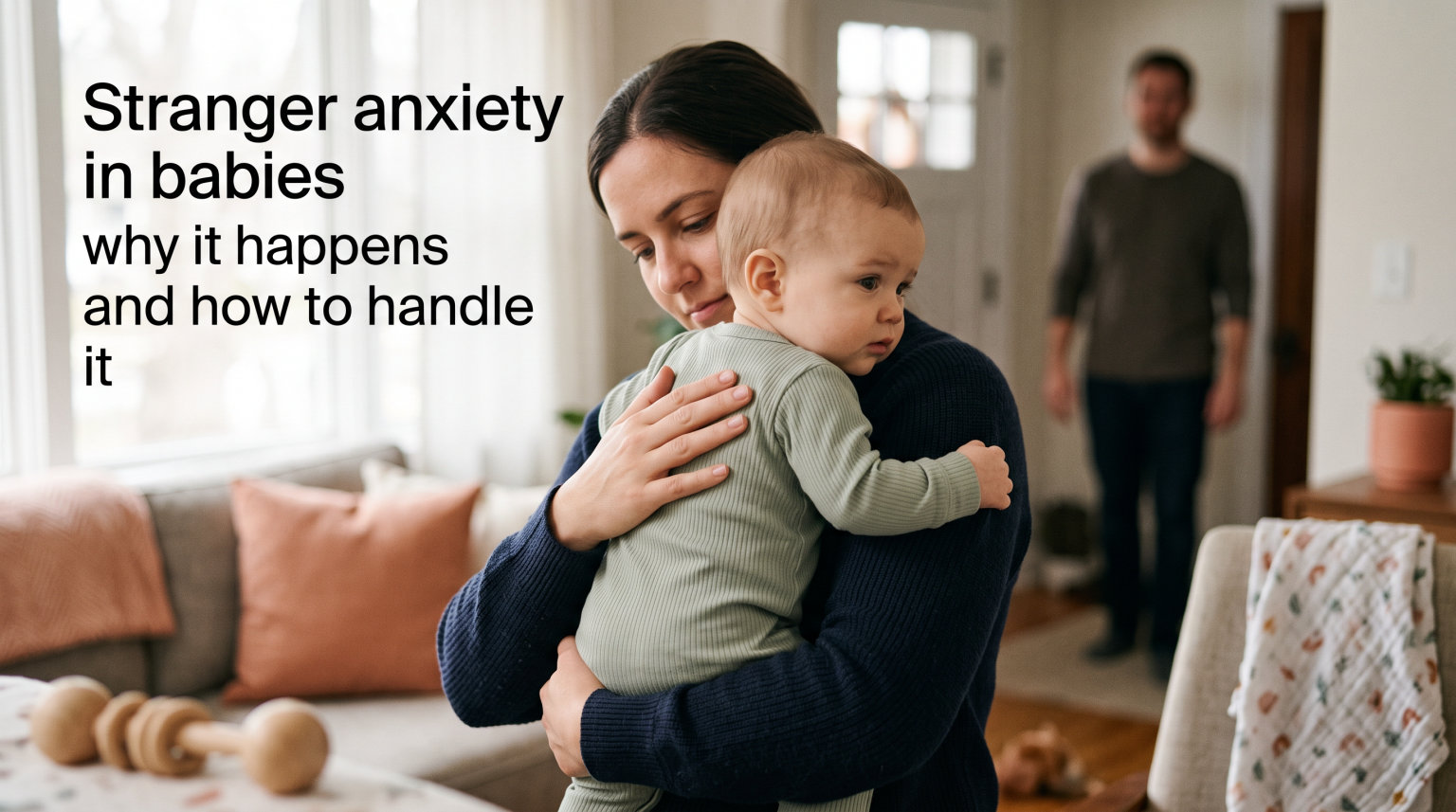
Stranger anxiety in babies is the normal distress your little one experiences when meeting or being held by unfamiliar people. It typically begins around 6 to 8 months of age and peaks between 12 to 15 months. This developmental phase is actually a sign that your baby has formed healthy attachments to familiar caregivers. Understanding why it happens and how to respond can help you navigate this challenging but temporary stage with confidence.
If you’ve noticed your once social baby suddenly screaming when someone new tries to hold them, you’re not alone. Stranger anxiety catches many parents off guard. The baby who cooed at strangers at the grocery store now cries at the sight of anyone unfamiliar. This shift can feel overwhelming, especially when family members want to hold your growing little one.
Our team has worked with countless parents navigating this exact phase. We’ve seen babies who cling desperately to their mothers’ legs and toddlers who hide behind their parents when visitors arrive. These behaviors are not only normal—they’re signs your baby is developing exactly as expected.
Table of Contents
What Is Stranger Anxiety in Babies?
Stranger anxiety is the fear response babies show when they encounter unfamiliar people. It’s a developmental phase where previously friendly infants become wary of anyone they don’t recognize well. Your baby might cry, cling to you, or turn away from strangers they once welcomed with smiles.
This anxiety is different from simple fussiness. It’s a specific reaction to unfamiliar faces and voices. Your baby has learned to distinguish between people they know and people they don’t. This cognitive leap is actually cause for celebration, even if it feels stressful in the moment.
When Does Stranger Anxiety Start?
Most babies begin showing signs of stranger anxiety between 6 and 9 months of age. However, some sensitive infants show reactions as early as 3 or 4 months. The exact timing depends on your baby’s temperament, developmental pace, and exposure to different people.
According to child development research, stranger anxiety typically peaks around 12 to 15 months. During this peak period, reactions can be intense. Your baby might cry for extended periods when someone new approaches or even when familiar faces appear in unfamiliar contexts.
Why Does Stranger Anxiety Happen?
Stranger anxiety happens because your baby’s brain is developing important new capabilities. Around the same time stranger anxiety emerges, babies develop object permanence—the understanding that things and people continue to exist even when out of sight. This cognitive leap allows your baby to recognize familiar faces and distinguish them from unfamiliar ones.
Attachment theory explains that as babies form strong bonds with their primary caregivers, they naturally become more selective about who they trust. From an evolutionary perspective, this wariness of strangers served as a survival mechanism. Infants who stayed close to familiar caregivers were more likely to be protected and fed.
Your baby’s developing brain now recognizes familiar patterns in faces they see regularly. When someone unfamiliar approaches, your baby notices the difference. This recognition triggers a fear response designed to keep them safe with trusted caregivers.
Signs Your Baby Is Experiencing Stranger Anxiety
Watch for these common signs that stranger anxiety has arrived:
Crying or screaming when someone new approaches or attempts to hold your baby
Clinging desperately to you or another primary caregiver
Hiding their face in your shoulder or clothing
Freezing in place when strangers interact with them
Becoming fussy or upset in new environments with unfamiliar people
Turning away from strangers who try to engage them
Physical resistance if a stranger tries to pick them up
Stranger Anxiety vs. Separation Anxiety: Understanding the Difference
Parents often confuse stranger anxiety with separation anxiety, but they’re distinct developmental phases. Stranger anxiety is triggered by unfamiliar people, regardless of whether you’re present. Your baby might cry when a new babysitter arrives, even if you stay in the room.
Separation anxiety, on the other hand, is triggered by being separated from you or another primary caregiver. Your baby might cry when you leave the room, even if they’re with someone familiar like a grandparent. Both phases are normal, but they require different approaches.
Many babies experience both types of anxiety simultaneously, which can feel particularly challenging. Understanding which reaction is occurring helps you respond appropriately to your baby’s needs.
How Long Does Stranger Anxiety Last?
Stranger anxiety typically decreases by age 2 to 3 years as children become more confident and develop language skills to communicate their feelings. However, the duration varies significantly between children. Some toddlers continue showing stranger anxiety until age 4 or beyond.
During the peak phase between 12 and 15 months, reactions may be most intense. After this period, you’ll likely notice gradual improvement. Your toddler might become more willing to interact with new people from a distance before eventually allowing closer contact.
How to Help Your Baby with Stranger Anxiety: Practical Strategies
Managing stranger anxiety requires patience, preparation, and respect for your baby’s feelings. These strategies can help both you and your little one navigate this phase:
Always stay close and provide a secure base
Your baby needs to know you’re available and protective during encounters with strangers. Hold your baby or stay within arm’s reach when new people approach. Let them observe from the safety of your arms before expecting interaction.
Introduce new people gradually
Rather than having a stranger immediately pick up your baby, suggest a warm-up approach. Let the new person sit nearby and talk softly while you hold your baby. Allow your baby to observe and become comfortable at their own pace.
Validate your baby’s feelings
Acknowledge your baby’s distress with calm reassurance. Say things like “I see you’re feeling scared. Mama’s here. We can watch from here.” Avoid apologizing for your baby’s behavior—they’re responding exactly as their developing brain tells them to.
Prepare visitors in advance
Let family members and friends know what to expect. Explain that your baby is going through a normal developmental phase and may need time to warm up. Suggest they sit at a distance and avoid direct eye contact initially.
Use transitional objects
If your baby has a favorite blanket, toy, or comfort item, bring it along during encounters with strangers. Having something familiar can provide a sense of security in new situations.
Practice in low-pressure situations
Expose your baby to new people in controlled environments where you can leave if needed. Brief interactions at the park or playground are less intense than long visits at home. Let your baby set the pace for how long they’re comfortable.
Don’t force interaction
Allow your baby to decide when they’re ready to engage with someone new. Avoid phrases like “Give Uncle John a hug” if your baby is clearly uncomfortable. Forced interactions can increase anxiety rather than decrease it.
Model confidence and calmness
Your baby reads your emotional cues. If you seem anxious about their reaction, your baby will sense something is wrong. Stay relaxed and confident during encounters with strangers, even when your baby is upset.
Tips for Family Members and Caregivers
If you’re a grandparent, aunt, uncle, or other caregiver, there are ways to support babies through stranger anxiety without taking rejection personally:
Sit at a distance initially rather than approaching immediately
Avoid direct eye contact at first, which can feel intense for wary babies
Engage with the parent rather than focusing attention on the baby
Let the baby approach you when they’re ready
Bring a favorite toy or book as an icebreaker
Understand this is a phase and not a reflection on your relationship
Follow the baby’s lead for interaction level
Many grandparents feel hurt when a grandchild who previously greeted them with smiles now cries in their presence. Remember that this developmental milestone affects familiar people too, especially those who aren’t daily caregivers. Your continued patience will pay off as the phase passes.
When to Seek Professional Help
While stranger anxiety is a normal developmental phase, there are times when professional guidance may be helpful. Consider consulting your pediatrician if:
Anxiety persists beyond age 3 with no signs of improvement
Reactions are extremely severe causing physical symptoms like vomiting or prolonged screaming
Anxiety interferes with daily life making childcare impossible or preventing medical appointments
Your baby shows signs of developmental delays in other areas alongside extreme stranger anxiety
You’re feeling overwhelmed or unable to cope with your baby’s needs
Most stranger anxiety falls within normal developmental ranges. However, trust your instincts as a parent. If something feels beyond the typical, don’t hesitate to seek professional guidance. Your pediatrician can help assess whether additional support is needed.
FAQs
How to help a toddler with stranger anxiety?
Help your toddler by preparing them in advance, staying close as a secure base, introducing new people gradually, validating their feelings, and never forcing interaction. Let them warm up at their own pace and provide comfort items for security. Model calmness and confidence during encounters with strangers.
At what age does separation anxiety typically peak in infants and small children?
Stranger anxiety typically peaks between 12 and 15 months of age. Separation anxiety often peaks around 18 months to 2 years. Both phases are normal developmental milestones that gradually decrease as children gain confidence and language skills.
How long does stranger anxiety last in babies?
Stranger anxiety typically lasts from around 6 months until age 2 to 3 years. The most intense period is usually between 12 and 15 months. Some children may continue showing mild stranger anxiety until age 4, but most show significant improvement after age 2.
What if my baby only wants Mom and no one else?
This is a common sign of strong attachment, which is healthy and normal. Your baby has formed a secure bond with their primary caregiver. This phase will pass as your baby becomes more confident. Support the attachment by being available and patient, while gradually creating opportunities for others to build trust.
Is stranger anxiety a sign of autism?
No, stranger anxiety is a normal developmental milestone present in most infants between 6 and 9 months. Autism is diagnosed based on social communication challenges, repetitive behaviors, and restricted interests across developmental domains. Stranger anxiety alone is not an autism indicator.
My baby doesn’t have stranger anxiety – is this normal?
Yes, this is normal too. Some babies show less stranger anxiety due to temperament, frequent exposure to different people, or childcare attendance. The absence of stranger anxiety doesn’t indicate a problem with attachment or development. Every baby develops at their own pace.
Can stranger anxiety start at 4 months?
Yes, some sensitive babies show signs of stranger anxiety as early as 3 to 4 months. While the typical onset is 6 to 9 months, early development varies between infants. Earlier onset often correlates with a more sensitive temperament but is still within normal developmental ranges.
How do I handle childcare drop-offs with stranger anxiety?
Prepare your caregiver in advance about your baby’s needs, allow extra time for warm-up, bring comfort items, and create a consistent goodbye routine. Stay calm and confident during drop-off, and trust that your baby will settle with time. Most children adjust within a few weeks of consistent care.
Stranger anxiety in babies is a temporary but challenging phase that marks important developmental progress. Your baby’s growing brain is learning to distinguish familiar from unfamiliar people, forming strong attachments, and developing survival instincts. While the screaming and clinging can feel overwhelming in the moment, remember that this behavior is actually a sign of healthy development. With patience, preparation, and respect for your baby’s feelings, you’ll both emerge from this phase with a stronger bond and newfound confidence in navigating the world together.