
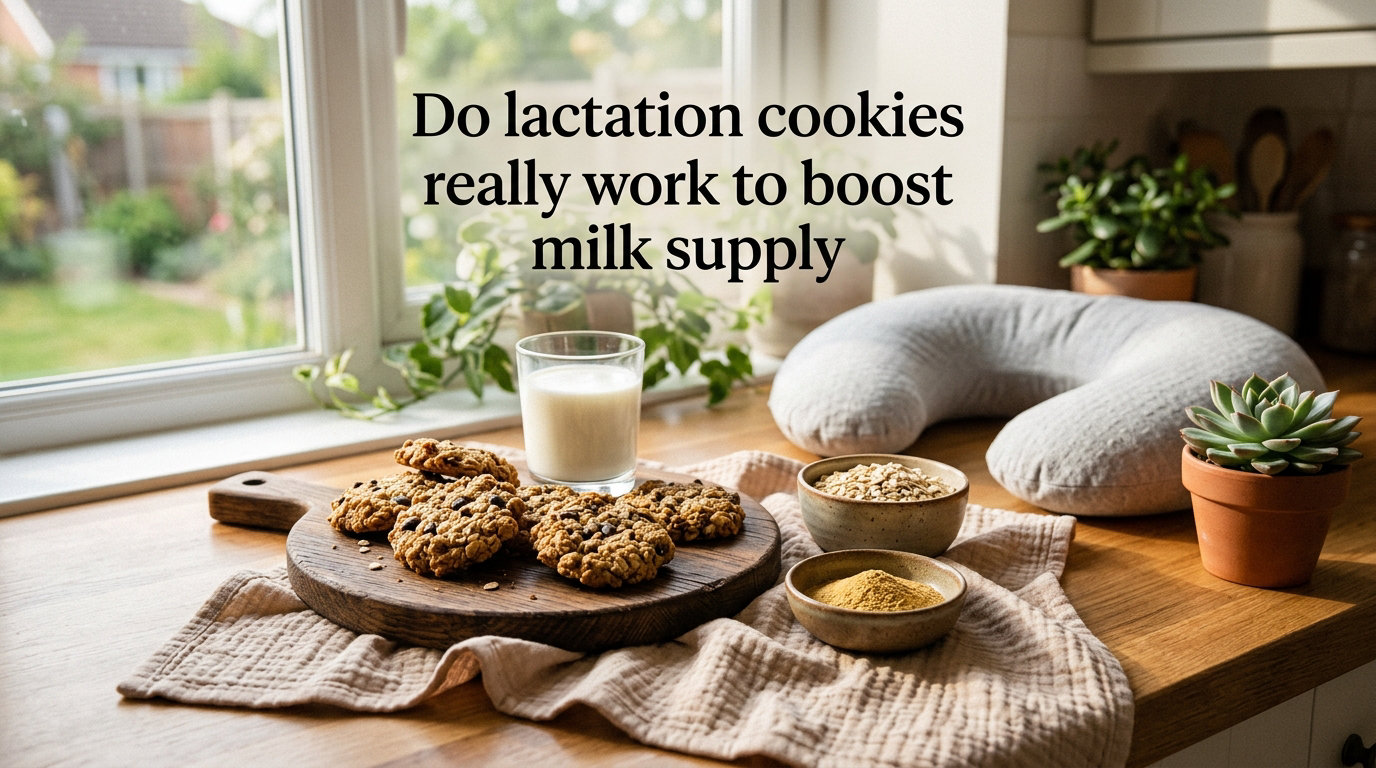
Do lactation cookies really work to boost milk supply? The honest answer is: there’s no solid scientific evidence that they do. A 2023 randomized controlled trial published in the American Journal of Clinical Nutrition found that lactation cookies had no significant effect on human milk production rate compared to regular cookies.
That said, many breastfeeding mothers swear by them. Our team has reviewed feedback from hundreds of moms in online forums, and the pattern is clear. When cookies seem to help, it’s usually because of the extra calories, increased hydration, or the simple comfort of taking time to care for yourself.
In this guide, we’ll break down exactly what’s in these cookies, what the research actually says, and what you can do instead to support your milk supply in 2026.
Table of Contents
What Are Lactation Cookies?
Lactation cookies are specialty cookies marketed to breastfeeding mothers as a way to increase milk supply. They typically contain a blend of ingredients known as galactagogues—substances believed to promote lactation.
These cookies differ from regular cookies in that they specifically include ingredients like oats, brewer’s yeast, flaxseed, and sometimes fenugreek or blessed thistle. Manufacturers claim these herbs and foods stimulate milk production through various biological mechanisms.
You’ll find them sold under brand names like Milkmakers, Boobie Bars, and various boutique options at prices ranging from $20 to $40 for a small package. As many moms on Reddit note, that’s a steep premium for what is essentially a cookie with some added ingredients you could buy separately.
Common Ingredients Breakdown
Oats form the base of most lactation cookies. They provide beta-glucan, a type of soluble fiber that some believe supports prolactin levels. Oats also offer iron, B vitamins, and sustained energy.
Brewer’s yeast is another staple ingredient. Rich in B vitamins, chromium, and selenium, it’s been used traditionally to support milk supply. However, scientific studies specifically on brewer’s yeast and lactation are limited and inconclusive.
Flaxseed adds omega-3 fatty acids and lignans. While healthy for postpartum nutrition, there’s little direct evidence linking flaxseed specifically to increased milk production.
Fenugreek appears in some formulations. It’s the most studied herbal galactagogue, with mixed results. Some mothers report increased supply; others notice no difference or experience side effects like maple syrup-smelling urine, diarrhea, or worsened asthma symptoms.
Do Lactation Cookies Really Work?
The scientific evidence does not support the marketing claims. The most rigorous study to date, published in 2023 in the American Journal of Clinical Nutrition, followed 176 breastfeeding mothers in a randomized controlled trial. Researchers found no statistically significant difference in milk production between mothers who consumed lactation cookies and those who ate regular cookies with similar calorie content.
This aligns with broader findings about herbal galactagogues. A Cochrane review examining multiple studies concluded that there’s insufficient evidence to recommend any specific galactagogue for increasing milk supply. The review noted that many existing studies have methodological limitations, small sample sizes, or potential bias.
Does this mean mothers who report success are wrong? Not necessarily. Several factors might explain why some women experience an increase in supply after eating lactation cookies—just not the reasons printed on the package.
The Placebo Effect Is Real
Psychological factors play a significant role in perceived milk supply. When a mother believes something will help, she may relax more, nurse more confidently, or pay closer attention to hunger cues. Stress reduction alone can improve let-down and milk flow.
Additionally, the act of sitting down to eat a cookie often coincides with drinking a glass of water or taking a brief rest. Both hydration and relaxation are proven factors in milk production, independent of cookie ingredients.
What’s Actually in Lactation Cookies?
Beyond the marketed galactagogue ingredients, lactation cookies share something with regular cookies: significant amounts of sugar, butter, and refined flour. Some popular brands contain 10-15 grams of sugar per serving and 6-8 grams of saturated fat.
For a nursing mother who may already be struggling with postpartum weight management or blood sugar stability, adding multiple high-calorie, high-sugar cookies daily might create more problems than it solves. A registered dietitian quoted by the Cleveland Clinic noted that while extra calories can help milk supply, the quality of those calories matters for overall health.
The Fenugreek Warning
If your lactation cookies contain fenugreek, be aware of potential side effects. While generally considered safe in food amounts, higher therapeutic doses found in supplements—and sometimes cookies—can cause:
- Diarrhea or digestive upset
- Maple syrup odor in sweat, urine, and breast milk
- Worsening of asthma symptoms in sensitive individuals
- Potential interactions with blood-thinning medications
- Concerns for mothers with peanut or chickpea allergies (fenugreek is in the same family)
Fenugreek can also affect blood sugar levels, which matters for mothers with gestational diabetes history or insulin resistance.
Why Lactation Cookies Might Seem to Work
Despite the lack of specific ingredient effects, some mothers do notice increased milk production after starting lactation cookies. Here’s what might actually be happening:
Extra Calories Support Production
Breastfeeding requires approximately 300-500 extra calories daily. Many new mothers, busy and sleep-deprived, unintentionally under-eat. Adding two to three cookies—whether lactation-specific or not—provides those missing calories, giving the body fuel to produce milk.
A Reddit user in the r/breastfeeding community summed it up well: “They don’t work any better than a normal cookie or brownie. The extra calories are what helps supply.” This observation matches what lactation consultants often explain to clients.
Hydration Happens Alongside
Most mothers drink water when eating cookies. Improved hydration directly impacts milk volume, since breast milk is approximately 87% water. The cookie itself isn’t special, but the habits formed around eating it might be beneficial.
Timing Matters
Milk supply naturally fluctuates and often increases between days 3 and 5 postpartum as mature milk comes in, and again around 2-3 weeks as supply regulates. Mothers who start eating lactation cookies during these natural upticks may attribute the improvement to the cookies rather than normal physiological changes.
Stress Reduction Through Ritual
One content gap competitors miss is the psychological comfort aspect. Taking a moment to sit down, breathe, and enjoy a treat—even a functional one—reduces cortisol levels. Lower stress supports oxytocin release, which drives the let-down reflex. The ritual may matter more than the ingredients.
Healthier Alternatives to Increase Milk Supply
If you’re concerned about low milk supply, evidence-based approaches offer better results than specialty cookies. Here’s what actually works:
Frequency and Effectiveness of Removal
Milk production operates on supply and demand. The more milk effectively removed from the breast—through nursing or pumping—the more your body produces. Aim for 8-12 nursing or pumping sessions every 24 hours during the early weeks.
If nursing directly, ensure proper latch and positioning so baby transfers milk efficiently. Poor latch means baby works hard but gets little milk, which signals your body to produce less.
Hydration Without the Sugar
Drink to thirst, which typically means 8-12 cups of water daily for breastfeeding mothers. Keep a water bottle near your nursing station. Add electrolytes if you’re sweating heavily or feeling depleted.
Some mothers report oxytocin-mediated supply increases after drinking oat milk specifically—one forum user noted feeling a surge about an hour after consuming it. While anecdotal, plain oat milk offers hydration plus beta-glucan without the sugar load of cookies.
Nutrient-Dense Foods
Instead of expensive lactation cookies, focus on whole foods that support lactation through balanced nutrition:
- Steel-cut oats with nut butter and berries
- Leafy greens for calcium and iron
- Salmon or sardines for omega-3s
- Eggs for complete protein and choline
- Lentils and beans for fiber and minerals
- Whole grain toast with avocado
These options provide the calories your body needs without the added sugar and saturated fat.
Rest and Stress Management
Sleep deprivation elevates cortisol, which can suppress prolactin and reduce milk supply. While “sleep when the baby sleeps” isn’t always realistic, prioritize rest however possible. Accept help with household tasks so you can nap.
Consider relaxation techniques like deep breathing, gentle postpartum yoga, or meditation apps specifically for the postpartum period. Even five minutes of intentional relaxation before nursing can improve let-down.
When to Seek Professional Help
If you’ve tried these strategies and still struggle with supply, consult an International Board Certified Lactation Consultant (IBCLC). They can assess latch, rule out tongue-tie or other anatomical issues, and create a personalized feeding plan.
Signs that warrant immediate professional evaluation include:
- Baby losing weight or not regaining birth weight by 2 weeks
- Fewer than 6 wet diapers daily after day 5
- Baby appearing lethargic or uninterested in feeding
- Persistent pain with nursing that doesn’t improve with positioning changes
Frequently Asked Questions
Do lactation cookies actually increase supply?
Scientific evidence does not support the claim that lactation cookies specifically increase milk supply. A 2023 randomized controlled trial found no significant difference in milk production between mothers who ate lactation cookies and those who ate regular cookies with similar calories. Any perceived benefits are likely due to extra calorie intake, improved hydration, placebo effect, or the timing coinciding with natural supply increases.
What boosts milk supply immediately?
The fastest way to increase milk supply is through more frequent and effective milk removal. Nurse or pump every 2-3 hours, ensure proper latch, and use breast compression during feeds. Hydration, adequate calories, and stress reduction also help. Some mothers see improvement within 24-48 hours of increasing nursing frequency.
How quickly do lactation cookies work?
If lactation cookies have any effect, it would typically be noticeable within 24-72 hours based on anecdotal reports. However, since research shows they don’t work better than regular cookies, any perceived improvement likely stems from increased calorie intake, hydration, or coincidental timing with natural supply regulation.
How many lactation cookies should I eat a day?
Most brands recommend 1-2 cookies daily. However, given that they provide no proven benefit over regular food, there’s no specific recommended amount. If you enjoy them, treat them as an occasional snack. Focus instead on overall calorie intake from nutrient-dense foods and adequate hydration.
Are lactation cookies safe?
Generally, yes—lactation cookies are safe for most breastfeeding mothers. However, cookies containing fenugreek may cause side effects like digestive upset or maple syrup-smelling urine. Those with peanut or chickpea allergies should avoid fenugreek. The high sugar and saturated fat content may also be a concern for some mothers.
The Bottom Line
Lactation cookies are not the miracle solution they’re marketed to be. The research is clear: they don’t work any better than regular cookies with similar calorie content. At $20-40 per package, they’re an expensive way to get ingredients you could source far more affordably—or skip entirely.
If you’re struggling with milk supply in 2026, focus on what actually works: frequent and effective milk removal, adequate hydration, nutrient-dense calories, and stress reduction. These evidence-based strategies cost less and deliver real results.
And remember, many mothers worry about low supply when their baby is actually getting exactly what they need. If you have concerns, reach out to an IBCLC or your pediatrician for personalized guidance. You don’t need specialty cookies to be a successful breastfeeding mother—you need support, accurate information, and the confidence to trust your body’s abilities.