
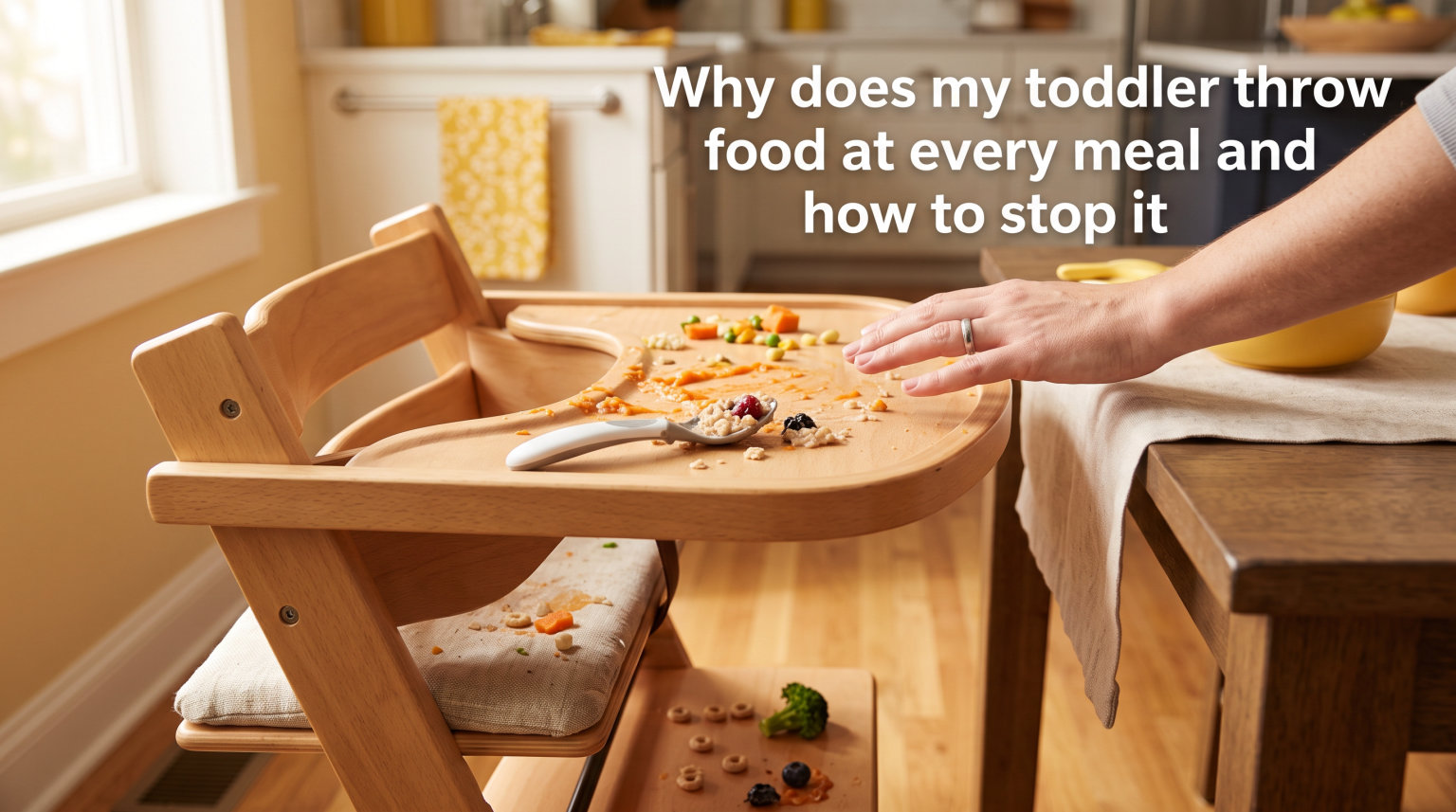
The spaghetti flies through the air and lands with a wet smack on the floor. Your toddler giggles. You sigh, reach for the paper towels, and wonder if you’ll ever eat a peaceful meal again.
If this scene plays out at your dinner table daily, you are not alone. Thousands of parents search for answers about toddler throwing food every single day, often standing in their kitchens wondering what they’re doing wrong.
Is it normal for a 2 year old to throw food? Yes, it is completely normal. Food throwing is one of the most common toddler behaviors, affecting the vast majority of children between 12 months and 3 years. This behavior is developmentally appropriate and actually signals that your child’s brain is developing exactly as it should.
I remember when my youngest went through this phase. Every meal became a potential battleground. After weeks of frustration, I learned that understanding why toddlers throw food is the key to stopping it. Once you know the reasons behind this behavior, you can respond calmly and effectively instead of reacting with stress and confusion.
In this guide, you’ll learn exactly why your toddler throws food at every meal and proven strategies to stop it. These techniques come from child development experts, registered dietitians, and real parents who have successfully navigated this challenging phase.
Table of Contents
Why Do Toddlers Throw Food?
Toddlers throw food for four primary developmental reasons. Understanding these motivations helps you respond with empathy rather than frustration.
Cause and Effect Learning
Your toddler’s brain is a learning machine right now. They are discovering that their actions have consequences. When they drop food and watch it fall, hear it splat, and see you react, they’re learning about physics, gravity, and cause and effect.
This is the same reason toddlers love dropping toys from their high chair repeatedly. They’re not being naughty. They’re being scientists. To them, every food throw is an experiment: What happens when I do this?
Testing Boundaries
Between 18 months and 3 years, toddlers are learning where their power begins and ends. Throwing food tests what they can control and what response it generates from you. Will mom react? Will dad get upset? Can I make things happen?
Boundary testing is a healthy, normal part of developing autonomy. Your toddler is figuring out their place in the family and what behaviors are acceptable. They’re not defying you personally. They’re learning the rules of the world.
Practicing Motor Skills
Throwing is a new physical skill for toddlers. They have recently developed the coordination to grasp, aim, and release. Their brain is driven to practice this ability. Food just happens to be the most available object during mealtime.
Think about how adults feel compelled to practice new skills. Your toddler feels the same urge about throwing. The problem is that food is the target of their practice session.
Communicating Needs
Toddlers throw food to send messages they cannot yet express with words. Common messages include: I am finished eating. I am bored and want to get down. I want attention. I don’t like this food. I am tired of sitting.
Young toddlers especially lack the vocabulary to say all done or no thank you. Throwing becomes their communication method. Teaching replacement communication is one of the most effective ways to stop food throwing.
Is throwing food developmentally appropriate? Absolutely. This behavior typically peaks between 18 months and 2 years when cause-and-effect learning, boundary testing, and motor skill development all converge. It is not a sign of bad parenting or a difficult child. It is a sign of a developing brain.
How to Stop Toddler Food Throwing
Now that you understand why toddlers throw food, let’s talk about how to stop it. These strategies work best when used together consistently. Pick the approaches that fit your parenting style and your child’s temperament.
Stay Calm and Keep Your Cool
The most important response to food throwing is no response at all. When your toddler throws food, take a deep breath. Keep your face neutral. Do not show shock, anger, or frustration.
Reacting strongly, even negatively, rewards the behavior with attention. Toddlers crave any reaction from you. When you yell, gasp, or rush to clean up dramatically, you accidentally reinforce the throwing.
I know staying calm is easier said than done. After the third food throw in one meal, your patience wears thin. Try this mantra: This is developmentally appropriate. This will pass. My reaction teaches more than the throw itself.
When you feel yourself getting frustrated, pause. Take three deep breaths. Remember that your calm response is the fastest path to ending this behavior.
Teach All Done Communication
Many toddlers throw food because they don’t know how to signal they’re finished. Teaching an alternative communication method eliminates this motivation entirely.
For verbal toddlers, teach the phrase all done. Practice it outside of meals first. You can model it by saying all done when you finish your own meals or activities. Eventually, prompt your child to say it before they get down from the table.
For nonverbal toddlers, teach the sign for all done. The sign is simple: hold both palms up and twist your wrists back and forth. Most toddlers can learn this sign between 12 and 18 months, well before they can speak the words.
When your toddler uses all done appropriately, respond immediately by helping them down from the high chair. This reinforces that communication works better than throwing.
Set Clear Expectations Before Meals
Toddlers understand more than they can express. Setting expectations before the meal primes them for success. Keep your language simple and positive.
Before placing food on the tray, say: Food stays on the table. If you throw food, the meal ends. This plants the seed of expected behavior in their mind.
Some parents use a simple hand signal or phrase as a reminder during the meal. You might gently touch the table and say food stays here before any throwing begins. Preemptive reminders work better than reactive corrections.
The No Thank You Bowl Alternative
Sometimes toddlers throw food because they want to reject it but don’t know how. The no thank you bowl gives them a proper place to put unwanted food.
Place a small bowl or designated spot on the table for rejected food. Teach your toddler that food they don’t want goes in the no thank you bowl, not on the floor. You can model this by transferring a small piece of your own food to the bowl while saying no thank you.
This strategy works particularly well for toddlers who selectively throw certain foods while keeping others. It gives them control over their choices without creating a mess.
End the Meal as Natural Consequence
When food throwing persists despite warnings, end the meal. This natural consequence teaches that throwing food means mealtime is over.
Here is how to implement this effectively. Give one calm warning after the first throw: Food stays on the table. If you throw again, mealtime is done. If throwing continues, follow through immediately. Remove your child from the high chair and end their meal.
The key is consistency. If you threaten to end the meal but never actually do it, your toddler learns that threats are empty. Follow through every single time.
Some parents worry their toddler will go hungry. Remember that toddlers won’t starve themselves. If they were truly hungry, they would be eating, not throwing. They can wait until the next scheduled snack or meal.
Use Positive You Can Language
The words you use matter. Instead of saying don’t throw food, tell your toddler what they can do. This positive approach reduces resistance and builds cooperation.
Replace don’t throw your food with you can put food you don’t want in the no thank you bowl. Replace stop dropping food with you can ask for help if you’re done.
This technique, called positive phrasing, works because toddlers hear the action words in your sentence. When you say don’t throw, their brain processes throw. When you say you can ask for help, their brain processes ask for help.
Ignore When Appropriate
Sometimes the best response is no response. If your toddler throws food for attention, ignoring the behavior removes the reward they’re seeking.
When a throw happens, calmly pick up the food without eye contact or commentary. Continue your meal as if nothing happened. Do not look at your toddler. Do not talk about the throw. Act completely uninterested.
Save ignoring for attention-seeking throws. If your toddler is throwing because they’re finished eating, ignoring won’t help. They need the communication tools from the all done strategy.
Mealtime Setup for Success
Prevention works better than reaction. Setting up your mealtime environment correctly reduces food throwing before it starts.
High Chair Physical Setup
Your toddler’s physical comfort affects their behavior. An uncomfortable toddler throws more food simply because they want out of the chair.
Check that your child’s high chair has proper foot support. Feet should rest flat on a footrest or the floor, not dangle. The hips, knees, and ankles should all be at approximately 90-degree angles. This stable position helps toddlers feel secure and focused.
If your high chair lacks a footrest, you can improvise with a sturdy box or stack of books. The goal is stable, grounded feet.
Meal Timing and Duration
Toddlers have short attention spans. Expecting them to sit for 30 minutes is unrealistic and invites boredom-based food throwing.
A good rule of thumb is 1-2 minutes per year of age. A 1-year-old can manage about 10 minutes. An 18-month-old might last 15 minutes. A 2-year-old can handle 20-30 minutes at most.
Watch for signs that your toddler is done: playing with food instead of eating, looking around the room, throwing food, or asking to get down. Respect these signals and end the meal before the behavior escalates.
Snack Schedule vs. Grazing
Toddlers who graze all day throw more food at meals. When children eat constantly, they never develop true hunger cues. They also learn that food is always available, making meals feel less important.
Establish a consistent meal and snack schedule. Most toddlers do well with three meals and 2-3 snacks at predictable times. Avoid offering food outside these times, even if your toddler asks.
A structured schedule helps toddlers come to the table hungry and ready to eat. Hungry toddlers focus on food. Full toddlers play with food, including throwing it.
Starter Portions
Large portions overwhelm toddlers and create more throwing opportunities. Serve small starter portions of 2-3 tablespoons per food item.
When the plate is nearly empty, your toddler has less ammunition for throwing. You can always offer seconds if they finish and want more. This approach also reduces food waste.
Some parents find that placing food directly on the high chair tray rather than a plate reduces throwing. Toddlers sometimes throw plates as a game. Food on the tray feels more manageable.
Pre-Meal Physical Activity
Toddlers have energy to burn. Sitting still is hard for them. Physical activity before meals helps them settle into eating mode.
Before sitting down for a meal, let your toddler run, jump, or play actively for 10-15 minutes. Some parents call this getting the wiggles out. Others call it pre-meal recess.
Throwing practice can be part of this physical time. Take your toddler outside and throw balls together. Let them satisfy that throwing urge with appropriate objects in an appropriate place. Then explain that at mealtime, food stays on the table.
Age-Specific Food Throwing Guidance
Food throwing looks different at different ages. Understanding age-specific expectations helps you respond appropriately for your child’s developmental stage.
1 Year Old (12-14 Months)
At 12 months, food throwing is just beginning. Your baby is newly discovering they can drop things intentionally. They’re not testing you. They’re exploring physics.
Keep your response simple and calm. Say food stays on the table and remove the food if throwing continues. At this age, ending the meal usually isn’t necessary. Just remove the food temporarily and offer it again.
Focus heavily on teaching the all done sign. Most 1-year-olds cannot verbalize their needs but can learn signs quickly. This is the most effective prevention tool for this age.
18 Month Old
Food throwing typically peaks around 18 months. This is the intersection of cause-and-effect understanding, boundary testing, and developing independence.
Be consistent with consequences at this age. If you say the meal ends, end it. 18-month-olds are masters of persistence testing. They throw to see if you’ll react the same way every time.
This is also when the no thank you bowl becomes most useful. 18-month-olds have strong food preferences but limited ways to express them. Give them a proper rejection method.
2 Year Old
By age 2, most toddlers understand the rules but still test them occasionally. Two-year-olds throw food primarily for attention or when they’re frustrated.
Continue using all the strategies from earlier ages. Add verbal communication practice. Encourage your 2-year-old to say all done or no thank you with words.
Many 2-year-olds respond well to simple choices. Would you like the red cup or the blue cup? Do you want to sit by mommy or daddy? Giving controlled choices reduces the power struggles that lead to throwing.
3 Year Old and Beyond
By 3 years, food throwing should be rare. If your 3-year-old is still throwing food regularly, evaluate whether the behavior has become a habit or attention-seeking pattern.
Three-year-olds understand natural consequences fully. Be consistent about ending meals immediately when throwing occurs. At this age, you can also involve them in cleanup. You threw the food, so you need to help pick it up.
If food throwing persists past age 3, consider whether there are underlying causes like sensory issues, extreme pickiness, or behavioral concerns that need professional evaluation.
Getting Partners and Caregivers on the Same Page
One of the biggest challenges parents face is inconsistent responses between caregivers. When mom stays calm but dad yells, or when grandparents let throwing slide, toddlers get confused.
Addressing Inconsistent Approaches
Have a family meeting about food throwing strategy. Agree on the approach you will all use. Write it down if necessary. When everyone responds the same way, the behavior stops faster.
Focus on the big picture. The goal is teaching your toddler, not winning a parenting debate. Find common ground with your partner about what matters most: teaching that food stays on the table.
Managing Big Reactions from Partners
Some parents struggle because their partner gives big reactions despite agreeing to stay calm. Big reactions are often more ingrained than we realize.
Talk about this outside of mealtime. Explain why big reactions backfire. Practice neutral responses together. Some couples develop a secret signal to remind each other to stay calm when throwing starts.
Remember that your toddler is watching both of you. Even if your partner reacts strongly, you can still model calm consistency. Over time, your partner may follow your lead.
Grandparent and Caregiver Differences
Grandparents and other caregivers may handle food throwing differently than you do. This is normal but confusing for toddlers.
Share your strategies with caregivers in advance. Send a simple text with your approach: We’re working on keeping food on the table. If she throws, we remind her once and then end the meal if it continues. Thanks for helping us stay consistent!
Accept that perfect consistency across all caregivers is impossible. Do your best, and remember that your toddler can learn different rules for different settings, just like they do at school or daycare.
When Does Food Throwing End?
Parents often ask when this phase will finally be over. The answer varies by child, but there are general timelines you can expect.
Most toddlers stop throwing food between age 2 and 2.5 years. By this age, they have developed better impulse control, more communication skills, and a clearer understanding of mealtime expectations. The behavior often fades gradually rather than stopping suddenly.
Food throwing typically comes and goes in phases. Your toddler might stop for weeks, then start again during a developmental leap or when testing new boundaries. This regression is normal.
When do toddlers stop throwing food? The majority have outgrown regular food throwing by age 3. If your child is still throwing food frequently past age 3, consider consulting your pediatrician. Persistent food throwing can sometimes indicate sensory processing issues, extreme pickiness, or other concerns worth evaluating.
Remember that phases feel eternal when you’re in them but brief in hindsight. This too shall pass. Your toddler will eventually eat meals without launching food across the room.
How to Discipline Food Throwing (The Positive Approach)
Many parents wonder how to discipline a toddler who throws food. The answer lies in positive discipline, not punishment.
Positive discipline focuses on teaching rather than punishing. For food throwing, this means teaching appropriate behavior rather than simply reacting to inappropriate behavior. Set clear expectations, use natural consequences, and teach replacement skills.
What is the 80 20 rule for toddlers? This guideline suggests that 80 percent of your interactions with your toddler should be neutral or positive, while only 20 percent should involve discipline or correction. During meals, aim for mostly positive conversation and engagement. Keep corrections brief and calm.
Natural consequences work better than punishment for food throwing. The natural consequence of throwing food is that the meal ends or the food is removed. These consequences teach cause and effect without shame or anger.
Avoid punitive approaches like taking away toys, isolating your child, or forcing them to stay at the table until they eat. These strategies create power struggles and anxiety around mealtimes, often making throwing worse.
Frequently Asked Questions
How to teach a toddler to stop throwing food?
Teach a toddler to stop throwing food by first staying calm and neutral when throwing occurs. Teach alternative communication like saying or signing all done when finished. Set clear expectations before meals using simple phrases like food stays on the table. Use a no thank you bowl for rejected food. End the meal immediately if throwing continues after a warning. Use positive language like you can put unwanted food in the bowl rather than don’t throw food. Be consistent with consequences every time.
Is it normal for a 2 year old to throw food?
Yes, it is completely normal for a 2 year old to throw food. This behavior peaks between 18 months and 2 years as toddlers explore cause and effect, test boundaries, and practice new motor skills. Food throwing is developmentally appropriate and indicates healthy brain development. Most toddlers outgrow this phase by age 2.5 to 3 years.
What is the 80 20 rule for toddlers?
The 80 20 rule for toddlers suggests that 80 percent of parent-child interactions should be neutral or positive, while only 20 percent should involve discipline or correction. This guideline helps parents maintain a healthy balance between setting boundaries and building connection. During mealtimes, aim for mostly positive engagement with brief, calm corrections when needed.
What is food neophobia in toddlers?
Food neophobia is the fear or reluctance to try new foods, common in toddlers between 2 and 6 years of age. This developmental phase causes children to reject unfamiliar foods and prefer foods they recognize. Food neophobia can contribute to food throwing when toddlers encounter new or disliked foods on their plate. Understanding this normal developmental stage helps parents respond with patience rather than pressure.
How to discipline a toddler who throws food?
Discipline a toddler who throws food using positive discipline methods rather than punishment. Set clear expectations before meals about where food belongs. Use natural consequences, such as ending the meal or removing the food, when throwing occurs. Teach alternative behaviors like using a no thank you bowl or saying all done. Stay calm and consistent in your response. Avoid shame, yelling, or punitive measures that create mealtime anxiety.
Is throwing food developmentally appropriate?
Yes, throwing food is developmentally appropriate for toddlers between 12 months and 3 years. This behavior serves important developmental purposes including learning cause and effect, testing boundaries, practicing motor skills, and communicating needs before language skills are fully developed. Food throwing is not a sign of bad behavior or poor parenting. It is a normal phase that most children experience and eventually outgrow.
Conclusion: Why Does My Toddler Throw Food at Every Meal?
Your toddler throws food at every meal because they are learning, growing, and developing exactly as they should. This behavior, while frustrating, is a normal part of toddler development that serves important purposes: exploring cause and effect, testing boundaries, practicing motor skills, and communicating before they have the words.
To stop toddler throwing food, focus on staying calm, teaching alternative communication like all done, setting clear expectations, and following through with natural consequences when needed. Set up your mealtimes for success with proper high chair support, appropriate meal duration, and starter portions.
Remember that consistency matters more than perfection. You will have good days and bad days. Some meals will be peaceful, and others will end with food on the floor. Progress is not linear. What matters is your overall approach and your willingness to respond with patience rather than frustration.
This phase will pass. One day, sooner than you think, you’ll realize your family has enjoyed an entire week of meals without a single food throw. Until then, arm yourself with these strategies, take deep breaths, and know that millions of parents have survived this phase before you. You will too.