
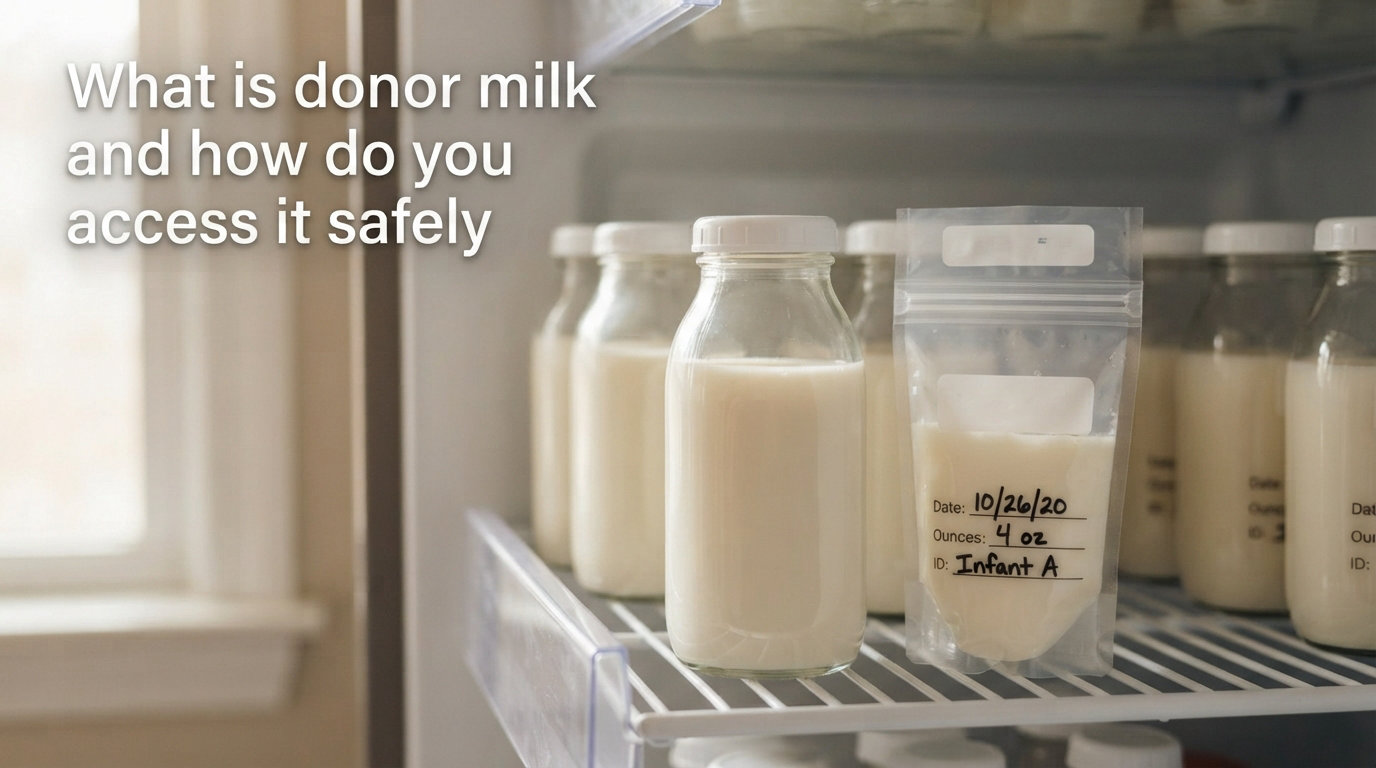
When I first heard about donor milk, I was overwhelmed with questions. Is it safe? How do you get it? Why would someone use milk from a stranger instead of formula? If you are asking these same questions, you are not alone.
Donor milk is breast milk produced by a lactating person and donated to milk banks for distribution to babies whose mothers cannot provide their own milk. It undergoes rigorous screening and pasteurization to ensure safety, making it a valuable resource for families facing feeding challenges. In this guide, I will walk you through everything you need to know about what donor milk is, why families choose it, and exactly how to access it safely in 2026.
Table of Contents
What is Donor Milk?
Donor milk is breast milk that has been generously donated by lactating individuals who produce more than their own baby needs. This milk is collected through established milk banks, screened for contaminants and infectious diseases, pasteurized to eliminate bacteria while preserving nutrients, and then distributed to families in need.
The organizations that handle this precious resource are typically nonprofit or for-profit milk banks accredited by the Human Milk Banking Association of North America (HMBANA). These facilities follow strict protocols established by the CDC and FDA to ensure every ounce of milk is safe for the babies who receive it.
Donor milk is often called “liquid gold” by healthcare providers because of its unique nutritional and immunological properties. Unlike formula, it contains living antibodies, enzymes, and growth factors that support infant development. The pasteurization process used by milk banks, called the Holder method, heats milk to 62.5 degrees Celsius for 30 minutes to kill harmful bacteria while preserving most of these beneficial components.
Once pasteurized, milk from multiple donors may be pooled and mixed to ensure consistent nutritional composition. The milk is then tested for bacterial contamination before being frozen and distributed to hospitals and families. This systematic approach makes pasteurized donor human milk one of the safest alternatives when a mother’s own milk is unavailable.
Why Some Families Need Donor Milk
Families turn to donor milk for many different reasons. Understanding these situations helps explain why this resource matters so much to parents facing challenging circumstances.
Premature Babies in the NICU
Premature infants and babies with very low birth weight face significant health risks, including necrotizing enterocolitis (NEC), a serious intestinal disease. Research shows that human milk significantly reduces NEC risk compared to formula feeding. When mothers of preemies cannot produce enough milk immediately after birth, donor milk becomes a critical bridge until their own supply increases.
Low Milk Supply and Medical Conditions
Some mothers struggle with insufficient milk production due to various factors. Low ferritin levels can contribute to low milk supply in some women. Other conditions like insufficient glandular tissue, previous breast surgery, or hormonal imbalances can also limit production. For these families, donor milk allows them to supplement while working on their own supply or while addressing underlying health issues.
Adoption and Surrogacy
Intended parents through adoption or surrogacy may not be able to produce breast milk themselves. Some adoptive mothers choose to induce lactation, but this process takes time and may not yield a full supply. Donor milk gives these families the option to provide breast milk nutrition to their babies from day one while building their own feeding relationship.
Maternal Illness and Medications
Certain maternal health conditions or necessary medications can make breastfeeding unsafe or impossible. Mothers undergoing chemotherapy, those with infectious diseases that could transmit through milk, or those taking medications contraindicated for breastfeeding may need donor milk as a temporary or long-term solution. This allows their babies to receive optimal nutrition while protecting both mother and child.
Bridge Feeding During Transitions
Sometimes families need donor milk for just a short period. A mother returning to work might experience a temporary dip in supply while adjusting to pumping schedules. A baby with feeding difficulties might need supplemental nutrition while learning to breastfeed effectively. Donor milk serves as a nutritional bridge during these transitional periods without forcing families to resort to formula.
How to Access Donor Milk Safely: A Step-by-Step Guide
Accessing donor milk safely requires following established channels. Here is the proven process our team has researched and verified through consultation with milk banking professionals.
Step 1: Consult Your Pediatrician or Healthcare Provider
Your first step should always be a conversation with your baby’s doctor. Explain why you are considering donor milk and ask whether it is medically appropriate for your situation. Many milk banks require a prescription from a healthcare provider before they will distribute milk, especially for outpatient families.
Step 2: Locate an HMBANA-Accredited Milk Bank
Visit the Human Milk Banking Association of North America website to find an accredited milk bank near you or one that offers shipping to your location. HMBANA-accredited banks follow the highest safety standards and are your safest option for obtaining donor milk. As of 2026, there are 31 milk banks operating across the United States and Canada under HMBANA guidelines.
Step 3: Complete the Intake Process
Contact your chosen milk bank to begin their intake process. You will typically need to provide information about your baby, your healthcare provider’s contact details, and documentation of medical need if required. Some milk banks have online portals to streamline this paperwork.
Step 4: Obtain a Prescription if Required
Many milk banks require a prescription from a licensed healthcare provider for outpatient distribution. Ask your pediatrician or family doctor to provide a prescription stating that donor milk is medically necessary for your baby. Hospitalized infants in NICU settings typically receive donor milk automatically when needed without requiring parents to complete this step separately.
Step 5: Arrange Delivery or Pickup
Once approved, you can arrange to receive your donor milk. Many milk banks offer frozen milk shipped directly to your home in insulated packaging with dry ice. Some have local pickup options if you live nearby. Hospitalized babies receive milk delivered directly to the NICU or pediatric unit.
Step 6: Store and Handle Properly
Store donor milk in a deep freezer at 0 degrees Fahrenheit or below for up to six months. Once thawed, use the milk within 24 hours and never refreeze. Always wash hands before handling milk containers and use clean bottles and feeding equipment. Follow the specific storage guidelines provided by your milk bank, as they may have additional recommendations.
Understanding the Safety and Screening Process
Safety is the number one concern for any parent considering donor milk. Understanding the rigorous processes milk banks use can provide peace of mind about this decision.
Donor Screening Requirements
Milk donors undergo comprehensive screening before their milk is accepted. This process includes a detailed health history questionnaire covering lifestyle factors, medications, and medical conditions. Donors must provide blood test results showing they are negative for HIV, hepatitis B, hepatitis C, and syphilis. Many milk banks also screen for additional infectious diseases and require regular health updates from active donors.
Beyond infectious disease screening, donors must meet basic health criteria. They cannot smoke, use illegal drugs, or consume excessive alcohol. Most milk banks require that donors are in generally good health and that their own babies are thriving on their milk. Some banks have additional requirements about caffeine intake or medication use during the donation period.
The Pasteurization Process
After collection, donor milk undergoes Holder pasteurization, the gold standard for milk banking. This process heats milk to 62.5 degrees Celsius (144.5 degrees Fahrenheit) for 30 minutes, then rapidly cools it. Holder pasteurization eliminates harmful bacteria and inactivates viruses while preserving most of the milk’s nutritional and immunological benefits.
Research shows that Holder pasteurization reduces some heat-sensitive components like certain enzymes and immunoglobulins, but the milk retains its core nutritional value and protective factors. The trade-off for this slight reduction in bioactive components is the elimination of dangerous pathogens that could harm vulnerable infants.
Bacterial Testing and Quality Control
After pasteurization, milk banks conduct bacterial testing on samples from each batch. Any milk that shows bacterial growth is discarded. This multi-layer safety approach means that by the time donor milk reaches your baby, it has been through donor screening, pasteurization, and bacterial testing. This rigorous protocol is why milk bank donor milk is considered safe even for medically fragile preterm infants.
Cost and Insurance Coverage
Understanding the financial aspects of donor milk helps families plan and access resources effectively.
Pricing Structure
Donor milk from HMBANA-accredited milk banks typically costs between $4.25 and $5.50 per ounce as of 2026. A full-term newborn consumes roughly 25 ounces per day, meaning donor milk could cost $106 to $137 daily if used exclusively. This cost reflects the extensive processing required: donor screening, pasteurization, bacterial testing, storage, and distribution.
Nonprofit milk banks often operate at a loss, with the price per ounce not fully covering operational costs. They rely on donations and grants to bridge the gap. For-profit milk banks may have different pricing structures but still follow HMBANA safety standards. Either way, donor milk represents a significant financial investment for families.
Insurance Coverage Options
Insurance coverage for donor milk varies widely. Many private insurance plans cover donor milk for hospitalized infants, particularly in NICU settings where it may be considered medically necessary. Coverage for outpatient use is less common but increasing as awareness grows. Medicaid coverage varies by state, with some states mandating coverage for medically fragile infants.
To pursue insurance coverage, obtain a letter of medical necessity from your pediatrician. Contact your insurance company to ask specifically about donor milk benefits under your plan. Some milk banks have staff who can help navigate insurance billing and may bill your insurance directly if coverage is available.
Charitable Care Programs
Many nonprofit milk banks offer charitable care programs for families who cannot afford donor milk. These programs typically prioritize medically fragile infants and those with demonstrated financial need. When applying for milk, ask about financial assistance options. Some milk banks also work with hospitals to provide free or reduced-cost milk to the most vulnerable patients.
Milk Bank vs Informal Sharing vs Formula: A Comparison
When mother’s own milk is unavailable, families face three main options. Understanding the differences helps you make an informed choice.
| Factor | Milk Bank Donor Milk | Informal Peer-to-Peer Sharing | Infant Formula |
|---|---|---|---|
| Donor Screening | Comprehensive blood testing and health screening required | No standardized screening; depends on individual arrangement | N/A – manufactured product |
| Processing | Holder pasteurization kills bacteria and viruses | Raw, unpasteurized milk | Commercially manufactured under FDA regulations |
| Safety Testing | Bacterial testing after pasteurization | No testing; unknown bacterial/viral status | Quality controlled during manufacturing |
| Cost | $4.25-$5.50 per ounce; insurance may cover | Free or minimal cost (just shipping) | $0.15-$0.30 per ounce |
| Accessibility | Requires prescription; may need to wait for approval | Immediate through online communities | Widely available at stores |
| Immunological Benefits | Retains many antibodies and living cells post-pasteurization | Full complement of bioactive factors | Contains no living antibodies or immune factors |
| Risk Level | Low – multiple safety checks | Higher – potential for disease transmission | Low for full-term infants; higher NEC risk for preemies |
The FDA strongly recommends against feeding babies breast milk acquired directly from individuals or through the Internet. Informal milk sharing carries documented risks of viral transmission, including HIV, hepatitis, and cytomegalovirus. Bacterial contamination is also possible, especially if donors do not follow proper collection and storage hygiene. Some studies have found that informally shared milk purchased online is frequently contaminated with harmful bacteria or adulterated with cow’s milk.
For premature babies, the choice becomes even more critical. Research consistently shows that human milk reduces NEC risk compared to formula. If mother’s own milk is unavailable, pasteurized donor human milk from a milk bank is the recommended alternative for preterm infants according to the American Academy of Pediatrics.
FAQs
What are the downsides of donor milk?
The main downsides include high cost ($4.25-$5.50 per ounce), limited availability requiring prescriptions and planning, and slightly reduced immunological benefits compared to mother’s own milk due to pasteurization. Donor milk may also result in slower growth rates for some premature infants compared to fortified formula, requiring careful monitoring by healthcare providers. Some parents also experience emotional challenges accepting that they cannot provide their own milk.
How to access donor milk?
To access donor milk safely, first consult your pediatrician about medical necessity. Then locate an HMBANA-accredited milk bank through the HMBANA website. Complete their intake paperwork, obtain a prescription if required, and arrange delivery or pickup. Store the frozen milk properly and use within 24 hours of thawing. Never purchase milk from unscreened individuals online.
How much does one pouch of donated breast milk cost?
Donor milk from accredited milk banks typically costs between $4.25 and $5.50 per ounce as of 2026. Costs vary slightly by milk bank and whether services are nonprofit or for-profit. Insurance may cover donor milk for hospitalized or medically fragile infants. Some nonprofit milk banks offer charitable care programs for families with demonstrated financial need.
Can low ferritin cause low milk supply?
Yes, low ferritin can contribute to low milk supply in some women. Ferritin is a protein that stores iron, and low levels may indicate iron deficiency. Postpartum anemia and low iron stores have been associated with insufficient milk production. If you are struggling with milk supply, ask your healthcare provider to check your ferritin levels along with a complete blood count. Treating underlying iron deficiency may help improve milk production.
Conclusion
Donor milk provides a safe, nutritious feeding option when mother’s own milk is unavailable. By choosing HMBANA-accredited milk banks over informal sharing, you ensure your baby receives milk that has been rigorously screened, pasteurized, and tested for safety. While cost can be a barrier, insurance coverage and charitable care programs may help. Speak with your pediatrician to determine whether donor milk is right for your baby and take the first step toward accessing this precious resource safely in 2026.