
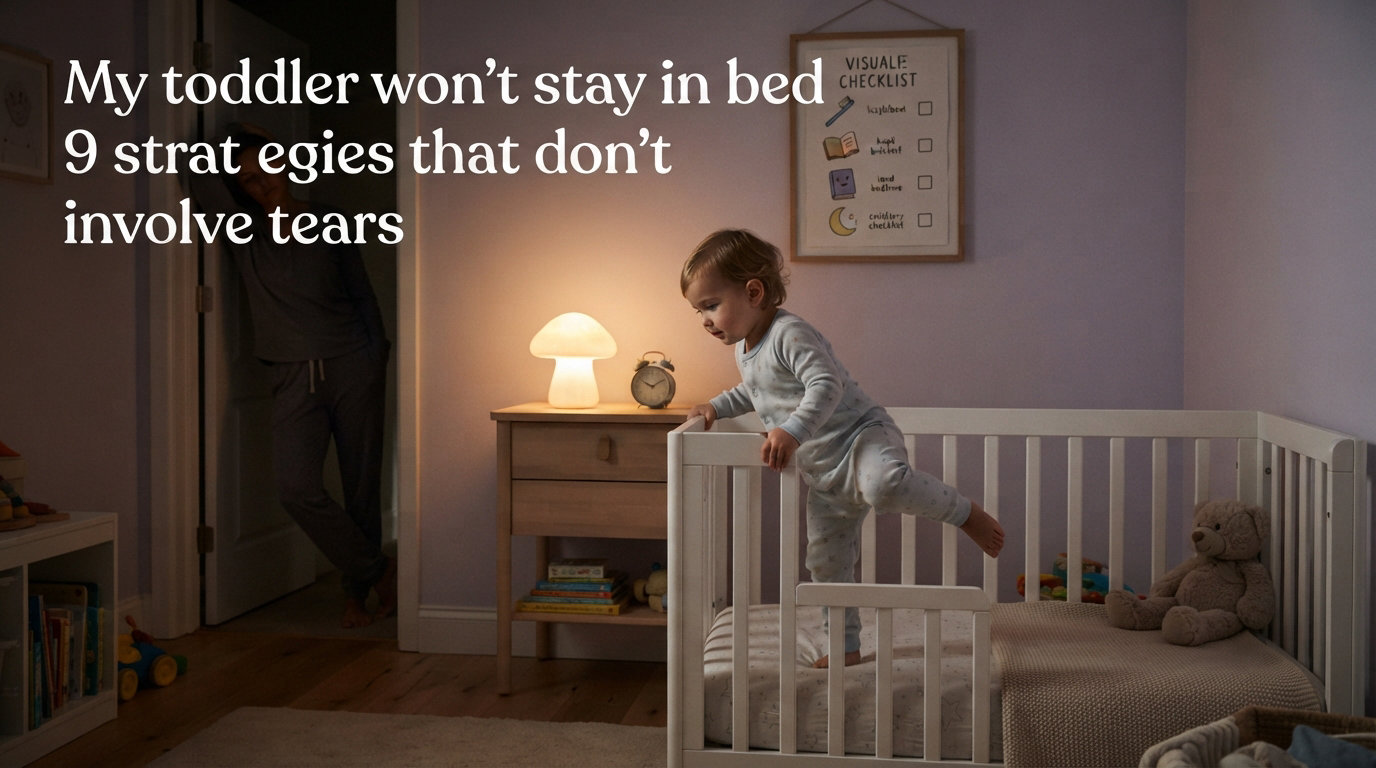
You have walked your toddler back to bed for the fifteenth time tonight. Your voice is hoarse from repeating “it’s bedtime” in increasingly desperate tones. The dishes sit unwashed in the sink, and that book you promised yourself you’d read remains untouched on your nightstand.
I have been there. After three years of working with families as a pediatric sleep consultant, I can tell you that bedtime battles are one of the most exhausting challenges parents face. The good news is that there are gentle, tear-free ways to help your toddler stay in bed without turning bedtime into a nightly war zone.
This guide will walk you through nine proven strategies that respect your toddler’s emotional needs while establishing healthy sleep boundaries. Each approach is designed to keep your connection intact, avoid crying, and actually work within a realistic timeframe.
You will not find any cry-it-out methods here. Instead, you will discover gentle techniques based on child development research and real parent experiences. These strategies address the root causes of bedtime resistance rather than just treating the symptoms.
Table of Contents
Understanding Why Toddlers Won’t Stay in Bed
Before diving into solutions, you need to understand what is driving your toddler out of bed in the first place. Toddlers between two and four years old are experiencing rapid brain development that makes sleep challenging for reasons beyond their control.
Normal Developmental Reasons
Your toddler’s imagination is exploding right now. That shadow in the corner is not just a shadow anymore. It is a potential monster. Their newfound independence makes them want to test boundaries, even at bedtime. Separation anxiety often peaks around age two and can resurface throughout the toddler years.
Physical developments matter too. Many toddlers transition from cribs to beds during this window. Without those high crib walls containing them, the freedom to roam is irresistible. Their ability to open doors and climb out adds new layers to bedtime challenges.
Environmental Factors That Trigger Bedtime Resistance
Light pollution disrupts melatonin production in ways that make falling asleep genuinely difficult for toddlers. A room that seems dim to you might still be too bright for their sensitive systems. Temperature fluctuations, uncomfortable bedding, or noisy environments also play significant roles.
Screen time before bed is a major culprit. The blue light from tablets and phones suppresses sleep hormones for up to two hours after exposure. Even exciting books or rough play right before bedtime can leave a toddler’s nervous system too activated for sleep.
Schedule-Related Causes
An overtired toddler does not sleep better. They sleep worse. When toddlers push past their optimal sleep window, their bodies release cortisol and adrenaline. These stress hormones create a second wind that makes settling down nearly impossible.
Inconsistent wake times, late naps, or dropped naps before your child is ready can all contribute to bedtime struggles. The timing of bedtime matters as much as the routine itself.
9 Gentle Strategies to Keep Your Toddler in Bed
Here are nine strategies that help your toddler stay in bed without tears, tantrums, or emotional distress. Each method respects your child’s developmental stage while providing the structure they need to feel secure.
Strategy #1: The Silent Return Method
The silent return method works by removing all payoff from getting out of bed. When your toddler appears at the living room doorway, you calmly and silently walk them back to bed. No talking. No eye contact. No tucking them in again. Just a neutral escort back to their room.
This approach works because toddlers crave attention, even negative attention. By making the interaction completely boring, you remove the incentive to keep getting up. The key is consistency. You must return them every single time, even if it takes fifty repetitions the first night.
Here is the script to use internally: “I love you too much to argue about bedtime. I will keep you safe by walking you back to your bed.” Externally, you say nothing at all. Just guide them back gently, lay them down if needed, and leave.
Most families see significant improvement within three to seven nights. The first two nights are typically the hardest. Expect forty or more returns on night one. By night three, you might see only five to ten. Stay the course even when it feels hopeless.
Strategy #2: The Bedtime Pass System
The bedtime pass gives your toddler controlled freedom within clear limits. Create a physical pass, perhaps a decorated index card or a special coin. Your toddler gets one pass each night that they can exchange for one brief visit after lights out.
When they cash in their pass, honor the request quickly without extended interaction. A drink of water, one extra hug, or a quick check on a sibling are appropriate uses. Once the pass is spent, bedtime is truly final.
This strategy works best for children three and older who understand the concept of saving and spending. Younger toddlers might not grasp the delayed gratification aspect yet. You can modify this for younger children by using two passes instead of one initially.
Make the pass tangible and special. Let your child decorate it. Store it on their nightstand where they can see it. Praise them enthusiastically in the morning if they still have their pass unused. Positive reinforcement builds the habit faster than consequences.
Strategy #3: Optimize the Sleep Environment
Creating the right sleep environment solves many bedtime battles before they start. Toddlers need darkness to trigger melatonin production effectively. Invest in true blackout curtains that block all outside light, not just decorative ones.
White noise helps mask household sounds that might wake a light-sleeping toddler. Choose a continuous sound like rainfall or brown noise rather than intermittent sounds like ocean waves. Keep the volume at roughly the level of a quiet conversation.
Temperature matters more than most parents realize. The ideal sleep temperature for toddlers is between sixty-eight and seventy-two degrees Fahrenheit. Overheating is a common cause of restless sleep and night waking.
Consider safety-proofing the room so your toddler can explore without danger if they do get up. Remove climbing hazards, secure furniture to walls, and install a baby gate at the door if needed. Knowing they are safe reduces your anxiety and allows you to respond more calmly.
Strategy #4: The Camping Out Method
The camping out method, also called gradual retreat, helps anxious toddlers feel secure while learning to fall asleep independently. You start by sitting right next to their bed as they fall asleep. Each night, you move your chair slightly farther away.
Night one through three, sit in a chair touching their bed. Offer occasional physical reassurance like patting or hand-holding. Nights four through six, move your chair halfway to the door. Reduce physical contact to verbal reassurance only.
By nights seven through nine, sit just inside the doorway. Offer minimal verbal check-ins. Finally, move outside the room with the door slightly ajar. The gradual separation helps your toddler adjust without the panic of sudden abandonment.
This method requires significant parent time investment upfront. Expect to spend forty-five minutes to an hour sitting in that chair initially. Many parents bring a book or podcast to pass the time quietly. The trade-off is minimal crying and a strong sense of security for your child.
Strategy #5: Adjust Wake Windows and Schedule
Sometimes the problem is not behavior but biology. An overtired toddler fights sleep because their body is flooded with stress hormones. Understanding age-appropriate wake windows helps you catch the sleep window before it closes.
Two-year-olds typically need eleven to twelve hours of night sleep plus a one to two hour nap. Their wake window between waking and nap should be about five to six hours. Between nap and bedtime, aim for another five to six hours.
Three and four-year-olds may be transitioning away from naps. If bedtime battles started suddenly, the issue might be too much daytime sleep. Try capping naps at ninety minutes or eliminating them every other day.
Watch for overtired signs: eye rubbing, yawning, sudden bursts of energy, clumsiness, or emotional volatility. These cues mean bedtime should have already happened. Track sleep for a week to identify patterns and adjust timing accordingly.
Strategy #6: The Choice-Giving Approach
Toddlers crave autonomy. Offering controlled choices satisfies this need without surrendering your authority. The trick is offering two parent-approved options that both lead to the same outcome: staying in bed.
Try these choice scripts: “Do you want the blue pajamas or the green ones?” “Should we read one book or two books tonight?” “Would you like the door open a crack or closed all the way?” Each choice gives your toddler a sense of control within your non-negotiable bedtime structure.
Avoid open-ended choices that backfire. “What do you want to wear?” leads to meltdowns when they pick the snowsuit in July. “Which pajamas from your drawer?” still limits options while offering freedom.
Save the biggest choices for earlier in the routine. Decision fatigue is real for toddlers. By bedtime, they need fewer choices, not more. Use the final choices strategically to ease the transition into sleep.
Strategy #7: Visual Bedtime Routine Charts
Toddlers are visual learners. A picture-based bedtime routine chart removes the need for constant verbal reminders. Create a simple sequence of images showing dinner, bath, pajamas, books, cuddles, bed.
Let your toddler help create the chart. Take photos of them performing each bedtime task. Print and laminate the pictures in sequence. Post the chart at their eye level where they can reference it throughout the evening.
Point to the chart rather than repeating instructions. “What’s next on your chart?” engages them in the process. They can move a clothespin or sticker to mark completed steps, giving them ownership of the routine.
The visual routine also helps when caregivers change. Grandparents or babysitters can follow the same sequence your toddler recognizes. This consistency across caregivers reinforces the routine’s power.
Strategy #8: The Sticker Chart Motivation
Sticker charts work best for three and four-year-olds who understand delayed rewards. Create a simple chart with five to seven spaces. Each successful bedtime earns a sticker. Fill the chart for a predetermined reward.
Define success clearly for your child. “You get a sticker if you stay in bed after I say goodnight until morning.” Be specific about what counts as staying in bed. One quick water trip might still earn the sticker if they return immediately.
Choose rewards that motivate your specific child. Extra screen time, a special outing with a parent, or choosing dinner one night work better than buying new toys. Experiential rewards often create stronger motivation than material ones.
Do not remove stickers for bad nights. The chart should only record successes. If they have a rough night, simply say “No sticker tonight, but tomorrow is a new chance.” Keep the tone positive and forward-looking.
Strategy #9: Address Underlying Fears and Anxiety
Sometimes getting out of bed is not about defiance but fear. Toddlers develop vivid imaginations around age two and a half. Shadows become monsters. Noises become threats. Separation anxiety can spike even in previously confident children.
Validate their feelings without validating the fear. “You feel scared, and that’s okay. I felt scared sometimes when I was little too. You are safe in your room, and I am right down the hall.” This acknowledges their emotions while reassuring them of safety.
For fear of the dark, consider a red nightlight rather than white or blue. Red light does not suppress melatonin production. Some toddlers benefit from “monster spray,” a water bottle filled with tap water that you mist around the room to repel imaginary threats.
A comfort object can ease separation anxiety. A shirt that smells like you, a special stuffed animal, or a photo of your family near their bed helps them feel connected even when alone. Create a simple phrase they can repeat: “Mommy loves me. I am safe. I can sleep.”
Frequently Asked Questions
How to get a 3 year old to go to bed without crying?
Use the silent return method combined with emotional validation. Acknowledge their feelings by saying ‘I know you want to stay up, and that’s hard.’ Then calmly return them to bed without engaging in debate. Offer a comfort object like a special stuffed animal. Keep interactions brief and boring so crying does not extend bedtime. Most three-year-olds respond well to the bedtime pass system which gives them one controlled trip out of bed.
What do you do if your toddler won’t stay in bed?
First, ensure their sleep environment is optimized with blackout curtains and white noise. Check that bedtime timing aligns with their natural sleep windows. Then choose one consistent strategy like the silent return method. Apply it every single night without exception for at least two weeks. Avoid switching strategies too quickly, as consistency matters more than the specific technique. If your toddler gets up fifty times, return them fifty times with minimal interaction.
How to get a 2.5 year old to stay in bed?
At two and a half, many toddlers are transitioning from crib to bed, making this age particularly challenging. Use the camping out method where you sit by their bed and gradually move farther away over two weeks. Keep bedtime routines extremely consistent and predictable. Consider using a floor bed or mattress on the floor initially so they can safely explore if they get up. Focus heavily on the visual bedtime chart strategy since this age responds well to picture-based instructions.
What is the 7 7 7 rule in parenting?
The 7 7 7 rule refers to seven minutes of close physical connection, seven minutes of play or laughter, and seven minutes of quiet calming activity before transitions or bedtime. This twenty-one minute sequence helps toddlers feel emotionally connected and physically settled. The rule emphasizes that rushed transitions trigger resistance, while invested connection time reduces behavioral challenges. Many parents find this approach particularly helpful before daycare drop-offs or bedtime routines.
What is the 3 3 3 rule for toddlers?
The 3 3 3 rule suggests offering three choices, giving three warnings before transitions, and spending three minutes of focused connection time before asking a toddler to do something challenging. This framework respects toddler developmental needs for autonomy, predictability, and emotional security. The rule helps prevent power struggles by building in choice and preparation time. Parents often combine this with the concept of ‘connection before correction’ for better cooperation.
What is the 80 20 rule for toddlers?
The 80 20 rule suggests that eighty percent of toddler behavior is driven by emotional needs rather than intentional defiance. When your toddler refuses to stay in bed, the behavior is usually expressing fear, overtiredness, or need for connection rather than willful disobedience. This perspective shift helps parents respond with empathy rather than frustration. The remaining twenty percent represents genuine boundary-testing which still requires consistent limits.
How long does it take for these strategies to work?
Most gentle sleep strategies show noticeable improvement within seven to fourteen nights. The first three nights are typically the most challenging as your toddler tests the new boundaries. Consistency is the single biggest factor in success timeline. Parents who apply the same strategy every single night without exception see results faster than those who vary approaches. Some strategies like the camping out method take longer but result in less crying overall.
Is it okay to lay with my toddler until they fall asleep?
Lying with your toddler until they fall asleep is absolutely fine if it works for your family and you are comfortable maintaining that habit. The potential downside is that your child may need you present to fall asleep after every waking, including nighttime wake-ups. If you choose this approach, consider gradually reducing your presence over time using the camping out method. There is no developmental harm in providing this comfort, though it may become unsustainable for some parents long-term.
Conclusion: You Can Do This
Bedtime battles drain your energy and steal your evenings, but they do not have to define your parenting experience. The nine strategies outlined here give you options that respect both your toddler’s emotional needs and your own need for sustainable routines.
Remember that progress, not perfection, is the goal. Your toddler will test boundaries. They will have rough nights even after weeks of success. Developmental leaps, illness, travel, and life changes will temporarily disrupt sleep. This is normal and expected.
The silent return method removes the reward of attention-seeking escapes. The bedtime pass system offers controlled autonomy. Optimizing the sleep environment addresses biological barriers. The camping out method supports anxious children through gradual separation. Schedule adjustments prevent overtiredness from sabotaging bedtime.
Choice-giving satisfies your toddler’s need for control within safe limits. Visual routine charts provide structure they can understand. Sticker charts motivate older toddlers through positive reinforcement. Addressing fears and anxiety honors the emotional reality behind many bedtime battles.
You do not need to use all nine strategies at once. Pick one that resonates with your family’s situation and commit to it for two full weeks. Consistency matters more than technique. Your calm, predictable response teaches your toddler that bed is a safe place and sleep is a manageable transition.
If bedtime struggles persist beyond a month of consistent strategy implementation, consider consulting your pediatrician. Sleep disorders, anxiety conditions, and sensory processing differences sometimes require professional support. Trust your instincts if something feels beyond typical toddler behavior.
You are not failing when your toddler won’t stay in bed. You are parenting a small human through a challenging developmental stage. These years are intense, but they are also temporary. One day, surprisingly soon, your child will put themselves to bed without drama. Until then, be gentle with yourself and your toddler. Both of you are learning, and both of you are doing better than you think.