
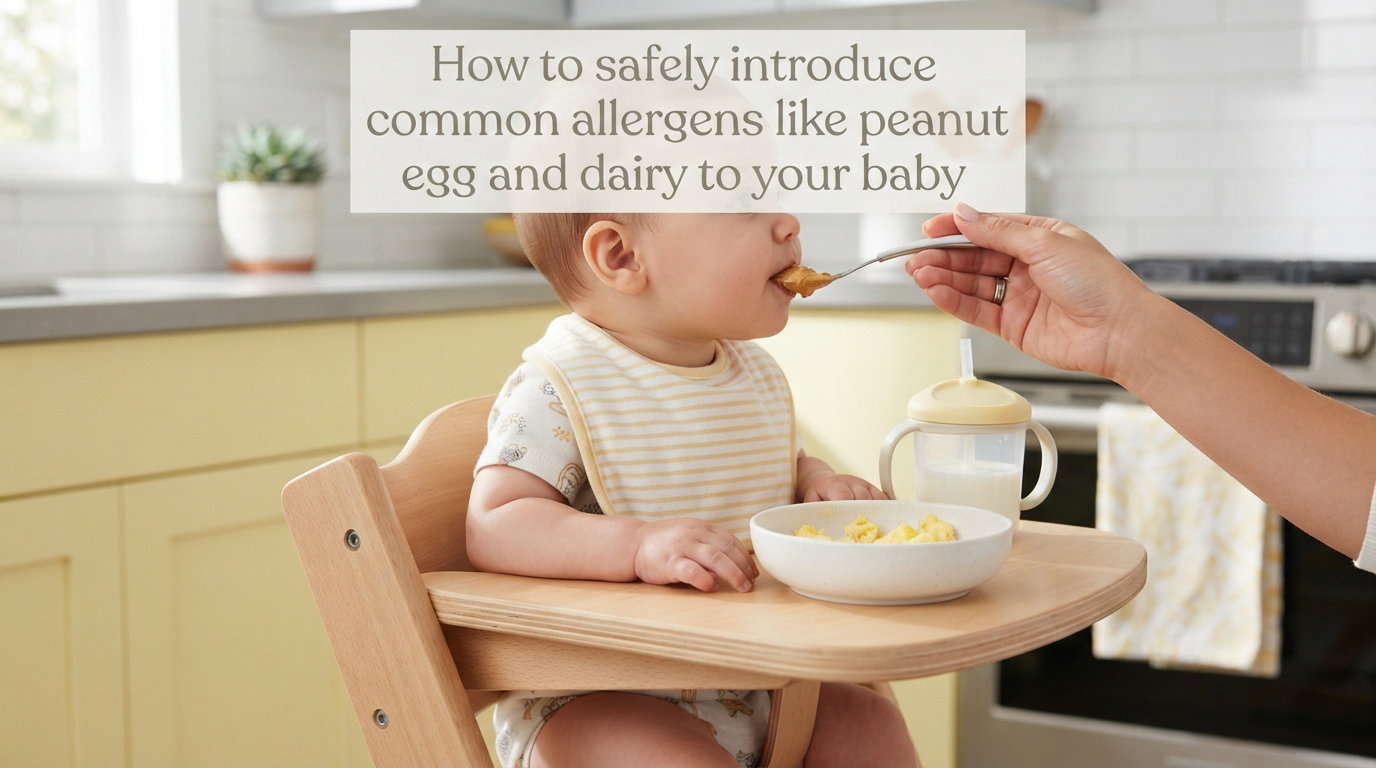
Introducing common allergens to your baby is one of the most important steps you can take to help prevent food allergies. Our team has spent months researching the latest guidance from pediatric allergists and the American Academy of Pediatrics to bring you this comprehensive guide on how to introduce allergens to your baby safely at home. Starting around 4-6 months of age, you can begin offering small tastes of peanut, egg, dairy, and other common allergens using a simple, evidence-based approach that reduces your child’s risk of developing allergies by up to 81%.
I know this process can feel scary. Many parents tell us they worry about causing an allergic reaction, especially when introducing foods like peanut butter for the first time. The good news is that medical guidance has shifted dramatically in recent years, and we now know that early introduction is not only safe for most babies but actually protective against allergies later in life.
This guide will walk you through everything you need to know. We will cover the right timing, how to assess your baby’s risk level, step-by-step instructions for each allergen, what reactions look like, and what to do if your baby responds poorly to a new food. By the end, you will feel confident and prepared to help your child build tolerance to these important foods.
Table of Contents
Why Early Allergen Introduction Matters?
For decades, pediatricians told parents to delay introducing allergenic foods like peanut and egg. The theory was that waiting would give babies’ immune systems time to mature. We now know this advice was wrong and may have actually contributed to rising food allergy rates.
A landmark study called the LEAP study (Learning Early About Peanut) changed everything. Published in the New England Journal of Medicine, this research followed hundreds of babies with eczema or egg allergies who were at high risk for peanut allergy. The results were dramatic. Babies who ate peanut regularly from an early age had an 81% lower chance of developing a peanut allergy compared to those who avoided it completely.
This research led the American Academy of Pediatrics to completely reverse their guidance in 2026. Instead of delaying, they now recommend introducing peanut and other allergens early, typically between 4-6 months of age, once your baby is developmentally ready for solid foods. Early introduction gives your baby’s immune system a chance to learn that these foods are safe, building tolerance rather than sensitivity.
The protective effect works through what allergists call oral tolerance. When your baby eats small amounts of allergen proteins regularly, their immune system recognizes these proteins as harmless and stops mounting defensive reactions. Think of it like training your immune system to be calm around these foods. Delaying introduction means this training window may close, and the immune system is more likely to interpret these proteins as threats.
Research now supports early introduction for all major allergens, not just peanut. Studies on egg introduction show similar protective benefits. Early exposure to cooked egg reduces the risk of egg allergy. The same pattern holds for dairy, wheat, soy, and sesame. The key is consistent, repeated exposure during this critical developmental window.
When to Introduce Allergens to Your Baby
The current recommendation from the American Academy of Pediatrics and the CDC is to introduce common allergens starting around 6 months of age for most babies. Some high-risk infants can benefit from starting as early as 4 months with appropriate guidance. The key is that your baby should be developmentally ready for solid foods before you begin.
Look for these readiness signs. Your baby should be able to sit upright with minimal support, showing good head and neck control. They should show interest in food, perhaps watching you eat or reaching for your plate. Most importantly, they should have lost the tongue-thrust reflex that pushes foreign objects out of their mouth automatically.
For most families, the 6-month mark works perfectly. By this age, most babies are developmentally ready, and their digestive systems have matured enough to handle solid foods. However, if your baby has severe eczema or an existing egg allergy, talk to your pediatrician about starting earlier, around 4-6 months, under medical guidance. These high-risk babies benefit most from early introduction and may need an allergist’s input before starting.
Assessing Your Baby’s Risk Level
Not all babies have the same risk of developing food allergies. Understanding your baby’s risk category helps you decide whether you can introduce allergens confidently at home or should seek medical guidance first. Pediatric allergists categorize babies into three risk levels based on eczema severity and family history.
Standard-risk babies have mild to no eczema and no immediate family history of food allergies. If this describes your baby, you can introduce allergens at home following normal safety precautions. Start around 6 months when your baby is ready for solids, and proceed with the step-by-step process outlined later in this guide.
Increased-risk babies have moderate eczema, defined as persistent patches requiring regular treatment, or a family history of food allergies in parents or siblings. These babies should still have allergens introduced at home, but consider discussing timing with your pediatrician first. You might start at the earlier end of the window, around 4-5 months, to maximize the protective benefit.
High-risk babies have severe eczema requiring prescription treatment, or they already have a diagnosed food allergy to another food. These babies benefit most from early allergen introduction, but the process should be guided by a pediatric allergist. Your allergist may recommend supervised introduction in their office for the first exposure, especially for peanut. After that first supervised exposure, you will likely continue at home with regular follow-up.
Eczema severity is the strongest predictor of food allergy risk. If your baby has frequent, widespread, or severe eczema that requires steroid creams or other prescription treatments, take the high-risk category seriously. The broken skin barrier in eczema allows allergen proteins to enter the body through the skin before the gut has a chance to develop tolerance. This is why early oral introduction is especially important for these babies, but also why medical guidance matters.
How to Introduce Allergens to Your Baby: Step-by-Step
The process for safely introducing allergens follows a consistent pattern regardless of which food you are offering. I have broken this down into 10 clear steps that our team and countless parents have found effective. Following these steps reduces anxiety and ensures you catch any reactions early when they are easiest to manage.
Step 1: Choose the right time. Introduce new allergens in the morning or early afternoon when pediatrician offices are open. Avoid evenings, weekends, or holidays when medical help might be harder to reach. Your baby should be healthy, not fighting off a cold or recovering from illness.
Step 2: Start with a small amount. For the first exposure, offer just 1/4 teaspoon of the allergenic food. This is a tiny taste, enough for your baby to experience but small enough that any reaction would likely be mild. Mix it with a familiar food your baby already enjoys.
Step 3: Feed it to your baby. Place the mixture on the tip of a soft spoon and offer it to your baby. Let them taste and swallow at their own pace. Some babies take it readily; others make faces or push it away. This is normal. The goal is simply to get that first exposure.
Step 4: Watch carefully for 2 hours. Stay with your baby and monitor for any signs of allergic reaction. Most reactions, if they occur, happen within minutes to 2 hours after eating. Keep your baby calm and comfortable during this observation period. Playing or reading together works well.
Step 5: Look for immediate symptoms. Check your baby’s skin, breathing, and behavior. Hives, redness, coughing, wheezing, vomiting, or unusual fussiness could signal a reaction. We will cover specific symptoms in detail later in this guide.
Step 6: If no reaction occurs, offer a bit more. After the 2-hour window passes with no symptoms, you can give your baby another small taste, up to 1/2 teaspoon. This confirms tolerance and helps build the foundation for regular exposure.
Step 7: Continue regular exposure. Once you have successfully introduced an allergen without reaction, continue offering it 2-3 times per week. This regular exposure is what builds and maintains tolerance. Skipping weeks or months can allow sensitization to develop.
Step 8: Introduce one new allergen at a time. When starting out, introduce only one new allergen every 3-5 days. This spacing helps you identify which food caused any reaction if one occurs. Once all major allergens are introduced and tolerated, you can mix them freely.
Step 9: Gradually increase portion sizes. After several successful exposures with no reactions, you can increase portions to normal baby-sized servings. For peanut butter, this might mean 1-2 teaspoons. For egg, a quarter to half a cooked egg. Follow your baby’s appetite and cues.
Step 10: Maintain ongoing exposure. Keep offering each allergen 2-3 times per week indefinitely. Research suggests regular exposure throughout early childhood helps maintain tolerance. Make these foods a normal part of your family’s diet so your child continues eating them regularly.
Introducing Peanut to Your Baby
Peanut is the most studied allergen, and the evidence for early introduction is strongest here. However, peanut in its whole form is a choking hazard for babies. You need to prepare it safely in age-appropriate textures.
The safest ways to introduce peanut to babies under 12 months include mixing peanut powder with breast milk, formula, or a familiar puree to a yogurt-like consistency. You can also thin smooth peanut butter with warm water, breast milk, or formula until it drips easily off a spoon. Never give thick, sticky peanut butter directly to a baby, as it can block their airway.
For babies doing baby-led weaning, you can spread a very thin layer of thinned peanut butter on soft, age-appropriate toast strips. Bamba peanut puffs, available in many grocery stores, are another good option for babies who can handle soft finger foods. Dissolve easily in the mouth and provide controlled peanut exposure.
Avoid whole peanuts, peanut chunks, or thick peanut butter until your child is much older. The choking risk is real and separate from allergy risk. Always supervise your baby closely when eating any peanut-containing food, just as you would with any new food.
Introducing Egg to Your Baby
Egg is another high-priority allergen with strong evidence supporting early introduction. Raw or undercooked egg poses both allergy and food safety risks, so always offer well-cooked egg only to babies.
The best preparations for first introductions include hard-boiled egg mashed with breast milk or formula to a smooth consistency. Scrambled egg cooked thoroughly until firm works well for many babies. You can also offer small pieces of well-cooked omelet or frittata cut into appropriate sizes for your baby’s feeding method.
For pureed-feeding families, mixing hard-boiled egg yolk with a familiar vegetable puree works beautifully. The yolk contains less allergen protein than the white, though both can trigger reactions. Most pediatricians recommend introducing the whole cooked egg rather than separating yolk and white.
Avoid soft-boiled eggs, runny scrambled eggs, homemade mayonnaise, hollandaise sauce, tiramisu, or any raw egg preparations. These carry salmonella risk even beyond allergy concerns. Cook egg until both yolk and white are firm throughout.
Introducing Dairy to Your Baby
Dairy is often the easiest allergen to introduce because babies are already familiar with the taste through breast milk or formula. However, cow’s milk protein allergy is one of the most common infant food allergies, so introduction still requires care.
The best first dairy introductions include plain, full-fat yogurt mixed with a familiar fruit puree. Yogurt is cultured, which breaks down some proteins and makes it gentler on immature digestive systems. Soft cheeses like ricotta or cottage cheese, well-blended to remove lumps, are also excellent options.
You can mix dairy into oatmeal, cereals, or vegetable mashes that your baby already enjoys. This makes the new protein familiar and easier to accept. Start with small amounts mixed in, then gradually increase as tolerance is confirmed.
Important note: do not give cow’s milk as a drink before 12 months of age. Babies need the specific nutrition profile of breast milk or formula for proper growth. Cow’s milk lacks adequate iron and has proteins that can irritate young digestive systems when given as a primary beverage. Dairy as a food ingredient is fine; dairy as a beverage must wait.
Recognizing Allergic Reactions in Babies
Knowing what an allergic reaction looks like helps you respond appropriately and quickly. Allergic reactions fall into two main categories: IgE-mediated reactions that happen immediately, and non-IgE-mediated reactions that appear hours or days later.
IgE-mediated reactions are the type most people picture when they think of food allergies. These occur within minutes to 2 hours after eating the trigger food. They can be mild, moderate, or severe. Skin symptoms are most common, including hives (raised, itchy red welts), redness or flushing of the skin, itching around the mouth or eyes, and swelling of the lips, face, or eyes.
Respiratory symptoms include coughing, wheezing, noisy breathing, runny nose, or sneezing. Gastrointestinal symptoms might include vomiting, diarrhea, or abdominal pain. Some babies become unusually fussy, sleepy, or inconsolable. These behavioral changes count as symptoms too.
Anaphylaxis is the most severe form of allergic reaction and is a medical emergency. Signs include trouble breathing, swelling of the tongue or throat, difficulty swallowing, persistent coughing, sudden lethargy or limpness, blue or pale coloring, and loss of consciousness. If you see any of these signs, call 911 immediately.
Non-IgE-mediated reactions are delayed and typically affect the gut and skin. These might appear hours or even days after eating the trigger food. Symptoms include eczema flares, blood or mucus in stool, reflux, colic-like fussiness, constipation or diarrhea, and poor weight gain. These reactions are not life-threatening but should be discussed with your pediatrician. The food may need to be eliminated and reintroduced later under guidance.
Not all negative reactions are allergies. Food intolerances cause discomfort without immune system involvement. A baby might get gassy or have loose stools after a new food without being truly allergic. True allergies involve the immune system and produce the specific symptoms listed above.
What To Do If Your Baby Has an Allergic Reaction?
If you suspect your baby is having an allergic reaction, stay calm and act quickly. Most reactions in babies are mild, but knowing the proper response for each level of severity keeps your baby safe.
For mild reactions involving only one body system, such as a few hives around the mouth or mild skin redness, stop feeding the allergen immediately. Remove any remaining food from your baby’s mouth and hands. Wipe their face clean with a damp cloth. Monitor your baby closely for the next several hours to see if symptoms worsen or spread.
Call your pediatrician for guidance on mild reactions. They may recommend an age-appropriate antihistamine and will want to document the reaction in your baby’s medical record. Do not give any medication without consulting a healthcare provider first, as dosing for infants requires professional guidance.
For moderate reactions involving multiple body systems, such as hives plus vomiting, or widespread skin symptoms plus coughing, treat this as more serious. Stop the feeding immediately and call your pediatrician’s emergency line or go to urgent care. These reactions can progress, and medical evaluation is needed the same day.
For severe reactions suggesting anaphylaxis, call 911 immediately. If your baby has trouble breathing, swelling of the tongue or throat, becomes limp or unresponsive, or turns blue or very pale, this is an emergency. Lay your baby flat on their back unless they are vomiting, in which case place them on their side. Keep them still and calm while waiting for help. If you have an epinephrine auto-injector prescribed for your baby, use it as directed while waiting for emergency services.
After any reaction, whether mild or severe, follow up with your pediatrician or an allergist. They will help you create a management plan, which may include avoiding the food temporarily, testing to confirm the allergy, or in some cases, supervised reintroduction in a medical setting. Many babies who react mildly to a food can successfully tolerate it later under medical guidance.
Maintaining Regular Exposure After Introduction
Successfully introducing an allergen is only the first step. Research shows that regular, ongoing exposure is crucial for maintaining tolerance. Without consistent re-exposure, some babies can lose their tolerance and develop allergies later.
The recommended frequency is 2-3 times per week for each major allergen. This might sound challenging, but it becomes easier with practice. You do not need to serve each allergen separately. Many foods contain multiple allergens, and mixed dishes count toward exposure for all ingredients.
Practical meal ideas for regular exposure include peanut butter thinned into morning oatmeal three times weekly. Scrambled egg offered as part of lunch twice weekly. Yogurt mixed with fruit as an afternoon snack three times weekly. As your baby grows, include wheat in the form of soft pasta, and sesame in tahini mixed into hummus or dressings.
Life gets busy, and parents sometimes fall out of the routine. If you realize you have not offered a particular allergen in several weeks, simply restart the regular schedule. One gap is not catastrophic. The goal is overall consistency across months and years, not perfection every single week.
Once your baby tolerates all major allergens and is eating a varied diet including these foods regularly, you have completed the introduction phase. Continue offering these foods as normal parts of family meals. Making allergens routine household foods rather than special introductions helps your child maintain tolerance naturally.
Frequently Asked Questions
When should I introduce allergens to my baby?
Current AAP guidelines recommend introducing common allergens starting around 6 months of age when your baby is developmentally ready for solids. High-risk babies with severe eczema or existing food allergies may benefit from starting as early as 4 months under medical guidance. Look for readiness signs like sitting with support, good head control, and interest in food.
How do I introduce peanut butter to my baby safely?
Mix smooth peanut butter with warm water, breast milk, or formula until it reaches a thin, yogurt-like consistency that drips easily off a spoon. Alternatively, mix peanut powder into a familiar puree. Offer 1/4 teaspoon for the first exposure. Never give thick peanut butter directly or whole peanuts, as these are choking hazards. Bamba peanut puffs are another safe option for babies eating finger foods.
What are the signs of an allergic reaction in babies?
Watch for skin changes like hives, redness, or swelling around the mouth and eyes. Respiratory symptoms include coughing, wheezing, or noisy breathing. Gastrointestinal signs include vomiting or diarrhea. Behavioral changes like sudden fussiness or sleepiness also count. Most reactions occur within minutes to 2 hours after eating. Severe reactions involving trouble breathing or swelling of the throat require immediate emergency care.
Should I delay allergen introduction if my family has allergies?
No, current guidance recommends early introduction even with a family history of allergies. Family history puts your baby at increased risk, which actually makes early introduction more important. Babies with allergic parents or siblings should still have allergens introduced at home, but discuss timing with your pediatrician first. Only babies with severe eczema or existing food allergies need allergist supervision for introduction.
How often should I feed my baby common allergens?
After successful introduction, offer each allergen 2-3 times per week to build and maintain tolerance. Research shows regular ongoing exposure is crucial for preventing allergy development. Skipping weeks or months may allow sensitization to occur. Mix allergens into regular meals your baby enjoys, such as peanut butter in oatmeal, scrambled egg at lunch, or yogurt as a snack.
Can I introduce allergens at home or should I see a doctor first?
Most babies can have allergens introduced safely at home following standard precautions. Choose morning or early afternoon when pediatrician offices are open. Start with a tiny amount and watch for 2 hours. See a doctor first if your baby has severe eczema requiring prescription treatment or an existing diagnosed food allergy. These high-risk babies may need supervised introduction in an allergist’s office.
What if my baby has eczema – should I still introduce allergens?
Yes, babies with eczema actually benefit most from early allergen introduction because they are at higher risk for food allergies. The broken skin barrier in eczema can sensitize babies to food proteins through skin contact before oral tolerance develops. Early oral introduction helps override this risk. Babies with mild eczema can start at home around 6 months. Those with moderate to severe eczema should consult their pediatrician or an allergist about timing, potentially starting as early as 4 months.
How do I prepare allergen foods safely for my baby?
For peanut, thin smooth peanut butter with liquid until drippy or use peanut powder mixed into purees. For egg, offer well-cooked hard-boiled or scrambled egg only, never raw or runny preparations. For dairy, use plain full-fat yogurt or soft cheese mixed into foods, but avoid cow’s milk as a drink before 12 months. Always ensure textures are age-appropriate and supervise eating closely to prevent choking.
What if my baby reacts to an allergen?
Stop feeding immediately and remove all remaining food. For mild reactions like a few hives, monitor closely and call your pediatrician for guidance. For moderate reactions affecting multiple body systems, seek same-day medical care at urgent care or your pediatrician’s office. For severe reactions involving trouble breathing, swelling, or loss of consciousness, call 911 immediately. After any reaction, follow up with an allergist to create a management plan.
What is the difference between IgE and non-IgE mediated allergies?
IgE-mediated allergies cause immediate reactions within minutes to 2 hours, with symptoms like hives, swelling, vomiting, or breathing difficulties. These are the classic food allergies most people recognize. Non-IgE-mediated reactions are delayed, appearing hours or days later with symptoms like eczema flares, blood in stool, reflux, or poor weight gain. IgE reactions can be life-threatening; non-IgE reactions affect quality of life but are not immediately dangerous.
Conclusion
How to introduce allergens to your baby is a question every modern parent faces, and the evidence is clear. Starting around 4-6 months of age, you can safely introduce peanut, egg, dairy, and other common allergens using the step-by-step approach outlined in this guide. This early introduction is one of the most effective ways to prevent food allergies from developing, with research showing up to 81% risk reduction.
I understand the fear that comes with this process. Every parent worries about being the one whose baby has a reaction. But remember that the vast majority of babies tolerate these foods without any issues. Following the safety steps, introducing in the morning, starting with tiny amounts, and watching for 2 hours makes the process as safe as possible. Most importantly, the alternative, delaying introduction, actually increases your baby’s risk.
Take a moment to assess your baby’s risk level using the guidance above. Gather your supplies, pick a morning when you are both well-rested, and start with one allergen. Peanut butter thinned into oatmeal is an easy first choice for many families. Once you get through that first exposure successfully, confidence builds quickly. By the time you have introduced all the major allergens, this will feel like just another part of parenting.
Your baby is ready to explore new foods. You are ready to guide them safely. And now you have the knowledge and plan to do it well. Take a breath, trust the science, and take that first small step. Your baby’s immune system will thank you for years to come.