
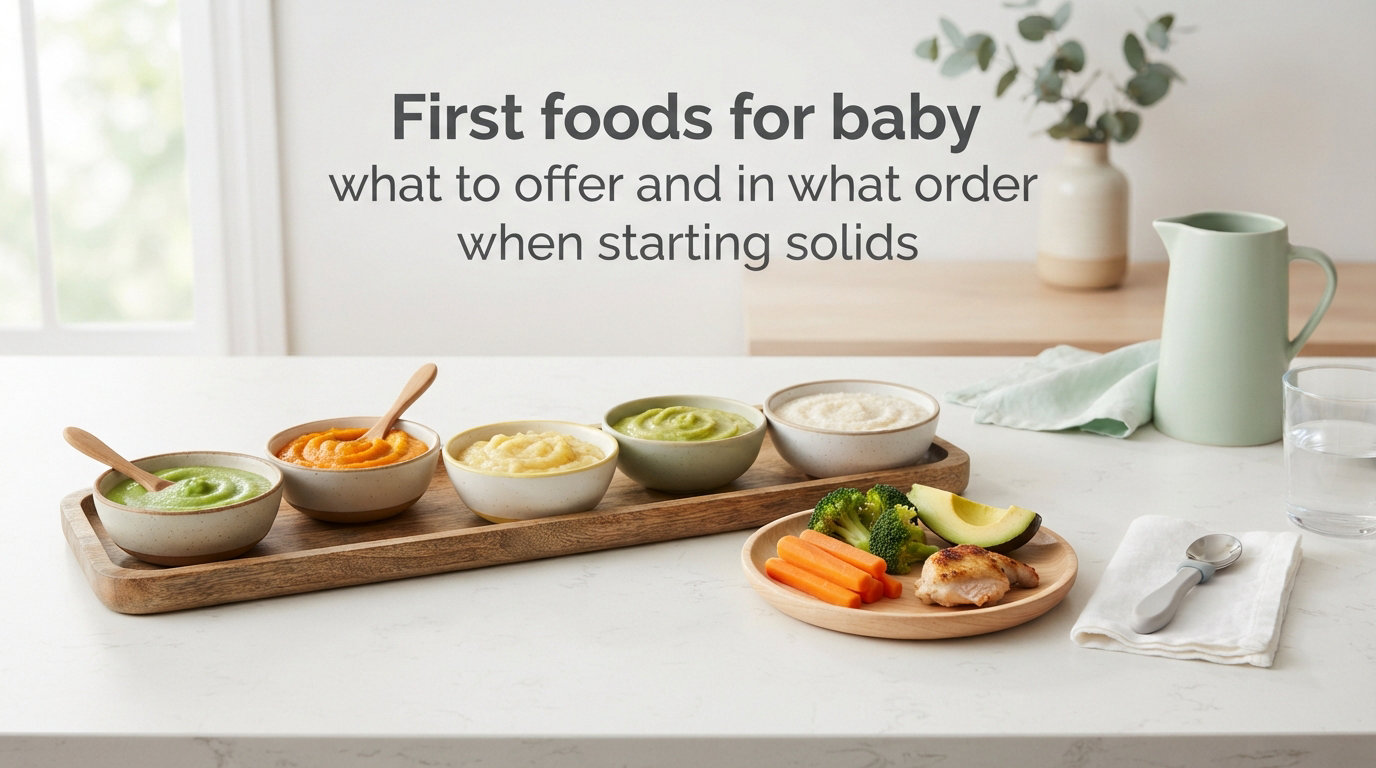
Introducing solid foods is one of the most exciting milestones in your baby’s first year. First foods for baby are the initial solid or semi-solid foods introduced to infants at around 6 months of age, complementing breast milk or formula. This comprehensive guide walks you through everything you need to know about starting solids in 2026.
I remember the mix of excitement and anxiety when my first child reached this stage. The questions seemed endless. What should I offer first? How do I know if my baby is ready? What if they choke? After researching extensively and talking with pediatricians, I’ve compiled the most current recommendations to help you navigate this transition with confidence.
Table of Contents
Signs Your Baby Is Ready for Solid Foods
Every baby develops at their own pace, but there are clear developmental signs that indicate your little one is ready for first foods. Most babies show these signs around 6 months of age.
Here are the key signs your baby is ready for solids:
- Sits up with support. Your baby can sit upright in a high chair with minimal support, keeping their head steady.
- Good head control. Your baby can hold their head up independently and turn it away when full.
- Opens mouth for food. Your baby shows interest by opening their mouth when you offer a spoon.
- Swallows food. Your baby has lost the tongue-thrust reflex that automatically pushes food out.
- Reaches for food. Your baby watches you eat and tries to grab food from your plate.
Weight is another indicator. Most babies are ready when they have doubled their birth weight and weigh at least 13 pounds. However, age and developmental readiness matter more than weight alone.
When to Start Introducing Solids
The American Academy of Pediatrics and the CDC recommend starting solid foods at approximately 6 months of age. This timing aligns with your baby’s developmental and nutritional needs.
Starting solids before 4 months is not recommended. Your baby’s digestive system isn’t mature enough to handle solid foods, and early introduction increases the risk of food allergies and obesity. Before 6 months, breast milk or formula provides all the nutrition your baby needs.
By 6 months, most babies need additional nutrients, particularly iron and zinc, that solid foods provide. Waiting too long past 6 months can lead to nutritional deficiencies and may delay the development of eating skills.
What First Foods to Offer
The best first foods for baby are nutrient-dense, single-ingredient options with smooth textures. Here are the top categories to consider when starting solids.
Iron-Fortified Cereals
Infant cereals, particularly iron-fortified oatmeal and rice cereal, have traditionally been recommended as first foods. Mix them with breast milk, formula, or water to create a thin, smooth consistency.
The CDC now recommends considering iron-fortified infant oatmeal over rice cereal due to concerns about arsenic exposure in rice products. Oatmeal also provides more nutritional value and fiber.
Vegetables
Vegetables are excellent first foods because they introduce savory flavors and important nutrients. Many pediatricians recommend starting with vegetables before fruits to help babies develop a taste for savory foods.
Popular vegetable first foods include sweet potato, butternut squash, carrots, peas, and green beans. Steam or boil them until very soft, then puree to a smooth consistency. Sweet potato is particularly popular because its natural sweetness appeals to babies while providing excellent nutrition.
Fruits
Fruits provide vitamins, fiber, and natural sweetness that babies enjoy. Avocado stands out as a top choice because of its creamy texture and healthy fats that support brain development.
Other excellent fruit options include banana, pears, and applesauce. Banana can be mashed with a fork and thinned with a little breast milk or formula. Pears and apples should be cooked until soft and pureed. Many parents find that prunes or pears help relieve constipation when starting solids.
Proteins
Iron-rich proteins are important first foods, especially for breastfed babies who need additional iron after 6 months. Pureed meats like chicken, turkey, and beef provide heme iron that is easily absorbed.
Eggs, beans, and lentils are also good protein options. Eggs can be hard-boiled and mashed, or scrambled until very soft. Beans should be well-cooked and pureed to a smooth consistency.
Order of Food Introduction: A Practical Timeline
Knowing the correct order for introduction of solid foods helps you plan your baby’s feeding journey. While there’s no single perfect sequence, following a logical progression helps ensure nutritional needs are met and allergies are monitored.
Here is the recommended order for introducing first foods:
- Iron-fortified cereal or pureed vegetables. Start with single-ingredient options like infant oatmeal, sweet potato, or avocado. Offer 1-2 teaspoons at first.
- Additional vegetables. Introduce new vegetables every 3-5 days. Try carrots, squash, peas, and green beans.
- Fruits. Add fruits like banana, pears, and applesauce after vegetables are established.
- Proteins. Introduce pureed meats, eggs, and legumes around 7-8 months.
- Combination foods. Once individual foods are tolerated, mix compatible ingredients.
- Finger foods. Around 8-9 months, introduce soft, graspable pieces for self-feeding.
Wait 3-5 days between each new food. This waiting period allows you to monitor for allergic reactions like rash, vomiting, or diarrhea. If a reaction occurs, you’ll know exactly which food caused it.
By 9 months, most babies are eating three small meals daily alongside breast milk or formula. By 12 months, they can eat most family foods in appropriate textures and portions.
Feeding Position and Setup: The 90-90-90 Rule
Proper positioning during meals is essential for safety and successful eating. The 90-90-90 rule for feeding ensures your baby is in the optimal position for swallowing and reduces choking risk.
The 90-90-90 rule means your baby sits with ankles at 90 degrees, knees at 90 degrees, and hips at 90 degrees. This upright, supported position allows for proper swallowing mechanics and keeps the airway open.
Choose a high chair with good back support and a footrest. The tray should be at chest level. If your baby’s feet dangle, use a footrest or stack books under their feet to achieve the 90-degree angle. Never feed your baby while they are lying down, reclined in a car seat, or propped with pillows.
How to Prepare Baby Food
Preparing baby food at home is simpler than many parents expect. You have control over ingredients and can adjust textures as your baby develops.
Texture Progression
Start with thin, smooth purees that slide easily off a spoon. As your baby masters swallowing, gradually increase thickness. Around 8-9 months, move to mashed foods with soft lumps. By 10-12 months, offer soft finger foods and finely chopped table foods.
Homemade Preparation Methods
Steam or boil vegetables and fruits until very soft. Blend with a little cooking liquid, breast milk, or formula until smooth. For proteins, cook thoroughly and puree with broth or water to achieve the right consistency.
Ice cube trays are perfect for freezing homemade baby food in single-serve portions. Each cube is approximately 1 ounce. Store frozen cubes in labeled bags for up to 3 months.
Portion Sizes
Start with just 1-2 teaspoons of food at first. By 8 months, most babies eat 2-4 tablespoons per meal. At 9-12 months, portions increase to 4-8 tablespoons. Always follow your baby’s hunger and fullness cues rather than forcing a specific amount.
Baby-Led Weaning vs Purees: Choosing Your Approach
Parents today have two main approaches to starting solids: traditional spoon-fed purees or baby-led weaning. Understanding both helps you choose what works for your family.
Baby-Led Weaning
Baby-led weaning skips purees entirely and offers babies soft, graspable finger foods from the start. Babies feed themselves, exploring textures and flavors at their own pace. Popular first foods include steamed broccoli florets, avocado slices, banana pieces, and soft-cooked carrot sticks.
Advocates say this approach develops motor skills, encourages independence, and may reduce picky eating. However, it requires comfort with gagging (which is different from choking) and more preparation of appropriately sized foods.
Traditional Purees
The traditional approach starts with smooth purees offered on a spoon by a caregiver. Gradually, textures progress to mashed and then chopped foods. This method allows precise control over portions and ensures babies consume adequate iron-rich foods early.
Many parents combine both approaches, offering purees for nutrient-dense foods like meat and iron-fortified cereal while allowing baby to self-feed soft finger foods.
Food Safety and Choking Hazards
Safety is the top priority when introducing solid foods. Knowing which foods to avoid and how to prepare foods safely prevents choking incidents.
Foods to Avoid Completely
Never give these foods before 12 months:
- Honey (risk of botulism)
- Cow’s milk as a main drink (can cause iron deficiency)
- Added salt or sugar
- Raw or undercooked eggs, meat, or fish
Choking Hazards
Avoid these foods until your baby has mature chewing skills, typically after 12 months:
- Whole nuts and seeds
- Popcorn
- Hard raw vegetables
- Whole grapes (quarter them instead)
- Hot dogs and sausages (slice lengthwise and chop)
- Hard candy
Safe Food Sizes
For babies 6-8 months, serve foods in long strips about the size of your finger. This allows babies to grip and gum the food. Around 9 months, transition to small, pea-sized pieces that babies can pick up with their developing pincer grasp.
Allergenic Foods
Current guidelines recommend introducing common allergenic foods early, around 6 months, once other solids are tolerated. This includes peanut, egg, dairy, wheat, soy, fish, and shellfish. Introduce one allergen at a time and wait 3-5 days before trying another.
Research shows early introduction may actually reduce allergy risk. If your baby has severe eczema or known food allergies, consult your pediatrician before introducing allergenic foods.
Emergency Preparedness
Learn the difference between gagging and choking. Gagging is normal as babies learn to manage food. Choking is silent and requires immediate action. Consider taking an infant CPR course before starting solids.
Frequently Asked Questions
In what order should I introduce solids to my baby?
Start with iron-fortified cereals or pureed vegetables like sweet potato and avocado. Introduce new foods every 3-5 days, then progress to fruits, proteins like meat and eggs, and finally combination foods and finger foods around 8-9 months.
What is the first solid food that should be given to babies?
Iron-fortified infant oatmeal is often recommended as a first food due to its smooth texture and iron content. Alternatively, pureed vegetables like sweet potato, squash, or avocado make excellent first foods and help develop a taste for savory flavors.
What is the correct order for introduction of solid foods to an infant?
Begin with single-ingredient iron-fortified cereals or vegetables at 6 months. Wait 3-5 days between new foods. Add fruits after vegetables are established, then proteins around 7-8 months. By 9 months, introduce soft finger foods and combination meals.
What is the 90 90 90 rule for feeding?
The 90-90-90 rule means positioning your baby with ankles at 90 degrees, knees at 90 degrees, and hips at 90 degrees during feeding. This upright seated position supports safe swallowing and reduces choking risk.
Conclusion
Starting solids is an important milestone that sets the foundation for your child’s lifelong relationship with food. First foods for baby should be introduced around 6 months when developmental signs indicate readiness. Begin with single-ingredient, nutrient-dense options like iron-fortified cereals, vegetables, and fruits.
Remember that every baby is different. Some take to solids immediately, while others need 10-12 exposures before accepting a new food. Trust your baby’s cues, follow the 3-5 day waiting period between new foods, and maintain a relaxed, positive attitude at mealtimes.
Whether you choose traditional purees, baby-led weaning, or a combination approach, the goal is the same: helping your baby develop healthy eating habits while ensuring they get the nutrition they need to grow and thrive in 2026 and beyond.