
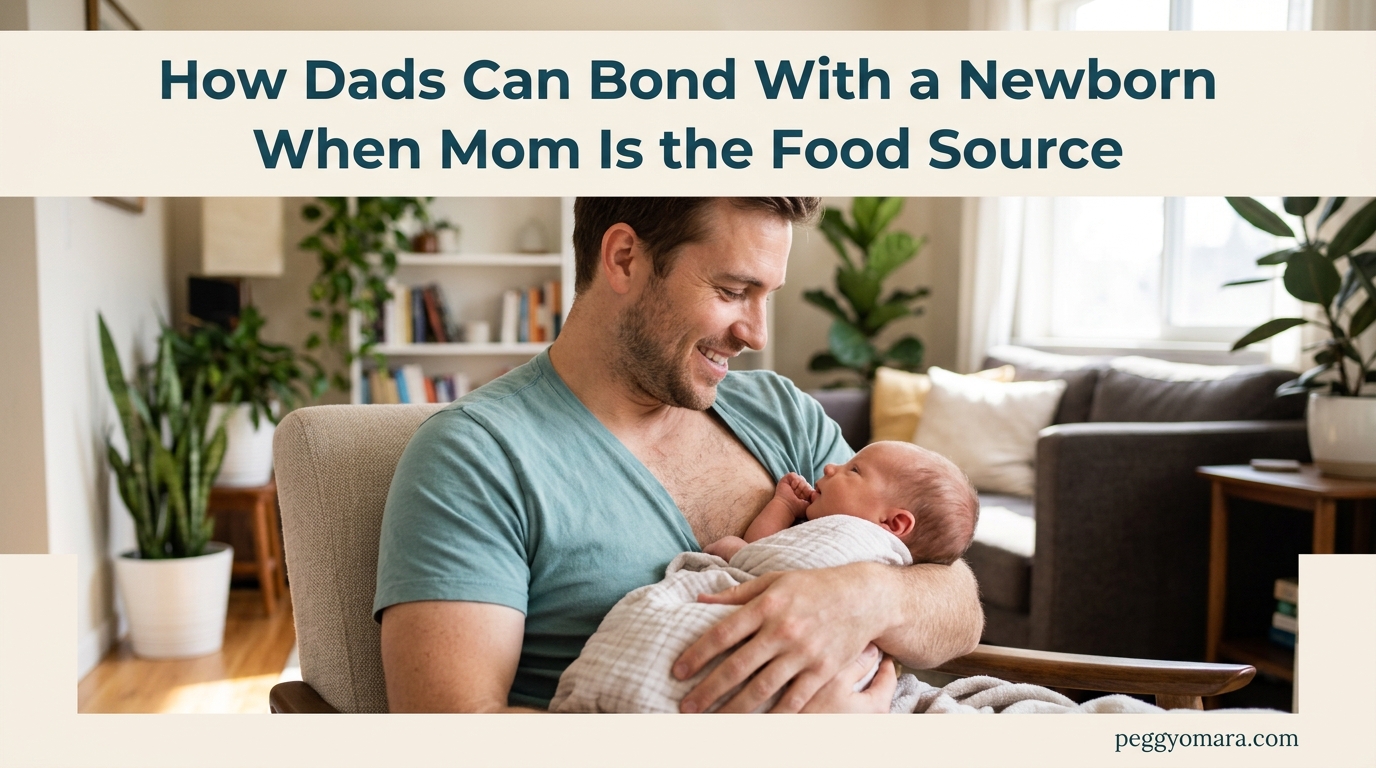
I remember sitting in the nursery at 2 AM, holding my daughter while my wife slept. She had just finished breastfeeding, and as I burped our tiny girl against my shoulder, I felt this overwhelming question: Where do I fit in?
If you are a new dad whose partner is breastfeeding, you might feel like the third wheel in your own family. Your baby needs mom for food, comfort, and seemingly everything else. That tight breastfeeding bond can leave you wondering how dads can bond with a newborn when mom is the food source. You are not alone in feeling this way.
The good news? You have so many ways to build a deep, lasting connection with your baby that have nothing to do with feeding. Research shows that involved fathers who practice skin-to-skin contact, daily caregiving, and consistent presence release the same bonding hormones as mothers do. Your role matters enormously for your baby’s emotional development and your family’s wellbeing.
Table of Contents
Why Father-Infant Bonding Matters?
Before we get into the how, let us talk about the why. When you hold your baby close, your body releases oxytocin, the same love hormone that floods mothers during breastfeeding. This chemical response is not just poetic, it is biological proof that your connection matters.
Studies consistently show that babies with involved fathers develop better emotional regulation, stronger cognitive skills, and more secure attachment styles. Your presence during the newborn phase sets the foundation for a relationship that will shape your child’s confidence, relationships, and mental health for decades.
For you, the dad, bonding protects against paternal postpartum depression, which affects between 8% and 25% of new fathers. That identity shift you are feeling? The disconnection? It is real, and building your bond with your baby is one of the most effective ways to navigate it.
How Dads Can Bond With a Newborn When Mom Is the Food Source
Here are ten practical strategies that work. Each one creates connection through presence, touch, and care rather than requiring you to be the food source.
1. Practice Skin-to-Skin Contact (Kangaroo Care)
Place your baby directly on your bare chest, with only a diaper between you, and cover both of you with a light blanket. This simple act, often called kangaroo care, triggers powerful bonding hormones in both of you.
Your body regulates your baby’s temperature more effectively than an incubator. Your heartbeat steadies their breathing. Research shows that skin-to-skin contact reduces cortisol, the stress hormone, in both babies and fathers. Try this during nap times, after feeding when baby is drowsy, or as a calming method when your little one is fussy.
2. Master Daily Care Activities
Breastfeeding might be mom’s domain, but everything else is wide open for you. Diaper changes, bathing, burping, dressing, and soothing are all bonding goldmines when done with intention.
Make eye contact during diaper changes. Talk your baby through what you are doing. The more daily care you handle, the more you learn to read your baby’s unique cues, the specific cry that means hungry versus tired versus overstimulated. This fluency in your baby’s language builds confidence and connection faster than anything else.
3. Offer Expressed Milk in a Bottle
If your partner is pumping, those bottles are your opportunity to participate in the feeding bond. Timing matters here. Many lactation consultants recommend waiting until breastfeeding is well-established, usually around 3 to 4 weeks, before introducing bottles.
Use slow-flow teats that mimic the breast to prevent bottle confusion. Make this feeding your special time. Hold your baby close, maintain skin contact, and look into their eyes. This is not just about nutrition, it is about creating a ritual of connection that your baby will associate specifically with you.
4. Read, Talk, and Sing to Your Baby
Here is something remarkable: your baby has known your voice since they were in the womb. Studies show that newborns recognize and prefer their father’s voice within days of birth. Use this biological head start.
Read aloud anything, baby books, your work emails, the sports section. Narrate what you are doing. Talk to your baby about your day, your thoughts, your hopes for them. Sing lullabies, even if you are tone deaf. Your voice is a comfort tool that only you can provide, and using it consistently creates a powerful bond that does not require mom’s presence at all.
5. Wear Your Baby
Babywearing is one of the most effective bonding tools available to dads. When you carry your baby in a wrap, sling, or structured carrier, you provide physical closeness while keeping your hands free for other tasks.
Your body warmth, heartbeat, and movement comfort your baby while allowing you to walk, work, or simply exist together. Start with short sessions as you both get comfortable. Many dads find that wearing their baby during evening fussy periods or while doing household chores creates hours of low-pressure bonding time that would otherwise be lost.
6. Create Bedtime and Sleep Rituals
The end of the day offers perfect bonding opportunities. Establish a bedtime routine that you lead. This might include a warm bath, a gentle massage, reading a specific book, or singing a particular song.
If you are co-sleeping or room-sharing, position the bassinet or co-sleeper on your side of the bed. When baby stirs at night, be the one to soothe them back to sleep. These nighttime interactions, while exhausting, are incredibly bonding. Your presence during vulnerable moments teaches your baby that you are a safe harbor, not just a daytime playmate.
7. Take Baby on Outings Without Mom
One-on-one time accelerates bonding dramatically. Take your baby for stroller walks around the neighborhood. Run simple errands together. Sit in the park and watch the world go by.
These outings remove the safety net of mom’s presence, forcing you to rely on your growing knowledge of your baby’s cues and needs. You will make mistakes, and that is okay. Each successful soothing, each calm moment you create, builds your confidence and your baby’s trust in you. Start small, a 20-minute walk, and gradually extend as you both get comfortable.
8. Support Mom During Breastfeeding Sessions
This might sound counterintuitive, but supporting your partner during breastfeeding is a bonding strategy for you too. When mom nurses, do not disappear. Sit with them. Bring water, snacks, or a phone charger.
Talk to your baby during the feeding. Let them hear your voice while they eat. When the feeding ends, be ready to take over for burping, changing, and settling. This handoff creates a seamless transition that associates you with the comfort that follows feeding. Over time, your baby learns that the whole package, food from mom plus care from dad, equals security.
9. Develop Dad-Specific Rituals
Create traditions that are uniquely yours. A morning dance party to your favorite music. A specific way of saying goodbye when you leave for work. A special game you play when you return home.
These rituals give your baby something to anticipate and associate specifically with you. One dad I know does what he calls “inspection rounds” every morning, carrying his son through the house to say good morning to every room. Another has a funny handshake he does with his daughter’s tiny hand before every nap. These small, repeated moments add up to a deep, distinctive bond over time.
10. Do Tummy Time Together
Place your baby on their stomach on a soft blanket or play mat and get down on their level. Tummy time is essential for motor development, but it is also perfect for bonding.
Lie face-to-face and make faces, stick out your tongue, or simply talk softly. Place a mirror nearby so your baby can see both of you together. Make this your special activity, something dad always does. As your baby grows stronger and starts pushing up to see you, the mutual delight in these moments becomes a powerful connection point.
When Baby Cries for Mom: Troubleshooting Tips
Here is a scenario that crushes many new dads. You are holding your baby, everything seems fine, and then they start crying. You try soothing techniques that worked yesterday, but nothing helps. The crying escalates. You hand baby to mom, and within seconds, they calm down. You feel rejected, incompetent, and hurt.
This is incredibly common, and it does not mean your baby prefers mom or does not like you. Breastfed babies often show a strong preference for mom, especially during the early months when their entire survival instinct is wired around nursing. Your smell is different, your movements are different, and that difference can trigger fussiness when baby is already unsettled.
Work with this reality instead of against it. Time your solo interactions for when baby is fed, rested, and content rather than hungry or overtired. If baby starts fussing, try movement, walking, bouncing, or going outside, which often works better than stillness. And remember, this phase is temporary. As babies grow and develop more sophisticated ways of finding comfort, your consistent presence pays off in a balanced, strong attachment to both parents.
Signs Dad Has Bonded With Baby (and Signs He Hasn’t)
How do you know if your bond is developing? Look for these positive signs. You instinctively reach for your baby when they fuss. You find yourself smiling just looking at them. You can identify their different cries and know what each one means. You think about them when you are apart and look forward to seeing them again.
You might also notice physical changes. Research shows that involved fathers experience drops in testosterone and increases in prolactin and oxytocin, the same hormonal shifts that support bonding in mothers. You might feel a surge of protectiveness or find yourself talking about your baby constantly.
On the flip side, some signs suggest you might need additional support. You feel relief rather than connection when someone else takes the baby. You find yourself avoiding opportunities to hold or care for your baby. You feel resentment toward your partner or baby rather than affection. You cannot distinguish between your baby’s different cries or needs. These feelings do not make you a bad father, but they do suggest that talking to a mental health professional could help.
When Bonding Doesn’t Happen Right Away
Let us be honest about something the glossy parenting articles rarely mention. Not every dad falls instantly in love with their newborn. Not everyone feels that overwhelming rush of connection in the first days or weeks. Sometimes bonding takes time, and that is completely normal.
For some dads, the bond develops gradually over the first few months as the baby becomes more interactive. Smiles appear around 6 to 8 weeks. Eye contact becomes more sustained. Babies start cooing and responding to your voice. These developmental milestones often trigger the emotional connection that felt missing in the early newborn phase.
But sometimes the struggle runs deeper. Paternal postpartum depression affects up to one in four new fathers. Symptoms include persistent sadness, loss of interest in activities you used to enjoy, irritability, sleep problems, and difficulty bonding with your baby. If you are experiencing these symptoms for more than two weeks, please reach out to your doctor or a mental health professional. Treatment works, and getting help is one of the best things you can do for both yourself and your baby.
Many dads also experience an identity crisis that complicates bonding. Who are you now that you are a father? How do you balance work, partnership, and parenting? These existential questions can create emotional distance that looks like bonding problems but is actually about your own adjustment. Talking with other new dads, joining a fathers group, or seeing a therapist can help you process this transition.
If you are a working dad, the return to work after paternity leave can feel like a bonding setback. You are away for ten hours a day, and when you return, baby wants mom, dinner needs making, and exhaustion sets in. Protect your bonding time ruthlessly. Even twenty minutes of focused, phone-free interaction each evening maintains and deepens your connection. Use weekends for longer one-on-one outings. The bond you build during leave does not have to erode when work resumes.
Frequently Asked Questions
How can dads bond with breastfed babies?
Dads can bond with breastfed babies through skin-to-skin contact, daily care activities like bathing and diapering, offering expressed milk in bottles, reading and talking to baby, babywearing, creating bedtime rituals, taking baby on solo outings, supporting mom during nursing, developing dad-specific traditions, and doing tummy time together. The key is consistent physical closeness and caregiving rather than focusing on the feeding relationship.
What is the 3 6 9 rule for babies?
The 3 6 9 rule is a memory aid for postpartum recovery milestones, not specifically for bonding. It refers to 3 weeks for initial healing, 6 weeks for the postpartum checkup, and 9 weeks for feeling more like yourself. Some parents also use it to remember that babies typically triple their birth weight by around 12 months, following patterns at 3, 6, and 9 months.
Do dads feel a bond to baby immediately?
Not all dads feel an immediate bond with their newborn, and that is completely normal. While some fathers experience instant connection, many find that bonding develops gradually over weeks or months as the baby becomes more interactive. Factors like birth complications, sleep deprivation, paternal postpartum depression, and the mother’s exclusive breastfeeding relationship can all delay initial bonding feelings without preventing a strong attachment from eventually forming.
How long does it take for a dad to bond with a baby?
There is no fixed timeline for father-infant bonding. Some dads feel connected within days, while others need several weeks or months, particularly as babies develop socially around 6 to 8 weeks with smiles and sustained eye contact. Research suggests that consistent daily involvement matters more than speed. Most fathers report feeling securely bonded by the 3 to 6 month mark, though the relationship continues deepening throughout the first year and beyond.
How to get a breastfed baby to settle with dad?
To help a breastfed baby settle with dad, try these strategies: time interactions for when baby is fed and content rather than hungry, use movement like walking or bouncing which often calms babies better than stillness, go outside for a change of scenery, use skin-to-skin contact to trigger calming hormones, wear baby in a carrier for physical closeness, and be patient as baby learns to trust your care. Remember that temporary fussiness does not mean rejection.
Your Bond With Your Baby Is Worth the Effort
Learning how dads can bond with a newborn when mom is the food source takes patience, creativity, and persistence. You are building a relationship that will last a lifetime, and foundations are worth investing in.
Pick one or two strategies from this list and start today. Maybe you try skin-to-skin contact during this evening’s nap. Or you take over bath time tomorrow. Perhaps you start reading aloud every night before bed. Small steps, taken consistently, create an unshakeable bond that no feeding relationship can replace or diminish.
Your baby needs you. Not as a backup parent or a helper, but as a father with a unique and irreplaceable role. The connection you are building right now, in these early months, shapes who your child becomes and who you become as a man. That is worth every moment of effort.