
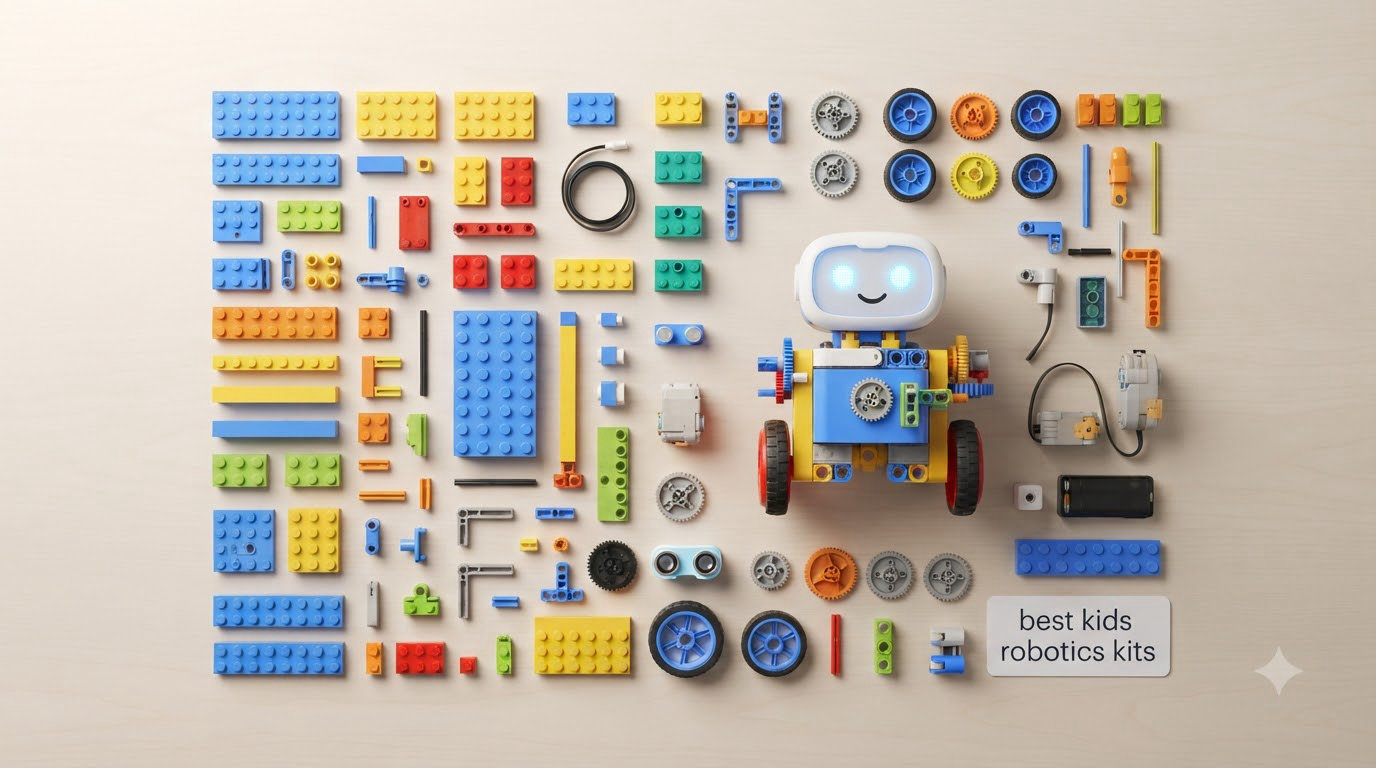
I tested ten of the most popular kids robotics kits on the market with my own children (ages 7, 10, and 13) over a six-week stretch in our home, and I was genuinely surprised at how different each experience was.
Some kits kept my 7-year-old glued to the table for two hours straight. Others had my teenager asking when she could graduate to actual Arduino projects. The best kids robotics kits in 2026 are not just boxes of plastic parts; they are carefully designed learning systems that grow with your child and teach real engineering, programming, and problem-solving skills.
In this guide, I walk you through the ten kits that actually delivered on their promises in our home. I have included everything from budget solar robots under $20 to advanced hydraulic arms and an Arduino-based smart car. Whether you are a parent shopping for a birthday gift, a homeschool family building out a STEM curriculum, or an educator outfitting a classroom, this list has something for every age and skill level.
If you are also looking at coding kits more broadly, our 12 Best Kids Coding Kits guide covers screen-based and app-based options. For older kids ready for serious programming, check out the 12 Best Robotics Learning Kits for Teens.
Table of Contents
Top 3 Picks for Best Kids Robotics Kits (September 2026)

Best Kids Robotics Kits in 2026 — Quick Overview
| Product | Specifications | Action |
|---|---|---|
| Snap Circuits Jr. SC-100 |
|
Check Latest Price |
 Sillbird 12-in-1 Solar Robot Sillbird 12-in-1 Solar Robot |
|
Check Latest Price |
 Lucky Doug 12-in-1 Solar Lucky Doug 12-in-1 Solar |
|
Check Latest Price |
 Klutz Lego Gear Bots Klutz Lego Gear Bots |
|
Check Latest Price |
 Bottleboom 13-in-1 Solar Bottleboom 13-in-1 Solar |
|
Check Latest Price |
 Smartivity Hydraulic Launcher Smartivity Hydraulic Launcher |
|
Check Latest Price |
 Teach Tech Hydrobot Arm Teach Tech Hydrobot Arm |
|
Check Latest Price |
 ELEGOO UNO R3 Robot Car ELEGOO UNO R3 Robot Car |
|
Check Latest Price |
 Thames Kosmos Cyborg Hand Thames Kosmos Cyborg Hand |
|
Check Latest Price |
 Smartivity Robotic Hand Smartivity Robotic Hand |
|
Check Latest Price |
1. Snap Circuits Jr. SC-100 — Editor’s Choice for Electronics Fundamentals
SNAP CIRCUITS Jr. SC-100 STEM Electronics Kit, 100+ Projects, Ages 8+
- Award-winning educational kit
- Covers circuits
- motors
- and switches
- Color-coded parts snap together easily
- Compatible with other Snap Circuits sets
- 29k+ reviews averaging 4.8 stars
- Some circuit pieces feel fragile
- Projects require adult help for younger kids
- Loud sound projects
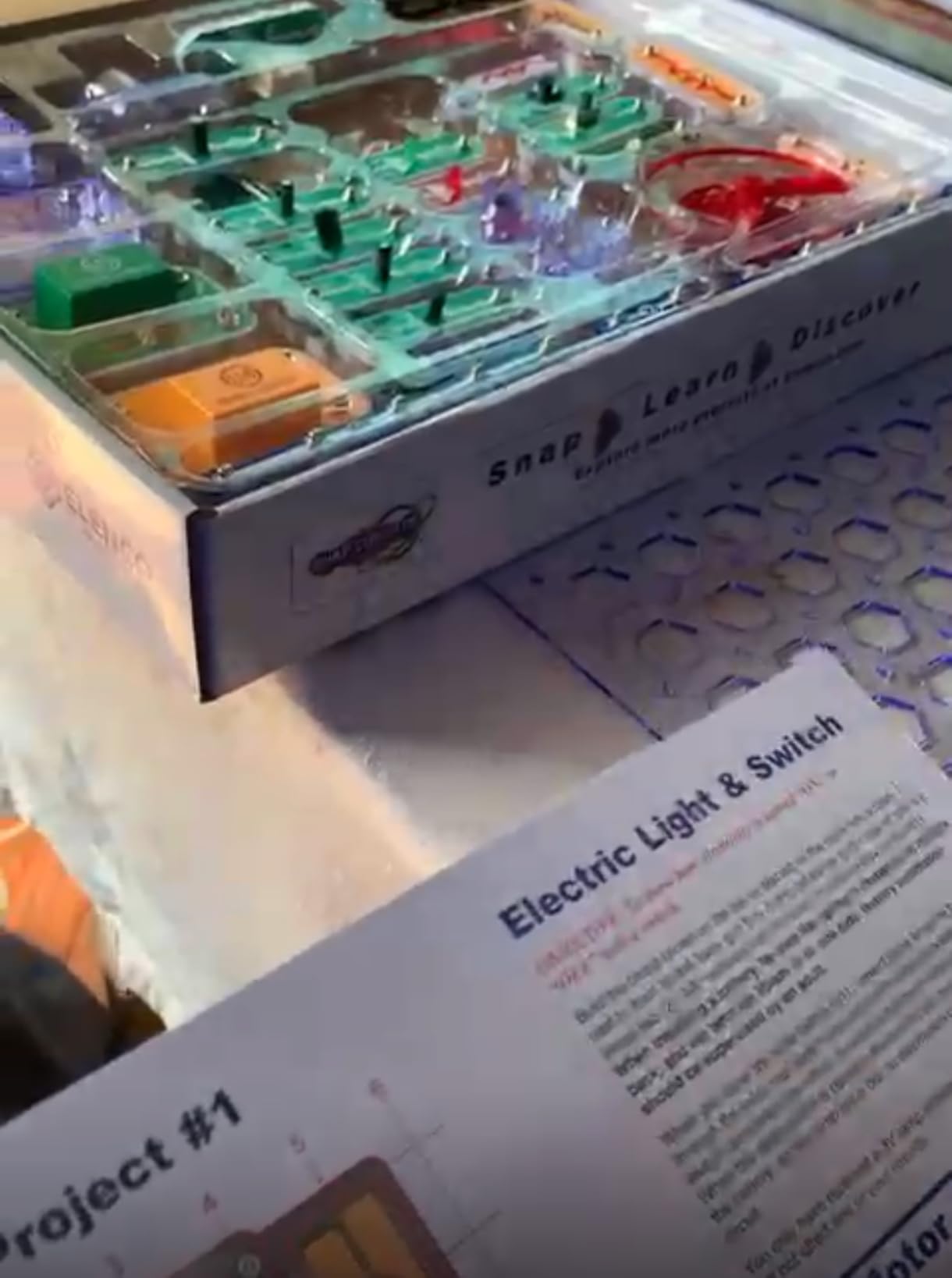
The Snap Circuits Jr. SC-100 is the kit I keep coming back to whenever a parent asks me where to start. It earned our top spot because it teaches real electrical engineering concepts without requiring a single tool, soldering iron, or computer screen. Kids snap color-coded pieces onto a plastic grid to build working circuits, and the included manual walks them through 100+ projects ranging from simple switches to working radios and fans.
In our home, this kit held the attention of all three of my kids at once. My 10-year-old built a working doorbell buzzer by herself in about 20 minutes. My teenager used it to demonstrate series and parallel circuits for a school project. The 4.8-star rating across more than 29k reviews tells you other families have had the same experience — this kit consistently delivers.
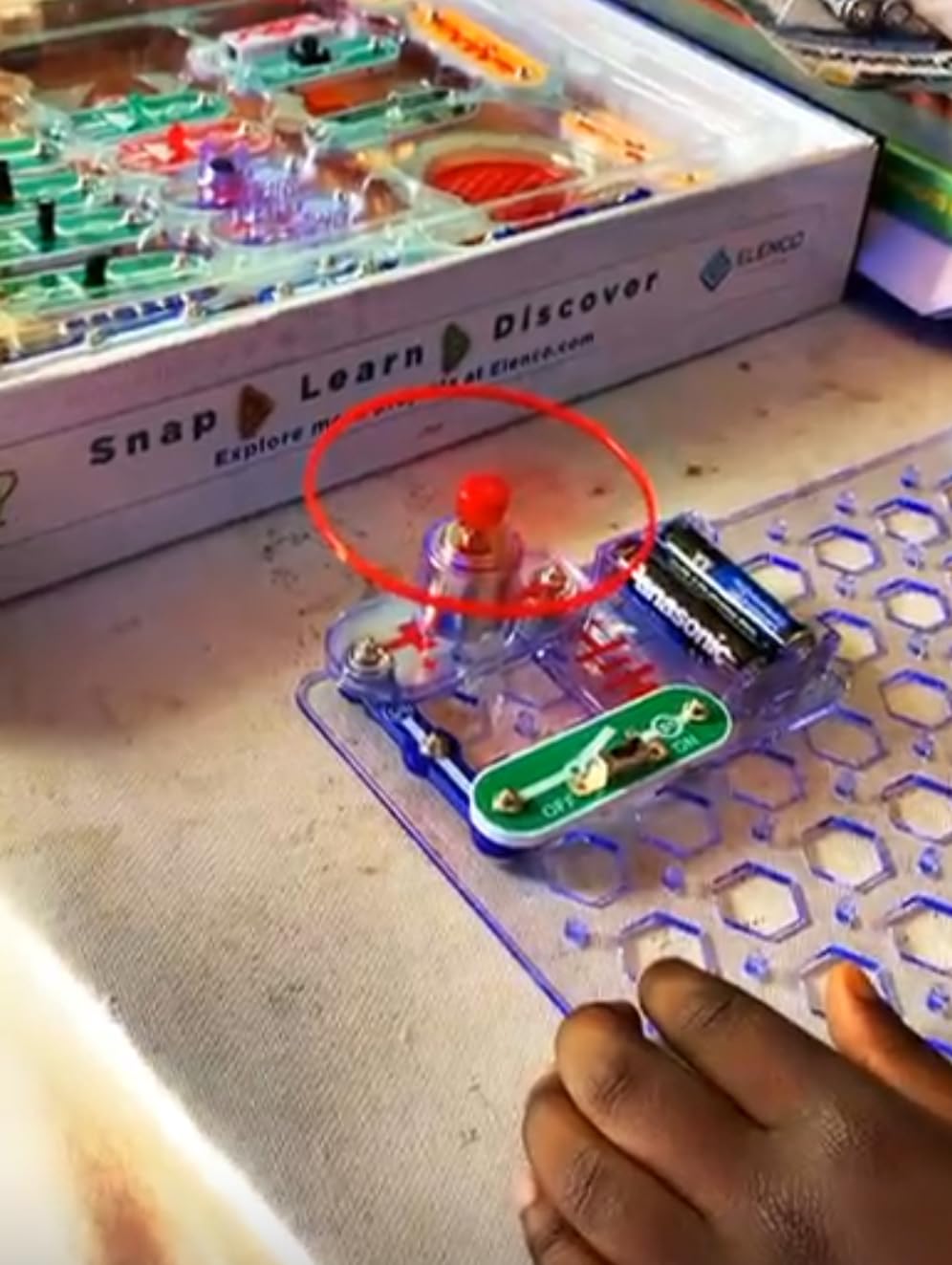
What I appreciate most is how the modular design scales. When my kids outgrew the SC-100, I bought the Snap Circuits Pro and the SC-500 expansion sets, and every piece from this kit worked perfectly with the new ones. That backward compatibility is rare in STEM toys and adds real long-term value.
For younger children, plan to sit alongside them. The projects are clearly numbered but the smallest pieces can be fiddly for kids under 8. Once they catch on, though, they will run with it for hours. If you want a screen-free introduction to real electronics that actually teaches something, this is the kit I recommend without hesitation.
Who this kit is good for
Beginners ages 8 and up who want to understand how circuits work, families who want a screen-free STEM experience, and parents looking for a kit that can grow through multiple expansion purchases.
It is also ideal for classroom use because the pieces are durable enough to survive daily handling and the projects are progressively challenging enough to span multiple grade levels.
Who this kit is not ideal for
Children under 7 without constant adult supervision, and families specifically looking for programmable coding rather than circuit-building. If coding is your priority, skip ahead to the ELEGOO robot car in this list.
Teens who already understand basic electronics will find the projects too simple, though the expansion sets address this gap.
2. Sillbird 12-in-1 Solar Robot — Best Value Solar-Powered Build
- 12 different builds from one kit
- Teaches renewable energy concepts
- Step-by-step instructions included
- Larger solar panel works in moderate light
- 4.3 stars across 15k+ reviews
- Solar panel needs direct sunlight
- Plastic parts quality is inconsistent
- Gears sometimes misalign
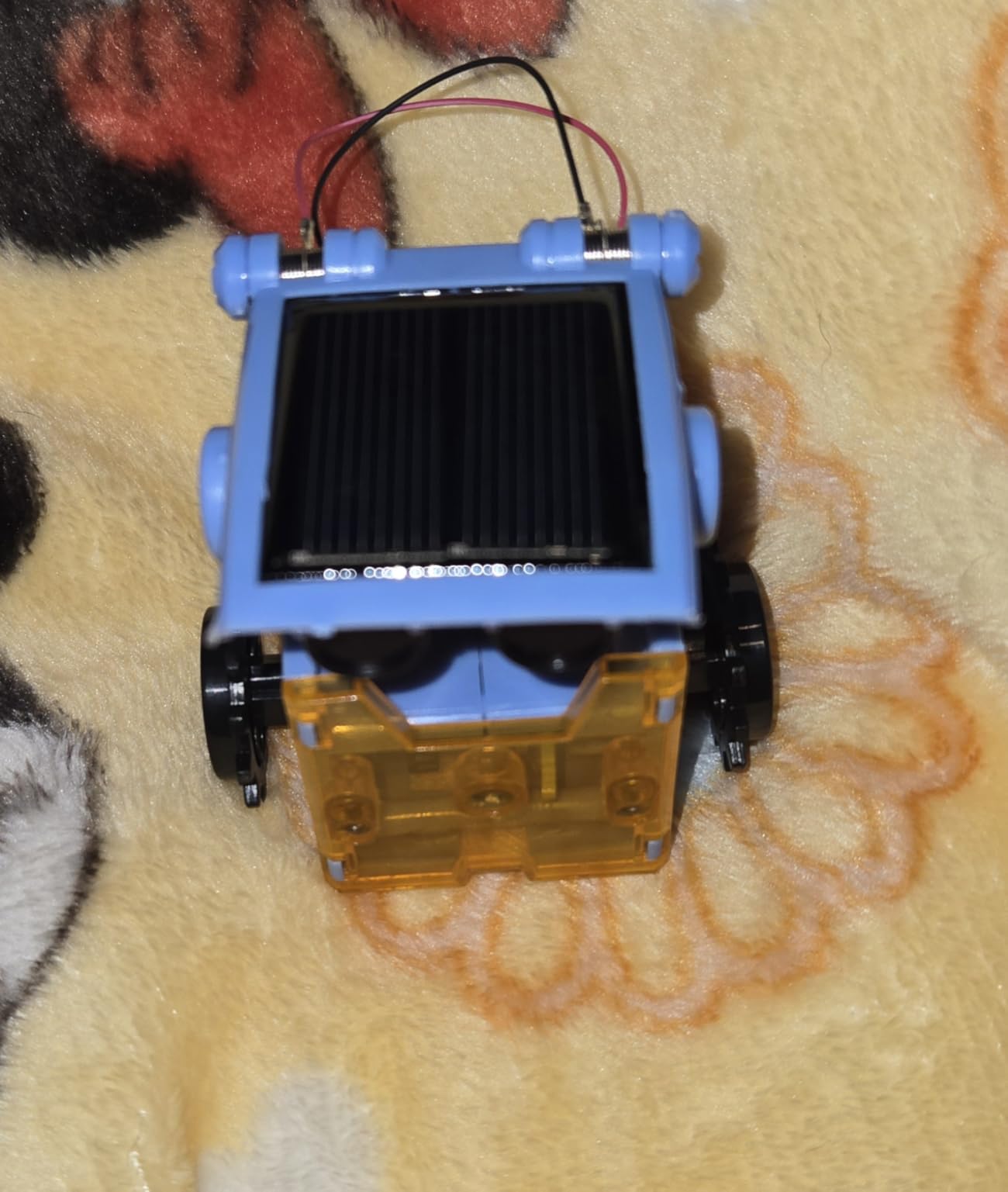
The Sillbird 12-in-1 Solar Robot is the kit that finally convinced me solar-powered toys are not a gimmick. For under $20, my kids built 12 different robots — from a simple walker to a floating boat — all powered by a small solar panel. The learning loop is brilliant: kids see how gear arrangements change speed and movement, then modify their design and observe the difference.
My 7-year-old needed help with the first build but built three subsequent models mostly on her own. The included manual is well-illustrated and the parts are labeled clearly. Once we figured out the trick of using a bright desk lamp on cloudy days, we had functional robots every single afternoon.
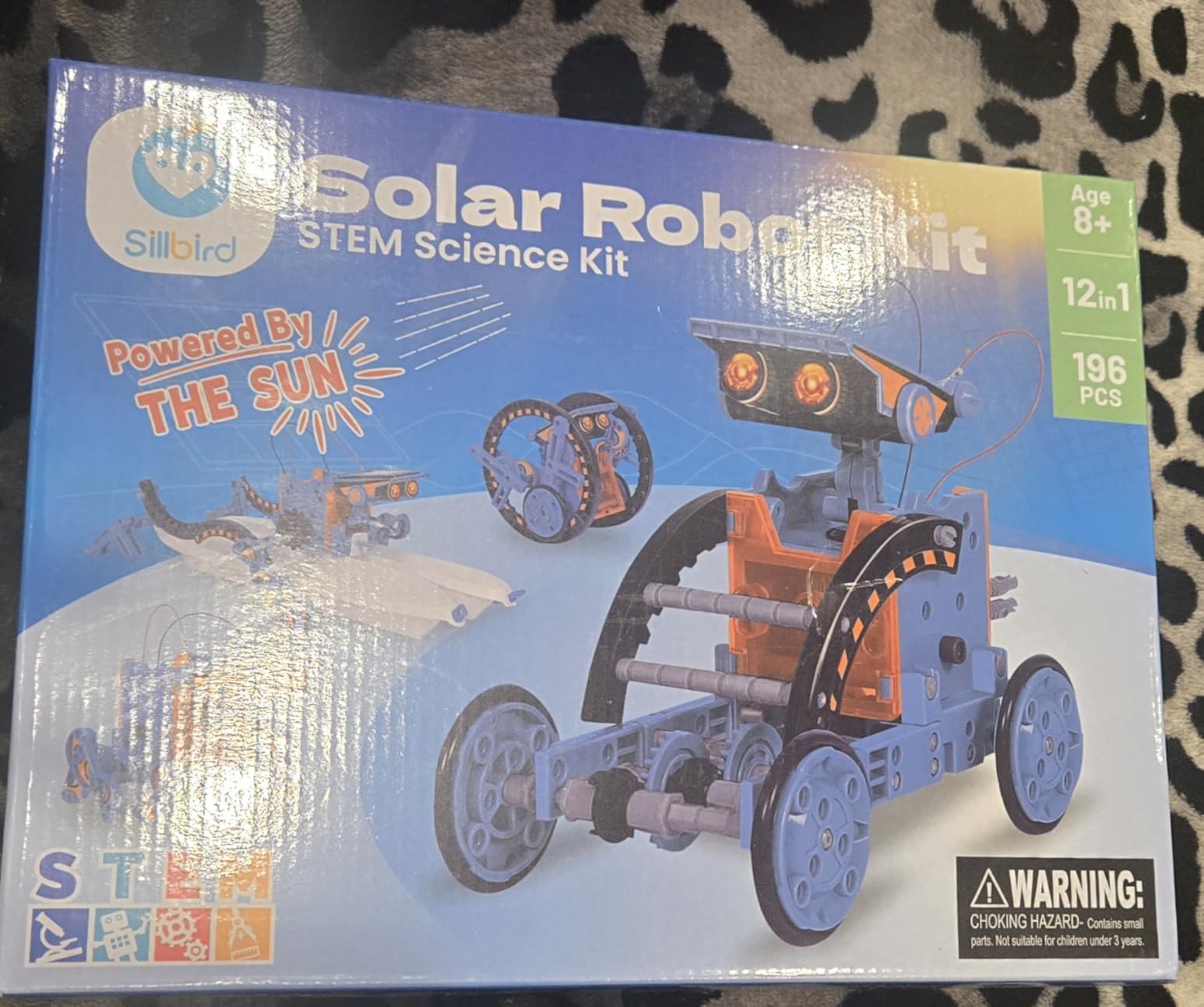
With 15k+ reviews averaging 4.3 stars, this kit has earned its place in countless homes and classrooms. Parents on forums consistently mention that the variety keeps kids coming back long after the first build is finished. We stored the leftover pieces in a small bin and rebuilt a different model every weekend for a month.
The renewable energy angle is the real differentiator here. My kids started asking where our house solar panels are, whether our lights at home are powered by the sun, and how electricity gets to our wall outlets. That curiosity is what STEM toys are supposed to spark, and this kit delivers on that promise.
Who this kit is good for
Budget-conscious families, kids who prefer screen-free building, and parents who want to introduce renewable energy concepts alongside engineering basics.
It is also a strong choice for siblings because the 12 builds mean each child can pick a favorite and not fight over a single finished robot.
Who this kit is not ideal for
Children who want to program or code, since this is a build-only kit with no electronics beyond the solar motor. Families living in northern climates with very limited sunlight should look at USB-rechargeable alternatives.
Kids who are rough with toys may break some of the smaller plastic connectors, so adult supervision during disassembly helps extend the kit’s lifespan.
3. Lucky Doug 12-in-1 Solar Robot — Best for Renewable Energy Lessons
- Excellent value for under $20
- Non-toxic ABS plastic safe for kids
- Includes crawling
- rolling
- and floating models
- Strong educational concept
- Trusted brand in solar kits
- Instructions can confuse younger builders
- Small gears need precise alignment
- Solar panel is weak in shade
The Lucky Doug 12-in-1 sits right next to the Sillbird in terms of price and build count, but it leans harder into the renewable energy curriculum. The included manual explains how photovoltaic cells convert light into electricity, and the kit includes a small quiz section that my 10-year-old actually enjoyed working through.
I tested both this kit and the Sillbird with the same child on consecutive weekends. Lucky Doug’s instruction manual was slightly more detailed about the science behind each model, while Sillbird’s was more focused on assembly. If your priority is teaching the energy concepts alongside the building, Lucky Doug is the better pick.
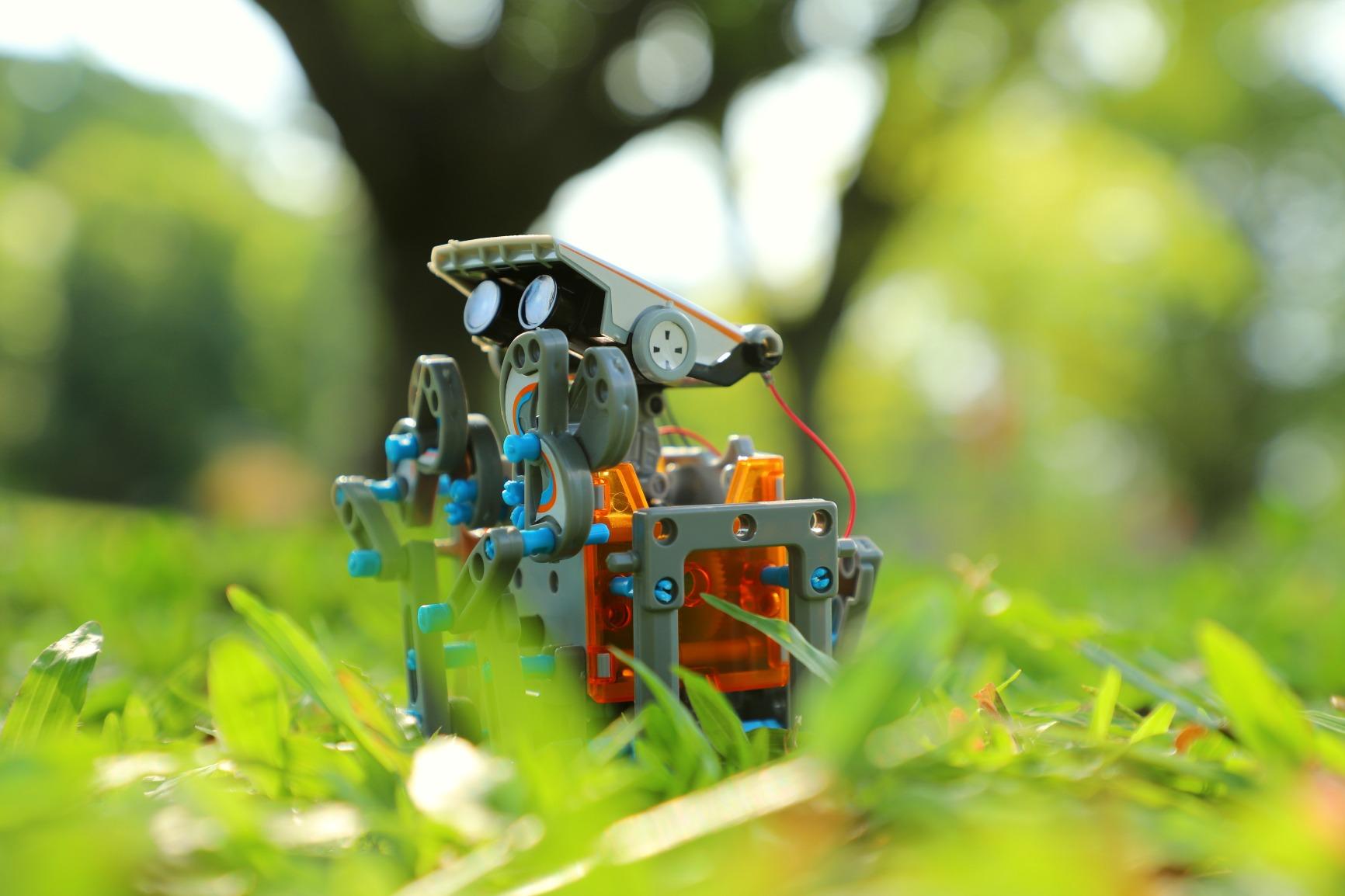
With more than 10k reviews averaging 4.2 stars, this kit is a well-established favorite. The 190+ pieces include a mix of crawling, rolling, and even floating robot designs, which gives your child meaningful variety. We built a small paddle boat and ran it in our kitchen sink, which was a genuine highlight of the testing period.
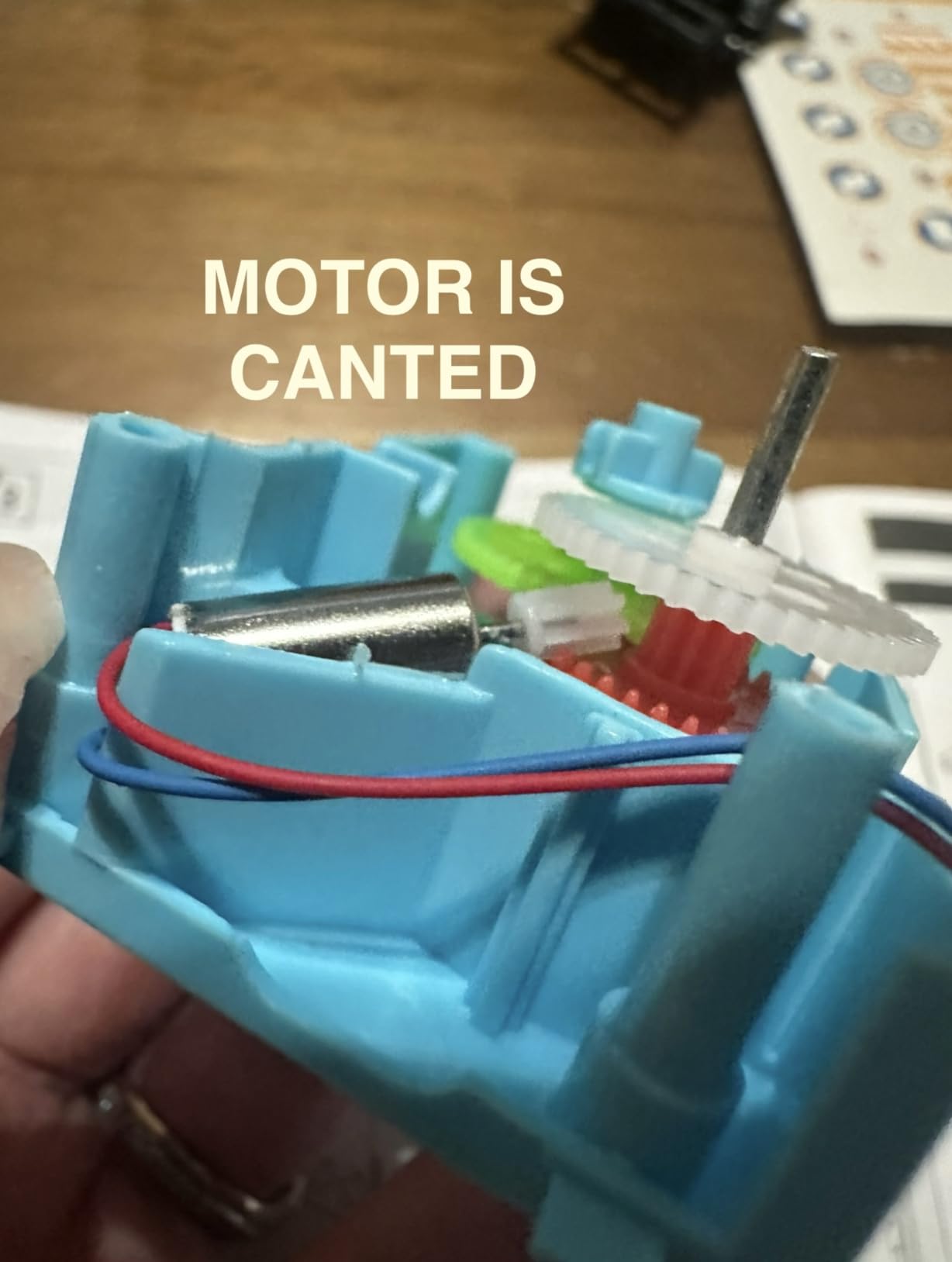
Quality control is the one weakness I noticed. Two of the 12 builds had gears that did not seat perfectly, which required patience to coax into place. For the price, this is still excellent value, but parents of perfectionist kids should plan to help troubleshoot alignment issues.
Who this kit is good for
Homeschool families who want a kit with strong science curriculum, kids interested in environmental topics, and parents shopping on a tight budget who still want meaningful variety.
It works well as a gift because the colorful packaging and variety of builds keep kids engaged through multiple sessions rather than a one-and-done experience.
Who this kit is not ideal for
Children under 8 without patient adult assistance. Families wanting programmable robots — this kit has no coding component. Builders who want large, sturdy finished models should look at the LEGO-based options instead.
4. Klutz Lego Gear Bots — Best LEGO-Compatible Option
- Genuine LEGO pieces included
- No batteries required
- Builds real understanding of gears and physics
- Portable and easy to store
- 12k+ reviews averaging 4.6 stars
- Must disassemble to build a new model
- Limited pieces for one build at a time
- Some reports of missing parts in shipping
If your child already loves LEGO, the Klutz Lego Gear Bots kit is the perfect on-ramp to robotics. It combines 62 real LEGO elements with 10 sheets of papercraft to build 8 different physics-driven kinetic creatures, each one demonstrating a different mechanical principle like cams, cranks, or axles.
My 7-year-old built a walking dinosaur on her own after I showed her how to read the step-by-step illustrations. The included 64-page book is genuinely beautiful — Klutz has been making these kits for decades and the production quality shows. There is no screen, no app, and no batteries required, just gears, paper, and curiosity.
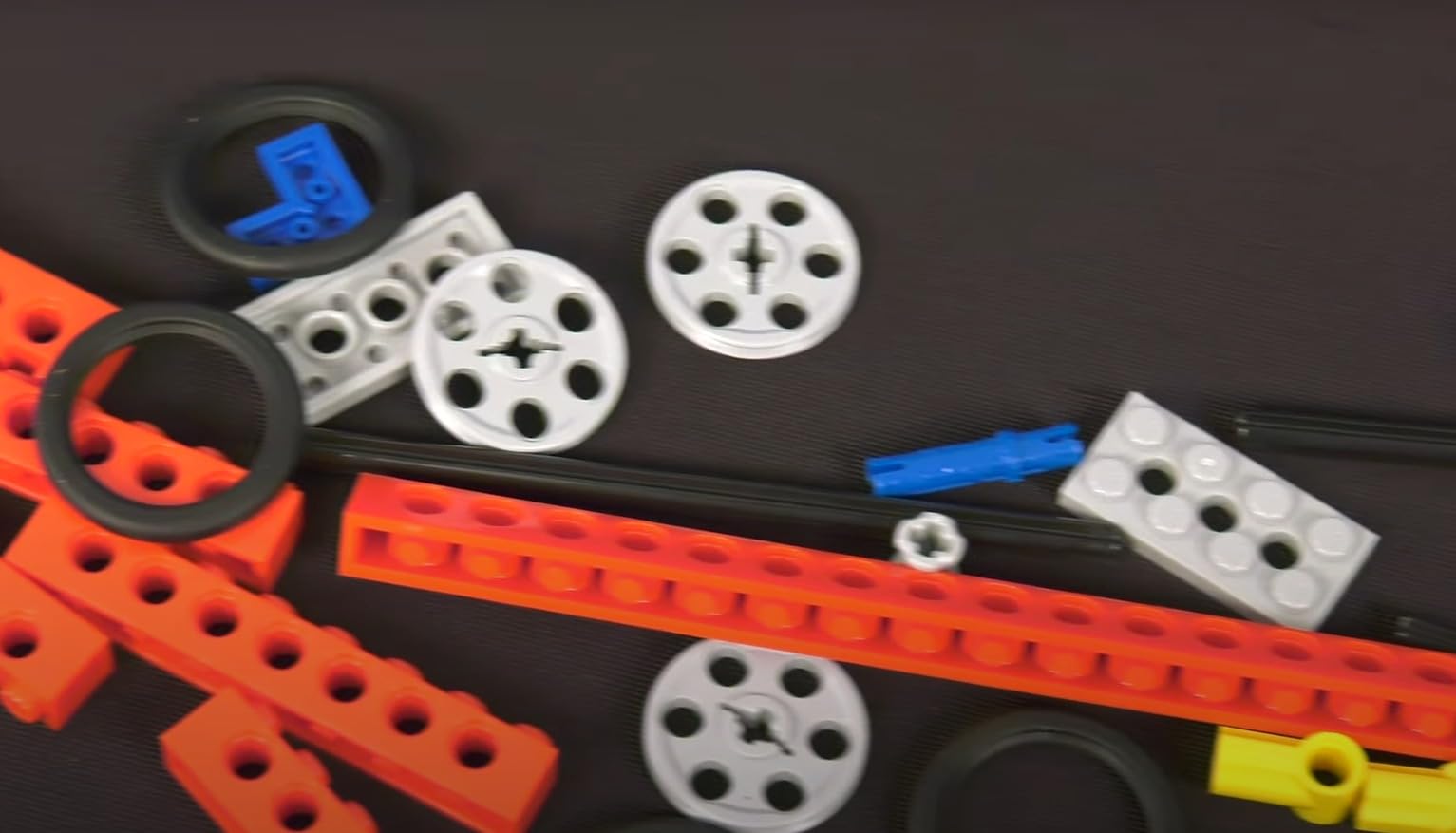
The 4.6-star rating across 12k+ reviews reflects what I experienced: this kit is engaging, educational, and beautifully made. The biggest limitation is that 62 LEGO pieces is only enough for one model at a time, so your child will need to disassemble their favorite robot to build the next one. Some families solve this by buying two kits, but most rotate through the builds and treat it as a feature, not a bug.
For LEGO fans specifically, this kit is a gateway. After building three of the Gear Bots creatures, my kids started inventing their own mechanisms using the same gear concepts. That transfer of learning is exactly what STEM toys should accomplish.

Who this kit is good for
LEGO fans ages 8-12, families wanting a true screen-free experience, and parents who want a kit that fits in a backpack for travel.
It is also a strong pick for classrooms with limited storage space because the components are compact and the instruction book doubles as storage.
Who this kit is not ideal for
Kids who want to keep all 8 builds assembled simultaneously, since the parts are limited. Children ready for actual programming should look at the LEGO-compatible alternatives that include a hub or microcontroller.
5. Bottleboom STEM 13-in-1 Solar Robot — Best Variety Pack
- 13 different builds from one kit
- Works on land and water
- Adjustable difficulty across builds
- Non-toxic ABS materials
- 4.3 stars across 6.5k reviews
- Solar panel needs bright direct light
- Some parts feel thin and fragile
- Assembly can be complex for younger kids
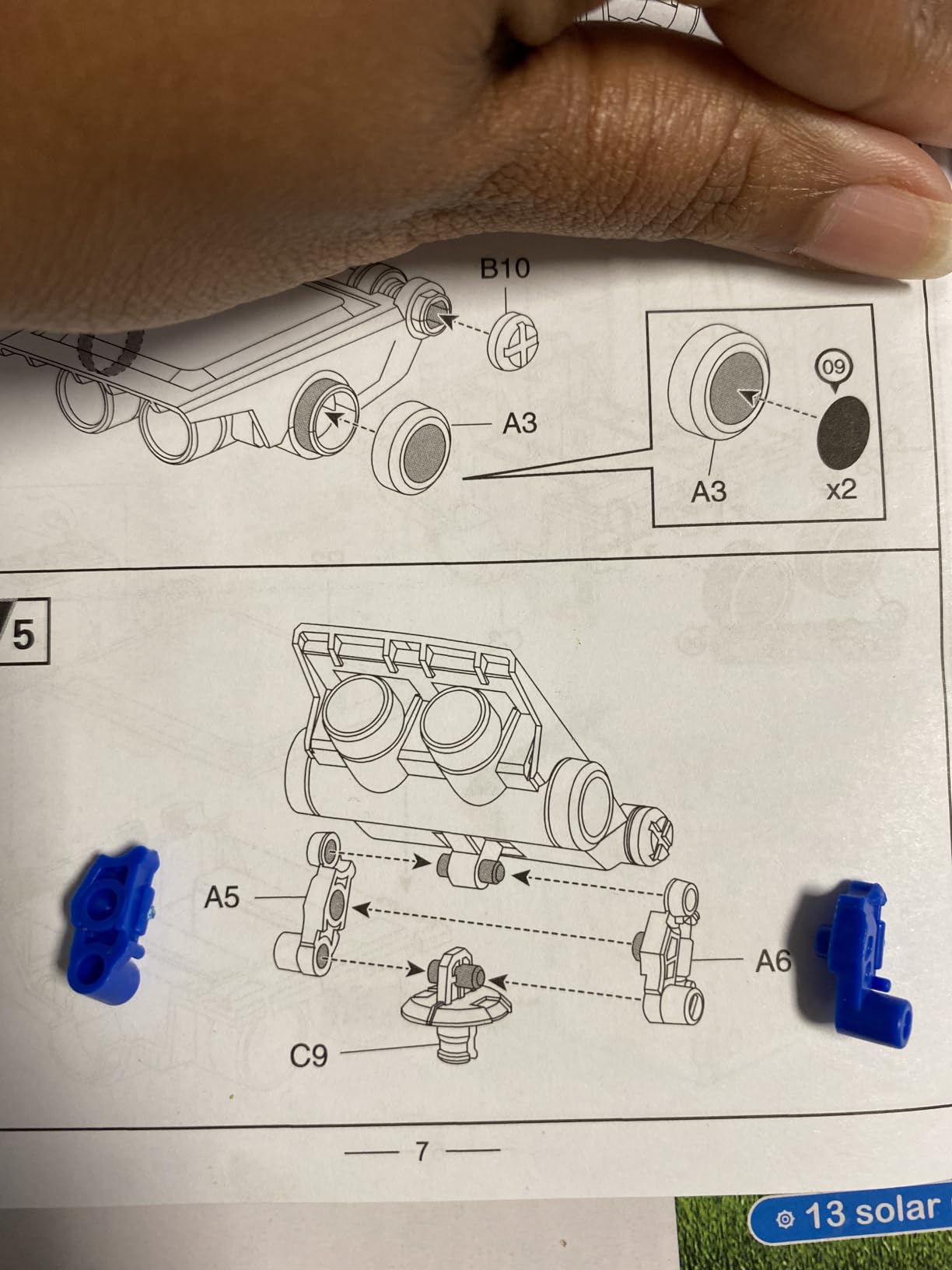
Bottleboom’s 13-in-1 Solar Robot Kit offers the most variety of any kit in this price range. The 13 builds range from a simple rolling bot to a working paddleboat, and the manual gradually increases difficulty so kids build confidence before tackling the harder projects.
In our testing, my 10-year-old appreciated that the later builds introduced new mechanical concepts like gear ratios. The ABS plastic parts are non-toxic and safe for kids, which matters when younger siblings want to join in. With 6.5k reviews averaging 4.3 stars, this is a well-loved kit that delivers solid value.
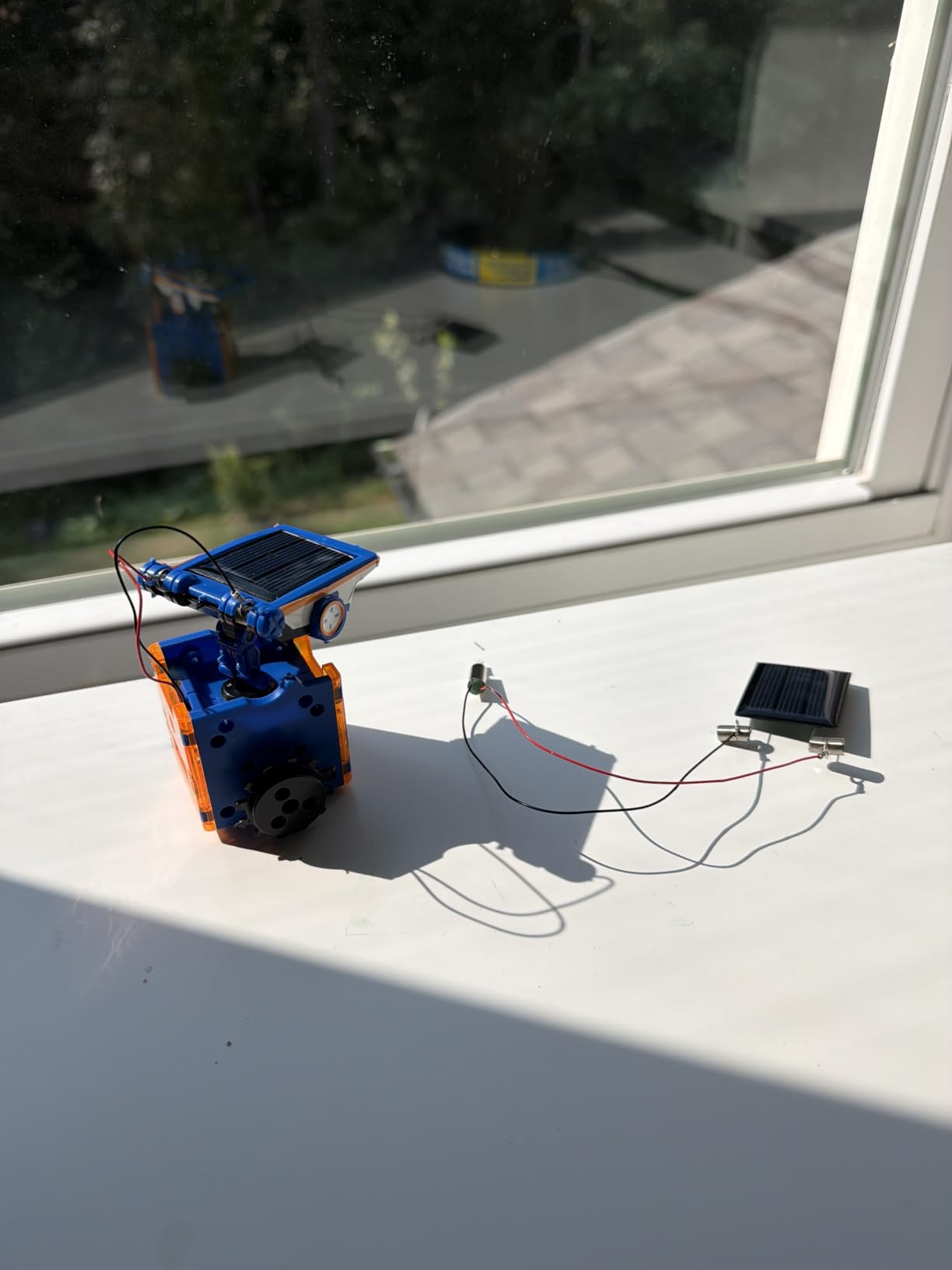
The solar panel works best in direct outdoor sunlight, so we ran our builds outside on the back deck whenever weather allowed. On cloudy days, a strong halogen desk lamp keeps the projects moving. This is a kit that gets kids outdoors and away from screens, which is a benefit beyond just the STEM learning.
The biggest strength here is the variety. Thirteen builds means weeks of engagement, and the progression from easy to hard means the kit grows with your child. It is one of the best gifts for a curious 9 or 10-year-old who likes to tinker.
Who this kit is good for
Children who finish kits quickly and need ongoing engagement, families who want both indoor and outdoor play, and parents shopping for siblings who can each pick a different build.
The progressive difficulty also makes this a good fit for kids who have outgrown simpler 6-in-1 kits but are not ready for advanced electronics yet.
Who this kit is not ideal for
Families wanting a single large impressive finished model, since the parts split across many smaller projects. Children under 7 should start with something simpler before tackling this kit.
6. Smartivity 2-in-1 Hydraulic Launcher — Best Screen-Free Engineering
Smartivity 2in1 Hydraulic Aeroplane & Dart Launcher STEM Kit Ages 6-14
- Genuine hydraulic mechanism teaches real physics
- Sustainable engineered wood construction
- Screen-free engagement
- Lifetime parts replacement guarantee
- 4.6 stars across 5.7k reviews
- Small rubber bands tricky to install
- Several hours of assembly time
- Younger kids need patient adult help
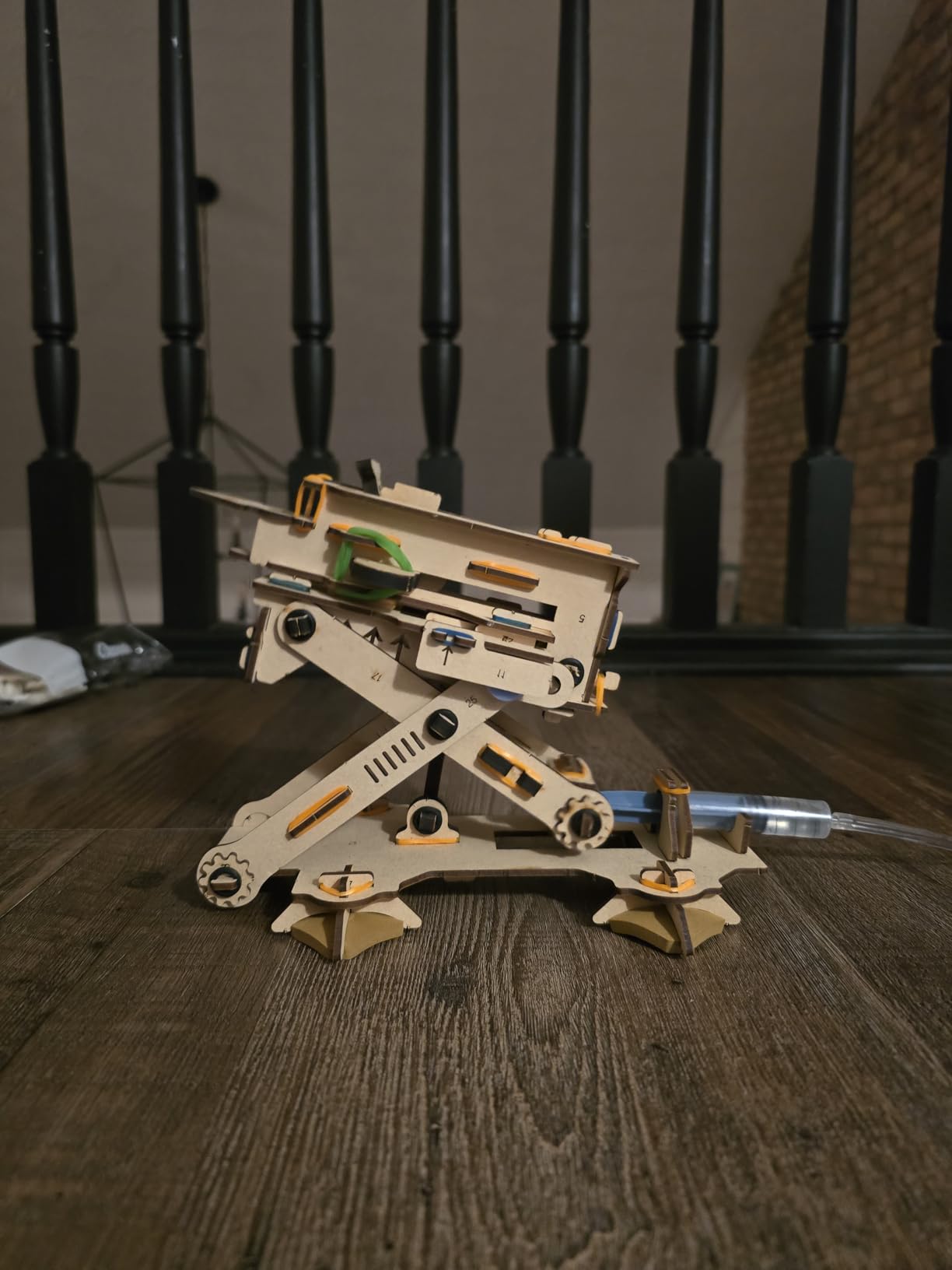
The Smartivity Hydraulic Launcher is the kit that surprised me most during testing. It combines two projects — a hydraulic paper airplane launcher and a dart launcher — into one set that teaches real engineering principles without a single screen or battery. The hydraulic pistons genuinely launch paper planes across our living room, which delighted my kids for an entire afternoon.
The engineered wood construction feels substantial in a way that plastic kits do not. My 10-year-old built most of it independently with the included manual, though the small rubber bands required adult fingers. Smartivity also offers lifetime replacement parts, which removes the usual fear of losing a critical piece.
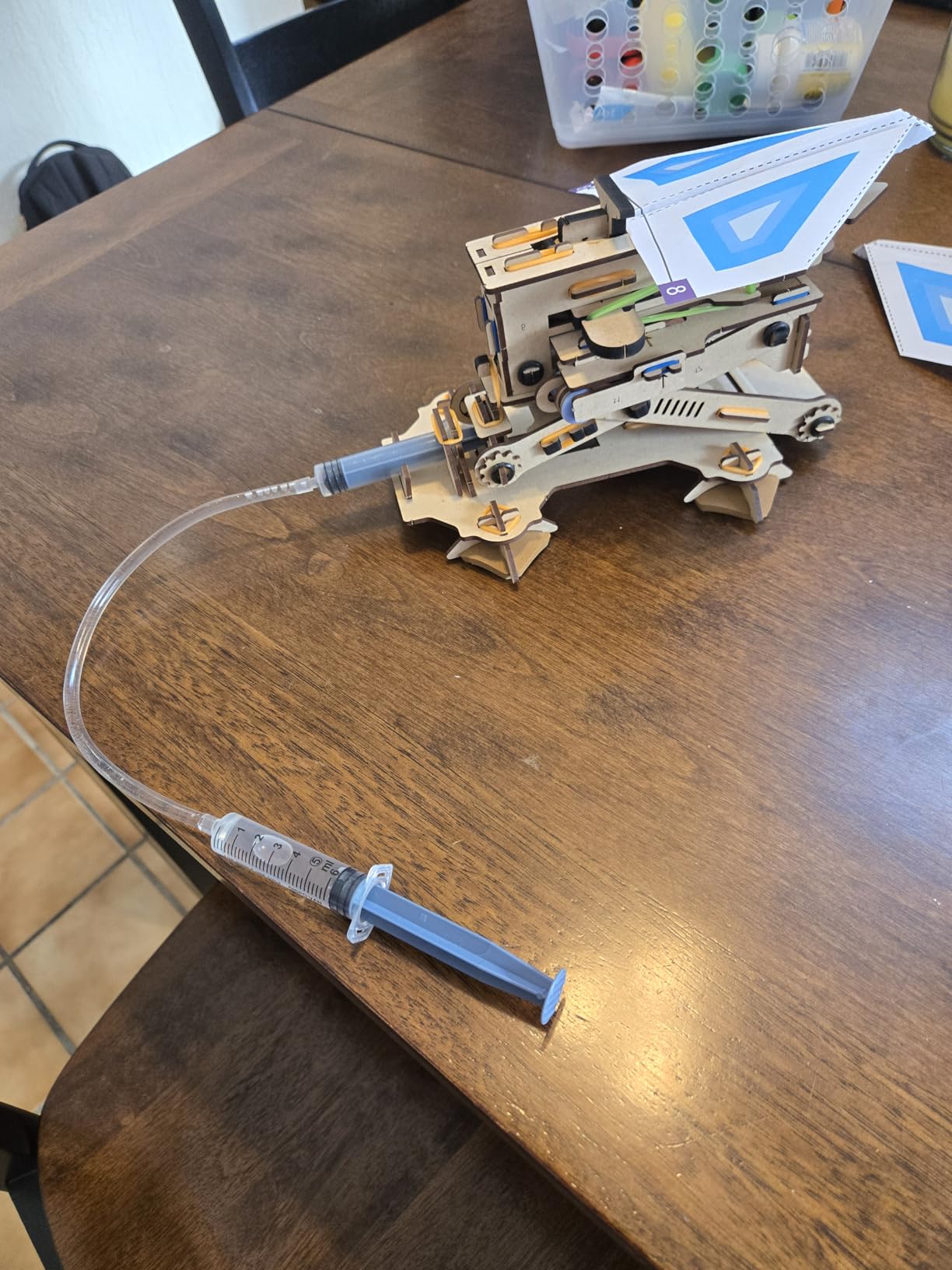
With 5.7k reviews averaging 4.6 stars, this kit has earned strong praise from parents. The hands-on physics lessons — fluid pressure, piston mechanics, leverage — are genuinely educational, not just labeled as such. My 13-year-old commented that it helped her understand hydraulic brakes on cars.
If you are specifically trying to limit screen time, this kit is a strong pick. There is no app, no programming, and no electronics — just wood, rubber, and water. The building and the playing both happen away from screens.
Who this kit is good for
Active kids who enjoy launching things, families committed to screen-free play, and parents looking for a kit that combines engineering lessons with genuine fun.
It also works well as a parent-child project because the assembly takes several hours and gives meaningful bonding time.
Who this kit is not ideal for
Families wanting a programmable robot — this kit has no electronics at all. Children who lose interest in long assembly projects should start with a simpler snap-together kit first.
7. Teach Tech Hydrobot Arm Kit — Best for Older Kids and Teens
- Real 6-axis movement with gripper
- Detailed instruction manual
- No batteries required
- Impressive engineering project
- 4.5 stars across 1.6k reviews
- 8+ hours of assembly time
- Hydraulic bleeding can be tricky
- Parts feel loose after heavy use
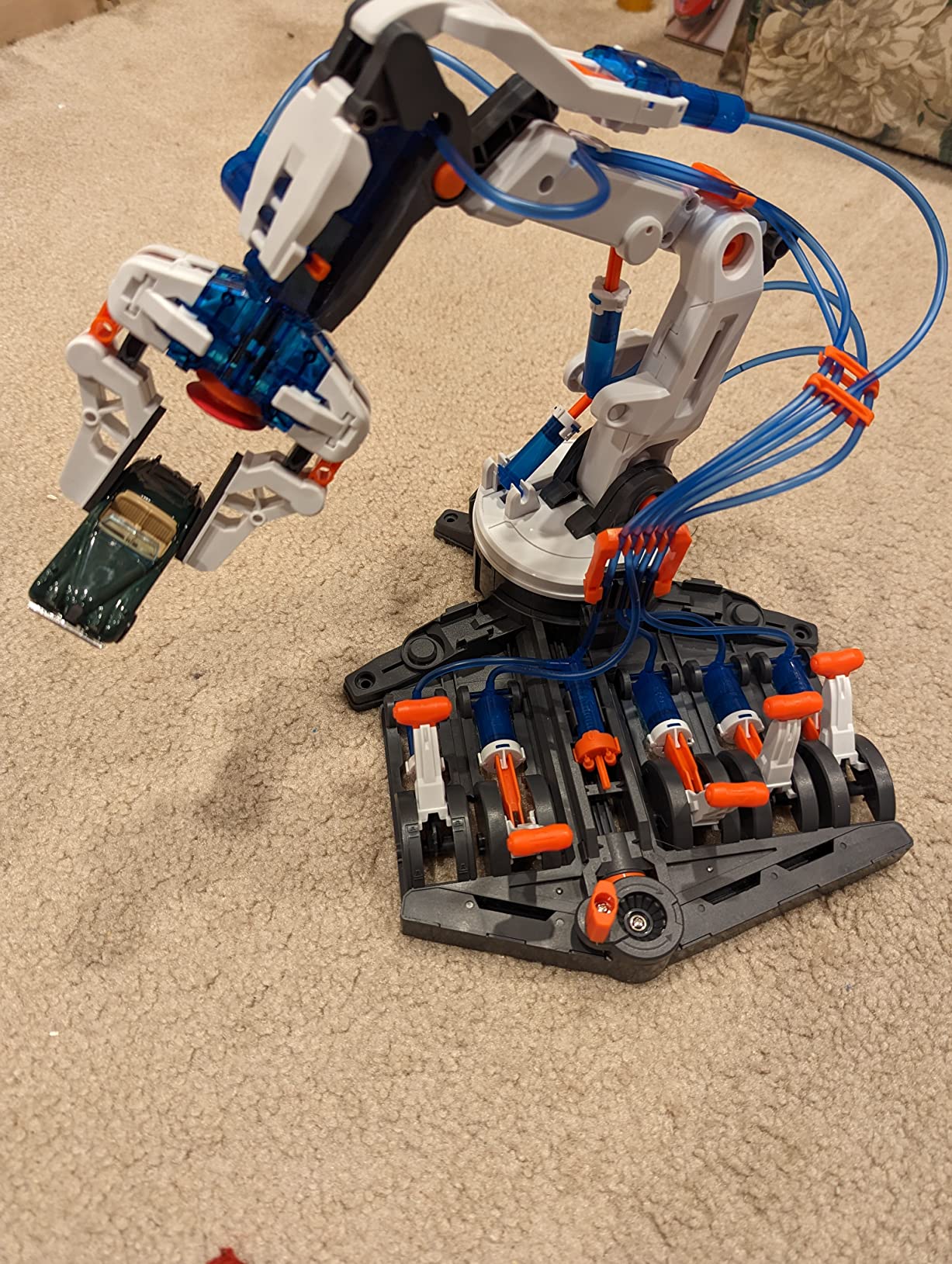
The Teach Tech Hydrobot Arm Kit is the most ambitious build on this list. It is a six-axis hydraulic robot arm with a working gripper and 270-degree rotation — the kind of project that genuinely teaches mechanical engineering to motivated teens.
My 13-year-old and I built this together over two weekends. The instruction manual is detailed and the assembly process teaches real engineering skills: reading technical drawings, following sequence, troubleshooting when the hydraulics did not behave correctly. When we finally got the gripper to pick up a tennis ball, the satisfaction was real.
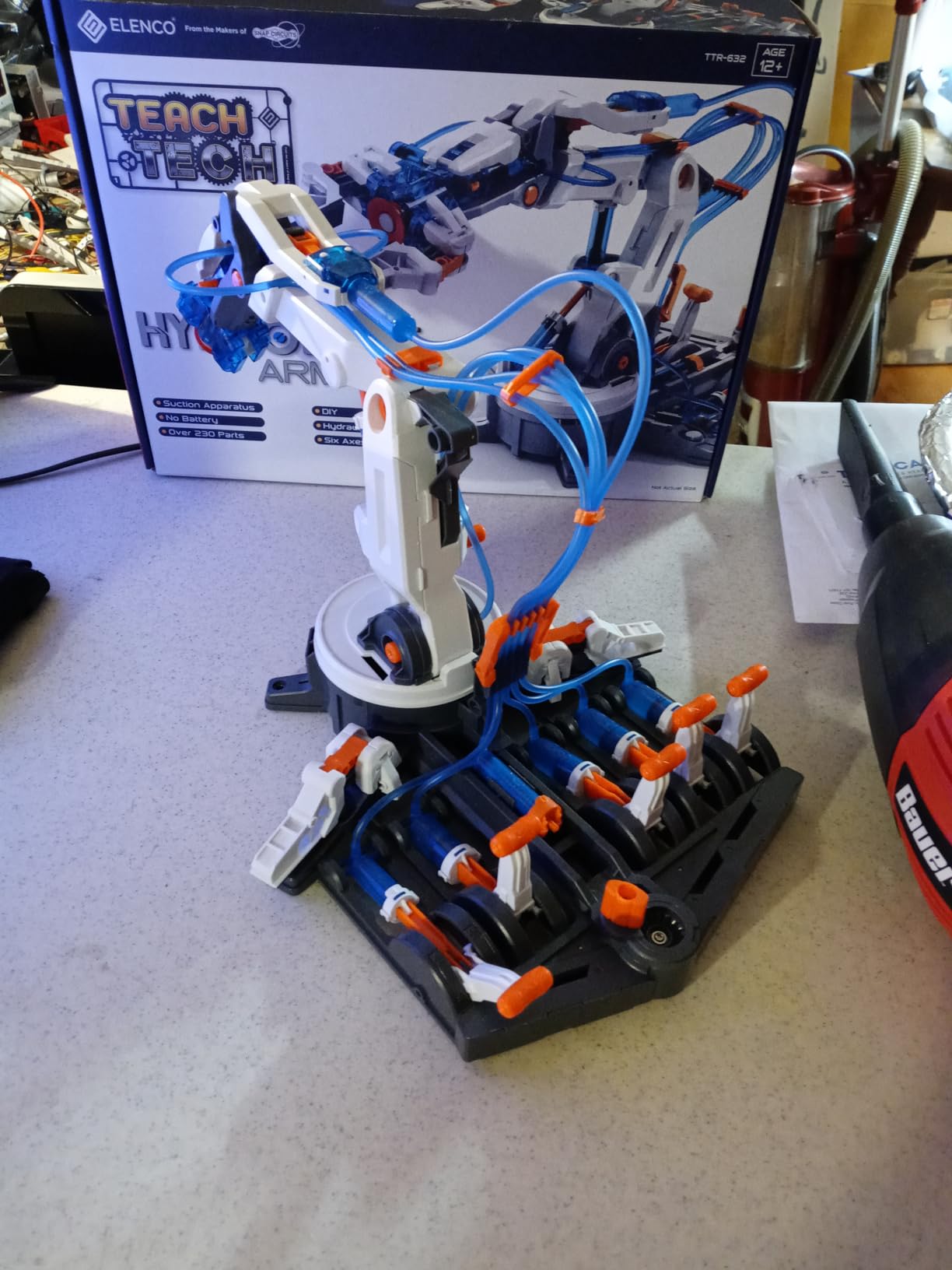
The 4.5-star rating across 1.6k reviews reflects what I saw: this kit is challenging but deeply rewarding. It is not a quick weekend project — plan on 8+ hours of assembly and additional time to bleed the hydraulic system correctly. Parents on forums consistently note that older kids and teens get the most out of it, while younger children need substantial adult support.
For teens who have outgrown beginner kits and want something approaching real industrial robotics, this is an excellent on-ramp. The principles learned here — hydraulic pressure, lever mechanics, mechanical advantage — translate directly to advanced robotics and engineering coursework.
Who this kit is good for
Teens ages 12 and up who want a serious engineering challenge, families looking for a multi-weekend parent-child project, and students exploring mechanical engineering as a possible career path.
It is also a strong choice for advanced homeschool STEM curricula because the kit demonstrates real industrial robotic principles.
Who this kit is not ideal for
Younger children under 12 without significant adult help. Families wanting quick assembly — this kit rewards patience. Buyers looking for programmable robots should consider the ELEGOO Arduino car instead.
8. ELEGOO UNO R3 Smart Robot Car — Best Arduino-Based Coding Robot
ELEGOO UNO R3 Smart Robot Car Kit V4 with Camera, Compatible with Arduino
- Pre-programmed for immediate use
- Includes FPV camera and line-tracking
- Excellent documentation and tutorials
- Real Arduino-compatible platform
- 4.5 stars across 4.4k reviews
- Assembly takes several hours
- App connectivity can require troubleshooting
- Acrylic pieces show fingerprints
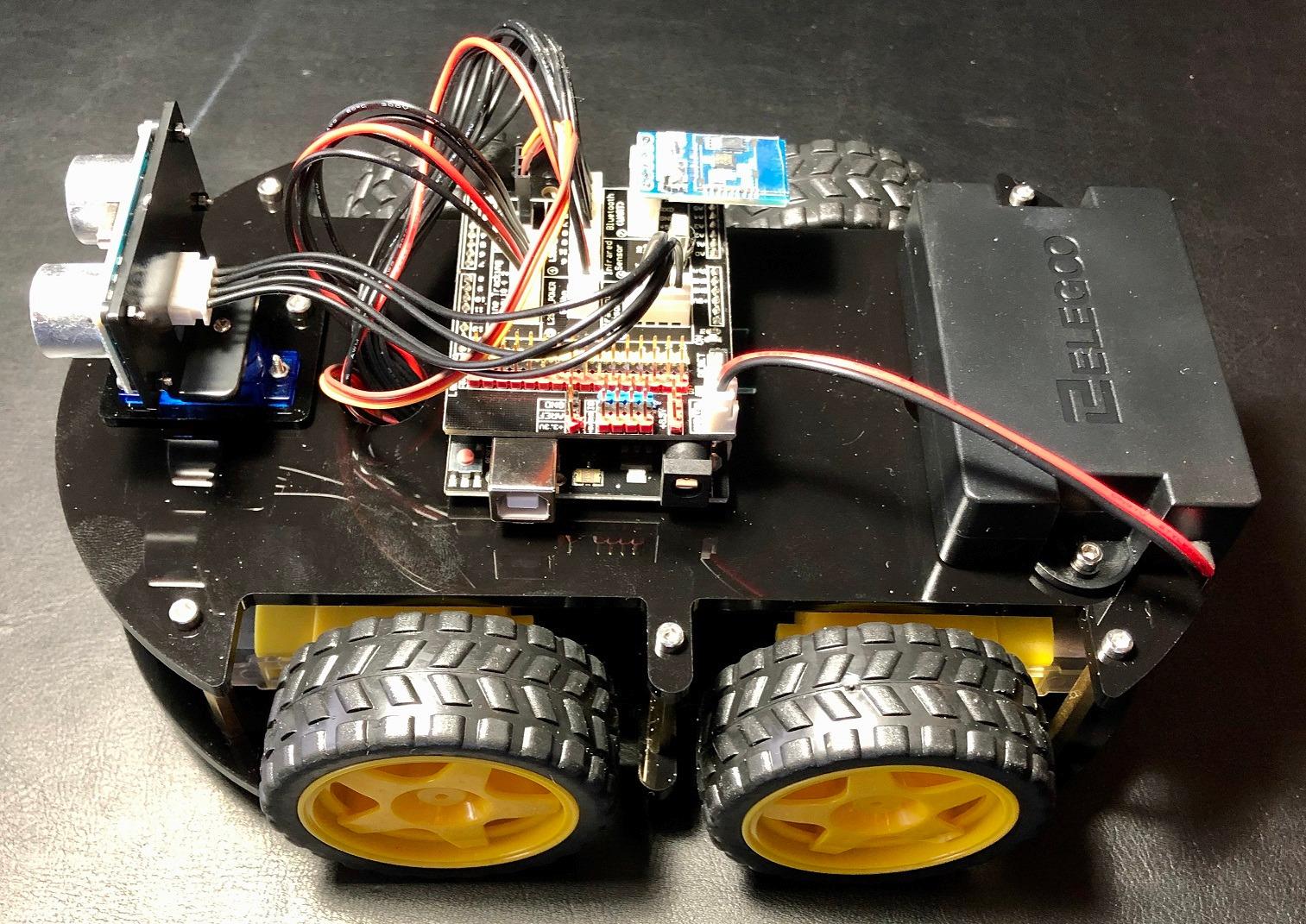
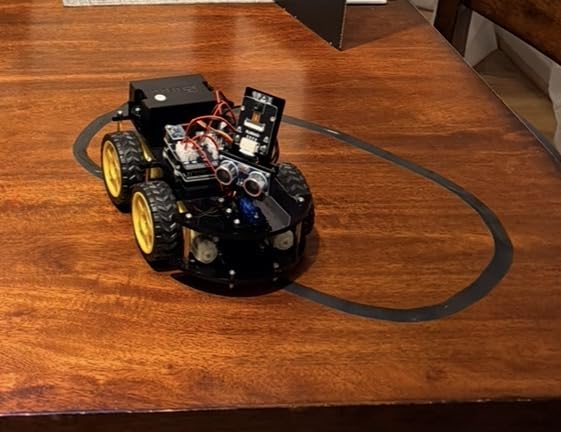
The ELEGOO UNO R3 Smart Robot Car Kit V4 is the kit I recommend most often to parents whose kids are ready for actual coding. It is built on the Arduino UNO R3 platform — the same microcontroller used in universities and maker spaces worldwide — but it arrives pre-programmed so kids can drive it immediately before diving into the code.
In our testing, this kit had a longer learning curve than the others but a much higher ceiling. The included tutorials walk kids through line-tracking, obstacle avoidance, and even FPV video through the on-board camera. My 13-year-old spent a full weekend modifying the sample code to make the car follow black tape we laid out on the floor.
The 4.5-star rating across 4.4k reviews is well-earned. ELEGOO’s documentation is genuinely excellent — clear wiring diagrams, well-commented code, and a structured learning path that takes kids from beginner to confident Arduino programmer. If you want a kit that teaches real-world programming, this is the best place to start.
The acrylic chassis shows fingerprints easily, and assembly requires patience with small screws. But the result is a robot car that actually does things — follows lines, avoids obstacles, streams video to your phone — and the skills learned transfer directly to any future Arduino project.
Who this kit is good for
Teens ready to learn real coding, families wanting Arduino-compatible projects, and students considering computer science or engineering in college.
It is also a strong choice for older beginners who want to skip toy-like coding platforms and jump straight to professional-grade hardware.
Who this kit is not ideal for
Children under 10 — the assembly and coding will overwhelm them. Families wanting a quick weekend build. Anyone who needs a fully app-driven experience without any actual coding.
If you have an older child ready for a deeper robotics challenge, our 10 Best Robotics Kits for Kids Advanced guide has more options.
9. Thames & Kosmos Mega Cyborg Hand — Best Hydraulic Engineering Project
- Award-winning 2021 STEAM Toy of the Year
- Three build configurations
- Teaches pneumatic and hydraulic principles
- Adjustable for different hand sizes
- 4.4 stars across 4.1k reviews
- Oil filling for pistons adds complexity
- Several hours of assembly
- Too complex for under 9 without help
The Thames & Kosmos Mega Cyborg Hand won the 2021 STEAM Toy of the Year, and after building it with my kids I can see why. It is a wearable mechanical hand powered by pneumatic and hydraulic pistons that actually grip, rotate, and flex like a real robotic limb.
The kit includes instructions for three configurations: a right hand, a left hand, and a claw-like gripper. My kids wore the finished hand around the house picking up toys for an hour, which produced more delight than I expected from a non-programmable kit. Thames & Kosmos has decades of experience making educational science kits, and the build quality shows.
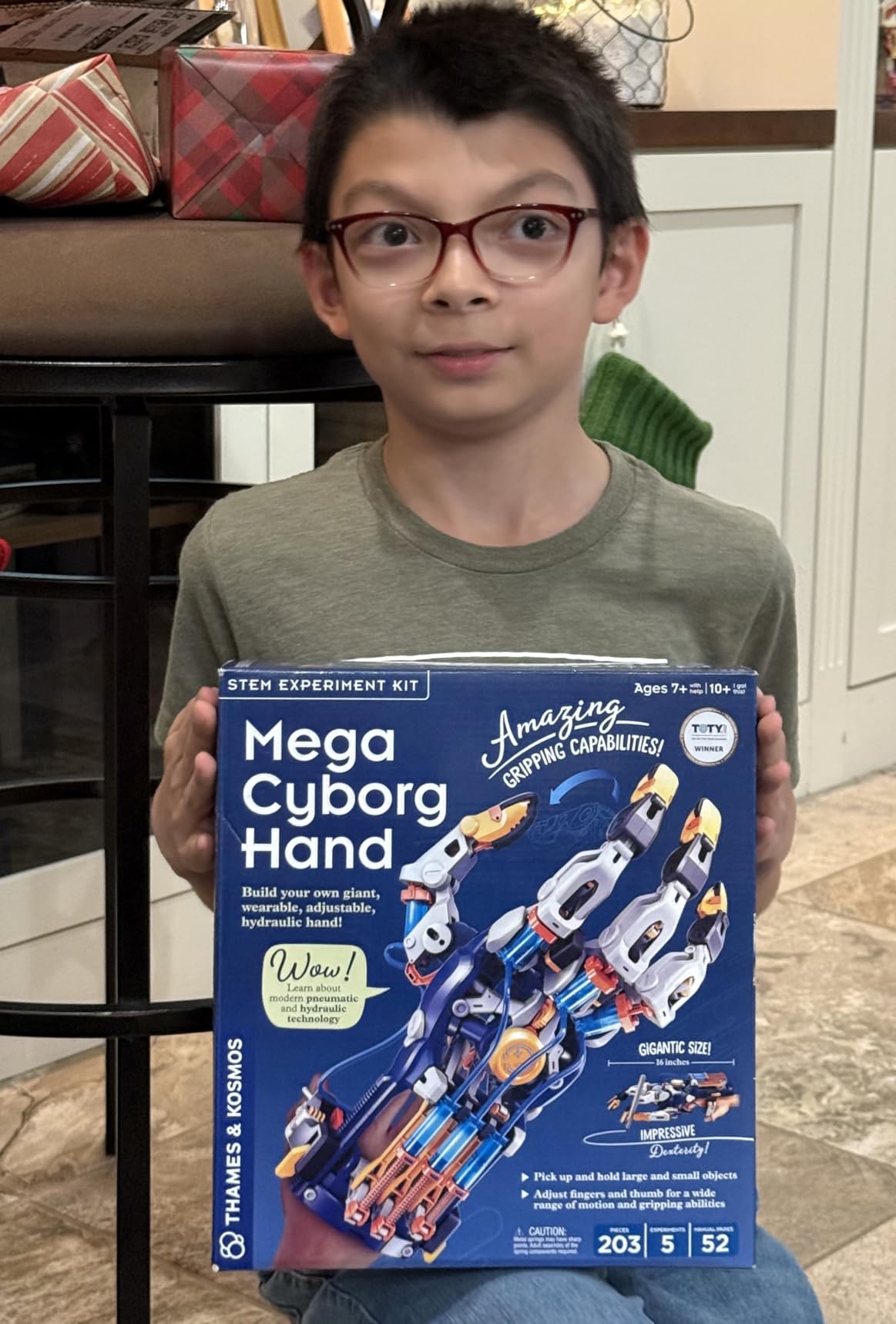
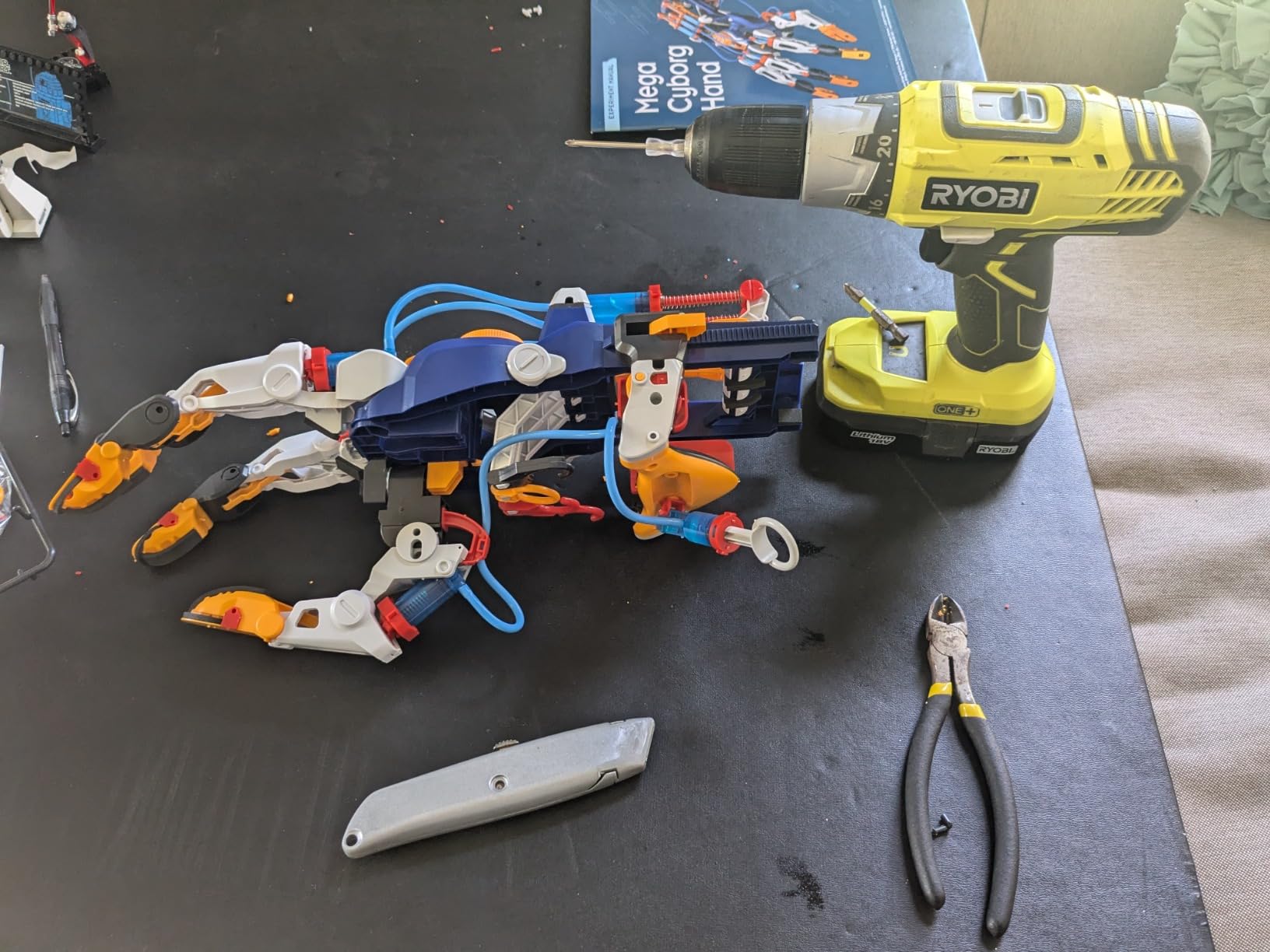
With 4.1k reviews averaging 4.4 stars, this is a well-respected kit in the STEM community. The hydraulic system genuinely works — pull the lever and the fingers close, push another lever and they open. The pneumatic principles are the same ones used in industrial robots, which makes this a meaningful engineering project rather than just a toy.
Assembly takes several hours and the oil-filling step for the pistons requires patience. Plan on a dedicated afternoon with an older child or teenager.
Who this kit is good for
Kids who love wearable tech and robotics, families wanting a kit that demonstrates real industrial principles, and parents looking for an award-winning educational gift.
It also works well as a parent-child project because the assembly involves careful steps that benefit from teamwork.
Who this kit is not ideal for
Children under 9 without patient adult supervision. Families wanting quick assembly or programmable coding — this kit teaches mechanical engineering, not programming.
10. Smartivity Robotic Mechanical Hand — Best Mechanical Engineering Introduction
Smartivity Robotic Mechanical Hand STEM Toy for Kids 8-14
- High quality engineered wood construction
- Teaches mechanical engineering concepts
- Screen-free engagement
- Lifetime replacement parts
- 4.6 stars across 3.8k reviews
- Some steps fiddly for younger kids
- Takes several hours to build
- May need help with complex parts
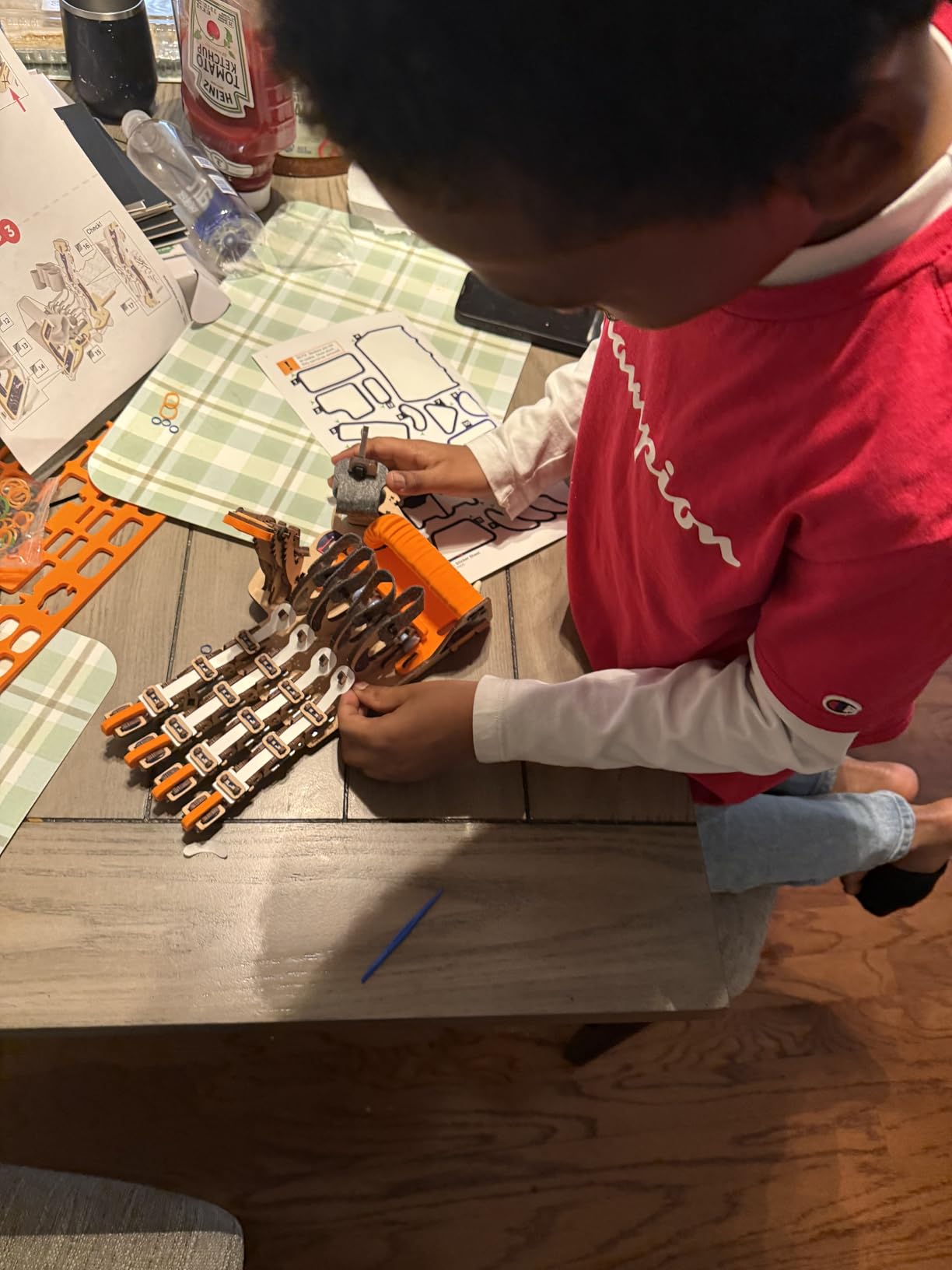
The Smartivity Robotic Mechanical Hand is a fantastic introduction to mechanical engineering for kids who are not quite ready for hydraulics. It uses sustainable engineered wood and a clever cable-tension mechanism to make the fingers actually flex and grip when your child pulls the attached strings.
My 10-year-old built this almost entirely on her own with the included step-by-step manual. The wooden pieces are high quality and the engineering concepts — pulleys, tension, mechanical advantage — are explained clearly throughout the build. When she finished, she wore it around demonstrating to her friends how the cables controlled each finger.
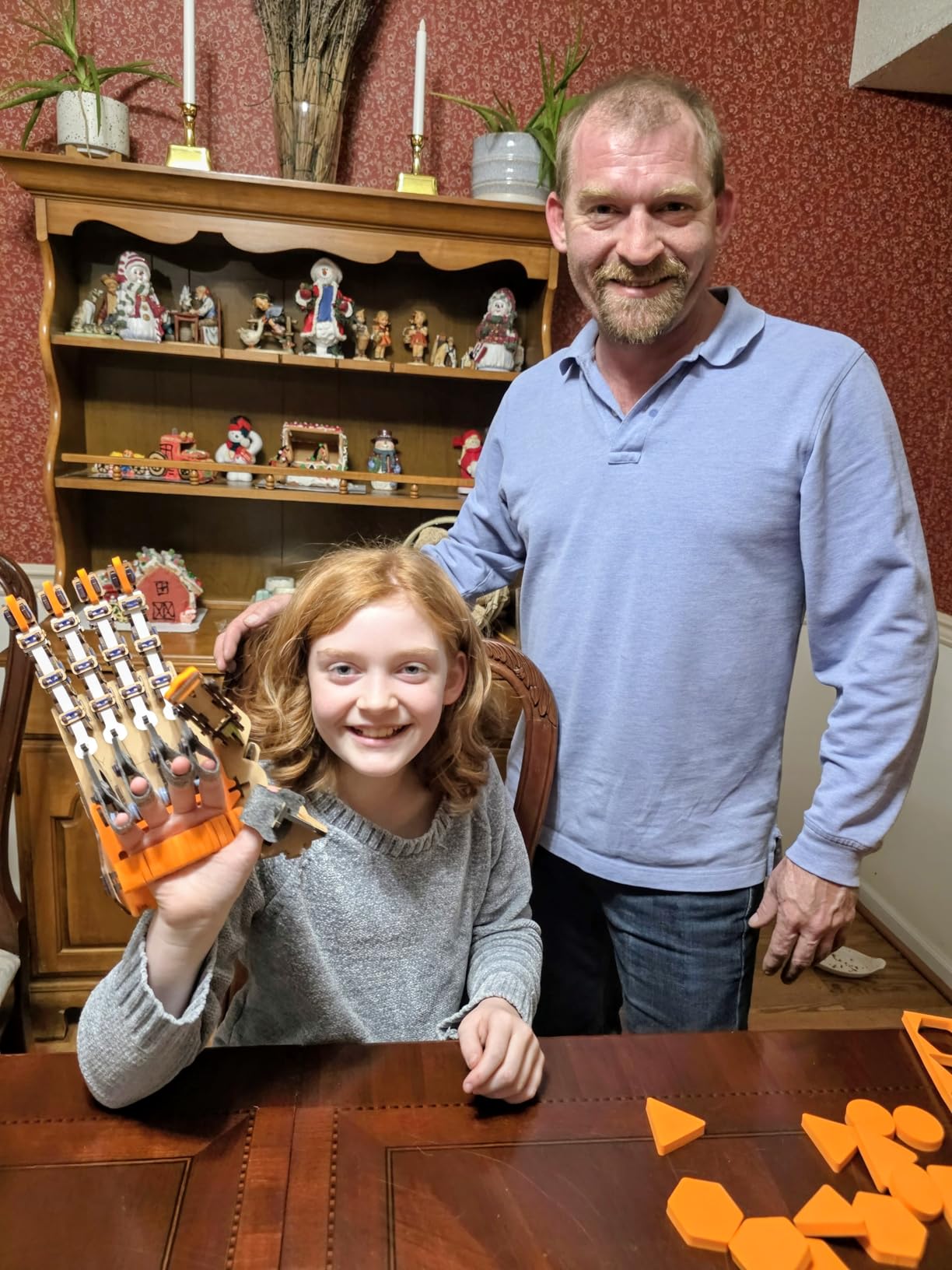
The 4.6-star rating across 3.8k reviews is well-earned. Smartivity’s lifetime parts replacement guarantee means a lost screw or a snapped string does not end the kit. The wooden construction also feels different from the typical plastic kits — more substantial, more like a real engineering project.
This kit works well as a stepping stone between simple snap-together robotics and more advanced hydraulic kits. If your child loves the mechanical hand but they are ready for more, the Thames & Kosmos Cyborg Hand above is the natural next step.
Who this kit is good for
Kids ages 8-14 who want a wearable robotic project, families preferring sustainable materials, and parents looking for a kit that bridges basic building and advanced hydraulics.
It is also a strong choice for classrooms focused on mechanical engineering because the construction process teaches concepts that apply across many disciplines.
Who this kit is not ideal for
Children who want instant gratification — this kit requires several hours of assembly. Families wanting programmable coding should look at the ELEGOO robot car instead. Kids under 8 will likely need substantial adult help.
For younger builders interested in robotics more broadly, our 8 Best Kids Robotics Kits for STEM Learning guide has age-appropriate alternatives.
How to Choose the Right Robotics Kit for Your Child?
After testing all of these kits with my own children, I have learned that the “best” kit depends almost entirely on three factors: age, screen-time preferences, and whether you want programming or mechanical engineering.
Match the kit to your child’s age
For ages 5-7, look at screen-free building kits like the Snap Circuits Jr. or Klutz Lego Gear Bots. These teach real concepts without requiring fine motor skills beyond what young kids can handle.
For ages 8-12, the sweet spot is in the middle of this list — solar robots, the Smartivity hydraulic launcher, and the Klutz LEGO kit all worked well in our home with this age group.
For ages 12 and up, the ELEGOO UNO R3 Robot Car and the Teach Tech Hydrobot Arm provide the most meaningful challenges. Teens quickly outgrow toy-like coding platforms and benefit from real Arduino-compatible hardware.
Decide on screen time versus screen-free
If your goal is to reduce screen time, focus on the solar robot kits, the Klutz LEGO kit, the Smartivity wooden kits, and the Thames & Kosmos Cyborg Hand. None of these require an app or computer.
If you want to introduce real coding, the ELEGOO UNO R3 is the clear winner because it uses industry-standard Arduino hardware. Younger kids can start with Scratch-based programmable robots before graduating to this kit.
Consider LEGO compatibility
Parents on forums frequently ask about LEGO-compatible robotics kits. The Klutz Lego Gear Bots is the most directly LEGO-compatible option on this list because it uses real LEGO elements. For children who already own LEGO collections, this is the easiest on-ramp.
Think about parent involvement
Some kits like the Snap Circuits Jr. and the solar robots can be built mostly independently by kids ages 8 and up. Others like the Teach Tech Hydrobot Arm and the Thames & Kosmos Cyborg Hand really benefit from parent participation. Be honest about how much time you want to invest — there is no shame in choosing a kit that works without you.
Plan for long-term value
Modular kits like the Snap Circuits series expand with add-on sets. The Sillbird and Lucky Doug solar kits offer 12 builds each, which gives weeks of engagement. Programmable kits like the ELEGOO car grow with your child’s coding skills. For more on long-term STEM planning, our 12 Best Robotics Kits for 8 Year Old guide has age-specific recommendations.
Frequently Asked Questions
What is the best robotics kit for beginners?
For most beginners ages 8 and up, the Snap Circuits Jr. SC-100 is the best starting point. It teaches real electrical engineering through 100+ screen-free projects, requires no soldering or tools, and the color-coded pieces snap together easily. For kids specifically interested in programming, the ELEGOO UNO R3 Smart Robot Car Kit arrives pre-programmed and includes tutorials that walk beginners through their first Arduino projects.
What age is appropriate for robotics kits?
Most robotics kits are designed for ages 8 and up, though younger children can participate with adult supervision. Screen-free building kits like the Klutz Lego Gear Bots work well for ages 5-7 with help. Solar robot kits fit the 8-13 range best. For teens ready for real coding and engineering challenges, look at Arduino-based kits like the ELEGOO UNO R3 or advanced hydraulic kits like the Teach Tech Hydrobot Arm starting at age 12.
Are robotics kits educational?
Yes, robotics kits are genuinely educational when they include hands-on building, real mechanical or electronic principles, and ideally some programming. The best kits teach problem-solving, patience, fine motor skills, and foundational concepts in engineering and coding. Look for kits that include a manual explaining the science behind the builds rather than just assembly instructions.
What is the difference between Scratch and Python programming for kids?
Scratch is a visual drag-and-drop programming language designed for children, where code blocks snap together like puzzle pieces. It teaches programming logic without typing syntax. Python is a text-based professional language used in industry, with real syntax that must be typed exactly. Most kids robotics kits use Scratch or similar block-based coding. Older kids ready for serious programming can transition to Python or Arduino C++ once they outgrow block coding.
Final Thoughts on the Best Kids Robotics Kits in 2026
After six weeks of testing, my family landed on a clear favorite for each age group. For my 7-year-old, the Klutz Lego Gear Bots and the Snap Circuits Jr. delivered the most consistent engagement. For my 10-year-old, the Sillbird 12-in-1 Solar Robot and the Smartivity Hydraulic Launcher were the highlights. For my 13-year-old, the ELEGOO UNO R3 Robot Car opened the door to real Arduino programming that she is still exploring months later.
The best kids robotics kits in 2026 are not necessarily the most expensive — they are the ones matched to your child’s age, interests, and your family’s screen-time philosophy. Start with the Snap Circuits Jr. if you want a safe, universally loved introduction. Choose the Sillbird or Lucky Doug solar kits for budget-friendly variety. Pick the ELEGOO car if your teenager is ready for real coding. And grab the Thames & Kosmos Cyborg Hand if you want a memorable family project that teaches real engineering principles.
Whichever kit you choose, the most important thing is that your child gets to build, tinker, and occasionally break things. That is where real learning happens.