

The best guinea pig habitats for indoor use are enclosures with a solid, washable base and as much uninterrupted floor space as you can give them. Aim for at least 7.5 square feet for a single guinea pig and 10.5 square feet for a bonded pair. The MidWest Homes for Pets Guinea Habitat Plus is our top pick because it delivers 8 square feet of flat space, a removable wire top and a divider panel in one box.
We spent weeks going through the habitat options that actually work inside a home, not just in a shed. That meant measuring listed dimensions against usable floor space, checking every base for wire or slatted floors, and reading through owner complaints about sagging tops, chewed canvas and doors that will not latch. Owners on r/guineapigs and The Guinea Pig Forum consistently describe a 2×4 C&C layout as the practical sweet spot for a pair, and that opinion shaped how we ranked these ten.
Guinea pigs are prey animals that spend most of the day walking, foraging and hiding. A habitat that scores well indoors is the one that gives them unbroken floor to move across, keeps air moving without drafts, and lets them retreat somewhere quiet when the room gets loud. This guide covers ten habitats across every price tier, from a rollaway wire cage to a rigid acrylic C&C enclosure, plus a size chart, a habitat-type comparison and indoor placement guidance you can use before you buy.
Table of Contents
Top 3 Guinea Pig Habitats For Indoor Use (October 2026)
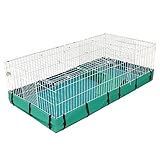
MidWest Guinea Habitat Plus
- 8 sq ft of flat floor space
- Removable wire top for pet-proofing
- Divider panel with ramp
- Tool-free assembly

PawHut Two-Story Stand
- Cage lifts off the stand for cleaning
- Wheels and a storage shelf underneath
- Deep base catches kicked hay

Amazon Basics Canvas Cage
- Leakproof canvas base
- About 8 sq ft of floor
- No-tool setup and breakdown
Three products stood out once we lined up floor space against real use. The MidWest Habitat Plus wins on the balance of size, sturdiness and how many owners have run it for years without complaint about the frame. The PawHut Two-Story Stand sits high on the list for people who want a raised, rollable habitat with storage underneath. The Amazon Basics cage earns its slot because it puts a pair-appropriate footprint into a home at the lowest cost of anything here.
All 10 Indoor Habitats Side by Side in 2026
| Product | Specifications | Action |
|---|---|---|
| MidWest Guinea Habitat Plus |
|
Check Latest Price |
| Amazon Basics Canvas Cage |
|
Check Latest Price |
 Ferplast Cavie Habitat Ferplast Cavie Habitat |
|
Check Latest Price |
 MidWest Deluxe XL Cage MidWest Deluxe XL Cage |
|
Check Latest Price |
 Polar Aurora 4-Tier Cage Polar Aurora 4-Tier Cage |
|
Check Latest Price |
 GuineaLoft Model-A GuineaLoft Model-A |
|
Check Latest Price |
 PawHut 35 Inch Rolling Cage PawHut 35 Inch Rolling Cage |
|
Check Latest Price |
 Kaytee Deluxe 2-Level Kaytee Deluxe 2-Level |
|
Check Latest Price |
| PawHut Two-Story Stand |
|
Check Latest Price |
 Xymoso DIY Panel Set Xymoso DIY Panel Set |
|
Check Latest Price |
One note on reading this table: lofted area and shelf space do not count toward the welfare minimum. Only the flat floor a pig can walk across on all fours goes on the running total, which is why two habitats here look roomier than their headline dimensions suggest and one tiered cage looks smaller.
1. MidWest Homes for Pets Guinea Habitat Plus: The Best Overall Indoor Habitat
- About 8 sq ft of uninterrupted floor space
- Divider panel creates a separate feeding zone and cuts hay tracking
- Doors double as ramps when connecting two units
- Tool-free assembly one person can finish
- Washable PVC canvas base wipes down
- Canvas base can sag and feels soft underfoot
- Too heavy to carry with animals inside
- Pigs chew canvas edges and the divider straps
We set this habitat up in the corner of a living room and it filled the space the way a well-made C&C should. At 47 by 24 by 14 inches it gives about 8 square feet of flat floor, which is the number that matters for a pair, and the 14-inch sides mean an ambitious pig cannot launch itself over the edge during a zoomies session.
The metal wire construction keeps air moving across the whole enclosure, which is a genuine advantage in a closed room in winter. The washable PVC canvas base wipes down with a damp cloth, and owners report adding fleece, pee pads or newspaper on top makes the daily clean almost instant.
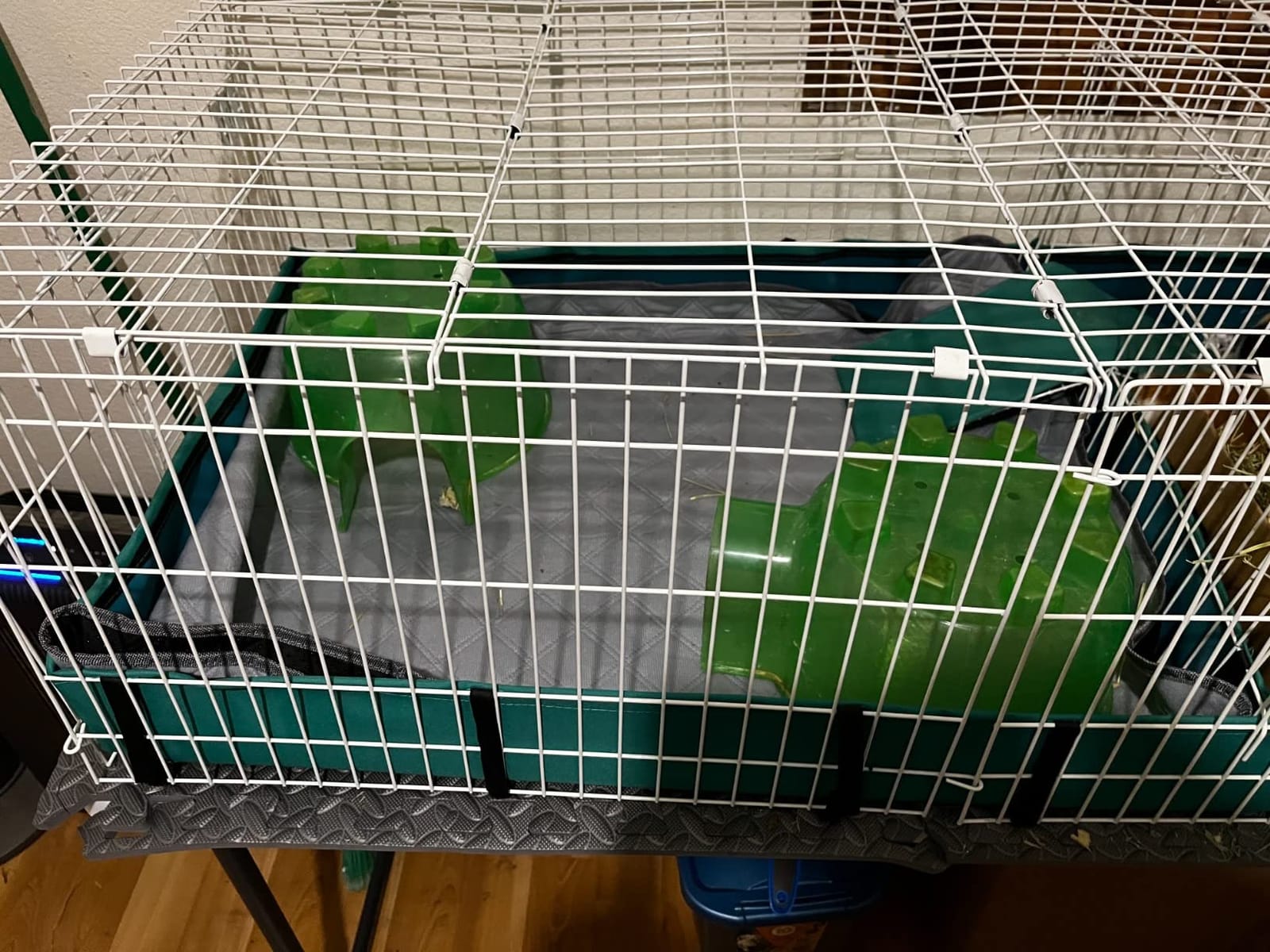
The hinged divider panel is the feature we did not expect to care about and now rely on most. Owners set it at one end to create a separate feeding and sleeping zone, which keeps hay tracking inside the enclosure and gives a nervous pig somewhere out of the traffic path. The divider locks into place, and the doors on both ends double as ramps if you later connect a second habitat.
Assembly took one person and no tools, and at 12.5 pounds it stays put once it is loaded. That weight is also a downside. It cannot be moved with animals inside, so any repositioning means lifting each pig out first, which matters a lot in a small apartment where you may want to move the habitat for floor cleaning.
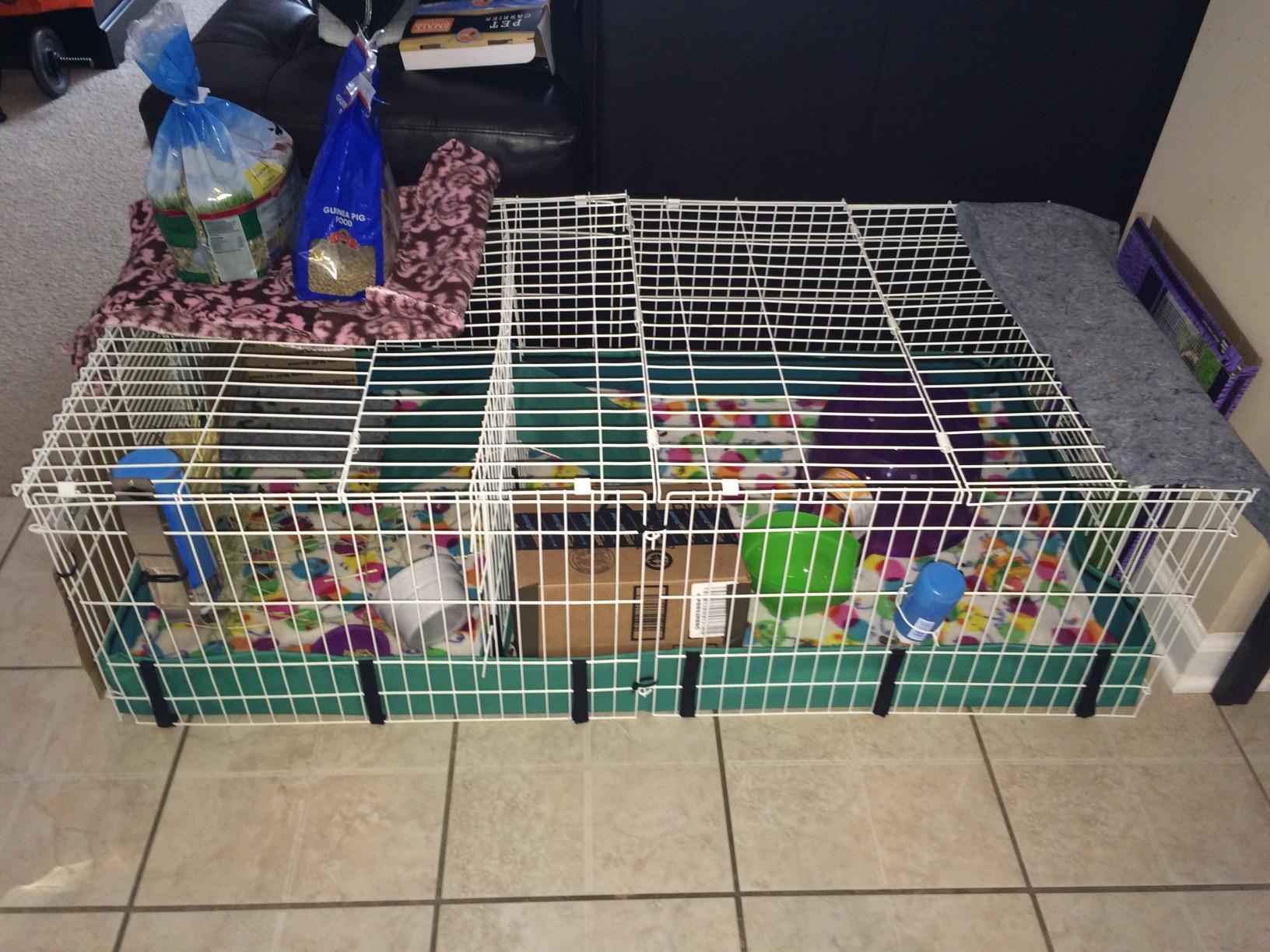
Room fit for a bonded pair in a busy living room
This is the habitat we recommend for two guinea pigs kept in a shared family room. The floor space clears the pair minimum, the top clips on and off for children or a cat, and the wire top gives you a way to add bedding without a fight. Most owners in the review set keep two pigs in it without ever needing the divider for separation.
Plan on roughly 4 by 2 feet of floor space plus a few inches of clearance behind it. Because the base is canvas rather than solid plastic, we recommend lining it, which also doubles as your floor-protection layer.
Where it falls short?
The soft base is the honest weakness. Reviewers repeatedly report a slight sag and a floppier feel than a rigid C&C plastic floor, and a determined chewer can work at the canvas edge and the divider straps. The top clips are also awkward to undo for daily spot cleans.
If your pig is a relentless chewer and you want a base that will not be tested, compare the acrylic option further down before you commit.
2. Amazon Basics Leakproof Canvas Bottom Cage: The Budget-Friendly Full-Size Option
- About 8 sq ft floor suits two guinea pigs
- Leakproof base holds hay bedding and spills
- Assembles and breaks down without tools
- Textured surface gives foot traction
- Divider panel splits feeding and sleeping zones
- Lowest average rating of the ten habitats here
- Canvas floor sags and lacks rigidity
- Wire corners flex when pushed
- Black finish and base stain over time
This is the closest we found to a full-size habitat at the bottom of the price range, and the reason it lands so high despite a modest star rating. At 47.6 by 24.2 inches it gives roughly 8 square feet of floor, which is the same class of space as the top pick at a noticeably lower cost.
The iron wire frame contains a determined chewer better than most plastic-framed cages we looked at, and the leakproof canvas base contains hay, bedding and water spills better than an open tray. Putting a fleece liner and a few pee pads on top makes it a low-effort daily clean.
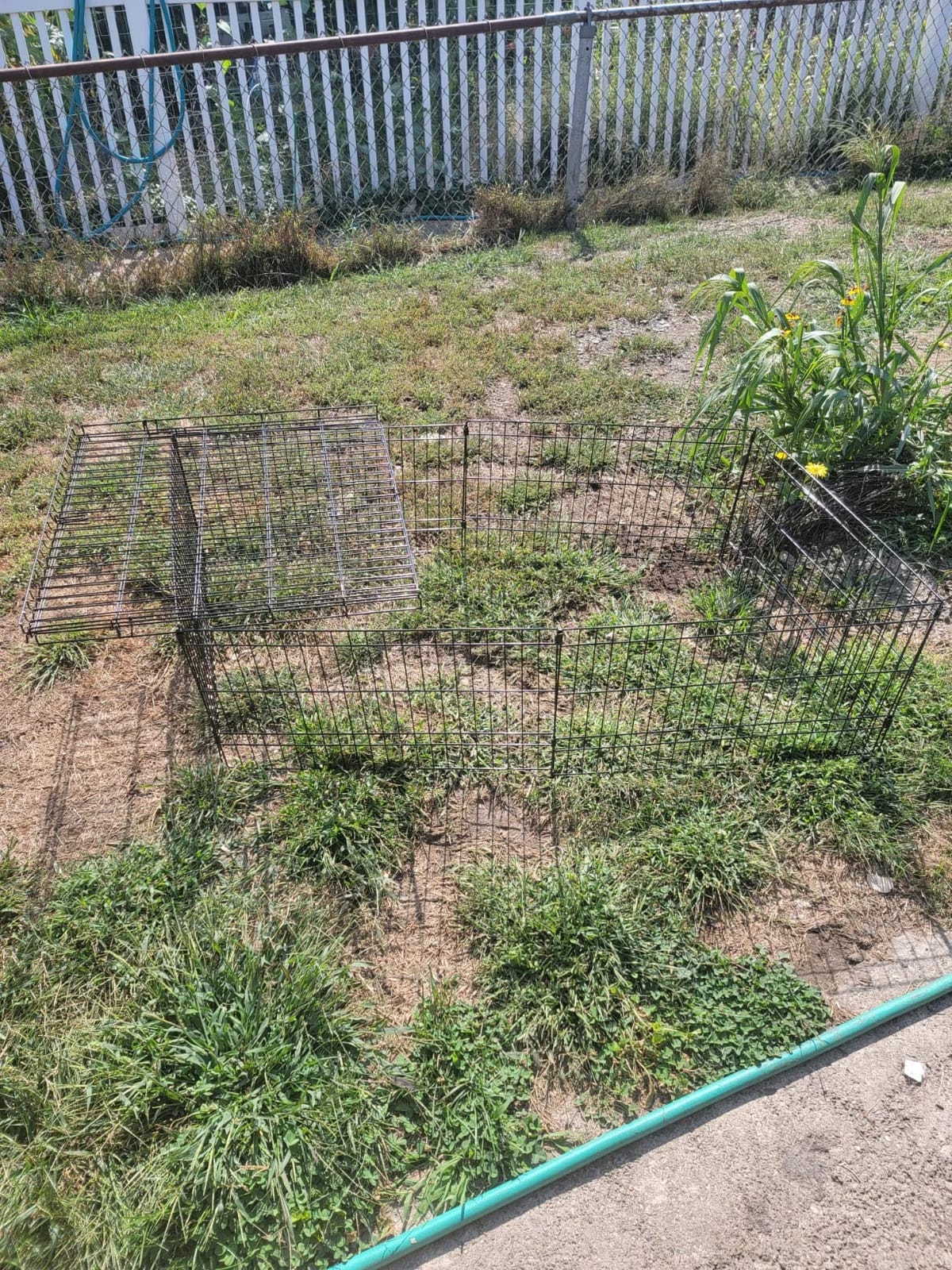
It assembles and disassembles without tools, which is more useful than it sounds when you want to carry the habitat into another room for floor time or swap bedding in the bathroom. The textured base surface also gives better traction for feet than a smooth plastic floor, a detail that matters for older pigs.
The 4.1 average across thousands of reviews is the lowest in this roundup, and the reason shows up in the details. Owners point to a canvas floor that lacks rigidity, wire corners that flex when you lean on them, and a black finish that shows staining. At 13.87 pounds it is also a two-hand job to move.
Room fit for a first home and a bonded pair
Buy this if you are setting up your first pair and want real floor space without stepping up to a modular build. The footprint matches the top pick, the wire is pet-resistant, and there is no assembly fight to have on day one.
It works well in a bedroom or a quiet corner of a living room. The low profile leaves plenty of room to lift it and clean underneath the edges.
Why some owners looked past it?
The complaints cluster around long-term feel rather than a fault on day one. A sagging base and flexing corners make the cage feel unfinished next to a rigid enclosure, and the staining on the black canvas is a slow problem that gets worse with age.
If your guinea pig chews fabric edges, the canvas perimeter is the first place damage shows. Plan to replace the liner often and keep an eye on chewed seams.
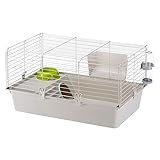
3. Ferplast Cavie Guinea Pig Cage: Best Starter Kit for One Young Pig
Ferplast Cavie Guinea Pig Cage & Rabbit Cage | Pet Cage Includes All Accessories to Get You Started & a 1-Year Warranty
- Arrives with hideout food dish and water bottle
- Deep 6 inch base traps litter and debris
- Front and side doors open fully
- Backed by a 1-year manufacturer warranty
- About 4 sq ft of floor is short for a pair
- Top must be lifted for access
- Not expandable when a second pig arrives
Everything you need on day one is in the box. This kit arrives with a large hide-out, a food dish and a water bottle, so a new owner is not hunting for three separate accessories before the first feeding.
The build quality reads as a step above a typical pet-store wire cage. The plastic base is deeper than most, at 6 inches, and it actually holds litter and debris inside the habitat instead of pushing it under the frame onto your floor. Front and side doors open fully, which makes spot cleaning quick.
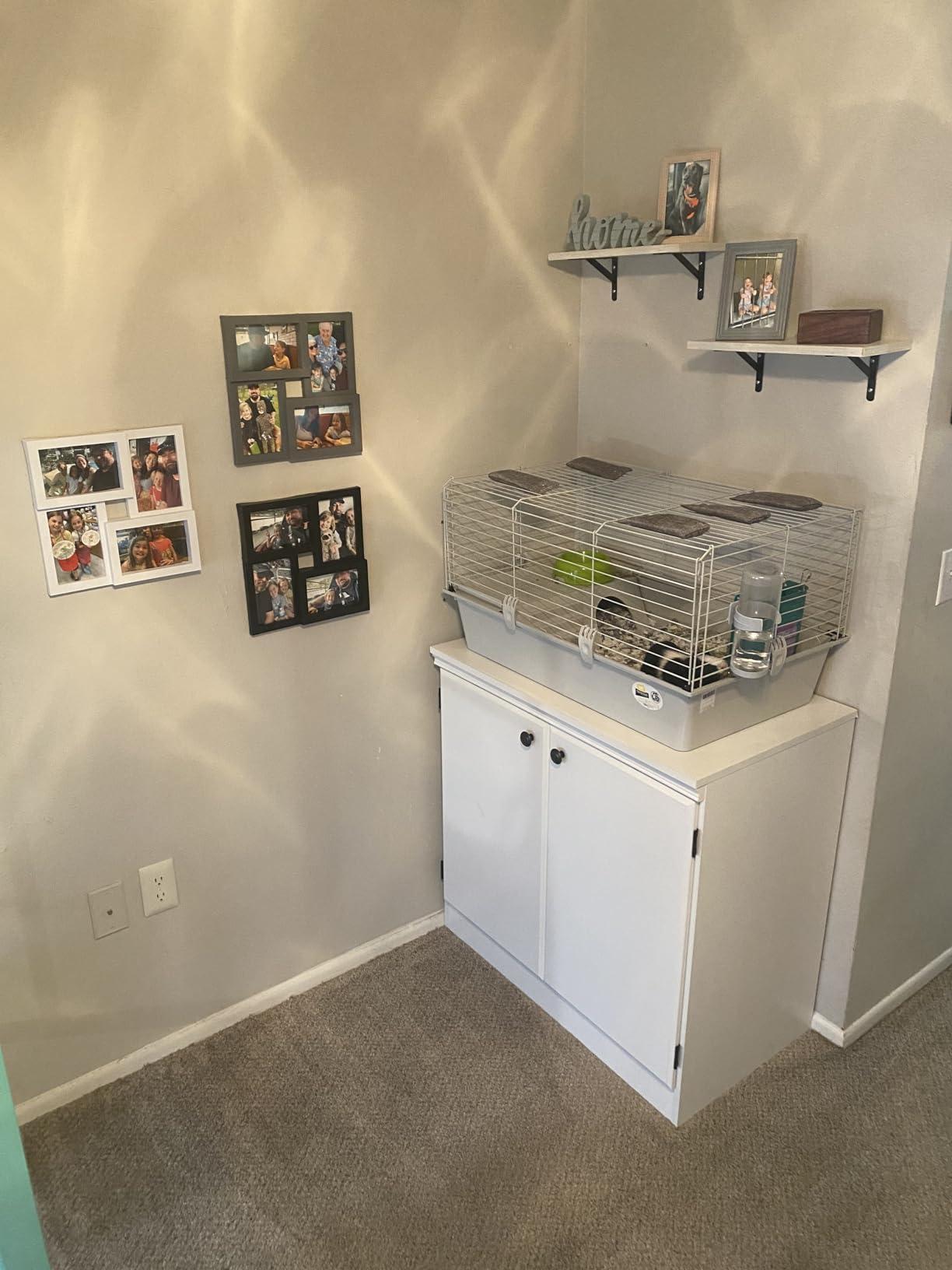
The real limitation is size. At 30.3 by 18.5 inches the floor works out to roughly 4 square feet, which is a comfortable single-pig space but below what a bonded pair needs. Reviewers treat it as a starter habitat and several describe moving up to a larger C&C once a second guinea pig joined the household.
There is also no side or top access panel. You lift the whole wire top to reach inside, and at 8.71 pounds that is a two-hand task every time you want to refill the bottle.
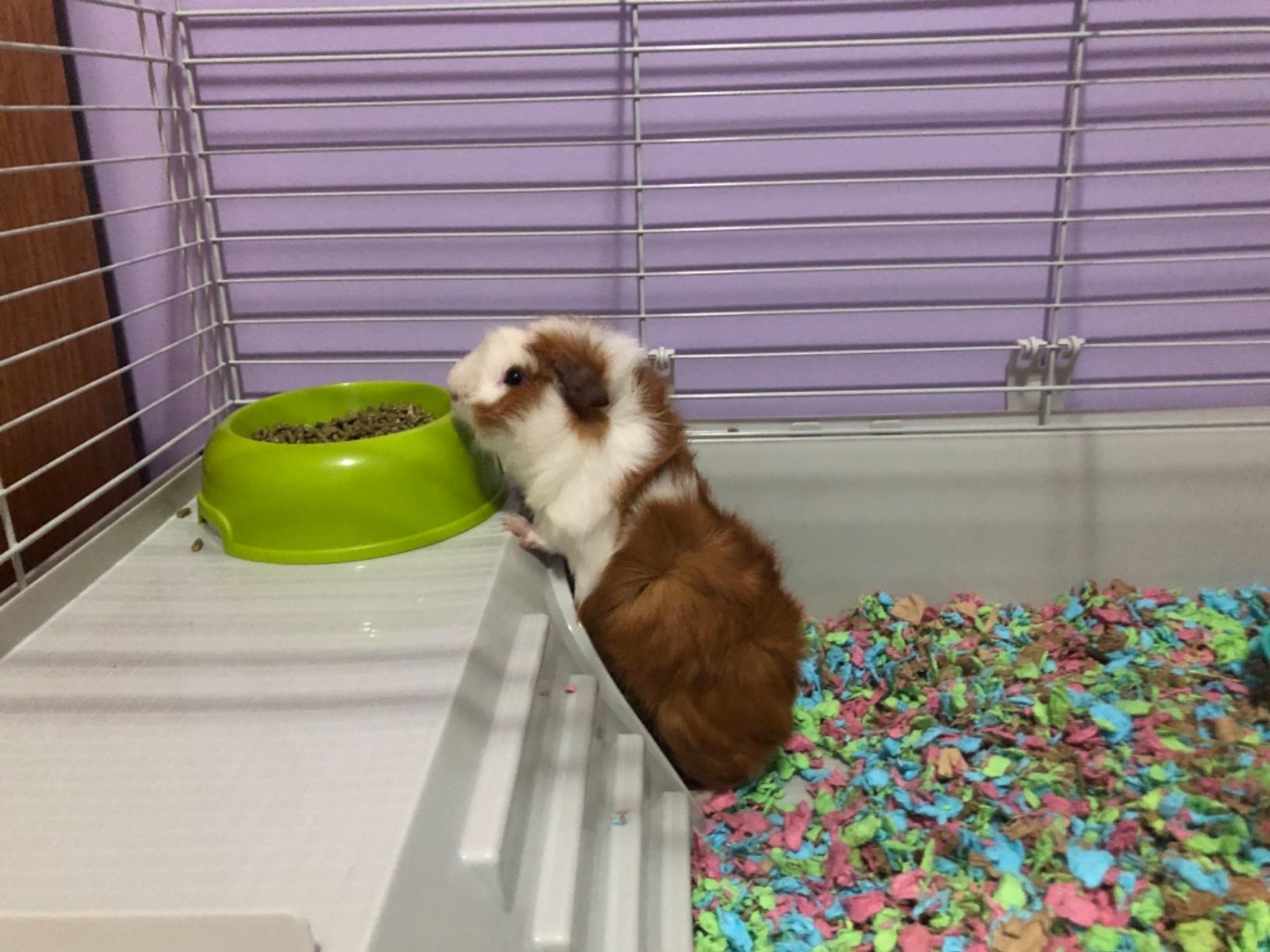
Room fit for a single young guinea pig
This is a good first habitat for one pig, particularly in a home where you are not yet ready to commit a large floor footprint. The included hide-out gives a new guinea pig a retreat immediately, and the deep base reduces the hay-in-the-living-room problem that frustrates owners most.
The 16.5-inch height is comfortable to look into and reach down into, so a child can help with feeding under supervision.
Where the size runs out?
Guinea pigs are social and should not live alone long term, and this cage cannot grow to meet a pair. There is no extension panel and no way to add cube-style dividers, so buying it now often means buying again in a few months.
Buy it as a first-week setup or a travel-adjacent secondary habitat, not as the permanent home for a bonded pair.
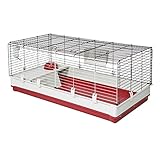
4. MidWest Homes for Pets Deluxe XL Cage: Best for Extra Height and Accessories
Midwest Homes for Pets Deluxe Rabbit & Guinea Pig Cage, X-Large, White & Red
- Nearly 20 inches tall for head clearance
- Includes hay feeder water bottle bowl and platform
- Deep 5.5 inch base contains bedding
- Accepts wire and wood hutch extensions
- Tool-free snap-together build
- Top can sag after months of use and door use worsens it
- Water bottle holder lets the bottle slide out
- Bundled hay feeder has no bottom so hay drops
Height is the headline here. At 47.16 by 23.62 by 19.68 inches, this cage is nearly 20 inches tall at the back, several inches higher than a flat C&C panel, and that extra vertical room matters for air circulation and for a pig that likes to rear up and look around.
It also arrives fully accessorized with a hay feeder, water bottle, feeding bowl and an elevated feeding platform. The 5.5-inch base is deeper than the standard MidWest model and does a good job of keeping bedding inside the enclosure.
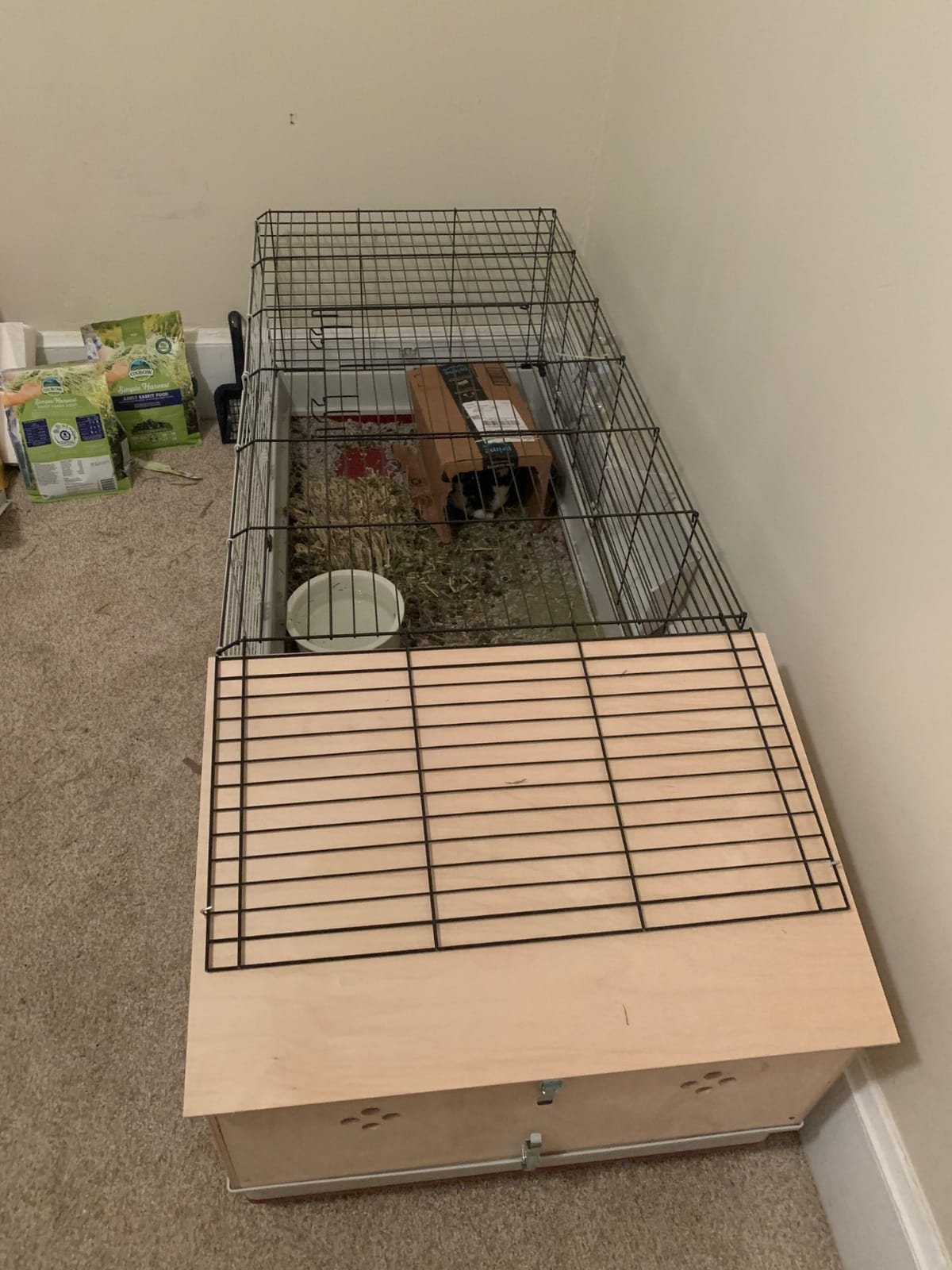
At roughly 7.75 square feet of floor, it sits right at the edge of what a pair needs, and it accepts MidWest wire and wood hutch extension panels if you need more space later. Assembly is snap-together with no tools, and it carries a 1-year manufacturer warranty.
The recurring complaint is the roof. Owners report the top sagging over months, with repeated door use and hinge disconnection making it worse, and some have added their own support rods. The water bottle holder is also loose enough that the bottle can slide out.
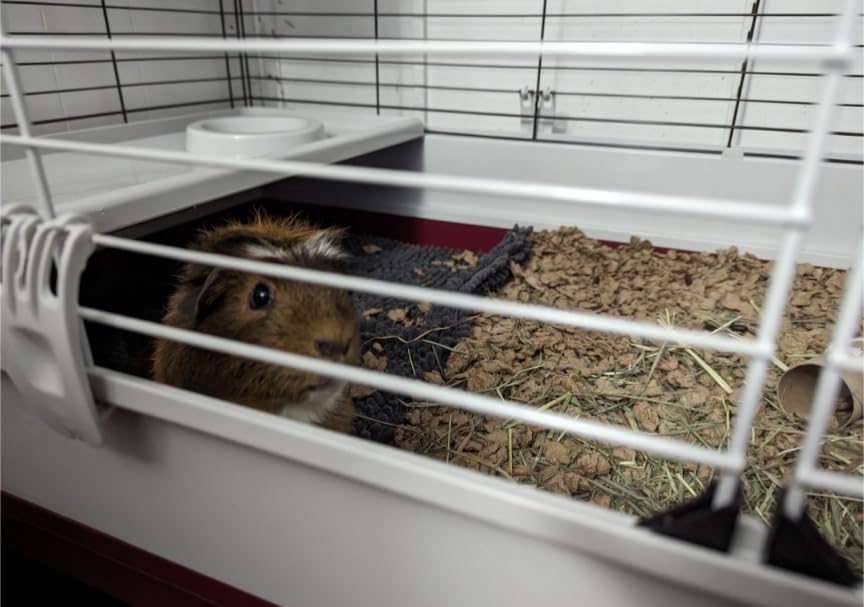
Room fit for pigs that like vertical space
Pick this if your pigs are active, if the room has good ventilation, or if you want room for an elevated feeding platform without adding a ramp that a senior pig would have to navigate. The fold-down front entrance also discourages the climbing escapes that flat cages invite.
Budget for two people when moving it. At 16.7 pounds and nearly four feet long, the frame is awkward for one person to carry through a doorway.
What to watch after a few months?
Inspect the top hinges and the roof frame periodically, and expect to add a support bar if you use the top door daily. The bundled hay feeder is the first accessory most owners replace, because hay falls straight through the open bottom.
The grid-pattern floor is also slow to scrub. A fleece liner over the top solves most of that and improves footing at the same time.
5. Polar Aurora 4-Tier Steel Cage Kit: Best When Floor Space Is Tight
4 Tier Steel Deluxe Small Animal Pet Cage Kit for Guinea Pig Ferret Little Rabbit with Wheels Brakes Hammock 4 Platforms Removable Tray and Ladder with Flannel
- Four levels plus a hammock give vertical enrichment
- Compact 20 by 20 inch footprint suits small rooms
- Steel frame is sturdy once screws are tightened
- Wheels with brakes make repositioning easy
- Removable deep tray simplifies cleaning
- Assembly instructions are vague and panels are unlabeled
- Platforms seat awkwardly and doors are small for reaching in
- Bottom wire rack is uncomfortable for feet and traps waste unless removed
When the only free space is a corner, this tiered cage answers a question flat habitats cannot. The footprint is 20.47 by 20.47 inches but the structure rises to 44.68 inches, with four platforms at different heights, sloped ramps with flannel covers and a hanging hammock at the top.
The steel frame is heavier and more rigid than a plastic-frame cage of the same size, and the flannel ramp covers are a thoughtful touch for pigs with sensitive feet. Four universal wheels, two with brakes, let you roll the whole unit out for floor cleaning.
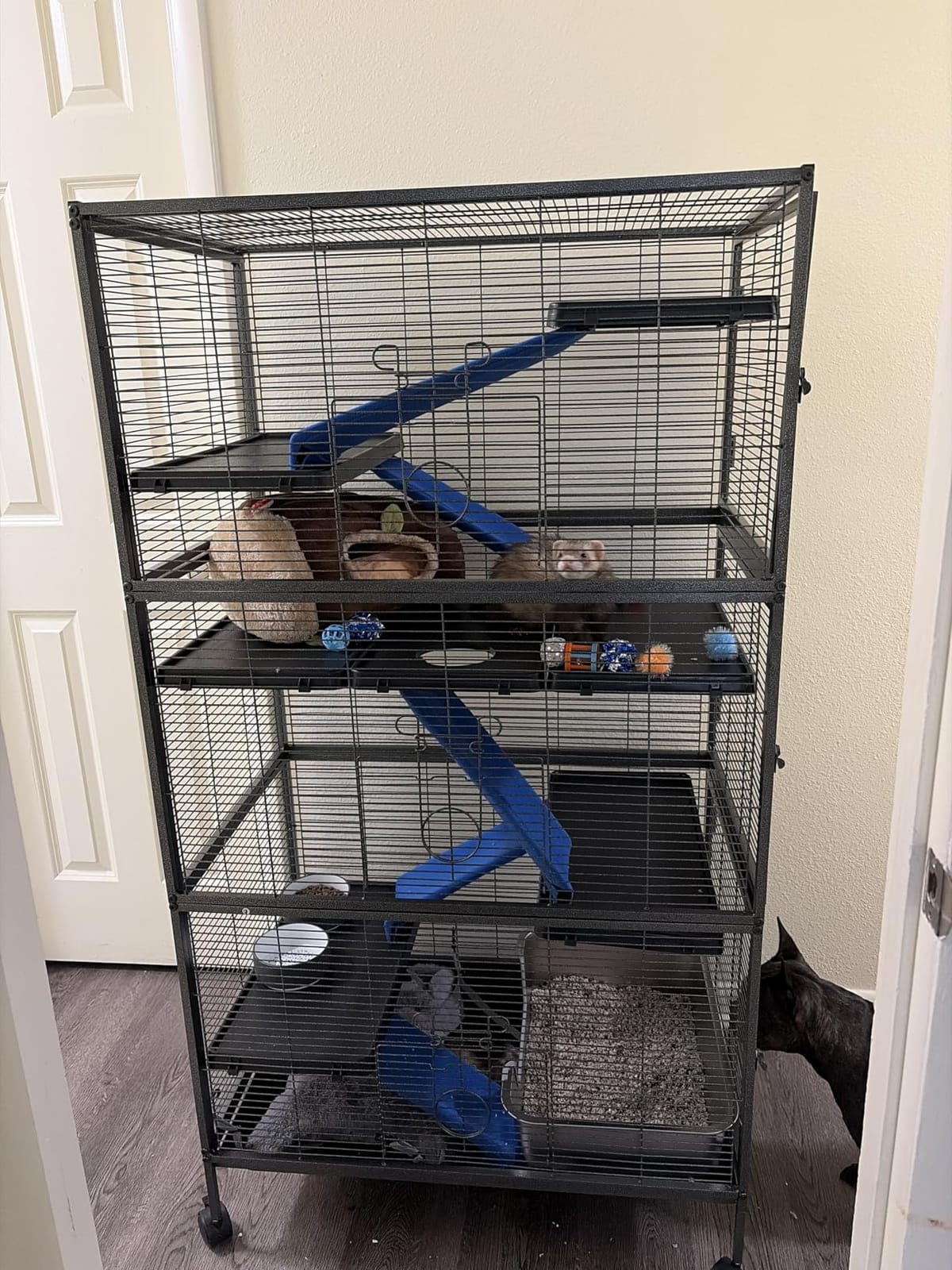
The flannel ramp covers are worth calling out because guinea pigs chew anything exposed, and fabric over the ramp wire is much harder to get through than bare metal. The detachable deep base tray also makes a full clean faster than reaching into fixed panels.
Assembly is the weak point. Reviewers repeatedly describe vague instructions, unlabeled panels and stubborn platforms that resist seating, with the common advice to leave screws loose until the frame is complete. The small door openings also limit how far you can reach for spot cleans.
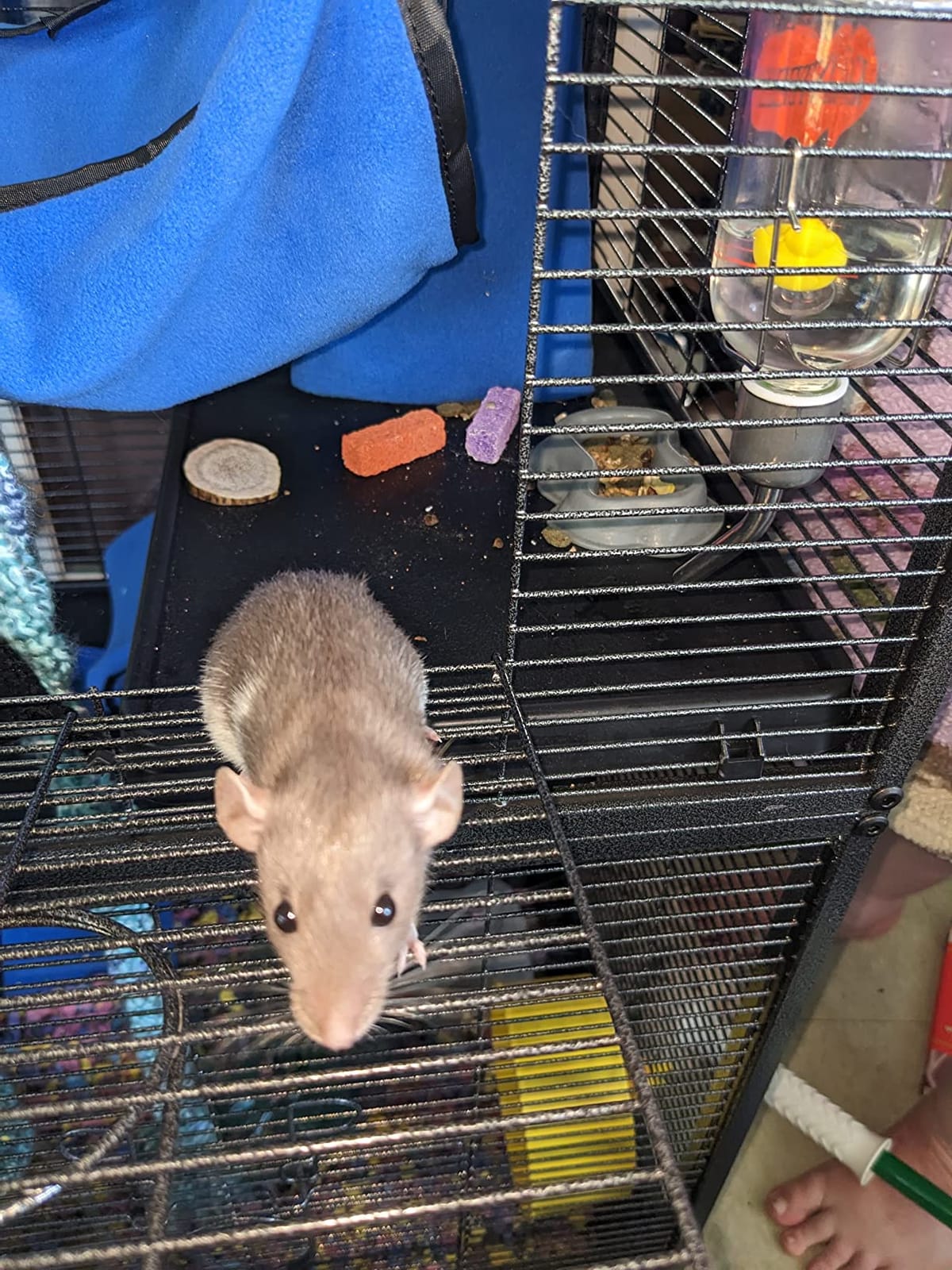
Room fit where floor space is genuinely tight
This suits a small apartment, a dorm or a home office corner where a 4-by-2-foot footprint is simply not available. It is also one of the few habitats here with wheels and brakes, so cleaning underneath does not require lifting.
Bar spacing keeps cats and other predators out, which matters if the habitat lives in a room a cat can reach.
Where the build gets frustrating?
Allow a full evening for the first build and have a second pair of hands if you can. The panels are not labeled, and the difference between a fifteen-minute job and a two-hour one is knowing which panel goes where before you start.
Note the bottom wire rack. Reviewers report it is uncomfortable underfoot and traps waste, and that it can be removed. Removing it and adding a fleece or pad layer is the single best change you can make to this cage.
6. GuineaLoft Model-A Acrylic 4×2 C&C Cage: Best for a Clear View and Fast Cleaning
GuineaLoft™ Model-A Acrylic Guinea Pig Cage – Large 4x2ft Expandable C&C
- True 8 sq ft C&C floor space at a modest cost
- Clear acrylic walls give an unobstructed view of the pig
- Panels screwed to steel brackets so the frame stays rigid
- Solid walls stop bedding being kicked across the floor
- Disposable bottoms turn cleaning into a lift and swap
- No permanent floor is included
- Open top means no cat protection without a separate lid
- Disposable bottoms are a recurring refill
This is the closest thing to a shop-built C&C we found, and it solves the biggest weakness of a flat panel setup by using solid acrylic walls instead of wire. The 4 by 2 foot layout gives 8 square feet of roaming area with 10-inch panel height, and there is not a single wire grid in the sightline.
That visibility changes daily care. Owners say they can spot a limp, a hunched posture or a pig that has stopped eating without crouching and looking under a hide-out. For a prey animal that hides pain, that is a real advantage over a traditional wire cage.
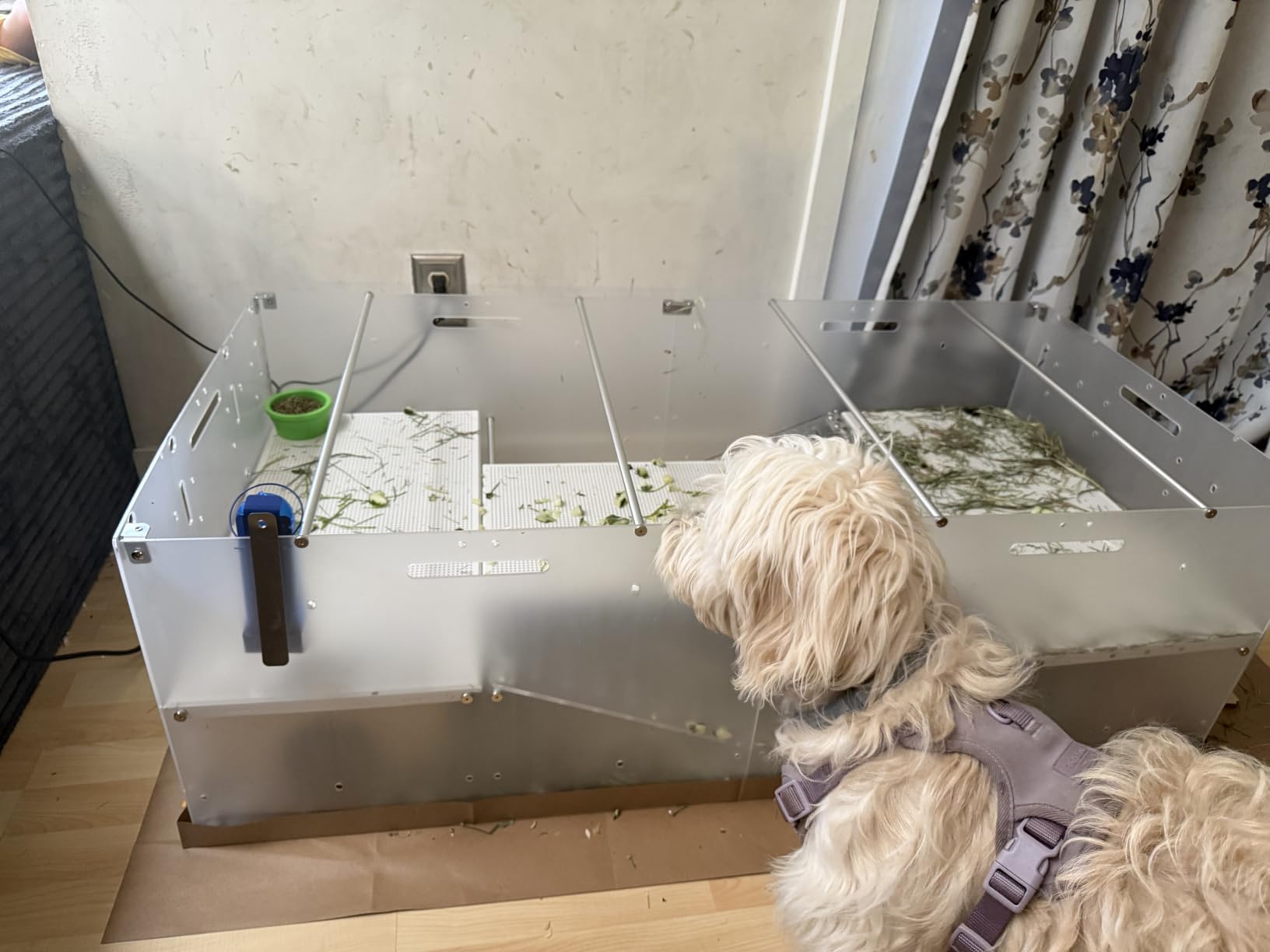
Construction is 4 mm acrylic panels screwed to steel brackets. Because it is screwed rather than clipped or slotted, the cage stays rigid when you reach into it and never needs rebuilding after a move. It also expands by joining panels, so 4×2 can grow to 5×2 or a custom shape later.
The cleaning system is the standout feature. You lift the cage, fold and discard the liner, drop in a fresh one and put it back down. Owners describe weekly cleaning as a two-minute swap instead of a full scrub. Two bottoms and two mats are included to start.
Room fit for a living room display
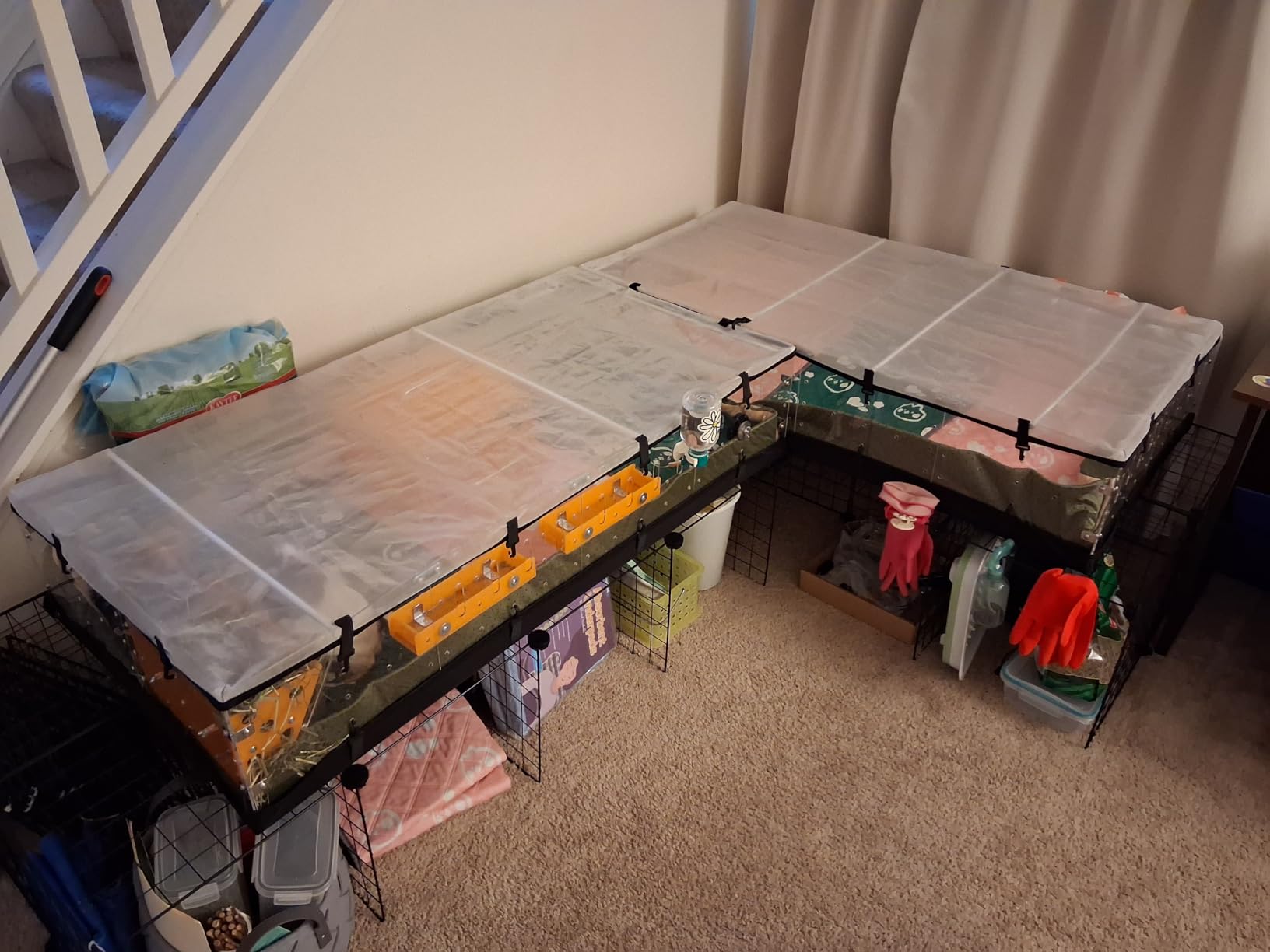
The clear walls look far less utilitarian than a wire cage, which changes how a habitat reads in a shared room. The low 10-inch profile also makes it easy to reach in for feeding, watering and handling without leaning over a tall wall.
Solid walls stop bedding from being kicked out, which is one of the biggest indoor frustrations and a genuine improvement on mesh-sided cages.
Where the running costs land?
There is no permanent floor. It comes with a disposable liner system, and replacement bottoms are a recurring purchase, so budget for that beyond the initial order.
The open top is the other consideration. It arrives without a lid, so in a home with cats you need a separate topper before the habitat is genuinely safe. Plan for that as a second purchase rather than assuming it is included.
7. PawHut 35 Inch Rolling Small Animal Cage: Best for Moving the Habitat Around
PawHut 35″ L Small Animal Cage, Rolling Bunny Cage, Guinea Pig Cage with Food Dish, Water Bottle, Hay Feeder, Platform, Ramp for Chinchilla, Green
- Roomy 35 inch length suits two guinea pigs
- Wheels let you roll the habitat to clean or to a sunny spot
- Bite-resistant metal wiring holds pets in
- Openable top and front door for handling
- Deep plastic tray keeps hay inside
- Wheels make it easy to roll the cage off a ledge
- Not spaced for smaller pets like rats and hamsters
- Some wire floor sections get uncomfortable over time
The PawHut 35-inch cage is built around a simple idea: keep the habitat mobile. Four casters let you roll it out from a wall to clean behind it, roll it toward a window in the morning, then roll it back to a quieter corner in the evening without lifting 20 pounds of wire.
At 35 by 17.25 by 17 inches the floor works out to roughly 4.2 square feet, so this is a single-pig space with room to spare rather than a pair habitat. The accessory bundle is unusually complete, including a food bowl, hay feeder, water bottle, platform and ramp.
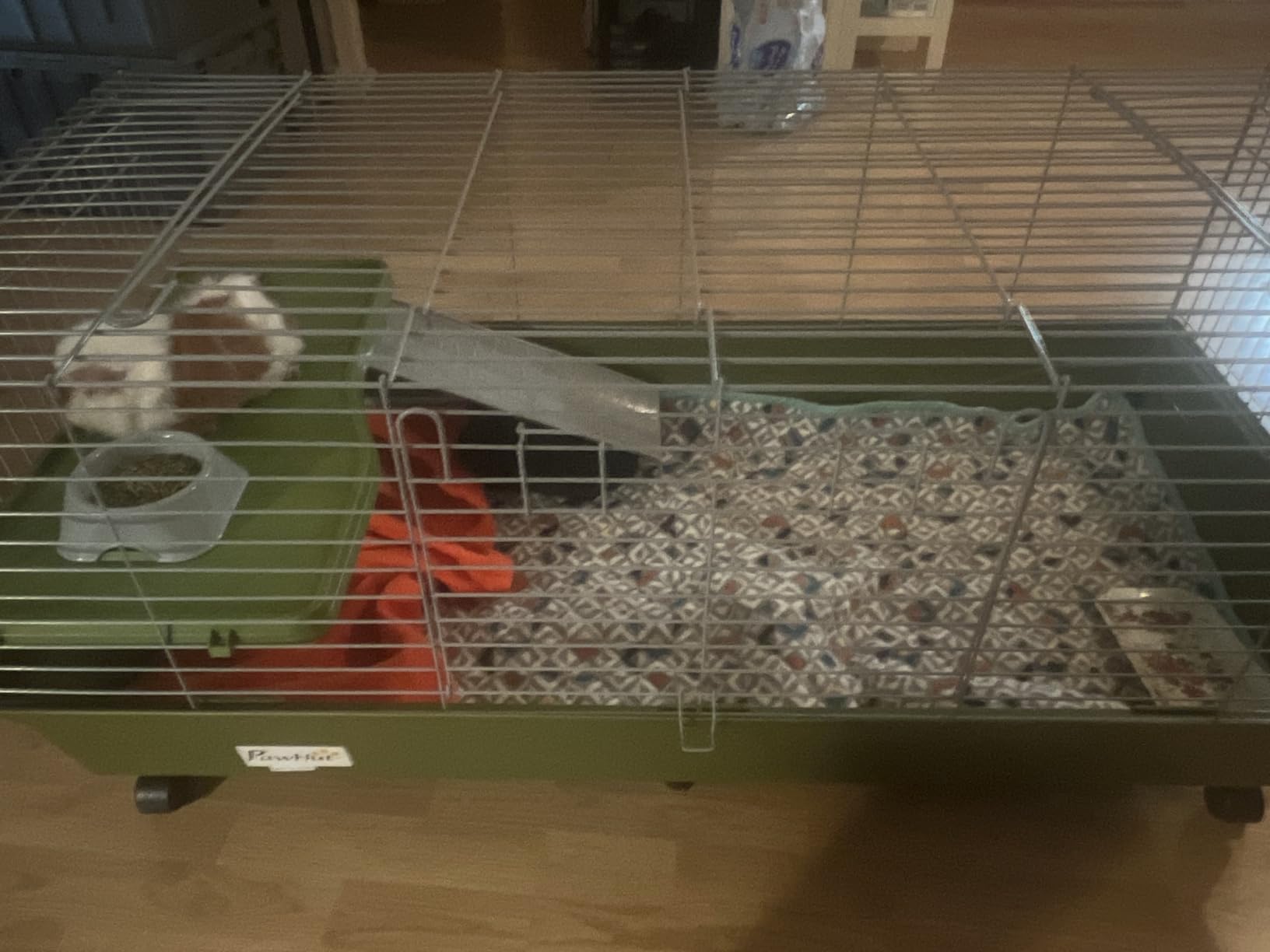
The deep plastic tray is the indoor winner. Reviewers highlight that it keeps hay in the cage instead of distributing it across the living room, and at 5.5 inches deep it does that better than a shallow tray. The openable top plus front door make handling and spot cleaning quick.
Assembly is straightforward and the wire is bite-resistant enough for a determined chewer. One caution runs through the reviews: the wheels are convenient and dangerous in equal measure, because a cage on casters can be rolled off a ledge or a step if something startles it.
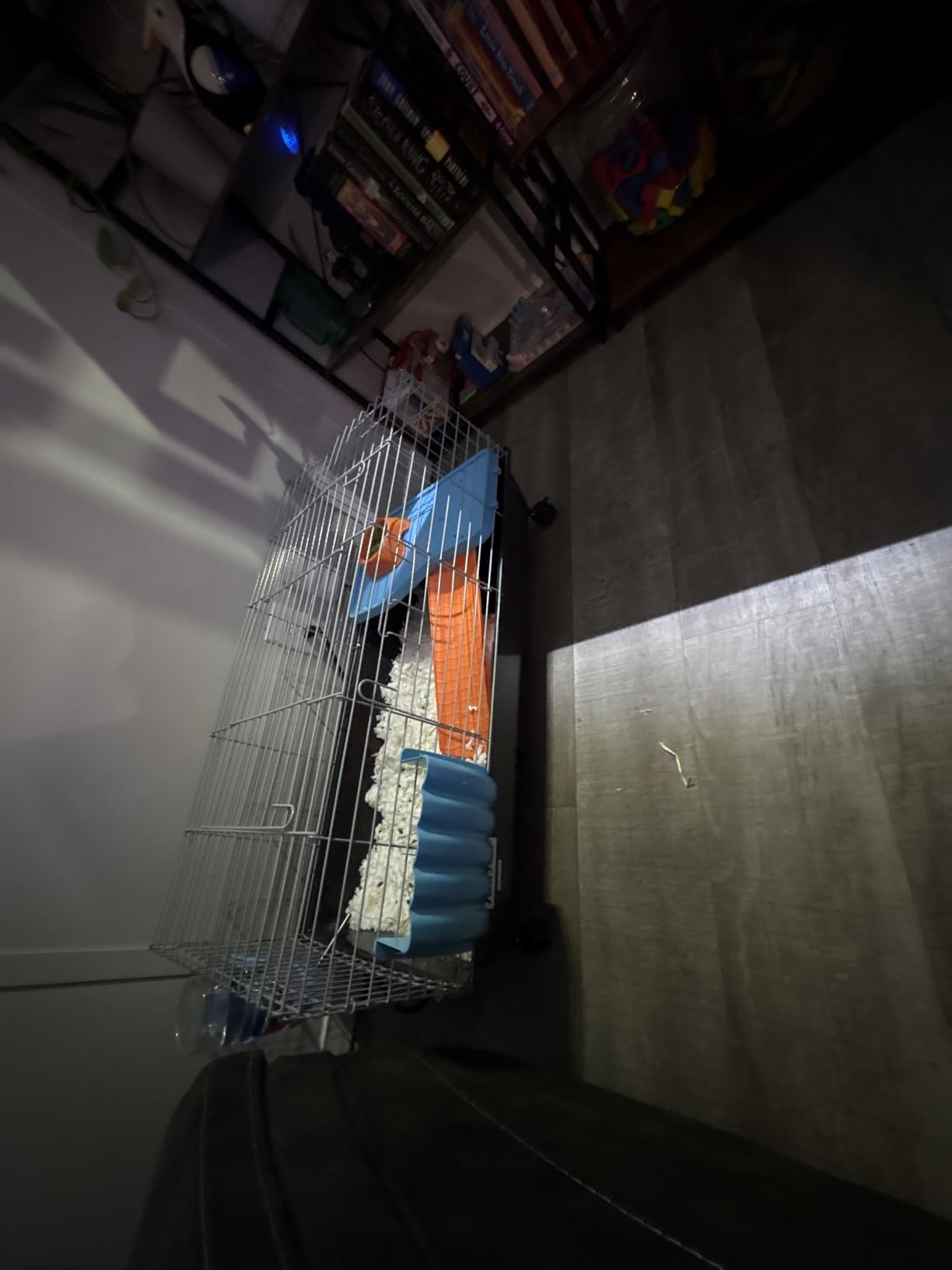
Room fit for rolling the habitat to follow the day
This works well if your guinea pigs benefit from moving between a playroom and a quieter bedroom, or if you want the habitat out of the way during floor cleaning. The casters do more for daily convenience here than in any other cage in this roundup.
It is also worth noting the manufacturer says it is not suitable for hamsters and rats, so this is a rabbit and guinea pig habitat only.
Where the wheels cause trouble?
Check the brakes the moment you position it, and never leave the cage near a stair or step. Wheels plus an excited animal equals a rolling accident, and that is the one complaint here with a real injury risk behind it.
If your floor is uneven or you have thresholds in the room, the casters will judder and the frame will rock. Level flooring matters more with this cage than with a flat-based model.
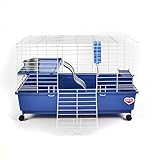
8. Kaytee Deluxe 2-Level Habitat: Best as a Temporary Starter Setup
- Two levels with a comfort shelf add usable space
- Caster wheels make cleaning underneath easy
- Assembles in minutes with no tools
- Chew-proof latches contain determined pigs
- Large access door for handling
- 30 x 18 inch floor is below many owners size expectations
- Bundled hay box
- bowl and water bottle are low quality
- Tray does not latch firmly so a pig can push out
The Kaytee Deluxe is a compact two-level habitat with a comfort shelf, a safety ramp, a water bottle, a food dish, a hay buffet and caster wheels in the box. It assembles in minutes with no tools, and the large access door makes handling straightforward.
Two levels give a small pig more to explore than a flat single-level cage, and the chew-proof latches are a sensible detail for an animal whose entire hobby is finding weak points in plastic.
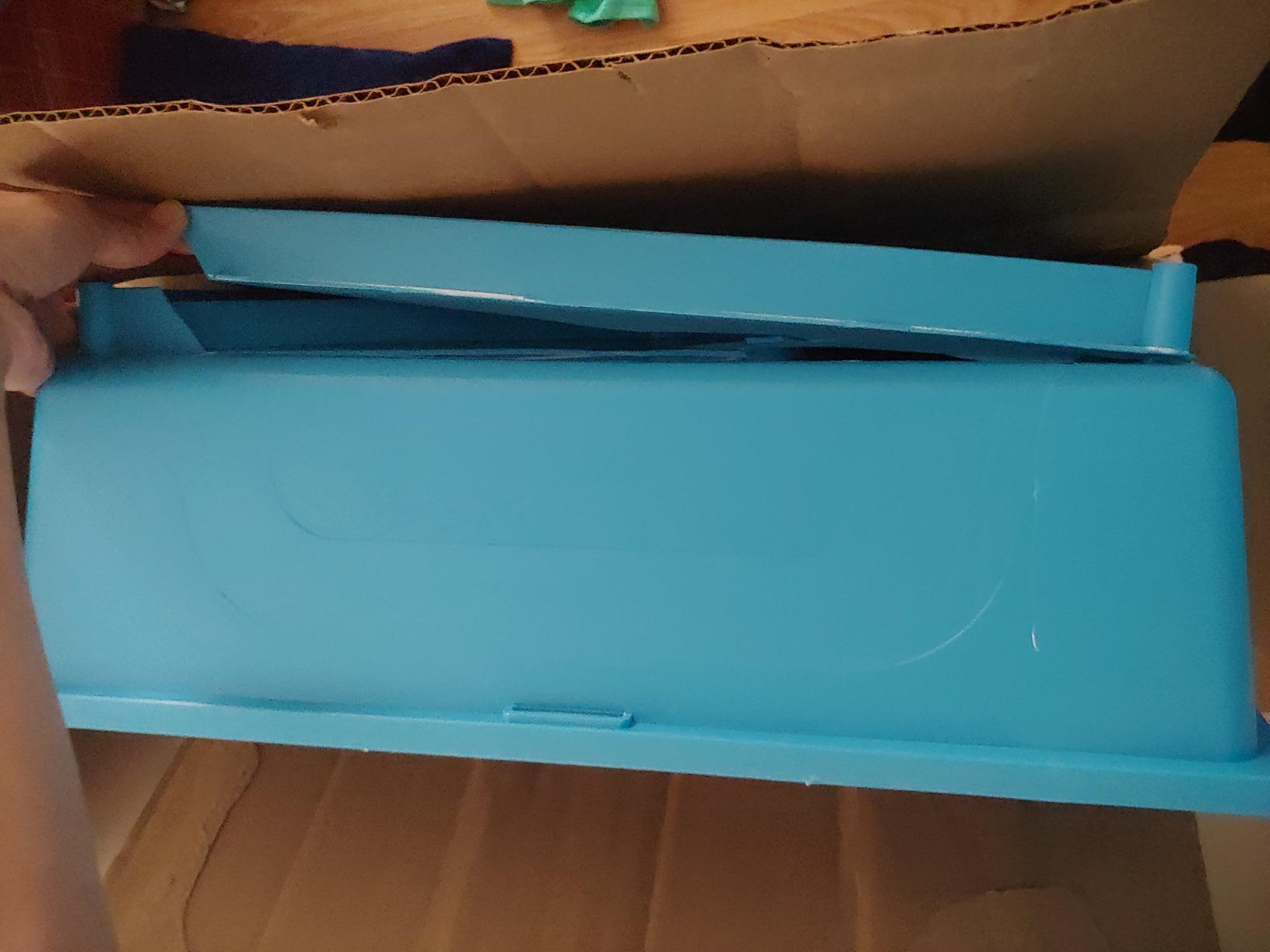
The floor is 30 by 18 inches, roughly 3.75 square feet once you exclude the shelf. That is the number most owners notice, and at least one reviewer returned to a much larger habitat after a short trial for exactly this reason.
The accessories are the other weak point. Reviewers describe the hay box, food bowl and water bottle as serviceable at best, with the hay box in particular getting tipped or ignored, and a few buyers reporting missing caster wheels in the box.
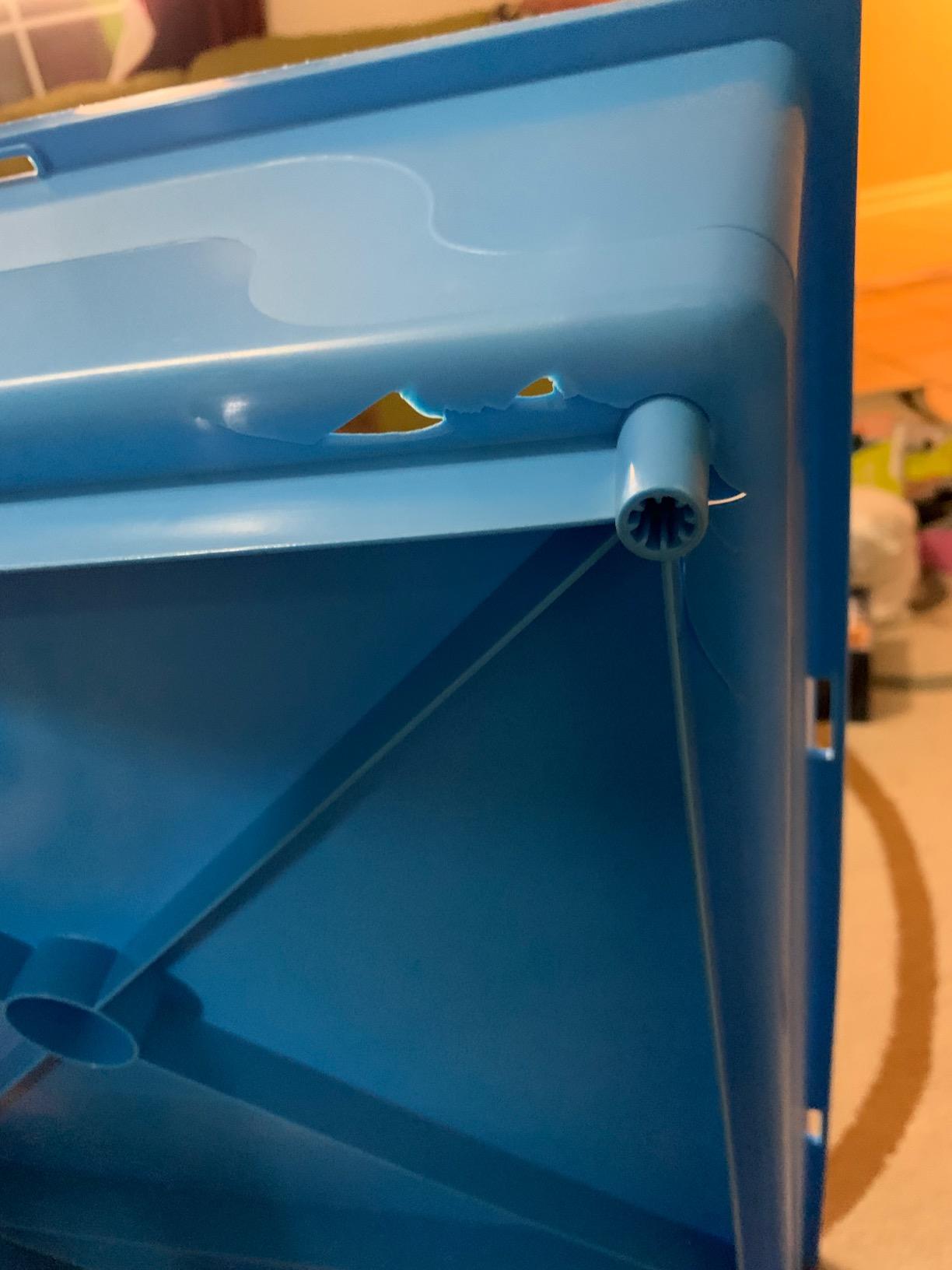
Room fit as a bridge habitat
It works well as a short-term setup while you plan a permanent one, or as a secondary habitat for floor-time trips and cleaning rotations. The casters mean you can move it empty without asking for help.
The two-level layout is genuinely useful for a young pig learning to use a ramp, and the latches hold better than most at this size.
What you will replace quickly?
Budget for a new hay feeder and water bottle in the first month. The bundled versions are the most commonly swapped items and the least durable parts of the whole habitat.
Check that the tray latches firmly after a week. Owners report the tray not holding, which lets a pig push or jump out, and that is a genuine escape risk rather than a cosmetic complaint.
9. PawHut Two-Story Small Animal Cage on a Stand: Best Value With Built-In Storage
- Removable cage lifts off the stand for table or floor access
- Wheeled stand makes it easy to move the habitat
- Storage shelf keeps supplies off the floor
- Elevated platform creates a sheltered space below
- Food dish
- hay feeder and water bottle included
- Cage slides off the stand when the pig moves inside
- Frame is not especially sturdy under enthusiastic handling
- Ramp on the upper piece can detach if not seated
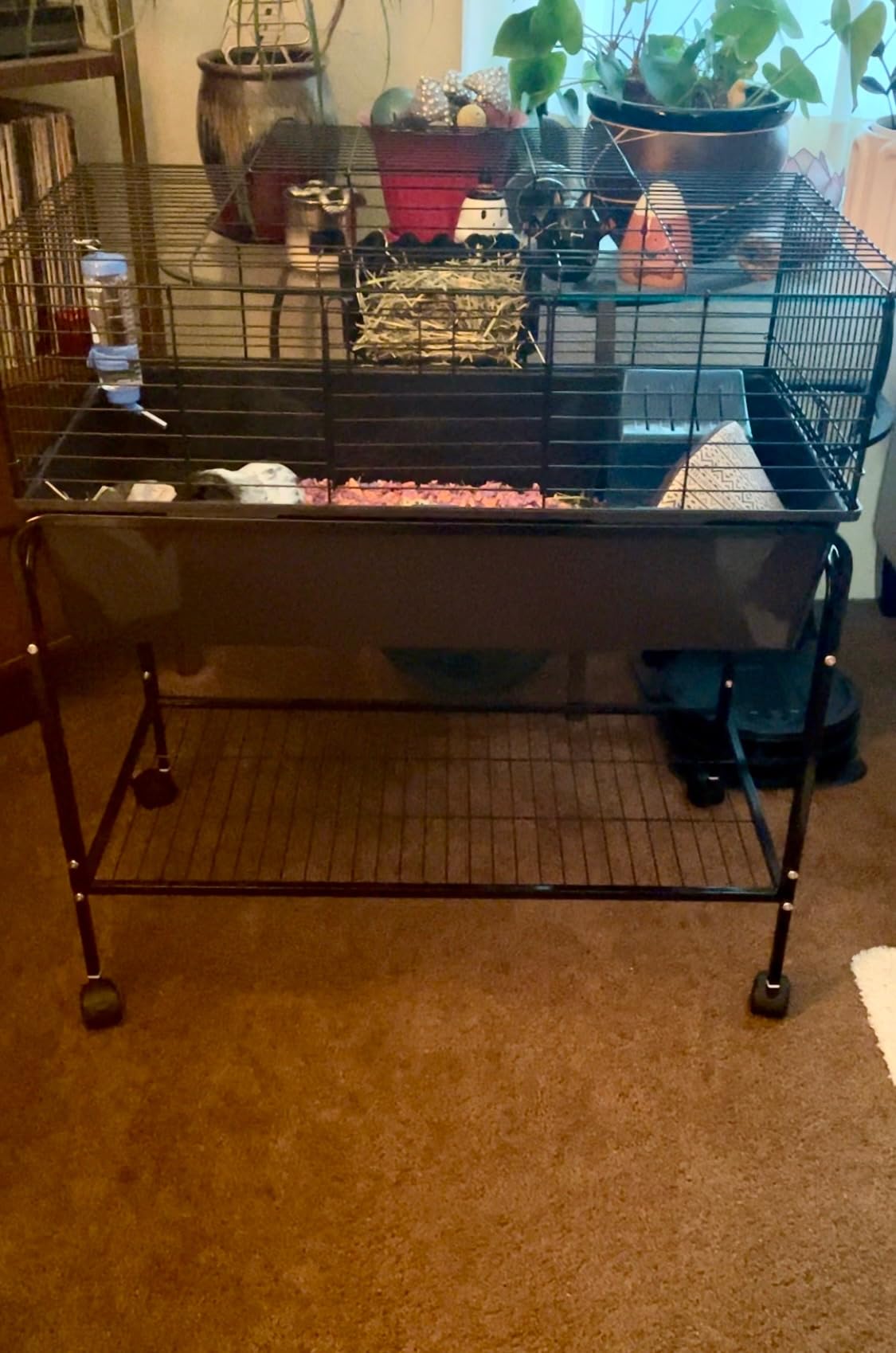
This is the design we found most often copied by owners building their own setup. The wire cage lifts off a steel stand, so you can carry it to a table for cleaning or set it on the floor, then clip it back onto the wheeled base when you are done.
That stand changes daily handling. Instead of kneeling on the floor to reach into a low cage, you work at a comfortable height, and the storage shelf underneath keeps bedding, hay and fleece liners off the ground. The cage itself sits at 33 by 18.5 by 14.75 inches with 0.75-inch bar spacing.
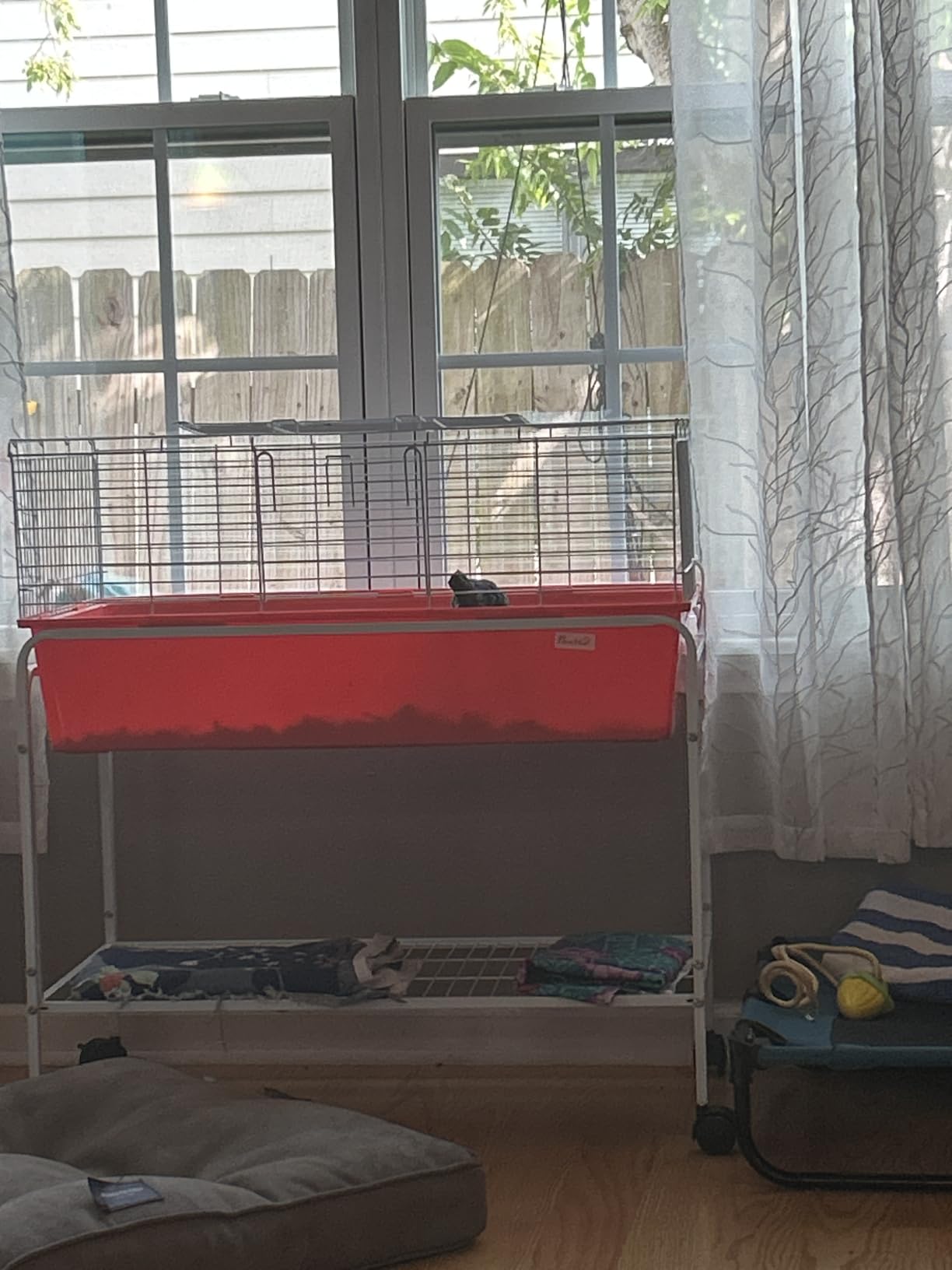
At roughly 5 square feet of floor it is a comfortable single-pig habitat with an elevated platform adding sheltered space underneath. The wider, deeper base is good news indoors because it catches kicked hay instead of letting it spread across the room, and reviewers consistently call out how effective it is for that.
It holds a 4.6 average across owners who tend to buy premium-looking furniture-style habitats, which stays the highest-rated habitat here. Assembly is generally called straightforward.
Room fit when you want storage and height
The stand is the reason to buy this. In a small room, a shelf underneath turns dead space into bedding and hay storage, and the wheels mean the whole unit moves with one hand when you want the corner for other things.
The removable two-piece design also means you are not stuck with the habitat at standing height if your pig prefers floor level or needs easier access for an older animal.
Where the stand interface fails?
The most-reported problem is that the cage does not stay seated on the stand and slides off when the pig moves inside it. That undermines the exact reason most people buy a two-piece design, so treat the retaining clips as the first thing to check each week.
Reviewers also note the frame is not especially sturdy against enthusiastic handling by children, and that the upper ramp can detach if it is not firmly seated. Secure both before you move the unit.
10. Xymoso DIY Guinea Pig Cage Panel Set: Best for DIY Builders on a Budget
- Affordable route to a large custom enclosure
- 16 panels allow many shapes and can be expanded later
- Waterproof canvas base wipes clean with a 4 inch lip
- 45 cable ties included for bracing
- Assembly takes only a few minutes
- Panels flex and wobble unless every cable tie is used
- Cut metal above the door has sharp edges
- Canvas base is chewed through quickly by persistent chewers
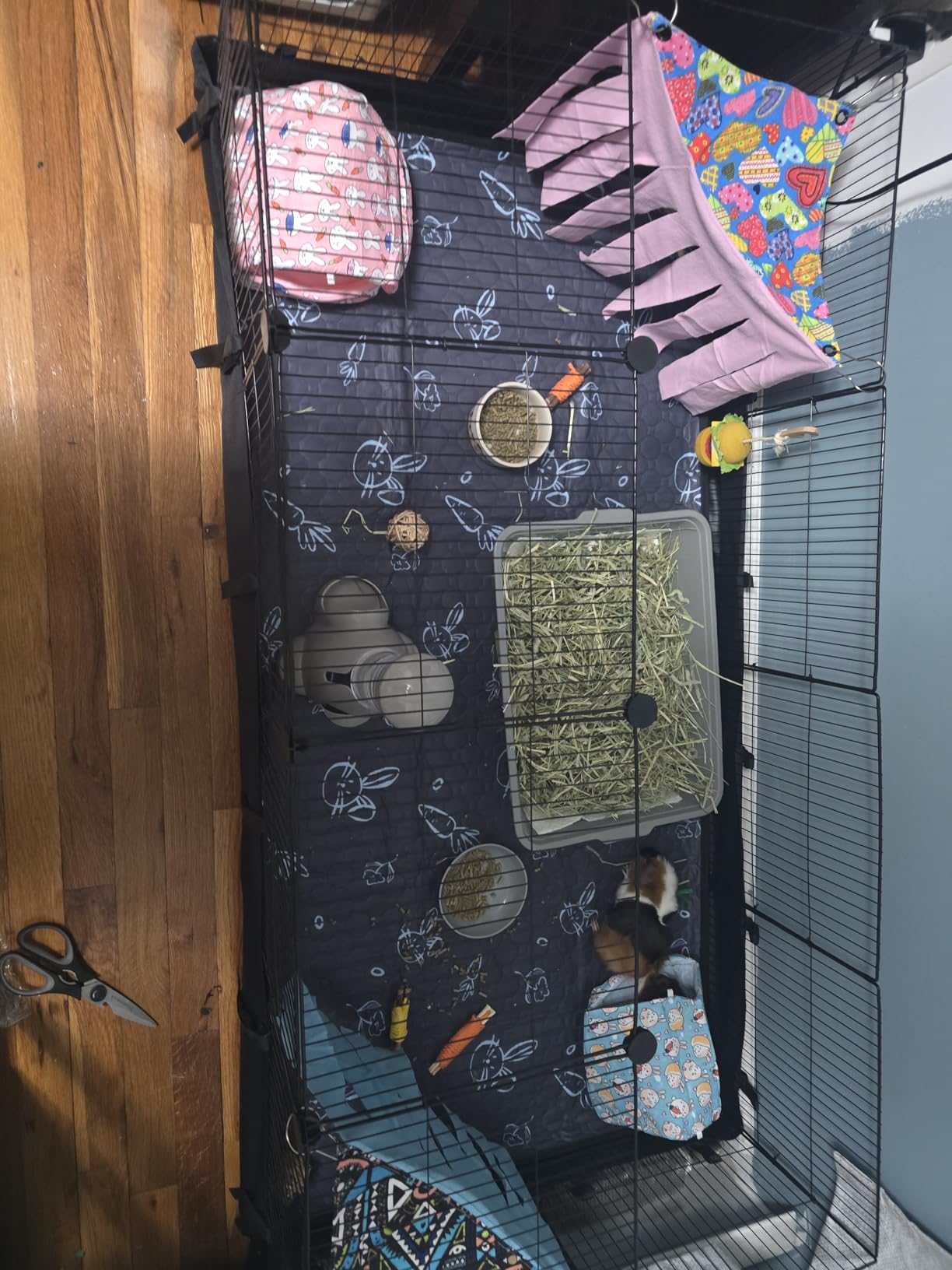
This is not a finished cage so much as a building system, and for the right person it is the cheapest route to a genuinely large indoor habitat. Sixteen wire panels with ABS plastic connectors assemble into a 56 by 28 by 14 inch enclosure, which works out to well over 10 square feet.
Because the panels come in more than one size, you can build a rectangle, an L-shape or a multi-level configuration, and you can buy extra panels later to expand. Many owners use it as the first half of a cube-and-coroplast style build, adding a solid plastic base once the layout works.
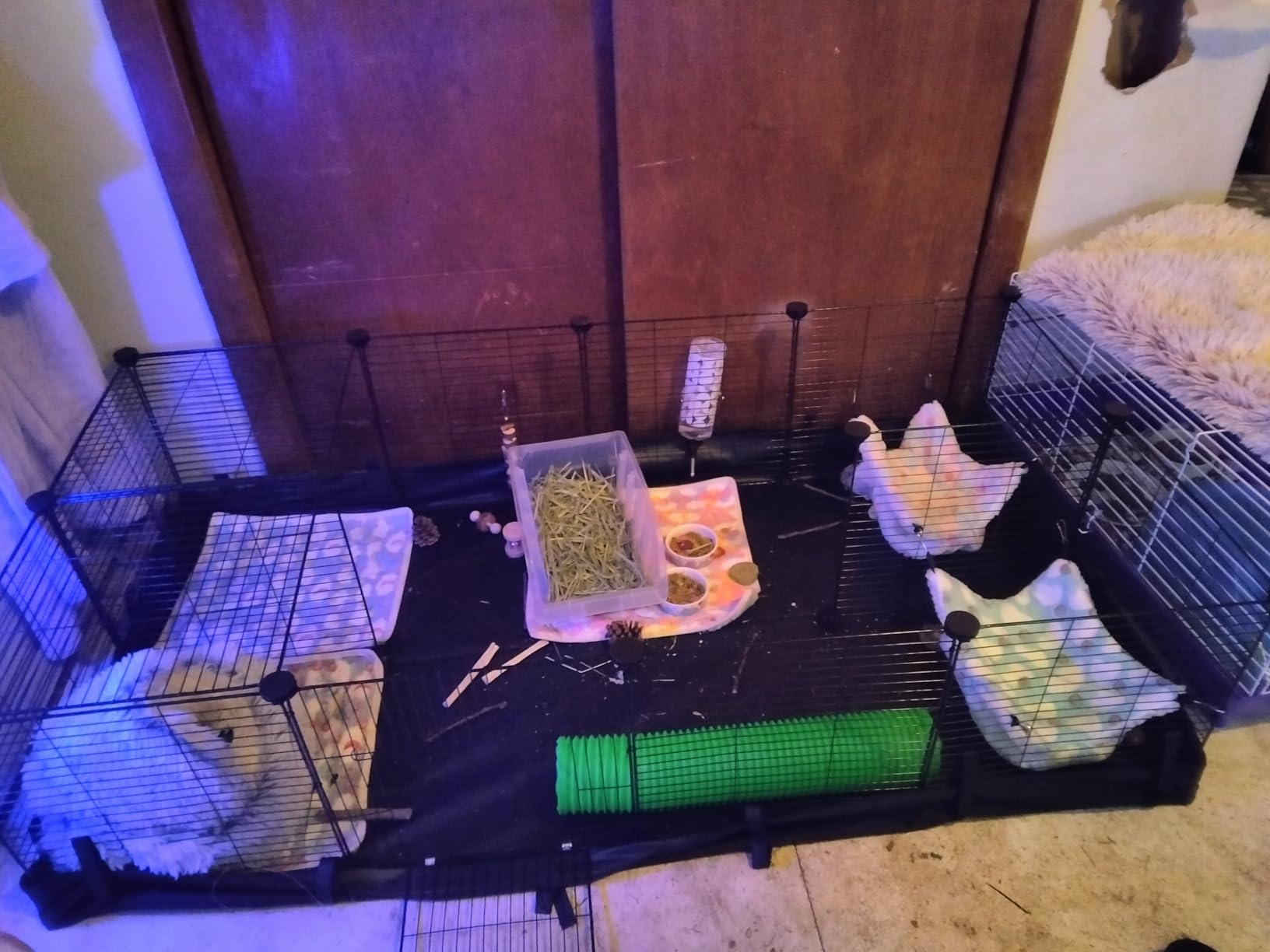
The PVC-lined waterproof canvas bottom wipes clean and its 4-inch lip contains litter and hay. That matters indoors, because a big pen with a poor base pushes debris straight out into your living room and defeats the point of the extra space.
Forty-five cable ties are included, and you should use them. The most consistent theme in the reviews is that the panels wobble and flex until every connector is tightened, at which point the frame becomes properly rigid.
Room fit for a custom build
Choose this if you are prepared to spend an evening building and tightening, and if you want more floor space than any single ready-made cage here offers. It also suits temporary floor-time pens for play sessions.
The modularity is the real advantage. Owners report expanding the set into multi-level or L-shaped setups as their pigs grew, which is exactly what a fixed cage cannot do.
What to tighten and cover before setup?
Use every cable tie, tighten each connector, and inspect the cut metal above the door. Reviewers report sharp edges there that needed covering, which is a quick fix with a strip of tape or a plastic edge guard but an easy one to miss.
If you have a persistent chewer, plan on replacing the canvas base or upgrading to a solid plastic sheet. Determined pigs chew straight through fabric liners.
How Much Space Do Guinea Pigs Actually Need?
Start with usable floor space, not the product headline. Lofted platforms, shelves and roofed areas do not count toward the minimum because a guinea pig does not spend its day walking on them. Measure the flat floor a pig can traverse on all fours and compare that figure to the table.
The welfare minimums most owners and rescues work to are 7.5 square feet for a single guinea pig, 10.5 square feet for a pair, and 13 square feet for a group of four. Round up whenever you can, and always round up for a pair, because a pair uses the space faster and fighting over floor area is a common cause of stress.
Some owners use a 3-3-3 shorthand, meaning about 3 square feet per pig in one connected space and never less than a single 3-by-3-foot area for any one animal. Treat it as a floor for one pig, not a target. The 2×4 layout, at 8 square feet, is the most commonly recommended starting point for a pair because it leaves room for a hide-away at one end and a feeding zone at the other.
Bumblefoot is the health condition you are avoiding by focusing on floor area and base material. It is a painful, often infected swelling of the foot pad caused by prolonged contact with wire or slatted floors, and it is the single most avoidable problem in this category. Any habitat with a wire floor should be ruled out regardless of how it is priced or advertised.
C&C, Wire-and-Plastic, Multi-Level or Playpen: Which Type Wins Indoors?
C&C, short for cubes and coroplast, is the community favourite for good reason. Wire storage cubes joined by cable ties with a corrugated plastic base give you flat, rigid, wipe-clean floor space and a layout you can reshape later. The trade-off is that you usually assemble it yourself and the plastic base is sold separately.
Wire-and-plastic cages arrive complete, need no tools and usually include accessories, but the base is a soft canvas or tray rather than rigid plastic. That base is why most owners line them with fleece or pads, and it is the main quality difference you will feel underfoot.
Multi-level hutches use height to compensate for a smaller footprint, which is tempting in an apartment. They work well for young, agile pigs, but a ramp is a fall risk for older, injured or disabled animals. If your guinea pig is a senior or has limited mobility, insist on a single-level floor with no ramp or loft.
Playpens are the flexible option. They sit flat on your floor, move from room to room for floor time, and cost the least, but they need a solid mat or liner beneath them and offer little containment if a pig decides to explore. For a bonded pair living permanently indoors, a fixed enclosure with solid walls wins.
If you want the C&C look for less, build it yourself. Wire storage cubes plus a coroplast sheet plus cable ties gets you a flat, rigid, washable base at a fraction of the cost of a commercial C&C cage, and you choose the exact 2×4 or custom footprint. Budget an evening for the build and tighten every connector.
Where to Put an Indoor Habitat and How to Keep the Room Under Control?
Temperature is the first rule. Keep the room between 65 and 75 degrees Fahrenheit, which is the range most indoor housing guides recommend, and avoid placing the habitat directly under a window, next to a radiator, or in a draft from a door or air conditioner. Guinea pigs are sensitive to heat as well as cold, and a sunny spot in winter quickly turns into a heat problem.
Noise matters almost as much. Owners on r/guineapigs and The Guinea Pig Forum consistently recommend a spot away from speakers, televisions and the kitchen, but still within sight and sound of family activity, because a guinea pig kept in an isolated room is a lonely guinea pig. A quiet corner of the living room beats a closed spare room.
Protect your floor first. Put a washable mat or a layer of hard flooring under the habitat, then use a fleece liner or urine-soak pads inside the base. A dedicated feeding corner or hay rack keeps hay in one section, which is the fastest way to cut down on scatter in a living room.
For cleaning, spot-clean daily and change the liner weekly. Larger enclosures genuinely make this easier because pigs concentrate waste in one corner once they have a habitual spot. Deep bases, like the 5.5-inch and 6-inch trays on two of the picks here, help more than anything else you can add.
Enrichment beats size in the second half of the equation. Two separate hideaways are the minimum, because owners credit multiple small shelters with more stress reduction than one large one. Add a tunnel, safe chew toys, a hay rack and enough bedding for burrowing, and rotate them weekly so the space keeps changing.
In a home with cats or dogs, buy the enclosure with the top already on or add a lid immediately. Wire tops, acrylic toppers and skirts around the base are the three accessories that decide whether a habitat is genuinely safe with other pets in the house.
If you want to check on the pigs while you are out of the room, our guide to the best indoor security cameras covers the setups that work in a busy household, and a wide-angle view of the habitat corner is one of the more useful angles you can set up. If the enclosure sits in a room where a baby monitor is already running, our picks for security cameras for nurseries translate directly to a quiet bedroom placement.
Frequently Asked Questions
What is the best setup for a guinea pig indoors?
The best indoor setup is a large single-level enclosure with a solid washable base, at least 7.5 square feet of floor space for one pig and 10.5 for a bonded pair, plus two hideaways, a hay rack and chew toys. A C and C layout or a large wire-and-plastic habitat with a canvas base both work well, and the room should stay between 65 and 75 degrees Fahrenheit away from direct sun and drafts.
What type of guinea pig cage is best?
C and C cubes-and-coroplast enclosures are the most popular choice because they give rigid, flat, wipe-clean floor space and can be reshaped later. Wire-and-plastic cages are the best ready-made option because they need no tools and include accessories. Multi-level hutches suit young agile pigs but a ramp is a fall risk for seniors. Playpens are the cheapest option and work well for temporary floor time.
What is the 3-3-3 rule for guinea pigs?
The 3-3-3 rule is community shorthand rather than a legal standard: about 3 square feet of floor space per guinea pig, all in one connected area, and never less than a single 3-by-3-foot space for any one pig. Treat it as the floor for a single animal. For a bonded pair most owners and rescues recommend 10.5 square feet, which is well above 3 per pig.
How much space do two guinea pigs need?
A bonded pair needs 10.5 square feet of uninterrupted floor space, and a 2-by-4-foot layout of about 8 to 10 square feet is the most commonly recommended starting point. Lofted platforms and shelves do not count toward that total because a pig does not walk on them. Add a separate feeding corner so hay tracking and fighting over food stay under control.
Where should I place my guinea pig cage indoors?
Aim for a quiet, temperature-controlled corner between 65 and 75 degrees Fahrenheit that is still within sight of family activity. Keep it out of direct sunlight, away from radiators, drafts, speakers and televisions, and leave clearance behind the habitat for cleaning. Put a washable mat underneath to protect the floor and catch hay scatter.
What hideouts do guinea pigs like best?
Two separate hideaways work better than one large shelter, because owners report less stress when a pig can always choose to retreat. Timber tunnels, plastic igloos, wooden houses and fabric shelters all work, provided nothing has sharp edges or exposed chewable wood. Add tunnels and ramps between them, and rotate one item weekly to keep the space interesting.
How often should I clean my guinea pig cage?
Spot-clean every day by removing droppings, wet bedding and uneaten hay, and change the liner once a week at minimum. Larger enclosures make this easier because pigs concentrate waste in one corner once they have a habitual spot. Choose a habitat with a deep base or a pull-out tray, and never leave a wire floor in place, because wire floors cause sore feet and bumblefoot.
The Indoor Guinea Pig Habitat Worth Buying in 2026
The MidWest Homes for Pets Guinea Habitat Plus is our pick for the best guinea pig habitats for indoor use because it clears the pair size floor with 8 square feet of flat space, adds a removable wire top for pet-proofing, and has stayed sturdy across years of owner reports. If you want a rolling design with storage underneath, the PawHut Two-Story Stand is the runner-up worth a closer look.
Two rules decide everything else. Never accept a wire or slatted floor, because bumblefoot follows, and never buy a habitat sized for one pig if you plan to pair. Measure your floor space first, keep the room between 65 and 75 degrees, and put the enclosure somewhere quiet but still part of the family.