
Last Saturday night, our family turned the dining room into a crime scene. We were not solving a real mystery, but we were locked in a fictional cabin, frantically searching for clues.
That is the magic of the best escape room games for families. They turn an ordinary evening into a memorable adventure where everyone works together instead of staring at separate screens.
Over the past three months, our team tested 12 popular at-home escape room games with kids ranging from ages 8 to 14. We played through haunted mansions, underwater wrecks, and stargazer manors.
Some games had us folding, tearing, and marking cards. Others let us repack everything and pass the box to friends. In this guide, we share what actually worked for families, what frustrated younger players, and which games delivered the most fun for your investment.
Whether you are planning a rainy day activity, a birthday party, or a regular family game night, the right escape room game can become the highlight of your week. We also looked at how these games compare to cooperative board games for kids, since many families enjoy both.
Table of Contents
Top 3 Picks for Best Escape Room Games for Families (September 2026)
These three stood out after dozens of hours of playtesting.

UNLOCK! Escape Adventures Card Game
- Reusable gameplay
- 3 scenarios included
- App-enhanced experience
- 1-6 players

Exit: The Abandoned Cabin
- Award-winning design
- 1-4 players
- 90 minute playtime
- Hint system included

Exit: The House of Riddles
- Beginner difficulty 2/5
- 1-4 players
- No app required
- Great for families
Best Escape Room Games for Families in 2026
Here is a quick look at every game we tested, sorted by what makes them unique.


1. Exit: The Abandoned Cabin – Award-Winning Classic
- Clever puzzle design
- Hint cards included
- Good for small groups
- Cooperative gameplay
- Components destroyed during play
- Small print on some cards
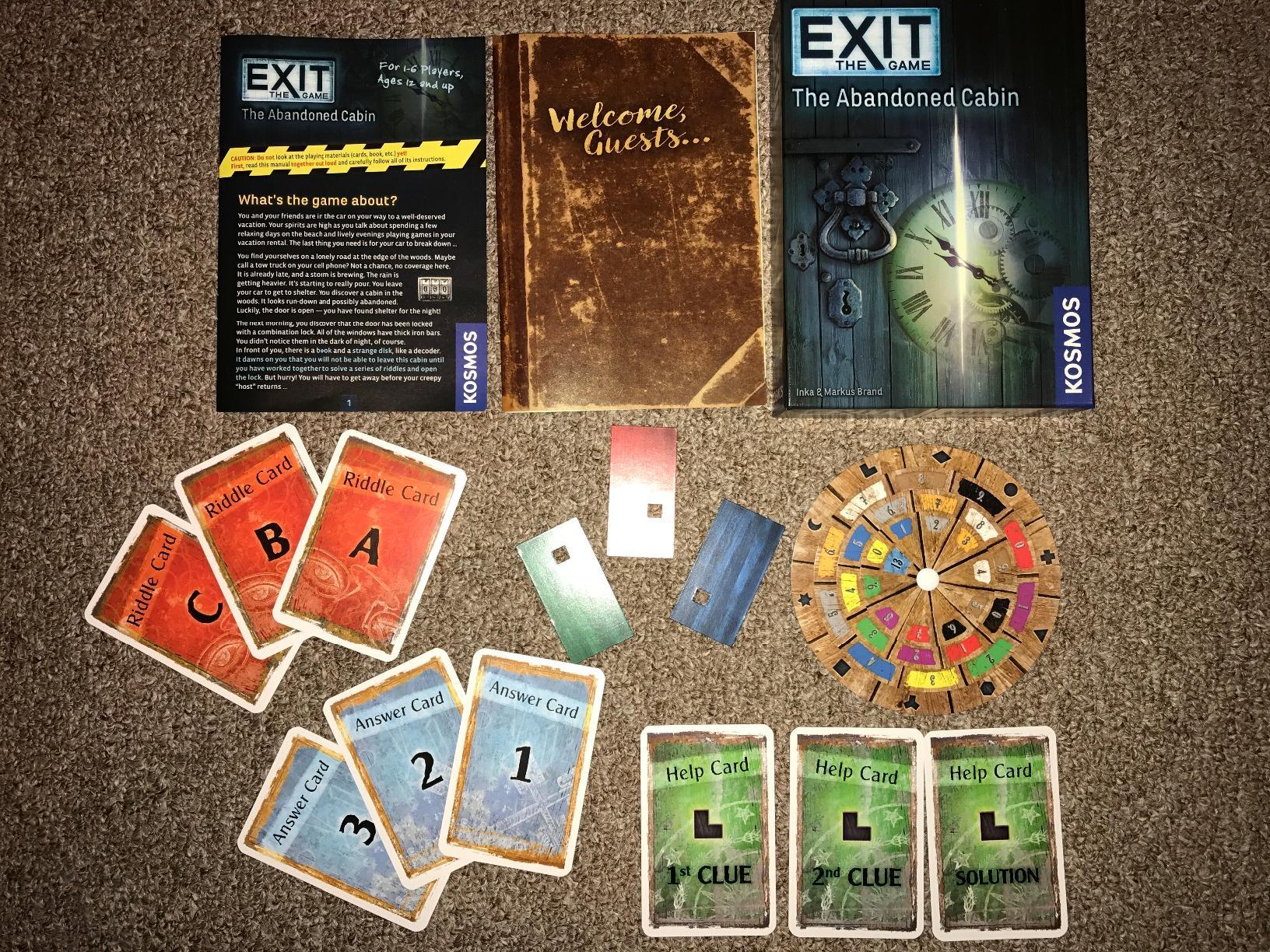
Our first test with The Abandoned Cabin happened on a Friday evening with my two kids and my spouse. We opened the box and immediately felt the pressure. The story drops you into a creepy cabin where you must solve riddles to find your way out.
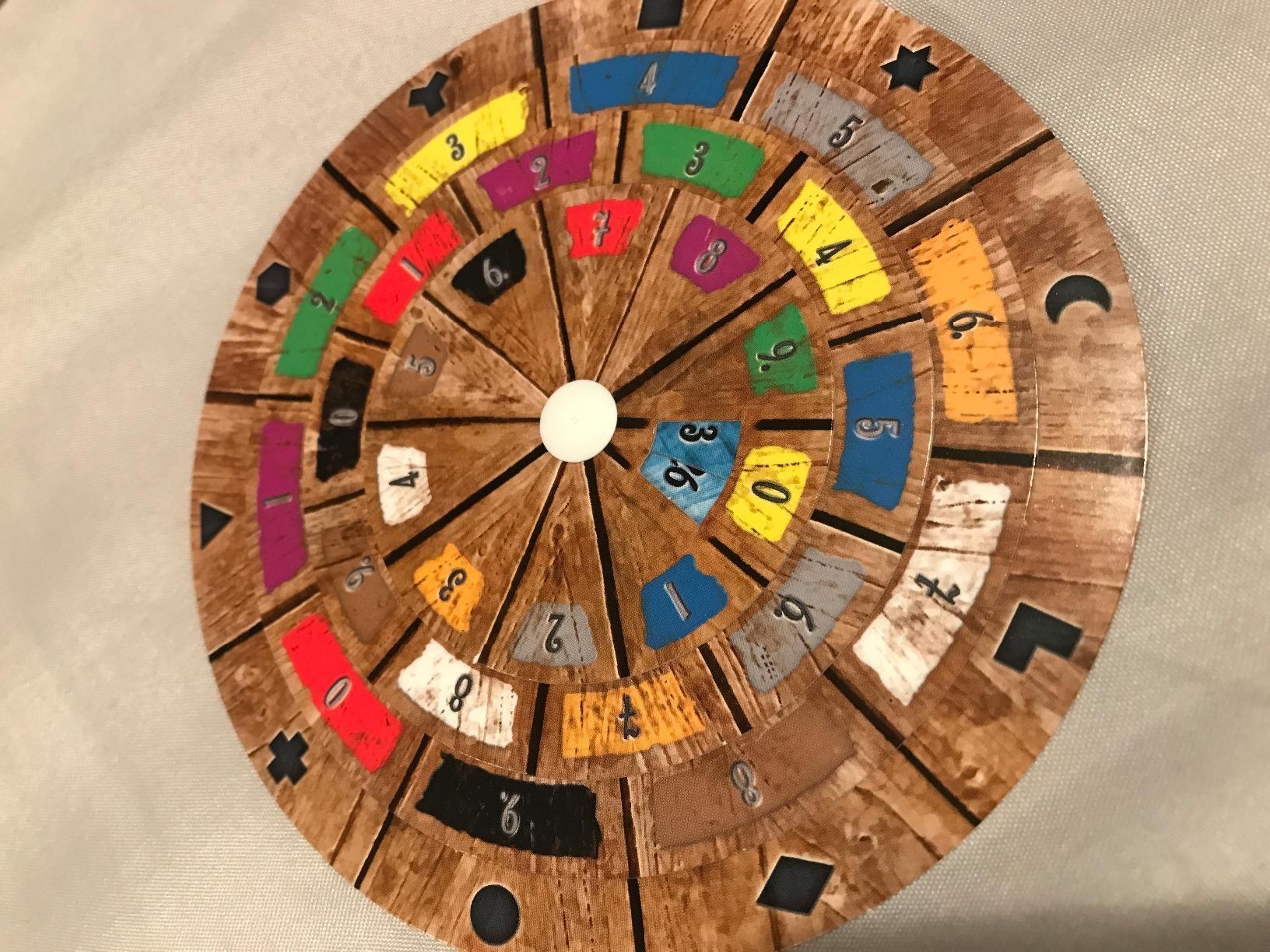
Within minutes, we were folding cards, drawing on components, and debating clues. The decoder disk is the star of the show. You place riddle cards on it, line up symbols, and a hidden number reveals whether your answer is correct.
This tactile element made my 12-year-old feel like a real detective. The game flows in a linear path, which kept us focused instead of wandering in random directions.
We used the hint cards twice. The first time we felt proud for solving most puzzles alone. The second time we were grateful the game did not let us sit frustrated for too long.
The difficulty sits right in the sweet spot for families with teens. Younger children might need an adult to read the smaller text and explain the logic.
One major consideration is the one-time play nature. You will mark, fold, and cut materials. Our family treated this like a movie ticket.
For the experience, you get 90 minutes of immersive entertainment. If you want to share the experience, you can photograph the components before playing and let friends use your copies.
The puzzle quality is consistently high. No riddles felt arbitrary. Each solution built on the previous clue, creating a satisfying narrative arc.
Our team finished in 78 minutes and immediately wanted another Exit game.
Best Age Range and Group Size
This title works best with 2 to 4 players ages 12 and up. With more than four people, some players end up watching instead of solving. We found the ideal group was three.
That size allowed everyone to handle cards while still debating solutions. If you have a mixed-age family with kids under 10, consider pairing them with an older sibling or adult.
The reading level and abstract thinking required are genuinely geared toward pre-teens and older.
Setup Time and Replay Value
Setup takes about 5 minutes. You open the box, remove the decoder disk, and start reading the introduction. There is no complex assembly.
Because the game is single-use, replay value is zero for the same group. However, the Exit series has dozens of sequels, so you can treat this as an ongoing hobby.
Our recommendation is to buy one Exit game per month for family night. By the time you finish the available titles, you will have built a library of memorable experiences.
2. EXIT: The Sinister Mansion – Clever and Varied

- Varied puzzle types
- Can be passed to friends
- Progressive hints
- Great for date nights
- One-time use
- Small writing on pieces
- Some puzzles frustrate beginners
The Sinister Mansion took our family through a haunted estate filled with secret passages and hidden messages. My 14-year-old daughter loved the atmospheric story. My 10-year-old son needed more help with the logic puzzles, but he still contributed by spotting visual clues we missed.
What impressed us most was the variety. One puzzle involved folding a card into a specific shape. Another required decoding a message using a mirror.
The progression never felt repetitive. Each room in the mansion introduced a new mechanic. The 60-minute playtime is shorter than The Abandoned Cabin, which makes this a good choice for weeknights.
We finished in 52 minutes and felt accomplished rather than exhausted.
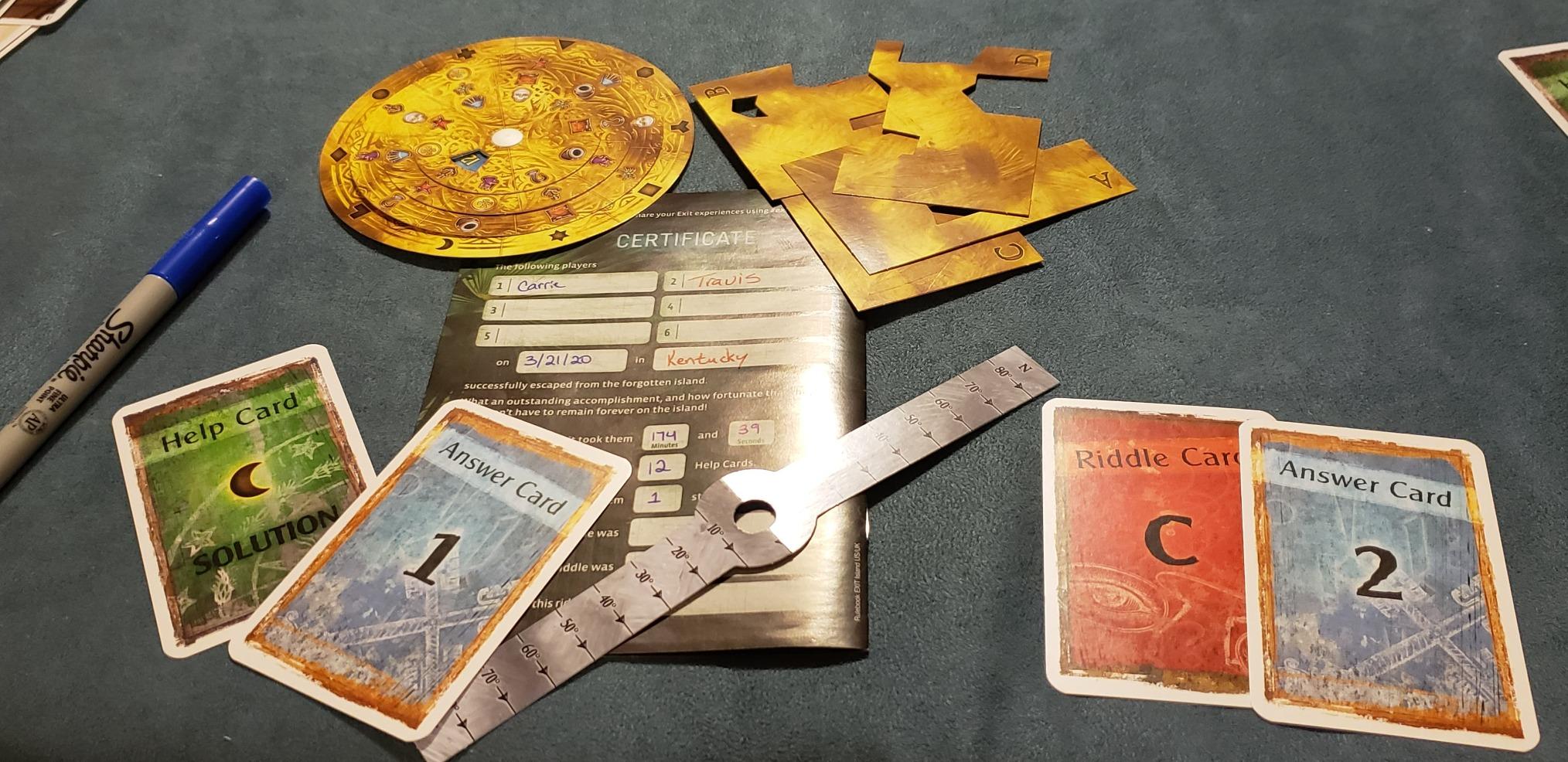
The card quality is decent, though some text is printed small. We used a bright kitchen table lamp and had no issues. Players with vision challenges might want a magnifying glass nearby.
The decoder disk works the same way as other Exit games, so if you have played one, you already know the basics.
One tip from our test: do not overthink the early puzzles. The game designers deliberately made the first few riddles easier to build confidence.
We wasted 10 minutes on the first card because we assumed it was harder than it was.
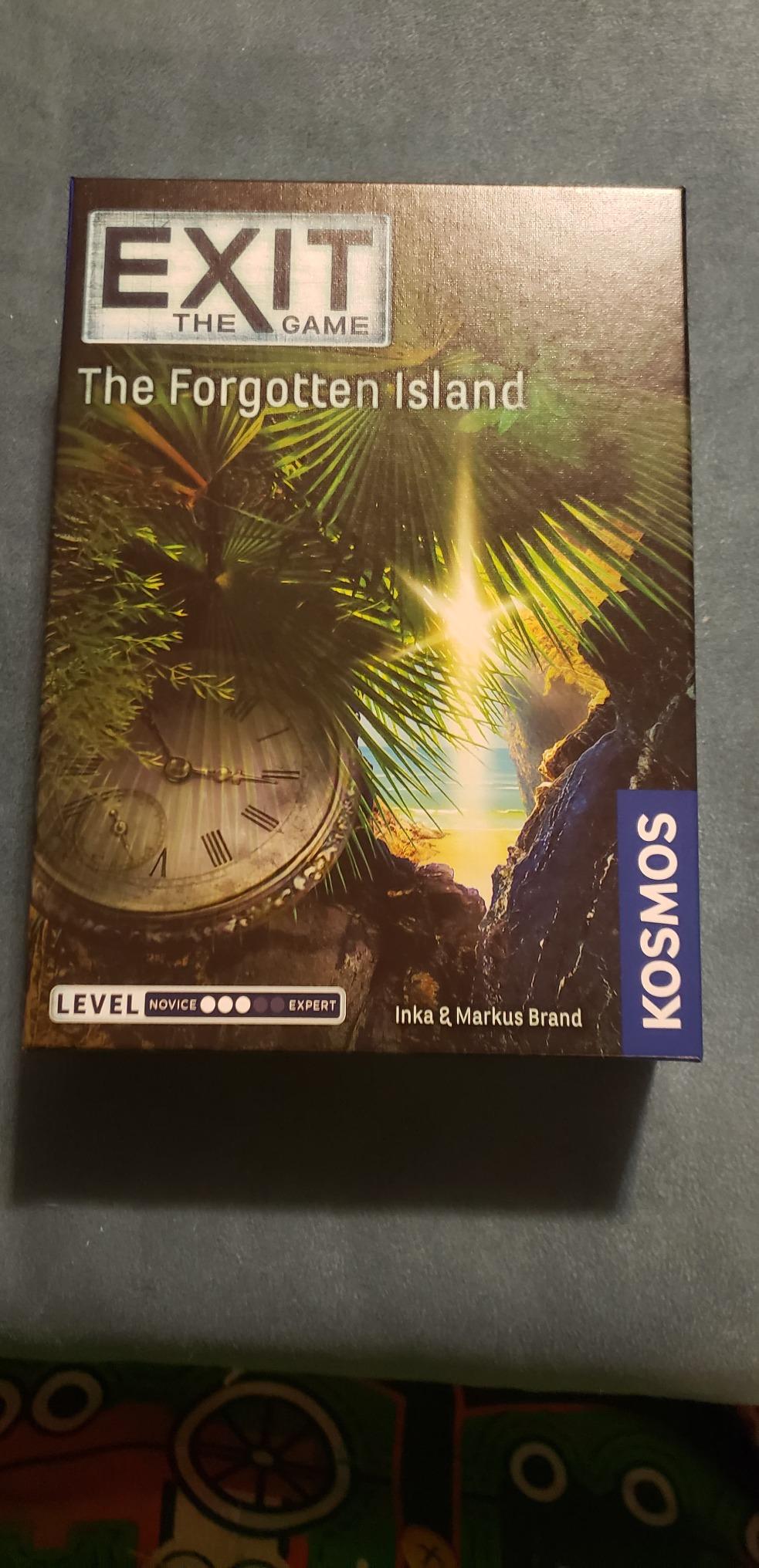
Physical Components and Digital Requirements
This is a purely analog experience. No app, no batteries, no phone required. For families trying to reduce screen time, that is a genuine selling point.
Everything fits in a small box that stores easily on a shelf. Because the game is card-based, the pieces are compact. You can play this at a small kitchen table or even on a picnic blanket in the backyard.
The portability surprised us.
How the Hint System Works
The hint cards are tiered. The first hint nudges you in the right direction. The second gives more specifics.
The third essentially walks you through the solution. We used the first-tier hint on two puzzles and found the guidance perfectly balanced.
Unlike some escape games that punish you for using hints, Exit games treat them as a natural part of the learning curve. This made my younger child feel safe asking for help instead of giving up.
3. Clue Escape: The Midnight Hotel – Classic Mystery Reimagined

- Dynamic building board
- Combines Clue and escape rooms
- Can be reset
- Good for mixed ages
- One-time solve mystery
- May be too easy for enthusiasts
- Tracking cards needed for reset
We grew up playing Clue, so this hybrid immediately caught our attention. The Midnight Hotel combines the deductive reasoning of classic Clue with the puzzle-solving of an escape room.
The gameboard literally builds upward as you play, adding rooms and layers of suspense.
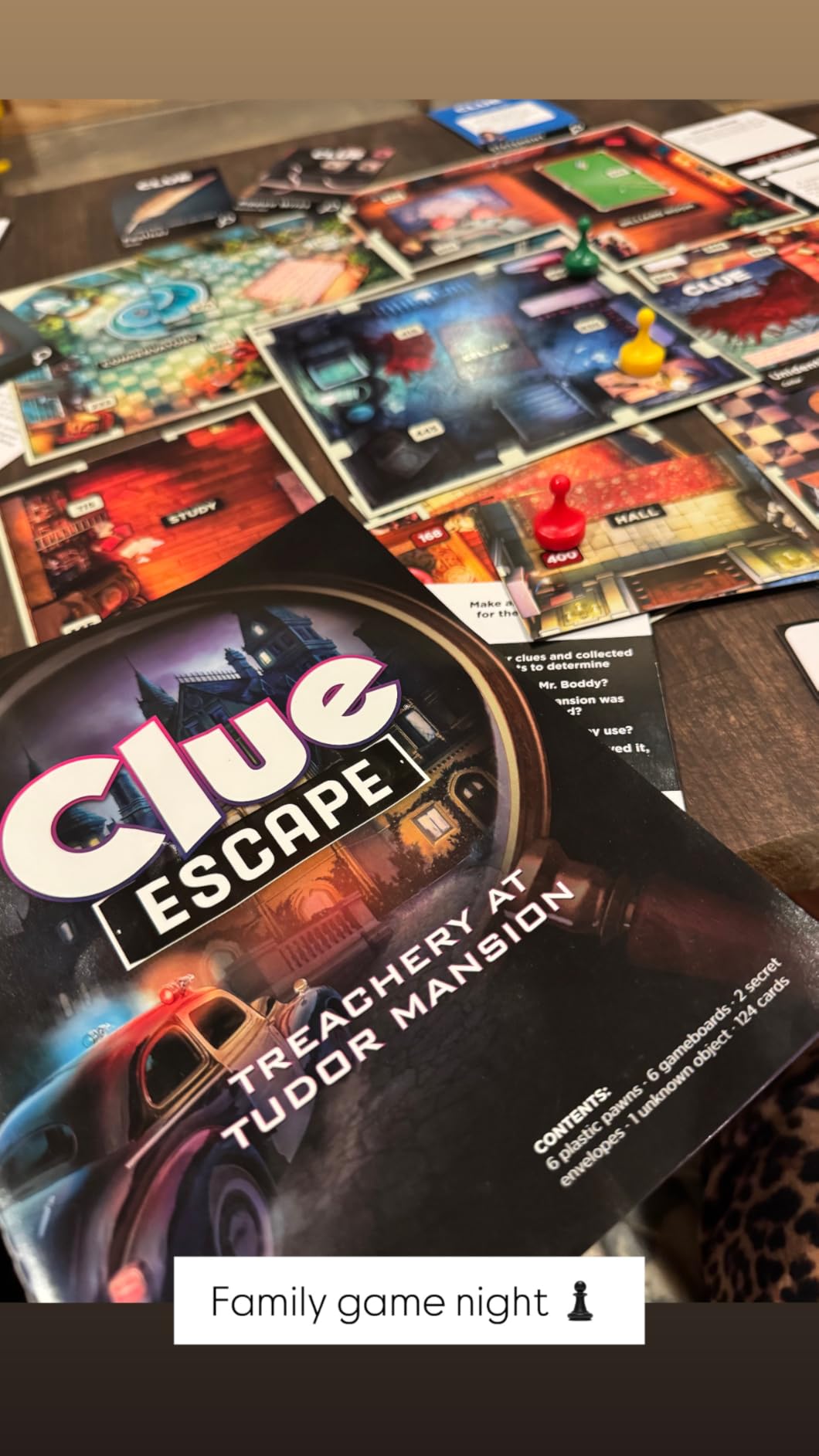
Our family of four played together, and the cooperative twist felt fresh. Instead of competing to find the killer, we worked together to escape the hotel while solving the murder. The game accommodates up to six players, which makes it one of the better options for larger families or small groups of friends.
What sets this apart from most escape games is the reset potential. If you carefully track the order of cards during setup, you can repack the game and let another group play. We tested the reset process and it took about 15 minutes.
That adds real value compared to single-use competitors.
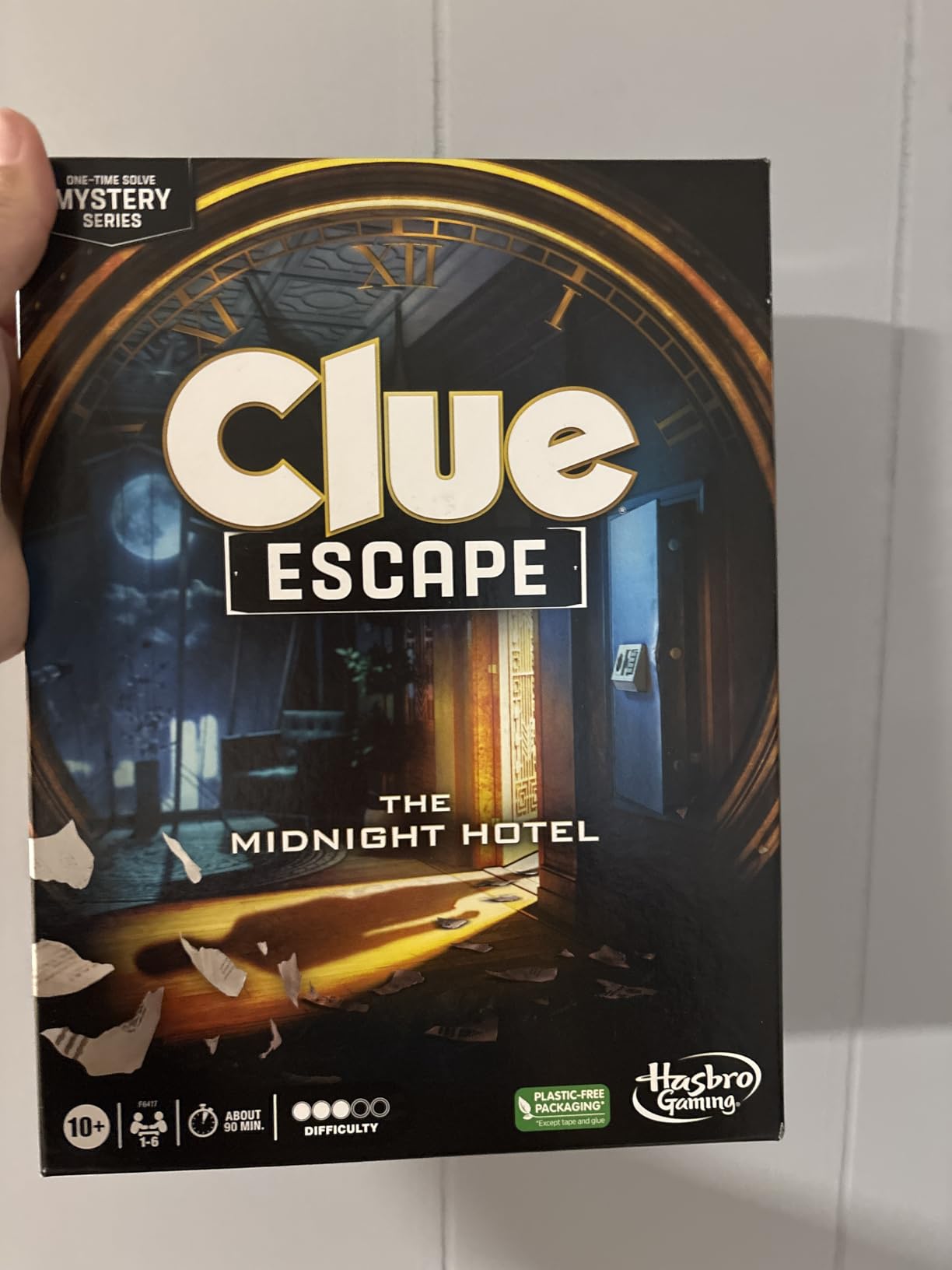
The puzzles are accessible. None required advanced math or obscure trivia. A 10-year-old can meaningfully contribute while adults still enjoy the challenge.
The game strikes a balance that many escape room games miss. It does not talk down to kids, but it also does not alienate them.
The 3D board innovation is more than a gimmick. As you add floors to the hotel, the physical space mirrors the rising tension. Our kids audibly gasped when a new wing opened.
That kind of theatrical moment is rare in tabletop games.
Best Age Range and Group Size
Hasbro recommends ages 10 and up, but we think a bright 8-year-old can participate with guidance. The 1-to-6 player range is accurate. With six players, assign specific roles like card reader, clue tracker, and board builder.
With our four-person group, everyone stayed busy. This is one of the best escape room games for families who want a familiar brand with a modern twist. The Clue theme provides instant recognition, while the escape mechanics add genuine novelty.
Setup Time and Replay Value
Setup takes 10 to 15 minutes because you are constructing a multi-layer board. The first time we played, we watched a quick online video to confirm the assembly. After that, the rulebook was sufficient.
Replay value is moderate since you can reset it, but the mystery loses impact once you know the solution. We suggest playing this once with your family, then resetting it and gifting it to friends.
The reset feature turns a single purchase into a shared experience across multiple households.
4. UNLOCK! Escape Adventures – Reusable Card Trios
- Three scenarios included
- Companion app with hints
- Can be traded after use
- Beautiful card artwork
- Requires smartphone or tablet
- Third scenario less engaging
- Some quality issues reported
UNLOCK! changed how we think about at-home escape rooms. Instead of destroying components, you use a companion app to verify codes and track time. The cards stay pristine, which means you can pass the box to friends or sell it after you finish.
The box includes three scenarios: The Formula, Squeek and Sausage, and The Island of Doctor Goorse. Each feels distinct.
The Formula is a spy thriller. Squeek and Sausage is cartoonish and light. The Island of Doctor Goorse is the most challenging.
We played them over three weekends and found the progression satisfying.
The app integration is genuinely helpful. When you enter a code, the app tells you immediately if you are correct. It also provides a structured hint system that does not feel like cheating.
Our family used the timer feature to add pressure, which made the final minutes of each game thrilling.
Because there are no physical locks or envelopes, the game relies entirely on card combinations and logical deduction. Some players might miss the tactile elements of Exit or Mattel games.
Our group appreciated the clean, no-mess approach. We played at a coffee shop and did not need scissors or tape.
The artwork deserves praise. Each card is illustrated with detail that helps set the scene. My kids spent extra time examining the illustrations, which sometimes contained hidden clues.
That visual engagement is a strength that purely text-based games cannot match.
Physical Components vs Digital App
This is the most app-dependent game on our list. You need a smartphone or tablet for the full experience. The app is free and works on both iOS and Android.
We tested it on an older iPad and a newer Android phone. Both performed well, though the phone screen felt small for group viewing.
If your family actively avoids screens, this might not be the right pick. For everyone else, the app enhances rather than distracts from the experience. The sound effects and ambient music add atmosphere without overwhelming the puzzle-solving.
Difficulty Curve and Learning Curve
The box includes a 10-card tutorial that teaches the core mechanics. We recommend every new player go through the tutorial. It takes 5 minutes and prevents confusion later.
The Formula is the easiest scenario. Squeek and Sausage is moderate. The Island of Doctor Goorse is genuinely difficult.
Our family failed Doctor Goorse on the first attempt. We replayed it a week later and succeeded.
The learning curve is real but fair. Unlike some games that feel impossible, UNLOCK! gives you enough information. You just need to practice the logic.
5. Mattel Escape Room in a Box The Werewolf Experiment – Physical Lock Experience
- Real locks and 3D puzzles
- Connects to Alexa
- Good for large groups
- Variety of puzzle types
- Some puzzles too vague
- One-time use
- Occasional missing pieces
This was the most tactile game we tested. Mattel includes actual padlocks, a black light, and 3D puzzles that you physically manipulate. When our kids opened the box and saw real locks, their excitement was audible.
There is something deeply satisfying about clicking a lock open after solving a riddle.
The Werewolf Experiment theme is spooky but not horror. Think classic monster movie, not modern slasher. The 19 puzzles range from word ciphers to physical manipulation tasks.
Our group of five split into sub-teams for some puzzles, which is a feature many escape games lack.
The Alexa integration adds ambient sound and a timer. We tried it with an Echo Dot and found the voice prompts atmospheric. You can play without Alexa, but the audio cues enhance the mood.
One note: the Alexa skill is not always reliable. We had to restart it once mid-game.
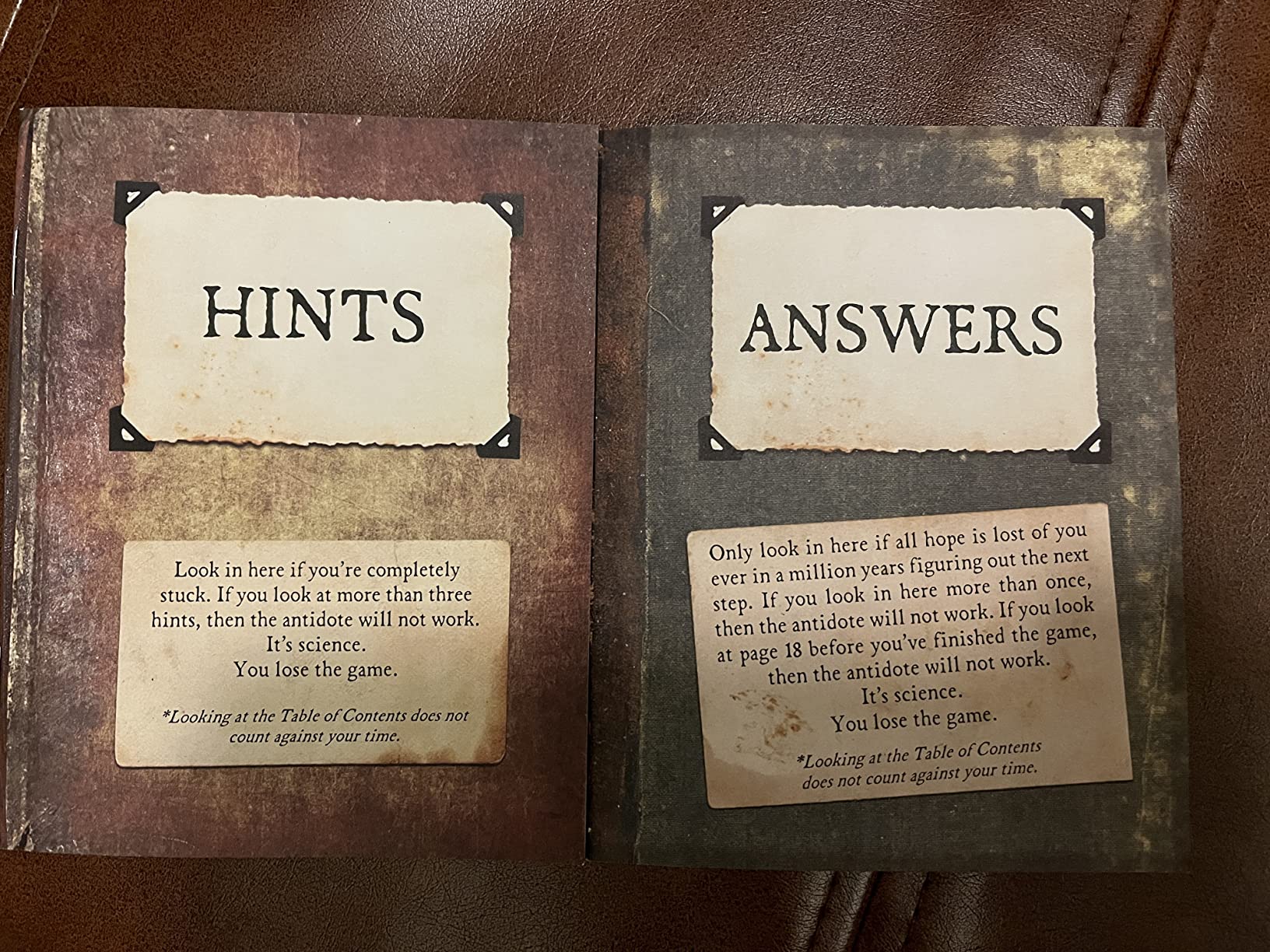
The game accommodates up to 8 players, making it ideal for birthday parties or extended family gatherings. With five players, we never felt crowded. Each person had a puzzle or a lock to focus on.
The larger group size is a genuine advantage for social events.
One downside is the one-time nature. You destroy some components to progress. The locks can be reset, but the paper materials are single-use.
For the experience, we wish the box included a refill kit. Still, the experience is memorable enough that most players will not regret the purchase.
Best Age Range and Group Size
Mattel recommends ages 13 and up. We tested with a 12-year-old and found the content appropriate. The puzzles are challenging enough that younger kids will need significant adult help.
With 8 players, assign a lead coordinator who tracks which puzzles are solved and which locks remain. This is the best choice among our tested games for teen parties.
The physical components feel substantial, and the cooperative nature prevents any one player from dominating the experience.
Setup Time and Replay Value
Setup takes 15 minutes because you are distributing locks, hiding clues, and preparing the black light. The rulebook includes a setup checklist.
We followed it exactly and had no issues. Replay value is low due to the single-use design, but the locks and box can be repurposed for homemade escape rooms.
6. Identity Games Escape Room The Game Family Edition – Electronic Decoder Atmosphere
- Electronic timer adds tension
- Teamwork-focused
- Good for beginners
- Two adventures included
- Missing pieces reported
- Small components
- Scented stickers indistinguishable
The electronic Chrono Decoder is the headline feature here. It sits in the center of your table and counts down 60 minutes while making ominous sounds. Our kids treated it like a bomb timer from a movie.
Every beep raised the stakes. That constant audio pressure is something card-only games cannot replicate.
The Family Edition includes two adventures: Candy Factory and Super Heroes. Both are designed for younger audiences than the original Identity Games version. The puzzles are straightforward, and the hint decoder helps when you get stuck.
We played Candy Factory first and found it charming. The Super Heroes scenario felt more traditional.
The game supports up to 6 players. With our family of four, everyone had a role. One person managed the decoder keys. Another tracked hint cards.
The kids handled the physical puzzles. The division of labor felt natural and kept all players engaged for the full hour.
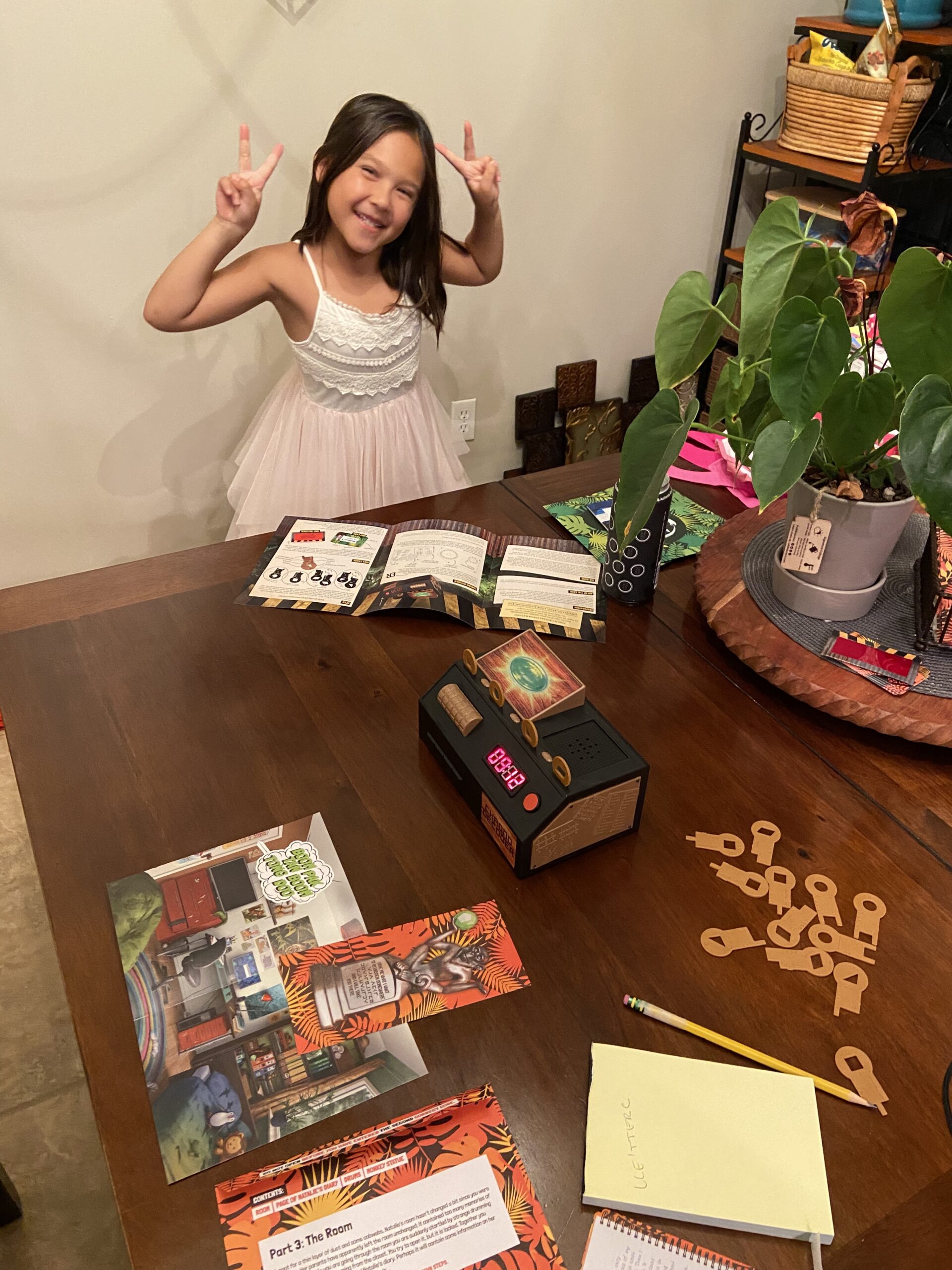
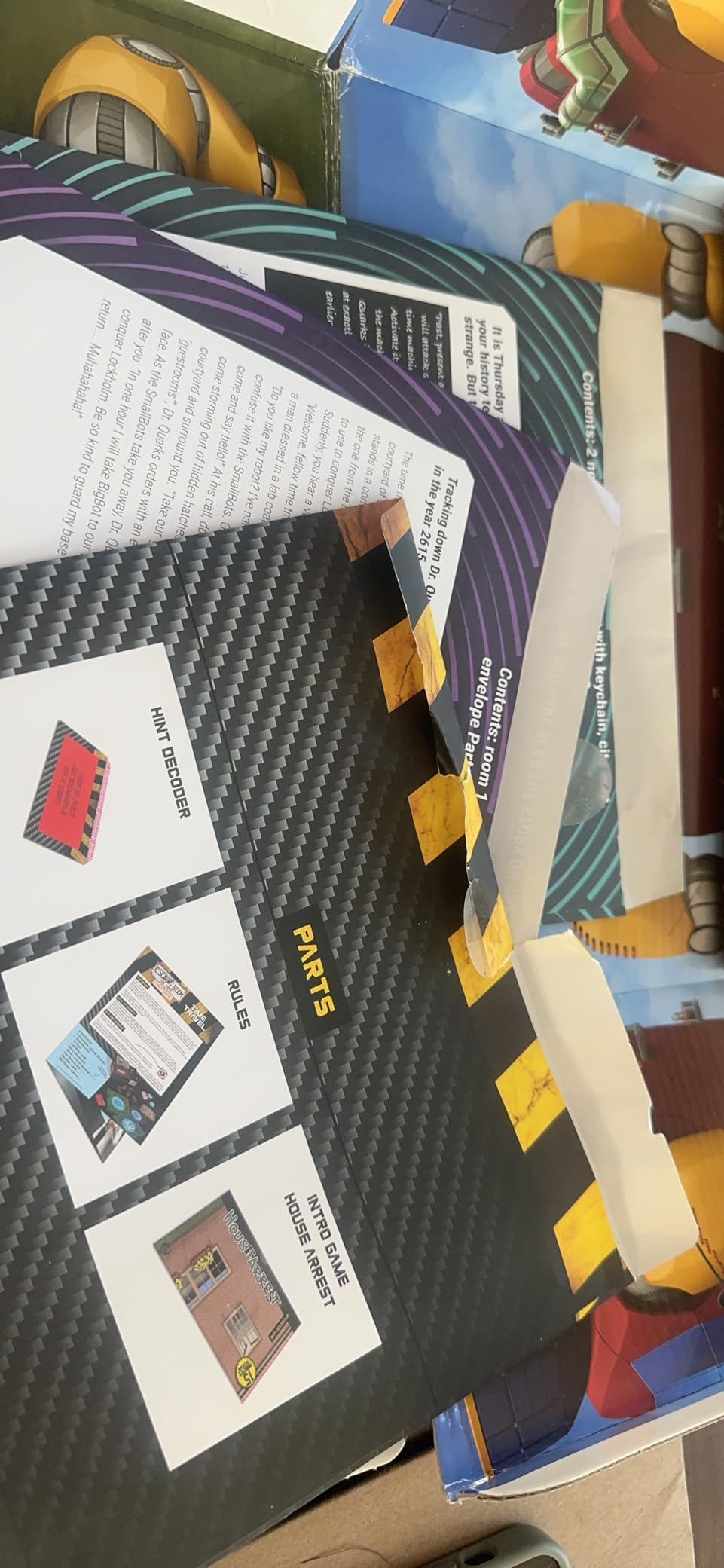
Component quality is mixed. Some Amazon reviewers report missing pieces or printing errors. Our copy was complete, but we recommend checking all components before your first game night.
The hint decoder is a simple mechanical device, so there are no batteries to replace in that component.
The game does require 3 AA batteries for the Chrono Decoder. We used rechargeable batteries and had no power issues. The decoder display is clear, and the key registration is responsive.
Sound effects indicate whether you are on the right track, which reduces the need to consult the rulebook mid-game.
Multi-Generational Play Compatibility
This is one of the better options for families with grandparents or mixed age groups. The Candy Factory theme is light enough that adults do not feel patronized, while the puzzles are accessible enough that kids can contribute.
The electronic timer creates a shared focal point that everyone rallies around. We played this with my mother-in-law, who is in her sixties, and she enjoyed the cooperative aspect.
The physical keys are large enough for older hands to manipulate. The digital display is readable without glasses for most users.
Physical Components vs Digital App
Unlike UNLOCK!, this game is entirely physical. The companion app is optional. We played without any app and had a complete experience.
For families who want to keep phones off the table, that is a significant advantage. The electronic timer is the only digital element, and it is built into the game box.
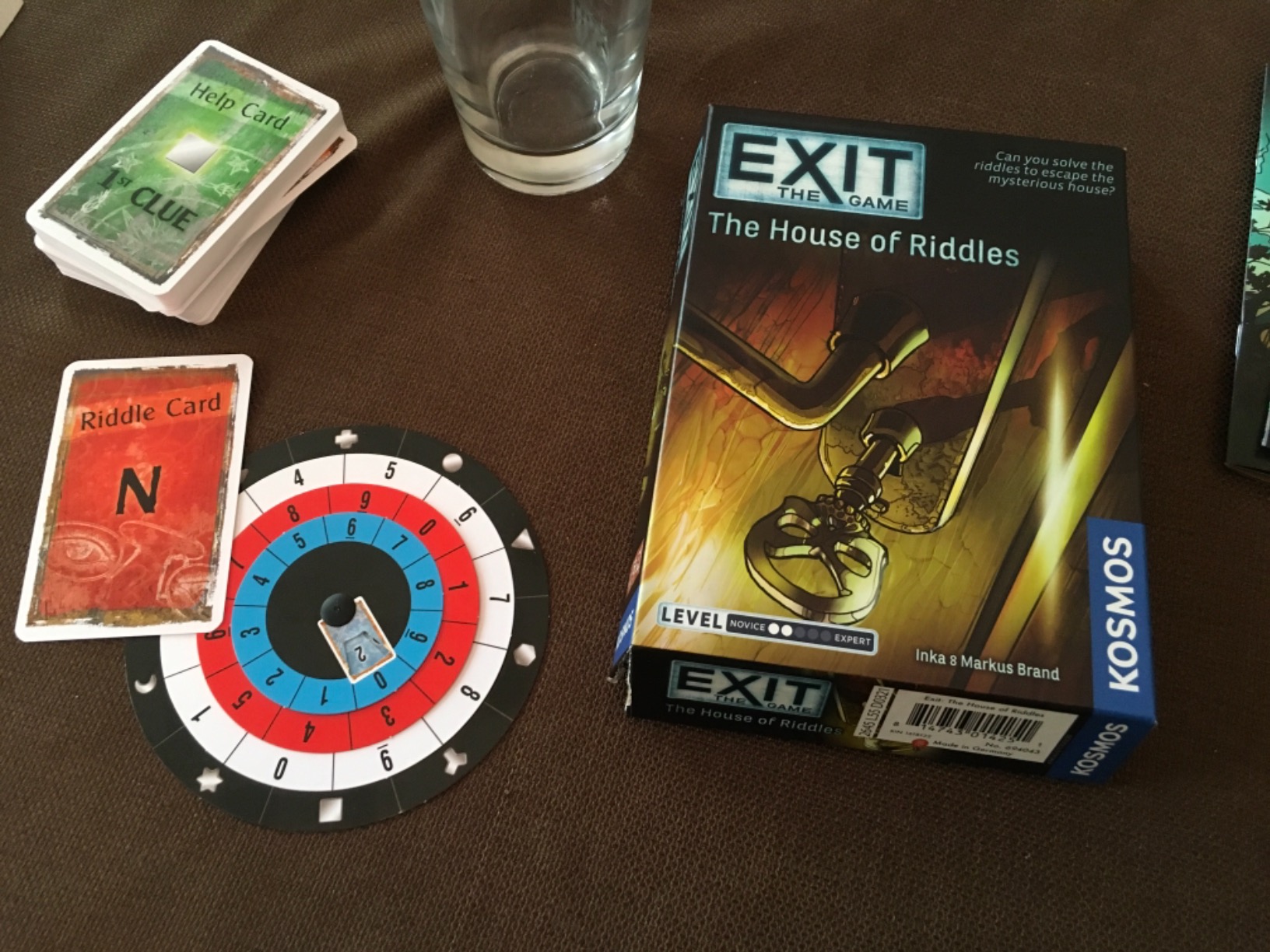
7. Exit: The House of Riddles – Beginner-Friendly Gateway
- Great experience for beginners
- Beginner difficulty
- Free mobile app
- No experience needed
- One-time use
- Needs kitchen items not included
- Small print on components
If you have never played an escape room game, start here. The House of Riddles is rated difficulty 2 out of 5, making it the most approachable Exit title.
Our family played this with my 10-year-old niece, and she solved two puzzles entirely on her own. That sense of accomplishment made her ask when we could play another.
The story is simple. You are locked in an abandoned house and must solve riddles to escape. The linear structure means you work through one puzzle at a time.
There is no branching or complex inventory management. This clarity is perfect for beginners who might feel overwhelmed by open-ended games.
The free mobile app adds a timer and atmospheric audio. We used the timer but skipped the music because we prefer talking. The app is genuinely optional, which is nice.
Everything you need is in the box except for one puzzle that requires a common kitchen item. The rulebook tells you what to grab before starting.
We finished in 95 minutes, which is faster than the listed 120 minutes. The pacing felt consistent. No puzzle overstayed its welcome.
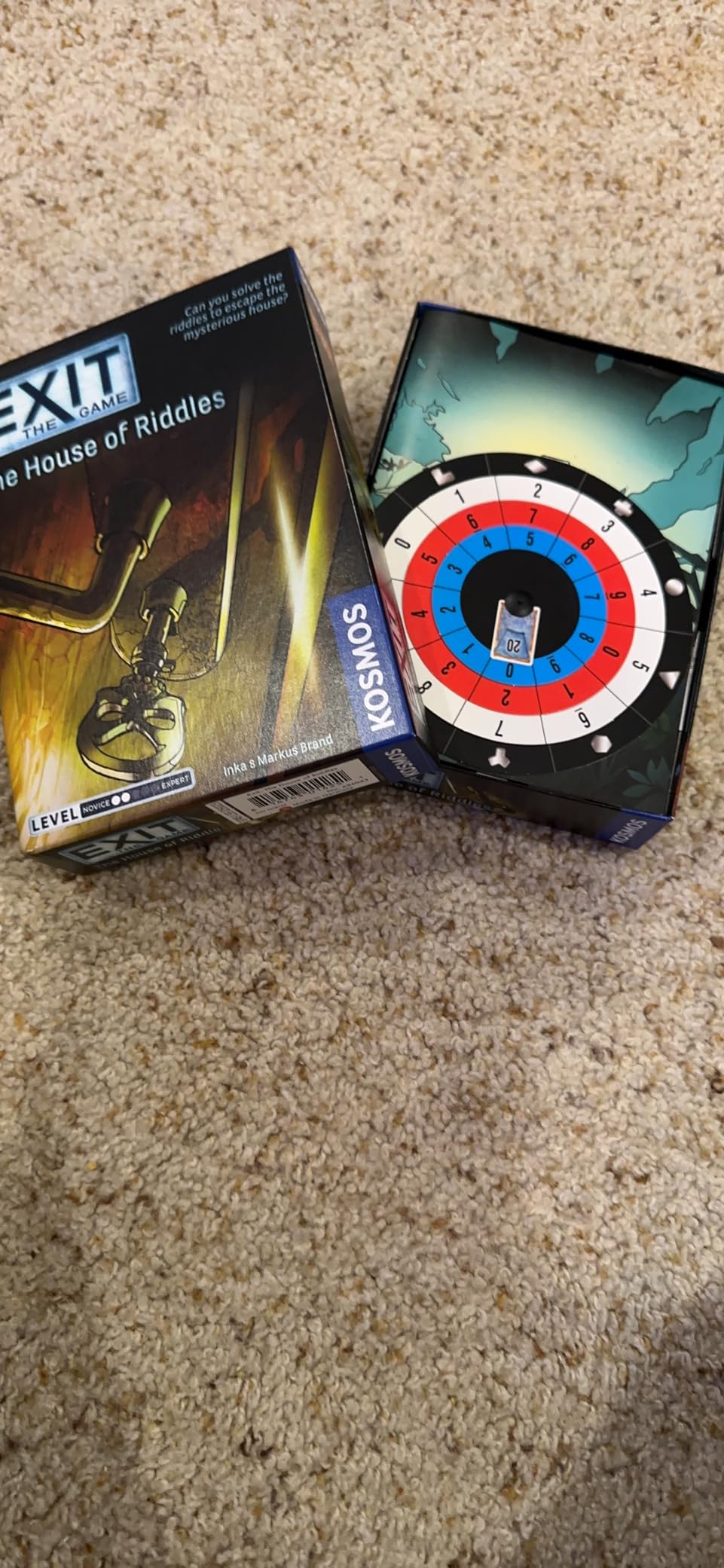
The decoder disk works identically to other Exit games, so skills learned here transfer to the rest of the series.
The 77 percent five-star rating on Amazon reflects broad satisfaction. Most negative reviews mention the one-time use aspect or the small print. Those are valid concerns, but neither diminishes the core experience.
For a first escape room game, this is a safe and rewarding purchase.
How the Hint System Works
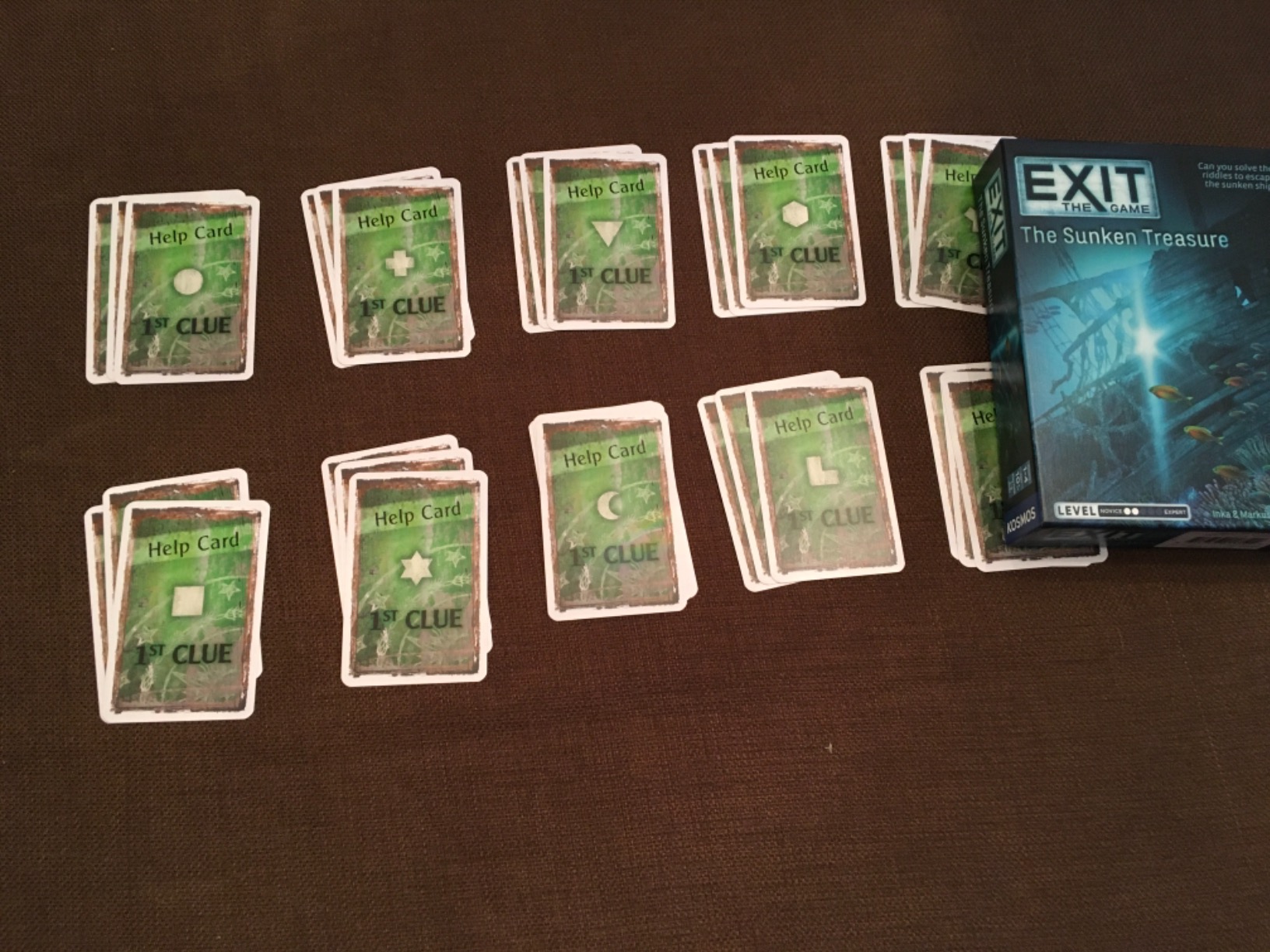
Exit games use a tiered hint system, and this title is the best place to learn it. The help cards are clearly numbered. If you are stuck on riddle 5, you look at help card 5.
The first side gives a gentle nudge. The second side provides more detail. The third side essentially gives the answer.
We used the first side twice and the second side once. The hint system trains players to think methodically. Instead of guessing randomly, you learn to re-examine the components.
That educational value is a hidden benefit. Kids who play these games develop patience and attention to detail.
Setup Time and Replay Value
Setup takes under 5 minutes. You open the box, remove the decoder disk, and start reading. The 120-minute playtime is the longest in the Exit series, but our group finished quicker.
Replay value is zero for the same players, yet the low investment makes it easy to buy multiple titles.
8. The Sunken Treasure – Underwater Adventure with App Support

- Each game in series is unique
- Decoder disk with sea theme
- Challenging but rewarding
- Free app with underwater sounds
- Small print on cards
- One-time use
- Some puzzles require box packaging
The Sunken Treasure takes the Exit formula and adds an underwater theme. The decoder disk uses sea creatures instead of standard symbols. That small thematic touch delighted our kids.
They referred to the disk as the sea compass for the rest of the evening.
The puzzles are slightly harder than The House of Riddles but still manageable for families. We played with two adults and two kids. The adults handled the logic puzzles while the kids searched for visual clues.
The division of labor felt natural and kept everyone engaged.
The free mobile app plays ambient underwater sounds. We used it for the first 20 minutes, then turned it off because we preferred talking. The timer feature is useful regardless.
The app is a nice bonus, not a requirement.
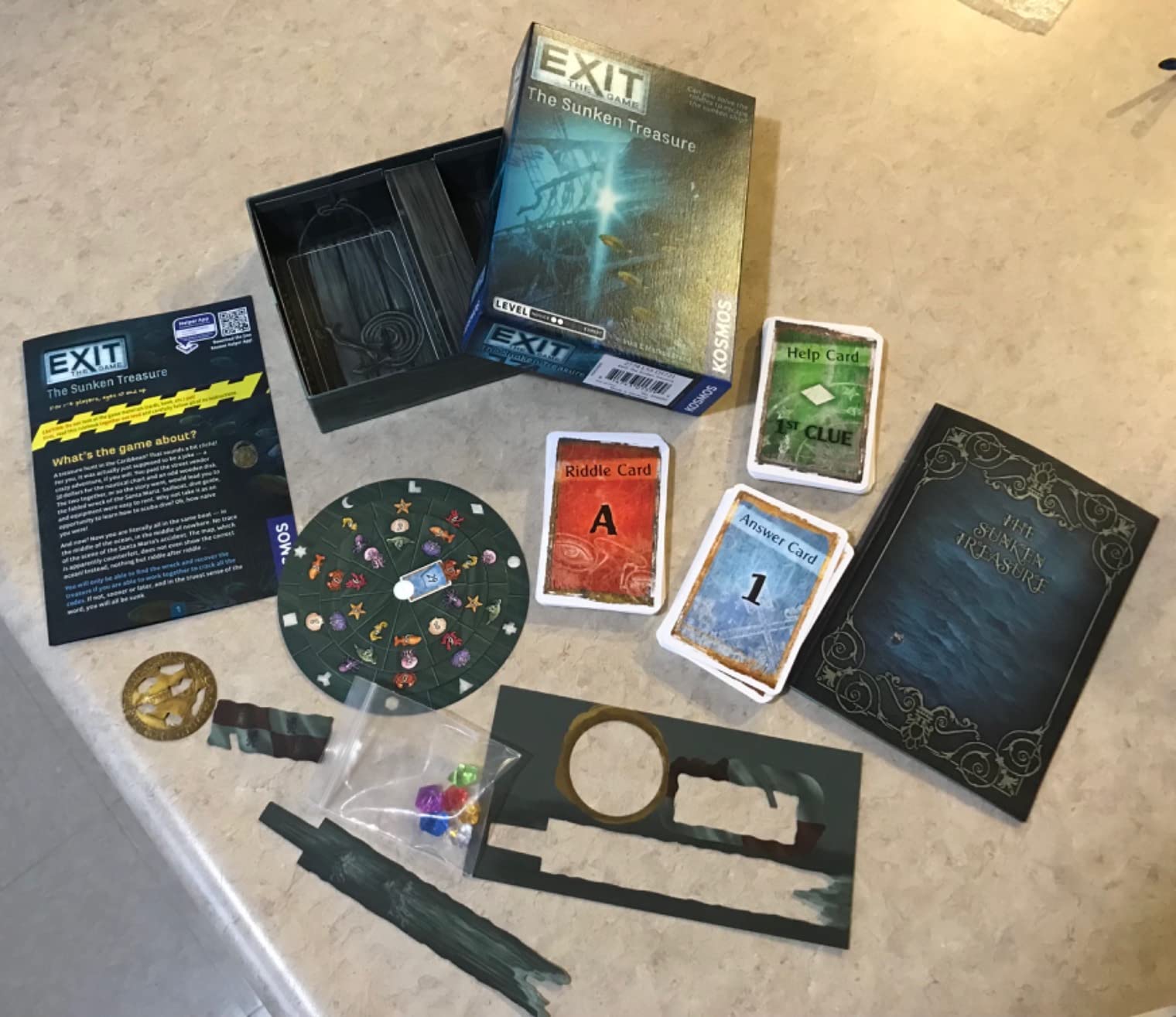
One puzzle requires you to use the game box itself as a component. We nearly discarded the packaging before reading the rulebook carefully. That is a good lesson for any escape game: read everything before throwing anything away.
The designers often hide clues in unexpected places.
The card backgrounds are dark blue, which fits the theme but can make small text harder to read. We used a bright lamp and had no issues. The puzzle quality is consistently high.
No solution felt arbitrary or unfair. Each clue connected logically to the next.
Difficulty Curve and Learning Curve
This is rated difficulty 2 out of 5, but some puzzles are significantly harder than The House of Riddles. The curve is not perfectly smooth. One puzzle in the middle stumped us for 15 minutes.
We eventually used a hint and realized we had missed a hidden number on a card. The lesson: examine every surface.
For families new to escape games, this is a good second purchase after The House of Riddles. It builds on the skills you learned while adding new mechanics. The underwater theme provides fresh flavor without changing the core gameplay.
Best Age Range and Group Size
The 1-to-4 player count is accurate. With four players, the table gets crowded because everyone wants to see the cards. We recommend three players as the sweet spot.
Ages 10 and up is appropriate, though some 9-year-olds with puzzle experience will manage fine.
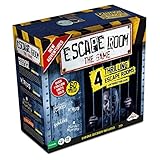
9. Escape Room The Game Version 2 – Four Adventures in One Box
- 4 different scenarios
- Electronic decoder with timer
- Companion app with soundtrack
- Expandable with packs
- Decoder can be buggy
- Faint writing on some clues
- Requires 3 AA batteries
This is the premium option for families who want variety. The box contains four complete escape room adventures, each with three parts. That is effectively 12 distinct puzzle sequences.
We played two adventures over a month and found the depth impressive.
The electronic Chrono Decoder is larger and more sophisticated than the Family Edition. It has a countdown display, sound effects, and key slots that validate your answers. When you insert the correct key, the decoder plays a satisfying chime.
When you are wrong, a buzzer sounds. That immediate feedback keeps the pace moving.
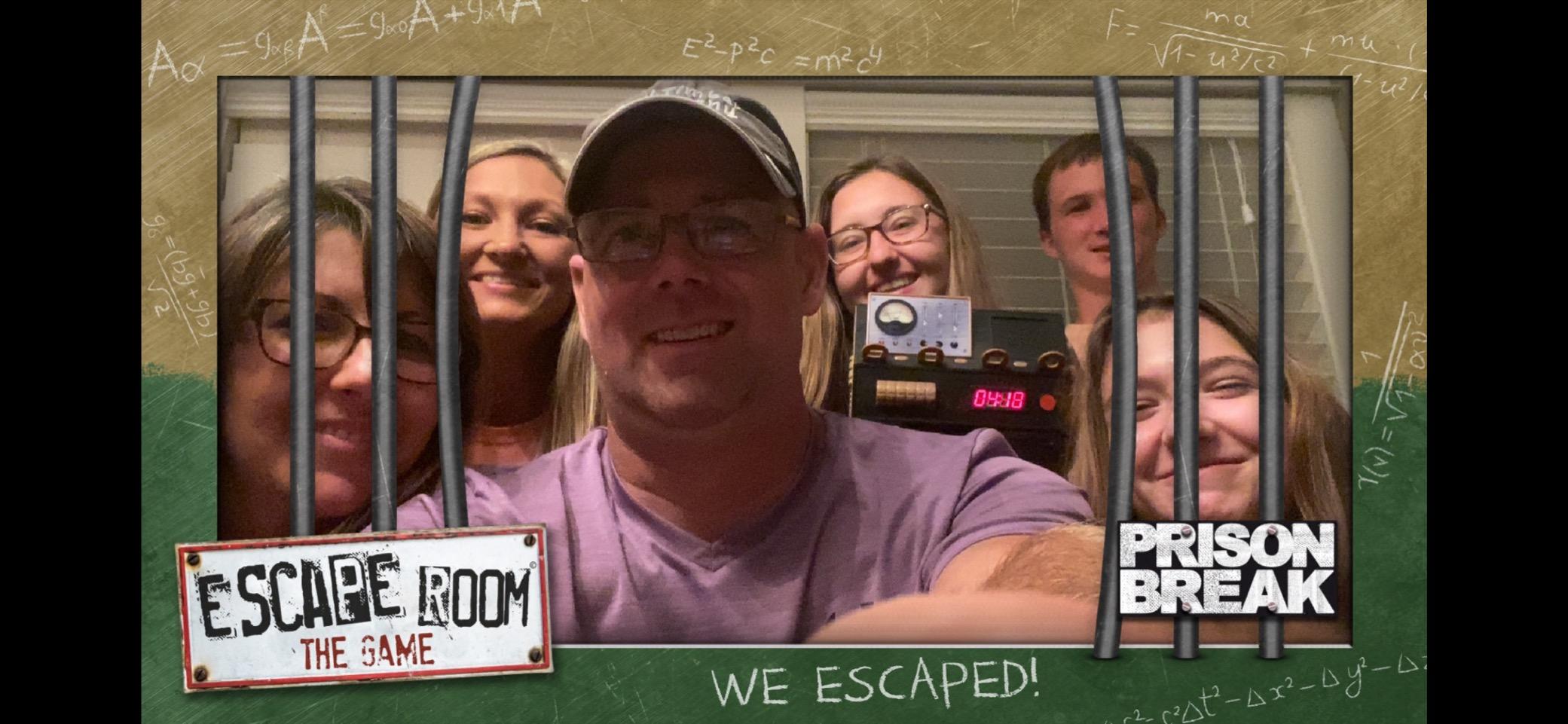
The companion app adds a soundtrack and atmospheric effects. We used it for the Prison Break scenario and found the music genuinely tense. The app is free and available for both Apple and Android devices.
You can play without it, but the experience is richer with the audio layer.
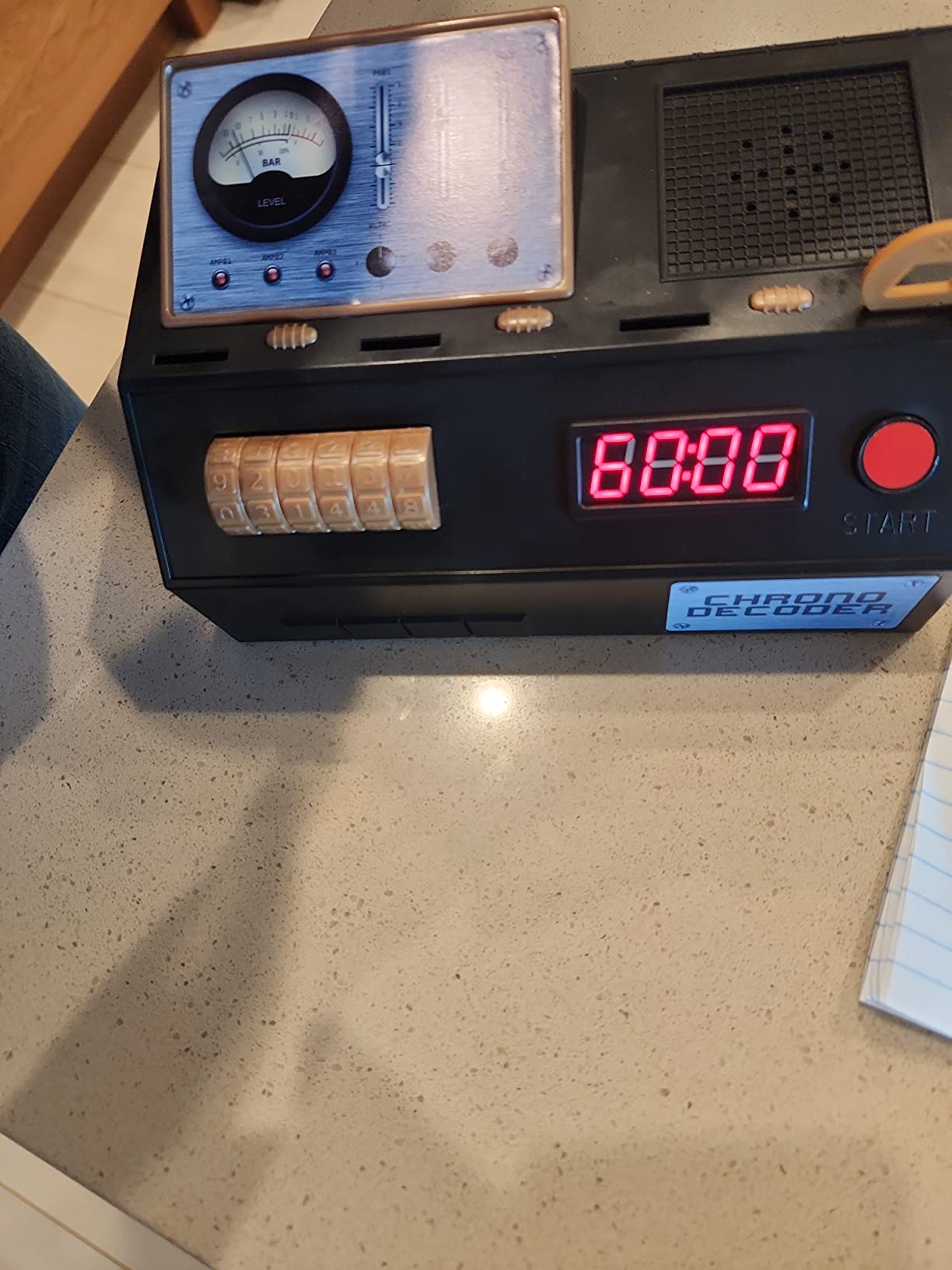
Each adventure has three parts with increasing difficulty. Part one is introductory. Part two adds complexity.
Part three is the climax. This structure makes the game feel like a real escape room with a narrative arc. Our family appreciated the progression.
The recommended age is 16 and up, which is higher than most games on this list. The puzzles are more abstract and the themes are more mature. We played with a 14-year-old who handled it well, but younger kids would struggle.
For families with teens and adults, this is one of the most substantial experiences available.
Physical Components vs Digital App
The game is primarily physical but leans heavily on the app for atmosphere. The decoder requires 3 AA batteries. We recommend fresh batteries for each play session.
Weak batteries caused one key registration failure during our test.
The components are sturdy, but the decoder is the weak point. Some Amazon reviewers report decoder issues. We did not experience major problems, but we did have to reseat a key once.
The manufacturer will replace faulty decoders if you contact them. That customer support is worth noting for a product at this value point.
Multi-Generational Play Compatibility
Because of the higher age recommendation, this is less ideal for families with young children. It shines when played with teens, parents, and grandparents.
The cooperative nature means older players can mentor younger ones, but the puzzle complexity is genuinely geared toward adults.
We hosted a game night with three other couples and used this as the main event. The 3-to-5 player range worked perfectly. Everyone had a puzzle to focus on, and the decoder timer created a shared sense of urgency.
For adult family gatherings, this is a top-tier choice.
10. ThinkFun Escape The Room Stargazer’s Manor – Repackable Beginner Option
- Can be repacked and shared
- Beginner-friendly
- No destruction of pieces
- Website support with hints
- Too easy for experienced players
- Linear gameplay
- All puzzles are similar type
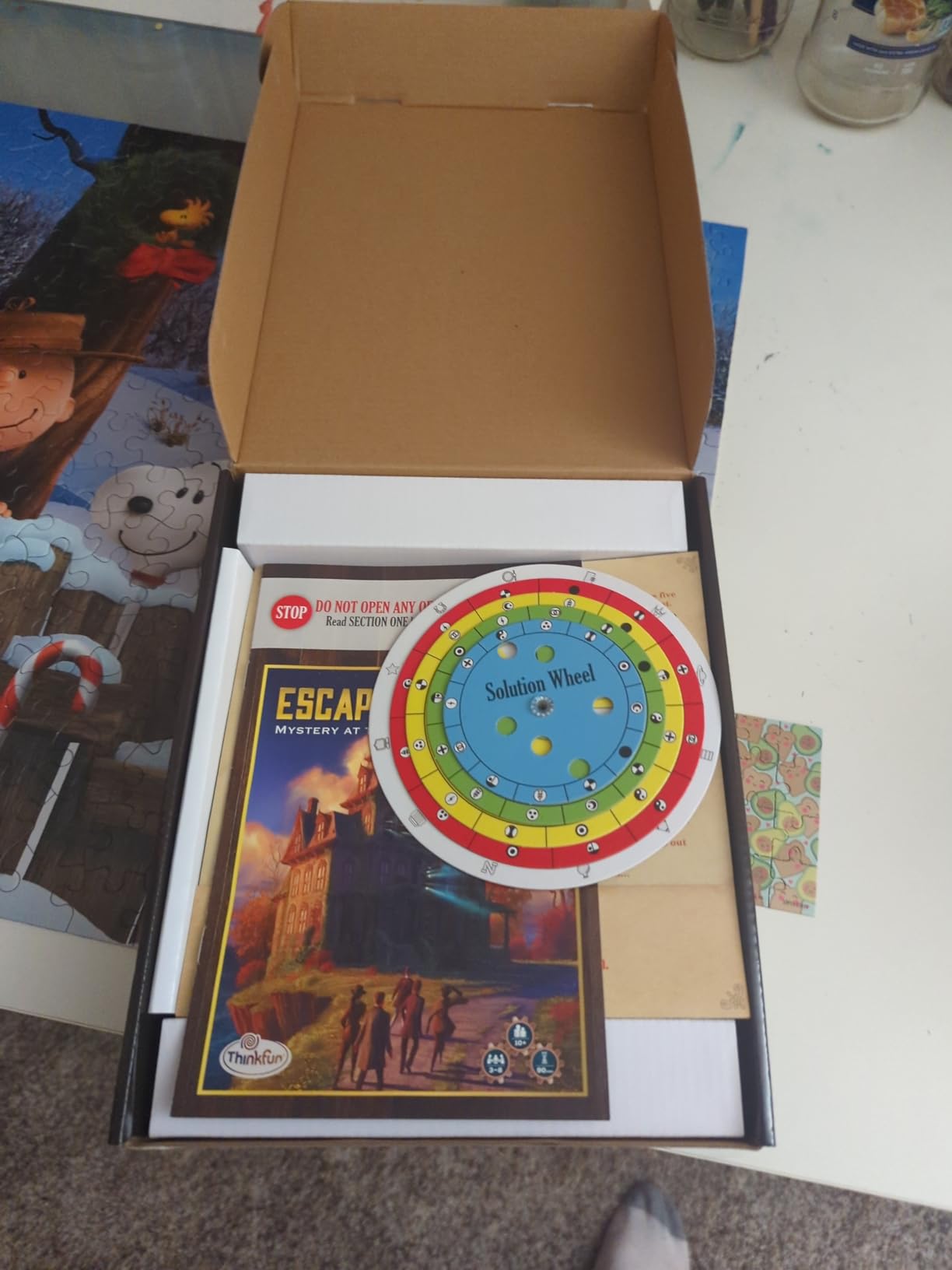
ThinkFun designed this as a true entry point. The box contains five sealed envelopes and a solution wheel. You open envelopes as you solve puzzles, but nothing is destroyed.
When you finish, the website provides repacking instructions. We followed them and restored the box to its original state in 10 minutes.
The Stargazer’s Manor theme is gentle and mysterious. You are investigating a disappearance at an astronomical observatory. The puzzles rely on observation and pattern recognition rather than logic grids or math.
My 10-year-old solved the first two puzzles faster than the adults.
The solution wheel is a clever component. You align symbols to reveal whether your answer is correct. It is tactile, simple, and satisfying.
Kids love spinning it. The wheel is also durable. We spun it dozens of times and it showed no wear.
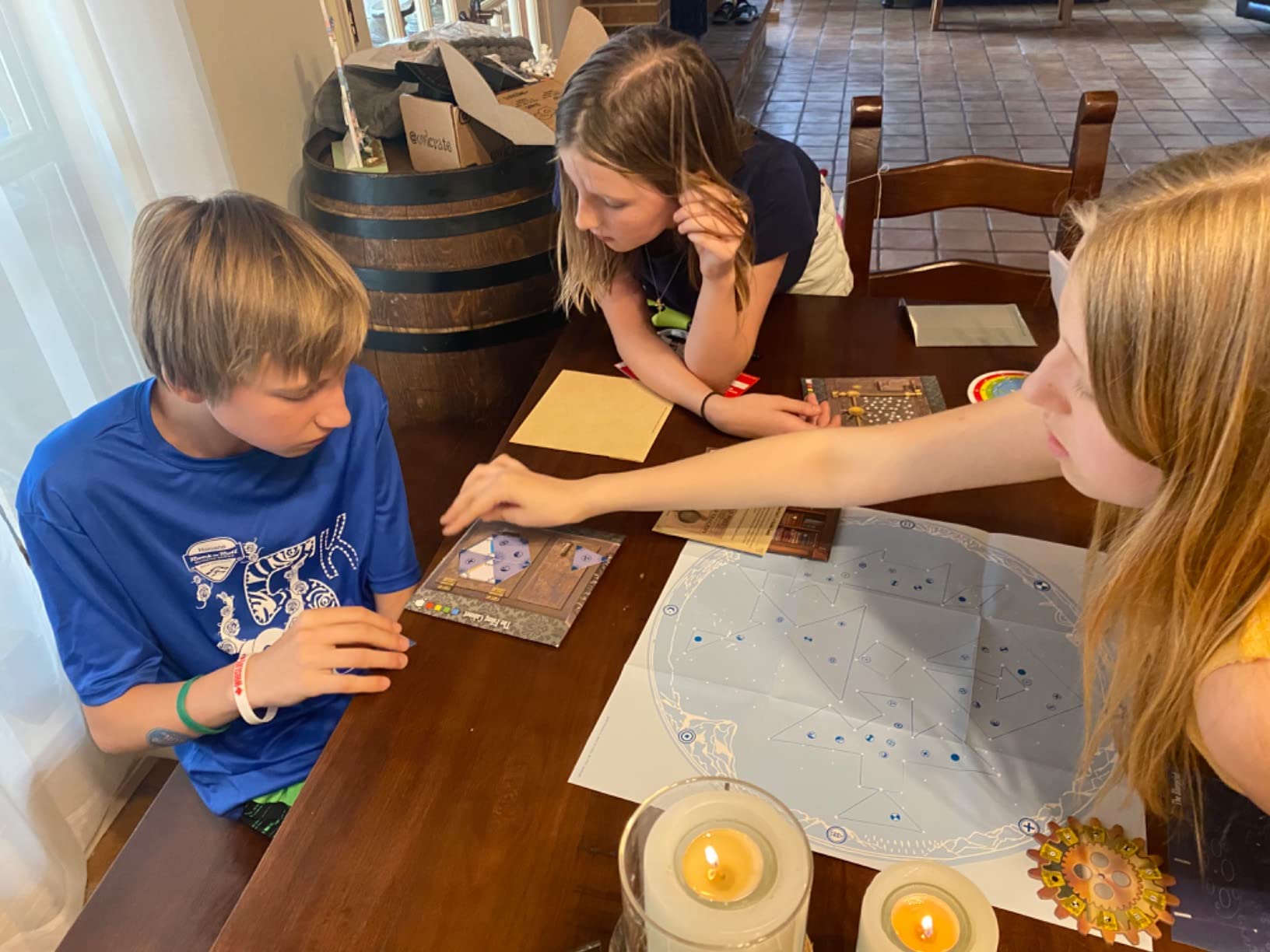
The game supports 3 to 8 players, which is the widest range on our list. We played with six people and found the experience manageable. The linear structure means everyone focuses on the same puzzle at once.
With eight players, some people will watch more than participate. We recommend four to five as the ideal group size.
The beginner difficulty is real. Experienced escape room players will finish in under 45 minutes. For families new to the genre, that accessibility is a feature, not a flaw.
The goal is to introduce the concept, not to frustrate beginners.
How the Hint System Works
ThinkFun provides hints through their website. You enter a code from the rulebook and get tiered guidance. We used the website once and found the hints clear.
The website also offers a PDF repacking guide. That digital support is a nice modern touch from a company that has been making games for decades.
Because the game is repackable, you can also ask friends who have played it for advice. They will not spoil the game because they can just pass the box along. That community aspect is rare in the escape room game world.
Setup Time and Replay Value
Setup takes 5 minutes. You open the box, read the scene card, and open the first envelope. Replay value is high because you can repack and share.
One purchase can entertain multiple families. That resale and regifting potential makes this one of the most economical choices in the long run.
11. Scooby-Doo: Escape from The Haunted Mansion – Themed Family Favorite
- Cooperative gameplay
- Reusable components
- Can be paused mid-game
- Includes hint system
- Heavy reading required
- One-time play
- Some puzzles too hard for kids alone
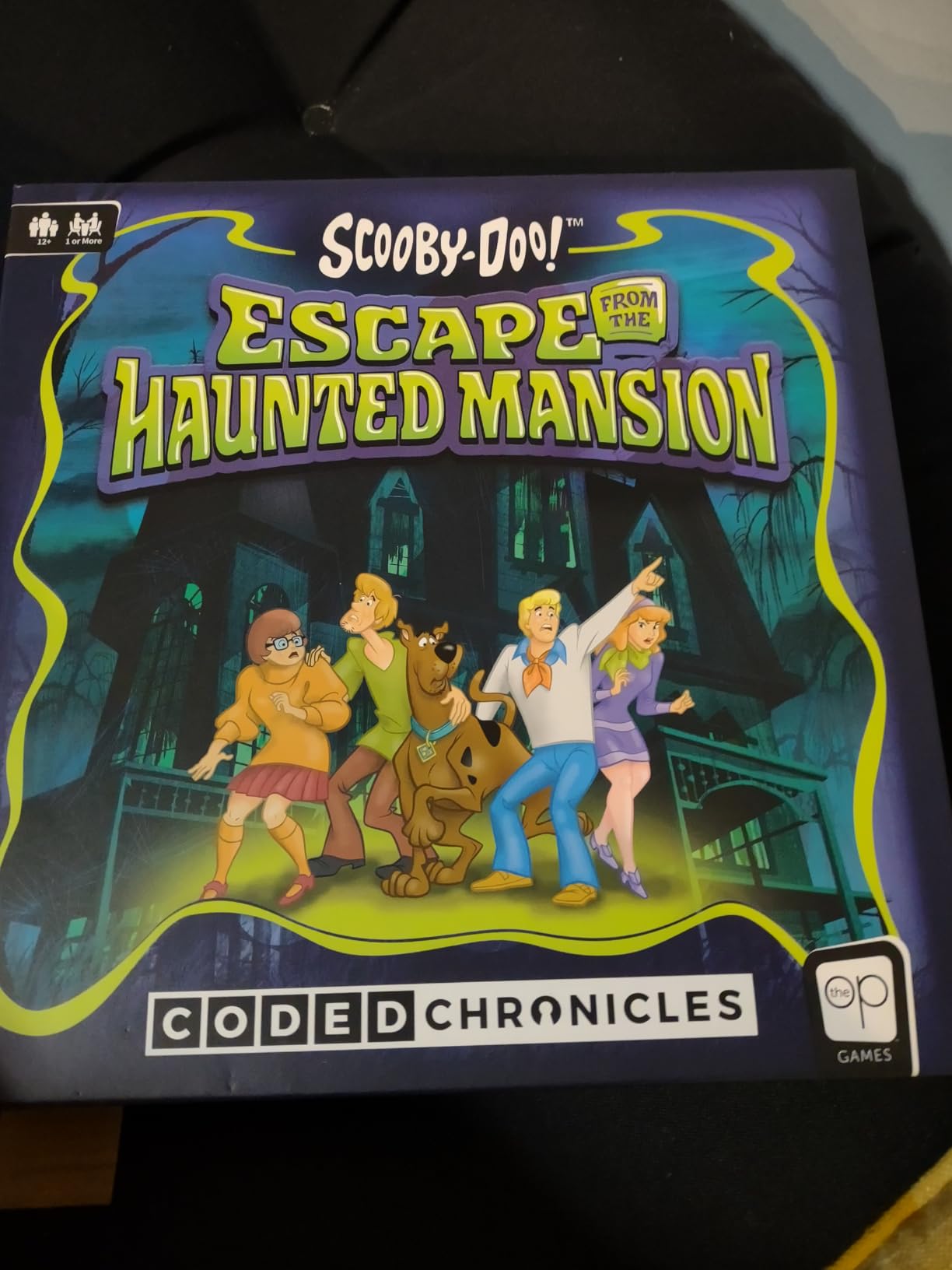
This game was the biggest hit with our youngest tester. The Scooby-Doo theme provides instant familiarity. Kids who grew up with the cartoon immediately understood the tone.
The haunted mansion setting is spooky but never scary. Our 8-year-old laughed at every Shaggy reference.
The game is a two-part experience. The first half sets up the mystery. The second half resolves it.
Each part takes about an hour. You can pause between parts, which is a practical feature for families with early bedtimes. We played part one on Saturday and part two on Sunday.
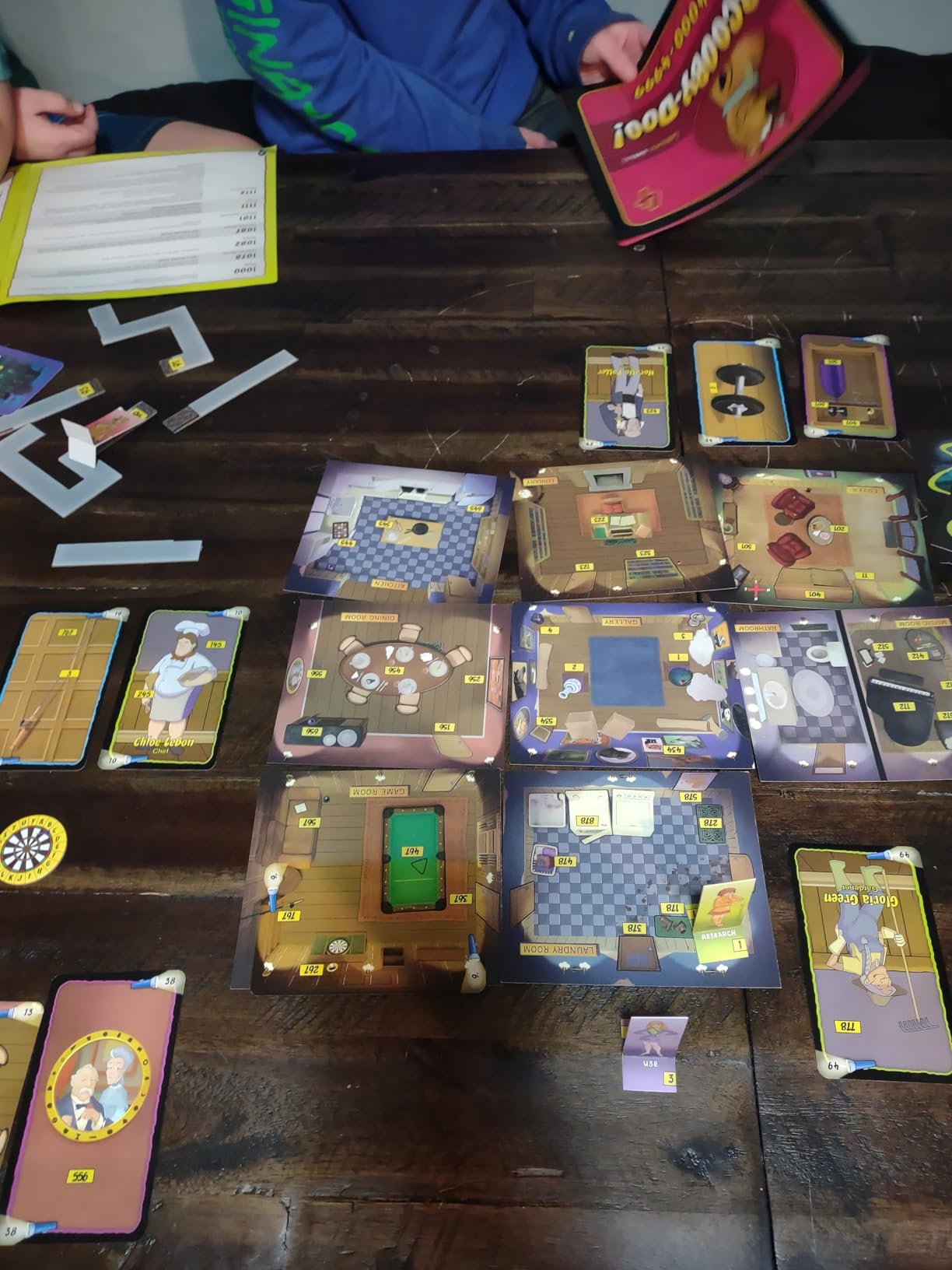
The components are high quality. The map tiles are thick cardboard. The character standees are colorful and sturdy.
The narrative books are well-written. USAopoly clearly invested in production values. This does not feel like a licensed cash grab. It feels like a genuine love letter to the franchise.
The cooperative gameplay requires reading from narrative books. If your child is not a confident reader, an adult should handle the text.
The puzzles themselves are visual and tactile enough that kids can participate even if they do not read every clue. Our 8-year-old contributed by spotting hidden numbers and assembling map tiles.
The game is one-time play, but the components are reusable. You can reset it and pass it to another family. The narrative books do not reveal the ending until the right moment, so the mystery stays intact for the next group.
That design choice is smart and generous.
Best Age Range and Group Size
This is the most age-inclusive game on our list. The 8 and up recommendation is accurate. A 6-year-old who loves Scooby-Doo could participate with heavy adult guidance.
The 1-to-6 player range is flexible. We played with four and had enough to do. With six, assign one person to manage the map tiles and another to read the narrative books.
For families with multiple children of varying ages, this is an excellent choice. The theme appeals to young kids while the puzzle depth satisfies older siblings and parents. The best escape room games for families often bridge age gaps, and this one does it better than most.
Setup Time and Replay Value
Setup takes 10 minutes because you are sorting map tiles and organizing character standees. The two-part structure means you can play a complete session in one evening or split it across two days.
Replay value is moderate because the mystery is one-time, but the physical components are durable enough to reset.
12. UNLOCK! Heroic Adventures – Three More Stories

- Three distinct adventures
- App integration with AR
- High-quality card artwork
- Replayable for new groups
- App required for full experience
- Cannot replay if you remember solutions
- Alice scenario requires lateral thinking
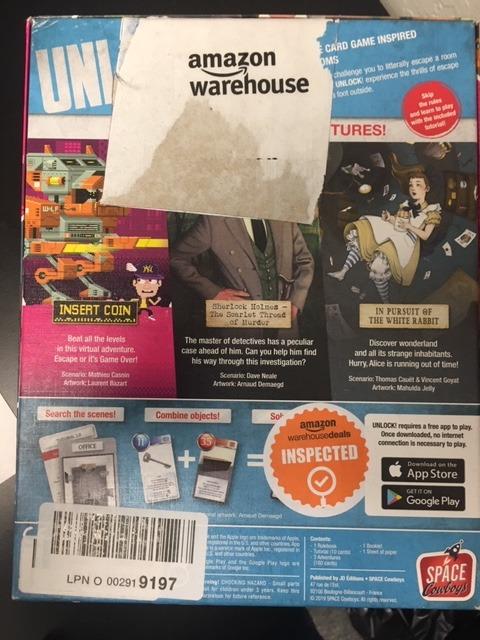
This is the companion box to our Editor’s Choice. Heroic Adventures includes three new scenarios: Sherlock Holmes, In Pursuit of the White Rabbit, and Insert Coin. Each delivers a completely different atmosphere.
The Sherlock scenario is deductive and methodical. The Alice scenario is whimsical and strange. The Insert Coin scenario is a meta-commentary on video games.
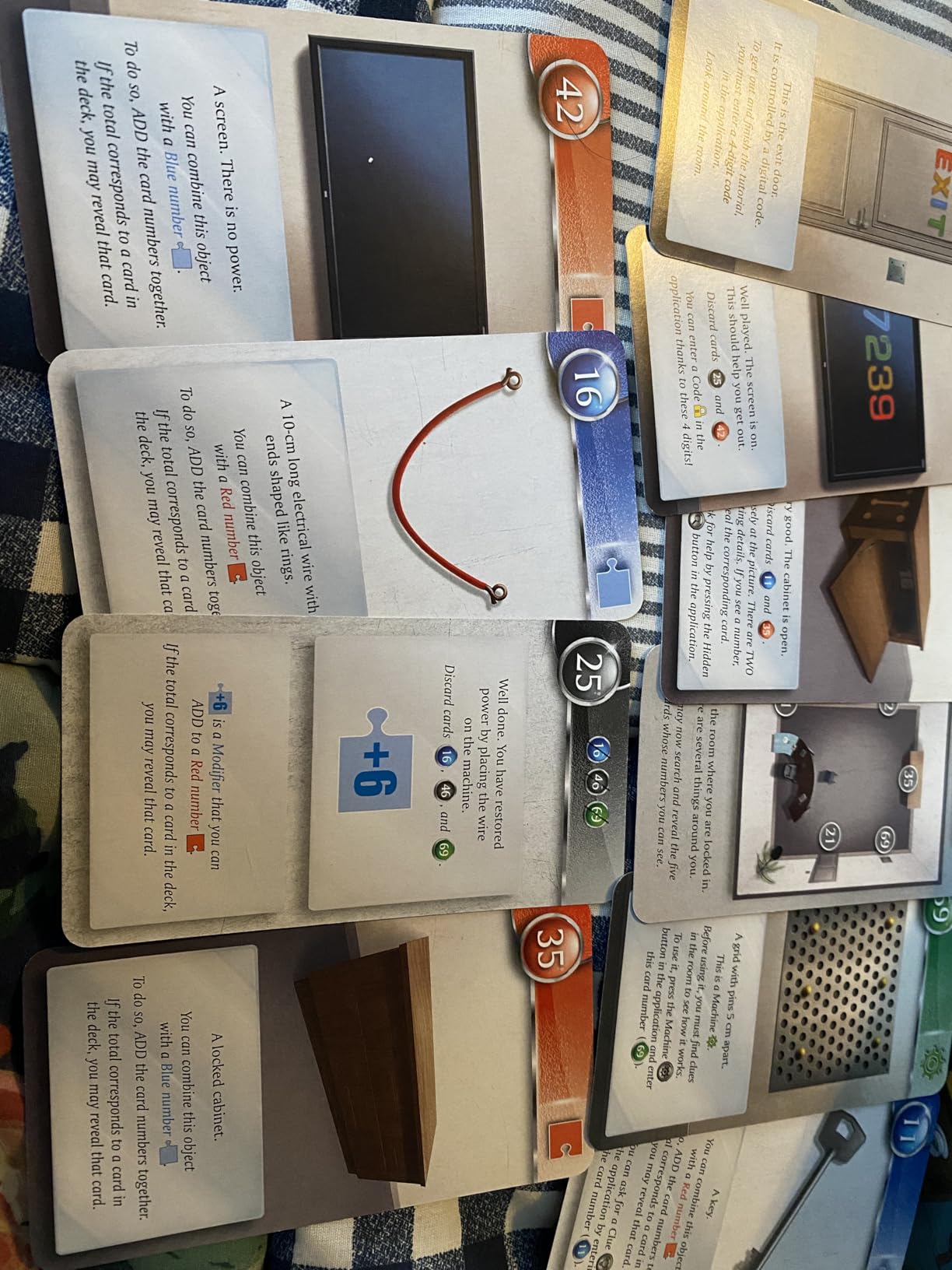
The companion app works identically to the Escape Adventures box. You enter codes, check hints, and track time. The app also includes AR features that add visual flourishes.
We used the AR once and found it gimmicky but fun. Kids will enjoy it more than adults.
The card quality is the same high standard. The artwork is detailed and atmospheric. The Sherlock scenario features Victorian illustrations. The Alice scenario uses psychedelic colors. The Insert Coin scenario mimics 8-bit graphics.
That visual variety keeps the box feeling fresh across multiple sessions.
Our family played the Sherlock scenario first and found it the most accessible. The White Rabbit scenario was the most challenging. We needed two hints and still finished with only 4 minutes remaining.
The Insert Coin scenario was the most creative. It breaks the fourth wall in ways that made us laugh.
Because the cards are not destroyed, you can pass the box to friends after finishing. We have already lent our copy to a neighbor. The resale value is a genuine advantage over single-use competitors.
If you plan to play many escape games, the UNLOCK! series is the most sustainable investment.
Difficulty Curve and Learning Curve
The Sherlock scenario is the easiest entry point. The White Rabbit scenario demands lateral thinking that will challenge most players. The Insert Coin scenario is moderate but requires attention to detail.
We recommend playing them in order: Sherlock, then Insert Coin, then White Rabbit.
The tutorial deck is included again, so you can teach new players without using a real scenario. We used the tutorial to introduce a friend who had never played an escape game. It took 10 minutes and prepared them perfectly for Sherlock.
Physical Components vs Digital App
The app is required for code verification and hints. You cannot play without it. The app is free, stable, and well-designed.
We tested it on three devices and had no crashes. The AR features are optional. The timer and sound effects are the main attractions.
If you liked the app in Escape Adventures, you will get the same quality here.
How to Choose the Right Escape Room Game for Your Family in 2026?
After testing 12 games, we noticed patterns that matter more than brand names. Here is what to consider before buying.
Age appropriateness is the most important factor. Games rated 12 and up often require abstract thinking that younger kids lack. If your children are under 10, look for titles rated 8 or 10 plus.
The Scooby-Doo game and the Exit House of Riddles are the most forgiving for mixed ages.
Group size matters. Most escape games work best with 3 to 4 players. If you have a large family, look for titles that support 6 or more.
The Mattel Werewolf Experiment and the ThinkFun Stargazer’s Manor both accommodate bigger groups without losing engagement.
Replay value is a major concern. Most escape games are one-time experiences. If that bothers you, choose the UNLOCK! series or the ThinkFun title. Those are reusable.
If you do not mind single-use, the Exit series offers the best puzzle quality for your money.
Physical versus digital components is a lifestyle choice. Some families want zero screens. The Exit series and ThinkFun games are fully analog. Others enjoy app integration.
The UNLOCK! series and the Identity Games versions use companion apps that enhance the experience without dominating it.
Difficulty level should match your experience. Beginners should start with ThinkFun or Exit House of Riddles. Intermediate players will enjoy The Abandoned Cabin or The Sunken Treasure.
Experienced groups should try the Identity Games Version 2 or the harder UNLOCK! scenarios.
Setup time ranges from 5 minutes to 15 minutes. If you want to start playing immediately, choose card-based games. If you enjoy building the environment before solving, the Clue Escape and Mattel games offer more hands-on preparation.
We also recommend checking out cooperative board games for kids if you want reusable options that still emphasize teamwork. Escape games and cooperative board games pair well for a complete family game collection.
The best escape room games for families are the ones that match your table size, your kids’ ages, and your appetite for one-time play.
Frequently Asked Questions
Which escape room game is best?
The best escape room game depends on your family. For reusable gameplay, UNLOCK! Escape Adventures is our top pick. For beginners, Exit: The House of Riddles is the most accessible. For large groups, the Mattel Werewolf Experiment supports up to 8 players.
What age is appropriate for escape room games?
Most escape room games are rated for ages 10 to 12 and up. Younger children can participate with adult help. The Scooby-Doo game is suitable for ages 8 and up. Complex titles like Escape Room The Game Version 2 are better for teens and adults.
Can you do an escape room with epilepsy?
At-home escape room games are generally safe for people with epilepsy because they do not use flashing lights or sudden loud noises. The Identity Games Version 2 and Mattel game include electronic components with sounds, but nothing that mimics strobe effects. Always check component descriptions if you have specific sensitivities.
Are escape room games good for family game night?
Yes, escape room games are excellent for family game night. They encourage cooperative problem solving, communication, and teamwork. Unlike competitive games, everyone wins or loses together. They also provide screen-free entertainment for families who want to reduce device time.
Do you actually have to wait 24 hours in Box One?
No, you do not need to wait 24 hours in real time. Box One by Neil Patrick Harris includes a narrative break that suggests waiting, but the game is designed to be completed at your own pace. Most players treat the wait as a story element and continue when convenient.
Final Thoughts
The best escape room games for families turn an ordinary evening into a shared adventure. After testing 12 titles across three months, we keep coming back to the same conclusion: the right game depends on your family size, age range, and tolerance for one-time play.
For most families, we recommend starting with UNLOCK! Escape Adventures or Exit: The House of Riddles. Both deliver memorable experiences without overwhelming beginners. If you want a physical lock experience, the Mattel game is unmatched.
For families with young kids, the Scooby-Doo title is the most accessible entry point. In 2026, the selection of at-home escape room games is better than ever.
Whether you want a reusable card game, a single-use masterpiece, or an electronic timer experience, there is a box on this list that fits your table. Pick one, gather the family, and see if you can escape before dinner gets cold.