
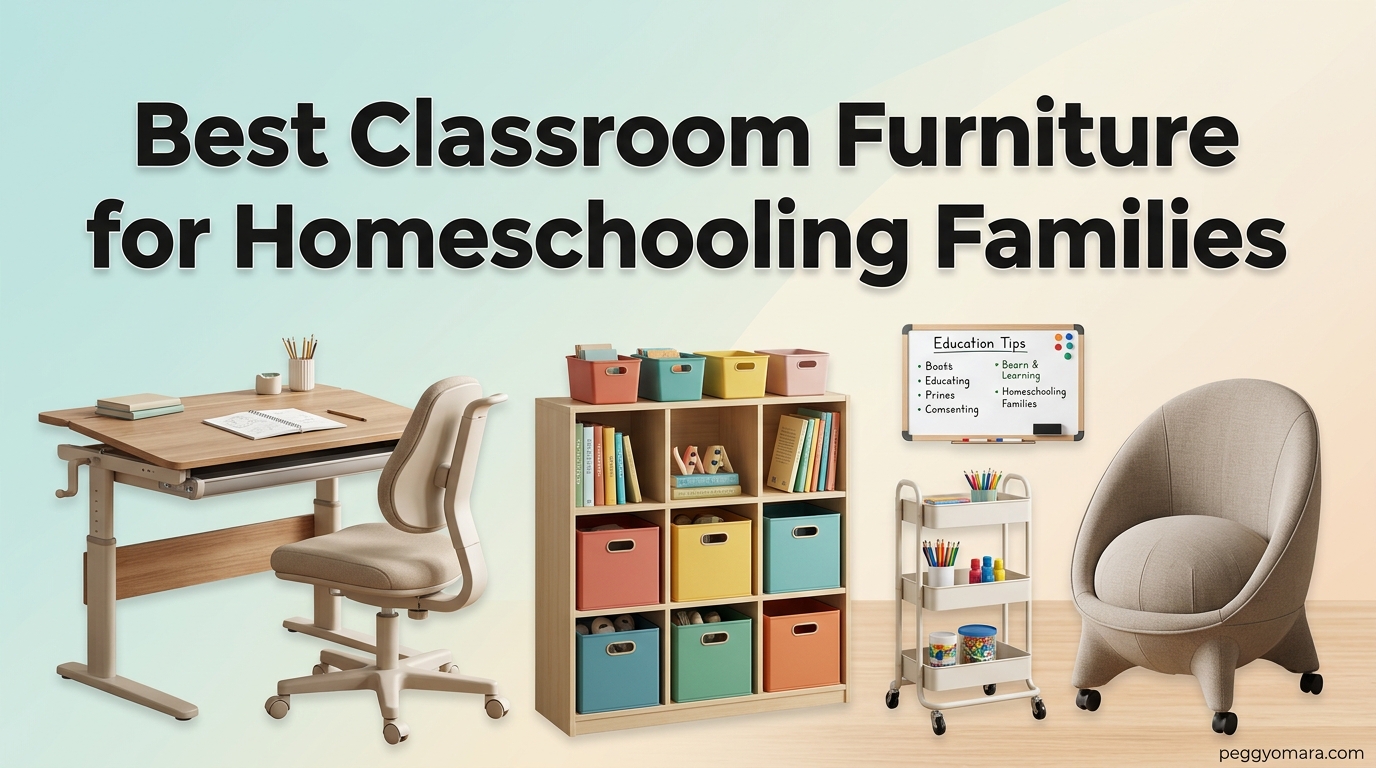
Setting up a homeschool space that actually works is harder than it looks. I have spent the past three years testing desks, chairs, storage bins, and bookshelves across two kids with very different learning styles, and I want to share what actually held up. The right classroom furniture for homeschooling families can mean the difference between focused study sessions and daily chaos.
Whether you have a dedicated homeschool room, a corner of the kitchen, or you are working from the dining table, the furniture you choose shapes how your children learn. Our team reviewed 12 of the most popular options across desks, chairs, storage solutions, and book displays to find what works for real families in 2026. We looked at durability, adjustability, price, and how each piece holds up under daily use by kids of different ages.
So what do you actually need for a homeschool classroom? The essentials come down to four categories: a dedicated work surface (desk or table), supportive seating, storage for curriculum and supplies, and accessible shelving for books and learning materials. This guide covers all four with hands-on recommendations that fit budgets from under $25 to over $100 per piece. If you are also shopping for adjustable height desks for growing learners, this guide will help you pick the right setup.
Table of Contents
Top 3 Picks for Best Classroom Furniture for Homeschooling Families (August 2026)


Best Classroom Furniture for Homeschooling Families in 2026
1. Flash Furniture Billie Open Front Student Desk – Height Adjustable Classic
- Sturdy crisscross tubular frame
- Five height positions grow with child
- Spacious metal book box for supplies
- Compact 18 lb lightweight design
- Laminate top may have minor bubbles
- Assembly easier with two people
- Instructions could be clearer
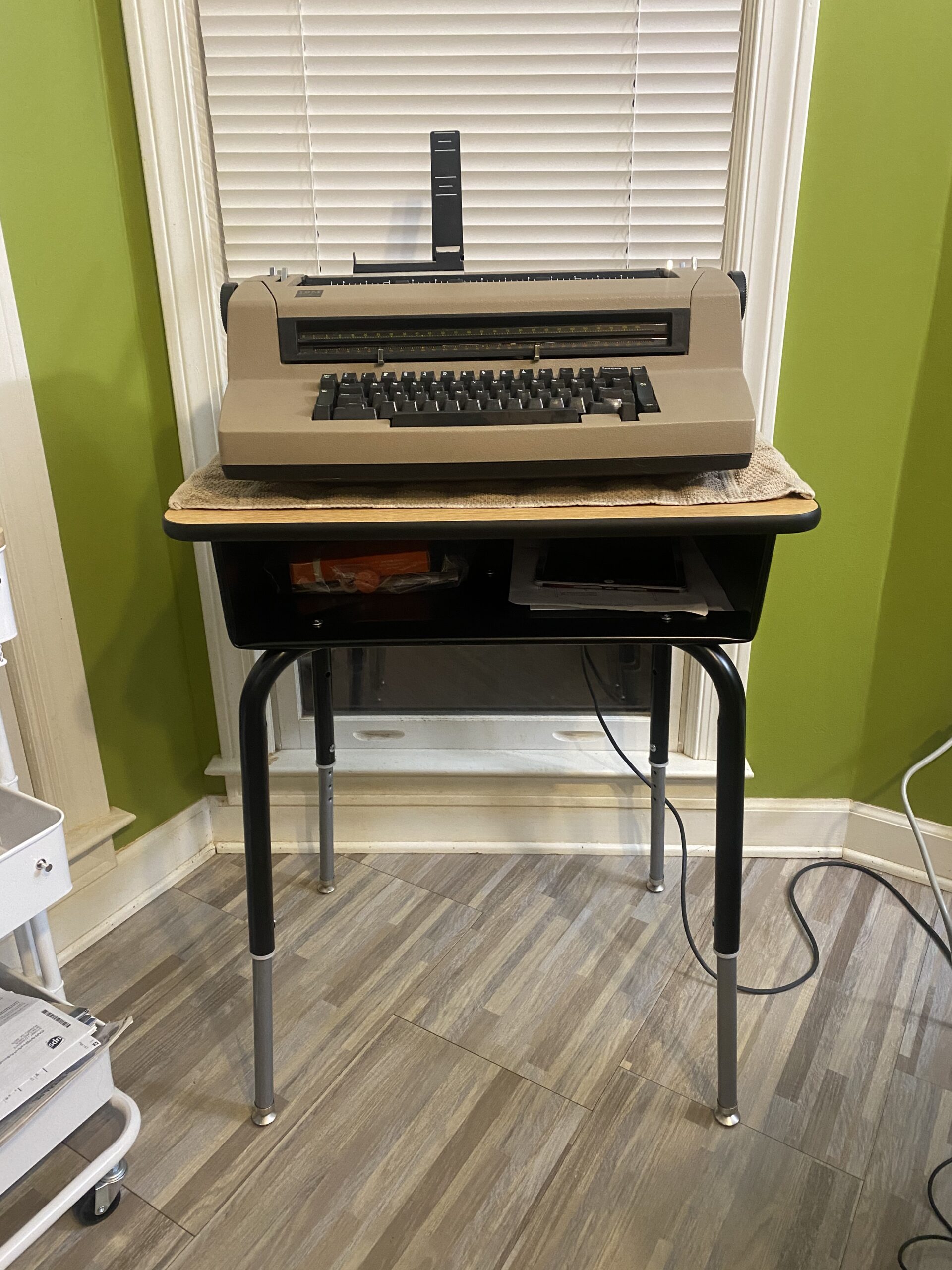
I bought this desk for my oldest when we started homeschooling full-time, and it has been our workhorse for two and a half years. The height adjustability was the main selling point. With five positions from 22.25 to 31.25 inches, it grew with my daughter from second grade through fifth grade without needing a replacement.
The metal book box is surprisingly generous. We fit textbooks, workbooks, a pencil case, and even a small whiteboard inside it without any cramming. At 18 pounds total weight, I can move it from the homeschool corner to the living room when we need a change of scenery. The crisscross tubular frame keeps it rock-solid even when my younger one decides to lean on it.
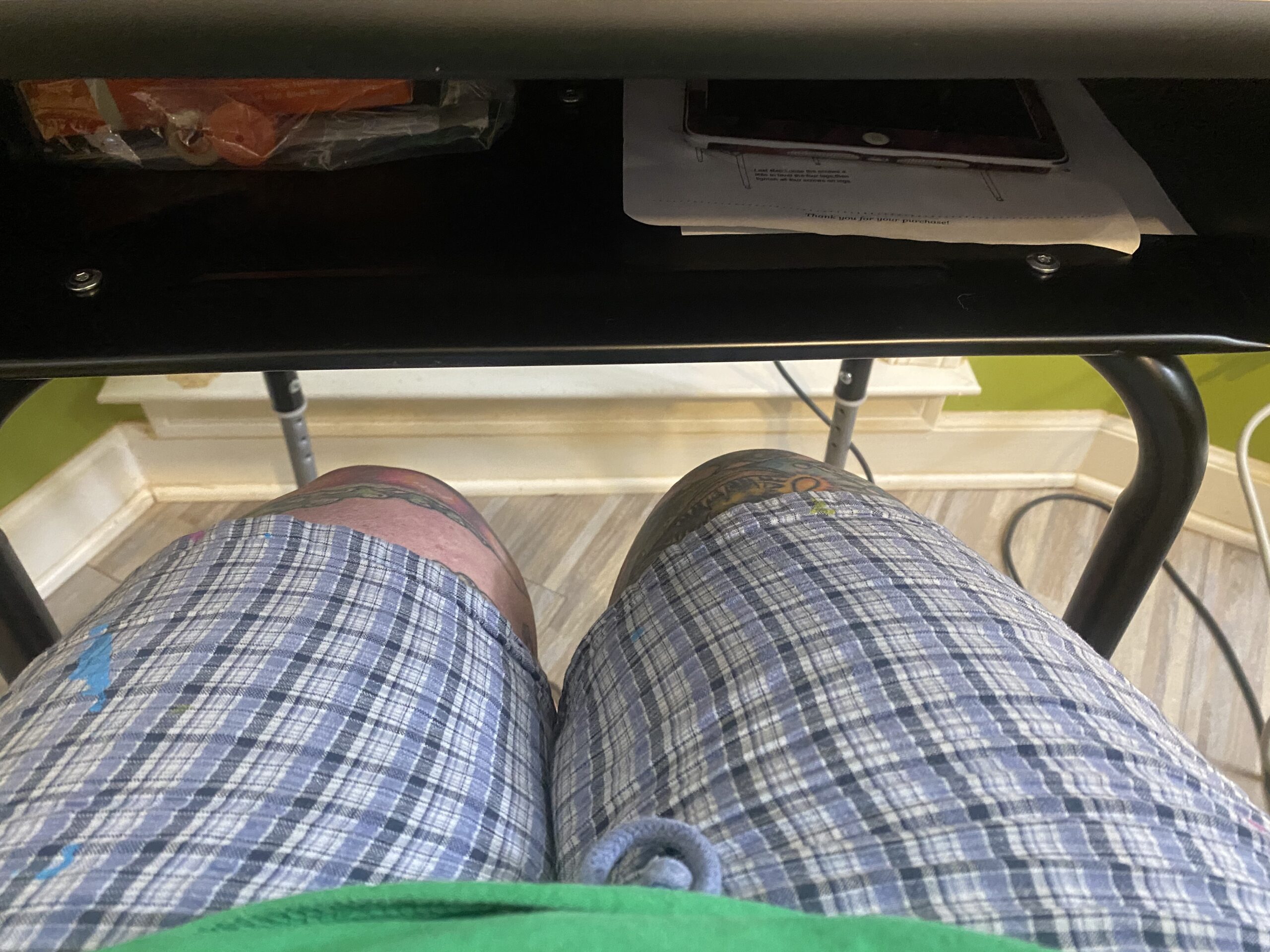
What really sold me is how it handles daily wear and tear. The 0.625-inch thick high-pressure laminate top has survived spilled water bottles, marker bleed-through, and a dropped science project without showing damage. The adjustable nylon glides on the legs prevent wobbling on our uneven hardwood floors, which was a persistent problem with cheaper desks we tried before.
Assembly took about 30 minutes with my husband helping. The instructions could have been clearer on leg orientation, but the included tools meant we did not need to dig through our toolbox. One thing to note: a few reviewers mentioned minor bubbling in the laminate surface. Our unit was fine, but inspect yours upon arrival.
Best Age Range and Grade Level Fit
This desk works best for elementary through middle school students. The height range of 22.25 to 31.25 inches accommodates most kids from about age 6 through early teens. My daughter is on the taller side at age 10, and she still has room to grow before we max out the highest setting. For preschool or kindergarten ages, the desk may sit too high even at the lowest position.
If you are homeschooling multiple kids, this is one of the few budget desks that genuinely works across age groups. You can adjust the height in seconds using the included tool, making it easy to share between siblings of different ages. The 300-pound weight capacity also means adults can use it comfortably for a quick laptop session.
Durability Over Multiple School Years
After two and a half years of daily use, our Flash Furniture desk shows minor scuffing on the legs but zero structural issues. The metal book box still slides smoothly, and all four legs remain solid. Based on our experience and the 77 percent five-star rating from over 800 reviewers, I expect this desk to last through at least one more child’s homeschool journey. The three-year limited warranty adds peace of mind.
Forum discussions on Reddit confirm this durability pattern. Multiple homeschool parents report using the same Flash Furniture desk for three or more years across multiple children without issues. This is one of the best classroom furniture pieces for homeschooling families who want a long-term investment.
2. Diroan Kids Functional Desk and Chair Set – Complete Ergonomic Station

- Tilt top promotes healthy posture
- LED lamp with 3 warmth settings
- Anti-pinch stoppers for safety
- Book stand reduces eye strain
- Drawer slides feel stiff initially
- Chair back could be softer
- LED not extremely bright
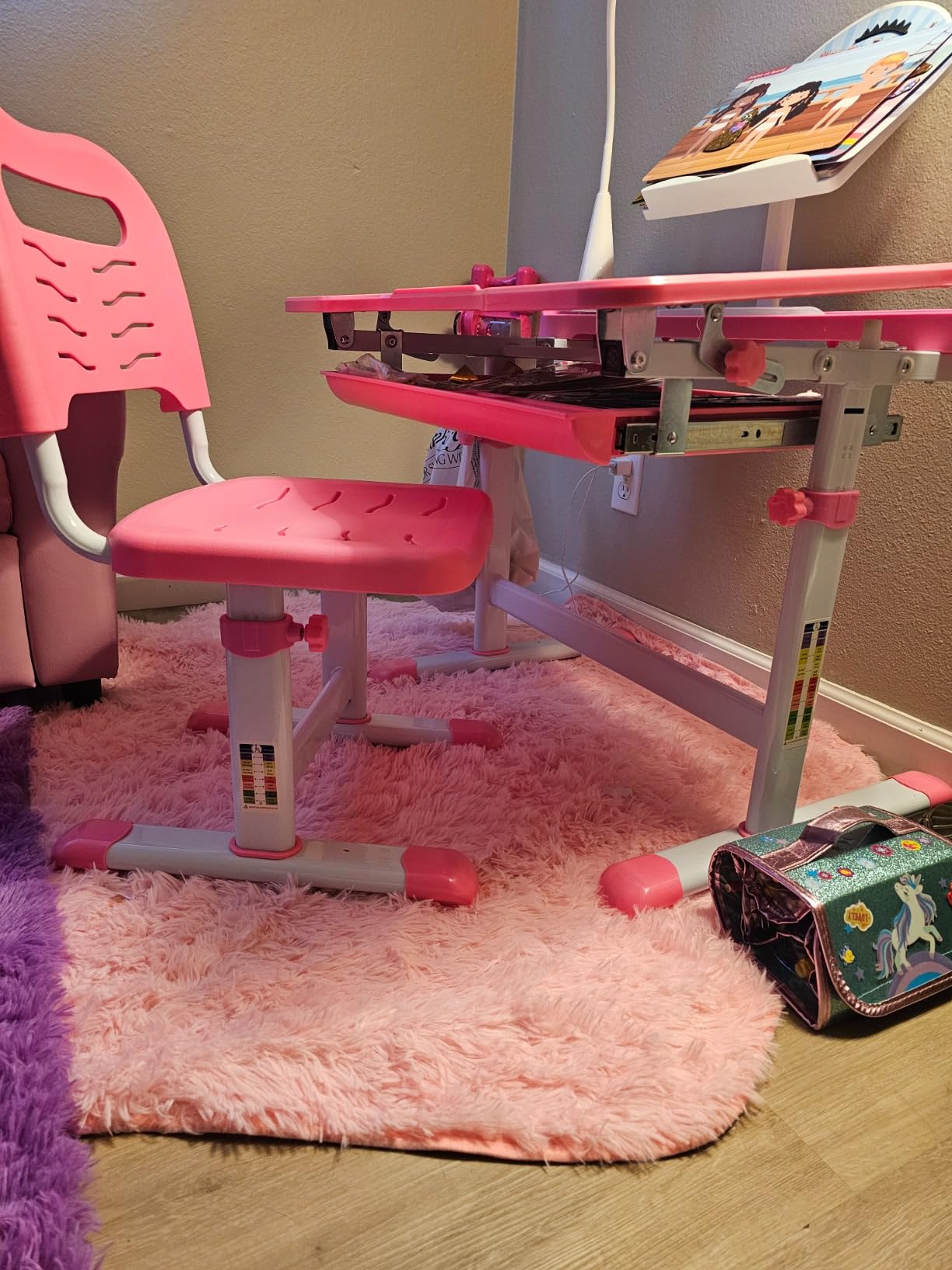
When my second child started needing a dedicated workspace, I wanted something with all the bells and whistles. The Diroan set came with a desk, chair, LED lamp, book stand, storage drawer, and metal hook. At first I thought the extras were gimmicks, but they turned out to be genuinely useful for daily homeschool work.
The tiltable desktop is the standout feature. My son goes between writing (flat), reading (slight angle), and drawing (steeper angle) throughout the day. The 0 to 40 degree adjustment makes each task more comfortable, and the anti-pinch stoppers give me peace of mind when he adjusts it himself. The built-in LED lamp with three warmth settings has become essential for evening reading sessions.
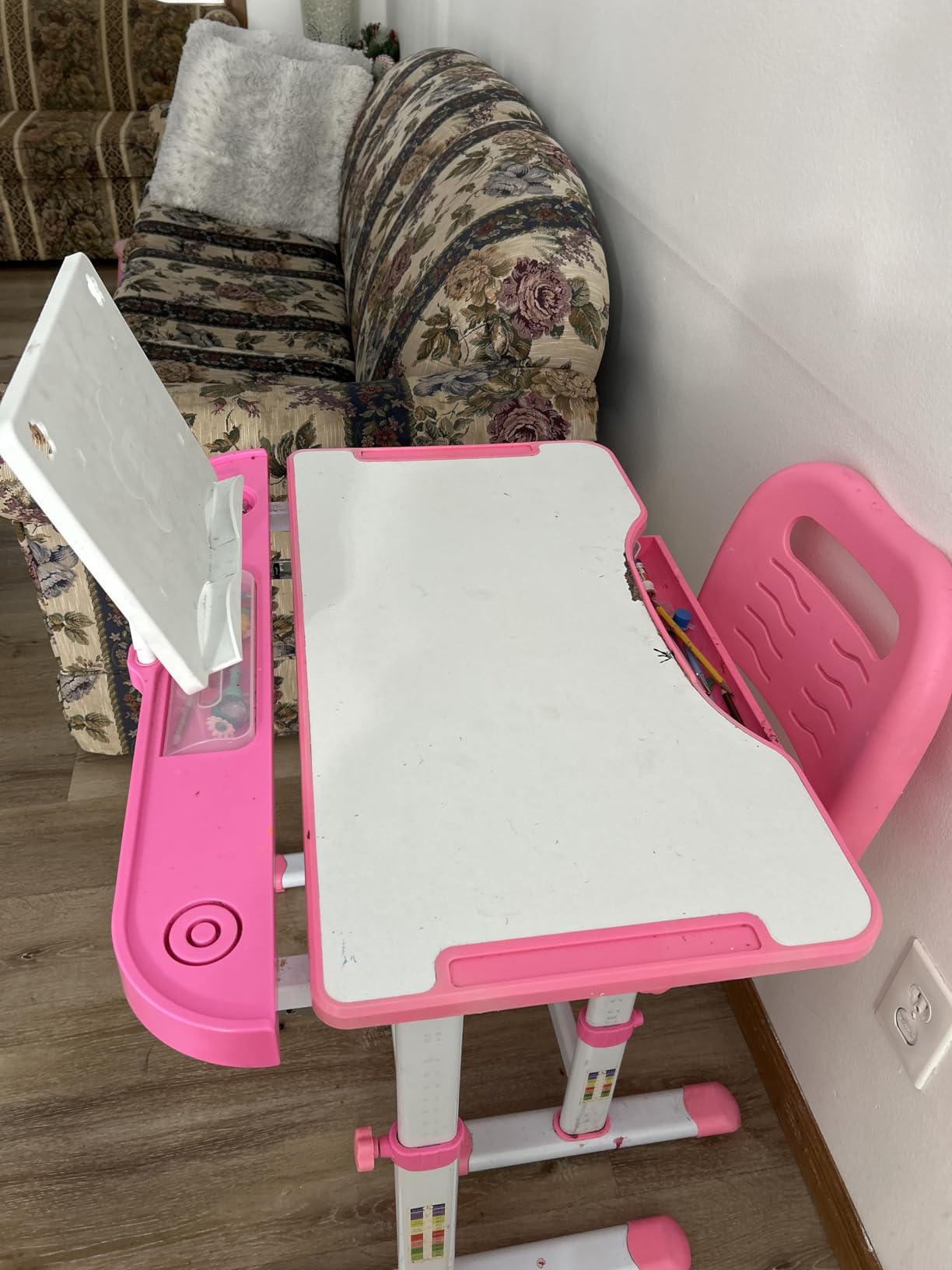
The height adjustment on both the desk and chair means this set is designed to grow with your child. My son was 7 when we got it, and the set is rated for ages 7 to 12. The chair back support is firm, which is good for posture but some kids might prefer a softer feel. We added a thin cushion and it solved the comfort issue.
The storage drawer holds his daily supplies, and the rotatable book stand keeps his reading material at a comfortable distance. Assembly took about 45 minutes following the instructions carefully. The MDF tabletop with steel legs feels solid and stable. With 3,344 reviews and a 4.5-star rating, this is one of the most popular kids desk sets on the market for good reason.
Adjustability as Your Child Grows
The Diroan set adjusts in both desk height and chair height, making it a true grow-with-your-child option. This is critical for homeschool families who want to avoid buying new furniture every year. The pneumatic adjustments are smooth, and the anti-pinch safety feature works well. My son can now adjust everything himself without my help.
One thing I learned from forums: parents of children with sensory processing differences often prefer this type of adjustable ergonomic desk. The tilt feature allows for different body positions throughout the day, which helps kids who cannot sit still in one position for long periods. If you are looking for more options in this category, check out our guide on adjustable standing desks for active learners.
Lamp and Accessory Value
The included LED lamp alone would cost $15 to $20 if purchased separately. It offers three brightness levels and three warmth settings, and it is detachable so you can reposition it. The book stand rotates to find the perfect reading angle, and the metal hook holds a backpack or headphones. These accessories make the higher price point feel justified.
The storage drawer is compact but holds a surprising amount. We keep pencils, erasers, a ruler, glue stick, and scissors in it with room to spare. The drawer slides felt stiff for the first week but loosened up with use. Overall, the Diroan set is an excellent all-in-one solution for families who want everything included.
3. ECR4Kids Surf Portable Lap Desk – Flexible Seating Solution
![ECR4Kids – ELR-15810-BL The Surf Portable Lap Desk, Flexible Seating for Homeschool and Classrooms, One-Piece Writing Table for Kids, Teens and Adults, GREENGUARD [GOLD] Certified, Blue](https://m.media-amazon.com/images/I/41DhzUqmFJL._SL160_.jpg)
- Zero assembly needed
- Ultra lightweight and portable
- Stackable for easy storage
- GREENGUARD Gold certified
- Can tip if child leans too far
- Surface slightly textured
- Best for kids under age 10
The ECR4Kids Surf lap desk is the most flexible piece of homeschool furniture I own. My kids use it on the living room floor, on the back porch, in bed when they are sick, and even in the car during long drives. At this price point, I bought two of them so each child has their own. For families considering the best classroom furniture for homeschooling families on a tight budget, this is where I would start.
The one-piece molded plastic design means zero assembly. You take it out of the box and it is ready to go. The writing surface measures 14.2 by 10 inches, which fits a laptop, notebook, or workbook comfortably. The GREENGUARD Gold certification means it meets strict chemical emissions standards, which matters to me as a parent.
![ECR4Kids - ELR-15810-BL The Surf Portable Lap Desk, Flexible Seating for Homeschool and Classrooms, One-Piece Writing Table for Kids, Teens and Adults, GREENGUARD [GOLD] Certified, Blue customer photo 1](https://www.peggyomara.com/wp-content/uploads/2026/06/B073XFB41D_customer_1.jpg)
My kids actually prefer these over their regular desks for certain activities. Reading time, art projects, and tablet-based learning all happen on the floor with these lap desks. They stack neatly when not in use, which solves our storage problem in a small apartment. The rounded edges prevent bumped elbows and knees.
The main limitation is age and size. These work best for children up to about age 8 to 10. Older or larger students will find the writing surface too small, and the design can tip forward if a child leans too far in. My 10-year-old still uses hers but is starting to outgrow it. For younger siblings, toddler tables and chairs for early homeschool might be a better fit alongside these.
![ECR4Kids - ELR-15810-BL The Surf Portable Lap Desk, Flexible Seating for Homeschool and Classrooms, One-Piece Writing Table for Kids, Teens and Adults, GREENGUARD [GOLD] Certified, Blue customer photo 2](https://www.peggyomara.com/wp-content/uploads/2026/06/B073XFB41D_customer_2.jpg)
Floor-Based Learning Benefits
Research supports the idea that floor-based learning has benefits for young children. It encourages core strength, allows for position changes, and can improve focus for kids who struggle with traditional seated learning. The Surf lap desk makes floor learning comfortable and productive. My daughter does her best writing when she is on the floor with this desk rather than sitting at a standard desk.
For homeschool families with multiple kids and limited space, having a few of these on hand means any room becomes an instant learning space. We keep ours stacked in the corner of the living room and pull them out for group lessons. The fact that they come in multiple colors helps each child identify their own.
Portability for Multi-Room Homeschooling
If your homeschool setup moves around the house throughout the day, portability is essential. The Surf weighs almost nothing, and my 5-year-old can carry hers from room to room independently. We have taken them on vacation, to the park, and to co-op classes. The durability of the molded plastic means I never worry about them breaking in transit.
The stackable design is the real space-saver. When school is done for the day, we stack both desks and slide them behind the couch. They take up less than a square foot of floor space when stacked. For apartment dwellers or families without a dedicated homeschool room, this is a game-changing feature.
4. Giantex Kids Desk Chair – Mesh Back Swivel Chair
- Breathable mesh prevents overheating
- Smooth rolling PU casters
- Armless fits under desks
- Lightweight 10 lb design
- Backrest could use more padding
- Height adjustment needs adult help for small kids
- Mesh shows dirt easily
I purchased the Giantex chair to pair with the Flash Furniture desk, and the combination has been excellent. The breathable mesh back keeps my daughter cool during long study sessions, which our previous upholstered chair never did. At 10 pounds, it is light enough that she can reposition it herself when she wants to switch between her desk and the reading nook.
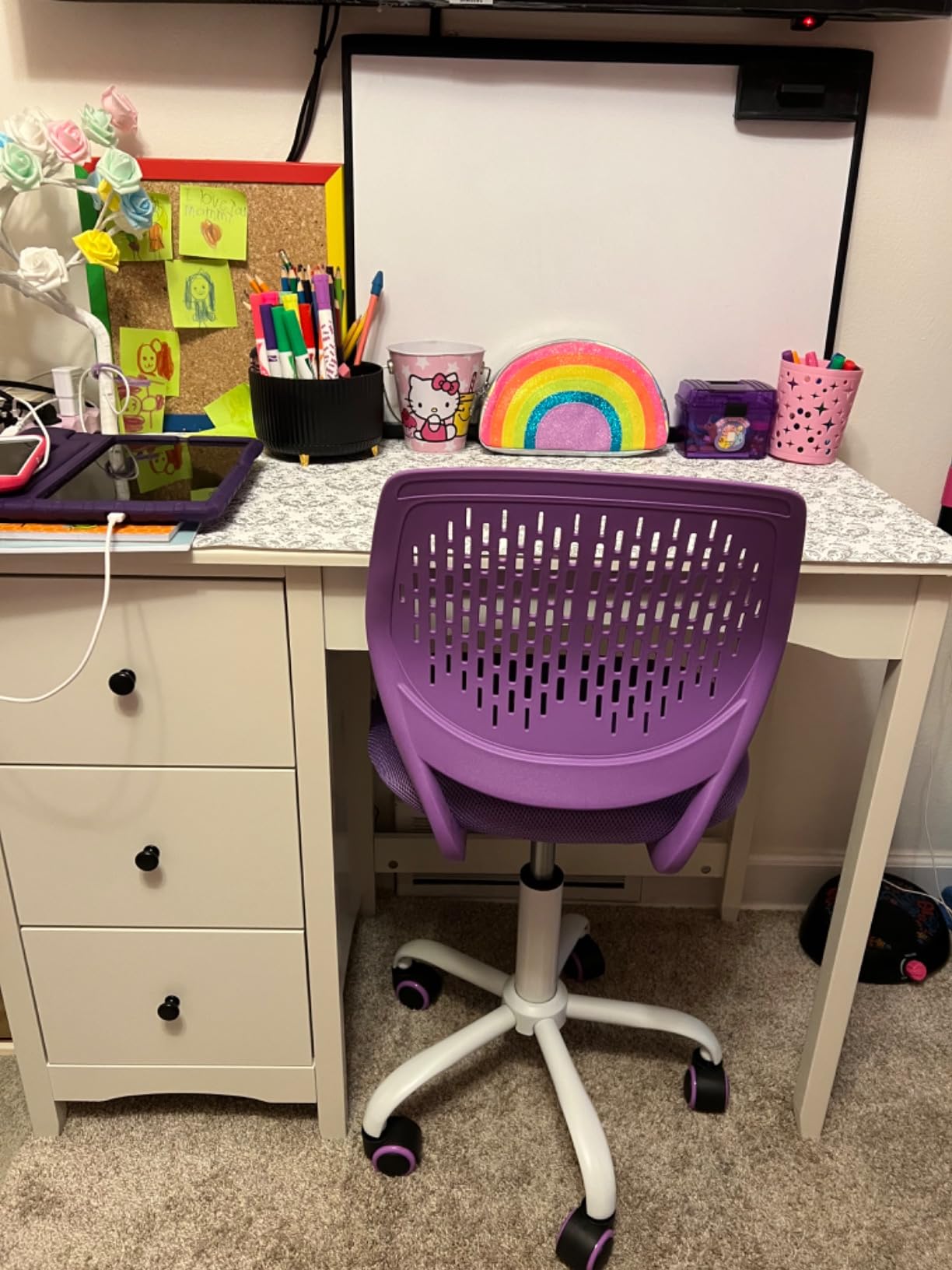
The 360-degree swivel and five multi-directional casters roll smoothly on both our hardwood floors and area rug. The armless design means it slides completely under the desk when not in use, saving valuable floor space in our small homeschool corner. The pneumatic height adjustment moves from 29.5 to 34 inches with a simple lever pull.
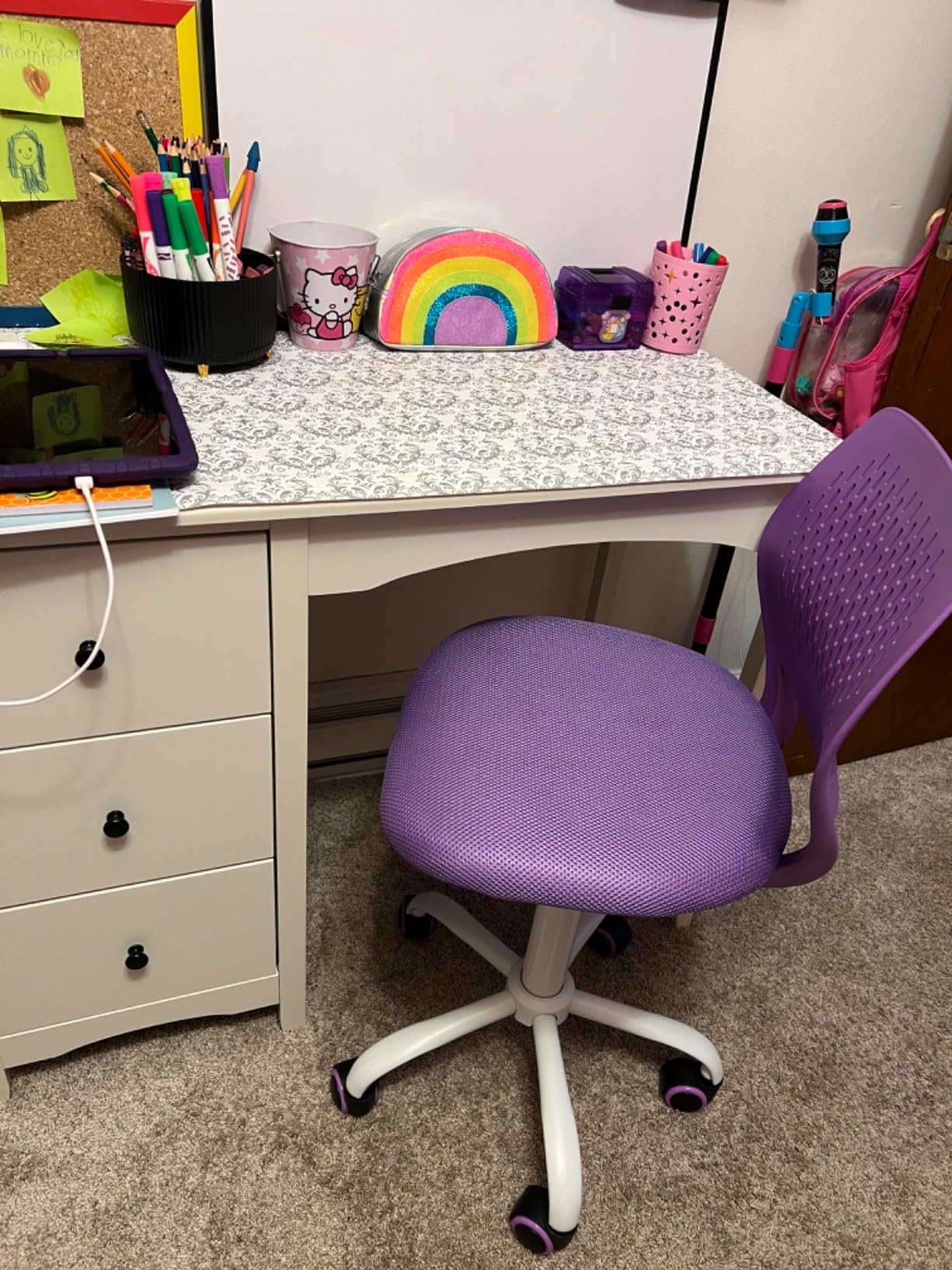
The 1.5-inch thick sponge cushion provides decent comfort for study sessions lasting an hour or two. My daughter sometimes sits in it for three or four hours on heavy project days, and she reports some discomfort toward the end. The mesh backrest is firm and supportive but could use a bit more give for my taste.
Assembly took about 15 minutes, and the included hardware was well-organized. The iron base with five-claw structure feels sturdy and stable. My husband (who weighs about 200 pounds) tested it and said it felt solid under his weight, well within the 250-pound capacity. The color options are fun too. We chose grey, but there are eight colors available including pink, sage, and turquoise.
Comfort During Long Study Sessions
Homeschool days can involve significant sitting time, especially for older students. The mesh back design helps regulate temperature, which is more important than you might think. Kids who get sweaty and uncomfortable lose focus faster. The Giantex chair addresses this well, though the seat cushion could be thicker for marathon study sessions.
I compared this chair side by side with more expensive kids chairs, and the Giantex held its own on build quality. The 4.6-star rating from over 1,100 reviewers confirms that most families are happy with it. For the price, it is hard to beat as an ergonomic homeschool chair option.
Floor Protection and Mobility
The PU casters roll smoothly without marking our hardwood floors. We have had issues with other chairs leaving black streaks, but the Giantex has been clean on all our floor surfaces. The five-claw base distributes weight evenly and prevents tipping, even when my daughter leans back to stretch between subjects.
The lightweight design is both a pro and a con. It makes the chair easy to move between rooms, but it also means younger kids can accidentally push it away from the desk when sitting down. We solved this by teaching proper seating habits, and it has not been an issue since the first week.
5. Primy Kids Desk Chair – Ergonomic Mesh with Foot Rest

- 17.5 inch wrap-around back for support
- 3D woven breathable mesh
- Built-in foot rest
- 5-year warranty
- Foot rest uncomfortable for bare feet
- Seat material slightly slippery
- Height adjustment needs adult help
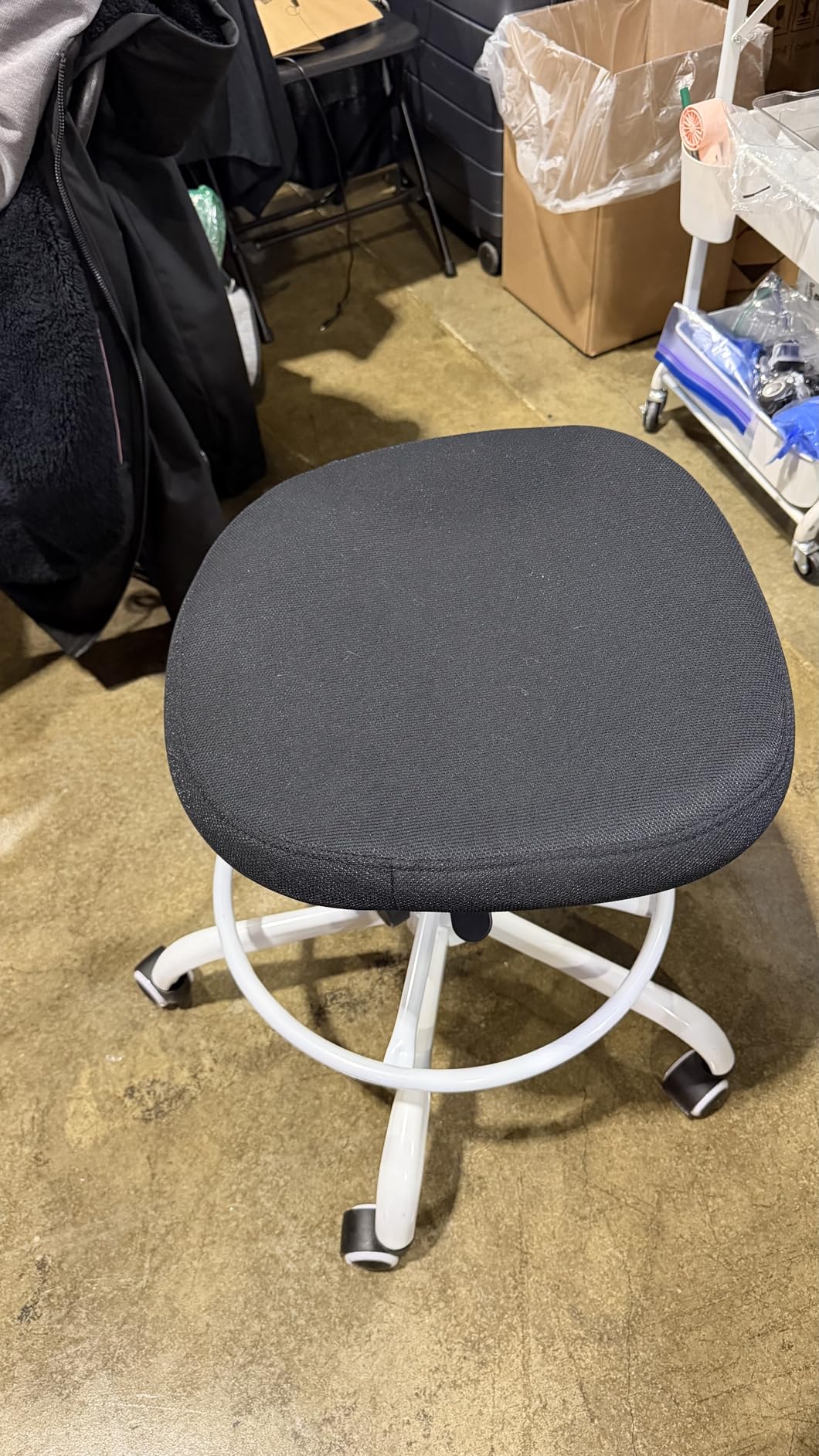
The Primy chair caught my attention because of the 17.5-inch wrap-around C-shaped backrest. Unlike the Giantex, which has a flat back panel, the Primy curves around the sides slightly, giving a more enveloping feel. My son, who tends to slouch, sits noticeably straighter in this chair.
The 3D woven mesh material is a step up in breathability compared to standard mesh. On hot days, the difference is noticeable. My son used to complain about his back getting sweaty after an hour of work. Since switching to the Primy, that complaint has disappeared entirely.
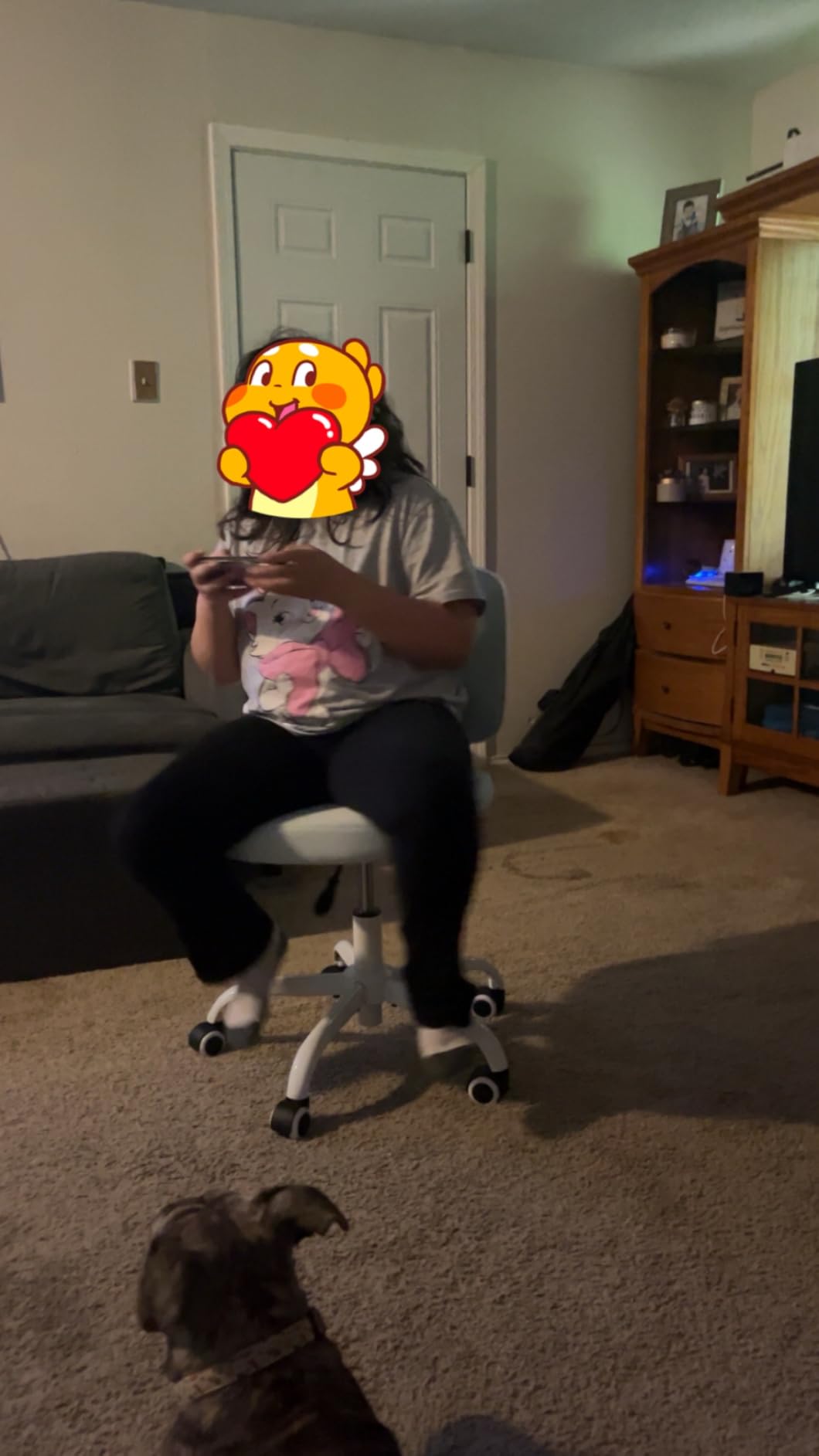
The built-in foot rest is a unique feature that works well if you have a higher desk or use a standing desk at a lowered position. My son uses it when he is reading at his desk. The three-stage explosion-proof gas lift adds a safety layer that gives me peace of mind, and the 5-year warranty is the best I have seen in this price range.
Assembly took exactly 15 minutes following the included instructions. The compact footprint (18 inches deep by 9 inches wide by 18.5 inches high) fits neatly in tight spaces. We use it in a corner setup where space is at a premium. The smooth-rolling casters work well on hard floors, though you will want a floor mat on carpet.
Ergonomic Support for Growing Spines
Proper back support matters enormously for children who sit for extended periods. The C-shaped design of the Primy backrest follows the natural curve of the spine better than flat-back chairs. I noticed my son’s posture improving within the first week of using this chair. The high-density sponge cushion provides good support without being too firm.
The seat height adjusts from 16.7 to 20.7 inches, which works for most children and young teens. The adjustment mechanism requires enough weight to compress, so children under 100 pounds will need adult help. This is a minor inconvenience but worth knowing before purchase.
Drafting Height and Standing Desk Compatibility
The foot rest makes this chair compatible with drafting-height desks or lowered standing desks. If your homeschool setup includes an adjustable standing desk for homeschool, the Primy is a great companion chair. Kids can alternate between standing and sitting throughout the day without changing furniture.
The 250-pound weight capacity means this chair will work for your child well into their teen years. The 5-year warranty covers manufacturing defects, which is longer than most competitors offer. For families planning to homeschool long-term, this kind of warranty coverage adds real value.
6. Trideer Flexible Seating Yoga Ball Chair – Active Sitting Option
- Encourages active sitting and focus
- Slow-deflate safety foam
- Legs prevent rolling away
- Supports up to 264 lbs
- Legs may detach initially
- Requires occasional re-inflation
- Can puncture from rough use
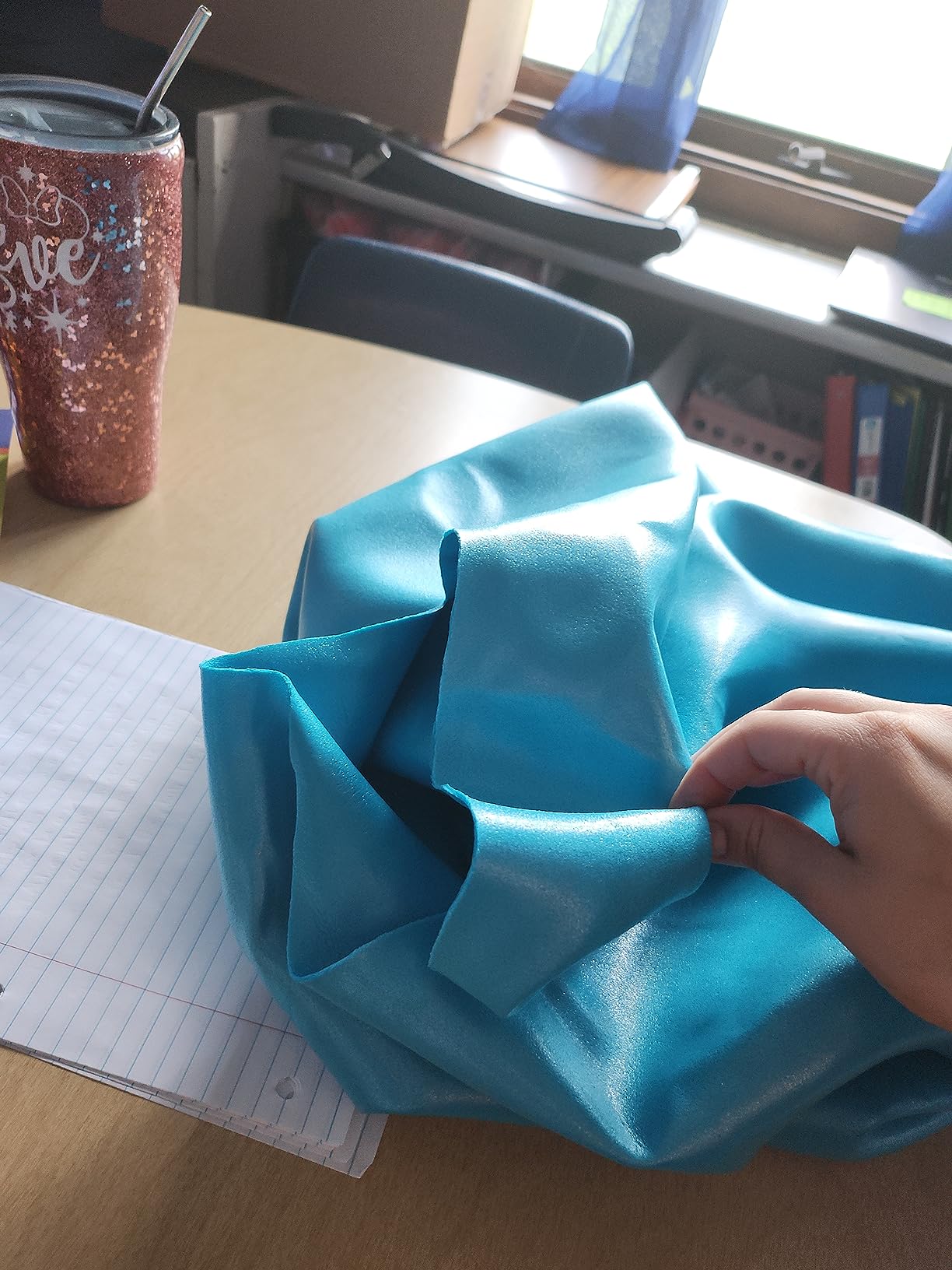
The Trideer yoga ball chair was a revelation for my son, who has sensory processing needs. Traditional chairs made him fidgety and distracted. Within a week of switching to the ball chair, his focus during math improved noticeably. The gentle bouncing and micro-movements satisfy his need to move without disrupting his work.
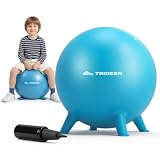
No assembly is required. You inflate the ball with the included pump, attach the stability legs, and it is ready. The 55cm size is ideal for school-age children, roughly ages 7 and up. The unique legs design keeps the ball from rolling away when not in use, which was a problem with a plain exercise ball we tried previously.
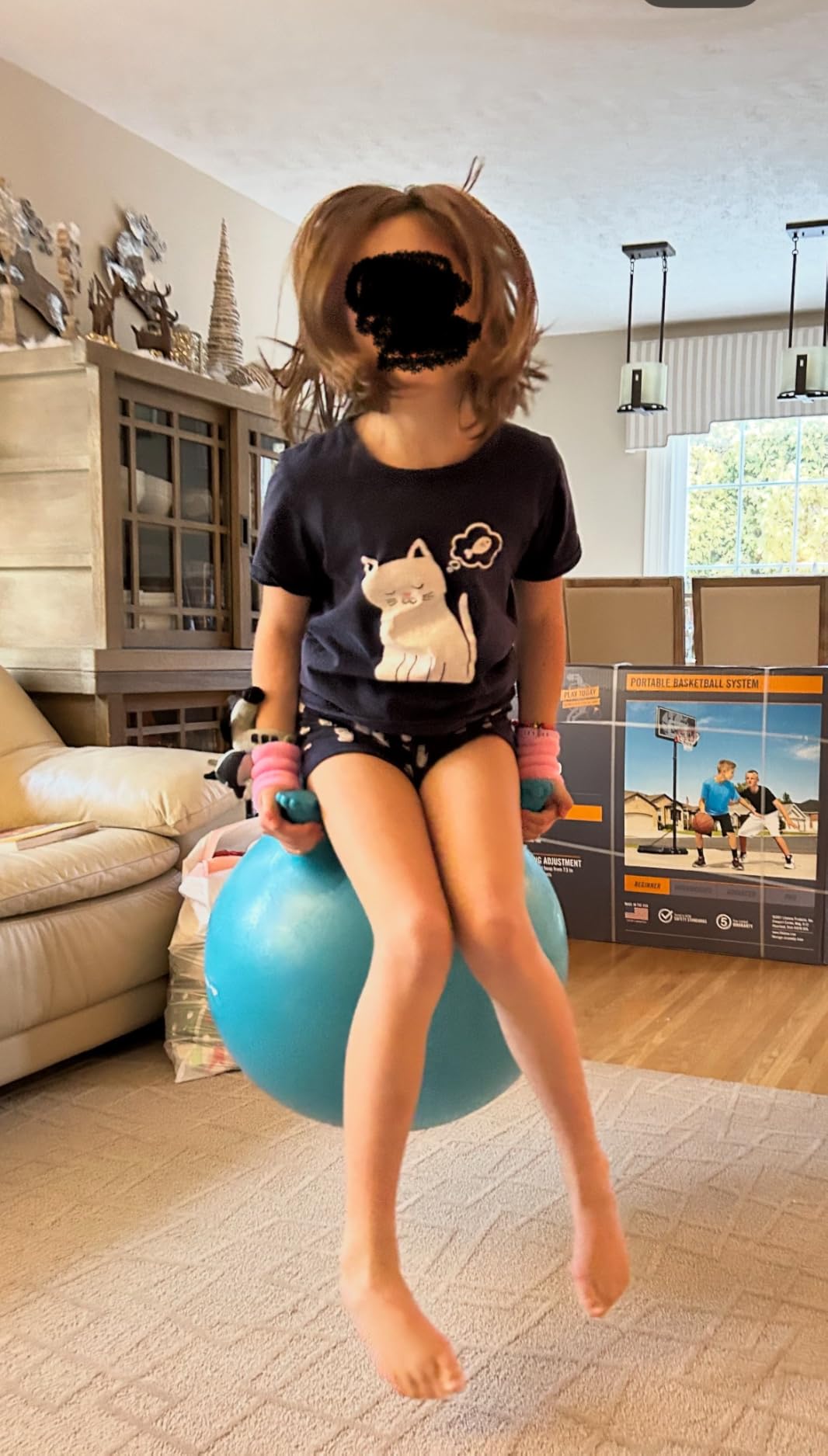
The CPSC-certified safety materials are important to me. If punctured, the ball deflates slowly rather than bursting, which prevents falls. The foam construction is durable enough for daily classroom use. We have had ours for 14 months with only one re-inflation needed.
The 264-pound weight capacity means parents and older siblings can also use it. I sometimes swap with my son and use the ball chair myself when I am helping him with a lesson. It is surprisingly comfortable for short periods and genuinely helps with core engagement and posture.
Benefits for ADHD and Sensory Needs
Research and parental experience consistently show that active seating helps children with ADHD, ADD, and sensory processing challenges stay focused. The Trideer ball chair allows controlled movement that satisfies the body’s need for motion without disrupting learning. My son’s teacher at our co-op noticed the improvement in his attention span.
Forum discussions on Reddit confirm similar experiences from other homeschool parents. Children who previously could not sit still for more than 10 minutes were able to focus for 30 to 45 minutes on the ball chair. The gentle instability forces core engagement, which actually helps some kids concentrate better on cognitive tasks.
Durability and Maintenance
The ball will need occasional re-inflation as air slowly seeps out over time. This is normal for any exercise ball product. The included pump makes it easy. One thing to watch: sharp objects can puncture the ball. We had one incident where a pencil tip caused a slow leak, but the ball deflated safely over several hours as designed.
The stability legs are the main maintenance concern. They can pop off during rough use, especially in the first few weeks. Once they settle in, they stay attached more reliably. At this price point, the Trideer ball chair is one of the most affordable and effective pieces of the best classroom furniture for homeschooling families dealing with attention challenges.
7. Studico ActiveChairs Wobble Chair – Sensory Focus Stool

- Improves focus for ADHD needs
- Strengthens core muscles
- Lightweight and portable
- Non-slip rubber base
- Three parts can separate when lifted
- May mark smooth floors
- Can tip on smooth surfaces
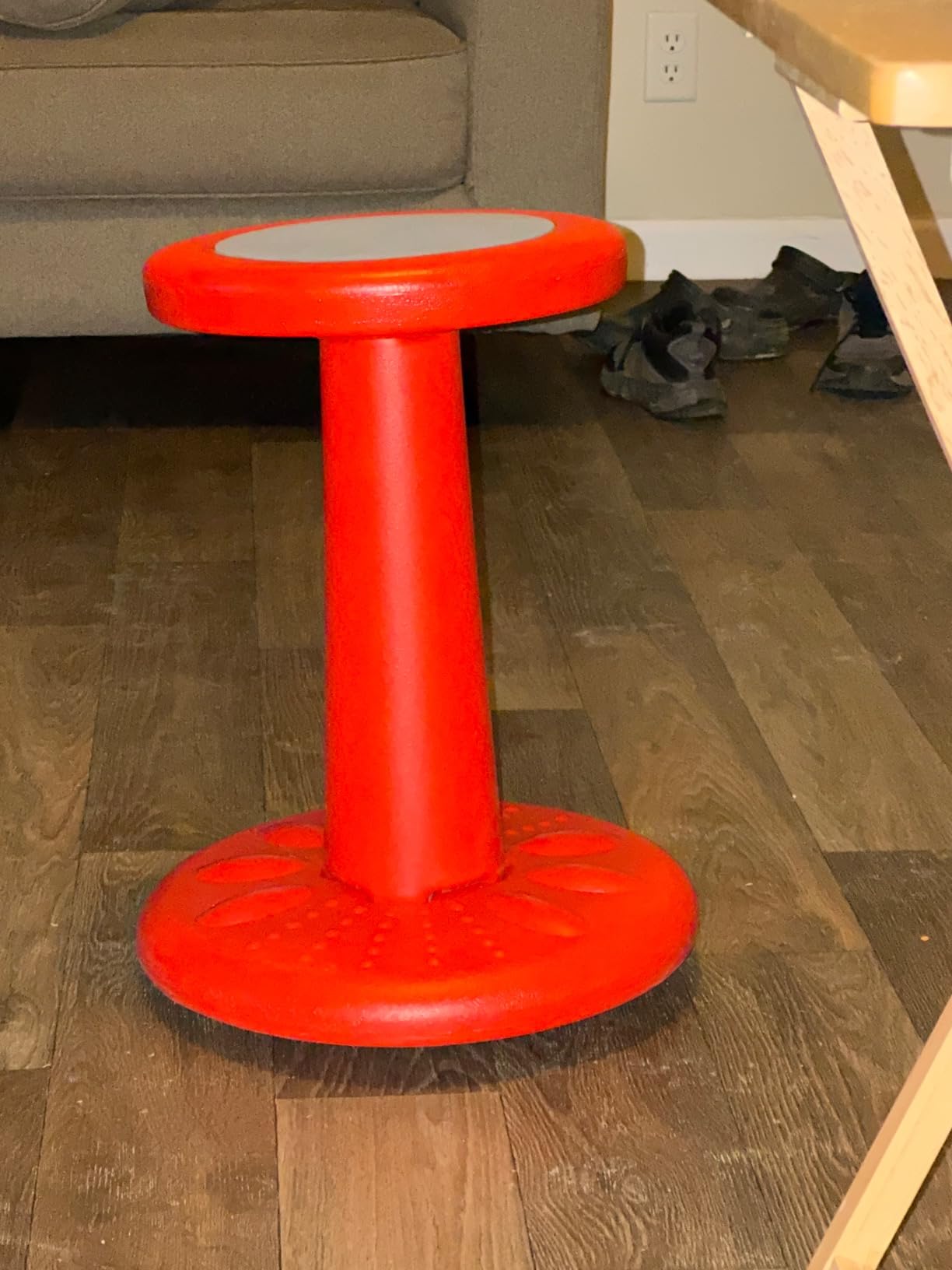
The Studico wobble chair is the most popular alternative seating option I have seen in homeschool communities, and after using one for a year, I understand why. The rounded base allows gentle wobbling in any direction, which keeps kids engaged without letting them fully distract themselves. My daughter uses it for reading time and says it helps her stay alert.
Assembly took about 10 minutes. The three-part construction (base, pole, seat) pushes together and is held by friction. At 4.32 pounds, it is incredibly lightweight. My daughter carries it from room to room independently. The non-slip rubberized bottom protects our hardwood floors, though it can leave faint marks on very smooth surfaces.
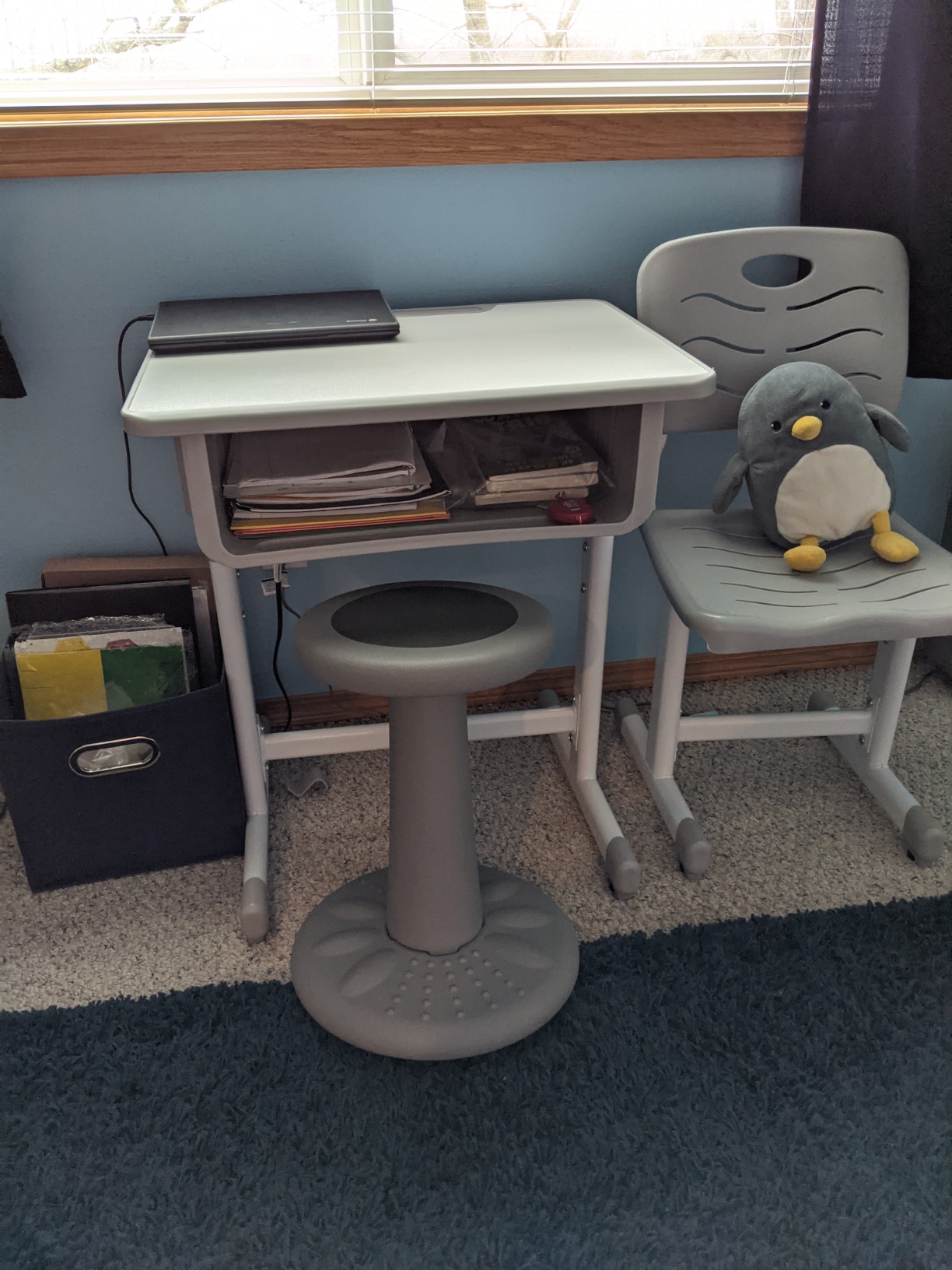
The 17.75-inch height is designed for pre-teens aged 7 to 12. There is also a 14-inch version for younger children. The 275-pound weight capacity means adults can safely use it too. The textured foot-massaging base is a nice touch. My daughter rests her feet on it between subjects and says it feels good.
The main issue is that the three parts can separate when you lift the chair by the seat. This happens most often when moving it between rooms. The solution is to lift from the base or carry it disassembled. Once you develop the habit, it stops being a problem.
Core Strengthening and Posture Benefits
Active seating is not just about keeping fidgety kids in their seats. The gentle instability of the wobble base forces the core muscles to engage constantly, which builds strength over time. My daughter’s posture has improved noticeably since she started using this chair daily. Her physical therapist actually recommended it for core work.
The wobble motion is subtle enough that it does not interfere with writing or other fine motor tasks. Unlike a balance ball, which can bounce too much, the wobble chair moves smoothly in controlled directions. This makes it better for activities requiring steady hands, like handwriting or art projects.
Classroom and Co-op Applications
Many homeschool co-ops now use wobble chairs as standard seating options. If your child attends a co-op or hybrid program, having one at home that matches what they use in class creates consistency. The Studico is the brand most commonly recommended by special education teachers in forum discussions.
The wipe-clean surface makes it easy to sanitize between uses, which matters if multiple children share the chair. With 3,338 reviews and a 4.5-star rating, this is clearly a proven product in the homeschool and special needs community. The textured base doubles as a foot massager, which some kids find calming.
8. IRIS USA 26-Drawer Teacher Toolbox – Ultimate Supply Organizer

- Made in USA quality
- 26 drawers for precise sorting
- No assembly required
- Stackable and wall-mountable
- Drawers pull out completely if over-extended
- Only two drawer sizes
- No lock between stacked units
The IRIS USA 26-drawer toolbox is the single most useful storage item in our homeschool room. I use it for everything: math manipulatives sorted by type, art supplies categorized by medium, flash cards organized by subject, and small science equipment. The clear drawers let me see exactly what is inside without opening them.
Being made in the USA was a big selling point for me. Forum discussions on Well Trained Mind repeatedly mention that homeschool families struggle to find USA-made furniture and storage. The IRIS toolbox delivers on this front. The recyclable plastic feels durable and well-constructed compared to similar imported products I have tried.
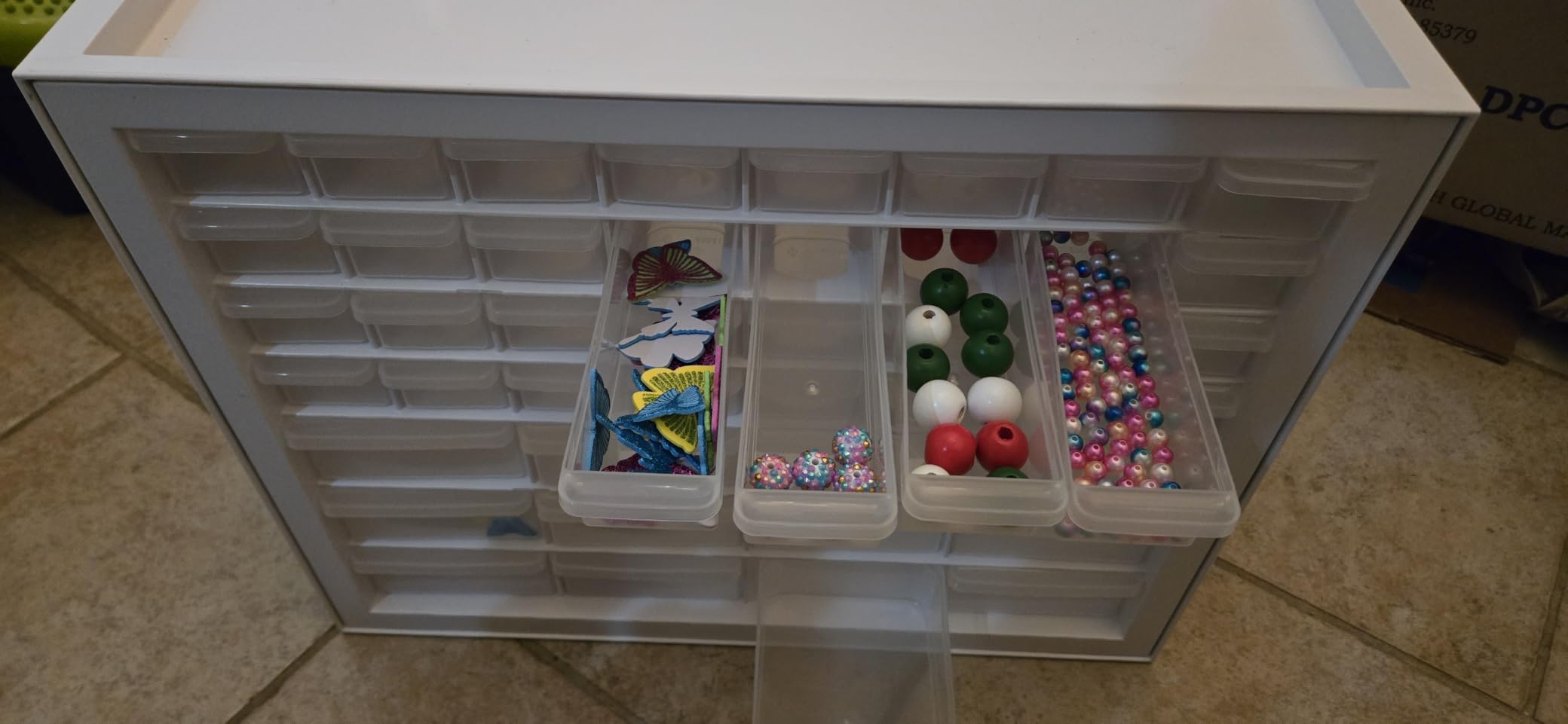
The mix of large and small drawers is perfect for homeschool supplies. The large drawers hold items like base-ten blocks, play-dough, and large flash card sets. The small drawers are ideal for individual crayon packs, rubber bands, paper clips, beads for counting, and tiny science tools. Everything has a designated home.
No assembly required. You take it out of the box and start organizing immediately. The stackable design means you can add more units as your supply collection grows. I now have two stacked on top of each other next to our work table, and they take up minimal floor space while holding a massive amount of material.
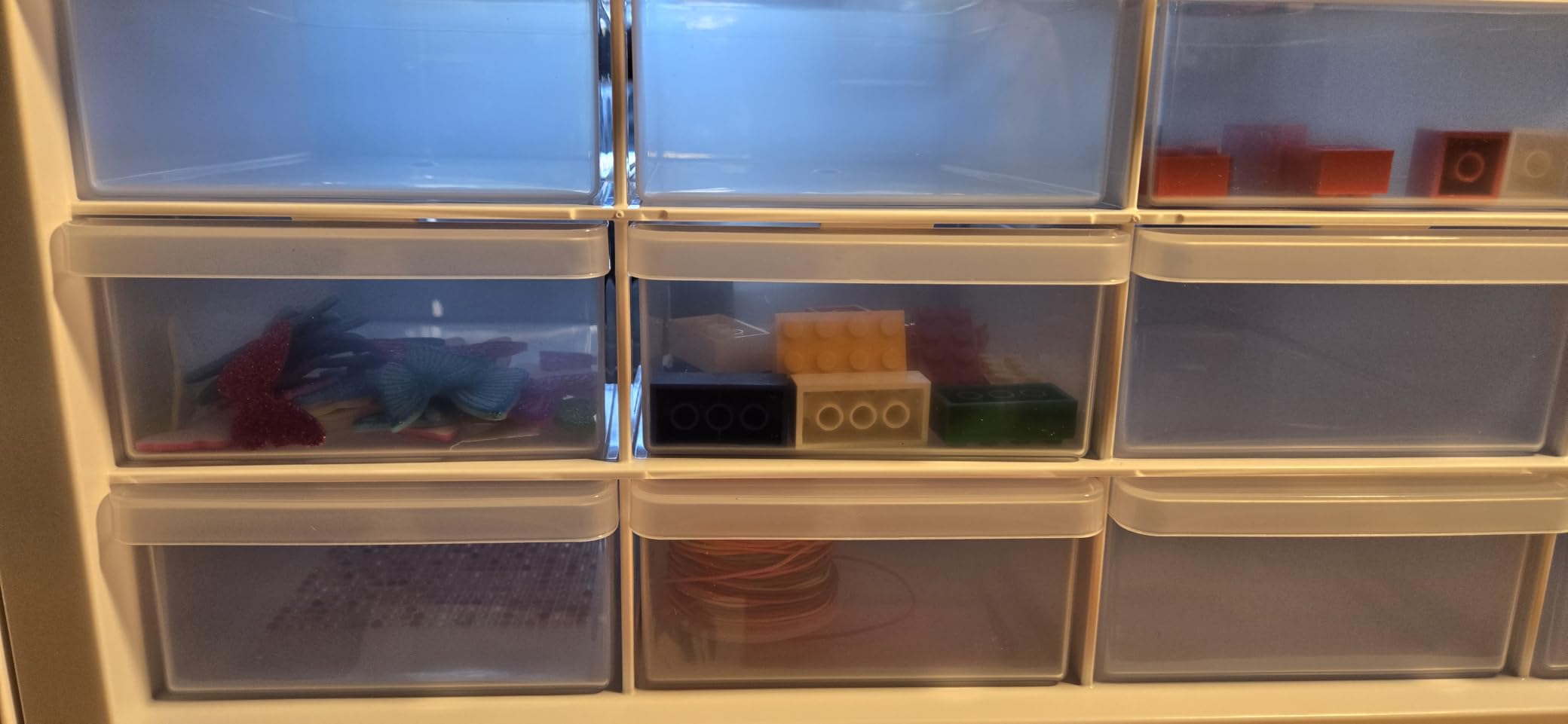
Curriculum and Supply Organization System
I developed a labeling system using small adhesive labels on each drawer. Monday through Friday workbooks go in the top row of large drawers. Art supplies live in the middle rows. Science materials occupy the bottom section. My kids can find and return everything independently, which has eliminated the daily “where is my…” struggle.
The clear drawers make this system work. Kids can see what is inside without pulling each drawer out. The safety lip prevents drawers from falling out completely, though you can remove them intentionally for cleaning or reorganizing. With over 15,000 reviews and a 4.6-star rating, this is one of the highest-rated storage solutions available.
Stacking and Space Efficiency
The built-in grooves on top of each unit allow secure vertical stacking. I have two units stacked and they are perfectly stable. The compact footprint (21.69 inches wide by 8.75 inches high by 7 inches deep) fits on a standard bookshelf or tabletop. Wall mounting is also possible using the pre-drilled holes.
For homeschool families with limited space, the IRIS toolbox is a space multiplier. It holds the equivalent of several shoe boxes of supplies in a fraction of the footprint. The fact that it requires zero assembly means you can start organizing the same day it arrives.
9. SYKIARIOL Rolling Storage Utility Cart – Mobile 8-Drawer Station

- Wooden top for extra workspace
- Lockable wheels for stability
- 15-minute assembly
- Color-coded organization
- Drawers only slide out 70 percent
- Light-duty casters
- Drawers can derail if pulled hard
The SYKIARIOL rolling cart solved a major problem in our homeschool setup: how to move supplies between rooms without carrying armloads of materials. The 8-drawer cart holds our daily curriculum, workbooks, art supplies, and reference materials. When we shift from desk work to the living room for read-aloud time, I just wheel the cart along.
The wooden tabletop is my favorite feature. It holds up to 33 pounds and serves as an extra work surface for my laptop or a display area for the day’s materials. The top is smooth enough to write on with a clipboard, and it adds a finished look that plastic-only carts lack.
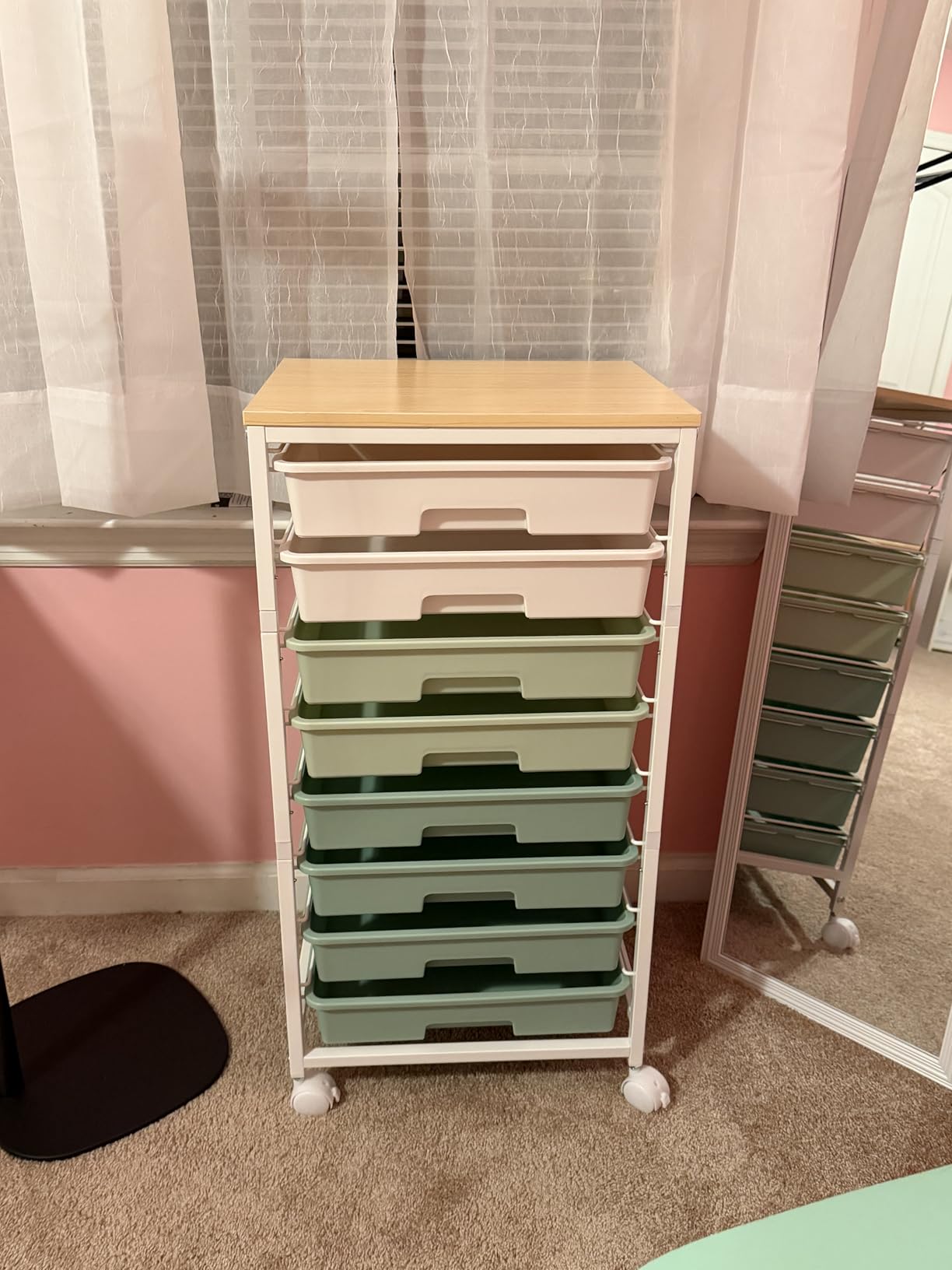
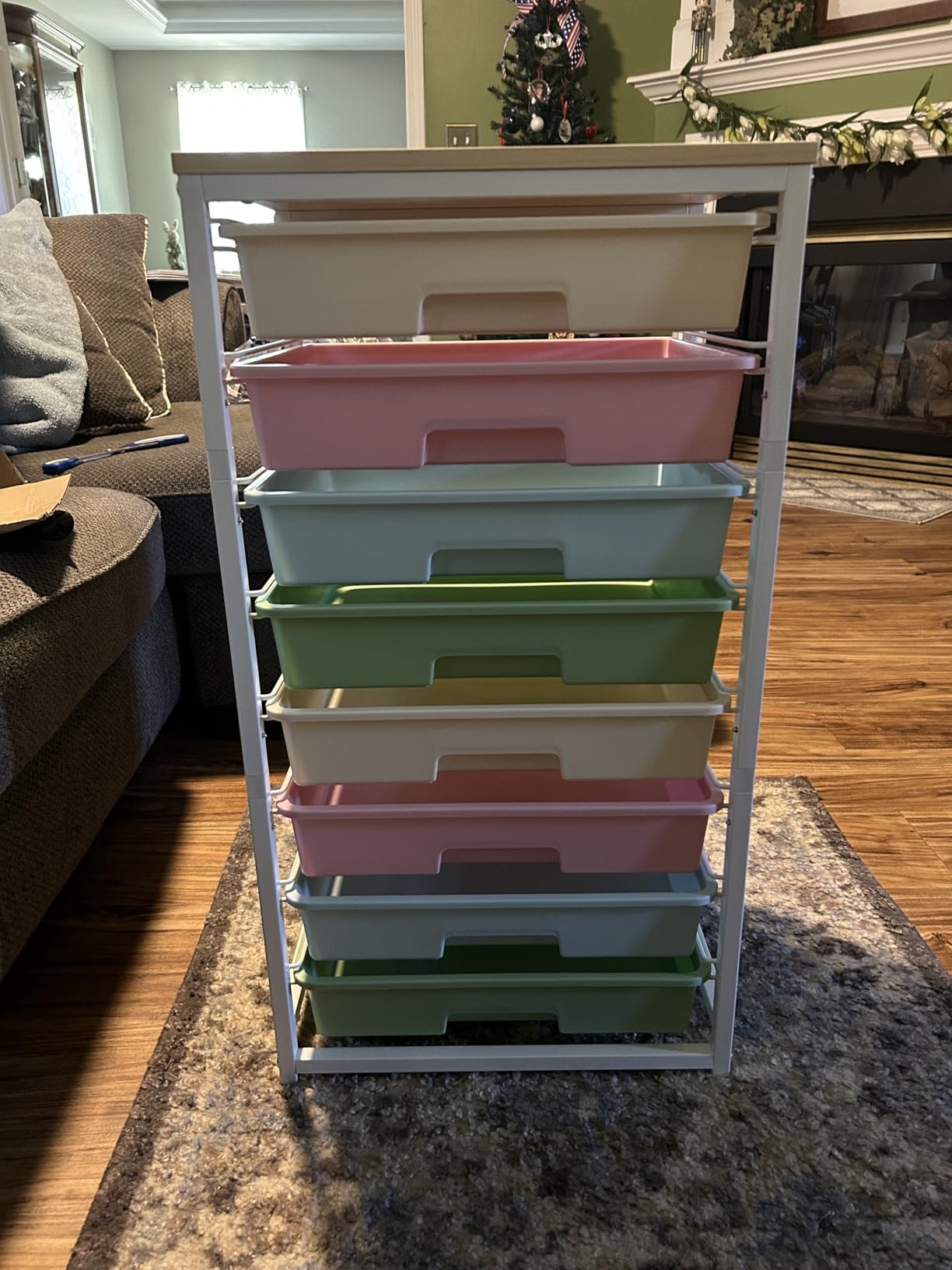
The color-coded drawers help my kids stay organized. We use the top four drawers for daily subjects (math, language arts, science, history) and the bottom four for art supplies, reference books, manipulatives, and miscellaneous supplies. Each drawer holds up to 11 pounds, which is plenty for most homeschool materials.
Assembly took about 15 minutes with clear instructions and included hardware. The powder-coated steel frame feels sturdy and the water-resistant finish should hold up to spills. The locking wheels are essential. Two of the four wheels lock, keeping the cart firmly in place during use.
Mobile Homeschool Station Setup
If you do not have a dedicated homeschool room, a rolling cart is the next best thing. We park ours next to the dining table during school hours and roll it into the corner when we are done. The cart holds everything we need for a full day of lessons, eliminating the constant trips to the bookshelf for different materials.
The 8 color options mean you can match your cart to your room decor. We chose green, but the rainbow option is popular for color-coding drawers by subject. Some homeschool parents use washi tape or labels on the drawer fronts for additional organization. The cart is versatile enough to serve as a craft station, supply closet, and mobile desk all in one.
Weight Capacity and Daily Use
The cart holds 33 pounds on the tabletop and 11 pounds per drawer. In practice, this means you can store about 80 to 90 pounds of materials total. That is more than enough for a typical homeschool curriculum plus art and science supplies. The light-duty casters are fine on smooth floors but struggle slightly on thick carpet.
The drawers slide out about 70 percent of their depth. This means items in the back require a bit of reaching. Some users report the drawers can derail if pulled aggressively, so teaching kids gentle handling is important. At this price point, the SYKIARIOL cart offers excellent value for the storage capacity and mobility it provides.
10. Humble Crew Kids Bookshelf – 4-Tier Front-Facing Display
- Front-facing design encourages reading
- 37k+ reviews confirm quality
- 15-minute assembly
- Compact footprint
- Fabric pockets thin for heavy books
- Lightweight can tip if unsecured
- 12.6 lb weight limit
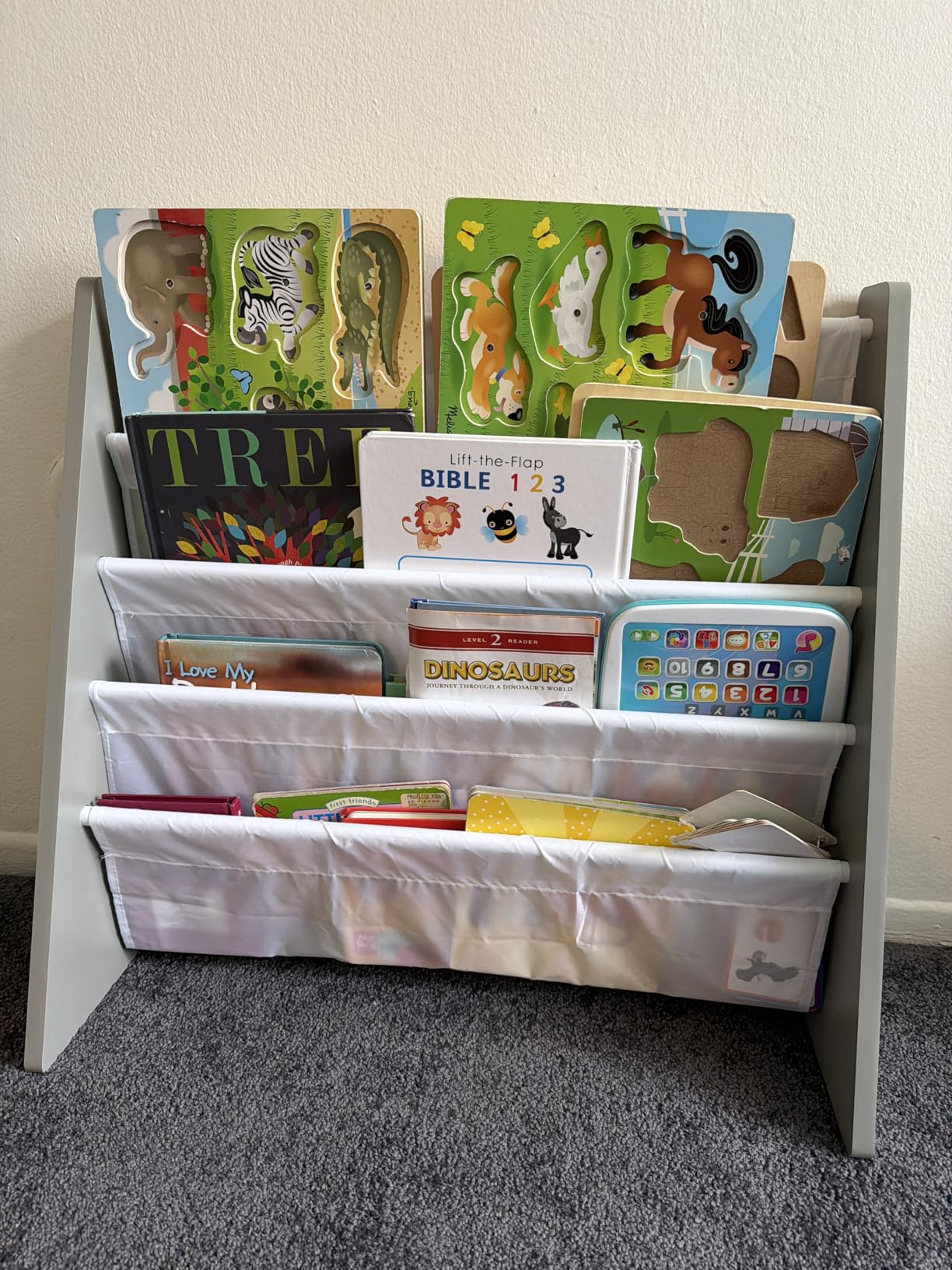
The Humble Crew bookshelf is the number one bestseller in kids bookcases for a reason. I bought one for our reading corner and was so impressed that I purchased a second for the bedroom. The front-facing display means kids see book covers instead of spines, which dramatically increases how often they choose to read independently.
At 25 inches wide, 11 inches deep, and 24 inches tall, it fits perfectly in small spaces. Our reading nook is a corner between a window and a bookshelf, and the Humble Crew fits with room to spare. The metal pole construction is more durable than the wooden dowel alternatives I tried and returned.
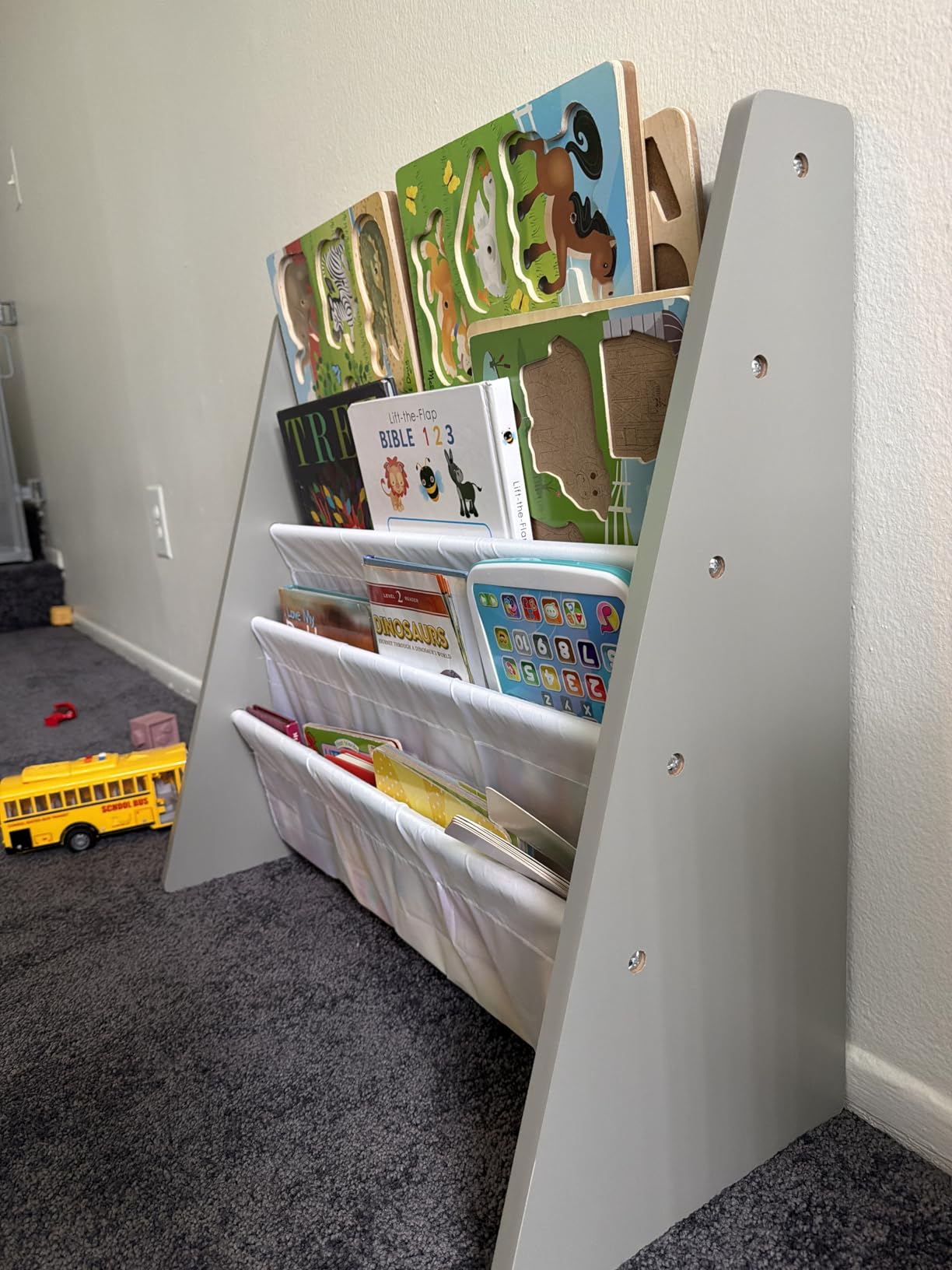
Assembly took about 15 minutes with the included hardware. The four tiers hold roughly 8 to 12 standard children’s books each, giving you space for 30 to 50 books total. The fabric pockets are easy to clean with a damp cloth and the metal poles provide good support for most books.
The Montessori-inspired design aligns with how many homeschool families want to present learning materials. My preschooler can see the cover of each book, choose one independently, and return it when done. This has transformed our morning reading routine from parent-directed to child-led, which is exactly what I wanted.
Encouraging Independent Reading Habits
The front-facing design is not just an aesthetic choice. Research shows that children are more likely to choose reading when books are displayed cover-out rather than spine-out. Since adding this bookshelf to our homeschool room, my children’s voluntary reading time has increased noticeably. They browse the shelves and pick books on their own throughout the day.
The Montessori philosophy emphasizes child-accessible environments, and this bookshelf delivers on that principle. Even my 3-year-old can reach the bottom shelf and select a book. The lightweight design means I can reposition it as my children grow, moving it to different areas of the house as needed.
Weight Limits and Book Compatibility
The 12.6-pound weight capacity is sufficient for most children’s books but may not handle heavy hardcover collections. We learned to distribute weight evenly across all four tiers rather than loading the top shelf with heavy books. The fabric pockets work best with picture books and paperbacks. For heavy reference books, consider a sturdier option like the ECR4Kids Streamline below.
The lightweight construction (7 pounds) means you should anchor this shelf to the wall if you have toddlers or active children. It can tip if pulled on. We used the included wall anchor hardware and have had no issues. With nearly 38,000 reviews and a 4.6-star rating, this is one of the most trusted pieces of furniture for homeschool and learning spaces you can buy.
11. ECR4Kids Streamline Double-Sided Book Display – Premium Classroom Quality

ECR4Kids Streamline Double-Sided Book Display with Storage, Classroom Bookshelf, White Wash
- Double-sided maximizes storage
- Solid birch plywood construction
- Hidden back shelves
- Scratch-resistant finish
- Exposed screws visible
- Assembly instructions unclear
- Shelves too shallow for large books
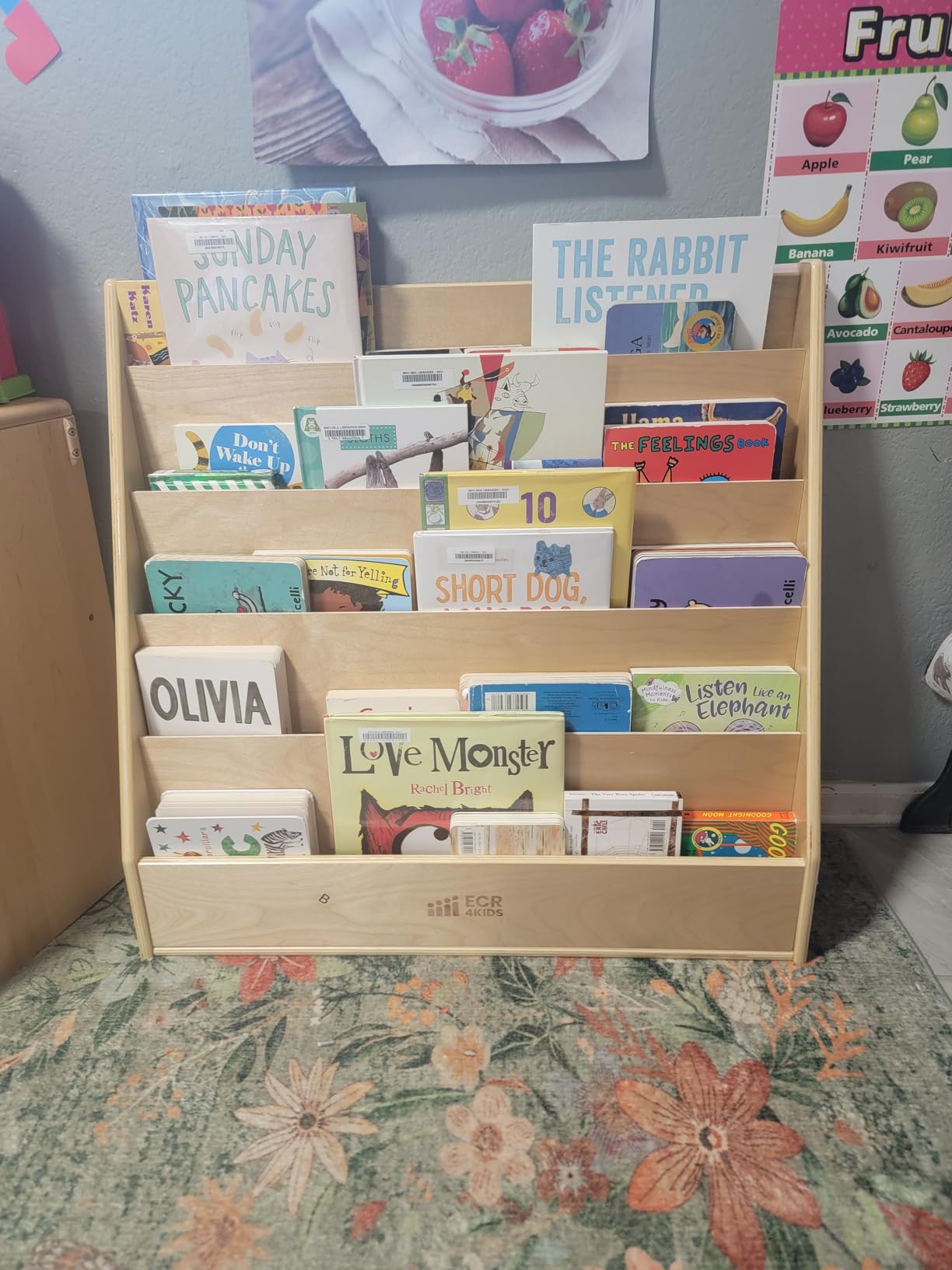
The ECR4Kids Streamline book display is a significant step up in quality from the Humble Crew. Made from solid birch plywood, it feels like furniture that belongs in a real classroom. The double-sided design gives you display space on the front and additional hidden storage on the back, making it a two-in-one storage solution.
I was initially concerned about the 24.8-pound weight, but it actually makes the unit more stable and less prone to tipping. The scratch-resistant finish has held up well against daily use by my kids. The white wash stain option matches our homeschool room aesthetic perfectly and looks far more expensive than it is.
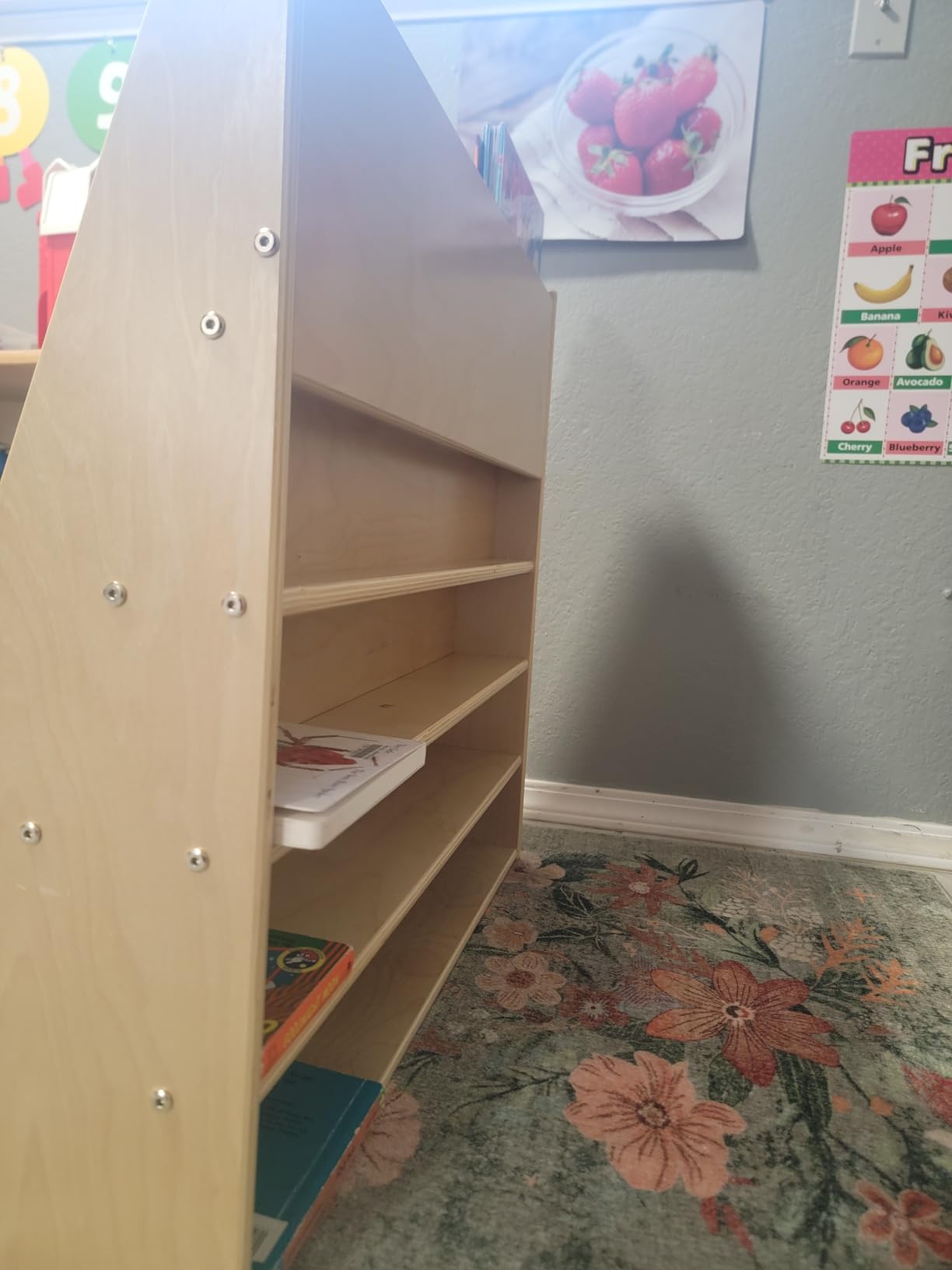
The five display shelves on the front hold about 30 to 45 books depending on size. Each shelf accommodates three full-sized books side by side and up to two books deep. The hidden storage shelves on the back are perfect for items you want accessible but not displayed, like workbooks, flash cards, or teacher materials.
Assembly took about 30 minutes. The instructions could be clearer on screw placement and orientation, and some reviewers mentioned hole alignment issues. Our unit went together without major problems, but take your time and dry-fit pieces before tightening screws. The exposed screws are visible on the finished unit, which is a minor aesthetic drawback.
Classroom-Grade Construction Quality
The birch plywood construction is the same material used in preschools and elementary classrooms. It is heavier, denser, and more durable than the engineered wood used in budget bookshelves. The ECR4Kids brand is known for classroom furniture, and the quality shows in the hardware, the finish, and the overall feel of the piece.
The 86 percent five-star rating from nearly 500 reviewers reflects this quality. Parents and teachers consistently praise the sturdiness, the aesthetic appeal, and the double-sided functionality. For homeschool families who want furniture that looks professional and will last for years, this is worth the investment.
Double-Sided Efficiency for Shared Spaces
If your homeschool space is in a shared living area, the double-sided design lets you position the unit as a room divider. The front faces the learning area with books displayed, while the back provides storage accessible from the other side. This maximizes utility in open floor plans where every piece of furniture needs to earn its space.
The 30-inch width fits well against a wall or in a corner. The minimum required door width of 30 inches means you can move it between rooms if needed. For families who also use light tables for homeschool learning activities, the ECR4Kids book display makes an excellent companion piece for organizing related books and materials.
12. APEXCHASER 10-Drawer Rolling Cart – Maximum Storage Capacity

- 10 drawers for maximum sorting
- Waterproof wooden tabletop
- Locking brakes on 2 wheels
- Push-in pin assembly
- Some units arrive dented
- Drawers may stick
- Quality varies between units
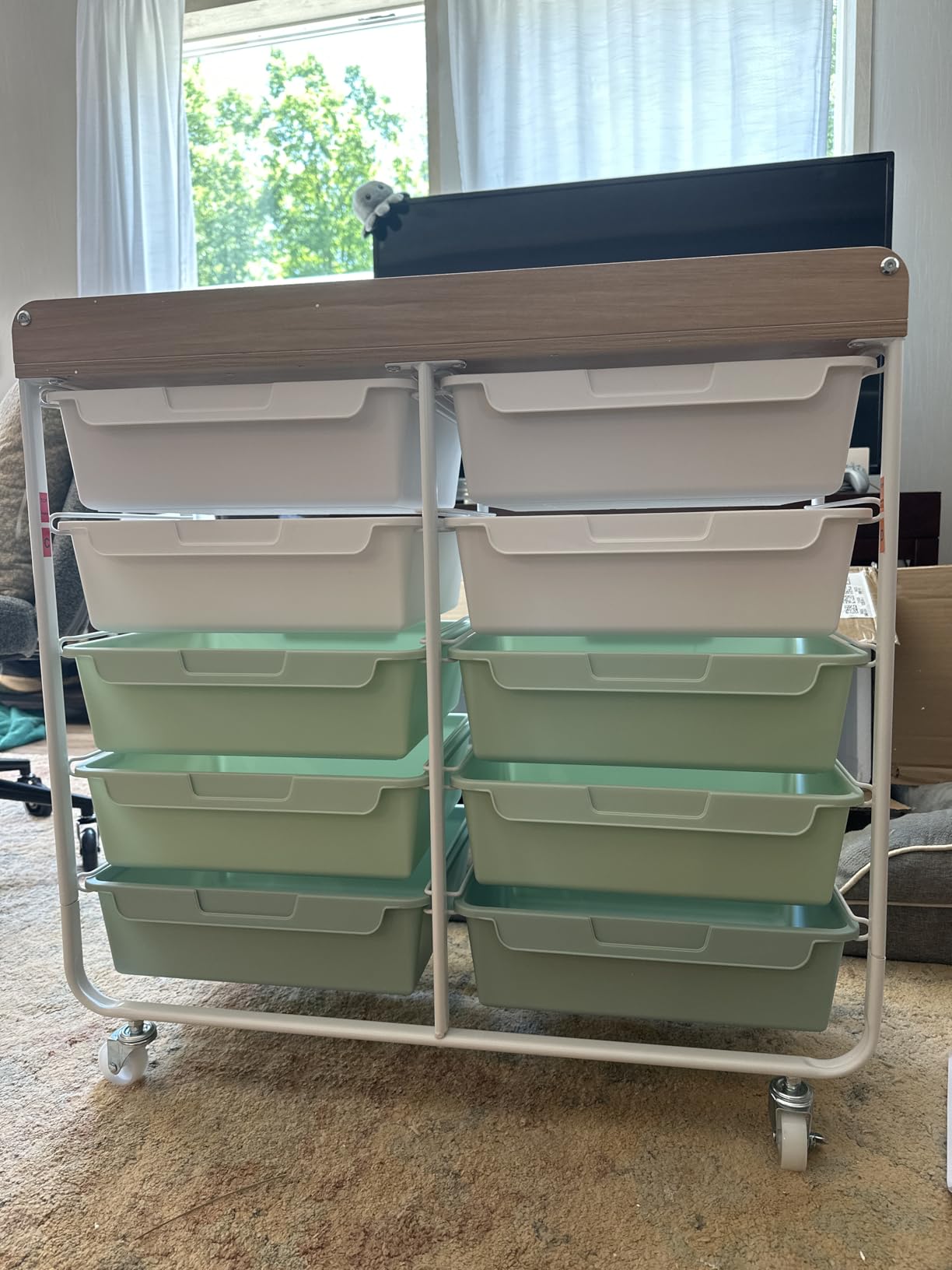
The APEXCHASER 10-drawer cart is the storage workhorse of our homeschool room. With 10 deep drawers and a spacious wooden top, it holds more than any other cart on this list. I use it as our central supply hub, with each drawer dedicated to a specific subject or material type. The 30-inch width gives it a substantial presence without dominating the room.
The wooden tabletop is waterproof and scratch-resistant, making it perfect as a secondary work surface. My kids use it for craft projects, puzzle assembly, and even as a standing workspace for quick tasks. The 360-degree swivel wheels include locking brakes on two wheels, keeping the cart secure when in use.
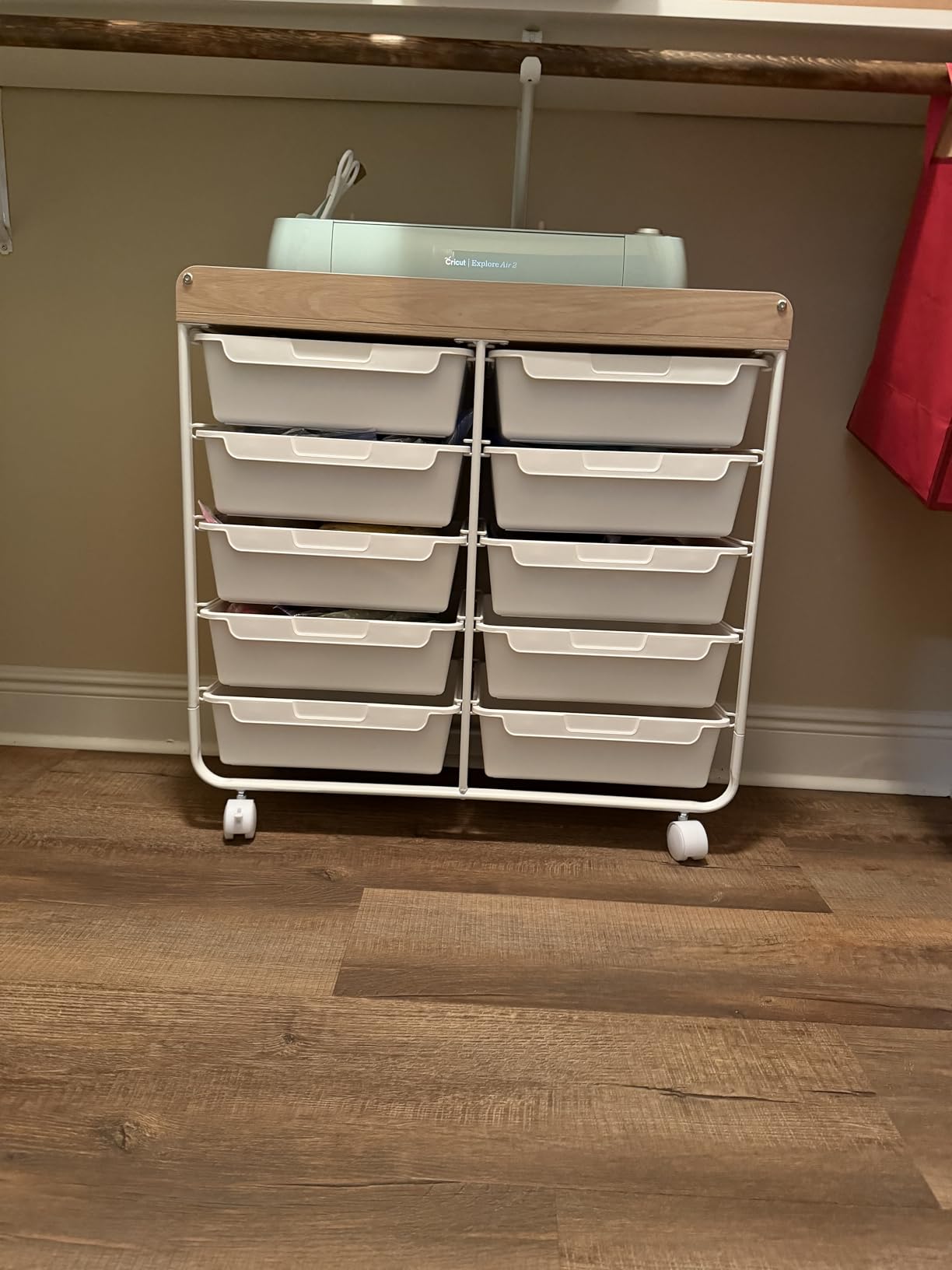
Assembly uses push-in locking pins instead of screws, which makes it faster and tool-free. I had the entire cart built in under 20 minutes. The metal frame construction provides good rigidity, though some reviewers reported receiving units with dented frames. Inspect yours upon delivery and request a replacement if needed.
The 10 drawers are organized in two columns of five. This layout makes it easy to assign drawers by subject: column one for academic subjects (math, reading, writing, science, history) and column two for art, music, physical education, Spanish, and projects. The color coding options help kids identify where things belong.
Subject-by-Subject Organization System
The 10-drawer layout is perfect for a subject-based organization system. Each drawer holds a full curriculum for one subject, including workbooks, textbooks, manipulatives, and supplies. At the start of each school day, my kids pull the drawers they need and return them when done. This has transformed our workflow from scattered to systematic.
The drawers are deep enough to hold standard workbooks lying flat, which prevents spine damage and makes browsing easier. The metal frame provides good structural support, though the plastic drawers themselves are lighter duty. We have been using ours for 8 months without any drawer failures, but gentle handling is recommended.
Comparing to the SYKIARIOL 8-Drawer Cart
The APEXCHASER has 10 drawers versus the SYKIARIOL’s 8, but the trade-off is slightly lower build quality. The APEXCHASER frame is wider at 30 inches versus 15.55 inches, giving you more tabletop space. If you need maximum storage and tabletop area, the APEXCHASER is the better choice. If you want tighter quality control and a more compact footprint, go with the SYKIARIOL.
Both carts serve the same core function: mobile homeschool storage. The APEXCHASER works well for families with more curriculum materials and multiple children, while the SYKIARIOL is better for smaller setups. For compact desks for small homeschool spaces, pair either cart with a folding table or wall-mounted desk for a complete workspace solution.
How to Choose the Right Homeschool Furniture for Your Family
Choosing the best classroom furniture for homeschooling families comes down to four key factors: your available space, your children’s ages and learning styles, your budget, and how long you plan to homeschool. Let me break down each consideration based on what I have learned from three years of testing and from hundreds of forum discussions with other homeschool parents.
Matching Furniture to Your Child’s Age and Grade Level
Preschool and kindergarten children need child-sized furniture that allows their feet to touch the floor and their elbows to rest comfortably on the work surface. The ECR4Kids Surf lap desk and Humble Crew bookshelf are ideal for this age group. Look for corner bookshelves for homeschool storage that keep materials at child height.
Elementary students (ages 6 to 10) benefit from height-adjustable desks like the Flash Furniture model and ergonomic chairs like the Giantex or Primy. This is also the age where active seating options like the Trideer ball chair and Studico wobble stool become valuable for kids who need movement to focus.
Middle school students need larger work surfaces for textbooks, laptops, and projects. The Diroan desk set with its tiltable surface works well for this age. Storage needs increase dramatically as curriculum becomes more complex, so plan for the IRIS toolbox and rolling carts to manage the volume of materials.
Dedicated Room vs Shared Space vs Dining Table
One of the most common questions on homeschool forums is whether you need a dedicated room. The answer is absolutely not. Many families successfully homeschool entirely at the dining table using portable solutions like the ECR4Kids Surf lap desk and rolling carts that can be tucked away after school hours.
If you have a dedicated room, invest in permanent solutions: the Flash Furniture desk, ECR4Kids book display, and IRIS storage toolbox create a classroom feel. If you are working with a shared space, prioritize portable and storable items. Rolling carts, stackable lap desks, and foldable tables let you convert any space into a learning environment and then reclaim it for family use.
Forum data shows that many families use a hybrid approach: a dedicated desk for focused individual work plus shared family spaces for read-aloud time, art projects, and hands-on science. This model gives you the best of both worlds and works well for families with multiple children at different grade levels.
Multi-Child Workspace Solutions
Homeschooling multiple children is where furniture choices become critical. Each child needs their own workspace to avoid conflicts and allow for independent work. For two children, consider two Flash Furniture desks placed side by side with a shared rolling cart between them. The carts serve as both a room divider and a shared supply station.
For three or more children, think vertically. Wall-mounted shelves, stacked IRIS toolboxes, and tall book displays like the ECR4Kids Streamline maximize vertical space. Assign each child a specific drawer or shelf in the shared storage so they have ownership of their materials. Color-coded storage helps prevent disputes over whose supplies are whose.
The dining table approach works surprisingly well for multiple children. A large table accommodates two to three kids working simultaneously, and the shared space encourages collaboration. Use rolling carts to bring supplies to the table and store them away when done. This is the most budget-friendly multi-child solution.
Budget Breakdown by Furniture Category
Desks range from $35 for the ECR4Kids Surf lap desk to $120 for the Diroan complete set. The Flash Furniture desk at about $90 is the sweet spot for value and longevity. For a complete desk setup including chair, plan to spend between $90 and $180 per child.
Chairs range from $24 for the Trideer ball chair to $80 for the Primy ergonomic chair. The Giantex at about $60 offers the best balance of quality and price. Flexible seating options like the wobble stool and ball chair are excellent supplementary seating that gives kids movement options without breaking the budget.
Storage is where you can save the most money. The IRIS toolbox at about $33 provides massive organization capacity. Rolling carts from $60 to $97 serve double duty as storage and mobile workstations. Bookshelves range from $24 for the Humble Crew to $105 for the ECR4Kids Streamline. A complete storage setup for one child costs between $100 and $200.
A full homeschool furniture setup for one child typically costs between $150 and $400 depending on quality choices. For multiple children, multiply desk and chair costs but share storage solutions to keep the total manageable.
Durability and Material Considerations
Homeschool furniture takes a beating. Kids lean, push, spill, and occasionally throw things. Metal frames and laminate tops (like the Flash Furniture desk) hold up best to daily abuse. Plastic storage drawers are fine for light materials but avoid overloading them. Birch plywood (like the ECR4Kids book display) offers the best strength-to-weight ratio for shelving.
USA-made products like the IRIS toolbox tend to have better quality control and material standards. Forum discussions repeatedly show that homeschool families value USA-made furniture for its longevity and safety standards. If budget allows, prioritize USA-made options for items that will see the heaviest use.
Warranties matter for long-term homeschooling. The Primy chair offers 5 years, the Flash Furniture desk offers 3 years, and the Trideer ball chair offers 1 year plus lifetime customer service. These warranties reflect manufacturer confidence in their products and protect your investment over the years you will be homeschooling.
FAQs
What do I need for my homeschool classroom?
The essential homeschool classroom furniture includes a dedicated work surface (desk or table), ergonomic seating, storage for curriculum and supplies, and accessible book shelving. Start with a height-adjustable desk, a comfortable chair, and at least one storage unit. Add flexible seating options like a wobble stool or ball chair for kids who need movement. A front-facing book display encourages independent reading.
What type of furniture is best for a preschool learning environment?
For preschool homeschool, child-sized furniture is essential. Look for low shelves at child height, small tables and chairs that allow feet to touch the floor, and front-facing book displays like the Humble Crew bookshelf. Montessori-style furniture with accessible storage encourages independence. Portable lap desks like the ECR4Kids Surf work well for floor-based learning activities.
How to family style homeschool?
Family-style homeschooling uses shared spaces like dining tables or large activity tables where multiple children learn together. Use rolling storage carts to bring supplies to the shared space and store them when done. Combine individual workstations with collaborative areas. A mix of traditional seating and flexible options like wobble chairs accommodates different learning needs during group lessons.
Do I need a dedicated homeschool room or can I use the dining table?
A dedicated room is not required for successful homeschooling. Many families use dining tables with portable solutions like lap desks, rolling carts, and stackable storage. The dining table approach works well for multiple children and saves money on furniture. If you do have a dedicated space, invest in adjustable desks, proper ergonomic chairs, and permanent storage solutions for a more structured environment.
What is the best desk height for homeschooling?
The correct desk height allows your child to sit with feet flat on the floor, knees at approximately 90 degrees, and forearms resting comfortably on the desktop. For children ages 6 to 8, this is typically 20 to 22 inches. Ages 9 to 12 need about 22 to 26 inches. Teens and adults need 28 to 30 inches. Height-adjustable desks like the Flash Furniture model accommodate all ages with five positions from 22.25 to 31.25 inches.
Final Thoughts on the Best Classroom Furniture for Homeschooling Families
After three years of testing, 12 product reviews, and countless hours of real-world use, my top recommendation is the Flash Furniture Student Desk for its unmatched adjustability and durability at a reasonable cost. Pair it with the Giantex or Primy chair for a complete desk setup under $150. For storage, the IRIS USA 26-drawer toolbox is unbeatable for the price. And for reading, the Humble Crew bookshelf transforms how kids interact with books.
The best classroom furniture for homeschooling families is not about buying the most expensive options. It is about choosing pieces that grow with your children, fit your space, and hold up to daily use. Whether you are setting up a dedicated homeschool room or working from the dining table, the 12 products in this guide give you proven options at every budget level. Start with the essentials, add flexible seating for kids who need movement, and invest in storage that keeps your space organized and functional for years to come.