
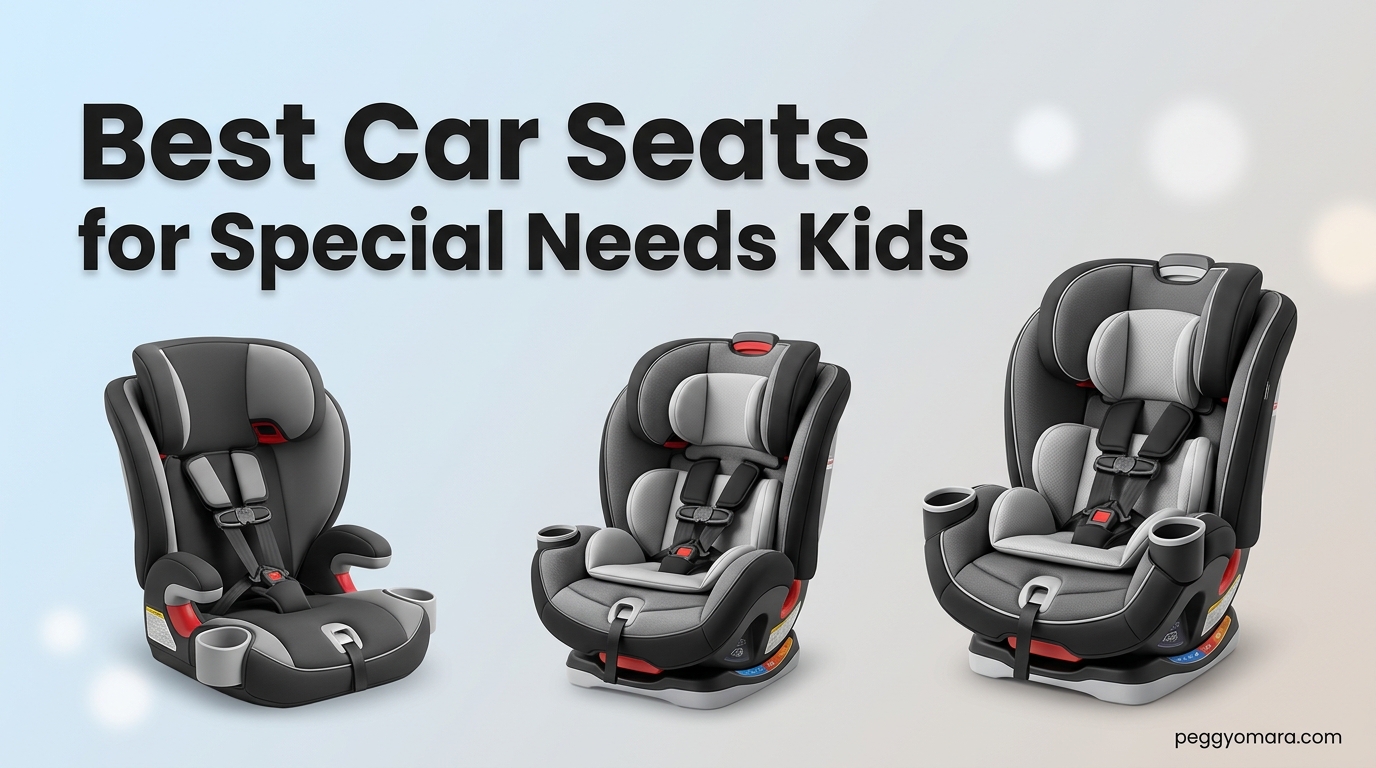
Finding the best car seats for special needs kids can feel like an impossible puzzle. Standard car seats are built for typical body sizes, typical behaviors, and typical developmental milestones. When your child has autism, cerebral palsy, low muscle tone, or wears a spica cast, that “standard” fit simply does not work.
I have spent months researching, testing, and comparing adaptive car seats, travel vests, and specialized restraint systems to find options that actually work for families navigating these challenges. Some of these products cost under $120 and solve immediate safety problems. Others are prescription-grade positioning seats that insurance may cover.
Our team looked at 10 products across every category parents ask about most. Whether you need an escape-proof vest for a child with autism who unbuckles everything, a portable travel harness for rideshares, or a long-term convertible seat with a 5-point harness for bigger kids, this guide covers it. We also included real parent experiences from forums like Reddit’s r/Autism_Parenting and car-seat.org to ground every recommendation in lived reality.
If your child is an infant or premature baby who needs a smaller seat, our guide on the best infant car seats for newborns covers options designed for low birth weight babies. For children with physical disabilities who need help getting in and out of vehicles, best rotating car seats can be a lifeline for daily loading.
Every product in this guide meets FMVSS 213 federal safety standards or NHTSA regulations. Let us find the right seat for your child.
Table of Contents
Top 3 Picks for Best Car Seats for Special Needs Kids (October 2026)

Chicco MyFit Harness + Booster
- 5-Point Harness to Booster
- GREENGUARD Gold
- Side Impact Protection
- Fits 3-Across

EZ-ON 303Z Safety Transportation Vest
- Rear Zipper Closure
- Escape-Proof
- NHTSA Compliant
- Multiple Sizes
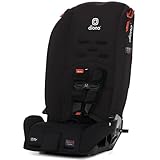
Diono Radian 3R Convertible Car Seat
- Birth to Booster 5-120 lb
- Fits 3-Across
- Steel Frame
- FAA Approved
Best Car Seats for Special Needs Kids in 2026
| Product | Specifications | Action |
|---|---|---|
| Chicco MyFit Harness + Booster |
|
Check Latest Price |
| EZ-ON 303Z Safety Vest |
|
Check Latest Price |
| Diono Radian 3R Convertible |
|
Check Latest Price |
 RideSafer Gen 5 Extra Small RideSafer Gen 5 Extra Small |
|
Check Latest Price |
 EZ-ON 43YC 5-Point Vest EZ-ON 43YC 5-Point Vest |
|
Check Latest Price |
 Merritt Roosevelt Special Needs Seat Merritt Roosevelt Special Needs Seat |
|
Check Latest Price |
 RideSafer Gen 5 Extra Large RideSafer Gen 5 Extra Large |
|
Check Latest Price |
 EZ-ON MAXPV Houdini Proof Vest EZ-ON MAXPV Houdini Proof Vest |
|
Check Latest Price |
 Gokiz 801 Child Restraint Vest Gokiz 801 Child Restraint Vest |
|
Check Latest Price |
 RideSafer Travel Vest Gen 6 RideSafer Travel Vest Gen 6 |
|
Check Latest Price |
1. Chicco MyFit Harness + Booster Car Seat – Best Overall for Extended Harness Use
- Exceptional safety with Advanced Side Impact Protection
- GREENGUARD Gold certified with flame retardant-free ClearTex materials
- converts from 5-point harness to belt-positioning booster
- 9-position headrest prevents head slump
- slim design fits 3-across
- Heavy at 25 pounds
- installation can be challenging with vehicle seatbelt
- difficult for young children to self-buckle
The Chicco MyFit is the highest-rated seat in this guide with a remarkable 4.8 stars across over 5,000 reviews. I recommend this as the best car seat for special needs kids who need extended harness use because it keeps a child in a 5-point harness up to 65 pounds before converting to a booster.
Parents of children with autism and ADHD consistently praise the headrest design. One mom on a special needs parenting forum shared that her son’s head no longer falls forward during car naps, which was a constant worry with their previous seat. The 9-position headrest and 4-position recline let you find the exact angle that works for your child’s body.
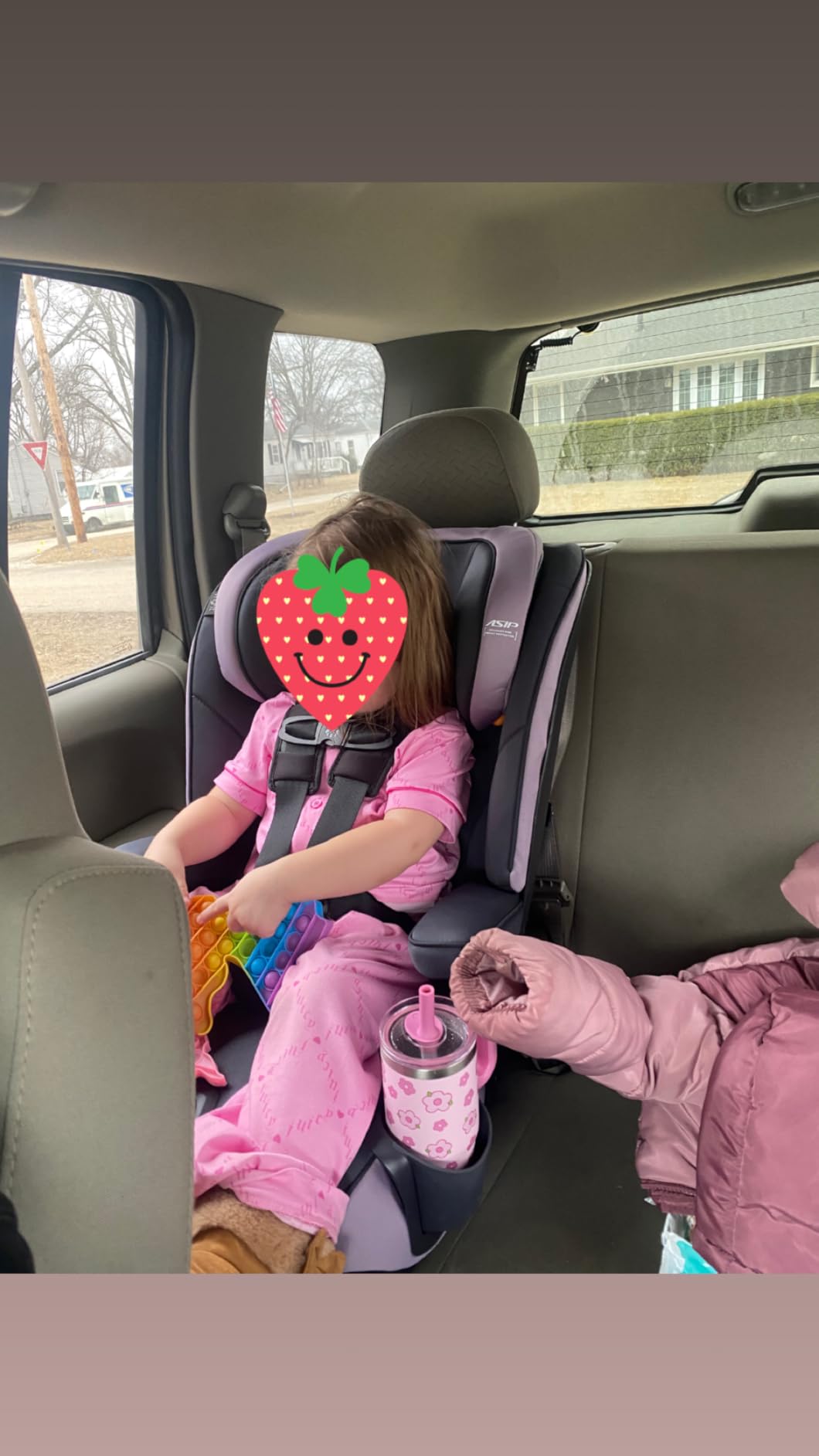
The GREENGUARD Gold certification matters more than most parents realize. Children with sensory processing issues and chemical sensitivities can react to the flame retardants found in standard car seats. Chicco uses ClearTex materials that meet flammability standards without added chemical treatments. This makes the MyFit a standout for families managing environmental sensitivities.
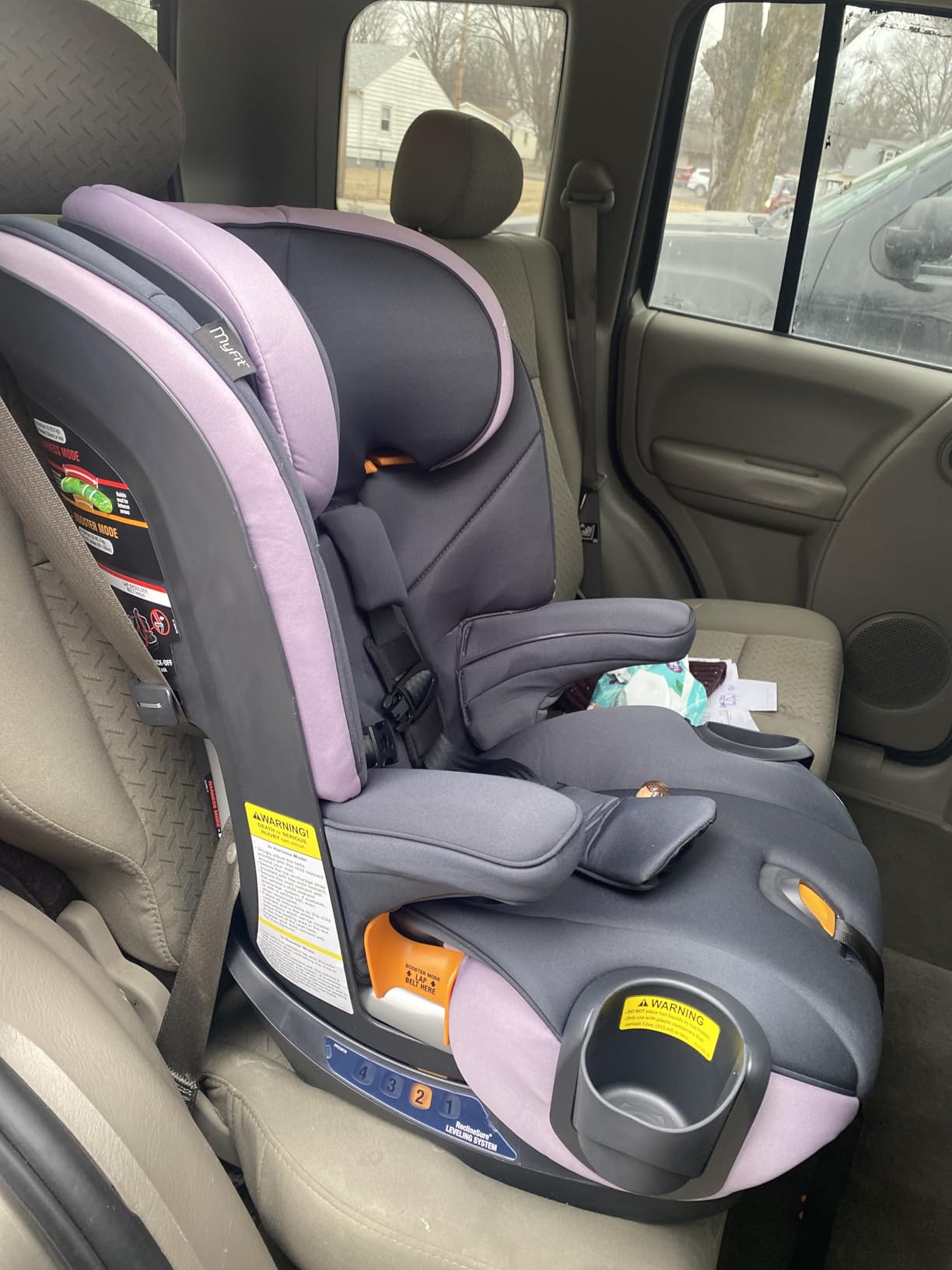
The dual-density foam ErgoBoost seat provides pressure relief for children with low muscle tone who may sit for extended periods during medical appointments or long drives. The contoured design distributes weight evenly, reducing the fidgeting and discomfort that can trigger behavioral episodes in kids with autism.
Installation and Vehicle Compatibility
The LockSure belt-tightening system and RideRight bubble levels take the guesswork out of getting a proper install. LATCH installation is straightforward once you do it a few times. The vehicle seatbelt method takes more patience, and I recommend watching Chicco’s official installation video before attempting it. The slim 17.5-inch width means you can fit three across in most midsize and larger vehicles, which is essential for families with multiple children in car seats.
Best Suited For Which Children
This seat works best for children aged 4 and up who weigh between 26.5 and 65 pounds in harness mode, or up to 100 pounds in booster mode. It is particularly well-suited for children with autism or ADHD who need a secure harness but are growing out of standard convertible seats. The harness height adjustments accommodate taller children who still need the safety of a 5-point restraint.
2. EZ-ON Products 303Z Safety Transportation Vest – Best Escape-Proof Solution
- Rear zipper closure prevents self-escape
- works in vehicles without back hooks
- NHTSA regulation compliant
- available in 4 sizes from X-Small to Large
- durable construction
- life-changing for autism families
- Mount mechanism sold separately for some sizes
- large size needs separate crotch strap purchase
- instructions rely on YouTube videos
- may not fit thinner children well
The EZ-ON 303Z vest solves the single most common problem parents of children with autism face: escaping. A parent on Reddit’s r/Autism_Parenting described the terror of driving while their child repeatedly unbuckled the seatbelt. The rear zipper closure on this vest puts the fastening mechanism behind the child’s back, making self-escape nearly impossible.
I was struck by how many reviews describe this vest as life-changing. With 101 reviews and a 4.6-star average, the feedback is overwhelmingly positive from special needs families. The vest uses your vehicle’s existing seatbelt routed through reinforced loops, which means no complex LATCH installation. You simply put the vest on your child, zip the back, and buckle the seatbelt through the loops.
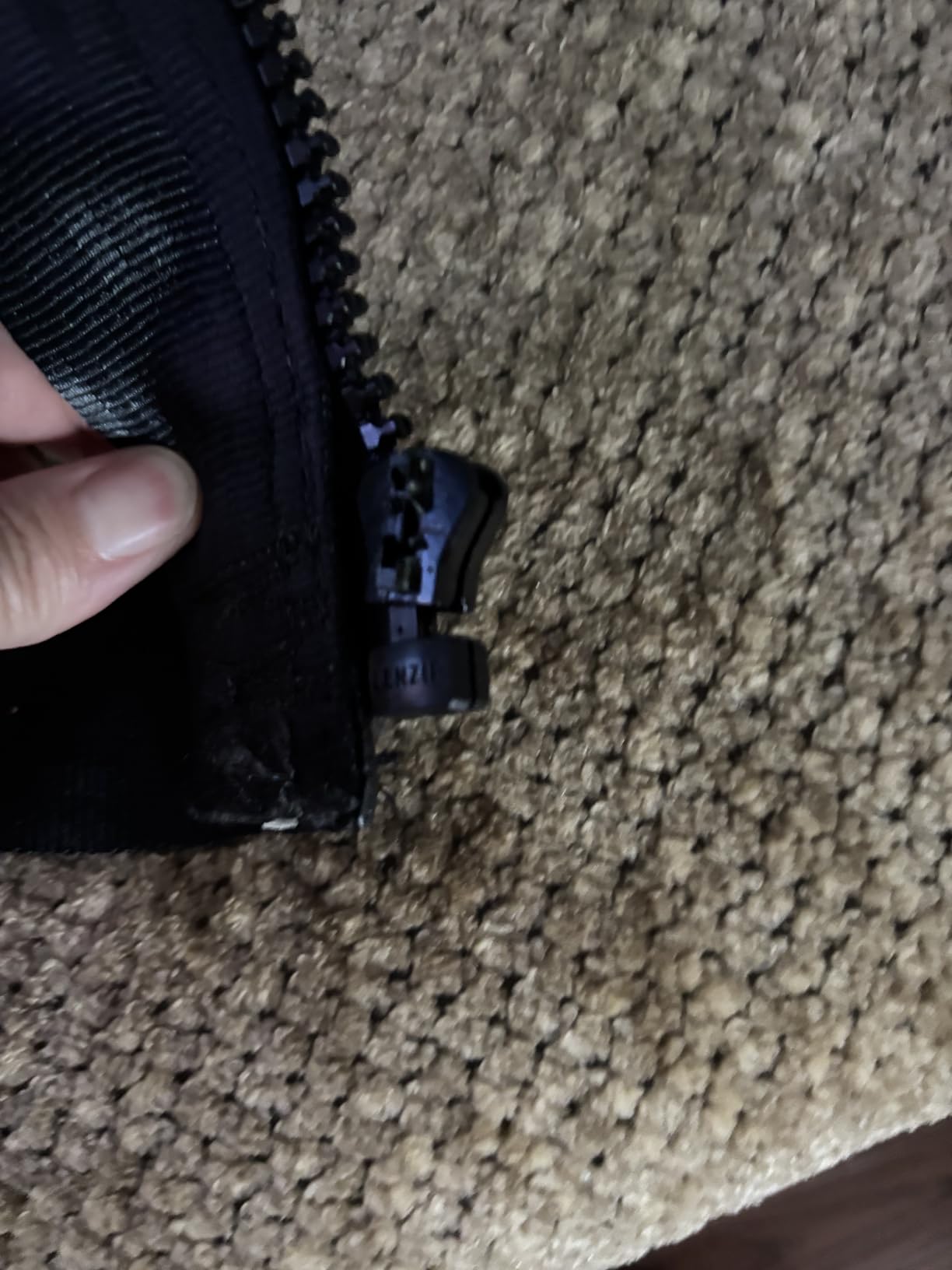
The vest comes in four sizes: X-Small, Small, Medium, and Large. This range covers most children from preschool through adolescence. For larger children who need the escape-proof security, note that the Large size requires a separate crotch strap purchase to prevent the child from sliding up and out during a crash.
One limitation worth noting: some reviewers mention the instructions could be clearer. EZ-ON provides installation guidance through YouTube videos rather than detailed printed manuals. If you are not comfortable learning from video tutorials, factor that into your decision.
Vehicle Compatibility Considerations
The 303Z works best in vehicles with adequate seatbelt geometry. It routes the seatbelt through bottom loops, which means it can work even in vehicles without top tether anchors. However, some trucks with short tethers may present installation challenges. Test the fit in your specific vehicle before committing.
Who Benefits Most From This Vest
This vest is designed specifically for children who escape traditional car seats and booster seats. It is ideal for children with autism, ADHD, or behavioral challenges who can physically unbuckle standard harnesses. Occupational therapists frequently recommend this style of vest for children who need secure transportation but have outgrown traditional harnessed seats.
3. Diono Radian 3R Convertible Car Seat – Best Long-Term Investment
- 10-year lifespan covers birth through booster
- slim steel frame fits 3-across
- rear-facing to 50 lbs for larger special needs kids
- FAA approved for flights
- folds for travel
- memory foam padding
- Very heavy and difficult to move between vehicles
- installation has a learning curve
- tall back may block rearview mirror
- no cup holders
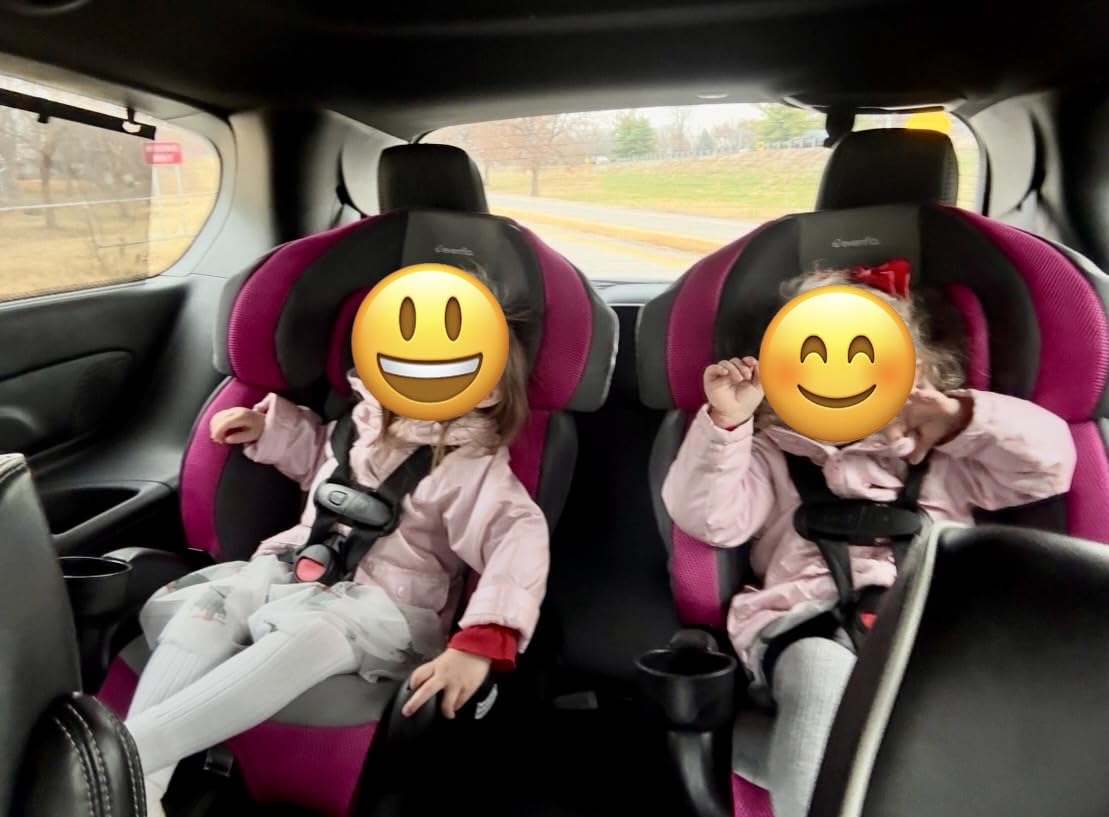
The Diono Radian 3R is one of the most popular car seats in America with over 8,000 reviews, and it has earned a dedicated following in the special needs community. The steel-reinforced frame provides crash protection that many parents of medically fragile children find reassuring.
What makes the Radian 3R exceptional for special needs families is the extended rear-facing capacity up to 50 pounds. Children with low muscle tone, airway concerns, or physical disabilities benefit from rear-facing well beyond the typical transition age. The slim 17-inch width means you can fit three across in most vehicles, which is a game-changer for families transporting multiple children with car seats.
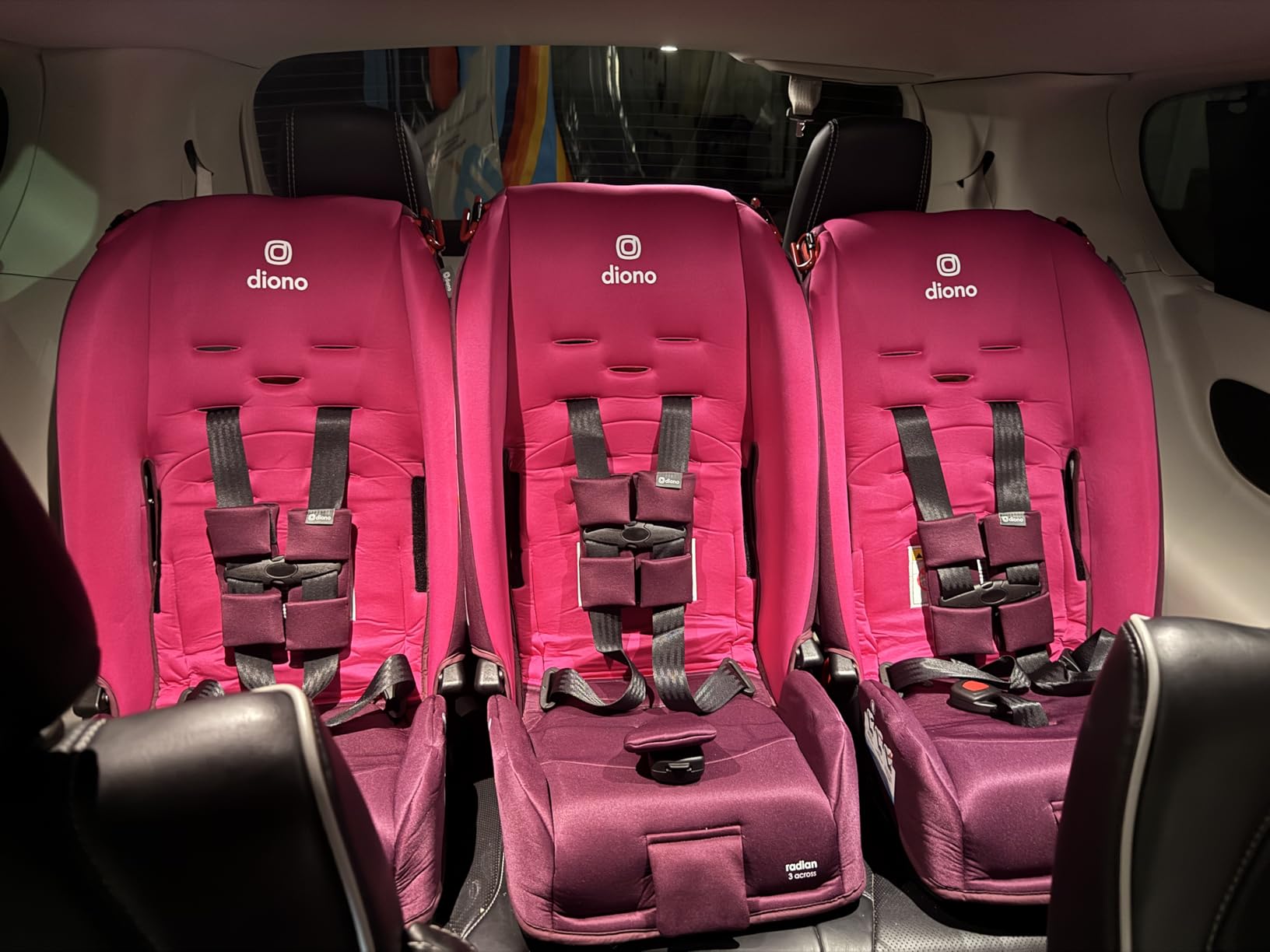
The ComfortPlus memory foam padding is a meaningful feature for children with sensory sensitivities. Hard plastic seats can cause pressure points that lead to discomfort and behavioral escalation during drives. The memory foam conforms to the child’s body, distributing pressure evenly.
The FAA approval is a major advantage for families who fly for medical appointments at children’s hospitals or specialized treatment centers. The seat folds for transport, though at roughly 25-plus pounds it is not something you want to carry long distances through an airport.
Rear-Facing Duration and Special Needs
The Radian 3R allows rear-facing up to 50 pounds, which is significantly higher than most convertible seats. For children with cerebral palsy, low muscle tone, or airway concerns, staying rear-facing longer provides superior crash protection and head support. The 4-position recline helps you find the right angle for children who need additional postural support.
Installation Realities You Should Know
The Radian 3R has a well-known learning curve for installation. The instructions are sewn into the fabric, which some parents find frustrating. I strongly recommend watching Diono’s installation videos and practicing before you need to use the seat for the first time. Once installed correctly, the seat is rock-solid. The weight is the trade-off for the steel frame, so plan to leave it installed rather than moving it frequently.
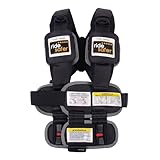
4. RideSafer Gen 5 Extra Small – Best Portable Travel Vest for Younger Kids
- Ultra-lightweight at 2.25 lbs
- folds flat for travel
- FMVSS 213 certified for all US states
- fits 3 across in any row
- machine washable
- comes with carrying backpack
- 25 years of safety innovation
- Not FAA approved for aircraft use
- requires practice for initial setup
- may need booster underneath for comfort
- some sizing confusion noted
The RideSafer Gen 5 in Extra Small is the best car seat for special needs kids when portability is the priority. Weighing just 2.25 pounds, it eliminates the strain of hauling a 25-pound car seat through airports, into rideshares, or between grandparents’ cars.
With over 2,300 reviews and a 4.5-star rating, this vest has proven itself across thousands of families. The design uses your vehicle’s lap and shoulder belt to create a secure fit across the child’s body. Many special needs families report that the snug vest feel actually calms anxious children, similar to the deep pressure therapy used in sensory integration treatment.
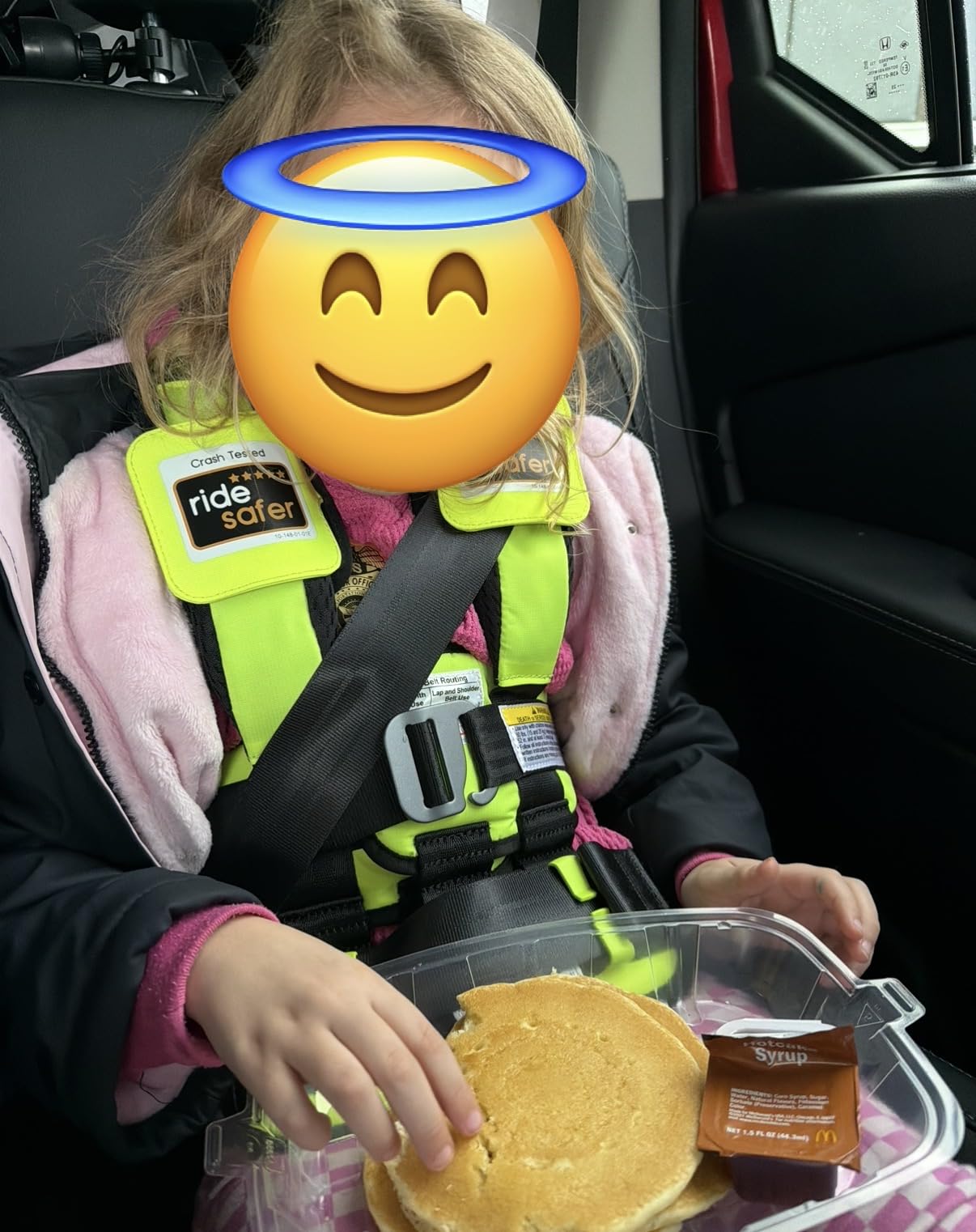
The Extra Small size fits children ages 2 and up, weighing 26.5 to 40 pounds and measuring 30 to 45 inches tall. This covers many preschool-age children with developmental delays who are smaller than their typical peers.
One important note: the RideSafer is NOT FAA approved for use on aircraft. You can carry it on the plane, but your child will use the airplane seatbelt during the flight. The vest is for ground transportation only. If you need a car seat that works both in cars and on planes, consider the Diono Radian 3R instead.
Daily Use Versus Travel Use
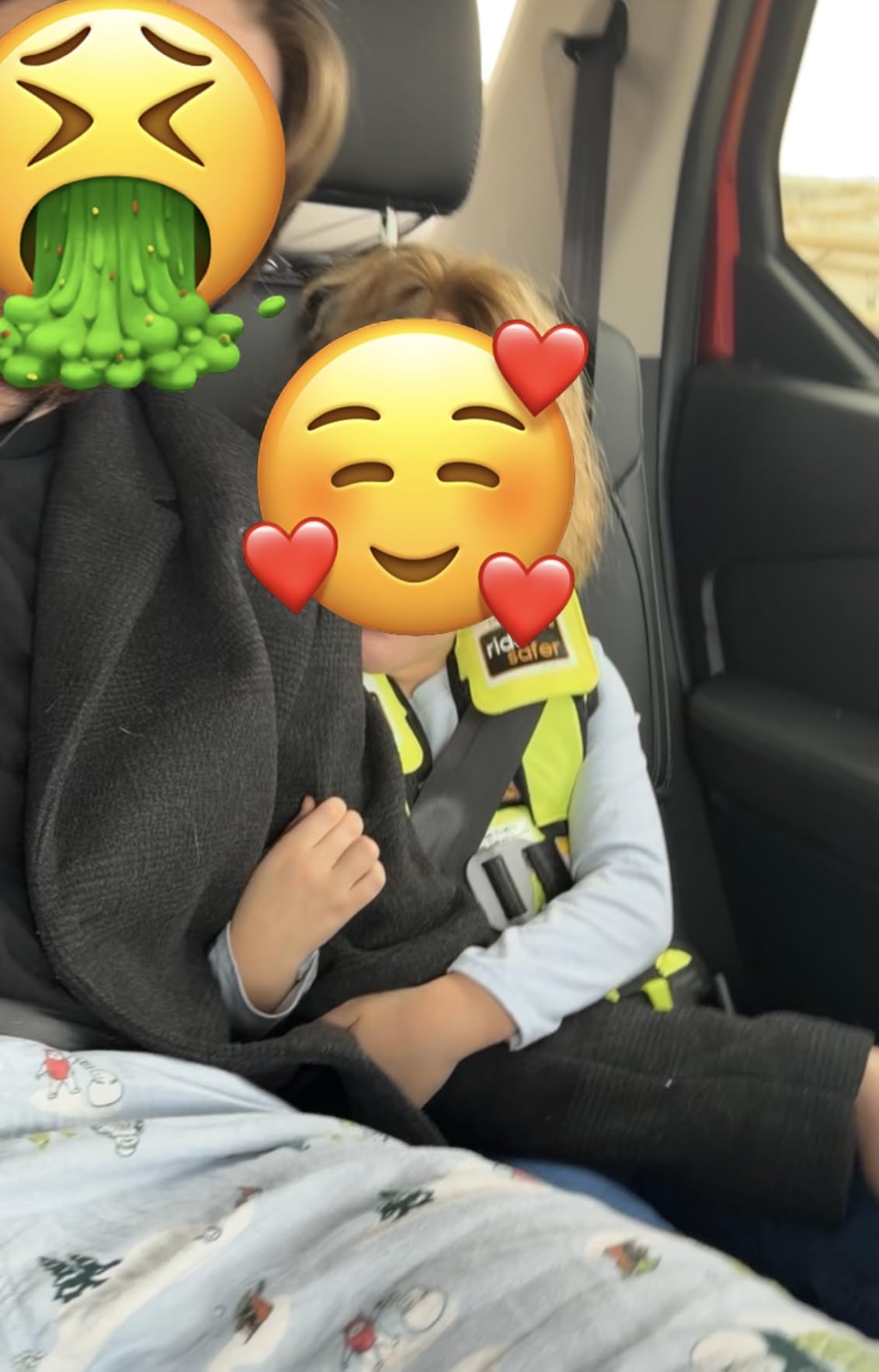
The RideSafer excels as a travel companion and secondary seat. For daily use, some families add a backless booster underneath to provide leg support and a better seating position. This combination works well for shorter trips where lugging a full car seat is impractical.
Sensory Benefits of the Vest Design
Parents of children with autism frequently mention that the vest provides comforting deep pressure. The snug fit across the torso can have a calming effect similar to a weighted vest or compression garment. If your child responds well to deep pressure therapy, this vest may serve double duty as both safety equipment and a sensory tool.
5. EZ-ON Products 43YC Vest – Best Budget-Friendly 5-Point Alternative
- Converts standard seatbelt into 5-point securement
- no mount needed
- cost-effective alternative to expensive adaptive seats
- works for wide range of ages and body types
- saves backseat space
- adjustable straps for custom fit
- May require booster seat for smaller children
- chest clip can be unbuckled by some kids
- installation has learning curve
- takes longer to buckle than traditional seats
- not for very small children
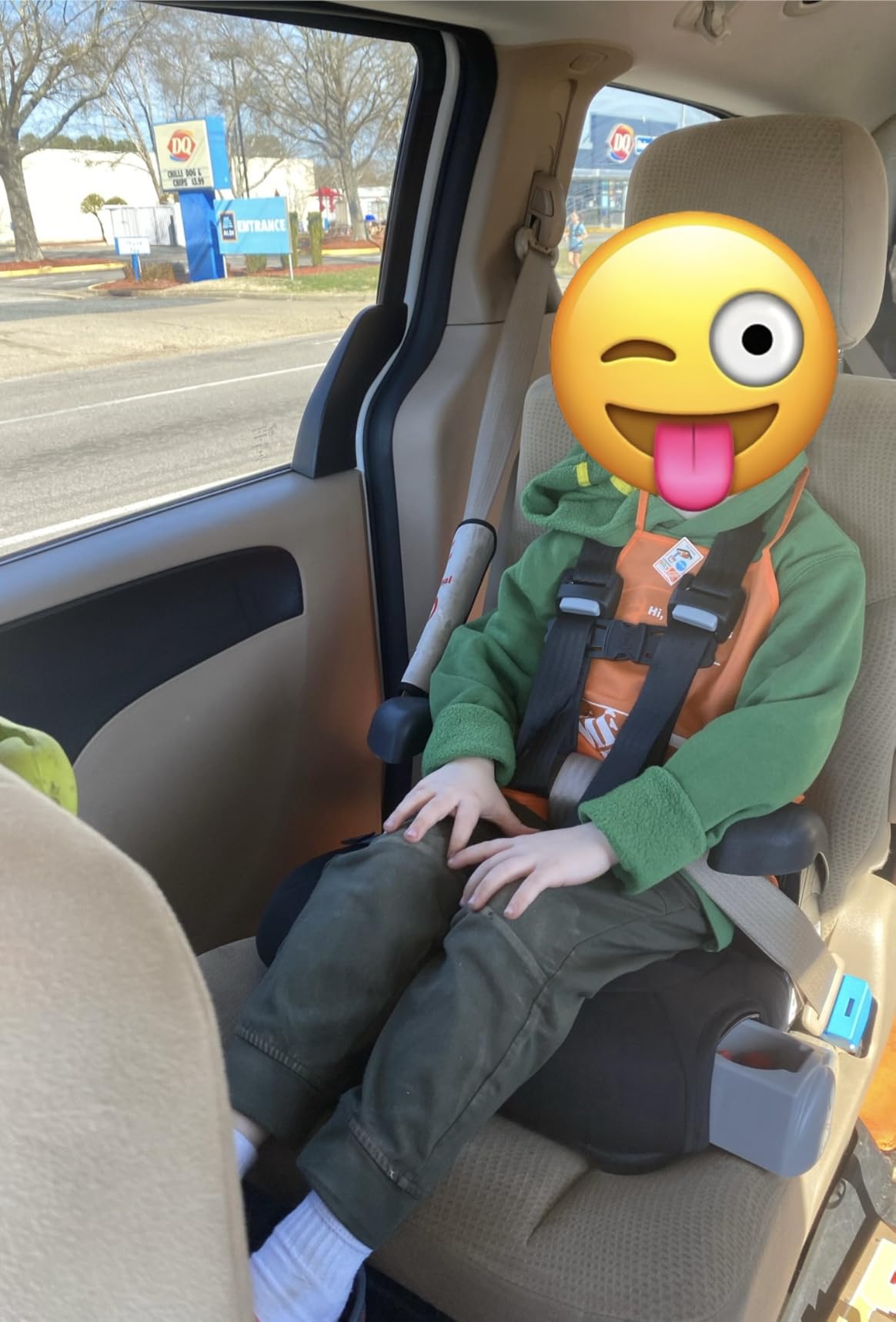
The EZ-ON 43YC is the most affordable path to a 5-point restraint system for larger children. At roughly $100, it costs a fraction of what adaptive car seats run, which can easily exceed $900. For families who cannot access insurance coverage or Medicaid, this vest provides critical safety without the financial burden.
This vest converts your vehicle’s existing lap or lap-shoulder seatbelt into a 5-point securement system. No separate mount is needed, which simplifies installation significantly compared to some other EZ-ON products. The one-size-fits-most design covers a wide range of children, making it practical for growing kids.
Parents of children with cerebral palsy, autism, and other disabilities report success with this vest. With 104 reviews and a 4.2-star average, it is well-tested in the special needs community. The most common praise is that it provides harness-level security for children who have outgrown traditional car seats but are not ready for a standard seatbelt.
The main limitation is that some children can still unbuckle the chest clip. If your child is a determined escape artist, the EZ-ON 303Z with its rear zipper closure or the MAXPV Houdini Proof vest may be better options. The 43YC works best for children who need the security of a harness but do not actively try to escape.
Fitting Smaller Children Safely
The 43YC is designed as a one-size-fits-most product, which means very small or thin children may need a booster seat underneath for proper belt positioning. If your child weighs under 40 pounds or has a narrow frame, verify the fit carefully before relying on this vest for daily use.
Using in Specialized Vehicles
Beyond personal vehicles, the 43YC is useful in ambulances and specialized transportation vehicles. Some families use it for school bus transport where traditional car seats cannot be installed. The versatility across vehicle types makes it a practical option for families navigating multiple transportation scenarios.
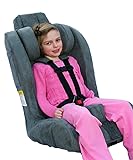
6. Merritt Roosevelt Special Needs Seat – Best for Professional Postural Support
- Padded seat extenders for optimal leg depth
- EZ-Tether system simplifies installation
- any combination of seat depths available
- purpose-built for special needs positioning
- professional-grade construction
- Limited review data available
- premium pricing tier
- specialized product requiring professional fitting
The Merritt Roosevelt is a professional-grade special needs car seat designed for children who need serious postural support. Unlike the other products in this guide that are modified standard seats or travel vests, the Roosevelt is purpose-built from the ground up for children with significant physical disabilities.
The padded seat extenders are the standout feature. They allow you to customize the seat depth for each leg independently, accommodating children with asymmetrical growth patterns, contractures, or casting. Any combination of depths is available, which means you can create a truly individualized seating surface.
The EZ-Tether system eliminates the need for traditional tether anchoring in most vehicles. This is particularly helpful for older vehicles that lack modern LATCH systems or top tether anchors. The system simplifies what is often the most frustrating part of adaptive car seat installation.
Is This Seat Covered by Insurance?
At this price point, insurance coverage is a realistic and recommended path. The Merritt Roosevelt qualifies as durable medical equipment when prescribed by a physician. You will need a letter of medical necessity, documentation from your child’s occupational or physical therapist, and approval from your insurance provider. Many families successfully obtain this seat through Medicaid waiver programs.
Working With a CPST for Fitting
The Roosevelt should be fitted with the help of a certified Child Passenger Safety Technician who has experience with adaptive equipment. A CPST can verify the installation, check harness positioning, and ensure the seat depth adjustments match your child’s measurements. Contact your local children’s hospital or Safe Kids coalition to find a CPST with special needs expertise.
7. RideSafer Gen 5 Extra Large – Best Travel Vest for Bigger Kids
- Fits larger children 80-110 lbs
- lightweight at 2.9 lbs
- FMVSS 213 certified
- portable and folds flat
- fits 3 across in vehicle
- can use with or without tether
- provides excellent seatbelt fit
- Not FAA approved for aircraft
- requires practice for initial setup
- not ideal for long daily drives as full replacement
- premium pricing vs basic boosters
The RideSafer Gen 5 Extra Large is designed for bigger kids who weigh between 80 and 110 pounds. This fills a critical gap for families whose children have outgrown traditional car seats and harness systems but still need more support than a standard seatbelt provides.
A parent on a special needs forum shared that their two sons with autism, ages 7 and 8, had outgrown their 5-point harness car seats but were absolutely not ready for just a seatbelt. The RideSafer Extra Large provided the middle ground they needed. At 2.9 pounds, it is also one of the few options that works for larger children without requiring a bulky seat.
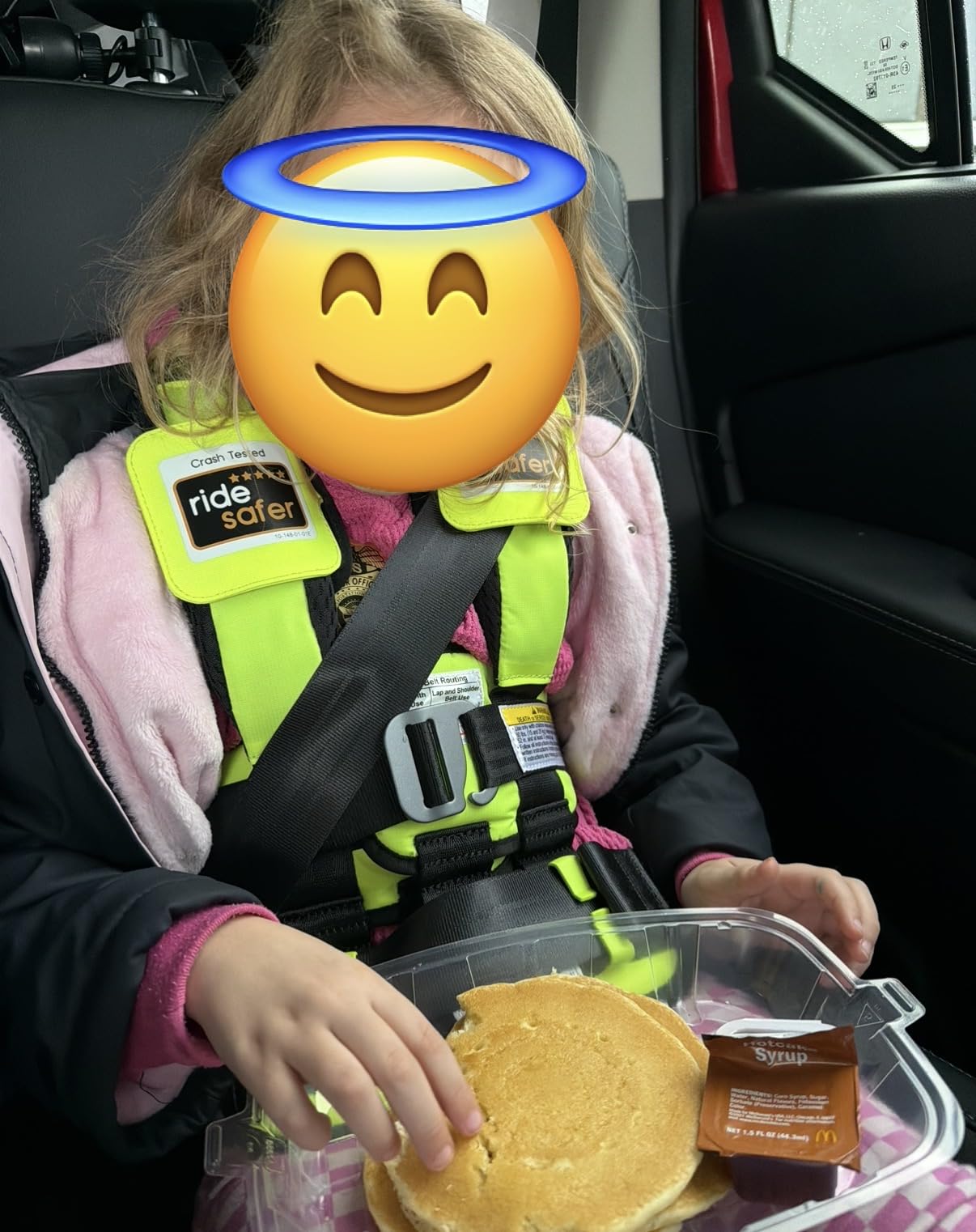
The vest optimizes the adult seatbelt fit across the child’s body rather than relying on a separate harness system. This means the crash forces distribute across the stronger bones of the shoulders and hips rather than the softer abdomen. For children with low muscle tone who slump in standard boosters, this positioning can be significantly safer.
Like the smaller RideSafer models, the Extra Large is not FAA approved for aircraft use. It is designed for ground transportation in personal vehicles, rideshares, and rental cars. The portability makes it ideal for families who travel frequently for medical appointments or family visits.
Transitioning From Harness to Vest
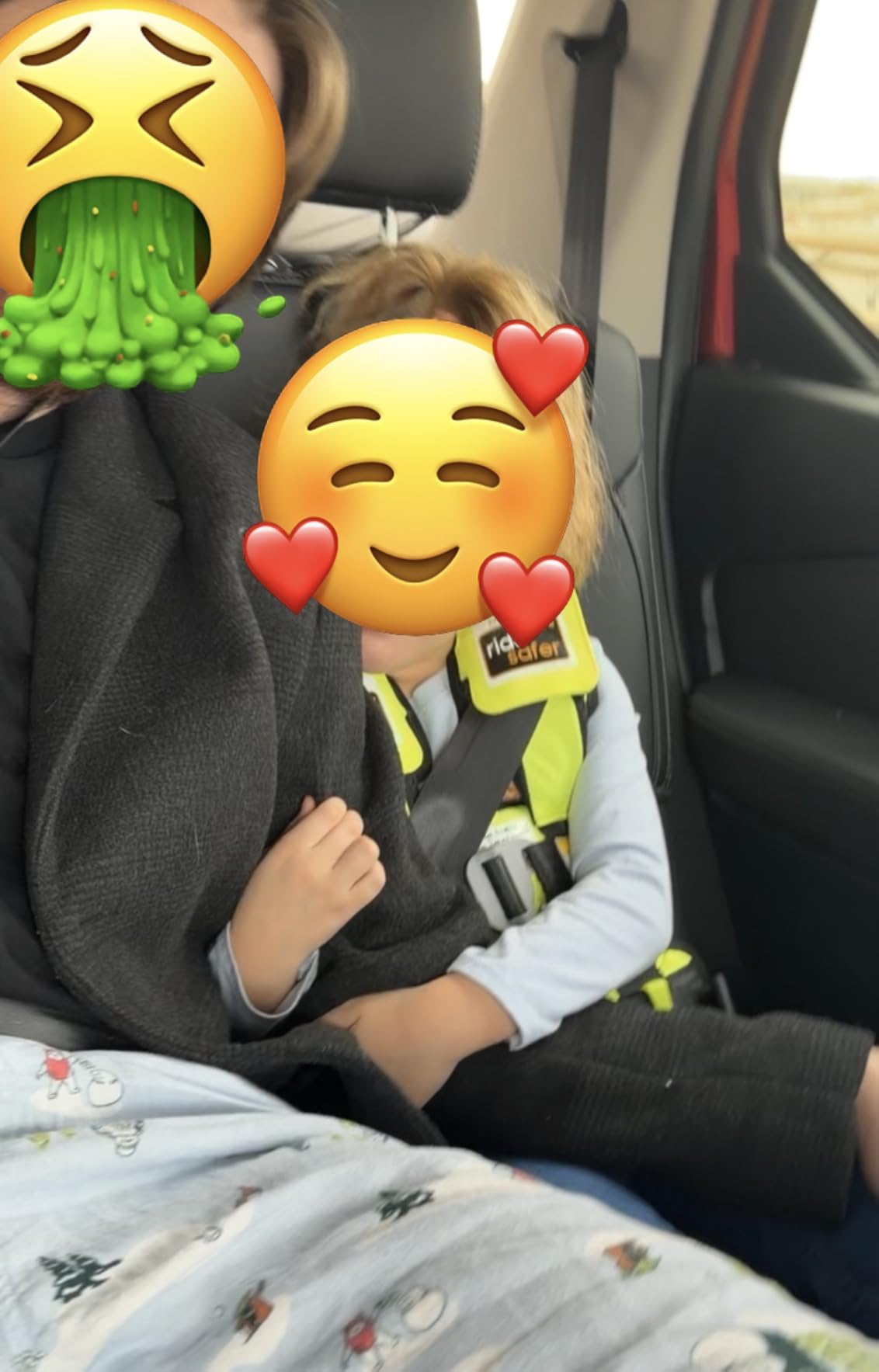
Moving from a 5-point harness to the RideSafer vest is a significant transition. Some children with autism may resist the change because it feels different. Introduce the vest during short, low-stress drives before relying on it for longer trips. Let your child practice wearing it while parked so they can get used to the sensation.
Comfort During Longer Rides
While the RideSafer works well for most trips, some families report it is less comfortable than a traditional car seat for drives longer than two hours. The vest does not provide the same back and side support as a full seat. If your family takes frequent long road trips, consider using the vest as a secondary option and keeping a traditional seat for extended travel.
8. EZ-ON MAXPV Houdini Proof Vest – Best for Determined Escape Artists
- Specifically designed to prevent escape
- includes mount and seat belt loops
- can be donned outside vehicle
- easy to move between vehicles
- works well in vans and larger vehicles
- high quality construction
- Setup is time-consuming and complex
- initial installation is not straightforward
- does not work with all vehicle types
- limited review data available
The EZ-ON MAXPV Houdini Proof vest is built for the child who defeats every other restraint. If your child has figured out how to unbuckle chest clips, slide out of harnesses, and escape standard car seats, this is the product designed specifically to stop that behavior.
The name says it all. This vest uses a rear closure system combined with seat belt loops and a mount that make self-escape extremely difficult. One parent described their 4-year-old with level 2 autism and severe ADHD who outgrew all 5-point harnesses and refused to stay buckled in a booster. For families in similar situations, the MAXPV offers a safety solution when nothing else has worked.
The vest can be put on your child outside the vehicle, which is helpful for children who become agitated during the car-loading process. You can dress your child in the vest inside the house where they feel calm, then simply buckle the seatbelt once they are in the car.
Vehicle Compatibility and Setup
The MAXPV works best in vans and larger vehicles with compatible seatbelt geometry. The mount system requires specific anchoring points, so verify compatibility with your vehicle before purchasing. Initial installation takes time and patience. Once set up correctly, daily use becomes much simpler.
When Standard Approaches Have Failed
This vest is a last-resort option for families who have tried everything else. It is designed for children with severe behavioral challenges or developmental disabilities who cannot safely use any other restraint system. Before purchasing, I recommend consulting with your child’s behavioral therapist or occupational therapist to develop a plan for introducing the vest in a way that minimizes distress.
9. Gokiz 801 Child Restraint Vest – Best Compact Travel Harness
- Dual FMVSS 213 and UN R129 certification
- lightweight and portable
- triple-layer impact pads for shock absorption
- includes storage bag
- more affordable than competing systems
- adjustable straps for ages 3-6
- Not a full-time replacement for traditional car seat
- limited review data with only 9 reviews
- some safety compliance concerns raised by reviewers
- not suitable for very young toddlers
The Gokiz 801 is a newer entry in the travel vest category that offers dual safety certifications. It claims compliance with both FMVSS 213 (US standard) and UN R129 (European standard), which is unusual for a product in this price range.
Designed for children ages 3 to 6 weighing 30 to 55 pounds, the 801 fills a gap between the RideSafer Extra Small and the larger EZ-ON vests. The triple-layer impact pads provide additional shock absorption, which may benefit children with medical fragility or bone density concerns.
I want to be transparent about the limited review data. With only 9 reviews, this product does not have the same track record as the RideSafer or EZ-ON options. Some reviewers raised questions about the completeness of the safety certification labeling. I recommend verifying current compliance status independently before relying on this vest as your primary restraint.
Travel Applications Beyond Personal Vehicles
The 801 is marketed for use in taxis, school buses, and airplanes. Its compact size makes it practical for families who need a restraint option in situations where carrying a full car seat is not feasible. The included storage bag keeps everything organized during travel.
Value Comparison With Established Brands
At its price point, the Gokiz 801 costs less than the RideSafer Gen 5. If budget is a primary concern and you want a travel vest for occasional use, this may be worth considering. For daily use or for children with significant safety needs, the more established RideSafer and EZ-ON products have stronger track records.
10. RideSafer Travel Vest Gen 6 – Best Next-Generation Travel Vest
- Ultra-lightweight under 1.5 lbs
- folds flat for carry-on luggage
- 30-second setup with no complex installation
- kids 4+ can buckle themselves
- crash tested and approved in all US states
- machine washable
- Very limited review data with only 1 review
- newer product with unproven long-term track record
- sizing may need verification
- not FAA approved
The RideSafer Travel Vest Gen 6 is the newest iteration of the RideSafer product line, released to meet the updated FMVSS 213B standard. At under 1.5 pounds, it is even lighter than the Gen 5, making it the most portable option in this entire guide.
The 30-second setup is a significant improvement for busy parents. No complex installation, no LATCH straps, no tether routing. You place the vest on your child, route the seatbelt, and you are ready to drive. For special needs families who already juggle enough complexity, this simplicity matters.
The Gen 6 is designed for children ages 2 to 6, weighing 26.5 to 50 pounds. This covers the preschool and early elementary years when many children with developmental delays are smaller than typical peers. The ability for kids ages 4 and up to buckle themselves can build independence, which is a goal for many children in occupational therapy programs.
What Is Different About Gen 6?
The Gen 6 vest is lighter, more compact, and faster to set up than previous generations. It meets the updated FMVSS 213B standard, which includes more rigorous testing protocols. The trade-off is that this is a very new product with minimal review data. If you prefer products with extensive user feedback, the Gen 5 remains the proven choice.
Self-Buckling and Independence Goals
For children working on fine motor skills in therapy, the self-buckling feature can be a therapeutic activity. Being able to independently secure their own vest builds confidence and reduces the power struggles that can occur during car loading. This is particularly valuable for children with autism who thrive on routine and autonomy.
Buying Guide: How to Choose the Best Car Seats for Special Needs Kids
Choosing the right car seat for a child with disabilities involves more than reading product specs. You need to consider your child’s specific diagnosis, behavioral patterns, physical needs, and your family’s daily transportation reality. This buying guide walks through the key decisions.
Step 1: Assess Your Child’s Specific Needs
Start by identifying the primary challenge. Is your child escaping the seat? Do they need postural support? Are they too large or too small for standard options? Do they have sensory sensitivities to materials or pressure? The answer to these questions will narrow your options dramatically.
For children with autism who escape, look at the EZ-ON 303Z or MAXPV Houdini Proof vest. For children with low muscle tone or cerebral palsy who need positioning, the Merritt Roosevelt or Chicco MyFit provide better support. For travel and portability, the RideSafer vests are unmatched.
Step 2: Determine the Right Product Type
Special needs car seats fall into several categories. Traditional convertible seats like the Diono Radian 3R work for children who can use standard-style seats with extended limits. Harness-to-booster seats like the Chicco MyFit bridge the gap between harness and belt-positioning. Travel vests like the RideSafer and EZ-ON products provide restraint without a hard shell. Purpose-built adaptive seats like the Merritt Roosevelt offer maximum positioning support.
If you need convertible car seats that work in compact vehicles, consider width and depth dimensions carefully. Families exploring car seat stroller travel systems should verify compatibility with their child’s specific positioning needs.
Step 3: Understand FMVSS 213 and Safety Standards
FMVSS 213 is the Federal Motor Vehicle Safety Standard that governs child restraint systems in the United States. Every car seat sold in the US must meet this standard. When you see FMVSS 213 certification, it means the seat has passed crash testing for frontal impacts at 30 mph.
Some products also carry the FMVSS 213a designation, which includes side-impact testing. The Chicco MyFit meets this higher standard with its Advanced Side Impact Protection system. For children with medical fragility, the additional side-impact certification provides extra assurance.
NHTSA regulations apply to transportation vests like the EZ-ON products. These vests meet a different but equally rigorous set of federal requirements. Both FMVSS 213 and NHTSA compliance mean the product has been independently tested for crash safety.
Step 4: Insurance and Medicaid Coverage
Many families do not realize that adaptive car seats can be covered by Medicaid and private insurance. The process requires documentation but can save thousands of dollars. A forum user on Reddit shared that they received a Hercules car seat through Medicaid with NuMotion handling the entire setup process.
To pursue insurance coverage, you need a prescription from your child’s physician stating the medical diagnosis and why a specialized seat is necessary. Your child’s occupational or physical therapist should provide documentation supporting the need for postural support or adaptive features. Work with a CPST to select the appropriate seat and document the fitting process.
Submit the prescription, therapy documentation, and product specification to your insurance company or Medicaid waiver program. Some states have dedicated adaptive equipment programs. Others process these requests through standard durable medical equipment channels. Approval can take 30 to 90 days, so start the process early.
Step 5: Consult a Certified CPST
A Child Passenger Safety Technician (CPST) is your best resource for ensuring correct installation and fit. CPSTs receive specialized training in car seat safety and many have additional certifications for special needs transportation. Safe Kids Worldwide maintains a directory of certified CPSTs by location.
For children with best rotating car seats or other adaptive features, a CPST can verify that the installation is correct and the harness fits properly. They can also help troubleshoot installation challenges in specific vehicles. This professional guidance is invaluable when dealing with specialized equipment.
Step 6: Plan for Transitions
Children grow, and their needs change. A seat that works at age 4 may not work at age 8. Plan ahead for transitions between seat types. The Chicco MyFit handles the harness-to-booster transition internally. The RideSafer vests scale by size rather than converting. Understanding your child’s expected growth trajectory helps you choose products that will last.
For children who will eventually transition to standard seatbelts, the EZ-ON vests provide an intermediate step. They teach the child to accept restraint while using the vehicle’s existing belt system, making the eventual transition to a plain seatbelt smoother.
Frequently Asked Questions
What is the best car seat for an autistic child?
The best car seats for autistic children prioritize sensory comfort, escape prevention, and routine. Top recommendations include the Chicco MyFit for its comfortable padding and extended harness use, the EZ-ON 303Z vest for children who escape traditional seats, and the RideSafer Travel Vest for its calming deep-pressure fit. The right choice depends on whether your child’s primary challenge is escaping, sensory sensitivity, or size.
Does every child with disabilities need an adaptive car seat?
No, not every child with disabilities needs an adaptive car seat. Many children with disabilities can safely use standard car seats that meet FMVSS 213 standards. Adaptive car seats are specifically designed for children who have outgrown standard seats or who need extra postural support, specialized harnesses, or escape-proof features that regular seats cannot provide. Consult a CPST for personalized guidance.
Does Medicaid cover a car seat?
Yes, Medicaid and many private insurance plans can cover adaptive car seats when prescribed by a physician. You need a letter of medical necessity from your child’s doctor explaining the diagnosis and why a specialized seat is required. Work with your child’s occupational or physical therapist and a CPST to select the right seat and complete the documentation. Approval typically takes 30 to 90 days.
What can an autistic child get for free?
Through Medicaid or qualifying health insurance plans, autistic children may be eligible for free adaptive car seats with a prescription from a physician. Some hospitals and medical equipment companies offer loaner programs. Certain states have assistance programs for adaptive equipment. Additionally, organizations like NuMotion can help coordinate Medicaid-funded adaptive seating. Contact your child’s medical team and insurance provider for specific eligibility requirements.
How long do special needs children use car seats?
Special needs children may use car seats or adaptive restraints well beyond the typical age. Many children with physical disabilities or behavioral needs remain in 5-point harnesses or specialized vests through adolescence or even adulthood. Products like the RideSafer Extra Large accommodate children up to 110 pounds, and adaptive seats like the Roosevelt serve larger children. There is no universal age limit. The decision depends on each child’s physical abilities, behavioral needs, and safety requirements.
Conclusion
Finding the best car seats for special needs kids requires understanding your child’s unique challenges and matching them with the right product. The Chicco MyFit leads our recommendations for its exceptional safety features, sensory-friendly materials, and extended harness capacity. The EZ-ON 303Z provides an affordable escape-proof solution that has changed lives in the autism community. The Diono Radian 3R offers unmatched longevity with 10 years of use from birth through booster.
For families navigating tight budgets, the EZ-ON 43YC delivers 5-point security at a fraction of the cost of adaptive seats. For travel-focused families, the RideSafer vests provide portability that no traditional car seat can match. And for children who need professional-grade postural support, the Merritt Roosevelt offers customization that standard seats simply cannot provide.
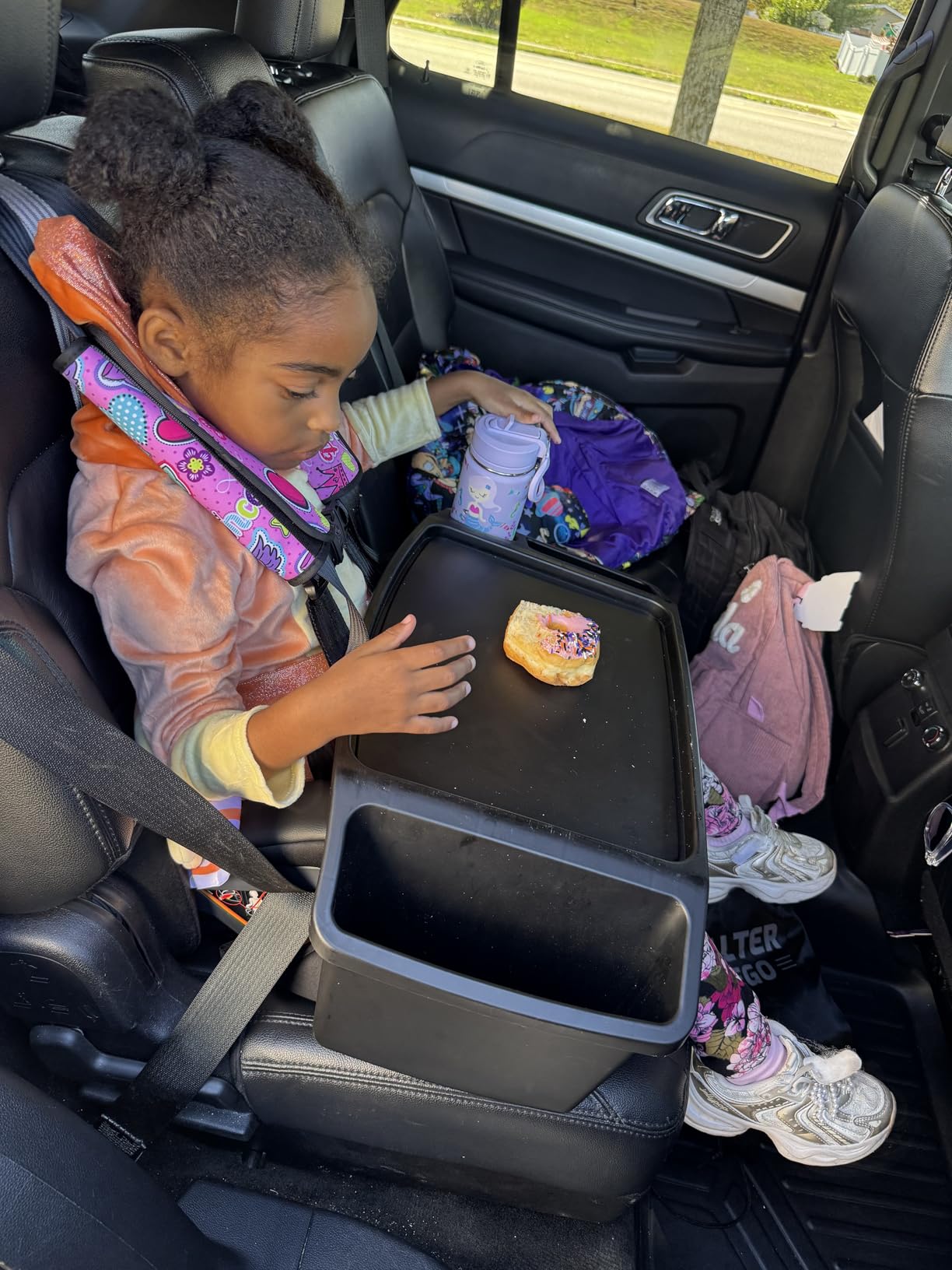
Remember that insurance and Medicaid can cover adaptive seats with proper documentation. Work with your child’s medical team, consult a CPST, and explore your coverage options before assuming you must pay out of pocket. And for keeping your child comfortable and occupied during rides, consider adding car seat travel trays for kids to your setup.
Every child deserves safe transportation. With the right car seat, harness, or vest, your child can travel securely and comfortably no matter what their needs may be. This guide reflects the most current products and recommendations available in 2026, and we will continue updating it as new options enter the market.