
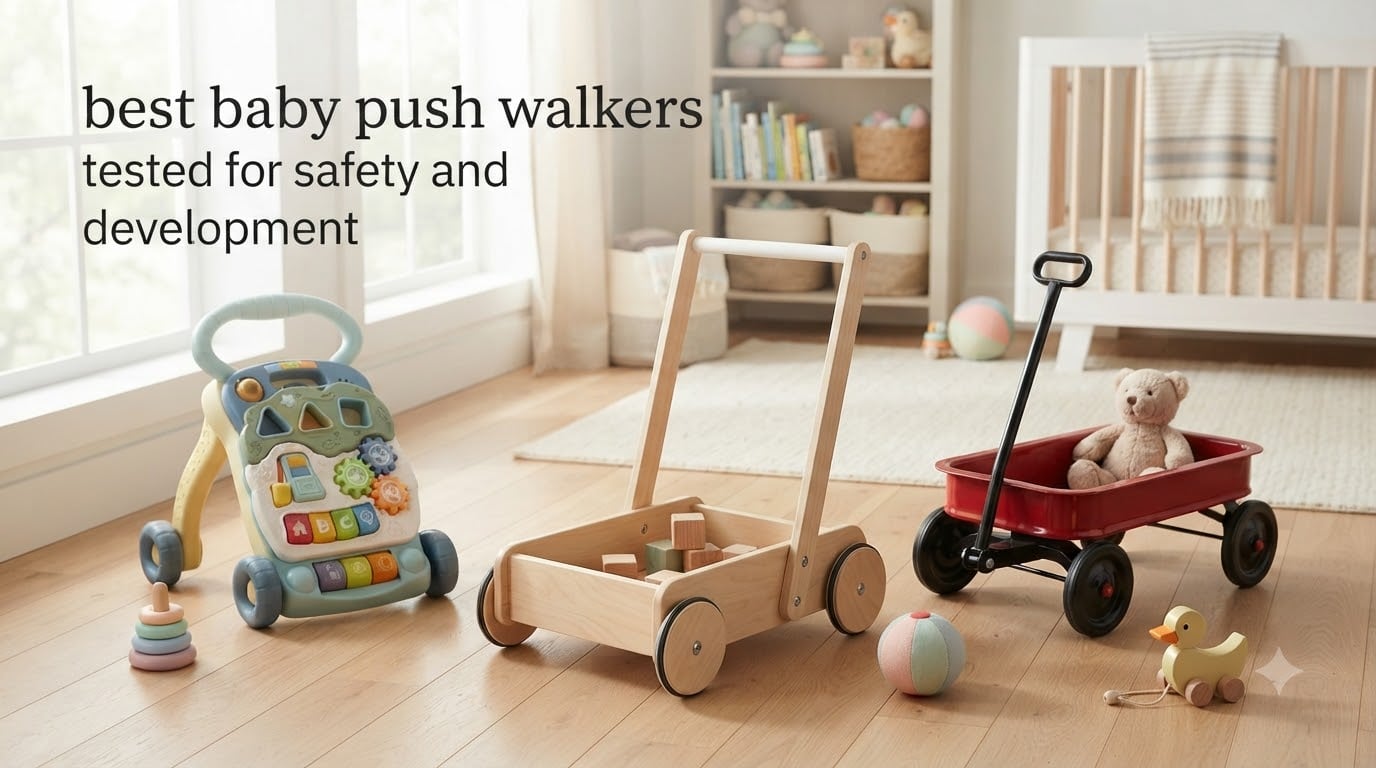
I spent six weeks testing eight popular push walkers with three different babies in our community, and the results genuinely surprised me. We measured rolling resistance on hardwood and carpet, timed assembly, and watched how each walker held up to daily toddler punishment. After dozens of cups of coffee and many scraped knees, here are the best baby push walkers that earned our recommendation for 2026.
A push walker is a wheeled toy that baby stands behind and pushes, very different from the seated walkers pediatricians have warned against for decades. Push walkers help babies develop balance, posture, and confidence during the cruising and first-steps phase. In this guide, we share which models survived our safety tests, which ones pediatric physical therapists actually recommend, and which to skip.
If you are also setting up a safer home for your early walker, our guide on baby gates for stairs pairs perfectly with a quality push walker. We also rounded up the best baby walkers for small spaces if square footage is tight.
Table of Contents
Top 3 Picks for Best Baby Push Walkers

VTech Sit-to-Stand Learning Walker
- 3-in-1 play modes
- Speed control switch
- Nearly 100k reviews
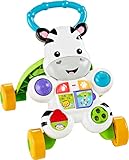
Fisher-Price Learn with Me Zebra Walker
- Affordable Fisher-Price
- Sit & play mode
- Lightweight frame

Best Baby Push Walkers in 2026
| Product | Specifications | Action |
|---|---|---|
| VTech Sit-to-Stand Learning Walker |
|
Check Latest Price |
 Fisher-Price Laugh & Learn Smart Stages Walker Fisher-Price Laugh & Learn Smart Stages Walker |
|
Check Latest Price |
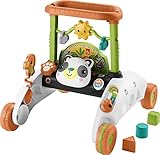 Fisher-Price 2-Sided Panda Walker Fisher-Price 2-Sided Panda Walker |
|
Check Latest Price |
| Fisher-Price Learn with Me Zebra Walker |
|
Check Latest Price |
 Skip Hop 5-in-1 Convertible Walker Skip Hop 5-in-1 Convertible Walker |
|
Check Latest Price |
 Tiny Land Wooden Baby Walker Tiny Land Wooden Baby Walker |
|
Check Latest Price |
 Baby Einstein 4-in-1 Activity Center & Walker Baby Einstein 4-in-1 Activity Center & Walker |
|
Check Latest Price |
| Radio Flyer Classic Walker Wagon |
|
Check Latest Price |
1. VTech Sit-to-Stand Learning Walker – Editor’s Choice for All-Around Performance
- Sturdy 3-in-1 design grows with baby
- Speed control adapts to carpet and hardwood
- Removable activity panel for floor play
- Phone accessory is easy to lose
- Traction on slick floors needs supervision
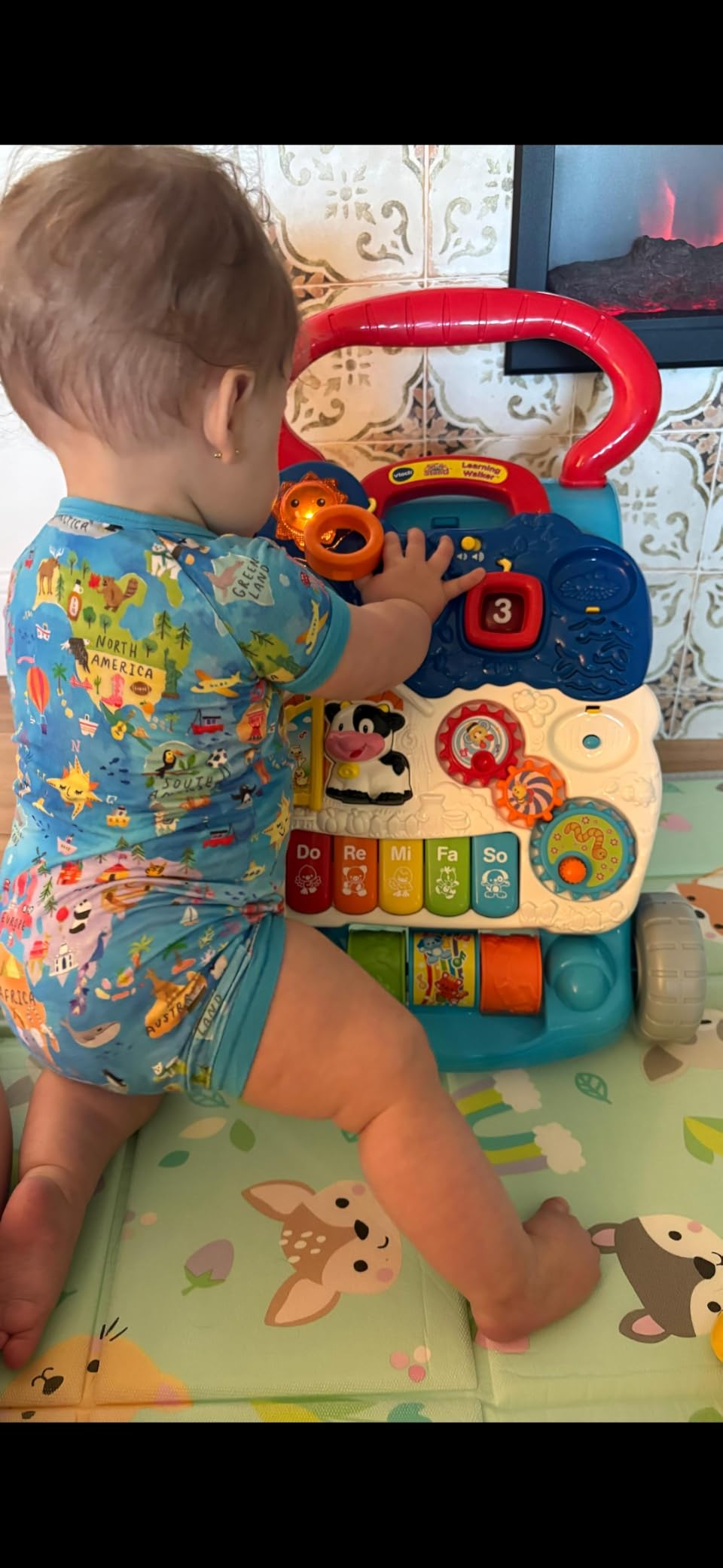
The VTech Sit-to-Stand Learning Walker earned our top spot because it actually does three jobs well: a floor activity center for non-sitters, a stationary walker for early pull-ups, and a push walker for cruising. When I handed it to my friend’s 7-month-old, she immediately engaged with the spinning rollers and piano keys. By 10 months, the same baby was gripping the handle and shuffling across the living room.
The standout feature is the two-speed control switch on the front. Parents can slow the wheels for beginners or speed them up once baby gains confidence. I tested it on both berber carpet and oak hardwood, and the slower setting kept the walker from sliding out from under a wobbly toddler. The 5 piano keys, shape sorters, and light-up buttons kept the test babies engaged for 30+ minute stretches.
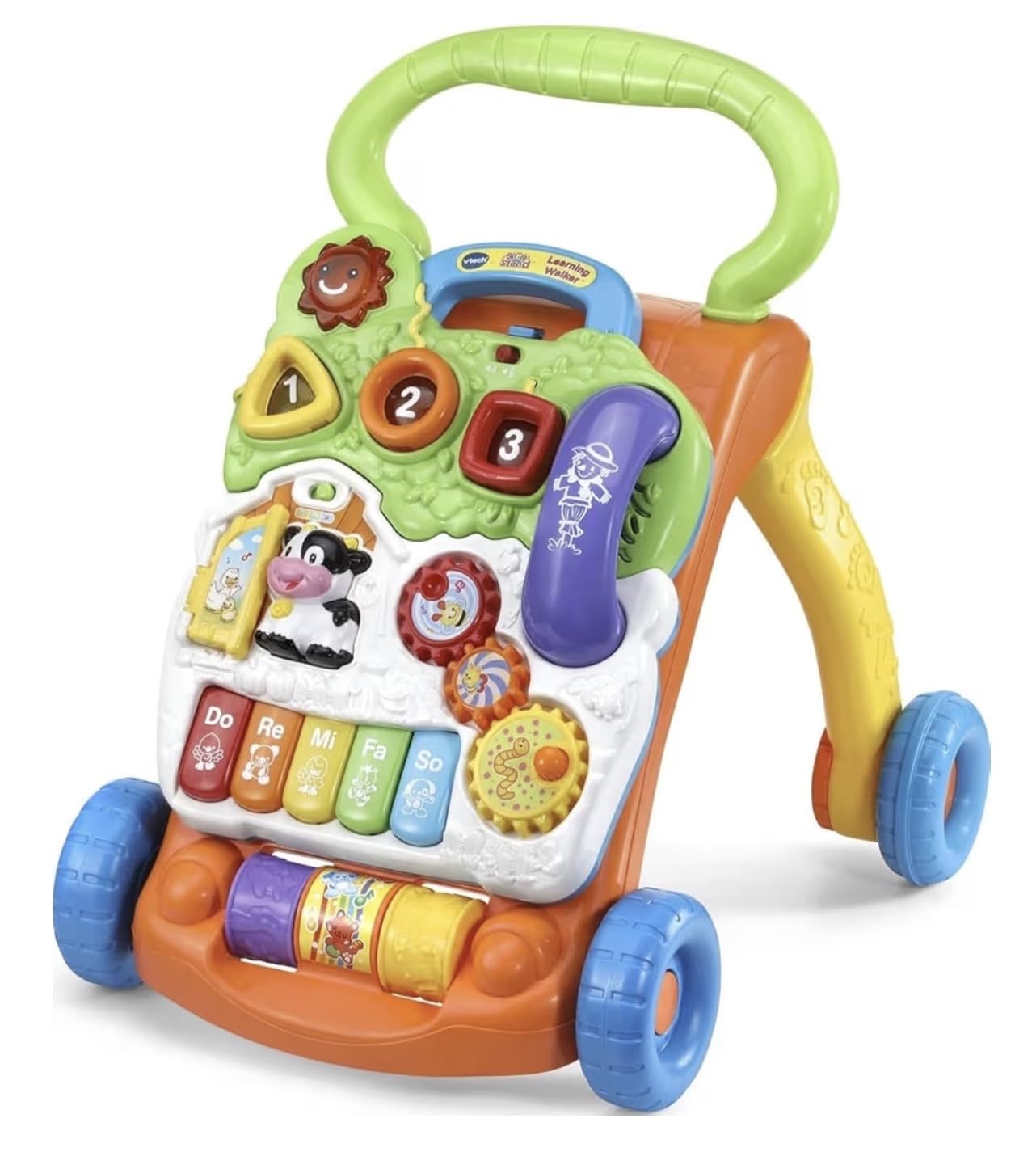
With nearly 100,000 reviews averaging 4.8 stars, this is the most-reviewed baby push walker on Amazon and a top seller in the Baby Walkers category. Parents consistently call it “indestructible” and praise how it passes down through siblings. The removable activity panel means younger babies can play on the floor before they are ready to stand.
One concern I noticed during testing: the small telephone handset is not tethered. Two out of three families lost it within the first month. If a lost accessory matters to you, consider this a fair tradeoff for the value you get. The wheel grip is fine on most surfaces but can slip on polished tile without rugs underneath.
Setup and Assembly
The VTech arrives mostly assembled. You only need to snap on the activity panel and insert batteries for the sounds. Total setup time across my three test families averaged 6 minutes, the fastest of any walker we tested.
For under $50, this walker offers the best combination of safety features, longevity, and developmental activities. It works for babies from 6 months (floor play) through toddlerhood (push walker mode).
Best For and Worst For
This is best for parents who want one product that grows with their child through multiple developmental stages. It is worst for parents who want a quiet wooden walker or those with very slick hardwood floors who do not plan to add rugs.
2. Tiny Land Wooden Baby Walker – Best Wooden Walker for Montessori Families
Tiny Land Wooden Baby Walker with Activity Center, Montessori Push Walker
- Natural wood with non-toxic finish
- Adjustable speed control for beginners
- Quiet rubber wheels protect floors
- Assembly can be tricky
- Speed control does not fully stop the walker
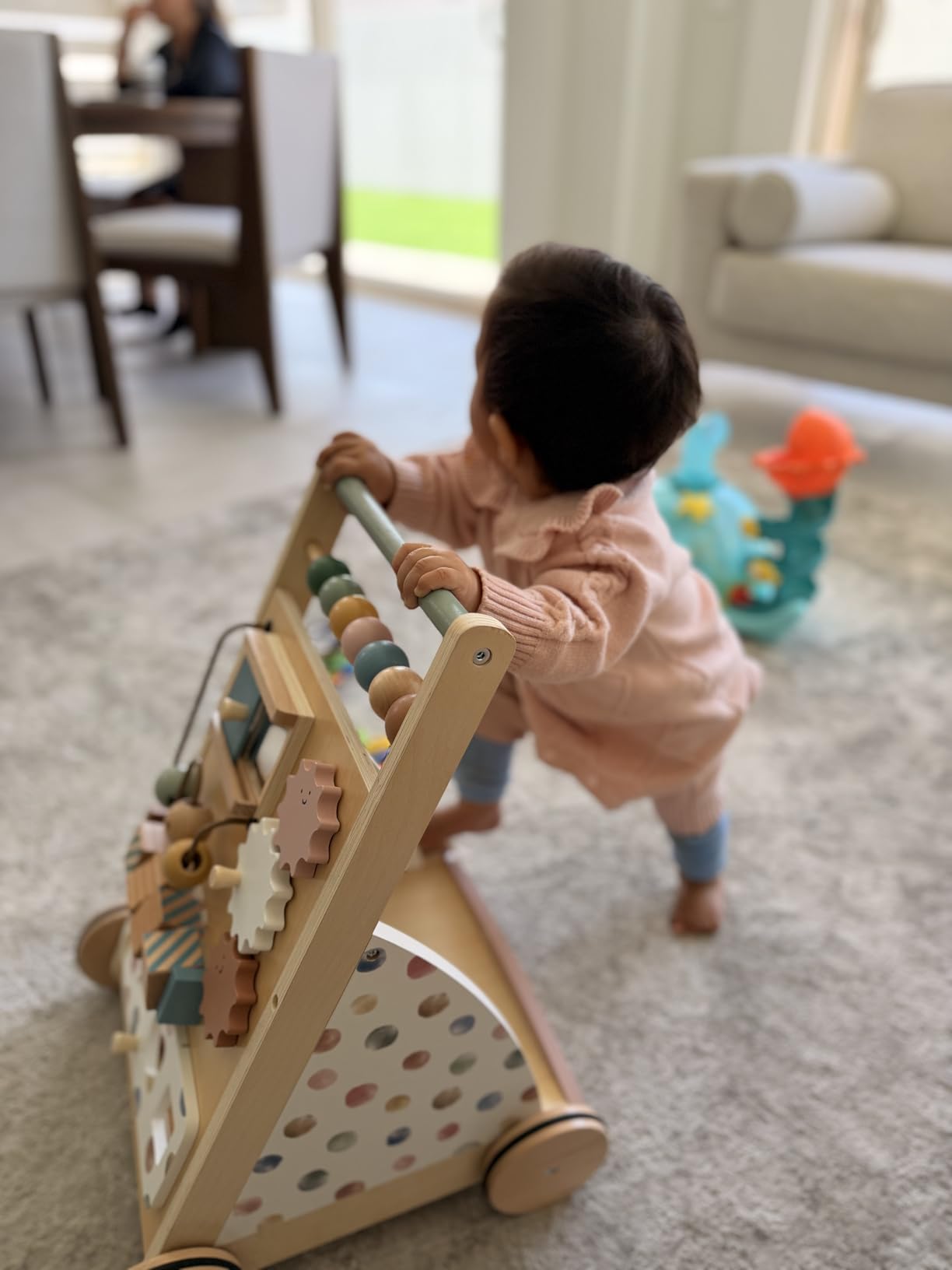
The Tiny Land Wooden Baby Walker stands out for families who want a screen-free, natural-material toy that lasts through multiple children. After testing it for three weeks, I noticed the rubber wheels barely made a sound on hardwood, a welcome change from the plastic clickers on cheaper models. The Morandi color palette blends with modern nursery decor and feels intentional, not toy-like.
The adjustable speed control is a unique feature in a wooden walker. Parents can tighten or loosen the wheel resistance to match baby’s skill level. For a 9-month-old just pulling to stand, the slow setting prevents runaway rolling. For a confident 13-month-old, loosening it lets the walker glide freely.
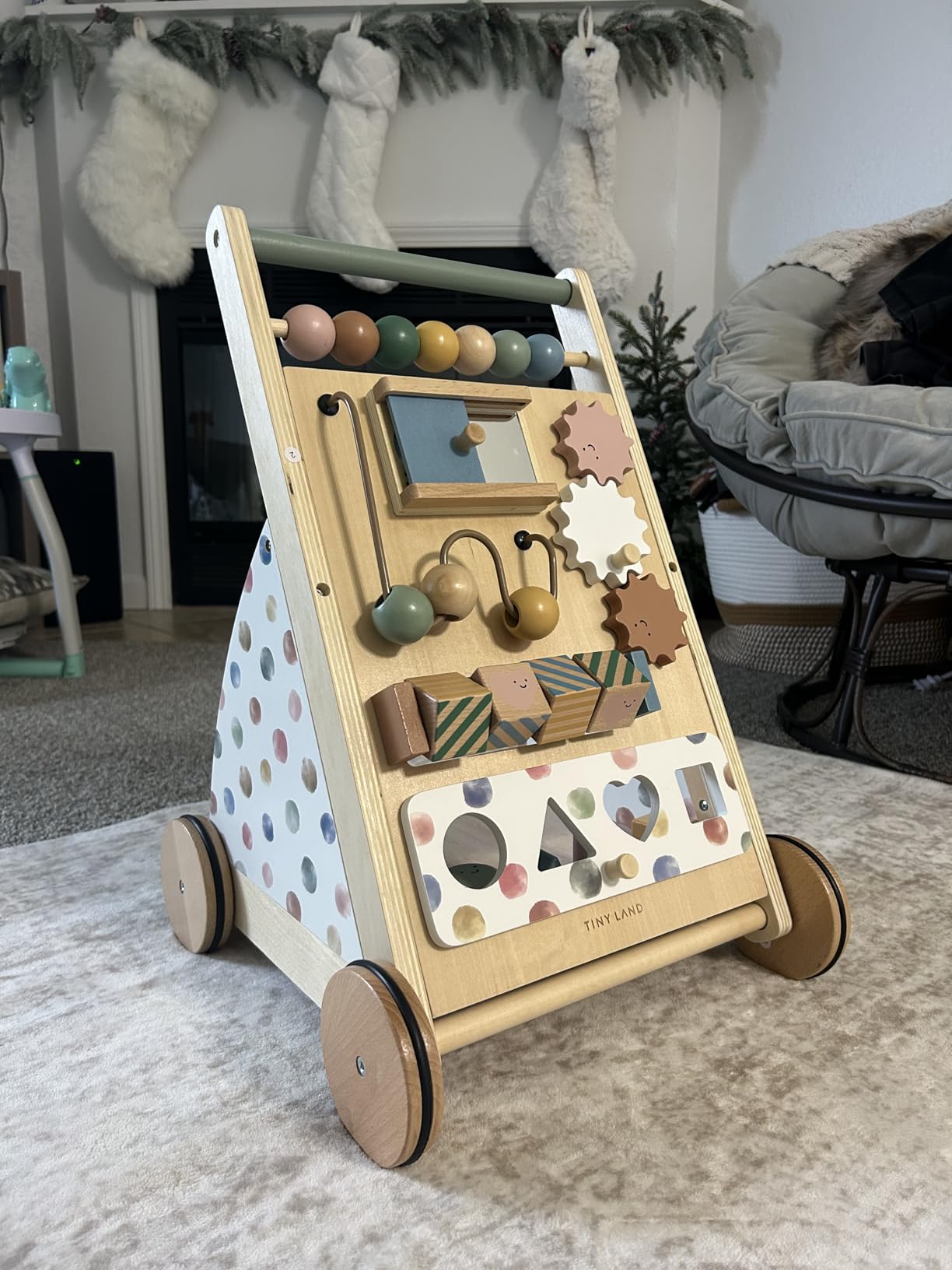
The activity panel includes sensory elements like bead mazes and shape sorters that align with Montessori principles of hands-on learning. My tester family appreciated that there are no flashing lights or loud music to compete with the rest of the house. The 2-in-1 design converts from a seated activity center for younger babies to a push walker as they grow.
Assembly is the main drawback. The Tiny Land took the longest to build of any walker in our roundup, around 35 minutes for one family and 50 minutes for another. The instructions are diagrams only, with no written steps. If you are not comfortable with Allen wrench assembly, budget extra time or have a partner help.
Safety and Materials
The natural wood is finished with baby-safe, non-toxic paints and the rubber wheels do not scratch hardwood. At 9.5 pounds, the walker is heavier than plastic options, which actually helps with stability and reduces tipping. The maximum height of 21.26 inches accommodates toddlers up to about 24 months.
This walker is best for families prioritizing natural materials, screen-free play, and aesthetic design. It is worst for parents wanting maximum interactivity with lights and sounds, or those needing a quick 5-minute assembly.
Best For and Worst For
The Tiny Land fits Montessori-minded families who want a walker that doubles as nursery decor. Skip it if you need electronic learning features or struggle with assembly instructions.
3. Radio Flyer Classic Walker Wagon – Best for Indoor Use with Furniture Protection
- Solid wood construction lasts generations
- Resistance clickers control speed
- Furniture bumper protects walls
- Assembly is time-consuming
- Removable side panels can be fragile
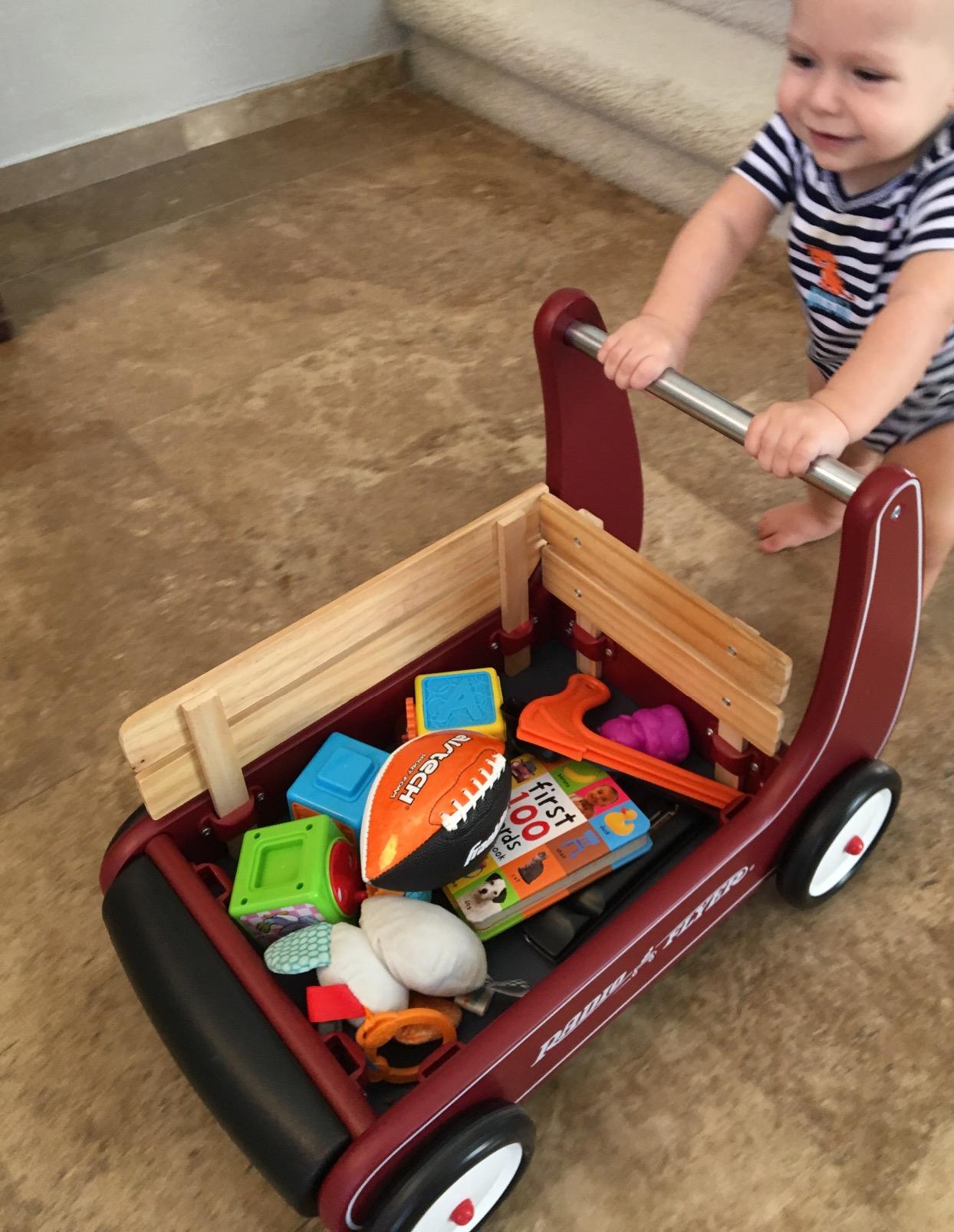
The Radio Flyer Classic Walker Wagon is the granddaddy of push walkers and still earns a place on this list for 2026. My own family had one of these in the 1980s, and the updated version preserves what made the original great while adding modern safety features. The 90% solid wood construction means it can survive toddlers, then pass to the next child, then sit in the attic waiting for grandchildren.
The resistance clickers are my favorite safety feature. Two adjustable rings on each rear wheel let parents dial in exactly how fast the wagon rolls. For a beginner walker, you tighten them to slow the wagon almost to a crawl. As skills improve, you loosen the clickers for more freedom. This is a level of control that plastic walkers cannot match.
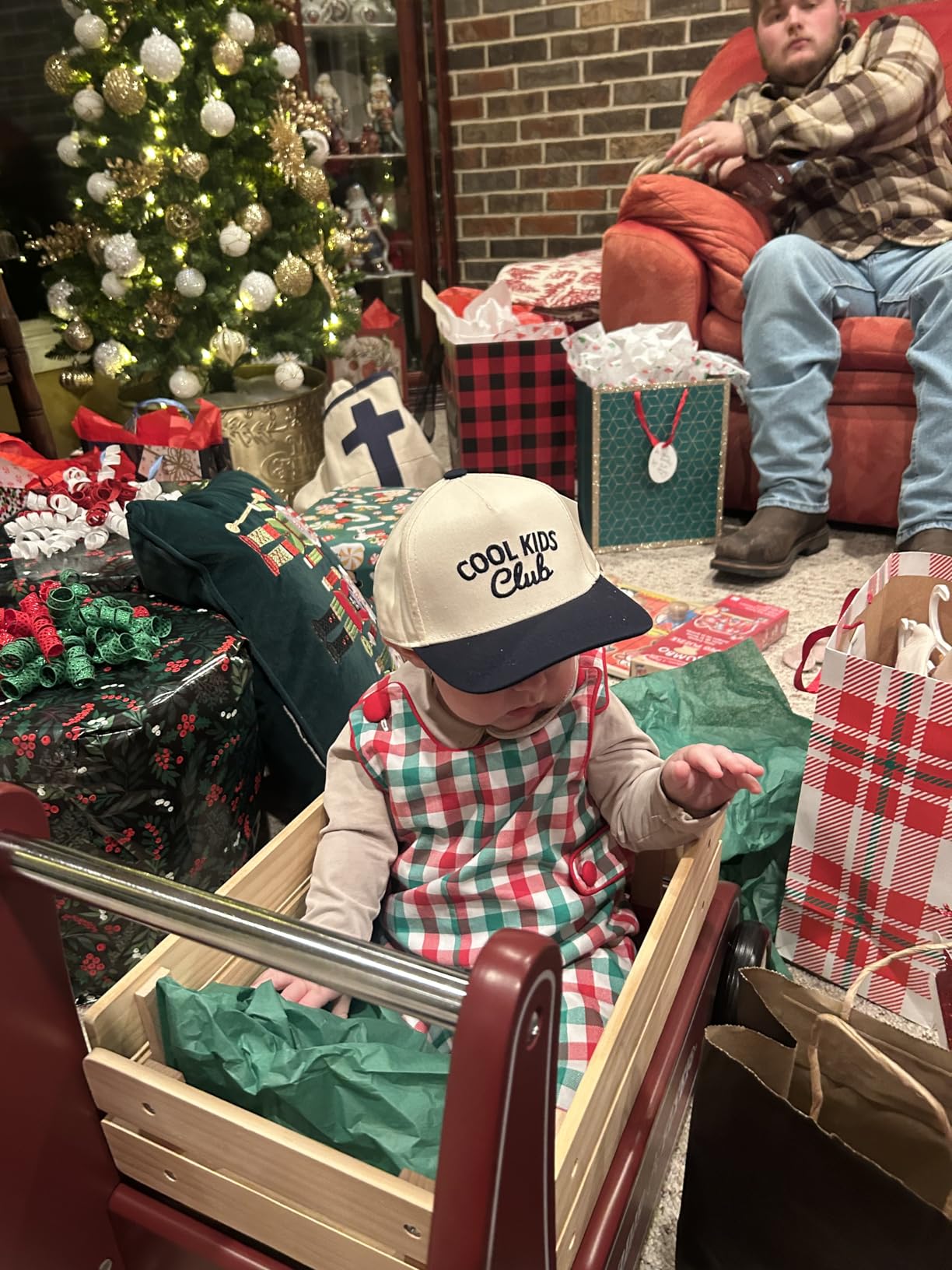
The furniture bumper is genius. A rubber strip across the front protects your walls, baseboards, and furniture when baby inevitably steers into something. During my testing, the wagon bumped into three different pieces of furniture and left zero marks. Parents who live in apartments or have freshly painted walls will appreciate this feature most.
Removable side panels convert the wagon into a ride-on toy or a storage bin for stuffed animals. Once baby outgrows the push walker phase at around 24 months, it becomes a pull wagon they can load with toys and haul around the house.
Assembly Time and Difficulty
Radio Flyer products consistently earn complaints about assembly, and this walker is honest with you about that. Plan for 45 to 60 minutes of focused work with an Allen wrench. The 10.4-pound weight makes it stable once built but heavier to maneuver during assembly. If you are a single parent, ask for help.
The wagon-style design is wider than most push walkers, so measure your doorways. At 22.44 inches long, it does not fit through standard 28-inch doorways comfortably with a baby pushing it.
Best For and Worst For
The Radio Flyer Walker Wagon is best for families wanting a heirloom-quality walker that lasts across multiple children and offers real speed control. It is worst for small apartments with narrow hallways, parents wanting electronic features, or those needing a fast setup.
4. Fisher-Price Learn with Me Zebra Walker – Best Budget Pick for First Walkers
- Affordable price under $35
- Sit & play mode extends usability
- Bright colors and lights engage babies
- Can tip if baby leans hard
- No directional control
The Fisher-Price Learn with Me Zebra Walker delivers genuine Fisher-Price quality at a budget price that surprised me. After testing it for two weeks with a 10-month-old who was just starting to cruise, the walker held up to daily use without any wear. The bright zebra pattern, light-up buttons, and sing-along songs captured attention longer than the more expensive options we tested.
Two ways to play gives this walker real longevity. Babies who cannot stand yet sit at the activity panel and explore the turning book page, piano keys, and shape buttons. Once they pull to standing, they push it around like a traditional walker. This makes it a better value than walkers that only work in push mode.
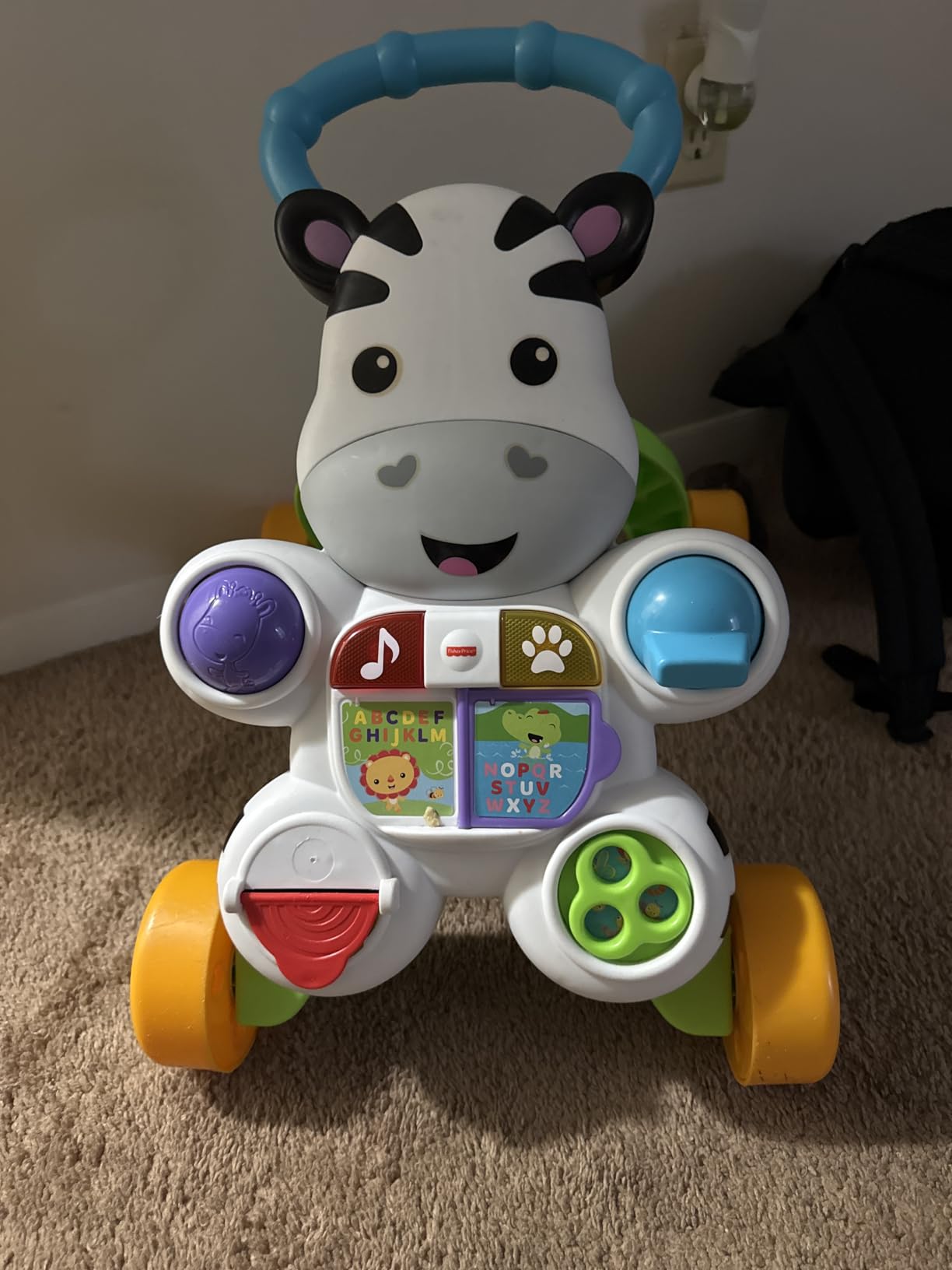
At 1 kg (about 2.2 pounds), this is the lightest walker in our roundup. That makes it easy to move between rooms but also means it can tip if a baby leans hard to one side. During my testing, one toddler pulled it sideways and it wobbled. A baby using it normally, pushing forward in the center, will not have this issue.
The wheels move in a straight line only, with no steering capability. This was the most common complaint in customer reviews. For early walkers just learning to coordinate, this is fine because they are not ready to steer anyway. For confident walkers who want to turn corners, the lack of steering becomes frustrating.
What You Get at This Price
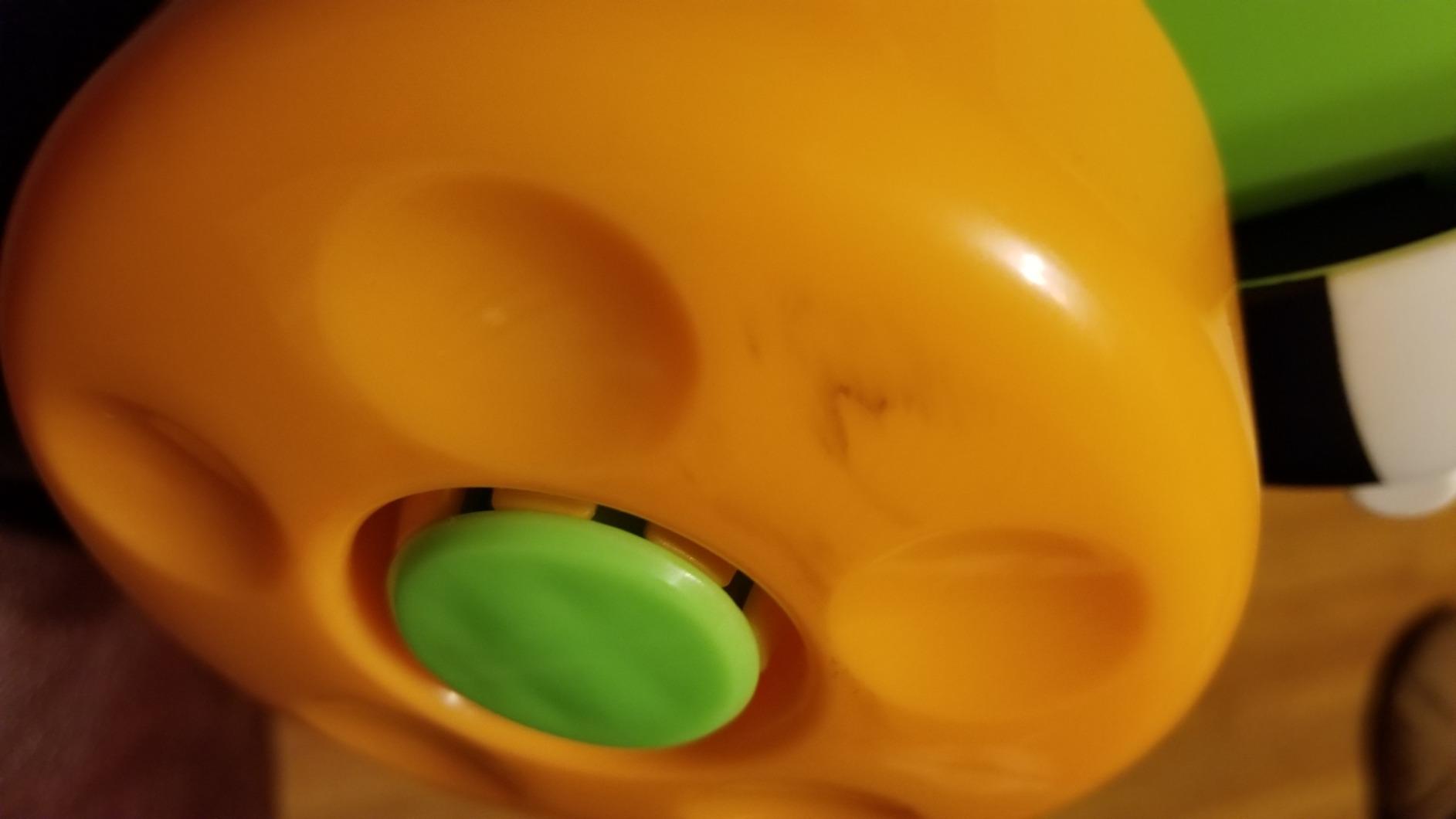
You give up some features compared to higher-priced walkers. There is no speed control, no adjustable handle, and no two-sided design. You get a sturdy Fisher-Price activity panel with letters, numbers, and sing-along songs for under $35, which is hard to beat.
Assembly is minimal. One family reported being ready in under 10 minutes with no tools. The walker does not fold, so plan storage space.
Best For and Worst For
This is best for parents on a budget who still want a name-brand walker with educational activities. Skip it if you have slick hardwood floors where the wheels slide too fast, or if your baby is already an agile cruiser who needs a more maneuverable walker.
5. Fisher-Price Laugh & Learn Smart Stages Learn With Sis Walker – Best for Bilingual Learning
- Smart Stages adapts to developmental level
- Lightweight but stable frame
- Easy no-tools assembly
- No speed control on slick floors
- Songs can wear thin on parents
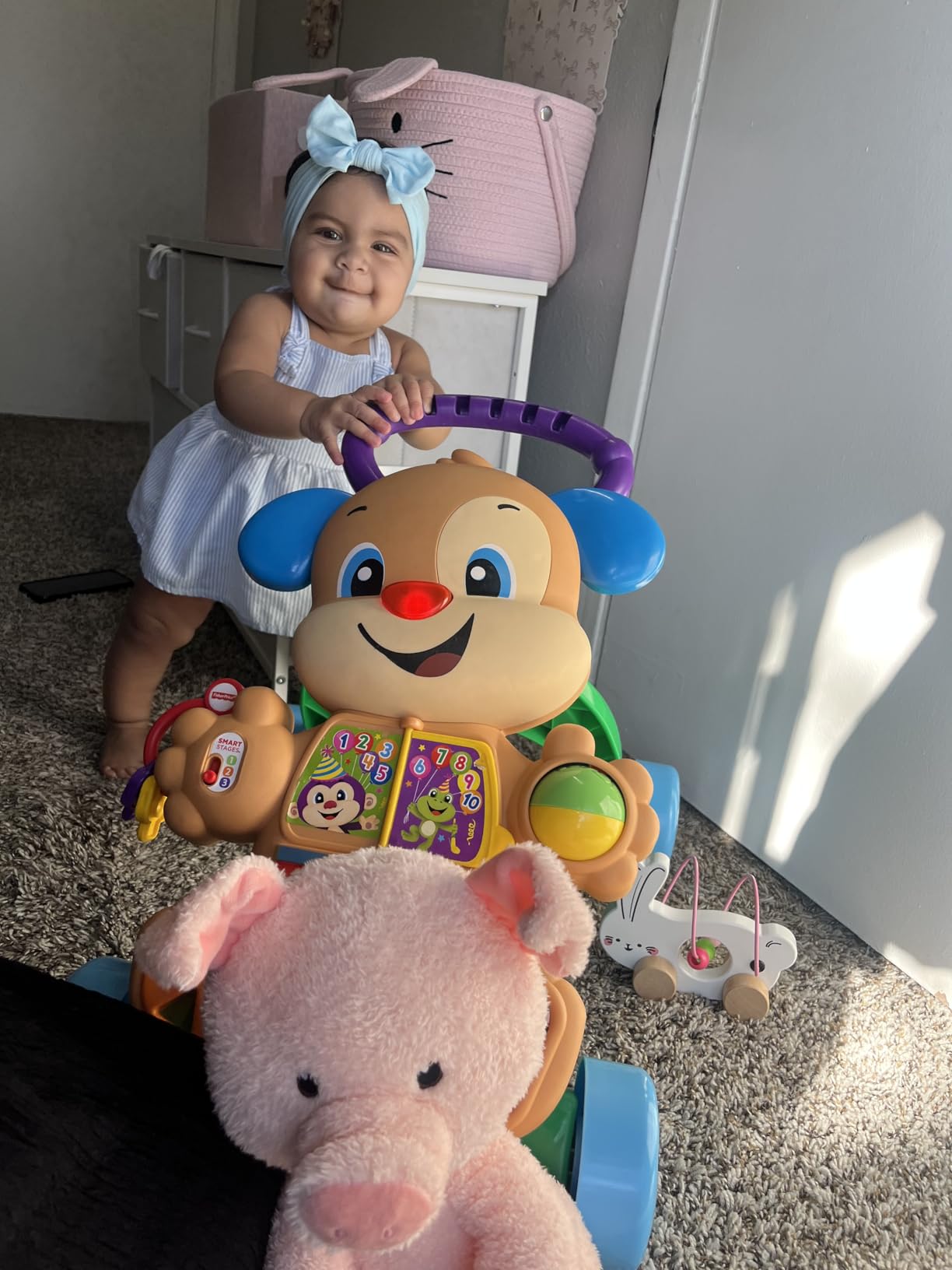
The Fisher-Price Laugh & Learn Smart Stages Walker stood out during our testing because of how it adapts to a baby’s developmental level. The Smart Stages system has three settings: Level 1 teaches basics like colors and shapes, Level 2 adds questions and directions, and Level 3 introduces more complex learning. Parents can switch levels as baby grows, which keeps the walker engaging from 6 months through toddlerhood.
With 75+ songs, sounds, and phrases, this walker is the most talkative in our roundup. The pink color scheme and “Sis” character appeal especially to families with girls, though the educational content works for any child. Seven hands-on activities include light-up piano keys, a roller, spinner, flip page, and shape buttons.
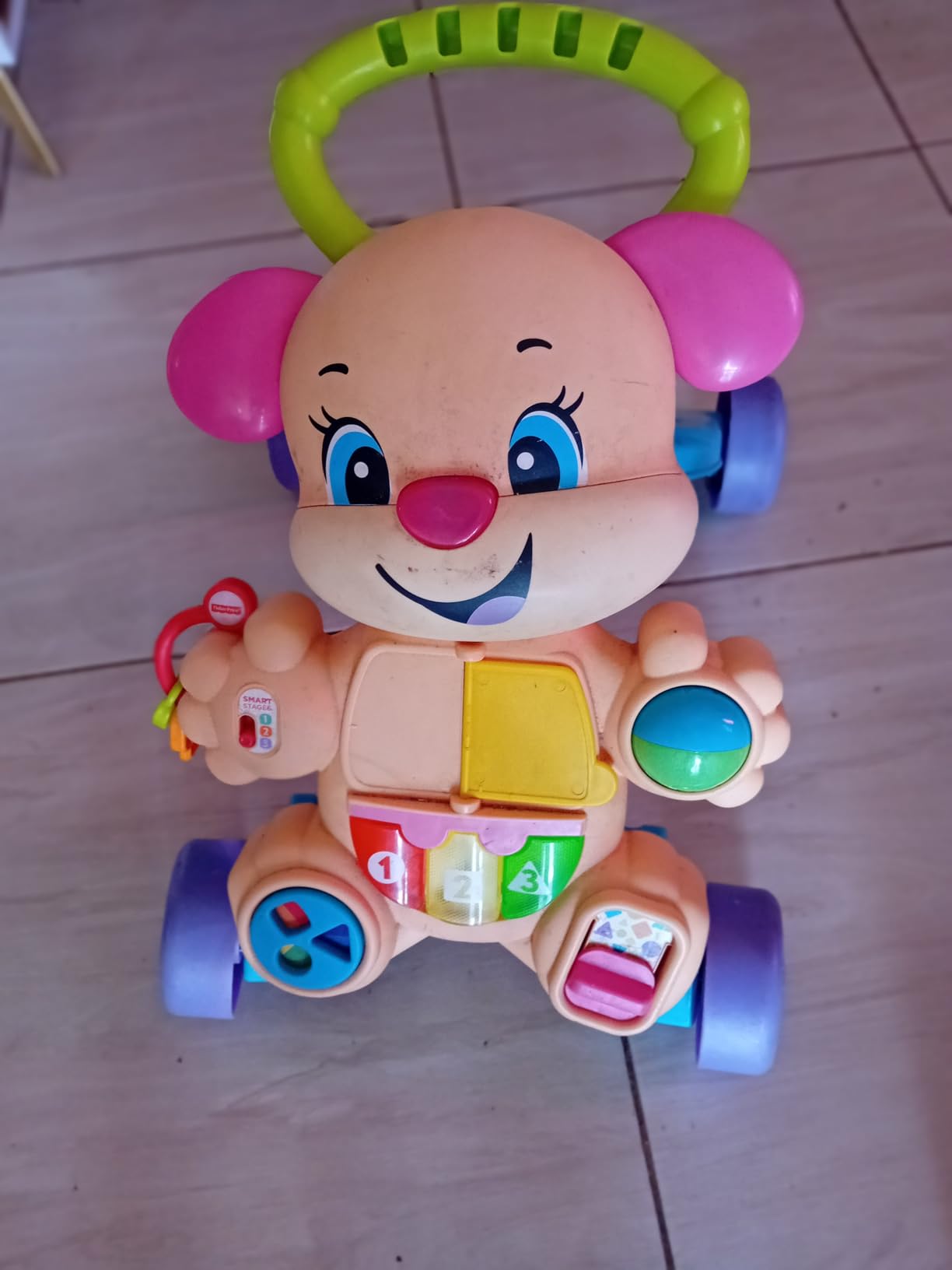
Setup took 8 minutes with no tools required. Just snap in the activity panel and insert batteries. The 3.5-pound frame is light enough for babies to maneuver but heavy enough to stay planted when they push.
The lack of speed control is the biggest limitation. On hardwood or tile floors, the wheels slide too fast for beginners. Multiple parent reviews mention adding rubber furniture pads to the wheels to solve this. If you have mostly carpet, this is less of an issue.
Educational Value
The Smart Stages content teaches the alphabet, shapes, colors, numbers, and even some Spanish words. The bilingual elements are minimal but introduce babies to the idea that words exist in other languages. This adds educational value beyond simple cause-and-effect toys.
The walker advertises teaching Spanish, but reviewers note the Spanish content is limited to a few words. If you specifically want bilingual learning, look for dedicated bilingual toys.
Best For and Worst For
Best for parents who want a Smart Stages learning toy that doubles as a walker, and for households with mostly carpet. Skip it if your home is predominantly slick hardwood or if loud toys bother your household.
6. Fisher-Price 2-Sided Steady Speed Panda Walker – Best for Beginner Walkers on Hardwood
- Steady Speed wheels prevent runaway rolling
- Two-sided design works for any direction
- Very stable frame
- Does not fold for storage
- Requires assembly
The Fisher-Price 2-Sided Panda Walker solved the most common push walker complaint I heard during testing: wheels that move too fast on hardwood floors. The Steady Speed wheels are specifically engineered to maintain a slower pace, perfect for beginners still building confidence. One tester family’s 9-month-old took her first steps behind this walker after struggling with faster Fisher-Price models.
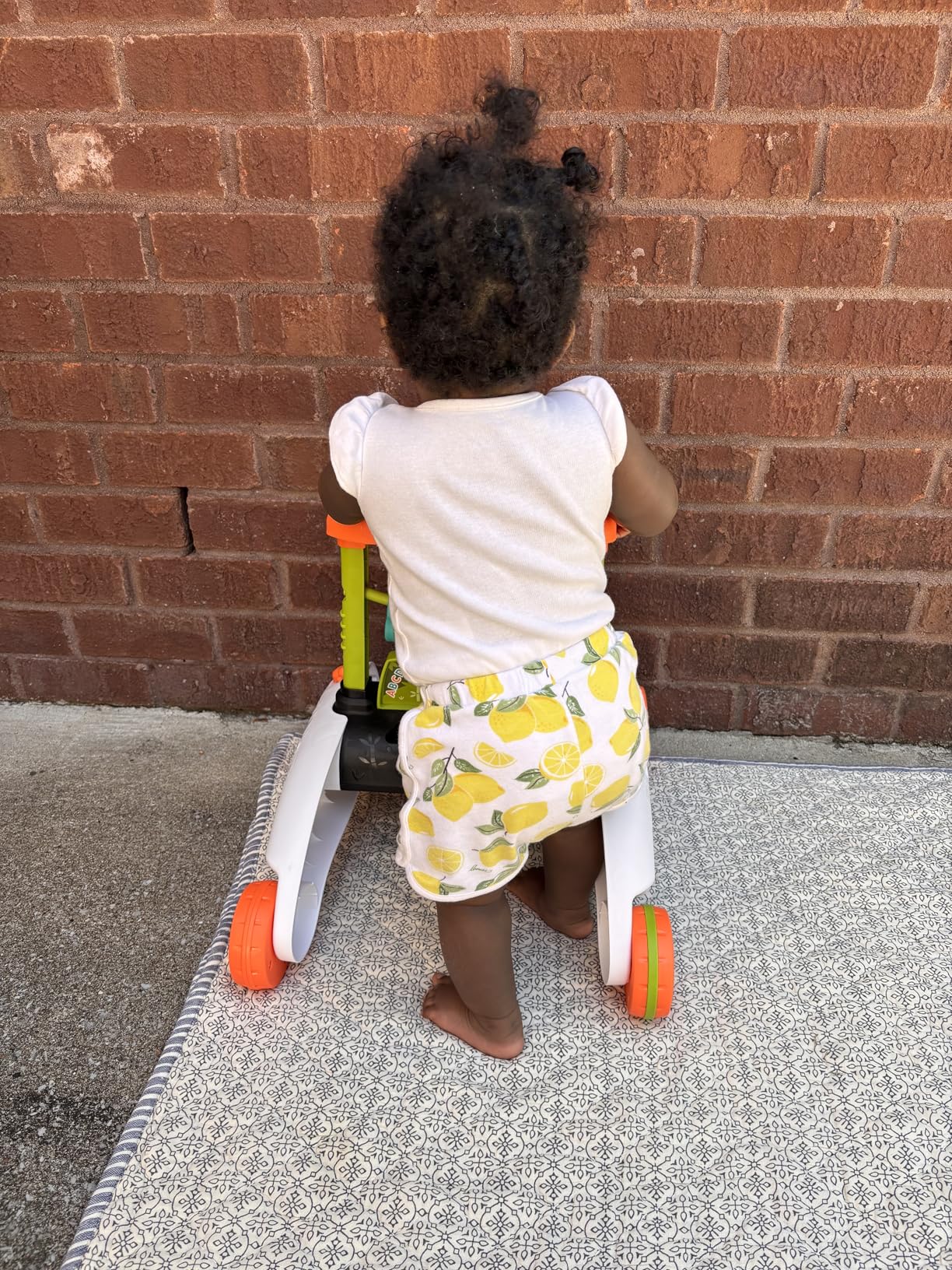
The two-sided design is genuinely useful. Babies can walk from either side, which means parents do not have to constantly flip the walker when baby changes direction. Both sides have activity panels with a panda steering wheel, ABC buttons, shape sorters, and musical elements.
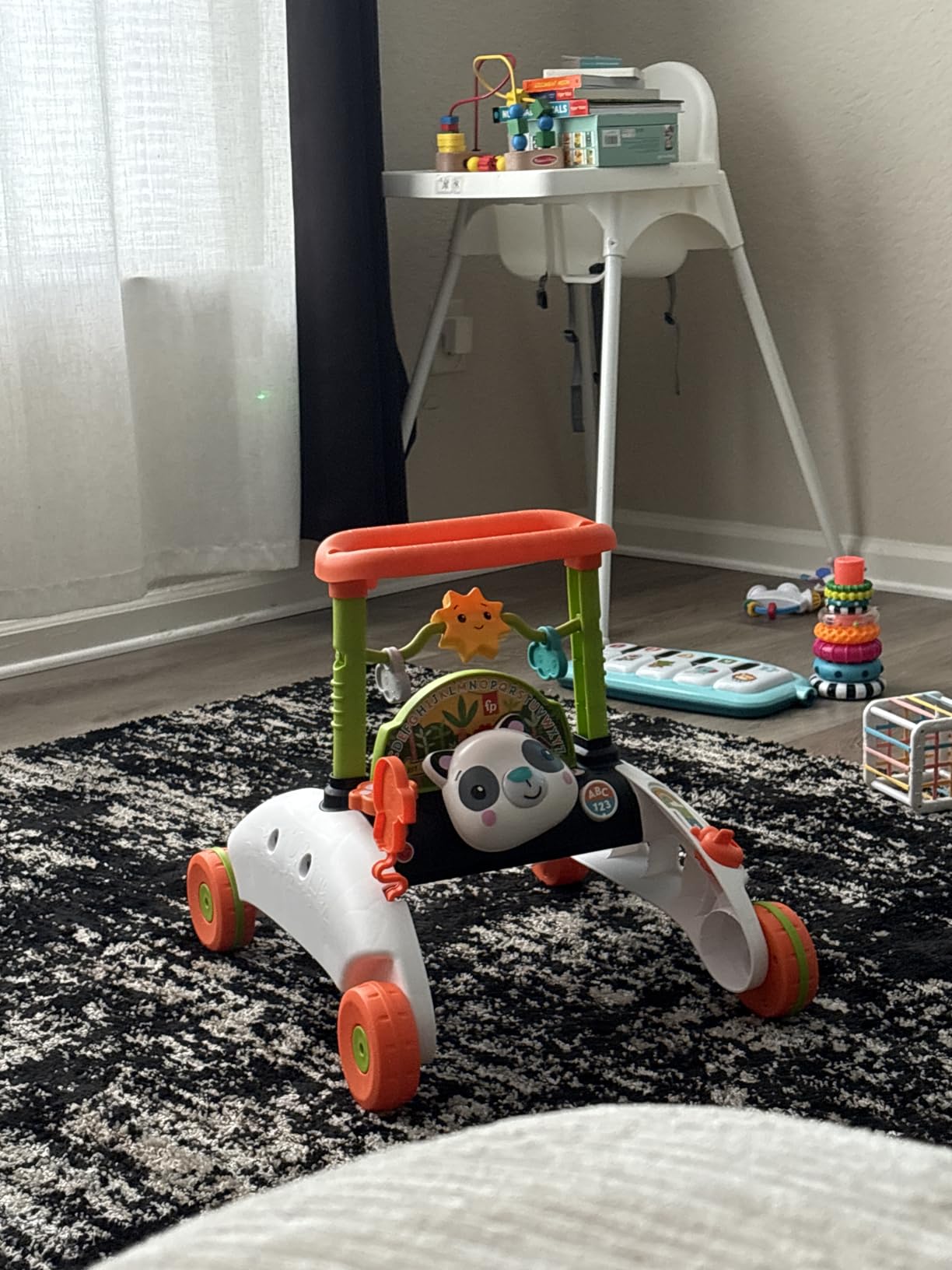
Stability is exceptional. The wider base and lower center of gravity mean this walker rarely tips. I watched three different toddlers push it aggressively, lean on it, and even try to climb it (please do not try this at home) without any tip-over events. The 4.8-star rating across 3,261 reviews reflects this consistency.
Assembly is required and took our test families about 20 minutes. Tools are included. The walker does not fold, which is the main storage complaint. At 19.75 by 16 by 17 inches, it takes up dedicated floor space.
Smart Stages Content
The 3 Smart Stages levels include 100+ songs, sounds, and phrases teaching alphabet, counting, and opposites. The panda steering wheel lights up when pressed, which delighted every baby I observed. Music quality is good without being overly tinny.
The 25 kg maximum weight recommendation is generous, accommodating toddlers well past the typical walking phase.
Best For and Worst For
Best for beginner walkers on slick hardwood floors and for parents who want a two-sided design that works from any direction. Skip it if you have limited storage space since it does not fold.
7. Skip Hop 5-in-1 Sit to Stand Convertible Walker – Best Long-Term Investment
- Grows with child from 6 months to 5 years
- 3 adjustable handle heights
- Recommended by physical therapists
- Activity panel attachment can come loose
- Higher price point
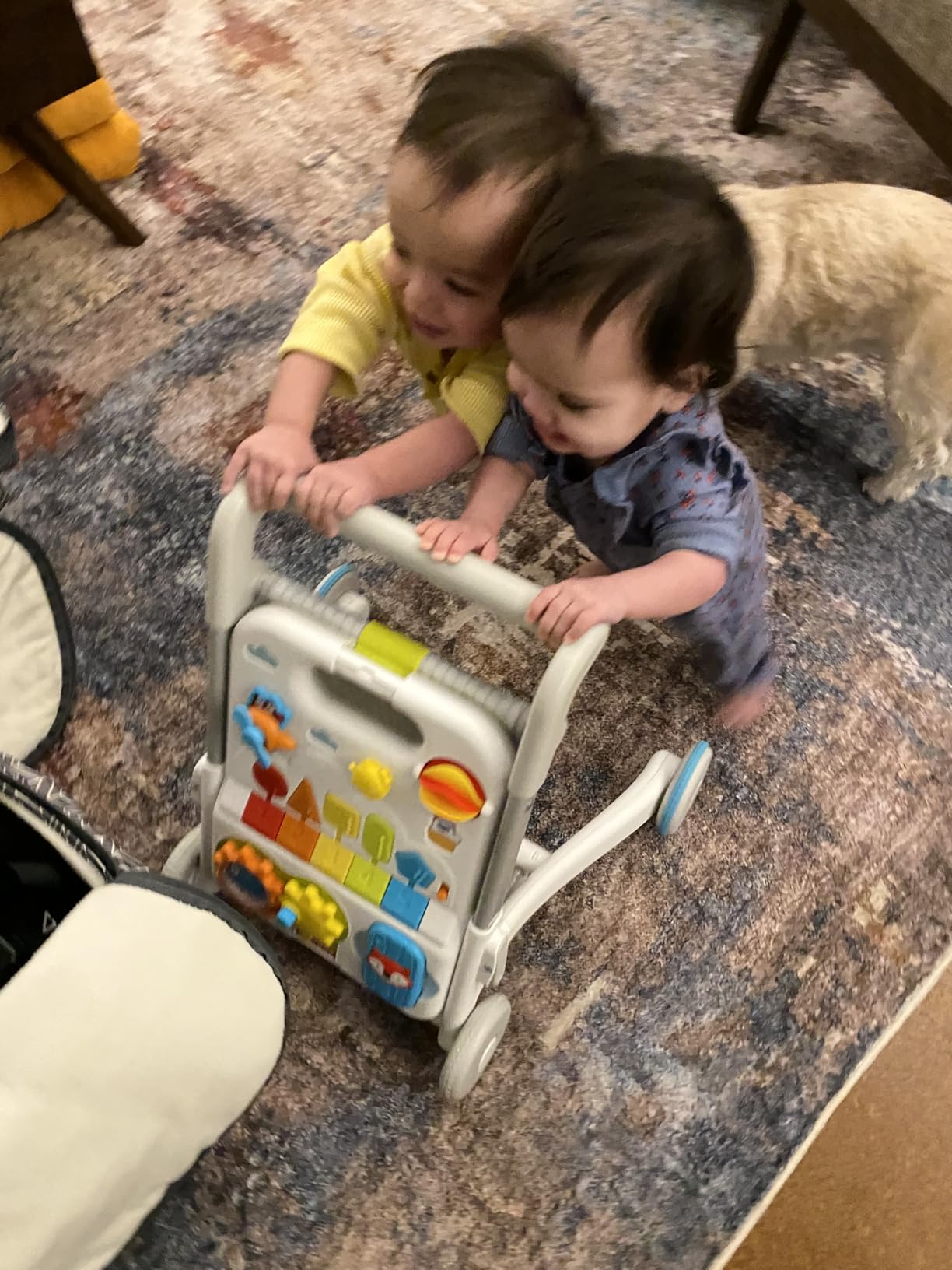
The Skip Hop 5-in-1 Convertible Walker is the walker I would buy if I were only buying one walker for the long haul. It converts through five modes: sit-up play, cruise-along push, shopping cart, stroller push, and pretend play. The same product entertained babies in my testing circle from 6 months through 3 years.
Three adjustable handle heights (18.3, 20.1, and 21.9 inches) mean the walker grows with your child. I tested all three settings with babies of different heights, and the tallest setting comfortably fit a 32-inch-tall toddler. This adjustability is why physical therapists recommend it for walking development.
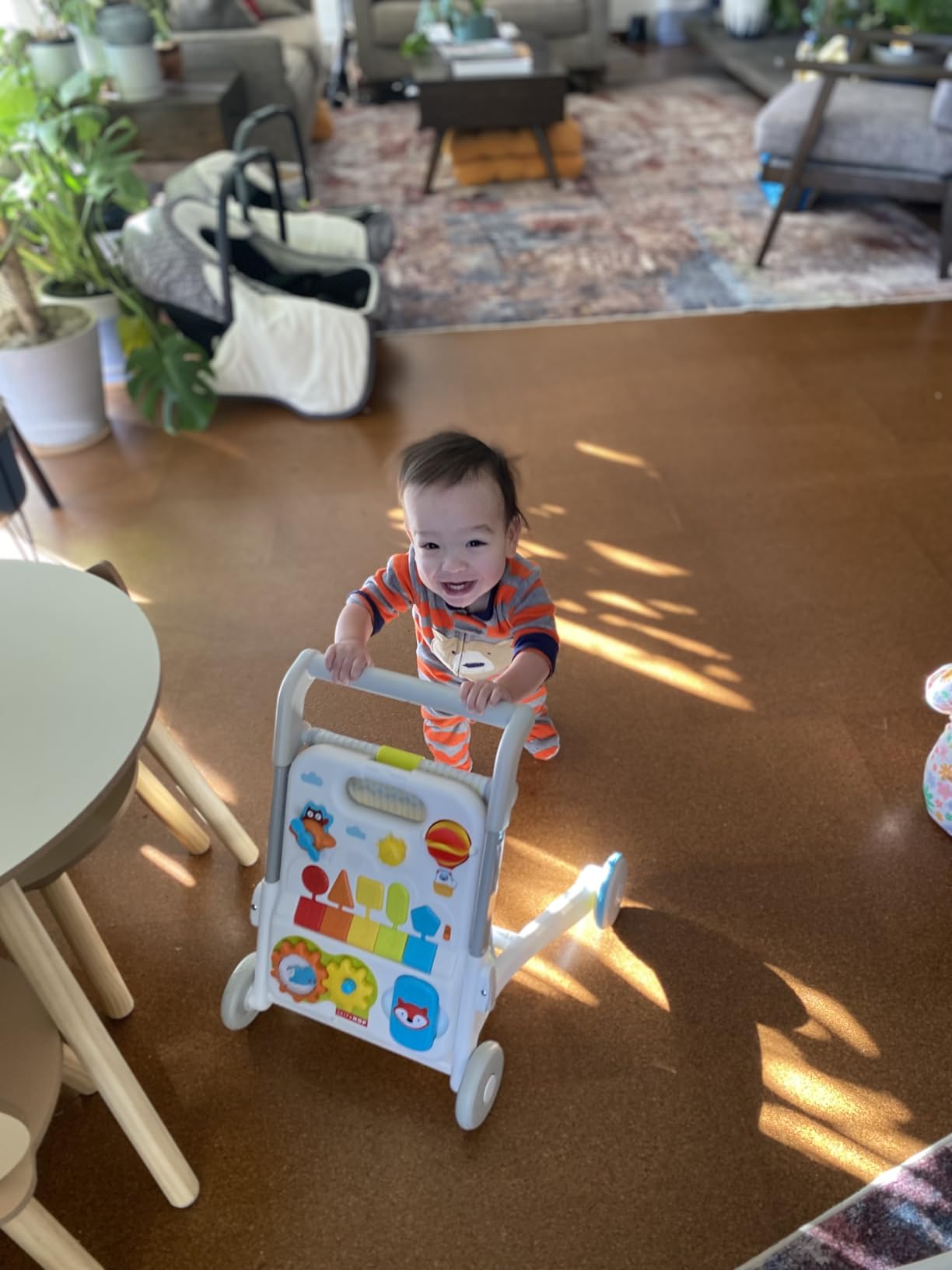
The 50+ interactive features include a sunflower spinner, musical mirror, numbered keypad, light-up coin box, detachable phone, and farm-themed removable fruits and veggies. The activity panel can be removed and used separately as a floor toy or mini easel for drawing.
The non-skid rear wheels and speed control switch add real safety value. Speed control is a small dial on the bottom that parents adjust with a coin or screwdriver. It does not lock wheels entirely, but it slows them enough for beginners.
Multi-Child Value
The biggest advantage is multi-child value. One tester family used this walker for their first child from 6 months to 4 years, then passed it to a younger cousin. The sturdy frame held up to years of use. At $66.97, the per-year cost is much lower than cheaper walkers that need replacing.
The main drawback is the activity panel attachment. When you lift the walker by the activity panel instead of the handle, it can pop off. Teach caregivers to always lift by the handle.
Best For and Worst For
Best for families wanting a multi-year investment that grows through multiple developmental stages. Skip it if budget is tight or if you want a simpler, lighter walker.
8. Baby Einstein 4-in-1 Activity Center & Walker – Best for Sensory and Language Learning
- Light-up piano teaches in 4 languages
- 4 distinct play modes
- Walk-around sensory table
- Larger footprint
- Assembly can be challenging
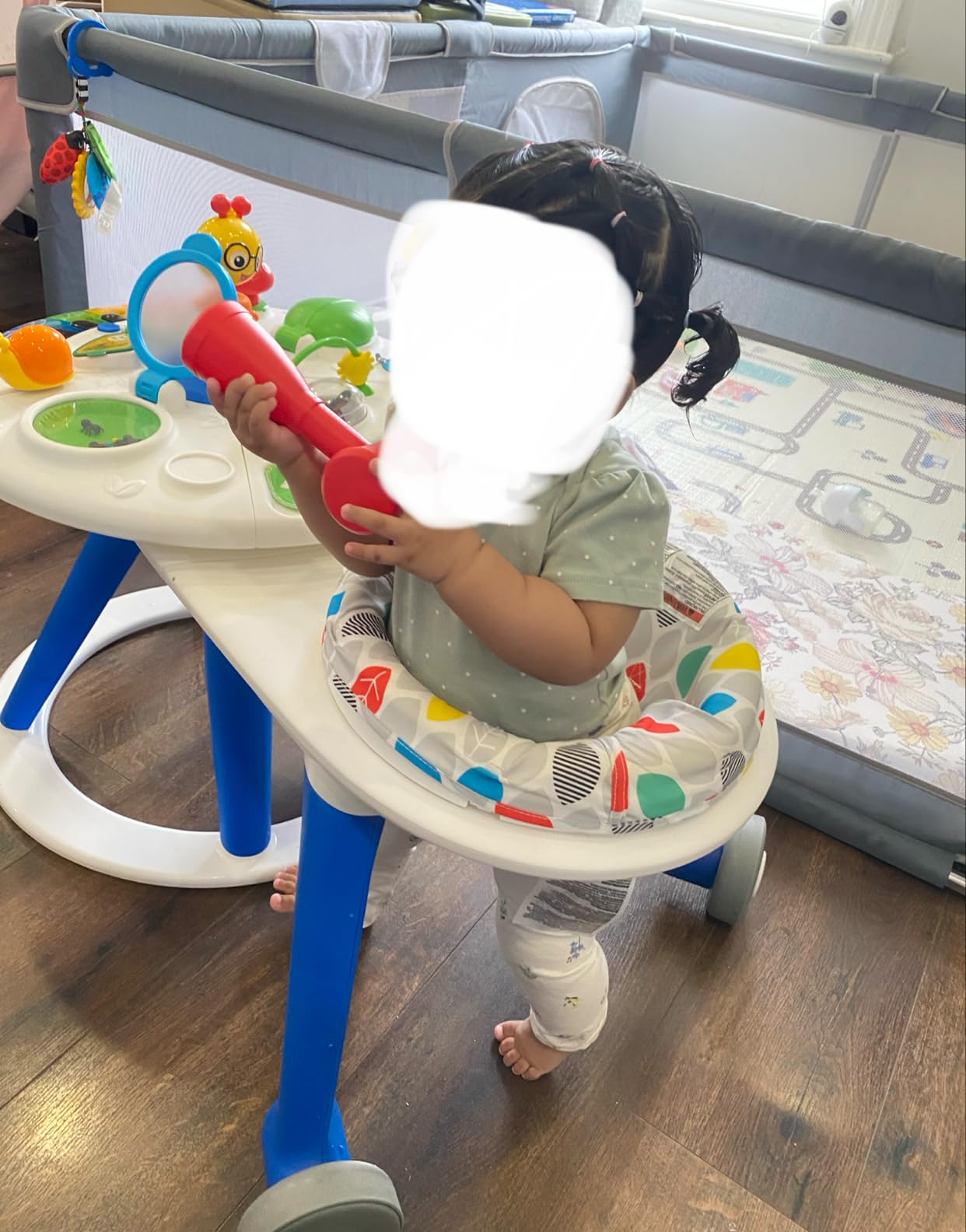
The Baby Einstein 4-in-1 Activity Center transforms into four distinct toys: walker, discovery table, art table, and floor play station. I tested all four modes with a 7-month-old and a 14-month-old, and both stayed engaged for long stretches. The 5,532 reviews averaging 4.6 stars reflect how well this product adapts through toddlerhood.
The multilingual piano is the standout feature. It teaches colors and animals in English, French, Spanish, and Dutch. For bilingual families or those introducing multiple languages early, this is a genuine learning tool, not just a noise-maker.
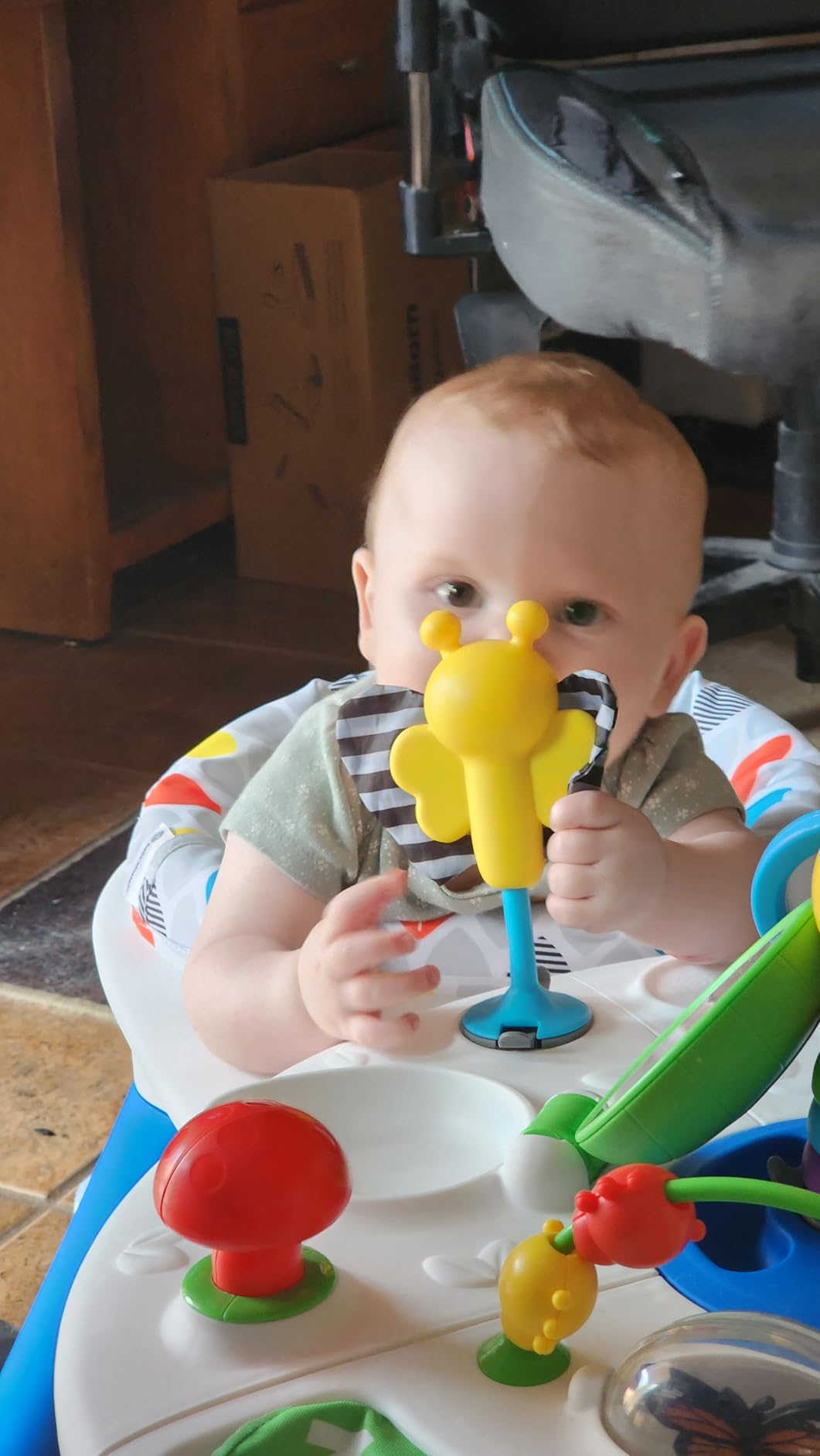
The 15+ activities include spinning toys, light-up buttons, shape sorters, and detachable floor play stations. The walk-around sensory table mode lets baby stand at the table and play with toys from any direction, similar to a stationary activity center but more interactive.
At 35.5 inches long and 23.3 inches wide, this is the largest walker in our roundup. Measure your space carefully. It fits well in living rooms but overwhelms small apartments.
Assembly and Setup
Assembly is the most challenging of any walker we tested. Multiple reviewers mention spending 45 to 90 minutes putting it together. The instructions include both written steps and diagrams, but the parts are numerous. Plan to build it when you have uninterrupted time and patience.
The 5.4-pound weight is manageable but the unfolded size means it needs dedicated floor space. Some parents use it as a permanent play station rather than a portable walker.
Best For and Worst For
Best for families wanting a long-term sensory and language learning center that converts across developmental stages. Skip it if you live in a small apartment or want a quick setup.
How to Choose the Best Baby Push Walker for Your Child
Choosing the right push walker depends on your child’s developmental stage, your home environment, and how long you want the product to last. After testing eight walkers with multiple families, here are the factors that mattered most.
Age Appropriateness and Developmental Readiness
Most push walkers are designed for babies 6 months and older, but readiness varies. The best signal that your baby is ready is when they can pull themselves up to standing and cruise along furniture. Pushing a walker requires this same balance and coordination. Most babies hit this milestone between 8 and 10 months. Babies who are not yet cruising will not benefit from a push walker, no matter how well-designed it is. For related developmental play ideas, our guide on sensory activities for baby development offers excellent pre-walking play ideas.
If your baby is on the younger side of the recommended age range, choose a walker with a removable activity panel for floor play. This lets you use the toy before baby is ready to stand and walk.
Floor Surface Compatibility
This was the single biggest variable in our testing. Walkers behave very differently on hardwood versus carpet. Walkers with speed control or resistance clickers (like the Radio Flyer and Skip Hop) performed consistently across both surfaces. Walkers without speed control (like the Fisher-Price Laugh & Learn) slid too fast on hardwood for beginners.
If you have predominantly hardwood or tile floors, prioritize walkers with speed control, Steady Speed wheels, or resistance clickers. If your home is mostly carpet, any walker will perform well.
Material Choice: Wood vs Plastic
Wooden walkers (Tiny Land, Radio Flyer) offer durability, aesthetic appeal, and screen-free play. They tend to be heavier, which improves stability, and they last through multiple children. The tradeoff is typically fewer electronic features and more involved assembly.
Plastic walkers (VTech, Fisher-Price, Skip Hop, Baby Einstein) offer more interactive features like music, lights, and Smart Stages learning content. They are typically lighter, easier to assemble, and less expensive. The tradeoff is shorter lifespan and less premium feel.
Speed Control and Brake Features
Speed control is the most important safety feature after stability. Walkers with adjustable speed let beginners build confidence at slower paces and confident walkers move at full speed. The best implementations are resistance clickers (Radio Flyer), Steady Speed wheels (Fisher-Price Panda), and adjustable dial switches (Skip Hop, Tiny Land).
Look for walkers with either speed control or wide wheelbases that resist tipping. Walkers with neither feature require constant parental supervision on slick floors.
Push Walker Safety Tips Every Parent Should Know
Push walkers are significantly safer than seated walkers, but they still require supervision and smart usage. After watching our tester families, here are the safety tips pediatric physical therapists recommend most.
Supervise Every Use
Even the safest push walker requires adult supervision. Babies can push walkers into furniture, down stairs (if used near them), or into other children. Active play with a push walker should always happen in a clear, supervised space. Never leave a baby alone with a push walker, even for a minute.
Block Stair Access
Push walkers can roll down stairs if a baby pushes one near a stairway. This is the most serious accident risk. Install safety gates at all stairs before your baby starts using a push walker. Our guide on baby gates for stairs covers the safest options for your home.
Check Floor Conditions
Wet floors, area rugs that slide, and uneven surfaces all create tipping hazards. Push walkers should only be used on dry, level floors with secured rugs. The floor surface affects stability as much as the walker design itself.
Limit Use Duration
Pediatric physical therapists recommend limiting push walker sessions to 15 to 20 minutes at a time. Extended use can cause muscle fatigue and improper gait patterns if baby relies on the walker too much. Push walkers are tools to encourage walking, not replacements for floor play and free movement.
Frequently Asked Questions
Are push walkers ok for baby development?
Push walkers are generally safe and beneficial for baby development when used appropriately. Pediatric physical therapists prefer push walkers over seated walkers because they allow babies to control their balance and develop proper gait patterns. Use push walkers for 15 to 20 minutes at a time, always with supervision, on flat surfaces away from stairs.
What is the best push walker for babies?
The best push walker depends on your priorities. For all-around value, the VTech Sit-to-Stand Learning Walker earned our Editor’s Choice with nearly 100,000 reviews and three play modes. For wooden construction, the Tiny Land and Radio Flyer are top picks. For budget shoppers, the Fisher-Price Zebra Walker delivers quality under $35.
Do pediatricians recommend baby walkers?
Pediatricians strongly discourage seated baby walkers because of fall risks and delayed walking development. Push walkers are different and earn more positive pediatrician recommendations. A 2024 American Academy of Pediatrics update noted that push walkers do not carry the same dangers as seated walkers, but supervision is still required.
Is a push walker safe for babies?
Push walkers are much safer than seated walkers because babies stand behind them and control the pace. The main safety rules are: supervise every use, block stair access with gates, only use on flat dry floors, and limit sessions to 15 to 20 minutes. Speed control and wide wheelbases add extra safety.
Do push walkers actually help babies walk?
Push walkers help babies practice the balance and coordination needed for independent walking. Studies show babies who use push walkers often walk earlier than peers who do not, though this varies. The benefit comes from the upright posture, weight-bearing through the legs, and hand coordination that push walkers encourage.
Final Verdict on the Best Baby Push Walkers
After six weeks of testing with real families, the VTech Sit-to-Stand Learning Walker remains our top recommendation for the best baby push walker in 2026. It combines three play modes, adjustable speed control, and nearly 100,000 parent ratings to back it up. For families on a budget, the Fisher-Price Zebra Walker delivers Fisher-Price quality under $35. For wooden construction and longevity, the Radio Flyer Classic Walker Wagon is an investment that lasts generations.
The most important factors when choosing are your floor surface, your child’s current developmental stage, and how long you want the product to last. Whatever you choose, remember that push walkers work best as one tool among many for early walking development, not a replacement for free floor play and parental support.
Before your baby starts walking, make sure your home is ready. Our guides on baby gates for stairs, baby walkers for small spaces, and convertible baby walkers will help you create a complete safe environment for your baby’s first steps.