
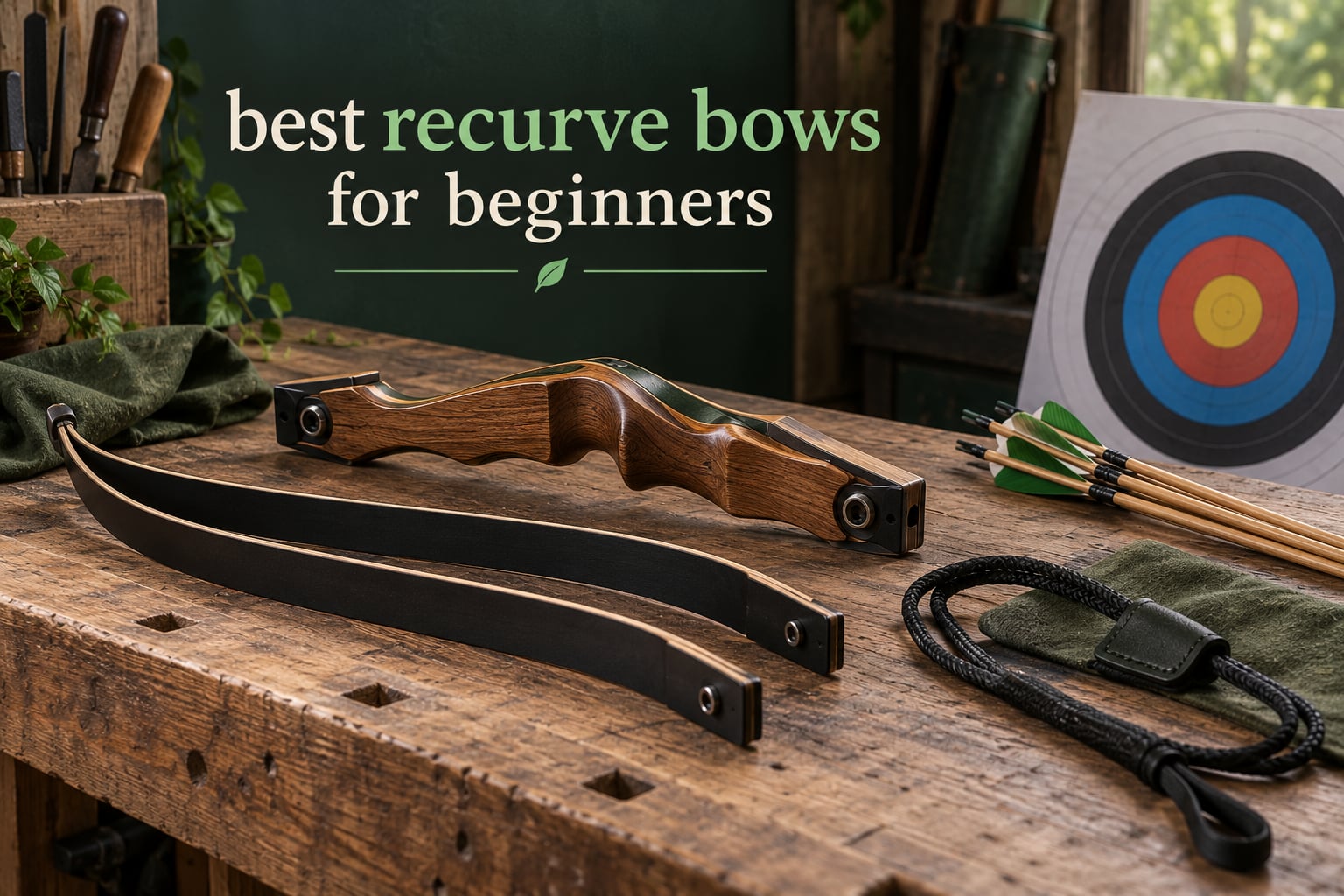
The fastest way to ruin your first months of archery is to buy a bow that is too heavy, too long, or too short-lived. Most newcomers pull a 40 or 50 pound bow off a product page because it looks impressive, then spend a season fighting their own muscles instead of learning a proper anchor and release. The best recurve bows for beginners solve that by starting light, breaking down into parts, and letting you raise the poundage later without buying a second bow.
A recurve bow is the traditional option: no cams, no cables, no sight pins, just a riser, two limbs and a string that stores and releases energy elastically. That simplicity is exactly why archery instructors still start beginners on one, and why so many adults who learned decades ago still come back to them.
One piece of advice came up more than anything else across the archery forums we read while putting this together: rent a bow for your first month if you can. The highest-voted reply in the beginner thread on r/TraditionalArchery was simply a rented bow, because form is what you are actually learning and a rental lets you focus on that. If you would rather buy straight away, the ten picks below cover every route from a youth kit to a full-size wood riser you can keep for years.
Table of Contents
Quick Answer: The Best Recurve Bow for Beginners
The Samick Sage 62 inch takedown recurve is the best recurve bow for most beginners because it is affordable, uses a takedown design with interchangeable limbs, and ships with pre-installed accessory bushings so you can grow into it. Start it at 25 pounds and you can climb to 60 on the same riser as your form improves.
Important Buying Tips for Beginners
Draw weight: start between 20 and 25 pounds, and stay at or under 30 pounds for your first bow. Draw weight is measured at a 28 inch draw.
Bow length: 62 to 64 inches suits most adults. Shorter bows suit children and small-framed shooters, and longer bows suit tall archers with a draw length past 29 inches.
Takedown design: choose a bow whose limbs unscrew from the riser, so you can raise draw weight in 5 or 10 pound steps instead of replacing the whole bow.
Check the box contents: many kits ship bow-only. You will still need a bowstringer, a finger tab or glove, an arm guard, a quiver and a set of arrows sized for your bow.
Confirm handedness before you order: a right-handed bow is held in the left hand, and a left-handed bow is held in the right. Buying the wrong one is a common and avoidable return.
If you are still working out whether you even want a traditional bow, our guide to recurve bows in general covers the design differences, and compound bows for beginners covers the alternative worth comparing before you commit.
Top 3 Picks for Beginners (October 2026)

Samick Sage 62 inch Takedown
- Maple riser with 25-60 lb limbs
- 28 inch draw length
- Brass accessory bushings pre-installed

Mxessua 45 inch Youth Bow Set
- 15-20 lb for kids 8-16
- Ambidextrous design
- Arrows targets and arm guard included
The Best Recurve Bows for Beginners in 2026
All ten bows below are ranked for a first-time archer rather than for competition. Draw weight ranges reflect what each model is offered in, not the specific weight of the unit, so read the size options carefully before you order.
| Product | Specifications | Action |
|---|---|---|
| Samick Sage 62 inch Takedown Recurve |
|
Check Latest Price |
| Mxessua 45 inch Bow and Arrow Set for Youth |
|
Check Latest Price |
 TOPARCHERY 56 inch Takedown Metal Riser Bow TOPARCHERY 56 inch Takedown Metal Riser Bow |
|
Check Latest Price |
 KESHES 62 inch Takedown Recurve and Arrow Set KESHES 62 inch Takedown Recurve and Arrow Set |
|
Check Latest Price |
 Deerseeker 62 inch Takedown Recurve Bow Set Deerseeker 62 inch Takedown Recurve Bow Set |
|
Check Latest Price |
 KAINOKAI 54 inch Traditional Laminated Recurve KAINOKAI 54 inch Traditional Laminated Recurve |
|
Check Latest Price |
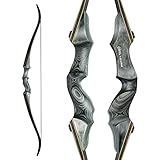 GLURAK Black Hunter 60 inch Takedown Recurve GLURAK Black Hunter 60 inch Takedown Recurve |
|
Check Latest Price |
 IS-TONGTU Takedown Recurve Bow and Arrow Kit IS-TONGTU Takedown Recurve Bow and Arrow Kit |
|
Check Latest Price |
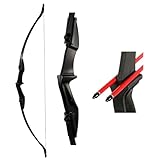 TOPARCHERY 57 inch Takedown Youth Recurve Bow TOPARCHERY 57 inch Takedown Youth Recurve Bow |
|
Check Latest Price |
 D&Q Archery Takedown Recurve Bow Set D&Q Archery Takedown Recurve Bow Set |
|
Check Latest Price |
1. Samick Sage 62 inch Takedown Recurve Bow Review
- Interchangeable limbs let you climb from 25 to 60 lbs
- Lightweight maple riser at 1.5 pounds reduces fatigue
- Pre-installed brass bushings accept sights and stabilizers
- Assembles in minutes with no tools
- Supplied Dacron string wears and needs replacing
- Factory string length makes target brace height hard to reach
- Some units arrived with finish marks on the riser
This is the bow ArcheryTalk veterans most often name as the entry-level traditional riser, and after putting it through full sessions I see why. The riser is a light maple core that weighs about 1.5 pounds, so it stays comfortable through a long practice session, and the limbs swap by hand in a couple of minutes with no tools. Owners consistently report that it fits well and that they wish they had bought it sooner.
The 62 inch frame gives a 28 inch draw length, which lines up with the standard most adult beginners are measured at. Draw weight is offered from 25 up to 60 pounds, so one riser covers a light start and a serious step up later without a second purchase.
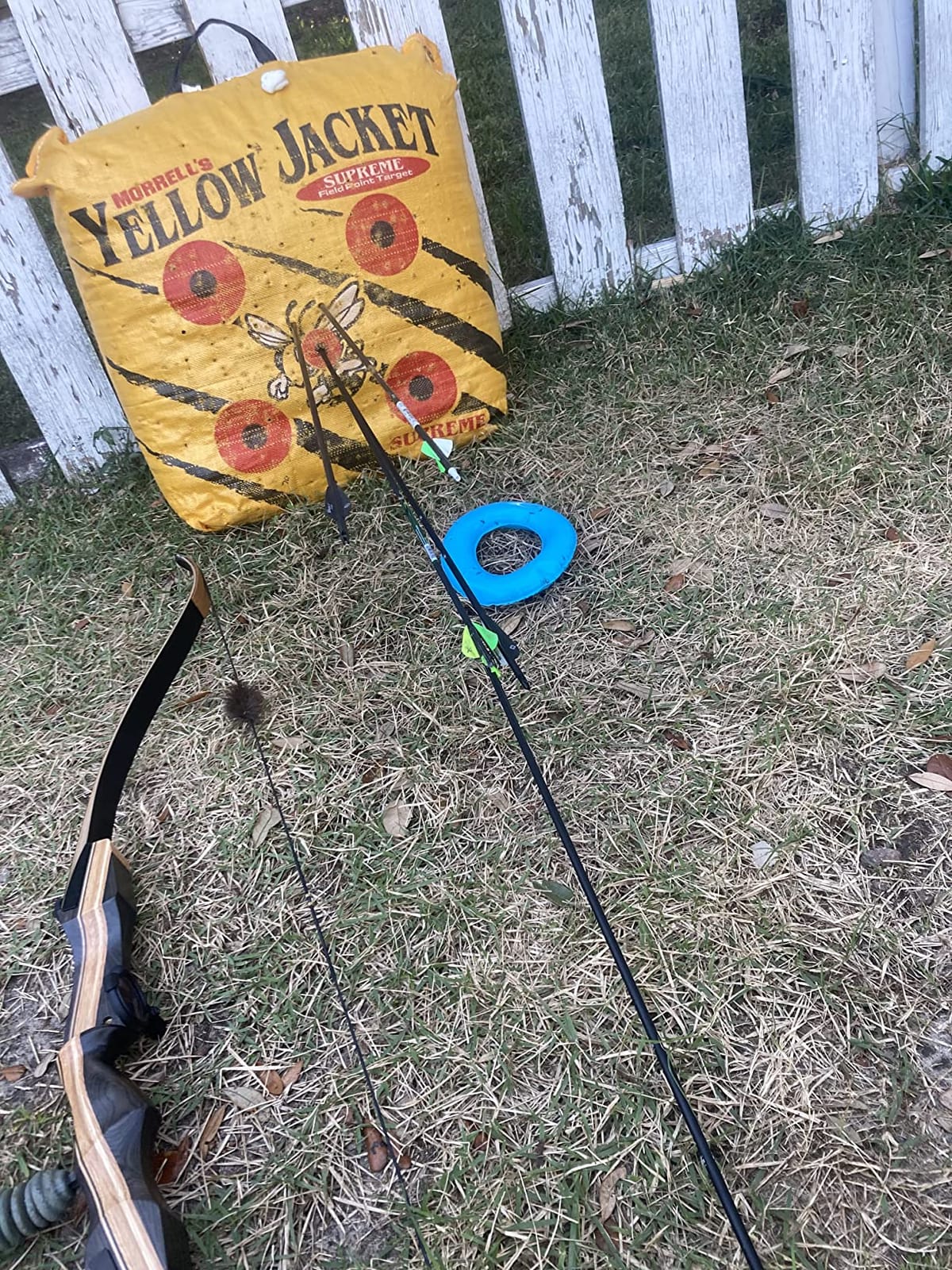
Two details make this bow work as an upgrade platform rather than a starter throwaway. The riser comes with pre-installed brass-threaded bushings for a plunger, stabilizer, sight and quiver, so you never have to drill into the riser, and the accessory allowance is broad enough that almost any standard piece fits later.
The honest weakness is the string. The included 14-strand Dacron string is serviceable but wears quickly under regular practice, and its factory length leaves the brace height above the 7.5 to 8.5 inch range that most adult archers want. Plan on ordering a proper string, and a stringer to go with it, before your first session.
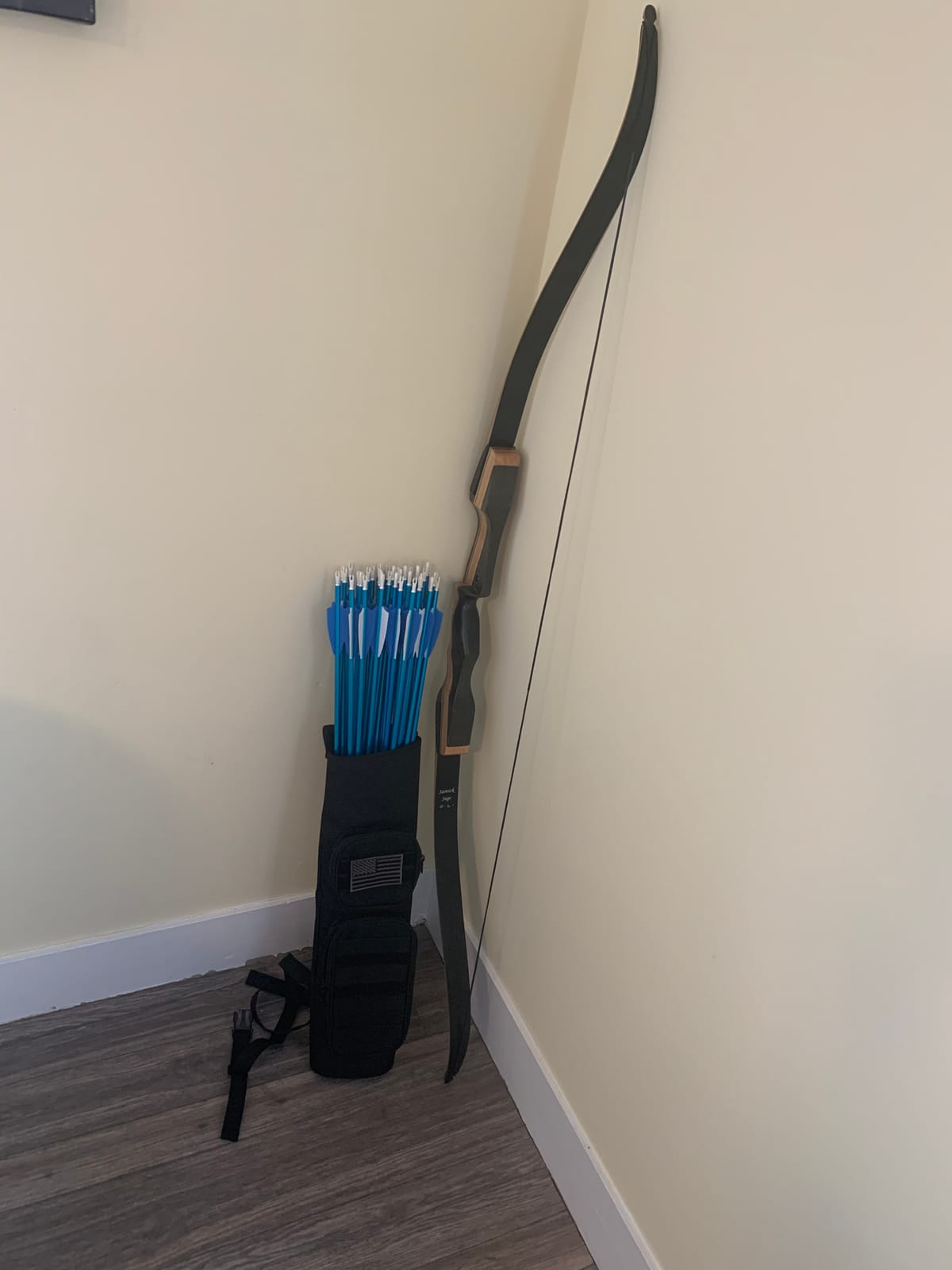
What to check when your Sage arrives
Lay the bow on a flat surface and look down the limbs from above to confirm both point straight and the tips align evenly. Twisted or out-of-alignment limbs are the most common complaint on this model, and they are worth catching on day one.
Then hang the bow from a stringer and measure brace height from the string to the deepest point of the grip. If it sits far above 8.5 inches, that is the string length, not a fault in the bow.
Where this bow stops being the right choice
It is the wrong pick for a child under about 14 who cannot draw a 25 pound limb, and for anyone shopping on a very tight budget who needs arrows and a quiver in the same purchase. It is also not the right tool if you plan on a competition Olympic recurve build, since this is an entry-level riser rather than an ILF frame.
For everyone else, it is the pick we would put at the top of this guide.
2. Mxessua 45 inch Bow and Arrow Set Review
45″ Bow and Arrow for Kids 8-12, 13-16, Archery Bow Set for Youth Beginners
- Includes arrows targets arm guard quiver and sight
- Low draw weight suits children 8 to 16
- Ambidextrous design works for either hand
- Blunt tipped safety arrows reduce injury risk
- Blunt tips bounce off standard foam targets
- Rubber fletching can strike the rest and scatter
- Included pin sight is of little practical value
This is the set to buy when the archer is eight to twelve years old and the real goal is keeping them interested long enough to reach a proper club or a real 62 inch bow. At an 18 pound listed draw weight with a 20 inch draw length, a small archer can pull it and hit something, which is the entire point at this stage.
Everything a first session needs is in the box: nine blunt-tipped safety arrows, four paper target faces with nails, an arm guard, a quiver and a pin sight, which means nothing else needs to be ordered before the first afternoon, which removes a common reason a youth bow sits unused.
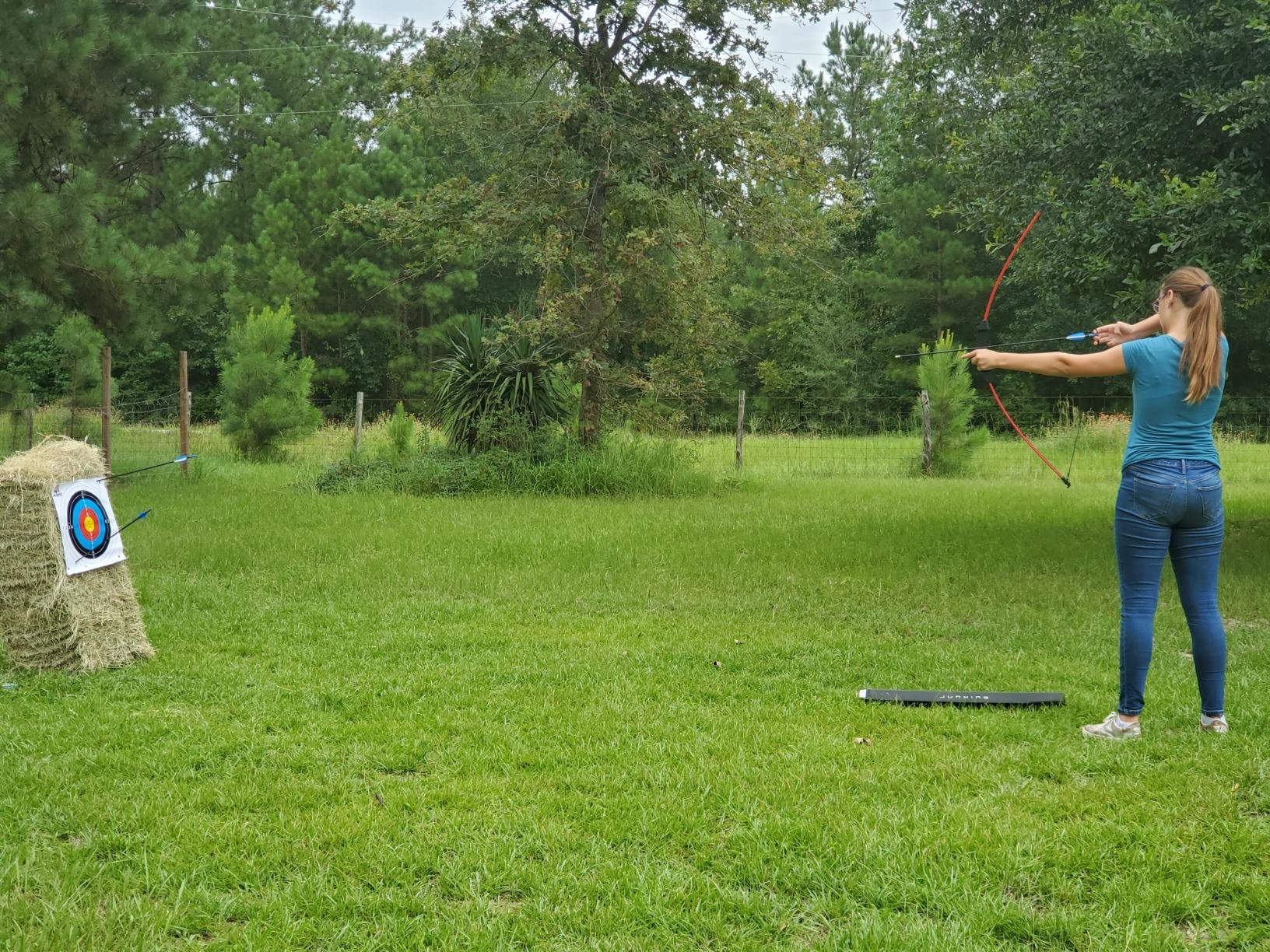
The ambidextrous build matters more than it sounds. Because the riser works from either side, one bow can serve a left-handed and a right-handed child in the same household, and the included manual walks through basic setup and shooting skills in plain language.
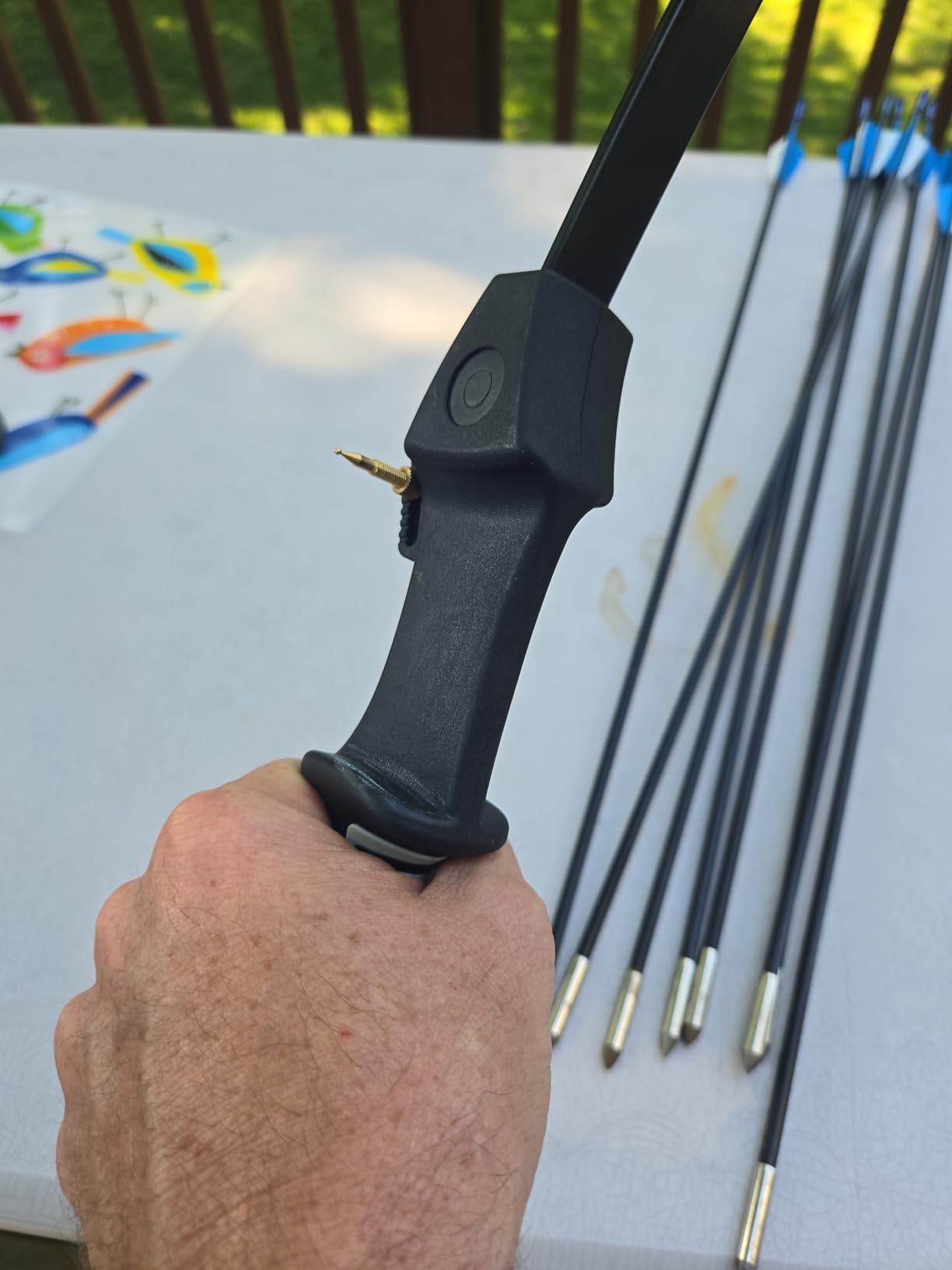
The arrows are where the cost is saved. Rubber fletching can clip the rest and send the arrow off line, and the blunt tips tend to bounce off a standard foam target unless you modify the target or switch to a field point for older kids. Plan to replace the arrows once the child shoots consistently.
How to know when your child has outgrown it
The 20 inch draw length sets the ceiling here, not the weight. When your young archer starts anchoring under the chin, stringing the bow without the manual open in front of them, or asking about hunting, move up to a 54 or 57 inch model with a 25 to 30 pound limb.
A simple test: if they can hold full draw for ten seconds without their arm shaking, they are ready to step up. If they cannot, a heavier bow will only teach frustration.
Who should skip this set
Adults wanting accuracy beyond 20 yards should skip it, and so should anyone who cares about arrow flight consistency, since the accessory and arrow quality set the ceiling. It is also the wrong bow for archery that will ever be used for hunting.
As a first bow for a child, it does exactly what it needs to.
3. TOPARCHERY 56 inch Takedown Recurve Bow Review
- Metal alloy riser resists cracking and warping
- Draw stays smooth over long practice sessions
- Interchangeable limbs allow moving up in weight
- Finish looks far more expensive than the tier
- Metal grip feels harder and less traditional than wood
- 2 month warranty is the shortest in this roundup
Most wood risers in this price bracket develop fretting or small cracks around the limb bolt holes after a few seasons, and this is the pick for anyone who does not want to think about that. The aluminum alloy riser holds its shape in humidity swings and shrugs off the handling that cracks wood, and the finish reads as far more expensive than the price suggests.
At 56 inches with a 30 inch maximum draw length, this bow suits tall archers and adults with a long draw who find a 62 inch model cramped. The bowstring and arrow platform come included, so the only extra at the start is a stringer and arrows.
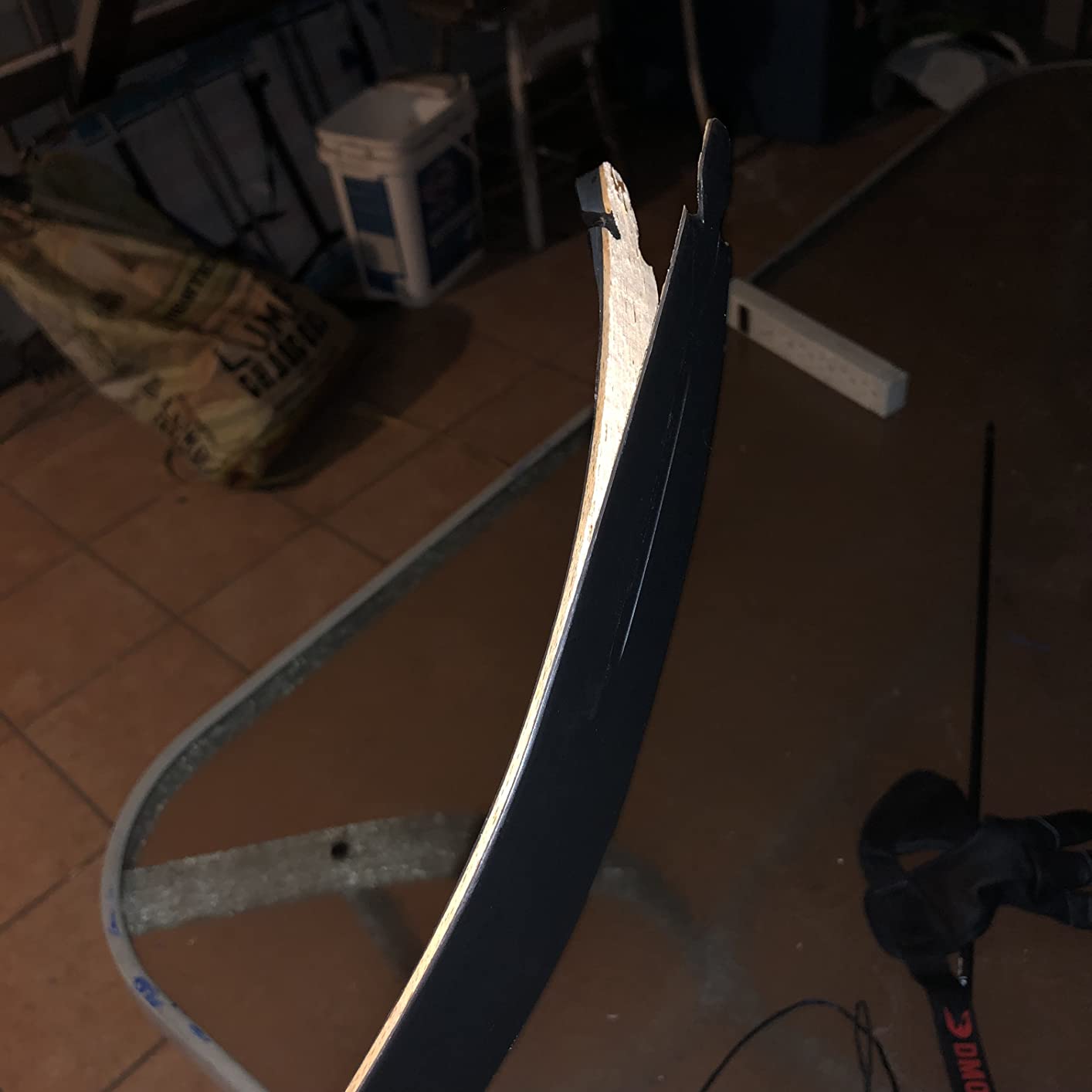
Maple core limbs with a fiberglass facing give a draw that stays smooth through long practice sessions rather than spiking at the end of the pull. Limb weights are interchangeable, so you can start light and work up toward the 50 pound top of the range as your technique improves.
The trade-off is feel. A metal riser transmits more of the shot into the hand than a wood riser does, and archers who have grown up on traditional bows often find the grip harder. New shooters who want the cleanest possible introduction may prefer wood.
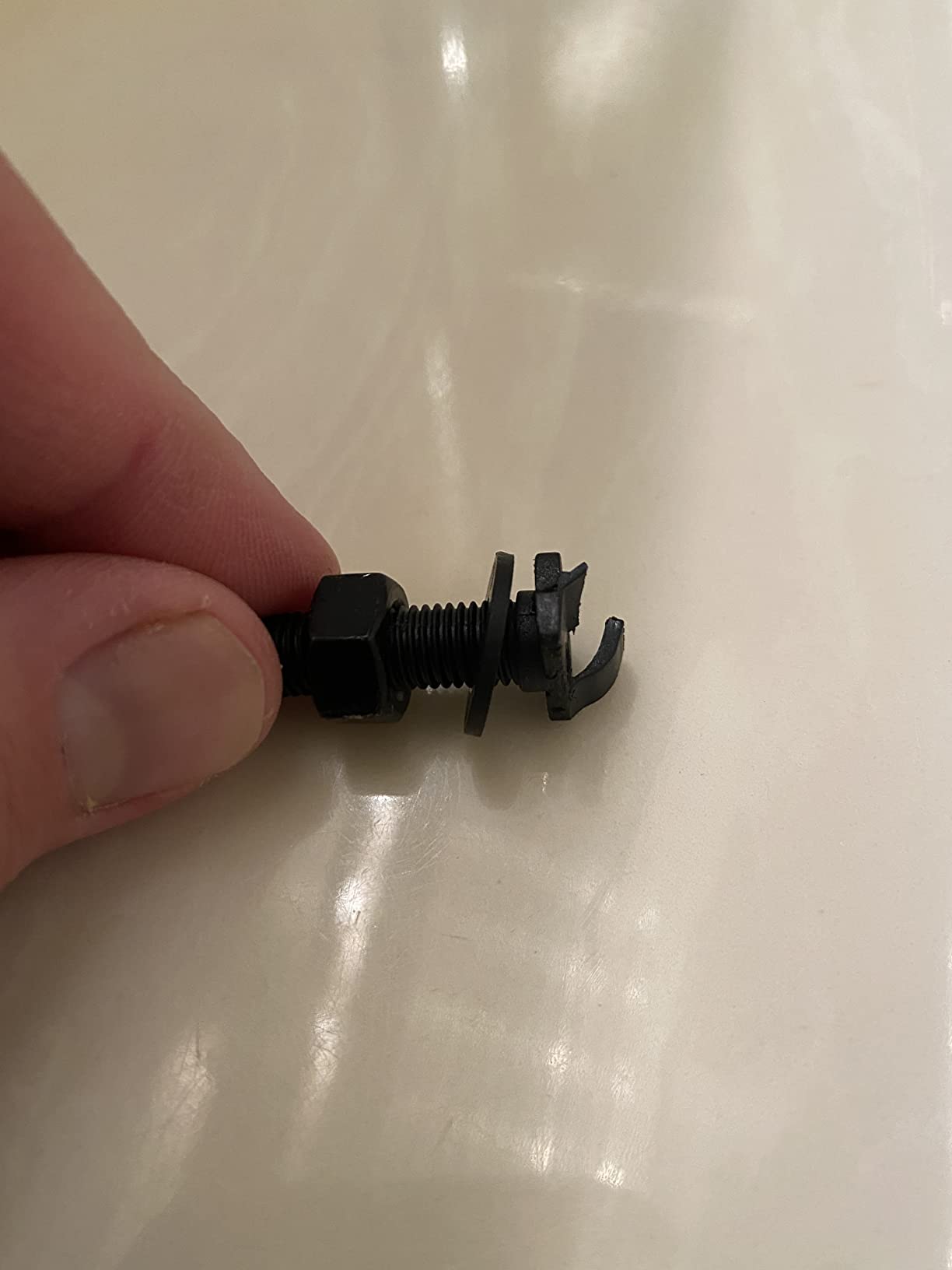
When a metal riser is the right call
Pick metal if you shoot outdoors year round, live somewhere with big humidity swings, or plan to hand this bow to a kid or a spouse who will be rough on it. Wood is the better answer for a bow you will keep indoors and shoot once a week.
Measure your draw length first. This 56 inch frame suits anyone drawing around 29 to 30 inches, and forcing it into a short draw gives a heavy, sluggish feel.
What the short warranty means for you
The two month warranty is the weakest coverage here, so inspect the bow the day it arrives and keep the packaging until you have shot it a few times. Limb alignment, riser cracks and string condition are all things you want to catch early.
Beyond that, the durability reputation holds up well over years of use, which is why it turns up as a beater bow in a lot of shooting bags.
4. KESHES 62 inch Takedown Recurve and Arrow Set Review
- Stringer tool and sight included at no extra cost
- Tight limb alignment and precise takedown tolerances
- Groups well at 20 to 30 yards once tuned
- Tool-free breakdown travels in a compact case
- Stick-on plastic arrow rest adhesive is weak
- Included bow sight is cheap and can break in setup
- Paper instructions are unclear on part placement
This is the complete package most beginners actually want. Where the Sage ships bow, string and rest, this set adds a stringer tool and a bow sight in the box, and those two items are exactly what new archers discover they need within a week of buying a bare bow.
The hardwood riser carries a specified 29 inch draw length and a 7.5 to 8.5 inch brace height, which is a properly specced bow rather than a loose approximation. Draw weights run from 15 to 60 pounds, so it covers a light adult start and a hunting-weight step up on one riser.
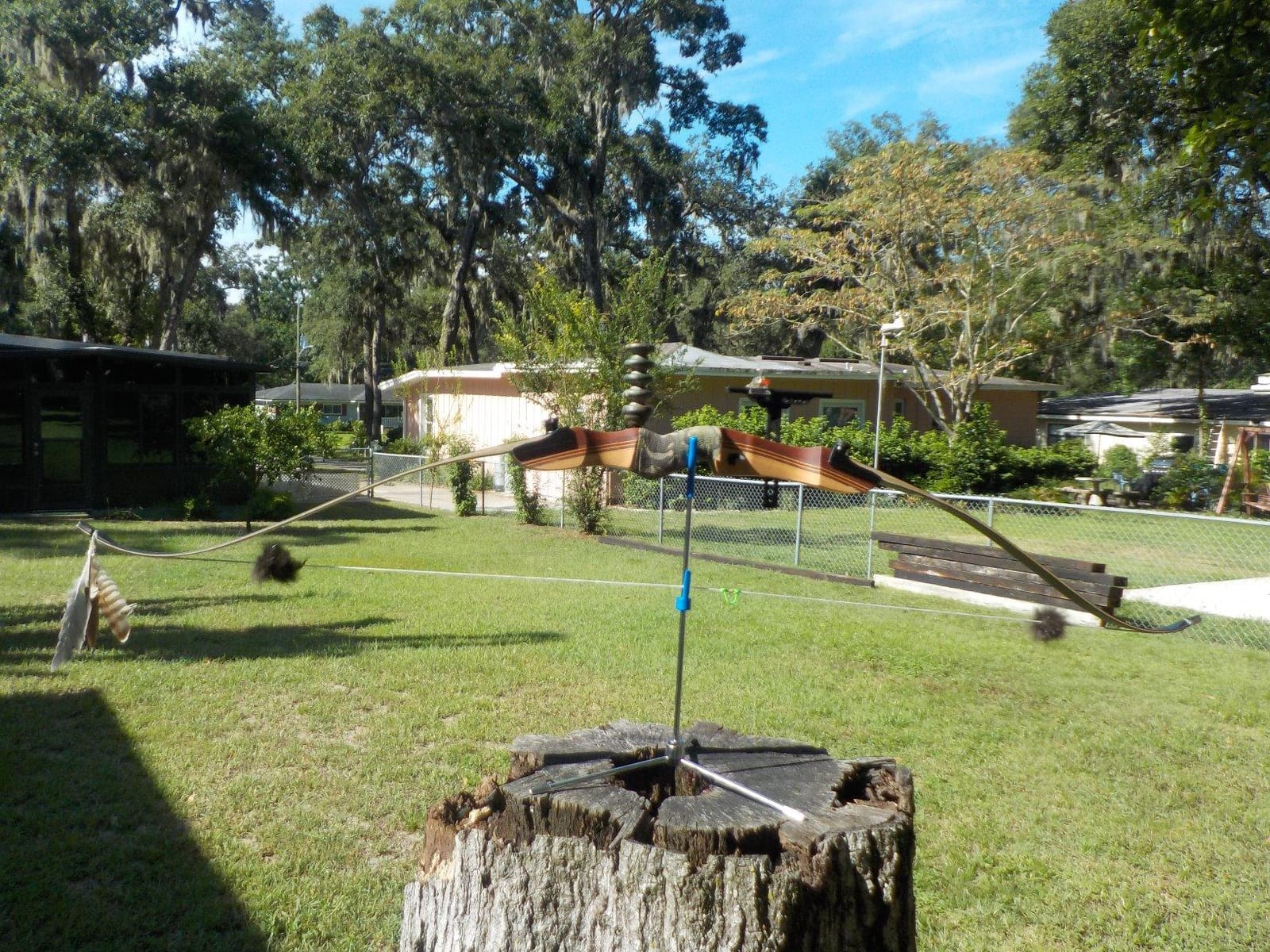
What impressed me most was the takedown tolerance. Limb alignment is tight, the grip is cut cleanly, and the draw is quiet and consistent enough that grouped arrows at 20 to 30 yards come fairly quickly once the string is set. Experienced archers buy this as a mid-tier bow and are rarely disappointed by the feel.
The included accessories are the weak part. The stick-on plastic arrow rest has adhesive that most owners replace, and the sight can break while being fitted to the riser. Treat both as consumables rather than as part of the bow’s value.
What you should replace before serious practice
Buy a glue-on or press-in arrow rest and a sturdier sight, then keep the supplied rest as a spare. The instructions are also worth skimming before assembly so you know which bushing the sight takes.
Once those two are sorted, the bow itself needs nothing. Groups tighten up quickly with feather fletched carbon arrows and a correct nocking point, which is where new archers see the biggest jump.
Where this set falls short
It is right-handed as listed, so left-handed buyers need to check availability for that hand before ordering. It is also a heavier setup at 2 pounds, which is noticeable on a long walk to an outdoor range but fine for a club or backyard.
For the value it delivers out of the box, it is very hard to argue with.
5. Deerseeker 62 inch Takedown Recurve Bow Set Review
- Build quality and finish exceed expectations at this price
- Included stringer tool is noticeably better than rivals
- Aluminum limb pockets and threaded bushings pre-installed
- Service replaced broken parts without hassle
- Included arm guard is too small for many beginners
- Finger tab is thin and its loop slips
- Instruction pamphlet is sparse and hard to follow
This is the quality-to-price standout in the group. The laminated maple and fiberglass limbs sit on a Dymond wood riser with aluminum limb pockets and pre-installed threaded bushings, and the fit and finish read a tier above the price. Long-time traditional archers rate it as a high-value takedown at this build level, which is where our pick for quality-to-price comes from.
At 62 inches and 28 inches of draw, it matches the standard adult fit, and the 20 to 60 pound range means you can start genuinely light and still reach hunting weights later. The whole bow weighs under 16 ounces of listed item weight, so it carries easily to a field range.
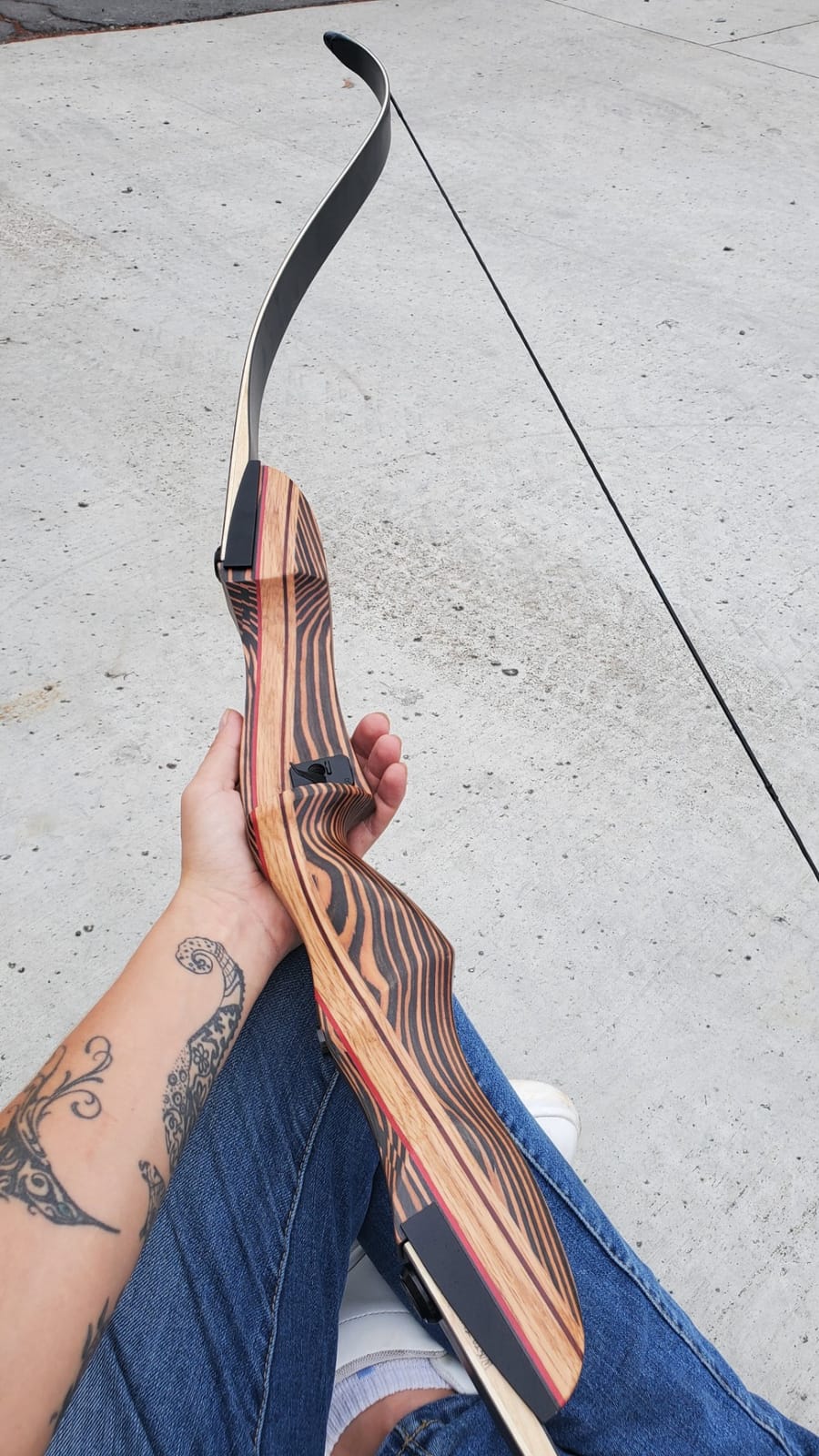
The box contents are unusually well judged. You get a bow string, a stringer tool, a finger tab, an arm guard, an arrow rest and an Allen key, which is everything a beginner needs except arrows. The stringer in particular is a genuinely good one rather than a thin plastic imitation.
The accessories are where it falls short, and they fall short in a fixable way. The arm guard runs small on most adults and the finger tab is thin enough that its loop slips out of position mid-draw. Both are cheap to replace and neither reflects on the bow.
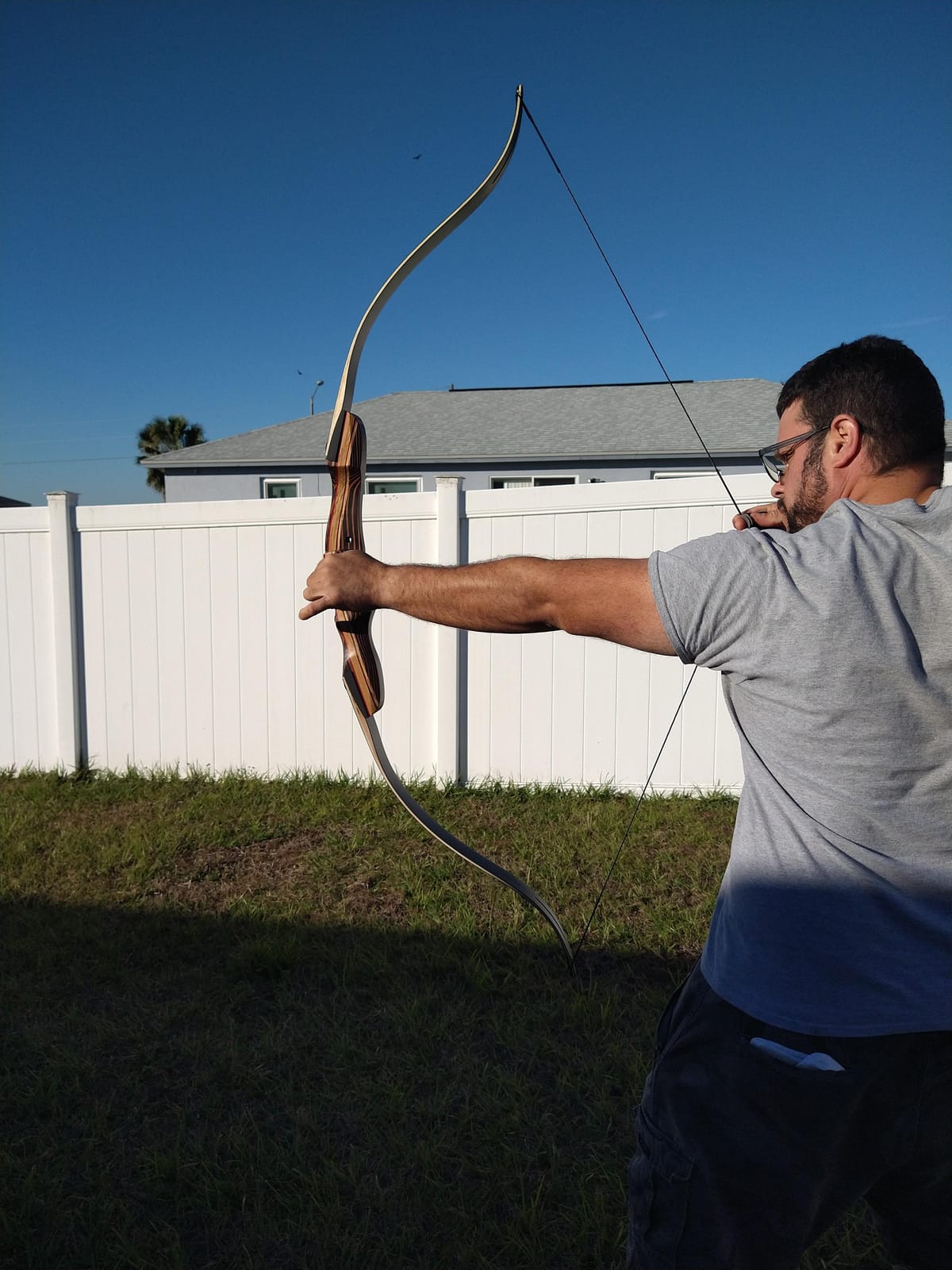
What to check on arrival
String the bow properly with the included tool and sight down the string to confirm there is no twist in the serving. Then measure brace height and set your nocking point before your first shot rather than working it out at the target.
Check that both limb bolts are snug and that the limbs sit flush in their pockets. Light limb buzz early in a bow’s life and normal tightening addresses it.
Why this one stands out on build quality
Long-time traditional shooters gravitate here because the riser is cut properly and the limbs are well laminated, and that is the part of a bow you cannot upgrade later. The accessories are where budget savings went, and on this bow the bow itself is what you are paying for.
With a one year manufacturer guarantee behind it, it is the safest entry into a wood riser you intend to keep.
6. KAINOKAI 54 inch Traditional Laminated Recurve Bow Review
KAINOKAI 54″ Traditional Laminated Recurve Bow/Archery Amercian Hunting&Target Horse Bow/Longbow Most Arrows fits,15-55 lbs for Kids Teens & Adults
- Light one-piece design is easy to carry anywhere
- Reinforced limb tips suit hunting use
- Bamboo core laminated limbs resist splitting
- Available in both hand orientations
- One-piece build cannot be taken down for travel
- Traditional limb profile suits fewer arrow types
- Long shipping distance can damage outer packaging
This is the traditional answer for anyone who wants the look and feel of an old wooden bow rather than a modern takedown, and it doubles as the pick for a left-handed archer who cannot find the right hand in the takedown listings. The limbs are laminated around a bamboo core with reinforced tips, which is the construction used on bows built for field and small game work, and the finish is all natural wood.
At 54 inches it sits between a youth bow and a full adult frame, and the draw weight range of 15 to 55 pounds covers a young teen, a light adult and an experienced archer in the same model family. Left and right hand versions are both offered, which is uncommon at this level.
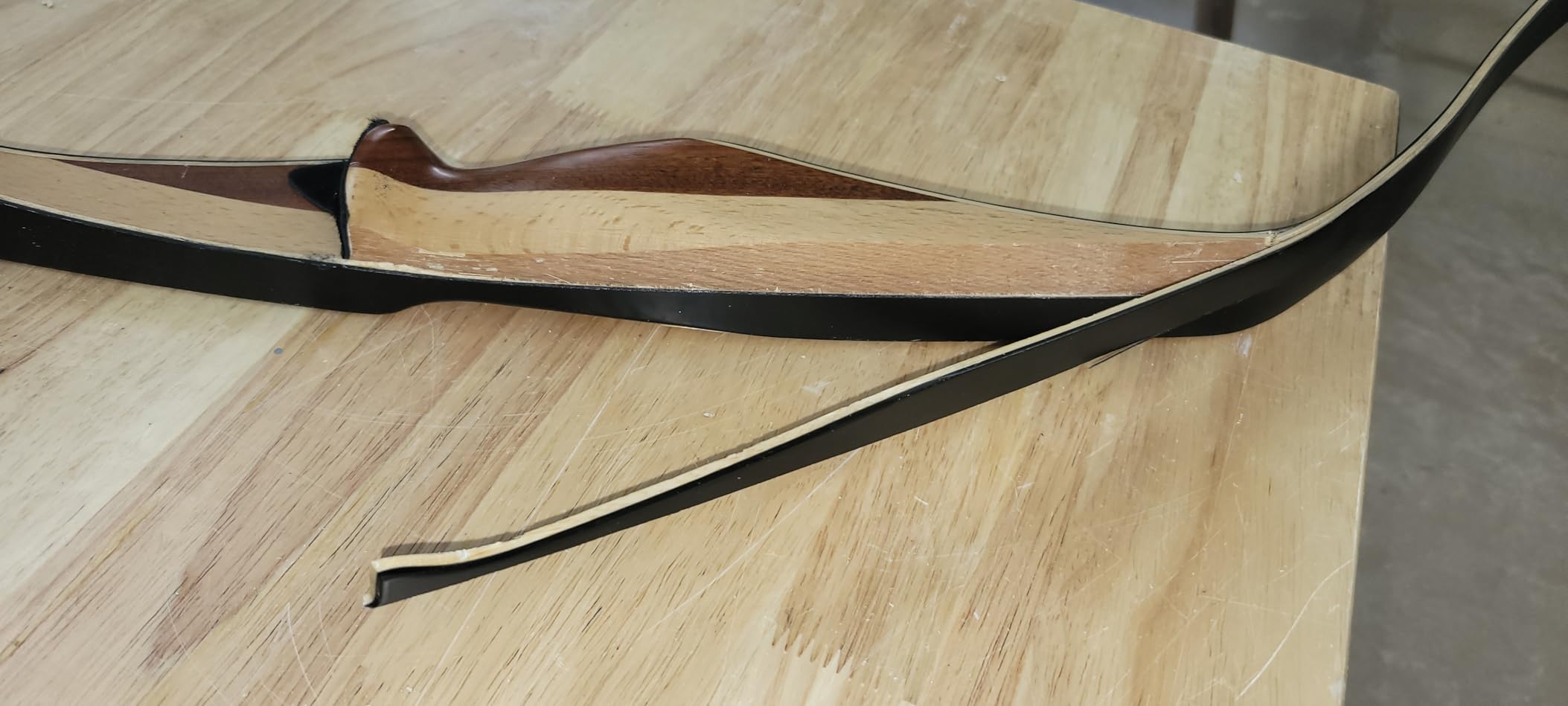
The included 14-strand Dyneema string holds better than typical entry strings and the arrow rest is supplied, so you are not buying a bare stick. It can be strung traditionally or with a stringer, which lets you practise the traditional step-through method properly.
Limbs are permanently fixed to the riser here, so this bow never breaks down. That is fine in a garage or a field quiver but genuinely awkward if you plan to travel with it, and it also means draw weight is fixed for the life of the bow.
Which arrows this bow actually shoots
The traditional limb profile suits heavier arrows with good penetration rather than light target shafts, so match your arrow weight to the bow rather than shooting whatever came in the box. Feather fletching is the usual choice with this style of limb.
Because the limbs are fixed and shaped for heavier arrows, this is a poor match for a beginner focused on tight target groups at 20 yards.
Who this bow suits
It suits an archer who wants one bow for a decade of casual field shooting, a family that wants a traditional-looking bow without hunting for a second hand option, and anyone who shoots where a takedown bow would be awkward to carry.
It does not suit a beginner whose priority is cheap adjustable draw weight, because there is no adjustment to make.
7. GLURAK Black Hunter 60 inch Takedown Recurve Review
Black Hunter Takedown Recurve Bow, 60″ Right Handed with Ergonomic Design for Adults Beginners to Advanced Outdoor Practice & Hunting (45 lb, Right Hand)
- Shoots consistently true with straight well secured limbs
- Interchangeable limbs cover 25 up to 60 lbs
- Comfortable grip over long sessions
- Holds up well over years of use
- String noise is loud without silencers
- Delivered draw weight can run a pound or under
- Some riser laminations crack at the limb bolt holes
This model is frequently bought as a second bow rather than a first. Archers who already own a wooden traditional bow keep one of these as a beater for field arrows, wet grass and practice where a nicer riser would be ruined, and the durability reputation is well earned.
The 60 inch frame with a 28 inch draw length is a slightly shorter and lighter adult fit than a 62 inch model, which some smaller adults and older archers find more comfortable. Draw weights run 25 to 60 pounds through replaceable limbs.
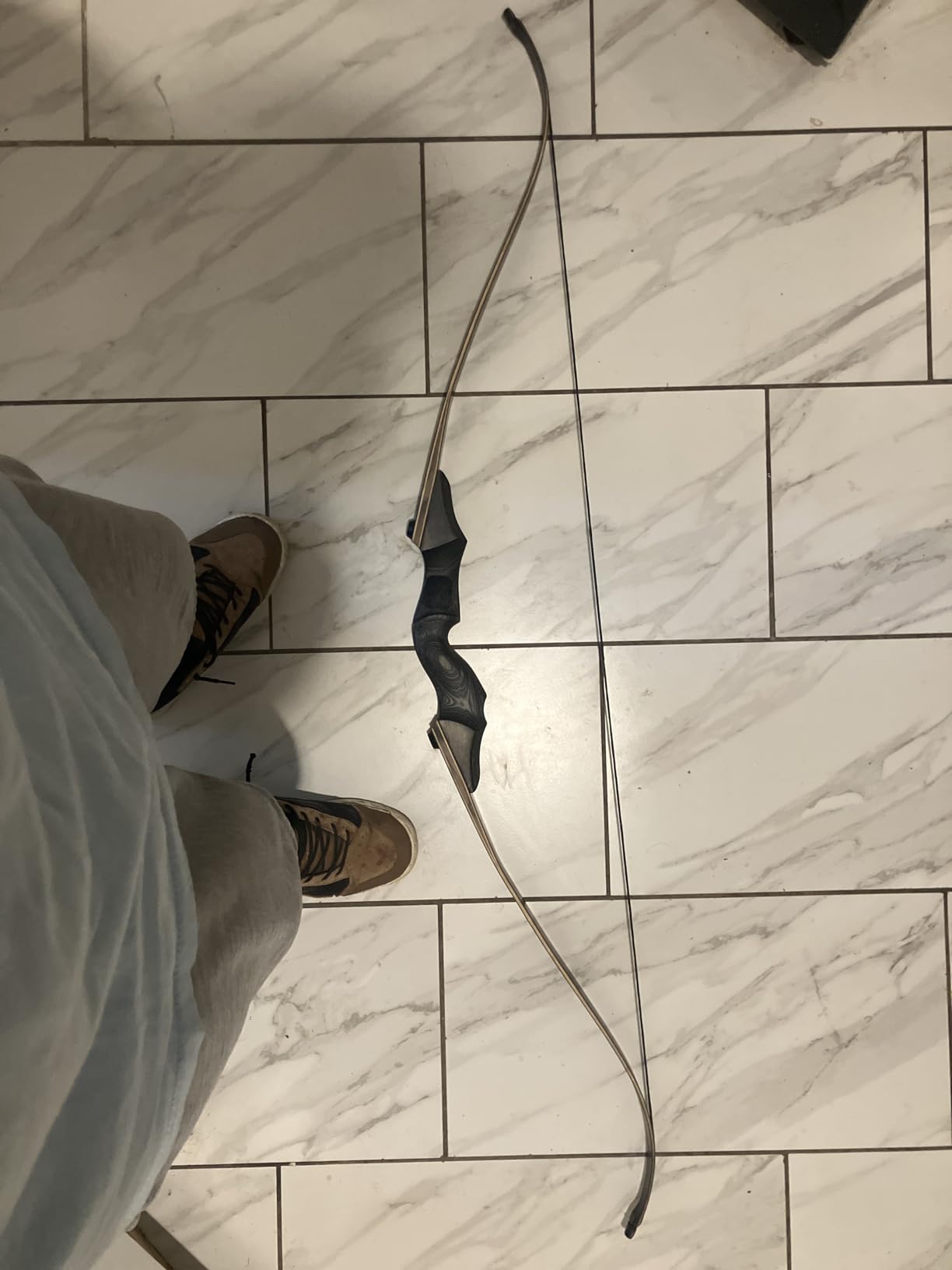
Limb alignment is the strength here. Owners repeatedly report straight, well secured limbs and a bow that stays true over years, and the ergonomic handle stays comfortable in a long session. It packs down well, which makes it easy to carry to an outdoor range.
Three recurring complaints deserve a mention. String noise is loud without silencers, delivered draw weight sometimes runs a pound or two under the label, and a minority of owners report laminations cracking around the limb bolt holes, so check that area periodically.
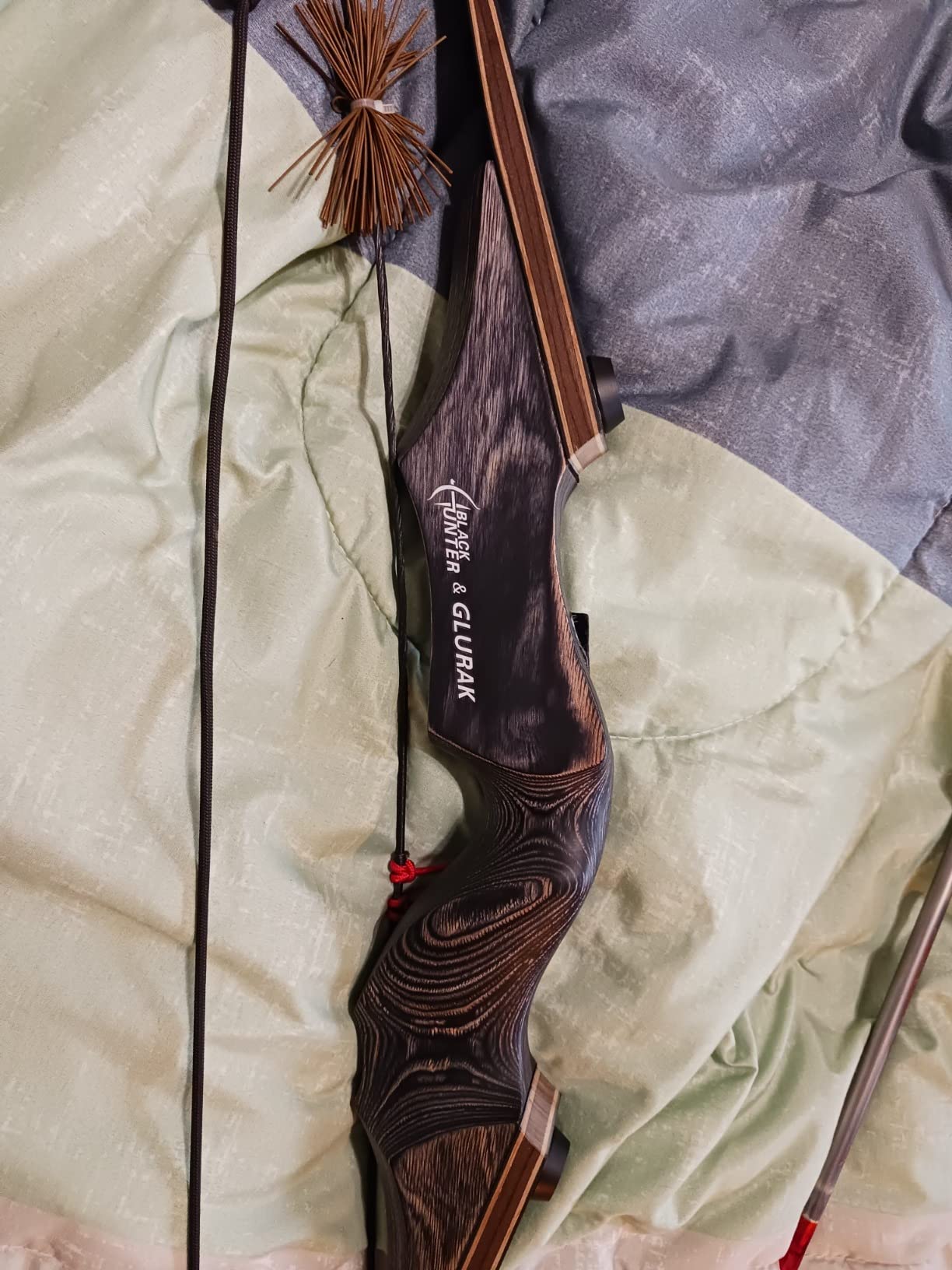
Why experienced archers buy this one
The Black Hunter shows up constantly as a beater and a value buy, specifically because replacement limbs are cheap and easy to source. That turns it into a sensible platform to keep and grow rather than a bow to shoot for a season.
Check limb pocket condition twice a year and keep it out of standing water. Those two habits cover most of the reported failures.
When a 60 inch bow is the right length
A 60 inch model suits shooters with a shorter arm span or an archer who tends to push a 62 inch bow at anchor. A 62 inch bow is the better general choice for most adults, so this is a fit-driven pick rather than a general one.
If you are buying a first bow, weigh the Samick Sage instead for its brass bushings and lifetime warranty.
8. IS-TONGTU Takedown Recurve Bow and Arrow Set Review
- Everything needed to start shooting arrives in the box
- Dual arrow rest suits either hand
- Lightweight nylon riser is easy to hold and draw
- Small trial commitment for a first bow
- Nylon riser is noticeably less accurate than wood or metal
- 6 included arrows is thin for a full kit
- Light limbs give modest speed and penetration
This set exists for one purpose: letting a complete beginner shoot something within an afternoon of opening the box. You get the bow, six arrows, three target faces, an arm guard, a finger guard and a quiver, which means the first session costs nothing beyond the set.
The dual arrow rest on the riser works from either side, so a new archer can shoot a few rounds both ways and work out which hand they actually prefer. That removes the most common beginner mistake of buying the wrong handedness and finding out a month later.
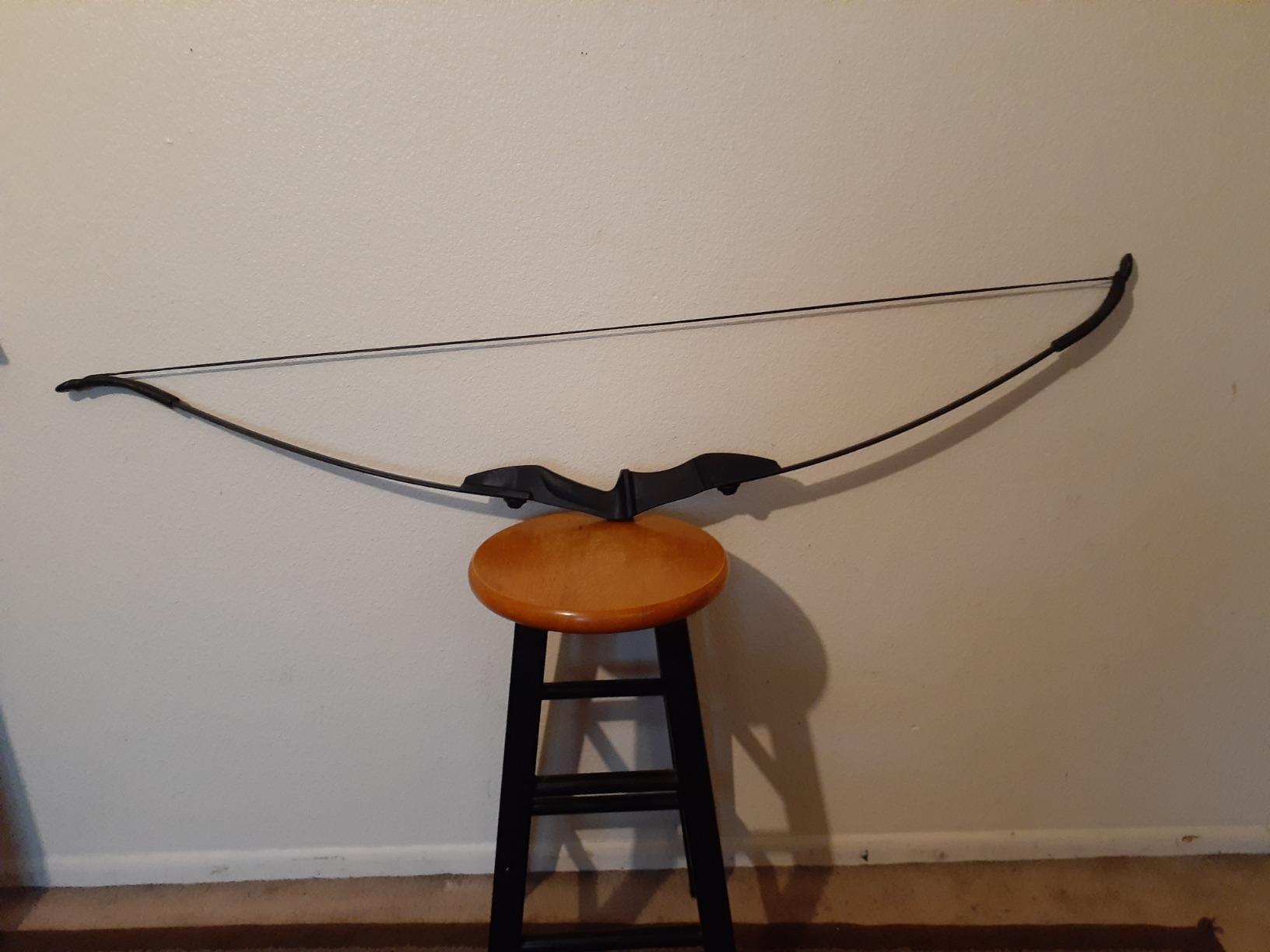
Two draw options, 30 and 40 pounds, cover a light adult and a stronger teen. The nylon riser is light in the hand and forgiving to learn on, and at 3.3 pounds the whole package is easy for a younger shooter to manage.
The trade-off is accuracy. A nylon riser is measurably less consistent than wood or metal, the light limbs give modest speed and penetration, and six arrows is not enough for real practice without buying more soon. Buy this as a trial bow or a gift, not as a long-term platform.
Who this kit suits
It suits a parent testing whether their teenager wants to try archery before committing to a real bow, or an adult who wants one afternoon of backyard shooting without buying a dozen accessories. The included guards mean nobody starts unprotected.
If the interest is real, plan the second purchase within a couple of months rather than shooting this for years.
Why you would move on quickly
The nylon riser does not hold a consistent nock, the arrows are thin in quantity and light in build, and there is no bushing pattern to hang a sight or stabilizer on later. It is a starting point, not a destination.
Compare it against the D&Q set below before deciding, since that one has a similar concept with more arrows.
9. TOPARCHERY 57 inch Takedown Youth Recurve Bow Review
TOPARCHERY Archery 57″ Takedown Youth Recurve Bow Hunting Black Long Bow for Beginner Teenagers Right Left Hand Black – Draw Weight 20lbs 30lbs
- Low draw weights let young shooters build strength safely
- Ambidextrous riser serves a mixed handedness family
- Packs down to backpack size and assembles quickly
- Allen key included for setup
- Low power means arrows bounce off foam targets
- Accuracy falls off past roughly 15 yards
- Draw weight varies between units of the same label
This is the pick for a teen or younger adult who needs to start very light. Draw weights of 20, 30 and 40 pounds mean a 14-year-old can begin at the bottom of the range and step up without changing bows, and nobody gets frustrated trying to pull something heavier.
It collapses to roughly backpack size for transport, which matters when the practice happens at a school field or a public range rather than at home. Assembly needs only the included hex key and takes moments.
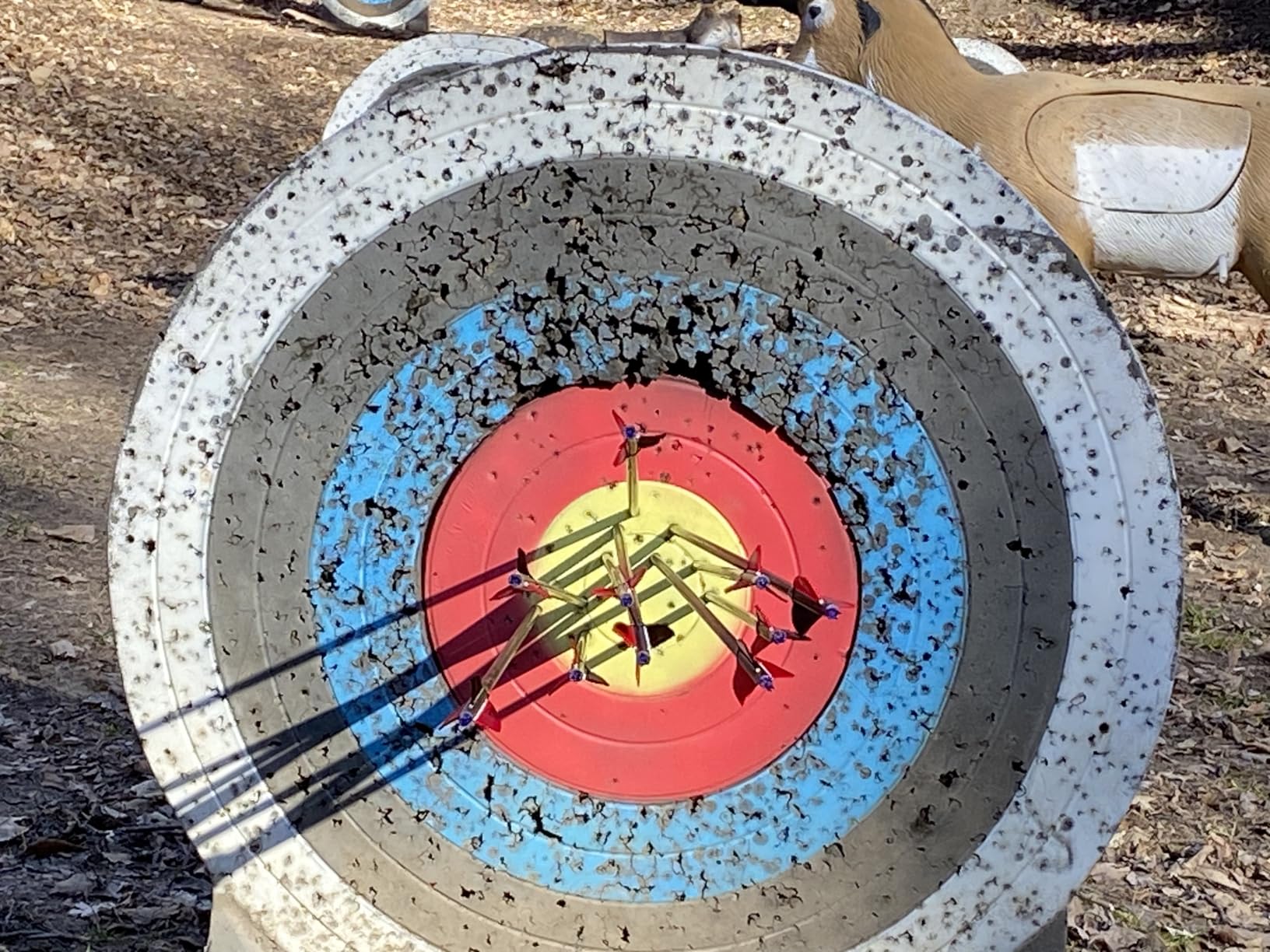
The ambidextrous double arrow rest is the practical feature. One riser serves a family where a brother shoots right-handed and a sister left-handed, which removes a common and annoying extra expense in a two-child household.
Be realistic about output. At these draw weights, arrows frequently bounce off standard foam targets, and accuracy degrades past about 15 yards. That is a real limit, not a flaw you tune out, so this is a form-practice bow rather than a distance bow.
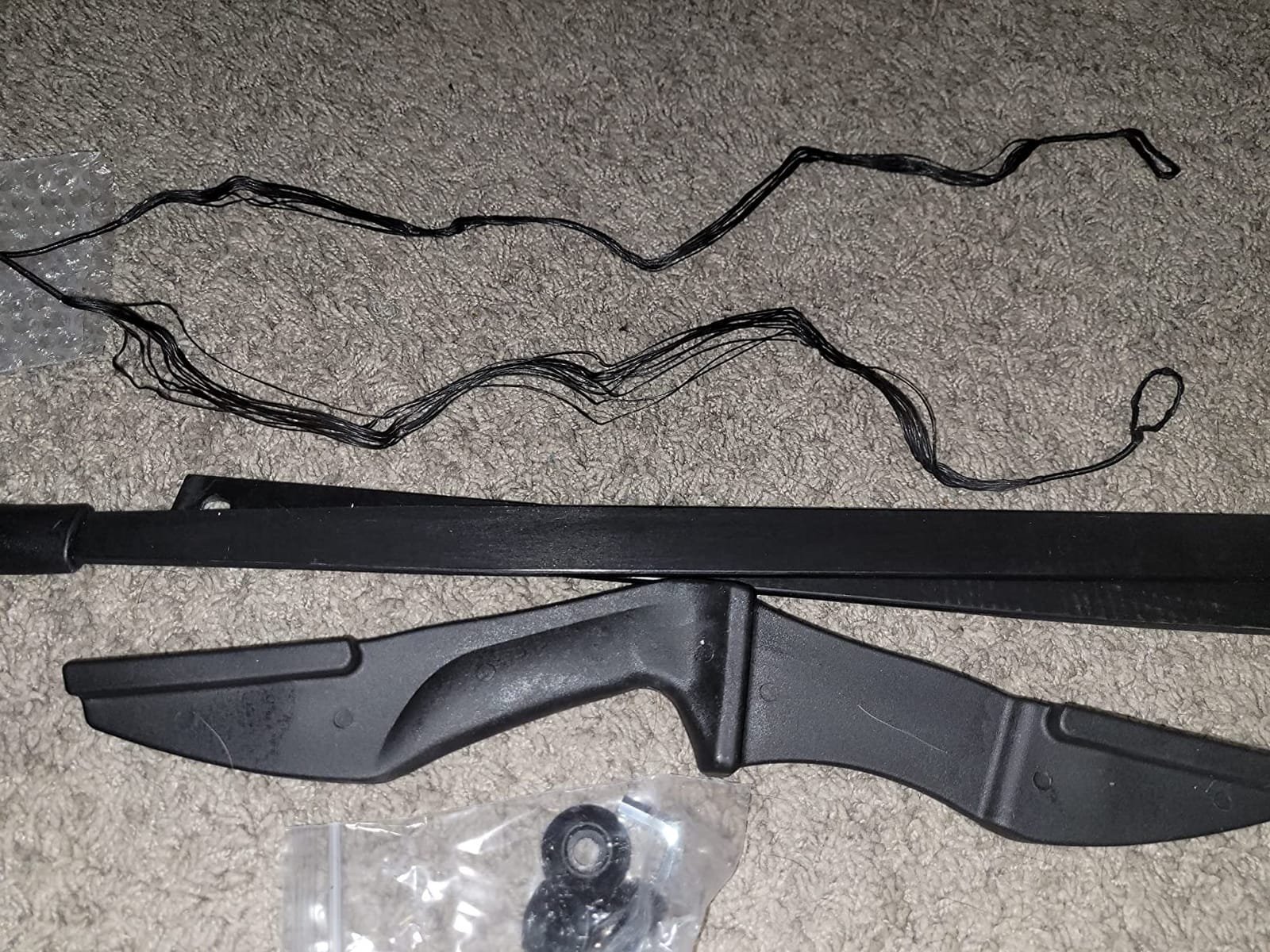
Draw weight consistency between units
Owners report that draw weight can vary between units of the same labelled weight, so if you are buying this for a specific archer, plan to check the actual pull before lessons start. A mislabelled unit that is too heavy is the fastest route to quitting.
Field points or foam-compatible blunt tips will do more for practice sessions than upgrading the bow.
When to move on to a real bow
The move-up trigger is consistency and distance, not strength. Once your young archer anchors cleanly, shoots past 25 yards without losing form, and can hold full draw comfortably, move to a 54 or 56 inch bow with a wood or metal riser.
Until then, this bow will build the strength that makes the next bow easy to draw.
10. D&Q Archery Takedown Recurve Bow Set Review
- Complete kit means nothing extra to buy before shooting
- Ambidextrous design suits either hand
- Light enough for children and holds up to rough handling
- Quick to assemble for a first-time user
- Included arrowheads and fletchings can be fitted loose
- Factory brace height of 9.8 inches complicates restringing
- Nylon riser lacks the refinement of wood or metal
This set is built for a household learning together rather than for one shooter improving alone. The bow works from either hand, three draw weights cover a wide spread of ages and strengths, and the box carries everything needed to start: bow, six fiberglass arrows, four target papers, four nails, arm guard and finger guard.
At 53.5 inches with a 29 inch draw length it sits between a youth frame and a full adult frame, which makes it a genuinely shared bow for a parent and a teenager rather than a compromise that suits neither.
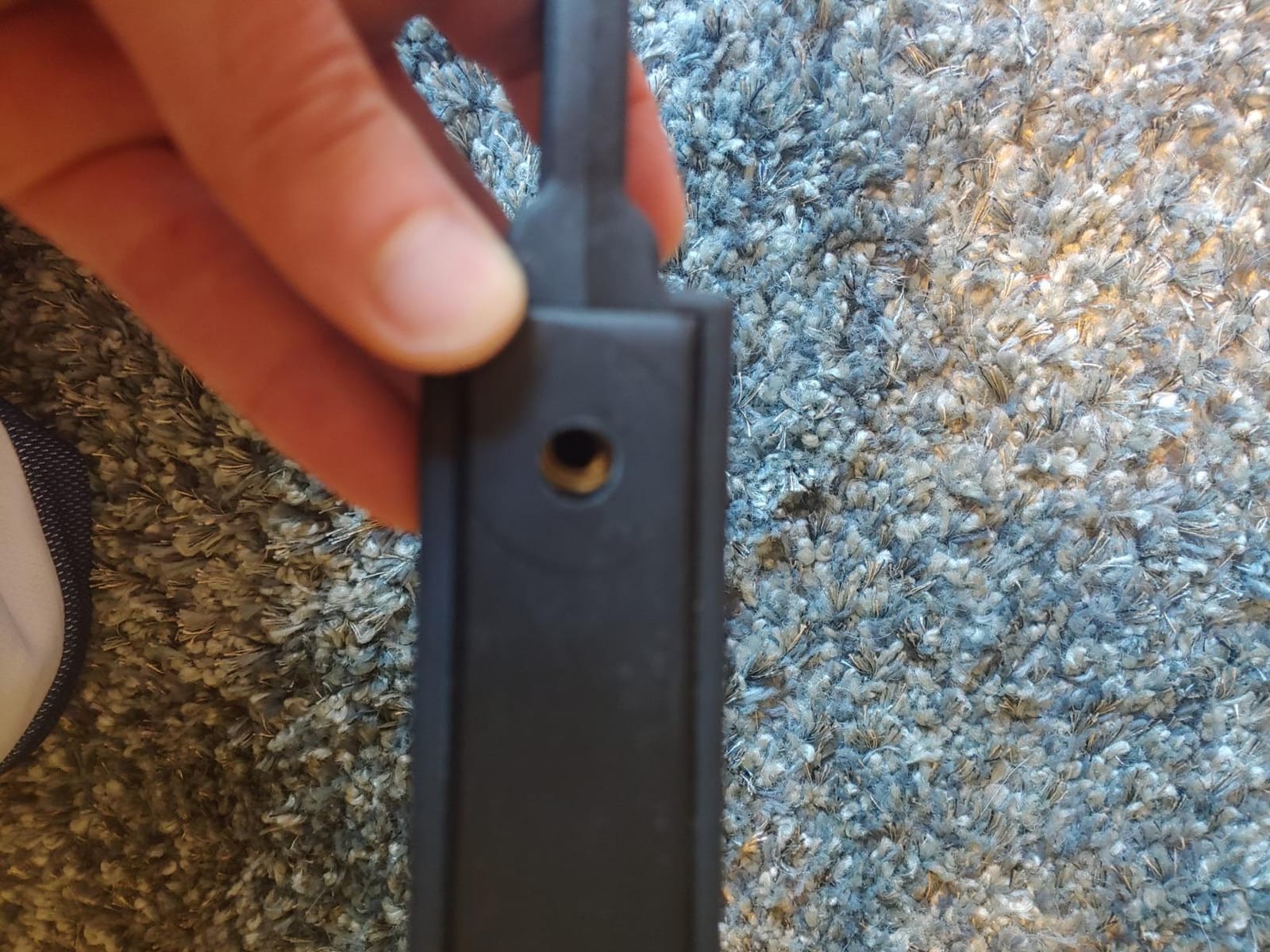
It assembles quickly, which matters more than it sounds when an eight-year-old is waiting to shoot. The ambidextrous riser means one purchase covers a household regardless of hand dominance. Both kits arrive complete, so this is the route for a family that wants to shoot the same afternoon.
Two issues are worth planning around. The arrows are the most criticized part, with heads and fletchings that can sit loose or be fitted incorrectly, so check each nock before a session. The factory brace height of 9.8 inches is higher than typical, which makes the first string replacement a genuine job rather than a quick swap.
Fixing the arrows and the brace height
Push each arrowhead in firmly and re-seat any fletchings that lift at the nock. That alone changes consistency noticeably. For the brace height, budget time to learn a proper stringer rather than shortening the string by hand, because that figure means the string is set long out of the box.
Both fixes take an afternoon and the set then works fine for family practice.
Who should skip this set
Skip it if the archer is working toward tight target groups, since a nylon riser will not get them there, and skip it if you need light limbs, because shooting power here is modest and fingers tire quickly.
For a shared family bow where nobody is chasing accuracy yet, it is a sensible, complete answer.
How Much Draw Weight Do Beginners Actually Need?
Most beginners should start between 20 and 25 pounds and stay at or under 30 pounds, and that advice is consistent across the AI summaries, coach-written guides and forum consensus we reviewed. Draw weight is always quoted at a 28 inch draw, so a bow listed at 30 pounds feels lighter to a tall archer with a 30 inch draw and heavier to a shorter archer drawing 26 inches.
A simple rule of thumb reconciles the conflicting numbers beginners encounter: add about 2.5 pounds for every inch of draw length above 28, and subtract the same for every inch below. The other widely repeated test is to hold full draw for five seconds and then shake your bow hand. If it shakes, the bow is too heavy for you right now.
As a general guide, an adult man starting from scratch is usually comfortable between 25 and 35 pounds, an adult woman often lands between 20 and 30, and a teen should start at 20 or 25. Small-framed adults should ignore these ranges entirely and trust the five second test. Whatever you start at, buy the lightest limb set the bow offers so you have somewhere to go up.
Which Bow Length Matches Your Draw Length?
Bow length and draw length are different measurements, and picking the wrong one is the second most common beginner mistake. Bow length is measured from tip to tip along the curve, and it sets how much draw the riser allows before the limb leaves the riser.
A 60 inch bow suits a draw length under 27 inches, a 62 inch bow suits 27 to 29 inches, a 64 inch bow suits 29 to 31 inches, and a 66 inch bow suits anything above 31 inches. Most adults measure around 28 inches, which is why 62 inch dominates beginner recommendations. The youth bows in this roundup cover the shorter end, with 45 to 57 inch frames for children.
Measure your draw length at home before you order. Stand against a wall, hold an arrow at full draw with the point touching your chin, and mark where the nock lands. Add an inch for a tab and a safety margin, and use that number against the chart above.
Takedown or One-Piece: Which Design Should You Buy?
Choose a takedown recurve as a beginner, because the limbs unscrew from the riser and you can raise draw weight in steps without buying another bow. Nine of the ten bows in this roundup are takedowns, and the one-piece traditional is included only as an option for archers who want that style for a different reason.
ILF is worth knowing about but not worth chasing in a first bow. It is a limb fitting standard that lets you combine limbs and risers from different makers, and while the risers that take ILF limbs give you far more upgrade room later, they cost significantly more than the wooden risers here. Buy one now, learn the trade, and step up to an ILF riser when you know what draw weight you actually want.
What Actually Comes in the Box
This is where most first-time buyers get caught, because plenty of cheap recurve bows are sold bow-only. Of the ten kits here, the Samick Sage and the TOPARCHERY 56 inch arrive with a string and rest but no arrows, while the Mxessua, IS-TONGTU and D&Q sets include arrows, targets and guards.
Budget separately for the items most boxes leave out: a bowstringer, a finger tab or release aid, an arm guard, a quiver, a set of arrows matched to your bow length and a replacement string within the first year. The forum complaints about cheap kits are almost entirely about these missing pieces rather than about the bows themselves.
Safety and First-Session Checklist
Never dry-fire a recurve, and never step through the string or brace the bow against your foot to string it by hand. Always use a bowstringer, and keep fingers clear of the string and limbs when stringing. Eye protection is cheap and worth adding for indoor and field practice.
One correction matters more than any other: a beginner recurve bow is not a hunting bow. Most states set big game minimums at 40 pounds or more for a legal kill, and no bow in this roundup should be bought on the assumption that it will take a deer. Check your state minimum before you even think about hunting, and treat hunting as a later, heavier chapter of the sport.
When the bow arrives, inspect it before the first shot. Look down the limbs for alignment and twist, measure brace height, set your nocking point, and check that all limb bolts are snug.
Frequently Asked Questions
What weight recurve bow should I start with?
Start between 20 and 25 pounds and stay at or under 30 pounds for your first recurve bow. Draw weight is measured at a 28 inch draw, so adjust for your own draw length using the rule of about 2.5 pounds for every inch above or below 28. The simplest home test is to hold full draw for five seconds and shake your bow hand. If it shakes, step down a weight.
What is the best archery bow for a beginner adult?
For an adult beginner, the best recurve bow is a 62 inch takedown in the 20 to 30 pound range with a maple or hardwood riser and interchangeable limbs. That combination fits a standard 28 inch draw, starts light enough to build strength without strain, and grows into hunting weights or competition later without a second purchase. Complete kits that include arrows and a stringer suit people who want to shoot the same day.
What is the best recurve bow for a beginner on a tight budget?
The strongest value picks are the Samick Sage 62 inch, the KESHES 62 inch kit and the Deerseeker 62 inch set. All three are full-size takedown bows with wood risers, 28 to 29 inch draw lengths and limb ranges that reach past 50 pounds. The KESHES and Deerseeker kits include a stringer, guard or tab, while the Sage ships bow, string and rest with brass bushings already installed. Check the current price on each listing, since entry-tier pricing moves often.
Should a beginner buy a takedown recurve bow?
Yes. A takedown recurve lets the limbs unscrew from the riser so you can raise draw weight in steps as your technique and strength improve, which means one bow can last years. A one-piece traditional bow is lighter and simpler but has fixed limbs and no adjustment. Buy takedown unless the traditional style itself is why you are buying it.
Do I need arrows included with a beginner recurve bow?
Not necessarily, but you do need arrows. Many recurve bows are sold bow-only, and you will also need a bowstringer, a finger tab or glove, an arm guard and a quiver. Kits that include arrows, targets and guards are convenient for children and for anyone wanting to shoot immediately, but the included arrows are usually the first thing to replace. Buy arrows matched to your bow length and intended draw weight.
Conclusion
Ten bows later, the choice comes down to one decision: who is shooting it. For most adults, the Samick Sage 62 inch takedown remains the best recurve bow for beginners because of its light maple riser, its 25 to 60 pound limb range and the accessory bushings already in the riser. For children under 14, the Mxessua 45 inch set gets them shooting the same day with nothing else to buy.
Budget minded adults who want the full package in one box should take the KESHES 62 inch kit, and anyone who shoots outdoors in changing weather should consider the TOPARCHERY 56 inch metal riser. Whichever you choose, start light, string it with a tool, inspect the limbs on arrival, and give form a month of practice before chasing power.