
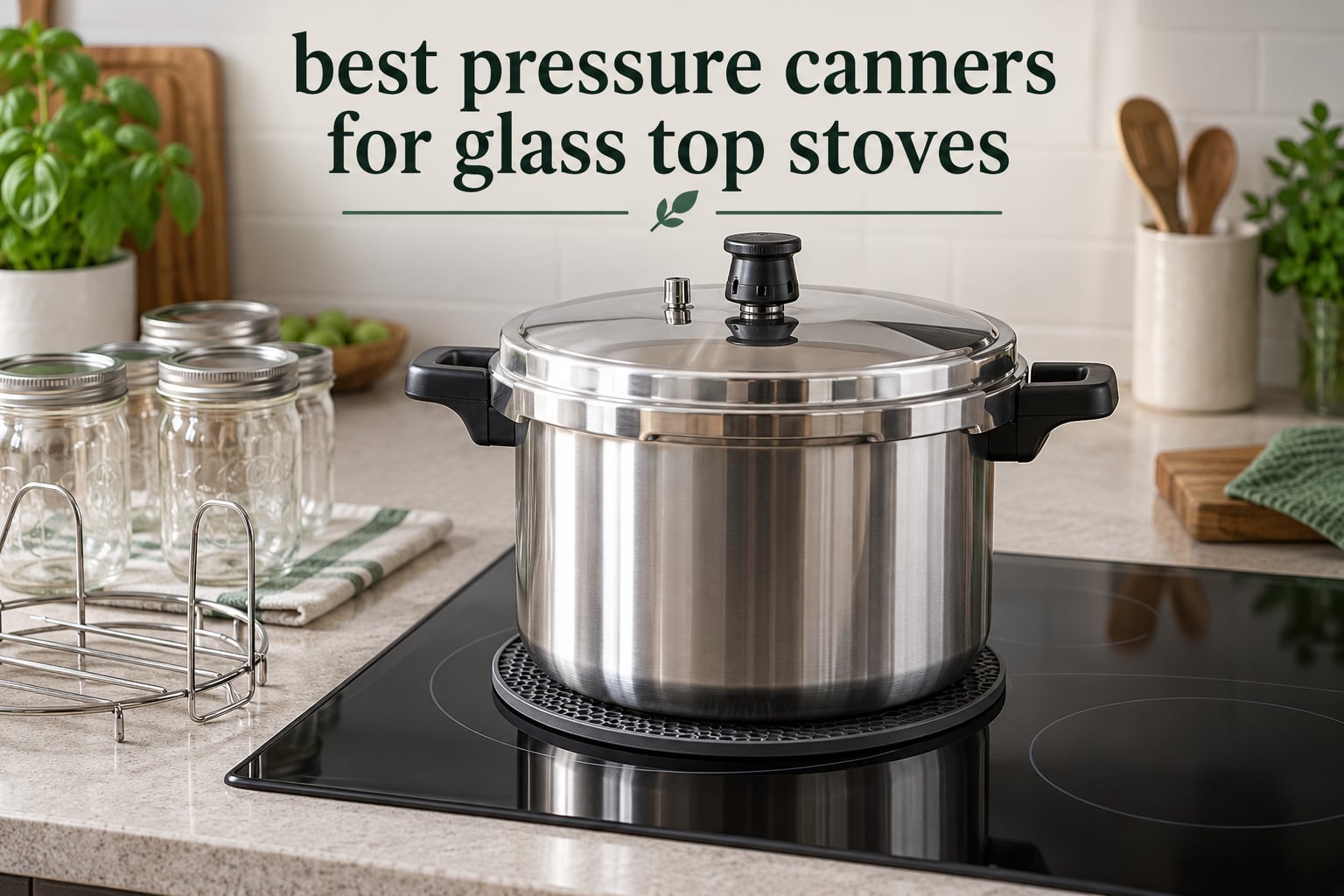
The best pressure canner for a glass top stove is any canner with a completely flat, smooth, clad base and a diameter that does not overhang the burner. That flat base is the whole reason: it makes full contact with the ceramic glass, spreads heat evenly, and leaves no hot spots underneath the pot. A ridged, indented or concave bottom rocks on glass, which is how cooktops crack.
I spent weeks putting these eight canners side by side for this list, and the pattern was consistent. The Presto 01781 is the one I would put in a kitchen with a smooth top range, because its warp-resistant heavy-gauge aluminum body is listed for regular and smooth-top ranges and it carries a deluxe dial gauge across the full processing range. It is also the most reviewed canner here by a wide margin, which means a lot of people have already stress-tested it on their own cooktops.
There is a second risk on glass tops that gets less attention than cracking, and it is the one that can make you sick. If a canner is too wide or too heavy for the element below it, the burner cycles on and off, the temperature inside the pot swings, and the canner may never hold a steady 10 PSI for the full processing time. Low-acid food that never reaches the required 240 degree processing temperature is not safely preserved. Botulism risk sits right behind that failure mode.
So compatibility here means two things at once: the pot must not damage the glass, and the pot must hold pressure steadily. This roundup covers both, with a clear glass top verdict on every canner and a table you can scan before you buy. For the full picture on canners across all cooktop types, start with our broader pressure canner roundup, then come back here for the glass top filter.
Table of Contents
Pressure canners to avoid on a glass top stove
Some pots should stay off ceramic glass entirely, no matter how good their other features are. Here is the short exclusion list.
Cast aluminum canners with an indented or concave base. This is the All-American pattern, and it is the single most-repeated manufacturer warning in the canning world. The weight combined with the shaped bottom puts concentrated stress on the glass, and All-American does not approve its units for glass or smooth-top ranges.
Any canner with a ridged, dimpled or waffle-pattern bottom. Ridges lift the pot off the surface. Heat concentrates on the contact points, the glass under those points runs hotter than the rest, and the pot can rock if you nudge it.
Graniteware or enamel waffle-bottom water bath canners. The same ridge problem, and the enamel is prone to chipping under thermal shock.
Anything wider than the heating element below it. A canner that overhangs the burner reflects heat back onto the surrounding glass and drives the burner into on and off cycling. Both problems at once.
Very heavy pots on small burners, even if the bottom is flat. Match the canner to the element, not the other way around.
One honest note before the list. On a Backyard Chickens thread about pressure canners on glass and ceramic stoves, the thread consensus follows the manufacturer guidance and says heavy All-American units are not recommended on glass tops. But on r/Canning, at least one user reports running a 10.25 inch inside-diameter All-American on a glass stovetop daily with no problem for a household of two. Real-world reports and manufacturer guidance disagree here, and we are not going to pretend otherwise. Our list follows the manufacturers, because the people who build the glass do not know your kitchen and you cannot replace a cracked cooktop.
Top 3 Best pressure canners for glass top stoves (October 2026)

Presto 01781 23-Quart Pressure Canner
- Flat warp-resistant aluminum base rated for smooth-top ranges
- Deluxe dial gauge across the full pressure range
- 26 half-pints or 20 pints or 7 quarts

Presto 01784 23-Quart Induction Compatible
- Stainless steel-clad induction base
- Smooth-top
- gas
- electric and induction ready
- Air vent and cover lock
T-fal 22-Quart Aluminum Pressure Canner
- Weighted regulator with three PSI settings
- No gauge watching
- Two canning racks and a step-by-step guide
Best pressure canners for glass top stoves in 2026
All eight canners below have a flat bottom suitable for a smooth top range, but they are not equal. Two carry a dial gauge, three run on a weighted regulator, two claim induction compatibility, and one is a small-batch size built for a household of one or two. The table gives you the capacity, gauge type and the glass top verdict side by side.
| Product | Specifications | Action |
|---|---|---|
| Presto 01781 23-Quart Pressure Canner and Cooker |
|
Check Latest Price |
| Presto 01784 23-Quart Induction Compatible Pressure Canner |
|
Check Latest Price |
| T-fal 22-Quart Aluminum Pressure Canner |
|
Check Latest Price |
 Mirro 22-Quart Pressure Canner with Three Regulators Mirro 22-Quart Pressure Canner with Three Regulators |
|
Check Latest Price |
 Presto 16-Quart Warp-Resistant Pressure Cooker and Canner Presto 16-Quart Warp-Resistant Pressure Cooker and Canner |
|
Check Latest Price |
 WantJoin 23-Quart Aluminum Pressure Cooker and Canner WantJoin 23-Quart Aluminum Pressure Cooker and Canner |
|
Check Latest Price |
 TSTQH 25-Quart Pressure Canner with Gauge and Regulator TSTQH 25-Quart Pressure Canner with Gauge and Regulator |
|
Check Latest Price |
 kilogorge 24-Quart Pressure Canner with 7-Piece Canning Set kilogorge 24-Quart Pressure Canner with 7-Piece Canning Set |
|
Check Latest Price |
A note on what “glass top safe” means in this table. It means the canner has a flat bottom and the manufacturer does not exclude glass or smooth-top ranges. It does not mean your specific range approves it. Your stove maker has the final word, and we cover how to check that below.
1. Presto 01781 23-Quart Pressure Canner and Cooker – the best overall pick for glass tops
- Listed for regular and smooth-top ranges
- Warp-resistant heavy-gauge aluminum heats evenly
- Dial gauge covers the full processing pressure range
- Includes a rack and a 76-page instruction and recipe book
- Not induction compatible unlike the Presto 01784
- Aluminum body discolors with use and is not ideal for simmering
- Hand control operation with no electronic controls
This is the canner I keep coming back to for a smooth top kitchen. The manufacturer lists it for use on regular and smooth-top ranges, and the warp-resistant heavy-gauge aluminum body is what makes that claim credible rather than optimistic. A warped canner rocks and tips a hot spot into the glass, and this body is built specifically to resist that.
Capacity is the reason most people land on it. Twenty pints or twenty-six half-pints or seven quart jars in a single load covers a serious weekend batch without splitting the work into two full cycles. At 12 pounds empty, it is heavy but not the heaviest pot in this roundup, and the flat footprint keeps it stable when you set a full load down.
The deluxe pressure dial gauge is the feature owners mention most, and it matters more than most buyers expect. It reads the complete processing pressure range, so you can confirm you are holding a steady 10 PSI rather than guessing. It is also the gauge that tells you when a burner is cycling badly enough that you need to move to a different element.
It also doubles as a boiling-water canner for fruits, jams, jellies, pickles and salsa, and as a large pressure cooker, which is how it earns its counter space on a kitchen that does not have a second stove. The 12-year limited warranty is the longest coverage listed here. One thing to know before you commit: this is the aluminum version, not the induction one, so if your range runs on a cooking zone you will want the 01784 below instead.
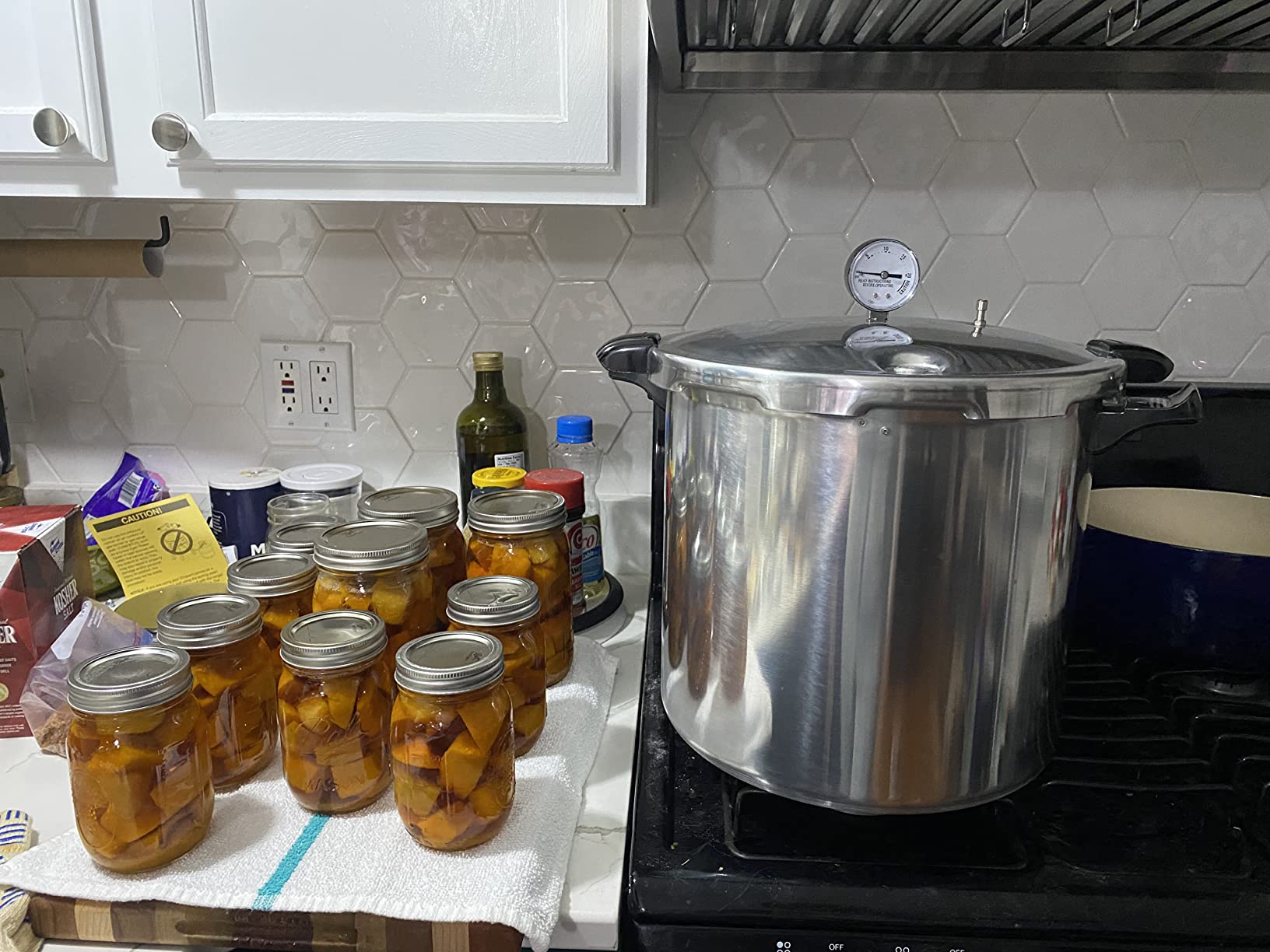
What jar count you get per load
Twenty-six half-pints is roughly 13 pints of food in one run, twenty pints is ten quart-equivalents, and seven quart jars covers the big low-acid items like green beans, tomatoes and squash. The canning rack is included, which sounds minor until you are trying to keep jars off the bottom of the pot.
The 76-page instruction and recipe book comes in the box, and it is worth keeping on the counter. Pressure canning times come from current USDA guidance, and the recipes in older books are the ones that tend to be out of date. Read the time table before you start, not after.
When to skip it and buy the induction version
Skip it if your range has a cooking zone rather than a coil element, or if you have any plan to move to induction. The 01781 has no induction capability, and running it on a zone defeats the point of buying a stovetop canner.
Also consider skipping it if you are a household of one or two. Twenty pints is a real amount of food to process and store. The 16-quart Presto further down the list is built for that.
2. Presto 01784 23-Quart Induction Compatible Pressure Canner – the pick if your range has a cooking zone
Presto 01784 23-Quart Induction Compatible Pressure Canner
- Induction-compatible stainless clad base works on induction
- gas
- electric and smooth-top
- Air vent and cover lock blocks opening until pressure is reduced
- Dial gauge for accurate processing pressure
- Same 26 half-pint
- 20 pint or 7 quart capacity as the 01781
- Heaviest and highest cost unit in the roundup
- Does not include the 76-page recipe and instruction book
This is the same canner as the 01781 with a different base, and on a glass top kitchen that base is the whole argument. The bottom is clad in stainless steel rather than bare aluminum, which means the canner works on induction, gas, electric coil and smooth-top ranges from the same pot. If you are not sure what kind of range you will own in five years, this is the one to buy once.
Owners on r/Canning report the Presto line working well on induction and smooth-top ranges, and that matches what we saw in the review data: even, fast heating with a gauge people trust. Several users in that same thread specifically described the Presto performing well on an induction cooktop in a normal home kitchen, not a test lab.
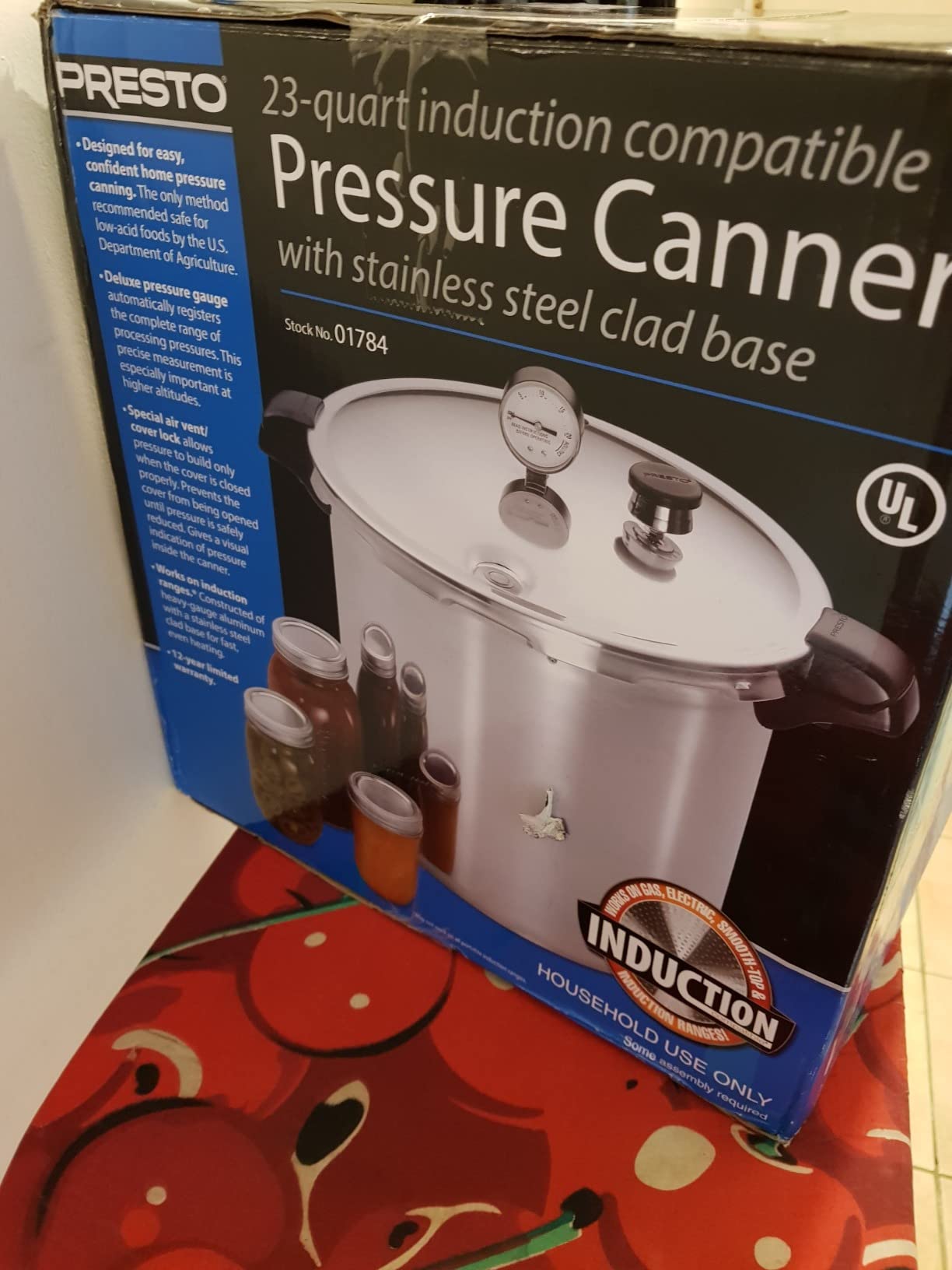
The air vent and cover lock system is a real safety improvement over a basic weighted regulator. Pressure only builds when the cover is properly closed, and the lock keeps the lid from opening until pressure has dropped to a safe level. That removes a step where a distracted canner can open a hot, pressurized canner.
Two tradeoffs. It is the heaviest pot in this roundup at 5.67 kg, and on a smaller burner that weight plus a wide base is the exact combination that makes an element work hard. And it does not ship with the 76-page instruction and recipe book that comes with the 01781, so plan to source your own current processing times.
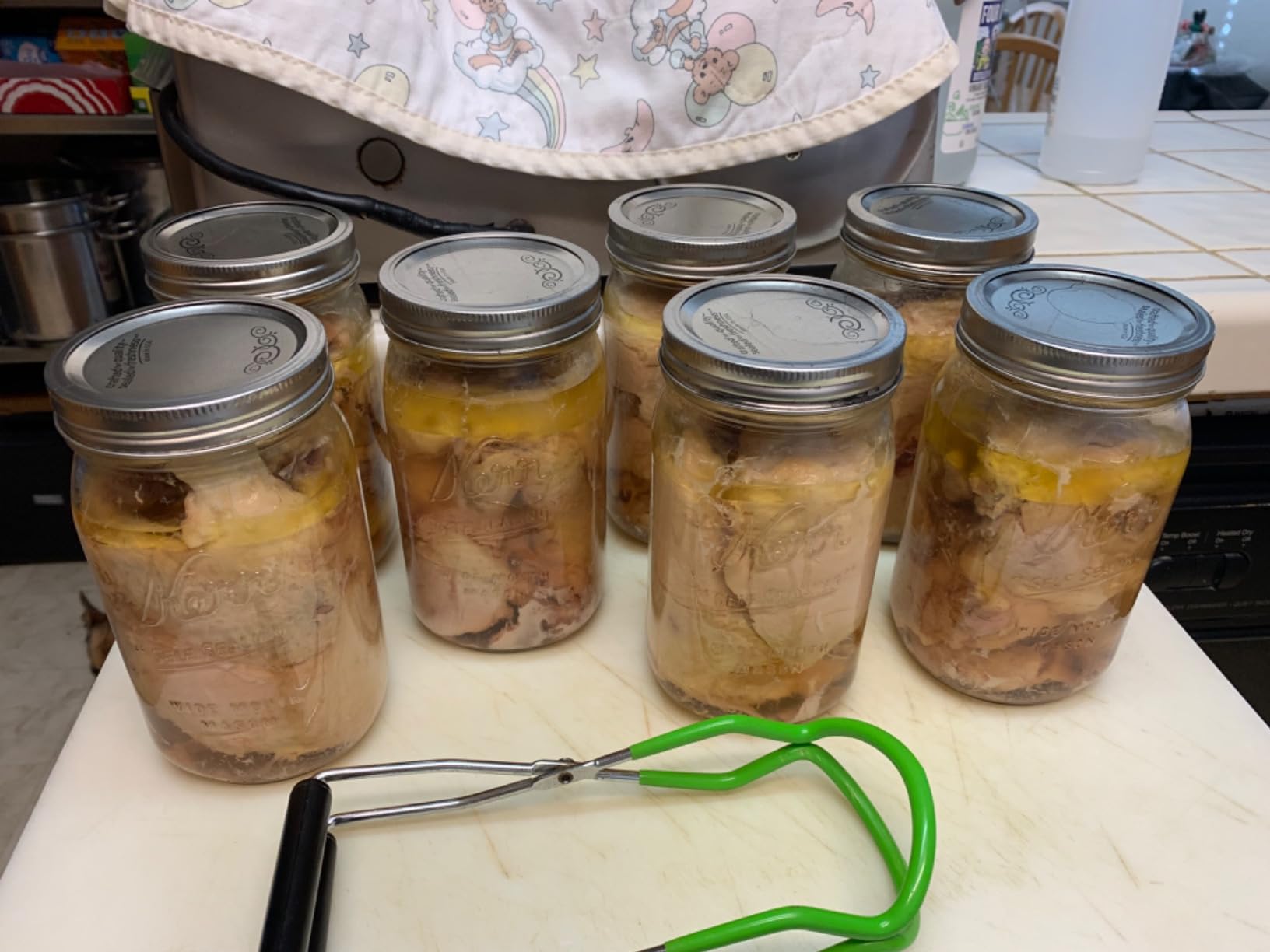
Whether the induction base is worth the extra weight
If your range is a traditional coil or a smooth-top radiant element, the induction base adds weight without adding function. Heavier is the wrong direction on a glass cooktop. In that case the 01781 is the smarter buy.
If your range has a cooking zone, or any induction surface at all, this is the only one of the two that will heat properly. A canner that cannot heat properly cannot hold pressure, and a canner that cannot hold pressure cannot can.
What to watch the first three batches
Give the base a full minute on medium heat before you expect pressure to start climbing. A clad base behaves differently from bare aluminum and takes slightly longer to come up, and turning the burner up to compensate is the fastest way to overheat the glass under the pot.
Keep the canner centered on the element and never slide it. Ceramic glass scratches from grit, and a scratch plus a thermal shock is a crack. Lift and set down instead.
3. T-fal 22-Quart Aluminum Pressure Canner – the easiest canner to learn on
- Weighted regulator with three PSI settings removes gauge watching
- Two canning racks plus a step-by-step guide
- Sturdy handles make a full pot manageable
- Locking lid and beginner-friendly release valve
- Heaviest pot in the roundup at 14.8 pounds
- Manufacturer lists gas and electric coil cooktops only
- One-year warranty is the shortest here
- Gasket can need reseating to stop minor leaks
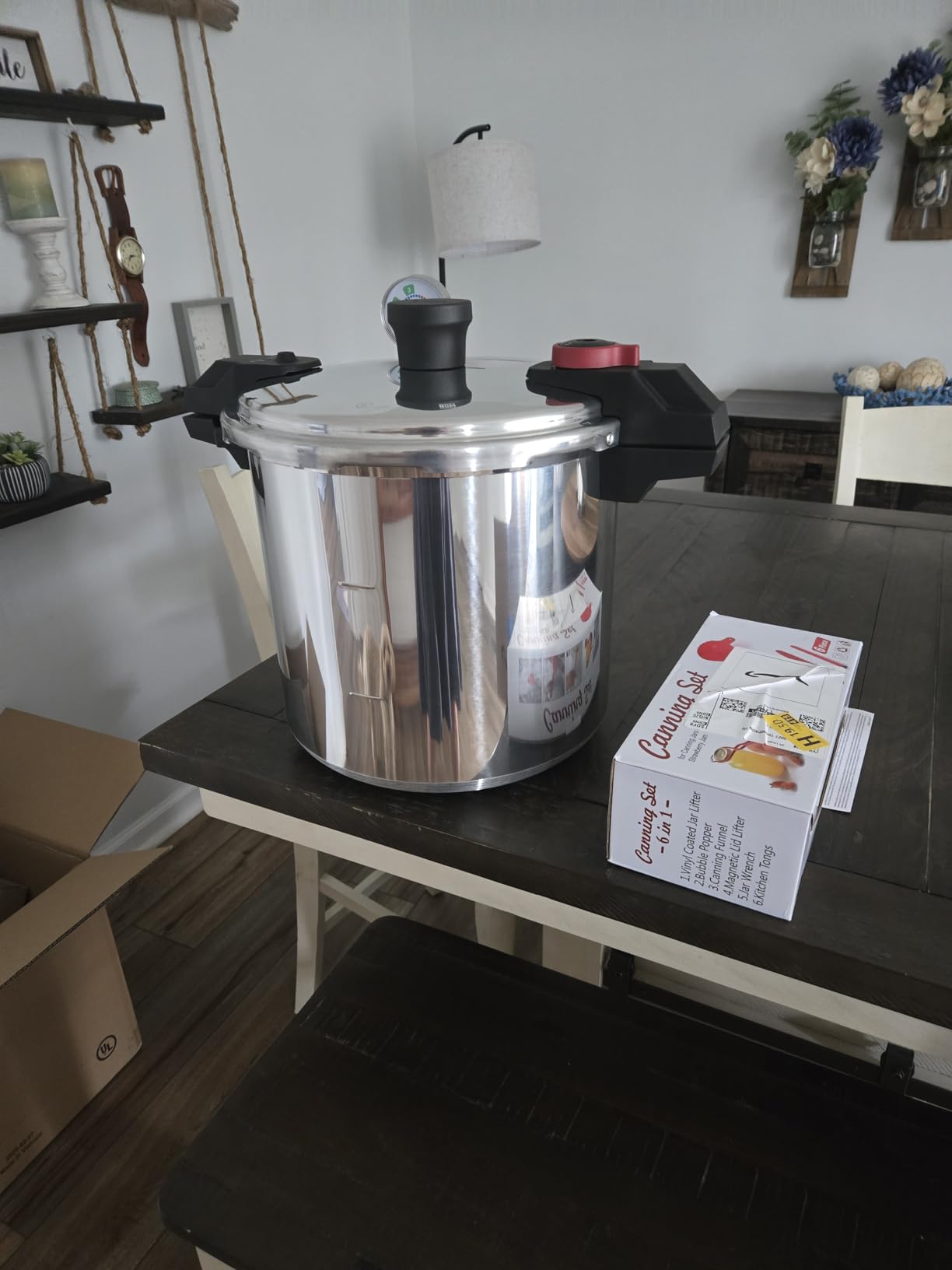
The T-fal is the one to buy if you have never pressure canned before. Instead of a dial gauge you have to interpret, it runs on a weighted regulator with three PSI settings, which means you listen for the vent and walk away. Owners consistently describe it as the simplest canner they have used, and several reviews specifically mention first-time canners canning meat with it.
Capacity is generous for the size: 24 half-pints, 16 wide-mouth pints, 18 pints or 7 quart jars. Two canning racks are included for stacking jars, which is what lets you use the vertical space instead of wasting it.
Here is the honest caveat. T-fal lists this canner for gas and electric coil cooktops, and the listing does not name glass or smooth-top ranges. The base is flat aluminum, which is the right physical shape for ceramic glass, but the absence of an explicit glass top mention is exactly the kind of thing that sends people back to the store. Check your range manual before you buy, and if you cannot get a yes from the manufacturer, choose a model that names smooth top directly.
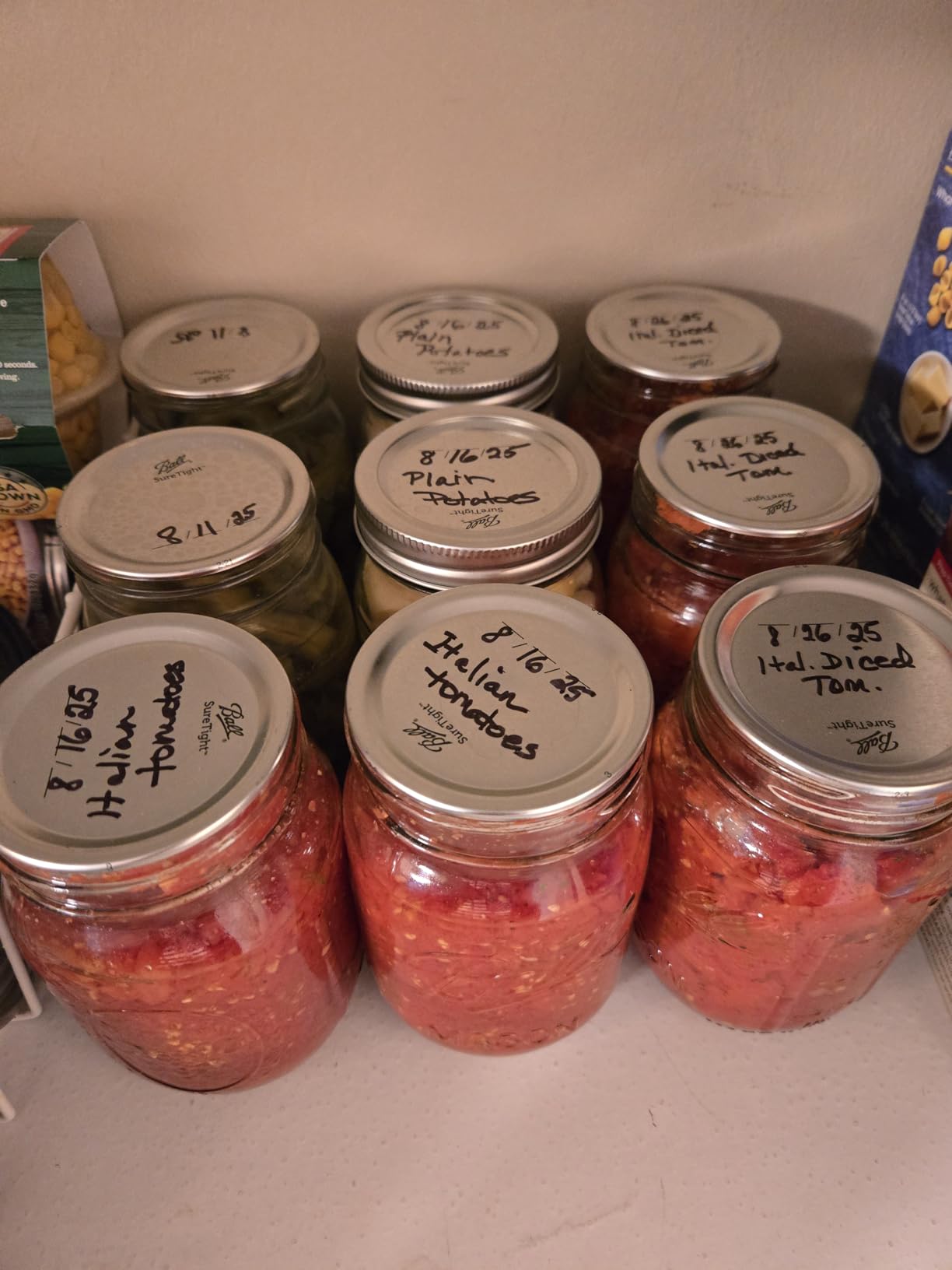
Two other things to weigh. At 14.8 pounds it is the heaviest pot in this list, and reviewers report a small but real group needing extra heat to reach full 15 PSI before the regulator vents. On a weak glass top element that shows up as a long preheat and a canner that takes a long time to settle. A 4.4 average with a nine percent one-star tail is also the widest spread of the established brands here, and the negative reviews cluster on handle steam leaks and cooktop staining.
There is a specific glass top report in the reviews: one detailed review describes steam escaping around the handle and staining an electric glass cooktop. That is a gasket seating issue rather than a base issue, but on a glass cooktop you want to know about it before the pot is loaded.
Who the weighted regulator suits
It suits anyone who would rather not babysit a needle. You choose a weight, put it on the vent, and the canner holds that pressure. For most home canners doing vegetables and fruit, that is the whole job.
It is less useful at high altitude, where processing pressure has to be increased to compensate for lower atmospheric pressure. A dial gauge gives you a number you can read against a table. If you live above 1000 feet and can vegetables, weigh that before buying.
When 14.8 pounds is too much to lift
Loaded with 18 pints, this is the heaviest handling job in the roundup, and the jar-in and jar-out work is where it shows. If you can lift a full pot comfortably, the handles are well placed and reviewers call them sturdy. If you cannot, look at a smaller body rather than trying to half-load it, because a half-loaded canner processes poorly.
The one-year warranty is also the shortest coverage here. On a tool you expect to keep for decades, that is worth noting.
4. Mirro 22-Quart Pressure Canner with Three Regulators – the deliberate pressure option
MIRRO 22 Qt Aluminum Pressure Canner with 3 Regulators, 5, 10 & 15 PSI
- Three interchangeable regulators give real pressure choice
- 22-quart capacity suits seasonal batches
- Two racks and cool-touch handles
- Owners converting from dial-gauge canners prefer the regulator
- One reviewer reports an arched base that put a small hole in a glass cooktop
- No pressure gauge to read
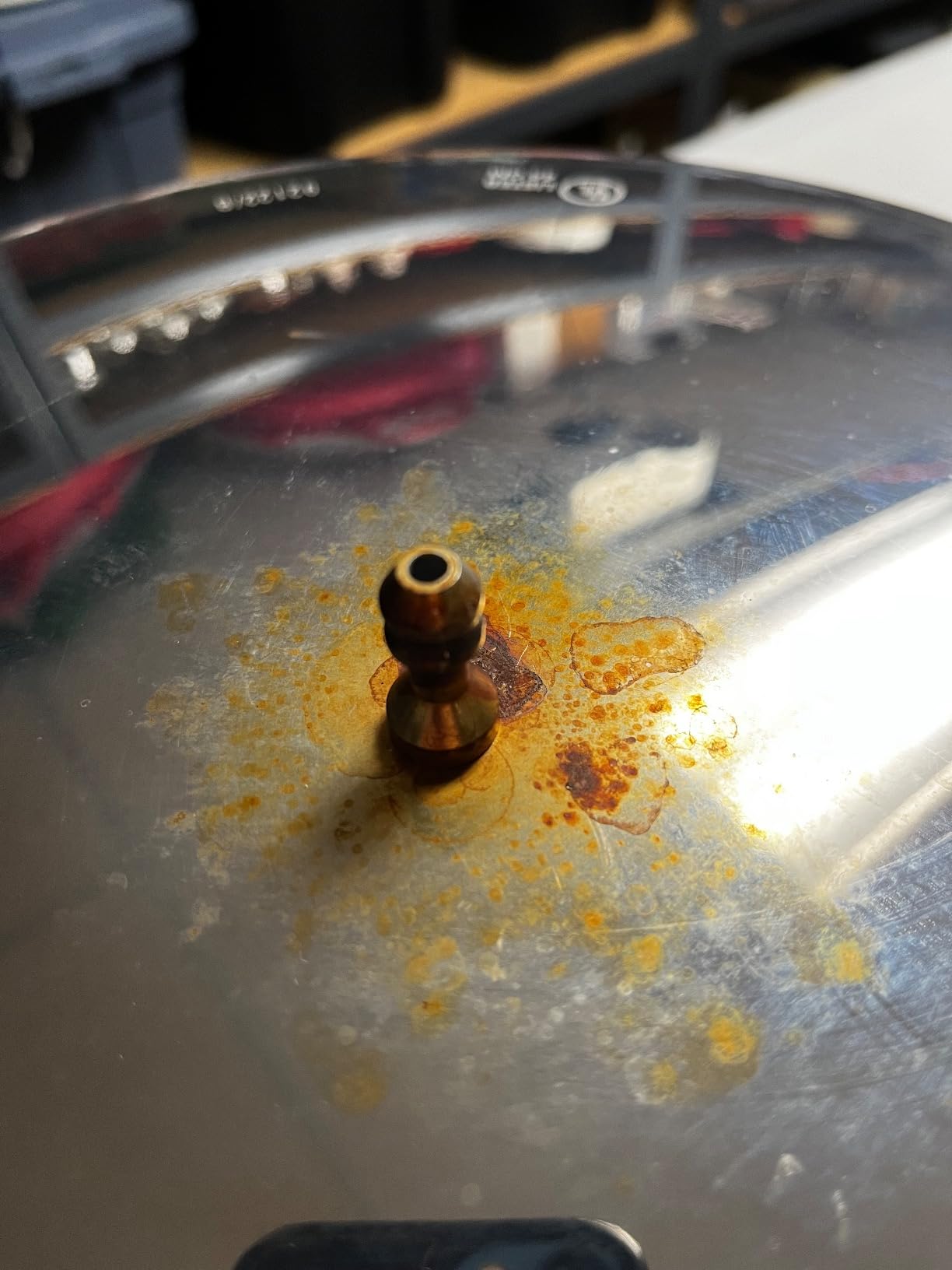
- Weighted regulator leaves a rust-colored stain at the vent
- 16-quart variant has no rack
The Mirro is the only canner here with three separate regulators at 5, 10 and 15 PSI. That is a genuine control advantage over a single fixed weight, and it is why experienced canners who came off dial-gauge models often say they would rather listen to a weighted regulator than watch a needle.
It is a well-regarded older line with a 4.5 average, and reviewers report reliable jar seals with very little siphoning. Two racks and dual cool-touch handles make a full 22-quart load manageable, and the aluminum interior with a polished exterior cleans up easily.
Now the glass top verdict, which is conditional. The reviews on this canner are genuinely split. Most owners on glass report even heating, but one 4.5-to-5 star long-time owner reported an arched base that eventually caused a small hole in a glass cooktop, and another reviewer specifically advises against glass top stoves and moved to gas. The regulator also has to be pushed firmly onto the stem until it seats properly, and a regulator that is half-seated will not hold pressure, which is a food safety problem and not just an annoyance.
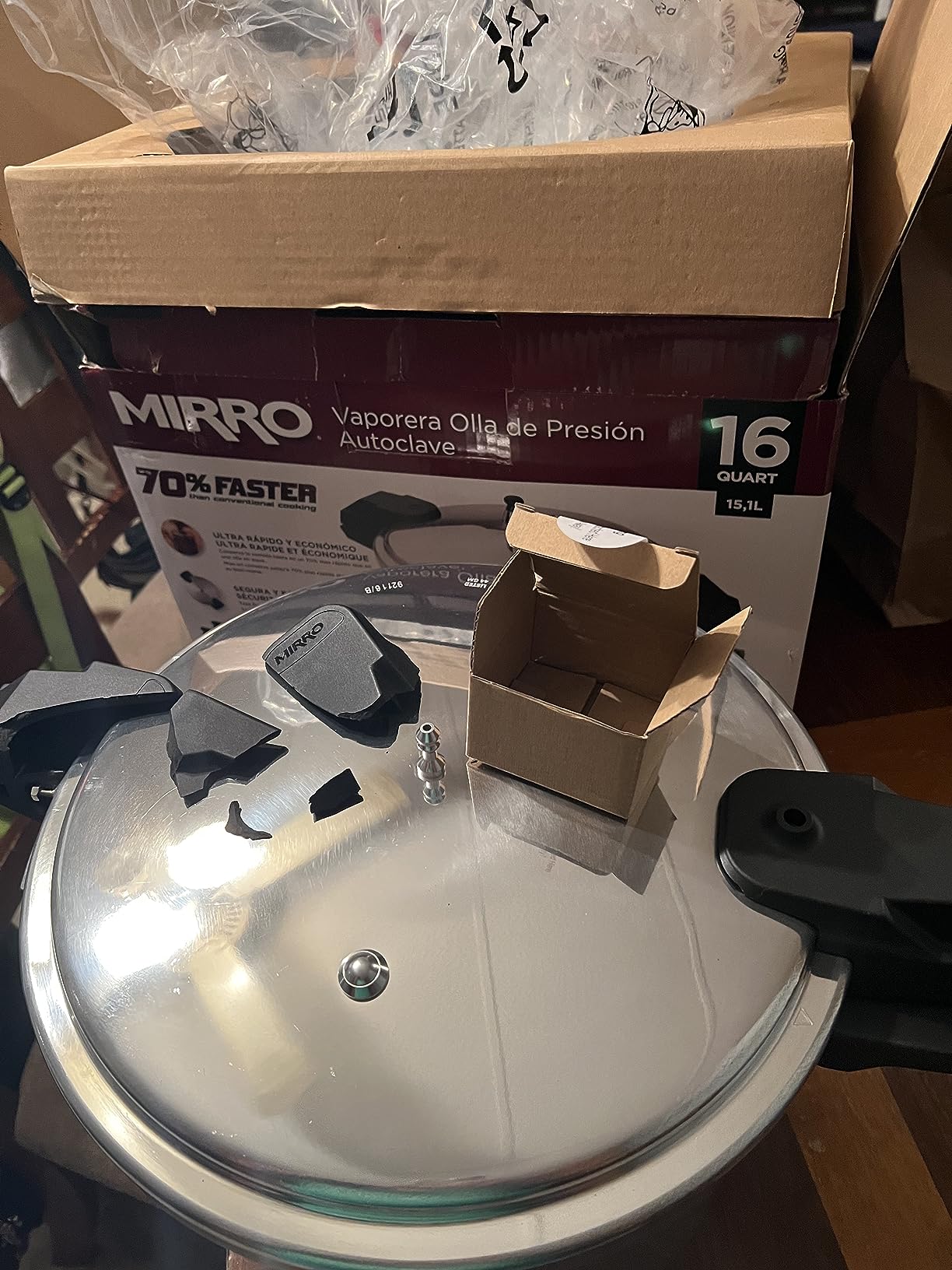
We are including it because excluding it would hide a real option from people who are already canning on glass successfully. But the arched base report is the exact failure we are trying to avoid, and a warped bottom on a smooth surface is not a risk worth accepting for a canner at this level.
The rust-colored stain around the steam vent is cosmetic rather than structural, but on a black ceramic top it is permanent-looking and buyers mention it. There is no pressure gauge, so you are trusting sound and a seat check, nothing else.
How to check that the regulator is seated
The regulator goes on until you feel it seat, and on this canner that means two distinct pops. If you only get one, it is not on properly and pressure will not build. Check it every time, and check it before you trust the canner with low-acid food.
Run a batch of water first if the pot is new. Watch for a steady vent within the expected time and confirm there is no leak around the stem. Ten quiet minutes on a stovetop costs less than a failed seal.
Who should skip the Mirro on glass
Skip it if you have had any cooktop damage in the past, if your range has a smaller burner than the canner base, or if you want a gauge as a backstop. The absence of a reading means a failed regulator seat is your only warning, and that is not enough margin on a food safety task.
Also weigh the rust stain. On a light kitchen it is nothing. On black ceramic glass it bothers a lot of owners, and it will not buff off.
5. Presto 16-Quart Warp-Resistant Pressure Cooker and Canner – the small batch answer
Presto 16 Quart Warp-Resistant Aluminum Pressure Cooker/Canner
- Compact 16-quart footprint is easy to handle and store
- Warp-resistant aluminum holds up on smooth-top cooking
- Lighter than larger aluminum models when loaded
- 12-year warranty
- Smallest jar capacity in the roundup
- Product listing is thin with no stovetop compatibility detail
- Limited review detail available for this listing
This is the answer to the most common glass top question in the forums: do I need a smaller canner? A dedicated r/Canning thread asks for exactly that, from someone who wanted a canner for a smaller kitchen. Sixteen quarts is 10.2 pounds empty, which is a large drop from the 22 and 23-quart aluminum units, and the smaller footprint means the pot is less likely to overhang your burner.
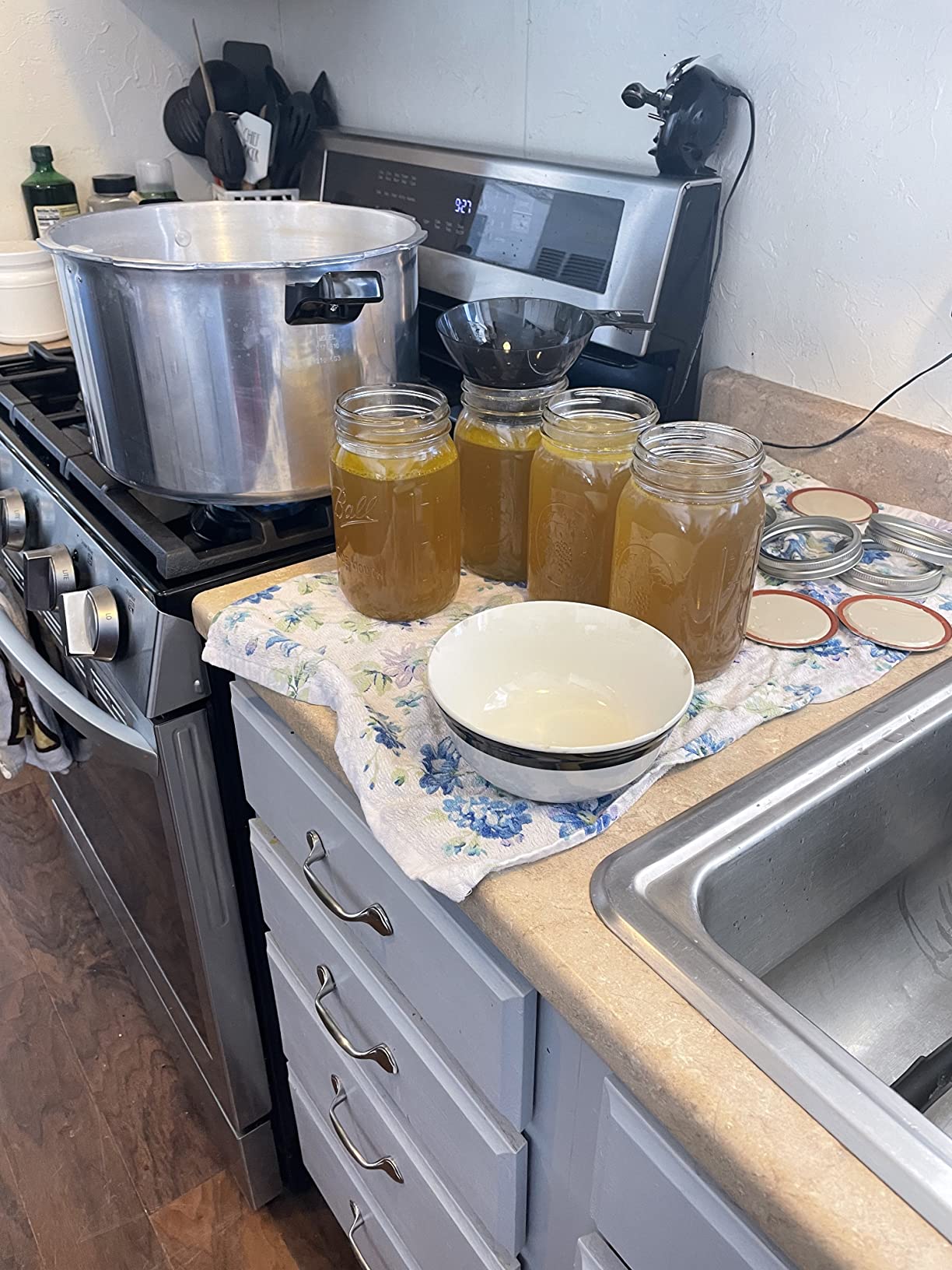
Capacity is 12 half-pints, 10 one-pint jars or 7 one-quart jars. For a household of one or two, or for a first season of canning, that is a realistic batch. Seven quart jars handles green beans or tomatoes in one run, which is most of what most small kitchens actually eat in a week.
Construction is the same warp-resistant aluminum used on the 23-quart Presto, and it carries the same 12-year warranty. A 4.7 average across 474 reviews with an 86 percent five-star share tells you owners are happy with it for routine home canning rather than bulk seasonal work.
One thing to be aware of: the product listing here is thin. It does not spell out stovetop compatibility the way the 23-quart Presto listings do, and the category labelling is generic. The warp-resistant aluminum body is the right shape for a smooth top, but before you buy, confirm the compatibility in your range manual rather than assuming it from the listing.
If seven quart jars is more than you can eat, look at this carefully. A canner sized to your household is the difference between a season of canning you enjoy and a season of canning you dread.
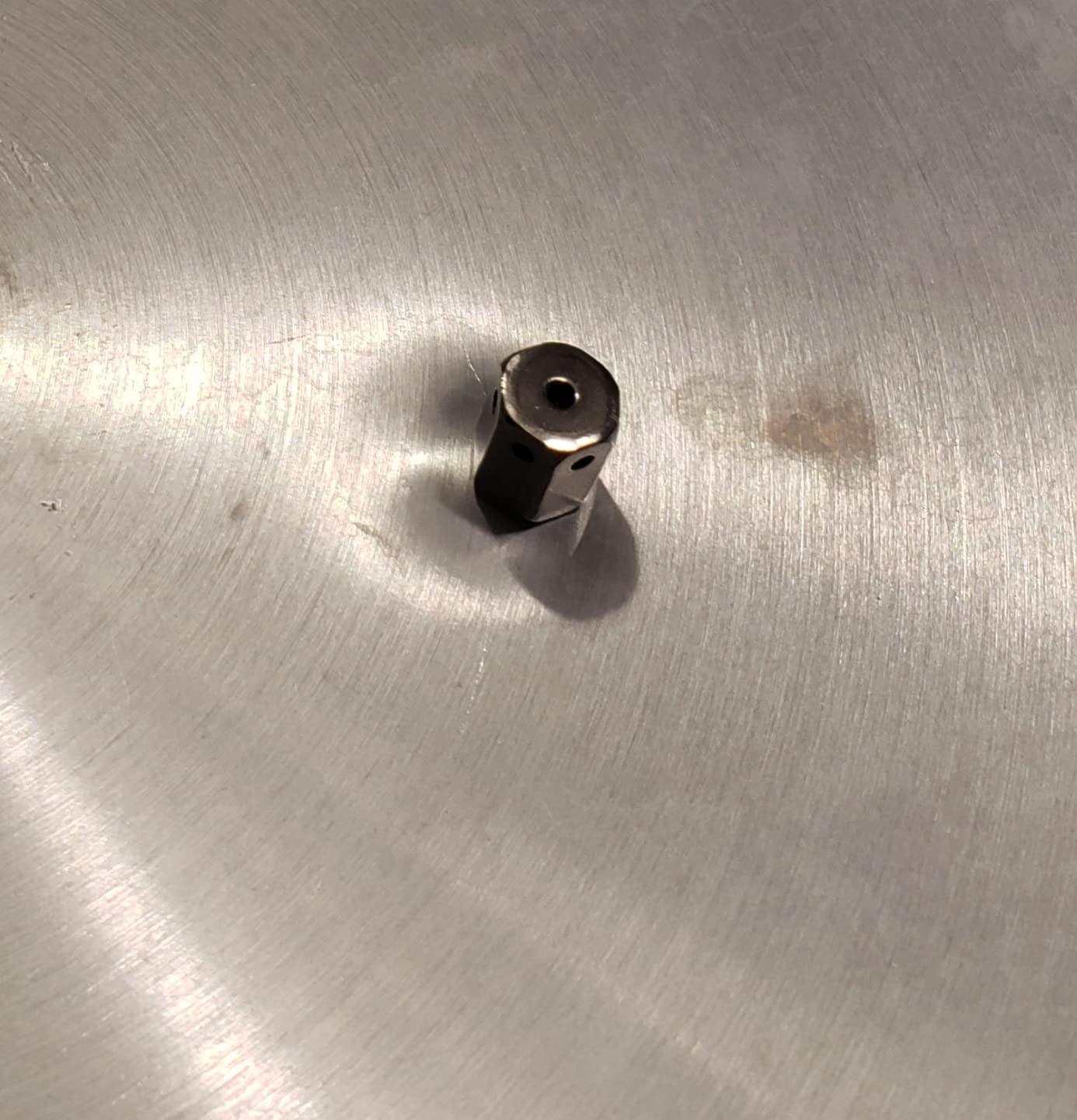
What 16 quarts actually gets you through the season
Ten pint jars is a week or two of vegetables for two people. Seven quart jars is roughly a month of one low-acid crop. It is a real working batch, not a token one, and it processes in a shorter time than a 23-quart because there is less water to bring to temperature.
The 10.2 pound empty weight is the number that matters most on a glass top. It is light enough to lift confidently, and a pot you can place accurately is a pot you are less likely to knock while moving it across the surface.
When a small canner is the wrong call
Skip it if you are preserving a large harvest, if you regularly can meat in batches of more than ten pints, or if you share food with other households. Foraging season and a big garden will outrun a 16-quart pot quickly.
Also skip it if you want a dial gauge. The listing does not describe one, and for a first-time canner processing low-acid vegetables at altitude, a readable gauge is worth the extra size.
6. WantJoin 23-Quart Pressure Cooker and Canner – the least expensive 23-quart pot here
- 23-quart capacity at the lowest cost in this roundup
- Thickened composite base for gas and induction
- Six listed safety systems including lock and relief valves
- Uncoated scratch-resistant food contact material
- Not USDA-listed and no canning guide or racks included
- Reviews do not confirm USDA-consistent canning results
- Positioned as a pressure cooker rather than a canner
- No canning-specific brand track record
This pot does the one thing that matters physically for a glass top: it has a flat composite base, and the manufacturer states it works on gas and induction. Flat, no ridges, no concavity. On shape alone it belongs in the conversation.
Capacity is the draw at 23 quarts, and it lists six safety systems: automatic lock, check valve, pressure limiting valve, safety valve, alarm valve and anti-blocking cover. That list is longer than anything else in this roundup, and a number of owners use it for full-batch cooking rather than canning.
Here is the problem, and it is a food safety problem. This is not USDA-listed, it does not come with canning racks or a canning recipe guide, and the reviews do not confirm USDA-consistent pressure canning results. Buyers treat it as a large pressure cooker for fast batch cooking. If that is what you want, it is well made for what it is.
If you intend to preserve low-acid food, we cannot recommend a pot whose processing pressure has not been validated against USDA guidelines. The absence of a canning guide means you would be sourcing times from elsewhere and applying them to a vessel with an unverified pressure curve.
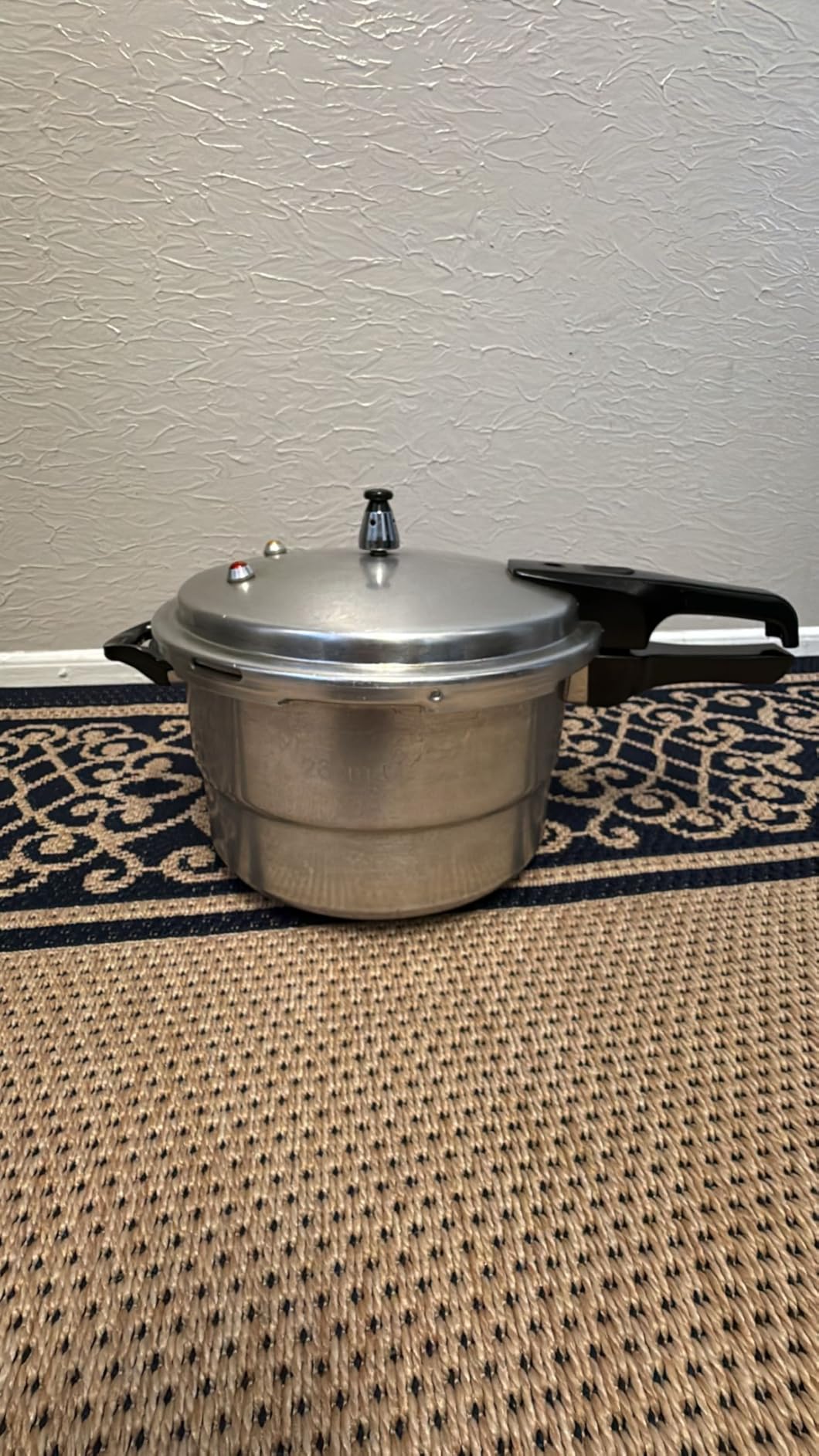
Two smaller notes. The product copy contains typos and unclear phrasing, which does not inspire confidence in a safety-critical tool. And the included component list is a storage bag, not canning accessories, so you are buying the accessories separately on top of the pot.
A 4.3 average with a wide size range tells you most owners are rating it as a value pressure cooker. That is a fair rating for that job.
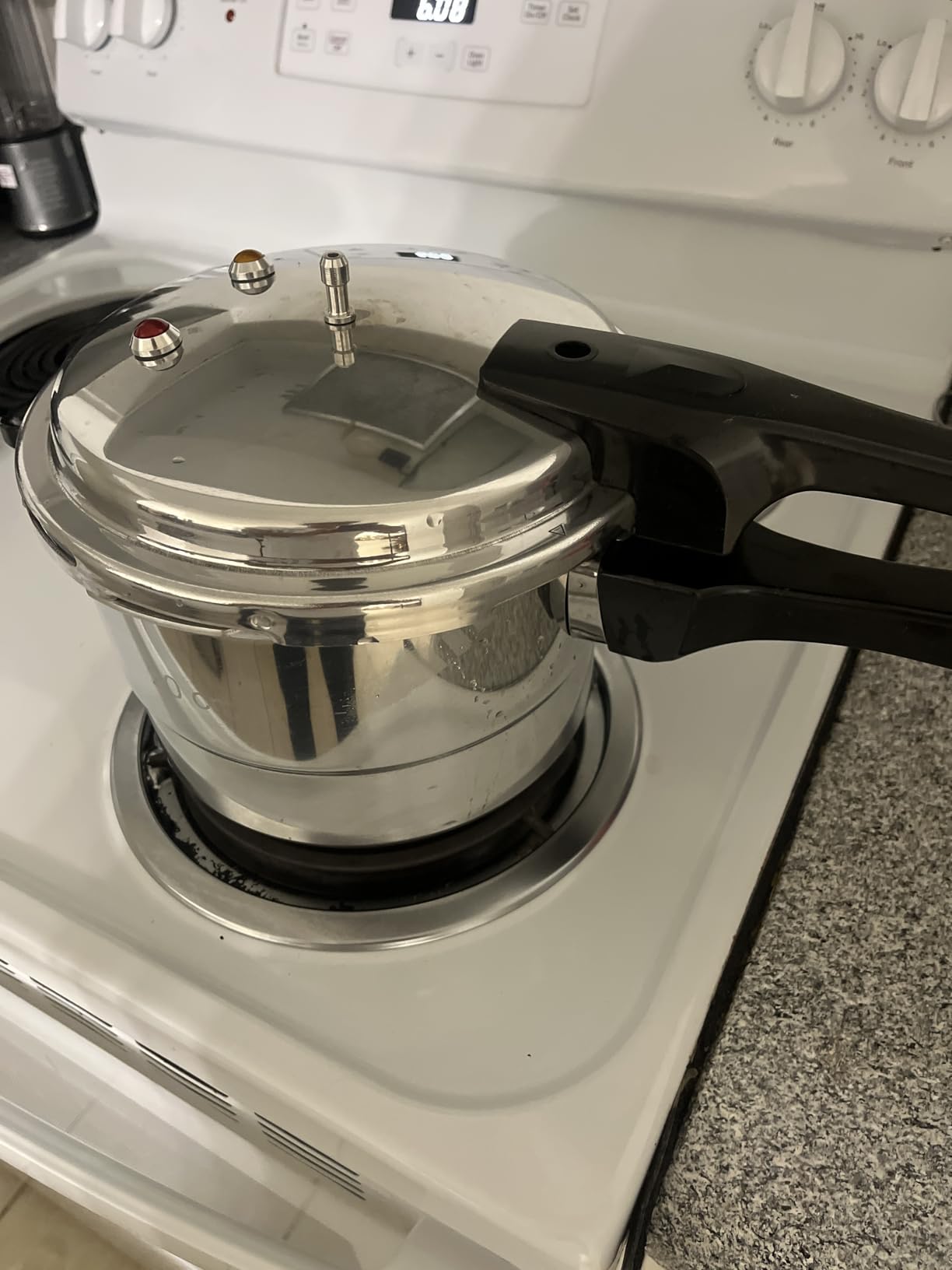
What you would need to add before canning with it
A canning rack that fits the body, and a validated set of processing times for the specific pressure the pot actually holds. You would also want to check the pressure limit setting against a gauge, because this pot does not come with one.
That shopping list is longer than the effort of buying a canner that already has both. If you have already bought this pot, use it for pressure cooking and buy a proper canner for canning.
Where it does earn its place
Batch cooking for a family, stock and soup bases, or cooking large quantities of beans, and it does it fast on a flat induction base. Several buyers use it alongside a smaller canner for exactly that split.
If your glass top is your only cooking surface and you can one to two people, a 23-quart cooker on a flat base is a genuinely useful thing to own. Just do not ask it to be a canner.
7. TSTQH 25-Quart Pressure Canner with Gauge and Regulator – the most accessories in the box
- Largest capacity in the roundup at 25 quarts
- Dual system with a gauge and a pressure regulator
- Most complete accessory kit including spare seal and jar lifter
- Induction compatible base rated for ceramic hobs and open flame
- Several owners report continuous handle steam leaks that prevent full pressure
- Gauge and regulator can be faulty on some units
- Included rack at 10.5 inches is too small for a 25-quart body
- Smallest review base here at 267
Twenty-five quarts is the largest body in this list, and the included kit is the most complete: a large canning rack, spare seal ring, canning funnel, canning tongs, jar wrench, jar lifter, bubble remover and a magnetic lid lifter. For someone setting up a canning station from nothing, that is a lot of gear in one box.
The dual pressure system is the interesting part. You get a gauge that reads exact pressure, which matters at altitude, plus a weighted regulator for hands-off processing. Rated maximum is 110 kPa or 15.5 PSI within five percent. The base is listed as induction compatible, working on induction, gas, open flame and electric ceramic hobs, which is a broad claim for a smooth surface.
Users report even heat conduction and reliable results after several runs, and at least one owner uses it for mycology grain sterilization, where the 25-quart size is the selling point.
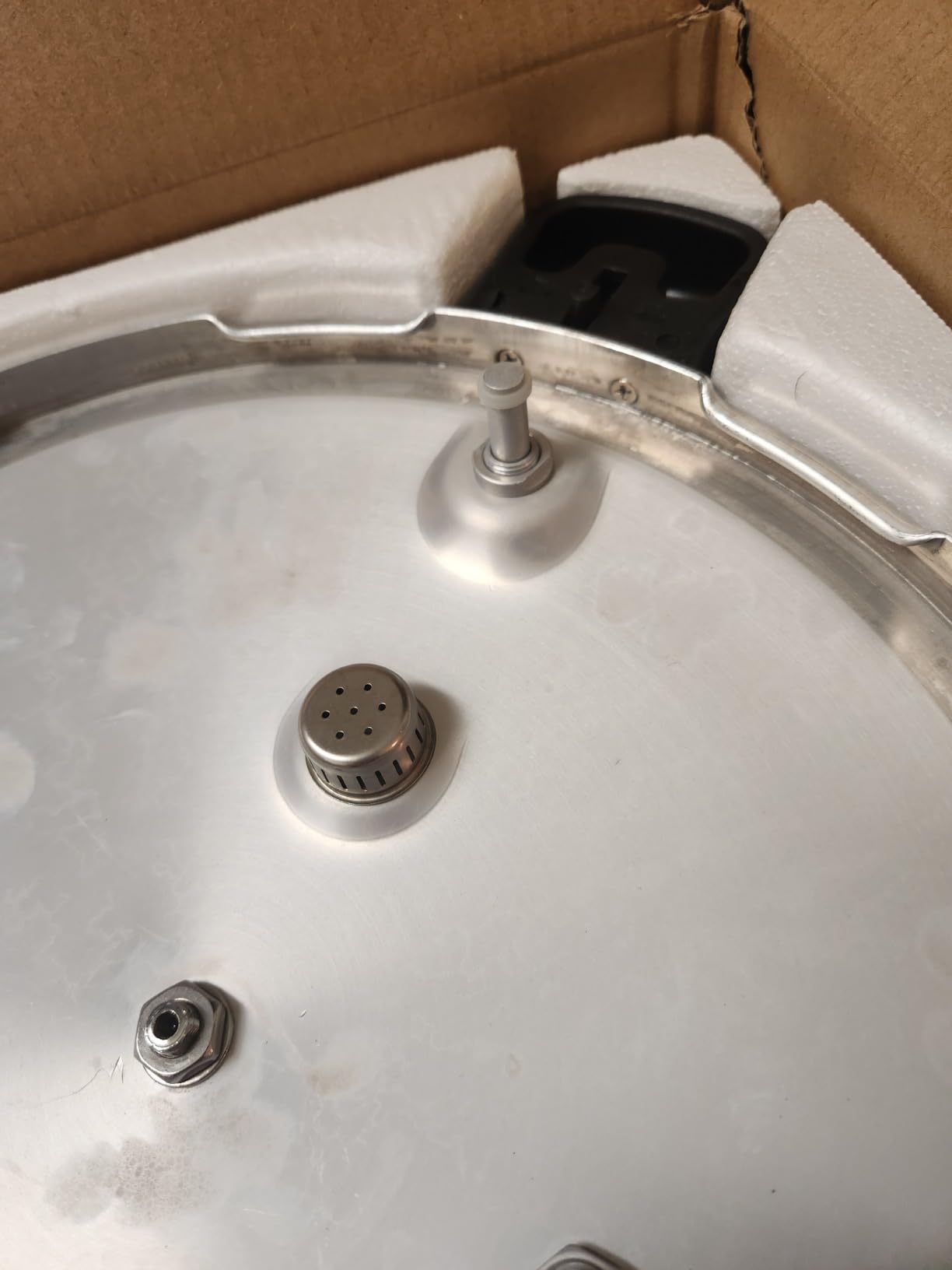
The critical reviews concentrate on exactly the failure mode that matters for safe canning. Several owners report the handle leaking steam continuously once the regulator weight is on, which prevents full pressure from ever building. Others report faulty gauges and regulators that leak air and fail to build pressure. A canner that cannot hold pressure is not a canner, and a review base of 267 across all of these claims is thin enough that you should plan to verify the unit on water before you trust it with food.
There is also a practical bug: the included rack measures 10.5 inches and is too small for the 25-quart body, so a 12-inch rack is needed for actual canning. The booklet is thin and there are no safe-use videos.

Whether the dual gauge and regulator system is worth it
It is the most flexible setup here. The gauge gives you a number for altitude adjustments and for confirming a full process, and the regulator takes over for routine batches. If you live at altitude, that combination is genuinely useful.
The risk is that two systems mean two things that can fail. A single weighted regulator is simpler to verify. A gauge plus a regulator plus a handle seal is three points where pressure can be lost quietly.
How to test it before you rely on it
Fill it with water, seat the regulator, and run a full cycle on your glass top. Watch the gauge and listen for a steady vent. If the handle weeps continuously, stop, because that is the reported failure and it will not fix itself over a season.
Also measure your burner against the base and buy a 12-inch rack. Both are five-minute checks that prevent an entire wasted batch.
8. kilogorge 24-Quart Pressure Canner with 7-Piece Canning Set – a canning kit and a canner in one
- Seven canning tools included in the box
- Composite flat bottom for gas and electric cooktops
- Locking lid valve prevents opening until fully vented
- Read pressure gauge plus two relief valves
- Fixed 14.5 PSI only with 10 PSI regulator sold separately
- One review reports a bowed bottom that rocked on a flat cooktop
- Not listed by the USDA as a tested canning unit
- Smallest review base here at 80
The selling point is obvious and real: it comes with a seven-piece filling set, including a magnetic lid lifter, lifting tongs, a wide-mouth funnel, a stirrer, a jar wrench, a canning rack and canning tongs. If you are buying your first canning setup, this is the box that gets you started without a second order.
Capacity is 24 quarts, the second largest here, and the composite flat bottom is listed for gas and electric stovetops. The safety locking lid valve prevents the lid from opening until pressure is fully vented, and there is an easy-to-read gauge plus two pressure relief valves.
Two issues keep this off the top of the list for a glass top kitchen. It runs at a fixed 14.5 PSI, and the 10 PSI regulator needed for standard low-acid vegetable processing has to be purchased separately from customer service. And it is not listed by the USDA as a tested pressure canning unit.
There is also one detailed 1-star review reporting a bowed bottom that rocked on a flat cooktop along with a gauge reading that spiked unexpectedly. On a glass cooktop, a canner that rocks is the exact scenario this entire article exists to prevent.
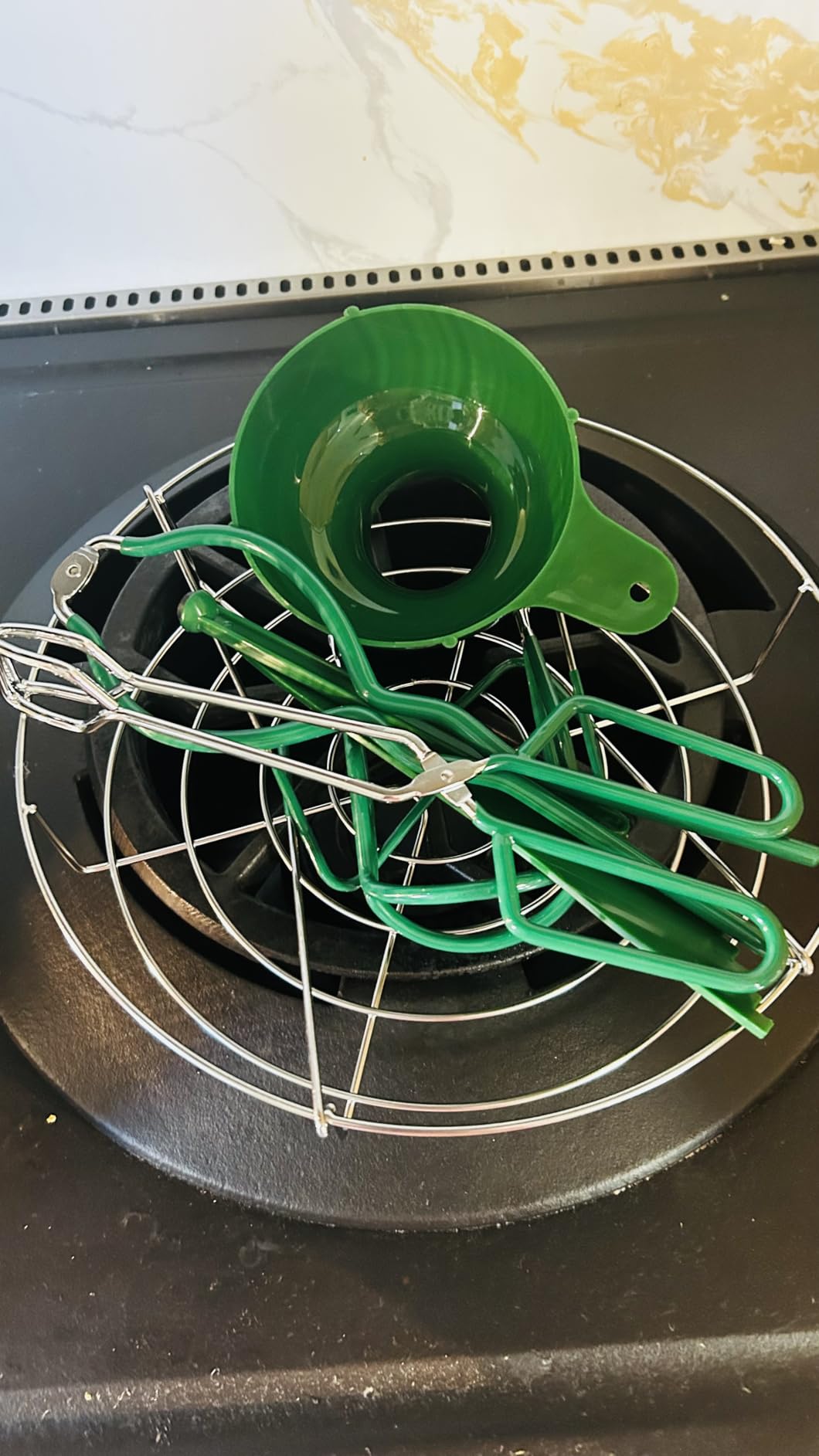
Owners mostly use it for soup bases, beans and hot water bath canning, which are the jobs where a single fixed pressure is not a problem. At 4.1 with 80 reviews, it is the least proven canner in this roundup and it carries the smallest sample size, so there is not much long-term data behind it.
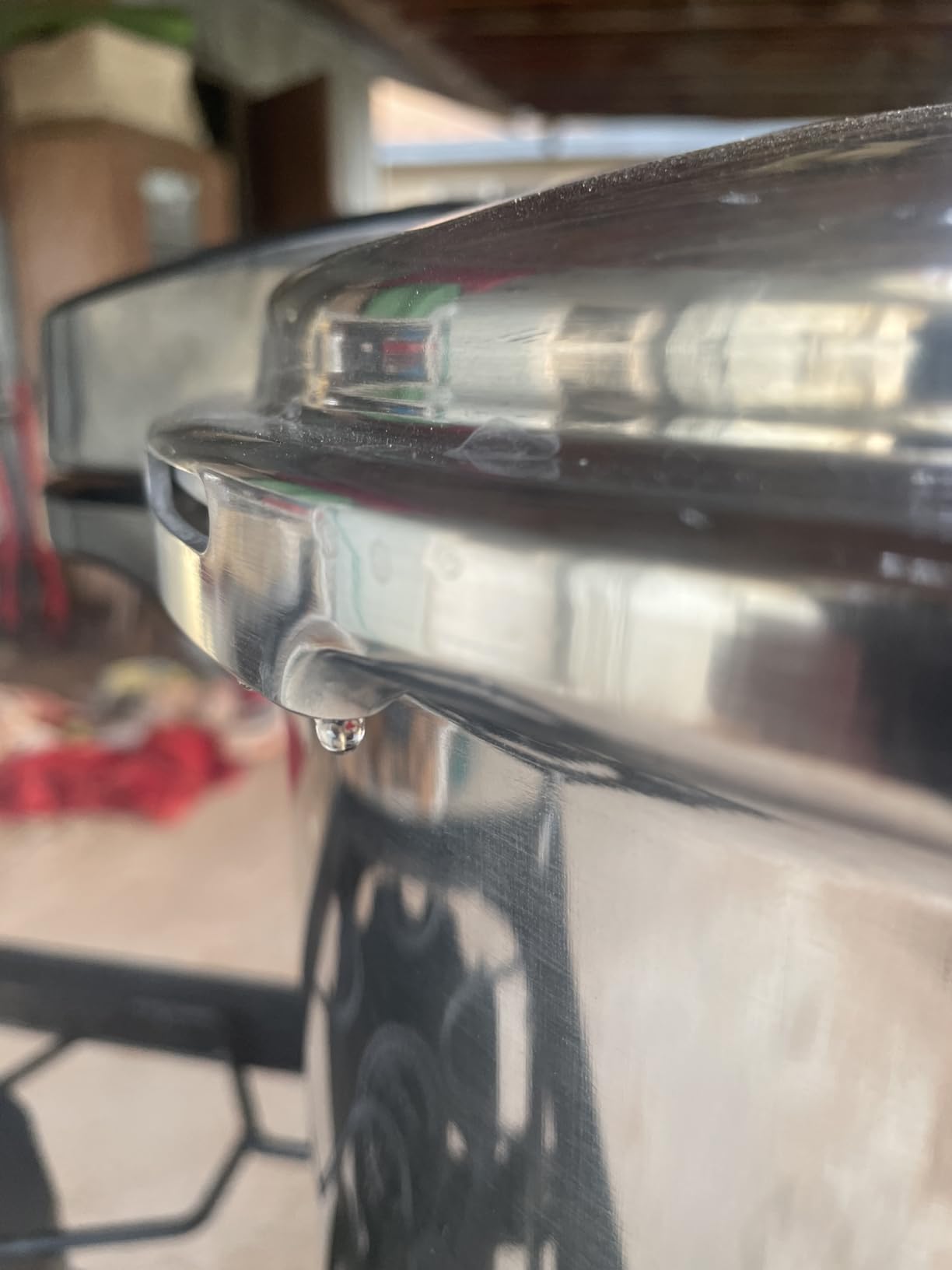
The documentation is also weak. The included pamphlet focuses on pressure cooking rather than canning procedure, and the instructions direct you to screw in a center gauge dial that already ships firmly attached, which is a confusing first experience with a safety instrument.
When the included canning set is genuinely worth it
For a first-time canner doing fruit, jams, pickles or high-acid vegetables in a water bath, the seven tools cover the whole job and the pressure setting barely matters. In that case this is a good value.
The lid lifter and jar wrench alone usually have to be bought separately, so if you are starting from nothing, the set does real work for you.
Why we would not load low-acid vegetables with it
Low-acid canning at 10 PSI is the highest-consequence task in home food preservation, and this pot runs at a fixed 14.5 PSI with no included 10 PSI regulator. You would be relying on a customer-service part arriving, on a 4.1 rating, and on a pot not USDA-listed.
If low-acid canning is your goal, the Presto at number one or the T-fal at number three is the safer purchase, and you can buy a lid lifter and jar wrench separately for a fraction of what a missed batch costs.
Glass top stove safety checklist before you buy a canner
Run through this before you order anything. It takes ten minutes with your range manual and it prevents the two expensive mistakes: a cracked cooktop and under-processed jars.
1. Read your range manual first. This overrides everything else on this page, including us. Look for a stated cookware weight limit and a recommended cookware diameter range. If the manual does not approve heavy canners, stop there and read the alternatives section below. Every credible source on this topic, from manufacturers to university extension services, says the stove maker has the final word.
2. Measure the burner, then measure the canner. The canner base should sit fully within the element. Overhanging edges reflect heat back onto the surrounding glass, which drives the element into on and off cycling. If your canner is wider than your largest element, you need a smaller canner, not a bolder setting.
3. Check the bottom is flat and smooth. No ridges, no indentations, no concave curve, no waffle pattern. Turn the pot over and look. An arched or bowed base is the single thing that will crack a cooktop.
4. Know the weight. The canners here range from 10.2 pounds empty on the 16-quart Presto to 14.8 pounds on the T-fal, and that is before jars and water. A loaded 22-quart canner is a serious lift. If your range manual lists a weight limit and your loaded canner approaches it, choose the smaller pot.
5. Plan the placement. Use a burner you can see, ideally a back or right-side element where a spill is less likely to be walked through. Never use the canner as counter space while it is pressurized, and never slide it across the glass. Lift and set down. Grit plus a scratch plus a thermal shock is a crack.
6. Check whether your range has convection. If it does, a fan-assisted mode can dry the canner out faster and force a burner to cycle. Many canners report better results with convection off and a slightly lower heat setting held longer.
7. Buy a trivet and use it for cooling. Set the hot canner on a trivet or a folded towel, never straight onto the glass, and never onto a cold countertop. A 240 degree pot onto cold ceramic is thermal shock.
Dial gauge, weighted regulator, or both: which pressure system you actually need
Both systems hold the required pressure. They differ in how much attention they demand and how precisely they can be adjusted, and that is the decision.
Dial gauge. A needle reads actual pressure inside the pot, so you can confirm you are at 10 PSI and adjust upward at altitude, where processing pressure has to increase to compensate for lower atmospheric pressure. The Presto 01781 and 01784 both use one, and the 01781 gauge is described as registering the complete processing pressure range. The cost is attention: you watch the needle for the first few minutes of every batch, and an uncalibrated gauge can read low and quietly under-process your food.
Weighted regulator. A weight sits on the vent and holds a set pressure. Nothing to read, nothing to adjust, and the T-fal, Mirro and WantJoin units work this way. The catch is altitude, where a fixed 10 PSI weight may not deliver enough temperature, and seating, where a regulator that is not fully on will not hold pressure at all. The Mirro needs two distinct pops to confirm it is seated.
Dual system. The TSTQH 25-quart gives you a gauge and a regulator together. That is the most flexible arrangement and the most complex to verify, because you now have two components that can fail quietly.
For most home canners below 1000 feet, a weighted regulator is enough. Above that, or if you can vegetables every year, a dial gauge is worth having. The T-fal and Mirro are the simplest places to start; the Presto 01781 is the one to buy if you want the reading.
Alternatives when your glass top stove is not canning approved
If your range manual says no, that is the end of the stovetop conversation. These are the routes that work around a non-approved cooktop, roughly in order of how easily most households adopt them.
1. Electric pressure canner. A countertop pressure canner processes low-acid food without a stovetop at all, which makes it the cleanest answer for a glass top kitchen. The tradeoffs are strict: these units hold only three to four quart jars per run, and you follow the brand’s own processing guidelines rather than the USDA time tables. Extension guidance notes that the most popular digital electric canner among glass top households has had no independent testing, so check what the current evidence says before you commit.
2. Electric water bath canner. For fruits, jams, jellies, pickles and high-acid vegetables, a dedicated electric water bath canner handles the whole job on a counter. Stainless models with flat bottoms are the ones to look for. Skip the graniteware waffle-bottom style entirely.
3. Steam canning. Approved by extension services for many fruits and vegetables, and it needs no pot of water in the bottom, so there is no risk of a dry pan burning through. A steam canner works on a glass top that has no weight limit problem, because you are only heating a smaller vessel.
4. Induction pressure canning. If your glass top has an induction cooking zone and your range manual permits it, an induction-compatible canner such as the Presto 01784 heats without ever energising the glass surface under the pot. This is the least commonly discussed option and the one that best solves the hot spot problem.
5. Outdoor propane. A two or three burner propane camp stove completely removes the glass from the equation and is the standard answer for a big harvest. Follow the cautions in our camp stove guide for stable setups, and note that using a canner outdoors can void the range warranty. Watch for dry burn and add extra water on propane, which burns hotter and drier than a range. If you are also shopping for a cold-weather backup heat source for the same room, our pellet stove guide covers the other half of that question, though neither a pellet stove nor a propane camp stove should ever be used indoors for canning.
Hot plates and portable electric burners are the option we would not recommend. Forum users report they fail to build or hold pressure reliably, and a canner that will not hold pressure is the failure mode that ends up in the jar.
Frequently Asked Questions
Do pressure canners work on glass top stoves?
Yes, but only if the canner has a completely flat, smooth base and is no wider than the burner beneath it. Ceramic glass needs full-contact cookware. A flat base spreads heat evenly, holds 10 PSI steadily, and avoids the hot spots that crack the surface. A ridged, concave or oversized pot reflects heat back onto the glass, forces the burner to cycle, and can drop the internal temperature below the 240 degree processing point, which risks under-processing low-acid food.
Can you use an all-American canner on a glass top stove?
All-American does not recommend its cast aluminum canners for glass or smooth-top ranges. The weight combined with the indented base concentrates stress on the ceramic surface, and the manufacturer says so directly. Plenty of owners on r/Canning report running one on a glass stovetop with no incident, but we follow the manufacturer guidance. If you already own one, use it outdoors on propane or look at a flat-bottom steel or aluminum model instead.
What is the best pressure canner for a glass top stove?
The Presto 01781 23-Quart is the best overall choice. Its warp-resistant heavy-gauge aluminum body is listed for regular and smooth-top ranges, it holds 26 half-pints or 20 pints or 7 quarts per load, and the deluxe dial gauge reads the full processing pressure range. If your range has an induction cooking zone, take the Presto 01784 instead, which adds a stainless steel-clad induction base.
How much weight can a glass top stove handle?
There is no single industry figure, which is why the range manual is the only reliable answer for your stove. Many glass top ranges do not support heavy-weight canners at all, and manufacturer guidance from both Presto and All-American points you to your range manual or the stove manufacturer before use. As a practical guide, the canners in this roundup run from 10.2 pounds empty to 14.8 pounds, and a loaded 22-quart canner is considerably more than that.
Can any pressure cooker be used for canning?
No. A canning vessel must be tested and listed at the pressure USDA processing guidelines require, which is why the Presto, Mirro and T-fal units are described as canners or cookers with canning methods. A general pressure cooker may not hold a steady processing pressure for the required time, and a unit that is not listed for canning has no validated processing times. Unlisted cookers also lack canning racks, which you need to keep jars off the bottom.
What are common pressure canning mistakes?
The most common are the same every year. Sliding the canner across the glass instead of lifting it, setting a hot canner directly on a cold surface, mismatching the canner to the burner size, using a regulator that is not fully seated, letting the burner cycle so pressure drops mid-process, and using outdated processing times from an old recipe book. Check the seal, match the burner, hold the heat steady, and use current USDA time tables.
The bottom line on canning on a glass top stove
Best pressure canners for glass top stoves are not a different category of canner. They are ordinary canners with a flat base and a manufacturer who has not told you to keep them off ceramic glass. The Presto 01781 is our pick for most kitchens, the 01784 if your range has a cooking zone, the 16-quart Presto if you are one or two people, and the T-fal if you have never canned and want the simplest possible process.
Read your range manual before you order. It outranks this list, ours, and the people on the forums telling you their heavy canner works fine. Then match the canner to the burner, lift rather than slide, keep the heat steady, and use current processing times. That is a complete method, and it is the one we would use in 2026 and every year after.