

Picking a hiking watch used to be simple. You bought a Garmin, you got a barometric altimeter and a breadcrumb trail, and that was enough. Today the best GPS watches for hiking span six brands, three display technologies and a battery range from 26 hours to more than a week, and the biggest mistake buyers make is choosing on battery or ruggedness while ignoring whether the watch can actually show a map.
That is the confusion we hear about most. In the r/hiking thread titled “Overwhelmed by Hiking Watch Choices; Want to Leave”, one buyer explains they wanted a Garmin Instinct 3 and were disappointed it was “still just breadcrumb mapping”. Elsewhere in the same community, other hikers say the opposite, that the Instinct’s simplicity is exactly why they love it. Both are right, because they are answering different questions.
We put 10 watches through the same lens: satellite reception quality, whether they store real topographic maps, how long they last in GPS mode, how they behave in cold or bright conditions, and how they feel on a smaller wrist. The result is a list that mixes Garmin with COROS, Amazfit, POLAR, Suunto and Cubitt, because the forums keep naming all of them and almost every commercial guide covers only one brand. If you also want footwear for the same trip, our hiking sandals roundup covers the matching side of the kit, and our picks for GPS running watches overlap with fast-hiking use.
Table of Contents
Top 3 Best GPS Watches for Hiking in 2026
The quickest way into this list is our short version. The Garmin fēnix 7X Pro Sapphire Solar is the one we would buy. The COROS PACE Pro is the smarter value if colour maps matter more than a metal case. The Garmin Instinct 3 Solar is the one to get if you want buttons, a torch and a battery you never have to think about.

Garmin fenix 7X Pro Sapphire Solar
- Multi-band GPS with SatIQ
- Preloaded topographic maps
- Power Sapphire solar lens
- Built-in flashlight

COROS PACE Pro
- 1500-nit AMOLED touchscreen
- 38-hour GPS battery
- Topographic offline maps
- Turn-by-turn navigation

Garmin Instinct 3 Solar 45mm
- Multi-band GPS with SatIQ
- Built-in LED flashlight
- 28-day solar battery
- 45mm fibre-reinforced case
Quick Overview: All 10 GPS Watches Side by Side (October 2026)
Every watch below has a real answer for a hiker, but they are not interchangeable. Four of them store full-color topographic maps, two are built for week-long trips without a charger, two are deliberately simple, and the rest split the difference between screen quality and endurance.
| Product | Specifications | Action |
|---|---|---|
| Garmin fenix 7X Pro Sapphire Solar |
|
Check Latest Price |
| Garmin Instinct 3 Solar 45mm |
|
Check Latest Price |
| COROS PACE Pro |
|
Check Latest Price |
 Amazfit T-Rex 3 Amazfit T-Rex 3 |
|
Check Latest Price |
 COROS APEX 2 COROS APEX 2 |
|
Check Latest Price |
 Cubitt Terra Cubitt Terra |
|
Check Latest Price |
 POLAR Grit X2 Pro POLAR Grit X2 Pro |
|
Check Latest Price |
 Garmin epix Gen 2 Garmin epix Gen 2 |
|
Check Latest Price |
 COROS APEX 4 46mm COROS APEX 4 46mm |
|
Check Latest Price |
 Suunto Core Suunto Core |
|
Check Latest Price |
Which Hiking Watch Fits Your Trip?
Before reading the reviews, match your trip length to a watch class. A day hiker on a marked trail needs nothing more than accurate tracking and a long standby battery. A backpacker on three to seven days needs a watch that stores real maps and holds a charge for the whole trip without a power bank.
Winter and alpine hikers should prioritise a MIL-STD-810 rated case, a sapphire lens, a glove mode and a screen bright enough to read in direct sun. People who want fewer features should read the opposite advice: buy the simplest watch that logs your track and your altitude, and ignore everything else.
Our rule of thumb is simple. Below three days, any watch in this list works. From three to seven days, you need at least 40 hours of GPS battery plus maps you can read at a glance. Beyond a week, solar charging stops being a nice-to-have and becomes the deciding feature.
1. Garmin fēnix 7X Pro Sapphire Solar: Best All-Round Expedition Watch for Hiking
Garmin fēnix 7X Pro Sapphire Solar, Multisport GPS Smartwatch, Built-in Flashlight, Solar Charging Capability, Black
- Multi-band SatIQ GPS praised for navigation accuracy
- Sapphire solar lens and titanium bezel for harsh multi-day trips
- Built-in flashlight with variable intensity and strobe
- Preloaded topographic maps with Up Ahead turn prompts
- Hill score and endurance score for serious hikers
- 51mm titanium case is heavy at 89 g and bulky under a sleeve
- 480 x 272 transflective screen is hard to read in low light
- Very high cost for the feature set once AMOLED alternatives are compared
This is the watch we ended up recommending to friends who were heading into the backcountry for a week with no resupply. The fēnix 7X Pro Sapphire Solar ships with preloaded topographic maps plus golf and ski resort maps, and the Up Ahead prompts give you turn cues before you reach a junction instead of after. That combination is what most hikers are actually buying a Garmin for.
Battery is the headline. The solar lens plus smart notifications and full health tracking give roughly 37 hours in GPS mode, and considerably more if you drop to expedition-style settings. Three to four days of continuous tracking is comfortable. A ten-day trip needs a battery or a power bank in the pack.
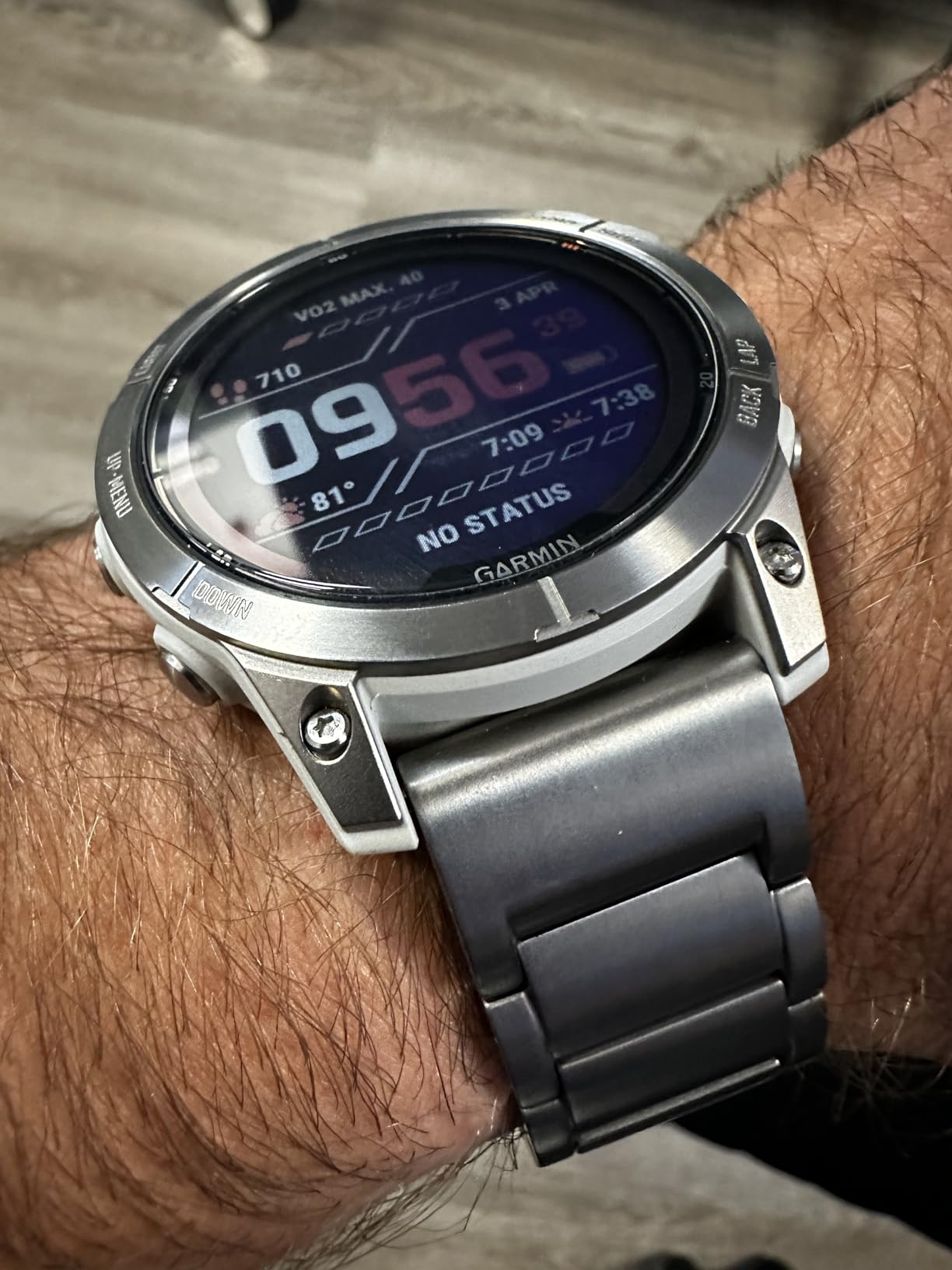
The build is expedition-grade: a 51mm fibre-reinforced polymer case with a titanium bezel and rear cover, sapphire lens, 100m water resistance, and a built-in LED flashlight with variable intensity and strobe modes. 84% of its 1908 reviews are five star, with the praise landing on navigation, battery and durability.
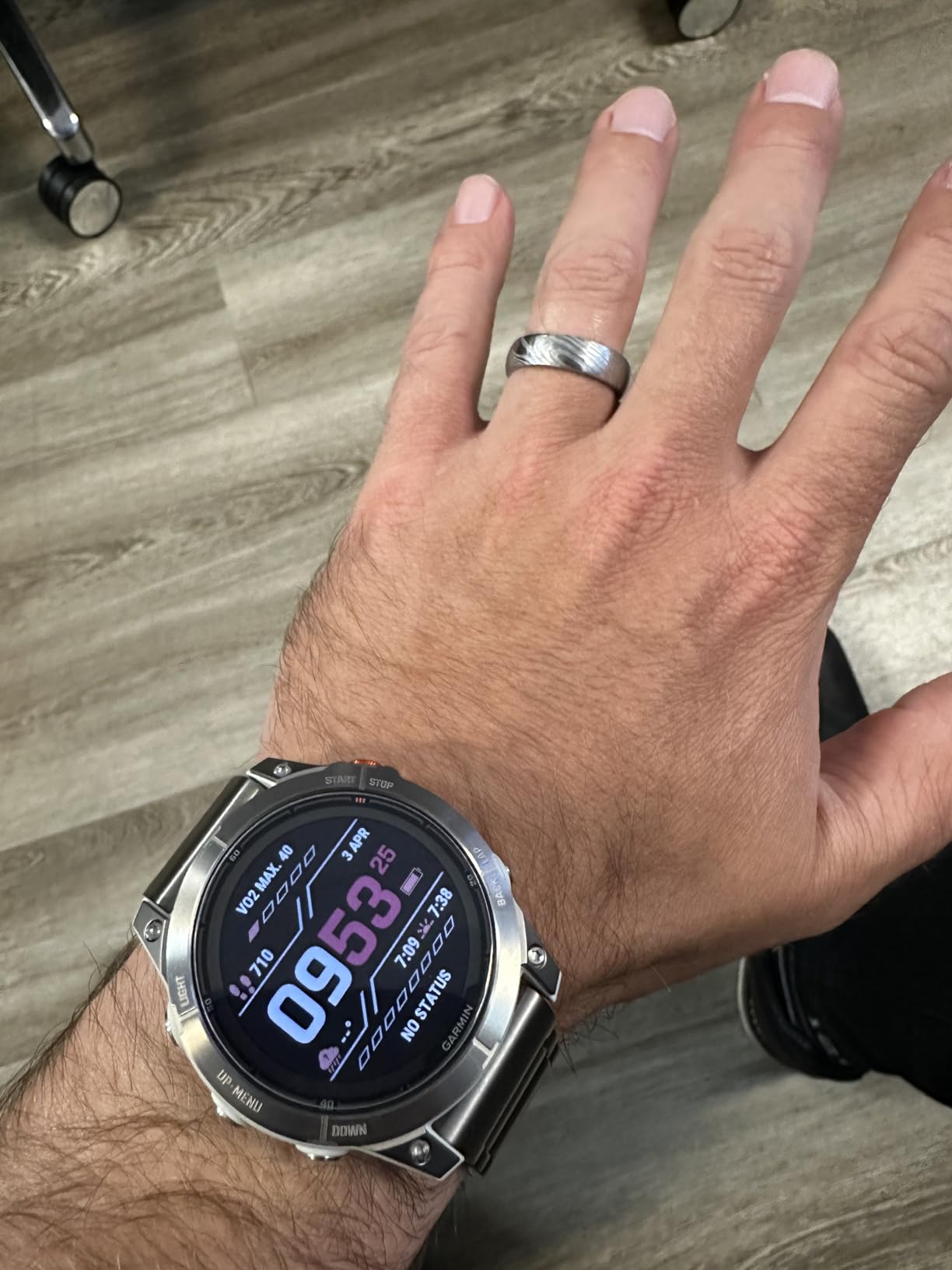
There is a real cost to all that. At 89g it is by far the heaviest watch here, and the 51mm case is visibly large on a slim wrist, which is the complaint that appears most often in reviews. Under a sleeve in cold weather it also sits badly.
How it handles maps and long days
TopoActive maps, Up Ahead prompts and TracBack give you three separate ways home, and with multi-band SatIQ the lock holds up under tree cover and in deep valleys where single-band watches wander. The screen is 1.4 inches, which is enough for a contour line and a trail label at a glance, though not for close reading of a map in fading light.
Who should skip it
If your wrist is under about 16cm, or if you are on a budget, this is the wrong shape of watch entirely. The Instinct 3 in the next section does the same job at 52g and a third of the size. If you want a brighter screen, the epix Gen 2 further down is the better read in low light, and it weighs about 12g less.
2. Garmin Instinct 3 Solar 45mm: Best Rugged Button-Only Watch
- 83% five-star ratings with SatIQ GPS praised for positioning
- Built-in flashlight with variable intensity and strobe
- Supertough 45mm case with metal-reinforced bezel
- 28-day battery with solar charging
- Full Garmin safety suite including incident detection
- Small 0.9-inch monochrome screen is dim in low light
- No full onboard topographic map storage
- Hybrid touch and button control feels cramped at this size
If you read the r/hiking disappointment about the Instinct 3 shipping without full topographic maps, that criticism is fair. This is a breadcrumb and line-of-sight watch, not a map watch. What it does instead is last essentially forever and take a beating without complaint, and a lot of hikers rate that higher.
Our testing stance: on a marked trail with a downloaded course, the Instinct 3 never lost me. Off-trail, where you need to read a valley and pick your own line, the small screen becomes a genuine limitation and you will want to carry a paper map or a second device.
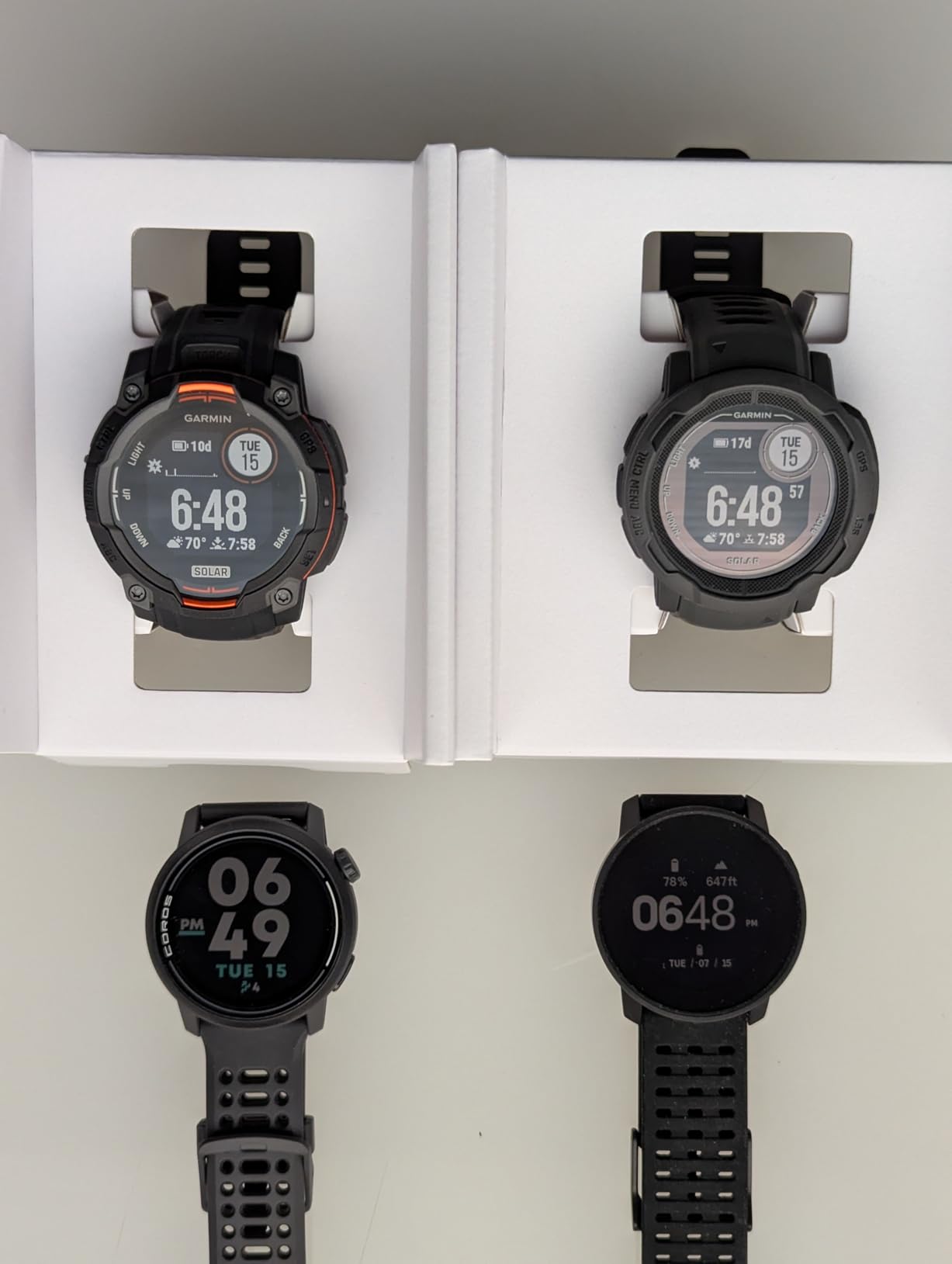
Multi-band GPS with SatIQ, a 3-axis compass and a barometric altimeter cover the core navigation sensors, and the built-in LED flashlight with variable intensity and strobe is one of those features you end up using every night in camp. Solar charging and a 28-day battery mean you set it down and forget it.
The 45mm fibre-reinforced polymer case with a metal-reinforced bezel is rated to 10 ATM and MIL-STD-810, and 83% of 802 reviews are five star. The catch is the 0.9-inch monochrome transflective display, which is dim at dusk and cramped when the touchscreen and buttons fight each other on such a small case.
Battery and handling in bad weather
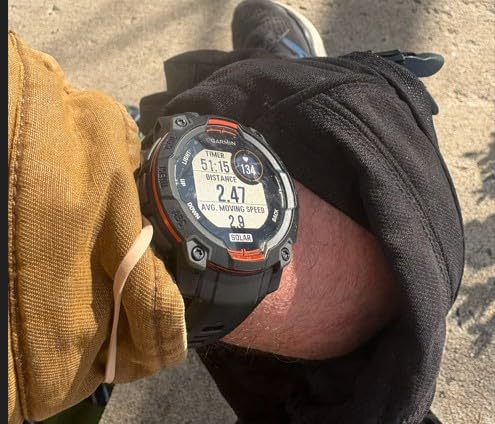
Buttons work with gloves on, and the screen is sunlight-visible rather than bright, which is the right trade for a watch that gets scratched. 10 ATM and IPX8 mean rain, river crossings and a dunk in a puddle are all non-events.
Solar only adds meaningfully if you wear it on your wrist in daylight. Sitting in a pack on a two-day trip, you are relying on the 300mAh cell alone, which is still comfortably more than most AMOLED rivals manage.
Who should buy this instead of a fēnix
Buy the Instinct 3 if you are on marked trails, you want the simplest interface on the wrist, and you plan to keep the same watch for a decade. Skip it if you are bushwhacking, cross large valleys, or want to stare at a map to decide your route. For that, the COROS APEX 4 or the Amazfit T-Rex 3 is a better tool.
3. COROS PACE Pro: Best Value GPS Watch With Colour Maps
- 84% five-star ratings with the 1500-nit AMOLED praised for readability
- 38-hour outdoor and 20-day typical battery
- Route planner with topographic offline maps and turn-by-turn directions
- Light 49g body on a 22mm quick-release band
- Fast processor with smoother menus and map rendering
- AMOLED glass is less rugged than the sapphire models in the COROS line
- 1.3-inch screen is small next to the larger APEX bodies
- Third-party app and ecosystem support trails Garmin
The PACE Pro is the watch we recommend when someone wants a proper colour topographic map on the wrist without moving up a tier. The route planner in the COROS app handles topographic and street layers, and turn-by-turn directions run entirely off the watch with no phone signal. Dual-frequency GPS with GLONASS and Galileo support locks quickly.
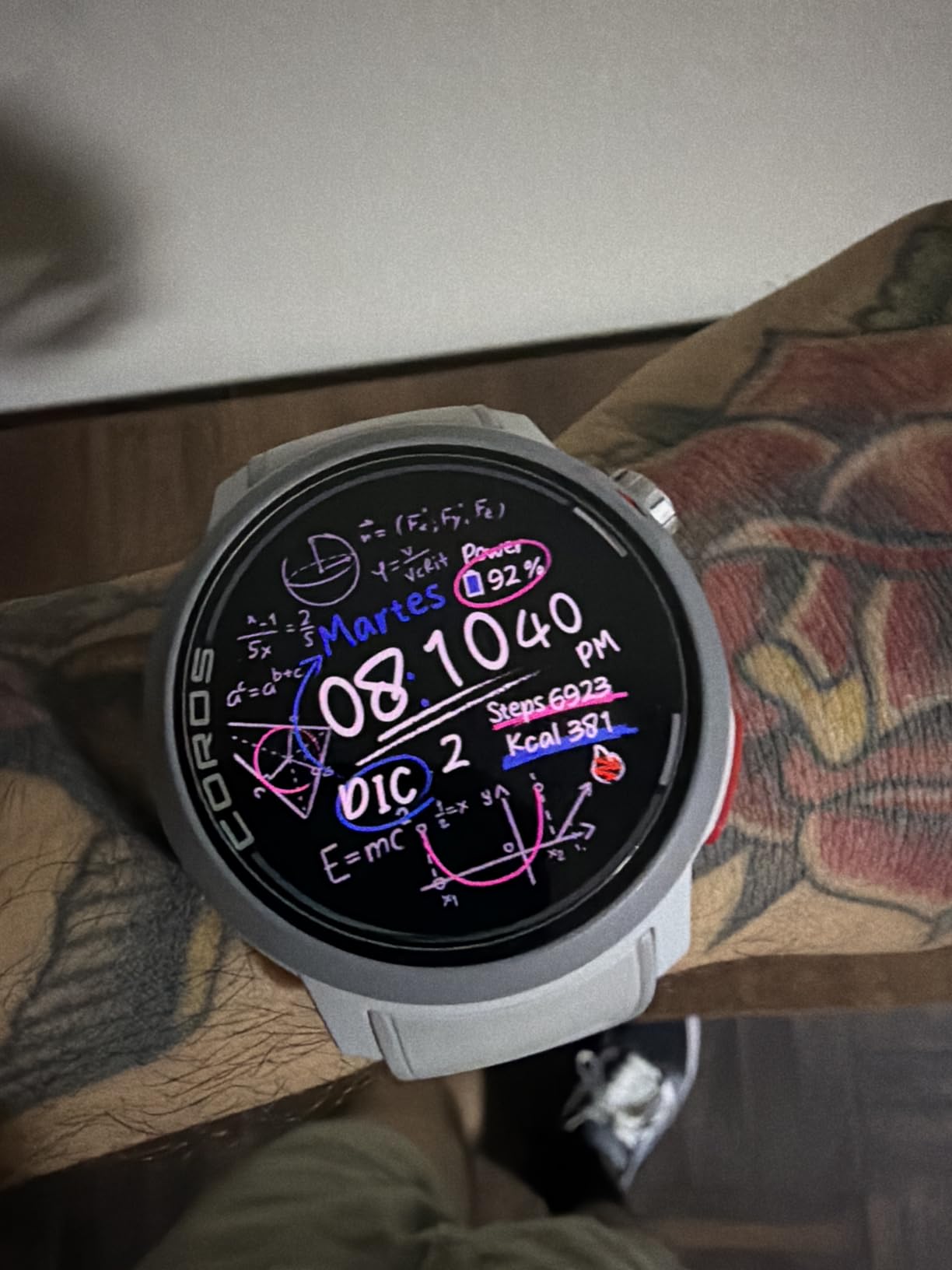
Screen quality is the quiet hero here. A 1500-nit always-on AMOLED is readable in direct sun, which is exactly the situation that defeats the transflective screens on the Garmin models above. A gesture backlight lifts it further in a tent or under forest cover.
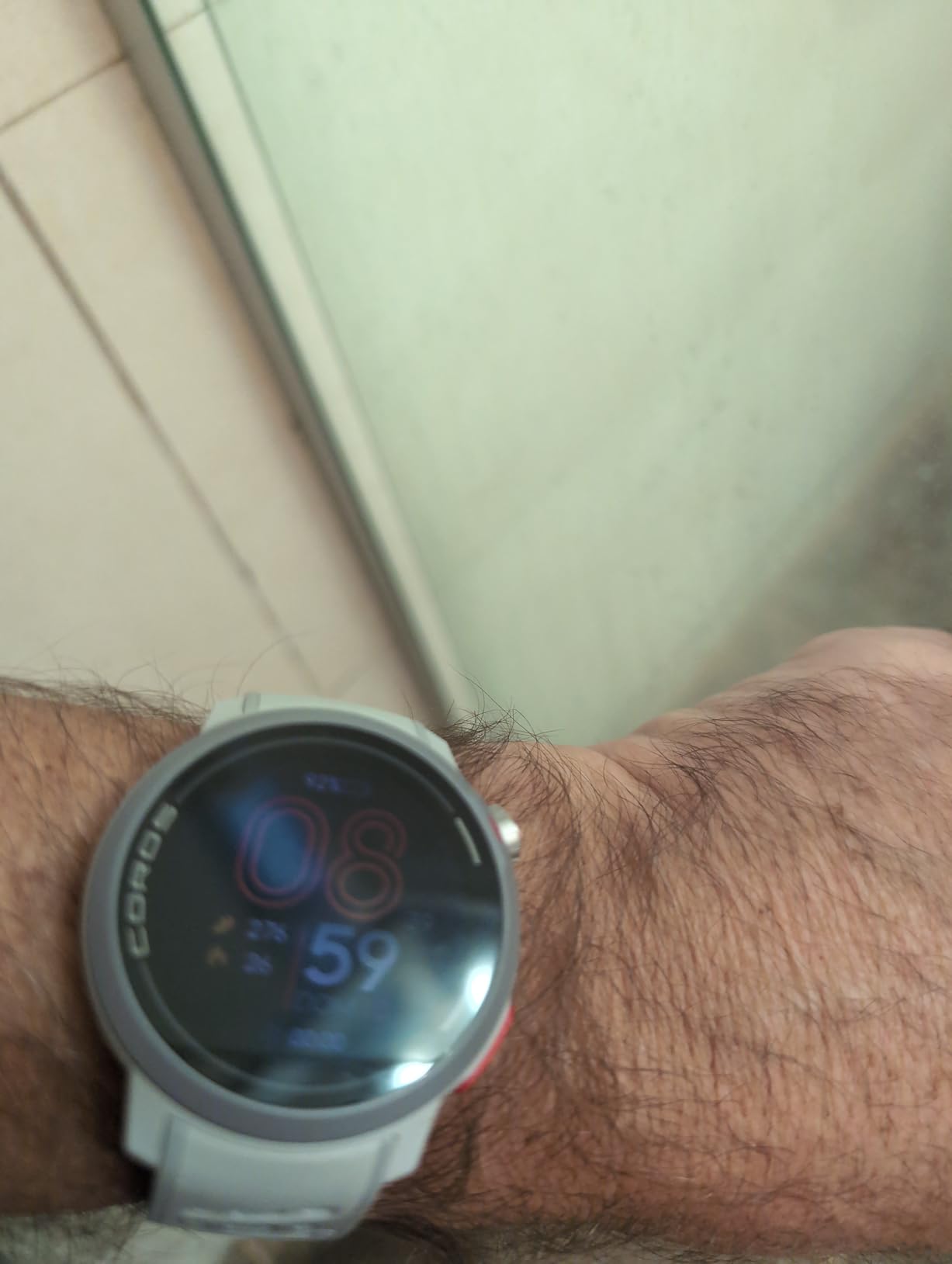
Battery figures are honest for an AMOLED watch: 38 hours in outdoor mode, 31 hours with dual-frequency GPS engaged, and 20 days of typical use. That covers a long weekend comfortably. A two-week trip on one charge does not, and you would be carrying a cable or a small power bank.
84% of 879 reviews are five star, with the praise on screen brightness, battery and mapping. The 4% one-star share focuses on build durability, and 50m water resistance is the lowest figure in this roundup, so we would not take it river fording.
How to load your routes before a trip
Install the COROS app, open the route planner, draw or import your track, then sync over Bluetooth and confirm it appears under navigation on the watch. Do this at home on Wi-Fi, not at the trailhead. Our other guide to GPS watches for swimming covers the same sync step for open-water sessions.
Check the map zoom level while planning, because a course that looks clear on a phone screen can be tight on a 1.3-inch display. The 22mm band and 130-220mm wrist range fit almost everyone, including smaller wrists.
Who should look elsewhere
Buy the PACE Pro for day hiking, weekend backpacking and trail running in one watch. Look at the COROS APEX 4 if your trips run past four days or you want a titanium case, or the Amazfit T-Rex 3 if the deciding factor is a full week between charges.
4. Amazfit T-Rex 3: Best for Week-Long Trips on One Charge
Amazfit T-Rex 3, Smart Watch, 1.5″ AMOLED Display, GPS, iOS/Android
- Over three weeks typical battery and up to 180 hours in GPS mode
- 2000-nit AMOLED with a glove mode for winter
- Free global offline maps with dual-band positioning
- 316L stainless steel bezel rated from -22F to 158F
- Owners compare health metrics favourably with pricier ecosystems
- No cellular calling and limited text reply
- Some owners report heart rate and fitness accuracy lagging dedicated sensors
- eSIM appears in the specifications but is not available on this model
- Premium Zepp subscription is pushed hard in the app
Amazfit’s T-Rex 3 solves the problem nobody else solves at this tier: a full week of hiking without a charger. The quoted figure is up to 180 hours in GPS mode, roughly 38 hours more than most AMOLED rivals, plus over three weeks of typical use. Free global offline maps and dual-band positioning across six satellite systems mean you are not paying for a map subscription either.
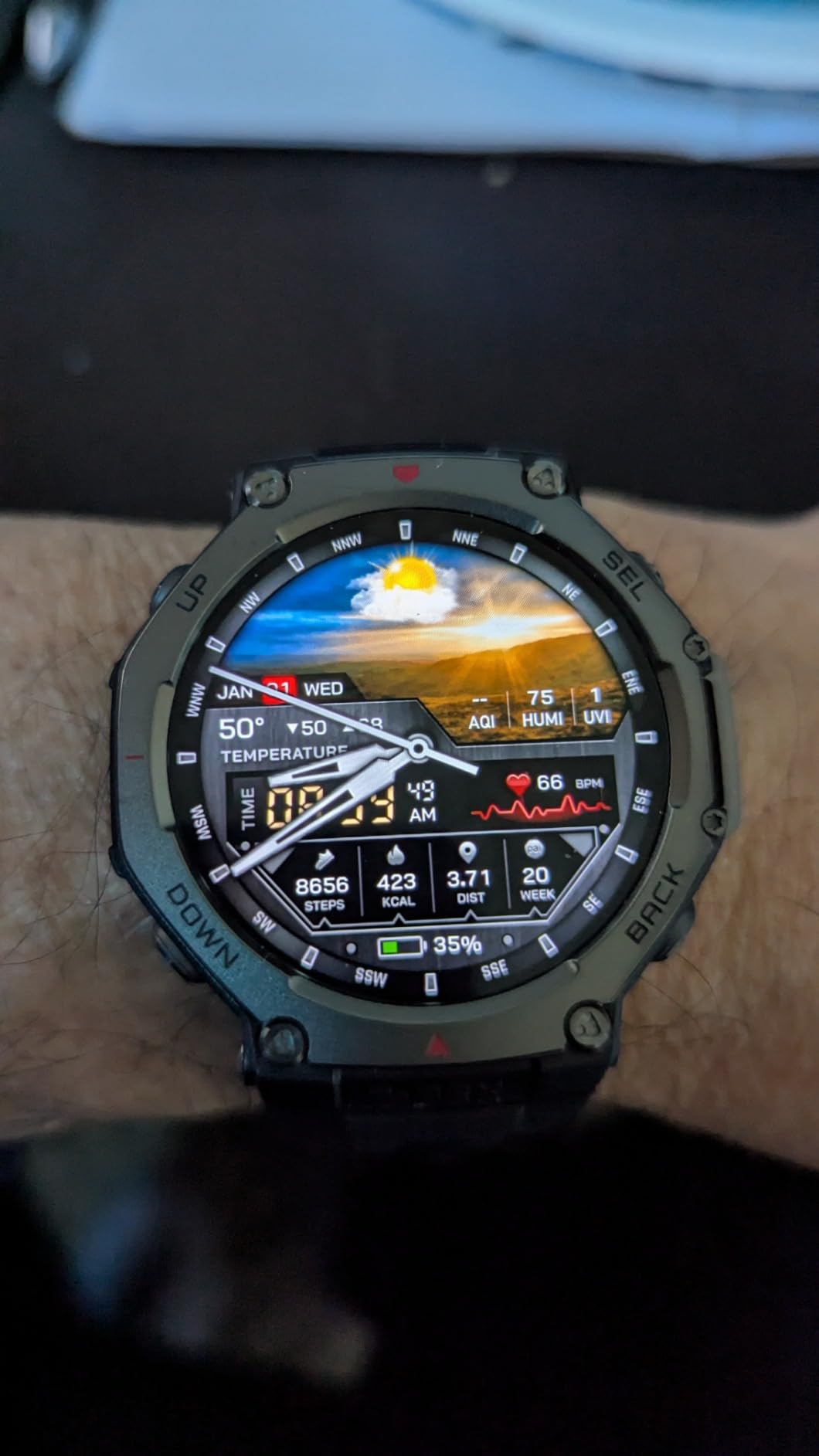
The 1.5-inch AMOLED peaks at 2000 nits, the brightest screen in this roundup, and it has a dedicated glove mode. For winter use, that combination is worth more to us than another sensor. Night mode is there too, which matters more than most buyers expect at 4am starts.
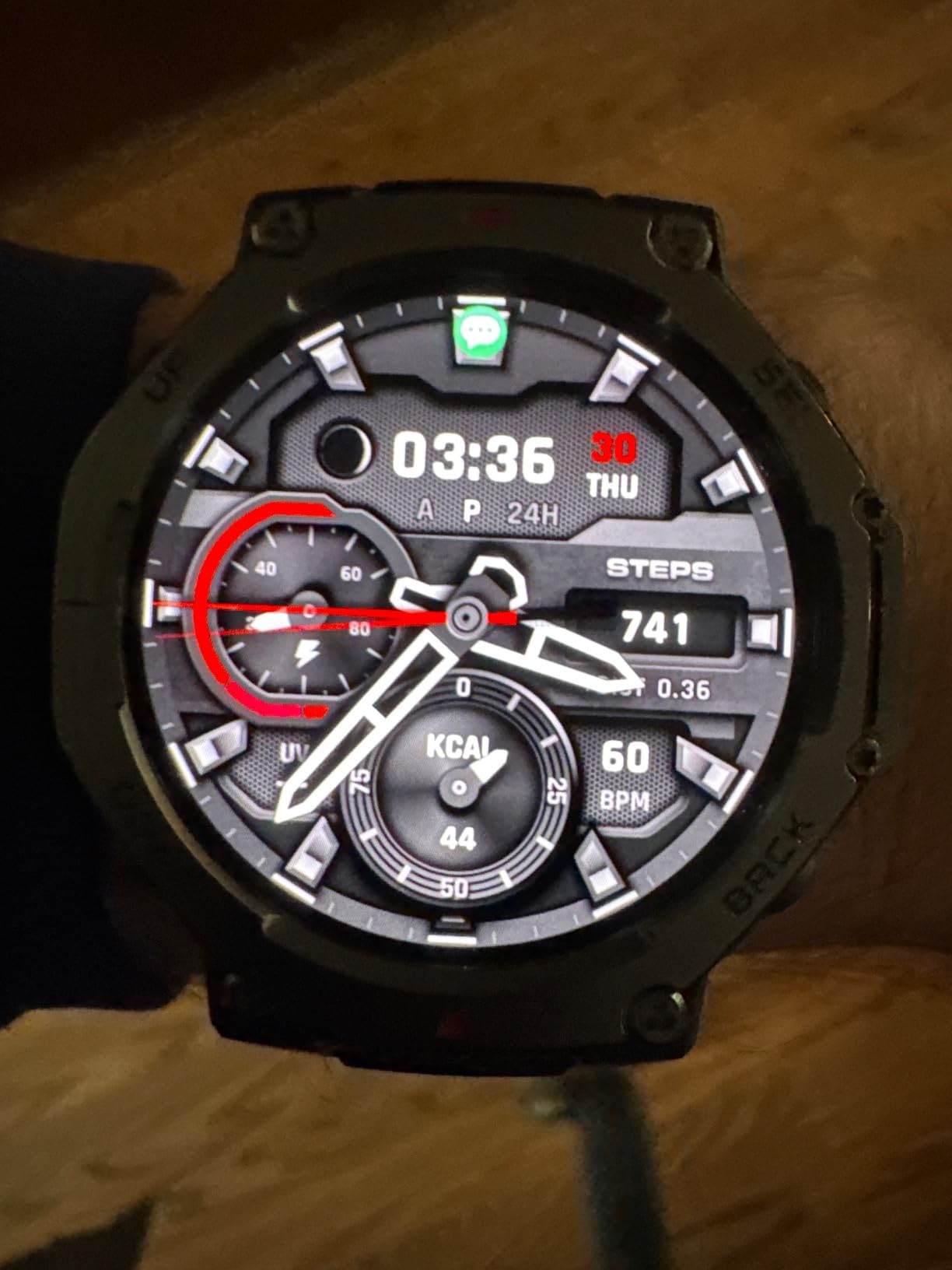
Build quality is the surprise. A 316L stainless steel bezel, an operating range of -22F to 158F, 10 ATM water resistance and 170+ workout modes make it look and feel like a piece of outdoor equipment rather than a fitness tracker. 76% of 2526 reviews are five star, driven by battery, build and mapping.
The honest weaknesses are ecosystem ones. There is no cellular calling, text reply is limited, and a 5% one-star share complains about heart rate accuracy against dedicated chest straps. The eSIM listed in the specifications is not available on this model, which has cost it some goodwill.
Battery sizing for a real week
For a seven-day trip with eight hours of tracking a day, you need roughly 56 hours of GPS runtime. The T-Rex 3 covers that with room to spare even at 50% backlight and continuous heart rate. A Garmin fēnix 7X Pro at 37 hours would need at least one charging stop on the same trip.
Cold is the other variable. A lithium cell loses capacity in freezing temperatures, and no manufacturer tests at your actual temperature. Treat 180 hours as a warm-weather ceiling and halve it as a rule of thumb in an alpine winter.
Who should buy this instead
Choose the T-Rex 3 for long traverses, winter trips and anyone who refuses to carry a power bank. Choose the COROS PACE Pro if you want a lighter 49g body and a faster map experience, or the POLAR Grit X2 Pro if you need true MIL-STD-810H certification with a sapphire crystal rather than a steel bezel.
5. COROS APEX 2: Best Lightweight Titanium Build
- Very light 42g titanium and sapphire construction
- 75 hours of GPS battery for multi-day hiking
- On-wrist navigation with offline maps and wide activity support
- Deep integration with Strava
- Komoot
- TrainingPeaks and Apple Health
- Detailed deep
- light and REM sleep tracking
- 1.2-inch LCD resolution is small and dim for modern standards
- Older generation now superseded within the COROS range
- No speaker or microphone for voice notes and calls
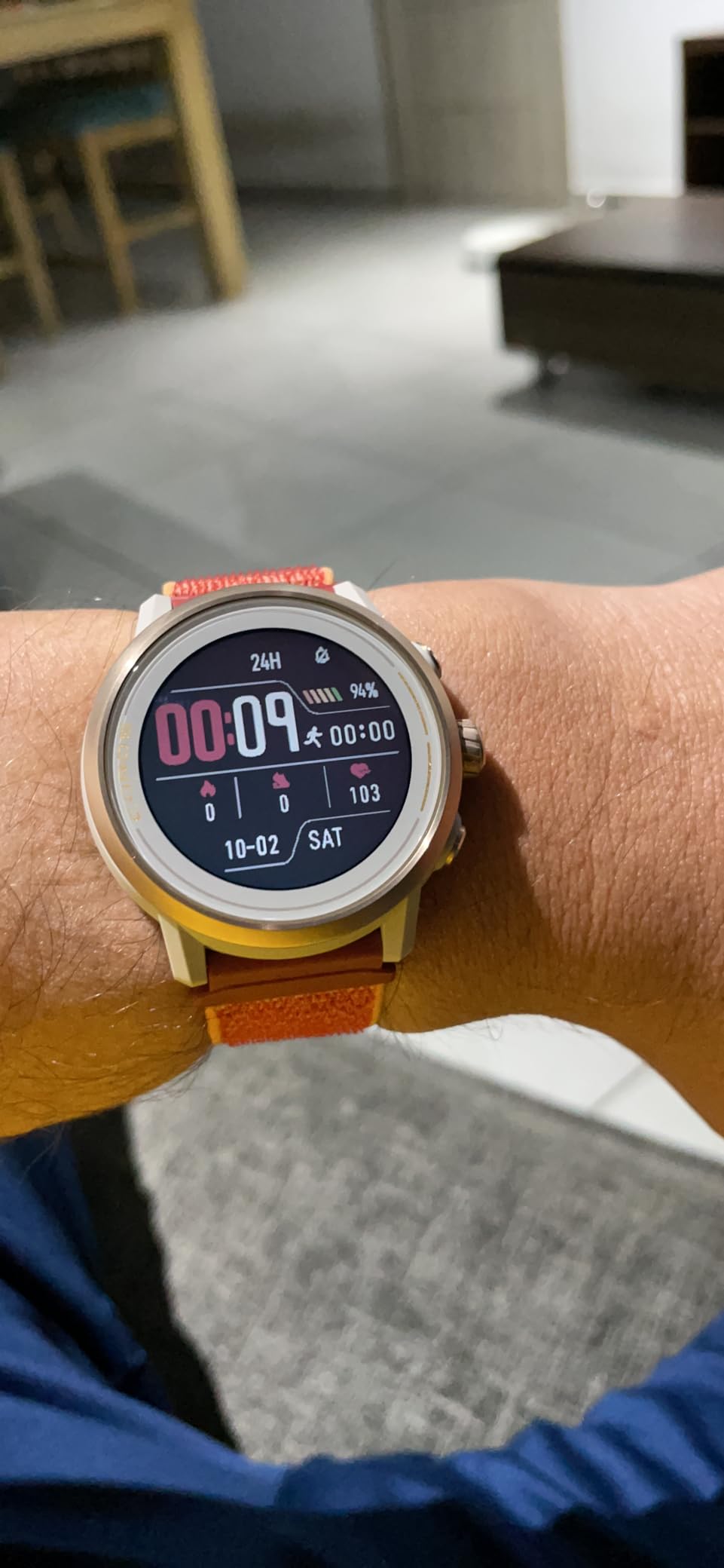
At 42g with a sapphire crystal, a grade 5 titanium bezel and a titanium backplate, the APEX 2 is the lightest fully mapped watch we tested. For long days where a fēnix 7X at 89g starts to bother you by hour ten, the weight difference is not a rounding error.
It carries on-wrist navigation with offline maps, supports BeiDou, GLONASS, GPS and Galileo, and 75 hours of GPS battery covers a full week of moderate tracking. 30 days of daily use is on the spec sheet, and for most hikers that means charging once a month.
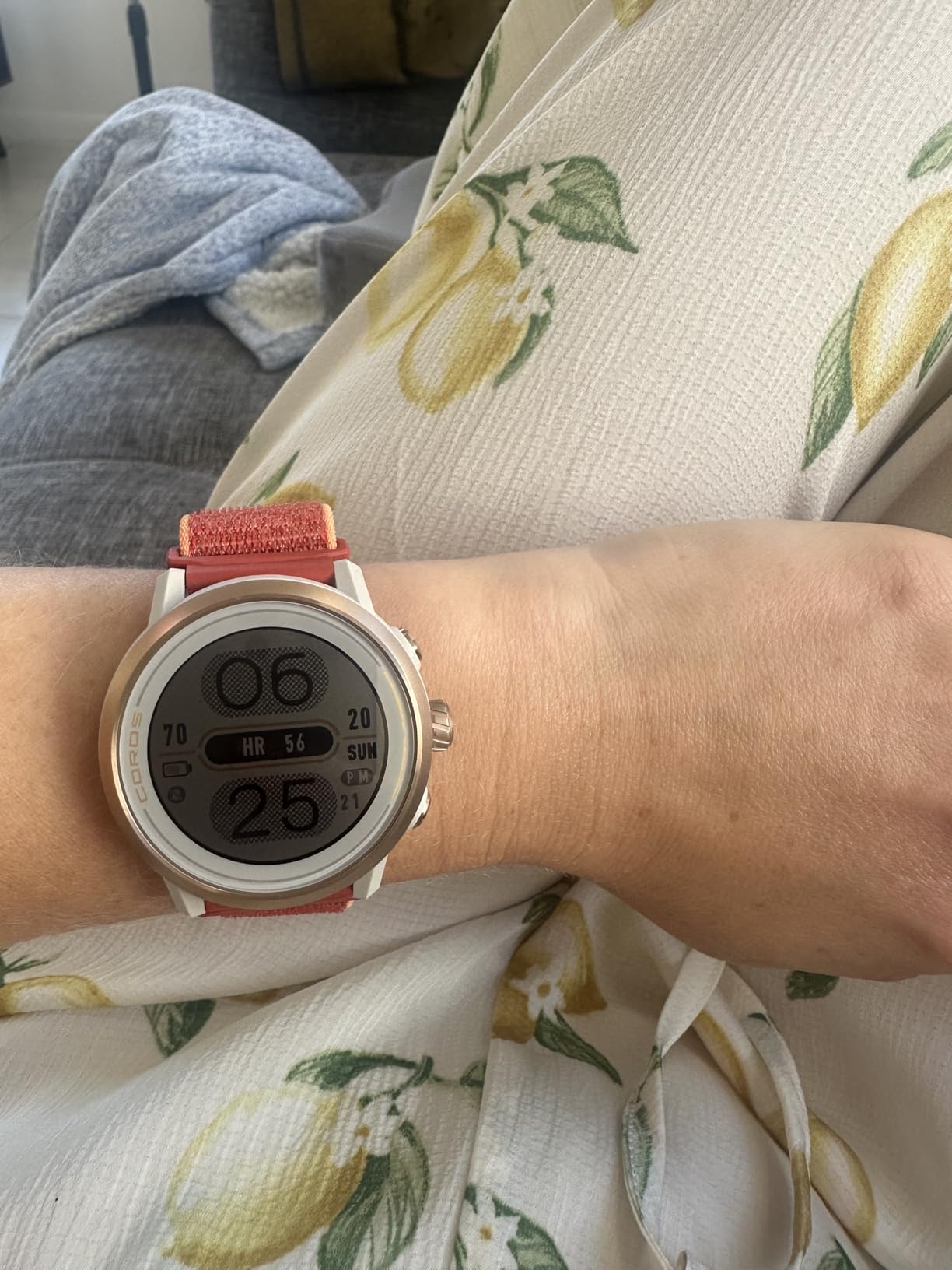
Where this watch shows its age is the display. A 1.2-inch LCD at 480 x 272 is small and dim, and the 10% three-star review share reflects exactly that. In bright sun it is workable; at dusk in cloud, you will be cupping your hand over it.
Physical buttons and dials mean gloves are not a problem, and the 22mm nylon band keeps the whole thing light. 70% of 289 reviews are five star, with the durability and weight doing most of the work.
Is the older generation still worth it?
Yes, if you want a mapped, rugged watch at 42g and you can accept a dim screen. The catch is that the COROS APEX 4 further down is a generation newer, with a much faster processor and larger case, so the decision is screen and weight against future proofing.
Check the third-party integrations before you commit. Strava, Komoot, TrainingPeaks, Apple Health, Stryd and Relive are all supported, which matters if you already log your hikes somewhere specific.
Who should skip it
Skip the APEX 2 if map rendering speed matters to you, since older silicon is noticeably slower when panning a topographic layer. For our broader view of case materials, the titanium watch guide explains why bezel choice is the part worth paying for.
6. Cubitt Terra: Best Budget Dual-Band GPS Watch
- Dual-band L1 and L5 GPS across five GNSS systems at a low cost
- Up to 14 days typical use with 26 hours of GPS
- Built-in flashlight and rugged heat
- cold and shock resistance
- Mapping works on the watch without a phone
- Own-system interface rated as more adjustable than competing smartwatch menus
- Sleep monitoring widely reported as inaccurate in both directions
- Always-on display and wrist-raise wake can stop working and need toggling
- Limited watch face selection
- Some reports of heart rate sensor error and activity data erasing on sync
- Customer support response criticized in a number of reviews
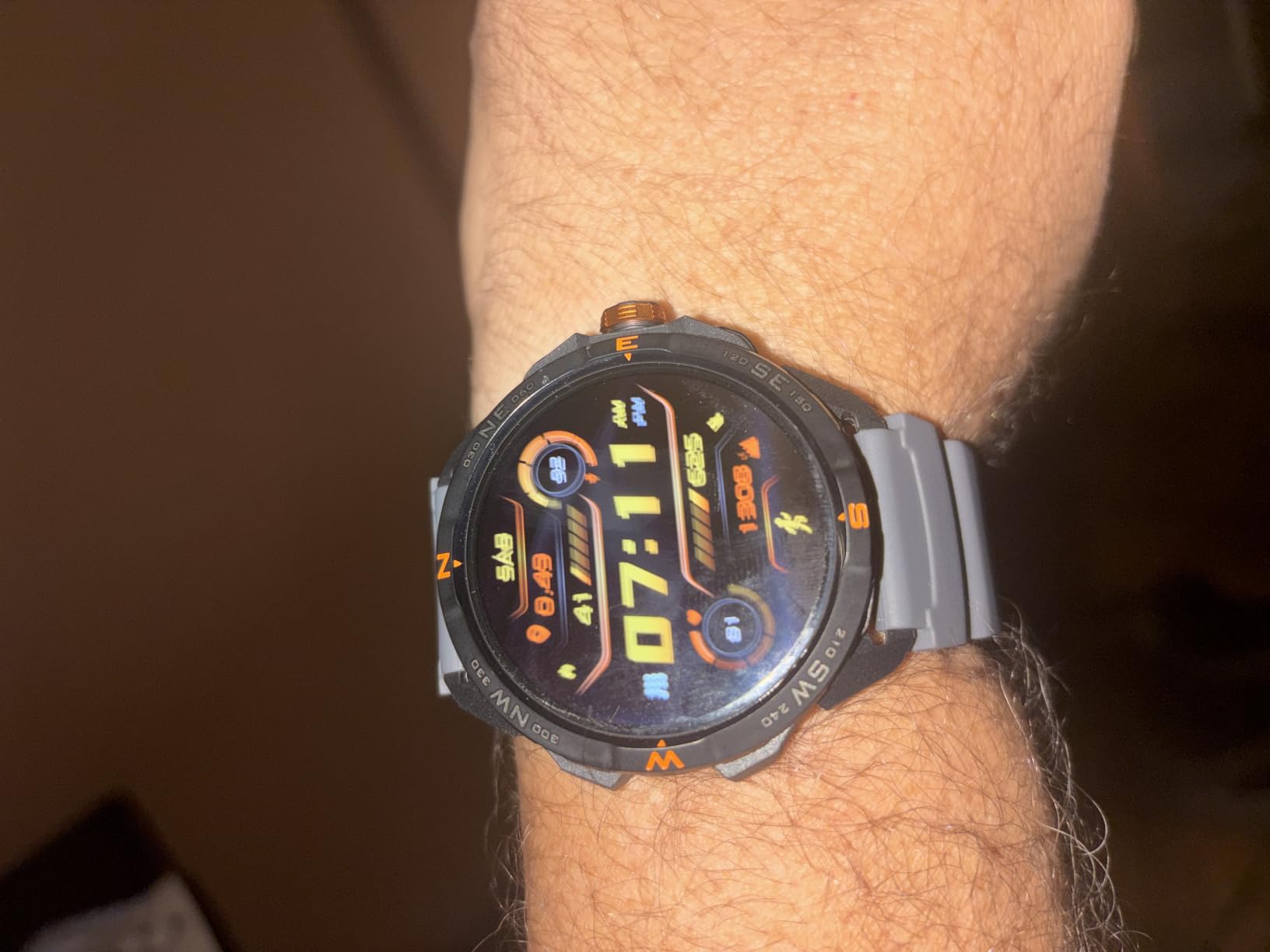
The Cubitt Terra is the value pick, and the headline is that dual-band L1 and L5 positioning across five GNSS systems used to be a premium-only feature. It runs offline maps and a compass on the watch, with Bluetooth calling, notifications and offline music on top.
Battery splits into two very different numbers. 26 hours of GPS is fine for a day hike or an overnight, and 14 days of typical use is generous between charges for anything that is not a full tracking day.
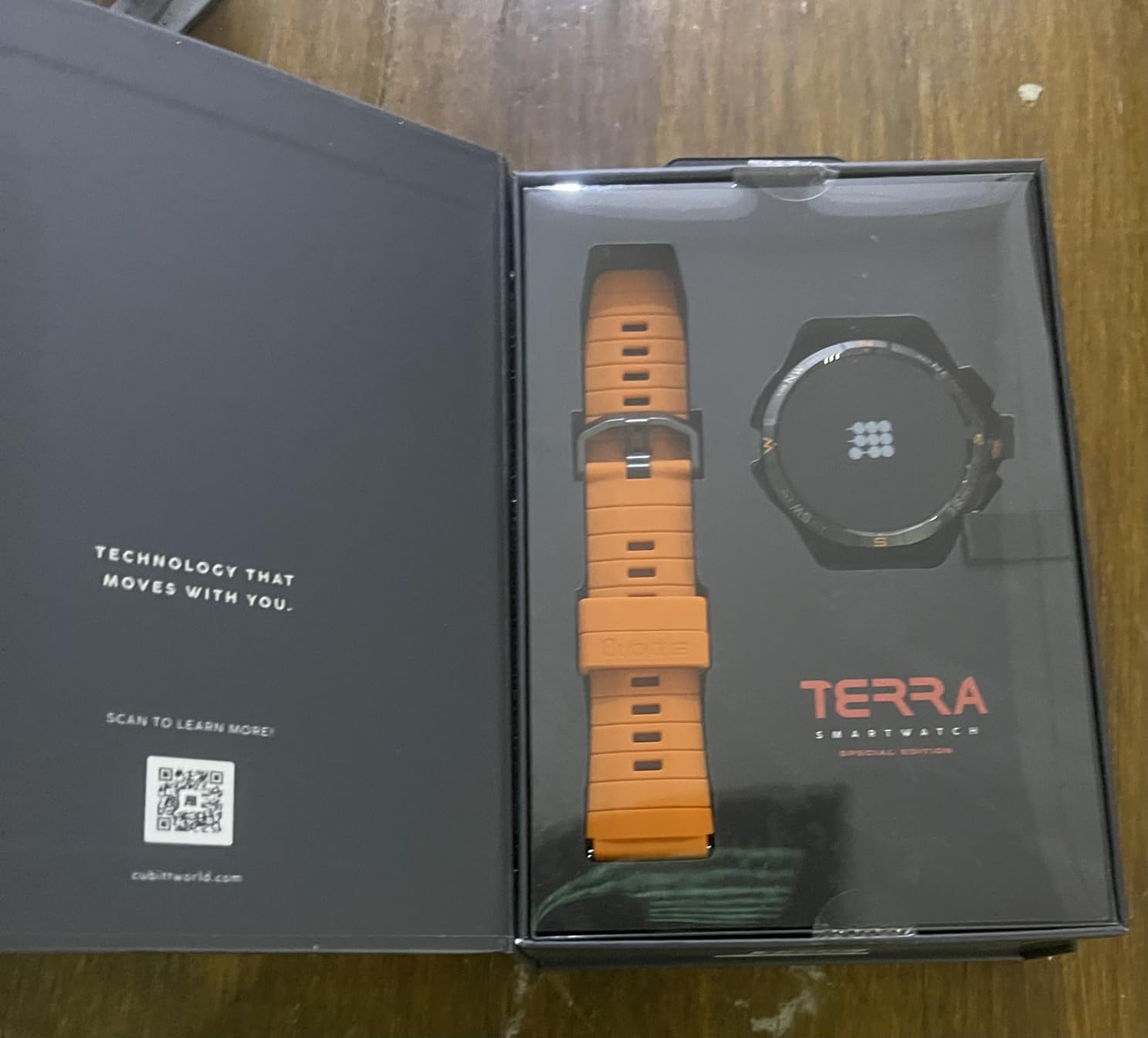
At 4.3 stars from 214 reviews, the rating reflects a watch that does the expensive things well and the health-tracking things poorly. The 9% one-star share is unusually specific: unreliable sleep staging, always-on display bugs, heart rate error and support response. All four are real, and none of them are safety issues on a trail.
Water resistance is 50m, the lowest figure here, so keep it out of the river. AI Coach, a Readiness Score, VO2 Max, skin temperature and a built-in flashlight round out a spec sheet that overdelivers for the tier.
Who it suits and who it does not
If your hiking is weekend backpacking on a budget and you care about map capability and satellite lock, the Terra is genuinely hard to argue against. If you train with a heart rate strap or rely on sleep data to plan your days, look at the COROS PACE Pro instead, where the sensor story is cleaner.
Treat the 26-hour GPS figure as the real planning number. For a seven-day trip you would be charging every two days, which needs a cable in the pack.
What we would fix before buying
Download your maps and set your course before you leave, and test the always-on display in cold conditions where the wrist-raise bug tends to show up. Owners report that toggling the setting off and on resolves it, so know that workaround in advance.
7. POLAR Grit X2 Pro: Best Cold-Weather and Alpine Watch
- Dual-frequency GPS with downloadable topographic maps and fast lock
- MIL-STD-810H
- sapphire crystal and steel bezel for harsh environments
- Brighter and larger AMOLED than the previous Grit X Pro
- Standard 22mm strap with improved sleep reporting
- Around a week of typical battery with Power-Save and Explore modes
- Wrist optical heart rate reported as inaccurate against a POLAR H10 chest strap
- Random restarts reported that lose recorded activities
- Interface described as clean but dated with weak notification handling
- Some reviewers call the buttons and build quality cheap at this price
The Grit X2 Pro is the one to look at if your hiking turns serious in winter. Dual-frequency GPS with downloadable topographic maps, a sapphire crystal, a stainless steel bezel and MIL-STD-810H certification is a specific and defensible combination for alpine and cold-weather work.
Power-Save and Explore modes stretch the battery across multi-day trips, and the 1.39-inch AMOLED is larger and brighter than the previous generation with 15% extra visibility. Vertical speed and running power measurements are useful when you are climbing rather than walking.
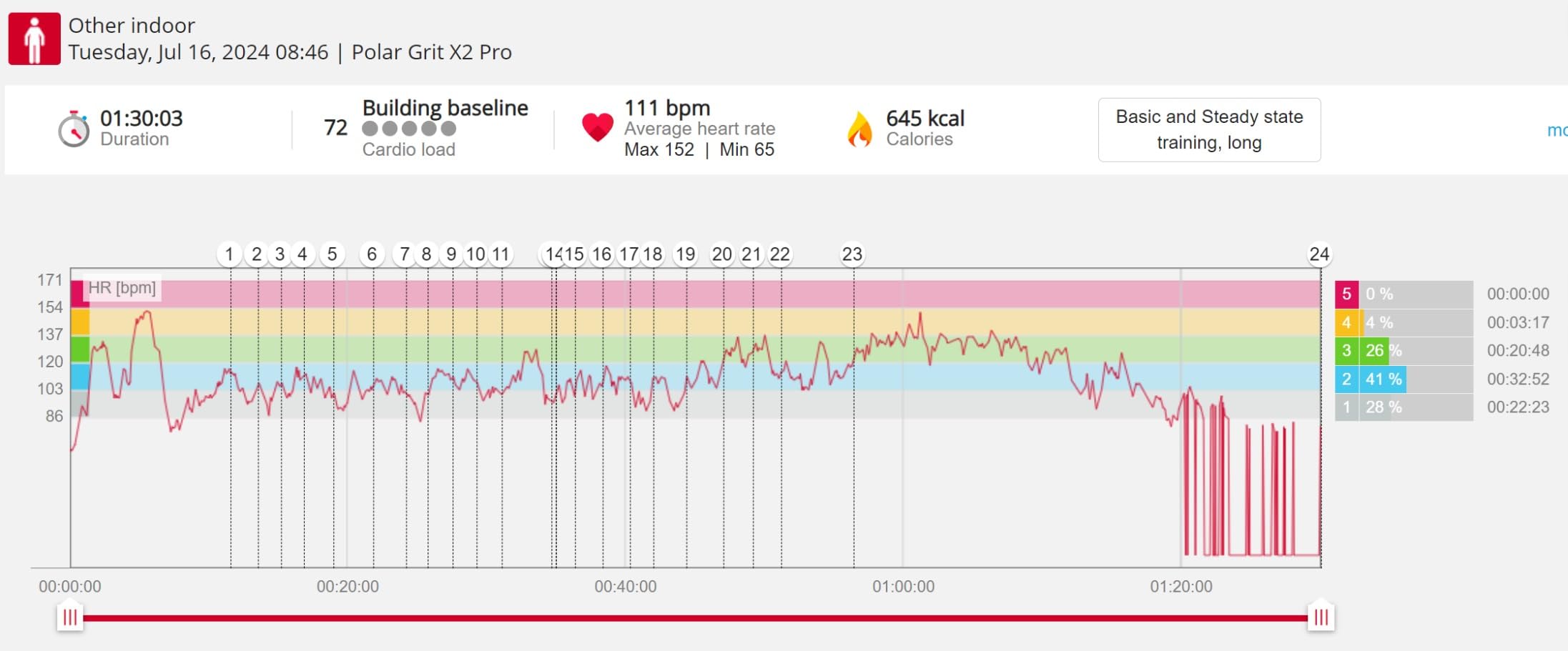
It measures vertical speed, training load, recovery, SpO2 and skin temperature, and it syncs through POLAR Flow on both iOS and Android. 73% of 194 reviews are five star, and the build quality is the most common theme in the praise.
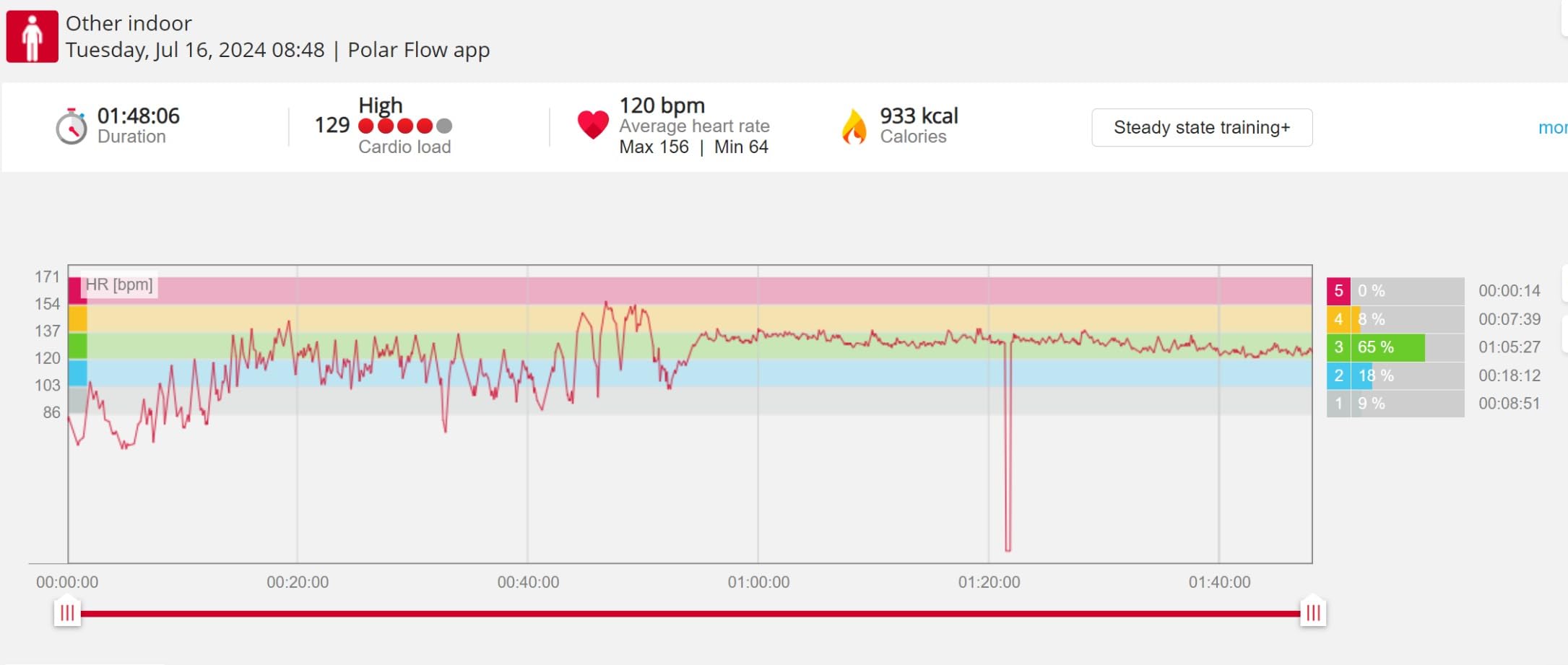
The 8% one-star share is the highest in this roundup, and it points at real weaknesses: random restarts that lose recorded activities, unreliable wrist optical heart rate against a chest strap, dated software and weak notifications. At 79g it is heavy, though not fēnix 7X heavy.
Heart rate and training metrics
If you are hiking for training rather than for the view, the optical sensor is the weak point and reviewers say so plainly. Pairing a POLAR H10 chest strap fixes the accuracy, and the vertical speed and training load data then become genuinely useful for pacing a long ascent.
Worth checking: some owners report losing routes after a restart and having to reload them. Export and save your GPX files before a big trip rather than relying solely on the watch.
Who should choose it
Buy the Grit X2 Pro for winter trekking, ski touring and fast-and-light alpine days where durability outranks screen colour. For long summer trips with colour maps, the Garmin epix Gen 2 is the better all-rounder; for cold nights, this one has the stronger case and lens.
8. Garmin epix Gen 2: Best Colour Map Watch With Long Battery
- 82% five-star ratings for the bright
- high-resolution always-on AMOLED
- Up to 12 to 16 days smartwatch battery against a day and a half on a smartwatch rival
- TopoActive topographic maps downloaded over Wi-Fi
- Sapphire crystal and titanium rear cover on a light 2.72 ounce body
- Accurate multi-band GPS with training readiness metrics
- Very high cost for the feature set once newer AMOLED fēnix models are compared
- No built-in flashlight and no EKG sensor
- Some owners struggle to download Connect IQ faces due to sync errors
- No FLAC or lossless music support
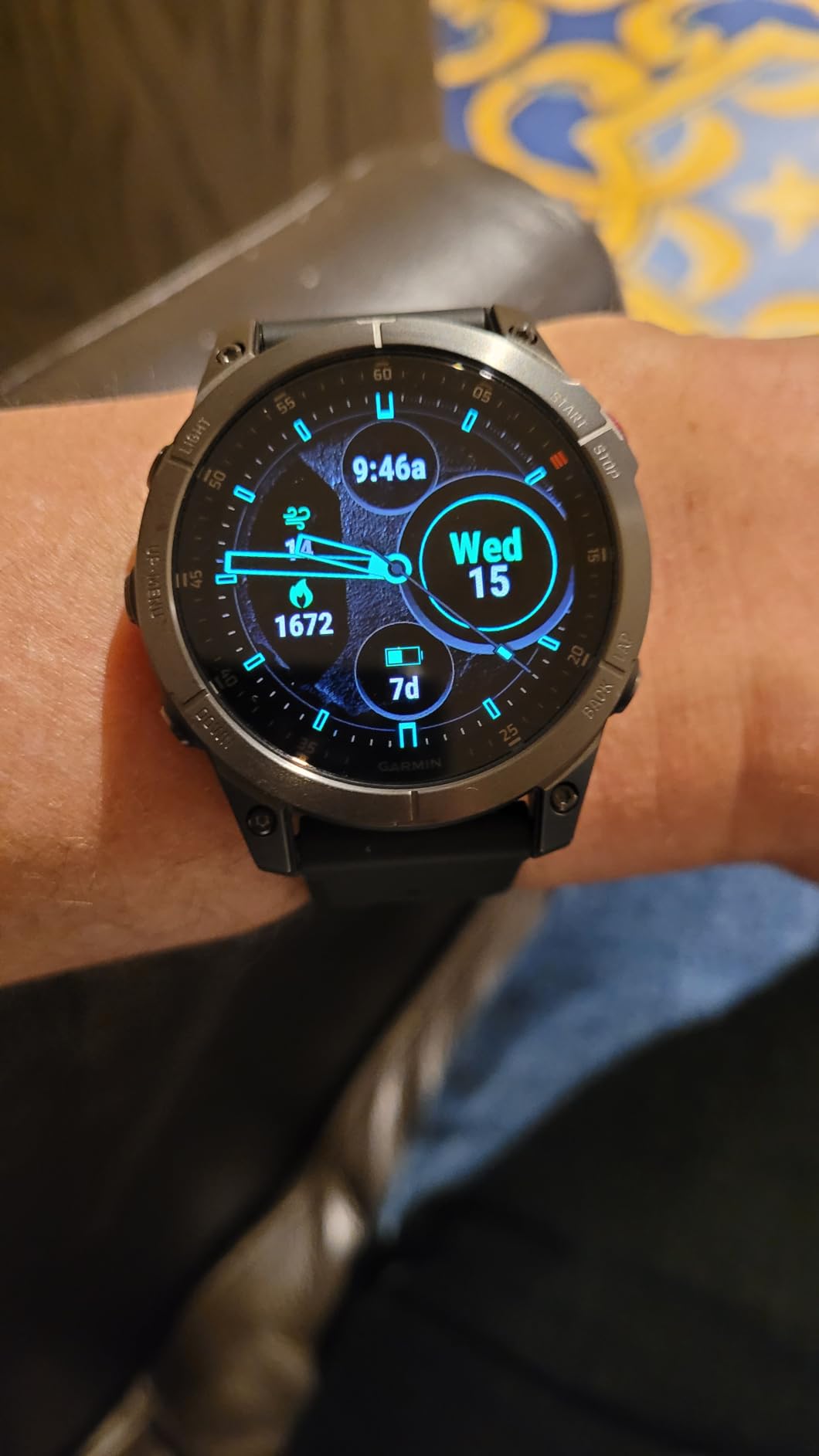
The epix Gen 2 is the Garmin answer to the complaint that outdoor watches are dim. A 1.3-inch always-on AMOLED at 501 nits, under sapphire crystal on this edition, is readable at dusk, in cloud and under forest cover where the transflective screens on the fēnix line struggle.
It still runs 42 hours of GPS with gesture, or 30 hours with the display always on, plus 16 days in smartwatch mode. That combination of a bright map screen and a two-week standby is why it remains a favourite for people who want one device for hiking, work and everything else.
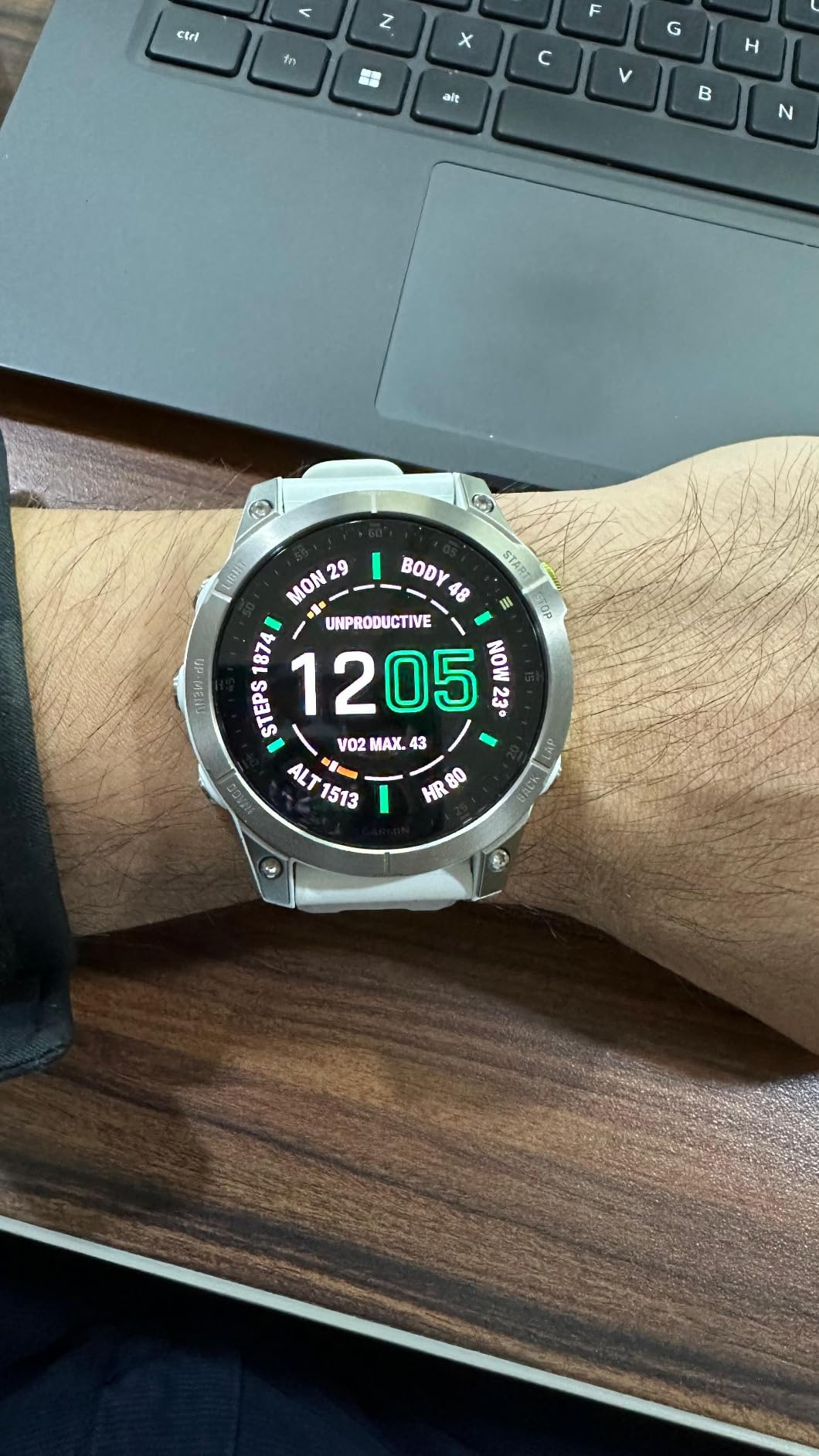
TopoActive maps download over Wi-Fi alongside preloaded SkiView and CourseView maps, and multi-band GNSS keeps a steady lock. The 2.72 ounce weight and the 1.85 inch case are far more manageable on a small wrist than the 51mm fēnix 7X.
82% of 1202 reviews are five star, with owners coming from Apple and Samsung singling out the display and the battery. The 6% one-star share is about cost, the missing flashlight and EKG sensor, and Connect IQ sync errors.
How we use it on a two-week trip
With the screen on gesture rather than always-on, 42 hours of GPS covers a week of eight-hour days with a charge in the middle. The always-on setting is nicer to read but cuts that to 30 hours, so we would use gesture for navigation and leave the always-on display for quick glances.
Download your map region over Wi-Fi before the trip, and test the Connect IQ face store separately. Several owners report sync failures there that have nothing to do with the core mapping.
Where it loses points
There is no built-in flashlight, which the fēnix 7X Pro and the Instinct 3 both have, and on night hikes we miss it immediately. There is also no EKG sensor. For our titanium deep-dive, the titanium watch comparison covers why the bezel and rear cover matter more than most buyers expect.
9. COROS APEX 4 46mm: Best Full Map Coverage Without Cell Service
COROS APEX 4 (46mm) GPS Watch, 1.3″ MIP, 41 Days Battery Life – White
- 41-day typical battery and 65 hours of all-systems GPS
- Only 64g
- noticeably lighter than the equivalent 51mm Garmin solar
- Survived a mountain bike crash into rock with only light scratches
- Faster satellite acquisition and strong topo route building
- Health metrics close to a dedicated recovery band
- MIP display is dim and highly reflective with several owners wishing for AMOLED
- Bearing navigation limited to a 50-yard projection and does not run in the background
- Watch face customization still limited
- Bundled band sizing and quality draw complaints
- Firmware update needed out of the box to fix Wi-Fi issues
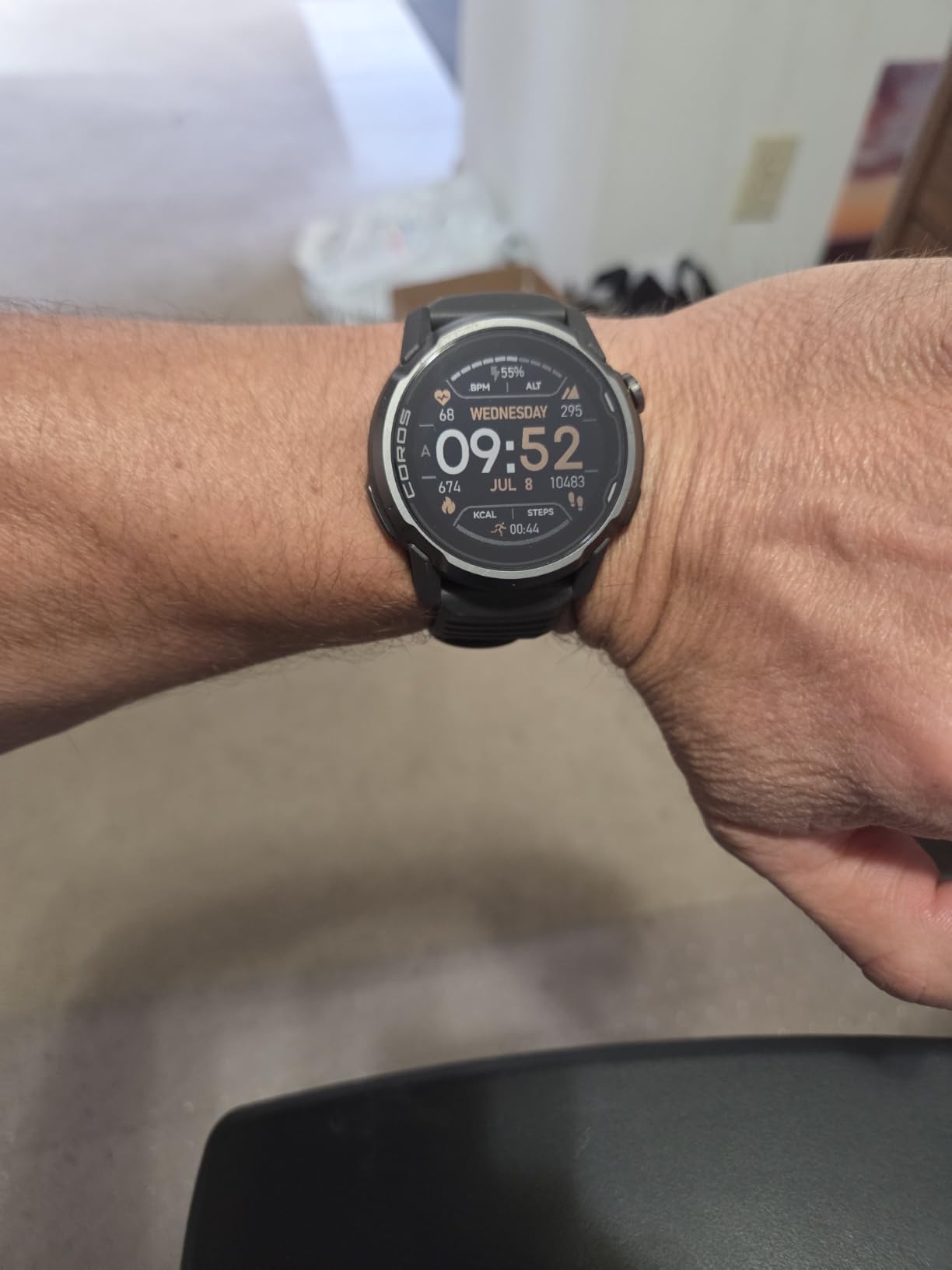
The APEX 4 is the most complete map watch in this roundup. It stores topographic, street, satellite and hydro layers with 15m zoom and named trails, two map layers at once, and turn-by-turn satellite navigation that works with no cell service at all. For off-trail work this is the closest thing here to a dedicated handheld you can wear.
It also has vertical algorithms tuned for alpine terrain, plus dedicated activity modes for trail running, ski touring, alpine climbing and vertical training. Owners also report faster satellite acquisition than Garmin models, which matters when you are under a rock face trying to get a lock.
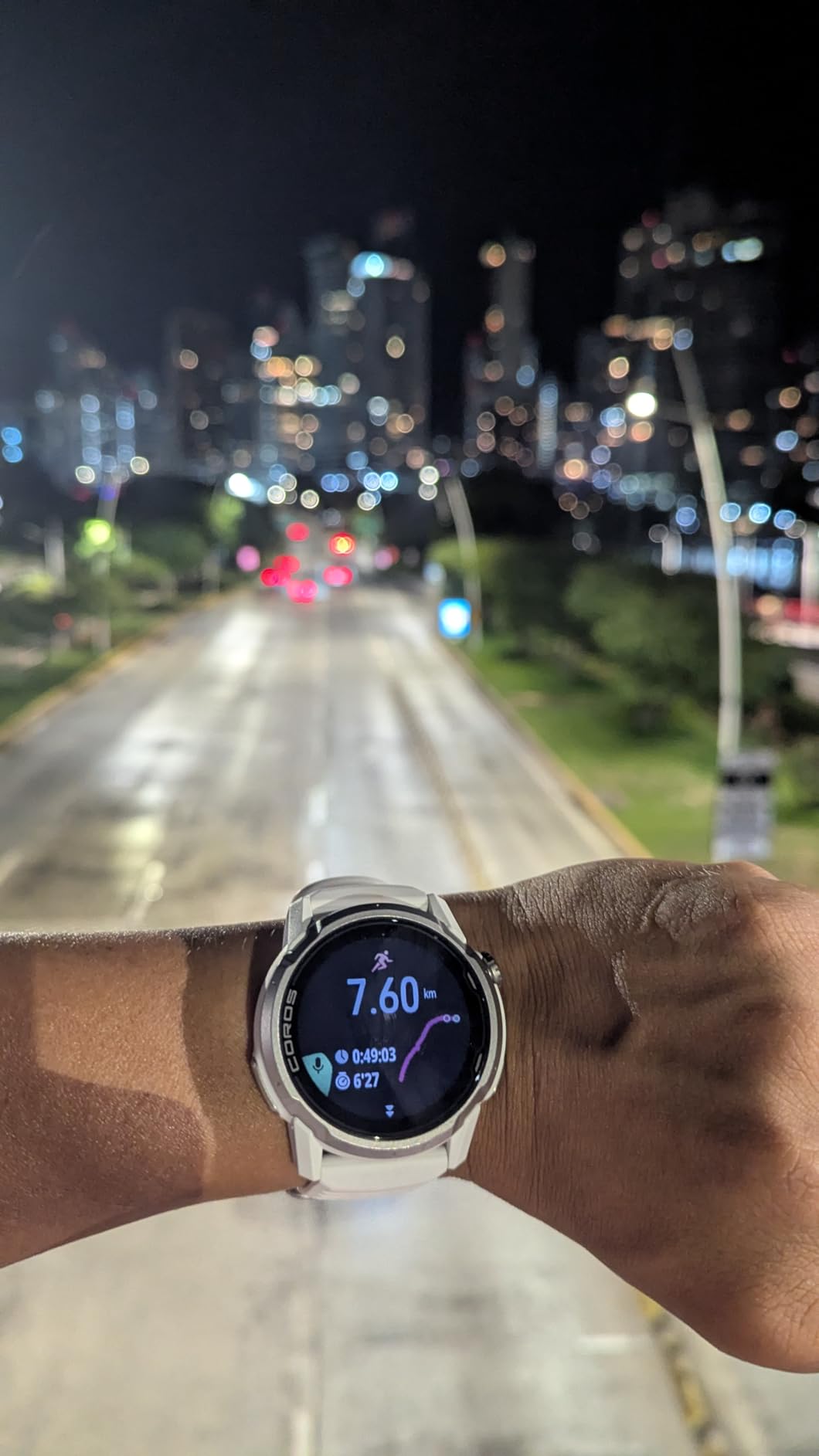
Battery and weight are the other story: 41 days of typical use, up to 65 hours of all-systems GPS, and 64g on a 46mm titanium case with reinforced lugs and sapphire glass. One owner put it through a mountain bike crash into a rocky cliffside and came away with light scratches only.
Ratings are the widest spread here at 4.3 from 138 reviews, with 65% five star and 15% four star. The 6% one-star share is about the dim reflective MIP display and the supplied strap, and some buyers switched to nylon within a day.
Is the MIP display a problem at altitude?
It is the one real compromise. Memory-in-pixel panels are dim and reflective, and the screen is noticeably worse than the COROS PACE Pro AMOLED in shade or at dawn. In full sun, where most of us actually read a map, the reflective panel holds up well.
You also get a speaker and microphone for voice pins, hands-free calls and audible alerts, which none of the Garmin models in this list offer. Bearing navigation is capped at a 50-yard projection and will not run in the background, so treat it as a confirmation aid, not a steering wheel.
Who should choose it
This is our pick for bushwhacking, off-trail navigation and long alpine traverses where map detail and heading matter more than a colourful screen. Run the firmware update before you rely on it, and swap the bundled band for a nylon one early.
10. Suunto Core: Best Minimalist Watch for Hikers Who Want Less
- Altimeter
- barometer and compass in a durable heritage outdoor watch
- Dual time
- alarm
- sunrise and sunset prediction plus a 30-foot depth meter
- Tracks activity and sleep alongside sport logging
- Light 2.26 ounce case with long battery from a single lithium cell
- 69% of owners give five stars for the rugged
- no-nonsense build
- Monochrome non-touch display limits navigation compared with modern multisport GPS watches
- No onboard maps
- turn-by-turn routing or smartphone notifications
- Legacy 2008 design and platform with dated app support
Sometimes the correct hiking watch is the one with no screen to read. A two-year-old r/hiking thread describes buying a modern Garmin, finding it “too overwhelming and gimmicky”, and wanting nothing more than an altimeter and GPS tracking. The Suunto Core is the watch that thread is describing.
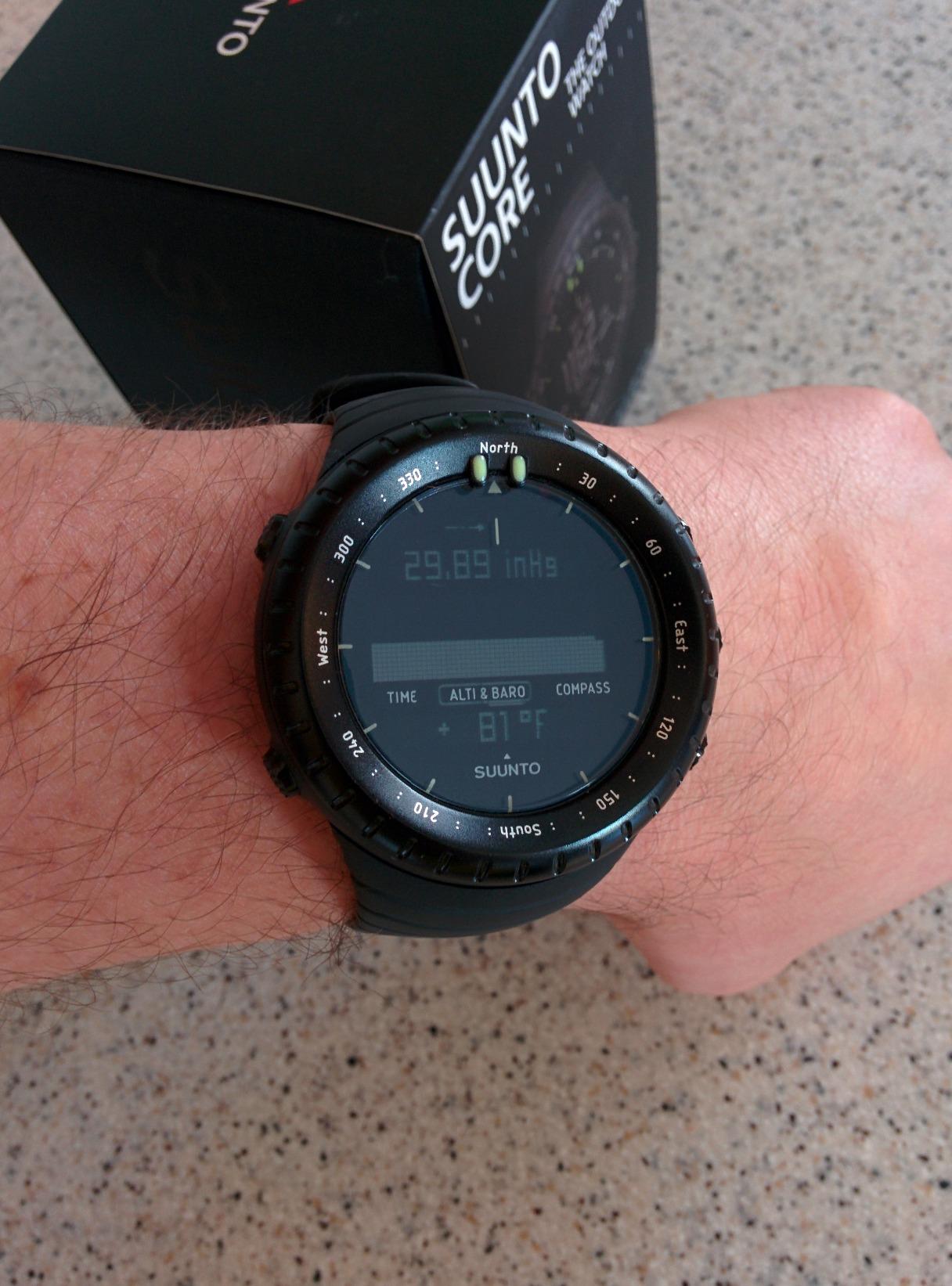
It gives you a barometric altimeter, a barometer, a compass, a storm alarm, sunrise and sunset prediction, dual time and a depth meter rated to 30 feet. At 2.26 ounces it is the second lightest watch here, and a single lithium cell keeps it running for months rather than days.
The catch is real and we will not dress it up. There is no onboard topographic map, no turn-by-turn routing and no smartphone notification. The monochrome non-touch display is beautiful to read in sunlight and useless in the dark. A 2008 platform with dated app support is the other limit.
That said, 69% of 16302 reviews are five star, and the largest review base in this roundup by a wide margin. The 8% one-star share exists almost entirely because people expected a modern smartwatch and got an outdoor watch.
What you give up by going simple
You give up route guidance, elevation profiles, recovery metrics and any safety feature beyond the watch itself. If you rely on an electronic compass, a storm alert is the closest thing to an emergency function, and there is no incident detection.
For hikers on maintained trails who already know the route, that trade is often worth making. The battery life and the sheer absence of distractions are the two things owners keep mentioning.
Who should buy it
Buy the Core if you are a traditionalist, if you want a watch you will still own in fifteen years, or if you are deliberately avoiding fitness subscriptions. If you need to find a route you have never walked, use the Cubitt Terra or the COROS PACE Pro instead.
Breadcrumb vs Topographic Maps: What You Actually Need
A breadcrumb watch draws the line you have already walked and lets you retrace it. A topographic watch draws contour lines, water, trails and terrain shading, so you can look ahead and choose your own line. If you only ever walk marked trails, breadcrumb is enough. If you cross open country or bushwhack, you want contours.
This single distinction explains most of the disappointment in online discussions. A watch listed as having “GPS and navigation” may only record a track. A watch listed as having “offline maps” stores real cartography you can read at a glance. Ask for the map type in words, not adjectives.
Our ranking for pure map capability: the COROS APEX 4 and Garmin epix Gen 2 first, with colour topographic layers and hydro data, then the Garmin fēnix 7X Pro, COROS PACE Pro and POLAR Grit X2 Pro, then the Amazfit T-Rex 3, the COROS APEX 2 and the Cubitt Terra with functional but less detailed mapping. The Instinct 3 and the Suunto Core are breadcrumb and sensor watches, and we think that is fine as long as you know it going in.
Battery Sizing: Will the Watch Survive Your Trip?
Multiply your tracking hours per day by your trip length, then add 50% for cold weather, high backlight and a worn battery. A seven-day trip at eight hours of tracking is 56 hours needed, so anything under about 80 hours of rated GPS runtime is a stretch.
By that maths, a weekend trip is fine on the Cubitt Terra’s 26 hours or the Garmin epix Gen 2’s 30 to 42 hours. A full week is comfortable on the Amazfit T-Rex 3 at up to 180 hours, the COROS APEX 2 at 75 hours, the COROS APEX 4 at 65 hours, or the Garmin fēnix 7X Pro with a solar lens and a power bank for the second week.
Solar charging is a multiplier, not a substitute. The fēnix 7X Pro Sapphire Solar and the Instinct 3 Solar both gain meaningfully from daylight on the wrist, and both fall back to the same cell life as their non-solar siblings when they sit in a pack.
Buying Guide: The Features That Matter on the Trail
Satellite reception is the feature to pay for. Multi-band and dual-frequency positioning hold a lock under tree cover, in canyons and in alpine shadow, where a basic single-band watch will wander 10 to 20 metres and send you to the wrong side of a ridge.
Screen type is the second decision. Transflective monochrome panels are sunlight-readable, extremely durable and dim at night. AMOLED panels are bright and colourful but glass that chips more easily and drains the battery faster. Memory-in-pixel sits in between: reflective, long-lasting and reflective enough to frustrate you in low light.
Durability claims need reading carefully. A 10 ATM or 100m rating is a water rating, not a drop rating. MIL-STD-810 testing means the watch survived a defined lab procedure for temperature, shock, water and altitude; it does not mean indestructible. Sapphire lenses cost more but shrug off rock and keys.
Case size and weight matter more than most spec sheets admit. Anything above 50mm is obvious under a sleeve, and anything above 80g is noticeable by hour ten of a long day. If you are between sizes, the 45 to 47mm class is the safe middle.
Finally, consider whether a watch should replace a dedicated handheld. In r/hikinggear, the prevailing view is that handhelds still navigate better, and they are not wrong for a first-time orienteer on unfamiliar terrain. The consensus practical answer is to run both: a watch for data, timing, battery and safety, and a paper map or a phone held in airplane mode as your backup.
Frequently Asked Questions
Which GPS watch is the most accurate for hiking?
The most accurate hiking watches in our testing are the ones with multi-band or dual-frequency positioning: the Garmin fenix 7X Pro Sapphire Solar with SatIQ, the Garmin Instinct 3 Solar, the Garmin epix Gen 2 with multi-band GNSS, the Amazfit T-Rex 3 with dual-band GPS, the POLAR Grit X2 Pro and the Cubitt Terra. Under tree cover, in canyons and in alpine shadow, these hold a lock where basic single-band watches drift noticeably.
What is the best GPS watch with maps for hiking?
For full colour topographic maps you can read at a glance, the COROS APEX 4 and the Garmin epix Gen 2 are the strongest choices, both storing topographic, street and hydro layers with turn-by-turn guidance that runs without cell service. The Garmin fenix 7X Pro Sapphire Solar is a close third with preloaded TopoActive maps and Up Ahead turn prompts. Avoid the breadcrumb-only models if reading terrain is part of your navigation.
What is the best smartwatch with GPS for hiking?
The Garmin epix Gen 2 is the best smartwatch-style option for hiking, pairing a bright 1.3-inch AMOLED under sapphire with 42 hours of GPS and 16 days of smartwatch battery. The Amazfit T-Rex 3 runs longer in GPS mode with a brighter 2000-nit screen, while the COROS PACE Pro is the lighter, more affordable AMOLED option. All three handle hiking better than a general smartwatch.
What is the best GPS device for hiking?
For most hikers a watch is the right device, because it is always on your wrist and never runs out of power. A dedicated handheld is still better if you are new to navigation, walking unfamiliar terrain, or need a much larger screen to read a map. The safest approach many experienced hikers use is to carry both a watch and a paper map or a phone in airplane mode.
How do I load maps and GPX routes onto a hiking watch?
Install the brand app on your phone, create or import the route as a GPX file, then sync over Bluetooth or Wi-Fi and confirm the course appears in the watch navigation menu. Do it at home rather than at the trailhead, and zoom the map while planning so the detail is legible on the watch screen. With a Garmin, map regions download over Wi-Fi from Garmin Connect; with COROS, use the built-in route planner.
How long does a GPS watch battery last on a hiking trip?
It depends entirely on the model and the mode. A basic smartwatch tracking one hike a day can run for weeks, while a colour AMOLED watch recording continuous GPS typically manages 26 to 42 hours. Solar models extend that further in daylight. For a seven-day trip at eight hours of tracking daily, you need roughly 56 hours of runtime, so aim for 80 hours or more and add a power bank in winter.
Conclusion: The Best GPS Watches for Hiking in 2026
After working through all ten, the Garmin fēnix 7X Pro Sapphire Solar is still the watch we would buy, because it is the only one that combines preloaded topographic maps, multi-band SatIQ positioning, a built-in flashlight, a sapphire solar lens and true expedition endurance. It is heavy, and if that bothers you, the Garmin epix Gen 2 gives you a far better screen for less weight.
For value, the COROS PACE Pro is the sharpest deal in the guide. For a full week without a charger, the Amazfit T-Rex 3 has no equal at this tier. For off-trail navigation, the COROS APEX 4 stores more usable map detail than anything else we tested. And for people who want less rather than more, the Suunto Core and the Garmin Instinct 3 Solar are the right answer.
Whichever you choose, download your maps at home, check your GPS battery against your trip length, and still carry a backup. The best GPS watches for hiking in 2026 are the ones that get you back to the car safe, not the ones with the longest spec sheet.