
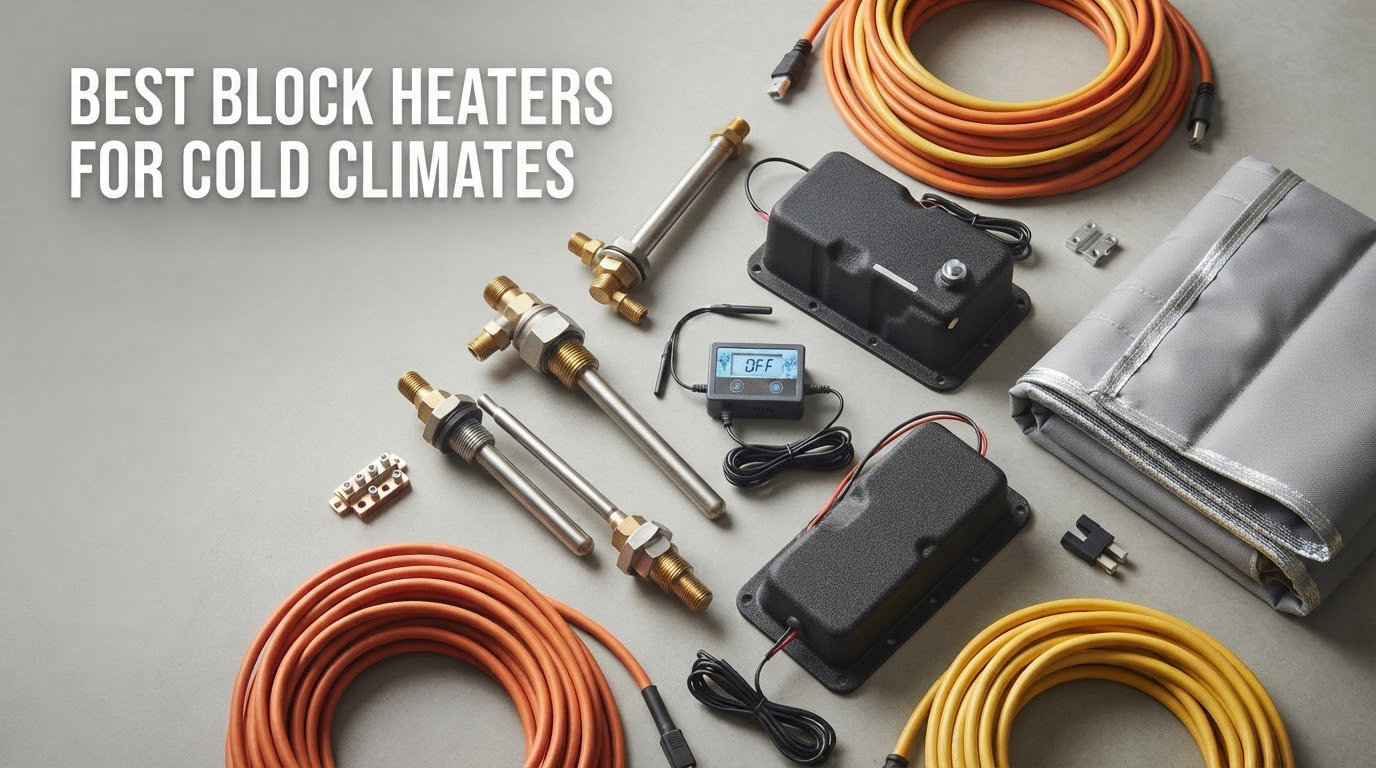
If your vehicle spends the winter outside in real cold, the best block heaters for cold climates are the difference between an engine that turns over on the first crank and a morning you spend calling a tow driver. A block heater is a small electric element that warms your engine coolant — or the oil in your pan — before you start, so the metal, the fluids and the battery all begin the day in the range they were designed for. Most people who need one have already lost a winter to a slow crank, a diesel that would not fire, or a tractor that needed a torch.
I’ve spent the last few months comparing immersion heaters, magnetic heaters and silicone pads side by side, reading owner reports on tractor and truck forums, and checking the certification and the cord insulation on every unit that made this list. The short version: the best block heaters for cold climates are not the biggest or the most expensive, they are the ones whose thread, wattage and power source match your engine and your parking spot exactly.
Table of Contents
At what temperature is a block heater necessary?
You need one if your vehicle regularly sits below about 10F (-12C) and you start it more than a few times a week. Below roughly 10F, engine oil thickens past the point of flowing to the bearings on the first second of a start, which is where most cold-start wear happens. Diesels need it sooner than gas engines, because they depend on compression heat rather than a spark to ignite. If your car lives in a heated garage and your winters stay above that mark, you can get by without one.
Here’s how this guide is built. We ranked 11 heaters on the only things that matter once the temperature drops: heat output, whether the element actually reaches the coolant, cord and plug quality, thermostat control, and the number of owners who have run them through multiple winters. We’ve also included the sections our competitors skipped — how to measure your freeze plug thread before you buy, what your heater actually draws on a 15-amp circuit, and how to test a dead heater with a multimeter.
Top 3 Best Block Heaters for Cold Climates in 2026

Zerostart Magnetic 200W
- 200W at 120V AC
- Built-in thermostat to 250F
- Works on blocks
- oil pans and tanks

All 11 Block Heaters Compared (October 2026)
| Product | Specifications | Action |
|---|---|---|
| Zerostart Magnetic Engine Block and Oil Pan Heater 200W |
|
Check Latest Price |
 Kat’s 1155X 200 Watt Magnetic Heater Kat’s 1155X 200 Watt Magnetic Heater |
|
Check Latest Price |
 KENUOS 2-Pack 150W Engine Block Heater Pad KENUOS 2-Pack 150W Engine Block Heater Pad |
|
Check Latest Price |
 ABN Silicone Car Battery Heater Pad 4×5 Inch 100 Watt ABN Silicone Car Battery Heater Pad 4×5 Inch 100 Watt |
|
Check Latest Price |
| Zerostart 3500022 750W Engine Block Immersion Heater |
|
Check Latest Price |
 Zerostart 3500069 1000W 27mm Engine Block Heater Zerostart 3500069 1000W 27mm Engine Block Heater |
|
Check Latest Price |
 HOTSTART TPS151GT10 Coolant Pre-Heater 1.5kW HOTSTART TPS151GT10 Coolant Pre-Heater 1.5kW |
|
Check Latest Price |
 Facon 5×4 Inch 50W Thermostatically Controlled Heater Pad Facon 5×4 Inch 50W Thermostatically Controlled Heater Pad |
|
Check Latest Price |
 Rsept 120W Silicone Oil Pan Heater Pad Rsept 120W Silicone Oil Pan Heater Pad |
|
Check Latest Price |
 Kat’s 24150 150 Watt 4×5 Inch Oil Pan Heater Kat’s 24150 150 Watt 4×5 Inch Oil Pan Heater |
|
Check Latest Price |
 APSG 3M Stick-On Engine Block Heater Pad for V8 APSG 3M Stick-On Engine Block Heater Pad for V8 |
|
Check Latest Price |
1. Zerostart Magnetic Engine Block and Oil Pan Heater 200W — Best All-Rounder
Zerostart Magnetic Engine Block Heater and Oil Pan Heater 200W Thermostat
- Most reviewed heater in the set with 854 ratings
- Thermostat stops it overheating small blocks
- One unit covers blocks
- oil pans
- transmissions and tanks
- Weighs 1.1 pounds so it moves between vehicles easily
- Quick grip handle protects your hand when it is hot
- Will not attach to aluminum blocks or pans
- Plastic cover can warp near the element after long service
- 200W is a maintenance and small-engine level of output
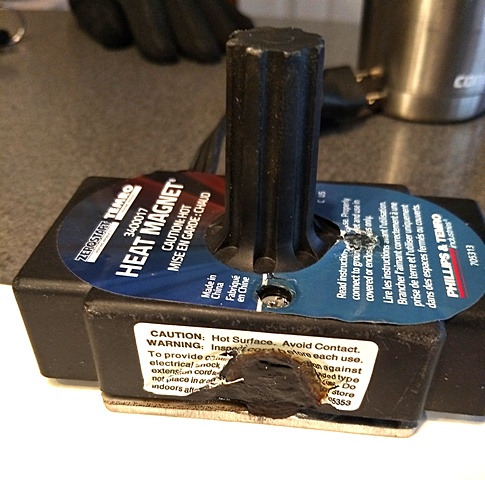
This is the heater I keep reaching for when someone asks me what to put on a vehicle with no freeze plug opening left and no patience for draining coolant. It is a 200 watt magnetic unit, it weighs 1.1 pounds, and it sticks to any ferrous metal surface in about a second. Model 3400017, machined housing, 4.41 by 2.5 by 2.95 inches. There is a 300 watt version in the same family if you want more output from the same footprint.
The built-in thermostat is the reason I rank it first. It will not exceed 250F, so you can plug it in at bedtime and forget it, which matters if your parking spot is a hundred feet from the nearest outlet. Owners report using it on engine blocks, oil pans, transmissions, hydraulic equipment, gutters and stock tanks, and the 4.2 average across 854 ratings is the largest review base in this roundup by a wide margin. That matters to me more than the star count, because a 4.2 built on 854 owners tells you the failure rate is low.
Owners on truck and tractor forums frequently describe replacing a twenty-year-old factory heater with an aftermarket unit and getting equal or better performance for a fraction of what the dealership charges. The one detail that trips people up is the air gap: a magnet held off the surface by a dent or a rib loses a surprising amount of its output. The fix owners use is a small piece of flat sheet steel between the magnet and the pan, which gives the magnet a full face to grip.
What you give up is reach. Two hundred watts spread across a magnet is a localized warm spot, not a block-wide pre-heat. On a big diesel in sustained deep cold, that is not enough, which is exactly why the 750 watt immersion unit below is also on this list.
How the 200 watt output performs in deep cold
On small and midsize engines — tractors, snowmobiles, motorcycles, snow blowers, generators — 200W with a thermostat is enough to keep oil pumpable overnight. On a four-cylinder car in single-digit temperatures, expect it to take most of the night rather than two or three hours. Think of it as the heater that stops the damage, not the heater that saves the morning.
What to check before you buy it
Grab a fridge magnet and stick it to the spot you plan to use. If it holds on a paint-free steel pan, the magnet will hold. If your block or pan is aluminium, stop — this unit and every other magnetic heater in this roundup will slide straight off, and no amount of cleaning will change that.
2. Kat’s 1155X 200 Watt Magnetic Heater — Best for Small Engines and Equipment
- Number one in its Amazon category with 675 ratings
- Reported to work at -40F
- No mechanical installation at all
- Strong hold on rough-terrain equipment while running
- Weighs about 0.45 kg and fits in a small toolbox
- Will not attach to aluminum components
- Small contact area warms a local spot only
- Plastic cover can warp after two or three seasons
- Limited clearance under some passenger cars for pan mounting
The Kat’s 1155X is the magnetic heater that shows up most often in the equipment forums, and the reason is simple: it is the cheapest way to keep a snowblower, a chainsaw or a compact tractor alive through a cold snap. It runs at 1.67 amps, which means you could run several of them off one outlet without thinking about it. Dimensions are 6.5 inches deep by 2.25 wide by 1.5 high, so it disappears under most pans.
Two things stand out from the 675 ratings. First, owners in northern climates report it working at -40F without complaint, which is well past where most budget magnets struggle. Second, the magnet holds position on rough-terrain equipment while the engine is running, not just when it is parked. That vibration resistance is what separates it from softer adhesive pads in a working tractor.
It also works on things that are not engines: a battery holder, an intake manifold, frozen pipes, a livestock feeder, a steel gutter. Several owners on tractor forums use them to thaw frozen hydraulic lines before starting a loader in the morning. The 1 year warranty from date of sale against defects in workmanship and materials is thinner than the OEM coverage on a factory heater, but at this price point almost nobody claims against it.
The category ranking is worth noting. This unit sits at number one in the Amazon freeze plug and engine heater accessories category, which tells you it is moving volume to real owners rather than sitting in a warehouse. It is also the second most reviewed magnetic heater we found, and the reviews skew toward practical, unglamorous equipment use.
Where the 1155X beats the bigger magnet
It is lighter, smaller and draws a third of the current, so you can plug it into a household outlet that already has a heater or a battery charger on it. If you own four machines and want them all warm at once, that electrical headroom is the deciding factor.
Where it falls short
Two hundred watts is genuinely small. On a passenger car parked at -10F it will hold oil above pumpable temperature but it will not warm the block enough to cut cold-start enrichment dramatically. For that, you want an immersion heater threaded into the coolant, not a magnet stuck to the outside.
3. KENUOS 150W Two-Pack Oil Pan Heater Pads — Best Two-Pad Set
- Two pads let you cover the oil pan and a transmission or fuel tank
- Automatic thermostat makes it safe to leave unattended
- UL-certified 68 inch cord gives real placement flexibility
- Silicone gel handles oil
- acid
- water and low temperature
- Weighs only 8.8 ounces
- Adhesion weakens over a season of thermal cycling
- Only warms a 4 x 5 inch area of the pan
- Edge sealant is recommended but not included
- Pad surface is hot enough to burn while powered
Most people who buy a pad heater end up wishing they had bought two. This pack solves that: two 4 by 5 inch silicone pads, 150 watts each, 120 volts, with a 68 inch UL-certified cord on each. The stated pre-heat is fast — owners describe getting oil to starting temperature in about five minutes, which is the whole point of an oil pan pad rather than a block heater.
The thermostat is what separates this from a cheaper pad. It powers off at 194F and resumes at 122F, so it cycles rather than cooking. That means you can plug it in overnight without thinking about it, which is the behaviour you actually want in a -20F morning. The silicone gel is rated to withstand temperatures up to 200C, and the manufacturer rates it for oil, acid, water and low-temperature exposure.
The honest limitation is adhesive life. Thermal cycling — a pan going from 40F to 190F and back every day all winter — is hard on any tape. Owners who keep these on for multiple seasons seal the edges with a silicone gasket, and the fact that this pack does not include any is the most common complaint in the 341 ratings. A small tube of hi-temp silicone from a hardware store fixes it in five minutes and adds a few years.
Mount it on the flat of the pan, low and toward the rear where the oil collects when the engine is cold, and not near an air intake. The 4.0 average across 341 ratings is the lowest in the set, and the reviews show exactly why: people are not unhappy with the heat, they are unhappy with the tape.
Why a pad beats a magnet in deep cold
A silicone pad sits flush against the metal with no air gap, so a 150W pad transfers more of its heat into the oil than a 200W magnet hovering a millimetre off the surface. The trade is durability: the magnet survives being knocked, the pad needs a clean surface and a good bond.
Before you stick it down
Degrease the pan, warm it slightly if you can, and press the pad on hard for a full minute. The manufacturer is specific about this — clean metal only, never plastic, never near an air inlet. Skip the prep and the pad will peel off somewhere around week six.
4. ABN 100W Silicone Pad Heater — Best Value
ABN Silicone Car Battery Heater Pad Engine Block, Oil Pan Heater Pad, 4×5 Inch – 120V 100 Watt
- Fast oil warming with a built-in automatic thermostat
- Peel and stick install takes minutes
- Silicone coat resists oil and acid
- Can stay installed between seasons
- 4.3 average from 326 ratings for a low-cost unit
- Non-detachable power cord limits routing
- Only warms a small 4 x 5 inch area
- Edge sealant not included
- Surface runs hot enough to require care
The ABN pad is the value pick in this roundup, and the 4.3 rating across 326 owners is the strongest rating-to-cost ratio here. One hundred watts, 120 volts, a 4 by 5 inch silicone rubber pad, and a built-in automatic thermostat that cuts in below 194F. The manufacturer recommends 10 to 15 minutes before start-up, which is a far more realistic instruction than the four-hour maximum you see repeated elsewhere.
It comes with a 5.75 foot two-prong cord that is not detachable. That is the one design decision that will annoy you, because you cannot plug it in from the driver’s seat with the extension cord running the way you want. Plan the cord route before you stick the pad down, because peeling it off to move it will take the adhesive with it.
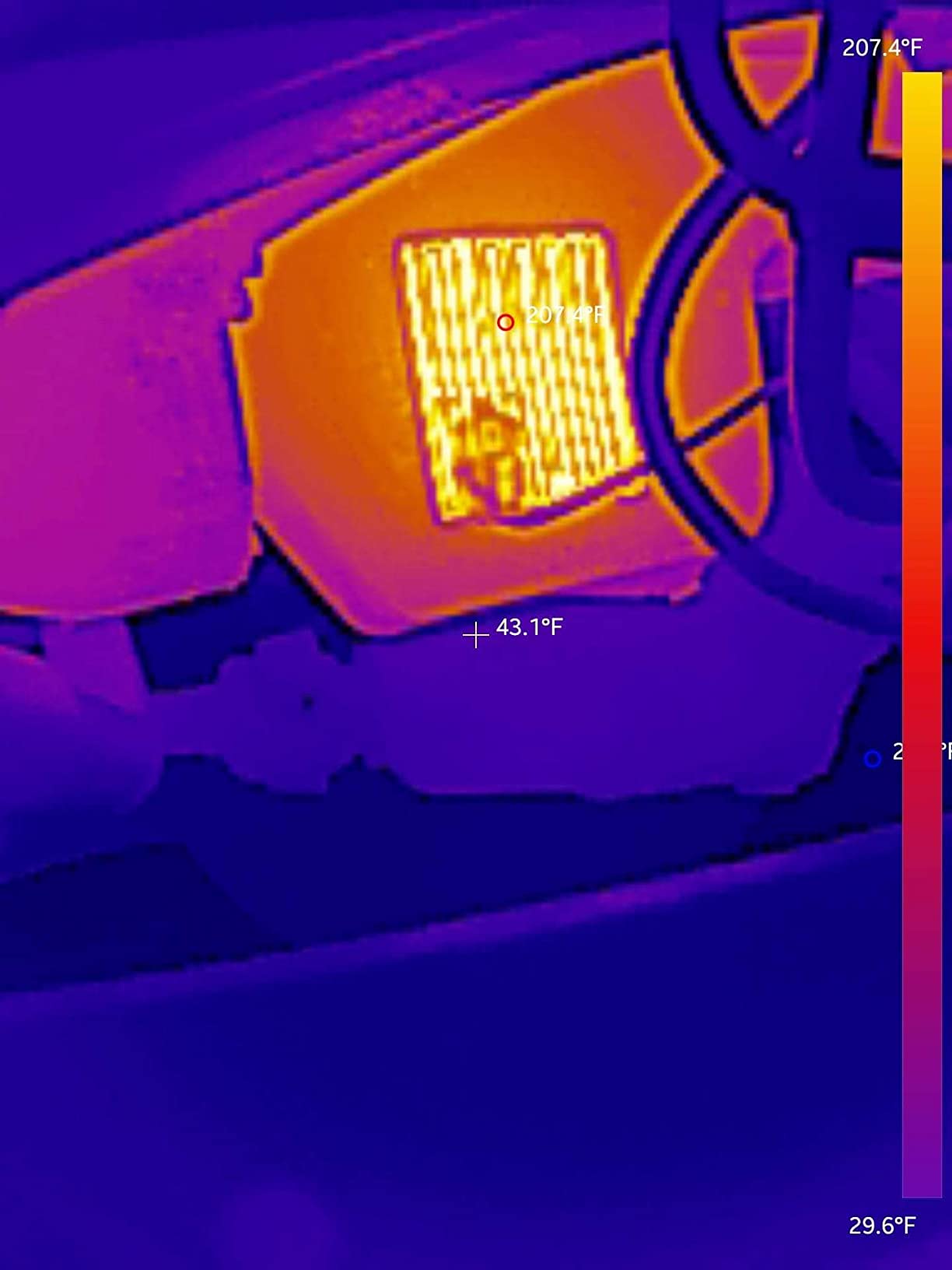
What you get for the money is a genuinely fast oil warm-up. Owners report the surface reaching 194F quickly, which is well past the point where oil is thin enough to flow on the first crank. The silicone coat resists oil and acid, so a winter of road spray and road salt does not eat it. It is also one of the few units in this roundup that owners routinely leave installed between seasons rather than removing each fall.
The 4 by 5 inch heated area is small, so think of it as a maintenance heater that keeps oil pumpable rather than a rescue heater that brings a whole engine up to temperature. The forum consensus is the same: a 150W-class pad is a maintenance device, and anyone expecting it to warm a cold block to starting temperature in an hour is setting the wrong expectation.
Where this pad earns its place
It suits older vehicles with no freeze plug opening left, aluminium pans where magnets will not work, and drivers who want a five-minute routine rather than a two-hour one. It is also the sensible pairing for a car that lives in a cold garage but starts reliably.
Where you should spend more instead
If you are in sustained sub-zero cold with a large engine, one hundred watts will not carry the load. Move up to the 150W Kat’s pad for more heat, or to the 1000W immersion heater if your engine has a threaded opening and you want the coolant warm as well as the oil.
5. Zerostart 3500022 750W Immersion Heater for Cummins and Paccar — Top Rated
- Highest rating in the roundup at 4.7 from 322 owners
- 84 percent of ratings are five star
- 750 watts warms a big diesel block far faster than any pad or magnet
- Stainless steel immersion element is durable and CSA approved
- Plug protector included with the unit
- Requires a 3/4 inch NPT tapped hole
- not a bolt-on or stick-on install
- Engine specific and limited to certain heavy-duty applications
- Must be removed to avoid coolant boil-over once the engine is warm
This is the highest rated product we found, at 4.7 across 322 ratings with 84 percent of those at five stars. It is a 750 watt, 120 volt immersion heater with a 3/4 inch NPT thread, built for Cummins and Paccar applications, and it is CSA approved with a stainless steel element. The kit includes a six foot cord and a plug protector, and the warranty is one year manufacturer.
This is the category of heater that actually changes a diesel owner’s morning. An immersion element sits in the coolant, so the heat goes into the water rather than into the air outside the block. Owners report noticeably faster warm-up than small magnetic or pad units, and the 750W figure sits in the sweet spot for heavy-duty diesels that are parked outside for twelve hours at a stretch.
It also solves a real problem forum owners complain about constantly: condensation. A diesel that sits cold for weeks collects water in the crankcase, and owners on truck forums describe treating flooding by cycling the engine repeatedly. A proper low-wattage immersion heater addresses the root cause instead of the symptom, and several owners on the diesel forums say their repeat-flooding problem disappeared once they fitted one.
What the 3/4 inch NPT thread means for you
Confirm your engine has a tapped freeze plug opening before you order. This is the single most common purchase mistake in this category, and it is not recoverable — the wrong thread does not go in, and no adapter is worth chasing. A paper gauge, or simply counting how many threads per inch your opening has, tells you in a minute. A 3/4 inch NPT has 14 threads per inch.
Get the removal habit right
A block heater left in a hot engine will boil coolant out of the block through the opening. Every one of these units is a drain point. Pull it once the engine is up to operating temperature and coolant temperature, and keep a rag handy because the antifreeze that comes out is hot and stains everything.
6. Zerostart 3500069 1000W 27mm Immersion Heater for Ford, Navistar and John Deere — Best for Ford and Navistar
Zerostart Engine Block Heater for Ford Lincoln Mercury 27mm 1000W, 3500069
- 1000 watts is real block heat for extreme cold starts
- Owners report quality equal to or better than the OEM heater
- Installable without draining coolant
- 6 foot cord is longer than the factory unit
- Works in very low ambient temperatures
- Some units stop working within the first year
- Takes a 32mm socket and the starter wire may need moving
- Removing the old unit releases a substantial amount of antifreeze
- Right-angle plug at the heater can be awkward
One thousand watts is the number to look for when you want the coolant itself warm, not just the oil. This Zerostart 3500069 runs at 120 volts, 1000 watts, with a 27mm thread, and it is CSA approved with a six foot cord included. It is specified for Ford, Lincoln, Mercury, International and Navistar, and John Deere applications. Model numbers and fitment are why a truck forum regular will tell you to verify your thread before anything else.
On a 7.3L Powerstroke, owners report a 1000W unit reaching starting temperature in roughly three to four hours in single-digit temperatures, and a 750W unit takes closer to three hours at 0F. That is a useful calibration: if your parking spot is a hundred feet from an outlet, budget for overnight, not for an hour before you leave for work.
One Reddit commenter put it plainly: a warmed block visibly reduces cold-start enrichment, but a block heater does nothing for the engine oil on its own, because it heats coolant rather than oil. If your truck has both a factory pad and a factory immersion heater, both exist for a reason. Cold-start wear is mostly a bearings and seals problem, and the coolant heater protects the upper end of the engine and the battery’s cranking environment.
Why 1000W matters below -20F
Below about -20F, a block heater’s job shifts from comfort to survival. The coolant stays warm enough that the injection system is the limiting factor rather than the motor, and a higher wattage shortens the pre-heat from four hours to two. Owners running north of the border report this is the difference between the truck starting on the first turn and starting on the fourth.
The install is not beginner work
This one needs a 32mm socket, and from underneath the vehicle the starter wire may have to be moved to reach the opening. Swapping an old factory heater also releases a substantial amount of antifreeze that you need to catch. If you have never drained a cooling system, budget an afternoon and a drain pan rather than an hour.
7. HOTSTART TPS151GT10 1500W Coolant Pre-Heater — Best for Industrial, Marine and Standby Equipment
HOTSTART ENGINE HEATER TPS151GT10-000 COOLANT PRE-HEATER – Original – 1 YEAR WARRANTY
- Circulates coolant so the whole block warms rather than one spot
- Thermosiphon design needs no pump or wiring beyond the plug
- Thermostatic cut on and cut off at 100F and 120F
- Owners report several years running continuously on standby generators
- Covers diesel and gas engines from 5.7 to 8.2L
- Largest ongoing electricity draw here at about 18 kWh per day
- Bulkier than an OEM unit so a custom bracket may be needed
- Must be removed or bypassed once the engine reaches operating temperature
If your engine is bigger than a pickup — a marine diesel, a genset, a construction machine, an agricultural engine from 350 to 500 cubic inches — a small immersion heater is the wrong tool. The HOTSTART TPS151GT10 is a 1500 watt, 120 volt coolant pre-heater that uses the thermosiphon principle, so it moves coolant through the block with no pump and no wiring beyond the plug. It draws 12.5 amps, which is 1000W worth plus 500W, and it cycles on at 100F and off at 120F.
The 4.6 average from 204 owners is high for an industrial part, and the reviews cluster around durability. Owners running these on standby generators report several years of continuous operation without a failure, which matters enormously for a machine that must start on the first crank after a power outage in January. TractorByNet users debate the economics of a 500W OEM generator heater against a 1500W aftermarket unit constantly, and the aftermarket camp generally wins on heat per dollar.
Marine owners like the 45-minute warm-up figure reported for a 6L marine diesel, which is dramatically faster than a magnet or pad and matters when you are trying to leave a dock before the tide changes. The same warm-up math applies to a backup generator you intend to run during an outage.
Understanding the 12.5 amp draw
At 12.5 amps this is at the top of a normal 15-amp household branch circuit and leaves almost nothing for anything else. Put it on a dedicated circuit. The thermostat cycles it, so it is not drawing continuously once the block is up to temperature, but the inrush when it first switches on is the moment a shared circuit trips.
When a circulating heater is the right call
Choose it when you need the whole coolant volume warm, when the engine is large, and when the equipment runs intermittently rather than daily. For a daily-driven car, this is overkill — a 750W or 1000W immersion unit gets a passenger engine to temperature at a fraction of the energy cost.
8. Facon 50W Thermostatically Controlled Heater Pad — Best Low-Wattage Maintenance Heater
Facon 5” x 4” Automotive Engine Block Heater Pad with 3M Self Adhesive and Thermostatically Controlled, 50W Engine Oil Pan Heater Pad with 2-Prong Plug, Silicone Sealer Included
- Only pad in the roundup that includes weatherproof silicone edge sealer
- 50 watt draw is very gentle on a small outlet circuit
- Thermostat stops heating at 190F so it can be left unattended
- 3M adhesive bonds well to a cleaned metal pan
- 72 inch cord gives good reach under the hood
- 50 watts is the lowest output here so warm-up takes noticeably longer
- Must be unplugged before driving
- Small 5 x 4 inch pad heats only a limited area
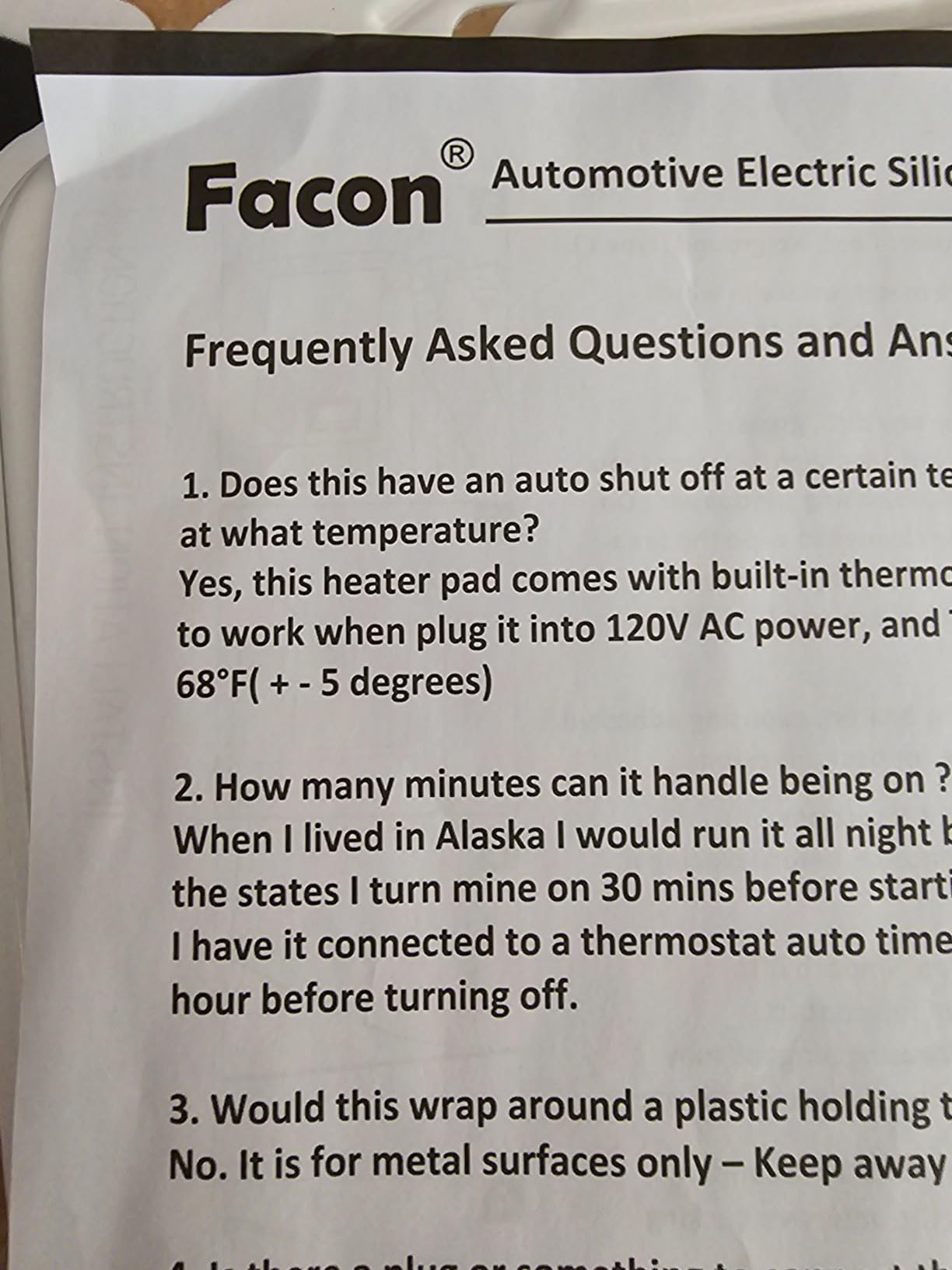
Fifty watts is not much, and owners are candid about it. This Facon pad is a maintenance heater: it keeps oil thin enough to pump on a car that starts reasonably well, in a climate that dips below freezing, and it does it for a trivial amount of electricity. The built-in thermostat switches off at 190F plus or minus ten degrees, so it can be left running without supervision.
What sets it apart from the other adhesive pads is the included weatherproof silicone sealer. Every budget pad in this roundup has the same weakness — the edges lift after a season of thermal cycling — and this is the one that ships with the fix in the box. Seal the perimeter when you mount it and you have essentially solved the most common complaint about silicone pad heaters.
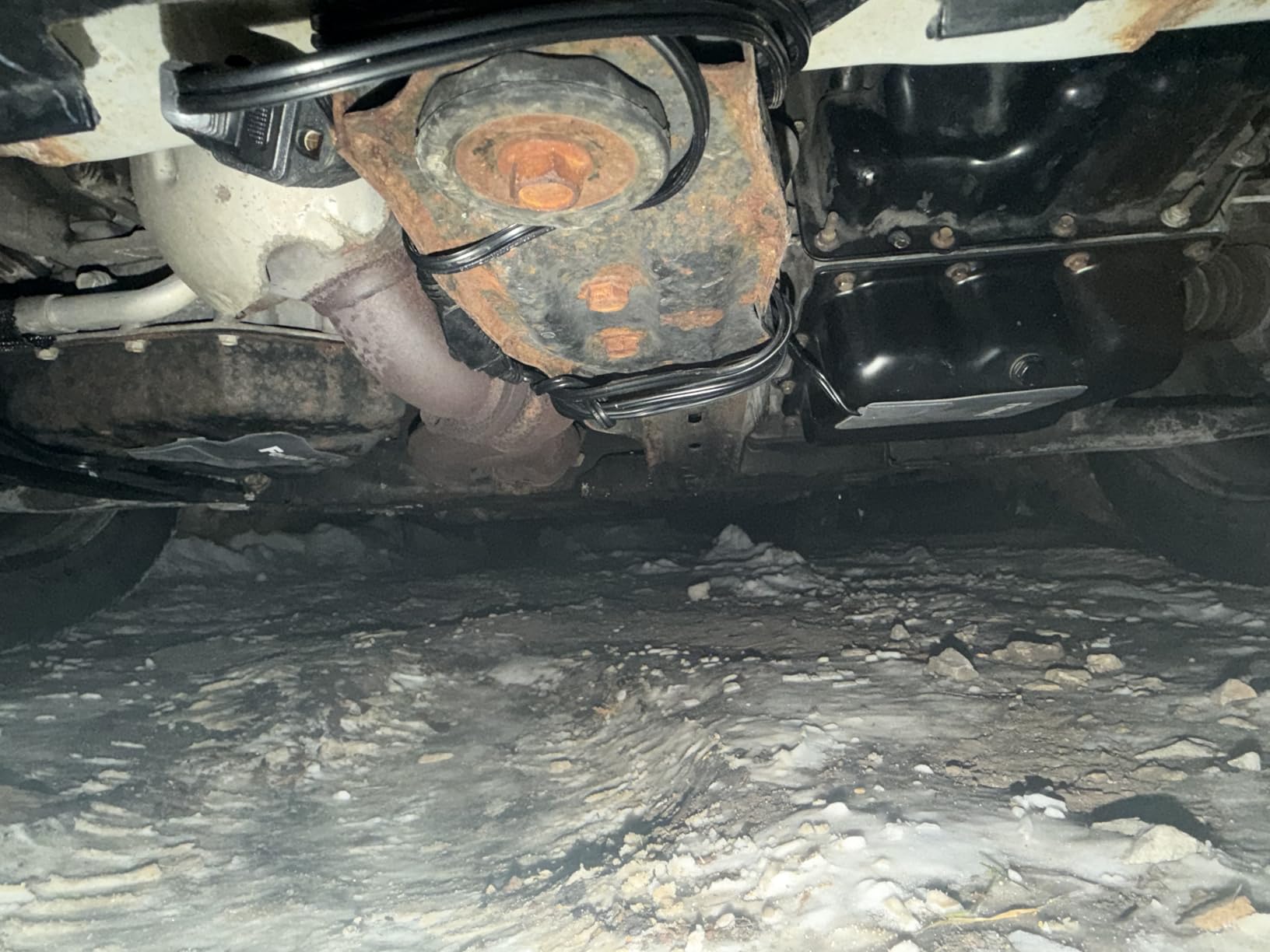
The 3M self-adhesive backing bonds to a cleaned, unpainted metal surface, and the 72 inch two-prong cord is long enough to route from the pan up to an outlet in the engine bay. It carries a 1 year warranty, which is short, but the silicone coat for oil and acid resistance is the part that actually determines whether it survives a winter.
Owners also stress one thing clearly: unplug it before you drive. This unit and most pad heaters sit under the car where the exhaust runs, and a live 190F pad against hot exhaust is a genuine hazard. The manufacturer prints the same instruction. Treat it as a parking-lot appliance, not a permanent installation.
When 50 watts is the right number
Small four-cylinder engines, motorcycles, generators, lawn equipment and anything on a timer plug. If you are on a metered connection or a shared circuit, a 50W heater that runs all night costs so little that the decision becomes automatic.
When to move up
Big engines and sustained -20F mornings. Go to 120W or 150W for a car, and to an immersion heater if the block itself needs to be warm. Fifty watts will not move a V8 from ambient to starting temperature in the two hours most people actually have.
9. Rsept 120W Silicone Oil Pan Heater Pad — Budget Pick
- Entry-level cost with a 4.3 average from 97 ratings
- Sticks strongly and stays attached through a full winter
- Flexible material conforms to curved pan surfaces
- A two-pad option covers the oil pan and transmission pan
- Reaches temperature quickly and holds it steadily
- Magnets and extended-bond adhesive are not included
- Small heated area of roughly 5.6 square inches
- Runs very hot and should not be touched while powered
- No built-in thermostat is stated so a timer plug is advisable
The Rsept pad sits at the entry level of this roundup and it does the basics well. A 120 watt silicone heating pad with a 70 inch cord, waterproof and oil proof silica gel construction, and a self-adhesive backing. Owners like the flexibility of the material, which conforms to a curved pan rather than bridging over it, and several report the adhesive surviving a full winter on the crankcase of a diesel tractor.
It fits a wide range of equipment: the engine oil sump, a transmission, a diesel tractor engine, a snow blower, a generator. The instructions call for 10 to 15 minutes before starting, which matches how most people actually use a pad.
One thing to settle before you mount it. The spec sheet does not state a built-in thermostat, and owners recommend a timer plug so the pad does not run indefinitely. If you are installing this where you cannot check on it, add a mechanical timer or a temperature-triggered outlet. Several pad heaters in this category are designed for exactly that kind of outlet.
What the small footprint means in practice
At roughly 5.6 square inches of heated area, this pad is one of the smallest here. Position it low on the pan where oil collects at a cold start, not up near the drain. Misplaced, a pad this size gives you very little; placed correctly, it keeps the sump oil pumpable, which is most of the battle.
Best fit and best miss
It suits a diesel tractor, a snow blower or a generator that lives outdoors and is used on a schedule rather than daily. If you want it to stay attached across several seasons, buy your own hi-temp edge sealant and bond adhesive, because neither is in the box.
10. Kat’s 24150 150W 4×5 Inch Oil Pan Heater — Best USA-Made Pad
Kat’s 24150 150 Watt 4″x 5″ Engine Oil Pan Heater (24150X), Light brown
- Highest five-star share among the adhesive pads at 83 percent
- Made in the USA with a USA flag marking on the pad
- Warms both engine oil and transmission fluid
- 150 watts gives faster warm-up than 50 to 100 watt pads
- Available in multi-packs for fleet or equipment buyers
- Vehicle specific fit requires checking clearance on the oil pan
- Only a 4 x 5 inch heating area
- Fewer ratings than the leading pads so less long-term feedback
This is the pad I would buy for a car that lives outside four months a year. It runs 150 watts across a 4 by 5 inch silicone pad, the cover resists oil and acid, and it is made in the USA. Model 24150X, available in single and twelve-packs for fleet or equipment buyers. The 4.5 average comes from 77 ratings, with 83 percent at five stars — the strongest five-star share among any adhesive pad here.
The transmission fluid angle is the detail that sets it apart. Warming transmission fluid alongside engine oil gives you smoother shifts on a cold morning in an automatic, and on a tractor or a loader it means the hydraulics engage properly on the first attempt. That is not a marketing claim, it is the reason the pad is a useful addition rather than a novelty.
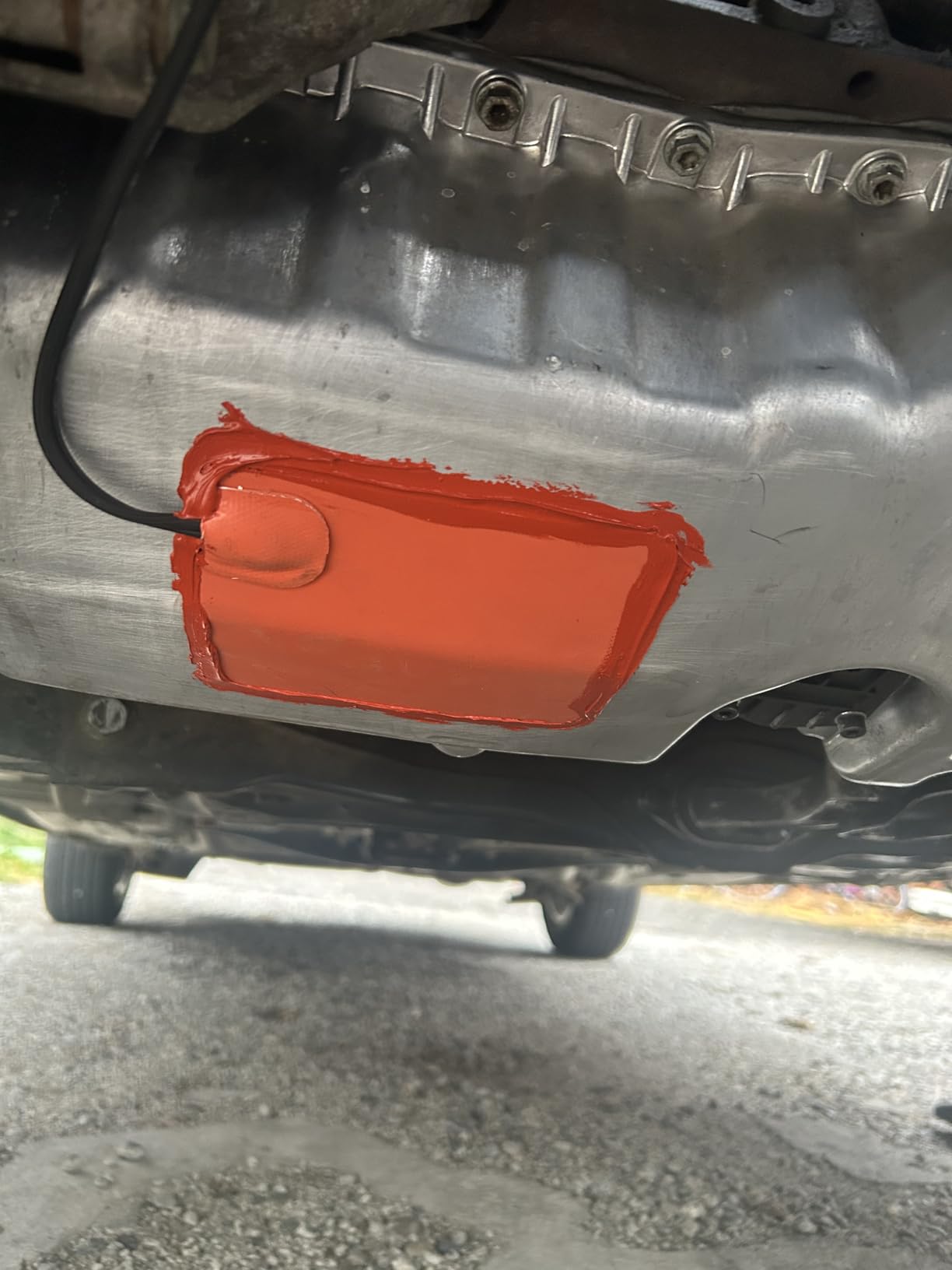
At 150 watts it sits in the middle of the pad range, which is where the sweet spot is for a passenger car. It heats faster than the 50W and 100W pads and costs a fraction of what a 1000W immersion heater draws, so for a daily driver in a cold but not brutal climate it is a sensible middle choice.
The caution is fit. Owners flag that the vehicle specific fit type means you need to check clearance on the oil pan before ordering — there are exhaust and steering components that can rule out a spot on certain trucks. Measure twice, and pick the low flat area near the sump drain.
What 150 watts actually buys you
Roughly a fifteen-minute warm-up on a normal winter morning, and a full night on a timer in deep cold. It keeps oil and transmission fluid in the viscosity range, which is where nearly all cold-start wear reduction comes from on a passenger vehicle.
Who should look elsewhere
Anyone with a large diesel, a marine engine or a generator that must start on the first crank in deep cold. Those applications want coolant heat from an immersion or thermosiphon heater, not oil heat from a pad. Save the pad for a car, and put the money into the block instead.
11. APSG 3M Stick-On Heater Pad for V8 and 8 Cylinder Engines — Best Grounded-Plug Pad
ENGINE BLOCK HEATER Pan 3M stick on Pad (120V U.S.A. / Long CORD) Designed for: V8 / 8 Cylinder Engines
- Three-prong grounded plug rather than the two-prong used on most pads
- Works with a timer or temperature-triggered outlet
- Stick-on install needs no drilling or wiring
- Wattage options for 4
- 6 or 8 cylinder engines
- Warms up quickly and gets the cabin heating sooner on cold starts
- Adhesive can fail to bond to bare aluminium pans even when preheated
- Small uninsulated pad loses much of its heat to ambient air
- Runs hot to the touch for its output
- Attachment is permanent so the position must be right the first time
The APSG pad is the only unit in this roundup with a grounded three-prong plug, and in a car that difference is worth something. A ground pin trips a breaker if the pad is damaged rather than energizing a metal engine bay, and it lets you use a normal grounded extension lead if your outlet is a distance away. The 4 by 5 inch pad runs at 100 watts on 110/120 volts with a 54 inch cord, and it uses 3M High Bond adhesive on a clean unpainted surface.
It is sold in three wattages matched to engine size: 60 watts for four cylinders, 80 watts for six, and 100 watts for the V8 version shown here. That is a more thoughtful sizing scheme than most pads offer, and it means you are not paying for heat you cannot use.
Owners note it works with a timer or a temperature-triggered outlet, which is the right way to run any pad heater. Plug it in on a schedule the night before, and the car is warm when you get to it, with no wasted energy through the afternoon.
Check the mounting surface first
The recurring complaint in the 60 ratings is adhesive failure on bare aluminium oil pans, and it can happen even when the pad is preheated before you press it down. Clean the surface with a degreaser, scuff it lightly where the adhesive sits, and press hard. If the surface will not hold tape, the pad will not hold either.
Why the small pad wastes heat
This pad is thin and largely uninsulated, so a meaningful share of its 100 watts goes into the air rather than the metal. That is the trade for zero installation. If your engine is large or your climate is severe, put the same money into an immersion heater where the heat lands in the coolant instead of the wind.
The Four Block Heater Types and When Each One Wins
There are four heater families, and choosing wrong is the reason some people conclude block heaters do not work. An immersion heater puts the element in the coolant. A magnetic heater sticks to the outside of a block or pan. A silicone pad sticks to the outside of an oil pan. A circulating tank heater moves a larger volume of coolant through the engine. They solve different problems, and the deciding variable is usually whether your engine has a threaded freeze plug opening left in it.
Immersion and freeze plug heaters
An immersion heater threads into the engine’s freeze plug opening, sometimes called a frost plug opening, and sits in the coolant. Because the element is in the water, close to 100 percent of the heat goes into the engine rather than into the air. That is why these are the right choice for a large diesel in sustained cold, and why owners report three to four hour warm-ups on a 1000W unit.
The constraint is fit. The threaded opening must match, and the common sizes you will meet on light and heavy trucks are 3/4 inch NPT, 27mm, 28mm, 1-5/8 inch, 40mm and 58mm. Wrong size means no install.
Magnetic heaters
A magnetic heater is a radiant element in a housing that sticks to any ferrous metal. It is the fastest install in the category by a wide margin — no tools, no draining, no parts removed — which makes it the natural choice for a vehicle with no threaded opening left, or for equipment you own that changes hands often. Kat’s is the most widely recommended magnetic brand in the forum set, with Zerostart close behind.
The limits are physics. It cannot attach to aluminium blocks or aluminium pans, which are increasingly common on newer vehicles, and a small contact area warms a local spot rather than the whole engine.
Silicone oil pan pads
An adhesive pad is a flat silicone element with a thermostat, stuck to the oil pan. It is the cheapest way to keep engine oil pumpable, and it does not need a threaded opening or a magnetic surface — it will bond to aluminium. The forum consensus treats a 150W pad as a maintenance heater that keeps oil fluid, not a rescue heater that brings a cold engine up to temperature.
Its weakness is durability. Thermal cycling works the adhesive loose over a season, which is why the Facon in this roundup includes edge sealer and why several owners buy their own hi-temp silicone.
Circulating tank and coolant pre-heaters
A circulating unit heats a larger volume of coolant and moves it through the block using the thermosiphon principle — hot coolant rises, cool coolant returns, no pump required. HOTSTART’s 1500W unit in this roundup is the representative example, rated for 5.7 to 8.2 litre engines across diesel, gas, marine and industrial applications. This is the choice for marine diesels, standby generators and construction equipment.
Aluminium blocks: the branch that changes everything
If your engine block or oil pan is aluminium, every magnetic heater in this roundup is off the table. Your path is an adhesive silicone pad, which bonds to aluminium, or an immersion heater if your engine has a threaded opening. A forum answer worth repeating: check with a magnet before you buy anything, because discovering it after delivery is the expensive way to learn it.
One more clarification that comes up constantly in owner discussions: a block heater warms coolant, not oil. They warm the block, which reduces cold-start enrichment and protects the upper engine and the battery’s cranking environment. If you want the oil warm too, you want a pad as well — and that pairing is the standard setup on cold-weather trucks.
Wattage and Thread Size: Getting the Fit Right
Two numbers decide whether a block heater is right or wrong: how many watts it puts out, and whether the thread matches your engine. Get either wrong and you have wasted the purchase. Spend five minutes on both before you order.
Wattage by engine size
There is no published table from any manufacturer, so treat these as the bands that owner reports keep landing on. Under 3 litres — small four cylinders, motorcycles, generators — 50 to 200 watts is enough to keep oil pumpable. Three to six litres, including most family vehicles and small diesels — 250 to 400 watts for a pan pad, or 750 to 1000 watts for an immersion unit. Over six litres, including heavy-duty diesels and V8 diesels — 750 watts as a floor, and 1500 watts with a thermosiphon unit for equipment that must start reliably.
The practical version: pick a wattage that lets the engine reach starting temperature in the time you actually have. If your outlet is 100 feet from the parking spot and you leave at seven in the morning, you are pre-heating overnight. That is fine, but it means a thermostat is not optional, because a unit without one will cook your coolant.
How to find your freeze plug thread size
This is the number one purchase mistake in the category, so here is the sequence. First, find the freeze plug opening. On most engines it is on the side of the block at the upper or lower end, closed by a threaded brass or steel plug. On some engines it has already been replaced by a heater, which is good news. Second, measure it. A thread gauge or even a caliper on the plug face gives you the diameter — 3/4 inch NPT, 27mm, 28mm, 40mm, 58mm are the common ones. Third, confirm the thread standard, not just the diameter. NPT is tapered pipe thread, and 3/4 inch NPT has 14 threads per inch, while a 27mm plug is a straight metric thread.
If you cannot measure, take the freeze plug out and take it with you, or note the make, model and year of the vehicle and cross-reference the heater catalog. Zerostart publishes fitment by application, which is exactly what that catalog is for.
How long to pre-heat
The common advice is two to four hours before starting, and the frequently repeated four-hour maximum is a rule of thumb rather than a law. The governing factors are wattage, engine size and how cold the block is. A 1000W unit on a 7.3L Powerstroke reaches starting temperature in roughly three to four hours in single-digit temperatures. A 750W unit takes closer to three hours at 0F. A 150W oil pan pad needs 10 to 15 minutes for the oil, according to its own instructions, and is meant to be used as a short pre-start ritual rather than an overnight cycle.
With a thermostat in the circuit you can plug it at bedtime and let it cycle, which is how most owners in cold climates run a heater. A wind-chill calculation in one forum thread puts 1000W in perspective against convective losses, and the honest reading is that a block heater is doing meaningful work, not heating a room.
OEM versus aftermarket
Owners report consistently that a twenty-year-old factory heater replaced with an aftermarket unit performs equal or better at a fraction of the cost. The OEM case rests on warranty, and some genuine parts carry unlimited-mileage coverage that an aftermarket unit cannot match. If your vehicle is under an extended warranty that covers a factory heater failure, keep the factory unit. Otherwise, the aftermarket route gives you more watts and a longer cord for the money.
Power Draw, Circuits and Running Cost
Heating a block is cheap. Heating a garage is not, and the difference is worth understanding before you buy anything, because plenty of people solve the wrong problem entirely.
How many amps should a block heater draw?
Divide watts by 120 to get amps. A 50W pad draws about 0.4 amps, a 200W magnet about 1.7 amps, a 750W immersion heater about 6.3 amps, a 1000W unit about 8.3 amps, and the 1500W HOTSTART unit 12.5 amps. Anything from 750W up belongs on a dedicated 15-amp circuit, and the 1500W unit leaves essentially no headroom for anything else on that branch.
Small pads and magnets can share a circuit with a block heater, a battery charger and a few lights without drama. Larger immersion units should not, because the inrush at switch-on is what trips breakers, and a tripped breaker at 6am is a bad way to learn about your load.
What it costs to run
An eight-hour overnight session costs roughly 8 wattage-in-kW multiplied by your residential rate. A 200W magnet for eight hours is about 1.6 kWh. A 750W immersion heater is about 6 kWh. The 1500W thermosiphon unit is about 12 kWh per night, which owner reviews put at around 18 kWh a day on a continuous generator application. Against a garage heater running a fan and a burner all night, the block heater is rounding error — which is the answer to the question about the cheapest way to heat a garage in winter. Do not heat the garage. Heat the block.
120V versus 240V
Every heater in this roundup runs on 120V AC, which is why a normal household outlet is all you need. A 240V unit doubles the power for the same current, which is attractive on paper, but it requires a dedicated 240V appliance circuit, a different receptacle, and more care around a cord lying in snow. For a vehicle parked outside, 120V with a thermostat is the simpler and safer arrangement.
If your parking spot has no outlet at all, an infrared heater or a small combustion unit for the cabin is a separate question from the engine — and if you are working on the house’s heating rather than the vehicle’s, our guide to the best mini split heat pumps for cold climates covers the equipment that actually needs a 240V circuit.
Cold-Weather Cords, Failure Modes and How to Test a Heater
This is the section that forum owners ask for most and that no roundup we found covers properly. The heater is only as good as the cord, and the cord is the part that fails first in real cold.
Choosing an extension cord for sub-zero weather
Cheap extension cords with a thermoplastic jacket — the SJTW type, often bright blue — harden and crack after one or two winters outdoors in sub-zero temperatures. Owners across the truck and tractor forums warn against them specifically, because the insulation flakes off the conductor and you get an exposed wire in a puddle. Choose a cord rated for outdoor wet locations in cold weather, and SOOW or better is the recommendation that comes up again and again. A cord that stays outside for five winters should be rated for it, not for a summer patio.
Beyond insulation, three things matter: a grounded three-prong plug, a gauge heavy enough for the load rather than the lightest available, and a length that gets you to the outlet without a daisy chain. If your heater’s cord is too short for the parking spot, the right fix is a properly rated cord, not a stack of two.
How to test if your block heater is working
Unplug the heater, and with a multimeter set to ohms, measure across the two prongs of the plug. A 1000W, 120V unit should read roughly 14.4 ohms. That is the calculation owners use in forum threads, and it works because resistance is voltage squared over power: 14400 divided by 1000. If you read open circuit, the element or the thermostat has failed. If you read close to zero, you have a short and should not plug it back in. A warm spot on the block after an hour of being plugged in, with no temperature rise, means the same thing.
If the resistance checks out and the block is still cold, the problem is upstream — the outlet, the extension cord, or the timer. Check the cord visually for cracked jacket first, because that is the most common cause by a wide margin.
The failure modes owners actually report
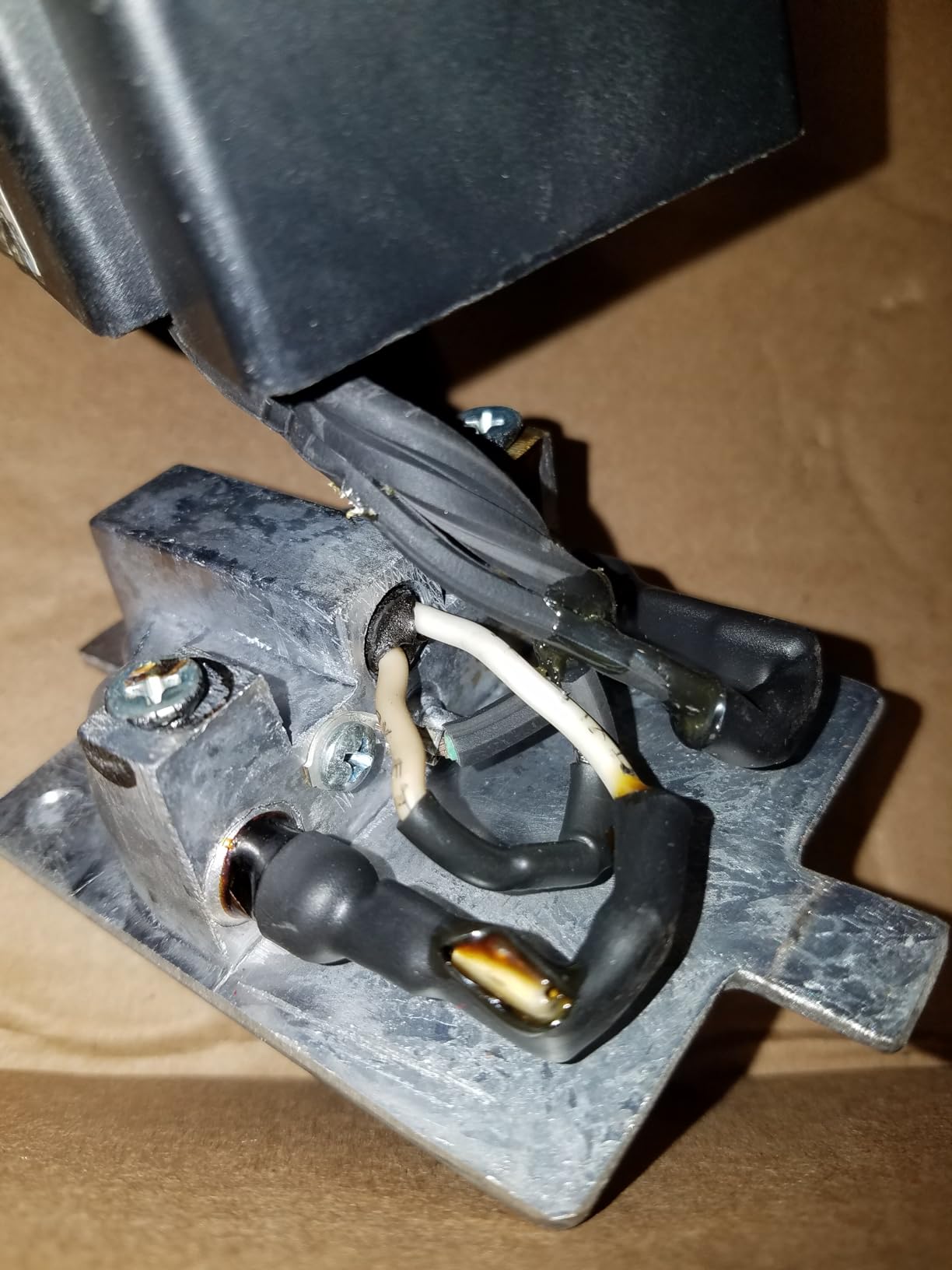
First, the melted handle. Budget magnetic heaters with a failed thermostat can run continuously, and the plastic cover over the element softens and warps. If your magnet’s casing is deformed, stop using it. This is the argument for a unit with a thermostat you can verify.
Second, cracked cord jackets. Two to three winters of flexing in freezing temperatures does it, and the same warped plastic cover shows up at the strain relief where the cord enters the heater body.
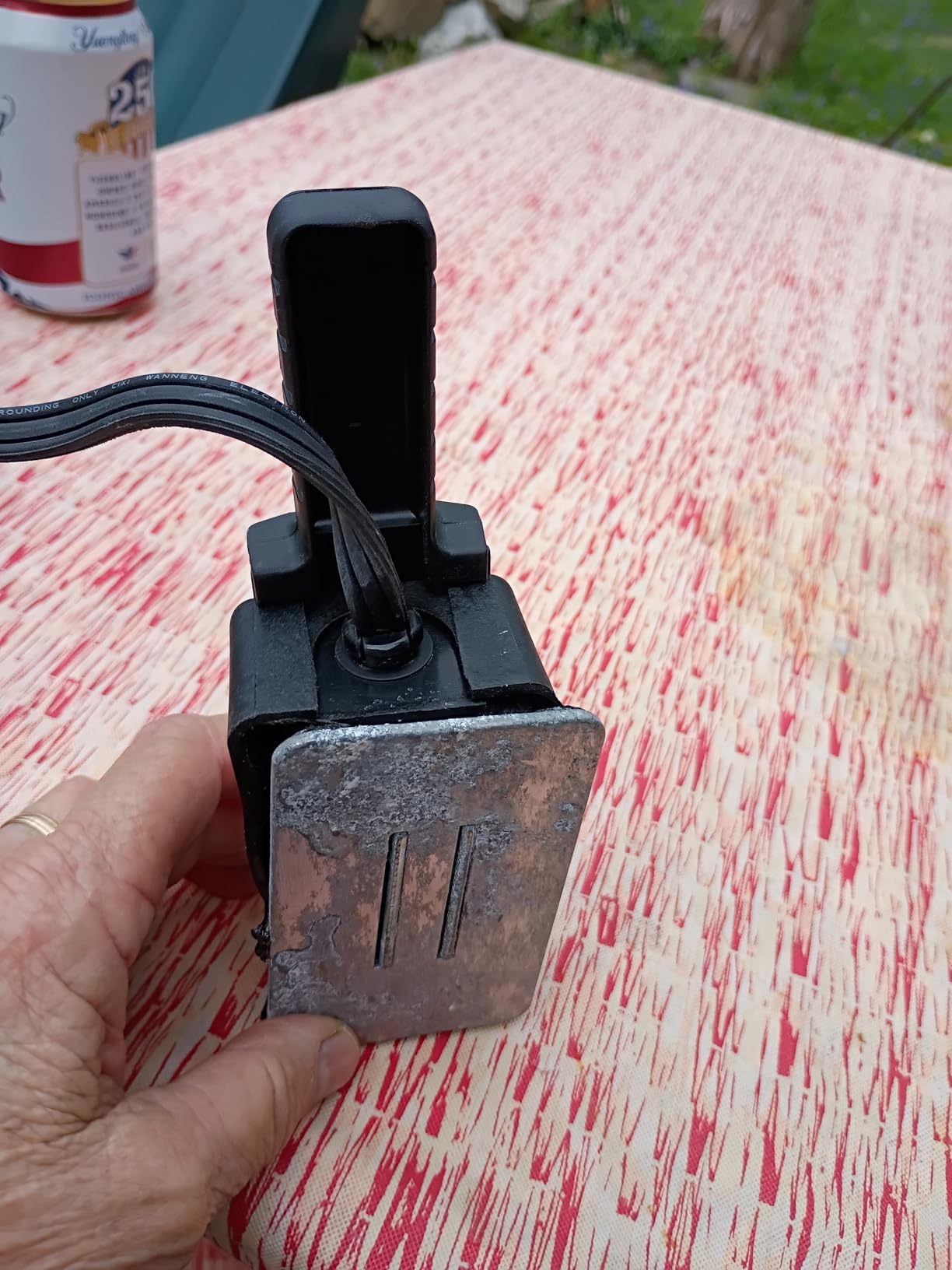
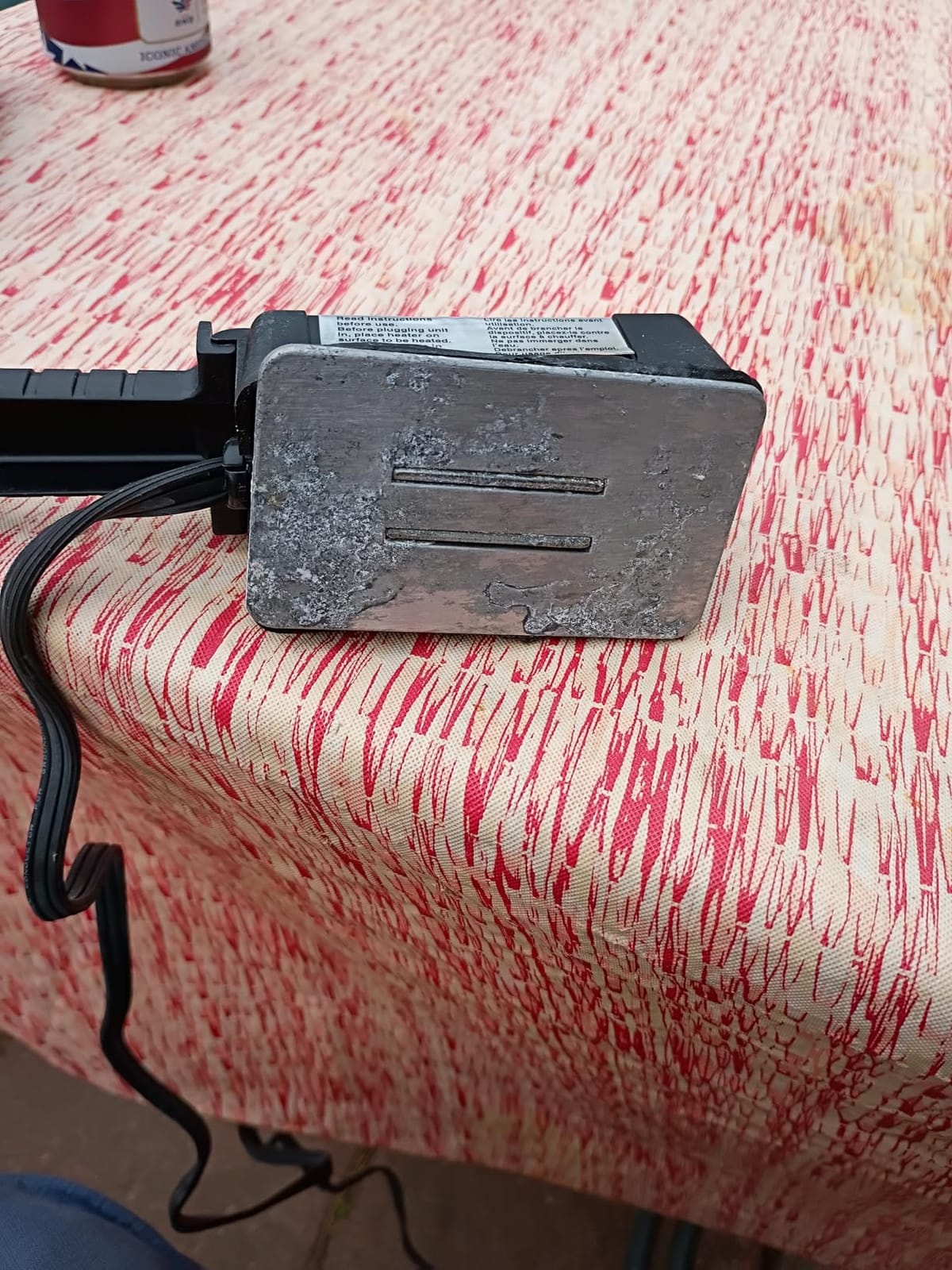
Third, the air gap on magnetic units. A magnet that looks attached is often held a millimetre off the surface by a dent, a rib or a casting seam, and it silently loses output. Owners fix it with a small piece of flat sheet steel between the magnet and the pan, which gives the magnet a flat face to grip. Nobody mentions this in a product manual, and it explains most of the “my heater stopped working” posts.
Fourth, adhesive pads that peel off the pan. The fix is edge sealing with hi-temp silicone, and the reason the Facon in this roundup ships with sealer is that its competitors do not.
Fifth, and most commonly ignored, a heater left in a hot engine boiling coolant out of the block. Every immersion heater is a drain port. Remove it once the engine reaches operating temperature.
Pairing a block heater with a battery blanket
Below about -20F, a warm block does not help if the battery is dead. A battery warmer runs on the same kind of low-wattage pad and is worth adding when you regularly start in extreme cold, because cranking power falls with temperature and a heated battery takes that variable out of the morning. Owners who added one after a string of no-start mornings report the difference is immediate. Both devices should be on a timer or thermostat so neither runs indefinitely.
Where you are already heating the whole garage rather than just the vehicle, our roundup on propane garage heaters for cold winters covers the equipment side, and keeping a garage above freezing is the other half of a reliable cold-weather start. It also helps to think about the rest of the house: our guide to whole house dehumidifiers for humid climates deals with the other end of the moisture spectrum that a heated garage can create.
Frequently Asked Questions
At what temperature is a block heater necessary?
You need one if your vehicle regularly sits below about 10F (-12C) and you start it several times a week. Below that mark engine oil thickens past the point of flowing to the bearings on the first second of a start, which is where most cold-start wear happens. Diesels need one sooner than gas engines because they rely on compression heat rather than a spark to ignite. If your vehicle lives in a heated garage and your winters stay above that mark, you can get by without one.
How many amps should a block heater draw?
Divide the wattage by 120 to get the draw. A 200 watt magnetic heater pulls about 1.7 amps, a 750 watt immersion heater about 6.3 amps, a 1000 watt unit about 8.3 amps, and a 1500 watt thermosiphon pre-heater 12.5 amps. Anything from 750 watts up belongs on a dedicated 15-amp circuit because the inrush at switch-on is what trips a shared breaker.
How much electricity does a block heater typically use?
An eight-hour overnight session costs about 8 multiplied by the unit’s kilowatt rating and your residential rate. A 200 watt magnet is roughly 1.6 kWh per night and a 750 watt immersion heater about 6 kWh. Compared with running a fan and a burner to heat the whole garage, a block heater is a rounding error, which is why heating the block rather than the garage is the practical answer for cold climates.
At what temperature should I plug in my engine block heater?
Plug it in whenever the forecast drops below freezing and you plan to start the vehicle within a few hours. The common guidance is two to four hours of pre-heat for an immersion heater, while an oil pan pad only needs 10 to 15 minutes. With a built-in thermostat you can also connect it overnight and let it cycle, which is how most owners in northern climates run a heater in a -20F morning.
What are the common problems with block heaters?
The most reported failures are a melted plastic handle after a thermostat fails, a cracked cord jacket after two or three winters in freezing weather, magnetic units losing output to an air gap where the magnet is held a millimetre off the surface, adhesive pads peeling off the pan, and a heater left in a hot engine boiling coolant out of the block. Owners test a dead heater by measuring about 14.4 ohms across the prongs of a 1000W, 120V unit.
Which brand of engine block heater is best?
For immersion units, the most widely recommended brand in owner forums is Zerostart, and Kat’s is the name that comes up most for magnetic heaters. HOTSTART is the choice for high-wattage industrial, marine and generator applications. The brand matters less than the fit, so verify your freeze plug thread size before ordering any of them, and check that the unit carries CSA or UL certification.
The Verdict
Start with your engine, not the heater. If you have a threaded freeze plug opening and you drive a diesel or a large V8 in sustained cold, buy an immersion unit — the Zerostart 3500022 at 750W for Cummins and Paccar, or the Zerostart 3500069 at 1000W for Ford, Navistar and John Deere, are the two most proven options here. If you have no opening left, an aluminium block, or a vehicle you would rather not drain, put a thermostatically controlled pad on the oil pan and treat it as a 10 to 15 minute pre-start ritual. If you have several machines or a piece of equipment that lives outdoors, the Zerostart 200W magnetic is the best all-rounder you can buy, and the 854-owner rating base is the best long-term evidence in the category.
Whichever route you take, verify the thread before you order, run anything from 750W up on a dedicated circuit, and buy a cord rated for outdoor cold rather than the cheapest one in the aisle. That single check will save you a wasted winter. Our picks for the best block heaters for cold climates will hold up at -20F, and the differences above will tell you exactly which one your engine needs.