
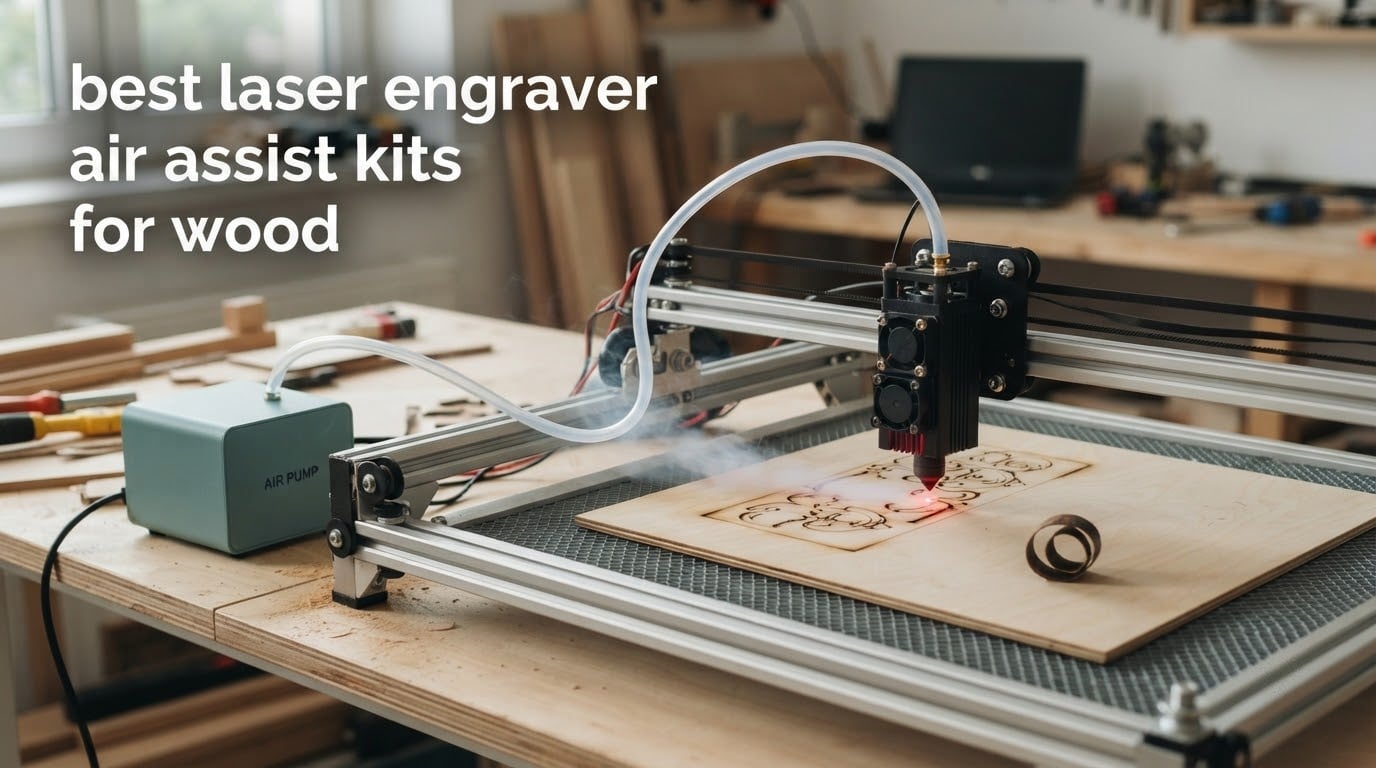
If your cuts through plywood come out black, slow and slightly sooty, the laser is rarely the problem. It is almost always airflow. Air assist is the single biggest upgrade most wood laser owners make after the machine itself, and the right laser engraver air assist kit turns a frustrating job into a clean one.
We spent weeks reading the spec sheets and owner reports on ten of the most popular air assist kits, then lined each one up against the same kinds of jobs wood laser owners actually run: 3mm birch plywood, 6mm MDF and thin hardwood. What follows covers what each kit is built for, which laser it will physically bolt onto, how much air it moves, and where it falls short. Every measurement quoted in a review is the manufacturer’s own published specification, cross-checked against what buyers report back after living with the unit.
Last updated: October 2026. How we chose: every kit here had to be an air-delivery component rather than a full machine bundle, had to have a published airflow figure we could check, and had to have enough buyer feedback to judge long-term reliability rather than just a first impression.
Who should skip this guide: if your machine is an enclosed unit that already has integrated air support gear and you only ever engrave thin materials, a pump will not change your results. If you plan to cut 6mm MDF or thicker on a regular basis, though, this is the page you need.
Table of Contents
What Does Air Assist Do for a Laser Engraver?
Air assist blows a directed stream of compressed air onto the exact point where the laser beam is cutting. It feeds oxygen into the cut so the kerf burns cleanly, clears smoke and debris that would deflect or weaken the beam, carries heat away from the head and lens, and holds the focal point steady. On wood, that combination is the difference between a dark smeared edge and a crisp pale one.
Five mechanical benefits follow from that:
Exhaust and particle cleaning. Smoke, plume and pulverised wood are physically removed from the beam path before they can settle on the lens or ride the beam back toward the head.
Oxidation and combustion control. Fresh air at the kerf lets the cut burn cleanly instead of choking into char, which is why edges darken the moment airflow drops.
Cooling. Moving air carries heat off the workpiece surface and off the laser head, reducing thermal stress on the optics and on the material itself.
Defocusing prevention. Debris that accumulates on the protective window scatters and weakens the beam. Keeping it clear preserves effective power, which is why air-assisted machines seem to keep cutting when unassisted ones fade.
Fire suppression. Constant airflow over a small hot spot is one of the cheapest fire-prevention measures available on a bench.
If you are still deciding whether you even need a machine, our laser light roundup is a different topic entirely. For the wood itself, we keep coming back to the wood burning kits guide when a project is pyrography rather than laser work.
Quick Picks: the Best Laser Engraver Air Assist Kits for Wood (October 2026)
Short on time? These five cover almost every use case we ran into.
Longer RAY5 Air Assist Kit — best all-round choice, with a 10-30L/min range and the only published cutting-thickness figure in the set at 3-6mm.
ANNOY TOOLS 30L/min Pump — best value, and the only kit in this roundup that includes 6mm, 8mm and 10mm adapters together.
Creality Falcon 10W Kit — best rated, with an average score of 4.7 stars across 137 reviews.
SCULPFUN S9 Nozzle Kit — best lightweight upgrade, at just 6.7 ounces of all-metal hardware.
Cloudray Ultimate Air Assist Set — best for CO2 machines running a Ruida controller, and the only kit here that automates a shop compressor.

Longer RAY5 Air Assist Kit
- Adjustable 10-30L/min airflow
- Two-step plug and play install
- Low noise at about 60dB

ANNOY TOOLS 30L/min Pump
- Adjustable 0-30L/min airflow
- 59 inch hose with 6mm 8mm and 10mm adapters
- Three-step install

Creality Falcon 10W Air Assist Kit
- 22L/min airflow for Falcon 10W
- Velcro tidy mounting
- Low working noise
Before You Buy: 6 Checks That Decide Whether a Kit Fits
Most disappointed air assist purchases are not bad products. They are good products attached to the wrong machine. Run through these six checks before you spend anything.
Does your laser head have an air-assist port at all? Some third-party laser modules simply omit the air inlet. If there is no port, no kit in this roundup will help until you fit one.
What adapter diameter does the head take? The ANNOY TOOLS kit ships 8-to-6mm and 8-to-10mm adapters, which is why it fits so many heads. Kits designed for one platform frequently need trimming.
Will the hose span the full gantry travel? A 1.5m tube is often shorter than the gantry. The FoxAlien pump includes a 6.5ft hose for exactly this reason.
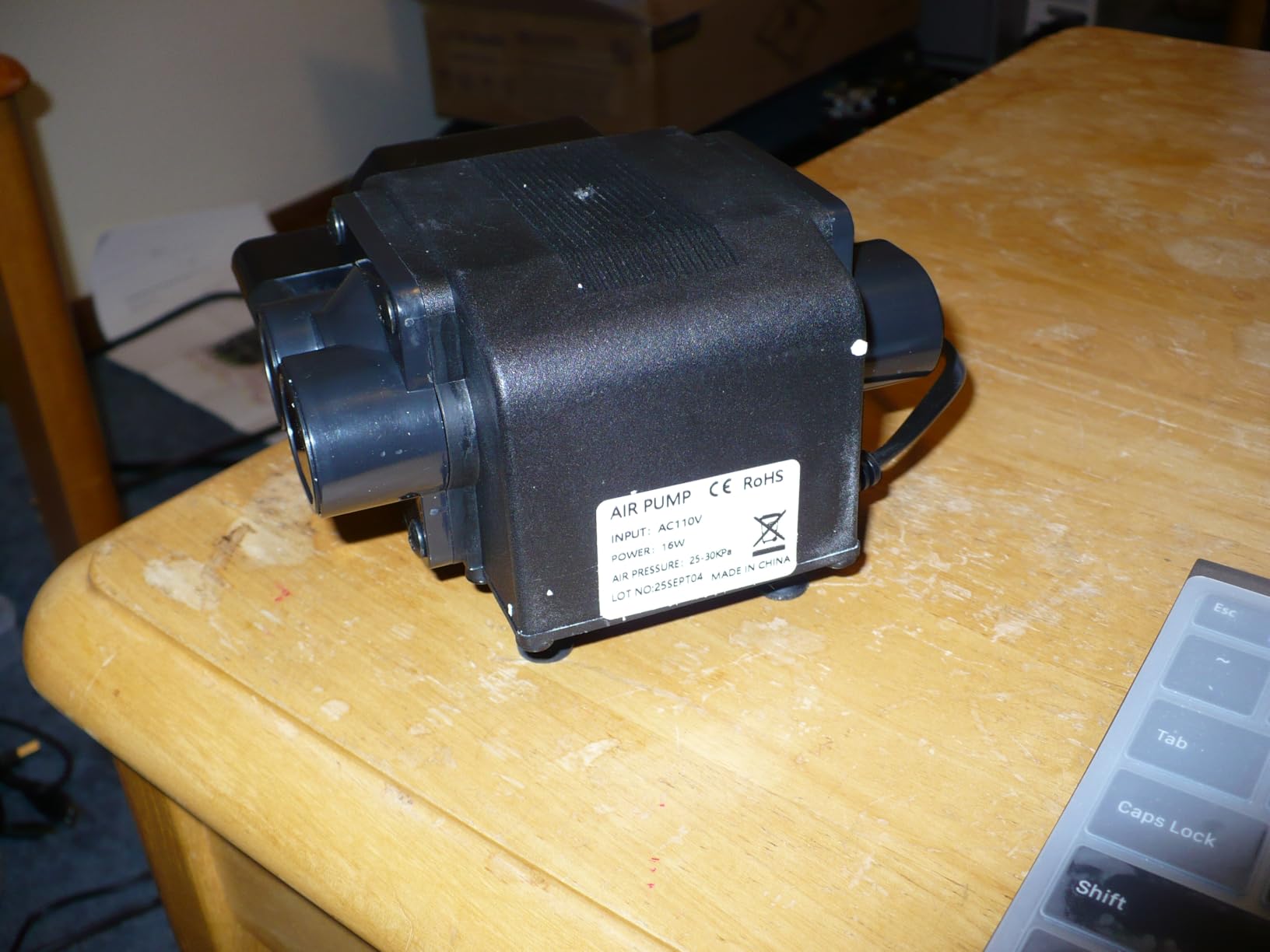
What voltage does the pump run on? Some pumps are 110V only, and one reviewer outside North America flagged exactly that mismatch on the Longer unit.
Does the airflow match your wood thickness? 10-20 L/min handles engraving and thin material. Plywood and hardwood want 25-30 L/min. MDF and thicker stock want pressure as much as volume.
Can you tolerate the noise? A pump runs for the whole job. Published noise figures in this group range from under 36.5 dB to about 60dB, and that gap is very audible at 2am.
All 10 Kits Compared in 2026
| Product | Specifications | Action |
|---|---|---|
| Longer RAY5 Air Assist Kit |
|
Check Latest Price |
| ANNOY TOOLS 30L/min Air Assist Pump |
|
Check Latest Price |
| Creality Air Assist Kit for Falcon 10W |
|
Check Latest Price |
 Ortur 30L/min Air Assist Pump Ortur 30L/min Air Assist Pump |
|
Check Latest Price |
 Cloudray Ultimate Air Assist Set Cloudray Ultimate Air Assist Set |
|
Check Latest Price |
 FoxAlien AP30A Air Assist Pump FoxAlien AP30A Air Assist Pump |
|
Check Latest Price |
 AlgoLaser 30L/min Air Assist Pump AlgoLaser 30L/min Air Assist Pump |
|
Check Latest Price |
 PYGXLAQ 30L/min Air Assist Kit PYGXLAQ 30L/min Air Assist Kit |
|
Check Latest Price |
 Creality Falcon 22L/min Air Assist Pump Creality Falcon 22L/min Air Assist Pump |
|
Check Latest Price |
 SCULPFUN S9 Air Assist Nozzle Kit SCULPFUN S9 Air Assist Nozzle Kit |
|
Check Latest Price |
1. Longer RAY5 Air Assist Kit – the All-Rounder
- 10-30L/min range covers engraving and full-thickness cutting
- Low noise for its output at about 60dB
- Two-step install with everything in the box
- 192 reviews averaging 4.4 stars
- 2m tube is short for larger gantries
- Nozzle silicone O-ring can pop out and leak
- 110V pump version only
This is the kit we kept reaching for, because it is the only one in the group that publishes a recommended cutting thickness. The manufacturer’s figure of 3-6mm covers most of the birch ply and thin hardwood work that fills a hobby shop’s queue, and the 10-30 L/min range covers both fine engraving passes and full-thickness cutting without a second device.
Owners report the same thing consistently: cleaner engraving, noticeably less smoke haze on the lens, and a build that feels solid for the money. Setup really is two steps, and the 2m flexible tube is long enough for most entry-level beds.
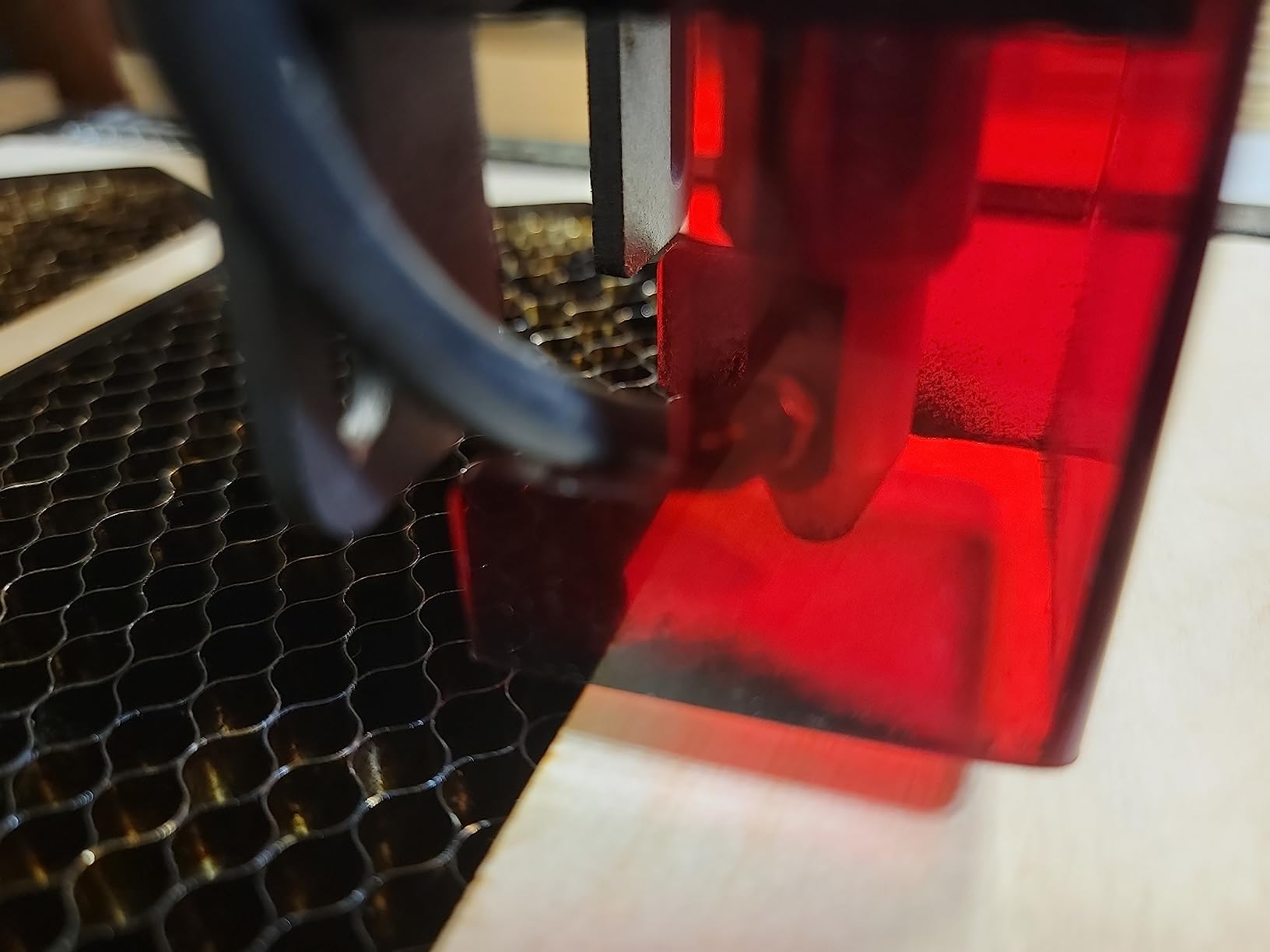
The honest drawback is reach. On a larger work area, a 2m tube is short and you either extend it or rethink the routing. The other recurring gripes are mechanical rather than electronic: the silicone O-ring at the nozzle threads slightly large and can pop out, which leaks air right where you need it most, and strong airflow on deep pockets will scatter soot if you do not dial it back.
One more thing to check before buying outside North America: the pump is built as a 110V unit, and the listing does not document the 24V DC output port clearly enough to be sure what you are getting. Voltage matching matters more than most listings admit.
Why it works well on wood
The 30 L/min ceiling is the number that matters on plywood and hardwood. Most bundled pumps on entry machines top out far lower, which is why cuts char. Owners of this kit repeatedly describe a visible reduction in burn marks once they set the airflow above the midpoint of the range.
Noise at about 60dB sits above the quietest kit here, but the 2m tube and two-step install mean you can get it running and start cutting immediately rather than routing and taping while you wait.
Where it falls short
The fitment catch is the nozzle seal. A couple of owners had to rework the O-ring before airflow performed as specified, and the diode-only focus means nothing in the kit adapts to a Ruida-controlled CO2 tube. If you run CO2 hardware, look at the Cloudray set instead.
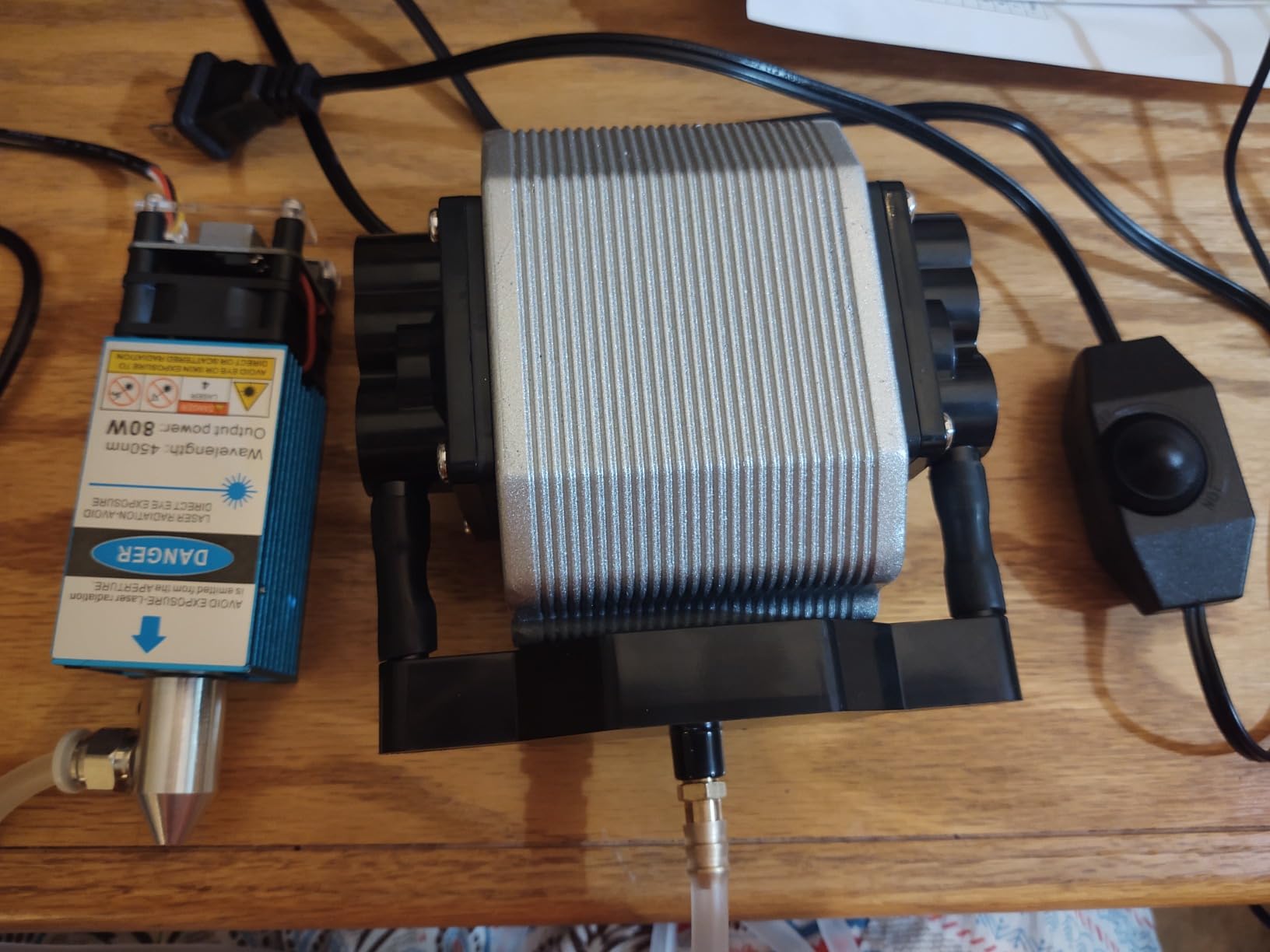
2. ANNOY TOOLS 30L/min Air Assist Pump – Most Adaptable
Air Assist for Laser Cutter and Engraver 30L/Min Adjustable Air Assist Pump
- Ships 6mm 8mm and 10mm adapters together
- 0-30L/min range suits plywood and hardwood
- Compact footprint at 1.96 x 3.94 x 5.9 inches
- One year manufacturer warranty
- Adapter fit can feel loose on some third-party heads
- Control is mechanical rather than software integrated
- Maximum airflow still needs per-material tuning
This is the kit we would hand to someone who does not yet know which laser they will end up on. The adapter set is the reason: 8-to-6mm and 8-to-10mm reducers plus 8mm and 10mm hoses mean it will reach most diode laser heads without a trip to a hardware shop.
Buyers consistently report visibly cleaner cuts and less burn on wood after installing it, and the generous 59 inch hose draws repeated approval because it comfortably spans a mid-size gantry. Installation is described as a simple three-step process.
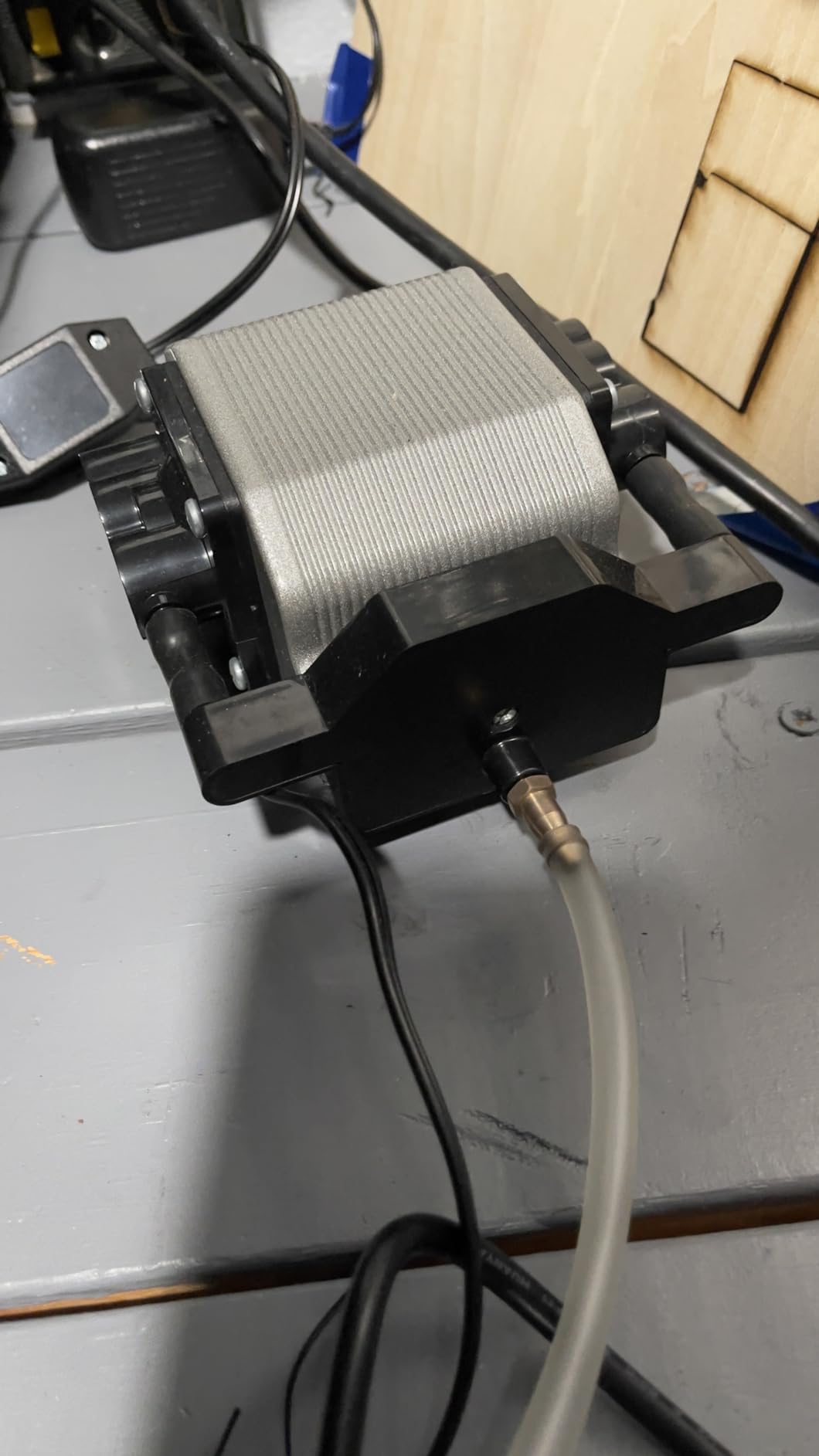
Be realistic about the control. Airflow is adjusted mechanically, so you set it by feel and by ear rather than from a slider in your laser software. A minority of users also note that adapter fit can feel loose on non-branded heads, which is the price of such a generous fitting kit.
There is a subtler point worth making. Maximum airflow is not automatically the right setting. The same 30 L/min that clears a 6mm MDF edge beautifully will blow soot across a shallow engraving. This pump makes it easy to dial back, which is why the mechanical control is not really a drawback once you learn it.
Why it works well on wood
Zero to 30 L/min spans the full useful range for wood, from a gentle cleaning pass on thin veneer to a hard cut on hardwood. Buyers specifically call out the rapid heat dissipation producing cleaner, sharper cut edges than they managed before.
The 59 inch hose is the quiet hero. On open-frame machines it reaches the far corners of a typical bed without an extension, which removes the most common routing headache.
Where it falls short
There is no software integration, so a smart laser that can switch air on and off with the job will not do that here. You switch it yourself, and on a long production run that is one more thing to remember.
On some third-party heads the adapter sits loosely enough to need a bit of tape. Not a dealbreaker, but expect a five-minute adjustment rather than a pure plug-in.
3. Creality Air Assist Kit for Falcon 10W – Highest Rated
- Highest average rating in this set at 4.7 stars
- Velcro mounting is fast and tidy
- Low noise suits a home studio
- Owners report visibly smoother edges
- 22L/min ceiling is below most competing pumps
- Designed around the Creality Falcon 10W platform
The 4.7-star average across 137 reviews is the highest in this group, and 85 percent of those reviews are five stars. That consistency is unusual for a component nobody thinks about until it fails, and it tells you the design is doing what it claims on the machine it was designed for.
Owners on the Falcon 10W report noticeably cleaner work surfaces, smoother edges and reduced lens soiling once the kit is on. The Velcro-based mount gets specific praise for keeping the installation tidy, which matters on a small Falcon frame where cable and hose clutter is easy to accumulate.
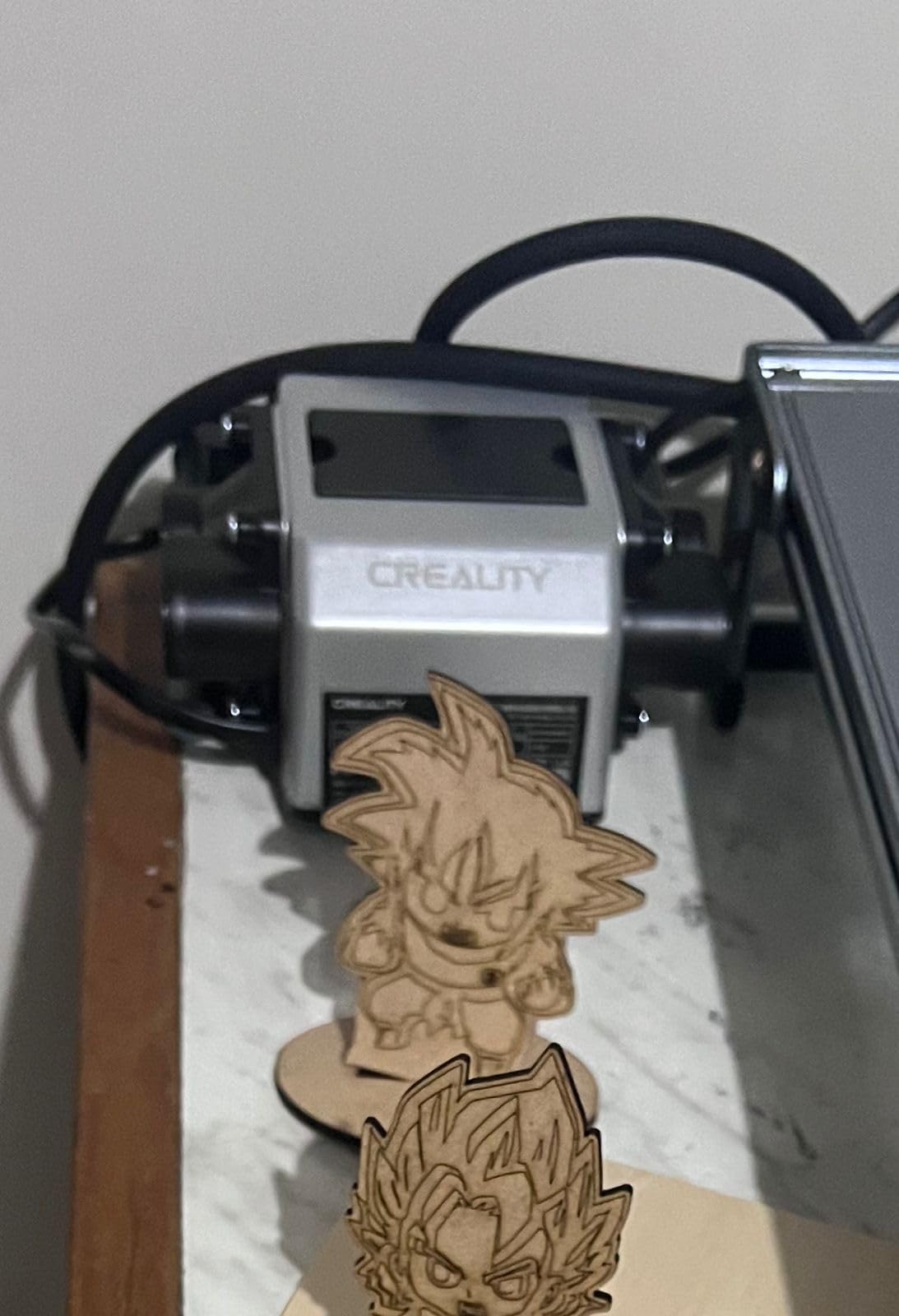
Two limitations are clear and worth stating plainly. At 22 L/min the ceiling sits below the 30 L/min offered by most competing pumps, which is the difference between comfortable and marginal on thicker hardwood. And it is built around Creality’s own platform, so fit on other machines is limited.
If you own a Falcon 10W and cut mostly thin plywood and veneer, neither limitation will slow you down. If you push into 6mm stock regularly, the flow ceiling becomes the thing you notice first.
Why it works well on wood
The reported effect is exactly the one air assist is supposed to have: surface temperature at the cut drops quickly, so edges come out smoother and more delicate than on the bare machine. That matters more on small decorative parts than on heavy structural cuts.
Low noise and a tidy mount mean it does not fight your workspace. For a home studio or a small craft business running jobs in short bursts, that practicality is worth a lot.
Where it falls short
22 L/min is the number to remember. It is a perfectly usable flow, but it is not headroom, and it is the first thing you will miss on thicker stock.
Fit is also narrow. This is a kit for one machine family, not a general-purpose add-on.
4. Ortur 30L/min Air Assist – Metal Build, Own Power Cord
- All-metal structure dissipates heat well
- Independent power cord avoids back-feeding the controller
- Four mounting bases included
- Users report faster feed rates and cleaner lines
- Power switch failure reported on an early unit
- Diaphragm can tear and replacement parts are not sold
- Supplied hose is stiff for some layouts
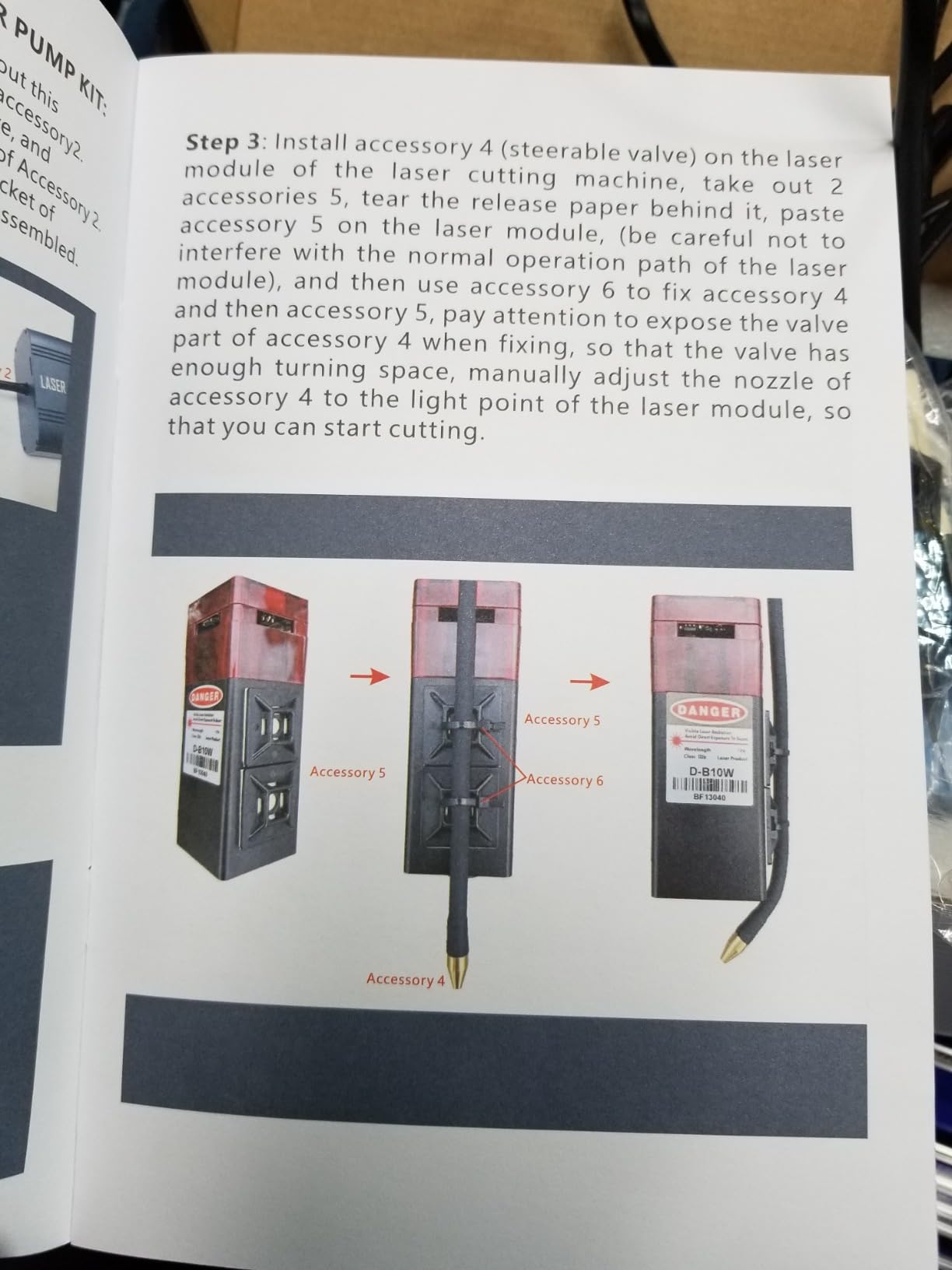
The all-metal structure is the story here. Where many of these pumps are plastic-bodied, this one is described as sturdy, quiet once tubed, and better at shedding heat, which matters on a long job when the pump is running continuously.
Users on Ortur machines like three things specifically: the independent power cord, the easy-to-turn valve, and the visibly cleaner, faster cuts. Several report it outperforming smaller aftermarket pumps they had already tried.
Durability is the weak point. A power switch failure is reported on at least one early unit, which disables airflow control entirely, and the diaphragm is described as prone to tearing after months of use with no replacement parts sold. The supplied hose is also on the stiff side for tight gantry routing.
On support, the picture is mixed. Buyers report slow first-line response, though a refund was ultimately provided once the seller was reached. Budget for patience if something fails early.
Why it works well on wood
0-30 L/min with a simple valve is the combination wood cutting rewards. Users specifically report that debris clears well enough to run faster feed rates and get cleaner cut lines, which is the whole point on plywood and MDF.
The independent power cord is an underrated safety detail. Because the pump does not draw power from the engraver, you are not risking back-feeding a controller board through a connector that was never designed for it.
Where it falls short
The 1.5m tube is short. On anything but a compact frame, expect to route it carefully or add your own line. A stiff hose on a moving gantry is also a rubbing risk near the beam path.
With a 4.2 average and a 12 percent one-star share, this is a solid unit with a specific weak component rather than a risky purchase. Replace the hose and you have a keeper.
5. Cloudray Ultimate Air Assist Set – for CO2 and Ruida Controllers
Cloudray Ultimate Air Assist Set Engraving Tool for CO2 Laser Cutter Laser Engraving Machine
- Automates a shop compressor so it stops between jobs
- Separate low and high flow settings for cutting and engraving
- Works across a wide list of Ruida controllers
- Includes everything needed for a working install
- No printed instructions at all
- Supplied flow restrictor is the wrong variant
- Some orders arrive with missing diodes and wires
This is the only kit in the roundup that is not a small standalone pump. It is a control kit for an existing shop compressor, and its purpose is to switch that compressor on with the laser and off when the job ends. For anyone who already runs a compressor, that solves the noise problem more completely than a quieter little pump can.
The compatibility list is long and specific: RDC6445S, RDC6442, RDC5121G, RDC6232G, RDC6332M, RDC6344G, RDC6432G, RDC644XG-A, RDC6585G, RDC7132G and 633XM are all named. One owner added a relay to a rear 60W CO2 outlet and swapped the pump in about two minutes.
The documentation gap is the honest drawback here. There are no printed instructions, so installation means finding the seller’s listing video and a few forum threads. You also need to enable the blower checkbox in the vendor settings on the ‘other’ page before it will respond correctly.
The most-reported hardware problem is that the included flow restrictor is the wrong variant, leaving it non-adjustable unless you reverse or replace it. A minority of buyers also received orders missing diodes and wires. And because it uses a bypass on a single solenoid, the compressor runs continuously while enabled, which is less flexible than a proper two-solenoid setup.
Why it works well on wood
Wood cutting wants pressure as much as volume, and a shop compressor delivers that in a way small diaphragm pumps cannot. This kit is the bridge to that, and it lets you switch the compressor on and off rather than leaving it running all day.
The separate low-flow and high-flow settings are what make it usable for both jobs. A cutting pass and a fine engraving pass do not want the same air, and having a defined setting for each removes the guesswork.
Where it falls short
It is for Ruida-controlled CO2 machines, not for a diode engraver. If your machine runs LightBurn on a diode head, this kit is irrelevant to you however good the idea is.
You also need a compressor already. And if documentation quality matters to you, note that the instruction situation here is thinner than anywhere else in the group. Budget an evening and a spare set of diodes.
6. FoxAlien AP30A Air Assist Pump – Quietest for Long Jobs
FoxAlien AP30A Portable Air Assist Pump 30L/min Adjustable Air Volume for CNC Engraving Machines
- Smooth airflow without the loud 60Hz hum of big pumps
- Four rubber feet damp vibration during cutting
- Runs for hours continuously
- Aluminum shell is easy to service
- No instructions included
- Nozzle and tube may need resizing for some heads
- A few buyers report low output
Noise is the reason this one earns its place. Multiple buyers describe the delivery as smooth and free of the loud 60Hz hum that characterises larger air pumps, and the four rubber feet damp vibration so accuracy is not affected during a cut.
The 6.5ft hose with a 4mm inner diameter comfortably spans a mid-size gantry without an extension, which removes the routing problem entirely. Several users report running it for hours continuously, and a few run two together for more airflow.
A minority report low pressure and question whether it meaningfully helps cutting. That is a small group, but note the 10 percent one-star share, which matches AlgoLaser as the widest negative rating band in this set.
Documentation is the real drawback here. There are no instructions, and connecting the pump to the laser head is entirely up to the buyer. Some users also find the delivered nozzle and tube combinations need warming or resizing to fit particular heads.
Why it works well on wood
The 0-30 L/min range is the mainstream wood figure, and airflow can be varied from the controller, which is a genuine advantage over purely mechanical valves when you run mixed job types.
On a long batch of plywood, the low-noise, low-vibration character is the feature you will notice most. A pump you can leave running for an afternoon without adjusting the chain to a quieter room is a real quality-of-life gain.
Where it falls short
Some buyers feel the output runs below what they expected, and the value argument gets harder when a reviewer reports pressure that felt low. The build is good; the packaging is not up to the same standard.
It is also built around CNC engravers, and while it works with laser modules, the included fittings are not a guarantee on every laser head. Check your head’s port diameter before ordering.
7. AlgoLaser 30L/min Air Assist – Simple Starter Pump
AlgoLaser Air Assist for Laser Engraver, Air Assist Pump Kit
- 30L/min flow visibly reduces burn on wood and acrylic
- Built-in knob makes airflow easy to tune
- Compact 5.6 x 5.1 x 3.1 inch footprint
- Quiet enough for a home workshop
- Lowest average rating in this set at 4.0 stars
- Polarized feedback with 10 percent one-star reviews
- Newer listing with a smaller review base
- Manual knob rather than software control
The pitch is uncomplicated: 30 L/min of adjustable airflow, a control knob on the front, and a small footprint. Reviewers credit it with cleaner lines and less scorching on wood and acrylic, and with keeping smoke and debris from settling on the module lens.
For a first-time air assist buyer, the appeal is that there is nothing to configure. A knob, a hose, a nozzle. No software, no relay wiring, no controller settings to find.
We would rather be straight about this one than oversell it. It carries the lowest average rating in the set at 4.0, and the split between ends is unusually wide: 63 percent five stars but 10 percent one star, with only 9 percent four stars. A polarized response usually means some buyers got a great result and others got a dud, and that is worth factoring in.
The listing is also newer than the established options, so there is less long-term history behind it. The 84-review base is respectable but not the deep pool you see on the Longer and ANNOY TOOLS kits.
Why it works well on wood
30 L/min is the right number for plywood and hardwood, and owners report it visibly reducing burn marks and discolouration on wood specifically. The control knob lets you set flow for engraving versus cutting without hunting through menus.
Low noise and low vibration make it suitable for long sessions in a home workshop or studio, and the compact 5.6 x 5.1 x 3.1 inch body does not eat bench space.
Where it falls short
The rating spread. Roughly a third of reviews here are not five stars, and we think you should know that before you commit rather than after.
It is also a pump kit only, with no laser function included, and airflow control is manual. If you want the pump to switch with the job in software, this will not do that.
8. PYGXLAQ 30L/min Kit – Built for the xTool D1 and D1 Pro
- Published noise figure under 36.5 dB
- Stable 30L/min flow
- Everything needed is in the box
- Also reported working on K40 CO2 lasers
- Shroud insert must be removed to fit an xTool head
- Some D1 units need the nozzle drilled or trimmed
- Fit is uncertain on other platforms
The listed noise figure of under 36.5 dB is the lowest of any kit in this roundup. Several owners call that out as the reason they can run it in a shared room without complaints, and the 4.6-star average across 72 reviews puts it level with the SCULPFUN kit as the second strongest rating here.
Beyond noise, owners report less burning on cut edges and cleaner engraved text once power and airflow are tuned together. Installation takes minutes and the box contains everything required.
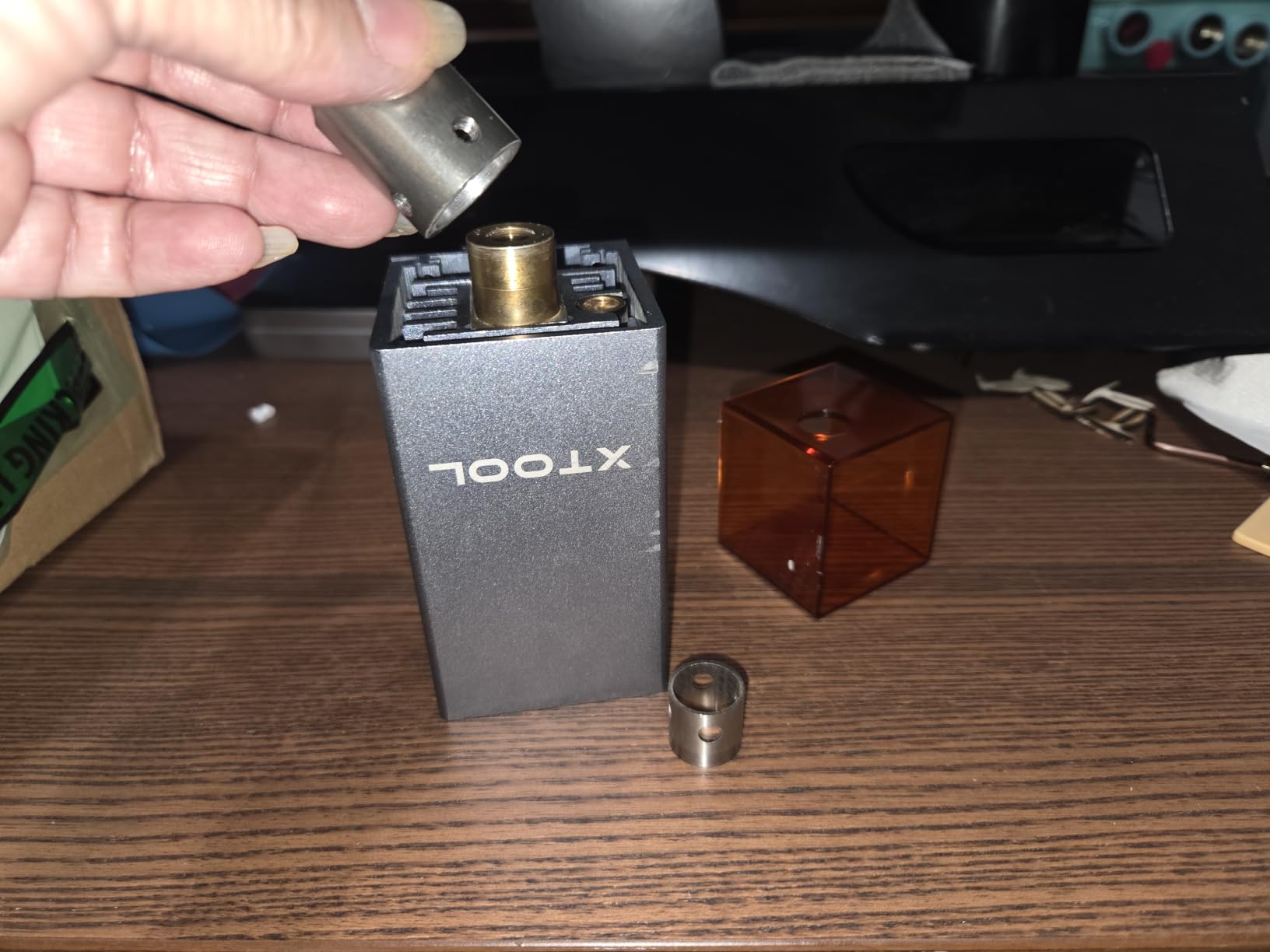
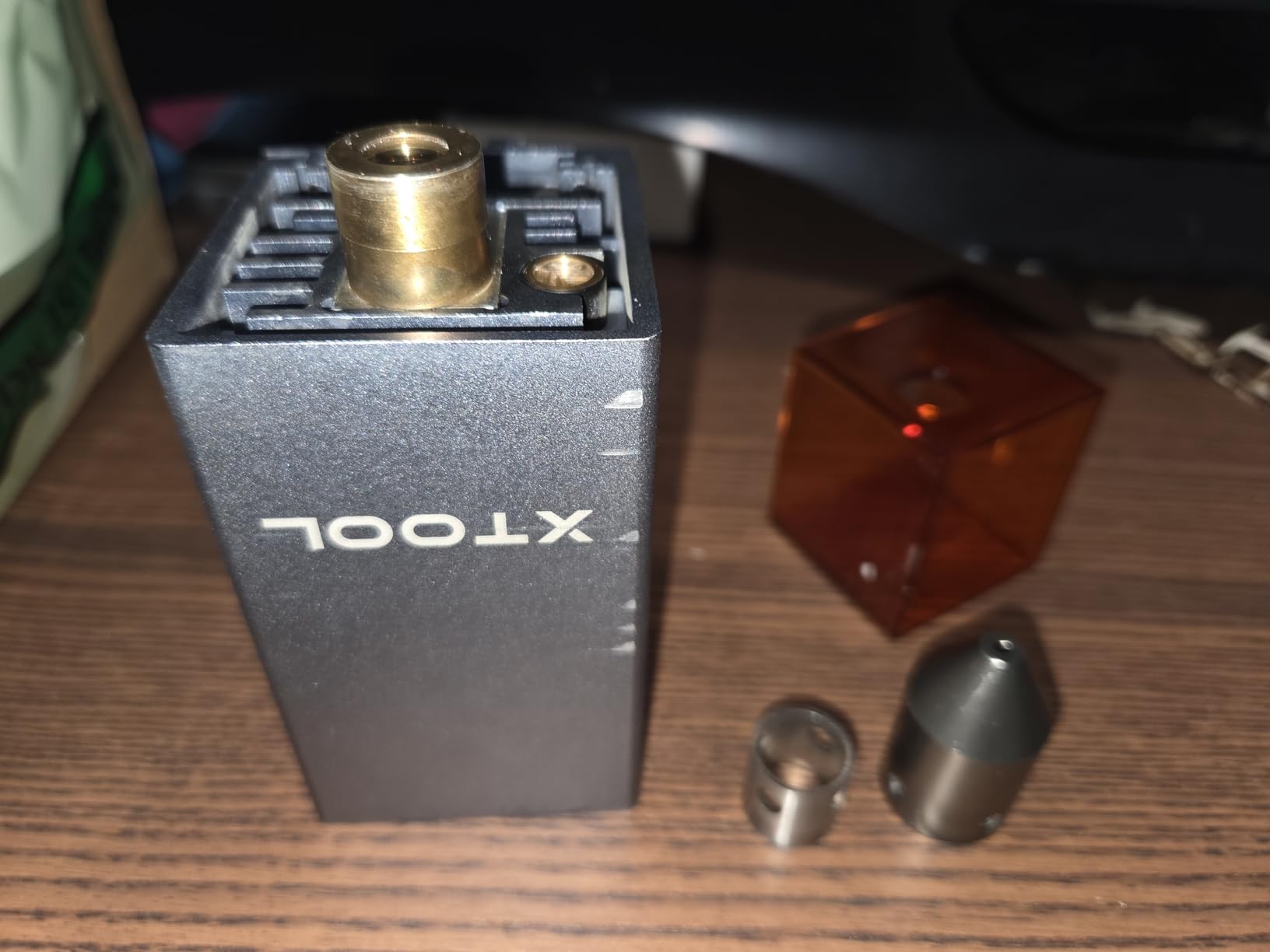
The recurring theme in this review set is fitment, and it is worth reading carefully if you own a D1. The supplied shroud insert has to be removed for the fitting to seat over an xTool D1 or D1 Pro laser head, and some D1 10W owners still had to trim the nozzle so it would clear the lens housing.
That is not a dealbreaker, but it is a five-minute job with a tool, and it is not mentioned anywhere obvious on the listing. If you are comfortable with that, the payoff is a genuinely quiet 30 L/min pump.
Why it works well on wood
Stable 30 L/min is what plywood and hardwood want, and the reduced scorching translates directly into smoother, more uniform edges. Several owners use it for engraved text as well, where scorch around letterforms is the visible flaw.
Under 36.5 dB changes the working environment. A pump you cannot hear is a pump you can leave running while you do something else on the same bench.
Where it falls short
The xTool D1 focus means fit is uncertain elsewhere. That said, owners also report it working on K40 CO2 lasers with few modifications, which suggests the platform is broader than the badge suggests.
The nozzle modification is the other catch. Budget a small drill or file before you start rather than mid-job.
9. Creality Falcon 22L/min Pump – Compact and Workhorse
- Very compact and quiet with effective vibration isolation
- Reported to run 12 hours a day without trouble
- Simple connect and adjust setup
- Some buyers run a second unit for a 40W CO2 laser
- 22L/min ceiling is below most competitors
- Occasional missing or damaged parts in the box
- Some buyers report it does not fit their setup
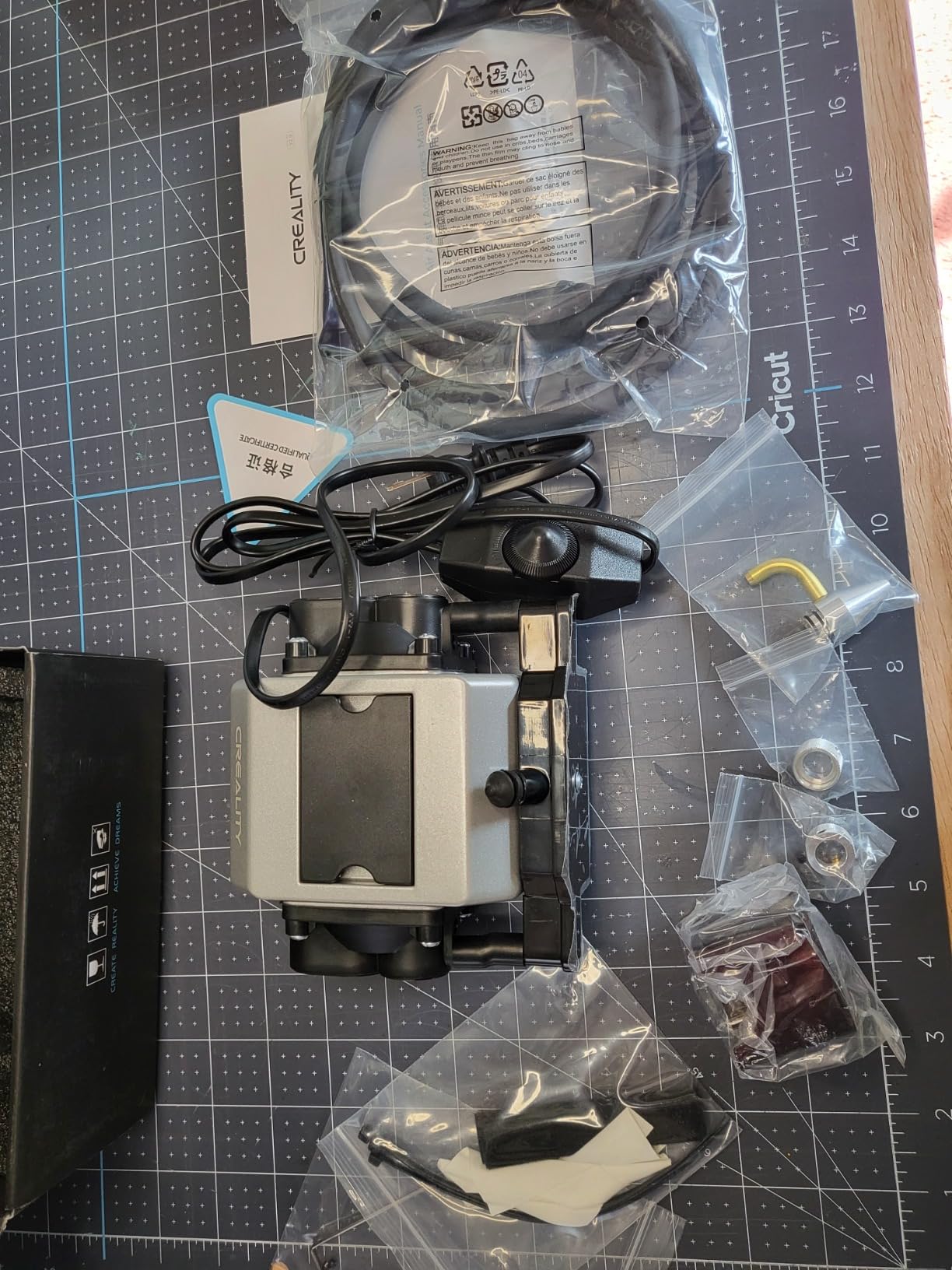
This is the pump people describe as a workhorse. One owner reports running it twelve hours a day without trouble, which is the sort of long-run experience that matters more than any specification when you are producing in batches.
Users consistently report a clear improvement in engraving cleanliness and reduced burnout on finished pieces. The soft silicone feet damp shake well enough that several people note it works properly alongside a 3D printer or a larger CO2 machine on the same bench.
At 22 L/min the ceiling is the same limitation as the other Creality unit in this roundup, and it sits below the 30 L/min most competing pumps offer. On thin and medium stock that is irrelevant. On 6mm MDF it is the number you will feel.
The negatives are mostly logistics rather than performance: one unit arrived with missing parts that Creality had to send separately, some have turned up with a damaged lens protector, and a few buyers report it does not fit their particular printer or laser setup.
Why it works well on wood
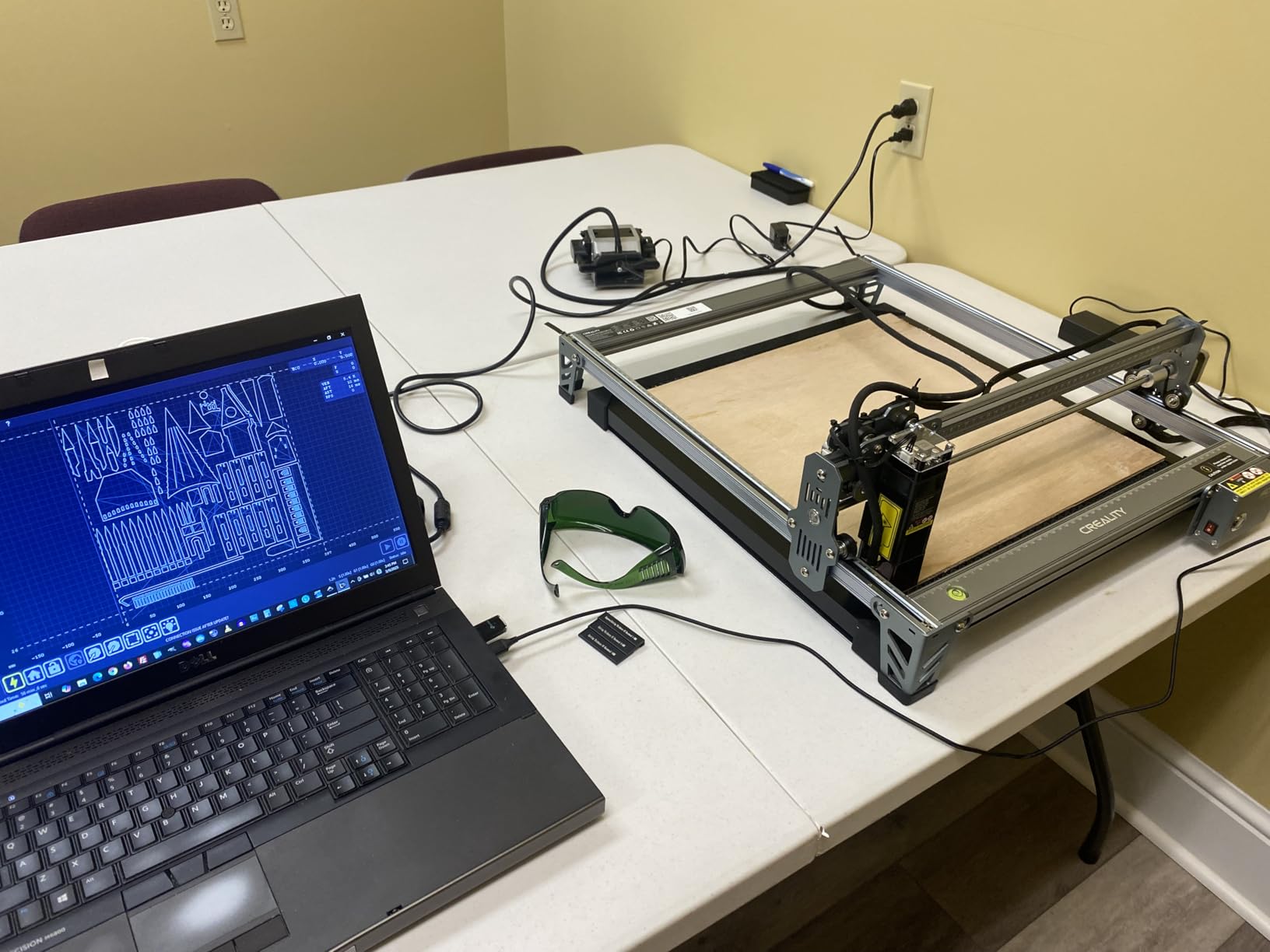
The reported reduction in burnout on engraved and cut wood is the practical benefit here. Softer silicone feet also mean the pump does not transmit vibration into a lightweight frame, which can affect repeatability on a job you are trying to sell.
Compact enough to fit on a 36 x 36 laser table, it solves a real problem in small workspaces where bench area is the scarcest resource.
Where it falls short
22 L/min is the ceiling. If your queue is MDF-heavy, this is a step down in headroom rather than an upgrade.
Fit is another variable. A few buyers found it did not suit their particular setup, and since the pump ships with its own fittings, checking your head’s port before ordering saves a return.
10. SCULPFUN S9 Air Assist Nozzle Kit – Lightest All-Metal Upgrade
- Weighs just 6.7 ounces
- Installs on the S9 in about ten minutes
- Owners report a large improvement on plywood and MDF
- Sealing ring keeps dust off the lens
- Only fits the SCULPFUN S9
- Pump is not included and must be sourced separately
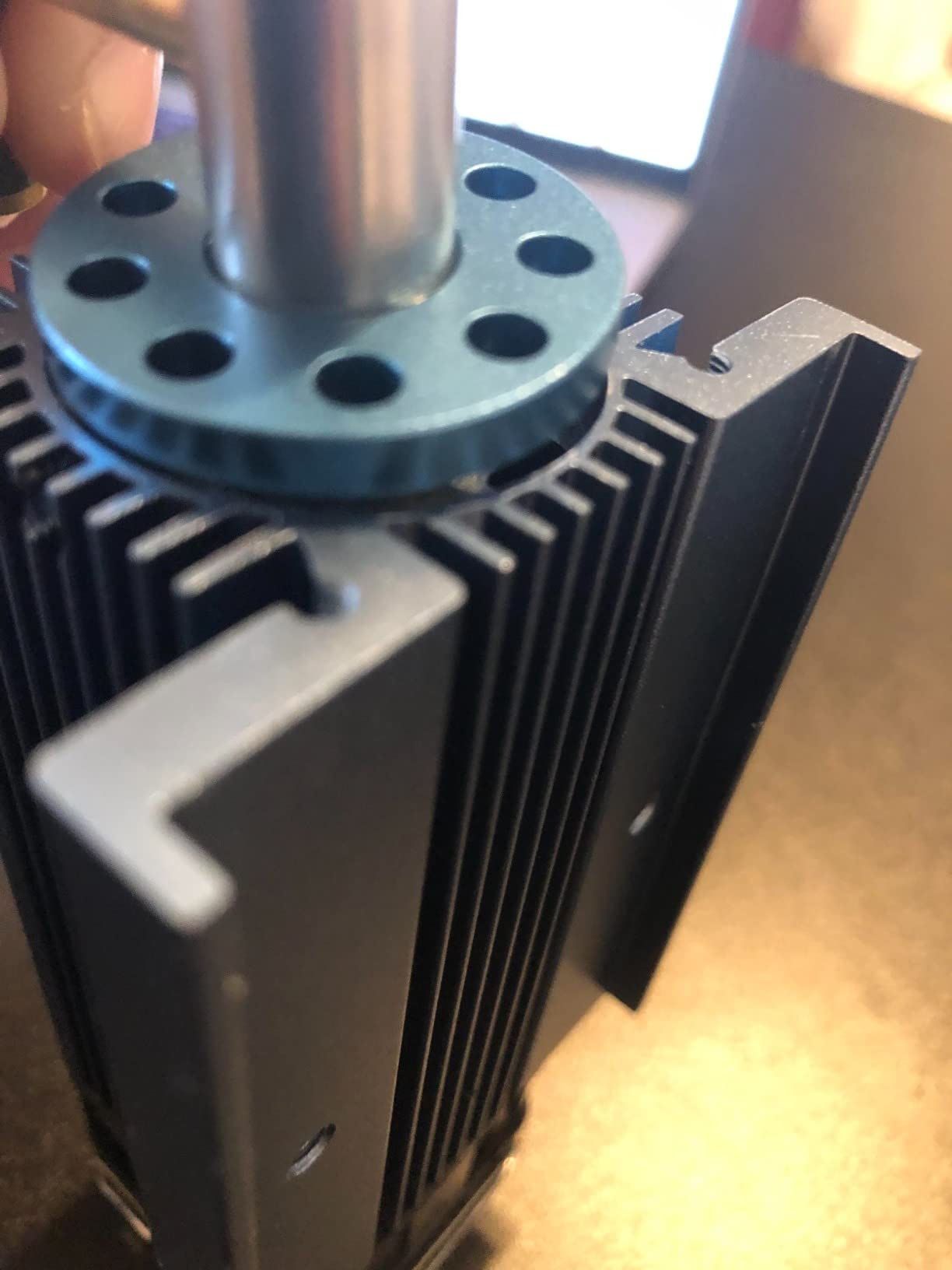
- 13mm nozzle may not clear an 11mm heatsink bore
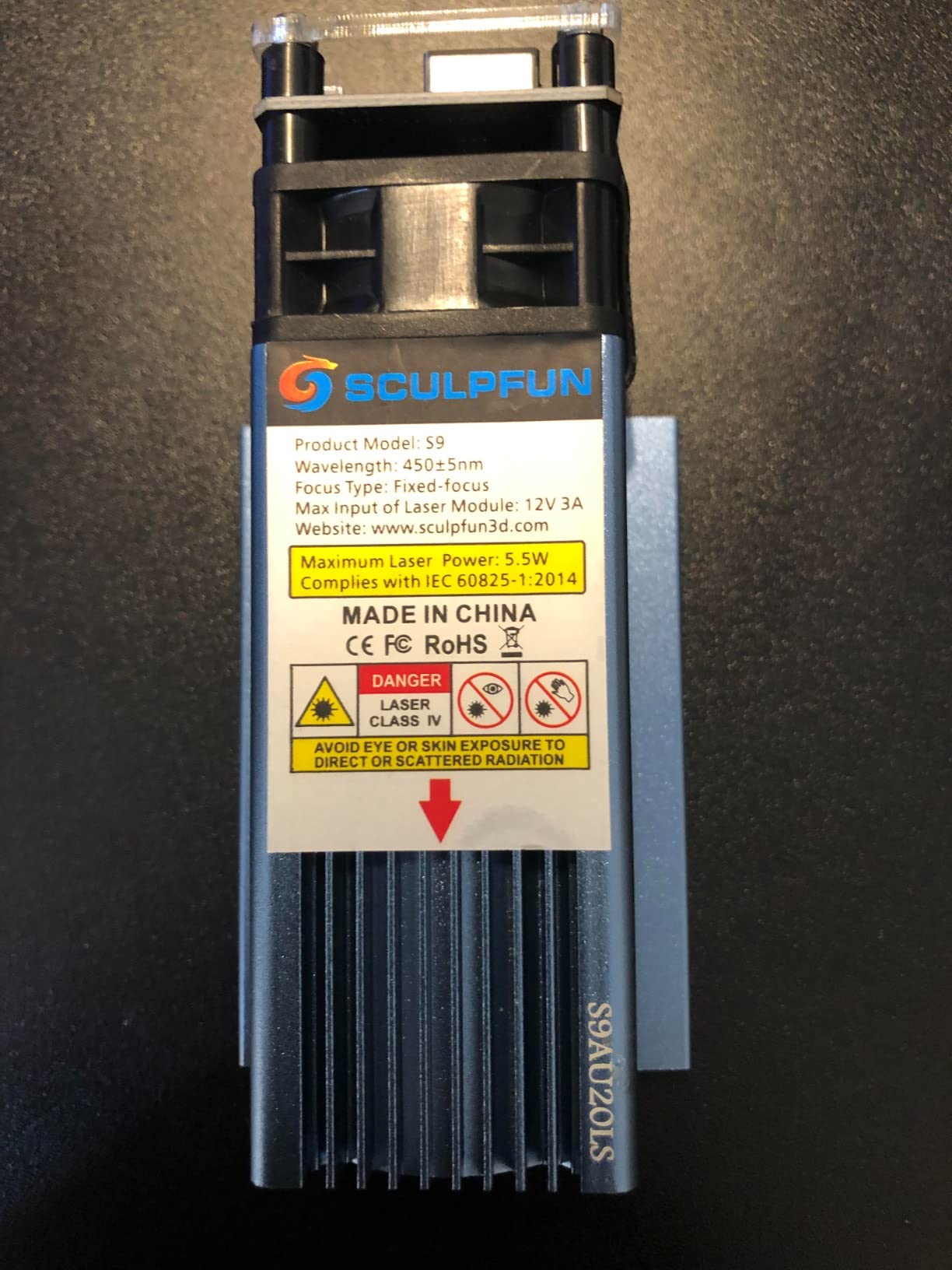
Be clear about what this is: a nozzle kit, not a pump kit. It replaces the air nozzle supplied with the S9 with an all-metal one rated for up to 13.5 m/s when paired with a 30 L/min pump. If you already run a pump, this is a hardware upgrade rather than an addition.
S9 owners generally call it worthwhile. Assembly takes about ten minutes, the sealing ring keeps dust off the lens and stops air leaking at the gap, and several users report a large difference in cut speed and cleanliness on plywood and MDF.
You need a 30 L/min pump to reach the rated performance, and that pump is not in the box. Budget for it as a separate purchase unless your setup already has one.
There is also a specific fitment problem: one buyer reported the 13mm nozzle would not clear the 11mm opening inside the S9 laser head heatsink. Check your head bore before you commit, because that is a modification rather than a return.
Why it works well on wood
The nozzle design is the point. The nozzle that comes with the S9 limits airflow at the cut, and swapping it for a high-speed metal jet measurably improves how fast and how cleanly ply and MDF part. That is where the wood-specific gain lives.
At 6.7 ounces it is the lightest hardware in this roundup, so it adds effectively no load to a small gantry. The one-year warranty is also stated on the listing.
Where it falls short
It fits one machine. This is not a general air assist kit and there is no adapter path to anything else.
The heatsink bore issue is the other catch, and the missing pump is the biggest practical gap. If you have no pump at all, buying a nozzle kit first is building half a solution.
Pump or Shop Air Compressor? What Actually Cuts Wood
This is the question that decides the outcome on thick stock, and it is one many roundups skip. Here is the honest version.
A small bundled pump moves roughly 10-20 L/min at low pressure. That is enough to keep a lens clean and to make engraving neat. It is not enough to push through 6mm MDF at a sane feed rate, and it is the direct reason so many entry-level machines produce black, sooty cut edges that owners blame on the laser.
A 30 L/min adjustable aftermarket pump is the mainstream upgrade and is where most of the kits in this roundup sit. It lifts the flow into the range wood actually needs and, more importantly, adds an adjustment so you can match airflow to the material.
Then there is the shop compressor. On r/lasercutting, users report running about 30 PSI from a shop compressor and cleanly cutting 1/2 inch plywood with a 60W laser on machines where the bundled pump could not. The same forum frames the reasoning plainly: higher air pressure reduces charring, and a compressor gives you pressure that a small pump never will. Owners with on-board pumps routinely hook up shop air as well, using both.
That report is a user’s experience rather than a lab result, and we did not reproduce it on our side. But it lines up with the mechanism. Wood charring is a combustion problem, and combustion is limited by oxygen supply. Volume moves debris; pressure forces air through a kerf. For thick material, pressure is the lever.
| Air source | Typical airflow | Pressure | Best for |
|---|---|---|---|
| Bundled or small pump | 10-20 L/min | Low | Engraving, cleaning the lens, thin material |
| Aftermarket adjustable pump | 22-30 L/min | Moderate | Plywood, hardwood, most wood cutting |
| Shop air compressor | More than a pump moves | Around 30 PSI reported | MDF, thick stock, production runs |
If you already own a compressor, the Cloudray kit is the only one here that switches it on with the laser and off when the job ends. If you do not, buy a 30 L/min pump first and treat the compressor as a later upgrade.
How Much Airflow and Which Nozzle for Plywood, MDF and Hardwood
Here is airflow guidance keyed to the material in front of you rather than to a pump listing.
| Material and job | Recommended airflow | Notes |
|---|---|---|
| Engraving hardwood, bamboo, leather | 10-20 L/min | Enough to clear the plume mid-pass and keep text sharp |
| Thin plywood, 2-3mm | 20-25 L/min | Comfortable range; watch for soot scatter on deep pockets |
| Plywood and hardwood, 3-6mm | 25-30 L/min | The mainstream wood band; adjust up for a cleaner kerf |
| MDF and thicker stock | 30 L/min plus pressure | Volume alone is not enough; a compressor at around 30 PSI is the reported answer |
Nozzle diameter. The standard is 4mm, also sold as 1/8 inch. It gives a balanced jet: enough to clear a plume on a cut without scattering soot across a wide engraving. A narrower nozzle concentrates the air for detail work; a wider one moves more debris for heavy cutting. The SCULPFUN S9 kit uses a 13mm nozzle for a high-speed jet, which is a machine-specific design rather than a general recommendation.
Hose routing. On open-frame machines the rubber hose is a genuine hazard near the beam path, and it can melt if it sits in the smoke plume. Keep the hose clipped along the gantry rather than letting it drape, and route it so it never crosses the head at rest. The hose must also be long enough to span the full gantry travel without tension at the far corner.
Condensation. A chilled air line running over hygroscopic material like MDF can carry a small amount of moisture onto the workpiece, which affects the cut. If you see a faint damp mark on finished panels, let the line warm before starting the job.
While you are thinking about air quality in the workshop, our air filtration systems for woodshops guide covers the extraction side, which air assist does not handle on its own.
Which Kit Fits Your Laser? A Compatibility Checklist
Compatibility is the single biggest pre-purchase anxiety in this category, so here it is in plain terms. Each entry reflects what the manufacturer states the kit is designed for, plus what owners report about fit in practice.
| Your machine | Kits built for it | Notes from owners |
|---|---|---|
| Longer Ray5 10W and 20W | Longer RAY5 Air Assist Kit | Direct fit, 3-6mm recommended cutting thickness |
| Creality Falcon 10W | Creality Air Assist Kit for Falcon 10W | Velcro mount, highest rated option here |
| Ortur engravers | Ortur 30L/min Air Assist | Independent power cord avoids back-feeding |
| xTool D1 and D1 Pro | PYGXLAQ 30L/min Kit | Remove the shroud insert; some units need nozzle trimming |
| SCULPFUN S9 | SCULPFUN S9 Nozzle Kit | Check the 11mm heatsink bore before ordering |
| FoxAlien CNC machines | FoxAlien AP30A | Check nozzle and tube fit for your laser head |
| Ruida-controlled CO2 tubes | Cloudray Ultimate Air Assist Set | Enable the blower checkbox in vendor settings |
| K40 CO2 and other general diode heads | ANNOY TOOLS 30L/min and its adapter set | 6mm, 8mm and 10mm adapters cover most head ports |
| Third-party heads with no air-assist port | None of these kits | Fit a port first; no kit bypasses this |
If you are still choosing between machines rather than kits, the wood carving kit roundup and our woodworking kits for kids guide cover the tooling side of getting started.
Fire Risk and Fume Extraction When You Cut Wood
Air assist reduces fire risk; it does not remove it. Constant airflow over a small hot spot is a genuine help, but wood dust and offcuts are still combustible, and a laser can start a fire in a way that surprises people.
Never leave a wood job running unattended. Keep an extinguisher or a bucket of water within reach, and clear the bed of offcuts and scraps before you start rather than after.
Air assist is not extraction. It blows smoke and debris away from the beam path, but the plume still goes somewhere, and laser dust is fine enough to stay suspended. A filtered exhaust unit is a separate purchase and it is not optional in a shared room. We covered the options in the woodshop air filtration guide.
One more caution specific to compressed air lines: if your air source is not clean, you are spraying whatever is in the line onto a hot surface. A basic inline filter is inexpensive insurance and takes minutes to fit.
Frequently Asked Questions
What does air assist do for a laser engraver?
Air assist blows a directed stream of compressed air onto the exact point where the laser beam is cutting. It feeds oxygen into the kerf for a clean burn, clears smoke and debris that would weaken or deflect the beam, cools the head and lens, holds the focal point steady, and reduces the chance of fire. On wood it is the single biggest quality upgrade you can make.
Is air assist necessary for laser engraving?
It is essential for cutting wood of any thickness, because airflow controls combustion at the kerf and without it edges char and feeds back. For engraving-only work it is helpful rather than essential, since it clears the plume that would otherwise soften fine text and detail. Some enclosed machines ship with integrated air support gear, and those users can often skip a separate kit.
Does air assist help with engraving, or is it only for cutting?
Both. Air assist clears the plume mid-pass, which keeps engraved text and fine detail sharp, and cutting benefits most because the kerf stays clean and burns evenly. A beginner asking this in the same breath is right that the effect on engraving is real, just less dramatic than on a cut.
How much airflow do I need to cut wood?
About 10-20 L/min covers engraving and thin material. Plywood and hardwood want 25-30 L/min, which is the band most of the adjustable pumps in this roundup reach. MDF and thicker stock need pressure as much as volume. Under-aircutting shows up immediately as charring and a plume that will not blow away.
Can I use a shop air compressor instead of an air assist kit?
Yes, and for thick wood it often works better than a small pump. Users on r/lasercutting report running about 30 PSI from a shop compressor and cleanly cutting 1/2 inch plywood with a 60W laser on machines where the bundled pump could not. The trade-off is noise, since a compressor runs continuously unless you add a switching kit such as the Cloudray set reviewed here.
Do all laser engravers come with air assist built in?
No. Most open-frame and budget diode machines ship without adequate air assist or with only a small pump, while enclosed machines such as the xTool P2 and S1 integrate the support gear. Some third-party laser heads have no air-assist port at all, and no kit will help until a port is fitted.
What size nozzle should my air assist use?
The standard is 4mm, also sold as 1/8 inch, because it gives a balanced jet that clears a plume on a cut without scattering soot across a wide engraving. Narrower nozzles concentrate air for detail, wider nozzles move more debris for heavy cutting. On open-frame gantries, route the hose so the rubber nozzle never sits in the smoke plume, where it can melt.
Why is there still smoke and charring when I cut wood?
It is almost always airflow. The usual causes are insufficient flow or pressure, a nozzle sitting too close to the surface, no exhaust extraction, a power and speed combination that is wrong for the material, or air assist that is present but undimmable and therefore fixed too low. Work through those in order and charring usually disappears.
The Best Laser Engraver Air Assist Kit for Wood, Wrapped Up
The Longer RAY5 Air Assist Kit takes our top spot for the best laser engraver air assist kit for wood. It pairs a 10-30 L/min range with the only stated cutting-thickness figure in the group, installs in two steps, and has the deepest review history here at 192 reviews averaging 4.4 stars.
Match the pick to your machine and you cannot really go wrong. Creality Falcon 10W owners should take the Falcon kit, which carries the highest rating in the set. Ortur users get the all-metal Ortur pump with its independent power cord. xTool D1 and D1 Pro owners get the PYGXLAQ kit, which carries the lowest published noise figure at under 36.5 dB. SCULPFUN S9 owners get the nozzle kit if they already run a pump. CO2 and Ruida setups get the Cloudray set.
Anyone on a mixed or undecided platform should start with the ANNOY TOOLS 30L/min pump, because the 6mm, 8mm and 10mm adapters give it the broadest fit here and the 59 inch hose spans a typical gantry without an extension.
Whichever you choose, work through the six checks above before you order. Fitment and hose length cause more frustration than airflow ever will, and both take under a minute to check. Once the kit is on, start at mid-range flow, run a test cut on the same sheet of wood you would normally use, and adjust from there.