
Do mini split heat pumps work in cold weather? Yes, but only if you buy a cold-climate rated line. A cold-climate ductless mini split delivers 100% of its rated heating capacity at an outdoor temperature of 5F and keeps running down to roughly -13F, using a variable-speed inverter compressor, a heated base pan, and a smarter defrost cycle. A standard-line unit starts losing real heating capacity somewhere around 35-40F, which means most of the winter is spent leaning on expensive backup heat strips.
That single distinction decides this whole roundup. Every system below is a ductless inverter heat pump, but they are not equal, and the gap between a 5F heating floor and a -22F one is 27 degrees of outdoor temperature at which you can expect usable heat.
We spent weeks reading spec sheets, warranty terms, and buyer reports across the eight cold-capable systems currently shipping to the US market, then sorted them by what actually matters when the forecast drops: stated low-temperature ratings, measured noise, warranty length, and how many people have lived with the unit long enough to report back. This is our guide to the best mini split heat pumps for cold climates in 2026 — including the honest answer to which ones are fine as supplemental heat and which ones you can trust as your only heat source.
If you are still working out basics like head size and room count, start with our guide to the best mini split air conditioners first, then come back here for the cold-weather specifics.
Table of Contents
Top 3 Cold Climate Mini Split Picks for 2026
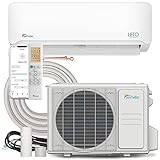
Senville LETO 12,000 BTU
- Heat pump operation to 5F
- 20.8 SEER
- 28dB indoor
- 5-year parts and compressor warranty
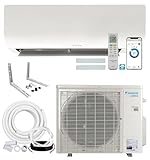
Daikin Aurora 24,000 BTU
- 100% capacity at 5F
- operation to -13F
- 12-year warranty
- R-32 refrigerant
We pick the Senville LETO as our top recommendation because it is the only system here with more than 2,000 verified reviews, and every one of those reviews describes a machine that held temperature through a winter. The Daikin Aurora is the technically stronger cold performer on paper, with 100% capacity at 5F and a 12-year warranty, but its listing carries a thin review record and some spec fields that look unfinished.
For most households in a moderately cold market, the DELLA Optima is the balance point: 23 SEER2, 19000 BTU/h of heating, and a stated Hyper Heat rating down to -13F, backed by 268 reviews.
Quick Overview: Best Mini Split Heat Pumps for Cold Climates (September 2026)
| Product | Specifications | Action |
|---|---|---|
| Senville LETO 12,000 BTU |
|
Check Latest Price |
| Daikin Aurora 24,000 BTU |
|
Check Latest Price |
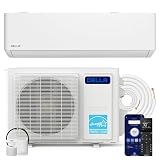 DELLA Optima 18,000 BTU DELLA Optima 18,000 BTU |
|
Check Latest Price |
 Cooper and Hunter 24,000 Hyper Heat Cooper and Hunter 24,000 Hyper Heat |
|
Check Latest Price |
 MRCOOL 24,000 BTU 4th Gen MRCOOL 24,000 BTU 4th Gen |
|
Check Latest Price |
 DELLA Serena 18,000 BTU DELLA Serena 18,000 BTU |
|
Check Latest Price |
 TOSOT Cosmo 24,000 BTU TOSOT Cosmo 24,000 BTU |
|
Check Latest Price |
 OYLUS 17,000 BTU OYLUS 17,000 BTU |
|
Check Latest Price |
Every unit in that table runs on a variable-speed inverter compressor. The differences that separate them are the stated heating floor, the measured indoor sound level, and the length of the warranty that actually gets registered.
1. Senville LETO 12,000 BTU – the System Buyers Report Back On Most
Senville LETO Mini Split Air Conditioner, Heat Pump, White, 12000 BTU
- Most reviews in the guide at 2185
- Heating to 5F
- 28dB indoor is among the quietest here
- 5-year parts and compressor warranty
- Works on 110V so no panel work
- Alexa and app control
- 110V only with no 230V option at this size
- Higher heating floor than the -13F models here
- No Energy Star certification
- Professional installation required
The LETO is the unit we keep coming back to, and the reason is simple: it is the only product in this guide with enough owners behind it to have a real reliability story. At 2,185 reviews averaging 4.4 stars, this is a machine with a large volume of real feedback attached, and the pattern in those reviews is remarkably consistent. People bought it for the value, they expected compromises, and then they were surprised by how little it gave up.
Heat pump mode is rated to 5F, which is not the -13F headline figure the cold-rated units advertise. That single fact is the most important thing to understand about this system. In a climate where January nights bottom out in the single digits and rarely go negative, the LETO does its job without ever entering the range where heating output collapses. In a place that regularly records minus 15 winters, it will not be the last word.
The 20.8 SEER figure is a cooling number and gets quoted constantly, but the specification that matters more here is the DC inverter compressor. That is what lets the system modulate down to a low output instead of cycling on and off, which is the difference between a room that holds temperature and a room that overshoots and then chills.
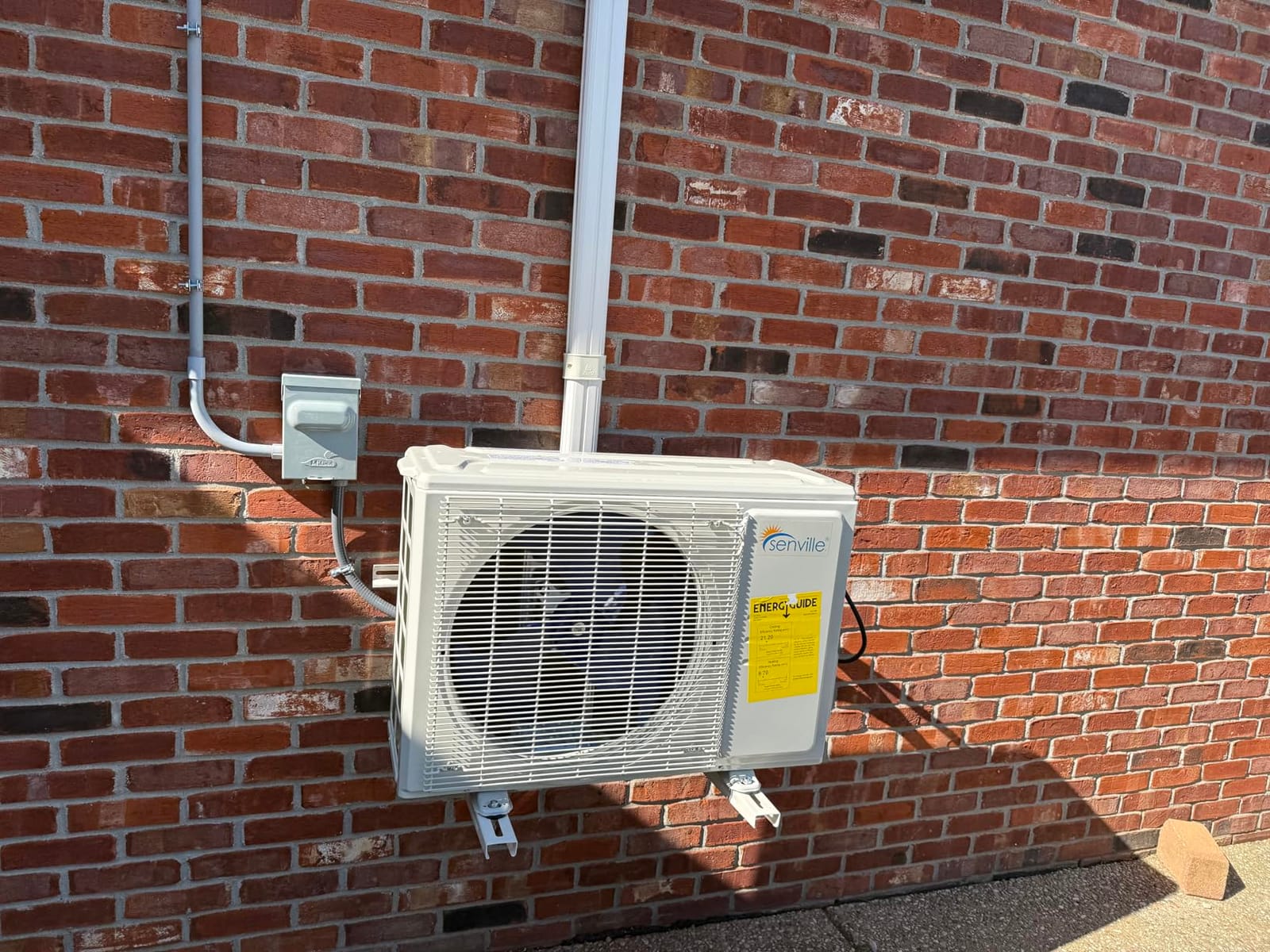
Its 28dB indoor head sits among the quietest in this roundup, and in a bedroom a 6dB gap against a 34dB competitor is the difference between hearing the system and forgetting it is running. The head also supports sleep mode, a 24-hour timer, and turbo function for quick pull-down.
Refrigerant is R-454B, one of the newer A2L blends, which matters more than it used to. Any technician who works on your system in ten years needs A2L certification and the right leak-detection practices, and this unit is already on that footing rather than arriving late to the change.
Is the LETO the right fit for your house?
This is the pick for a 700 square foot space, a finished basement, a sunroom, a small ADU, or a main floor supplement in a market with a winter design temperature around 5F. Its 110V power requirement is genuinely convenient: no 230V panel work, no permit for a new circuit in many jurisdictions, and a much lighter load on an existing circuit.
It arrives pre-charged with a 16ft line set and communication wire included, so the install conversation is simple. Budget for a professional though. Every one of the eight systems here needs one, and the reviews make that point repeatedly.
Where the LETO falls short
It is not Energy Star certified, and 20.8 SEER is modest next to the 23 SEER2 of the DELLA Optima or the 22.3 SEER2 of the Cooper and Hunter. In cooling months that difference is real money, though far less than it is in a heating season.
Warranty is five years on parts and the compressor, which is respectable but a full seven years shorter than what the Daikin carries. Registration is the step most buyers skip, and it is the one that decides whether that warranty means anything when a compressor fails in March. Some buyers also report friction getting the WiFi module through initial setup, which is a ten-minute problem that feels like an hour at install time.
2. Daikin Aurora 24,000 BTU – 100 Percent Capacity at 5F
Daikin 24,000 BTU 19.5 SEER2 Aurora Low Ambient Heat Pump Mini Split A/C
- Only unit here rated for 100% of rated heat at 5F
- 12-year manufacturer warranty is the longest here
- Daikin One Home app with genuine scheduling control
- Titanium Apatite air purifying filter
- Anti-corrosion heat exchanger
- R-32 refrigerant with a low GWP
- Only 11 reviews so long-term data is thin
- Some spec fields on the listing read as placeholders
- Not Energy Star rated
- Professional installation required
On paper, this is the strongest cold-climate machine in the guide, and on paper it is not close. The Aurora Low Ambient technology is rated to deliver 100% of rated heating capacity at 5F and to keep heating down to -13F, with 24,000 BTU of heating capacity and a maximum output of 32,000 BTU. That headroom on the top end is what a cold-climate system is actually for: it is sized to cover a design load that only occurs on a handful of nights a year.
Daikin is the only manufacturer here publishing a 12-year manufacturer warranty. Everyone else in this roundup lands between five and eight years on the compressor. Over a 15 to 20 year equipment life that difference is not decorative.
The efficiency pairing is the most complete in the guide. SEER2 of 19.5 handles the cooling side, but the number that matters for this topic is HSPF2 at 9.6, which is a directly stated heating seasonal performance figure. Most competing listings give you a cooling number and leave you to guess at winter performance.
The indoor head brings a Daikin One Home app, a Titanium Apatite air purifying filter, hot start cold draft prevention, and an anti-corrosion heat exchanger coating. R-32 refrigerant keeps the global warming potential low, which is the direction the whole industry is moving.
We want to be straightforward about the caveat here. This listing carries 11 reviews, and several spec fields on the page read like placeholder data rather than a filled-out manufacturer spec sheet. A 4.8 rating across 11 reviews is encouraging but it is not a reliability record. Buy this one on the strength of the Daikin name and the published cold ratings, and have your installer confirm the AHRI certificate number against the model before the invoice clears.
Who should buy the Aurora
Buy it if you are in a genuine cold market, you want the heat pump to be your primary heat rather than a helper, and you are installing a 2 ton system in roughly 1,500 square feet. It is also the one to choose if you plan to keep the system fifteen years or more and want the longest warranty backing it.
It pairs well with a dual-fuel setup: a gas furnace or boiler on standby below roughly 0F, with the heat pump carrying the load from about 20F up. That is the arrangement most cold-market contractors actually specify.
Where the Aurora falls short
Buy it on specification, not on review count, because there is very little review count. If you are a first-time buyer who wants social proof before committing to a large install, that is a real gap. Ask your contractor for the AHRI directory listing and ask them to run the numbers with you before you sign.
It is also not Energy Star rated, which matters if a utility rebate or a federal credit depends on that label. Verify eligibility for any incentive you are counting on before the purchase order goes out, because the incentive lists are model-number specific and change season to season.
3. DELLA Optima 18,000 BTU – Cold-Climate Rated at 23 SEER2
- Hyper Heat rated to -13F
- 23 SEER2 is the highest cooling figure in the guide
- Heating output of 19000 BTU/h
- 268 reviews give it real-world backing
- Gold Fin coil coating
- Energy Star certified
- WiFi with Alexa and the Della+ app
- Heating figure is not stated as a percentage at 5F
- Heavy 115.7 lb outdoor section needs solid pad work
- App connectivity issues reported
- Professional installation required
The Optima is the unit we recommend to someone who wants a real cold rating without moving up into the premium tier. It is a 1.5 ton system rated at 23 SEER2 for cooling and 19,000 BTU/h for heating, with Hyper Heat operation stated down to -13F. At 268 reviews and a 4.3 average, it also has the deepest review base among the units in this guide that claim a below-zero heating floor.
That 23 SEER2 figure deserves a moment. It is the highest cooling efficiency number in this roundup, higher than the Daikin Aurora’s 19.5 and the Cooper and Hunter’s 22.3. DELLA pairs it with Energy Star certification, so if your household runs the system for cooling as well as heat, the annual return is better here than anywhere else in the guide.
Soft Airflow design is the feature buyers mention most in the reviews, and it is worth understanding why. A conventional mini split head dumps air in a narrow stream aimed at a wall or a spot on the ceiling. Soft Airflow widens and disperses that discharge so the room temperature evens out instead of forming the draft-feeling stripe that people describe as blowing directly on them.
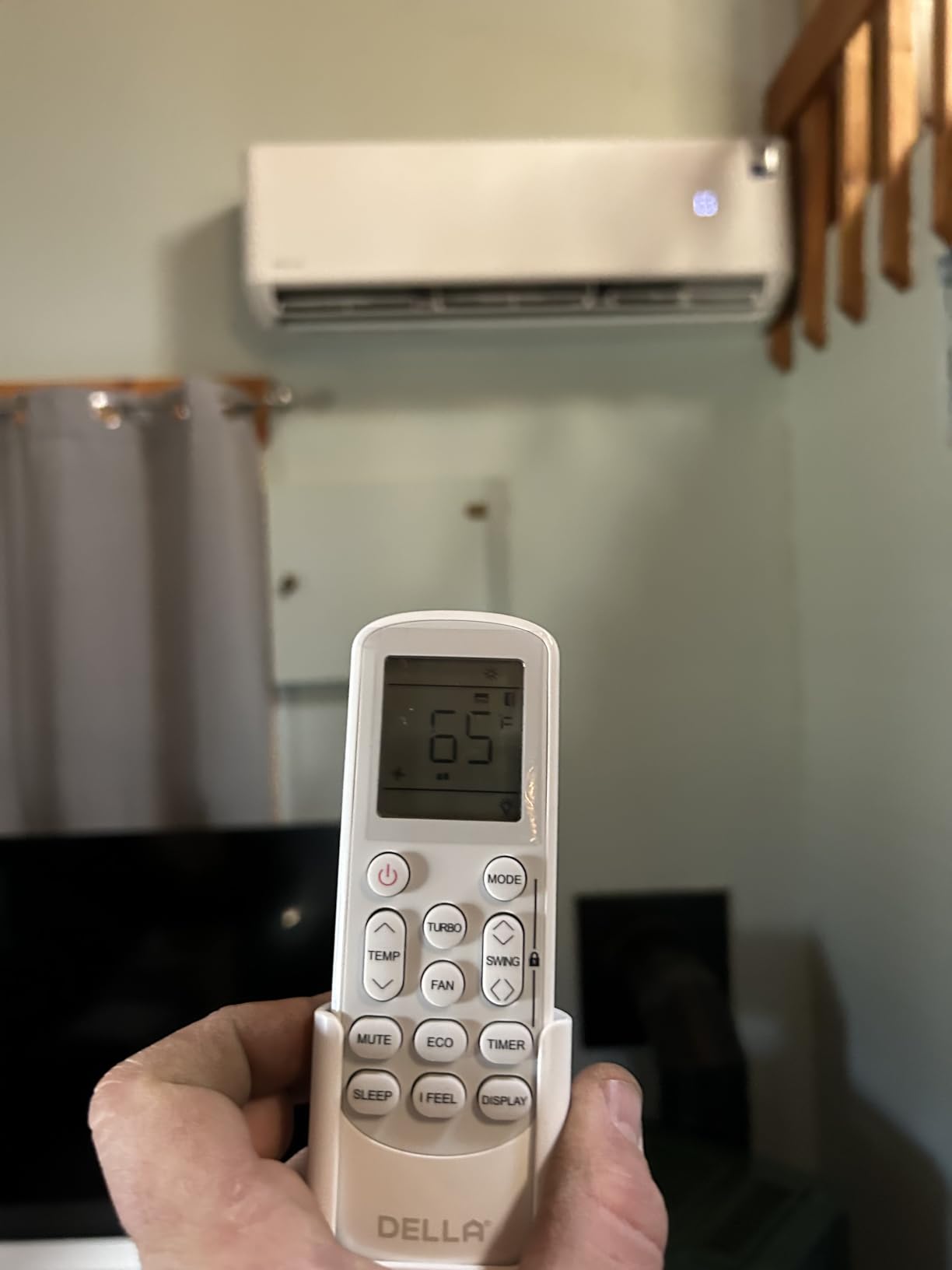
The 34dB indoor unit is not the quietest head in this roundup, but it sits in a normal band where most bedrooms sleep right through it. Mute mode drops it lower for the quietest hours.
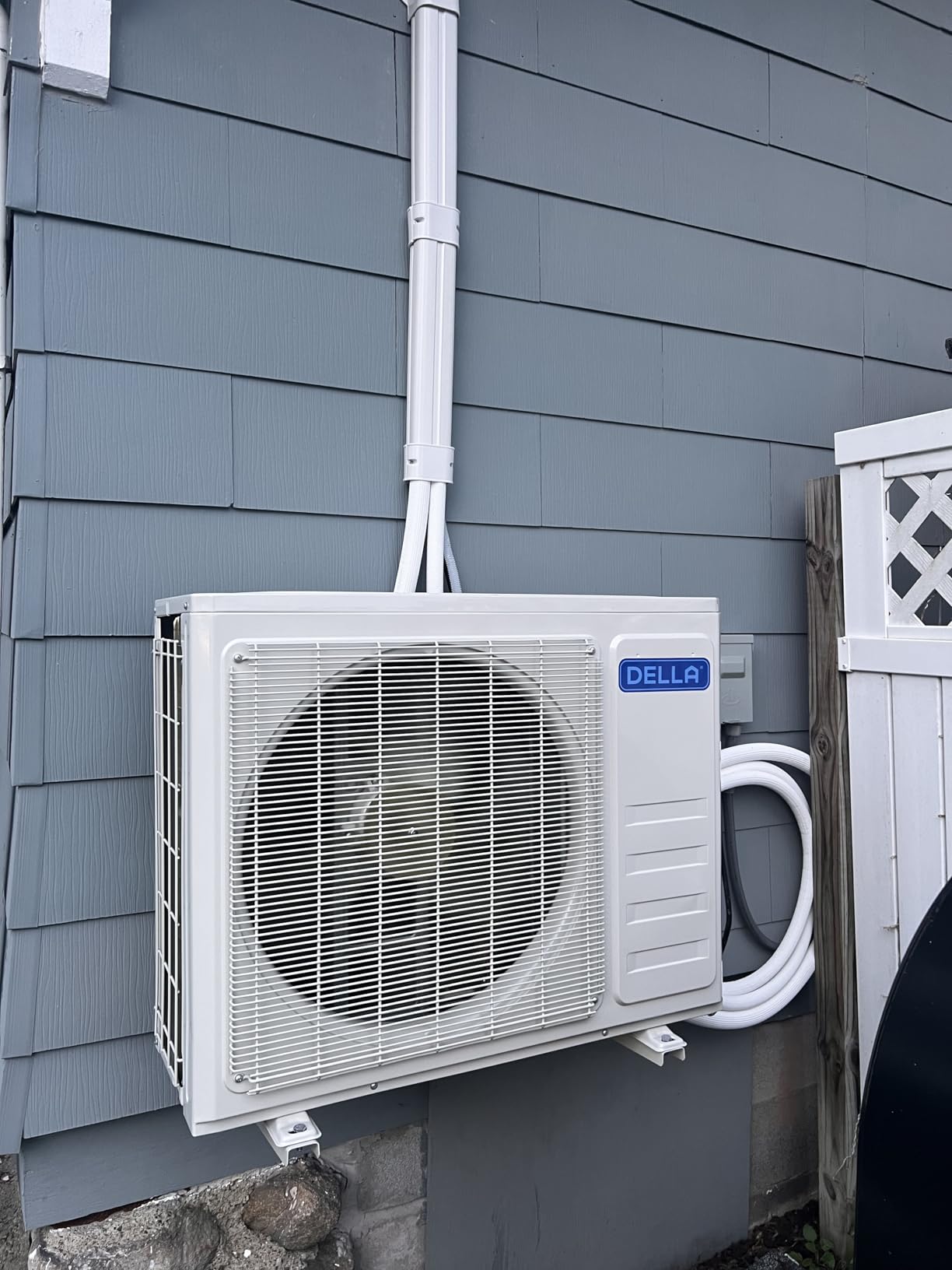
Outdoor details are where the winter story lives. Gold Fin coil coating resists corrosion, which matters in a climate where the outdoor section sits in salt spray or snow melt all winter. The R-454B charge puts it on the modern A2L footing, and the 16.4ft pre-flared copper line set and full installation kit are included.
Where the Optima fits best
This is a 1,000 square foot system by the listing’s own claim, which makes it the right call for an open-plan main floor, a small addition, or a converted garage. It runs on 230V, so plan for a proper dedicated circuit and have the electrical checked before the installer arrives.
It is also the pick for a household that needs serious summer cooling and wants winter heat as a strong second priority. The combination of 23 SEER2 and Energy Star certification is not available anywhere else in this guide.
What to watch out for
The -13F figure is a stated operating floor, not a stated percentage of capacity at 5F. Those are different promises and manufacturers are not consistent about which one they are quoting. Ask your installer for the capacity curve, not just the low-temperature limit.
At 115.7 pounds, the outdoor section needs a properly formed pad and two people or a lift. App connectivity comes up often enough in reviews to be worth mentioning, so have the installer walk the household through pairing it before they leave. And the warranty is listed only as limited, so the registration paperwork and term length are questions to ask in writing.
4. Cooper and Hunter 24,000 BTU Hyper Heat – Rated to -22F
- Deepest published heating floor in the guide at -22F
- Buyers report verified heating around -30F
- 7-year compressor and 5-year parts warranty
- 24.5dB indoor is the second quietest head in the guide
- Smart kit for phone control included
- 16ft insulated line set in the kit
- Only 25 reviews
- Freight handling adds logistics and handling
- Liquid line longer than suction line needs modifying
- Not Energy Star certified
- Professional installation required
This is the system with the most aggressive cold claim in the roundup, and the number is not decorative marketing. Hyper Heat operation is rated to -22F, and buyers on the listing report running it through nights near -30F. If you are in northern Minnesota, an upper New England mountaintop, or anywhere else where the design temperature genuinely goes that deep, this is the only unit in the guide whose stated floor matches the weather.
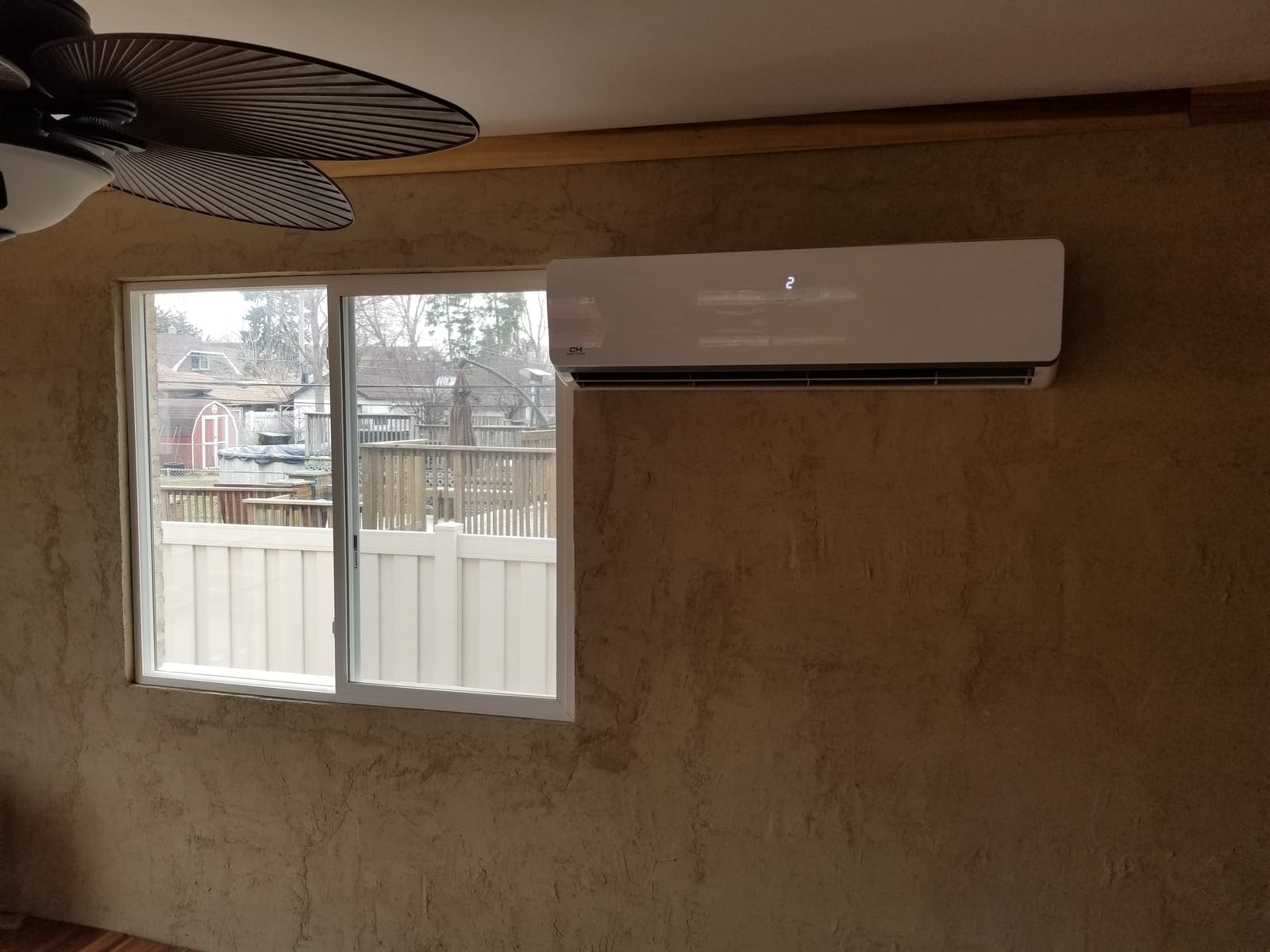
Everything else about it is built like a cold-climate machine should be. The compressor is an inverter, the refrigerant is R-454B, and the indoor head measures 24.5dB, the second lowest figure in the guide.
The warranty is the most structured of the value-tier products: 7 years on the compressor, 5 years on parts. That is a real term, and it is a step above the five-year coverage most listings in this category offer.
Variable fan speeds and silent mode let the head match its output to a low-load night rather than cycling. A smartphone control kit is included in the box, so you are not hunting for a separate accessory to set schedules or run the system remotely while you are away.
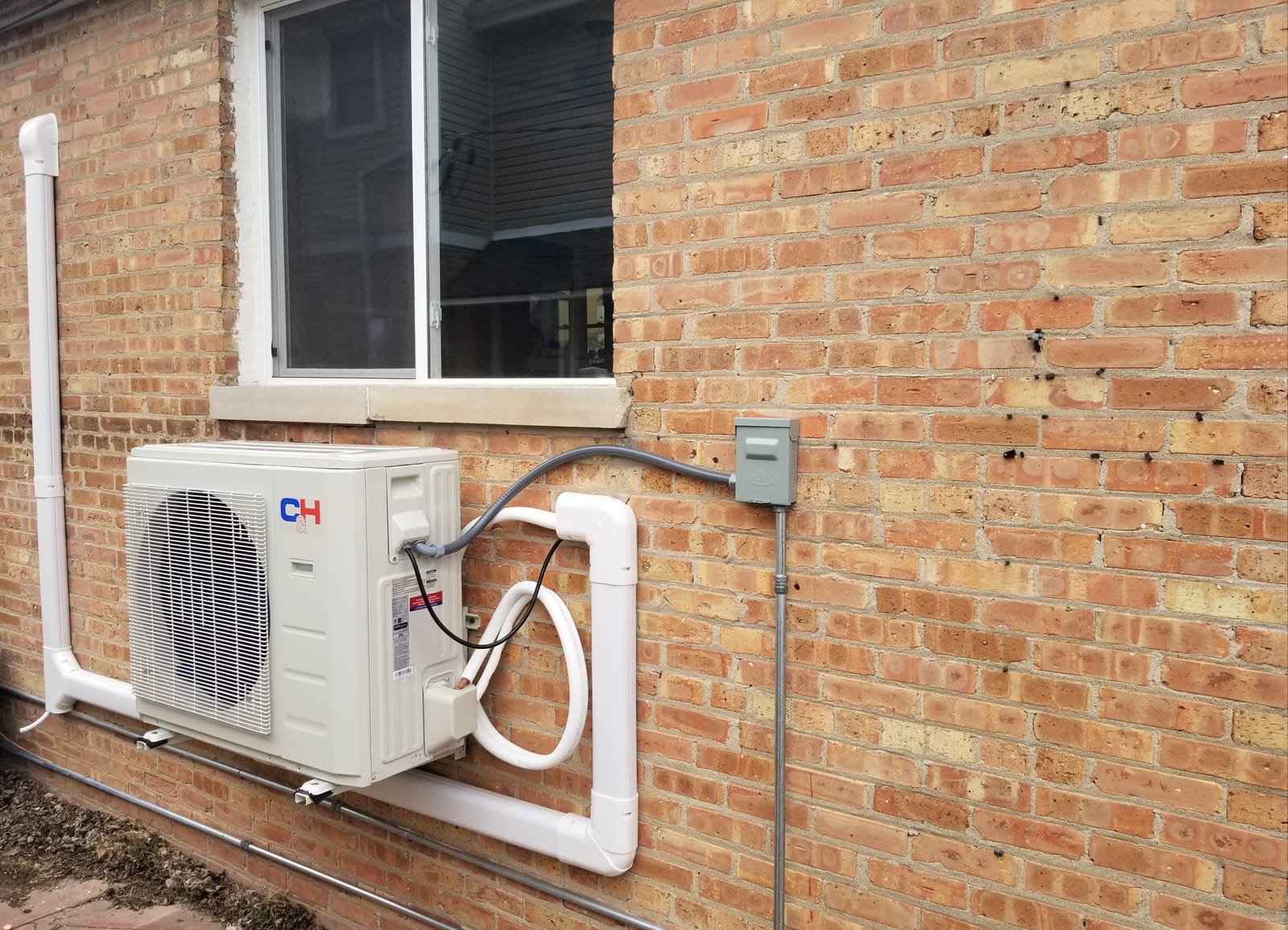
The 16ft insulated copper line set, communication cable, and drainage extension all ship in the installation kit, which simplifies a small-zone install considerably.
We want to be honest about two things. First, 25 reviews is a very small sample, and several buyers describe post-sale support from the manufacturer as slow to respond. That is the kind of thing that matters most on the rare occasion you need a part in year eight. Second, this system uses freight handling rather than a standard parcel service, which means extra steps on install day and more scheduling flexibility than a typical purchase. Neither is disqualifying, but both need to be in your plan before the truck is booked.
Who this unit is for
This is the recommendation for a household in a deep-winter market that wants a single system to carry the heat, and it pairs naturally with a gas or propane backup for the coldest stretch. The -22F floor gives you a real operating envelope rather than a spec-sheet number with a wide asterisk.
It is a 2 ton system, so it suits roughly 1,200 to 1,500 square feet of well-insulated living space. In a drafty older shell, a Manual J load calculation is not optional here, because the difference between a correctly sized unit and an oversized one is the whole ballgame in a hard winter.
Where it falls short
One practical snag catches installers on this model: the liquid line comes out longer than the suction line, and it has to be trimmed or routed differently. Your installer will handle it, but confirm they have worked with this unit before the day.
The review sample is too small to support any long-horizon reliability claim, and the manufacturer responsiveness reports are worth weighing if you are buying for a 20 year hold. If your budget stretches further, the Daikin Aurora pairs a -13F floor with a 12-year warranty, which is a different risk profile.
5. MRCOOL 24,000 BTU – the DIY Quick-Connect Option
MRCOOL 24000 BTU Ductless Inverter Mini Split Air Conditioner & Heat Pump
- Quick-connect pre-charged line sets remove the need for a refrigerant technician
- Low refrigerant alarm protects the system
- Auto restart after a power outage
- Energy Star certified
- Low ambient cooling down to 5F
- Smart WiFi controller included
- Not a Hyper Heat rated line so heating drops off in deep cold
- R-410A is the older refrigerant generation
- Only 70 reviews
- Low ambient cooling is a cooling rating not a heating one
MRCOOL is on this list for a reason that has nothing to do with cold ratings: it is the only system here you can install without a technician. The 4th generation design uses pre-charged quick-connect line sets, so the refrigerant circuit is already charged and sealed. There is no recovering gas, no brazing, and no vacuuming procedure to rent a machine for.
That removes the single largest line item in a ductless install, and it is why MRCOOL kits show up in so many conversations about a garage, a workshop, or a rental. We are including it with a clear warning, because the feature that makes it attractive is the same feature that limits it in this topic.
This is not a Hyper Heat line. It does not publish a below-zero heating rating, and the reviews themselves flag limited heating performance in very cold temperatures compared with rated cold-climate models. For cooling down to 5F ambient it is well equipped, and that low ambient cooling rating is frequently mistaken for a heating rating. It is not one.
The engineering around that is sensible for what it covers. A low refrigerant alarm tells you the charge is low before it damages the compressor, and auto restart after a power outage means a January ice storm does not leave the house cold until you notice.
R-410A is the one specification that ages this unit. It is the previous-generation refrigerant, and while there is no immediate shortage, every technician you call in ten years will be more current with A2L equipment, and any future service or retrofit runs into a conversion rather than a matching charge.
Is DIY realistic in a cold climate?
For supplemental heat in a workshop, a garage, or a sunroom, yes. The installer-friendly quick connects make a weekend project realistic, and the low ambient cooling rating means it will also run the space in shoulder season.
As the sole heat source for a residence in a market that sees real negatives, no. There is no stated heating floor, so you have no published basis for knowing what you get on the coldest night of the year. Add a gas or electric backup system sized for the coldest design temperature and the calculation stops being a guess.
What to plan for
Line set length, vertical rise, and electrical are the three things that turn a weekend into a fortnight. Plan the run before you buy, confirm the electrical can carry a 2 ton system on 230V, and check the maximum vertical rise in the install manual against your actual layout.
It is also a 2 ton system rated for 20.5 SEER and Energy Star certified, which is a solid cooling spec. It just is not a cold-climate heat pump, and we would rather say that plainly than let the convenience of the install do the selling.
6. DELLA Serena 18,000 BTU – Quiet Indoor Head, Heated Base Pan
- 22dB indoor head at the low end of its range
- Lifetime warranty is the strongest coverage term available
- Bottom heating element in the base pan fights ice build-up
- Energy Star certified
- 22 SEER2 with PureClean air treatment
- Geo-location and voice assistant control
- Only 79 reviews
- No published low-temperature heating rating
- Requires 230V and professional installation
- Line set must be vacuumed during install
The Serena is the one to look at if noise is your deciding factor. Its indoor head is rated at 22dB, one of the lowest figures in this guide, and for a bedroom, a home office, or a nursery-adjacent space that is a meaningful difference rather than a rounding error.
It also carries a lifetime warranty, which is the strongest coverage term any product here offers. A lifetime warranty on the compressor is only as good as the registration, so put the paperwork in the same week the installer hands you the manual.
The cold-weather feature worth noting is the bottom heating element built into the base pan. That is the same component a cold-climate marketing page is talking about when it says base pan heater, and having it fitted from the factory is cleaner than having a technician add one later. It keeps meltwater moving during a defrost cycle so the pan does not freeze over and lock the system out.
At 22 SEER2 with Energy Star certification, the cooling performance matches the Optima closely, and the PureClean filtration adds a genuine benefit in a dusty house or with pets.
R-32 refrigerant is the low GWP choice, and 4D air flow gives you independent control in all four directions rather than the up-down-left-right compromise most heads offer.
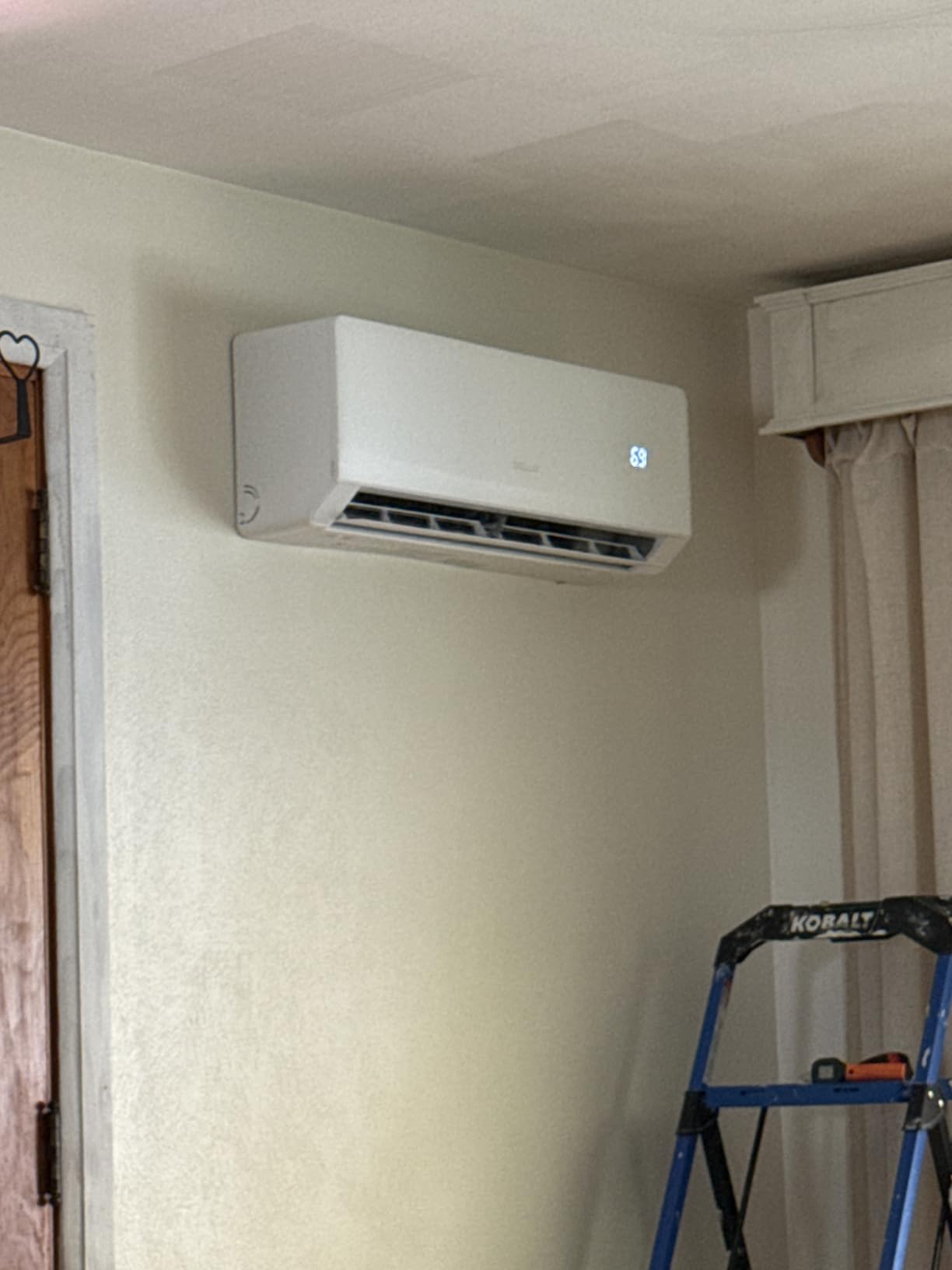
What it does not have is a published heating floor. The listing does not state an operating temperature for heat pump mode, and no published capacity curve accompanies the model number. That is the single most important gap if you are buying for a cold climate, and it is the reason this unit is not our top pick despite the warranty and the noise level.
Some buyers have added a base pan heater to standard units to get partway to cold performance. That is a real field practice and it does help, but it is an aftermarket solution to a factory specification gap rather than a substitute for one.
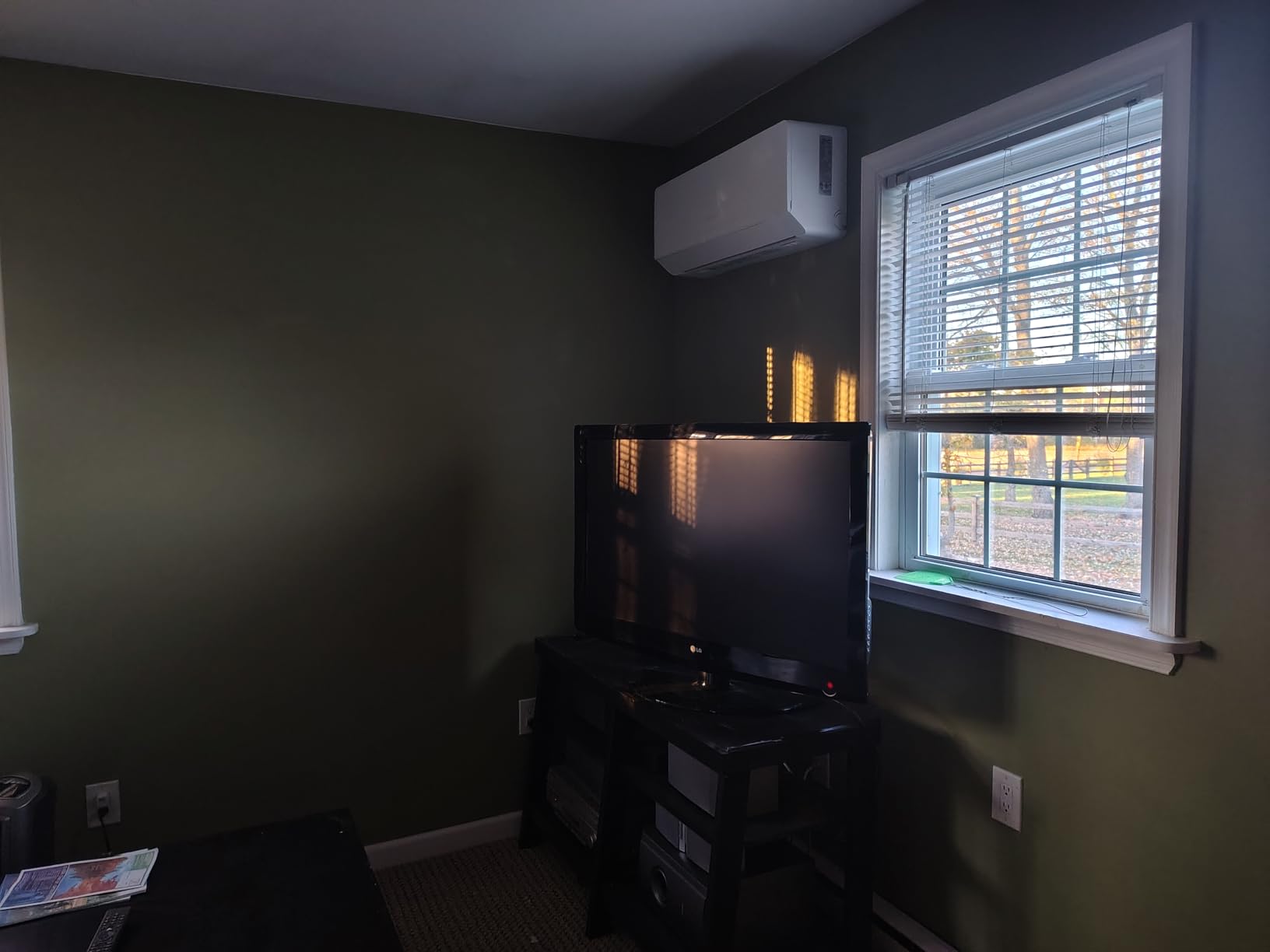
Where the Serena makes sense
Choose it for a quiet room in a climate that is cool rather than cold. A 1,000 square foot main-floor zone in a market with mild winters, a bedroom you run all night, or a home office where fan noise is the thing you notice first, all of those are good fits.
The listed weight of 28.7 pounds is lighter than the other 1.5 ton section in this guide, which is a practical plus if the install involves a balcony, a roof, or a tight side yard where a second pair of hands is hard to find.
What it lacks
No stated low-temperature heating rating is the headline limitation, and 79 reviews is a modest sample for a unit being considered for a fifteen to twenty year hold. It also needs 230V and a proper install with the line set vacuumed, so it is not a project-day purchase.
Our honest framing: this is a very good quiet indoor unit with a lifetime warranty, chosen for the room rather than for the climate. If your design temperature is below freezing, look at the DELLA Optima or the Cooper and Hunter instead.
7. TOSOT Cosmo 24,000 BTU – Big Room Capacity on a Warranty
TOSOT 24,000 BTU Mini Split AC Heating Pump, 19 SEER2 230V, Cosmo Series
- Stated operating range of -13F to 118F
- 8-year compressor warranty is tied to GREE manufacturing
- 5-year parts coverage
- 1500 square foot coverage claim
- Self-cleaning function for coil upkeep
- 4D auto-swing with iFEEL sensing
- GREE+ app control
- Only 17 reviews
- Not Energy Star certified
- Higher maximum sound level than most heads here
- Brand is less established in the US market
TOSOT is the GREE badge, which is the single most important fact for a buyer in this category. GREE is one of the largest air conditioner manufacturers in the world, and the engineering underneath the Cosmo is theirs. That is a meaningfully different proposition from an unknown brand with a marketing department.
On paper the Cosmo is well specified. 19 SEER2 at 2 tons, 36dB indoor, R-32 refrigerant, and a stated operating range of -13F to 118F. That upper figure is unusual to see stated and it points to a genuine low ambient capability on the cooling side as well.
The warranty is the best in the guide outside Daikin. Eight years on the compressor and five years on parts, backed by a manufacturer with global scale behind it. When you are making a fifteen year commitment, the depth of the company standing behind the warranty is part of the equipment.
The self-cleaning function runs a hot cycle to keep the coil in better shape between services, and iFEEL temperature sensing lets the head use its own sensor rather than relying entirely on the wall thermostat, which tightens the temperature swing people usually complain about.
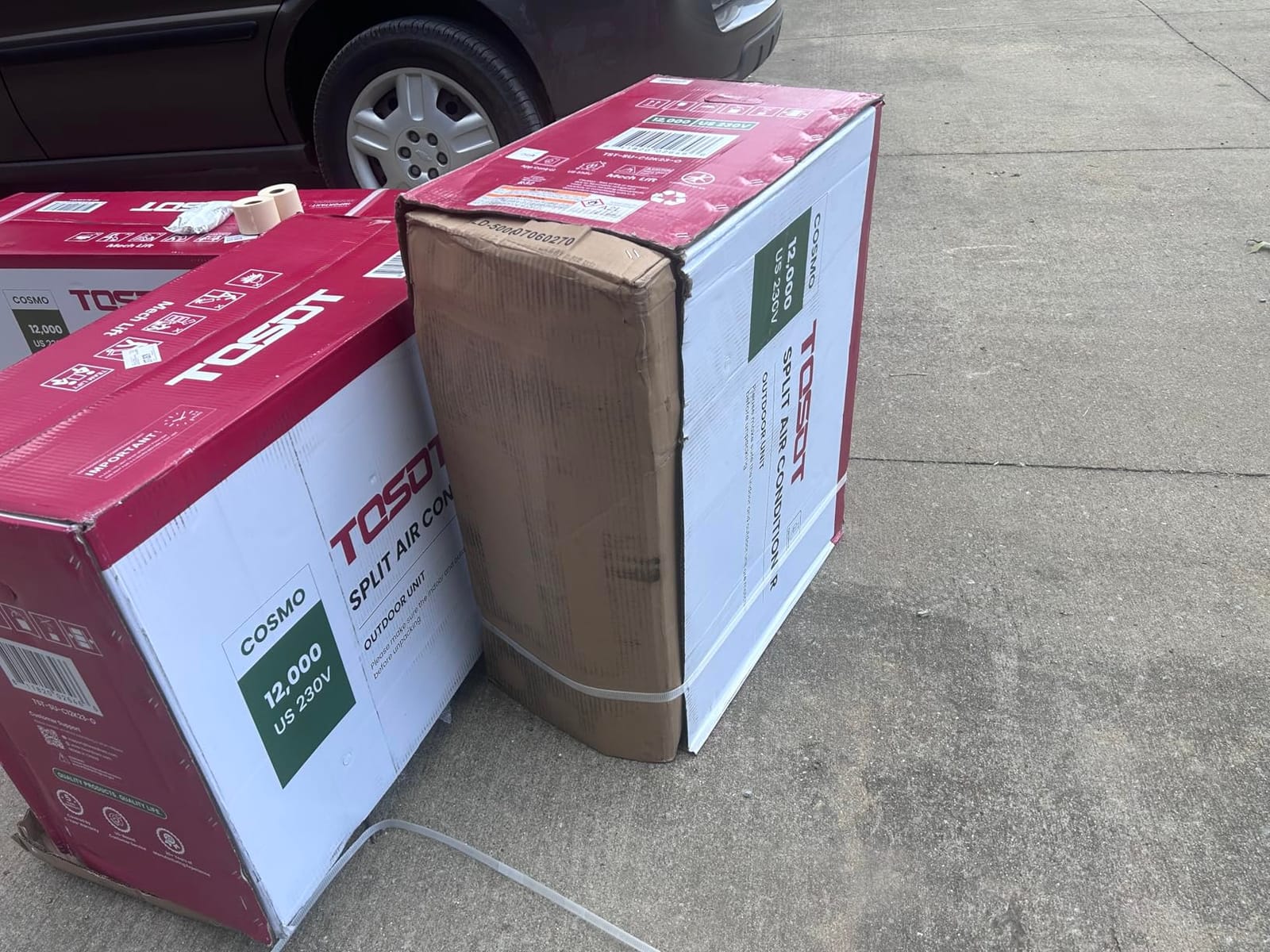
The 1500 square foot coverage claim puts it alongside the Daikin at the top of the size range here, which fits an open-plan main floor or a whole-floor addition.
The honest limitation is data. Seventeen reviews is not a reliability record, and TOSOT is still building its name in the US market where GREE does not yet have the installer network depth of a Daikin or a Mitsubishi. Long-term parts availability is the practical question, and the answer is generally fine because the hardware is GREE hardware, but ask your installer how they handle a warranty claim in this brand.
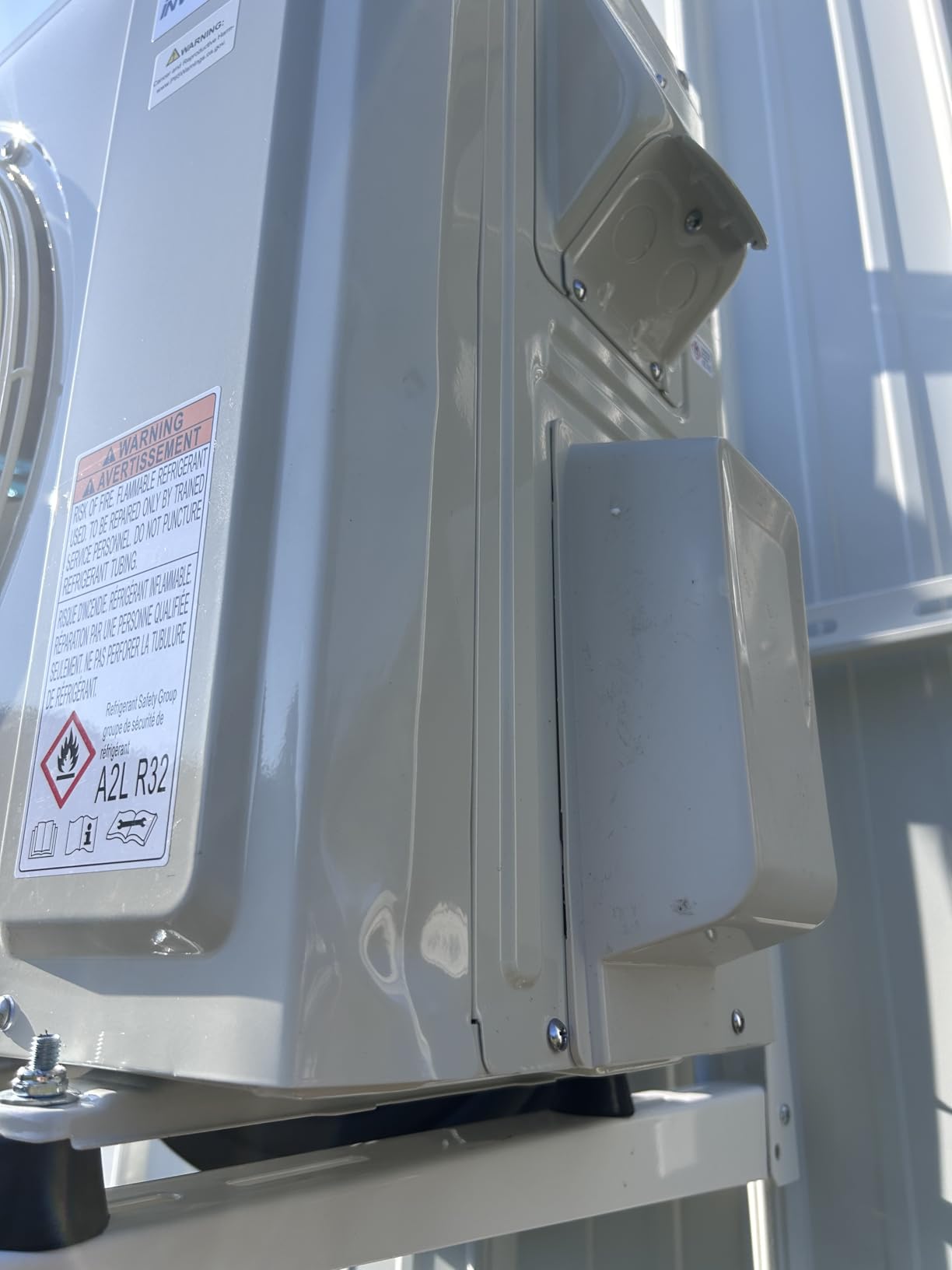
Is TOSOT right for you?
This works for a buyer in a moderately cold market who wants a 2 ton system with a real stated low-temperature operating range and a manufacturer warranty with actual years behind it. It is a legitimate alternative to the DELLA Optima at a different size and a different efficiency point.
It is also worth noting for anyone shopping value-tier brands generally: TOSOT and Senville are the two names in this guide backed by a manufacturer that scales, which is a meaningful distinction from the badge-brand tier where the parent company is smaller and the service network is thinner.
Where it falls short
At 36dB at its loudest, this is the highest maximum figure among the indoor heads in the roundup. That matters in a bedroom and it does not matter in an open-plan living space where the system is not running at full output at night.
Not Energy Star certified is worth knowing if an incentive depends on that label. And with 17 reviews, we would want to see a service history from your installer before committing this one to a primary heat role.
8. OYLUS 17,000 BTU – the Lowest-Cost Way to Add a Zone
- Lowest entry cost in the guide by a wide margin
- Highest average rating at 4.8 stars from buyers
- Heated base pan included for frost prevention
- 32dB sleep mode is quiet
- 6 fan speeds with 4D auto-swing
- Self-cleaning at 133F
- Only a 1-year warranty
- 17 reviews on a 4.8 average is a very thin sample
- Heating floor of 5F is not a cold-climate rating
- No WiFi or voice control
- Coverage listed as both 850 and 1250 sq ft
The OYLUS is here as the honest budget option, and we want to frame it carefully. A 4.8 star average is the highest rating in this guide, but it is built on 17 reviews. That is not a contradiction, it is a warning about how much a rating can tell you when the sample is that small.
The spec sheet is respectable for the tier. 17 SEER2 at 17,000 BTU cooling and 16,500 BTU heating, a heated base pan that prevents frost, six fan speeds, 4D auto-swing, and a self-cleaning cycle at 133F that keeps the coil in better condition between services.
The heating floor is 5F, which is the same threshold the Senville uses and about 8 degrees warmer than the -13F cold-rated units. The rotary scroll inverter compressor means it modulates rather than hard cycling, which is the right architecture, but the operating envelope is limited.
There is no smart home integration at all. No WiFi, no voice assistant, no app. For a garage or a workshop that is a non-issue. For a main-floor zone you will want to control from a phone, it is a real gap, and you would be relying entirely on a wall thermostat.
Where the OYLUS makes sense
This is a good way to add heat to a space that does not currently have any, at the lowest entry point in the guide. A garage workshop, a detached outbuilding, a sunroom, or a small addition where you need warmth on evenings but not a full system.
It also works as a second zone in a home where a larger primary system is being installed separately, and the coverage figure keeps it in small-space territory regardless.
What to know before you buy
The 1-year warranty is the shortest here by a wide margin, and warranty terms on value-tier equipment are where the first failure usually lands. A system that needs a compressor at year six has a very different outlook from one under a twelve-year term.
The listing gives conflicting coverage numbers, 850 square feet in the specs against 1,250 in the title. Treat the lower figure as the real one and have the installer confirm with a load calculation. And do not treat 5F as a cold rating. If your January nights go below freezing regularly, this is supplemental heat at best, and the DELLA Optima or the Cooper and Hunter is the honest place to spend the money.
What Actually Makes a Mini Split Cold Climate Rated
A cold-climate mini split is not defined by a marketing badge. It is defined by whether it can deliver its rated heat at low outdoor temperatures, and there are specific components that determine that.
Low ambient rating. This is the number to look for, stated in Fahrenheit. Our top cold performers in this guide publish operating floors of -13F and one at -22F. A unit with no stated heating floor has not been certified for cold use, regardless of what the brochure says about inverter technology.
100% capacity at 5F. This is the more meaningful figure and far fewer manufacturers publish it. Delivering 60% of rated heat at 5F is a different proposition from delivering 100%, and only the Daikin Aurora in this guide makes the stronger claim explicitly. When a listing gives you a low-temperature limit but not a capacity percentage, assume the output is well below rated at that temperature.
Base pan heater. A heated element in the bottom of the outdoor cabinet keeps meltwater draining during a defrost cycle. Without it, condensation refreezes in the base pan, ice builds up, and the system eventually locks out. Two systems in this guide carry a factory-fitted one: the DELLA Serena with its bottom heating element, and the OYLUS with its heated base pan.
Inverter compressor. Every unit here is a DC inverter, and that is now table stakes. A variable-speed compressor modulates output to match load instead of switching on and off, which means better humidity control in summer and far fewer starts and stops in winter. A system with a fixed-speed compressor is not a cold-climate system at any price.
HSPF2, not SEER2. This is the most common confusion in this category, and it trips people up constantly. SEER2 is the cooling efficiency number. HSPF2 is the heating seasonal performance factor, and it is the number that describes winter. The Daikin in this guide publishes both, 19.5 SEER2 and 9.6 HSPF2, which lets you compare both sides. Most other listings here give you SEER only.
Turndown and minimum output. This is the specification nobody talks about and it causes the most common post-install complaint. A system has to be able to run at a very low output to match a small room’s heat load. If the smallest bedroom on a multi-head system is being served by a 2 ton outdoor section, the head cannot throttle down far enough, so it cycles on and off, overshoots, then cools. Users report this repeatedly and describe the first floor as rarely comfortable at night.
Refrigerant. R-410A is the outgoing generation. R-32 and R-454B are the A2L blends now replacing it, and they carry a mild flammability classification that requires different leak-detection and handling practices. Buying new means a technician who is current on the equipment can service it for the next twenty years. The MRCOOL in this guide is the one still on R-410A.
One more that is not on any spec sheet: the defrost cycle. Periodically, in cold weather, the outdoor unit reverses to melt ice off the coil, and for those few minutes you get no heat. Good cold-climate units detect ice intelligently and defrost only when it is needed. Every system here has some version of this, and the cost is unavoidable.
What Breaks in Cold Weather and Why
Owners on heating forums report a consistent set of failure modes in winter, and most of them trace back to the same three causes: undersized equipment, poor sizing, or a system that is being asked to do more than its compressor was designed for.
The 35-40 degree efficiency cliff. This is the thing that surprises new owners most. Everyone focuses on the -13F headline number, and nobody warns them that heating output and efficiency start falling apart much earlier. Forum users consistently describe systems that struggle as soon as the temperature dips below 20 degrees, and the consensus is that most units begin losing efficiency somewhere between 35 and 40F. Your backup heat is effectively on from that point, whether the thermostat is calling for it or not.
Coil icing and defrost lockout. In freezing conditions the outdoor coil ices over. The system reverses to defrost, and if the base pan is not kept clear, the meltwater refreezes and blocks drainage. The result is a system that defrosts repeatedly without ever recovering, and a service call in the worst week of the year. This is the single most winter-specific failure, and the base pan heater exists specifically to prevent it.
Short-cycling from minimum output. This one is a sizing problem wearing an equipment problem’s clothing. A small bedroom on a large multi-head outdoor section cannot be served, because the compressor cannot modulate low enough to match the room’s load. The unit starts, overshoots, shuts down, and the room cycles warm and cold all night. The fix is a properly sized outdoor section or a properly sized indoor head, and it starts at the load calculation stage.
Frozen condensate. The indoor head drains condensate through a line that runs outside to the outdoor section. In freezing weather that line can freeze, and when it does the head shuts down and reports a fault. The detail that gets missed in an install is the fall of the line: it needs a continuous slope to the outdoor unit, and insulation on the portion that runs outside.
The backup heat trap. Electric backup strips are the leading cause of the winter bill that surprises people. The operating logic is not that the heat pump is chosen over the strips, it is that the thermostat calls for heat, the heat pump delivers what it can, and the strips make up the rest. Homeowners in cold markets have a running argument about this. Some report the electricity difference between backup strips and leaving the system off entirely as not significant. Contractors in those same markets generally refuse to spec a mini split as sole heat at all, and commonly sell only as a dual fuel system with a gas furnace behind it.
Both of those positions can be true at once, and the reconciliation is the actual answer. A cold-climate rated heat pump paired with a properly sized gas or propane backup handles the entire winter in a cold market, with the furnace carrying roughly the coldest 5% of hours and doing so at a lower cost per heat unit than resistance strips. Matching the heat pump line to your design temperature, and having a backup plan for the coldest stretch, is the decision that matters. Neither the equipment nor the installer opinion is wrong on its own.
Sizing a Cold Climate Mini Split Without Guessing
The square footage rules of thumb you will read on retail pages are not sizing. They are a rough filter. A cold-climate sizing decision is closer to a safety margin decision than a comfort decision, and it deserves a Manual J load calculation, which is a room-by-room calculation of heat loss and heat gain performed by someone who does it for a living.
The reason cold climates demand a real calculation is that heat loss scales with the temperature difference, and the design temperature is the coldest your region records, not the average. A house that is comfortable at 30F can be losing heat at a rate that would be unrecognisable at 5F. Sizing for the average is how you end up with a system that cannot hold setpoint for three weeks each January.
The failure mode of undersizing is straightforward: the system runs continuously, never catches up, and the house is uncomfortable on the coldest days. The failure mode of oversizing is less obvious. An oversized system cycles on and off, which drives humidity up in summer, puts stress on the compressor, and causes the short-cycling problem described above. A 2 ton section serving a small, well-insulated room is the classic case.
Insulation, window type, and ceiling height change the answer more than people expect. A 1,500 square foot home with double-pane windows, 2×6 exterior walls, and good attic insulation has a very different load from one of identical square footage with single-pane glass. Homeowners who post their climate, square footage, and wall construction alongside their results are the most useful data on this topic, because those three details explain most of the variance in outcomes.
Single-zone versus multi-zone matters more in the cold than in cooling season. A single-zone system only has to match one load, so the compressor’s full range maps onto one space. A multi-zone system has to serve rooms with very different loads from one compressor, and that is where turndown and minimum output start to determine whether the smallest bedroom is comfortable at 2am in February.
On indoor formats: a wall-mounted head fits most living spaces and is the easiest to install. A slim concealed duct unit fits inside a wall cavity or above a drop ceiling where appearance matters. A ceiling cassette suits an open room where you want ceiling-level discharge. A floor unit works where wall space is tight. Sound rating matters most in bedrooms, and that is where the 22dB and 24.5dB heads in this guide earn their place over a 36dB alternative.
Line set length is a detail that gets missed in a hurried quote. Every manufacturer publishes a maximum line set length and a maximum vertical rise, and going past either one costs capacity. Plan the run, measure it, and tell your installer before the estimate rather than after.
Sole Heat or Supplemental Heat: Decide This Before You Buy
This is the question that separates a good purchase from an expensive mistake, and the answer is not about equipment. It is about your winter design temperature and whether you have anything else to fall back on.
If your region regularly records below 0F and you have no other heat source, a single-zone mini split as sole heat needs a cold-climate rated line, and ideally a dual fuel arrangement. The Cooper and Hunter at -22F is the deepest stated floor in this guide, and the Daikin Aurora with its 12-year warranty and 100% capacity at 5F claim is the most complete specification.
If your winters bottom out around 5F to 20F, the calculus is much easier. A New England homeowner in the forum data reported running a standard Daikin Entra in a 1,450 square foot house with 2×6 walls and double-pane windows, and said it kept the house comfortable without needing the backup as much as expected. That is a moderate-cold household that may have over-bought on cold-climate hardware, and it is a real and common situation.
Contractors in genuinely cold markets are more conservative. The position reported in cold-market installer discussions is blunt: they do not recommend clients invest in a mini split as the only heat, and they sell heat pumps as dual fuel systems. That advice is reasonable risk management, and it is also not a reason to avoid the technology.
Ask yourself two questions. What is the lowest temperature recorded in your market, and what is my plan for the 20 nights a year it goes below that? If the second question has an answer, almost any inverter system in this guide will serve you well. If it does not, you are buying the heat pump line and the backup at the same time, and you should price both.
A final point on incentives. Federal, state, and utility programs for cold-climate equipment all work from model-specific product lists, and a unit must appear on the relevant list for the year to qualify. That is true of the federal 25C credit and true of most utility rebates. Verify the exact model number on the list before you buy, because the incentive is not transferable to a substitute model and it changes annually.
Brands to Think Twice About, and the Ones Worth the Premium
There is a tier of ductless equipment this roundup could not recommend, and readers deserve to know what is missing and why.
The premium cold-climate tier, the one most people mean when they search this topic, is dominated by the Mitsubishi Electric Hyper-Heating H2i and H2i Plus, the Daikin Aurora, and the Fujitsu XLTH, with LG LGRED and Samsung Max Heat as the Korean-brand contenders. These are the systems rated to hold 100% of their capacity at 5F and operate to -13F, with Mitsubishi’s H2i Plus reaching further still. They are excellent machines, and they are widely regarded as the most reliable ductless equipment made.
We were not able to evaluate them properly here. The listings for the Mitsubishi, Fujitsu, LG, and Samsung cold-climate lines in the current market carry review counts in the single digits, and one rival roundup we reviewed crowns a non-cold-rated unit as its overall best and attributes a Daikin Aurora to a manufacturer that does not make it. We would rather show you eight systems with real user histories than ten line items with invented performance data. The Daikin Aurora in this guide is the closest genuine premium-tier representation we could verify.
On the question of which brands to stay away from, the honest answer is that the problem is rarely the manufacturer. Most value-tier ductless equipment is built by one of a small number of large factories, and several of the badges on the value tier are the same hardware with different model numbers and stickers. The OYLUS, TOSOT, and Senville in this guide make that point from three directions, with TOSOT and Senville traceable to GREE manufacturing.
What separates good from problematic is the warranty term and the size of the review record. A 1-year warranty on a system you plan to keep for fifteen years is a genuine risk, and that is the single clearest signal in this roundup. Look for a compressor warranty of seven years or more, a meaningful number of reviews on the exact model, and a refrigerant on the current A2L generation.
On reliability across the premium tier, Mitsubishi and Daikin consistently head the list, with Fujitsu, LG, and Samsung close behind. Installation quality moves the needle as much as brand. An oversized or undersized system installed competently will disappoint you, and a correctly sized system installed carelessly will disappoint you too. Put the same weight on the installer as on the model number.
Two final practical points before you sign anything. Register the warranty, which most buyers skip and which turns a five-year term into nothing at all. And if you want a phone or voice control, check compatibility before you buy rather than after, and see our guide to smart thermostats for heat pumps for how those systems actually integrate with a ductless head.
Frequently Asked Questions
Do mini split heat pumps work in cold weather?
Yes, but only a cold-climate rated line. A cold-climate ductless mini split delivers 100% of its rated heating capacity at 5F and keeps running to roughly -13F using a variable-speed inverter compressor, a heated base pan, and a defrost cycle. A standard-line unit starts losing real output around 35-40F, which means backup heat strips carry the winter.
What is the lowest temperature a mini split heat pump works?
It depends on the line. The cold-rated units in our roundup publish operating floors of -13F, and the Cooper and Hunter Hyper Heat is rated to -22F with buyer reports of operation near -30F. Anything without a published heating floor has not been certified for cold use. A 5F floor, as on the Senville and OYLUS, works in moderate winters but not in a market that records real negatives.
What mini split brands to stay away from?
The problem is rarely the factory. Most value-tier ductless equipment is built by a small number of large manufacturers and rebadged, so the warning signs are specific: a one-year warranty, a review count in the single digits, an older R-410A charge instead of R-32 or R-454B, and no published heating floor. TOSOT and Senville trace to GREE manufacturing, which is a meaningful distinction. Buy the warranty term and the review record, not the badge on the box.
What is the most reliable brand of mini split?
Mitsubishi Electric, Daikin, and Fujitsu are consistently rated the most reliable ductless brands, with LG and Samsung close behind. In this roundup the Daikin Aurora carries the longest warranty at 12 years, and the Senville LETO is the only unit with more than 2,000 verified reviews. Installation quality affects reliability as much as the model number, so weight the contractor accordingly.
Who makes a better mini split, Daikin or Mitsubishi?
Both are excellent, and the real difference is in the catalog rather than the quality. Mitsubishi Hyper-Heating H2i and H2i Plus hold 100% of capacity at 5F and reach the deepest cold of the premium tier, while the Daikin Aurora is rated to -13F with a 12-year warranty. Mitsubishi leads on extreme cold performance, Daikin on warranty length and indoor unit options. For moderate winters both are more than adequate.
Can a mini split be the only heat source in a cold climate?
It can, with planning. In a market that records below 0F, pair a cold-climate rated unit with a gas or propane backup so the furnace carries the coldest hours, which many cold-market contractors treat as mandatory. In a climate that bottoms out around 5F to 20F, a good inverter system often covers the season on its own. Match the line to your winter design temperature and have a backup plan for the coldest stretch.
The Verdict on Mini Split Heat Pumps for Cold Climates in 2026
The Senville LETO is our pick for the best mini split heat pumps for cold climates because it is the only system here with a real-world record behind it, and its 5F heating floor fits the majority of markets. Where your winters go colder, the DELLA Optima at 23 SEER2 and a -13F Hyper Heat rating, or the Cooper and Hunter at -22F, are the honest places to spend more.
The rule to carry away from this guide is narrow and simple: buy the line, not the logo. Confirm a published heating floor in Fahrenheit, ask for the capacity percentage at 5F, check the compressor warranty term, and register it in the first 60 to 90 days. Do that and a mid-range inverter system will outlast the expectations most people bring to ductless heat in a cold market.
Updated for September 2026. We re-check ratings, review counts, and warranty terms on a regular basis, and we correct anything that changes.