
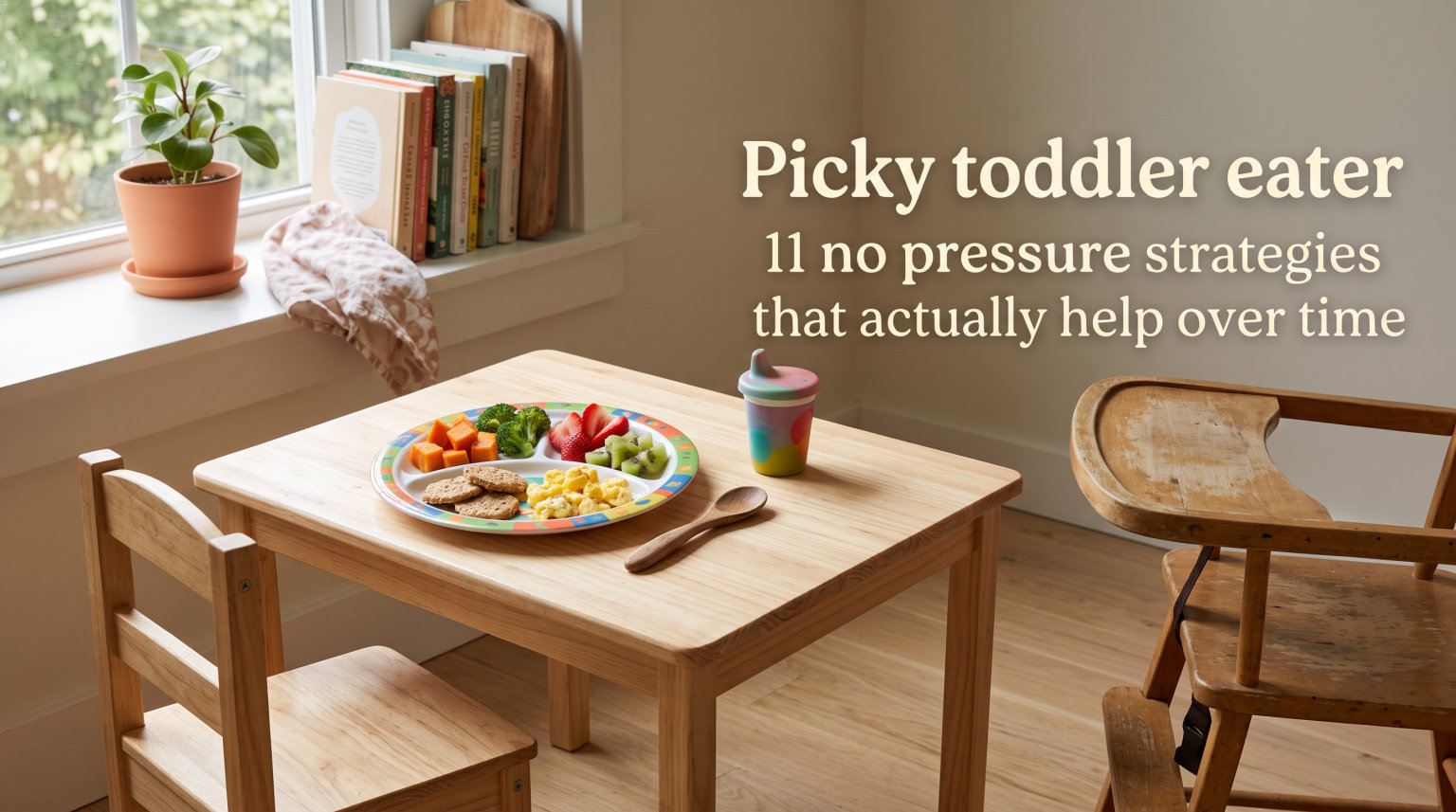
Watching your toddler push away a plate of carefully prepared food for the third time this week feels defeating. You’ve tried negotiating bites, hiding vegetables in sauces, and even the occasional desperate airplane-spoon routine. Nothing seems to work, and mealtime has become a daily source of stress for your entire family.
I understand that struggle. After working with hundreds of parents through feeding challenges and digging into decades of research on picky toddler eater no pressure strategies, I’ve learned that the answer isn’t more convincing or better hiding. It’s actually the opposite: removing pressure entirely.
This guide shares 11 evidence-based strategies that help picky eaters expand their palates without force, bribes, or ultimatums. These approaches work gradually, respecting your child’s developmental readiness while reducing mealtime stress for everyone involved.
Table of Contents
Understanding Why Toddlers Become Picky Eaters
Before diving into solutions, let’s understand what’s actually happening with your toddler. Picky eating isn’t defiance or manipulation. It’s a developmentally normal phase rooted in biology and evolution.
Food Neophobia: The Science Behind the Struggle
Food neophobia is the technical term for fear of new foods. It peaks between ages 2 and 4, which explains why your once-adventurous eater suddenly refuses anything unfamiliar. From an evolutionary perspective, this made sense: young children who stayed away from unknown plants or berries were less likely to get poisoned.
Your toddler isn’t being difficult. Their brain is literally wired to be cautious about new foods during this developmental window. Understanding this can shift your mindset from frustration to compassion.
The 5 P’s of Picky Eating
Feeding experts often reference the 5 P’s that explain why toddlers become selective eaters:
Physical: Growth slows dramatically after the first year, reducing appetite. Toddlers simply need less food than babies.
Protective: That evolutionary safety mechanism we discussed keeps them cautious around unfamiliar foods.
Power: Food is one of the few things toddlers can control. When everything else is decided for them, eating becomes an arena for autonomy.
Preference: Development of personal taste is normal. Some texture or flavor preferences are genuine, not just stubbornness.
Parenting: Well-meaning pressure tactics often backfire, creating power struggles that worsen picky eating.
Normal Picky Eating vs. Extreme Picky Eating
Most picky eating falls within normal developmental bounds. Your toddler eats fewer than 20 foods but maintains growth. They refuse entire categories (like vegetables) but get nutrition from other sources. They have good and bad days with appetite.
Extreme picky eating looks different: fewer than 10 accepted foods, weight loss or failure to gain, gagging or vomiting at new foods, complete avoidance of textures or food groups, and high anxiety around mealtimes. We’ll cover when to seek professional help later in this guide.
11 No-Pressure Strategies That Help Picky Toddler Eaters Over Time
These strategies build on each other. You don’t need to implement all eleven at once. Start with two or three that feel manageable, then add others as these become habits.
Strategy 1: Switch to No-Pressure Meals
The foundation of all other strategies is removing pressure entirely. This means no more “just try one bite,” no negotiating, no rewards for eating, and no consequences for refusing.
This approach connects to something called the Division of Responsibility in feeding, developed by dietitian Ellyn Satter. Parents decide what, when, and where food is served. Children decide whether and how much to eat. When parents overstep into the child’s territory (pressuring to eat), kids dig in their heels. It’s a predictable response to having their autonomy threatened.
Try this instead: Serve the meal and let your toddler decide what goes on their plate. If they eat nothing, stay neutral. If they eat everything, stay equally neutral. Your job is to provide; their job is to eat.
Strategy 2: Use Permission-Based Language
The words we use around food matter more than we realize. Phrases like “you don’t have to eat it” or “you can eat that when you’re ready” give children psychological safety to explore at their own pace.
Pressure language creates anxiety. Even well-intentioned encouragement like “this is so yummy” or “it’s good for you” can feel like pressure to a sensitive child. They hear an expectation they’re supposed to meet.
Scripts to try: “This broccoli is here if you want it.” “That’s cheese, you can eat it or leave it.” “You don’t have to try anything new today.” The goal is complete neutrality about their choices.
Strategy 3: Set Kitchen Hours
Grazing throughout the day kills appetite for actual meals. When toddlers snack constantly, they never get hungry enough to try new foods at mealtimes. They hold out for familiar snacks they know will arrive.
Establish clear kitchen open and closed hours. In our house, the kitchen closes at 7:30 PM. After that, water is available but no food until breakfast. This isn’t punishment; it’s structure that supports natural hunger cycles.
Implementation tip: Start with 2.5 to 3 hours between eating opportunities. If dinner is refused, the kitchen closes at bedtime. Most children adjust within a few days once they realize the structure is consistent.
Strategy 4: Sit Down Together for Meals
Eating together isn’t just about bonding time, though that’s valuable too. Family meals provide modeling opportunities and reduce distractions that interfere with mindful eating.
When children eat alone or while watching screens, they miss social cues about eating. They don’t see parents enjoying broccoli or calmly trying new foods. The meal becomes purely functional rather than social.
Make it work: Even if you can’t do three family meals daily, start with one. Turn off the TV. Put phones away. Model the behavior you want: trying foods, enjoying conversation, stopping when full.
Strategy 5: Parents Decide What’s Served
Within the Division of Responsibility framework, your job is deciding what goes on the table. This means planning balanced meals and including at least one “safe food” your child reliably eats.
Safe foods are items your child will eat even when uncomfortable. For many toddlers, that’s bread, pasta, cheese, or fruit. Including a safe food at every meal ensures they won’t go hungry while exposing them to other options.
The rule: No short-order cooking. What’s served is what’s available. If they eat only the safe food for three weeks straight, that’s okay. Exposure to other foods continues, and eventually curiosity wins.
Strategy 6: Add Food Play and Sensory Exploration
Children learn through play, and food is no exception. Food play activities let children interact with new foods without any expectation of eating. This reduces anxiety while building familiarity.
Research shows that children who regularly engage in sensory food play are more likely to eventually try those foods. The exposure happens without pressure, creating positive associations.
Activities to try: Painting with yogurt, building towers with carrot coins, washing vegetables in a sensory bin, sorting foods by color, or making faces on plates. The only rule: no eating required. Make that explicit to your child.
Strategy 7: Keep Serving Foods Repeatedly
Studies consistently show that children need 8 to 15 exposures to a new food before accepting it. Many parents give up after 3 or 4 attempts, assuming their child “just doesn’t like broccoli.”
Here’s the reality that frustrates many parents: offering 15 different foods 15 times each would take months or years. The math doesn’t work if you’re trying to expand a limited diet quickly.
The practical approach: Rotate a small set of new foods repeatedly rather than constantly introducing new options. Offer broccoli twice a week for two months. Serve the same protein three different ways over several weeks. Consistency beats variety for exposure.
Strategy 8: Teach Kids What Foods Do
Age-appropriate nutrition education helps children connect food to function. When they understand that chicken helps their muscles grow or carrots help them see better, food takes on meaning beyond taste.
This isn’t about creating food anxiety or moralizing about “good” and “bad” foods. It’s about helping children see food as fuel that supports the things they care about: running fast, playing longer, growing taller.
How to talk about it: “Beans give your body energy to play at the park.” “Oranges help you stay healthy so you don’t miss birthday parties.” Keep it positive and concrete, never fear-based.
Strategy 9: Make Dessert Less Exciting
When dessert is the prize for finishing dinner, vegetables become the obstacle to the real reward. This dynamic teaches children that sweet foods are valuable and vegetables are merely tasks to endure.
The alternative feels counterintuitive: serve dessert with the meal or offer it regardless of what else was eaten. When dessert loses its power as leverage, the whole meal becomes more neutral.
The approach: Put a small cookie on the plate alongside the chicken and broccoli. Your child can eat in any order. Some days they’ll eat the cookie first. Other days they’ll be too full. The power dynamic disappears.
Strategy 10: Model the Behavior You Want
Children watch everything we do. If you want your child to try new foods, they need to see you doing it regularly and authentically. This means genuine enjoyment, not performative eating.
Fake enthusiasm backfires. Children can sense when you’re forcing down kale while claiming it’s delicious. Instead, model honest but positive food relationships: trying new things sometimes, having preferences, expressing satisfaction with meals.
Be the eater you want them to become: Try foods you haven’t had before. Talk about flavors you enjoy. Show that it’s okay to dislike some foods while remaining open to others. Your relationship with food is their primary template.
Strategy 11: Know When Extra Help Is Needed
Most picky eating resolves with time and consistent no-pressure approaches. But some children need additional support from feeding specialists. Knowing the difference saves months of frustration.
We’ll cover red flags and professional resources in detail in the next section. The key is recognizing when your instincts tell you something beyond normal picky eating is happening.
Trust yourself: If your gut says this isn’t typical, seek evaluation. Early intervention for feeding issues is more effective than waiting. There’s no shame in needing expert guidance.
What “Over Time” Really Means: Realistic Timeline Expectations
One of the biggest gaps in existing picky eating content is realistic timeline expectations. Parents want to know: how long until these strategies work? The honest answer is longer than you hope but shorter than you fear.
The Weeks Timeline
In the first few weeks of implementing no-pressure strategies, expect mealtime stress to decrease significantly. This is often the first and most noticeable change. When pressure disappears, power struggles evaporate.
You may not see new foods accepted during this period, and that’s completely normal. The work happening now is psychological safety building. Your child is learning the mealtime environment is safe and predictable.
The Months Timeline
Between one and six months, you should start seeing small expansions. Maybe your child touches a new food. Perhaps they let something new sit on their plate without protest. These are wins.
Most children will add one to three new foods to their accepted list during this period. It feels slow, but consider this: three new foods every six months means six new foods per year. Over two years of picky eating, that’s a dozen additions to their diet.
The Years Timeline
For children with extreme picky eating (under 10 accepted foods), the timeline extends. Full expansion to a typical varied diet might take one to three years of consistent no-pressure exposure and possibly feeding therapy.
This doesn’t mean you’re doing anything wrong. Some children’s nervous systems need more time and support to feel safe with food. Progress is still happening even when it’s invisible.
When Strategies Don’t Work Immediately
Many parents abandon no-pressure approaches after a few weeks when their child still hasn’t tried new foods. This is premature. The strategies are working; the results just aren’t visible yet.
If you’ve been consistent for three months with zero progress in food acceptance, consider these questions: Are you truly pressure-free, or is subtle pressure creeping in? Is your child getting enough exposure (8-15 times per food)? Are mealtimes truly neutral, or is anxiety still present?
Troubleshooting checklist:
Check for hidden pressure. Grandparents or other caregivers might be undermining your approach. Make sure everyone involved understands and follows the no-pressure model.
Verify adequate exposure. Many parents think they’ve offered a food 15 times when they’ve actually served it 15 times but the child never really interacted with it. Exposure means the food is present, visible, and available.
Consider sensory issues. Some children have underlying sensory processing challenges that make certain textures genuinely uncomfortable. This goes beyond typical picky eating and may need occupational therapy support.
Evaluate anxiety levels. If your child is anxious about mealtimes in general, specific food acceptance won’t improve until the overall mealtime environment feels safe. Address the anxiety first.
When to Seek Professional Help for Picky Eating
Most picky eating is normal and resolves with time. But some signs indicate your child needs additional support from feeding specialists, occupational therapists, or pediatric dietitians.
Medical Red Flags
Consult your pediatrician if your child is losing weight, failing to gain weight along their growth curve, has chronic constipation or digestive issues, shows signs of nutritional deficiencies (fatigue, hair loss, brittle nails), or frequently gags or vomits around food.
These physical symptoms suggest that picky eating has moved beyond behavioral preference into potential medical concern. Your pediatrician can run tests and refer to appropriate specialists.
Behavioral Red Flags
Seek evaluation if your child eats fewer than 10 foods and the list is shrinking rather than expanding, shows extreme anxiety or distress at mealtimes, refuses entire texture categories (all wet foods, all crunchy foods), has rigid rituals around eating that interfere with meals, or displays signs of ARFID (Avoidant/Restrictive Food Intake Disorder).
ARFID goes beyond typical picky eating. It’s characterized by avoidance based on sensory characteristics of food, lack of interest in eating, or concern about aversive consequences of eating. It requires specialized treatment.
Feeding Therapy Options
Multiple types of professionals can help with feeding challenges. Speech-language pathologists address oral motor issues and swallowing. Occupational therapists work on sensory processing and self-feeding skills. Registered dietitians ensure nutritional needs are met. Psychologists help with anxiety around food.
Many families find resources like the Solid Starts app helpful for extreme picky eating recovery. This app provides food introduction hierarchies and guidance specifically designed for challenging cases.
What to expect: Feeding therapy typically involves gradual, playful exposure to new foods in a clinical setting. Therapists never force bites. Instead, they work through steps from looking at food to touching it to eventually tasting, always respecting the child’s comfort level.
Growth Curve Monitoring
Your pediatrician tracks your child’s growth on standardized curves. While every child grows differently, significant drops or failure to maintain expected growth patterns warrant investigation.
Remember that growth naturally slows in toddlerhood. A toddler eating less than they did as a baby is often completely normal. The concern is whether they’re maintaining their personal growth trajectory, not whether they’re eating large volumes.
FAQs
What are the 5 P’s of picky eating?
The 5 P’s of picky eating are Physical (slowed growth reduces appetite), Protective (evolutionary caution about new foods), Power (food as a controllable choice), Preference (developing genuine taste preferences), and Parenting (how adult responses shape eating behavior). These factors explain why most toddlers go through a picky eating phase between ages 2 and 4.
How to deal with extreme picky eater toddler?
For extreme picky eating (fewer than 10 accepted foods), implement consistent no-pressure strategies while seeking professional evaluation. Consult your pediatrician to rule out medical issues, then consider feeding therapy with an occupational therapist or speech-language pathologist. Apps like Solid Starts provide structured exposure hierarchies. Be patient: extreme picky eating may take 1-3 years to resolve, sometimes with professional support.
What is the 3 bite rule for kids?
The 3 bite rule requires children to try three bites of a new food before deciding if they like it. However, this approach is not recommended by feeding experts because it creates pressure and power struggles. No-pressure alternatives work better over time: repeatedly expose children to new foods without requiring bites, letting them explore at their own pace through sensory play and neutral exposure.
Is picky eating a symptom of ADHD?
While not a direct symptom, picky eating is more common in children with ADHD. Sensory sensitivities, medication side effects that suppress appetite, and difficulty sitting still for meals can contribute. However, most picky eating in toddlers is developmentally normal and unrelated to ADHD. Consult your pediatrician if you have concerns about both eating and attention/behavior patterns.
How many times should you offer a new food to a toddler?
Research shows children need 8 to 15 exposures to accept a new food. Many parents give up after 3 to 4 attempts. For practical implementation, rotate a small set of new foods repeatedly rather than constantly introducing new options. Offer the same food twice weekly for two months before deciding your child truly doesn’t like it. Patience and consistency are key.
When should I worry about picky eating?
Worry when you see medical red flags: weight loss, failure to gain, nutritional deficiencies, frequent gagging or vomiting. Also seek help for behavioral concerns: fewer than 10 accepted foods with a shrinking list, extreme mealtime anxiety, refusal of entire texture categories, or signs of ARFID. Trust your instincts. If something feels beyond typical picky eating, consult your pediatrician.
Conclusion: You Haven’t Failed, and Neither Has Your Child
If you’re still reading, you’re probably exhausted. You’ve worried about your child’s nutrition. You’ve cried after another rejected dinner. You’ve wondered if you’re somehow failing at the most basic parenting task: feeding your child.
You’re not failing. Picky toddler eater no pressure strategies work, but they work gradually. Your child is developing exactly as they should, navigating a normal developmental phase with their own unique timeline. The fact that you’re seeking out thoughtful, evidence-based approaches shows how much you care.
Start with one strategy. Maybe it’s switching to no-pressure language. Maybe it’s setting kitchen hours. Small changes compound over time into significant results. Trust the process, trust your child, and trust yourself. Mealtimes can get better, and with these approaches, they will.